Corona diaries: Week 8

Remember when this used to be a food blog? Ah, the good old days, when I reviewed these things called “restaurants” where you sat down at a nice table in an attractive room, talented people cooked delicious meals for you and pleasant people brought them over. There were also ones where you sat at a wobbly table with a crap view, somebody microwaved something and it was slammed down in front of you with a scowl, but the convenient rosy glow of nostalgia means I’ve largely forgotten those.

Now I find myself wondering if I’d prefer a meal in, say, a Bella Italia to another night in cooking on my own. On balance, probably not, but ask me in four weeks and you might get a different answer. At this stage I’d probably enter into a Faustian pact for a Pizza Express, and that’s before we start talking about Kentucky Fried Chicken.

Planning twenty-one meals a week, with a takeaway classing as time off for good behaviour, hasn’t come naturally to me. I’ve never resented talented home chefs more than I do now: Instagram is full of things people have just “knocked up” which induce industrial quantities of envy, whether it’s dead flesh perfected on a barbecue, pizzas casually thrown together in the kitchen or (this one especially hurt) home-made fried chicken. I follow one chap who runs a group of Spanish restaurants in Wales, and last week he cooked octopus. Octopus! I couldn’t decide whether to hit “like” or unfollow.

I’ve barely expanded my culinary repertoire in the last nine weeks. At first, I blamed this on not being able to get hold of everything I needed. Then I managed to find recipes that did consist of stuff I had in the cupboards, and I had to accept that I’m just not that good a cook. I can chop an onion quicker nowadays, and I have the little nicks on my hands to prove it, and I can use my potato peeler without injuring myself (although, for a long time, I had a cut on my little finger that suggested otherwise) but that might be as far as I’ve come.

That said, I read an article last week about how easy it was to make your own hash browns, and how much better they were than shop-bought ones. I found a recipe on the BBC website, and one lunchtime Zoë and I decided to give it a go. It really was simple: all you had to do was peel and grate two medium-sized potatoes and half an onion, wring the mixture out in a clean tea towel to get all of the moisture out, mix it with a beaten egg and plenty of salt, form it into little patties and fry them in very hot oil for two to three minutes on each side.

It really was as simple as the recipe said it was. Admittedly, grating the onion was a bit like watching the opening sequence of Up distilled into a couple of minutes, and I thought the milky potato juice – there’s a combination of words I hope I never use again – would never stop dripping into the sink, but at the end of it we had beautiful, golden, crispy-crunchy hash browns which I snaffled with dark, meaty soy-cooked mushrooms and a fried Beechwood Farm egg. There was enough of the mixture left to have a bagel the next day with a fried duck egg and a single, bigger hash brown, more like a rosti, in it, the whole thing liberally doused in HP sauce with its fruity tang.

I put a picture on my Instagram stories – instantly becoming the kind of person I deplored a few paragraphs ago – and two days later someone sent me his own footage of some equally attractive hash browns sizzling away in a pan. And it wasn’t just them: my friend Mikey messaged me last Friday about the hash browns. “I’ll make some for brunch tomorrow and send you a picture” he said, and he was as good as his word. His are pictured below: they look even nicer than mine did.

So there you have it: finally, just for one week, this old dog learned a new culinary trick. Even if I don’t emerge from lockdown thinner, better-read or with a greater appreciation of what really matters, I can make hash browns, and I know that my efforts improved at least two people’s weekends. You can’t ask for more than that, even if I now have a tea towel which will reek of onions until some point in 2021. It could be worse, I suppose. It could smell of TCP: that stuff never shifts.

* * * * *

I was saddened by the news last week that the Whitley Pump, the local website covering Katesgrove, Whitley and beyond, announced its closure. Their final publication was on the 12th of May, and they said that the website would stay up “for a couple of months”. It’s such a pity: founded five years ago, the Pump has always taken an idiosyncratic approach to local news and events, covering everything from local history and the Reading dialect to restaurant reviews, theatre criticism, the intricacies of Reading Borough Council and slightly random features like “Where in the ward is this?” or, even more poetically, “Spot the stinkpipe” (it’s not a euphemism).

What the Whitley Pump did so beautifully, and what the best local writing manages, is to mythologise the area that it covers. Zoomed in, local figures can seem like giants or heroes, small businesses can become institutions. The Pump made Katesgrove feel like a blessed island in the middle of Reading, from its culinary outpost at Pau Brasil to the open space of Waterloo Meadows (it’s striking that it’s Katesgrove – diverse, scruffy, vital Katesgrove – that had this kind of coverage rather than, say, genteel Caversham).

Some of this was down to Matt Farrall, who wrote for the Pump until his untimely death in 2018. Reading Matt’s writing was a bit like taking a walk with a very good friend, not being able to get a word in edgeways and not minding in the slightest. He wrote personal reminiscences about being unemployed in the Eighties, he wrote restaurant reviews that were part review, part shaggy dog story, he interviewed local businesses. He even, one memorable evening three years ago, interviewed me. Many people make noise about supporting local businesses without doing an awful lot, but Matt lived by example: he was the first person to write about Fidget & Bob, and a constant champion of Blue Collar.

Originally that paragraph was full of hyperlinks. I included them with a real degree of sadness, knowing that in a few months’ time they may have stopped working. But they were worth clicking on – Farrall was one of those wonderful writers where you’d happily read him on almost any subject. It’s a skill, in these times of lockdown, that I especially envy.

I wish that he was still with us so I could read what he makes of these strange times. He’d have struggled in a world where he couldn’t frequent pubs, but he would have written about some epic walks: he used to lead a weekly walk from his office at lunchtimes. Some of the people who went were colleagues, some were people he knew and some were just waifs and strays he’d picked up along the way. When you really love somewhere the way Matt loved Reading, you can’t help but be an unpaid tour guide.

I have to declare a personal interest, because over the last couple of years my other half has written the occasional article for the Whitley Pump. She covered South Street’s Craft Theory, before we met, and the following year she wrote an article in the Pump about Reading Buses, and its ex-CEO Martijn Gilbert, which was part paean of praise and part pure, unadulterated love letter. Fortunately Martijn then relocated to the north-east, so my place in her affections is hopefully safe for now.

More recently, to my delight, she reviewed a play at Progress Theatre for the Whitley Pump and had to endure me telling friends that I was going out with the Whitley Pump’s new theatre correspondent. The lockdown, and the closure of the Pump, has put the kibosh on that.

The tributes poured in to the Whitley Pump online for the way it covered the town in general and Katesgrove in particular, including warm words from many of Reading’s councillors. One of the themes was that, in these times with no local paper worth speaking of and two local websites obsessed with lists and clickbait, the Pump was doing real journalism: a true part of the community, covering local issues and holding people to account.

I agree with that. It’s sad that the Whitley Pump, entirely staffed by volunteers, did such a good job of it while the Reading Chronicle, for example, is reduced to publishing an article about Reading’s best pubs which is entirely regurgitated from Facebook (“Mind-bogglingly shit” was one reader’s succinct response).

The wider question is why Reading, with so much going on, is unable to sustain a number of local websites. First there was Alt Reading, which had a good run until being wound up (it then came back as a half-hearted listings website which limped on until summer 2018). Then there was Rdg Now, so long ago that most people probably don’t remember it. Explore Reading has largely been mothballed for the best part of a year, and now the Whitley Pump has called it a day.

When Reading eventually comes out of lockdown its independent restaurants, cafés, theatres, bands, producers and shops are going to need help like never before: I really hope somebody fills that vacuum when the time comes. The problem, as we know by now, is that nobody is prepared to pay for content: everybody wants the good stuff, but only if it’s free.

There was an interesting postscript to the Whitley Pump saga in the form of a lengthy Facebook comment from Adam Harrington, one of the three co-founders of the site. In it, he described the closure of the site as an “unnecessary act of pure vandalism” and alleged that he’d been forced out by the other two founders after they censored him for what they saw as an overly political approach to some of Reading’s councillors. He added that they were closing the website against his wishes, even though he wanted to continue running it (at the time of writing, the Whitley Pump is yet to respond to those allegations).

Custody battles over websites are always tricky, and nobody knows the whole story, but – whoever is to blame – it’s a shame that we’re losing another local website at a time when they play such a vital role. I hope that if they can’t come to some agreement then, at the very least, another website rises from the ashes of the Whitley Pump (the Whitley Phoenix, perhaps?). I for one would gladly contribute.

* * * * *

When we entered lockdown, two extraordinarily long months ago, all of Reading’s restaurants were faced with an unenviable choice: move to takeaway and delivery, or close completely. Furlough your staff or (in some PR disaster cases) lay them off, only to rehire and furlough them later. That said, everybody handled it slightly differently. Most chains closed completely, some indies – like Bakery House, for instance – moved to takeaway, only to then decide to take a break. Others, like Namaste Momo, did likewise, only to make a comeback further down the line. Some restaurants partnered with Deliveroo, some with Just Eat and some – like Vegivores, Valpy Street or Thai Table – built their own online ordering capability.

Some cafes closed, some (like Tamp and Anonymous) started delivering coffee and kit instead. Geo Café, always ploughing its own idiosyncratic furrow, went into a metaphorical phone box and came out with its metaphorical underpants outside its metaphorical trousers as an all-singing, all-dancing produce store, bakery and veg box delivery scheme.

There were almost as many approaches as there were restaurants, and it’s got difficult to keep up: someone asked me this week to recommend a takeaway in the town centre and I had to rack my brains for several minutes, trying to remember who did what. And the situation still changes every week as, rightly or wrongly, we start to emerge from lockdown: Honest Burger and Nando’s are on Deliveroo now, C.U.P. open for takeaway today, and the likes of Prêt won’t be far behind.

I can only think of one restaurant that said that it was going to take its time and have a good old think, and that was Clay’s Hyderabadi Kitchen. They retreated to a cottage in the countryside, put up recipes to tide people over (and yet more of those envy-inducing photos on Instagram: thanks for that) and said they’d let everybody know when they had something to announce. The people of Reading held their collective breath, and they waited. And then they waited some more.

When Clay’s announced their plans in my interview a couple of weeks ago it was the closest thing to an exclusive that I’ve ever published. Instead of going down the takeaway route, Clay’s was going to sell cooked, vacuum-packed dishes that could be reheated at home, with a shelf life of ten days. The response on social media was immediate and palpable: even people who never read my blog (and probably felt dirty clicking on the link) were talking about it. Last week Clay’s announced that they were launching, and the clamour began. The orders crashed the website, and they sold out in six hours.

Last week Twitter began to buzz with picture of Clay’s food, looking incongruous on people’s hobs or away from that distinctive crockery, but looking pretty gorgeous all the same. Possibly more so, in fact: there’s always been something about the burnt orange of Clay’s walls, lovely though it is, that doesn’t work in photographs, gives the food a slightly unreal glow. But no, here it was in the wild, in people’s dining rooms and on their patios, bathed in sunlight, looking truly delicious.

“You know that feeling when everyone gets Glastonbury tickets and you forgot? Yeah, that” said Nick on Twitter – and the only way that sounded ridiculous was that eating Clay’s food is obviously infinitely preferable to going to Glastonbury. Even so, I completely knew what he meant.

The response online told you something else, too: again, people felt like they were being reunited with a friend. Not just in terms of the food – nearly everything on Clay’s delivery menu is new, and hasn’t been served at the restaurant – but because people saw familiar faces at their door, dropping off those beautiful yellow and orange paper bags, full of promise. One person admitted on Twitter to feeling emotional, receiving her delivery: I completely knew what she meant, too.

I got a delivery on Saturday, and as always I have to preface talking about the food by admitting that I would consider Nandana and Sharat to be friends (as explained here), so by all means take everything I’m about to say with a pinch of salt, but what they’ve done really is very clever indeed.

Clay’s is selling something that isn’t a takeaway, and isn’t really a ready meal either: it’s restaurant-quality food that will last in your fridge for over a week and takes less than ten minutes to heat up on the hob. One of the things that distinguishes Clay’s food at their special events is how much “cheffier” it is – more processes, more preparation and plating, more attention paid to how a dish looks. But one of the advantages of the food they are delivering is that none of that matters in the slightest: the taste is everything, and the taste is magnificent.

I particularly enjoyed the hara bhara kebab, vegetable patties almost like Indian croquettes, heated up in the oven and eaten with a sweet, rich tamarind chutney that made HP sauce taste like the vinegar Zoë always claims it is. I loved the wild boar curry, a rich, dry curry full of tender meat with a complex, sharp but gradual heat (I described it as a classic in the making on Twitter and, as if by magic, they took it off the menu: sorry about jinxing it).

But the real surprises were the things I expected to be unmoved by. Having had vacuum-packed rice (panic bought back in the days when supermarket shelves were largely a rice-free zone) I didn’t have great expectations of Clay’s rice. I should have trusted them – refreshed in a saucepan with a few tablespoons of water it retained all the spice and delicacy I’d have expected from the restaurant. The roti were even more of a revelation – flipped in a hot pan for thirty seconds each side they came out absolutely spot on (the packaging described the mixed roti as “John’s bread basket”, a tribute to John Luther, the restaurant’s first ever customer).

Earlier this week, I tackled other dishes in my delivery and they were just as good. Chilli paneer (pictured below) was beautiful with plenty of firmness and a marvellous, skilful kick.
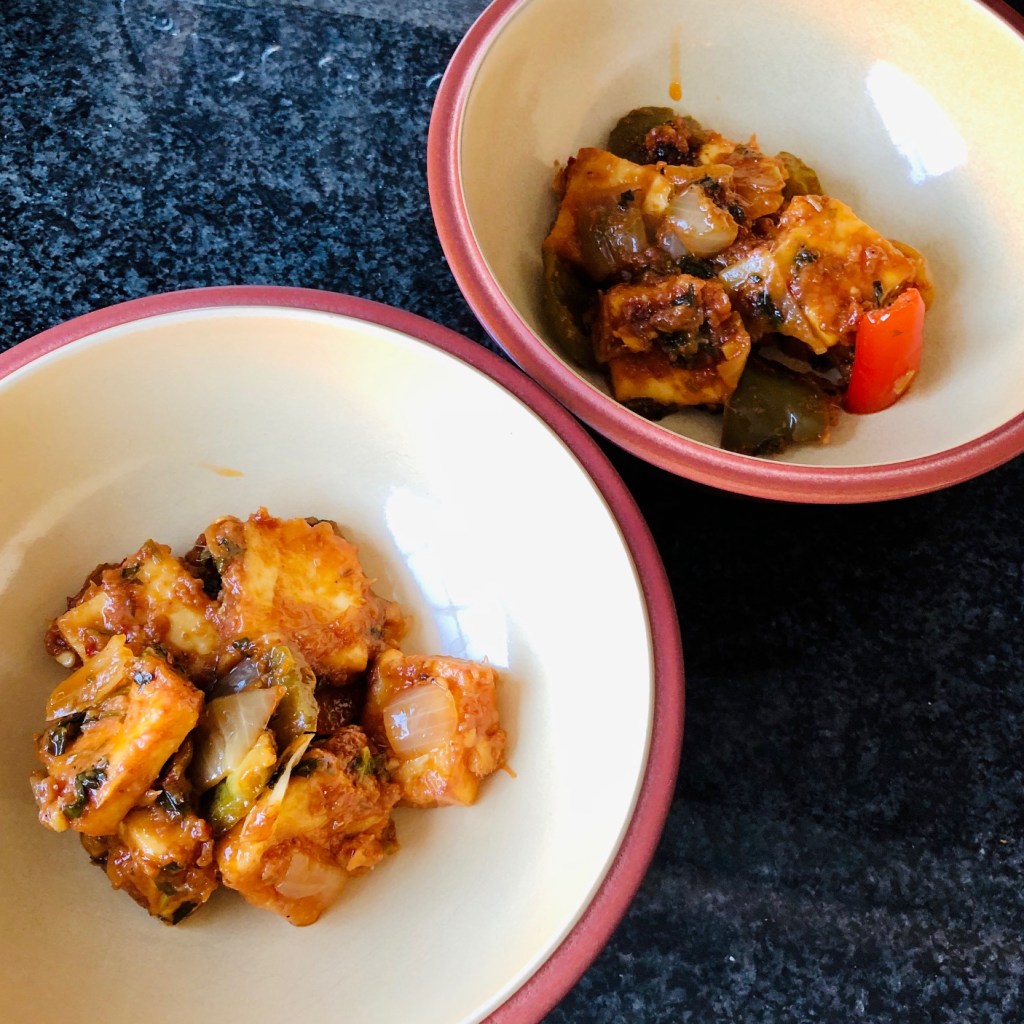
The mains were completely different from the dishes I’d had in my previous meal – keema lamb with peas was packed with coconut and the lamb wasn’t so much minced as finely diced, with beautiful texture and not even an iota of bounce. Telangana chicken, one of the dishes I’d really fancied when I saw the menu online, was a fine, almost fruity dish with a generous amount of chicken thigh. It didn’t have the fire of some of the other dishes, but also felt to me – and this is more of a compliment than it may sound – like a high-end reimagining of the Vesta curries of my childhood.

I think Clay’s may really be on to something with this model. It does away with many of the frustrations of takeaway – feeling like you’re always accepting a compromise on restaurant food and taking the risk that by the time it’s at your door it’s just a little bit past its best. Selling food you can have on standby in the fridge for over a week is a genius idea, and the delivery radius Clay’s currently serves means that people who would have struggled to get takeaway from Clay’s will be able to try the food. Once they move to nationwide delivery I have several friends who will be sitting at their computers, fingers poised to push the button.

I’ve been thinking a lot about what lies ahead for cafés and restaurants, partly because of Clay’s and its brave decision to try something out of step with Reading’s other restaurants. Restaurants are going to need to think beyond lockdown to an uncertain time where the lockdown has been relaxed but social distancing is still in place. It remains to be seen whether the government will continue to extend grants and rent relief, and it’s not clear whether cafés and restaurants can survive on takeaway alone.

Even in the future, if we get a vaccine, there’s a risk that people’s spending habits will have changed so drastically – and for so long – that there won’t be a “normal” to go back to. And there are other variables – how will the market look when some of the players, as they inevitably will, drop out of it? The Casual Dining Group, which operates Las Iguanas and Bella Italia among others, filed to appoint administrators this week, and the closure of Reading’s Debenhams puts The Real Greek and Franco Manca at risk. And what about landlords: will they be willing to show latitude, or will they all behave like lovely cuddly John Sykes?

The restaurants and cafés that survive this will need to be both ingenious and lucky. You can already see signs of businesses trying something different, whether that’s Geo Café with its trikes and its brand new van, Clay’s with its home deliveries or Nibsy’s with its home doughnut kits. We’ve seen that ingenuity in lockdown, but they will need to show even more of it in the phase that lies ahead. We really are lucky to have so many impressive businesses doing so much.

But also, most importantly, they’ll need our support. For some businesses, like Fidget & Bob or Geo Café, they are very much part of the community where they’re based. But, as Fidget & Bob’s Shu said in her interview this week, restaurants simply can’t afford not to have a social media presence any more. Community is more than physical these days. Your front door is online now, even if people aren’t leaving their houses, and you can still talk to people wandering past it, gawping in your window and trying to decide whether to go in. If you don’t, they’ll go elsewhere.

But let’s leave the last word to Clay’s this week. They put up a beautiful Twitter thread last weekend after they completed their deliveries. It takes a village to raise a child, they said: Clay’s was their child and Reading, they’d learned, was that village. “Reading is a town that owns and protects you”, they concluded. Isn’t that beautiful? We did that – all of us – and we did it all from our sofas: I’m not sure I’ve ever felt so proud to live here.

Corona diaries: Week 7

Back in September 2018, when the coronavirus was just the stuff of alarmist dystopian feature films, I held only my third readers’ lunch at the Lyndhurst. A number of people who came to that lunch, although now regulars at the readers’ events, had never been to one before. Some have never returned since: I still wonder what became of the chap who showed us all videos of him taking part in competitive skydiving events.

Even so, by chance, the Venn diagram of people who read my blog threw up interesting results and overlaps. One of the lunch guests worked at the same school as another of the guests and sung in a choir with her colleague’s wife, also at the lunch. She had no idea that that couple would be there and yet there they were at the same table, Amazon’s people-who-bought-this-also-liked-this algorithm in human form.

Another person I met for the first time at that lunch was Helen. Helen had moved to Reading not that long ago, and was in the process of joining things and trying stuff out, dipping her toe in different scenes to try and find her place. She had volunteered at the Reading Fringe Festival, made her way to the cultural mecca of South Street and that day in September, taking her life in her hands, decided to come to a readers’ event on her own.

Lunch turned into afternoon drinks and then effortlessly segued – as those events often do – into evening drinks. When we all eventually parted company (in my case, for a shameful drunken wander to KFC) I remember hoping it wouldn’t be the last time Helen came along: her whip-smart dry humour and willingness to throw herself into spending a day eating and drinking with total strangers had made sure of that.

The following month, Zoë and I went to see The Mountaintop, pretty much on a whim, at Reading Rep. I didn’t love it as much as the reviews did – it was a little heavy-handed for me – but the play isn’t what I remember about that evening. On the way in to the auditorium to take our seats, we saw a familiar face. It was Helen: she said hello and we sat with her, having a drink together in the interval.

We were off to the Retreat afterwards to meet up with some of Zoë’s friends, so we asked her – would she like to come? Zoë’s friend Tom would be there – Tom, the epitome of quirky, woke, millennial man, a fascinating chap who had never read about a Kickstarter he didn’t like – and somewhere in the back of my mind I had an inkling that they might hit it off. She joined us, showing that same game spirit I’d so admired at our previous meeting, and the two of them ended up locked in conversation for much of the evening.

Some time the next month, Helen and Tom managed to find a slot in their schedules and went to dinner together at Clay’s (where else?). They had the table for two near the back, by the stairs; Helen, many months later, was emphatic that this most definitely wasn’t a date. It was just two single people, who seemed to find each other interesting, having a perfectly platonic evening of dinner and drinks. Even so, they spent most of the night talking: they were the last customers to leave.

The month after that was December, and when I did the seating plan for the final readers’ lunch of the year at Clay’s I made sure to sit Tom and Helen together. Maybe I was being a matchmaker, maybe I’m a hopeless romantic. It’s more likely, in truth, that I was just being a meddling stirrer. We all poured into the Retreat afterwards to carry on drinking: although Yuletide was still a couple of weeks away, people in the pub were already in their Christmas jumpers, and the tree was up.

Even after the numbers thinned out slightly our group was camped out at one of the big tables in the front room, chatting away until it was closing time. Before that event Tom and Helen weren’t a couple but somehow, after that event they were. Zoë and I spent New Years Eve that year in the Retreat with them, and the following year, gradually, they spent more and more time together.

“It’ll never last” said Helen, fatalistically, and yet somehow it did. There were holidays, to Holland (to attend, of all things, an international redhead festival, although Google calls it a “ginger weekender”) and Marrakech, and the following December at the Christmas readers’ lunch – again at Clay’s – Nandana brought them out a glass of bubbly each right at the start, as an anniversary present. One of my very favourite restaurants honouring two of my favourite people, at a time when everybody is celebrating: it was almost too perfect.

“Nandana always sits us at the same table, the one we sat at for our first date.” said Tom.

“It wasn’t a date.” said Helen, as she always did, but she was smiling all the same.

On New Year’s Eve Tom, Helen, Zoë and I spent New Year’s Eve at Geo Café, drinking an inadvisable amount of wine and eating a lot of khachapuri. I remember thinking how curious it is, that you meet plenty of people and you can never tell which ones will blossom into friendship and which ones fall, so to speak, on stony ground. I never let the two of them forget that I take at least some credit for their relationship, although I’m also writing about them here with a little trepidation: I don’t want Edible Reading to develop its own equivalent of the curse of Hello! magazine.

That evening at Geo Café was, like a lot of modern life, one coincidence hanging off another, and another, and another. If I hadn’t gone for dinner one January night at the Turks Head, over three years ago, deep in the frosty hinterland of my divorce I would never have become friends with Keti and Zezva. That’s how I found myself, many years later, at Geo Café celebrating the end of a very different year with her and her family. It was such a lovely evening, wearing paper hats and eating ajika chicken, breaking out the port after midnight as Anders, Geo Café’s baker, started playing folk songs on his fiddle. If I hadn’t met Zoë I would never have met Tom, and he wouldn’t have been there too. If Helen hadn’t taken the plunge and come to a readers’ lunch she wouldn’t have met any of us.

Lockdown has forced many couples to make choices they might ideally have postponed. I know of one couple who split up just as lockdown begun, a month into a tenancy agreement, and another couple who are forced to live apart in Reading and London, not quite at the right time to make such significant decisions.

I know people making do with housemates they wouldn’t necessarily choose as cellmates (“I just really miss having a hug, ideally I’d have five hugs a day” said one of Zoë’s friends, living with a housemate who is one rung up from total stranger). I know people chatting away to their matches on Tinder, not sure if or when they will ever meet. All those seeds of relationships are out there, some of them fated never to blossom. And that’s before we get to the doubtless many couples who should have split up before lockdown and now have no option but to sit it out. It makes me grateful to be locked down at this point in my life, in the right place, with the right person.

Even so, this situation would put pressure on the happiest of couples. We aren’t designed to spend quite this much time together, without going to work or having other things to do and people to see. I consider myself very lucky that patience, forbearance and the occasional long solo walk or time spent sealed away on headphones has got Zoë and I through things so far, even if the first couple of weeks were jarring as we adjusted, found our rhythm and our space. Even now, the occasional day comes along when one of us is gripped by what my former in-laws used to refer to as the “can’t help its”, and you wish you could just step out of the day, as if it was a room, come back in and start over. And I say that knowing that we’re some of the lucky ones.

I wondered what Tom and Helen would do about lockdown, but the answer has become apparent as time has gone on: every few weeks Zoë and I have a FaceTime with them and they are always at Helen’s place, where the fridge is full of beers Tom has ordered to be delivered there. Siren, West Berks, the Grumpy Goat and Double-Barrelled have all visited Helen’s place recently, along with Tom’s current passion, a brewery called Dutch Bargain that they discovered on holiday. It specialises in suggestively named beers like “Strawberry Suckfest”, “Cherry Cotton Candy Glitter Extravaganza” and “Seaman’s Surprise”: in my defence, I’ve only made one of those up.

I was on FaceTime with Tom and Helen, along with other friends, a couple of times last weekend, both conversations that started out as “just a few beers” and went on until long past midnight. It was Beer Festival weekend, and when you can’t go to the festival a long chat with good friends and an excellent supply of beers in the fridge is very much the next best thing. But even so, I found I wasn’t missing the festival anywhere near as much as I feared I might.

“He won’t mind me putting it this way” said Helen, “but having Tom around has been really lovely. It’s nowhere near as annoying as I thought it could be.”

Charming, you might say. But she also accidentally admitted that their first meal at Clay’s had been a date after all, something none of us will now ever let her forget. But the funniest thing is this: Helen so nearly didn’t meet Tom that evening in the Retreat. She was in two minds, she said, about whether to go to the theatre after a hard day at work. She had to force herself to leave the house to go to the theatre on her own, still looking for her place in things, and if she hadn’t all of our lives might have been completely different. There are so many forks in the road: they can seem insignificant at the time, but a lot can depend on them.

Life really is full of surprises in general and surprising connections in particular, and I think that might be one of the nicest and most welcome things about it. I for one am glad of all the connections I’ve made through writing this blog, all the friends I wouldn’t otherwise have met and the community I wouldn’t otherwise be part of. I don’t know if you make your own luck, but you definitely make your own community. When you think about it that way, the isolation we’re currently going through doesn’t feel so much like isolation after all.

Corona diaries: Week 6

Here’s a sentence I never thought I’d end up writing: last Friday I joined a Webex with my other half Zoë, her family and friends, aimed at trying to work out who killed Jill Dando. There was even a Powerpoint presentation, called: Jill Dando: let’s investigate. Just another perfectly normal Friday in lockdown, then.

I should probably give the context. A couple of years ago, just after Zoë and I had first got together, I was invited to an event at her sister’s house, one of the new builds near Bel and the Dragon. It was being hosted by Zoë’s friend Jo, a keen conspiracy theory aficionado, and it involved her presenting her eight thousand word dossier, entitled The McCann Conspiracy, about the events of that fateful night in Praia da Luz. Printouts of said dossier were handed to us all on arrival, minutes after the first beer had been cracked open.

Eight thousand words is a lot of words, and I speak as someone who inflicts a couple of thousand on you all every week at the moment. What became apparent later on was that the whole lot had been written in one sitting, and that as Jo had warmed to her theme the tone got more and more indignant. There were a lot of block capitals, exclamations and expletives in the latter sections, and very interesting – and graphic – descriptions of some of the protagonists.

“What are all your sources for this, Jo?” somebody asked, while leafing through all twenty-eight incendiary pages.

“There’s this little thing called the World Wide Web” said Jo, as she warmed up for the masterclass that lay ahead.

Well! I learned things I had honestly never considered about Madeleine McCann’s case in the hours that followed. We heard all about the “Tapas 7” (which sounds a bit like a sequel to the Guildford Four and the Birmingham Six) and shadowy figures “Tannerman” and “Smithman” who were, at various stages, implicated in what happened.

At one point, Jo had us staging a reenactment of the events of the evening, bit like in Twelve Angry Men where Henry Fonda gets the jurors to reenact one of the witnesses hearing a noise and walking to the window. Except instead of twelve angry men, we had one angry Jo, and a dossier which started at “indignant” and progressed from there. “It’s estimated that 13 per cent of the fund has gone towards finding Madeleine” it said at one stage. “No stone unturned my arse.” In the same section, it pointed out that the McCanns were “having a nice big extension put on at the moment”.

This was one of my first introductions to Zoë’s family and friends, and all I could think was More please! My previous girlfriend had the kind of friends who would put on theatrical skits or, as I discovered one New Year’s Eve, throw a Crystal Maze party without warning you first. This was far more up my street.

And there was so much more. Over four riveting hours Jo took us through the events of the evening, the calls made (and not made), the delays in notifying the police, the map of the complex, pictures of the bedroom and an account of the two police dogs, Eddie and Keela, who found seventeen different alerts, all linked somehow to the parents. “These dogs were at the top of their game” said Jo. “They’d never been wrong in over 200 cases.” Eddie, the ‘cadaver dog’ had even worked with the FBI: somehow we had gone from Twelve Angry Men to Catch Me If You Can. And that’s before we got on to the last ever picture of Madeleine McCann, allegedly taken on a Thursday but with bright sunshine which placed the photo nearly a week earlier. “Why lie?”, said Jo.

By the time we got to the section entitled “The 48 Questions Kate Refused To Answer” – a section which had a distinct air of cross-examination about it – I had absolutely no idea what I thought, except that Jo should be doing this at the Edinburgh Fringe and charging admission. The final triumphant romp through the possible theories, was a tour de force, and she even managed to throw in an allusion to Scooby Doo. And that’s before we get to the links to other conspiracy theories: was it connected to “Pizzagate”? Why were the McCanns using a spin doctor who also broke the Jill Dando story the day it happened?

At the end of the event, there was a consensus that we should delve into another conspiracy theory soon. 9/11 was suggested, and soon ruled out (“that’s a big job” said Jo sagely, with the air of someone who already knew a fair amount about it). Jill Dando was selected as the next choice but it was almost a couple of years before Zoë’s sister decided that enough was enough and spent some productive time at home going down a fresh rabbit hole.

So on Friday, we went through Jill Dando’s final movements, driving from her fiancé’s house to her own, seemingly going back on herself to do so. We heard how she had stopped on the way at a fishmonger and bought some lemon sole (“she was obviously planning a fish supper”, deduced Zoë’s sister). And we heard about the untraceable calls to her mobile, one of them not answered, moments before she was killed.

Beyond that? Who knows. We reviewed poor Barry George, wrongly imprisoned with next to no evidence, eventually released after his second appeal and never compensated by the government. And then we went through the competing theories. Surely there had been a silencer on the gun, if nobody had heard it? We Googled pictures of her front door, all speculating about how she might have approached it and been forced down to the ground by an assailant. Was she left or right handed? Nobody knew. It had the feel of an execution, everybody concluded. But was it the IRA? Had it been the Serbian mafia, retaliating for her participation in a TV appeal three weeks previously about the crisis in Kosovo? After all, there had been death threats.

It was a huge investigation, over eight months, interrogating thousands of suspects, and yet they came up with nothing. Jo’s favourite theory was that Dando knew too much about a paedophile ring, and possibly about Jimmy Savile. She mentioned a number of other public figures, but I’m too chicken to name them here. Again, I left the session more entertained than informed, but with a clear understanding of how people could lose weeks of their lives to investigating this sort of thing. My other main feeling of disappointment was that nobody had called the victim Jan Dildo, either accidentally, on purpose or accidentally-on-purpose. Well, nobody except me, but I suspect that was a given.

Apparently the next one is going to be about what really happened at Deepcut Barracks – originally someone suggested Jeffrey Epstein, but Jo again chipped in to warn people against biting off more than they could chew. I for one can’t wait: I’ll report back in 2022.

* * * * *

Like, I imagine, a lot of people, I spent a fair amount of last weekend watching Normal People on the iPlayer and, as a result, feeling decidedly peculiar. If you haven’t seen it, BBC Three’s adaptation of Sally Rooney’s novel perfectly sums up what it’s like to be young and in love. Not unrequited love, mind you, but the only kind more painful: the requited, intense but unable-to-quite-make-it-work kind.

It’s had plenty of criticism, and rationally I can see exactly what it’s driving at. There are plenty of long, lingering shots (often, bizarrely, of the back of the main characters’ heads), or close-ups on unnaturally blue eyes, or weird shallow depth of field shots where only one eye is in focus, the rest just a dreamlike blur. And yes, the characters need a good talking to as they scupper their relationship time and time again by leaving so many things unsaid. But they’re twenty, and didn’t we all do that when we were twenty?

My friend Helen ruled herself out of watching it pretty much straight away. “I can’t be arsed with all the wan pining”, she said. And that, too, is true: both leads are pale and interesting, and given that one of them develops an interest in sado-masochism the whole thing has more pine and cane than a nineties furniture shop.

After I’ve read a book I often enjoy reading three star reviews of it on Amazon: I know that’s a weird thing to do, but sometimes hearing the views of people firmly on the fence helps me to decide which side of it I am on. And the criticism of Normal People crystallised that for me, too. Even if it was hokum, even if it’s easy to say – many years past your early twenties – that these people don’t know they’re born there’s still something powerful about being catapulted back twenty-five years by a piece of art.

And it definitely did that to me. I spent much of my time at university going. out with and breaking up with one girlfriend, seeing someone else, getting back together, being angsty and sad when we were apart and euphoric and insecure when we were together. We could break up several times in one night, let alone in one term, and of course when you’re nineteen everything you read and listen to tells you that unless you feel things that intensely you don’t really feel anything.

And this was back in the days before texts and emails and FaceTime, so I remember the university holidays, sitting at home wondering if today was the morning that a letter would drop on the doormat. I think I still have our correspondence somewhere in a box in the basement: I should probably ceremonially burn it in the garden, or just re-read it and die of embarrassment. And yet watching two attractive, bright, intellectual, emotionally illiterate Irish teenagers fail to make each other quite happy enough consumed six hours of my weekend, and made me feel lots of it all over again. I don’t feel the way about life that I did when I was nineteen, but I do still believe this: it’s always better to feel something than nothing at all.

I remember when my then girlfriend would come and stay over the summer. I lived in Woodley at the time, and the weather was often glorious and we would have long walks round Woodford Park, or out towards Southlake, talking about what would become of us. I couldn’t know that twenty-five years later I would still live in Reading, or that back then, in the early Nineties, Zoë was growing up just around the corner. We compared notes – she’s a sucker for a timeline – and it’s highly likely that, that summer, she was on a bike delivering leaflets for her dad’s business. She probably stuck a flyer through our front door, the first of many times over a quarter of a century that our paths almost crossed, but not quite. Still, it’s not where you start that counts, it’s where you finish.

I looked up my university girlfriend: she does something at Credit Suisse. I don’t know what it is, but it sounds exceptionally dull. I wonder if she watched Normal People.

I recommended Normal People to my friend Mikey, one of the few people on the planet who seemed not to have heard of it. “Will it make me sad that I’m past it?” he said. I told him it might well, or it might well make him glad that he’s reached the age where you’ve learned how to love without suffering. I said it would probably do both at once: it certainly did for me. And of course, you can have that sort of painful, disastrous love in your forties too, when you think you’ve outgrown all that and know better than to get tangled up in it again. But that’s another story.

* * * * *

We go into this weekend with everybody talking about whether the lockdown is going to be relaxed. I approach that with a certain sense of horror: we have the highest death toll in Europe, the situation in care homes is a horror show, nobody has PPE and the four hundred thousand pieces we ordered from Turkey aren’t usable. The figures on deaths are fiddled, the figures on testing have been fiddled and the figures on PPE have been fiddled too – so however bad it looks, it’s almost certainly worse. Personally, when Monday comes I won’t be leaving the house unless I have to, because I don’t feel any safer yet.

But I can understand why everyone dearly wishes things were different. It blows my mind sometimes to think that for seven weeks now my world has been tiny – I haven’t seen my friends, or been close to a single person apart from Zoë, haven’t hugged my family. When my friend Keti drops shopping to me, she is there on the road next to her massive van chatting to me, the only other three-dimensional person I know that I’ve seen in a very long time, and even that brief conversation is nicer than I can say. With every week I miss our old life a little more; give it another month and I might even yearn to be accosted by chuggers.

I’ve been especially reminded of that this week, too. Nandana from Clay’s was interviewed on the blog on Tuesday, and the outpouring of warmth was something special to witness. All over social media the comments came thick and fast about how much she was missed, how much her restaurant was missed and how strongly everybody was behind her plans to keep afloat. Even people who wouldn’t normally read my blog wanted to know about Nandana. There are some restaurants, I like to hope, that Reading simply will not allow to fail: Clay’s is definitely one of those.

This is another thing to focus on – especially today of all days – that, as the Queen put it, we will meet again. We’ve all said plenty of goodbyes in recent months, and often without knowing that we were doing it. That’s what often hurts, that we couldn’t appreciate our last evening in a certain pub, or in a particular restaurant, or with a certain friend. I wish I had said a better goodbye to my brother. I wish the last time I was in the Retreat I had really paid attention to what a special place it is. I messaged a friend of mine this week: her mother died last week, back home in Australia. She couldn’t be there, and she can’t get home for the funeral. I cannot imagine how awful that must be.

But these things won’t last forever, even if it sometimes feels like they will. And, strange as it might seem, it was food of all things that reminded me of that this week. On Monday, Namaste Momo reopened for takeaway and delivery after weeks of closure, and I got in touch with Kamal to arrange a delivery for Wednesday night. I got his bank details, placed my order and a couple of days later I got back from a long walk around Palmer Park and ten minutes later, as I was taking my first sip of cider, the bags were on my doorstep. And everything was as beautiful as I had remembered.

The momo – always Kamal’s calling card – were superb, caramelised and ever so slightly charred, the minced lamb on the inside coarse and delicious. A little bit gyoza, a little bit slider, an awful lot of delicious. The chilli chicken was phenomenal – eye-wateringly punchy with lots of crunchy pepper, red onion and a sauce I wished would go on forever. The chicken sekuwa was absurdly tender, subtly spiced and perfect with the surprisingly hot coriander chutney. Kamal’s chow mein is always a high point, but truth be told I was far too full to even try to tackle it: the following day, reheated in the pan until sizzling, it was one of the best lunches I’ve had in a long time.

It’s so good to have Kamal and Namaste Momo back. His restaurant has always been a little bit of a trek for those of us living in the centre of town for eating in, but if you’re close enough for him to deliver (and you’re especially lucky if you live in Woodley or Earley, where good takeaways are harder to find) I highly recommend giving him a go. It’s fantastic value, too.

I’ve missed Kamal’s food. But I’m particularly glad that he jogged my memory about something even more important than what we’re all having for dinner; for many of the goodbyes we said, there will be an equal and opposite “hello again”. We need to hang in there because, slowly but surely, those hellos are coming. When they do, it will truly be a beautiful thing.

Corona diaries: Week 5

At the weekend, during one of my regular walks, I was struck by how many cars were on the roads. Cemetery Junction seemed far busier than usual, and crossing the road and playing Frogger, avoiding cars and pedestrians in equal measure, was a considerably more difficult task. Among families and friends I was hearing more stories of people bending the rules just a little further without breaking them, increasing signs of frustration with lockdown. On Sunday a picture of the queues outside one of Reading’s branches of B&Q did the rounds on Twitter: the camera angle probably made the scene look more crowded than it really was, and it’s quite possible that everyone was maintaining social distancing but honestly, how essential can a trip to B&Q really be?

I’m particularly struck by this because my household is more locked down than some. Zoë’s asthma is so bad that she is often compared to Tiny Tim, and as a result both of us have been avoiding shopping during the lockdown, relying instead on occasional (very occasional) delivery slots online and the kindness of very supportive friends. I hate feeling dependent on others, and have often worried that I should be less protective, take my chances, get out there and play Covid roulette along with everybody else. But then I talked to a Twitter friend who had actually contracted the virus, and that reassured me. “Just before I was diagnosed I had four days when I was struggling for breath,” he told me. “Even the mild version I had would be serious for someone like your partner.”

Last week I received a text letting me know that my numerous prescriptions had arrived at the chemist in town and I was faced with the prospect of going in to collect them. The last time I went anywhere near a shop was over six weeks ago, when I made small talk with the lady behind the counter at Workhouse before grabbing my latte and scarpering for the tables outside. I had a pretty good idea even then that it would be the last time for a long time, but even saying that I wish I’d properly appreciated the latte; it’s one of the things I really miss now we’re all locked down. The thought of going and queuing at the pharmacy genuinely made me anxious, but I didn’t feel I could ask any of my friends. What to do?

It was on an impulse that I picked up the green and white card that had been dropped through the door with details of the volunteers’ service running in Reading. It said that they could help with shopping, prescriptions or even just a friendly phone call. I sent an email outlining my predicament, and a reply came within ten minutes asking for some details. I sent them back as requested, more than half expecting them to tell me to get my prescription myself, but within a few hours I received a friendly reply telling me it was in hand.

A couple of hours later my phone rang, and a volunteer told me that the prescriptions were on my doorstep. I opened it to find them in some bubble wrap that had the medicinal smell of disinfectant, a friendly red-haired volunteer at the end of the path. I thanked her from a distance, picked them up – still feeling slightly ridiculous – and closed the door behind me. It was all present and correct, but I couldn’t stop smelling the bubble wrap. There was something comforting about it, and something reassuring about knowing that someone had taken care of something for you, that in a way they had taken care of you. Taken care full stop, really; she had been wearing a mask and gloves, but that didn’t stop her giving a cheery wave before leaving.

A couple of days’ later I got a follow-up call checking everything had gone according to plan, and I gushed about how grateful I was. From getting in touch with them to getting my prescription had taken less than six hours, but the amount of stress and anxiety it had saved me from was incalculable.

All over Reading, and all over every town and city I imagine, there are people putting themselves at risk for others. The people in my neighbourhood’s WhatsApp group are always messaging to say that they’re going to the supermarket, or that they’ve managed to get a delivery slot, offering to buy their neighbours flour or yeast, or (as happened a couple of days ago) volunteering to jump start somebody’s car. We’re physically more distant than ever before, but there are still plenty of opportunities to experience closeness and community, and that strikes me as something beautiful.

If you also need help with something, the details of the volunteer scheme are here. If you want to volunteer to help, you can click on this link. And if you want to donate, as I did, to help this scheme to continue running you can do that here.

* * * * *

I feel like a fraud starting this week’s diary with that sweet little story, because in truth it hasn’t been a vintage week. One of my favourite sayings, although I had to Google it to find out who said it first, is this: happiness writes white. I’ve always thought it was true, sort of a distillation of the famous Tolstoy quote about happy families. There’s definitely something in it: when you’re happy you have nothing to say, or at least it’s harder to commit it to the page.

Contentment feels that way, anyway: you can write about euphoria or ecstasy just fine, but bland, doing-just-fine happiness is a real challenge. That’s why the easiest restaurant reviews to write – remember when I used to do those? – are hatchet jobs (they’re more fun to read, too), and the next easiest are rave reviews.

The times we live in now have challenged my belief that happiness writes white, because now I find that the thing that writes white, really, is malaise. There are good days and bad days, but without the conventional milestones of weekends and days out, holidays and nights down the pub, the whole thing smudges into a morass where it can be hard to retain perspective and keep your chin up. Eventually, there are good days and meh days, and more of the latter than the former.

A Twitter friend once told me that the problem with having a lot of time on your hands is that you never do anything, because there’s no reason to do it today. So you put it off until tomorrow, and instead you spend your time doing nothing – waking up late, because you can, or looking at the news, even though you shouldn’t, or constantly hitting refresh on a website, or on social media, waiting for life to happen to you. As a mistake I find it’s very easily made, and even more so on dreich weeks like this when the garden is beaten down with rain and the patio and the box hedges are strewn with discarded magnolia petals. Some days this week, on balance, I’ve felt like getting out of bed was probably a mistake.

And if you do refresh social media, it really doesn’t help. Instagram, once full of people’s meals and holidays, envy-inducing but reminding you that you have similar experiences just around the corner, is now full of people desperately trying to make the best of it. I can never work out whether they should be cheered on or given a good – if metaphorical – shake (I tend to plump for neither). Twitter is even worse: it oscillates between manic overcompensation and despair, always with that strong underlying current that it shouldn’t have been this bad, that it didn’t need to be this frightening. Read enough of that, and you just get angry.

And all these things chime with me – some days I have a grump on pretty much from the get-go, and my Tweets are irascible or unkind. Some days I try to count my blessings, but doing so often feels trite. I can understand, sometimes, why people just sack the whole lot off. “I keep getting invited to do Zoom quizzes”, my mum told me earlier this week during a Facetime conversation, “but they just sound so bloody zany.” I know where she’s coming from.

The news isn’t any better. I’ve long ago stopped looking at the Guardian’s live coronavirus newsfeed – that way madness lies – but I still regularly see stories that bring home how uncertain things will be, and for how long. The Caterer published an article this week saying that only 60% of restaurants are likely to survive this crisis (to my shame, when I read the headline, my first reaction was “that many?”). The Observer ran a piece explaining that the end of lockdown is only the start of the problems for the industry: without further support, continued social distancing will mean it isn’t even viable for many restaurants to reopen.

One journalist said this on Twitter this week about restaurants, bars and breweries that had shifted to delivery: It’s not a clever pivot. They won’t be “fine”. In all likelihood they’re clinging on. Everyone is clinging on, in one way or another. Everyone, as the saying goes, is fighting a hard battle.

A bit of me thinks that the future is so uncertain, and so alarming, that we can’t focus on that or admit that we are anxious or depressed. So instead we put one foot in front of another, as I have at various difficult points in my life, and just muddle through one day at a time.

The way it affects me, I’ve discovered, is that I get disproportionately anxious or unhappy about tiny things: I’ve lost something of almost no consequence, or my computer won’t do exactly what I want it to at the exact moment I want it to, or the salad in the fridge has gone off. And then it’s all ruined, even though the bigger picture is far more serious. But after all, you can’t justify being sad about everything happening at the moment, because we’re all in the same boat. Or rather we’re all in the same fleet, and some people’s boats are shittier than others.

When it’s like that all the positive events of the week somehow hide on the horizon, difficult to grasp, even though they happened and they definitely brought joy, however fleeting. I should try harder to remember them. Last Friday there was a ring on my doorbell and Phil, from Anonymous Coffee, was standing at the end of the path. I hadn’t ordered from him that week, so I wasn’t sure what he was doing there, but he had placed three little bags of coffee on my doorstep.

“It’s the same coffee, ground three different ways. Have a play around with it and see if you can notice the difference.” He smiled, and then he was off. I’d been given some coffee and set some homework, a really lovely random piece of thoughtfulness.

Also last week, I got a delivery from a company called Cherry Tree Preserves which makes simply the best jam, chutney, marmalade and curd I’ve ever tasted. I do most of the cooking in my house, although that used to be a lot less cooking than it is now, but one effect of the pandemic is that Zoë has taken up baking. So now we can have banana bread, topped with a sugary demerera crust, spread thickly with lime curd and demolished with a fork, followed by the only thing better, another slice.

Last Sunday she made cheese straws with plenty of garlic and industrial quantities of Parmesan, bought from the market in Bologna a lifetime ago, and we inhaled half a batch greedily before our afternoon walk. There was so much cheese in them that in places they were part pastry, part chewy, crystalline nuggets of 40-month-old wonder.

“Shall I wrap the rest in foil and put them in the fridge?” she asked me, and there was a brief moment where we made eye contact and both knew, without a shadow of a doubt, that they wouldn’t last long enough for that to be worth doing.

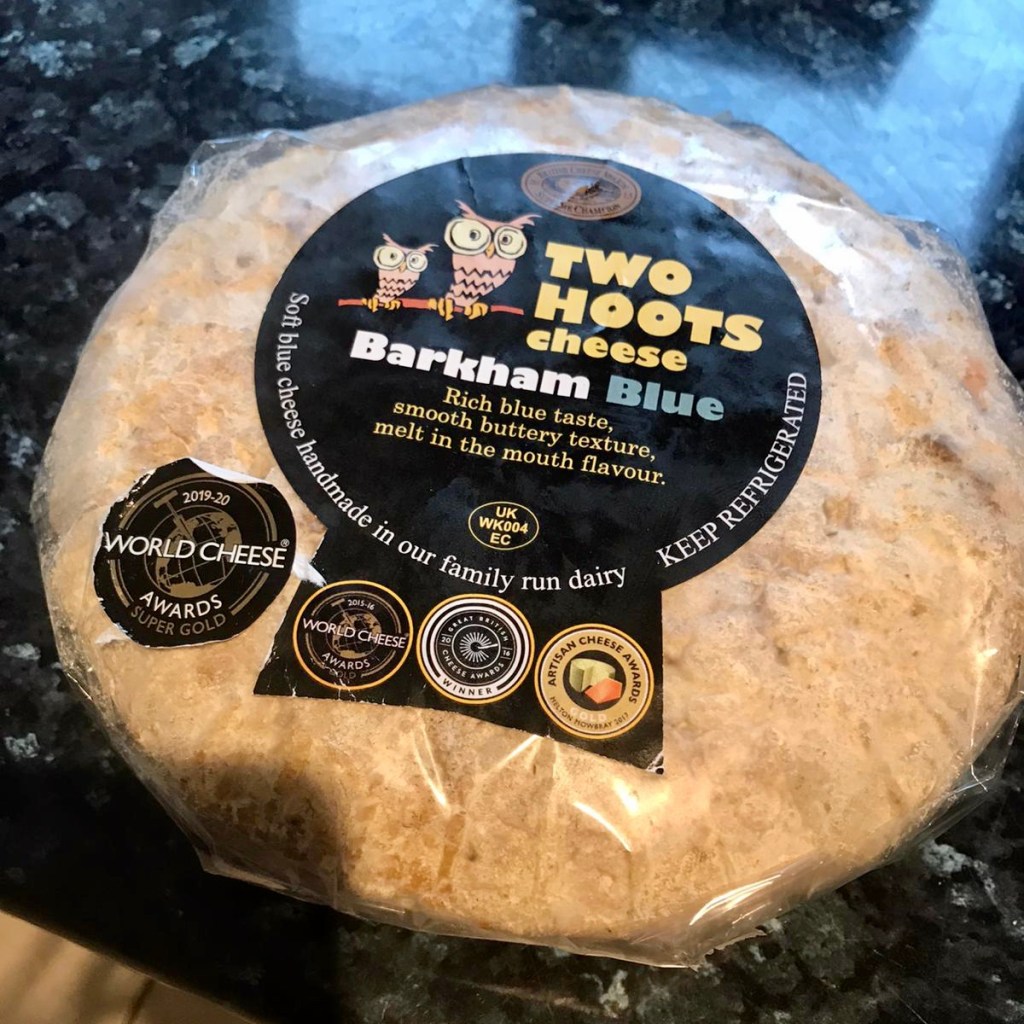
At the weekend I saw that Two Hoots, makers of the legendary Barkham Blue, had started doing delivery, so I hopped online and ordered a whole wheel to be sent to my friend Wendy. Wendy is a woman who worships Barkham Blue like no other, and every time I visit her in the frozen North I’m under strict instructions to pick some up from the Grumpy Goat before getting on the train. “I HAD A DELIVERY OF CHEESEEEEEEEEE” said the breathless message I received shortly after the surprise package arrived. “I actually screamed when I opened it. Lockdown cheese delivery, what a time to be alive! I’m gonna sit in my pants and eat Barkham Blue.”

On balance I thought that last sentence was probably unnecessary detail, but I also knew for a fact that it would probably happen. If I lived on my own, was in possession of a wheel of Barkham Blue and had no need to leave the house, I would probably do the same.

One of my favourite bloggers, from over ten years ago, wrote a blog called Three Beautiful Things where every day she would record three things that brought her pleasure. They’re like little word Polaroids, beautiful clean concise snapshots lifted out of a life, shining on the page. She stopped writing a long time ago – life got in the way, the cause of death you most often see on blogs’ death certificates – but then I was idly browsing down memory lane one day and I saw that the coronavirus had prompted her to begin again. Reading it was a reminder, a badly needed one, that there’s always something good to be said, even if you have to look a little harder than you used to.

I think that’s all we can do: to focus on the here and now, to get through one day at a time and to count our blessings. To make the most of all those moments where, even if from a distance, we can touch each other and make some difference. I don’t know, by this stage, whether I’m writing this for you or for my own benefit, but I can’t rule out reading back over it in the weeks ahead and having words with myself. I also fully expect to have it quoted back to me by somebody when (and I know it’s a when, not an if) I fall short. Or perhaps I’ll just picture my friend Wendy, in her pants, giant wedge of Barkham Blue in hand, as happy as Larry. If that doesn’t cheer me up, nothing will.

Corona diaries: Week 4

I’m now well into my sixth week of isolation at home, and we’ve definitely gone well past the “what day is it?” twilight zone we’re all used to between Christmas and New Year. We’re now in some new realm, where time is elastic and meaningless. Things that happened the day before feel like they took place ages ago and events from the recent past have something of ancient history about them. Was I on holiday in Copenhagen only a couple of months back? The pictures on my laptop tell me I was, but it’s almost impossible to recall. Earlier in the week I had no idea whether it was Monday or Tuesday, April or September; as we go deeper into this, that eerie, disconnected feeling is only going to get worse.

It’s an odd feeling, being captive but not uncomfortable. Because of course, I am one of the lucky ones – living in a house that I love, with my favourite person in the world, with a garden and a comfy sofa and Netflix and Apple Music. I still have the food I need, and more booze in the basement than I could safely drink in the months ahead. I like to imagine a lot of people are struggling with this: it feels like a first world problem to be dissatisfied right now, compared to people with much greater struggles. Really, what is there to complain about?

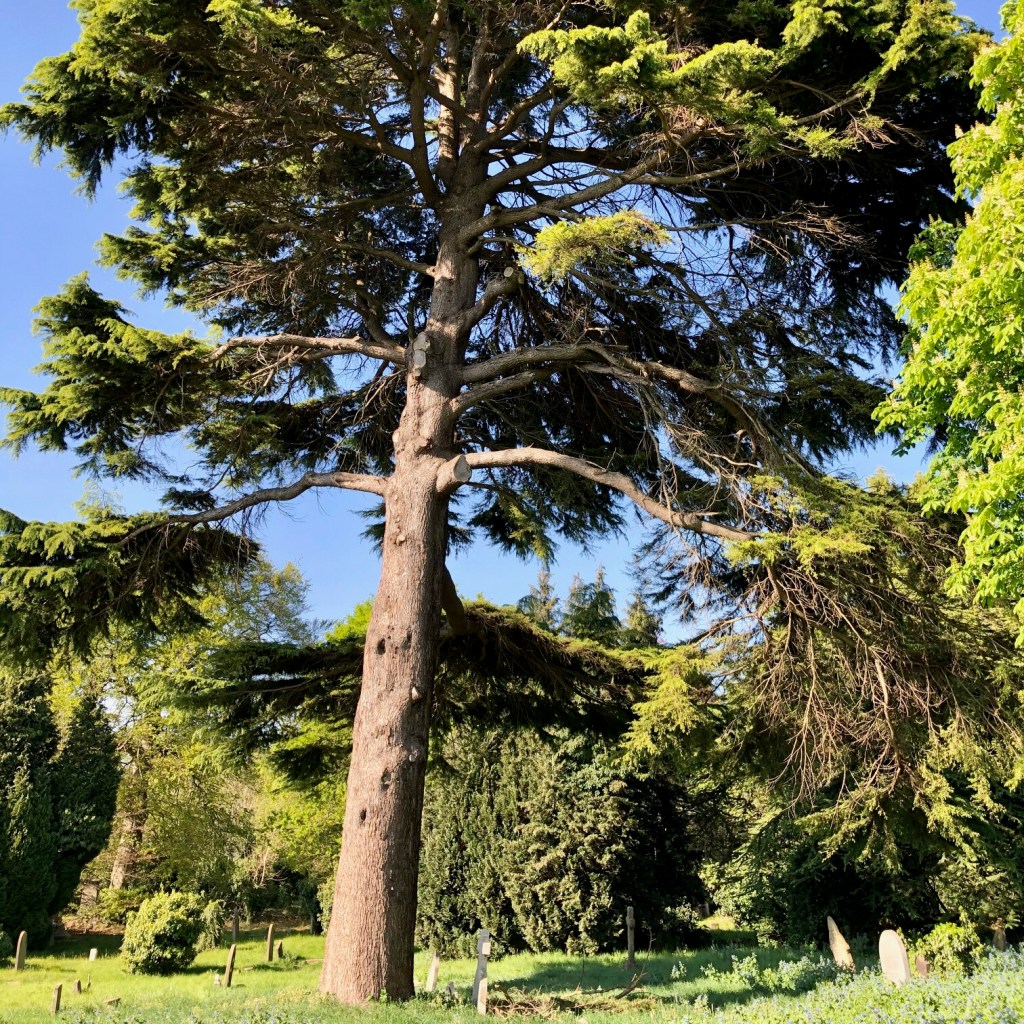
None the less, some days are easier than others. I think nearly everyone I know has had days where they hit a wall, and we all handle it in different ways. Personally, I’ve always been a moper, but on Tuesday, a particularly glum day, I took myself out of the house and went for a walk in Reading Old Cemetery, which thankfully reopened this week after residents lobbied the council. The sun was out, I had something uplifting playing in my headphones and I had the whole cemetery to myself. The headstones cast their long shadows, the war graves were serene and bathed in sunshine. The huge tree looked as if it had been there forever and would be there forever, and that permanence was strangely calming. It was truly beautiful, and it sort of helped.

In the meantime, I try to focus on the upsides. I’ve never been one for breakfasts, but in lockdown I try and eat something every morning. My favourite thing right now is fruit, Greek yoghurt and honey which I’ve been having most mornings. The grapes I use are sweet, plump and dark-skinned, the yoghurt properly sharp and fresh. And the honey, simultaneously sweet and medicinal, drizzles across it so beautifully and so languidly. There’s something mindful about fixing it up, even if it takes a fraction of that time to eat. Isn’t that always the way with food, though? Minutes to prepare and moments to eat. Someone ought to invent a concept where someone else cooks the food for you: I’d definitely go for that.

There are other upsides too. My other half, so used to working shifts and weekends, is suddenly at home on calls working nine to five Monday to Friday. Our evenings begin the same time as everybody else’s, we get lie-ins at weekends like many people do, we get to have lunch together. I feel for her: she’s always wanted weekends off and now she has her wish at a time when you can’t go out for long boozy lunches or book hotels and take trains to somewhere new. But it’s still something novel and welcome. We have already started to plan, in our heads, all the places we’ll go when this is over: not new places, but cities we’ve already visited, because we want to make sure they survive. But what do any of us know, at this stage, about what life will be like after all this?

I mentioned the consolations of lockdown on Facebook and a lot of people chimed in with plenty of positives. Eating better, doing more cooking, taking more walks, all of which I can appreciate. Despite the fraught encounters with people to whom social distancing is just an abstract concept, it’s good to stretch your legs and to see Reading differently. And finally, free of the temptations of restaurants and the pub, my alcohol intake is within the government’s recommended limits and I’m actually – slowly and modestly – losing some weight.

Knowing your neighbours better has been another lovely side of this, as has been watching my local WhatsApp group which is always buzzing with offers of help, jokes, memes or recordings of musical performances on the doorstep. Every Saturday loads of them head out their front doors and take part in a sing-song (last weekend it was All You Need Is Love, although I’m holding out on joining in until they go for Psycho Killer). I read all the messages and smile, although I don’t take part much except to recommend takeaways or veg box delivery schemes. Besides, I don’t think the lockdown memes I tend to be sent would be appropriate for that setting: some of them shock even me.

Also, lockdown does make you do some lovely things you probably wouldn’t otherwise do: on Monday I played Settlers Of Catan online with some friends, and had a thoroughly enjoyable time. Pete won, although I suspect Pete doesn’t offer to play games he doesn’t have a good chance of winning, and Martin showed off his gigantic Kilner jar full of pork scratchings and made me hungry, but it was good to see their faces and do something different. I haven’t played boardgames much in the last few years, even though I love them, and before everything changed I would never have suggested playing one down the pub. So there are silver linings everywhere, you just need to be on the lookout for them.

And special mention has to go to Siobhan, who commented on a previous Facebook post of mine saying how much she was enjoying porridge during lockdown, and popped up this week to report that since saying that she had fallen over in her garden and broken her jaw and both arms, putting her pretty exclusively on a porridge diet. There’s always someone worse off than you, it turns out: I couldn’t read her comment without wincing. I guess we should all be careful what we wish for.

* * * * *

It’s been instructive to look at how writers and food writers have adjusted to not having restaurants to review any more. In the broadsheets Jay Rayner is writing more general pieces about restaurants and gastropubs, Marina O’Loughlin is writing about learning to cook and Giles Coren is being the same dreary old wanker as usual. Only Grace Dent is writing a weekly column about life in lockdown, so it’s nice to know I’m not alone in my journey to the centre of the navel.

Some restaurant bloggers have fallen silent, some have written up the rest of their backlog of places they have visited that won’t reopen for some time. Those reviews are weird historical artefacts, and reading them makes me feel wistful, envious, fearful for the future, a whole pick n’ mix of emotions. Worst of all, they make me hungry.

Of course, the obvious route for the restaurant blogger who wants to keep going is to review takeaways, and I’ve read a number of reviews carrying on with that. I know a lot of people have suggested I follow suit, and after plenty of reflection I’ve decided against it. For a number of reasons, really. I think inevitably takeaway food compares badly against food in restaurants, because something is always lost in transit.

It’s no coincidence that when I order a delivery from Kungfu Kitchen I always ask for the deep fried fish and Xinjiang shredded chicken – not just because I love them both with a deep, abiding passion but also because in the restaurant, one comes to the table hotter than the sun and the other arrives chilled. Both survive the car ride from Christchurch Green to my house better than, say, the lamb with cumin, which is wonderful served just-cooked at the table but which continues to cook slightly in transit. That difference can be the difference between an amazing dish and one that is just really good.

I don’t mean to single out Kungfu Kitchen – their takeaway is always superb – but this leads in to a second reason not to review takeaways. In this climate, I am amazed by anybody who is still running a business, hustling to survive, putting their safety at risk and keeping us fed. Somehow, giving a negative review in the old, pre-COVID world, felt like something it was safe to do. Restaurants could expect it, and learn from it, and there were plenty of customers out there to fight for.

But now, it would just feel like the wrong time to dole out criticism, however well-intentioned or constructive. If I reviewed a takeaway and it wasn’t very good, I just wouldn’t know what to say or how to say it. Combine that with the fact that they sit in an awkward sweet spot where they usually aren’t as good as eating the same dish in a restaurant but still far better than anything you might cook at home, and it just becomes too difficult a proposition for me.

And then we come to our local websites, the Reading Chronicle and the artist formerly known as Get Reading (and, for that matter, In Your Area), now going by the name of Berkshire Live. They appear to be in some kind of special furlough scheme where they only have to put in 20% of the effort they used to.

Things were bad enough before the days of lockdown, but Berkshire Live has reached new depths, dusting off and updating an old article about rites of passage in Reading. Many of the things on the list couldn’t be done back when the article was first written, let alone now, but the whole thing has an impressively cobbled together feel about it, like something made out of words mechanically recovered from a better piece of writing, like Fifty Shades Of Gray.

It’s not helped by the fact that every paragraph is a single sentence.

A bit like this.

It gives an overall impression that is more Janet and John than local newspaper.

Did you ever try to get into the Monk’s Retreat when you were underage?

You had to get past the bouncers.

It was difficult, but it could be done.

Run, Spot, run!

And so forth. Another article, entitled 9 things we miss about life in Reading, written in the same idiosyncratic style, manages to include Reading’s traffic (Berkshire Live likes to talk about the traffic the way most people talk about the weather) and nights out. The latter is illustrated with a stock picture of Lemoni, a restaurant I doubt many people would pick as their first soirée in a post-lockdown Reading. One thing I miss about life in Reading is having a decent local paper: there is so much you could cover in town at a like this, vital work you could do connecting the community, even remotely, but the overall impression is still “oh, this will do”. Maybe they’re too busy watching Homes Under The Hammer.

Even better (or worse, depending on your point of view) was the Reading Chronicle. Last week they published an article called Reading restaurants using Uber Eats amid the coronavirus lockdown which contained, you might be amazed to hear, five restaurants which are on Uber Eats.

What about the other delivery platforms, you might ask? Nope, just Uber Eats. But presumably some level of curation was applied? No again, it’s just five random restaurants which happen to be on Uber Eats. Two peri-peri chicken takeaways (somebody must really love peri-peri chicken at the Chronicle), Miah’s Garden Of Gulab, Crumbs and Kobeda Palace. Of those, only Kobeda Palace would make the takeaway list of anybody who actually eats out or orders takeaway, but never mind. If you hadn’t ever been to Kobeda Palace I’m sure you’d be won over by the writeup it got in the Reading Chronicle, which billed it as “Serving large portions of various dishes”, a USP if ever there was one. Somebody got paid for writing that article. Quite possibly by Uber Eats.

A subsequent Chronicle article lists the five restaurants to visit after lockdown, an article which has been entirely researched (by which I mean somebody knows how to use Ctrl C and Ctrl V) from Tripadvisor. So the restaurant we’ll all be clamouring to visit after lockdown is Miller & Carter in the Oracle. Well, of course: apparently it has “one reviewer describing the food as ‘delicious’ and the service as ‘amazing'”. That’s that sorted, then.

It’s just crazy. All over town restaurants are adapting their offers, moving into takeaway, setting up online stores, morphing into grocers or wine merchants. It makes you incredibly proud of the ingenuity, pluck and entrepreneurial spirit of some many of Reading’s independent businesses. We’ve seen the very best of them in this crisis: it’s a shame our local media hasn’t even tried to up its game.

Oh, and before moving on, if you do want takeaway: at the time of writing Valpy Street, Vegivores and House Of Flavours have set up online ordering on their websites. Kobeda Palace, Thirsty Bear and Kings Grill are all available through Deliveroo and Just Eat. Papa Gee and The Last Crumb are on Deliveroo only. And last but not least, Kungfu Kitchen still do takeaway and delivery although you need to contact them on their mobile number for either. See? There’s plenty of choice, and it really isn’t that hard. Not only that, but even though I don’t plan to review their takeaway offerings I happen to know that every single restaurant I’ve listed does large portions of various dishes. Happy days.

* * * * *

What feels like a long time ago, when I first lived on my own after over a dozen years of marriage, I used to fall asleep to an app on my phone that played the sound of rainfall. There are an awful lot of apps offering this experience, all slightly different with a seemingly infinite number of soundscapes: city rain; forest rain; rain on a window; rain falling on decking; rain falling on a deep pan pizza, the list goes on and on. There were other options with nothing to do with rain, but once you reach a certain age you don’t want to fall asleep listening to the sound of ocean waves crashing on the shore. It just hastens the inevitable stumble to the bathroom in the dark in the middle of the night.

After that, I experimented with a record called Sleep by Max Richter, a classical album over 8 hours long. The idea was that you popped it on as you drifted off to sleep and woke up just as it finished and it’s tailored to your brainwaves or something: I didn’t really pay attention to that bit. I didn’t get on that well with Sleep. Quite aside from that fact that I never got eight hours shut eye anyway, I’d often wake up in the middle of the night – that call of nature again – and feel disorientated by the music playing in the background. It was a record in which nothing happened very, very slowly: if you woke up at the wrong time you’d hear what sounded like the longest, most ponderous crash of cymbals, going on for minutes.

My rainfall app phase didn’t last: I took up with someone who needs silence to sleep, and we moved in together and now it gathers virtual dust on the fourth screen along on my iPhone, along with the other stuff I don’t use, like Uber and Deliveroo and the Wetherspoons app. Besides, it was all a bit Berger from Sex And The City, and nobody wants to be Berger (not even, as it turned out, Berger). But I still maintain that the sound of rainfall is one of the loveliest there is, like a little vinyl crackle in the background of real life.

The other most beautiful sound in the world is another you couldn’t fall asleep to, because it would just make you ravenous. Last Sunday Zoë and I woke up at a sensible time and decided not to waste the day. We trekked up through the streets of the university area, into campus past the magnificent Foxhill House and then veered left, making for the Harris Garden. On a Sunday midmorning it was a beautiful, tranquil place to wander, and even if we didn’t have it to ourselves most of the people we passed were happy and smiley, saying hello and ever so nicely shuffling two metres away. It really is one of Reading’s most unsung gems, and I’m sorry that it took an event of this magnitude to make me appreciate it properly.

When we got home, just the right side of midday, the frying pan went on the hob and once you could feel the heat coming off it the bacon went in. Streaky bacon, for my money the best kind; within minutes the rashers were singing and sizzling in the pan, as beautiful in their way as birdsong. I turned them now and again, enjoying watching the fat get golden and crispy, the whole thing caramelising in front of my eyes. And then, when they were ready, Zoë fried a couple of Beechwood Farm eggs in the fat while I buttered thick slices of bread (because if you’re going to do something like this, you have to do it properly). It all happened in perfect harmony: we were only matching pyjamas away from a Morecambe and Wise pastiche.

The end result was nothing short of utopia on a plate. I like my bacon almost brittle, crispy salty shards of joy, although I suspect Zoë would like hers a little more supple. I have to have HP on a bacon sandwich, Zoë hates the whiff of vinegar (which means most condiments) on anything. Both of us prefer our yolks firm to runny. But sitting on the sofa, side by side, devouring a bacon sandwich after a lovely long walk in the sunshine, it felt as close to a religious experience as I’m likely to get on the Sabbath.

Having bacon sandwiches at home feels like an indulgence, in the way roast dinners do, and I only seem to have one a couple of times a year. I mentioned that on Twitter and one of my friends replied “why only twice a year?” To my shame, I didn’t have a decent answer. Maybe this is another life change I need to seriously consider.