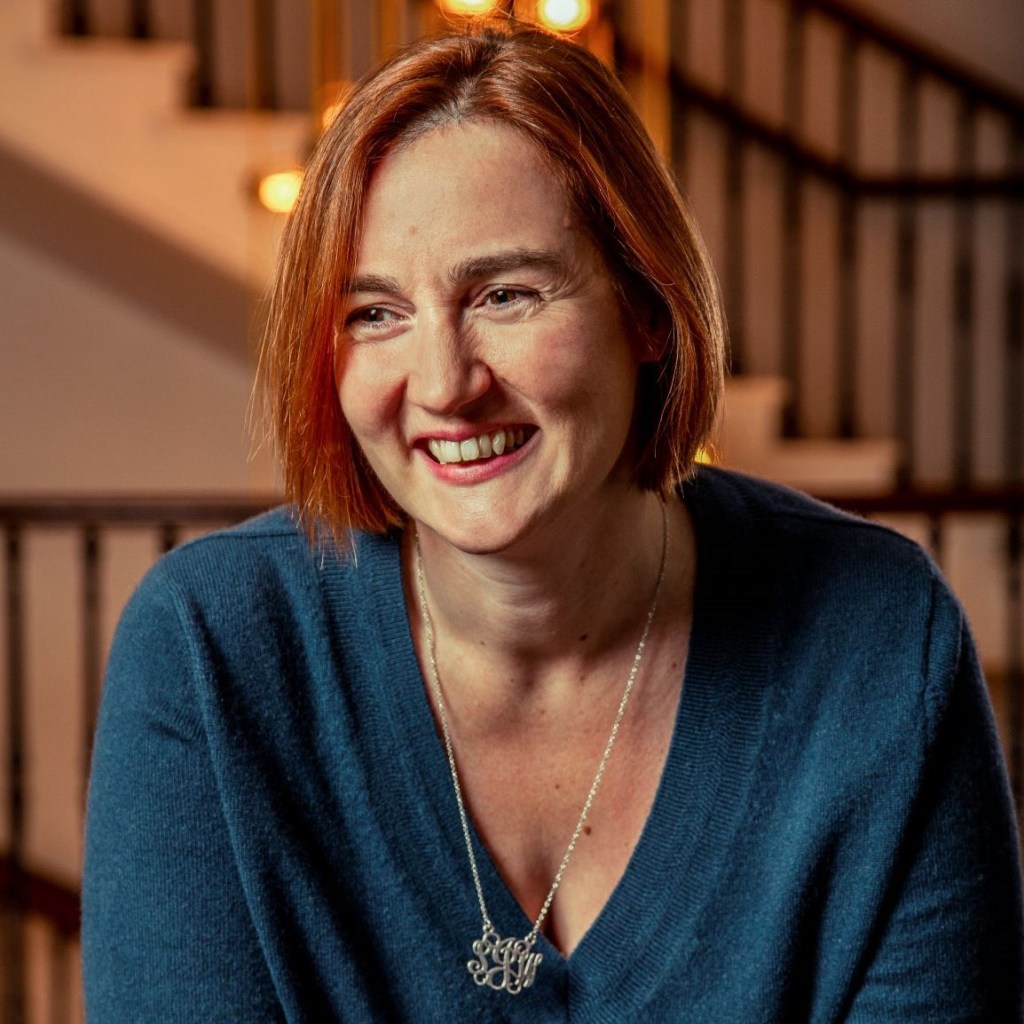
Q&A: Tutu Melaku, Tutu’s Ethiopian Table

Tutu Melaku was born in Addis Ababa and moved to Reading in 1991. In 2006 she opened Tutu’s Ethiopian Table in the Reading International Solidarity Centre and stayed there until 2019 when she took on her own premises in Palmer Park. Both Tutu and her restaurant have won numerous awards over the last fourteen years and earned plaudits in both the local and national press. Tutu’s Ethiopian Table is open in lockdown for takeaway, selling its dishes and sauces through the website. Tutu lives in New Town with her two children.

What are you missing most while we’re all in lockdown?
My customers, because they’re like my extended family. We still keep up some online social contact through zoom coffee meetups and Facebook, but it’s not the same as filling my café with smiles, hugs, laughter, good food and good times!

What brought you to Reading almost 30 years ago? What were your first impressions of it?
I came from Ethiopia to join my (now ex-) husband who was doing his PhD at Reading University.  My first impressions of England were confusing: the doors of all the houses were closed and I couldn’t see any neighbours. It was as if there were no people! It was quite a lonely time.

What’s your earliest memory of food?
Shiro. It’s a stew whose primary ingredient is powdered chickpeas or broad bean meal. It’s often prepared with the addition of minced onions, garlic and, depending upon regional variation, ground ginger or chopped tomatoes and chillies. It’s served with injera, and we ate it every day as children. I can still smell and taste it in my imagination.

What’s your favourite thing about Reading? 
The community includes such a wide of range of fascinating people. After those early lonely days, I soon got to understand the English way of life better, and now I feel at home and I love the richness of our community, and know so many amazing people. 

What is your most treasured possession? 
My two beautiful children, Bethlehem and Biruk. They are both in the middle of “online” university exams at the moment, so I have the unexpected delight of their company during lockdown. I’m so proud of them and love who they are – they’re great company and a massive blessing to me.

What is the worst job you’ve done?
Cleaning university halls, when I first came to the UK. It was grim, especially Monday mornings after wild uni weekends!

What prompted you to start Tutu’s Ethiopian Table in 2006?
In 2004 I was doing some mobile catering from home – food for birthday parties, weddings and office lunches.  It became so popular that my home kitchen just wasn’t big enough any longer, so I begun to look for premises. After being turned down lots of times, I managed to convince RISC to hand over their kitchen so I could get my business established there.

What’s the best meal you’ve ever eaten?
To be honest, I’m not a fussy eater. For me, a meal is more about the people and the atmosphere – the social side – than about the food. I’ve had really simple meals with totally amazing people, and those are occasions I’ll remember for ever!

What was your most embarrassing moment?
When I came to England I went shopping in a super market and picked up a delicious looking tin of meat. It had such a nice picture of a cat on it.  I didn’t know at that stage that English people bought tins of food for their pets…

What did you want to be when you were growing up?
My sister says I always said I would run my own school one day, maybe because I was the bossy big sister! My business has given me the amazing opportunity to make that dream come true: I’ve been able to set up “Tutu’s Fund For The Future”, raising money to build schools in Ethiopia and sponsor children through their education there. So far I’ve been able to build two schools in a remote deprived part of Ethiopia. It’s great to give back to my country, and to see my childhood dream come true in a way I could never have imagined.

Where will you go for your first meal out after lockdown?
I will go for coffee with my friends. I don’t eat out that often, but coffees and catch-ups are things I miss a lot!

You’ve run your business for almost fifteen years. What have been the highest and lowest points so far?
The highest point was opening my own premises in Palmer Park last March. It was better than a dream come true, after so much hard work. The premises were run down, filthy and full of rubble when I was first given the keys, and – with the help of some wonderful friends who believed in me – I worked day and night to make it into the beautiful homely place it is now. The lowest point was the first few days of the shock of lockdown, when I realised my life and work were going to change dramatically over the coming months.

What one film can you watch over and over again?
I never watch a film twice: I always like new films!

Who would you invite to your dream dinner party?
Michelle and Barack Obama.

What’s the finest crisp (make and flavour)?
Black Pepper Kettle Crisps.

What is the most important lesson life has taught you?
All things are possible if you work hard.

Tell us something people might not know about you.
I am an open book: I don’t have any secrets!

Where is your happy place?
Being at home, with my kids. That’s definitely been the plus side of lockdown: having time to be together and enjoy our home and garden.

What’s your guiltiest pleasure when it comes to food?
Ginger biscuits. I’ve been known to eat one before bedtime, then sneak downstairs and get another one for a midnight snack!

Describe yourself in three words.
Loyal, positive and persevering.

Corona diaries: Week 10

I don’t know about you, but when I treat myself – when I buy myself something nice – I don’t like to use it straight away. New clothes stay in the wardrobe waiting for a special occasion (not that there are any of those these days), the posh chocolate is squirrelled away in the basement so I can’t just demolish it on the spur of the moment because it’s been a crappy Wednesday and I need something to graze on while I watch another episode of the West Wing, wishing ardently that it wasn’t fiction. I bought a beautiful leather bag online a few months back, a gorgeous racing green tote: even when lockdown ends and it’s time to go out and about again, I’ll still save its debut for an appropriately fitting event.

If none of that sounds ridiculous, try this: it’s only recently that I’ve started wearing the prescription sunglasses I bought last year. Sod’s Law dictated that I got round to buying them just as the summer came to an end, but even so they stayed packed away in a drawer during the bright, sunny days of autumn and winter and finally ended up on my nose a couple of weeks ago, when the weather properly got beautiful and I began to take my afternoon walks at the height of the sunshine.

I couldn’t believe what a difference they made – I’ve never owned a pair of sunglasses before, and to see such definition in the sky, in the wisps and layers of cloud, in the splendour of every single leaf of the grand trees that tower in the cemetery or line Kendrick Road, made me feel strangely emotional. I could have had that experience so much sooner, if I wasn’t so stubborn. I wish I’d done this years ago, I thought to myself, adding “owning prescription sunglasses” to the long, long list of things that, as a frustratingly change-averse bugger, I wish I’d done years ago.

Three weeks ago, I decided to treat myself to a new fragrance from a company called Perfumer H, based in Marylebone. I’d always meant to go and visit their store, on one of my trips to London with friends, but I never got round to it and then it became impossible. I so miss those trips now, of taking the train with my friends, heading to Covent Garden to shop in the brilliant Bloom – where they have the genius idea of arranging fragrances by what they smell like rather than who made them – and then going for a long boozy lunch somewhere. I miss so many things, but I especially miss that.

Part of the appeal of buying something from Perfumer H in lockdown was just how difficult they made it. They have no online store, no other UK stockists, just an impenetrable website listing the current season’s fragrances. There’s a link you can click that takes you to a list of all their other fragrances – all for sale, although you could be forgiven for thinking they’re not. If you want one, you email them and they send you a Paypal invoice. Old school doesn’t quite do it justice. It’s funny: I am sometimes frustrated that Reading’s food businesses don’t do more online, aren’t active on social media, and here I was eagerly purchasing something from a company which, to put it lightly, was playing hard to get.

My fragrance arrived a couple of weeks ago, in a beautiful powder-blue box, swaddled in a tweed wrap. The bottle was handsome and plain, with a hint of the laboratory about it. It looked so beautiful that I couldn’t bring myself to start wearing it straight away. So I did what I often do, and saved it for later.

I’d first smelled it at an exhibition at Somerset House three years ago, where they had designed ten rooms around modern fragrances, like installation art. The aim was to show how modern perfumery had moved away from trying to smell “nice” into more complicated territory, evoking memories or atmospheres a long way from roses or lilies, the obvious choices of scent, the equivalent of rhyming “moon” and “June”.

One room, styled to look like a confessional booth, showcased a fragrance which uncannily replicated the thick clouds that billow from the censer at a Catholic mass. Another room contained a Tracey Emin-style unmade bed covered in rags soaked in a fragrance that had been designed to smell of “sex” or, more specifically, bodily fluids. Not “nice”, a million miles from what I’d choose to wear myself, but fascinating none the less.

A third aimed to recreate the feeling of going on a log flume ride at a theme park. It smelled dank, of stagnant chlorinated water, and you grabbed a tacky cuddly toy infused with the perfume, stood in a booth clutching it and posed for a tourist photograph. If you bought a bottle in the exhibition shop it came in a mocked-up VHS cassette case, for an extra whack of nostalgia.

The fragrance I bought a few weeks ago, gladly, didn’t smell of bodily fluids or chlorine. It’s called Charcoal, and it was created by the perfumer as a way of capturing a client’s childhood memories, and influenced by the perfumer’s memories of her Scottish grandfather. It smells of woodsmoke and leather, and greenery after rainfall, of dark wintry holidays in this country. To my nose at least it’s stunning, simultaneously lush and austere. I finally took the bottle out of the box and placed it on the mantelpiece in the bedroom this week, finally put it on and all day it followed me around like a fuzzy, deep green hug. I may never get out of my comfies all day, some days, if it’s too miserable to go outside for a walk, but that’s no reason not to make an effort.

I have adored fragrance for the best part of fifteen years, and the collection of boxes and bottles under my bed shows no signs of diminishing: at last count I think I had just shy of thirty. It’s sobering to think that I could stop buying them now, and the ones I own might even see me out. But I can’t see myself stopping. Wearing a scent is one of the simplest, most beautiful ways of dropping a filter in front of the lens through which you see the world, and making everything slightly different. I really don’t understand why more people don’t do it, when it’s such an easy way to spark such joy.

And they can spark so many different flavours and colours of joy. On any given day I could smell of rich orange blossom, and be transported to Andalusia, or pick something with the honey and vanilla tones of Turkish pipe tobacco (tobacco, sad to say, smells beautiful right up to the point where you foolishly take a match to it). I have a fragrance which is a recreation of vintage suntan lotion – Coppertone, to be precise – and when I wear it, even though I am miles from a beach, I feel as if I’ve just got back from one. Another smells of tomato leaf, putting you in a sultry, summery virtual greenhouse. I had one fragrance which smelled of – and this is no word of an exaggeration – Smartie shells. It had that unmistakeable blend of sugar and cocoa, and I admired the trickery more than I liked the scent. I gave it to an ex: I wonder if she still wears it.

Another fragrance I own smells of honey, spice and amber, a proper, smouldering, wouldn’t-wear-it-to-the-office smell. Back when I was married, my ex-wife forbade me from buying it – she really couldn’t stand it – and last December, on a holiday to Paris, I finally bought myself a bottle. It’s part fragrance, part emblem of emancipation. And I also have a fragrance which smells of rose, because people who believe that men can’t smell of roses are every bit as wrong as people who think that men shouldn’t wear pink.

Most fragrances aren’t really such things as men’s fragrances and women’s fragrances: in summer I’ll wear my fragrance that smells of mimosa, a pure, fresh uncomplicated thing, how laundry might smell in heaven, and I won’t give a monkey’s if anybody thinks it’s effeminate.

Scent is the most incredible form of time travel, too: sometimes I go back and buy a fragrance I’ve owned in the past, and whenever I put it on a cascade of memories comes tumbling back. Eau Sauvage, for example, will always remind me of waking up in Granada on Christmas Day, over ten years ago, having bought the bottle in Duty Free on my flight out. They played Feliz Navidad through the speakers on the connecting flight to Federico Garcia Lorca Airport. I remember, I remember: smelling Eau Sauvage is somehow more effective than looking at any photograph.

I have one fragrance, although I wouldn’t call it a signature scent, that I have worn consistently for the best part of twenty years. It’s a single dogged olfactory thread that runs through every house and flat I’ve lived in, every friend I have made and lost, every person I’ve shared my life with, however momentarily. It’s dirt cheap and probably, objectively, nothing special: nevertheless, I live in constant fear that it will be discontinued.

Really, my new fragrance isn’t seasonal at all, although it’s better this week, now that the weather has turned to shit and there’s rain in the air (petrichor, the smell of the ground after rain – also known as geosmin – is one of the most gorgeous smells there is: I have a fragrance that smells of that too). In the months ahead my sweeter, sunnier fragrances will get more of a look-in, whether that’s bright, green scents, fresher everyday colognes or the one with notes of blood orange. And then, when the sun sets earlier and the air is chillier, it will be time for different smells: of incense, leather, smoke and oud. I have one fragrance that has the sharpness of bitter orange muffled with a smudge of clove: much as I love it, it feels rightest to wear it in December.

All this might feel like a far cry from everything I usually write about, but I’m not sure it should come as a surprise. Smell and taste are so closely linked, after all, and the smell of food is one of the most beautiful things about it, given how it always acts as a trailer for what is to come. Imagine the smell that only comes from onions and garlic sizzling away on the hob, or the aroma of a slow-cooked ragu taking its time to become delicious. When I open my cupboard in the morning, ready to make that first Aeropress of the day, I smell the richness of the coffee long before I finish all the jiggery-pokery involved in making a cup of the stuff. And that, too, brings me joy.

The scent of food or drink is a promise, hanging in the air, waiting to be kept. Good food sometimes takes its time to fulfil that promise, but one of the wonderful things about other scents – like fragrance – is that they offer a more instant gratification. Or they do, at least, provided you don’t spend two weeks getting round to getting them out of the box.

Q&A: Pete Hefferan, Shed

Born at the Royal Berks, Pete Hefferan worked at Reading institution the 3Bs while a member of critically-lauded band Pete and the Pirates, championed by 6 Music, NME and Pitchfork. When the band split up in 2012, Pete began working at Chan Cham (another Reading institution) alongside his partner Lydia Owen. Pete and Lydia started Shed in July 2012 and in the last eight years it has cemented its place as one of Reading’s favourite cafés, legendary for its Tuna Turner sandwich, Saucy Fridays and superb milkshakes. Pete and Lydia married in 2018 and their daughter, Nell, was born on their wedding anniversary the following year.

Pete freely concedes that Lydia is the driving force behind Shed (“I just turn up, chat to people and cook things”): he is, however, better at sweeping up. Shed reopens for takeaway tomorrow, so let’s hope he hasn’t lost his sweeping game in the meantime.

What are you missing most while we’re all in lockdown?
I’d like to see my daughter playing with her grandparents. Failing that, a cold pint in a pub garden, with the staff from Shed.

What’s your favourite thing about Reading?
Palmer Park reminds me of old friends. Giant trees on London Road remind me of being a teenager and walking to Munchees on a Saturday. Sunday daytime darts at the Hop Leaf. I’m getting tearful.

Before starting Shed you were in Pete and the Pirates. What do you miss most and least about those days?
I’m not going to lie, I miss playing to loads of screaming fans! We got some really good crowds. I miss travelling around Europe, specifically Italy and Germany. I don’t miss the smell of the van.

What’s the best meal you’ve ever eaten?
The first time we went to Paris to play a gig. It was a little café with a venue underneath. Salmon and prawn quiche followed by a beef rissole (I forget the pudding). I still have regular cravings for Clay’s Chicken ’65.

What was your most embarrassing moment?
My friend won some absinthe in a poetry competition. I helped drink the absinthe, then entered the next round of the competition with an improvised poem.

It’s also my proudest moment.

What did you want to be when you were growing up?
An actor.

As part of one of Reading’s most famous married couples in hospitality, what’s the secret of your success in living and working together harmoniously?
We respect each other and listen to blah blah blah something boring.

What’s your earliest memory of food?
Cream cheese and jam on a digestive.

Where will you go for your first meal out after lockdown?
The Ship Inn, Trefriw, North Wales.

Who would play you in the film of your life?
Ed Norton, if he could handle the severe weight loss and the prosthetic nose.

What is your most unappealing habit?
I have an accidental angry tone when I talk sometimes. I don’t realise I’m doing it. It gets me in trouble.

You are responsible for some of Reading’s favourite sandwiches. What’s your favourite sandwich?
M&S cheese and onion.

What one film can you watch over and over again?
Robin Hood: Prince of Thieves. I know it word for word.

Who would win in a fight: Jon from Picnic or Greg from Workhouse?
It depends on the discipline and what weapons were provided. Both would crush me flat in seconds. How much are the tickets though?

What’s the finest crisp (make and flavour)?
Walkers prawn cocktail. Bite me.

Where is your happy place?
I’m in a kitchen somewhere. I’m frying an onion, drinking wine and listening to Oh Baby by LCD Soundsystem.

What’s your guiltiest pleasure when it comes to food?
Chicken flavour Super Noodles with cheese and hot sauce.

Which words or phrases do you most overuse?
“Do you know what I mean?”  

Also I say “apes” when I burp sometimes. I’m not proud of it. 

Tell us a joke.
Have you heard about these new corduroy pillows? 

They’re really making headlines.

Describe yourself in three words.
Not sure I can.

Corona diaries: Week 9

It’s been a tough week. I know I shouldn’t watch the news, but I do, and I get angry. I know I should put down my phone and read a book, or watch one of the dozens of films in my list on Netflix or Prime – something I’ve not seen before, to stretch me, or something I know well, to comfort me. But I don’t; instead I go online, to get my inevitable dose of outrage and despair.

You know all this already, but here it is: we currently have one of the worst death rates in the world, and a government which is both so inept and so callous that you could easily spend a long time wondering if the euthanasia is accidental or deliberate. They didn’t lock down quickly enough, they didn’t lock down strictly enough, they stopped testing and tracing cases, they filled stadia and racecourses when the rest of Europe was closing its doors and they told us that it was safe.

They also said that they were following the science and then, even though the science didn’t change, they mysteriously changed course. And the lies! So many lies. They lied about how many people they had tested, they lied about how many people had died. They lied about how much protective equipment people in the NHS were given. They released people who might well have had the virus into care homes, like some postmodern take on Deathrace 2000. Tens of thousands of vulnerable people died alone, with nobody by their bedsides, almost nobody at their funerals. A schoolfriend of mine died, albeit not of the virus, and I watched some of the webcast of his funeral. One of the only things more tragic than a funeral is a funeral with only ten people at it.

And, of course, there’s the news from the bank holiday weekend. The creepy man pulling the strings, who is always described as if he’s Rasputin but in reality is essentially Gollum in a gilet, broke all the rules he put in place, the rules we’ve all been keeping for an eternity. He had to leave work and go home, because his wife had the coronavirus. But then he went back to his workplace, because she magically didn’t.

Then – and by this stage I wasn’t sure who did or didn’t have the virus – the two of them got in a car with their four year old child, who they were seemingly trying to protect and infect at the same time, and drove for four hours on a single tank of petrol without anybody needing the toilet. All to recuperate at the cottage on a family member’s estate: well, we’ve all been there.

That’s before we get on to the sixty-mile round trip to a noted beauty spot either to get exercise or to test his eyesight, depending which of those two lies you find more convincing. It happened to be his wife’s birthday.

When accused of doing all this, he lied about it. When caught, he lied some more. Long, detailed, fiddly lies. The plan, of course, is to make it so boring and so involved that you get tired, you just say “oh, whatever”, and that’s the plan because the plan works. It worked on Brexit: it worked on people I know. “Oh, whatever” they said. “We just need to get on with it and move on.” We’re always moving on, it seems. Backwards.

I know people in Australia, New Zealand and Spain enjoying their freedom slowly beginning to return. I talk to a schoolfriend in New Zealand every few weeks – he feels sorry for us, stuck here, governed by these charlatans. I see photos and Facebook statuses and Tweets of people I know living some kind of normal life elsewhere, while all of us have been sitting at home for twenty-three hours a day watching all hell break loose outside. When it happened in Italy, it was apocalyptic. Here, where things are even worse, it’s just the way it is.

So I go online, but Twitter is simultaneously a group hug for everybody who is watching what’s going on in this country with a mounting sense of horror and unease, and an echo chamber amplifying a primal scream until it drowns out everything else. Or at least it is as long as you follow the “right” people: there are plenty of bots, bigots and useful idiots out there complaining about our biased media, or telling us to stop being so negative.

But even if the people in my echo chamber are in the right, does that make it the right stuff to read? Is it good for the soul? Because heaven knows, it’s boring, being angry all the time. Boring and exhausting. Sometimes I look back at my own Twitter feed, all that indignation and those Retweets of other people, incandescent with rage but far more articulate than me, and I think I’m not sure I would follow me on here. But what happens if you stop being angry? You get resigned, and then everything is lost. This stuff is so important that I don’t know whether I’ll ever be ready to move on to bargaining or acceptance. It’s a puzzler.

If all this doesn’t make you angry, you’ll have to let me know how you manage that. Or maybe I need to take whatever it is you’re taking. Drop some round: I’ll give you some of my stockpile of blue Toblerone in return. I had some Tramadol, but I gave it away to a friend with toothache. It felt like the right thing to do, and we’re all about following our instincts now.

* * * * *

How are your dreams, lately? I keep having the oddest dreams. Or rather I seem to be remembering my dreams more at the moment, because I recall reading somewhere that we always dream but we don’t always remember them.

At the start of the week, I had the most wonderful dream. I was spending the afternoon wandering round Oxford – a dream Oxford that bore no resemblance to the real place, but which I still knew was Oxford – when I realised that I hadn’t made a restaurant reservation. So I hastily made a list of places that would be worth a speculative phone call, to see if they could fit me in at 6 o’clock, the early bird special before taking the train home. It was a slim chance, but worth a try: if you don’t ask, after all, you don’t get.

It’s odd, the elaborate worlds your brain cooks up for your entertainment when you are asleep. There I was wandering round an imaginary city, one I apparently knew well, running through a mental list of imaginary restaurants (which I apparently also knew well). None of it really existed. Of all the things to dream about.

There’s always that point, usually in scary or uncomfortable dreams, the why-have-I-gone-to-work-with-no-trousers-on dreams, when you realise: Ah! It’s a dream. And that’s normally when you can wake up. I reached that point as I was weighing up the relative merits of all these restaurants I had never visited, and that should have been the point where the dream ended.

But for some reason it didn’t, and although I have no memory of picking a restaurant, or phoning it, or walking to it there was a jump cut and there I was, sitting at a big, square, pale wood table, a window seat looking back into a lovely, neutral room. I had a large glass of deep red wine in front of me and I was looking at a handwritten menu, the sort some places do when they have a different menu every day. Pretty soon the room would be buzzing, and speaking as someone who hasn’t been in a buzzing room for eleven weeks I couldn’t wait.

The starters included fritto misto, and I remembered one of the many reasons why restaurants are so special, that they cook things you simply could or would never prepare at home. And I could picture it in front of me already in my mind’s eye – the prawns, the squid, the mussels, all in that golden, light, almost translucent batter. I could imagine squeezing the lemon over it, the aroma, the crunch of that first bite. It would have been perfect with a beer or a crisp white wine. Why did I have a glass of red wine in front of me? It didn’t make sense, I thought, I wouldn’t have ordered that. And then I remembered: of course it doesn’t make sense. It’s a dream, silly! And that’s when I woke up.

The following night I woke up partway through a dream about being on holiday – in Granada, although again it didn’t look like the Granada I visit most years. But even so I absolutely knew that was where I was, and I was already starting to mentally bullet point all the places I had to go – cafés for my first al fresco coffee in a long time, bars for wine, or cold cañas of Alhambra, or for huge places of cheese and charcuterie. And again, of course, just as that itinerary was coming together, the cord snapped and I was yanked back into the present. It was May 2020, it had been May 2020 for about five years, I was in my house and that’s the way it was going to stay for quite some time.

I wonder what purpose these dreams serve. Is my psyche trying to tell me something I already knew – that I really miss eating out and going on holiday – or is it trying to comfort me with visions of the things I miss? Is it just my subconscious, wrestling with withdrawal symptoms on a warm spring night? Or are they just mental doodlings that don’t signify anything at all?

I reached a point where I was quite excited to see what was playing in the cinema of my mind every night, to see where I was transported to next, but the following night my dream was one of those horrendous ones that involves a bereavement. Now I would quite happily have unmemorable dreams, for a couple of weeks at least. I should have known, really. We live in scary times: what on earth made me think my dreams would be non-stop fun and frolic? If I want harmless escapism, maybe I should copy my friend Laura and re-watch Dawson’s Creek.

Of course, it might not be a result of the times we live in. I’m taking medication for tension headaches, and my mother – who takes the same tablets – told me once that they give her dreams, usually unhappy or unsettling ones. Ironically, she takes the pills to help her sleep, although she says the dreams are a price worth paying. The only other effect the tablets had on me, when I first started taking them, were that for the first few hours of every morning I felt like I was behind glass, or deep under water. You’re somehow sealed off from things, like a stereotypical Fifties housewife on Valium.

It’s not an unpleasant sensation, actually, and nicely anaesthetic: maybe I should stop taking them so I can re-start and experience it all over again. On the other hand, when I was prescribed some medication for anxiety during a particularly dark period a few years back, the doctor told me I would have strange dreams, and I did. The worst one involved being stuck in the seat next to my ex-wife in a crowded rail replacement bus for five hours (in the interests of balance, I’m sure she would describe that as a nightmare). Still, that’s another thing to add to the list of lockdown silver linings: however bad the dreams may get, at least none of us has to take a rail replacement right now.

* * * * *

I have been reviewing restaurants for the best part of seven years and I thought I’d heard pretty much everything by now, but this week a story in the local news introduced me to a brand new term.

It came up in a piece in the Reading Chronicle by (the always excellent) Tevye Markson about a disagreement between Mexican chain Tortilla and Reading Smiles, the fancy dentist a couple of doors down from Sainsburys on Broad Street. The dentist had complained about the prospect of Tortilla being granted a licence when they opened their restaurant, saying it would damage their reputation and increase the security issues at the site.

That’s as maybe – perhaps some people like to celebrate being given a clean bill of health or a scale and polish by grabbing a frozen margarita, who knows – but the best bit of the story was the dental practice’s claim that the smell of food from Tortilla would “penetrate the building” and put patients off visiting the practice.

That made more sense to me. The last thing you want, I imagine, as you’re having your molars checked is to get a whiff of refried beans. I can identify with that: it’s uncomfortably reminiscent of the time I was having a pampering massage in the basement of John Lewis, eyes closed, tuning in to the whale music when the masseuse leaned forward and belched into my face (I’m pretty sure she’d had a Scotch egg for lunch, too).

Anyway, the planning consultant representing Tortilla had a killer response to this argument. There was no risk of food smells getting in to the dental practice, he said, because no “primary cooking” took place onsite. What a wonderfully euphemistic way of putting it. He meant that all the work is done in a central kitchen and everything turns up at Tortilla ready and waiting to be heated up, I assume, which essentially means that you’d be sitting there eating a slightly more fancy ready meal.

That said, many chain restaurants do this. The reason Côte has been able to start offering “Côte at home” in lockdown is because they also prepare food in a central kitchen, so effectively you’re paying to heat up their food at home instead of someone heating it up in the restaurant.

But what marks this out from, say, the new offering from Clay’s is the transparency: when you ate in at Clay’s you knew everything was made from scratch, and that means that if they cook it, vacuum pack it and drop it to your house you feel lucky to get to warm it up at home, rather than deceived or taken for a ride.

When Tortilla finally opens, assuming it still will, will you particularly fancy going there, knowing that they’re not doing any “primary cooking”? I suspect not, especially knowing that you could go to Mission Burrito instead. The impression is that Tortilla’s “secondary cooking” is second class, or just plain old number two.

I do think, though, that this terminology could catch on. On weekends when I just can’t face dusting and hoovering I’ll just claim that no primary housework has taken place, as I invert the reeds in my (many) room diffusers, or put the recycling in the bin outside. Some days this week it’s not that I haven’t caught up with any of my friends, it’s just that I didn’t take part in any primary conversations. And I think you can be virtually certain this week that, as any week, there’s absolutely no primary journalism happening at Berkshire Live.

Anyway, in happier news the Lyndhurst announced this week that it was reopening Thursday to Sunday for takeaways. The menu they published was full of old favourites and new options – including their legendary chilli nachos, curried chickpea nachos (a dish premiered at my readers’ lunch back in March), pulled pork tacos and jackfruit tacos. Who needs Tortilla when you can get beautiful food from the Lyndhurst? They even make their own tortilla chips, for crying out loud: it’s proper, delicious, primary food.

Q&A: Kevin Farrell, Vegivores

Kevin Farrell moved to England from Belfast in 2010 to further his career in commercial banking. In 2017 he established Vegivores, at the time Reading’s only fully vegan street food and catering company, with regular appearances at Blue Collar and various other events. This helped build a strong and loyal following, and Vegivores opened its first bricks and mortar location in St Martin’s Precinct in Caversham in October 2019. Kevin lives in Caversham with his wife, Emma.

Vegivores has continued to trade during lockdown and has a popular delivery arm with online ordering. Later this week, they will officially announce that they will also open weekend daytimes for brunch, coffee and cake takeaways.

What are you missing most while we’re all in lockdown?
From a work perspective, I miss having our whole team together. We assembled a great bunch and we have a lot of fun at work so it’s strangely quiet at times now. 

From a personal perspective I miss having some sort of social outlet. I didn’t have a lot of free time from work pre-lockdown and if I did it was always for a specific event or concert. Now, like many people I guess, I find myself with a bit more free time and nowhere to go. I can’t complain though: in honesty I’m appreciating the slower pace of life a bit and there are definitely things I’ll try to maintain when lockdown ends.

What’s your favourite thing about Reading?
I’ve lived in Reading for over eight years now and in Caversham for five of those, and I like that I am still constantly discovering things and places that I knew nothing about. I also like the fact that outsiders think the town is dominated by chains but people who live here know that we have a thriving independent (and therefore unique) sector across retail and hospitality, and an amazing sense of community that sits behind that.

What’s your earliest memory of food?
This isn’t a pleasant story but, regardless of veganism, I’ve been allergic to all forms of poultry for my entire life (weird, I know). One of my earliest memories is being about three years old and ending up rolling around choking on the kitchen floor after being given a chicken leg by my parents. They were obviously oblivious to the cause at the time and a few similarly traumatic occurrences happened before it got worked out!

What’s the best meal you’ve ever eaten?
I’ve had a few spells of living in Spain and I’m obsessed with all things Spanish so a lot of our downtime is spent there. It’s impossible to pinpoint a specific plate of food, because they eat so well, but nights spent bar hopping in San Sebastián grabbing a couple of pintxos in each place have been some of the best food experiences I’ve ever had.

What were the biggest challenges in going from a street food stall to permanent premises?
Getting to the point where we could actually open the doors was really tough. The process of getting the keys to the property following acceptance of our offer was incredibly drawn out (it took about 10 months in total and another 3 months of fit out), so trying to keep the existing business going and growing whilst dealing with lawyers, builders, licensing and suppliers and recruit a team meant there was seldom a dull moment! The biggest challenge when we opened, I think, was being able to deliver a much more varied menu from a space that isn’t that much bigger: over time we managed to streamline some processes to make that work.

What is your most unappealing habit?
This might make me sound like a toddler, but I’m a notoriously messy eater. I don’t know how it happens but I seem to manage to spill at least a part of almost everything I eat or drink. It’s incredibly frustrating and a source of constant amusement to my friends.

Who are your biggest influences in the world of food?
My earliest memories of being completely engrossed in something food-related are from watching Keith Floyd on TV. I think I was more mesmerised by him and his swagger than the food he was cooking, and even today I’ll never flick past one of his programmes. Watching him gave me a great awareness of how food varied from country to country and definitely led to me taking an interest in the wider world of cooking. 

In more modern times my biggest influence has to be Sarah (the other half of Vegivores’ management team). She quite literally never stops thinking or talking about food and how it can be done better, and it’s impossible not to be motivated by her passion.

What is your favourite smell?
Probably a strange one, but without a doubt it’s stale beer. When I was about 15 I got a job in a local pub and it sparked my whole interest in hospitality. I had so many good times there over many years and every time I walk past a pub in the morning when the cleaners are doing their bit I can smell the revelry of the night before and it instantly takes me back.

Where will you go for your first meal out after lockdown?
The strong likelihood is that it will be Quattro. It’s a ten minute walk from home, they have a decent vegan menu, their food is always good, it’s always busy with a nice atmosphere and the staff are always lovely. Hopefully it’s a Saturday and I can make it down to the Double Barrelled tap room for a couple of hours in the afternoon beforehand. That would be a pretty perfect day in my book.

Which words or phrases do you most overuse?
‘Why?!’ (apparently), and ‘Delicious!’

It feels, as an outsider, that the world of plant-based eating has made exponential progress in the last five years. Would you agree, and what changes would you most like to see in the next five?  
I’d definitely agree. From supermarkets to restaurants, the plant-based offering has exploded and it’s because the public has created such a demand. The government has been telling us relentlessly that the response to this pandemic has been led by science. Independent science has been telling us for quite a while now that plant based eating is optimal when it comes to health, so my hope is that the government allows itself to be led by science in other areas and makes plant based food the norm in schools and hospitals where the consumers are those most in need of the right nutrition.

What was your most embarrassing moment?
When young and naive I once inadvertently told a job interviewer that his boss (who I knew socially) had told me a monkey could do his job. It caused a full-on mutiny amongst the staff and needless to say I didn’t get the job. Not my finest moment!

What one film can you watch over and over again?
To be my usual cool self I would say Goodfellas – and I’d mean it – but my wife would tell you that the true answer to that question is Jurassic Park!

What’s the finest crisp (make and flavour)?
As far as I’m concerned you can’t beat a simple salted crisp, the thicker the better. Real, Tyrrell’s and Kettle are probably the pick of the bunch in the UK.

What’s your biggest bugbear about people’s attitudes to vegetarianism and veganism?
Probably a reluctance to try something because of a preconceived idea that it won’t be as good. Our customers are an adventurous bunch, so I’m lucky in that respect. Amongst the wider population though, if you sit two identical products next to each other and label one of them as vegan it’s likely to elicit a reaction in people. That’s part of the reason why we downplay the vegan element of our business, because in our eyes ultimately it’s all just food and anyone can enjoy it.

Who would play you in the film of your life?
An obscure one but Eamonn Owens is ginger, Irish, and the same age as me so he’d have to be in with a decent shout.

Where is your happy place?
A golf course on a summer evening or on a boat, any boat.

What’s your guiltiest pleasure when it comes to food?
Cold pizza the morning after the night before. Delicious!

Tell us something people might not know about you.
Some very questionable music that I made quite a long time ago is still on iTunes now.

Describe yourself in three words.
Happy, excited, exhausted!