Corona diaries: Week 4

I’m now well into my sixth week of isolation at home, and we’ve definitely gone well past the “what day is it?” twilight zone we’re all used to between Christmas and New Year. We’re now in some new realm, where time is elastic and meaningless. Things that happened the day before feel like they took place ages ago and events from the recent past have something of ancient history about them. Was I on holiday in Copenhagen only a couple of months back? The pictures on my laptop tell me I was, but it’s almost impossible to recall. Earlier in the week I had no idea whether it was Monday or Tuesday, April or September; as we go deeper into this, that eerie, disconnected feeling is only going to get worse.

It’s an odd feeling, being captive but not uncomfortable. Because of course, I am one of the lucky ones – living in a house that I love, with my favourite person in the world, with a garden and a comfy sofa and Netflix and Apple Music. I still have the food I need, and more booze in the basement than I could safely drink in the months ahead. I like to imagine a lot of people are struggling with this: it feels like a first world problem to be dissatisfied right now, compared to people with much greater struggles. Really, what is there to complain about?

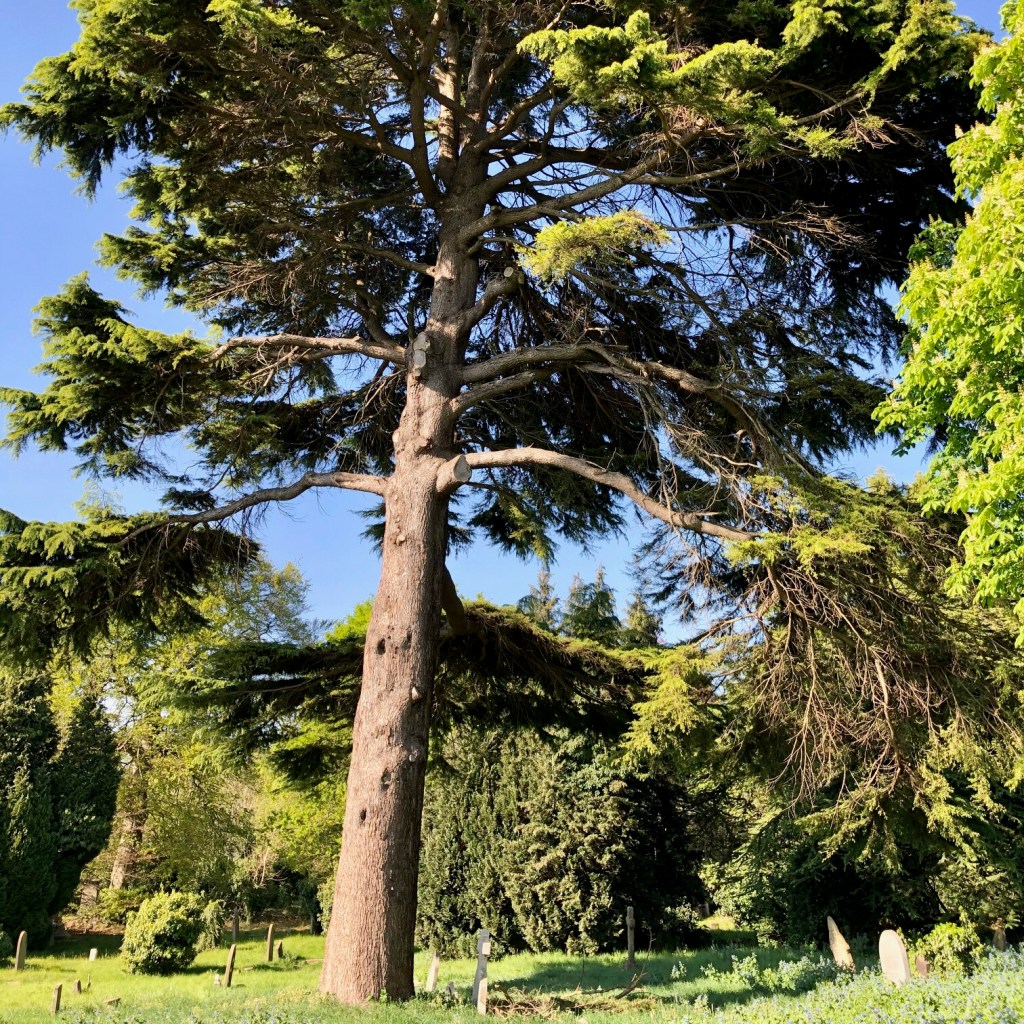
None the less, some days are easier than others. I think nearly everyone I know has had days where they hit a wall, and we all handle it in different ways. Personally, I’ve always been a moper, but on Tuesday, a particularly glum day, I took myself out of the house and went for a walk in Reading Old Cemetery, which thankfully reopened this week after residents lobbied the council. The sun was out, I had something uplifting playing in my headphones and I had the whole cemetery to myself. The headstones cast their long shadows, the war graves were serene and bathed in sunshine. The huge tree looked as if it had been there forever and would be there forever, and that permanence was strangely calming. It was truly beautiful, and it sort of helped.

In the meantime, I try to focus on the upsides. I’ve never been one for breakfasts, but in lockdown I try and eat something every morning. My favourite thing right now is fruit, Greek yoghurt and honey which I’ve been having most mornings. The grapes I use are sweet, plump and dark-skinned, the yoghurt properly sharp and fresh. And the honey, simultaneously sweet and medicinal, drizzles across it so beautifully and so languidly. There’s something mindful about fixing it up, even if it takes a fraction of that time to eat. Isn’t that always the way with food, though? Minutes to prepare and moments to eat. Someone ought to invent a concept where someone else cooks the food for you: I’d definitely go for that.

There are other upsides too. My other half, so used to working shifts and weekends, is suddenly at home on calls working nine to five Monday to Friday. Our evenings begin the same time as everybody else’s, we get lie-ins at weekends like many people do, we get to have lunch together. I feel for her: she’s always wanted weekends off and now she has her wish at a time when you can’t go out for long boozy lunches or book hotels and take trains to somewhere new. But it’s still something novel and welcome. We have already started to plan, in our heads, all the places we’ll go when this is over: not new places, but cities we’ve already visited, because we want to make sure they survive. But what do any of us know, at this stage, about what life will be like after all this?

I mentioned the consolations of lockdown on Facebook and a lot of people chimed in with plenty of positives. Eating better, doing more cooking, taking more walks, all of which I can appreciate. Despite the fraught encounters with people to whom social distancing is just an abstract concept, it’s good to stretch your legs and to see Reading differently. And finally, free of the temptations of restaurants and the pub, my alcohol intake is within the government’s recommended limits and I’m actually – slowly and modestly – losing some weight.

Knowing your neighbours better has been another lovely side of this, as has been watching my local WhatsApp group which is always buzzing with offers of help, jokes, memes or recordings of musical performances on the doorstep. Every Saturday loads of them head out their front doors and take part in a sing-song (last weekend it was All You Need Is Love, although I’m holding out on joining in until they go for Psycho Killer). I read all the messages and smile, although I don’t take part much except to recommend takeaways or veg box delivery schemes. Besides, I don’t think the lockdown memes I tend to be sent would be appropriate for that setting: some of them shock even me.

Also, lockdown does make you do some lovely things you probably wouldn’t otherwise do: on Monday I played Settlers Of Catan online with some friends, and had a thoroughly enjoyable time. Pete won, although I suspect Pete doesn’t offer to play games he doesn’t have a good chance of winning, and Martin showed off his gigantic Kilner jar full of pork scratchings and made me hungry, but it was good to see their faces and do something different. I haven’t played boardgames much in the last few years, even though I love them, and before everything changed I would never have suggested playing one down the pub. So there are silver linings everywhere, you just need to be on the lookout for them.

And special mention has to go to Siobhan, who commented on a previous Facebook post of mine saying how much she was enjoying porridge during lockdown, and popped up this week to report that since saying that she had fallen over in her garden and broken her jaw and both arms, putting her pretty exclusively on a porridge diet. There’s always someone worse off than you, it turns out: I couldn’t read her comment without wincing. I guess we should all be careful what we wish for.

* * * * *

It’s been instructive to look at how writers and food writers have adjusted to not having restaurants to review any more. In the broadsheets Jay Rayner is writing more general pieces about restaurants and gastropubs, Marina O’Loughlin is writing about learning to cook and Giles Coren is being the same dreary old wanker as usual. Only Grace Dent is writing a weekly column about life in lockdown, so it’s nice to know I’m not alone in my journey to the centre of the navel.

Some restaurant bloggers have fallen silent, some have written up the rest of their backlog of places they have visited that won’t reopen for some time. Those reviews are weird historical artefacts, and reading them makes me feel wistful, envious, fearful for the future, a whole pick n’ mix of emotions. Worst of all, they make me hungry.

Of course, the obvious route for the restaurant blogger who wants to keep going is to review takeaways, and I’ve read a number of reviews carrying on with that. I know a lot of people have suggested I follow suit, and after plenty of reflection I’ve decided against it. For a number of reasons, really. I think inevitably takeaway food compares badly against food in restaurants, because something is always lost in transit.

It’s no coincidence that when I order a delivery from Kungfu Kitchen I always ask for the deep fried fish and Xinjiang shredded chicken – not just because I love them both with a deep, abiding passion but also because in the restaurant, one comes to the table hotter than the sun and the other arrives chilled. Both survive the car ride from Christchurch Green to my house better than, say, the lamb with cumin, which is wonderful served just-cooked at the table but which continues to cook slightly in transit. That difference can be the difference between an amazing dish and one that is just really good.

I don’t mean to single out Kungfu Kitchen – their takeaway is always superb – but this leads in to a second reason not to review takeaways. In this climate, I am amazed by anybody who is still running a business, hustling to survive, putting their safety at risk and keeping us fed. Somehow, giving a negative review in the old, pre-COVID world, felt like something it was safe to do. Restaurants could expect it, and learn from it, and there were plenty of customers out there to fight for.

But now, it would just feel like the wrong time to dole out criticism, however well-intentioned or constructive. If I reviewed a takeaway and it wasn’t very good, I just wouldn’t know what to say or how to say it. Combine that with the fact that they sit in an awkward sweet spot where they usually aren’t as good as eating the same dish in a restaurant but still far better than anything you might cook at home, and it just becomes too difficult a proposition for me.

And then we come to our local websites, the Reading Chronicle and the artist formerly known as Get Reading (and, for that matter, In Your Area), now going by the name of Berkshire Live. They appear to be in some kind of special furlough scheme where they only have to put in 20% of the effort they used to.

Things were bad enough before the days of lockdown, but Berkshire Live has reached new depths, dusting off and updating an old article about rites of passage in Reading. Many of the things on the list couldn’t be done back when the article was first written, let alone now, but the whole thing has an impressively cobbled together feel about it, like something made out of words mechanically recovered from a better piece of writing, like Fifty Shades Of Gray.

It’s not helped by the fact that every paragraph is a single sentence.

A bit like this.

It gives an overall impression that is more Janet and John than local newspaper.

Did you ever try to get into the Monk’s Retreat when you were underage?

You had to get past the bouncers.

It was difficult, but it could be done.

Run, Spot, run!

And so forth. Another article, entitled 9 things we miss about life in Reading, written in the same idiosyncratic style, manages to include Reading’s traffic (Berkshire Live likes to talk about the traffic the way most people talk about the weather) and nights out. The latter is illustrated with a stock picture of Lemoni, a restaurant I doubt many people would pick as their first soirée in a post-lockdown Reading. One thing I miss about life in Reading is having a decent local paper: there is so much you could cover in town at a like this, vital work you could do connecting the community, even remotely, but the overall impression is still “oh, this will do”. Maybe they’re too busy watching Homes Under The Hammer.

Even better (or worse, depending on your point of view) was the Reading Chronicle. Last week they published an article called Reading restaurants using Uber Eats amid the coronavirus lockdown which contained, you might be amazed to hear, five restaurants which are on Uber Eats.

What about the other delivery platforms, you might ask? Nope, just Uber Eats. But presumably some level of curation was applied? No again, it’s just five random restaurants which happen to be on Uber Eats. Two peri-peri chicken takeaways (somebody must really love peri-peri chicken at the Chronicle), Miah’s Garden Of Gulab, Crumbs and Kobeda Palace. Of those, only Kobeda Palace would make the takeaway list of anybody who actually eats out or orders takeaway, but never mind. If you hadn’t ever been to Kobeda Palace I’m sure you’d be won over by the writeup it got in the Reading Chronicle, which billed it as “Serving large portions of various dishes”, a USP if ever there was one. Somebody got paid for writing that article. Quite possibly by Uber Eats.

A subsequent Chronicle article lists the five restaurants to visit after lockdown, an article which has been entirely researched (by which I mean somebody knows how to use Ctrl C and Ctrl V) from Tripadvisor. So the restaurant we’ll all be clamouring to visit after lockdown is Miller & Carter in the Oracle. Well, of course: apparently it has “one reviewer describing the food as ‘delicious’ and the service as ‘amazing'”. That’s that sorted, then.

It’s just crazy. All over town restaurants are adapting their offers, moving into takeaway, setting up online stores, morphing into grocers or wine merchants. It makes you incredibly proud of the ingenuity, pluck and entrepreneurial spirit of some many of Reading’s independent businesses. We’ve seen the very best of them in this crisis: it’s a shame our local media hasn’t even tried to up its game.

Oh, and before moving on, if you do want takeaway: at the time of writing Valpy Street, Vegivores and House Of Flavours have set up online ordering on their websites. Kobeda Palace, Thirsty Bear and Kings Grill are all available through Deliveroo and Just Eat. Papa Gee and The Last Crumb are on Deliveroo only. And last but not least, Kungfu Kitchen still do takeaway and delivery although you need to contact them on their mobile number for either. See? There’s plenty of choice, and it really isn’t that hard. Not only that, but even though I don’t plan to review their takeaway offerings I happen to know that every single restaurant I’ve listed does large portions of various dishes. Happy days.

* * * * *

What feels like a long time ago, when I first lived on my own after over a dozen years of marriage, I used to fall asleep to an app on my phone that played the sound of rainfall. There are an awful lot of apps offering this experience, all slightly different with a seemingly infinite number of soundscapes: city rain; forest rain; rain on a window; rain falling on decking; rain falling on a deep pan pizza, the list goes on and on. There were other options with nothing to do with rain, but once you reach a certain age you don’t want to fall asleep listening to the sound of ocean waves crashing on the shore. It just hastens the inevitable stumble to the bathroom in the dark in the middle of the night.

After that, I experimented with a record called Sleep by Max Richter, a classical album over 8 hours long. The idea was that you popped it on as you drifted off to sleep and woke up just as it finished and it’s tailored to your brainwaves or something: I didn’t really pay attention to that bit. I didn’t get on that well with Sleep. Quite aside from that fact that I never got eight hours shut eye anyway, I’d often wake up in the middle of the night – that call of nature again – and feel disorientated by the music playing in the background. It was a record in which nothing happened very, very slowly: if you woke up at the wrong time you’d hear what sounded like the longest, most ponderous crash of cymbals, going on for minutes.

My rainfall app phase didn’t last: I took up with someone who needs silence to sleep, and we moved in together and now it gathers virtual dust on the fourth screen along on my iPhone, along with the other stuff I don’t use, like Uber and Deliveroo and the Wetherspoons app. Besides, it was all a bit Berger from Sex And The City, and nobody wants to be Berger (not even, as it turned out, Berger). But I still maintain that the sound of rainfall is one of the loveliest there is, like a little vinyl crackle in the background of real life.

The other most beautiful sound in the world is another you couldn’t fall asleep to, because it would just make you ravenous. Last Sunday Zoë and I woke up at a sensible time and decided not to waste the day. We trekked up through the streets of the university area, into campus past the magnificent Foxhill House and then veered left, making for the Harris Garden. On a Sunday midmorning it was a beautiful, tranquil place to wander, and even if we didn’t have it to ourselves most of the people we passed were happy and smiley, saying hello and ever so nicely shuffling two metres away. It really is one of Reading’s most unsung gems, and I’m sorry that it took an event of this magnitude to make me appreciate it properly.

When we got home, just the right side of midday, the frying pan went on the hob and once you could feel the heat coming off it the bacon went in. Streaky bacon, for my money the best kind; within minutes the rashers were singing and sizzling in the pan, as beautiful in their way as birdsong. I turned them now and again, enjoying watching the fat get golden and crispy, the whole thing caramelising in front of my eyes. And then, when they were ready, Zoë fried a couple of Beechwood Farm eggs in the fat while I buttered thick slices of bread (because if you’re going to do something like this, you have to do it properly). It all happened in perfect harmony: we were only matching pyjamas away from a Morecambe and Wise pastiche.

The end result was nothing short of utopia on a plate. I like my bacon almost brittle, crispy salty shards of joy, although I suspect Zoë would like hers a little more supple. I have to have HP on a bacon sandwich, Zoë hates the whiff of vinegar (which means most condiments) on anything. Both of us prefer our yolks firm to runny. But sitting on the sofa, side by side, devouring a bacon sandwich after a lovely long walk in the sunshine, it felt as close to a religious experience as I’m likely to get on the Sabbath.

Having bacon sandwiches at home feels like an indulgence, in the way roast dinners do, and I only seem to have one a couple of times a year. I mentioned that on Twitter and one of my friends replied “why only twice a year?” To my shame, I didn’t have a decent answer. Maybe this is another life change I need to seriously consider.

Q&A: Naomi Lowe, Nibsy’s

Naomi Lowe set up Nibsy’s, Reading’s first dedicated gluten-free café, in Cross Street in 2014, following a career in investment management. Over seven years the café went from strength to strength, remaining Reading’s only venue specifically catering to this sector of the market and winning the Reading Retail Award for Best Café in 2017. Naomi sold the café to new owners YayLo in July 2021, who have continued to run it as a gluten free business, and her first book of recipes came out in November 2021. She lives with her husband and two children off the Oxford Road.

What are you missing most while we’re all in lockdown?
Losing my “rhythm” and not being able to see my mum.

What’s the biggest difference you notice between corporate life and running a café?
Corporate life was easy. Running a coffee shop takes a lot more out of me (but gives back, too). I could go on about the differences and sacrifices I’ve had to make, but the reward and the team, the people and the sense of achievement are worth the effort.

What’s your favourite thing about Reading?
The Oxford Road – it feels like home. And I like that Reading is big enough to feel anonymous but small enough to have a sense of community.

What’s the best meal you’ve ever eaten?
I feel like I should say L’Ortolan as it was the most expensive and memorable meal (it was a birthday present). But the happy memories are of when I used to grab a bag of chips from Smarts fish and chip shop in Henley and sit by the river with my boyfriend, now husband. They were consistently the best chips I’ve ever eaten. I don’t think they are run by the same people anymore.

What was your most embarrassing moment?
I’ve been calling a regular customer Martin for five years. He recently started following our Instagram page and it turns out his name is Tom. I’ll put that right when we re-open.

What’s your earliest memory of food?
Eating digestive biscuits in bed, which my mum would bring me as a late night snack when I was a toddler.

How do you relax?
With a smoke and glass of wine, in the garden.

You opened Nibsy’s six years ago. How much do you think the food scene has changed for the gluten intolerant since then?
Massively changed for the better – it’s rare to go out and not have a few decent options. 

Where will you go for your first meal out after lockdown?
Probably Pho. There’s one dish that I always have –  the vermicelli noodles with mushroom and tofu. I don’t eat out very often, and am a sucker for sticking to what I like. Plus, I am comfortable eating there on my own: as I get older, “me time” is like gold.

What is your favourite word?
Tricky, but the first two words that come to mind are “bobble” and “yes”. Sorry, these are pretty random! But I’ll explain: “bobble” because it sounds like a happy word. And “yes” because it was the first word I ever said, and is generally a positive word.

What one film can you watch over and over again?
I suppose I’d have to say E.T. because it’s the film I’ve watched more than any other. Although my seven year old is watching Ratatouille on repeat at the moment and I love it: the story, the music, and the message “anyone can cook”. That’s nice to hear while I’m writing the recipe book. Series wise, the one I have watched twice is Breaking Bad: nothing else has come close.

Who are your biggest influences in the world of food and drink?
John Richardson, because of the knowledge he shares in his help books for coffee shop and café owners, and Gordon Ramsay because I love Kitchen Nightmares.

Where is your happy place?
At my mum’s little place in north-west London or my dad’s, in the south of France in a sleepy village called Auzas. Nothing happens there, the church bell rings every hour – even through the night – but the calm and fresh air is like nothing else. And he makes a great curry and plays his old vinyl.

Normally I ask people what their favourite crisps are. What’s your favourite gluten-free snack?
No, crisps ARE my go-to snack. My favourite brand is the special large bag of salt and vinegar ones that the Co-op do – I love these because they are so salty and vinegary. Otherwise, a specifically gluten-free snack would be the granola bars that we make and sell at the coffee shop.

What is the worst job you’ve done?
A temp job in my early twenties, in a virtually windowless building just off Oxford Street. I answered calls and filled in job sheets for engineers to fix faulty toilets and equipment. I was mostly on my own, which was the worst part. I only stuck at it a week or two.

What is your most unappealing habit?
I wanted to ask my husband for help on this one. He said “screaming at your husband.”

What’s your guiltiest pleasure when it comes to food?
Late night scoops of crunchy peanut butter before bed.

Who would play you in the film of your life?
Having racked my brain, there’s only one actress that springs to mind – Julia Stiles.

Tell us something people might not know about you.
I’m distantly related to Bram Stoker, the author of Dracula.

Describe yourself in three words.
Warm, pragmatic, thinker.

Corona diaries: Week 3

The dishwasher has broken. It’s the end of days.

It happened on Easter Sunday, a day when things are traditionally meant to come back to life, not kick the bucket. A random accident: my other half and I were in the kitchen when she tried to walk through the space where the dishwasher door was, open. She tripped over it, and the next minute she was on the floor. Like all falls, it simultaneously happened too fast to change anything and in slow motion, all at once. For hours afterwards both of us replayed in our minds how it could have happened differently, unable to process why it hadn’t.

She is fine, thank goodness: a few impressive bruises and a sprain, but nothing so terrible that it required a trip to the Royal Berks: surely the last place anybody would choose to spend time just now. We wrapped a bag of frozen oranges in her old Fitness First towel and pressed it on her knee, watched Dinnerladies on the sofa, drinking beer and eating chocolate to offset the shock. But the dishwasher came off worse. The hinge had buckled and now it no longer closes or opens fully, like a hillbilly’s mouth.

People can be so lovely. When they found out, a number of people came forward to declare dishwasher disasters of their own. Helen, on Twitter, told my other half that she’d done exactly the same thing when she was a teenager (9pm, December 23rd. I was incredibly unpopular that Christmas, she said). A number of people owned up to gashed shins on the corner of dishwasher doors.

A message group I’m in buzzed with anti-dishwasher sentiment. “I’ve not had one since I left home” said Jo. “If I did I wouldn’t see half the weird, wonderful and magical things I see out of my kitchen window”. “We’ve never had one, and when I stay in houses with one I always think washing up is quicker and easier” added Laura. “You still end up washing nice glasses, knives, chopping boards” said Helen. “I’m not sure how much labour they save to be honest.” Another friend, a couple of days later, said “I love doing the dishes. It’s almost like meditation.”

I know this crisis is making us realise how much we miss things we used to take for granted, and seeing the silver linings everywhere, but I just wish the cosmos hadn’t given me yet another learning opportunity when I had quite enough already. Never mind. I try and count my blessings, as so many remain, and I think about how many extra steps I’m racking up flitting between the draining board and the cupboards and drawers.

And washing up is at least a nice, sociable thing to do – one of you washes, the other dries, a bit like cooking together. I just wish that blasted door opened and closed properly so we could at least store the dirty dishes somewhere out of sight. Years ago, when a friend of mine got a dishwasher in his flat for the first time he and his wife called it “the magic cupboard”. I know what he meant, but right now I’d settle for it being an ordinary one.

* * * * *

When I moved into my house, nearly three years ago, it was the first house I’d lived in for the best part of fifteen years. I’d spent fifteen years living in flats – first, down by the river with a little balcony, secondly in the centre of town with big windows looking out on the world and last (and very much least) a dimly lit, very beige post-divorce ground floor apartment. It was quite literally where dreams went to die. When I moved into my house, six months later, I knew it had a little garden but I had no practical experience of what that entailed. There were some tools in the shed – I had a shed now, too, another novelty – and I just assumed all would be well.

My mother and step-father would come over once every few months and we would toil away snipping and lopping, chattering away, keeping everything in check and celebrating afterwards with a cold pint on the bench outside the Retreat and dinner at Bakery House. It felt like the closest to hard (or honest) work I’d got in many, many years. And gradually I started to understand the seasonality of it all, the ebb and flow. It helps now as the bluebells are in flower and the magnolia is blooming, magenta flowers thrust upwards into the blue sky, reaching for the sun. Spring is well and truly here, even if it’s a spring unlike the ones we usually celebrate.

Before I sound like I’m gloating about the garden: I know I’m lucky to have one, but it’s only small. The back bit, where the trees and flowers are, catches the afternoon sun but the patio – the only bit you can sit in – doesn’t: next door’s extension has seen to that. So it only really comes into its own on incredibly hot days, when it provides some welcome shade. Right now, it’s mainly a reminder that one set of neighbours has already begun barbecue season. The main aroma from the other neighbours is the waft of ganja, from the early evening onwards. Before that, confusingly, all you get is the noise and clamour of their kids kicking balls about (“do you play Fortnite?” they asked us through the fence at the weekend: a perfect way to make anybody feel antediluvian).

I am grateful, though. Over Easter, after a long hot walk round the university, we sat out there even though it wasn’t quite warm enough with a cold beer – before 6pm, which always makes you feel like you’re either on holiday or throwing caution to the wind. Normally the first al fresco beer of the year has already happened by Easter – but there’s that word “normal” again, and these aren’t normal times.

Every stroll by the Retreat, the Lyndhurst, even the Fisherman’s Cottage, takes you past benches which ought to have bums on them and tables that ought to have pints on them. The beer festival has been cancelled (an event which, to my other half, is more like Christmas than Christmas itself) and nobody is making their way to the Allied Arms any time soon. I keep wanting to drop by the Dairy for a cold pint of pilsner outside and then realising I can’t, just like I keep going to put a teaspoon in the dishwasher. In the meantime, like most people, I can’t work out whether the Easter heatwave was a curse or a blessing. That means it was probably both.

* * * * *

Since I began writing a diary column, I now have a tiny virtual postbag every week. Usually it’s very kind, but last week I had a lovely email which did point out, ever so nicely, that although my correspondent had similar political views to me she didn’t appreciate me expressing them at length in my blog. She didn’t feel that a food blog was an appropriate place to express them, she said.

I thought this was an interesting point to make. Quite aside from whether you get any say in the content of somebody else’s blog, mine has always been political with a small “p”. That’s because food is inherently political and choices you make – about where to eat and who to eat from – are political choices too. My decision to mainly cover, encourage and celebrate independent restaurants is arguably a political one, after all.

So is my occasional criticism of some political figures, even if more on my Twitter feed than here. I was mortified to discover that one person who attended my readers’ lunches had heard me deliver the same tirade against Tony Page on two separate occasions, practically verbatim each time. In my defence, much drink had been taken the first time around and I might not have remembered all the specifics of that conversation the second time I broached the subject. Still, it’s good to learn that I’m nothing if not predictable.

And that’s before we get on to the shadowy realm of Reading UK, or Reading BID, or Reading CIC or whatever it calls itself at the moment, an organisation with nebulous links to the council run by a man who loves Reading so much he lives in Surrey. The decision to award one of our weekly food markets to Blue Collar and the other to Chow is a political decision with a small p, but those markets are very different – Blue Collar is streets ahead, although I suspect you know that already – and have a different impact on the food culture in town.

Perhaps my correspondent meant that my writing was too party political. Well, she may have a point there, but I don’t know. I’ve always thought the personal was political, and even if it wasn’t before Brexit it definitely became it during all the horrors of last year. And that became cemented this year, with the events we’re living through right now. I’ve become horrified by the number of Facebook friends I have who wanted to clap for Boris, or thought the government was doing its level best.

Our own Prime Minister landed in hospital partly by ignoring his own government’s advice about social distancing and literally boasting about it on television, but if you point that out a bunch of people pop up on Twitter (usually with an eight digit number at the end of their Twitter ID and a blank profile picture) to tell you how treasonous you are. I once said on Twitter that Boris Johnson was visibly balding and trying to conceal it, just like his bosom buddy across the Atlantic: I never heard the end of that either.

I’ve learned that engaging in debate about these things is a huge waste of time. Like watching Central Weekend back in the day there’s plenty of heat but no light, nobody’s opinion is changed and you just waste everybody’s time. The good debates end good-humouredly with you agreeing to differ, the worst inevitably lead to the mute and block buttons.

A friend of mine posted a paean of praise to the government this week on Facebook and I simply commented with a Twitter thread which highlighted the different impact of the virus on the UK and Ireland, because of the differing approaches they had taken. My friend’s son popped up with “yeah, mate, of course, it’s on Twitter so it must be true lol”. I suggested he might learn something if he read it (because I never hold my tongue when I should) and he said “all your mates live on Twitter”.

Well, a stopped clock is right twice a day, I suppose, although his hot streak came to an end when he called me a leftie and exhorted me to “wank off Jeremy Corbyn if you love him so much”. I don’t, and I wouldn’t – that’s a combination of the personal and political which really needs never to happen. If I thought he’d be able to understand without his brain melting I would have explained that I’m equally critical of Corbyn and some of the Momentum loons in Reading, but I’d lost him by then. And that’s where being political gets you, equally unpopular with extremists of every stripe: maybe my correspondent was on to something after all.

I’ve always gone on about spending money to create the kind of Reading you want to live in (every pound is a vote, as a colleague of my other half likes to say), but that will become even more critical when this lockdown is relaxed and restaurants go back to work. Throughout Reading there are people buying from small suppliers, getting their veg boxes, their bread and cheese, beer and cider. A lot will depend on how much of that spirit endures on the other side.

And it will matter. Would you be more devastated to live in a town without a Pizza Express, or a town without Bakery House? Would you rather get beer and cheese from the Grumpy Goat or just pick something up when you’re in Sainsbury’s? These are personal choices but they’re political choices too, and for many businesses trying to survive this year they will be matters of life and death.

* * * * *

Anyway, to finish on something far less controversial, I spent some of the Easter weekend preparing for the summer months by working on what, for me, is the perfect warm weather alcoholic drink. I know this is a packed field – there’s a lot to be said for a crisp G&T, or a pint of lager or cider, so cold that the condensation runs down the outside of the glass. I never turn down a Pimm’s and lemonade, either: it would never be my first choice, but the first one of the year is still a landmark.

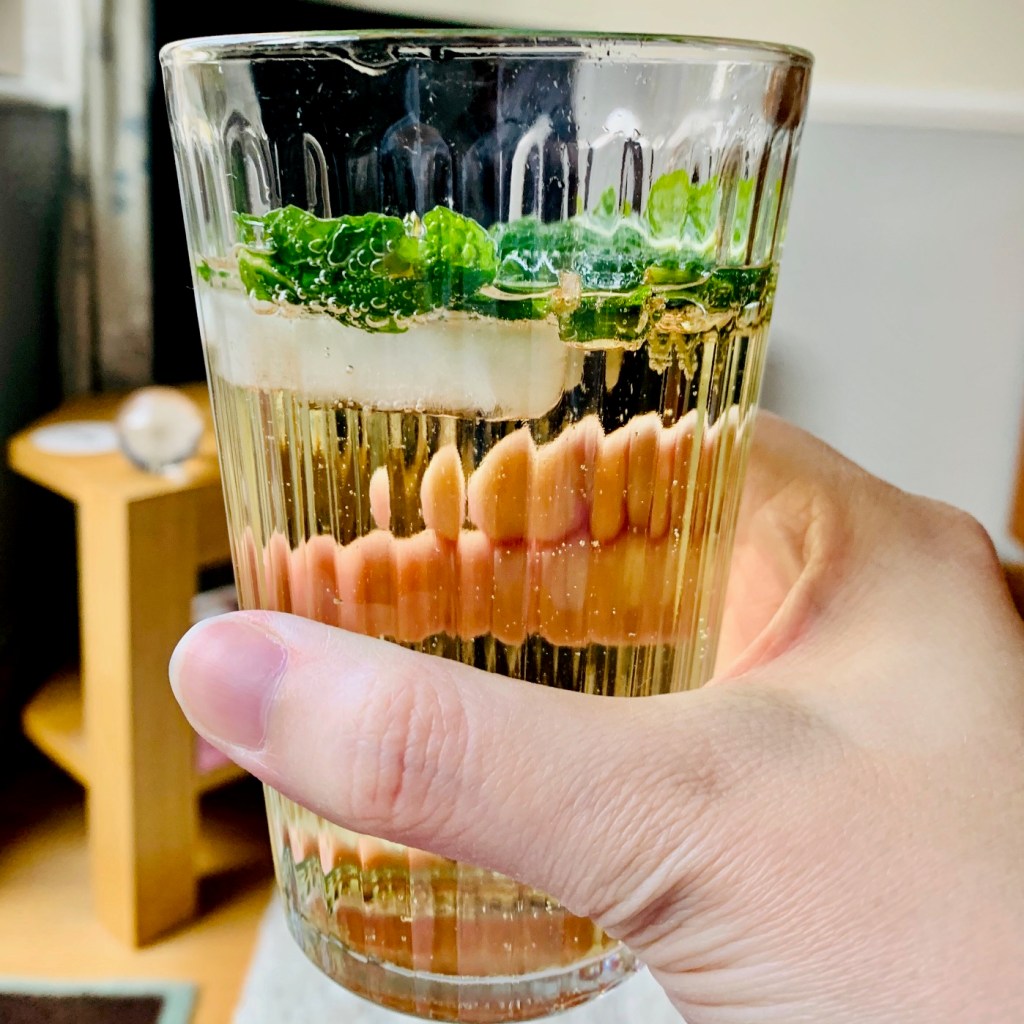
But my favourite discovery of the last few years has been the rebujito, an Andulusian cocktail which is sort of what would happen if a mojito and some sangria had a drunken one night stand. It couldn’t be simpler – you mix very dry sherry (ideally fino, although manzanilla will do) with lemonade, ice and plenty of fresh mint. The ideal ratio is one part sherry to two parts lemonade, but it really is as simple as that. And it tastes quite unlike anything else, sort of sweet and salty and fresh all at once. The sherry gives that savoury, yeasty note slightly reminiscent of Marmite, but it’s tempered by the lemonade and the mint and the whole thing is far more than the sum of its parts.

I tried a couple over the weekend, of differing strengths, and I found that it seemed impossible to mix a bad one, an opinion I held even more strongly after a couple of rebujitos. And better still, from personal experience, the lemonade and the sherry don’t need to be expensive or fancy: just assemble with whatever you can get your hands on, mix, imbibe and relax. Sheer perfection. Roughly this time last year I was halfway between two trips to Andalusia – Malaga last March, Granada last April – and even though I don’t know when I’ll get out there next, I’m looking forward to having a taste of Andalusia in my own back garden, sunshine or no.

Q&A: Glen Dinning, Blue Collar

Glen Dinning has been the mastermind behind Blue Collar Street Food for nearly four years, going from running a street food stall cooking burgers to a weekly food market, adding Cheese Feast and Feastival in Forbury Gardens as major events in Reading’s food calendar. In 2018 he won the Pride Of Reading Award for Entrepreneur Of The Year, and last year he was awarded the contract to provide the match day food at the Madejski Stadium, making Reading’s fans some of the best-fed in the UK. He lives with his girlfriend in West Reading.

What are you missing most while we’re all in lockdown?
Street food, pubs, restaurants, football, everything. I’m desperate to get back to work – I’ve volunteered but can see myself being more of a hindrance than help.

What’s your earliest memory of food?
Trying apple crumble for the first time. I still can’t get enough of it – brown sugar instead of white is the key. 

What’s the worst street food pitch you’ve ever heard?
Someone once rang to pitch their entomophagy stall (the practice of eating insects). At the time I had no idea what it meant so just nodded along until I looked it up, horrified, later. I’m all for giving things a go but the conversation with Environmental Health would’ve been a difficult one.

You’ve been running Blue Collar for coming up to four years. What’s the most ridiculous situation you’ve found yourself in?
Early on, a rival organiser tried to sabotage our events by getting their food traders to sign up, but pull out at the last minute leaving empty pitches. On a more positive note, the celebrations for Blue Collar’s first game at Reading FC ended at the bar with Sir John Madejski, Ady Williams and a drunken phone call to one of my heroes, former manager Brian McDermott.

What words or phrases do you most overuse?
“Do you know what I mean?”

What’s your favourite thing about Reading?
The independent scene in our town continues to build. You can have breakfast at Yolk, lunch at Vegivores or Shed and dinner at Bakery House, Clays or Geo Café and have an experience unique to Reading. The independent coffee places and pubs were thriving – before Coronavirus hit I genuinely thought in ten years’ time we would have an identity of our own as strong as Bristol or Oxford, but now I’m not so sure: everything is up in the air.

Who would you invite to your dream dinner party?
Obama, Gervais, Robin Friday and Don King – he’s a controversial figure but the best salesman there’s ever been.

What one film can you watch over and over again?
The Godfather.

What’s the best meal you’ve ever eaten?
A meal at José, a tapas restaurant in London by the Spanish chef José Pizarro, had a big impact on me. It’s a tiny space, about four hundred square feet, walk ins only and the menus are chalked up daily depending on what’s available. The food is always brilliant and eaten stood up, with wooden barrels to rest small plates on. It’s a different kind of dining experience but there’s such a buzz to it, it’s so authentic and I’d love to try and open something like that one day. On the finer dining side of things, I really like Dinner by Heston and Manchester House by Aidan Byrne.

What’s your most unappealing habit?
Snoring.

Where will you go for your first meal after lockdown?
Bakery House for the chicken shawarma.

What’s the most important lesson life has taught you?
If you find a job you love, you’ll never work again.

What’s the finest crisp (make and flavour)?
The original Hula Hoop.

Where is your happy place?
A long boozy lunch in the sunshine.

What would you be doing in life if you weren’t running Blue Collar?
I had visions of being a comedy agent and promoter for a while and started a little business hiring out pub function rooms, booking comedians and selling tickets. It led to a job selling shows at the Edinburgh Festival and was fun, but I think I’d find it difficult to enjoy something that isn’t food and drink related now. 

How do you relax?
When I started Blue Collar I was still young enough to be able to drink heavily to get through stressful times and not wake up with a monster hangover the next day. More recently, I’ve jumped on every fad going – my girlfriend has tried to get me into yoga during isolation but I’m not sure my body is designed to bend that way.

Who would play you in the film of your life?
If we’re being honest, it would be a low budget project that would go straight to DVD. A former Hollyoaks star would probably be the best I could hope for.

What’s your guiltiest pleasure when it comes to food?
Cheese. The smellier the better.

Tell us something people might not know about you.
My first little food business was selling chocolate bars in the school playground when I was eleven. I used to dabble in a few other things too, like watches and pens, but then Jamie Oliver came along and banned schools from selling sweets in vending machines. It meant my only competition was gone and my sales went through the roof. I owe that man a Wispa.

Describe yourself in three words.
Ambitious, friendly, foodie.

Corona diaries: Week 2

Taking my government-sanctioned hour of exercise involves a certain degree of planning. I used to walk down to the canal, out past the Fisherman’s Cottage (the sign on the door says “Gone Fishing” – a nice little touch, I thought), past the striking Dreadnought Inn, abandoned long ago, and out towards the Thames Path, before cutting right and wandering through Thames Valley Park.

There’s something weirdly beautiful about walking through an abandoned industrial estate, something especially 28 Days Later about it. The thing is, when you walk down a quiet road you know all the residents are behind closed doors, but all these gleaming offices are another matter. All the whiteboards probably have abandoned brainstorms on them, the vending machines still hum, filled with unclaimed snacks.

The problem with this walk, I’m afraid, was the people. The path by the canal is pretty narrow and too many of the people shambling down it like to do so right in the middle, on their mobiles, oblivious to everyone and everything coming in the opposite direction. Once you got to the green space just past the rowing club, there were lots of groups, sitting around and chatting. Did they all live in the same household? In some cases it felt unlikely. The whole thing made me feel a little too jittery, and I wore out my hard stare to no avail, so I was forced to rethink.

Walking round campus would be more straightforward, I thought, until I tried it one day and found the path round the lake blocked by a pair of young chaps, standing around near their parked bicycles, drinking a can of Fosters apiece and chatting as if they didn’t have a care in the world. That, combined with some kamikaze joggers, completely disrupted my equanimity and I’m sorry to say that I had a rant on Twitter.

Not all cyclists, replied a number of good-humoured cyclists. Not all joggers, pointed out the many reasonable joggers who follow me (figuratively, I’m glad to say, not literally). So generally now I stick to the roads of East Reading – nice wide roads, with nice wide pavements. You can walk up them towards Christchurch Green and look back at the way you came, to a vanishing point with the Blade or the gas tower near the horizon.

Late on Saturday afternoon, in my quest to find somewhere free of people, Zoë and I strolled down the Kings Road and through the gates of Reading Old Cemetery. It was the first of many glorious sunny days, and the cemetery was more stunning than I’d ever seen it – peaceful, still and serene with the headstones bathed in sunlight, the trees verdant. We made out a couple of silhouettes in the distance, but that was the closest we came to anybody at all.

We strolled around the perimeter, to the War Memorial, and took a moment enjoying the sunlight, the silence and the isolation, chatting and reflecting on what a strange time this was to live through. As I said to someone recently, if it wasn’t for the constant anxiety that you or someone you love would get very ill, and the fear of running out of food, it would be a fascinating time to be alive.

But none of that mattered that Saturday afternoon – we were still alive, our loved once were safe, I finally had the fridge, freezer and cupboards of a responsible adult (even if it had taken a global pandemic to bring this about) and the sun was out. In that blissful moment the world outside faded away: it felt like we were the only people in the whole graveyard, like it existed just for us.

There was a reason for that. On the walk back out, it soon became apparent that the gate had been shut and padlocked, a couple of hours before the cemetery was due to close.

Once we got close enough to realise that that was indeed the case, I took decisive action: if you class pacing and palpitations as decisive, that is. Zoë, far more unfazed, found a telephone number on a sign near the noticeboard and rang it to explain our predicament.

“He says that he looked round the whole place – he can’t have looked very hard – and couldn’t see us. He’ll be back in five to ten minutes to let us out.”

My pacing slowed slightly, although the palpitations had no interest in following suit. As we waited, I looked again at the sweep of the cemetery, one huge, majestic tree off in the middle distance, and wished I felt more fortunate to have ten minutes with this place all to ourselves.

A pillar-box red Mini pulled up outside the gates, but it wasn’t our rescuer. A cheery-looking short, balding man came out to check if we were okay.

“They’ve done it again! The guy who locks the cemetery is a bastard for this, he does it all the time. I come here to walk the dog, and I’ve lost count of the amount of times I’ve had words with him.” His accent was warm and Scottish, not from round here.

“It’s okay, he’s on his way” said Zoë.

“I think I’ll wait. I wanted to go round the cemetery today, I’ll give him a piece of my mind. And if this ever happens again, there’s a bit of wall up there on the right with a less shallow drop, I’ve used that to break out of the cemetery many times.”

It’s amazing the things you learn in a time of lockdown. I thought it would be all making banana bread and discovering podcasts, but this was an entirely new frontier.

When the man from the security company pulled up, our new Scottish friend was crestfallen (“it’s not the usual bloke”, he said). Our liberator apologised profusely, said he’d received instructions from management to close a couple of hours early. We nodded and said yes, even though I’m sure all three of us believed that he just fancied clocking off early and relaxing in his garden. We threaded our way through the gate, trying to stay six feet away from our rescuer and his heckler, and wandered off into the distance while their frank exchange of views became less and less audible.

“Look at you, you got into such a state” chuckled Zoë as we made our way up Hamilton Road, less leafy, more handsome but – crucially – far less like a prison.

“That’s more than enough excitement for me for the rest of the week, that’s all.”

“I don’t know,” she replied with a mischievous glint just about visible behind her Ray-Bans. “There’s a lot of potential in trespassing.”

Hamilton Road really is a fine-looking street, lined with gorgeous, handsome Victorian villas, big bay windows, 4x4s parked in expansive driveways and – always a clear sign that you’re somewhere prosperous – plantation blinds everywhere you looked. There were hand-drawn rainbows in every window, but approaching one particularly enviable house we caught sight of some teddy bears, sitting on a ledge, with speech bubbles saying “HELP!” and “GET US OUT OF HERE”. I know exactly how you feel, I thought, all the way home.

A couple of days later, another walk through Cemetery Junction found the gates closed and a sign up saying that the council had decided to close the cemetery for the foreseeable future with some specious guff about social distancing. I guess it was just too much bother for them to keep this gorgeous space open. I wish I’d fully appreciated my final wander round there: even so, I wouldn’t be at all surprised if it still gets the occasional visit – from a little Scottish chap, shimmying over the wall.

* * * * *

Weeks into lockdown, my cooking is slowly but surely improving, albeit from a low starting point. Earlier in the week I cooked spaghetti with crab and ‘nduja, a carby bowl of comfort with plenty of clean, fresh crab completely led astray by the deep red fiery flecks of ‘nduja. In the pan the ‘nduja completely dissipated, shading everything slightly crimson, detonating like a grenade of punchy heat. One of my favourite restaurants, Arbequina in Oxford, does a dish of sourdough toast covered in ‘nduja, drizzled with honey and sprinkled with thyme: I may well have to try and recreate it in the weeks ahead.

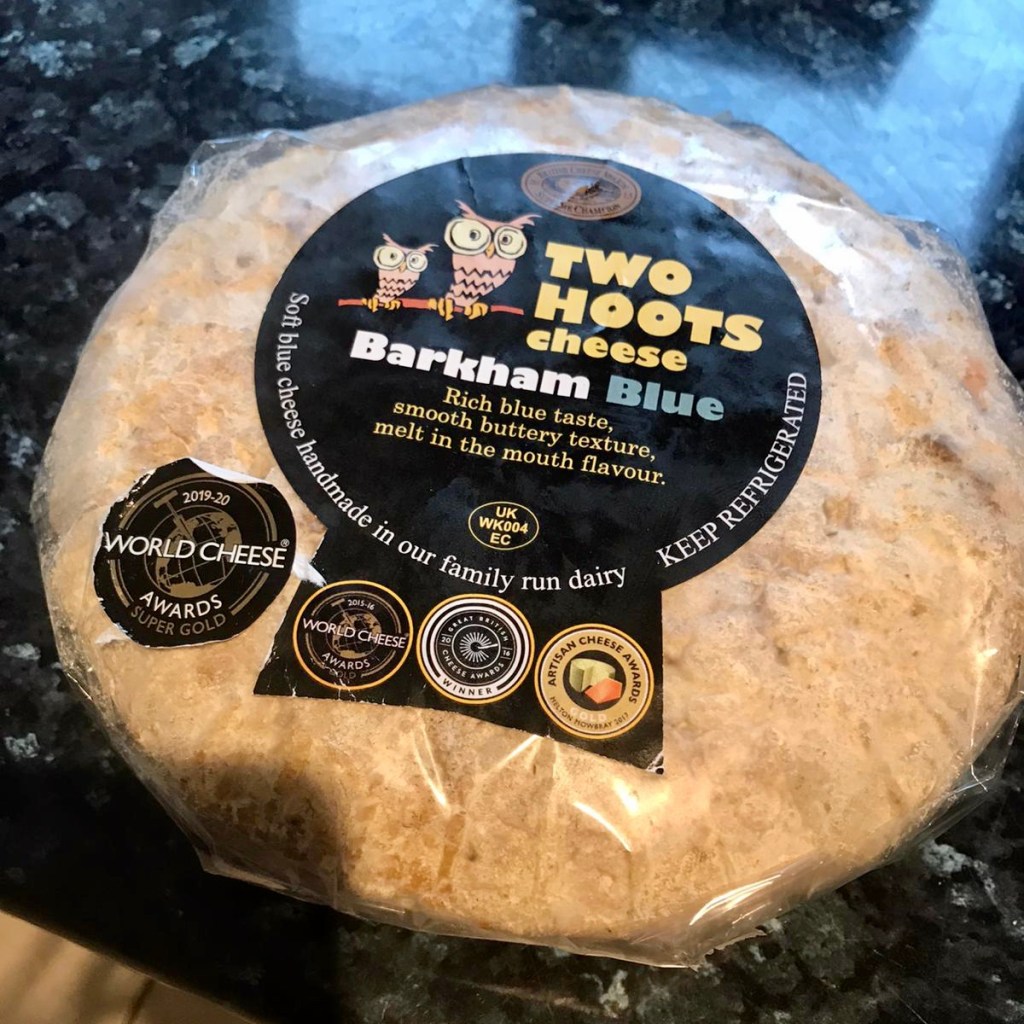
The highlight, though, was lunch last weekend: a toastie made with beautiful sliced sourdough from Geo Café, Barkham Blue (thank heavens for that Grumpy Goat delivery) and truffle honey – another Geo Café discovery. Assemble, butter the top and bottom, pop it in a hot frying pan and wait for the magic to happen: little could be simpler.

By the time it was ready to eat the bread was golden, caramelised by a mixture of melted butter and blue cheese bubbling up through the gaps. In the middle, the cheese was a salty molten delight and the truffle honey had worked its magic, knocking the edges off the whole thing. The best dishes are more than the sum of their parts, and this was no exception, but it helps when the parts are such terrific quality. That I could get them from two of our best local businesses, both still trading in these uncertain times, made it even better.

* * * * *

Lockdown also gives me the opportunity to properly attack the huge pile of unread books in the spare room. It’s a very long time since I had a one in, one out approach to paperbacks and as a result I probably have enough reading material to last me the rest of the year.

There are also some books I’d really like to re-read, like the beautiful, clever I Remember by Joe Brainard or the sweet, deceptively complicated Don Camillo stories by Giovanni Guareschi. There’s something about reading a book you’ve read before: it can be like going back on holiday to a city you think you know and discovering different sidestreets, restaurants and shops. Since we can’t go on holiday anyway, books might be one of the best travel agents right now.

One of the reasons the stock of books has built up so heavily is that I’ve spent much of the last nine months wading very slowly through one book, Kitchen Confidential by Anthony Bourdain. It was a gift from my other half – I’m trying not to see that as a heckle – and so I’ve persevered with it far longer than I normally would. It has sat untouched on tables in cafés in Reading, bars and restaurants in Malaga, the tray tables of countless trains and aeroplanes while I idly surfed the net instead, or watched films, or played games on my phone or did literally anything else. At some points I’ve raced through it at the rate of one or two chapters a month, but picking it up always felt more like a chore than it should have.

It’s not that it’s badly written, and the insight into professional kitchens (albeit professional kitchens of a few decades ago) has been quite an eye-opener. I know Bourdain is beloved of many food writers, and I can understand why, but opening the pages has always been reminiscent of spending time in the company of a friend you can only take in small doses. The irony isn’t lost on me: I have at least a few friends who might describe me in similar terms.

Next up is a book I’ve borrowed from a friend, Slow Horses by Mick Herron. Herron is apparently the twenty-first century’s John Le Carré, his series of spy novels has won widespread acclaim and they’re being adapted for TV with Gary Oldman in the lead role. Espionage isn’t normally a genre I’d read, but I’m mostly motivated by curiosity, because I worked with Mick in my first job after university, almost twenty-five years ago.

It was a little publishing company in the basement of a law library, back in the days before computers and when everyone got a desk of their own. I was doing editing and sub-editing, and I shared an office with a chap called Naveed. Mick worked in the other room and those two rooms was the sum total of all the office space occupied by our miniature publishing empire. It’s hard to imagine, now, working for seven and a half hours a day without music to listen to or the BBC website to run to every time things got boring (they quite often got boring) but somehow we managed it. We had a huge coffee pot – cafetieres were too posh for us – and everything would stop mid-morning for a coffee break where we all piled into one of our two rooms.

I remember Mick being a quiet, wry, drily funny Geordie, slightly older than Naveed and I, and far too sensible to get drawn into our more random conversations. I had no idea what to do with my life and had jumped at the first job opportunity that came along. I don’t think anyone could have described me as conscientious and I still hadn’t discovered that if you plan to wear a shirt to work you really ought to iron it. If Mick judged me for that – and surely he must have – he was far too polite to say. Nothing about him indicated that he would go on to be a best-selling author, which just goes to show that it’s the quiet ones you have to watch.

“It’s like the opposite of finding that someone you went to school with turned out to be a serial killer” I said to a friend the other day.

“Yes. The opposite of that” he replied, presumably nodding and backing away from the conversation. It’s hard to tell via WhatsApp.

I did a bit of research on Mick and found an interview where he gave his tips on writing. A good rule of thumb is: delete all those words that you thought made it a special piece of prose, he said. I must be doing something right because I’ve reread this whole piece with his advice in mind and didn’t have to make any changes whatsoever.

* * * * *

Last week I asked on my Facebook page: where do you plan to go for your first post-lockdown meal? The answers came thick and fast, and they made me feel heartened that so many good restaurants were still in people’s thoughts. There were quite a few mentions of Kungfu Kitchen (along with gratitude that they still deliver, and delight that you got so much food that you could guarantee leftovers) and more than a few people looking forward to their first trip to Clay’s. But loads of restaurants had places in people’s affections: Pepe Sale, Papa Gee, Fidget & Bob, Bakery House and Côte were all mentioned in dispatches, along with many more.

One reader told me she had a booking at Pepe Sale “The Night The Restaurants Closed”, and I thought that was a good way of describing it, our version of the day the music died. On The Night The Restaurants Closed, I was meant to be out for dinner with my family, celebrating my birthday. By contrast, my last meal out was actually at Carluccio’s, which turned out to be The Restaurant That Won’t Reopen. The Night The Restaurants Closed coincided with the International Day Of Happiness, an especially cruel practical joke for the cosmos to play.

This week, readers have told me how having a takeaway every week has become the special event that going out for dinner used to be. Friends of mine ordered their first Kobeda Palace takeaway a couple of nights ago, I see Twitter awash with mentions of Valpy Street (fish and chips, delivered to your door!) and Vegivores. I have done my bit by booking a slot for delivery tomorrow from Kungfu Kitchen, and plan to spend the time between now and then agonising about what dishes (and how many dishes) to order. It’s a difficult enough decision at the best of times, and having several days to choose only makes matters trickier.

My final pub session before lockdown was a couple of Saturdays before The Night The Restaurants Closed. In the run-up to last year’s general election, a group of us on Twitter became especially taken with the output of Craig Morley, the Tory candidate for Reading East, who looked like a haunted ventriloquist’s dummy and opined about climate change and Brexit as if he had Boris Johnson’s hand up his arse.

He blocked all of us, one after the another, and we all rejoiced as he made PR blunder after PR blunder. First there was the image of a random abbey in Scotland on his website, because, despite being a local boy, he didn’t know what Reading Abbey looked like. Then there was the time he decided to attack the Guardian for the crime of quoting huge sections of his website verbatim (he never quite explained how his own website didn’t correctly reflect his own views, but I suppose he was busy). Or his hapless turn on local radio when he managed to make Andrew Peach look like Andrew Neil.

And let’s not forget his “meet the candidate” event, which charged for admission and was only attended by Conservative party members: even in the photos posted on social media the audience looked like it was actively contemplating jumping out of the nearest window. It was like going back to the glory days of Rob Wilson Tweeting porn links and claiming 9p for a non-existent taxi ride: I started to wonder whether Morley had recruited Mr Blobby as his campaign manager. Pictures cropped up of Morley, accompanied by Sajid Javid, at the Caversham Butcher and behind the bar at the Moderation, and I made a mental note to shop and drink elsewhere.

The Craig Morley Appreciation Society enjoyed gaffe after gaffe; one of us even donated a pound to his election fund (mostly out of pity: there were no other donations, and the fund was quietly put out of its misery). And when Craig lost, we all celebrated virtually and then, a little while later, we all met up for the first time in the Nag’s Head. Plenty of booze flowed, we shared stories and eventually wandered out into the night promising to do it again. And on a Saturday in March we all assembled at the Last Crumb to do exactly that.

A couple of days ago, founding member Jane was reminiscing about the fact that it had been a month since that final trip. And one by one we all chipped in, saying that we couldn’t wait to do it again. The extroverts among us, me included, said that we were going stir crazy without the buzz of socialising. And you could tell that the introverts, although much happier with the current situation, were still looking forward to joining us, even if it meant rolling their eyes at our stories and jokes.

“The hangover’s going to last 48 hours” said Jane. “I’ll be hugging people, over-emotional, by 8.35 and retired hurt by 10.05 at the latest” was Helen’s assessment. Nick, who during the day is responsible for keeping the Whitley Whiff under control, started reminiscing about having a post pub kebab and being asked the time-honoured question “Chilli sauce, boss?” Strange, really: you’d think, given his job, that he’d already dealt with enough mechanically recovered slurry to last him a lifetime.

These memories, and the chance to recreate them in our imagination, are what we use to get by, right now. Jane reminisced about the smell of onions frying on the grill, a scruffy Proustian reboot, and I thought that the best thing about this situation is that it enables us to reboot so many other things in our life.

They say it takes twenty-eight days to form a new habit, so perhaps by the time we come out of lockdown we’ll be a blank slate again. Everything will be alien, like there’s fresh snow over everything, and we’ll have an experience most people never get to enjoy: the chance to do something for the first time, a second time. The first meal out, the first pint, the first evening with friends, the first hug. That feels like something well worth holding on to.