Takeaway review: The Reading Room at the Roseate Hotel

As of August 2022 the Reading Room no longer does a delivery menu. It’s probably for the best.

Normally with my reviews, as most of you know by now, you get a preamble. That’s the bit before I talk about the food – the bit some of you think is too long – that gives some context and explains why, this week of all weeks, I picked this restaurant of all restaurants.

I had a preamble all ready in my mind for this week’s delivery from The Reading Room, the restaurant that’s part of the Roseate Hotel. You know, what used to be Cerise in what used to be in the Forbury Hotel. In it, I was going to talk about how, oddly in 2020, Reading’s high-end dining scene saw more activity than you’d expect in the middle of a global pandemic. The Reading Room launched with a new fine dining offering and then the Corn Stores reopened with a constantly-changing Michelin-chasing tasting menu.

I would have gone on to say that both restaurants have pivoted in different directions in lockdown. The Corn Stores seems to have been offering a fancy, expensive, heat-at-home option, in keeping with other highly regarded restaurants nationwide (although best of luck finding any details on their website). By contrast, the Reading Room has chosen to offer gourmet burgers via the usual delivery apps, a limited menu focusing on quality.

I know, burgers. But then I remembered that it’s three years since I reviewed Honest Burgers, during which time they have established themselves at Reading’s favourite burger, the Coke to 7Bone’s Pepsi. And I wondered whether the Reading Room was a genuine contender to that undisputed primacy, so I decided to place an order and see whether they lived up to the promise.

Unfortunately, that preamble has been derailed somewhat by the Apocalypse Now of delivery experiences, one so horrendous that I can’t imagine myself ordering from the Reading Room again, or using Uber Eats for the foreseeable future. Those of you who enjoy my misfortune, and I know there are a few of you, will enjoy picking through the debris of this one. For my part, I’ll just tell you what happened and maybe you can decide whose fault, if anybody’s, it all was.

The Reading Room delivers through all three main delivery partners, but I fired up Uber Eats on a weekday evening to make my choices. The Reading Room’s options were nicely compact: there are three beef burgers, a chicken burger, a pulled pork burger, a “lean turkey burger” (do you reckon that really appeals to anybody?) and a couple of vegan and vegetarian options. They all come with fries and there are a few optional sides – chicken wings, onion rings, that kind of thing. The limited range was more Honest than 7Bone, but that’s not necessarily a bad thing.

I placed an order at quarter past seven and twenty minutes later the app told me my driver was en route. It said he was making another stop on the way to my house, although the map of his route made it look like he was heading all the way across to the other end of town, but I decided to reserve judgment. And sure enough, he was outside my house ten minutes later, holding out a bag to me. So far so good, except that it had a Tasty Greek Souvlaki sticker on it, and somebody else’s surname scrawled on it in biro, all block caps.

“I’m really sorry, but this isn’t my order.” Funny how we always apologise in these circumstances.

“But this is the right address.”

“It might be, but I didn’t order from this restaurant and that isn’t my surname. We ordered from the Roseate Hotel, the burger place. The app said this was your second stop, are you sure you didn’t deliver our food to them?”

“No, I had to drop something off at the Roseate Hotel.”

This made no sense.

“Hold on a second” he said. A car was trying to pass on our narrow one way street, so he pulled away. I assumed he’d come back to continue the conversation, but no – he had vanished, never to return. Shortly after this, my phone pinged to notify me that the order had been cancelled and I wouldn’t be charged. I have no idea why they didn’t send me my food, but they fixed it quickly and the driver was perfectly pleasant, if a little rabbit in the headlights, so up to this point I had no complaints. Uber Eats even gave me five pounds off my next order, which seemed very nice of them.

I did what I expect most people would do in my situation: I fired up the app and reordered the same dishes. With hindsight, maybe I should have cut my losses: the alarm bells rang when about eight minutes later the app informed me that a driver was on his way with my food.

“That’s far too quick for them to cook it all again from scratch, isn’t it?” said my other half, Zoë. Quite.

Our second driver, who was also perfectly pleasant, pulled up in a black cab and got out holding a paper bag with our order in it. He may have had an insulated bag on the back seat but if so, I didn’t see it.

“I’m concerned that this might be my original order, which was ready over half an hour ago.” I said. “This has arrived far too quickly to be a new order. Can you wait while we just check if it’s hot?”

“Sure” he said. We took it into the kitchen and opened it up. It felt around half an hour from being hot – surely it had to be the original order, given that it had arrived so quickly? If they’d cooked it straight away at speed and the driver had scrambled it to us in five minutes flat, I would have expected it to be piping hot.

“I’m sorry,” I said – sorry again, for some reason which escapes me – “but this isn’t hot.”

“You’ll have to take it up with Uber Eats, I’m just the delivery driver” he said, and like that he sped off into the night. So, it was a lukewarm burger and chips for dinner and my main task was to try and work out whether, if it had been hot, it would have been the worldbeating burger you would hope to get from what used to be the Forbury Hotel. 

I’m going to stick my neck out and say that it’s a no from me. I went for the “Reading Room Prime Steak Burger”, their premium option with mushrooms, Stilton, tomato relish and “sticky bacon” which I opted to add on. According to Uber Eats the meat is “sourced from the Windrush Valley at the food of the Cotswold Hills”. 

Well, bits of it were nice. The Stilton had a good salty kick and I didn’t mind the tomato relish at all. But the bacon was a flaccid rasher of back, more icky than sticky, and the burger was chewy and unseasoned, grey rather than pink in the middle. I can only guess whether it would have been better straight out of the kitchen – possibly, yes, and that half an hour delay would have seen to any remaining juiciness, but the whole thing was dry and tasteless and I suspect that would have been the case one way or the other. The chips weren’t good either: the last time I had half an hour old chips was in a staff canteen, and even they were better than the Reading Room’s “skin on chips”.

Zoë’s pulled pork burger was a little better – “it’s stayed hotter because it has this big rosti on top of it”. The patty was minced pork, the rosti was apparently pretty good and there were some tender pieces of pork belly on top of the whole thing. “I’d probably order this again” was her verdict, although it’s hard to imagine a situation where that will ever happen. I’m not sure that you could ever describe this as a pulled pork burger, though, unless by “pulled” they meant “pulled a fast one”.

I don’t hugely like chicken wings as a rule, but my burger and chips were so dismal – I didn’t finish either – that I decided to try them. One was pleasant enough, the second had a fishy aftertaste which I couldn’t put my finger on. They were pretty much stone cold. Zoë, who does like chicken wings, could only manage one. “They’re overcooked and dry” was her verdict. A meal like this is barely a meal at all. It’s worse than a meal, the absence of a meal, and was worse than any of the things I could have cooked up with the contents of my fridge. 

After what passed for my dinner, I tried to get in touch with Uber Eats to complain about my cold, late food. Their app does everything it can to guarantee that you can’t speak to a human or call a phone number – to Deliveroo’s credit, they are at least contactable – but I went through the options on their help section and was told that somebody from Uber Eats would be in touch about the issues I’d raised. You can’t fault their promptness, because in less than half an hour I received an email. It didn’t give a phone number, an email address or any way to get in touch with them if you found the response inadequate, which is interesting given what it said. Here is a screenshot.

I contacted Uber Eats on Twitter to see if they wanted to talk about this, but I didn’t hold out much hope. Looking at their mentions, it seems they take over 24 hours to respond to unhappy customers, and I’m guessing that’s because there are so many of them.

“My food took 30mins to arrive after leaving. I’m one mile away. Food stone cold and incorrect” said one. In another, Uber Eats said that they couldn’t do anything because the order was placed 48 hours ago, although it probably took them that long to pick up on the complaining Tweet. “You keep sending me an automated message and ignoring the situation” said a third. My 29p credit probably puts me in the top percentile of people whose dinner plans are ruined. The worst thing is that it’s a credit not a refund, so I can’t even go crazy, go out and blow it all on some Space Raiders.

This is the tricky thing about this model with a middle man involved: the driver says you should complain to Uber Eats, whereas Uber Eats’ line is that you should just give the restaurant a poor rating on the app. I did consider contacting the Reading Room to get their feedback, but the website lists no phone number or contact details and the Twitter feed hasn’t uttered a word since summer 2019. It’s almost like they don’t want customers, which is probably for the best under the circumstances: I can’t see them getting any from this review.

I still don’t really know whose fault it was that I had such a dire meal. Was it Uber Eats, for some kind of software snafu that meant I never got my order from Driver A? Was it Driver A for making it to the Roseate and not realising that he was meant to collect some food there? Or was it the restaurant for seeing the second order coming in and thinking “well, we have that sitting here under the pass and we’ll only have to throw it away”? And weirdest of all, I’m giving the restaurant the benefit of the doubt by assuming that they sent out my food that had been sitting under the lights for half an hour – if it was a brand new order that turned up to my house, tepid and underwhelming, that would reflect even worse on them. 

Or, equally plausibly, maybe I am just a moron who should have foreseen that this was exactly what would happen if I tried to order exactly the same dishes all over again. Who knows? Answers on a postcard. In the meantime if you want a burger delivered to your home stick to Honest, and if you can order a takeaway directly from the restaurant instead of using a third party please do.

In any event, if you really do want Reading’s best burger these days, you need to make your way to Blue Collar on a Wednesday lunchtime and grab one from the dubiously-named Meat Juice. It only comes one way – with proper bacon, a slab of mature Cheddar, burger sauce and pickled red onion. The patty is made from minced chuck steak, perfectly seasoned with just a hint of chilli in the mix. There aren’t any fries with it and it will only set you back six pounds fifty. Eaten on a bench just round the corner from Market Place it is pretty damn close to perfection. 

Having said that, if you want a better meal than the one I had at the Reading Room, you could just go out and buy some Space Raiders: they would outperform it in pretty much every respect. I’d give you the money for that myself but I’m afraid it’s resting, Father Ted-style, in my Uber Eats account, unlikely ever to be redeemed.

The Reading Room
The Roseate Hotel, 26 The Forbury, Reading, RG1 3EJ
0118 9527770

https://www.roseatehotels.com/reading/theroseate/
Order via: Deliveroo, JustEat or Uber Eats

Takeaway review – Banarasi Kitchen at the Spread Eagle

As of October 2022 Banarasi Kitchen is no more and a new Indian kitchen, called Bagheera, will be operating out of the Spread Eagle under new management.

In its capacity as The U.K.’s Largest Town™️ Reading has many neighbourhoods and tribes who live in them. Some people are proud Caversham residents, some are firm supporters of Katesgrove, others fly the flag for New Town, or the university area. Just like having a favourite chippy, everyone has their own opinion and could happily argue the merits of living round the corner from Geo Café or Pau Brasil, just down the road from the river or from the Harris Garden.

Personally I’ve always lived either in the centre or on the east side, and I grew up in Woodley so I’ve always been more familiar with that end of town; the west side, out towards Tilehurst, remains a bit of a mystery to me. Despite that I have a huge fondness for west Reading, for its vitality and its charm. There’s always something going on out that way, and if you walk from the Nag’s Head to Double-Barrelled down the Oxford Road you see Reading in all its diverse glory. I get cross about the criticism that part of town gets: a lot of it always feels, to me at least, like poorly disguised bigotry. Something about that mosque really seems to bring out the worst in some people.

And there’s more to west Reading than just the Oxford Road: the Bath Road is grand and sweeping, with beautiful tall houses at its eastern end and the likes of Florida Court, green-roofed, pretty but incongruous, further down. The Tilehurst Road also has a lot going for it, and there are some lovely houses between it and the Oxford Road: Brunswick Hill, for instance, is always a good source of house envy. And off those main roads you can see lots of pretty little whitewashed houses with porches – places like Hollins Walk, or Benyon Court. You could almost describe them as Instagrammable.

And however well you think you know it, west Reading always throws up surprises. The fact that there’s a football ground not far from Double-Barrelled, for example, or the absurdly photogenic Wilder’s Folly a short distance from IKEA. I recently asked on Instagram, after a meditative coffee sitting up on Balmore Rise, what people’s favourite spots in Reading were. Several people mentioned McIlroy Park and its splendid view of the town: I’d never even heard of it before, and now it’s on my to visit list.

I also maintain that West Reading has always been Reading’s most interesting area in terms of food and drink. Something about it encourages people to try new things and take risks: it has Reading’s best beer pub in the shape of the Nag’s Head, and the Castle Tap and the Forester’s Arms are, in happier times, also worth a visit. It can claim to be the birthplace of Reading’s burgeoning coffee scene – the first Workhouse was there, back when C.U.P. and Tamp were just useful Scrabble words.

More to the point, it has consistently played host to a selection of some of Reading’s best restaurants. The wonderful and much-missed Bhoj plied its trade on that run of shops opposite Workhouse, and there was a halcyon age where Workhouse also allowed I Love Paella to operate out of its kitchen on evenings and weekends.

Bhoj and I Love Paella are sadly no more, but Kobeda Palace remains one of the best (and best-value) restaurants in town, and Bhoj has been replaced by Oishi, bringing sushi and sashimi to west Reading. I miss Tuscany, the brilliant Polish pizzeria a tiny bit further down the road, and the Jolly Fryer closer to town. Both were perfect for lining the stomach before a session at the Nag’s, but the other thing about having such a vibrant scene is that there’s always somewhere to take its place: I still haven’t reviewed Palmyra, the Lebanese restaurant which opened on the Oxford Road a while back, for example.

All this brings us neatly to Banarasi Kitchen, an Indian restaurant operating out of the Spread Eagle pub, between the Oxford and Tilehurst Road. They began cooking there last year and the pub joined Instagram to promote its new offering. Gradually I started to hear some noise about the food being worthy of investigation, and when I announced that I was going to start reviewing takeaways several people on Twitter told me I needed to check it out.

Banarasi Kitchen has a famous fan, too: none other than Naomi Lowe, the gluten-free genius behind Nibsy’s, who lives nearby and told me it was well worth a try (she particularly recommended the daal yellow butter fry, “although I bet you won’t have it with chips like I do”). That was all the encouragement I needed, so I fired up my laptop on a dreary Tuesday night, ready to order. But before I did that, I decided to consult a friend of mine who has forgotten more about Indian cuisine than I’ll ever know: I asked Nandana, co-owner of Clay’s Hyderabadi Kitchen and semi-regular fixture in the Guardian, what she thought of the menu.

“It looks decent.” she said. “I’m interested in the rye ke aloo, mustard-infused potatoes. That’s a very popular dish from west Bengal, close to the border with Bangladesh. I can see a few dishes from southern India too – murg kori gassi from the south-west coast and sea bass moili from Kerala.”

The menu struck me, from my inexpert point of view, as nicely balanced between some specific regional specials and an approachable mixture of more well-known dishes. So if you want to eat a rogan josh, a jalfrezi or a korma you can, and you can add onion bhajis or samosas if you like, but there are also momo and chaat, Punjabi cholay and railway lamb if you want something more off the beaten track. They even do fish and chips, burgers and salads, and a kids’ menu – which if nothing else is helpful if you really fancy a curry but the rest of your household is more conservative. Mains go from ten to thirteen pounds, and most starters are less than seven pounds.

Banarasi Kitchen is on JustEat, Uber Eats and Deliveroo (all under slightly different names) but I wanted the restaurant to take as much of my money as possible, so I phoned the restaurant to place my order directly. My older readers might remember that this used to be the only way it worked when getting takeaway – you rang them up, the line was invariably terrible, the place always sounded packed to the rafters and half the conversation consisted of you repeating yourself, or asking the person on the other end of the phone to. You read out your card details, you hoped they’d taken your address down correctly, you put the phone down and you waited, you waited and then you waited some more.

There was no such problem on this occasion, so I read out my order, gave my address and postcode and listened as the man on the other end of the phone read it back perfectly.

“Do you need my card details?” 

“No, we’ll take payment at the door.” This was another development since I last ordered a conventional takeaway, which must have been, I don’t know, around four years ago.

“How long do you think it will be?”

“Around forty minutes.”

This struck me as reassuring – I live a ten minute drive from the Spread Eagle, and if the ETA had been quicker I might have been concerned. In the event, it was just over an hour before my doorbell rang, during which time I hadn’t been constantly checking my phone to watch an icon of a scooter meandering round Orts Road or, worse still, standing on the bridge over the Oracle for five minutes. My driver may well have got lost, but I didn’t know about it and that suited me fine: it turns out that ignorance is bliss after all.

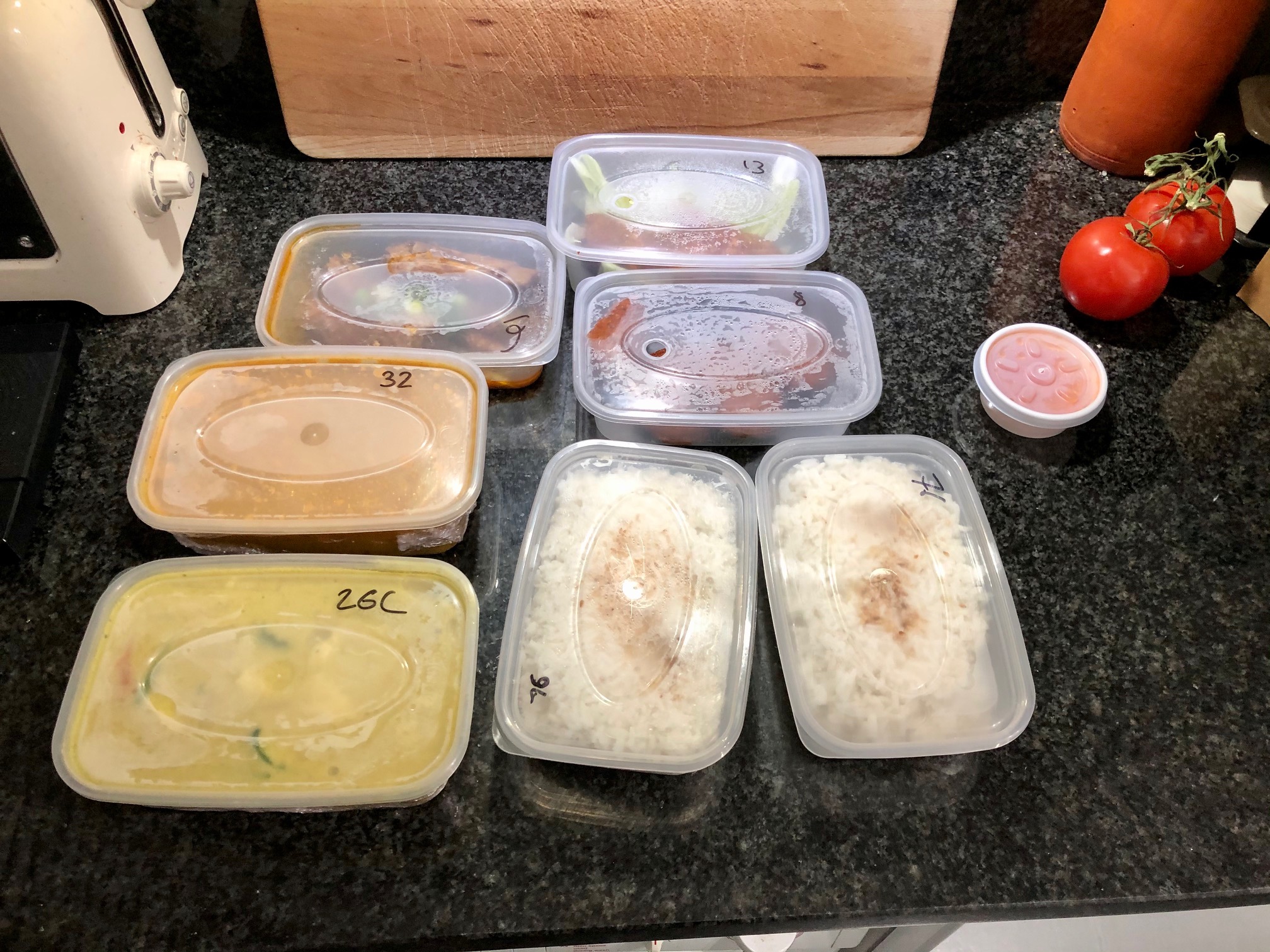
Sometimes, even when someone is wearing a mask, you can tell they’re smiling, and that’s how it was with the gentleman standing on my doorstep. He was wearing a shirt and tie, which immediately made me take to him, and he asked me how I’d heard about Banarasi Kitchen. I decided to go for the short version – “I’ve seen you on Instagram” – and quickly tapped my PIN in on the card reader before grabbing my food from his insulated bag. The packaging was a mixture of foil-lined bags for the bread, conventional plastic tubs for the curries, rice and chutneys and, randomly, a foil container for one of my starters. I’m pretty sure, though, that everything was recyclable – and, equally importantly, everything was piping hot.

We ordered a couple of starters to eat as sides, because with a takeaway everything comes at once. The lamb samosas were rather good, with a little fire to them, although the decision to use filo pastry instead of something thicker made them feel slightly insubstantial. There were three of them, which might have caused more disagreement if there hadn’t also been three very respectable lamb seekh kebabs. I made do, not that it felt like any sacrifice, with two of these – and they were almost impossibly soft, well spiced and well seasoned. 

The two chutneys that came with the starters were very good indeed – one bright and zingy with bucketloads of mint and coriander, the other sweet with tamarind. I thought I would have liked some raita for the kebabs, but halfway through I found I was more than happy without it. 

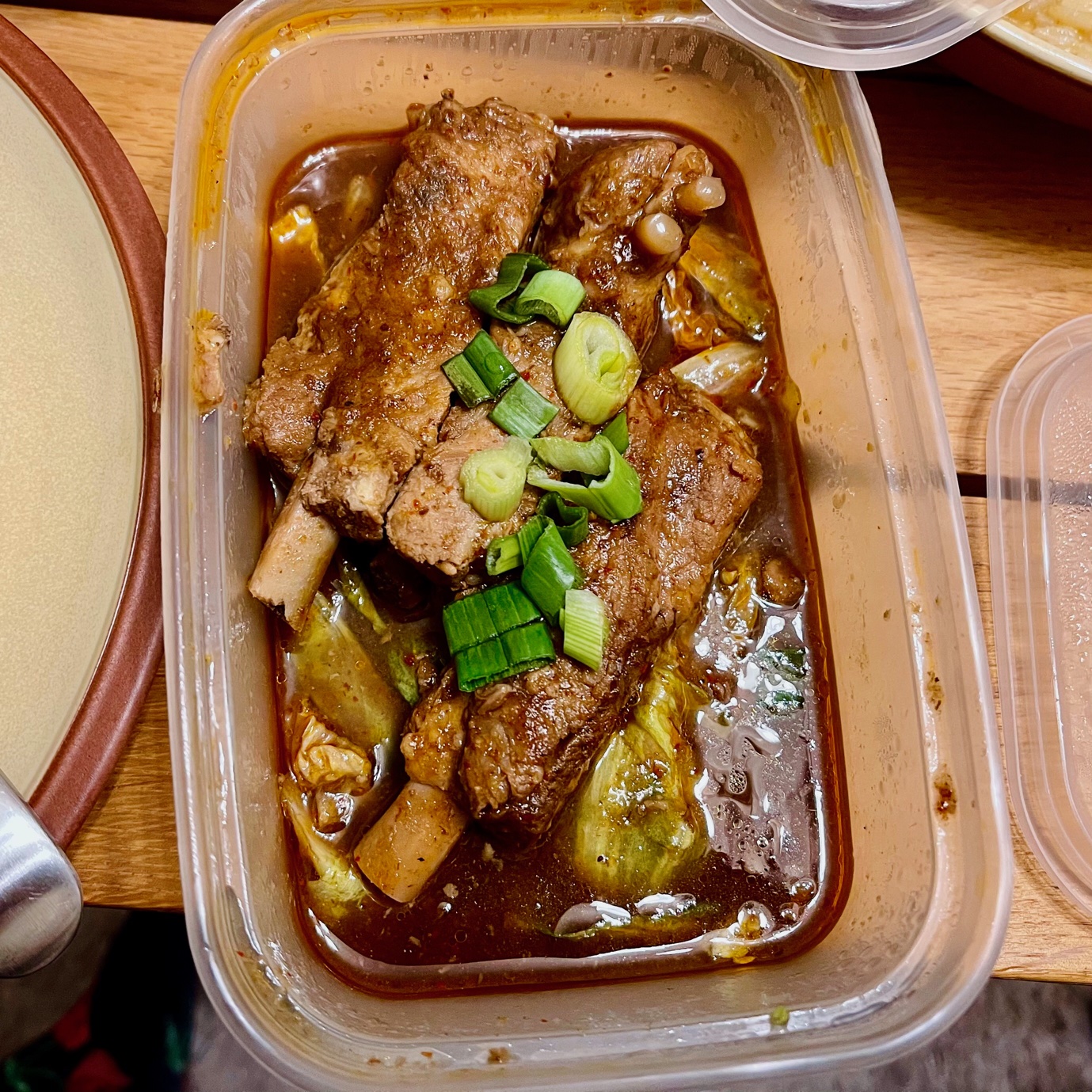
I’d picked the murg kori gassi, a Mangalorean chicken curry, after hearing Nandana’s thoughts on the menu and I’m so happy I did. Even on opening it, it didn’t feel like a boring curry made with a generic base sauce – it didn’t look like it had been near a tin of condensed tomato soup, and was a deeper hue with a good helping of curry leaves on top. It was an absolute delight: there was plenty of coconut in there which transformed every forkful of basmati rice and the chicken was both generous and tender. The heat in this dish built perfectly and it reminded me of dishes from Clay’s, in that the sauce was a feature attraction in its own right. The meat was almost secondary: next time I order from Banarasi Kitchen I may well go for the chickpea curry, or something with paneer.

I also couldn’t not order the daal yellow butter fry after hearing such glowing reports from Naomi. Again, it was an excellent decision to defer to someone better informed: this was everything daal should be, earthy and comforting with a good dose of beautifully pungent garlic. 

And although I ate some of the daal with rice, it was even better with bread. We’d ordered a keema naan, which I’m told was rather nice, and a laccha paratha which was probably the only disappointment of the meal – I was hoping for something buttery with plenty of layers, like the excellent example by House Of Flavours, whereas this was a little stodgier and closer to a naan. It did however do a brilliant job when it came to transporting daal from bowl to mouth, and it’s my fault anyway for not ordering chips as I was told to: a rookie mistake on my part.

My final choice, chilli chicken, was a dish I’ve ordered in many Nepalese restaurants, from Sapana Home to Namaste Momo. It’s a beautiful dish when done well, with a hot, sharp and sour sauce which contains, among other things, a little tomato ketchup. Banarasi Kitchen’s version was easily one of the best I’ve had, with a lovely acrid kick that made every mouthful perfectly balanced between pleasure and pain. The chicken was tender, although the pieces were strangely uniform in shape compared to those in the murg kori gassi, and the peppers and onions had the right amount of crunch for contrast. As with the murg kori gassi, every molecule of sauce was swept up and finished off: this just wasn’t food you left if you could possibly help it.

The whole thing made me incredibly happy on an otherwise nondescript evening, and reminded me of the joy that a truly good takeaway can bring – not having to worry about food, or masses of washing up, and just putting yourself in somebody else’s hands for one night. I miss restaurants, but I do also very much like being able to eat delicious food while watching crappy TV, without having to go out in the rain or change out of my comfies. When food is as good as Banarasi Kitchen’s, you don’t feel as if you’ve made any tradeoffs at all.

Our dinner – two starters, three curries, two portions of rice and two breads – came to just under forty-eight pounds, and when I looked at my bill I saw that the restaurant had knocked ten per cent off – impressive value when you think that they don’t charge for delivery. There are all sorts of offers and discount codes and vouchers on the delivery apps, but I would go direct to the restaurant any day of the week. I’m just sorry I didn’t get to leave them a tip, but I’ll make sure I do next time. Hopefully telling everybody how good they are (unless you’re one of those people who already knows) will do my bit to pay it forward.

So there you have it. I’m committed to reviewing a different takeaway every week for the duration of this third lockdown and I’m beginning to realise that it’s a lose-lose situation in some respects. If the meal is bad, you never want to use that restaurant again, and if it’s good you are disappointed that you have to move on to the next one. For those of you anywhere near west Reading I think the emergence of Banarasi Kitchen is extremely good news, and if you haven’t tried them yet I’m looking forward to seeing what you think. When life goes back to normal, I’ll be heading there in the flesh to review it properly. Not only that, but I hear the Spread Eagle has a decent quiz: I suspect I’ll be so glad to be in a pub again that I won’t even mind embarrassing myself by taking part.

Banarasi Kitchen
The Spread Eagle, 117 Norfolk Road, Reading, RG30 2EG
0118 9574507

https://banarasikitchen.com
Order via: Direct through the restaurant, or via Deliveroo, JustEat or Uber Eats

Takeaway review: Firezza

I’ve always been a bit bemused by the huge fuss in this country about burgers, which has been around since before I started reviewing restaurants and, for the time being at least, still shows no sign of abating. I used to like to moan that they’re just a sandwich until I even bored myself, and although the better examples – Honest in Reading and the likes of Patty & Bun further afield – have helped me to appreciate them more they’d still never be my first choice. But a really good pizza – even if it’s just a big bit of cheese on toast with a fancy accent – is another matter altogether.

Oddly, there’s something about their universality that makes them an especially comforting thing to eat abroad, if you can find somewhere that does a really good one. I’ve eaten them in Le Briciole in Paris, one of my favourite places for a low-key boozy lunch while pausing between beautiful boutiques, and in Linko in Helsinki, where they remain one of the safest meals you can have without risking having to sell a kidney. I’ve eaten pizza all over the place, come to think of it – one strewn with fiery merguez at Otomat in Ghent, another in the impossibly cool Old Scuola in Rotterdam, all concrete and marble, clean lines and attractive, cosmopolitan clientele. That meal was disappointing, actually, but only viewed through the prism of 2019; I’d sacrifice one of my remaining aunts to Satan for such a city break and such an underwhelming dinner right now.

When I went to Bologna I of course had pizza there too, even though it isn’t from that part of Italy, and on my last trip abroad before the world changed, in Copenhagen, I ate at another ridiculously hipster pizza place called Bæst in Nørrebro, just opposite the To Øl taphouse. The pizzas were small – we’d ordered three between the four of us which turned out to be one of my regrets of the trip – but even so they were exemplary: one, all leopard-spotted puffy crust and tiny grenades of ‘nduja, was one of my highlights of the holiday. The only place I never seem to bother with pizza is on trips to Spain – there, for some reason, it feels like it would be taking the piss to stray from tapas.

Back in the UK, I’ve found excellent pizza more difficult to come by – difficult, but not impossible. There are good examples in Bristol – Flour & Ash has closed down, a sad casualty of Covid-19, but Bosco is still as good a neighbourhood pizza restaurant as you could hope to find, in a neighbourhood where I hope to live in my next life. Closer to home, I’ve grown to love Newbury’s Lusso: how I miss that half hour lazy train journey, stopping everywhere in the West Berkshire countryside and ambling past a giant Harrods depot, seemingly plonked there out of nowhere. And in Reading, of course, you can’t talk about pizza without talking about Papa Gee in general, and their legendary Pizza Sofia Loren in particular.

Takeaway, though, is another matter: much as I love pizza I practically never order it as a takeaway. I’ve tried Franco Manca through Deliveroo a couple of times, and what arrived, although technically a pizza, was so forlorn that it quite put me off doing it again. And I would just never order Domino’s or Papa John’s these days: as I get older I get a clearer idea of what, for me, constitutes empty calories and that kind of thing is very much on the list. This month I’ve taken to watching The Masked Singer on ITV of a Saturday night – because January is nothing if not the month for masochism – and there are what feel like constant ads for Domino’s. In one, there’s a slow-motion clip of someone lifting a slice of pizza up where you see the ropy, gloopy, stringy ribbons of cheese connecting it to the rest of the pizza, straining but not snapping, almost endlessly elastic: to be honest, it makes me want to barf.

Enter Firezza, about which I have heard good things. It’s a small chain of pizza delivery places – most in London but with three random branches outside the capital in Exeter, Reading and Tunbridge Wells. The Reading branch is up on the Shinfield Road, and they used to trade there a while back before closing and then, a few years later, reopening under the same name in the same spot: your guess is as good as mine. The website tells a familiar story – the founder went to Naples, fell in love with authentic pizza and decided to recreate it back in Blighty – but it did seem to be a genuine small chain rather than a franchise arrangement, and the whole thing looked interesting enough to be worth a try.

I ordered through Deliveroo, only subsequently realising that you can order directly through the website: a schoolboy error which will teach me to do a little more research next time. That said, I had a Deliveroo credit to use up from a stone cold Bakery House delivery at the start of the year, and the restaurant was doing an offer through Deliveroo where orders over £20 were half price – so what could go wrong? This doesn’t turn out, I’m afraid, to be a rhetorical question.

The menu has a decent selection of pizzas in Firezza’s trademark square shape – 25cm squared, the equivalent of a 12 inch conventional round pizza – and gluten free bases are available, although they cost more (as do vegan cheese, extra toppings and – a bit stingy, this – basil or rosemary). As is the fashion, ‘nduja makes an appearance on several of the pizzas and there’s also a white pizza with Sicilian sausage and friarelli. 

There are also enough pizza toppings to inflame the militant wing who think chicken or, say, pulled pork don’t belong on pizzas. One of the pizzas boasts “imported Buffalo mozzarella D.O.P.”, which does make you wonder what kind of mozzarella they’re putting on all the others. There is also a variety of sides – chicken or mozzarella dippers, chicken wings, potato wedges and so on, but they all felt a bit Iceland for me so we passed on those. We ordered a couple of pizzas, sat back and relaxed. I even cracked open a beer.

Technology has achieved many things which twenty years ago would have been unthinkable, both good and bad. One of them, which I would say falls into the latter category, is the ability to see your delivery driver getting lost in close to real time. In the good old days, they would have taken roughly half an hour to get to your house while you sat there saying “what’s taking them so long?” to your significant other. 

I still don’t know whether I miss the good old days, and whether ignorance is truly bliss, but now, thanks to the wonders of smartphones and GPRS you can know precisely the answer to that question as you watch your driver buffeted around on Reading’s one way system, hurtle past the turning for your house, meander down the Kings Road all the way to Cemetery Junction, make some kind of u-turn, come back to the vicinity of your house and then do it all over again. There’s an option on the Deliveroo app where you can contact the driver, so we did that. It went to voicemail. Twice.

He eventually pulled up outside our house about twenty-five minutes after setting off, with a big smile.

“Did you get lost?” I asked, which is silly really because we both already knew the answer to that. It’s a ten minute journey door to door.

“I’m sorry. It’s my first day, and I’ve never driven round Reading before.” He beamed again as he handed the boxes over. “It’s still hot.”

Getting them quickly into the living room, it became apparent that he was half right – the boxes were indeed hot, but that’s because they’d absorbed all the heat that had come off the pizzas, never to return. The pizzas looked handsome enough, though, so we decided not to waste any more time and tucked into them. We took off the little plastic trivets (which I discovered during the course of researching this are called either “pizza savers”, “pizza stools” or – not sure I understood this one at all – “pizza nipples”) and got stuck in.

Another problem was that only a cursory attempt had been made to cut the pizzas into slices – a few small incisions, but not enough that you could actually break it into slices without grabbing a big knife. Minor, really, but a nuisance none the less. 

The more successful of the pizzas, I think, was the Porcini Di Bosco, a white pizza with porcini mushrooms, field mushrooms and truffle cream. There were plenty of fat, firm mushrooms on this, including some nicely meaty porcini, and the truffle cream was enjoyably aromatic: truffle isn’t for everybody, but I’ve always been a fan. The problems here were all from the delivery – partly because it just wasn’t hot enough and partly because a lot of the topping, randomly, had all shifted to one corner of the pizza. It was as if it had been stored at an angle, or had suffered from the driver going round a hairpin bend at speed.

The second pizza, the Gorgonzola, was meant to have gorgonzola, pepperoni and fresh basil on it. The basil had gone completely walkabout as, to a large extent, had the gorgonzola – in total we had two slices where it could be detected at all. So what was left was a pretty ordinary pepperoni pizza, apart from one slice in the corner which also had no pepperoni at all. So it was about 33% Gorgonzola, 16% Margherita and, all told, about 99% meh. 

What’s saddest about all of this is that the base itself, the dough, was really pretty good. You could taste in every mouthful what might have been, which in some respects made it worse. We also ordered two optional dips for the crust – garlic mayo with rosemary, which Zoë liked, and smoked barbecue which I thought was just okay. Our meal for two, not including rider tip, came to just under thirty-nine pounds before applying their 50% off promotion and just under twenty pounds after.

Reviews like this make me very glad that, for takeaways at least, I’m not giving out ratings. Some of what was wrong with the meal – the uneven toppings, that missing gorgonzola – was the restaurant’s fault, but the majority of the problems rest with Deliveroo. And even then, I feel bad picking on a delivery driver: it’s a thankless job, not a brilliantly paid one and not one I’d fancy doing. And yet I don’t think it’s asking too much that a delivery driver either knows how to get around Reading, or has a satnav that will take the hard work out of it, or phones a customer when he’s completely lost, or picks up the phone when a customer rings. 

Whether that’s the driver’s fault or Deliveroo’s for not having very stringent standards I really don’t know, but either way it puts me off using Deliveroo again unless the restaurant, or dark kitchen, is slap bang in the centre of town. I wish I’d known beforehand that I could order directly through Firezza: I might have paid more but I probably would have had a much better meal.

So is Firezza for you? Well, possibly: if you collect from them, or you live in Katesgrove, or Whitley, or the southern end of town, and you order directly through them, or you have a house that is relatively easy to find and you get a Deliveroo driver who has ever been to Reading before I do think it’s a superior alternative to Franco Manco or the likes of Papa John’s. I respect what they are doing, and I can see other customers could easily have a better experience than I did. 

The problem with reviewing takeaways is that they are so much more localised than conventional restaurant reviews – I know those of you down the Oxford Road won’t find this terribly useful (in fact, it will probably make you miss Tuscany) and my devoted cadre of Caversham readers will quite rightly stick to Papa Gee. Speaking for myself, I wouldn’t rule out placing an order directly on the restaurant’s website at some point in the future. One day. But for now I’ll stick to adding a pizza to my Waitrose delivery, cringing my way through The Masked Singer and daydreaming from time to time of Paris, of Copenhagen, of Rotterdam and of lovely, sleepy Newbury.

Firezza
256 Shinfield Road, Reading, RG2 8EY
0118 3382694

https://firezza.com/reading
Order via: Direct through the restaurant’s website, or through Deliveroo or JustEat

Takeaway review: Tasty Greek Souvlaki

To read a more recent review of eating in at Tasty Greek Souvlaki, click here.

A couple of years back – what feels like a lifetime ago, in fact – I found myself in Guildford at lunchtime on a summer’s day. I’d taken the train there, back when you could safely do that, for a mooch around and a spot of shopping (back when you could safely do that, too) and my thoughts turned to lunch, as they generally do pretty much any time from half-eleven onwards. I knew a place that did the most incredible bacon sandwich – toasted sourdough bread, plenty of just-right rashers of smoked streaky, Stokes brown sauce on top – but having marched to the top of High Street, I found it had closed down. What to do?

Salvation came in the form of a little souvlaki joint tucked away on a sidestreet near the castle, just down from a fantastic cheesemonger. The sun was out, and there was one table left outside: it was just too perfect. So we nabbed it, and fifteen minutes later I was eating a gyros wrap stuffed with meat and chips, accompanied with a glass of Cypriot beer for no other reason than just because. There was something about it – something about eating outside when it’s warm, something about the golden colour of lager caught in a ray of sunlight, that makes you feel like you’re on holiday even when you’re not. I’ve missed many things over the last twelve months, and one of them is lunches like that.

I have a long-standing love of gyros, of Greek food and of Greece in general, born of numerous holidays there over the years. When I was thirteen my parents took me to Corfu, the first time I’d ever been abroad, ever been on a plane, and I credit that holiday with kickstarting my insatiable curiosity about food. I ate stifado – rich stew with beef that fell apart, soft baby onions and the faintest hint of cinnamon – until it came out of my ears and enjoyed the lemonade, so exotic and so different from the clear, tasteless stuff back home.

The last time I went to Greece it was to Parga, a beautiful harbour town on the mainland not quite so well-known to British tourists. I remember sitting outside a little gyros shop at the bottom of the main street, having a long lazy lunch, drinking another beer and feeling like nothing could be that wrong with the world. Even seeing the frozen pillars of meat being unloaded from a van just outside could put me off my meal: it was sheer bliss.

It’s hard to believe that was over seven years ago, but Covid robbed me of a holiday last June in Rhodes. I had such wonderful plans (if you can use the word “plan” when you aim to do as little as possible) of sitting by the pool reading trashy novels and drinking beer and rosé, taking a taxi down to Lindos in the evenings to eat at restaurants and drink in bars. There’s one restaurant in the square called Mavrikos that does the most beautiful fish and seafood, and there are places that sell ambrosial frozen yoghurt, but I could guarantee that gyros would feature in that holiday too.

Back in January 2021, in the real world, Tasty Greek Souvlaki was an obvious choice for my first takeaway review of the year. It was one of the first openings after lockdown began, so one of the first new restaurants I hadn’t yet had the chance to review. It had opened on Market Place, where MumMum used to be – and heaven knows, 2020 was a difficult enough time to open a restaurant as it is without the additional handicap of being right next to Blue Collar and facing intense competition two lunchtimes a week. 

Nevertheless, most of the reports I’d heard had been very good: my other half had a gyros wrap from there over the summer when they did some catering for her work and had raved about it for weeks. I’d even been on the verge of reviewing their lunchtime offering, on one of the last days when it was warm enough to sit outside, just before our second lockdown was announced. So when Friday night came around and I fired up my phone to decide what to order, Tasty Greek Souvlaki was uppermost in my mind. Could it transport me back to Greece, if only for a few happy moments?

Tasty Greek Souvlaki gives you the option of ordering for collection by phone, but if you want delivery you have the choice of the big three: Deliveroo, JustEat or Uber Eats. I opted for Uber Eats on this occasion, partly because my last two experiences with Deliveroo had been truly awful and I wanted to give Tasty Greek Souvlaki the best possible chance, and partly because I had an introductory credit with Uber Eats burning a virtual hole in my virtual pocket. 

The menu gives you a wide range of options at various price points, from wraps to merida (meat on a plate with salad and chips), club sandwiches and mixed grills. You can even lob in a few additional skewers, if you’re feeling particularly hungry, and there are a handful of sides. This was well suited to takeaway food, because there weren’t really any starters: doing starters and mains by delivery always means you either have to keep something warm in the oven, eat something that has gone cold or hoover food so fast you need to mainline Gaviscon.

I wanted to try a bit of everything, and the menu had the perfect thing for me – the mixed grill for two, which includes a lamb, pork and chicken skewer, a “greek kebab”, some sausage, some pork belly and mixed gyros, along with chips, pita, salad and dips. You get all that for the princely sum of twenty-five pounds ninety-five, and although I found it hard to imagine wanting more food than that I added some halloumi to the order, more out of curiosity than anything else. 

Along with the service charge, and not including the rider tip, this came to just shy of thirty-five pounds: my delivery fee was low because I live a short drive from the restaurant, so your mileage may (literally) vary.

A nice touch which distinguishes Uber Eats from Deliveroo is that you pick the amount to tip the driver but that is provisionally added to the total and you reconfirm it at the end. I really liked that. I strongly believe that people should tip delivery drivers well, especially in a pandemic when they are doing work many of us wouldn’t fancy – but that strong belief has been tested over the last few weeks by Deliveroo drivers, including one who managed to get lost on the three minute drive from Bakery House to my house. I’m not convinced that some of Deliveroo’s drivers have ever been to Reading before, a view only reinforced by the fact that my last one pulled up in a black cab after I had spent ten minutes tracking him going anywhere but in the vague direction of my front door.

There were no such hairy moments with this order, and I tracked my driver making the smooth five minute journey from the restaurant to my house, only panicking slightly as he overshot and had to be waved back to the front door where we were eagerly (and hungrily) waiting for him. The order was double bagged for extra insulation, and felt hot as we rushed it into the kitchen. The whole process, from placing the order to arrival, had taken just over twenty minutes on a Friday night: not bad going at all.

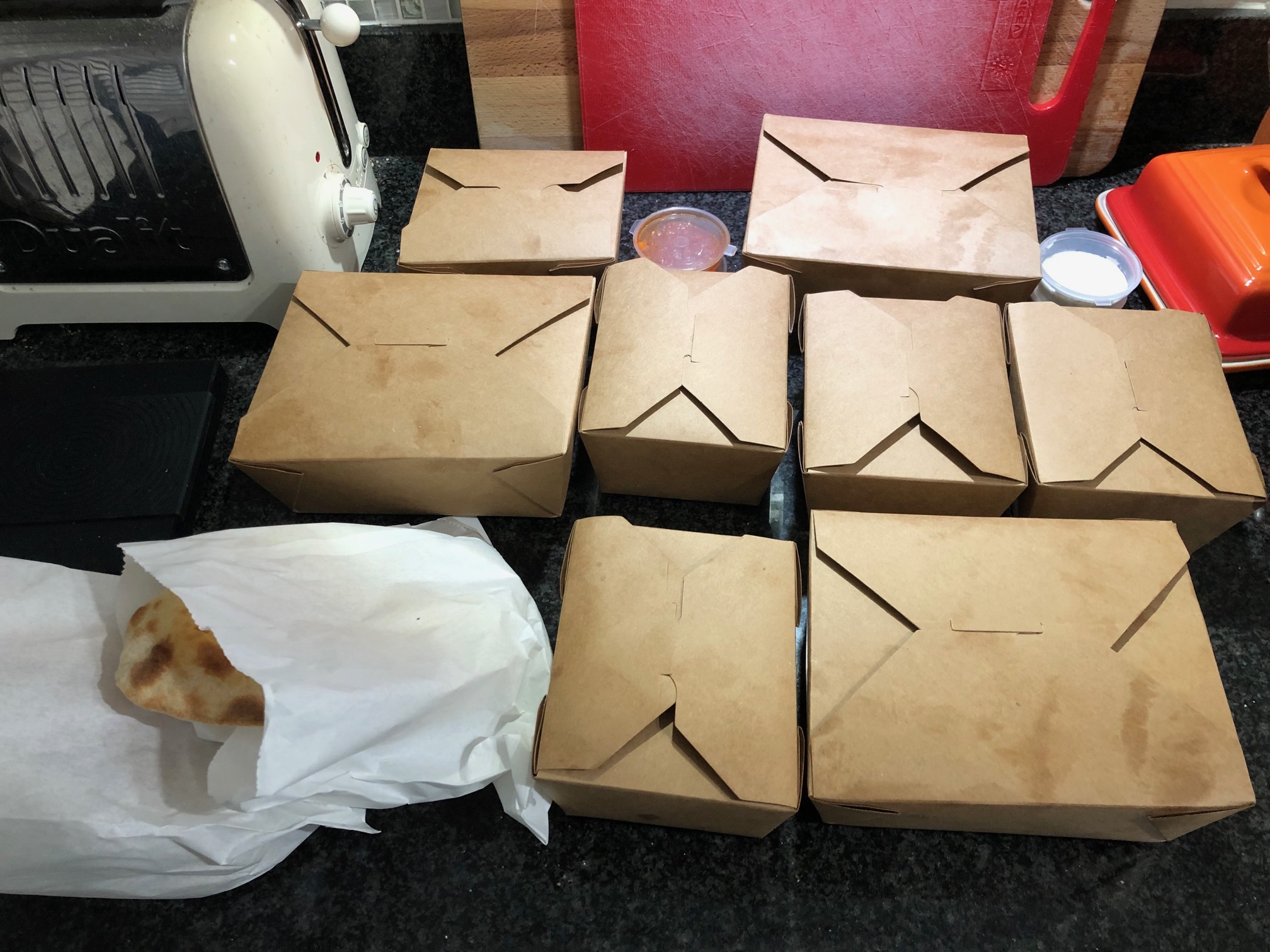
Reviewing takeaways is going to involve talking about very different things to the restaurant reviews. In a restaurant, plating and presentation are all perfectly reasonable things to talk about. At home, if it looks messy you’ve nobody but yourself to blame, and you might be prioritising speed over style: who could blame you, for that matter? Instead, we get to talk packaging, so here goes: the order arrived in two cardboard boxes and a few plastic tubs – hot food in the boxes, cold food in the tubs. For the salad and dips, this made perfect sense but for the halloumi, served on a bed of lettuce, it just meant that the halloumi went colder quicker and was decidedly lukewarm on arrival.

There was no such problem with the cardboard boxes, which were nicely branded and had a reflective silver lining to keep the food hot. One was filled with herb-flecked chips and big pillowy triangles of pitta bread, the other was absolutely replete with meat, a carnivore’s delight. The photo doesn’t do justice to just how much meat there was – aside from the kebabs and sausage you can see, there was another kebab tucked away underneath along with some more pork and the whole thing was on top of an awful lot of gyros meat, both chicken and pork.

We dished it all out onto plates as quickly as we could and got stuck in. We were more interested in it being quick than photogenic, which is why you have no photo of it all on the plate: I’ll do better next time, I promise. But it worked, because, with the exception of the halloumi, everything that was meant to be hot was hot. If you’re eating at the table (as civilised people do) rather than on your lap in front of Rick Stein’s Cornwall (as I did) I can see it would make sense just to stick it all on the table and let people pitch in, especially if you grab a mixed grill as we did. 

And, on the evidence of my meal at least, you definitely should. The souvlaki, ironically given the restaurant’s name, were probably the least remarkable thing we had but were still decent – skewers of well-cooked chicken, lamb and pork. The lamb could have done with being a little softer and all of them would have benefited from more evidence of marination, but they all went perfectly with the dips – both a tomato one which was more tangy than spicy and an exemplary tzatziki full of julienned cucumber and a hefty whack of garlic.

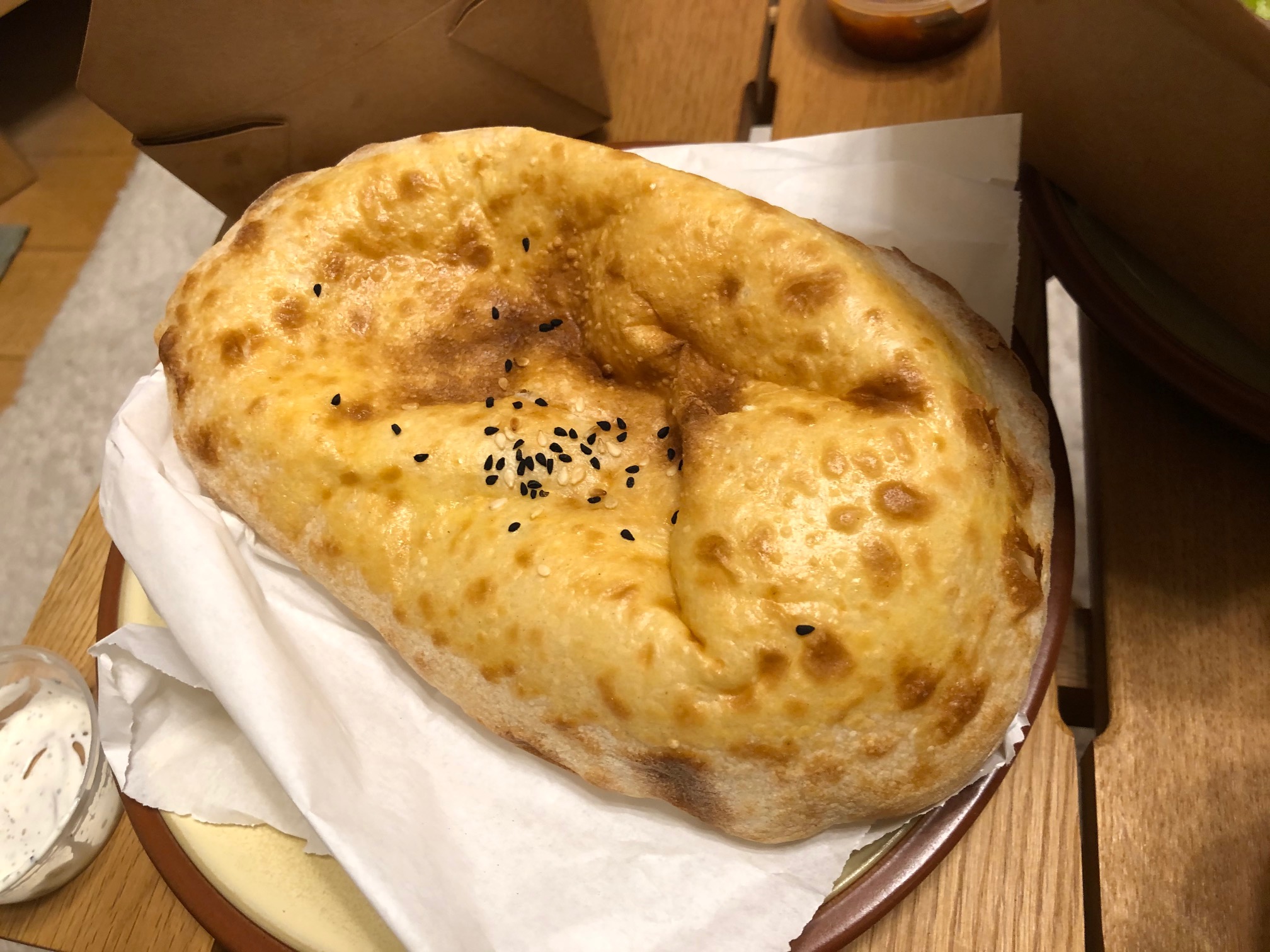
Also excellent with both dips were the chips and the pita. I don’t know if Tasty Greek Souvlaki make their own chips, but if they don’t they’re very good at making you feel like they have. They were hot, crunchy and delicious and the speckled herbs all over them – oregano, I assume – were a very nice touch. And the pita was fluffy and downright terrific – better, or at least more to my taste, than Bakery House’s. The salad was just lettuce, peppers and cucumber – undressed, uninteresting and probably just there to offset some of the guilt of everything else. Two black olives failed to rescue matters: that’s a lot of heavy lifting to expect from olives. The halloumi was the biggest disappointment, as I said earlier, served on top of more undressed leaves and left to sweat in a plastic tub.

The rest of the mixed grill was where you found the really interesting stuff. A slab of pork was described as pork belly, but felt more like shoulder, as it lacked the fatty tenderness of belly. None the less, I thoroughly enjoyed it. I’m always dubious about things like “village sausage” as they can sometimes have a disturbingly smooth, homogenous texture (“all eyelids and arseholes”, as my ex-wife used to say), but this one was coarse, robust and herby. The “greek kebab”, essentially a kofta, was even better – juicy and deeply moreish. 

All of what I’ve described so far would easily have been enough dinner for two people. But, just as we are so often drawn to things that aren’t necessarily good for us, the thing I really couldn’t get enough of was the gyros meat. It was worth the price of admission entirely on its own – ribboned shavings of chicken and pork, some crunchy-crispy, some soft and yielding but all of it deeply savoury and utterly drenched in flavour.

There was actually more of it than we could physically eat – and that’s saying something where I’m concerned – but having left some, I felt a deep sense of sadness that I hadn’t sacrificed a mouthful of souvlaki or that pointless halloumi so I could fit more in. It stayed in the mind for the rest of the evening, and I’d be lying if I said I hadn’t thought about it a fair few times since.

Normally, my peroration would conclude with a rating and I’ve thought long and hard about whether to include them in takeaway reviews. The problem is that when you review a restaurant meal, you’ve reviewing a collection of factors that are all, broadly speaking, under the control of that restaurant. Whether it’s cooked right, whether it sits there under the lights too long, whether it looks like a dog’s breakfast. Whether the wait staff are lovely and welcoming, whether the room feels like a home from home. If I eat somewhere and I’m not a fan I can point out why, but it will usually be down to the restaurant.

But with takeaways there are so many variables in a chain of events which isn’t all down to the restaurant. Some are – the selection, the food, the quality, the packaging and the pricing. But equally, some significant ones are not – like who delivers it, how they deliver it and how those staff are treated and incentivised. On this occasion everything worked perfectly, but if it hadn’t and it was the driver’s fault it would seem harsh to give the meal a poor rating which, in your mind, could well reflect on the restaurant alone. Like so many things about the post-Covid reality, this is complex and nuanced and I’m reluctant to boil it down to a number. 

If that doesn’t suit you, and I’ll only put it like this on this one occasion, I’d say that ordering Tasty Greek Souvlaki through Uber Eats was a four star experience. I liked a lot of what I ate, I absolutely loved some of it, I thought it was extremely good value and I would do it again. Will that do? Possibly not: I’m sure some of you will be saying “what you’ve written sounds like a five star review to me”. That’s the other thing about ratings, they always kick off that discussion about whether you’ve been too kind, or too harsh.

Let me put put it this way instead: in the good old days, I would visit restaurants, love them and start mentally planning my next meal and what I would pick from the menu before I’d even paid my bill. In this brave new world, having committed to reviewing a takeaway every week in this third lockdown, I found myself wondering when I could fit in ordering a gyros wrap from Tasty Souvlaki for lunch into the bargain.

Surely there would be one day when I simply couldn’t face yet another cheese and pickle sandwich? Would it be so terrible to accidentally find myself on Uber Eats again? Perhaps I could get a cold beer out of the fridge that day and maybe, just maybe, there would even be sunshine. To my mind, food remains one of the best forms of escapism there is, and it’s beautiful, now more than ever, to be reminded of that. On the television, Rick Stein was knocking up something magnificent in his fancy Cornish kitchen but, somehow, I found I had no food envy at all. 

Tasty Greek Souvlaki
20 Market Place, Reading, RG1 2EG
0118 3485768

https://tastygreeksouvlaki.com
Order via: Deliveroo, JustEat and Uber Eats, or direct with the restaurant for collections.

The Hero Of Maida, Maida Vale

The Hero Of Maida closed in early 2024 and has since opened as a new pub, helpfully called The Hero but run by completely different people. I’ve left the review up for posterity.

Despite the name, over six and a half years I’ve reviewed lots of restaurants which aren’t in Reading. To paraphrase David Brent, my world doesn’t end with these four walls. When I’m finished with Reading, there’s Henley, Windsor, Wokingham. You know. Newbury. Goring. Because I am my own boss.

Bracknell.

But I’ve always steered clear of reviewing London restaurants. I suppose part of that is analysis paralysis: how would you even go about picking which restaurants to visit? There are hundreds of London restaurant bloggers (not to mention influencers) swarming around all the hottest new restaurants, all the must-visit openings, so it’s hard to imagine anybody would be interested in my (provincial) opinion. And how useful would it be to my regular readers? You might be in London from time to time, but how likely would you be to go out of your way to try somewhere on my say-so? That’s why I’ve always stayed in my lane, remaining local with the occasional foray further afield on the train.

So what changed? Well, recently one of the restaurant bloggers I read wrote a review of a little Malaysian restaurant just round the corner from Paddington Station. It did what, in an ideal world, all restaurant reviews would do: it made me feel like checking the place out. After all, I’m in London reasonably often, I nearly always come home via Paddington and having decent food options to explore while I wait for an off peak train would be a very welcome development. I Retweeted the review, plenty of people showed an interest and at that point I decided: there would be no harm in adding the occasional review of venues in and around Paddington, to help out if you are in London and want to try out a good restaurant before coming home.

I picked Maida Vale for my first London review because that area has always been one of my favourite parts of the city. You leave Paddington by the exit that takes you right out onto the Grand Union Canal, turn left and meander past all the boats and the offices of Paddington Basin, the fancy gleaming bars and restaurants that have sprung up to cater for all those workers. Cross one of the pretty bridges you come to and you’re in Little Venice, ten minutes’ walk or a single Tube stop from Paddington but a world away in all important respects.

It’s loveliest in summer, but at any time it’s a house envy-inducing stroll. The Warwick Castle, tucked away on a sidestreet, is a lovely mews pub and not far from there is the equally gorgeous Formosa Street with the Prince Alfred, a cracking public house with little booths where you have to duck under a low door to pass from one to the next. If I didn’t have such a magnificent local already, I might well spend my days wishing it was mine.

The Hero Of Maida is just a little further out, on the border between Little Venice and Maida Vale, and in a previous incarnation it used to be called the Truscott Arms. I had a friend who worked in London and I used to go down after work on a Friday afternoon to meet her for a boozy dinner in that neck of the woods. We’d always stop for one last snifter at the Truscott Arms – it closed later than other establishments – before weaving back to the station and drunkenly going our separate ways, me on the Burger King Express back to Reading and her on a terrifying-sounding night bus to Tooting.

I was sad when the Truscott Arms closed but when I heard it had reopened as the Hero Of Maida under the supervision of Henry Harris (of legendary Knightsbridge restaurant Racine) offering a take on classic French cooking, I made a mental note to visit one day. So on a sunny weekday lunchtime my friend John and I paid it a visit, to finally break my London reviewing duck.

It’s a very handsome, light, airy room that instantly draws you in – tasteful muted tones, an attractive wooden floor, gorgeous tiles and a long, curving zinc bar. There’s a separate restaurant area upstairs (open in the evenings but not at lunchtime) but I didn’t feel I was missing out. Lovely tables, too, with button-backed banquettes looking out. It was quiet when we turned up, with a solitary customer plugged in and tapping away on his computer. We sat at the front by the windows, making the most of the afternoon light, although I did wish after a while that we’d grabbed a banquette. On the plus side it means my photographs are better than usual, but the drawback was that poor John was caught in a direct shaft of sun for some of the meal and had to keep shuffling his chair to one side.

The menu changes regularly and on the day we visited it was compact and appealing – just five starters, four mains and a sharing dish (pie for two, an offer I always find hard to refuse). A blackboard behind the bar offered a few other dishes, and although they were listed as bar food they seemed equally restauranty to me. Crucially, one was the same pie in an individual portion: a great relief, because it meant I didn’t have to implore John to change his mind. On another day I would have gone for another special: crispy lamb breast with salsa verde, six almost unimprovable words. “It’s National Pie Week”, our waiter told me, and in the end that made my decision for me.

There was a good selection of beers and we were slightly early for our booking so we started with a pint. My Notting Helles was pleasant enough, if not the most imaginative choice, but John enthused about his pint of Peckham Rye, a very nice-looking amber ale. Later I wished I’d gone for the coffee stout by Magic Rock, but we’d moved on to wine by then. It was a pretty decent wine list too, with plenty available by the carafe, but we settled on a chardonnay from the Languedoc which came in at just over thirty pounds for a bottle. It sounds odd to praise a wine based on all the things it wasn’t, but at the risk of sounding like Goldilocks it somehow seemed appropriate: not too dry, not too sweet, not too oaky, not too expensive. The list said it was a good alternative to a white Burgundy, and I thought that was spot on.

I’d been sorely tempted by the steak tartare, but with a pie on the way I decided to balance light and shade a bit by choosing a more delicate starter. Ibériko tomatoes with burrata felt more a test of sourcing than cooking, but even so I really enjoyed it.

The tomatoes weren’t as good as ones I’d rhapsodised over in Spain but they were close enough, with plenty of freshness and a judicious spot of salt. The burrata felt more like mozzarella to me – completely firm in the middle without any of the glorious creamy messiness of a good burrata – but that struck me rather than irked me. The salsa verde brought it all together, as did some greenery which wasn’t listed and which I didn’t recognise. It had a slightly vinegary bite but I couldn’t place what it was – not samphire, not salty fingers, not (I think) monk’s beard, but a perfect match in any event. Winning enough to overcome a couple of slight missteps: a dish, in many ways, emblematic of the whole meal.

John had chosen grilled mackerel with ‘nduja which, again, is a combination that sat up and begged to be chosen. I thought it looked fantastic, with a generous whack of the fiery, brick-red good stuff. John liked it, but not without reservations.

“I like the skin to be crispy, and this is a bit, well, flaccid. Flaccid is never a good word, is it?”

“No, it’s like damp. ‘Moist’ can be a good thing, but ‘damp’ never is.”

“There’s always ‘wipe down with a damp cloth’, I suppose” said John, equably. “Something else about this dish isn’t quite right. This stuff.”

That’s how we discovered that John, like me, is not a fan of radicchio – although, as a man who gets a vegetable box weekly, he’s very fortunate to only just be figuring that out. I understood though – again, the radicchio wasn’t mentioned on the menu and it did slightly skew the dish. I didn’t get to taste it, but from the look of the plate, also strewn with wild garlic and capers, I think I would have enjoyed it. John did find a few sizeable bones which had escaped the filleting process, though, another glitch that rankled.

John was properly delighted with his main course, though. Guinea fowl came two ways, with a hefty piece of the breast and a gorgeous-looking thigh complete with crispy skin. It was all on top of some silky celeriac puree, along with a big, coarse wedge of smoked Morteau sausage – we Googled it to make sure it was nothing like andouillette – and, apparently, “tropea onion”.

“This is lovely. I’m usually more of a starters man and main courses can feel like a bit of a let-down, so it’s a real pleasure to get such a good main course. And it’s a really big portion of guinea fowl, I wasn’t expecting that.”

I thought that was a good point – this didn’t feel like a little, cheffy plate assembled with tweezers but a proper, hearty dish put together with the diner firmly in mind. Good value at nineteen pounds, too.

My pie was, as so often, more a casserole wearing a hat and the pastry lacked the indulgence of a good suet crust. But underneath, you hit paydirt: a sticky tangle of slow-cooked lamb shoulder and a rich, savoury sauce, punctuated by coarsely chopped garlic and carrot. The greens that came with it were nice enough taken for a swim in the pie filling, but hardly the feature attraction. The whole thing was delicious but it just didn’t feel as much like a proper pie as I’d hoped; it was best described as high-ceilinged, with plenty of breathing space between the filling and the crust.

Many of these niggles were redeemed by the Hero Of Maida’s chips, which were as good as any I’ve had – huge, ragged-edged things, all crunch and fluff. I was initially dubious because they came skin-on, but even that didn’t detract. They were four pounds a portion, and I was relieved that John and I had the foresight (or greed) to order one each. I used mine to absorb every last molecule of the sauce left in my pie dish.

The dessert menu was also compact – just the four options – but we were on a roll and had no intention of letting that stop us. The list of dessert wines was equally streamlined, but we found a Coteaux de L’Aubance on it which was stunning, the colour of late summer afternoons with a clean, poised sweetness. The first sip was one of those little heavenly moments you want to remember for ages: our food so far had been lovely, the only plans for the rest of the day were a bimble from pub to pub talking about all sorts and, in my mind, I was an honorary resident of Maida Vale already.

Desserts were inconsistent in the same way as the starters, but the kitchen had garnered enough brownie points by then to earn some latitude. So for instance, my lemon posset was all out of kilter: far too big, and too cloying without the sharpness it badly needed to cut through. Instead, it felt like a big bowl of something very close to clotted cream and the crumbled amaretti biscuits all over it didn’t do enough to counteract that. It wasn’t what I ordered, or what I really wanted, but on the other hand there are worse things to do in life than eat a large bowl of clotted cream and, when push came to shove, I found I didn’t mind at all.

John’s rhubarb and custard pavlova sounded terrific on paper but again, wasn’t quite there. The rhubarb, John said, was delicious and he really enjoyed the hazelnut praline which played an equally starring role. “But this meringue”, he said, “I hate to say this but it feels shop-bought.” I saw him struggle to break it up and it seemed to be lacking any of the chewiness which would have made the dish perfect. Even so, I looked at his dessert and thought that I would gladly have ordered it myself.

Service, from one chap who seemed to be doing everything that lunchtime, was friendly without being faux-matey, knowledgeable and happy to talk about the dishes and offer recommendations. Again, it might be that if you came to the Hero Of Maida of an evening or on a busy Sunday lunchtime you might have a different experience, but I thought we were really well looked after. Three courses, a couple of pints, a bottle of white wine and two glasses of dessert wine came to just over a hundred and fifty pounds, including that old chestnut the “optional” twelve and a half per cent service charge. You could eat here for less, but I thought it was decent value.

You’ll have read all of this and you’ll already have an idea about whether the Hero Of Maida is the kind of place for you. You might think it’s ever so slightly too far from Paddington or a little too expensive, but I really enjoyed the place. And to save you the effort of questioning my verdict, I’ve already asked myself: was I being charitable because I was having such a nice afternoon? Was I letting the restaurant off the hook when, closer to home, I might have been harsher?

I don’t know. It’s possible. Maybe I was looking at the world through dessert wine-tinted glasses but if so, all I can say is that I thoroughly recommend doing so. Next time you’re in London and you’re on an off-peak ticket you could do a lot worse than booking the Hero Of Maida, especially when summer comes, and crossing the canal to treat yourself to something different before riding the rails back to Gare du ‘Ding. Make sure you get some chips: you’ll thank me for it.

The Hero Of Maida – 7.5
55 Shirland Road, London, W9 2JD
020 39609109

https://theheromaidavale.co.uk