Reading’s pub scene has enjoyed a bit of a renaissance in the second half of 2019, despite pubs closing day in day out all over the country. The Lyndhurst reopened under new management and is now dishing up some really impressive food: last week I went there and had saddle of rabbit, stuffed with chicken liver and wrapped in Parma ham, up there with any rabbit dish I’ve had in Bologna. Then the Retreat was saved from an uncertain fate by a buy-out and is going from strength to strength with a new wine list, a far bigger presence online and, thankfully, the magnificent Brian still behind the bar.
That’s all well and good, but when the pub in question undergoes a more dramatic makeover people can be a little sniffier. The Eldon Arms closed and reopened in September as the Weather Station, with a few locals lamenting the loss of the name. I’ve been a few times since the reincarnation and it does some interesting beers, although sitting on a hard stool and using a barrel for a table is maybe designed for customers far younger and cooler than me: I soon found myself longing for a proper seat, which is around the point where I sloped off to the Retreat.
Finally, Caversham’s Prince Of Wales, at the top of Prospect Street, was acquired by Dodo Pubs who have spent a fair bit of time and money rebranding it as the Last Crumb. This provoked more complaints about losing the name, which I found harder to understand: surely there are quite enough pubs around the country called the Prince Of Wales? (I bet nobody would have objected it had been called the Duke Of York). Anyway, it’s not as if the people up in arms had frequented the pub back when it was the Prince Of Wales – everything I’d ever heard about the place suggested you wouldn’t go in unless you were up to date on your tetanus jabs.
I was delighted by the news that Dodo Pubs had taken on the Prince Of Wales, because I’ve always been a fan of the Rickety Press, their outpost in north Oxford’s Jericho – a lovely pub that does a good range of beers and ciders and very credible pizzas and burgers. When my Canadian family came to visit the U.K. earlier in the year and we went for a day trip to Oxford, I booked us in to the Rickety Press knowing it would suit everyone – craft enough for my twentysomething cousin and unpretentious enough for my 80 year old uncle. We had a lovely meal there, and I found myself wishing there was somewhere similar in Reading. And then my wish was granted, so my other half Zoë and I headed over on a weekday night to see whether the Last Crumb lived up to the promise of its sibling.
Subscribe to continue reading
Become a paid subscriber to get access to the rest of this post and other exclusive content.
N.B. A more recent version of this feature can be found here.
Back in April 2016, I wrote a piece on the 20 things I loved about Reading. Remember 2016? The good old days – before the constant merry-go-round of elections and referenda, back when the world felt a little sunnier and Twitter felt a lot happier. I could go on, but it will probably make us all sad.
Looking back at my list from 2016, much has changed and an updated version is long overdue. Some of the places which made my list last time have closed: Dolce Vita, for instance, which stopped trading in June last year to the disappointment of many. Even sadder was the closure of Tutti Frutti in late 2017, my favourite Reading café which sold the best ice cream for miles around.
Some things have changed to the extent where they no longer make my top 20 – I’m sure the After Dark, under its new management, is a wonderful venue but it is no longer the place of my many happy memories. Similarly Kyrenia has been Ketty’s Taste Of Cyprus for several years now, and its phenomenal front of house Ihor has moved on. The Reading Forum has degenerated into a seemingly never-ending conversation about Reading’s crime rate, Wetherspoons and the inevitable B word.
More to the point, town has changed a lot since 2016. As restaurants have closed, more have opened to take their place: the good (Kungfu Kitchen), the bad (Lemoni) and the ugly (Chick-Fil-A). Smaller, more interesting chains have moved to Reading. Our coffee culture here has – figuratively – exploded, as has a street food culture that has led to residencies in pubs, cafes and restaurants and in some cases (like Geo Café and Vegivores) a permanent home. For each thing we lose in town, there is always an equal and opposite reason to celebrate.
And so, without further ado and in alphabetical order, here’s my list of twenty things I love about Reading. It’s by no means exhaustive, and half the fun is chipping in with everything I’ve missed, whether it’s the farmers’ market, Christmas carols at Reading Minster, the Beer Festival, having a mocha at C.U.P., Reading Library, the number 17 bus or any of the dozens of other things I couldn’t quite find room for. Leave your favourite in the comments!
1. The Allied Arms beer garden
Some things about Reading never change, and for as long as I can remember the Allied has been the place you go to after work on a sunny Friday to start your weekend. You grab a table, your friends join you and the rest of the evening is pint after pint, packet of snacks after packet of snacks and song after song on its splendid, idiosyncratic jukebox (Camouflage by Stan Ridgway or Rock Me Amadeus, anybody?). I know the Allied has its fans all year round, but for me summer is when it really comes into its own.
2. The architecture
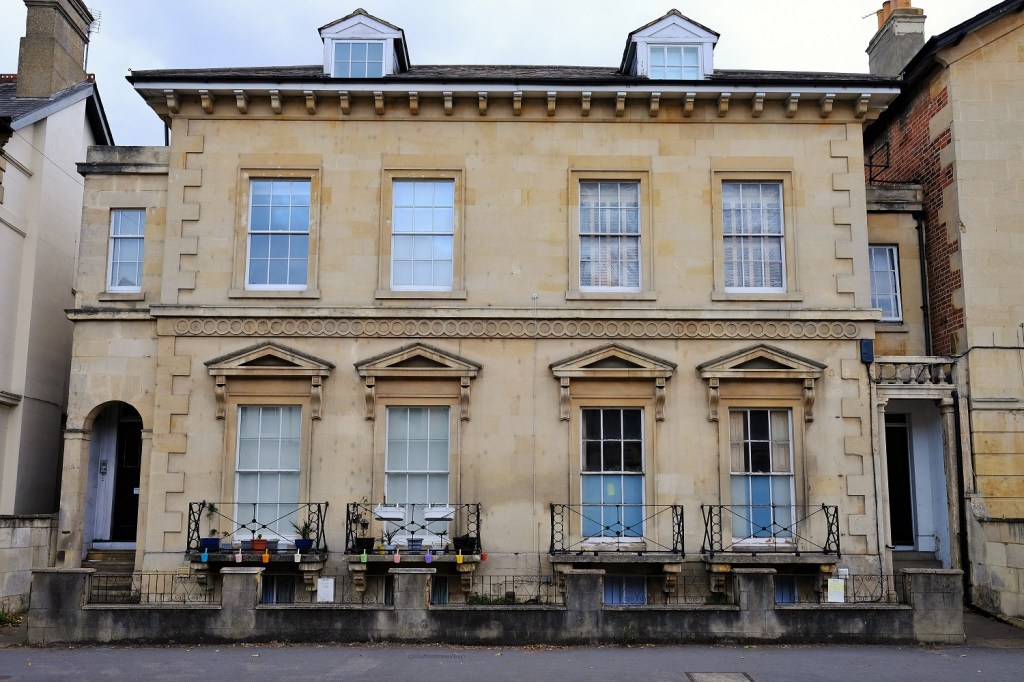
Reading really is prettier than you think, and I don’t just mean the obvious examples like the Town Hall and – well, I like it anyway – the Blade. Everywhere you look there are beautiful buildings, streets and enclaves – Foxhill House on campus, or the gorgeous houses of New Road up by the university and School Terrace in the heart of New Town. Stunning streets like Eldon Road with the grandest semi-detached houses you’ll ever see in your life, or redbrick Queen Victoria Street running from the station to John Lewis, itself a fantastic building. I could go on: Reading Minster is impressive, the Royal Berks grand, Great Expectations faintly ludicrous. So much to look at – no wonder the occasional Reading Instameets set up for photographic excursions around town are never short of things to photograph (I still miss Kings Point and the Metal Box Building, though).
3. Bakery House
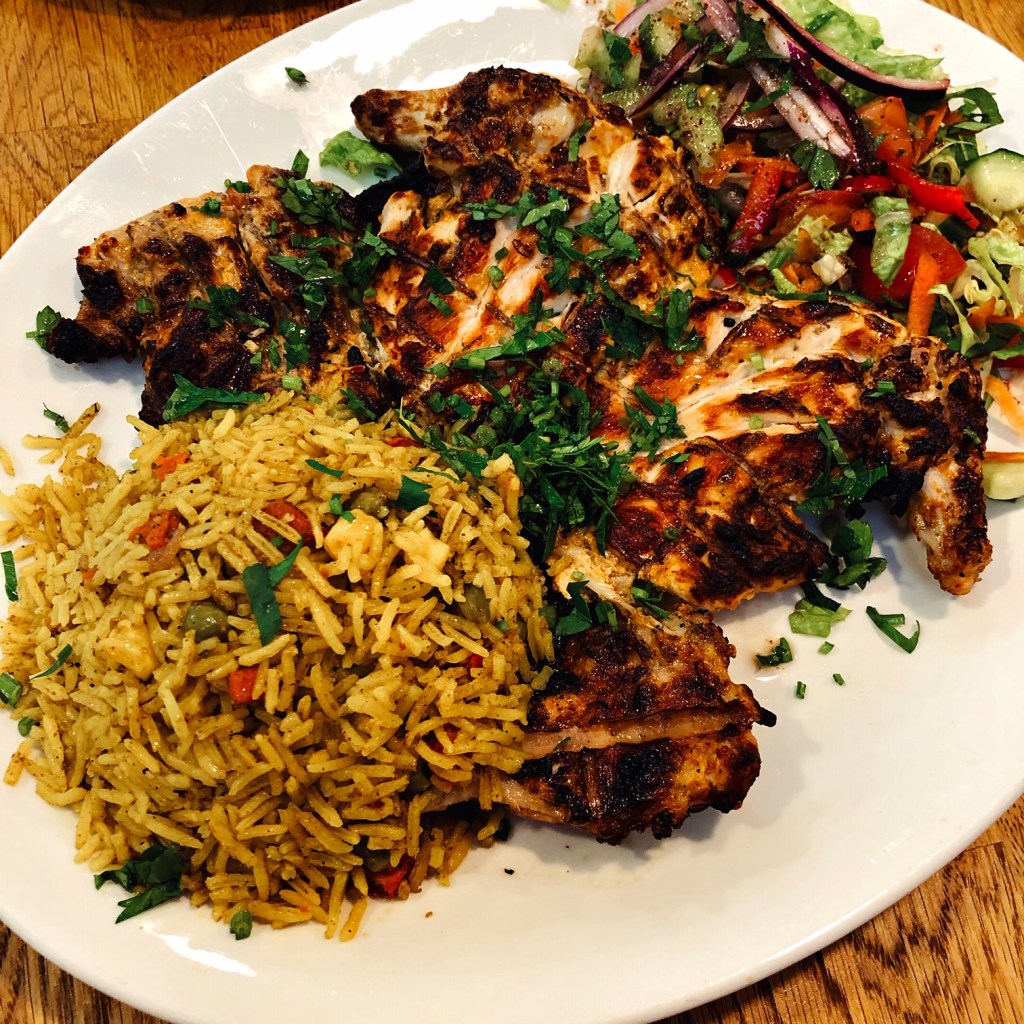
Now over four years old, Bakery House is one of Reading’s best and most reliable restaurants but, more than that, it is a genuine institution. Perfect for solo dining, dinner for two or sharing masses of mezze with friends, they’ve kept up an impressive standard since day one. At lunchtimes their shawarma wrap is an absolute steal costing less than most other sandwiches in town, and in the evenings their boneless baby chicken, fresh from the charcoal grill with chilli sauce, rice and a sharply dressed salad, is one of the best single plates of food you can eat in town.
4. Blue Collar Food
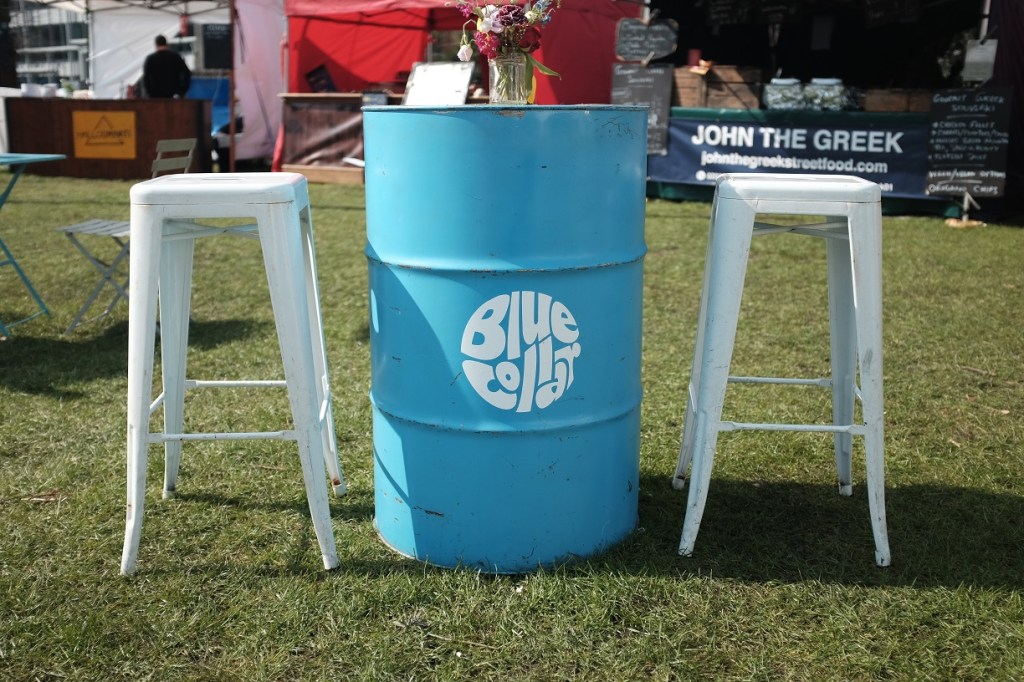
I was sniffy about street food last time I compiled this list: Blue Collar has changed that. Popping up in the Market Square every Wednesday, this collective of traders, marshalled by the tireless Glen Dinning, has had a lasting effect on Reading’s food scene. Some of his star players still turn up every week – I’m a big fan of Purée’s challoumi wrap, the chilli chicken from the Massita and Peru Sabor’s excellent food – but he’s also done invaluable work giving street food traders a springboard to move into permanent premises. Not only that, but over the summer Feastival (and its spin-off Cheese Feast) transform the Forbury into the gastronomic epicentre of town. Blue Collar is now also running the matchday food at the Madejski, but I still hold out hope that we might see them in more permanent premises in the New Year.
5. Breakfast at Fidget & Bob
Sunday morning brunch at Fidget & Bob really is one of my favourite things about living in Reading. I’ve never known anybody scramble golden buttery eggs with as much skill as they do, their bacon is superb and their sausage – a square loaf of sausagement baked in the oven and served in delectable slices – is worth the price of admission alone. It boasts one of the warmest welcomes in Reading and if you go on Sunday there’s the added bonus of kouign amann, Breton pastries by Barebaked Bread which are sweet-salty layers of pure joy. The coffee’s excellent, too.
6. Clay’s Hyderabadi Kitchen
It’s very strange to think that Clay’s has been around for less than eighteen months because, more than most Reading restaurants, it feels like it’s always been there. It’s difficult to cast your mind back and remember that Chicken Base used to be in that site or, even before that, the lovely Bodrum Kebab. It feels like Clay’s is probably Reading’s favourite restaurant, and I think that’s down to a combination of many things. The food is fantastic, and superb value, and involves a quality of ingredients and spicing that they don’t shout about enough. The menu is innovative – where else in Reading could you, across a whole year, eat quail, rabbit, pheasant, squid and crab? But also, I think it’s about the modesty and humility of the whole exercise: you sense that maybe they don’t quite realise how good they are.
7. Forbury Gardens
I wouldn’t trust any list of this kind that didn’t have the Forbury in it. In summer it’s everybody’s second garden (unless you live in a flat, in which case it’s your first garden). There’s nowhere quite like it for relaxing in the sun, reading a book, having a picnic, celebrating Bastille Day, taking part in WaterFest – even though it always seems to rain for Waterfest – drinking a Froffee from the AMT in the train station (that one might just be me), eating street food from Blue Collar or just gazing up at the blue sky and the trees overhead. It’s even nicer now the Abbey Ruins is open again – it just feels like everything is as it should be.
8. Harris Arcade
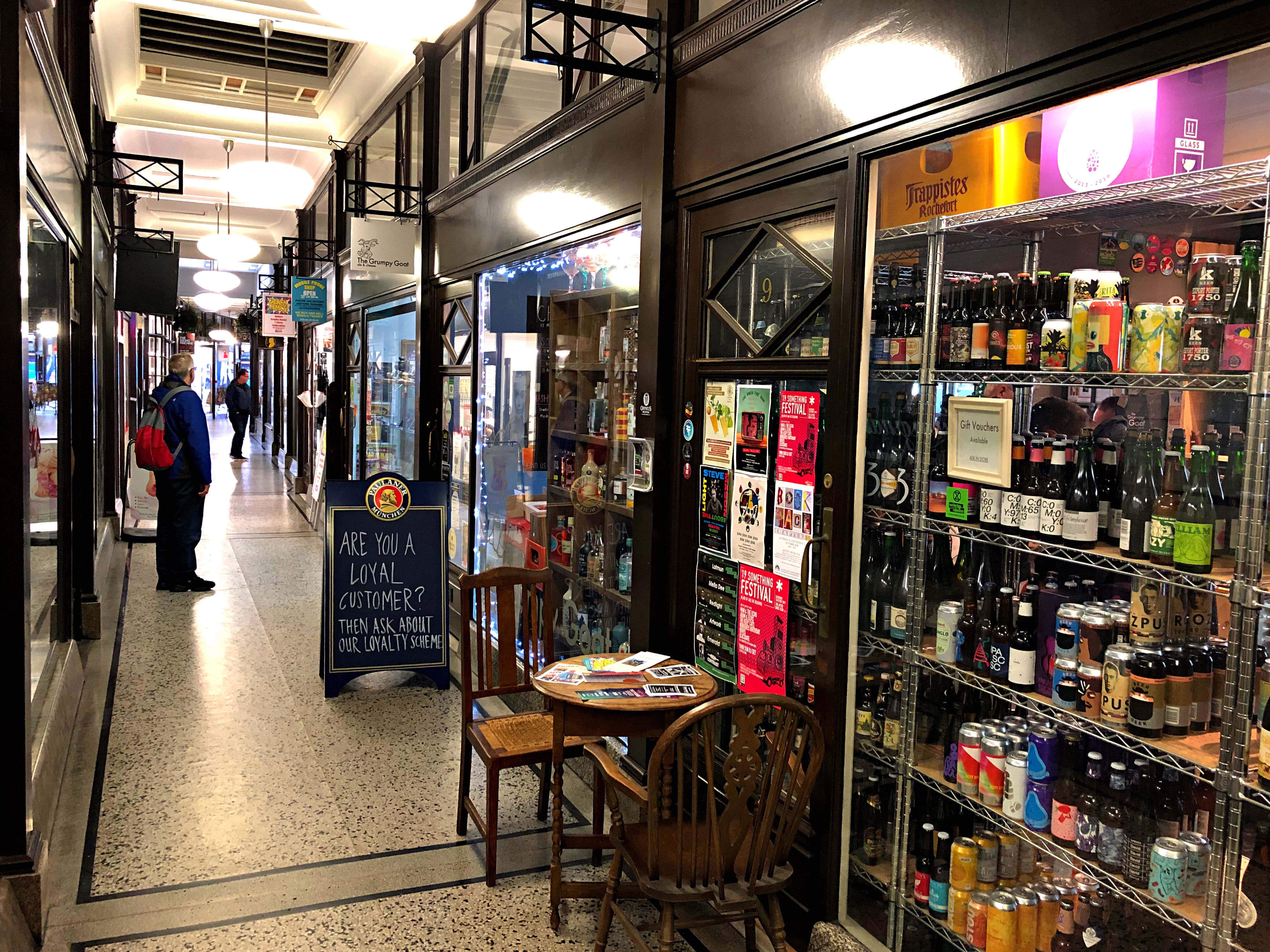
We have lots of independent cafés in the town centre, and some independent restaurants, but nowhere near enough independent shops. With the notable exception of But Is It Art, the Harris Arcade is where you find most of the good ones. I’ve lived in Reading long enough to remember when there was the Traders Arcade, with Enchanted where you could buy your incense and crystals and a café on the first floor, but Harris Arcade still captures some of that spirit – whether you want to buy comics from Crunch, records from Sound Machine, hats from Adrienne Henry, cigars from Shave and Coster, cheese and beer from the Grumpy Goat or ephemera from JIM. If only more of Reading’s retail scene was like the Harris Arcade – and while we’re at it I’d love an independent bookshop, a beer café and a few more boutiques.
9. John Lewis
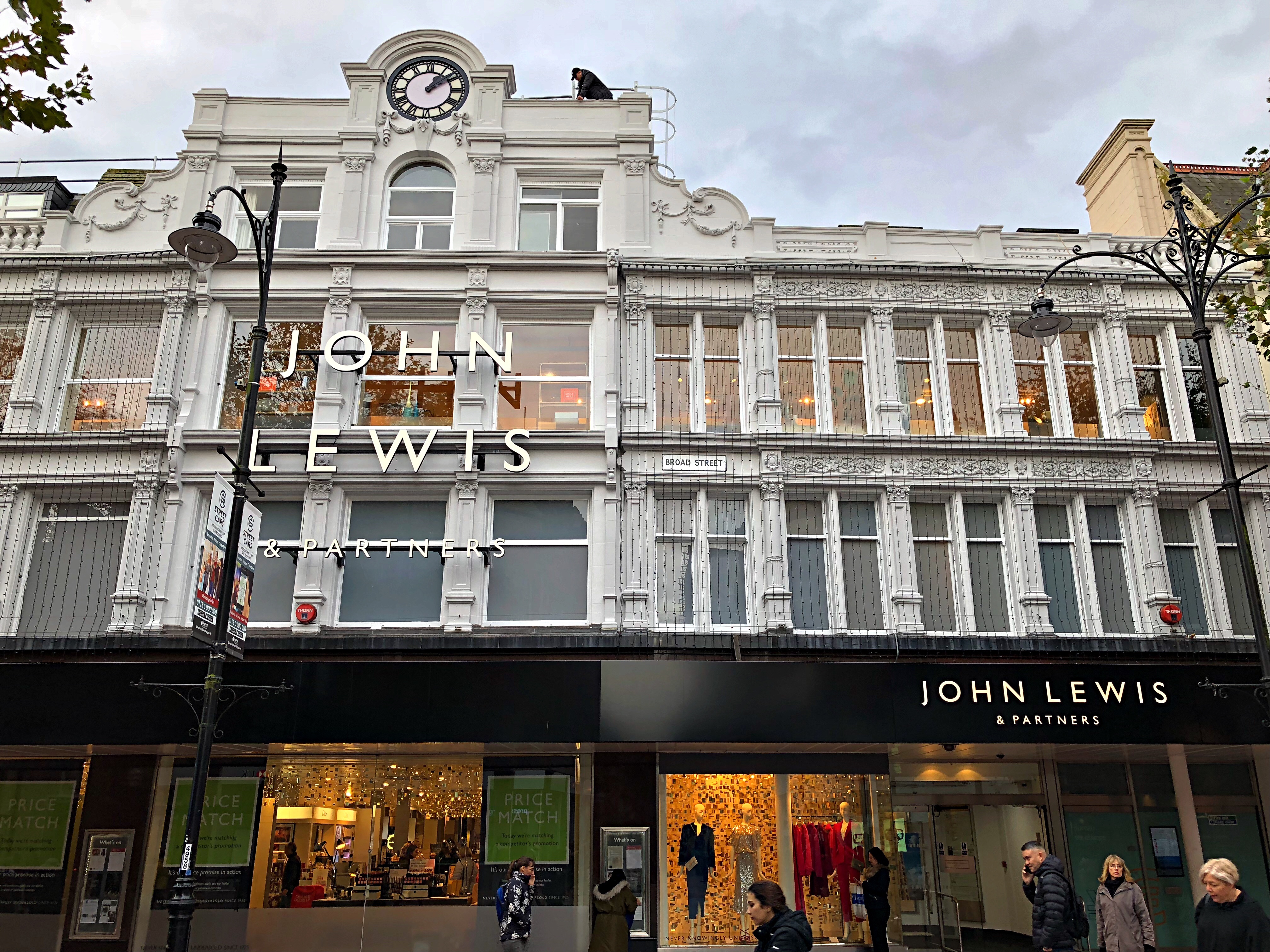
I know this might seem like a prosaic choice to some, but I stand by what I said last time round: our branch of John Lewis is the closest thing this town has to a cathedral (especially the lower ground floor which does seem to sell pretty much everything you could need). It has a sense of calm and class so lacking from the Oracle or the Broad Street Mall, and I don’t think you really appreciate how lovely it is until you visit a town unfortunate enough not to have one. Most shops seem to start celebrating Christmas the moment September is over, but when the Yuletide paraphernalia appears in the ground floor of John Lewis, you know the festive season really is on the way.
10. Launchpad
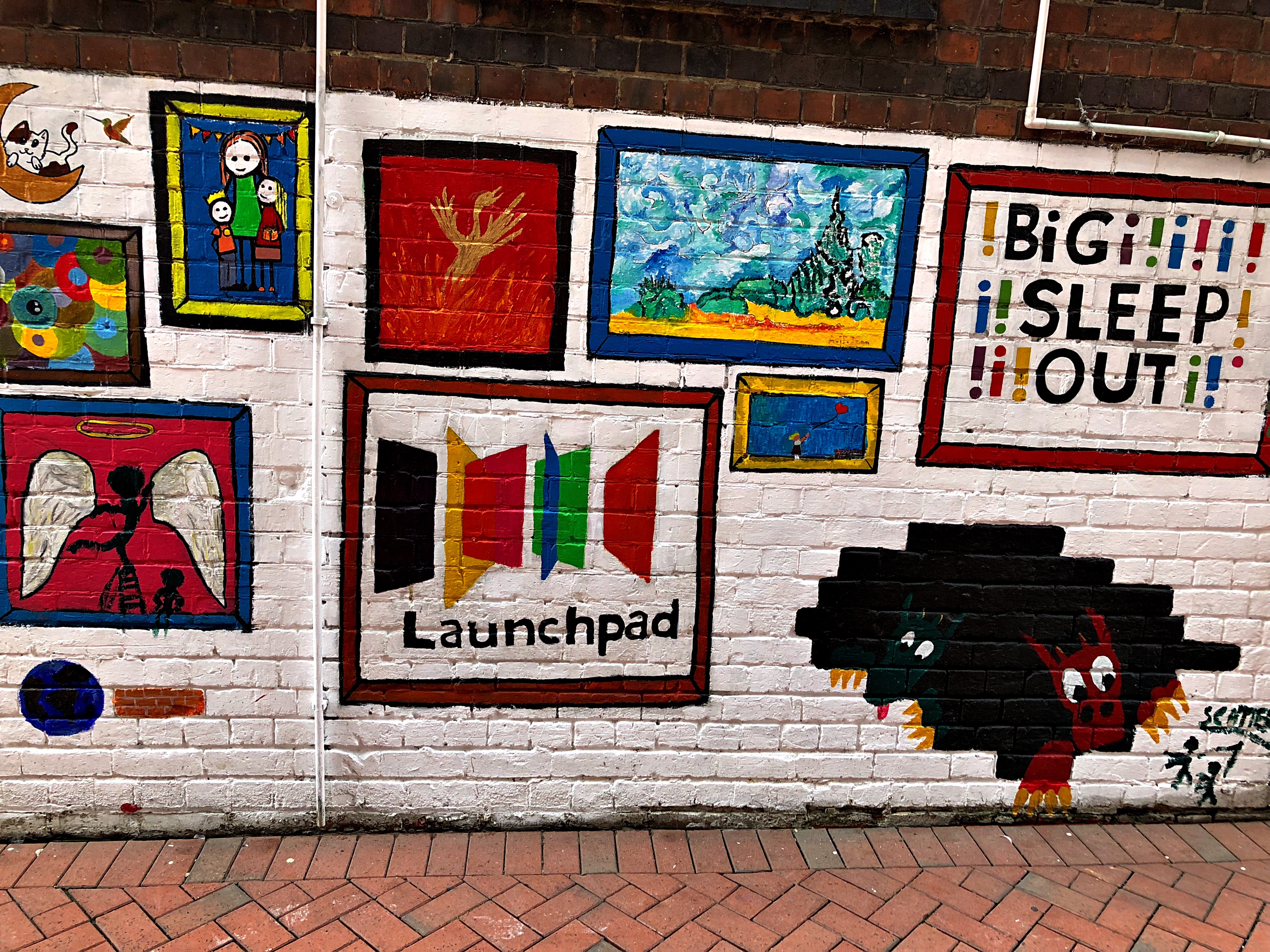
Other charities are available, but there was no way Launchpad wouldn’t make my list. The amount of homelessness and begging in Reading was upsetting enough back in 2016 but over the last three years it seems to have got even worse. Launchpad offers legal advice, drop-in services, training support and so much more for those who are homeless or at risk of homelessness. But there’s more: back in January, Launchpad announced that it had built five brand new flats for people in need of long term accommodation, their first building project. Reading about it I felt incredibly proud, both of them and of our town.
11. The Nag’s Head
The Nag’s Head is widely held to be Reading’s best pub, and it’s not hard to see why. A wide, constantly changing range of cask and keg beers, ciders if that’s your bag, regular tap takeovers, food events in the garden (yes, yes, it’s a car park) in the summer and a friendly crowd pretty much every night of the week. A few pubs do a few things better, but nobody gets it quite as right across the board.
12. Pepe Sale
Rumours over the summer that Pepe Sale was up for sale threw much of Reading into a panic. Shortly after, it transpired that there was no substance to them but it at least gave Pepe Sale the rare opportunity to experience a mass outpouring of grief while it was still very much alive and kicking. It’s a class act – consistent, consistently full and always doing the classics well while keeping up an always interesting specials menu into the bargain. We will miss it when it’s gone, one day, but in the meantime the suckling pig and crab ravioli are still there, waiting for you to renew your acquaintance. Every town has an Italian restaurant or four, but how many have a Sardinian one?
13. Progress Theatre
Progress Theatre is best known for its summer Shakespeare productions, finally restored to their rightful home in the Abbey Ruins (I went this year and thoroughly enjoyed King Lear, although I’m still recovering from the spectacle of my friend Jerry, playing Gloucester, having his eyes plucked out). But the theatre up on the Mount is still a lovely, intimate and inventive place to watch interesting amateur productions. I loved their rendition of Top Girls earlier in the year and am very much looking forward to Hangmen next week. And now that Kungfu Kitchen is just down the road, your pre or post-theatre dining problem is solved too.
14. Reading Museum
Reading Museum remains a fantastic way to while away an hour in town, and the recent refurb (and new exhibition on some of Reading’s defining objects) has been very nicely done. It’s fantastic for kids and grownups – my 80 year old Canadian uncle thoroughly enjoyed dressing up there when he visited in the spring, although I’m not sure which of those categories he falls into. The replica of the Bayeux Tapestry gets all the attention, but I have an enormous soft spot for the display cabinet showing off Huntley & Palmer biscuit tins from across the decades.
15. Reading Old Cemetery
My list in 2016 didn’t have much in the way of open spaces. I must have changed in the last three years because I’m much more fond of Reading’s outdoors and Reading Old Cemetery is one of my favourite places for a meditative amble, even if I’ve never bumped into one of its legendary muntjac deer. It’s golden and peaceful in summer, and starkly beautiful in winter. There are lots of very touching gravestones and memorials, but the picture above shows probably my favourite, that of Bernard Laurence Hieatt. He has his own Wikipedia page, which is worth a look – it’s safe to say that he achieved a lot more in twenty-one years than most of us have in far more than that.
16. The Retreat
If the Nag’s Head is Reading’s best beer pub, I think the Retreat is probably Reading’s best classic pub. Saved this year by a consortium of locals, it remains a true one-off on a little backstreet not far from the Kings Road. The back room is where you sit if you just want to talk to your friends, or read on your own. The front room, though, is my favourite – there, regulars and newcomers engage in random conversations about all sorts, presided over by Brian, the now legendary landlord who if anything is even more charming now than he was three years ago (woe betide you if you swear in front of him, mind). There’s regular music, there’s jazz on Sundays and once a year in the summer the Morris dancers cavort away outside before making themselves comfortable in the back room and singing some very bawdy songs indeed.
17. The Salvation Army brass band at Christmas time
There are still few sights in Reading as heartwarming as the Salvation Army brass band, assembled outside Marks & Spencer, playing Christmas carols in November and December. Always unfailingly polite and impeccably turned out, they make Reading feel properly festive and it’s well worth watching, breath turning to fluffy clouds in the cold air. More Salvation Army brass bands and fewer god-botherers miked up and standing on a box, that’s what I say.
18. South Street
This is hardly a controversial choice – South Street enjoys a special place in Reading’s affections after it was rescued from the threat of closure following a huge outcry of public support (very much the town’s answer to 6 Music, and probably with a very similar fan base). It really does offer a terrific range of music, theatre, art and comedy and has widened its range still further over the last couple of years with its regular Beer Fridays (in collaboration with the Grumpy Goat) and its excellent annual Craft Theory Festival which brings together beer, street food and music in one unmissable package.
19. View Island
I’d never been to View Island until I was introduced to it through the writing of the irreplaceable, much-missed Matthew Farrall. Just past Caversham Lock, it’s an astonishing place, simultaneously wild and peaceful. You feel like you could be miles from anywhere, and yet you’re ten minutes from town. It’s been left to get almost completely overgrown and yet you can still sit on one of its blue benches, lost in your thoughts, watching the river flow.
20. The Workhouse courtyard
Long before Market House opened its doors, promising you booze, food and coffee at any time of the day, those in the know spent summer days going to the courtyard outside Workhouse Coffee. One of town’s most successful natural suntraps, you can sit there with coffee and cake from Workhouse or order Bhel Puri’s fantastic vegetarian street food and eat that al fresco instead (I recommend the chilli paneer, crispy bhajia, Punjabi samosas and a vada pav chaser). And if you want a beer in the sunshine? The bar at the George Hotel can rustle up a crisp pint of Estrella. Who needs the Market House anyway?
Once upon a time, in the town of Reading, there was a bar called the 3Bs. It was named after the three famous alliterative cornerstones of Reading – beer, biscuits and bulbs – and, for those of us who remember it, it was one of the best bars there was. It was part of the Town Hall, and long before the Oakford ever opened it was the place you congregated in after work – unless your friends wanted to drink in O’Neills, in which case you made new friends. When the tables appeared outside, near the statue of Queen Victoria, you knew that summer was on the way.
It even featured, albeit briefly, in the opening episode of 1997 police show Crime Traveller, around the 3:45 mark in this video, as maverick cop (aren’t they always) Jeff Slade, played by ex-EastEnders bad boy Michael French, zooms through the Town Hall Square on a motorbike, scattering people and tables as he pursues a generic baddie in a boxy car all the way to the Queens Road car park. Around that time I was temping in Apex Plaza (which also features in the chase sequence) and it was all very exciting. As I recall, my brother bought a sandstone-coloured blouson, trying to emulate Jeff Slade, but it was all a little too Sergio Georgini. Ah, the Nineties.
My favourite memories of the 3Bs, in as far as I can remember anything, were of Bohemian Night, its weekly live music evening. A friend and I would always turn up early, sit near the front and drink almost enough to make the music sound good. Compered by AF Harrold (now a published author, then a jobbing performance poet working in Blackwells – remember when we used to have a Blackwells?) it was the Reading’s Got Talent of its day.
This involved various earnest acoustic solo acts and duets, a little spoken word, a shouty man who called himself “Preacher John” and another chap called “Reverend John H” who did an extremely offensive song about the sadly departed Princess Of Wales. There was also a bewildered pensioner called “Mr David” who would shamble on stage and perform roughly half a joke without getting to the punchline and then start singing snatches of My Way. It looked like he may have slept in a bin.
Only at Bohemian Night could a young chap wearing a fuzzy wig bound up to the mike, all puppyish enthusiasm, and announce “I’m Dunstan McFunkstan, and I’ve got a bag of comedy!” (if he honestly did, it was empty). And that’s before we get to the performance poetry, which was usually my cue to go up to the bar. Every now and again someone with genuine talent would show up at Bohemian Night and I’d enjoy their act, safe in the knowledge that I would never see them again. I loved it: I went every week without fail.
All good things must come to an end, and the 3Bs closed in 2011. Then, last July, the council announced that it would be reopening in the autumn. Signs were up by October 2018 declaring that it would be called Lains. Well, the council is as good at opening restaurants on time as it is at filing accounts, because it wasn’t until September this year that it finally opened, having changed its name in the meantime to The Pantry. The council’s announcement was full of the usual buzzwords about how the “Executive Chef” (why a café needs an executive chef is anybody’s guess) would use local produce to create a “scrumptious and inventive menu”. That was all the incentive I needed to take a trip down memory lane one weekday lunchtime with my other half Zoë, herself a fan of the 3Bs from back in the day.
Subscribe to continue reading
Become a paid subscriber to get access to the rest of this post and other exclusive content.
One of these days I’ll learn to do competitions the way most bloggers and influencers do. Like and follow this page to be in with a chance of winning, or All you have to do is tag yourself and a friend who would love to eat Namaste Momo’s delicious momo and all that guff. Everyone loves a bit of something for nothing, don’t they? Unfortunately I’m too old fashioned and not cool enough for that, so people had to work for this one by writing 250 words on the restaurant they’d love to pick up and drop in Reading.
Despite that I had plenty of excellent entries and, as usual, was delighted to have such enthusiastic and talented readers. Reading the entries made me very hungry indeed, whether they were describing bruschetta eaten in a fairy light-strewn square on a warm Pisa evening, a cornucopia of meat, fresh off the grill somewhere in Northern Cyprus or Chinese noodles “as wide as belts”, wolfed down in New York (New York featured in several competition entries: I really must go there).
It’s always a huge relief, reading the competition entries, to know that I don’t have to judge them myself. That arduous task fell to John Luther who has done a brilliant job. John and I went to Namaste Momo last week just to put the menu through its paces and I’m happy to say that we both agree that this is definitely a prize worth winning – the chicken chilli momo and the pan fried lamb momo were both terrific and the Golden Everest lager accompanies them superbly. Just stay away from Kamal’s post-prandial brandies and I’m sure you’ll be absolutely fine.
Anyway, enough faff and preamble: it’s time to announce the winner and runner-up, along with John’s comments. Let’s open some metaphorical envelopes!
WINNER: Catherine O’Hare
Just like the tiny Chinese backstreet it’s tucked away on, this restaurant has no name. There’s no signage, no fancy furniture or smartly dressed maître d’ taking reservations and pushing the specials. In fact, you’d barely know it was a restaurant at all. It’s more like someone’s kitchen they’ve hastily decked out with mismatched tables and chairs. And lots of shouting.
“Rè nao” is how the Chinese describe a good restaurant. “Hot and noisy”. Mama Yung’s ‘kitchen’ restaurant is certainly that. It was just round the corner from my apartment when I was living in Lianyungang, but I would never have known of its existence had my local friend not brought me there for dinner one evening. My first of many visits. It’s probably fair to say that Mama Yung was largely responsible for keeping me alive during my year in China. She would often sit at my table if I was alone, nattering away to me as if I could understand her fast local dialect and I would feel obliged to nod sagely as I chomped my way through Sichuan spiced beef, stir-fried eggs with tomato and big, fluffy bowls of rice.
Every evening, the farmers would come to the street
outside and lay their fresh produce out on sheets and every evening on my way
home I would see Mama Yung arguing ferociously with them to get the best price.
“Hot and noisy” from produce to plate, Mama Yung’s is very, very special.
John says: This story of year fed well far away from home in a small restaurant in China made me smile. The little details of the food we’re tantalising but the star of the piece was the fierce matriarch running the show, brought to life beautifully. Bring her to Reading!
RUNNER-UP: Sophie Ibbotson
I’m in a battle of wills with a seagull. If I look away, even for a moment, there’s a good chance that not only will I lose a lovingly chosen giant prawn, but that an entire plate of seafood will be stolen from in front of me in a cacophony of screeching and violent flapping. And so I sit, glaring, and unusually possessive of my lunch.
Sydney Fish Market — the self proclaimed home of Australia’s seafood — is the biggest structure on Blackwattle Bay. In between the boats and vans transporting fresh fish across New South Wales are crowds of diners (plenty of them feathered), jostling for space at the outdoor picnic tables.
I spent nearly an hour inside the fish market making
my selection. It wasn’t that service was slow, but rather there was too much
choice. Would a trio of sushi donuts be more rewarding than a pint of prawns?
Could I manage the marinated swordfish skewer as well as a plate of lightly
battered scallops, calamari, and mussels?
The solution, as I knew deep down it would be from the very start, was to buy as much as I could carry. I wove precariously with my pile of takeaway boxes and paper plates between the lines of queuing shoppers, out the doors, and down the stairs. I squeezed onto the end of a patio table and unwrapped my mouthwatering fishy treasures, sprinkling them with a squeeze of lemon. That’s when the seagull arrived.
John says: Another little gem of a story featuring pesky seagulls. I’m a sucker for seafood, so was on side from the start, but was seduced by the description of this bustling fish market and al fresco dining.
Huge congratulations to Catherine and Sophie. Catherine wins a meal for four at Namaste Momo (where, in Kamal, she will encounter a proprietor almost as idiosyncratic as Mama Yung: although I can’t help but feel Catherine’s Mama Yung withdrawal symptoms could be solved with a trip to Kungfu Kitchen). Sophie wins a meal for two, and will only have to stop her dining companion scavenging her food. Thanks too to everybody else who entered: the standard was very high indeed.
Finally, to play us out, here’s my 250 words on the restaurant I’d like to drop in Reading. Tune in next week when I’ll have a new review for you – let’s hope it doesn’t turn out to be a place I’d like to drop as far away from Reading as possible.
I’m sure there are many restaurants in Paris better than Le Petit Marché where you can get fancier food and slicker service. Of course you can, it’s Paris. Yet I’ve been coming to this little restaurant, tucked behind the Place Des Vosges, for over a decade.
The tables are cramped; you always end up knocking elbows with your neighbours. Sometimes you wind up in conversation with them – the French have an uncanny habit of seating any native English speakers in a little enclave, as far from the locals as possible. They have to pull the table out to let you escape if you need the loo. But all that, coupled with the soft, atmospheric lighting, lends a cosy, conspiratorial feel.
The food’s beautiful: no showing off or theatrics. Tuna is served almost like sashimi, studded with sesame, seared on the outside, ready to be dunked in dipping sauce. Pink-middled discs of lamb come with a creamy sauce fragrant with basil. The mashed potato is the best I’ve ever tasted, and that’s not just me looking at it through rosé tinted glasses. The wine is available in carafes, as it will be in all restaurants if I ever come to power.
Two years ago, after my divorce, I went to Paris on my own to reclaim the place. My one regret is that I didn’t visit Le Petit Marché. I’m back there next month, and I know exactly where I’ll be on my first evening in the city.
Tutu’s Ethiopian Table is now only open during the day Tuesday to Saturday.
In the normal course of events, I never re-review restaurants. It’s a shame, really – restaurants can go through bad or purple patches just like the rest of us – but I’ve always treated my visit as a single snapshot, taken at that moment in time, a faithful record of what it was like to eat there that night and order those things. The further into the future you go, inevitably, the more an element of doubt creeps in that the review is an accurate guide to what your lunch or dinner there might be like.
That said, I’ve reviewed many restaurants which occupy the site of restaurants past: some locations in Reading may not exactly be cursed, but they’re definitely on some rather unfortunate ley lines. So for instance I reviewed the Warwick, at the bottom of the Kings Road and then it became Bali Lounge. Then it turned into the Biscuit & Barrel – I skipped that one – then new Indian restaurant Cardamom. I was all poised to review that one when it closed again, and at some point it plans to reopen as King’s Kitchen. Maybe this time it will trade long enough for me to pay it a visit.
The ultimate problematic location might well be the spot at the bottom of the Caversham Road occupied – at the time of writing, anyway – by Cozze, which I reviewed recently. It used to be a splendid Chinese restaurant called Chi’s Oriental Brasserie, then Chi closed and it was replaced by a Mediterranean place called La Fontana. They moved out into the shires – Twyford or Pangbourne, I forget – and then we got El Tarboush, Reading’s first Lebanese place. When it closed it became Casa Roma (I never reviewed that either) and then they got bored slash desperate and decided to morph into a Mexican restaurant called Las Maracas: same owners, but now with added sombreros! I never went – something about a menu which advertised “jalapeno chilli poopers” didn’t appeal – and I wasn’t surprised when it closed and reopened as Cozze.
Pubs present more of a challenge. They come under new ownership, their menu and their attitude to food can change, but the name often remains the same (or until recently, when the Eldon Arms became the Weather Station and Caversham’s Prince Of Wales rebranded as the Last Crumb). I’ve reviewed the Lyndhurst three times in four years, and I could as easily have done the same with the Fisherman’s Cottage. It’s easier to stay on top of this in town, where I’m more likely to get wind of any changes, but out in Berkshire and Oxfordshire? Your guess is probably better than mine.
Judging an establishment on a single visit is always a gamble. It’s lovely when people contact me on Twitter and say “I went there and it was just as you said it would be”, but I’m not naive enough to think that happens all the time. I’ve had a few visits where I wasn’t too impressed only to find, over the subsequent months and years, that my initial opinion was a little harsh: Sapana Home, for example, or Kokoro. Restaurants have an identity of their own, just like people, and – also just like people – sometimes they make an unfortunate first impression and then grow on you. And, of course, sometimes you just get it wrong.
Subscribe to continue reading
Become a paid subscriber to get access to the rest of this post and other exclusive content.






 Edible Reading