
Last week I had my first holiday in eighteen months. Zoë hired a car and we headed to Bristol for a week of eating, drinking and relaxing, with a wedding conveniently plonked in the middle of our break. The feeling of being somewhere else, one I’ve previously had to conjure up by reading a novel, watching Call My Agent or eating in a restaurant, was even better experienced, in long last, in real life: I wish you could bottle it. Perching outside Small Street Espresso with a latte, watching a bunch of people who don’t live in my hometown going about their daily business was a little pleasure to savour, as was sitting in Left Handed Giant’s wonderful brewpub drinking glorious beer after glorious beer.
This wasn’t a staycation, it was a holiday – but what it really was was heavenly. So it was enormous fun to amble round St Nick’s before settling down to a cracking lunch of American barbecue. Schlepping up Park Street, passing Bristol’s outpost of C.U.P. made me feel oddly proud of Reading. Walking down Park Street later, having saved just enough room for a Swoon gelato, was even better. Everywhere we went you could find excellent food, great coffee and brilliant indie shops in abundance. We spent an idyllic afternoon wandering round Bedminster, Zoë’s old hood, buying artisan chocolates and scented candles and looking at all the amazing street art. How I’ve missed buying poncey shit like artisan chocolate and scented candles.
“It wasn’t like this when I lived here” said Zoë, and the thought crossed my mind that Bristol was far from Shangri-La when I lived there in the Eighties, back in the mists of time. Oxford is a lot better now than it was when I lived there in the early Nineties, come to think of it. Perhaps if I really wanted Reading to become a fantastic place to eat, drink and shop I shouldn’t bother filling out Reading UK’s latest pointless Surveymonkey questionnaire. Maybe I should just move somewhere else: that would fix it.
Culturally, Bristol felt different too. Mask-wearing was commonplace, with many shops mandating it rather than using carefully chosen words like “expected” or “encouraged”. As someone with a partner who proudly works in retail, I get especially cross that the great British public seems to think nothing of exposing those people to risk. One independent shop I saw had a sign up in the window: WE LOVE YOUR FACES BUT PLEASE WEAR A MASK, it said. Quite right too.
But it wasn’t just the shops. The buses going past had signs saying that you had to mask up, a far cry from the fudge of Reading Buses. If Bristol did have mask deniers or anti-lockdown protesters they were where they belonged, namely out of sight.
Finding somewhere to eat on a Monday in Bristol can be quite a challenge, but we had a table booked at Bravas, a tapas restaurant just off the Whiteladies Road, which has always been one of my favourite places to eat in the city. I partly wanted to go back because I wanted to support the places I’ve always loved, to try and do my bit to help them survive. And clearly many of Bravas’ customers felt likewise: there was a chalkboard leaned against the front of the restaurant paying an emotional tribute to all the punters who had kept them afloat in the past eighteen months. I found it surprisingly moving, and I don’t even live there.
The council – more progressive, predictably, than their counterparts in Reading – had pedestrianised the whole of Cotham Hill, which meant that enterprising restaurants like Bravas had put up al fresco seating. This isn’t unique to Bristol, of course: Soho has been pedestrianised too, and I remember seeing pictures of Arbequina, a restaurant on Oxford’s Cowley Road, the pavement outside packed with extra tables. Is it that Reading just didn’t have any restaurants that could have benefited from a similar approach, or was it the usual failure of imagination by the powers that be?
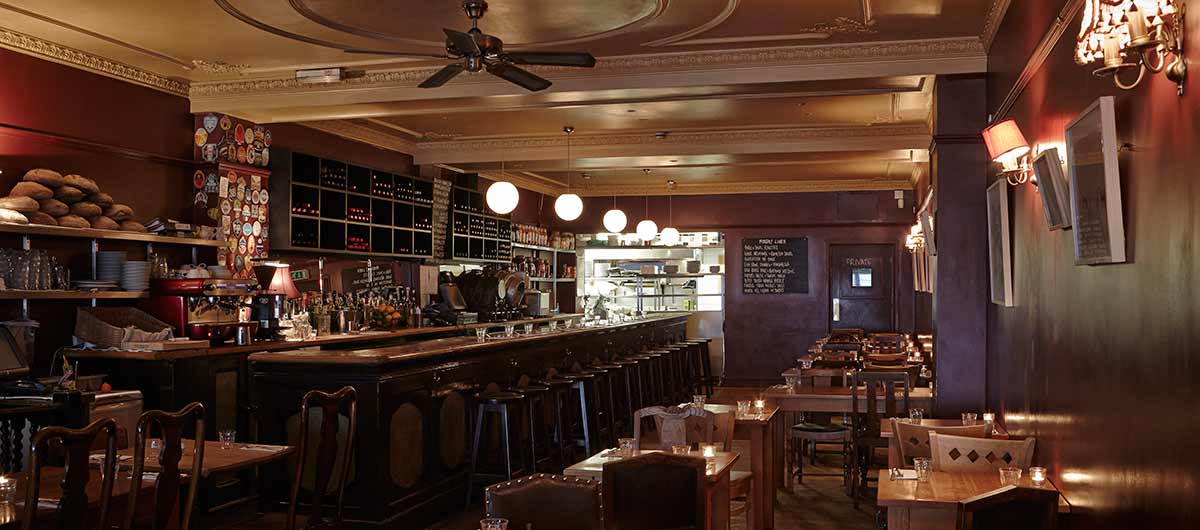
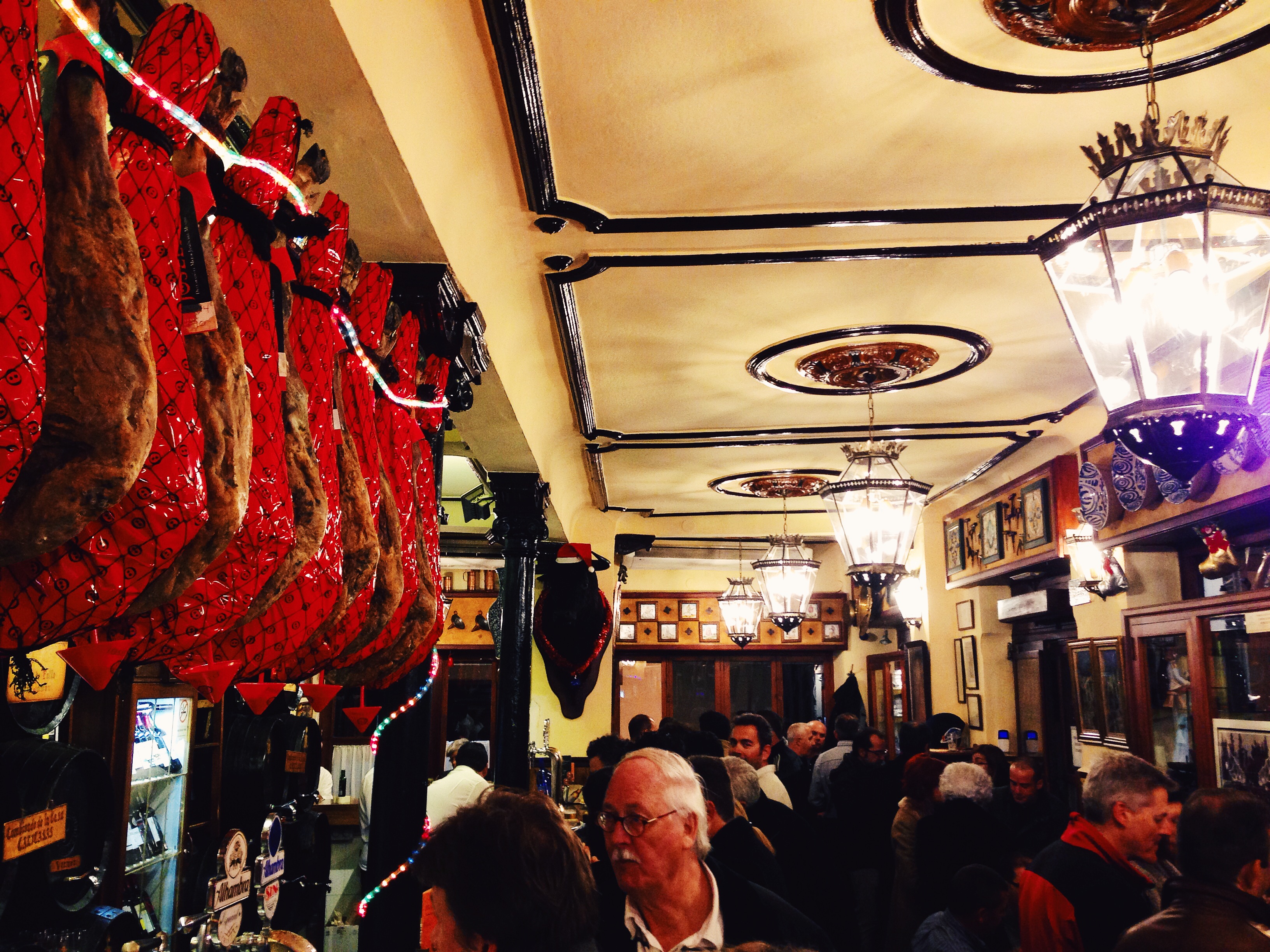
In normal times I would have loved to sit inside at Bravas – the interior is conspiratorial, buzzy and surprisingly like being back in Spain – but all the things that make that room wonderful in normal times made me reluctant to eat there right now. Fortunately, after a short wait they managed to fix us up with a table outside, in a makeshift decked area (it was very pleasant, although you did feel slightly seasick every time climbed aboard, or disembarked).

Bravas’ menu was relatively small and perfectly formed, with a section of nibbles, cheese and charcuterie and then vegetable, seafood and meat tapas dishes – and some specials up on a board (I’m still sad I never managed to find room for the goat stew they were serving the day I visited). The way to approach a menu like this, I’ve always thought, is to work out all the dishes you absolutely to ensure you eat, divide them into groups and order each group one at a time, only ordering more when you’ve finished what’s in front of you.
So we did exactly that, and I made inroads into a fantastic G&T – made with local Psychopomp gin, olive and rosemary, a Bristolian take on Gin Mare – while we waited for our first dishes to turn up. Zoë was on a Negroni, which Bravas sweetens slightly with a dash of Pedro ximènez, because Zoë is more hardcore than I could ever hope to be.
The first thing we had fell slightly flat. Bristol is packed with excellent bakeries, and I expected Bravas’ bread to be more exciting, less dense and pedestrian. But the alioli it came with was pleasant enough, even if the golden colour slightly oversold it. Better were the jamon croquettes – others I’ve had have leaned heavily on the béchamel but these were sturdier and all the better for it. They were two pounds fifty each, or six for twelve pounds. Immediately after eating one I wished we’d ordered half a dozen, but that’s me all over. Manchego with rosemary was excellent too, especially with lozenges of membrillo to perk them up sweetly.
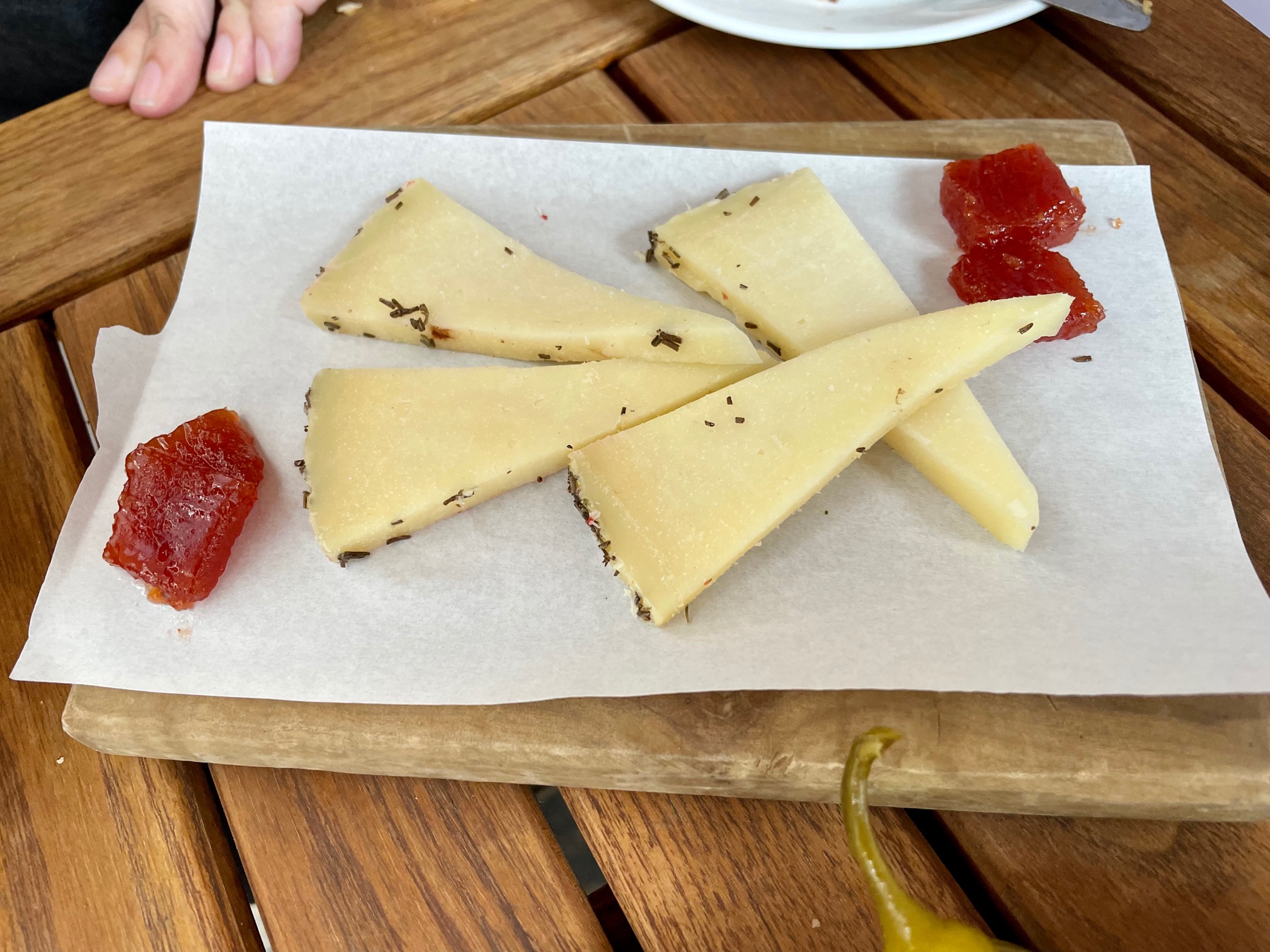
Things really got into gear with the selection of cured meats. I know all this is more about sourcing than cooking, but buying the right stuff is every bit as much a skill all good restaurants need. And this very much was the right stuff. The best of the bunch was a beautiful lomo, marbled with fat, more like coppa than the very lean lomo I’m used to in Andalusia. But the cecina was the equal of any bresaola I’ve tasted, and the salchichón was coarse and gorgeous. Best of all, it came with plump, sharp caperberries and sweet, tangy guindilla chillies to wrap in charcuterie and pop in your mouth. Better still, because of Zoë’s aversion to pickles I got to eat them all.

We’d ordered a tortilla and a dish with chickpeas and tuna belly, but there was obviously some kind of mix up, because instead we were brought two portions of the tortilla. They must have known something we didn’t, because having to share a single portion would only have caused trouble. It was one of the best I’ve had, soft but not gooey, sweet with potatoes and onions: few dishes can transfigure the everyday so completely.

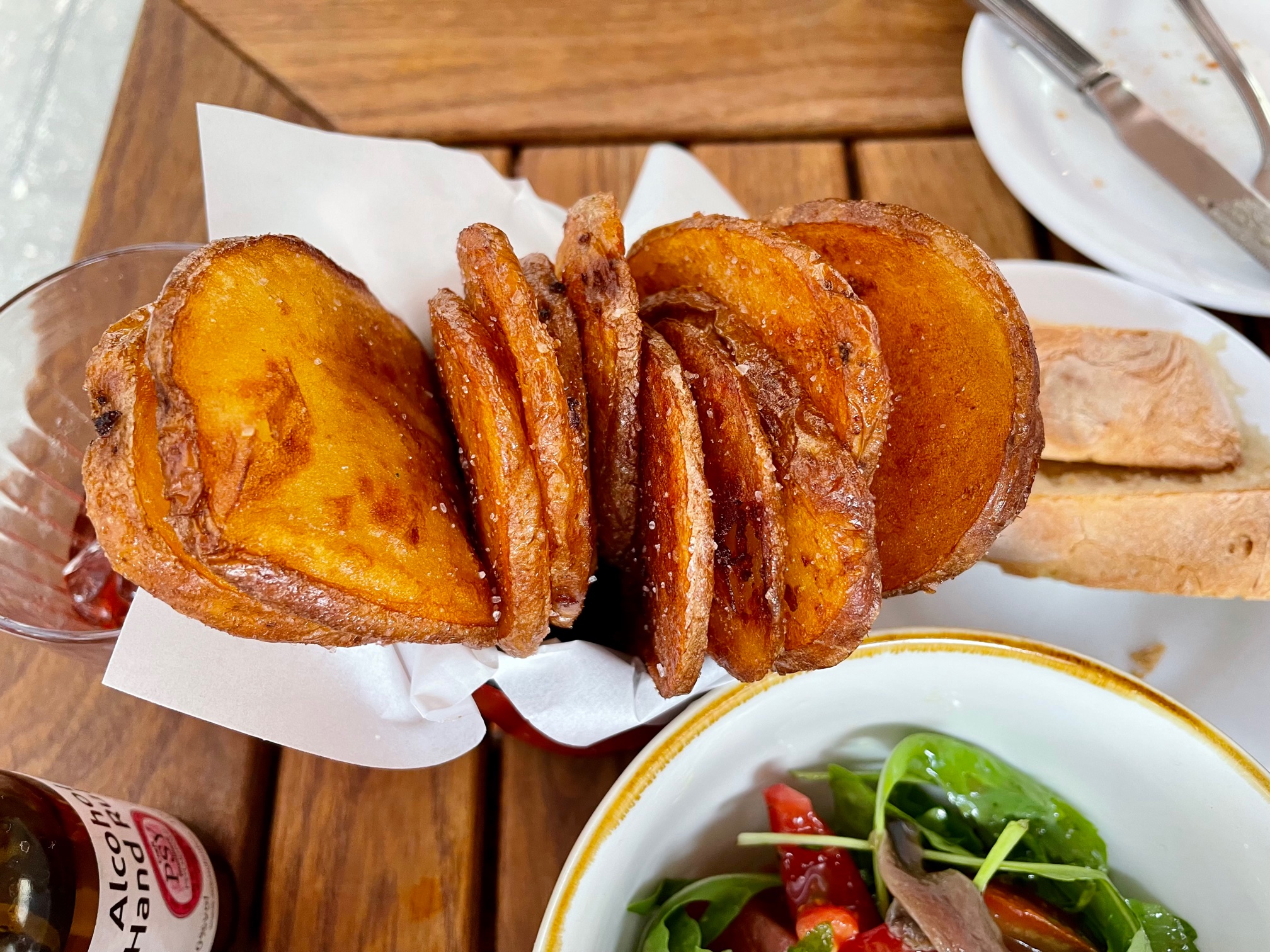
The other vegetable dishes were disappointing by comparison. The eponymous bravas looked the part, and are a dish I’ve loved in the past – rather than cubes of fried potato, Bravas slices a whole potato lengthways and it looks very striking when brought to the table. But the texture was missing in action, the slices a little bit flabby and limp, lacking in the crispness that makes this dish so addictive. The bravas sauce with them was spot on, but the lack of fighting over the final slices of spud told its own sad story.
Worse still was the special, Isle of Wight tomatoes with rocket, capers and anchovies. Now, some of that is my mistake because I guess, in the cold light of day, when you look at that list of ingredients it sounds an awful lot like a salad. And a salad it was – heavy on the rocket, light on the tomatoes, the capers completely AWOL. And it wasn’t so much dressed as mulchy, sitting in a bowl with a little pool of what tasted like vinegar at the bottom. Given that we were in a tapas restaurant, and the tomatoes got top billing, I foolishly thought they would be the star of the show, as they would have been in Spain. More fool me, I suppose.
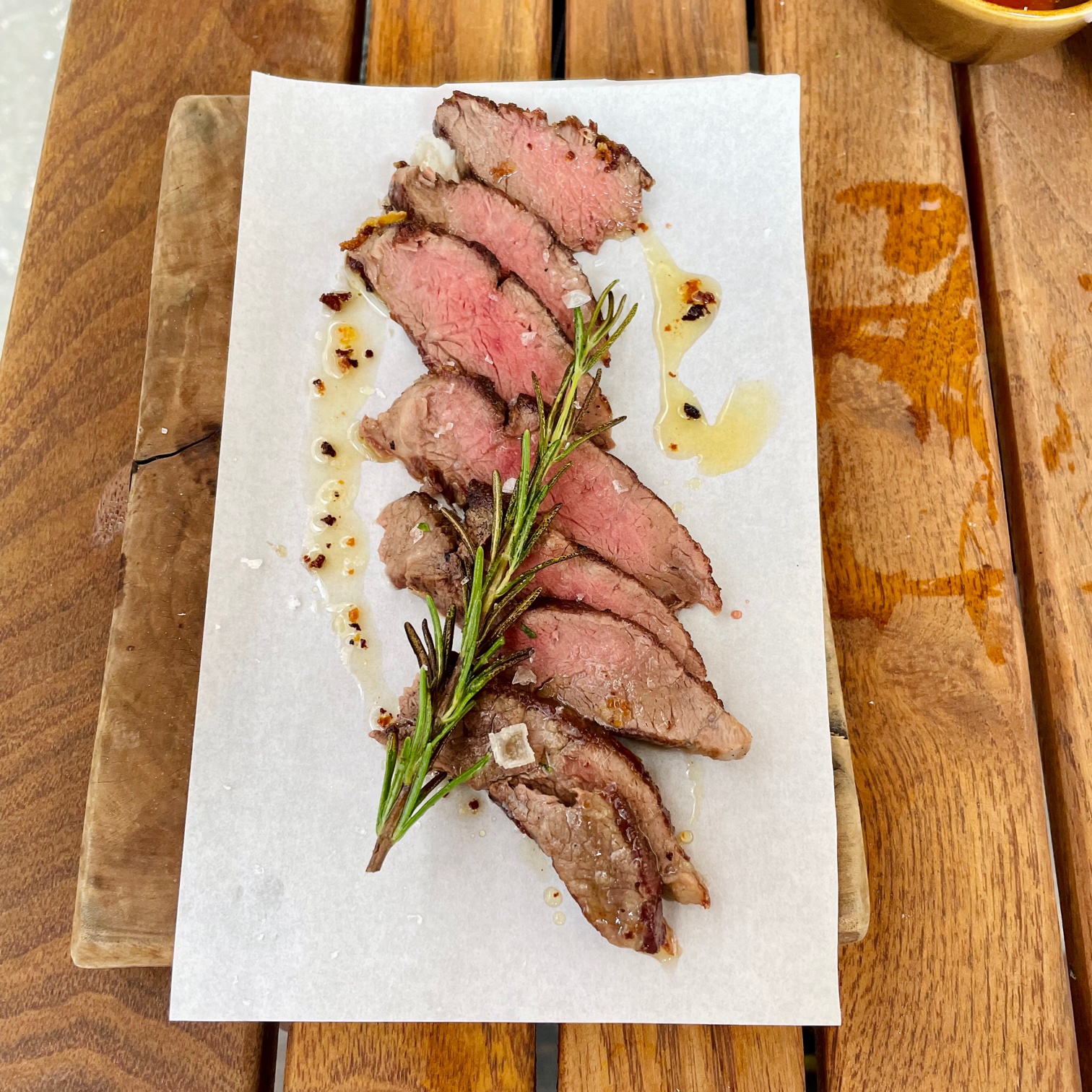
Things needed to improve, and fortunately they did with our last three dishes. Presa iberico turned up looking like a still life, served blushing in the middle, artfully dressed with charred rosemary and scattered with hefty salt crystals. And it was very good indeed, but it felt a little too little for too much at eight pounds fifty (although, to be fair, the following night we’d have a similar dish at Michelin-starred Paco Tapas that set you back twenty pounds).
Cod a la plancha was more successful, a terrific piece of fish which flaked easily with a single artichoke on top, served with a gazpacho verde which felt a lot like a salsa verde to me. But half the fun of a piece of fish like this is a nicely crispy skin: our piece was missing half its skin, and what there was wasn’t crispy. Even so it was an enjoyable dish, although I couldn’t help wondering whether I should have ordered that goat stew after all. Finally, possibly the nicest dish of the meal: chicken chicharrones turned out to be nothing of the kind but just a superb plate of rugged, crunchy fried chicken, with a chilli alioli on top. I wish they’d brought us two of these by mistake instead, but that’s life.

Service was really stretched thin, and a little frazzled all afternoon. I felt for them, because it looked like they’d been badly hit by track and trace pings, to the extent where the chefs had to bring quite a few of the dishes to our table, and others. It was a real shame, and clearly not their fault – when you did get someone’s attention they were unfailingly lovely, but it could be difficult to flag someone down. I suspect we’d have drunk more if we’d been able to do that, but as it was we only managed another glass of wine each. The wine list, incidentally, was great, and both the wines we tried by the glass – a beautifully fresh chardonnay and gewurztraminer blend for Zoë, a robust, aromatic Rioja for me – were knockout.
The waiting staff were also particularly good towards the end of our meal when an elderly gentleman, dapper in overcoat and hat, wandered in from the Lebanese restaurant next door, took a seat at the table next to us, opened his polystyrene takeaway container and starting having at his kebab with a plastic fork. One of them came over and explained ever so nicely to him that the seating was reserved for customers of Bravas, and after they had some trouble getting this point across, patiently and politely, the intruder shambled off to munch on his lunch elsewhere: they earned every bit of our tip for that interaction alone. Our meal – all that tapas, a couple of cocktails and a couple of glasses of wine – came to ninety-two pounds fifty, not including service.
It’s tricky when you go to a restaurant you love and, by their high standards, they have an off day. I’ve enjoyed all my other meals at Bravas, objectively speaking, far more than this one. And yet this isn’t a normal time to weigh up restaurants, and Bravas seemed to be struggling with the pingdemic we are in, like so many hospitality businesses at the moment.
Initially I was inclined to be more critical of the restaurant, but looking back I can’t help but remember the hotel we stayed in on our first night in Bristol. They’d given us a room up in the eaves where the bed was too big for the room it was in, so you could only really get into bed on one side. The other side, right next to the wall, had no bedside table and no lamp. The tiny TV was on a tiny chest of drawers in the corner which looked like it had been ransacked from an office closure. The 2019 version of me would have called reception and asked to see another room. It’s a life hack I learned from my ex-wife, who did it all the time.
But then I thought: I am away from home, on holiday, for the first time in a year and a half. I have a beautiful king-sized bed to spend the night in and a fantastic partner to share it with. There’s a huge claw-footed bath next door – I adore baths, more than I can say – and the sort of wet room and rainfall shower you could easily spend a long time in. I am fit and well, I’m double-jabbed and all things considered life could be an awful lot worse. And I never watch the TV in hotel rooms anyway. Really, who does?
So 2021 me stopped mithering about my hotel room, and in the same spirit 2021 me had a lovely afternoon at Bravas. It could have been even better, but I’ve spent eighteen months a long way from my best, and they had the decency to take me as they found me. The least I could do, under the circumstances, was return the favour. I dare say I’ll pay them a visit again next time I go to Bristol, and that day can’t come soon enough. In the meantime, I’ll work on being more grateful. It might make me a worse restaurant reviewer, but hopefully a marginally better person.
Bravas – 7.5
7 Cotham Hill, Redland, Bristol, BS6 6LD
0117 3296887


 Edible Reading