Siblings Home

Siblings Home closed in June 2017. I’ve left the review up for posterity.

Some of my readers have told me that they’re members of the “scroll down and scroll back up” club. They look at the rating first, then they go back and read the review. Just to level the playing field for everybody just this once: I absolutely adored Siblings Home. It opened on Valentine’s Day, appropriately enough, and if I’m not careful this review might end up reading a bit like a love letter (don’t say you haven’t been warned).

Siblings Home is tucked away on a sidestreet just off the main drag in Caversham. It’s a two minute walk from Costa Coffee, but in all other respects a universe away: the front is a beautiful double-aspect room with lovely light from those big, big windows. Inside, it’s full of reclaimed wood and old school furniture, exposed lights hanging from the ceiling. I know – what I’ve described sounds like all sorts of restaurant and café clichés, but Siblings Home is a very different beast: it’s clearly been done with love by someone with a very good eye (and, I’d guess, nowhere near as much money as the big chains) so what could seem like a piece of calculated bandwagon jumping is actually a beautifully warm and considered space.

It all feels a bit Labour And Wait, like someone has found a great café in Hoxton or the North Laine and, through some magical realism variant of Control X and Control V, had dropped it incongruously on a street corner in Caversham (I spotted a stool that had “David Bowie” written on it in Tippex, which only reinforced that impression). I couldn’t think of anywhere even remotely like it elsewhere in Reading, just places that had aimed for this kind of look or feel and missed by varying degrees. When I got there on a weekend morning there were already a bunch of hip young (and not so young) things inside, drinking coffee from chunky mugs and luxuriating in the warm word bath of the weekend papers. Aside from the front room there are two others: one full of homewares you can buy to take home and a little back room which has extra space for customers.

Of course, all this only works if the food is good and by this stage I was hoping against hope that I wouldn’t be sitting through another depressing knockout victory for style over substance. The menu, on a blackboard behind the counter, looked promising and made all the right noises: a few breakfast options revolving around toast, granola or muesli and just four sandwiches, all either available in toasted sourdough or piadina, a thin Italian flatbread.

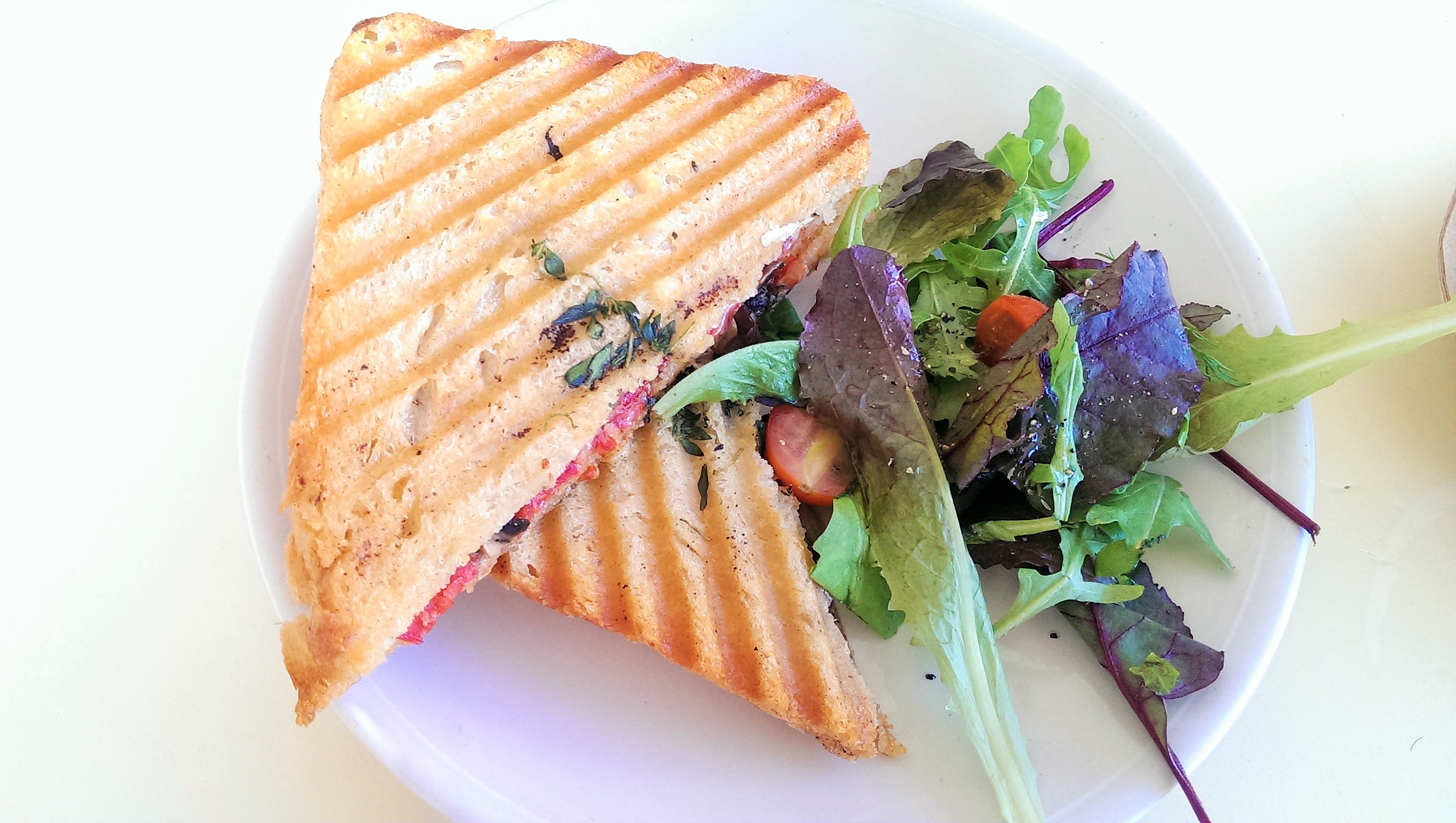
In the interests of research, we tried both types of sandwich and soon realised that substance was going to triumph over style on points. Chorizo, Jarlsberg and mushroom in toasted sourdough was downright marvellous: the sourdough was sliced thinly enough for the insides to melt properly and the outside had been lightly buttered (I think) for better toasting. The flavours were excellent; nice, thin piquant chorizo with a decent amount of creamy Jarlsberg and, last but not least, the rich, earthiness of the mushrooms. A little sprig of thyme had been pressed onto the outside of the toastie, and that attention to detail, that interest in fresh ingredients and that understanding of flavours, in such a little thing, made me love Siblings Home even more. It also came with a salad I actually wanted to eat – a little red chard and rocket, lightly dressed, along with some tartly sweet cherry tomatoes adding zing and colour. Having it done so well and so simply here just made me realise how many other places bugger this kind of thing up. All the salad got eaten, which is the lunchtime equivalent of a standing ovation.
SibSour

The piadina was just as delicious. The flatbread had been folded into a shape something like a tricorne, and inside it was packed with firm salty halloumi, fresh crunchy red pepper and oodles of pesto. I didn’t know what to expect from the piadina itself but the texture was magnificent – not brittle like a tortilla or spongy like a panino, it stood up to the grilling perfectly. The whole thing together was a wonderful sandwich – no wasted space, that perfect blend of salty and sweet filling right up to the edges, every mouthful an utter delight. At the end I took the rest of my salad and used it to mop up the last of the pesto on my plate – which is probably the lunchtime equivalent of an even longer standing ovation. Both sandwiches cost four pounds fifty and were made there and then behind the counter rather than sitting there waiting for someone to order them: again, I was reminded how many places in Reading offer so much less for more money.

SibPiadina

The drinks were excellent, too. Siblings Home serves proper leaf tea in proper pots, with vintage mugs to drink from and milk served in little glass inkwells (you might find that a little twee but by that stage I was completely charmed by the whole thing). My Earl Grey – from Martyn’s of Muswell Hill according to the blackboard – was very nice indeed. The latte, on the other hand, got rave reviews although I’m told it was much more like a big comforting café au lait than a little, intense, densely frothed latte (my companion started to wax lyrical about coffee in Paris at this point, and truth be told I zoned out and paid more attention to my paper). The only misfire was the pain au chocolat which wrapped up proceedings. I really wanted one but it was dense and chewy where it should have been light and flaky. No matter: by then I already loved the place and was in a distinctly forgiving mood. Besides, surely it was my fault for not going for the chocolate brownie or the intriguing-sounding pear and lavender cake?

Service was spot on from start to finish. The young lady serving was bustling about bringing drinks and making up sandwiches but managed to be really friendly and chirpy and when our plates were cleared by one of the titular siblings she seemed genuinely pleased that we’d enjoyed our lunch. The enthusiasm was infectious – I left wanting to come back, soon, and to support them by spending money (and having lovely food and drink. I’m not completely altruistic). The bill, for two sandwiches, two rounds of hot drinks and a pastry was twenty pounds. We could have spent less but were in no hurry to leave: I could quite easily have grabbed some magazines or got out my Kindle and settled in for far longer.

Although I’m no Mary Portas, it’s worth briefly mentioning the other arm of Siblings Home because the shop in the middle room sells lots of lovely things, also clearly put together by someone with a very good eye and an excellent contacts book: from plain, timeless, practical earthenware mugs and dishes to sturdy, beautiful chopping boards, from cacti to cards, from bars of chocolate and jars of local honey to handsome woollen blankets. My one regret is that I didn’t pick anything up – but in my defence I was already a bit giddy from having such an unexpectedly fantastic lunch and things could easily have got out of control.

When you review somewhere every week, this lark can get a bit dispiriting. Mediocre or muddled places, poor food and service, unimaginative concepts, mean-spirited portions, bad execution: they sometimes make me wonder whether my standards are just too high. Maybe my lofty ideals aren’t realistic, and Reading is just like everywhere else and we should buckle down and accept our lot – chains, 2 for 1 vouchers, Groupon deals, making do – and getting on the train to Oxford or London if we don’t like it. But then I go somewhere like Siblings Home that just gets everything right – no fannying around, no cobblers about “artisan products”, no box-ticking attempts to be everything to everyone. Instead, a small, sensible range of simple, excellent food in a beautiful, stylish room along with friendly, enthusiastic service. It makes me realise that it can be done, even if I’m sure the people at Siblings Home make it look a lot easier than it really is. This place reminds me why I started writing this blog in the first place. And finding it is a little bit like falling in love, all over again.

Siblings Home – 8.0
16 Hemdean Road, RG4 7SX
07956 567872

http://www.siblingshome.com/

River Spice

The single question I get asked most often, apart from where to eat, is “what do the ER ratings mean?” I’ve often wondered whether to devote a separate post to this, or to leave it an enigma. The thing is, lots of people like ratings. They want to know whether a film that’s just come out is a 4 star film or a 5 star film, and I can see why: back when I read reviews but didn’t write them I wanted to know that too. Now that I write one every week, I can see it’s more complicated than that. How can you sum a whole experience up in a mark out of ten? If I could go back and start again, I’d be tempted to miss out ratings altogether. But would I go through with it? After all, they might be difficult to decide on, they might prompt head-scratching and disagreement but, like I said: lots of people like ratings.

I’ve always hoped that the ratings on ER work a bit like those on music website Pitchfork. I can read a Pitchfork review of an album that’s rated, say, 8.0 and absolutely know that it won’t be my cup of tea (because of references to, for example, Krautrock – how exciting!), or I can read a 6.2 and rush out and buy the CD. It’s no different with restaurants: the ratings are an interesting conversation point, but there are so many other factors involved. Is it your kind of food? Is it going to be any good for vegetarians? Is it buzzy/quiet/fancy/unpretentious enough for you? Is getting to the location a faff?

Another thing I often get is people saying that my reviews are too harsh, or too kind (sometimes I get both bits of feedback about the same review) or people saying that the review doesn’t read like the rating, that the words feel like an 8 but the rating says 7. Well, I suppose if I’ve been somewhere I liked and you didn’t you’ll think I’m harsh. If I’ve raved about somewhere that left you unmoved you might think I’m too charitable.

A complicating factor is that, over the time I’ve done this, I’ve felt increasingly like being constructive. These are small independent places, mostly, and they’re trying their best – even if their best isn’t that good. I don’t have the appetite for hatchet jobs, and I know that’s disappointing because, like ratings, people really like them. So, and hopefully this will be my last word on the subject of ratings: if you read a review and it makes you feel like trying the restaurant, do. If it doesn’t, don’t. Does that sound fair enough?

Subscribe to continue reading

Become a paid subscriber to get access to the rest of this post and other exclusive content.

Papa Gee

Click here to read a more recent review of Papa Gee, at its current location on Prospect Street, from September 2022.

I’m not sure many people know that Papa Gee even exists. I was out this week with a friend who lives just round the corner from it and I casually dropped into conversation that I was due to go to a restaurant in his manor. First he asked if it was the Mod. Then he guessed at Standard Tandoori. When I shook my head again and said no, it wasn’t Casa Roma either he was stumped. “But there isn’t anywhere else round by me.” he said.

Well, there is: there’s Papa Gee, a small Italian place which has somehow been plugging away at the restaurant game for ten years. I used to walk past it on my way back from Kyrenia or Mya Lacarte and think is that even a real restaurant? The lights always seemed to be off, and I’ve never met anybody who’s eaten there. Even my friend, a local, had never heard of it. Surely a restaurant can’t survive for ten years if no one has ever been?

It’s not the loveliest place, and (apologies to my friend if he’s reading this) not in the loveliest part of town. The Caversham Road is a busy street for traffic but it’s far from the footfall of the town centre and only really comes alive during Reading Festival week. Papa Gee has no real view, no garden to speak of and is pretty anonymous-looking. So why am I reviewing it? Well, you can blame Tripadvisor for that: the reviews are very positive, with repeated claims that it serves the best pizza in Reading. Could the pizzeria I’ve been waiting for all this time really be attached to the not hugely appealing Rainbows Lodge Hotel? Probably not, I thought, but I was too curious to stay away (and hopefully by now you’re curious too).

Passing the bigger, more polished places on a Tuesday night made it very clear that not many people eat out in this part of town during the week; Casa Roma and Standard Tandoori both had three of four tables of guests but were far from busy. Papa Gee’s, on the other hand, had people at seven of its dozen or so tables. At the risk of sounding creepy, I did watch most of the diners leave and only one table was occupied by hotel guests. The rest seemed to be locals. A good sign, right? The interior of the restaurant was very basic with small tables laid with cutlery and paper napkins, signs painted on the window and food themed pictures on the wall. It reminded me of something Marco from Pepe Sale said to me once, that Italians are much more interested in the food than the room. Another good sign, I hoped.

The menu at Papa Gee’s is huge, one of the biggest of any restaurant I have reviewed. It’s a bit bonkers, too: if you want to get an idea of it, look on the website. It has a mixture of fonts, some rather eccentric spelling, some comments in inverted commas after some of the dishes (Buonissimo it says about one of them, Simply Delicious is the commentary on another) and a few – very – random photographs dotted through it. Reading through it I couldn’t decide which to do first, frown or sigh. Fortunately, the waitress was superb: I said I couldn’t decide what to order and she asked me “are you in a pizza, pasta or meat mood tonight?” I asked her to recommend one of each and she did so right away – strong opinions, firm preferences, no nonsense. Suddenly my urge to either frown or sigh had vanished.

The first starter, funghi ripieni, however, jumped off the page – a dish so appealing that it kicked off a bout of plea bargaining (you can pick mains first as long as I get the funghi etc.) It was worth the battle: what arrived was a single field mushroom, stuffed (or, rather, topped) with gorgonzola and mozzarella on a bed of rocket, the whole thing drizzled with balsamic glaze. The mushroom had the balance just right – cooked enough to be soft but not watery. The cheeses were also perfectly balanced – creamy but with enough of a salty tang of blue. The balsamic glaze added just a touch of sweetness. This was divine: simple, unfussy and heavenly.

PapaShroom

Picking a second starter wasn’t so easy – who wants to be understudy to a dish like that? – but I thought that the prosciutto and mozzarella would be an interesting choice just to see what their basic ingredients were like, even if it hardly tested the kitchen’s skills. This wasn’t quite as successful. In fairness, the headline acts were both good: the ball of mozzarella was cold, fresh, firm and clean-tasting and the ham – two slices – was nicely salty. I didn’t for a second think it had been freshly sliced but it didn’t quite have that chilly plastic-wrapped texture you get in many restaurants. The green and black pitted olives on top were decent if not wildly exciting. The salad, though, really put me off: more undressed frisée (why places dish up bitter leaves with the texture of wire wool I’ll never know). It was also a bit brown round the edges, which was the final nail in the salad coffin for me. I’d rather have had more of the rocket and balsamic than this rather sad pile of space-filler leaves. This was seven pounds fifty and felt – to me at least – like too much margin and not enough fun.

PapaMozza

I went to Papa Gee fully intending to have a conventional pizza, but I was undone by the waitress’ recommendation, namely the calzone Napoli. I rarely have a calzone but she made such a good case that I found myself swept along with her enthusiasm. I’m delighted I did, because it was magnificent: a big folded pizza absolutely stuffed with meat and cheese, like the best Breville ever. As with the mushroom starter, this was a dish all about balance. It was filled with ricotta – not usually my favourite cheese, and not one I’d have on its own, but its fluffy mildness made perfect sense with the intense, thin slices of strong, salty salami. It was all bound together with that glorious molten mozzarella and – just to finish things off – the occasional surprise of a hidden basil leaf. (“Gaetano likes to put basil in everything” said the waitress when I mentioned how much I liked it, “He’s trying to convert everyone”). But the topping – or filling in this case – is only half the battle because, to quote the great Meghan Trainor, it’s all about that base. Papa Gee’s truly is splendid: crispy and bubbled at the edges but thin in the middle, with just a little note of sourdough saltiness. I could have eaten it on its own, and I did notice diners at other table rolling up their pizzas, as you should be able to do but so rarely can.

PapaCalzone

The waitress didn’t recommend my other main course, but the menu did: after the description of scialatiello (fresh, thick spaghetti, king prawns, olives, “cappers” (sic), anchovies, chilli and cherry tomato sauce) it says “Delicious”. This felt to me a bit like when you order food and the waiter tells you that you’ve made a good choice: funny how, even if you eat out a lot, a little of that sort of validation goes a long way. When it arrived I wished that I had ordered the pizza because it looked a little underwhelming but I tucked in nonetheless – in for a penny in for a pound. Reader, I loved it: the spaghetti, thicker than any I’ve ever seen, was nicely al dente and tasted freshly made (to my amateur taste buds, anyway) and the tomatoes were crushed rather than pulped, so it had more texture than your average bowl of pasta. The mixture of flavours in the sauce was fabulous and gave the opportunity for all kinds of combinations. There were only two king prawns but in the sauce there was a respectable amount of smaller prawns and the hit of chilli at the end of each mouthful was enough to give it a bit of bite without ever becoming overwhelming. It’s another great example of how you shouldn’t judge on looks – the pictures on Papa Gee’s website look unspecial, and my photos do too, but good food is not a beauty contest. I’d eat this again in a heartbeat (if I managed to avoid the lure of that pizza base, that is).

PapaPasta

The dessert menu is short and sweet (indeed) with five dishes plus ice cream – not gelato, which struck me as a missed opportunity. I picked just one dessert – the baba – a rum soaked sponge, filled with Nutella. This was so much more delicious than I expected, and by this stage I expected it to be pretty good. It was a light vanilla sponge, airy and open a bit like a buttery brioche, soaked in rum that I think had been sweetened, served split down the middle with hot Nutella spread on the insides. On top of this was a squirt of, err, squirty cream, a fan wafer and a preserved cherry. The cream, wafer and cherry were completely pointless – put there by the chef because he wanted to dress the dish, I think. It really didn’t need them (like I said, not a beauty contest) and this was worth eating whatever it looked like: the sponge was rich and boozy and the Nutella filling was effectively a choc and nut sauce. Simply gorgeous. My dining companion didn’t fancy a dessert so had an Amaro (one of those Italian digestifs that tastes simultaneously medicinal and faintly dangerous) and raved about that instead.

There’s not much to say about the wine list – it’s small but perfectly formed, with only one wine over twenty pounds (and that’s a barolo, so fair enough). We picked a nero d’avola which wasn’t half bad: nicely juicy, full bodied and very affordable at eighteen pounds. Service was very relaxed, with the one waitress happy to recommend food and chat. She was casually dressed – I’m in two minds about whether that bothered me, I feel like it shouldn’t but on some level it did – but she knew the menu inside out and showed genuine interest and concern to make sure we were enjoying everything. The total bill, for two and a half courses each with a bottle of wine and a liqueur, was sixty pounds. Yes. Sixty quid. Both mains were cooked fresh to order, and each one cost less than a tenner.

I think Papa Gee is a real find. It’s a gem of a restaurant: unpretentious and unfussy, serving really good food, friendly and relaxed and an absolute steal. Why don’t more people know about it? Or is it that people do know about it and they’re determined to make sure the secret doesn’t get out? Not sure. Either way, I’m already planning my return visit – no, I’m not telling you when, don’t be daft – so I can try more of those pizzas with that amazing base (I’m particularly drawn to the “Nonna Amalia” with Neapolitan pork sausage and wild broccoli tips). Yes, the location isn’t brilliant but that’s what taxis were invented for – and besides, there’s always the prospect of a post-dinner snifter in the Mod or the Greyfriar. So is it the pizza place I was dreaming of? You know what, I think it might be.

Papa Gee – 7.8
138 Caversham Road, RG1 8AY
0118 9556906

http://www.papagee.co.uk/

Alto Lounge

I like to bang on about service in restaurants, but this week it occurred to me that I might be part of the problem. After all, I talk about service, but if you look back at my other reviews it’s usually tucked away near the end. It’s the penultimate paragraph, stuck between the desserts and the summing up, sharing space like uneasy housemates with the bit about How Much It All Cost.

For some reason it’s difficult to write about service in detail unless it’s bad, and when it’s bad I feel guiltier about going into detail than I would about a disappointing dish. Funny how the human face of a restaurant, even though it’s what you see, attracts less comment than all the faceless people toiling away in the kitchen.

So, to redress the balance, even if only for one week: the service at Alto Lounge was some of the best I’ve had in a long time. The two women working the night I went were an absolute joy: friendly, likeable, helpful and interested. They stopped me going up to the bar to order more drinks when my food had just arrived, even though technically Alto Lounge doesn’t do table service. It properly felt like they wanted to make sure I had a good evening, and when I settled up and left the goodbyes were so genuine that it made me want to go back.

Subscribe to continue reading

Become a paid subscriber to get access to the rest of this post and other exclusive content.

Kyrenia

Bit of a weird one, this: Kyrenia changed its name in January 2016 to Ketty’s Taste Of Cyprus as it was under new ownership. They never changed the facade, just the website and menu. In Summer 2020 it reopened under a completely new name as Spitiko. I’ve marked this restaurant as closed, and kept the review up for posterity.

I’m sorry, but I’ve got a confession to make. I’m burned out. Running on empty. This whole business of going to a restaurant every week takes its toll, you know (I’m not expecting sympathy, don’t worry). And it’s the end of the year – Christmas party season is fast approaching and I’ve got very little left in the tank. So this week, rather than go somewhere that would be a voyage of discovery for all of us, I went somewhere I know well: I’ve been going to Kyrenia, Caversham’s Greek Cypriot restaurant, for as long as I can remember. I love it – and I’m going to spend this review telling you why, because when I visited it on duty it was as terrific as always.

Besides, it’s been a bit of a bad run recently, hasn’t it? So think of this week’s review as a present to me (because I bet you haven’t got me anything, not even a box of Toffifee).

Kyrenia’s dining room hasn’t really changed in all the time I’ve been going, because it doesn’t need to. It’s perfect, simple but smart – no exposed brickwork and bare bulbs here – with clean white tablecloths, crisp cloth napkins and comfortable unfussy chairs. There are black and white photos on the walls and not much else. The greeting is warm and friendly and Ihor, who runs the front of house, is charm personified (in an endearingly apologetic way, truth be told). Kyrenia has a number of different menu options – they do a la carte, it’s two for one on Tuesdays, there’s a smaller set menu some of the week, but the thing to do here is order the meze, especially if it’s your first visit. I can’t stress this strongly enough: for twenty four pounds a head you get an incredible array of courses and variety (that’s your first tip, right there).

The first thing to arrive were the cold meze, a range of familiar friends and a very easy way to be led astray. Houmous was rich and smoky with a touch of garlic, a world away from the contents of a plastic supermarket tub. Taramasalata – something I avoid anywhere else because it’s often too oily and fishy – was light and delicate. Tzatziki was zingy and fresh, just the right side of tart, the flavour softened with cucumber. All of these came with a basket of warm, griddled, slightly charred pitta bread. That alone would be a feast, that alone would be enough but the other cold dishes were equally delicious. Beetroot, apple and walnut salad was fragrant and sweet rather than sharp and astringent, and potato salad was light and simple, just potato, good oil and parsley.

If I’m being critical (and it’s hard, where Kyrenia’s concerned) the tabouleh wasn’t as vibrant – in colour or flavour – as I’ve had elsewhere, and the olives felt like a space filler, but they were minor issues. This was a wonderful range of dishes, and the nature of it means it works equally well if you’re dining a deux or part of a much bigger group (here’s your second tip: I’ve been in those groups and watched people make the classic mistake – overdoing it on pitta bread and filling up ahead of the other courses. Don’t do this, because the best is yet to come).

Meze1

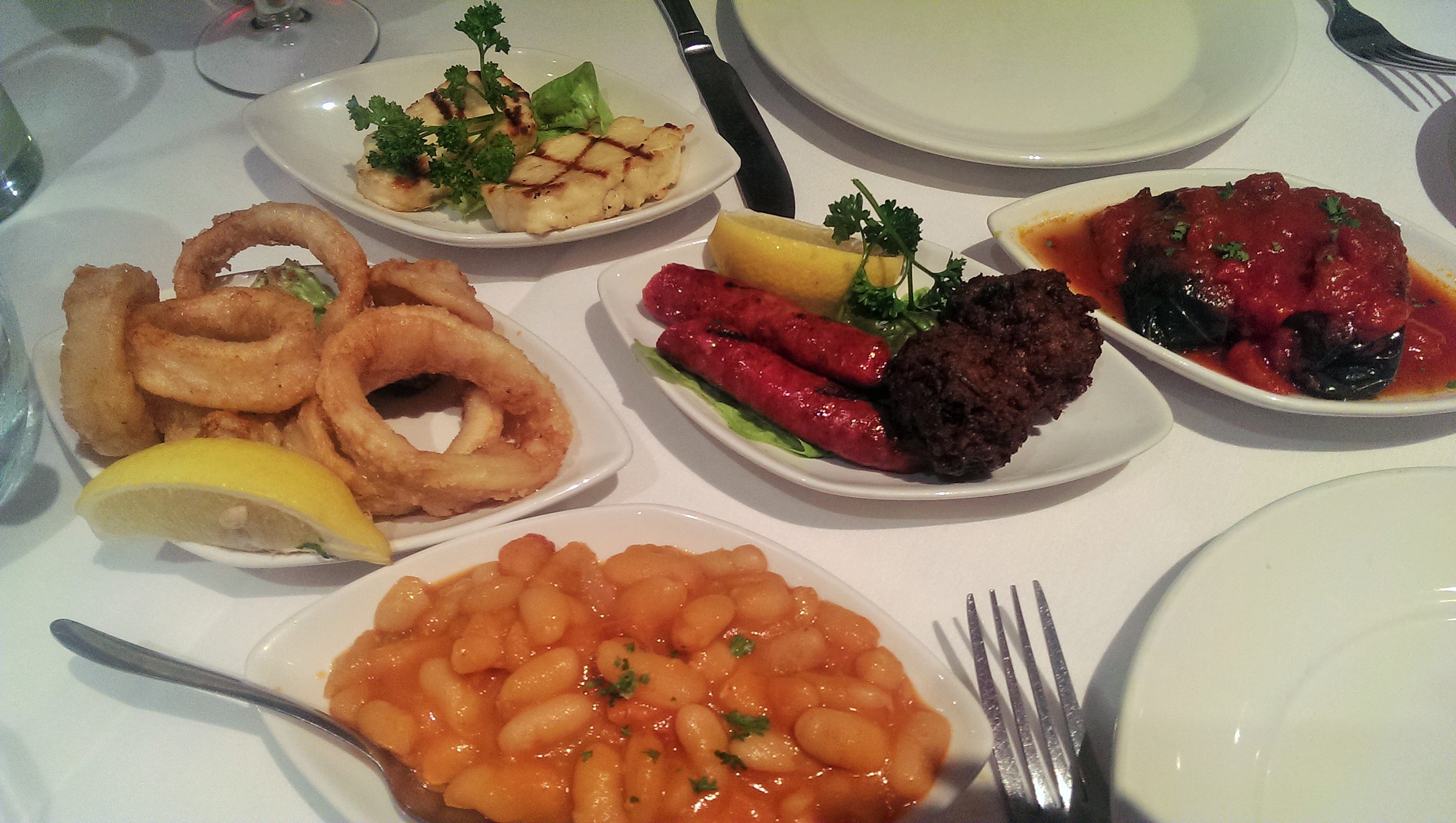
The hot meze only came out when the staff had checked that we were ready – a lovely touch, I thought – and when they did, as always, it became time to reassess how hungry I really was. Meze is about playing the long game, but the problem was that again, everything was too delicious to leave. Some of the classics – halloumi and calamari – were present and correct. The halloumi was unsurprising (halloumi in restaurants is pretty much always the same, everywhere) but still gorgeous, but the calamari was spot on – no hint of rubber, just light batter and fresh squid. They’re classics for a reason, after all.

Most of the other dishes were every bit as good. Lamb meatballs were possibly the pick of the bunch – juicy, coarse and savoury, studded with herbs and onions and a touch of garlic. Loukanika (Greek sausage) was Peperami’s glamorous continental cousin, warm with cinnamon, almost perfumed rather than one-dimensionally spicy. Dolmades had more of that delicious minced lamb folded into them, though there was probably too much leaf and not enough stuffing. The beans in tomato sauce were the only real disappointment – big, bland and filling, they were soon abandoned. Those six dishes may only merit a sentence or so each, but add that to the seven that came before and it starts to become clear: this is a marathon, not a sprint.

Meze2

Of course, I knew from personal experience to keep something in reserve for what came next: although again, only when the staff knew I was ready. The souvlaki – grilled skewers of pork and beef – were pleasant enough (possibly a tad on the dry side), but they weren’t the main attraction here because that was indisputably the kleftiko. I’ve had this dish countless times in Greece on holiday trying to find anyone who can match Kyrenia’s version, and I’ve given up now because what Kyrenia does to lamb is a work of utter genius: the almost godlike kitchen knows how to slow cook it until mere mortals like me struggle to describe how good it is.

It came on a large piece of bone but the merest whisper of effort soon sorted that out, leaving me with an awful lot of the most tender lamb I’ll probably ever eat. It broke into moist, sticky shreds, almost like confit, perfect for smooshing into the juices on the bottom of the plate before eating in nodding, smiling, euphoric silence. Again, because I feel I ought to be critical, the Greek salad it came with was a little underwhelming – but it’s only salad, isn’t it, and a cubes of feta is the perfect partner for a piece of lamb (that’s your third tip, if you’re counting).

Meze3

I also know from personal experience that if you’ve made the rookie mistake of filling up on pitta and tzatziki, Ihor will bag up all your leftover meat in a little foil parcel for you to take home and enjoy the next day. I also know from personal experience that it’s almost as good cold the next day, but take it from me if you go: pace yourself and eat it on the night.

One of the only other disappointing things about Kyrenia is the wine list. Greek wine can be absolutely fantastic, and is much underrated, but Kyrenia only sells a handful of bottles. None the less, the ones they do are lovely – we had a bottle of Naoussa Grande Reserve which was nicely balanced against both the meat and fish in the meal, far too easy to drink on a school night and not at all unreasonable at £23.50.

The last course at Kyrenia, the fruit salad, is really just a palate cleanser. I would be astonished if anyone could eat a “proper” dessert after all those meze so it seems apt that the meal ends with a plate of orange, melon, grapes and strawberry. It worked, though: fresh, bright, sweet and healthy (like Miley Cyrus before it all went so horribly wrong). It didn’t redeem the sins of all that lamb but it helped me fool myself, and very few desserts achieve that.

I’ve mentioned Ihor a few times, but service in general was perfect. All of the staff are so good at what they do, getting all the little touches right. Asking if you’re ready for the next set of courses, finding time to chat, knowing when to offer you extra pitta (although if you’ve read this far, you’ll know to turn that offer down – trust me on this). Again, to be critical I’d say that you should ask to be seated downstairs: sitting upstairs, in a smaller less buzzy room, far from the bar and the kitchen you can sometimes feel a little overlooked. That’s your fourth and final tip – ask for a table downstairs when you book, because they get busy at weekends. Dinner for two – all those dishes and a bottle of wine – came to £71 excluding service. It’s probably the best £71 meal I’ve had all year.

I recommend Kyrenia all the time – to friends and on Twitter – and it was getting to the point where not having reviewed it was looking like a glaring oversight. I went on duty hoping that they had a good night, but I really needn’t have worried because I’m not sure they know how to be anything but brilliant. There’s loads of stuff on the a la carte that I haven’t tried (I’d love to have a go at their stifado, or their monkfish souvlaki) and I know for a fact that their octopus is out of this world, but all of the best evenings I’ve had here have all involved the meze. Unlike most restaurants in Reading, Kyrenia feels like it’s perfect for everything – small intimate evenings, big raucous evenings and everything in between. It’s only a matter of time before I go back – in fact, on the way out I looked in the front door, still shining with that cosy welcoming light, and saw that they’re offering their standard menu on New Year’s Eve. See you there? I’ll be wearing the white carnation and the gold party hat and drinking the Greek red. Yamas (and Merry Christmas!).

Kyrenia – 8.6
6 Prospect Street, Caversham, RG4 8JG
0118 9476444

http://www.kyreniarestaurant.com/