Kyrenia

Bit of a weird one, this: Kyrenia changed its name in January 2016 to Ketty’s Taste Of Cyprus as it was under new ownership. They never changed the facade, just the website and menu. In Summer 2020 it reopened under a completely new name as Spitiko. I’ve marked this restaurant as closed, and kept the review up for posterity.

I’m sorry, but I’ve got a confession to make. I’m burned out. Running on empty. This whole business of going to a restaurant every week takes its toll, you know (I’m not expecting sympathy, don’t worry). And it’s the end of the year – Christmas party season is fast approaching and I’ve got very little left in the tank. So this week, rather than go somewhere that would be a voyage of discovery for all of us, I went somewhere I know well: I’ve been going to Kyrenia, Caversham’s Greek Cypriot restaurant, for as long as I can remember. I love it – and I’m going to spend this review telling you why, because when I visited it on duty it was as terrific as always.

Besides, it’s been a bit of a bad run recently, hasn’t it? So think of this week’s review as a present to me (because I bet you haven’t got me anything, not even a box of Toffifee).

Kyrenia’s dining room hasn’t really changed in all the time I’ve been going, because it doesn’t need to. It’s perfect, simple but smart – no exposed brickwork and bare bulbs here – with clean white tablecloths, crisp cloth napkins and comfortable unfussy chairs. There are black and white photos on the walls and not much else. The greeting is warm and friendly and Ihor, who runs the front of house, is charm personified (in an endearingly apologetic way, truth be told). Kyrenia has a number of different menu options – they do a la carte, it’s two for one on Tuesdays, there’s a smaller set menu some of the week, but the thing to do here is order the meze, especially if it’s your first visit. I can’t stress this strongly enough: for twenty four pounds a head you get an incredible array of courses and variety (that’s your first tip, right there).

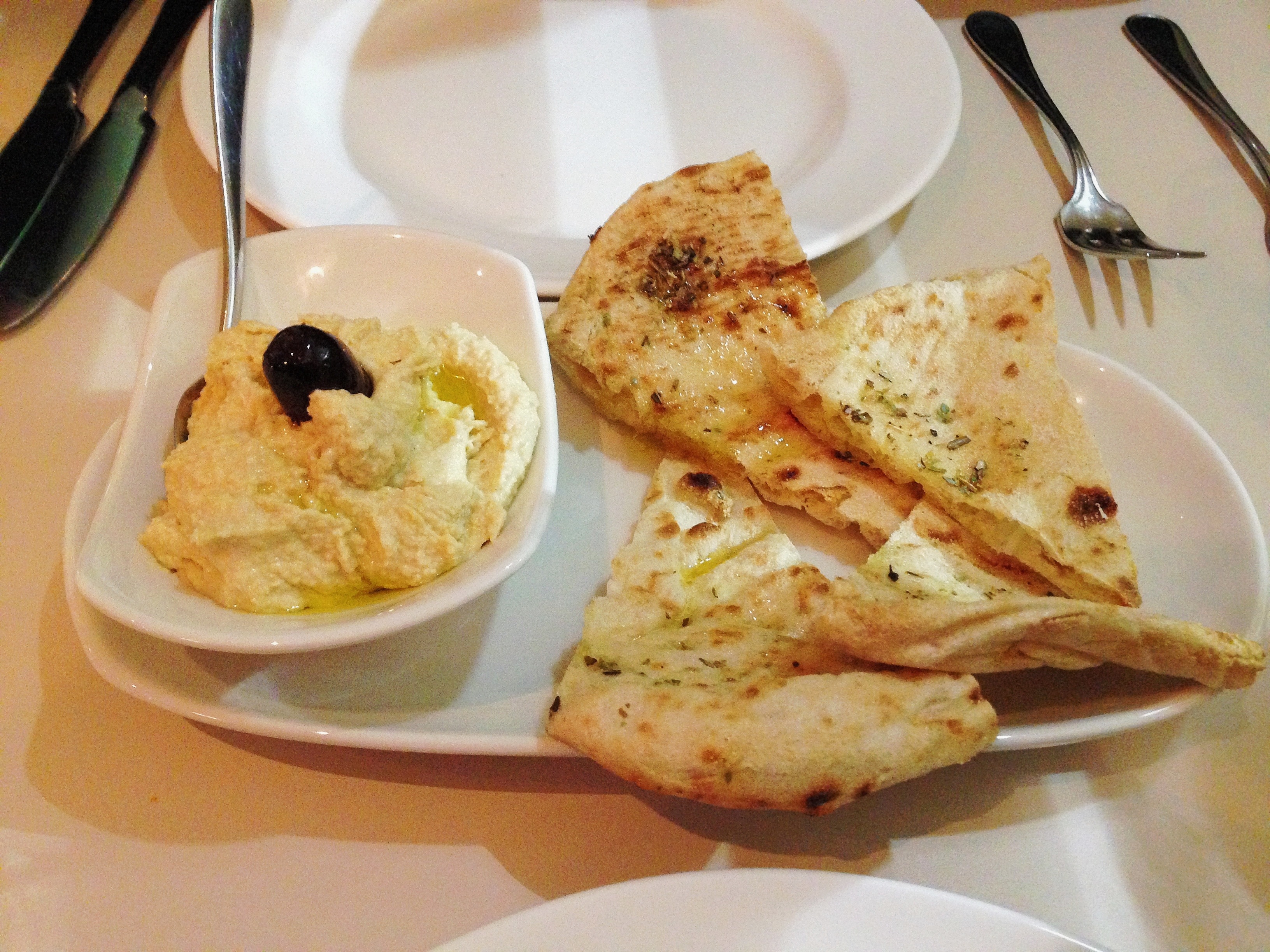
The first thing to arrive were the cold meze, a range of familiar friends and a very easy way to be led astray. Houmous was rich and smoky with a touch of garlic, a world away from the contents of a plastic supermarket tub. Taramasalata – something I avoid anywhere else because it’s often too oily and fishy – was light and delicate. Tzatziki was zingy and fresh, just the right side of tart, the flavour softened with cucumber. All of these came with a basket of warm, griddled, slightly charred pitta bread. That alone would be a feast, that alone would be enough but the other cold dishes were equally delicious. Beetroot, apple and walnut salad was fragrant and sweet rather than sharp and astringent, and potato salad was light and simple, just potato, good oil and parsley.

If I’m being critical (and it’s hard, where Kyrenia’s concerned) the tabouleh wasn’t as vibrant – in colour or flavour – as I’ve had elsewhere, and the olives felt like a space filler, but they were minor issues. This was a wonderful range of dishes, and the nature of it means it works equally well if you’re dining a deux or part of a much bigger group (here’s your second tip: I’ve been in those groups and watched people make the classic mistake – overdoing it on pitta bread and filling up ahead of the other courses. Don’t do this, because the best is yet to come).

Meze1

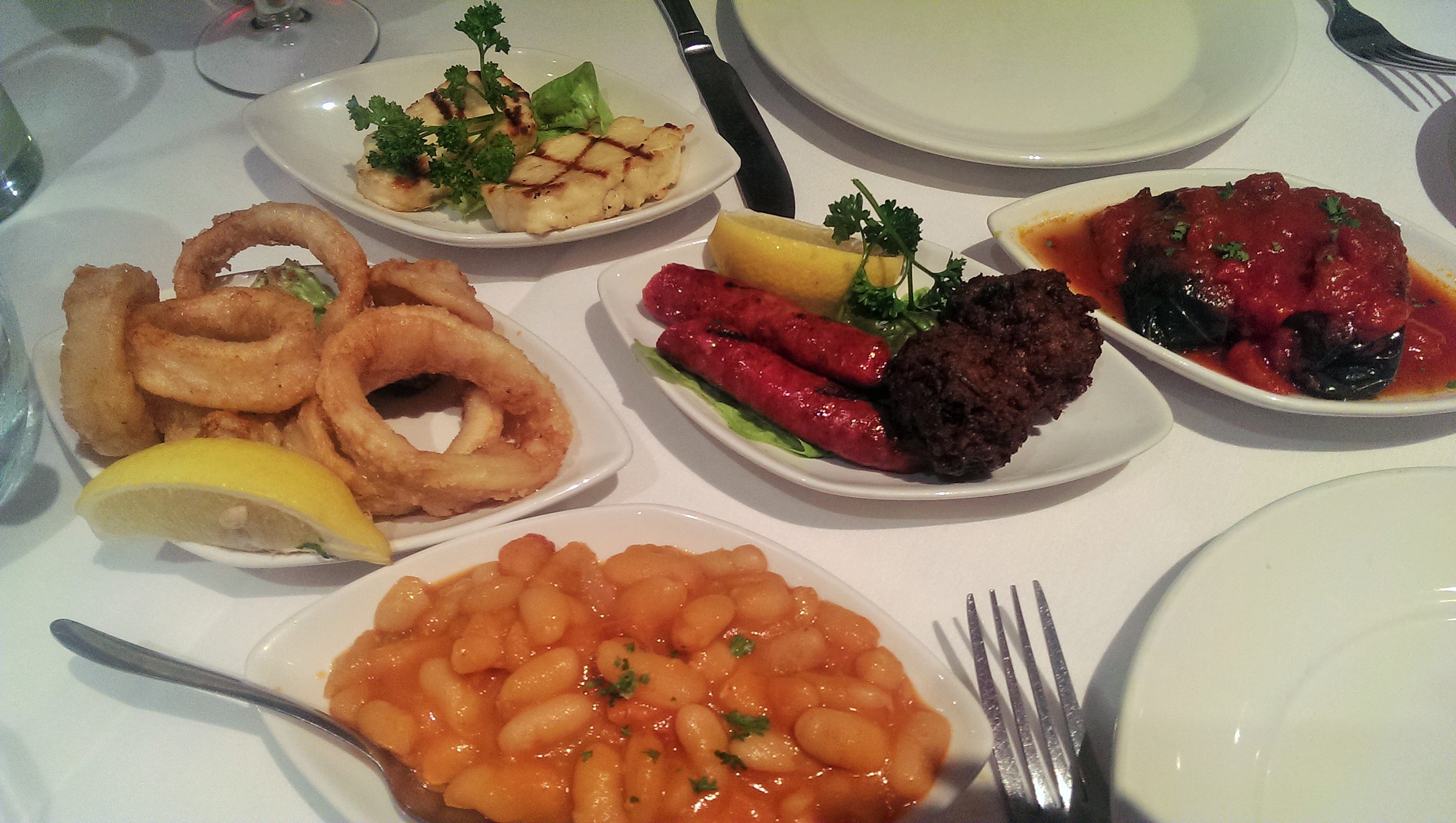
The hot meze only came out when the staff had checked that we were ready – a lovely touch, I thought – and when they did, as always, it became time to reassess how hungry I really was. Meze is about playing the long game, but the problem was that again, everything was too delicious to leave. Some of the classics – halloumi and calamari – were present and correct. The halloumi was unsurprising (halloumi in restaurants is pretty much always the same, everywhere) but still gorgeous, but the calamari was spot on – no hint of rubber, just light batter and fresh squid. They’re classics for a reason, after all.

Most of the other dishes were every bit as good. Lamb meatballs were possibly the pick of the bunch – juicy, coarse and savoury, studded with herbs and onions and a touch of garlic. Loukanika (Greek sausage) was Peperami’s glamorous continental cousin, warm with cinnamon, almost perfumed rather than one-dimensionally spicy. Dolmades had more of that delicious minced lamb folded into them, though there was probably too much leaf and not enough stuffing. The beans in tomato sauce were the only real disappointment – big, bland and filling, they were soon abandoned. Those six dishes may only merit a sentence or so each, but add that to the seven that came before and it starts to become clear: this is a marathon, not a sprint.
Meze2

Of course, I knew from personal experience to keep something in reserve for what came next: although again, only when the staff knew I was ready. The souvlaki – grilled skewers of pork and beef – were pleasant enough (possibly a tad on the dry side), but they weren’t the main attraction here because that was indisputably the kleftiko. I’ve had this dish countless times in Greece on holiday trying to find anyone who can match Kyrenia’s version, and I’ve given up now because what Kyrenia does to lamb is a work of utter genius: the almost godlike kitchen knows how to slow cook it until mere mortals like me struggle to describe how good it is.

It came on a large piece of bone but the merest whisper of effort soon sorted that out, leaving me with an awful lot of the most tender lamb I’ll probably ever eat. It broke into moist, sticky shreds, almost like confit, perfect for smooshing into the juices on the bottom of the plate before eating in nodding, smiling, euphoric silence. Again, because I feel I ought to be critical, the Greek salad it came with was a little underwhelming – but it’s only salad, isn’t it, and a cubes of feta is the perfect partner for a piece of lamb (that’s your third tip, if you’re counting).

Meze3

I also know from personal experience that if you’ve made the rookie mistake of filling up on pitta and tzatziki, Ihor will bag up all your leftover meat in a little foil parcel for you to take home and enjoy the next day. I also know from personal experience that it’s almost as good cold the next day, but take it from me if you go: pace yourself and eat it on the night.

One of the only other disappointing things about Kyrenia is the wine list. Greek wine can be absolutely fantastic, and is much underrated, but Kyrenia only sells a handful of bottles. None the less, the ones they do are lovely – we had a bottle of Naoussa Grande Reserve which was nicely balanced against both the meat and fish in the meal, far too easy to drink on a school night and not at all unreasonable at £23.50.

The last course at Kyrenia, the fruit salad, is really just a palate cleanser. I would be astonished if anyone could eat a “proper” dessert after all those meze so it seems apt that the meal ends with a plate of orange, melon, grapes and strawberry. It worked, though: fresh, bright, sweet and healthy (like Miley Cyrus before it all went so horribly wrong). It didn’t redeem the sins of all that lamb but it helped me fool myself, and very few desserts achieve that.

I’ve mentioned Ihor a few times, but service in general was perfect. All of the staff are so good at what they do, getting all the little touches right. Asking if you’re ready for the next set of courses, finding time to chat, knowing when to offer you extra pitta (although if you’ve read this far, you’ll know to turn that offer down – trust me on this). Again, to be critical I’d say that you should ask to be seated downstairs: sitting upstairs, in a smaller less buzzy room, far from the bar and the kitchen you can sometimes feel a little overlooked. That’s your fourth and final tip – ask for a table downstairs when you book, because they get busy at weekends. Dinner for two – all those dishes and a bottle of wine – came to £71 excluding service. It’s probably the best £71 meal I’ve had all year.

I recommend Kyrenia all the time – to friends and on Twitter – and it was getting to the point where not having reviewed it was looking like a glaring oversight. I went on duty hoping that they had a good night, but I really needn’t have worried because I’m not sure they know how to be anything but brilliant. There’s loads of stuff on the a la carte that I haven’t tried (I’d love to have a go at their stifado, or their monkfish souvlaki) and I know for a fact that their octopus is out of this world, but all of the best evenings I’ve had here have all involved the meze. Unlike most restaurants in Reading, Kyrenia feels like it’s perfect for everything – small intimate evenings, big raucous evenings and everything in between. It’s only a matter of time before I go back – in fact, on the way out I looked in the front door, still shining with that cosy welcoming light, and saw that they’re offering their standard menu on New Year’s Eve. See you there? I’ll be wearing the white carnation and the gold party hat and drinking the Greek red. Yamas (and Merry Christmas!).

Kyrenia – 8.6
6 Prospect Street, Caversham, RG4 8JG
0118 9476444

http://www.kyreniarestaurant.com/

Dolce Vita

In a surprising move, Dolce Vita closed in June 2018. I have left the review up for posterity.

I don’t know how you approach a restaurant review, as a reader, but before I started this blog the first thing I did was check whether I knew the place being reviewed. If I didn’t, the whole process was a voyage of discovery, reading the review thinking Does it sound like my kind of thing? Could I get there? Would I want to? But when I’d already been to the restaurant in question it was a very different test involving a different set of questions which all boil down to one: Do you agree with me? And, of course, we all judge on that basis. I like people who like the things I like, just like everybody else.

This is especially the case when the reviewer has gone to a place you really like, one of your favourite places. Then you feel protective and read the review thinking I hope the restaurant don’t have an off night, or even The reviewer had better not pick on it. One of the things really successful restaurants do is make customers into loyal customers, and make those loyal customers feel like part of a club. At its best, it’s a tribal thing: look at the incredible loyalty inspired by Mya Lacarte, or Tutti Frutti.

Dolce Vita, I think, is another of those places. I’ve had a lot of people telling me I should go there – enthusing about the food and the service, saying that they return again and again. So, if you’re one of those loyal customers, reading this and preparing to bristle protectively on Dolce Vita’s behalf, you can relax: I really liked it.

Of course, you might approach restaurant reviews by going straight to the end and reading the rating first, in which case you already know that and are waiting for me to get on with it (I understand: I ruin some novels that way too).

Despite knowing Dolce Vita by reputation I’ve rarely gone there. It’s another restaurant that feels like it’s always been there, in Kings Walk, perched on that ledge above the outer reaches of the Oracle looking out over all the changes that have happened over the years (personally, I’ve tried to erase all memory of Brannigan’s, with its chilling boasts of “cavorting”). Yet it’s never really crossed my mind when deciding where to eat, because I just couldn’t remember if it was any good; a strange type of amnesia I don’t get about many places in Reading.

The dining room’s big, a long rectangular airy space with lots of light from the skylight and the patio doors leading out onto the balcony. I can imagine that, if the sun ever comes out for long enough, the balcony would be a lovely place to drink rose and eat summery food but there was no chance of that on this visit: it was wet and windy so we grabbed a table by the window and looked out at the rain-spattered furniture, daydreaming about what might have been. Speaking of furniture, this isn’t something most restaurant reviews talk about (maybe with good reason) but Dolce Vita has some of the most handsome dining furniture in Reading: solid oak chairs and tables that make some of the wobbly painted tables in otherwise good restaurants seem rather cheap.

The menu is huge, and makes no pretence at being anything else. You are handed a sheet of A3 and left to wonder how a kitchen can do all of those dishes well. It also feels like a mismatch – there are pizzas and pasta, unsurprisingly, but also several Thai dishes, a couple of Greek dishes (which may have found a home here after Kyklos, Dolce Vita’s sister restaurant closed down in January) and, randomly, a Scotch egg. This all gave me misgivings but I decided to stick to Italian and hope for the best.

The burrata suggested I’d done the right thing. It always looks like a little bag of treasure to me and so it proved, creamy and fresh, well matched by the grilled peppers and aubergines. The whole thing was brought together with a very nice tomato, chilli and mint sauce and worked very well. I did find myself wishing, though, that the vegetables had been freshly grilled and still warm rather than chilled. It was a nice dish, but didn’t involve much in the way of cooking.

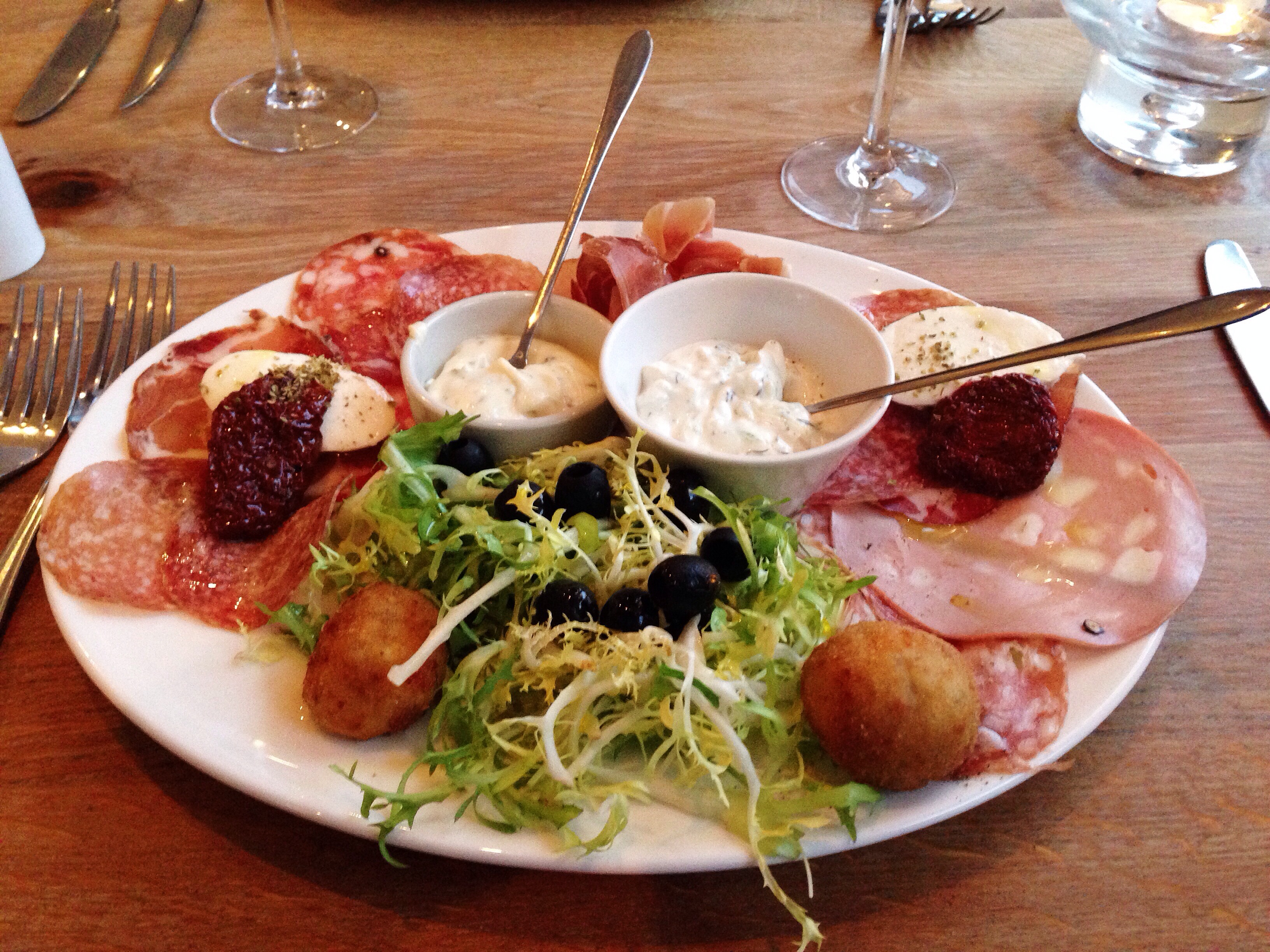
BurrataThe antipasti was a very similar story, a great assortment of salami, pleasingly dry and savoury Parma ham, coppa and mortadella, along with some mozzarella, sundried tomato and two dips, an aioli with a hint of citrus and a very good tzatziki (oh, and some baguette – Did I forget to mention the baguette?) If that makes it sound like a lot of food that’s because it was. In hindsight, for a tenner, it was probably meant to serve two although the menu didn’t make that clear – none the less it was excellent stuff.

AnitpastiThe mains were nicely timed, turning up just at the point when I was ready. The Milan pizza – mozzarella, Italian sausage, wild mushrooms, caramelised onions, fontina and Grana Padano – was recommended by the waitress which made the selection process that bit easier. It makes such a difference going to a restaurant where the staff know what their dishes are and are prepared to state a preference, and that was pretty symptomatic of the excellent service in Dolce Vita in general (I also got great recommendations for wine and, later, for dessert). The pizza base was close to perfect – thin enough to be crisp but with enough thickness to have some flavour of its own and not just feel like transport for cheese and tomato. The Italian sausage was excellent, coarse and herby almost to the point of being fragrant and I loved the caramelised onion with the cheeses. For my taste I thought there were too many mushrooms but that’s probably just me.

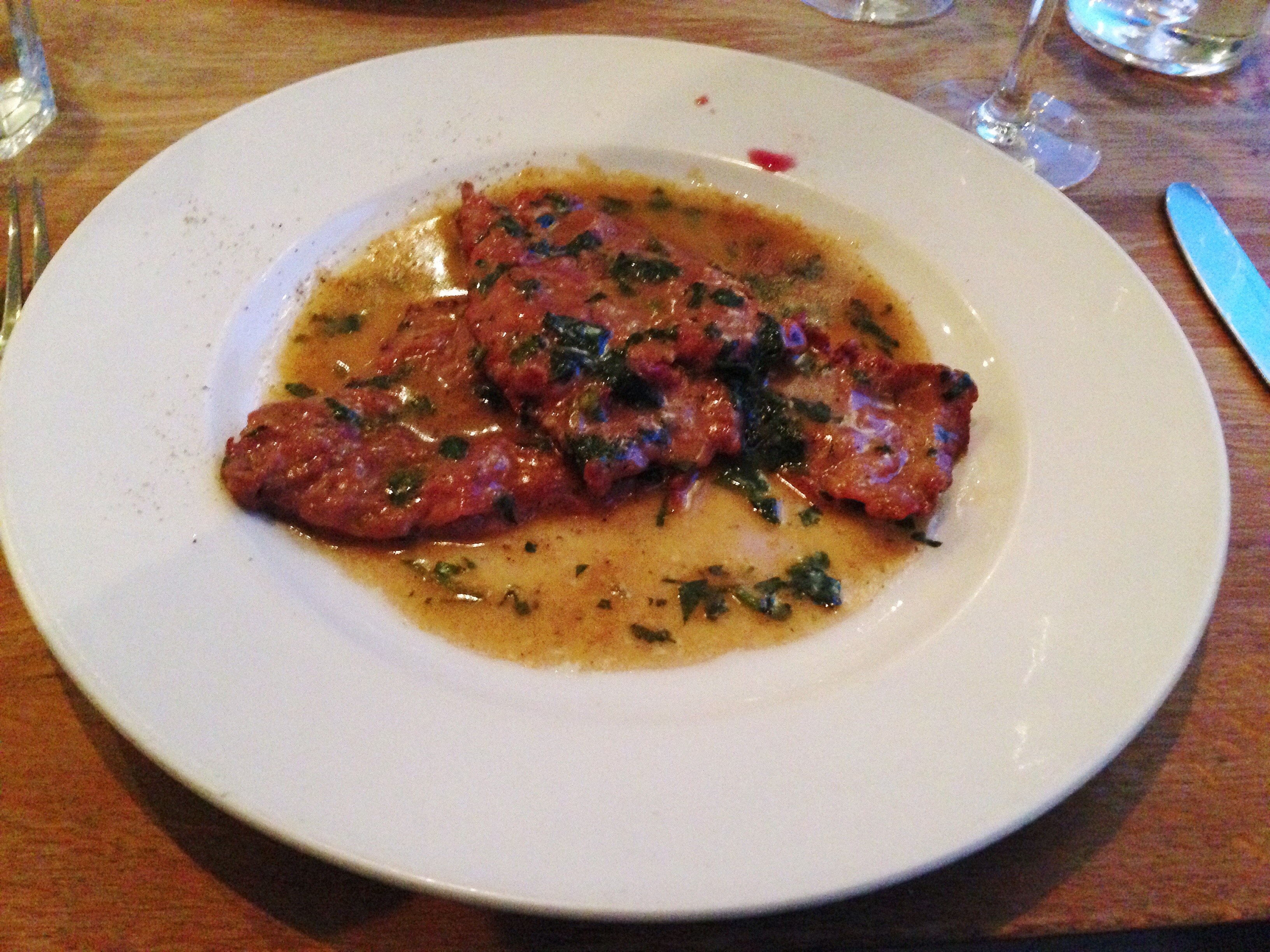
PizzaIf the pizza was good, the veal saltimbocca was great. It was a generous portion of veal, three good-sized pieces, wrapped in Parma ham and perfectly done. The sauce promised Marsala but I didn’t get any of that, just lemon, white wine and lashings of sage: perfection. In any case, Marsala would have made the whole thing too sweet. Similarly, the truffled mash turned up without a hint of truffle and again, I didn’t mind. Too many flavours would have made the dish a mess, instead of the simple classic I got. The French beans, however, did turn up buttered as promised: a lovely contrast to many restaurants, even good ones, that dish up bland and naked vegetables. All that was seventeen pounds – not cheap, but I’ve spent that much on many worse dishes in Reading.

Saltimbocca

The wine, also recommended by the waitress, was a bottle of Montepulciano. I’m no oenophile, which is pretty obvious from my reviews, but I like to kid myself that I got plummy red fruit and a touch of black pepper. Even if I’m wrong, it was dangerously drinkable at just under eighteen pounds (and again, hats off to the waitress for recommending one of their cheapest reds: no sneaky upselling here).

Considering I visited on a weeknight, the restaurant was surprisingly full and buzzy with a real mixture of groups – dates and birthday parties and business dinners, all equally at home. I also heard some Italian being spoken at one table which I took to be a good sign. The service was just excellent all evening, which is something I’ve always heard about Dolce Vita; I felt like I got five star treatment but watching other diners and seeing the easy way the serving staff chatted to them all, it was obvious that everyone else was getting it too.

When you’re having an evening that pleasant it’s a shame to leave without having dessert, so we gave the kitchen another chance to impress. The caramel and Baileys bread and butter pudding (again, recommended by the waitress) was divine. Rich and sticky, studded with sultanas and served with a light vanilla custard, it was a trademark example of those upmarket school dinner puddings I’m so partial to. I couldn’t detect the Baileys and the caramel notes, if they were truly there, were subtle to a fault but even so it was a great way to end the meal. Well, that and a small glass of sweet, fresh Sauternes. The other dessert – Dolce Vita’s hazelnut praline tiramisu – might be my favourite tiramisu in Reading, and I’ve tried a lot. A nice firm slab of indulgence, not too big, with a little layer of crunchy praline hidden inside like a bonus feature. Almost unimprovable (although I did have a go by pairing it with a glass of vin santo).

The total bill for two, for three courses, a bottle of wine and a couple of glasses of dessert wine was ninety pounds – not cheap (although we did have a lot of food) but nothing felt like poor value. I think at least some of that is down to the service, which was up there with any town centre restaurant I’ve been to.

Like I said at the start, if you’re a fan of Dolce Vita you can relax – I had a great evening there. I still have misgivings about the frightening size of their menu (there was also a specials menu adding another set of bewildering options – including roast chicken pie – to the mix) and I’d probably stick to what I know they do well, but on the night I went they didn’t put a foot wrong, and they did it without any of the experience ever seeming mechanical. By the end, I found myself thinking that it would be so easy to come here on another evening later in the year, sit on that patio, soak up the last of the sunshine, have a few beers and a pizza and leave having spent less than twenty pounds. And if the summer ever comes, there’s a strong possibility that you’ll find me there one evening, doing exactly that.

Dolce Vita – 7.6
Kings Walk, RG1 2HL
0118 9510530

http://www.dolcevitareading.com/

Kyklos

N.B. Kyklos closed in January 2014. I’ve left the review up for posterity.

One thing I’ve learned so far in my – admittedly limited – experience of reviewing restaurants is that some reviews are easier to write than others. Let’s say, for example, that I have a good meal in a good restaurant (or a restaurant that I think is good, anyway). To some extent that review writes itself, and my main worry is doing it justice so that you’ll think it sounds good and hopefully want to eat there yourself. Going to a bad restaurant and having a bad meal also makes for an easy review – less fun to eat, but more fun to write and often more enjoyable to read. But the tricky one is when you go to a restaurant that, in so many ways, is “good” – the room, the service, the little touches – but the food just isn’t up to scratch. But hold on – isn’t a good restaurant a place that serves you good food and a bad restaurant one that serves you bad food? Is it possible to have a bad meal in a good restaurant?

All very Carrie Bradshaw I know, and perhaps I’m showing my cards too soon, but I’ve been thinking about this a lot this week because of my visit to Kyklos. So many things about it work, it should be a good restaurant on paper, but the food doesn’t quite live up to expectations.

I’ve been to Kyklos a few times since it opened. It’s in that spot that’s a bit of an elephant’s graveyard for restaurants, above Burger King in King’s Walk, having at various times been Topo Gigio, Mari E Monti and the Himalayan Momo House. They’ve done a nice job on refurbishing it; it used to be quite a sterile, unappealing space but looks much better now with smart white walls and very fetching white shutters overlooking the Walk itself. The long, thin room has been broken up (with some lit glass partitions with an olive motif which are, I’ve discovered, surprisingly hard to describe) so it doesn’t have the chilly air that its predecessors had, and the bar area at the front has some welcoming seating for those waiting for a table.

The greeting at the entrance is incredibly warm – I’ve only been a couple of times, and not for a while, but I was welcomed by the waitress as if I was a friend rather than a customer. This was definitely the shape of things to come, too; Kyklos does service very well.

Sitting down we were given three menus; food with a wine list on the back, a set meze menu and a short Greek wine list – three whites, three reds, nothing over twenty-five pounds. This was a bit of a disappointment in itself, actually; Greek wine can be very good and is much underrated, and I was hoping central Reading’s only Greek restaurant might do more to show that off. On a recommendation from the waiter we ordered a bottle of Greek white, a Malagouzia which I’d never heard of, let alone tried. We couldn’t decide who should taste it so the waiter poured a little for each of us, which was a nice gesture. Their range of Greek wines may be a bit narrow, but this was gorgeous – fresh, light, floral, not too dry (very dry whites have never really done it for me) and good value at £23.

Our starters, a selection of meze, were the first indication that we might be about to have a middling meal in a good restaurant. Houmous was very tasty – often they have a strong smoky taste or are pungent with garlic, but this one was rich with tahini and somehow tasted lighter and cleaner. The pitta, though, was stingy – one warmed pitta slices into triangles, drizzled with oil and sprinkled with herbs. Loading all that houmous onto a single pitta was a challenge, although of course we managed it – heaven forbid that anything went to waste.

Salted cod in beer batter with skordalia was equally frustrating and inconsistent. The batter on the three fingers of fish was light and perfectly done, but the flesh underneath was uncomfortably chewy. The skordalia was plain disappointing; it’s meant to be the kind of garlic mashed potato that can make enemies on public transport the following morning, but this was a lumpy school dinner effort and finding garlic in it was completely beyond me.

The best of the bunch was the soutzoukakia – beef and lamb meatballs with aromatic mash and cinnamon oil. These were lovely – coarse without being bouncy, three generous meatballs in rich tomato sauce on a bed of gorgeous, smooth mash. I couldn’t quite believe that the same kitchen could dish up two such different examples of mashed potato, but the one that came with the meatballs was far superior, if a little runny (dishing up was fun, put it that way). The flavours, though, were great – and the hint of cinnamon in a savoury dish, so often a feature of Greek food, worked beautifully.

The mains were further evidence of an inconsistent kitchen that was either terrified of, or had run out of, garlic. We went for the chargrilled whole sea bass with French fries and aioli, mainly because I’d had plenty of grilled fish on holiday in Greece at the start of the year, and wanted to relive happy memories from what felt like a lifetime ago. It arrived whole – which was my choice, although I did have the option for the kitchen to fillet it – and was underwhelming. Grilled fish on holiday is a wonderful thing partly because of the crispy skin; almost burnt but not quite, beautifully salty, dressed with lemon and oil. This however didn’t look like it had gone anywhere near a grill – it looked baked at best, and the skin was soft and slippery. Once I’d filleted it there wasn’t much left – and I’m no slouch at filleting, even if I do say so myself. The starters at Kyklos are quite big so this wasn’t the tragedy it could have been, but the fact remained that this dish cost sixteen pounds and felt like very little fish for the money.

The French fries were also false advertising, being nothing of the kind – they were very respectable chunky chips, the right blend of crunchy and fluffy – but they weren’t what I was expecting. I was hoping to have a sheaf of skinny crispy fries to dip in my rich aioli, and I didn’t get that. And, as you can probably guess by now, I didn’t get aioli either. It didn’t taste remotely of garlic – if anything, what I got was tarragon which wouldn’t have gone with the fish at all.

The other main, the moussaka, was a generous slab of béchamel sauce with a distinctly ungenerous layer of meat, aubergine and potatoes at the bottom. My photo isn’t brilliant, but it gives you a good idea just how much béchamel we’re talking about. For twelve pounds, or indeed for less, I would have liked a smaller slab of béchamel sauce with a more generous layer of meat, aubergine and potatoes at the bottom. It tasted nice enough but my companion said that towards the end he felt as if he was eating it for no reason other than stubbornness, and that’s never good. The “feta mousse” which was meant to accompany it, as promised on the menu, failed to appear; perhaps it too was supposed to contain garlic.

Between us we only had room for one dessert. I asked the waitress to help me pick between the panna cotta with rose water (which I thought might be quite light) and the walnut cake (which I thought would be quite Greek). She instead recommended the vanilla custard in filo pastry with cinnamon and mango ice cream as it’s home made in the restaurant. What this means for the other desserts, I don’t know but I’m easily led so I accepted her suggestion. This was a good plan, as it turned out. The dessert is known as galaktoboureko in Greece, though I’ve never found it outside of Crete, and it’s delicious; layers of filo pastry filled with smooth semolina custard with a light syrup poured over the top (similar to how baklava is served), all warm and inviting. The curl of ice cream on the side, on the other hand, was completely superfluous and didn’t taste of cinnamon at all, just mango.

I think, on reflection, that the dessert I had is representative of Kyklos as a whole. The core elements are really good: an attractive room, excellent, friendly service, some delicious ingredients and some authentic Greek flavours. But some things miss the mark completely: the flaccid fish, the lumpy mash, the lack of garlic in the skordalia or seemingly anywhere else, the pointless ice cream. I kept thinking if only: if only I’d ordered different dishes, the kleftiko perhaps, or the octopus stew with chick peas. But if it’s a good restaurant, it shouldn’t be possible to order badly – right?

So all in all, I’ve found this a difficult review to write. I want Kyklos to do well; a good Greek restaurant in the middle of town would be a wonderful thing. I really wanted to love it and to score it highly, but on the night I went there were too many let-downs and too many mistakes. You might have a different experience, and I wouldn’t entirely want to discourage you from finding out, but I do want to warn you. I suppose the last thing to add is that Kyklos is not a cheap place: our total bill was £75 for three starters, two mains, one bottle of wine and one dessert. I know I could go to Kyrenia in Caversham for the same money and have a considerably better meal. But then that’s a different review.

Kyklos – 6.3
Kings Walk, 19 – 23 Kings Street, RG1 2HG
0118 9500070

http://www.kyklosreading.com/