Restaurant review: Antica Osteria Bologna, Clapham Junction

For fuck’s sake, it’s Edible Reading, not Edible Clapham Junction.

I know, I know (Happy New Year to you too, by the way). But I found myself in the vicinity of arguably the United Kingdom’s most minging train station one January weekend – on an unsatisfactory excursion spectacle shopping, since you ask – and I always think it’s well worth structuring an expedition like that around lunch. That way if the shopping’s a bust, as it turned out to be, and the station is a hellscape, which it very much was, there’s still an outside chance of salvaging the day.

Not that I was in Clapham, by the way. I was shopping and mooching in an area that isn’t quite Clapham, isn’t quite Battersea, is a ten minute walk from Clapham Junction and is really rather lovely. Northcote Road is a long, prosperous street in the heart of what is apparently called Nappy Valley, and it’s a great place to amble and bimble. I hadn’t been in many years, although I was an occasional visitor in a former life.

I remember eating in this little place called Franco Manca there, once upon a time when there were only a handful of them, before they contracted the disease called private equity. There used to be a splendid tapas restaurant, too, called Lola Rojo, which did an olive oil ice cream I still think about sometimes: if I could have my time over again, I’d have ordered two portions (laugh all you like, but that might make my top 50 of Things I’d Do Differently). But anyway those were simpler times, over ten years ago, and remembering them it’s as if they happened to somebody else.

Returning in 2023, Northcote Road was still as fancy as I remembered. It’s still lined with swish looking cafés, delis and cheesemongers, bakeries, great shops, a branch of Aesop  – always a sign that you’re somewhere spenny – and tons of opticians. There’s even a branch of upmarket wine merchant Philglass and Swiggott (true story: I used to frequent their Richmond branch and I had to have it explained to me that those weren’t in fact their real surnames). 

Northcote Road also has restaurant after restaurant, and is full of those kinds of chains: Rosa’s Thai, Joe And The Juice, Patty & Bun, Ole & Steen, Meatliquor. The ones where simultaneously we’d rather like one in Reading but we know that if we got one, it would be because they’d jumped the shark. Not that you needed to eat in one if you were peckish – one food van sold beautiful-looking pizza, another was flogging porchetta sandwiches which looked so attractive that I almost cursed my foresight in having made a reservation.

But I had made a reservation, and I’d relied on Eater London for a recommendation. It had a list of the best restaurants in Battersea, although they were sparsely spread out and it would have taken you the best part of an hour to walk from one end of their map to the other (some of them, weirdly, also end up in their list of the best restaurants in Clapham, which tells you what a no man’s land it can be). 

There were small plates wine bars and gastropubs, little BYOB Thai joints and a restaurant offering French-Korean fusion, whatever that is. But I was drawn to Osteria Antica Bologna, slap bang on Northcote Road. It had been going for over thirty years, which meant I had probably walked past it countless times a decade ago. And the clincher was this: I love Bologna and I haven’t been there in far too long. So Zoë and I turned up at lunchtime, our tote bag already full of treats for later from the cheesemonger, to see if it could transport me back, in spirit at least, to one of my favourite cities.

It was old school right from the beginning, with a burgundy and orange awning and a big sign at the front saying “DAL 1990”. And stepping inside I was reminded that it can be a fine line between dated and timeless, and sometimes you make it from the former to the latter merely by staying the course. For what it’s worth, I think Osteria Antica Bologna was the right side of the line, with a simple, rustic-looking dining room, a dusky pink banquette running along one side. On the other, tables were separated by a trellis-like partition that no doubt pre-dated the pandemic.
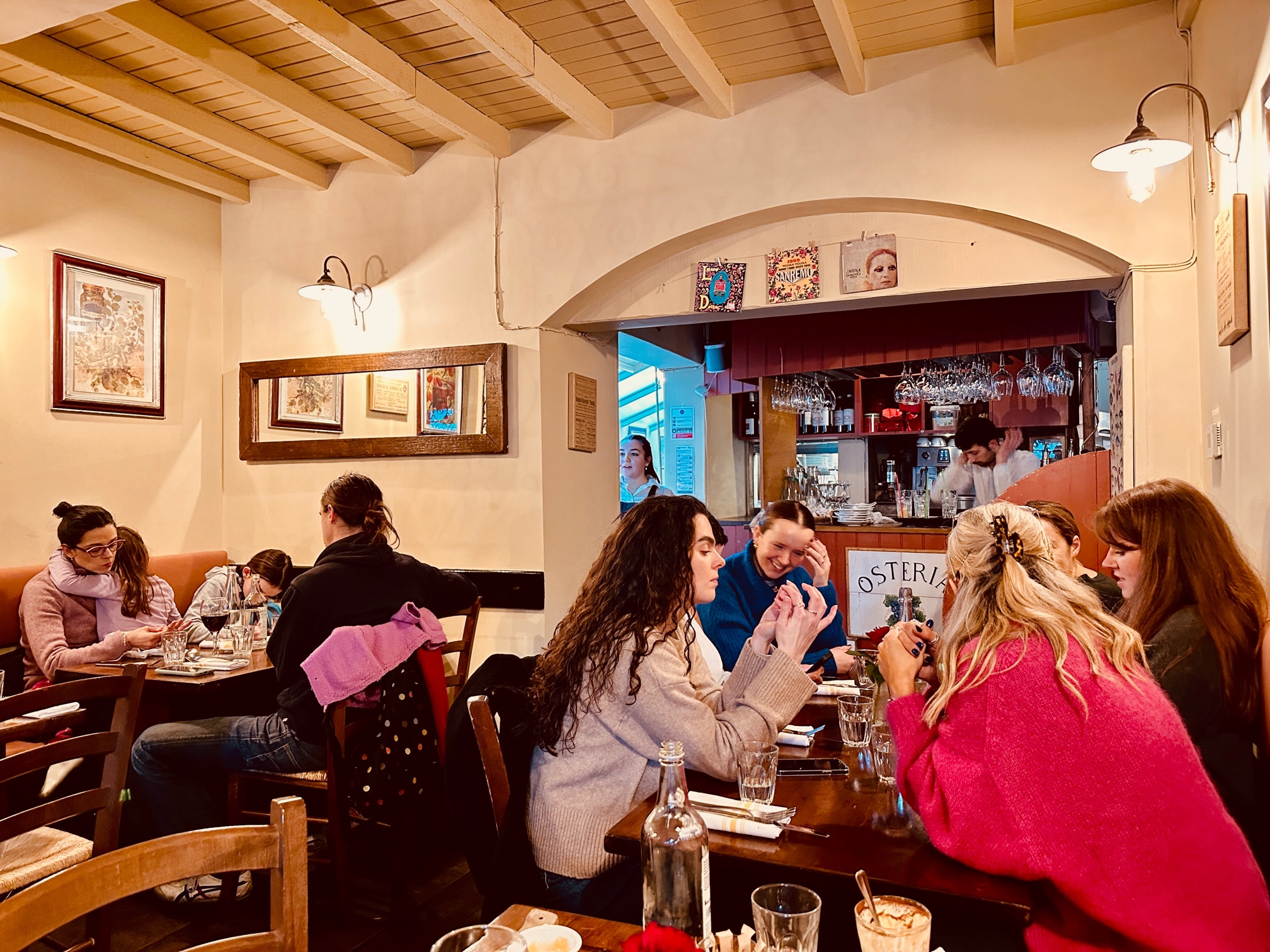
Beyond the archway in front of the bar, out back, was a more modern-looking dining room with a skylight, an extension I imagine, but I was glad they didn’t seat us there. Even the little things, like a circular table at the front with a big bowl of olives and a large bouquet of flowers, felt like something they had done for a very long time. It was a room with a lovely energy, a place harbouring the unspoken promise that you would eat well, and although only a handful of tables were occupied when we arrived at one o’clock, only a couple were empty when we left.

Another sign that the restaurant was resolutely old school came as I drank my – surprisingly bracing – Aperol Spritz and Zoë attacked her negroni. The menu was antipasti, pasta and main courses. If you wanted pizza, you should have headed to the food truck on the other side of the road, or to Franco Manca. But everything sounded marvellous, including the specials which were explained by our personable, enthusiastic waiter. 

I almost tried some of their pasta but, and this was the only real disappointment on the menu, the difference between a starter and main-sized portion of pasta was just two pounds, which said to me that I was effectively choosing between that and a main. But there’s always next time, when the pumpkin and ricotta ravioli with sage will be calling to me – although not necessarily loud enough to drown out the siren song of the wild boar ragu, or the risotto with salsiccia and Barbera. A truly great menu always comes with regret baked in: that’s the nature of these things.

We’d ordered a trio of antipasti to start and if anything they intensified that regret: given just how good these were, what other treasures had we missed on the menu? Arancini were possibly the best I can remember, and simpler than many I’ve had. No thick crust of breadcrumbs here, just a feather-light seasoned shell. No stodge to wade through with a molten core, instead just a neat sphere of rice, cheese and peas retaining a little bite. And to go with it, an arrabiata sauce worthy of the name, just spiky enough. It reminded me of the difference between pretenders, as with my visit last year to Sauce & Flour, and the real deal – unshowy but superb.
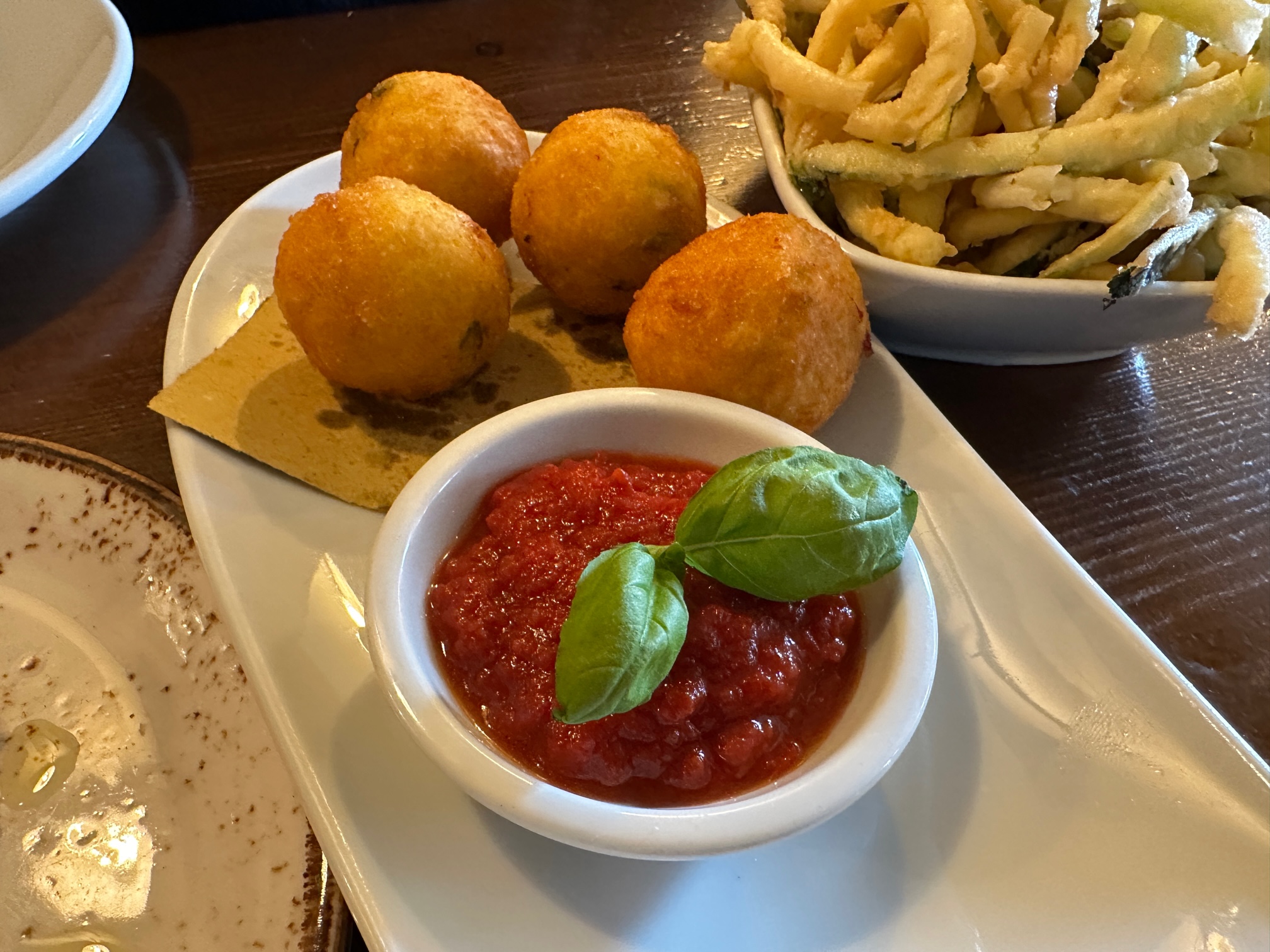
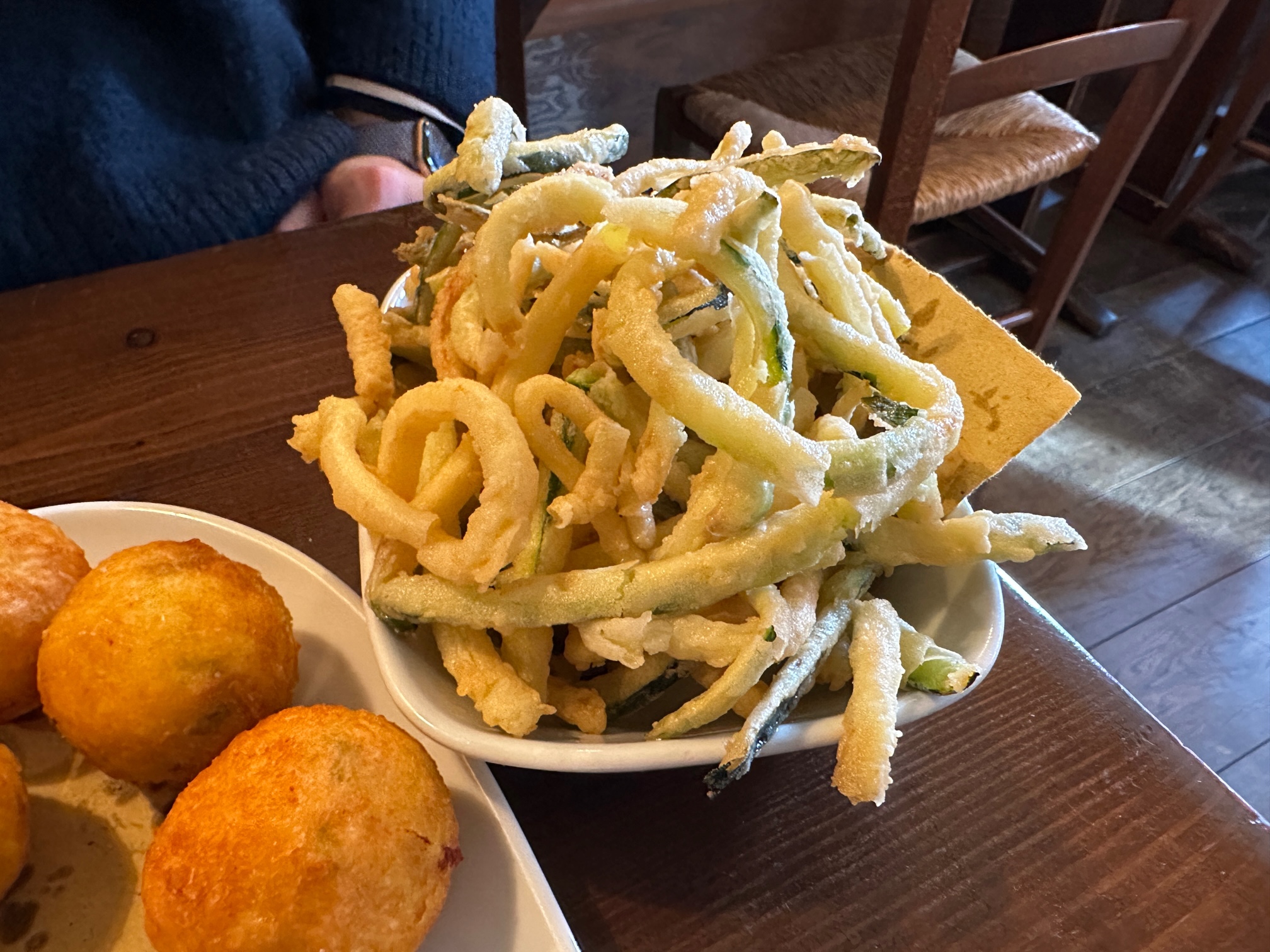
Also as good as I can remember were the zucchini fritti. No, scratch that: they were easily the best I’ve had anywhere. So often, including at a couple of Reading restaurants I actually really like, they can be soggy, limp things and you’re left to redeem them with some kind of dip. Here they were shoestring-thin, almost ethereal yet spot-on crispy, the way this dish always promises to be but somehow never is. And they didn’t need any kind of dip because they were so salty and zippy, so beautifully seasoned and cooked with a real lightness of touch. “The menu should tell you to order these with your drink while you make up your mind” said Zoë who was, as usual, entirely correct.
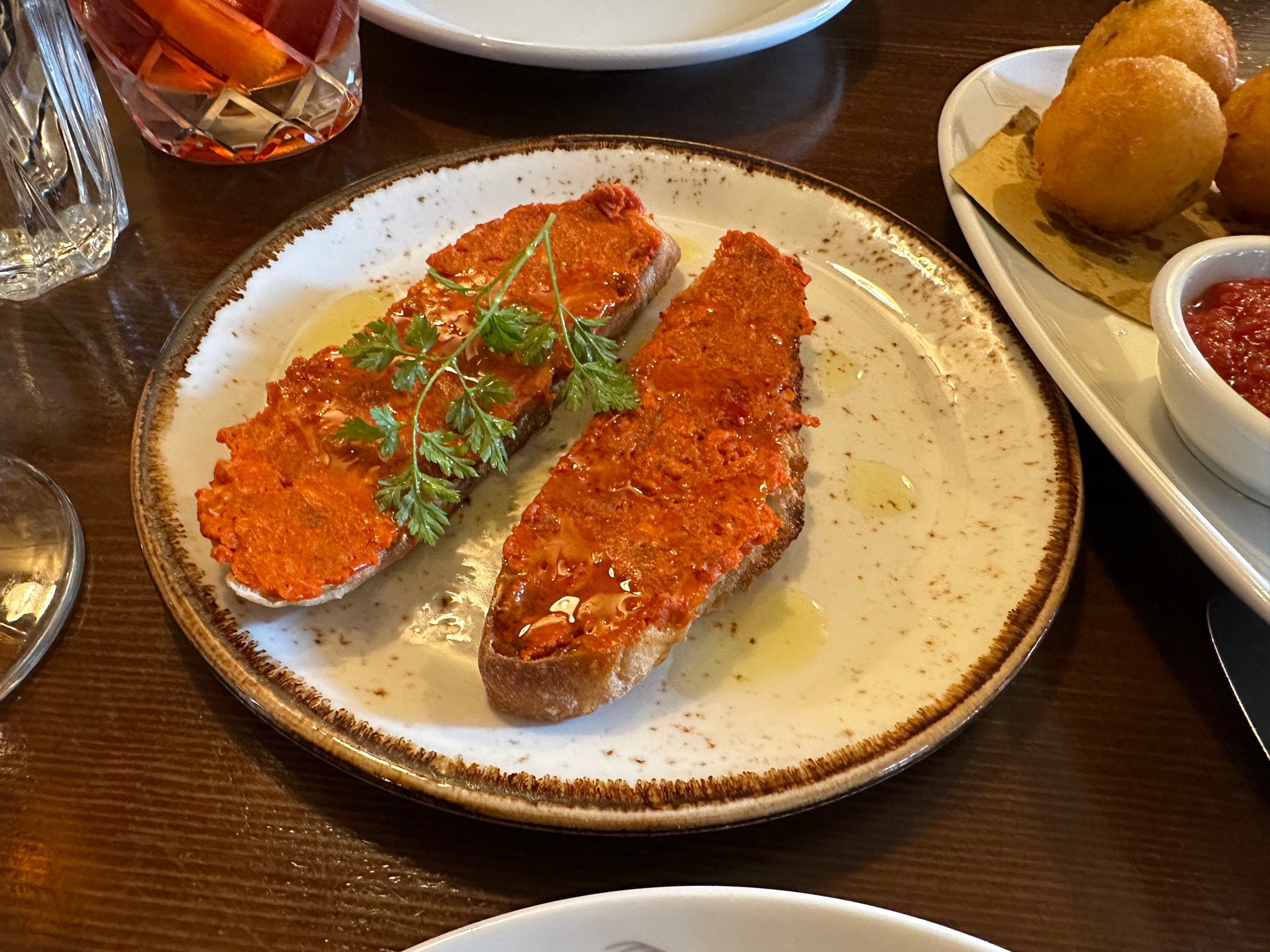
The other small dish we had, bruschetta with ‘nduja, was the least excellent but really, that just means it was still cracking. Two thin slices of toasted bread were loaded with a terrific ‘nduja – not stingily, either – with more depth and earthiness than I’m used to. So often ‘nduja dishes I’ve had are a one-note symphony relying on the acrid heat it can supply; I’ve lost track of the number of restaurants that make lazy use of the stuff. By contrast, this dish just said isn’t our ‘nduja amazing? and, having tasted it, it was impossible to argue. One thing you could potentially quibble, here, was the cost: eight pounds fifty for that. Sounds expensive, but is it 2023-in-London expensive? Your guess is as good as mine.
We grabbed a couple more drinks while we waited for our mains. My gavi, in an endearingly functional wine glass, had a pleasant zing to it and Zoë, sensibly, decided to move to gin and tonic. By this point the restaurant had a real buzz and all the temptations of elsewhere, the porchetta sandwiches and gelato places, had melted into air. All that mattered was the next course, and the course after that.

“This is very promising, isn’t it?” said Zoë. She was right about that too. 

If I had to pick a main course to start my reviewing this year with, it would be hard to choose better than the dish Osteria Antica Bologna served me. A piece of cod with salty, crispy skin and soft, sumptuous flesh, cooked by someone who really understood how to get both those things right at once, perched on a little heap of chickpeas, tomatoes and spinach.

A single forkful was enough for me to know that I was in a happy place. I even turned to Zoë and told the tired joke I reserve for these occasions, I love it when a chickpea’s in my mouth, and she had the decency not to grimace; imagine what sitting opposite me at dinner dozens of times a year must be like. Only the fact that the promised salsa verde, which would have completed the dish perfectly, had been replaced by a smear of something closer to purée slightly blotted the copy book.

The problem is that if I had to pick a main course with which to start my reviewing year, it would be damn near impossible to choose better than the dish the restaurant served to Zoë. The menu called it pork belly with roasted apple, but that prosaic description comes nowhere near capturing what a marvel it was. A gargantuan slab of pork where, like the fish, everything was exactly how it was meant to be. The flesh was tender, the crackling brittle and intensely savoury. Between the two, arguably the best bit, that sticky, moreish layer of subcutaneous fat, rendered to the point where it was gorgeous but not beyond that to the point where it vanished. I was allowed a forkful, and then because of my expression I was allowed another, and another.

“Would you like to try some of my fish?”

“No, you’re all right.”
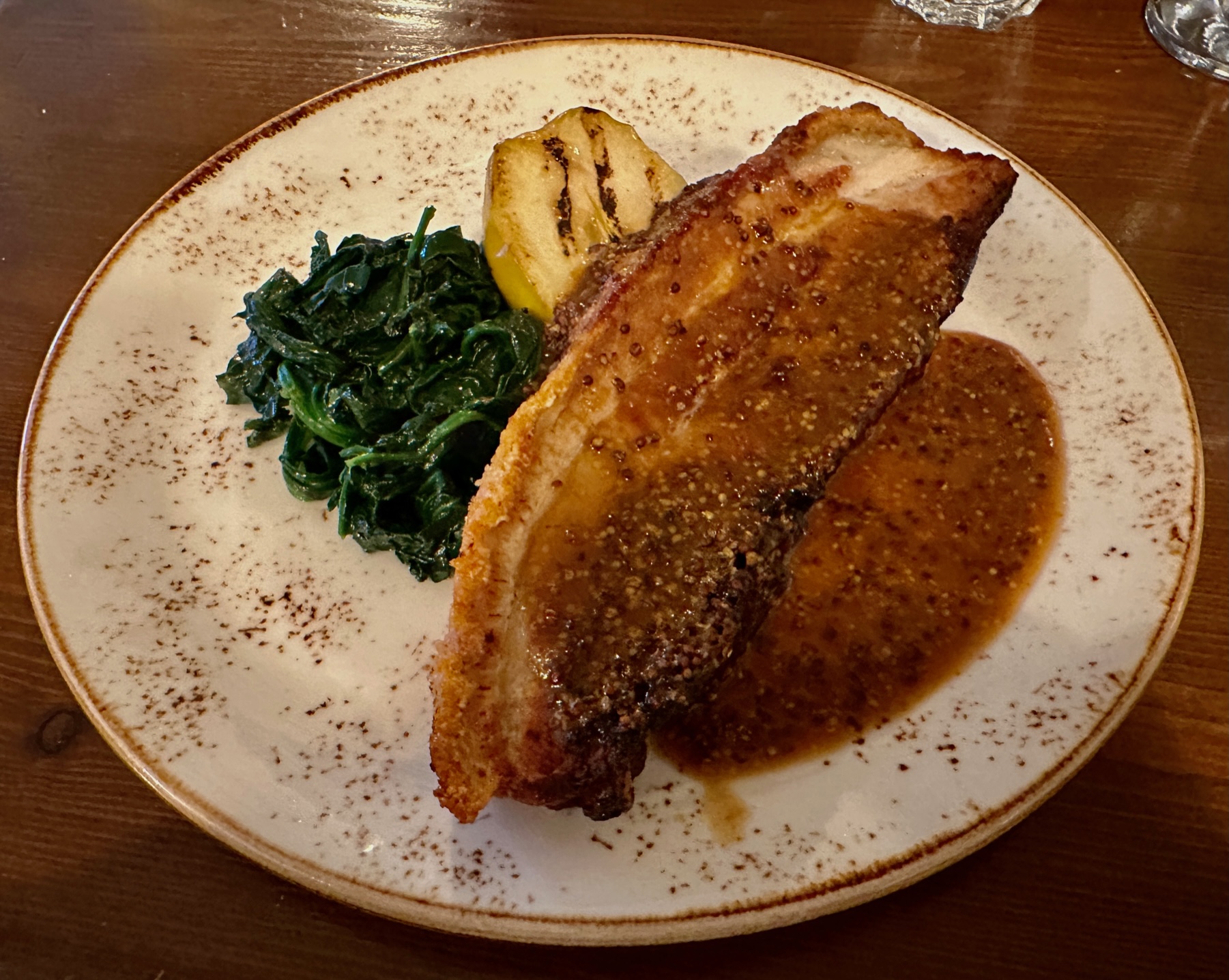
Just as sometimes you can only pick out one face in a crowd, it was hard to remember, eating that pork, that there were other things on the plate. But the gravy, shot through with mustard which never overpowered, was a terrific foil and I imagine the griddled apple was superb with it too. We’d ordered some chips with our dishes, which they really didn’t need, and those were predictably wonderful – light and salty and far too easy to pick at long after we’d cleared our mains. If they buy them in, they buy very well.

The dessert menu was also compact and leant heavily on the classics, and having seen the well-upholstered man and his Sloaney Alice-banded daughter at the next table make their choices simplified things nicely for me. My tiramisu was maybe the weakest link in the whole meal – not bad, per se, but a little too loose and liquid when I’d have liked it a tad more substantial. The slug of coffee and booze as you got to the bottom, though? That was still a wonderful moment in a meal full of them. And at the end of it I had an Amaro di Capo, as much medicine as booze, served without airs, graces, ice cubes or orange in a tall shot glass.

Zoë – here we go again – picked better. Her pear and chocolate tart was another home run, with a few pieces of baked pear, a pleasingly short pastry base and a very thick layer of chocolate; I thought it was a relatively airy ganache, Zoë thought it was a sponge, we had a heated debate about it and agreed to disagree. “That filling definitely has flour in it” were her last words on the subject, but I still say she’s dead wrong. I also managed to talk her out of ordering a Bailey’s and into trying a Frangelico instead. It was not a sponge: trust me on this. 

I haven’t talked about service but it was another of the things that was great rather perfect. The staff are clearly a well-oiled unit, bright and happy, friendly and brilliant. But one thing they also were, slightly, was too efficient. Our plates were cleared away mere moments after we’d cleared them, to the point where it became a little bit too much (“there’s something OCD about it” Zoë said, bemusedly, just after they’d also cleared her G&T away when she hadn’t quite finished it).

But really, that was a small quibble about a magnificent place to eat. I could easily see how Osteria Antica Bologna had held its ground amid all that gentrification, all those pop-ups and top tier chains. At one point I saw one of the waiters leave the restaurant with some plates of food and take them out into the street to the people manning a flower stall outside: that, I thought, said it all. Our meal for two – three courses, three drinks each and an optional 12.5% service charge – came to just over a hundred and fifty pounds, and I thought it was worth every penny.

I’ve complained in the past about Reach plc and its pisspoor habit of saying a restaurant is “just like eating” in a foreign country. My problem with that is twofold. First, the poor unfortunate journalist in question has probably never been to the country in question. But more importantly, 99 times out of 100 they haven’t been to the restaurant either – why bother, when there’s TripAdvisor? But for once I’m going to do it myself: I’ve been to Osteria Antica Bologna, and I’ve been to osterias in the city from which it takes its name. And if I’d stepped out the front door to find myself looking at an orange portico dappled with sunlight, rather than being a two minute walk from a Farrow & Ball and a branch of JoJo Maman Bebe, I wouldn’t have been entirely surprised.

As I paid up, our meal at an end and so many around us barely beginning theirs, I thought about what it means to have a restaurant for over thirty years. To outlast fads and phases, to have ‘nduja and burrata on your menu before everybody discovers them, to steer your course without embracing small plates or no reservations, to serve pasta simply because it’s what you do rather than because suddenly pasta restaurants are in vogue. I thought about the fact that Osteria Antica Bologna was here before Northcote Road was all fancy and well-to-do, that they had sent thousands of customers away replete and happy. That they’d started doing that before I even finished my A levels.

And I thought that even though this restaurant was nowhere near my home town (and, let’s be honest, most of you will probably never go there) it was still the perfect place to kick off my reviews this year. Because to celebrate this restaurant, on some level, is to celebrate all great restaurants. Some people have a nasty tendency to use “neighbourhood restaurant” as a way of patting a place on the head. It’s okay I suppose, if you live there they seem to say. But a great neighbourhood restaurant, especially one that makes you wish it was your neighbourhood, is a truly special thing. Osteria Antica Bologna is every bit that special. I’ll find an excuse to be back near Clapham Junction: when I do, I intend to order everything.

Osteria Antica Bologna – 8.6
23 Northcote Road, London, SW11 1NG
020 79784771
https://osteria.co.uk

Restaurant review: Medlar, Chelsea

All restaurants have distinct personalities, just like people. And, just like people, we encounter them in different ways: you might meet them by chance, or be introduced to them by friends. You decide you’d like to see them again, and over time the relationships you have with some restaurants become friendships themselves. You introduce your other friends to these places and you’re delighted when they hit it off, sad when they don’t quite gel.

Restaurants can be many different kinds of friends. There are the ones you see all the time, because they’re your neighbours, or the ones that live further away that you have to make an effort to visit. Ones you go to when you want to be cheered up by a night of dumb fun, and the ones you’re drawn to for a deep and meaningful evening. Ones where you can be yourself and come as you are, and ones where you must dress up and be on your best behaviour, become a marginally improved version of yourself.

Sometimes you don’t go to a restaurant for a long time, and when you return you’re reminded of exactly why you liked them. I saw one of my oldest friends a few weeks ago, the first time since last March, and although we had much to discuss, in all important respects we picked up where we’d left off. Some restaurants are like that. Restaurants see us at our best and our worst and they welcome us all the same, and conversely we forgive their off days, as we overlook them with people we care about. 

And, of course, those friendships sometimes end. We drift apart, our tastes change, we move towns, we lose them in divorces. Sometimes the restaurant simply ceases to be, and we mourn it. But there are always new restaurants to go to, new friends to make. Of course restaurants are like friends: we celebrate with them, we commiserate with them. We spend time with some of them to forget momentarily about our own lives, with others because they have become part of our lives.

That’s the genius of restaurants and the friendships they create. The best restaurants connect us to something bigger than us, they build a community. If you didn’t know that before, surely the last year and a half has written it in big. Look at the outpouring on social media when Clay’s Hyderabadi Kitchen reopened after sixteen months. It was like a friend coming home after far too long away. Some people felt surprisingly emotional when they went through those doors again, me included.

One of my oldest friendships, as restaurants go, is with Medlar in Chelsea. It’s been open for ten years, in which time it’s been written up by most restaurant critics, gained a Michelin star, lost it for reasons nobody could really fathom and dealt with it by shrugging and carrying on regardless. I must have been going to Medlar for eight years or so, with friends and family, pre and post divorce. I’ve introduced all manner of people to the joy of Medlar. The prices on the prix fixe have gained a few pounds over the years, but so have I. On my last visit, pre-pandemic, I took Zoë there to pop her Medlar cherry. We’d not been together long at that point, and I wondered what she’d make of it, but I needn’t have worried. She was an instant convert. She ordered better than me: I didn’t realise, at the time, that this was the shape of things to come.

When a restaurant has traded for ten years it becomes largely immune to trends, but, far from the hype machine, it risks getting forgotten. I went through a phase of eating at much-hyped London restaurants, the latest big thing each time, and I usually came away thinking “that was okay I guess, but I wouldn’t go back”. But Medlar wasn’t like that: I never had a bad meal, and even the least magnificent was on the money. So when I decided to go to London a few weeks back I asked on Twitter if anybody had any recommendations for al fresco dining. I’m sure the places mentioned in my replies would all have been worthy choices, but in the back of my mind I was always thinking or I could go back to Medlar: I was delighted when none of the suggestions caused me to hesitate, even for a second.

Medlar is in Chelsea, but not the nice part. If you go down the Kings Road it’s all very chi-chi until the Bluebird building (which Zoë tells me features frequently in Made In Chelsea: fucked if I know, I’ve never watched it) and then it starts to get scruffy. The Brutalist World’s End Estate – could a name conjure less hope? – is across the way and although Medlar itself looks genteel from the outside, it looks out on a branch of Mail Boxes Etc, over the road. 

Inside though, all is peaceful and calm. It’s a long thin room broken up into sections – a beautiful one at the back with sunshine flooding through a skylight, a middle one full of booths, all smart mint-green button-backed banquettes, and a plainer room at the front. We initially had booked one of the tables outside but the sun was scorching, so we moved to a table next to the open French doors, mini John Lewis fans on the table, whirring away. There were perspex screens between the tables, and everything felt safe and well spaced. 

Medlar runs a prix fixe menu for lunch and dinner, and lunch has always been a steal: I remember when it was thirty pounds for a three course lunch, outrageous value, but even now at forty pounds it still feels reasonable. There are seven options for each course, and some – crab raviolo with bisque sauce, duck egg tart with duck hearts and lardons – have been on the menu so long I imagine they have protected status. Perhaps that’s why they lost their Michelin star, for not being seasonal enough, but I’ve had both those classics more than once and I’d rather they kept the dishes than kept the star.

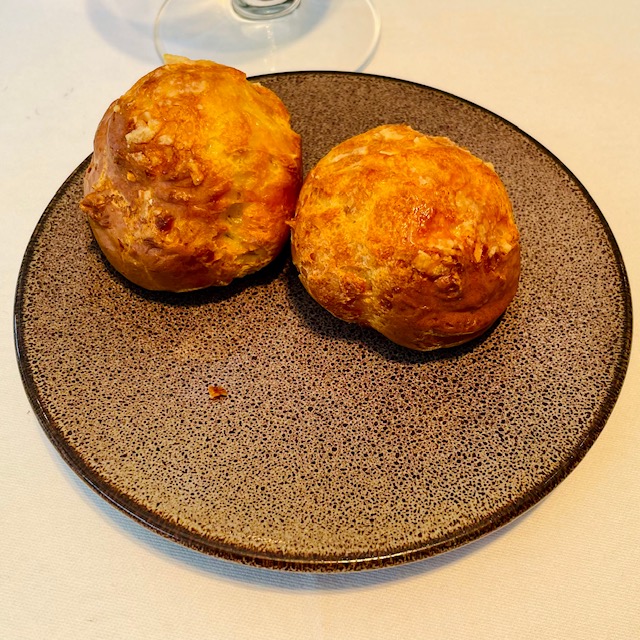
We started with a pair of stunning aged Comte gougeres. It was odd to taste Comte without that familiar crystalline grit, but odd in a good way, and the pastry was dense yet airy. By this point we’d been served a choice of bread from a wooden tray (Medlar’s focaccia is another thing of wonder) and we’d been brought water and a glass full of ice cubes, which was regularly taken away and replenished throughout our meal. We’d chosen our wine, and everything was right in my little world. A proper lunch, a leisurely one where you get through a bottle of wine and have nowhere you need to be afterwards, is a holiday in its own right, if you choose the right place.

Speaking of wine, that was the first misstep. We’d ordered a bottle of Riesling by Pegasus Bay, a stellar producer from New Zealand. They brought it, opened it and then explained that it wasn’t cold enough. So they poured a little into our glasses and took it away to try and get it colder quickly. But they didn’t succeed, because it was only reached the right temperature at the end of the meal, by which time we’d drunk most of it. It was still a fantastic wine, but we had it far from its best: given that it cost around sixty pounds I’d have expected them to give us the option to choose another, rather than opening it when it was barely chilled.

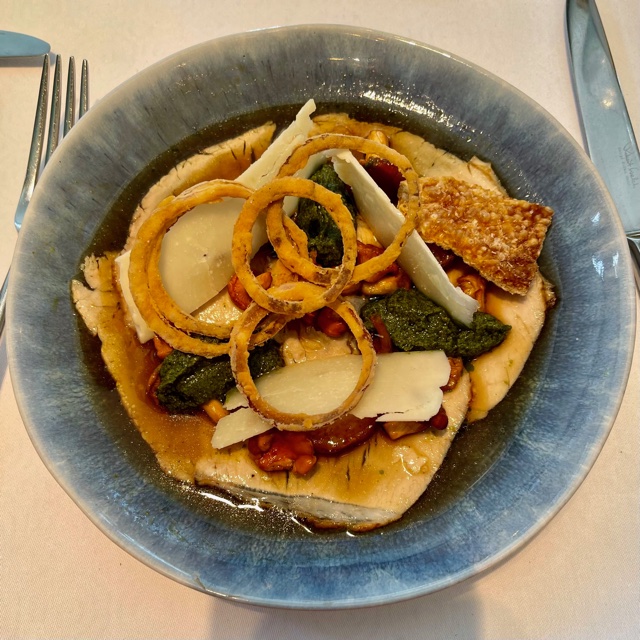
But the food was as good as I remembered. As on our previous visit, Zoë picked the best of the starters – thin slices of pork loin served in a sauce almost like a consommé, topped with thin, crisp onion rings, salty splinters of pecorino, girolles, cubes of fondant potato and a grassy, intense salsa verde. It was a dish where you could construct an almost infinite number of different forkfuls, each of them magical, and I looked at it with a level of envy that only intensified when I tried it.

“Pork, onion, potato and cheese – no wonder I love this dish” said Zoë. “It’s the Irish in me” (I look forward to the day when she has the passport to prove it).

I could have, should have gone for one of my favourite starters from the menu, for old time’s sake. But it was a hot day and I wanted to avoid the tried and tested, so I chose the gazpacho. If I wasn’t absolutely bowled over by it, that’s probably because it’s a soft-spoken dish even when done as skilfully and fastidiously as this. The cubes of scallop were super-fresh, pristine and elegant, but if I’d known it was padded out with cucumber – I’ve never been a fan – I would have chosen something else. Superb olive oil had been used but didn’t break through, hesitantly clearing its throat when it should have sung. Cobnuts added texture and a second dimension, but overall it was too mild-mannered for me. I consoled myself with another piece of focaccia.

By this time the restaurant was filling up. They charge reasonable corkage at lunchtime, which explained one chap lugging what appeared to be a jeroboam of claret. Medlar clearly has a reputation and a regular clientele, because many of the diners were well-upholstered: a florid, blazered buffer at the next table was humblebragging away to his friends (“I’m still seven hundred pounds in credit with the Royal Opera House” being one gem). I’ve missed people watching, and watching these people was another level completely from sitting in the Workhouse courtyard, seeing who wanders past.

Zoë’s main is a mainstay of the Medlar menu and if she hadn’t ordered it I would have – glorious, soft rump of beef, served pink and fanned out with blobs of shallot purée, along with a portobello mushroom stuffed with snails in Café De Paris butter. You also got a side salad and a hefty helping of a beautifully made Béarnaise, with an almost medicinal hum of tarragon. Zoë was sceptical about the snails in particular but I talked her into ordering it, reasoning that if she didn’t like them I could swap with her – so of course, when it came to it, she loved the whole lot. Again, no two forkfuls need be the same, but every forkful was marvellous.

My dish – bit of a theme here – was good but not at the same level. Barbary duck came pink, also fanned out (they love a bit of fanning around at Medlar) on mange tout, with a jug of a fantastically sticky jus. But the second half of the dish, the confit duck tart, was problematic. It felt like it had wandered in from a completely different meal, one where you wouldn’t have a sticky jus. But also, it wasn’t a tart: plonking ingredients on a thin disc of pastry as a means of displaying them doesn’t constitute a tart, however much you might want it to. So the stuff on the edible coaster – the confit duck, roasted courgette and tomato, the ribbons of fennel, even the almost-rubbery ricotta gnocchi – were very nice, but they had nothing to do with the rest. I know the weather lately has made us all uncertain whether it’s summer or winter: this dish had a similar identity crisis.

We ordered chips to go with both distinctly carb-free dishes. They come with more of that marvellous Béarnaise, but usually they’re better than they were that day: they didn’t have that brittle crunch they needed, although as a vehicle for tarragon-infused indulgence they did just fine.

The dessert course comes with suggested pairings, and this was the first time the restaurant felt truly pricey: the cheapest dessert wine came in at a tenner but the rest were in the region of fifteen pounds for a glass. I liked my Beerenauslese, which had a note of sharpness alongside the sweetness, and Zoë loved her Australian Riesling. But neither was worth quite that much money.

Never mind: gladly the dessert we’d both chosen properly saved the day. It was a festival of chocolate and cherry, a deep dark delice surrounded by dots of cherry and griottine cherries, crowned with an orb of almond ice cream and a brittle tuille made from cocoa nibs. The almond ice cream – extraordinarily smooth, with hints of marzipan – and the cherry lent the dish a touch of Bakewell, and the whole thing amounted to a proper desert island dessert. We ate it in silence, interrupted only by the duffer at the next table holding forth to his unfortunate friends.

As we waited for our bill, the staff brought over one last treat, velvety chocolate truffles and pieces of marshmallow which tasted of sweet, concentrated passion fruit, a little miracle. Aside from our slightly lukewarm wine, service was perfect – attentive but nicely distant, very efficient indeed, far better than service I’ve had at places which have retained their Michelin star (l’Ortolan springs to mind). Our three course meal, with a bottle of wine and a couple of glasses of dessert wine – and those gougeres right at the start – came to two hundred pounds, which included an optional 12.5% service charge. 

We left nicely full, edges a tad blurred, and strolled down the Kings Road, pausing now and again to stumble into a(nother) ridiculously expensive boutique. Exactly how many branches of Joe & The Juice does one road need? I thought to myself (the answer, as far as the Kings Road is concerned, is two). I tried on crazy glasses in Moscot – it turns out that Woody Allen-style glasses are best left to Allen – we ambled round Peter Jones, we walked to Belgravia and made a pilgrimage to Les Senteurs, one of my favourite shops on the planet. In the sunshine, you could nearly convince yourself that the city was almost normal.

So yes, it wasn’t a perfect meal. And Medlar might not have been completely at the top of its game when I visited them, but even on a relative off day they could teach pretty much any restaurant in Reading a thing or two – about food, about service, and about doing the same thing day in, day out for years, without getting bored, rebranding or chasing fads. It’s an underestimated quality in restaurateurs: the patience to build something up, to stay focused, to not lose interest. And if I picked Medlar up and dropped it, say, in the space Bill’s is currently wasting they would easily be one of the best restaurants the town has ever had. For my part, it was an absolute pleasure to go to London and catch up with an old friend. All things considered, I’d say they’re doing pretty well. I won’t leave it so long next time.

Medlar – 7.9
438 King’s Road, Chelsea, London SW10 0LJ
020 73491900

https://www.medlarrestaurant.co.uk

The Hero Of Maida, Maida Vale

The Hero Of Maida closed in early 2024 and has since opened as a new pub, helpfully called The Hero but run by completely different people. I’ve left the review up for posterity.

Despite the name, over six and a half years I’ve reviewed lots of restaurants which aren’t in Reading. To paraphrase David Brent, my world doesn’t end with these four walls. When I’m finished with Reading, there’s Henley, Windsor, Wokingham. You know. Newbury. Goring. Because I am my own boss.

Bracknell.

But I’ve always steered clear of reviewing London restaurants. I suppose part of that is analysis paralysis: how would you even go about picking which restaurants to visit? There are hundreds of London restaurant bloggers (not to mention influencers) swarming around all the hottest new restaurants, all the must-visit openings, so it’s hard to imagine anybody would be interested in my (provincial) opinion. And how useful would it be to my regular readers? You might be in London from time to time, but how likely would you be to go out of your way to try somewhere on my say-so? That’s why I’ve always stayed in my lane, remaining local with the occasional foray further afield on the train.

So what changed? Well, recently one of the restaurant bloggers I read wrote a review of a little Malaysian restaurant just round the corner from Paddington Station. It did what, in an ideal world, all restaurant reviews would do: it made me feel like checking the place out. After all, I’m in London reasonably often, I nearly always come home via Paddington and having decent food options to explore while I wait for an off peak train would be a very welcome development. I Retweeted the review, plenty of people showed an interest and at that point I decided: there would be no harm in adding the occasional review of venues in and around Paddington, to help out if you are in London and want to try out a good restaurant before coming home.

I picked Maida Vale for my first London review because that area has always been one of my favourite parts of the city. You leave Paddington by the exit that takes you right out onto the Grand Union Canal, turn left and meander past all the boats and the offices of Paddington Basin, the fancy gleaming bars and restaurants that have sprung up to cater for all those workers. Cross one of the pretty bridges you come to and you’re in Little Venice, ten minutes’ walk or a single Tube stop from Paddington but a world away in all important respects.

It’s loveliest in summer, but at any time it’s a house envy-inducing stroll. The Warwick Castle, tucked away on a sidestreet, is a lovely mews pub and not far from there is the equally gorgeous Formosa Street with the Prince Alfred, a cracking public house with little booths where you have to duck under a low door to pass from one to the next. If I didn’t have such a magnificent local already, I might well spend my days wishing it was mine.

The Hero Of Maida is just a little further out, on the border between Little Venice and Maida Vale, and in a previous incarnation it used to be called the Truscott Arms. I had a friend who worked in London and I used to go down after work on a Friday afternoon to meet her for a boozy dinner in that neck of the woods. We’d always stop for one last snifter at the Truscott Arms – it closed later than other establishments – before weaving back to the station and drunkenly going our separate ways, me on the Burger King Express back to Reading and her on a terrifying-sounding night bus to Tooting.

I was sad when the Truscott Arms closed but when I heard it had reopened as the Hero Of Maida under the supervision of Henry Harris (of legendary Knightsbridge restaurant Racine) offering a take on classic French cooking, I made a mental note to visit one day. So on a sunny weekday lunchtime my friend John and I paid it a visit, to finally break my London reviewing duck.

It’s a very handsome, light, airy room that instantly draws you in – tasteful muted tones, an attractive wooden floor, gorgeous tiles and a long, curving zinc bar. There’s a separate restaurant area upstairs (open in the evenings but not at lunchtime) but I didn’t feel I was missing out. Lovely tables, too, with button-backed banquettes looking out. It was quiet when we turned up, with a solitary customer plugged in and tapping away on his computer. We sat at the front by the windows, making the most of the afternoon light, although I did wish after a while that we’d grabbed a banquette. On the plus side it means my photographs are better than usual, but the drawback was that poor John was caught in a direct shaft of sun for some of the meal and had to keep shuffling his chair to one side.

The menu changes regularly and on the day we visited it was compact and appealing – just five starters, four mains and a sharing dish (pie for two, an offer I always find hard to refuse). A blackboard behind the bar offered a few other dishes, and although they were listed as bar food they seemed equally restauranty to me. Crucially, one was the same pie in an individual portion: a great relief, because it meant I didn’t have to implore John to change his mind. On another day I would have gone for another special: crispy lamb breast with salsa verde, six almost unimprovable words. “It’s National Pie Week”, our waiter told me, and in the end that made my decision for me.

There was a good selection of beers and we were slightly early for our booking so we started with a pint. My Notting Helles was pleasant enough, if not the most imaginative choice, but John enthused about his pint of Peckham Rye, a very nice-looking amber ale. Later I wished I’d gone for the coffee stout by Magic Rock, but we’d moved on to wine by then. It was a pretty decent wine list too, with plenty available by the carafe, but we settled on a chardonnay from the Languedoc which came in at just over thirty pounds for a bottle. It sounds odd to praise a wine based on all the things it wasn’t, but at the risk of sounding like Goldilocks it somehow seemed appropriate: not too dry, not too sweet, not too oaky, not too expensive. The list said it was a good alternative to a white Burgundy, and I thought that was spot on.

I’d been sorely tempted by the steak tartare, but with a pie on the way I decided to balance light and shade a bit by choosing a more delicate starter. Ibériko tomatoes with burrata felt more a test of sourcing than cooking, but even so I really enjoyed it.

The tomatoes weren’t as good as ones I’d rhapsodised over in Spain but they were close enough, with plenty of freshness and a judicious spot of salt. The burrata felt more like mozzarella to me – completely firm in the middle without any of the glorious creamy messiness of a good burrata – but that struck me rather than irked me. The salsa verde brought it all together, as did some greenery which wasn’t listed and which I didn’t recognise. It had a slightly vinegary bite but I couldn’t place what it was – not samphire, not salty fingers, not (I think) monk’s beard, but a perfect match in any event. Winning enough to overcome a couple of slight missteps: a dish, in many ways, emblematic of the whole meal.

John had chosen grilled mackerel with ‘nduja which, again, is a combination that sat up and begged to be chosen. I thought it looked fantastic, with a generous whack of the fiery, brick-red good stuff. John liked it, but not without reservations.

“I like the skin to be crispy, and this is a bit, well, flaccid. Flaccid is never a good word, is it?”

“No, it’s like damp. ‘Moist’ can be a good thing, but ‘damp’ never is.”

“There’s always ‘wipe down with a damp cloth’, I suppose” said John, equably. “Something else about this dish isn’t quite right. This stuff.”

That’s how we discovered that John, like me, is not a fan of radicchio – although, as a man who gets a vegetable box weekly, he’s very fortunate to only just be figuring that out. I understood though – again, the radicchio wasn’t mentioned on the menu and it did slightly skew the dish. I didn’t get to taste it, but from the look of the plate, also strewn with wild garlic and capers, I think I would have enjoyed it. John did find a few sizeable bones which had escaped the filleting process, though, another glitch that rankled.

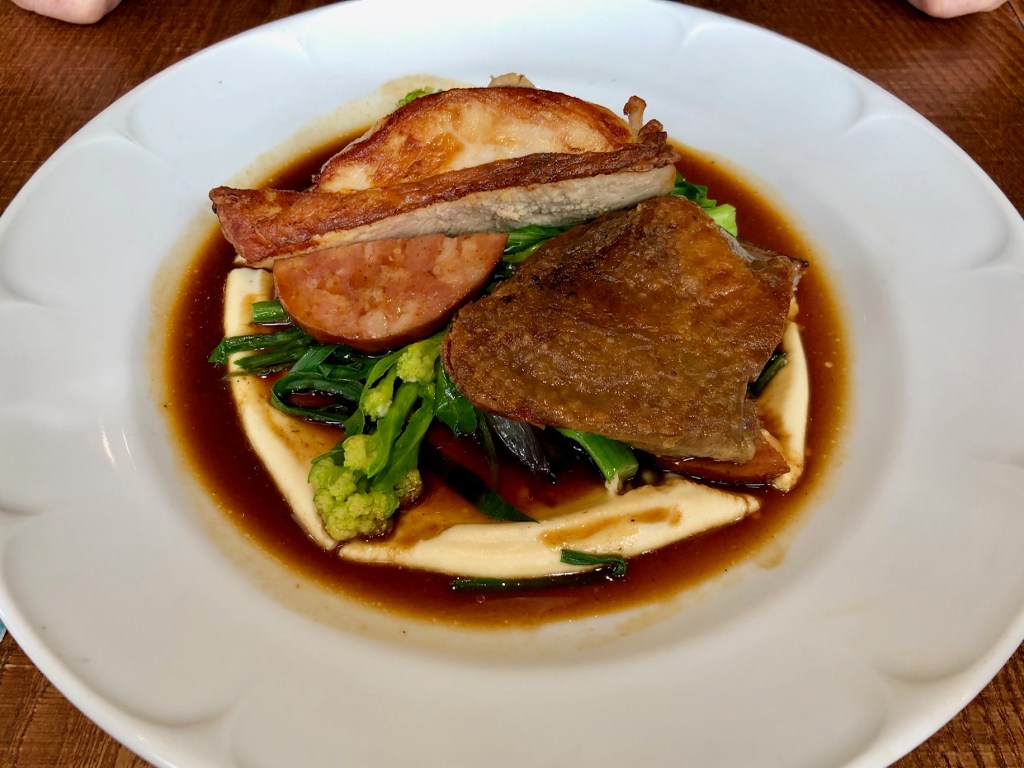
John was properly delighted with his main course, though. Guinea fowl came two ways, with a hefty piece of the breast and a gorgeous-looking thigh complete with crispy skin. It was all on top of some silky celeriac puree, along with a big, coarse wedge of smoked Morteau sausage – we Googled it to make sure it was nothing like andouillette – and, apparently, “tropea onion”.

“This is lovely. I’m usually more of a starters man and main courses can feel like a bit of a let-down, so it’s a real pleasure to get such a good main course. And it’s a really big portion of guinea fowl, I wasn’t expecting that.”

I thought that was a good point – this didn’t feel like a little, cheffy plate assembled with tweezers but a proper, hearty dish put together with the diner firmly in mind. Good value at nineteen pounds, too.

My pie was, as so often, more a casserole wearing a hat and the pastry lacked the indulgence of a good suet crust. But underneath, you hit paydirt: a sticky tangle of slow-cooked lamb shoulder and a rich, savoury sauce, punctuated by coarsely chopped garlic and carrot. The greens that came with it were nice enough taken for a swim in the pie filling, but hardly the feature attraction. The whole thing was delicious but it just didn’t feel as much like a proper pie as I’d hoped; it was best described as high-ceilinged, with plenty of breathing space between the filling and the crust.

Many of these niggles were redeemed by the Hero Of Maida’s chips, which were as good as any I’ve had – huge, ragged-edged things, all crunch and fluff. I was initially dubious because they came skin-on, but even that didn’t detract. They were four pounds a portion, and I was relieved that John and I had the foresight (or greed) to order one each. I used mine to absorb every last molecule of the sauce left in my pie dish.

The dessert menu was also compact – just the four options – but we were on a roll and had no intention of letting that stop us. The list of dessert wines was equally streamlined, but we found a Coteaux de L’Aubance on it which was stunning, the colour of late summer afternoons with a clean, poised sweetness. The first sip was one of those little heavenly moments you want to remember for ages: our food so far had been lovely, the only plans for the rest of the day were a bimble from pub to pub talking about all sorts and, in my mind, I was an honorary resident of Maida Vale already.

Desserts were inconsistent in the same way as the starters, but the kitchen had garnered enough brownie points by then to earn some latitude. So for instance, my lemon posset was all out of kilter: far too big, and too cloying without the sharpness it badly needed to cut through. Instead, it felt like a big bowl of something very close to clotted cream and the crumbled amaretti biscuits all over it didn’t do enough to counteract that. It wasn’t what I ordered, or what I really wanted, but on the other hand there are worse things to do in life than eat a large bowl of clotted cream and, when push came to shove, I found I didn’t mind at all.

John’s rhubarb and custard pavlova sounded terrific on paper but again, wasn’t quite there. The rhubarb, John said, was delicious and he really enjoyed the hazelnut praline which played an equally starring role. “But this meringue”, he said, “I hate to say this but it feels shop-bought.” I saw him struggle to break it up and it seemed to be lacking any of the chewiness which would have made the dish perfect. Even so, I looked at his dessert and thought that I would gladly have ordered it myself.

Service, from one chap who seemed to be doing everything that lunchtime, was friendly without being faux-matey, knowledgeable and happy to talk about the dishes and offer recommendations. Again, it might be that if you came to the Hero Of Maida of an evening or on a busy Sunday lunchtime you might have a different experience, but I thought we were really well looked after. Three courses, a couple of pints, a bottle of white wine and two glasses of dessert wine came to just over a hundred and fifty pounds, including that old chestnut the “optional” twelve and a half per cent service charge. You could eat here for less, but I thought it was decent value.

You’ll have read all of this and you’ll already have an idea about whether the Hero Of Maida is the kind of place for you. You might think it’s ever so slightly too far from Paddington or a little too expensive, but I really enjoyed the place. And to save you the effort of questioning my verdict, I’ve already asked myself: was I being charitable because I was having such a nice afternoon? Was I letting the restaurant off the hook when, closer to home, I might have been harsher?

I don’t know. It’s possible. Maybe I was looking at the world through dessert wine-tinted glasses but if so, all I can say is that I thoroughly recommend doing so. Next time you’re in London and you’re on an off-peak ticket you could do a lot worse than booking the Hero Of Maida, especially when summer comes, and crossing the canal to treat yourself to something different before riding the rails back to Gare du ‘Ding. Make sure you get some chips: you’ll thank me for it.

The Hero Of Maida – 7.5
55 Shirland Road, London, W9 2JD
020 39609109

https://theheromaidavale.co.uk

Feature: Dining elsewhere

This might be hard for you to believe, but Reading isn’t perfect. Even I, with my bad habit of standing on the virtual soapbox and shouting about its best bits, know that. I’ve talked in the past about all the types of restaurants I’d love to see open in Reading, from indies to (some) chains, but this week instead of a review I thought I’d go one step further and talk about some of my favourite restaurants outside Reading. These are places I would love to pick up and plonk somewhere in town, even if I know in my heart of hearts that they wouldn’t necessarily fit in.

This is by no means a list of the best restaurants anywhere, by the way. Often your favourite restaurant isn’t necessarily the best – the food might not be as flawless, the service might not be as polished, but simply put your favourite restaurants are the ones where you have the best times. Your mileage, should you ever get to one of this lot, will undoubtedly vary. And it’s not definitive, either: I missed out countless places in the interest of limiting this to half a dozen, including little bistros in Paris, sweet sun-kissed tavernas on Greek islands, Michelin starred joints deep in the Cotswolds and establishments from Toronto to Glasgow, from Prague to Istanbul. Loving restaurants is a wonderful thing, I think. Loving lists the way I do also brings a lot of joy. But trying to combine the two, it turns out, is rather an agonising pursuit.

Pierre Victoire, Oxford

(Photo courtesy of TripAdvisor)

Reading doesn’t really have a proper French bistro. A few places have come close (and Brebis is only a train ride away) but you’d hope a town the size of Reading could sustain somewhere like Oxford’s Pierre Victoire. Originally part of a now defunct chain (which at one point included Reading, so maybe we don’t deserve another after all) this place has thrived by offering some great classics, an amazing value set menu (where starters and desserts are only two quid each. No really) and proper French service – you know, the sort where they always seem slightly amused by you but want to charm your socks off none the less.

Despite being a pretty big restaurant, getting a table here is a real challenge unless you’ve booked ahead (which I singularly fail to do) so I sometimes end up eating here at lunch instead of dinner, just to make sure I do get to try it. On my most recent visit I tucked into a gorgeous quenelle of smooth chicken liver pate followed by a big stainless steel pot of moules marinière with skinny fries. I also nicked some of my companion’s potato rosti (sitting underneath a splendid, crispy confit duck leg) which would have been worth the price of admission alone. Lunch for two, including a crazily reasonable half bottle of Côtes du Rhône, came to thirty-six pounds. Thirty-six pounds! The tables are all squished together – which normally would annoy me, but here I like it because of the people-watching potential – and I never leave without wishing I could put Pierre’s in my pocket and bring it back on the train with me. Reading could really do with a little more ooh la la, n’est-ce pas?

Great Queen Street, London
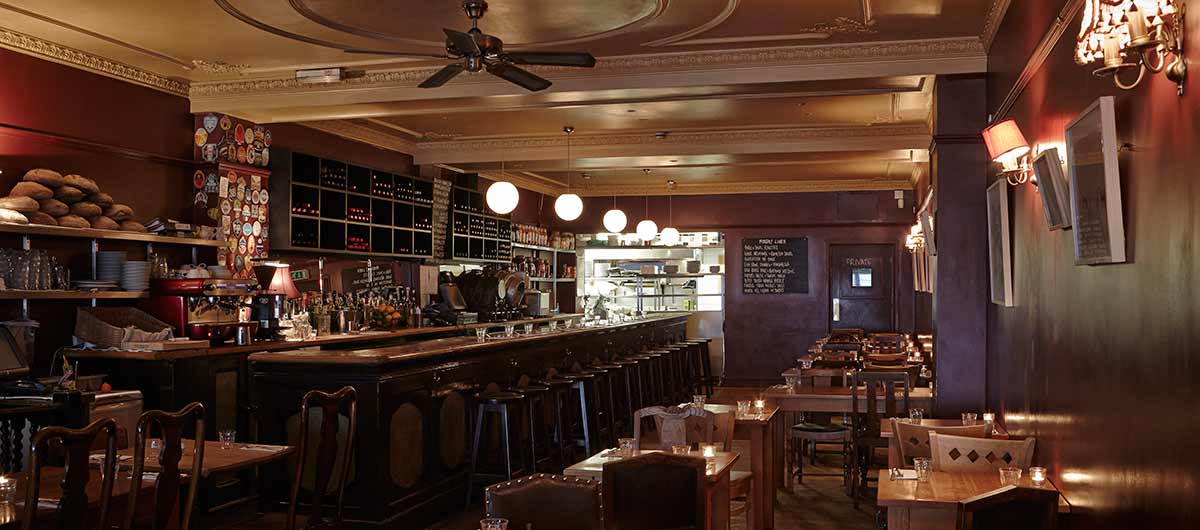
Great-Queen-Street-Interior(Photo from the restaurant’s website)

I know that London is arguably the most exciting dining scene in the world right now. I know that every cuisine is represented, to dazzling effect, and that every month new places open, shifting the dynamic of the place ever so slightly. It must be lovely to have all that on your doorstep to choose from, from the high end to street food with every permutation in between. I know all that, and yet – and I know this will make me sound like a hick from the sticks – I have had so many disappointing meals there you would not believe.

I follow the critics, I ooh and aah over the meals (both the pictures in the papers and the ones they paint with their effortless sentences) and yet I’m so often underwhelmed. Whether it’s a neighbourhood restaurant a little off the Tube network, an old stager offering faded but charming grandeur or Michelin starred luxury on the top floor of some tall building, I often end up on the train back from Paddington thinking “what am I missing?”. Probably a lot, but what it means is that when I do go in I want to find somewhere central, reliable and decent that I can book in advance, where I won’t have to queue round the block for hours or spend two hours pretending I’m having more fun than I am.

At the moment, for me, that place is Great Queen Street. Just off Drury Lane, part of a group which includes legendary Waterloo gastropub The Anchor & Hope and Oxford’s Magdalen Arms. It’s just perfect – dark, clubby, welcoming and totally disinterested in being cool. The menu is the kind of unpretentious list where you want to order practically everything and the wine list is full of inexpensive delights (plenty from the Languedoc, I’m happy to say). Last time I went, I shared a chicken, leek and tarragon pie, all rich creamy filling topped with flaky pastry but with that beautiful slightly soggy layer just beneath, like a business class Fray Bentos, and I liked it so much I nearly wept. I would say that once you eat there, you’ll never go back to Sweeney and Todd – but to be honest you could say the same once you eat at Sweeney and Todd.

Bosco Pizzeria, Bristol

Despite discovering (if that’s even the right word, seeing as loads of you told me you loved it but just didn’t want me telling everyone) Papa Gee last year, I am still yearning for a comfy neighbourhood pizzeria. Well, I sort of found one, but the problem is that it’s on the Whiteladies Road in Bristol. And I always seem to end up there when I visit Bristol, despite it being a city with so many amazing restaurants (Wallfish in Clifton, for one, or the wonderful tapas restaurant Bravas). It’s not even Bristol’s coolest pizzeria – the up and coming Flour And Ash has taken that title – but it remains one of my favourite places to eat.

I’m normally there for lunch, but it’s the kind of restaurant that has perfected offering something for everyone, whether it’s small groups, dates or family outings. The menu is brilliant, with great antipasti (especially the burrata and coppa – to be honest I could gladly live off some combination of those two) leading up to the genuine highlight, the pizza. The base is light, chewy, ever so slightly charred and bubbly. The toppings are simple but steer clear of cliché. And – no small thing this – I love the service. It’s tattooed, passionate and informal (or, in a word, “Bristol”). I do rather collect pizzerias, especially abroad (La Briciola in Paris, Linko in Helsinki, I could go on) but there’s something about Bosco. Writing this now I can imagine sitting at a window table with some montepulciano, waiting for my pizza to arrive. And as much as I love Papa Gee, its slightly down at heel style and all, I’d love to see somewhere like Bosco dropped into one of the empty sites in the centre of Reading. That would be gert lush.

Bodegas Castañeda, Granada

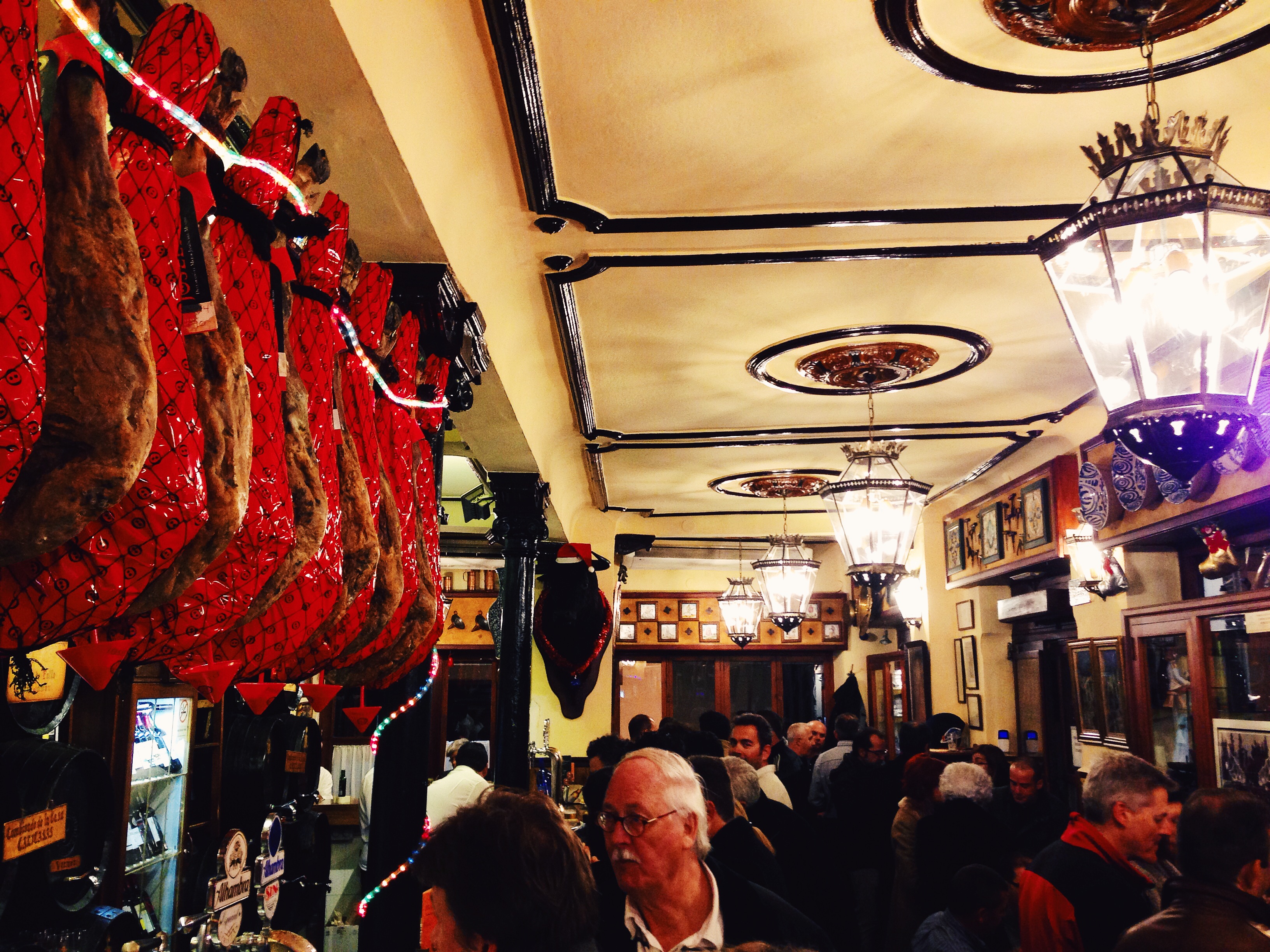
Granada is the true home of tapas, where every alcoholic drink is accompanied with a small plate of free food, be that a basic wedge of tortilla or a helping of salty, crumbly manchego. If you love food then that alone is reason enough to visit, even without a visit to the beautiful Alhambra, the stunning Moorish fortress which stands sentinel over the city from its position at the top of a very steep hill. Well, that and the sherry. And the wine. And the more sherry.

Anyway, Bodegas Castañeda is in the heart of the city (one street along from, confusingly, an inferior establishment with almost exactly the same name) and, for me, it epitomises eating in Andalucia. Yes, there are still free tapas (the habas con jamon, broad beans with rich, savoury nuggets of ham, for instance) but the clientele here knows that the stuff you pay for is worth the jostling at the bar, which runs almost the entire length of the shallow, wide room. The staff, a wry bunch of super-efficient, slightly hangdog aproned men, serve sherry from large casks, pouring with a flourish that is more for entertainment than taste, and watching them work as a unit always fills me with admiration (and, probably more importantly, gratitude).

You need your wits – and your elbows – about you to eat at Bodegas Castañeda, but the rewards are enormous: simple, savoury slices of the delicious jamon that hangs over the bar, thick pieces of mojama – cured tuna – topped with almonds and drizzled with olive oil, the saltiest bacalao draped over the smallest slices of bread, an embarrassment of riches. My mouth is watering now, something of a Pavlovian reflex which I get almost every time I think about Granada. All that and you can eat and drink like royalty (and get royally sloshed) at Bodegas Castañeda for less than forty euros, provided you’re happy to muck in and try speaking a little Spanish. Believe me, it’s worth the effort.

Bonjardim, Lisbon
BonjardimI love Lisbon so much, and it has a much underrated food scene. Of course, there are the famous egg custard tarts and the port – everyone knows about those – but there’s so much more to it than that. Beautiful seafood, surprisingly good cheeses, petiscos that give any tapas out there a run for its money and my personal favourite, ginjinha, a rich sticky cherry liqueur sometimes served in (and you might want to brace yourself for this bit) an edible chocolate cup. Drink the liqueur, destroy the evidence, eat some chocolate into the bargain: trust me, some messy nights can begin this way.

Despite that, my favourite restaurant in Lisbon is in many ways one of its most basic. Bonjardim isn’t far from Rossio station, with a restaurants and tables on both sides of a little alley. It’s known as “Rei dos Frangos” (the king of chickens) and they aren’t kidding, because that’s what you order if you know what’s good for you. A whole spit-roasted chicken for two turns up with some slightly unnecessary chips, and it’s the most glorious, amazing, intoxicating thing. The skin has been rubbed with lemon, salt and oil until it’s almost brittle with the intense taste of wonderful crackling. Underneath, the meat is perfect; there’s a little pot of peri peri sauce you can brush on, if you feel that way inclined, but I’ve never seen the need. You just sit there, in the evening warmth, eating chicken and drinking wine or a frosted pint of Super Bock, watching the hawkers and the buskers wandering past on a seemingly eternal loop. Maybe we won’t ever get the weather, and it’s probably just my fanciful imagination, but I can picture something like this on Queen Victoria Street.

Can Paixano, Barcelona

I could have picked so many places in Barcelona for this piece. One of the finest meals I’ve ever had was in its Michelin starred restaurant Cinc Sentits, a meal so amazing that I wrote down every single course I ate in the tasting menu and for months after I could just get out the piece of paper, look at it and sigh. But last time I went, I found the strangest thing – the less informal a place was, the more fun I had.

So although I enjoyed the proper old-school glamour of the “rich man’s paella” at Set Portes, the real delights came from the stand-up tapas joints, places like El Bitxo and the venerable El Xampanyet, where the waiters effortlessly swish from table to table offering to top you up with cava (and people think the Italians have a monopoly on offers you cannot refuse). This reached its apex at Can Paixano, a little bar on the edge of the old port on a seemingly lifeless sidestreet – a long thin room with no discernible furniture where people jostle at the bar for saucers of cava at little more than a Euro a glass. Meat hangs from the ceiling and the no-frills menu behind the grill tells you what’s on offer. You order some chorizo or morcilla and sip your drink (slightly off-dry rose cava for me, since you asked) while it’s sliced and grilled or fried in front of your very eyes. Last time I went, a group of young Irish chaps were there, clearly unable to believe their luck having chanced upon the place completely by accident. I bet they were wishing their home town had somewhere a little like Can Paixano: I know I was.

So, those are some of my favourites. Why not chip in in the comments section and let me know some of yours?