Feature: The 10 Reading Dishes You Must Try Before You Die (or relocate)

It’s a while since I did a feature on the blog, but this one has been percolating for some time. Eighteen months ago I went on holiday to Malaga, and although it was a mixed bag, one thing I really loved was the food culture. I did a food tour which took me from restaurant to market to bar to restaurant, trying the best dishes from the best places, and I thoroughly enjoyed myself (I also spent much of the time apologising to all the lovely Europeans in my tour group about the Brexit referendum result, but that’s another story).

When I visited, Malaga was celebrating “Tapas Month” – well, it’s got to beat Veganuary – and participating restaurants had teamed up to put together a tapas trail across the city, each one offering a special edition tapa for a couple of Euros, only available for that month. I spent much of my trip wishing I could stop and try all the dishes – that, and wishing that I was on holiday with someone who would want to.

When I returned home, I pondered whether either of those things would work for Reading, but decided it was just too difficult in practice. What was I going to do, walk them to the farmer’s market and then take them to Sapana Home for momo? No dice: Reading was too small, and it definitely didn’t have enough of a small plates culture, so I abandoned the idea.

This year, I vaguely revisited the idea of readers’ events, namely lunches, and we’ve had two very successful ones so far – at Namaste Kitchen in January, and I Love Paella in May. At the latter, the kitchen (headed by the redoubtable Edgar) put together a set menu including a special dish: ox tail empanadas. They were easily one of the loveliest things I’ve ever eaten at I Love Paella: meat cooked into sticky, yielding strands, deeply savoury, all wrapped up in that astonishing light pastry.

If you were there, you’ll know how good they were, and if you weren’t you’ll have to take my word for it, because they were on offer for one day only. So I didn’t manage a tapas month, but for just one day we got our very own exclusive Reading tapa. If they’d made it on to the menu, they’d easily be one of the must-try dishes in Reading. But what else fitted that description, I got to thinking. What were Reading’s culinary equivalents of the Seven Wonders Of The World?

So my initial idea morphed into exactly that, and it crystallised when I was down the pub with, of all people, Martijn Gilbert, the outgoing CEO of Reading Buses. Martijn has kindly agreed to come out on duty with me before he leaves for pastures new (my way of saying thank you, you could say, for the splendid app which allows me to reply to texts from my mother like “what’s your ETA this evening and would you like a gin when you get here?”). But before that, I spent an evening showing Martijn round the splendid pubs of the Village and I found myself wondering: what should be on his gastronomic bucket list before he heads off to the North East to take up his shiny new job?

That’s when I decided – I would compile the list of Reading Dishes You Must Try Before You Die (or, less melodramatically, relocate). After painstaking research and contemplation, I’ve boiled it down to ten signature dishes which, I think, demonstrate the many faces of Reading’s magnificent independent restaurant scene. With one exception, they are dishes you can only get in Reading, or at least only get this version of here: and that means that there are no chains in this list, however much I like Honest Burgers or Franco Manca’s lovely anchovy and caper pizza (I’ve relaxed this rule for number 6, but it’s a tiny chain with two branches).

I’ve applied a couple of other rules: one was that I only picked one dish per restaurant, which excluded a lot of wonderful dishes. Another was that they had to be dishes from permanent restaurants, which meant that sadly, Peru Sabor’s delicious ox heart anticuchos and the incredible spiced chicken wraps from Georgian Feast didn’t make the cut. I should also add that I am not a vegetarian or a vegan and I have chosen on merit rather than by quota, which means only one vegetarian dish makes my list.

But you could fill an impressive enough list with all the other dishes that didn’t make the grade, from Papa Gee’s Sofia Loren pizza to Shed’s Top Toastie, from House Of Flavours’ lahsooni chicken tikka to London Street Brasserie’s fish and chips. You’ll doubtless have your own favourites which I’ve missed, and hopefully you’ll comment telling me how wrong I am: lists like this are made to be disagreed with, and that’s as it should be. But in any event, I hope there’s at least one dish on this list you’ve never tried, and that this piece makes you feel like giving it a whirl.

One final thought before I begin: this could have been a very different list if Namaste Kitchen was still offering its old menu, or if Dolce Vita was still with us. If nothing else, I hope people try some of these dishes out so I’m not lamenting the loss of any of these restaurants a year from now. And in a year’s time, who knows what this list might look like: after all, the venison bhuna from Clay’s Hyderabadi Kitchen already looks like a contender in the making, and that place has only been open a couple of weeks.

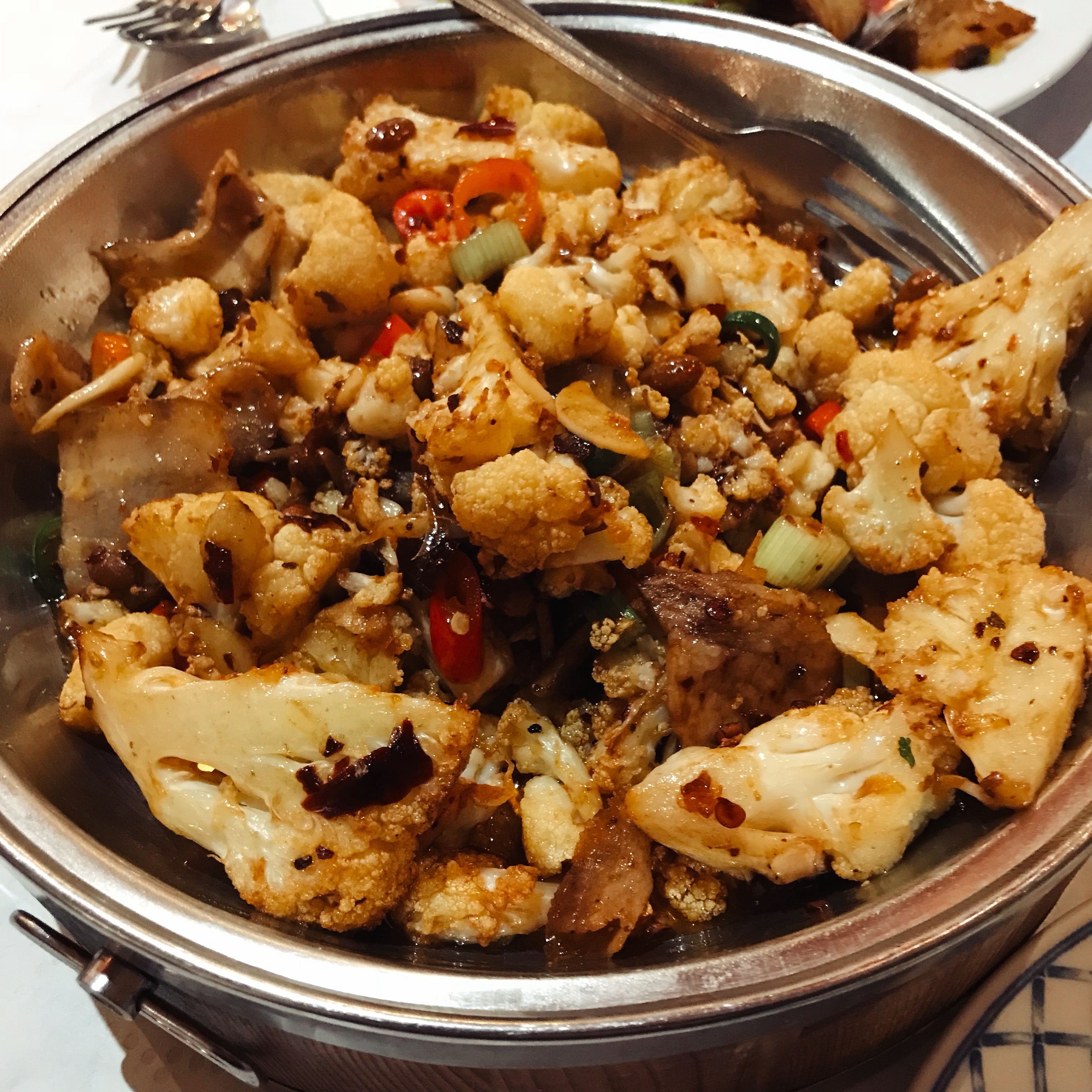
1. Big pot cauliflower, Memory Of Sichuan

Because, it turns out, Chinese bacon is a thing.
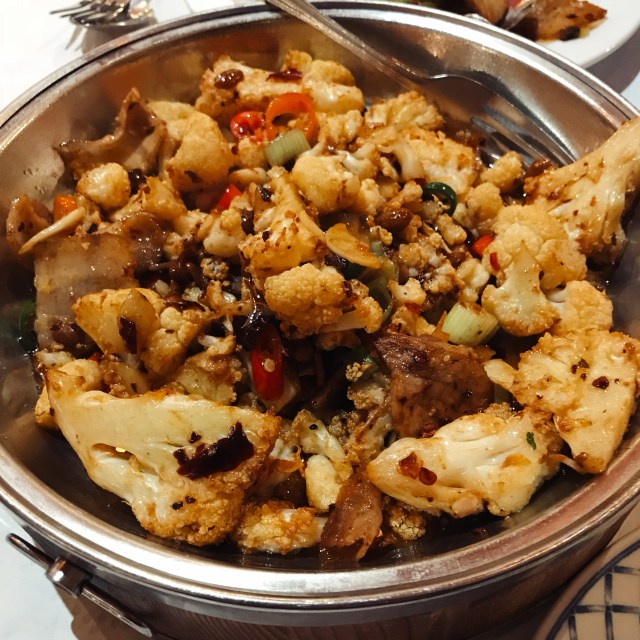
I can’t lie: Memory Of Sichuan can be an intimidating restaurant to walk in to. Most of the customers aren’t Western, and the ones that are aren’t eating from the proper menu, the one with all the good stuff on it. And even the proper menu can be quite an eye opener, with all sorts of dishes you wouldn’t recognize or wouldn’t want to try – duck blood here, pig’s ear there, like a cross between Old Macdonald Had A Farm and A Nightmare On Elm Street. But the big pot cauliflower is well worth it: I suspect it may have more going on than any of the other dishes on this list. So there’s cauliflower, of course, lovely firm florets of the stuff, but there’s also bacon like char siu, colossal quantities of garlic, spring onion and soy beans. By the end, at the bottom of the pot, you have a sticky, sweet mixture of all of the above just waiting to be chased round the dish with a fork, relentlessly hunted down and consumed. Order it and enjoy – and feel a little sorry for everybody there who’s making do with sweet and sour.

Memory Of Sichuan, 109 Friar Street, http://www.memoryofsichuan.co.uk/web/

2. Charsi chicken karahi, Kobeda Palace

The pride of the Oxford Road.

Earlier in the year I went to a house party on Brunswick Hill. I was reluctant about going, but I promised I would attend provided I could slope off and have dinner at Kobeda Palace – well, it was just round the corner after all. But the Oxford Road’s Afghan grill house is well worth a hop on the number 17 bus (the 17 bus route is the backbone of Reading, don’t you know) any day of the week. The thing to do, if you can persuade your friends, is to order a huge dish of the chicken karahi – they sell it by the quarter of a kilo – and some naan and spend your time grabbing some chicken, shredding it off the bone (which never takes long) and scooping it up with the naan, along with the beautiful sauce packed with coriander, chilli and ginger. If you can’t persuade your friends, order half a kilo and have at it on your own. This really is one of Reading’s unsung, unforgettable dishes hiding in plain sight in one of Reading’s most unglamorous and little-known restaurants. The party, since you asked, was okay I guess. But the chicken karahi was out of this world.

Kobeda Palace, 409-411 Oxford Road, http://www.kobedapalace.co.uk/

3. Chilli paneer, Bhel Puri House

Vegetarian perfection, cubed.
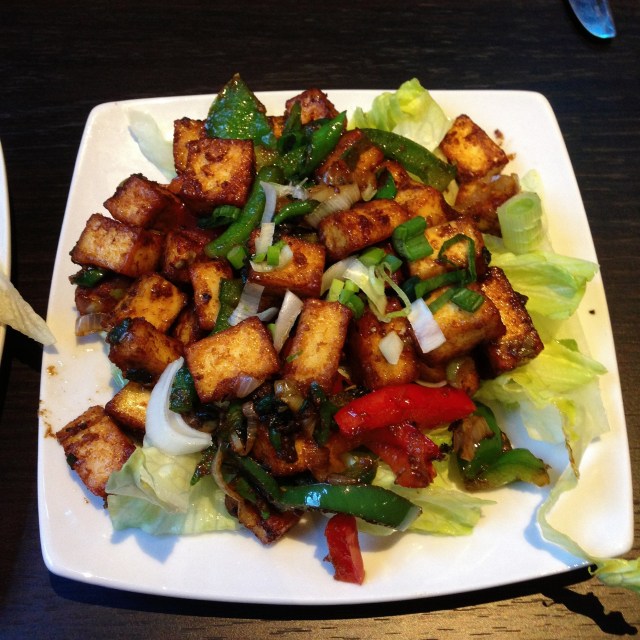
I’ve written about Bhel Puri’s chilli paneer so many times you may be bored of hearing it, but it bears repetition: whether you’re vegetarian or not this is one of the very best things you can spend your money on in Reading. I introduced a good friend to this dish recently, after a long absence, and I got to experience just how wonderful it is through the eyes of somebody else. She enjoyed it so much her face struggled to register it, and instead you got an expression as if she was trying to solve an especially hard Sudoku. It’s so good it almost induces consternation, and I can sympathise: the first time you get that combination of crispy, sticky cheese and sweet green pepper – and the delight of spearing both with your fork and eating them in a single mouthful – is something you simply do not forget.

Bhel Puri House, Yield Hall Lane, http://bhelpurihouse.co.uk/

4. Dak-gang jeong, Soju

It’s KFC, but not as we know it.
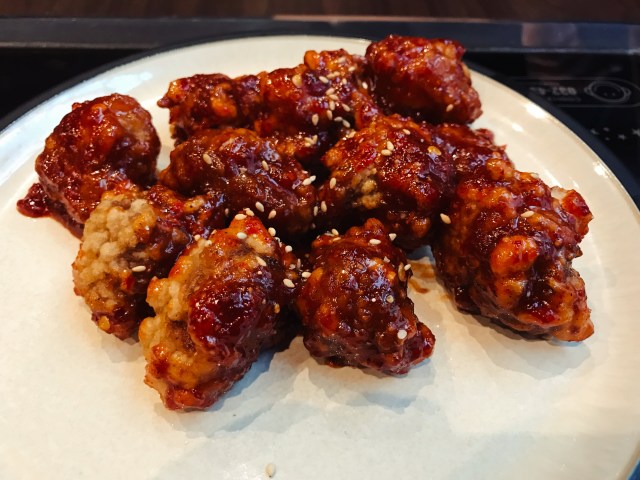
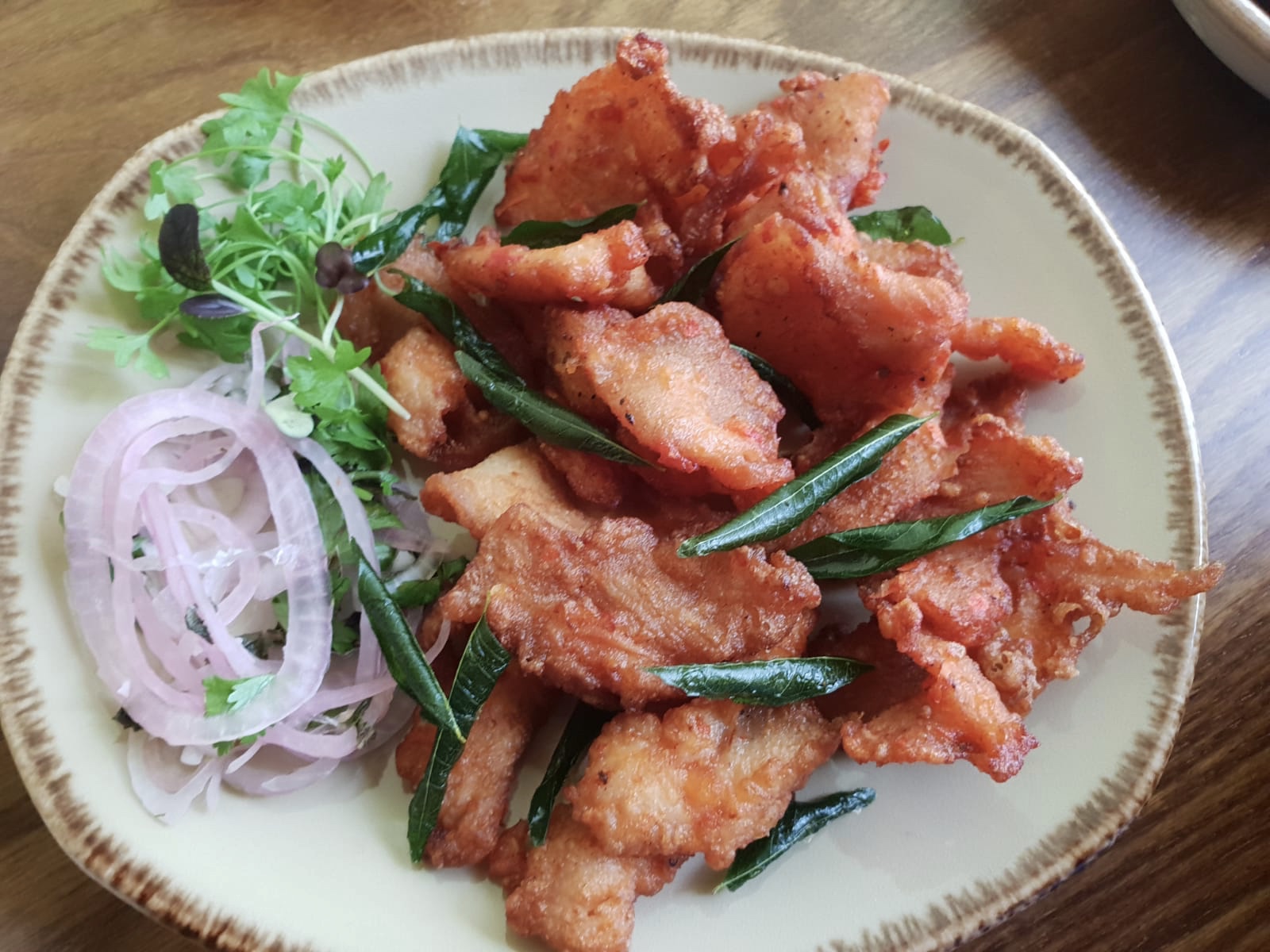
It’s not even a month since my review of Soju, but from the moment I first ate their fried chicken I knew this was a dish I would be evangelising about to all and sundry. The coating was just right, the flesh underneath was spot on, the sauce had just the right mixture of hot and sour without any sweetness. I’ve thought about it dozens of times since, and wondered whether it would be over the top to go back simply to order the chicken and a cold beer, followed possibly by another portion of chicken and a cold beer. An instant classic.

Soju, 9-11 Kings Walk, https://www.thesoju.co.uk/

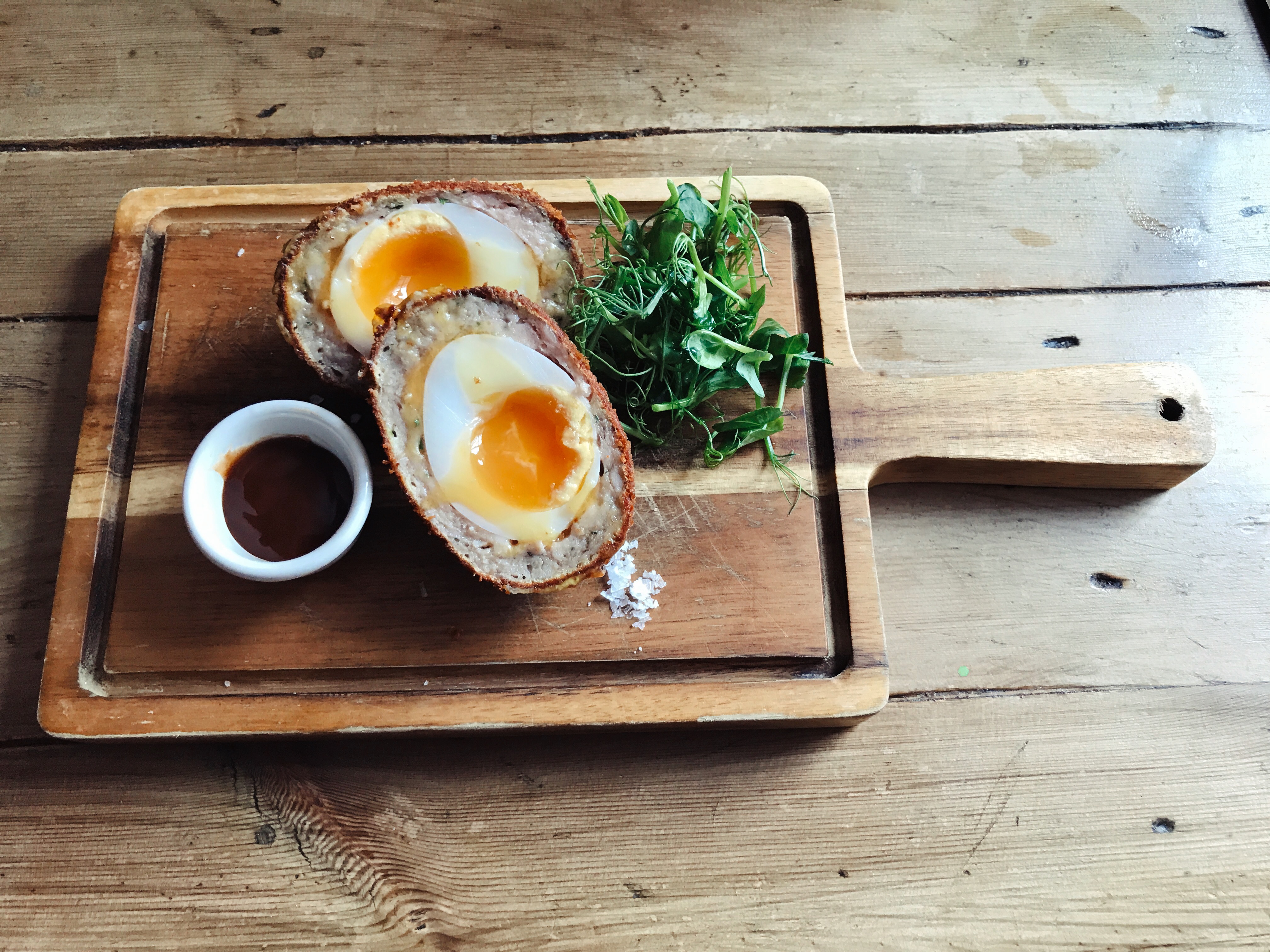
5. Double duck scotch egg, The Lyndhurst

Pub food, done right.

This choice will probably come as no surprise – The Lyndhurst won my World Cup Of Reading Restaurants earlier in the year on Twitter with good reason – but it’s still a thoroughly deserved entrant in my top ten. The Lyndhurst has transformed in the last eighteen months or so, offering a range of classic pub food (excellent fish and chips and a very creditable burger) along with cheffier, prettier things: I was particularly bowled over, on a recent visit, by a pork chop with a breathtaking wild garlic pesto. But the Scotch egg is the centrepiece – a generous duck egg, wrapped in duck meat and cooked so the outside has that crispy crust, the meat hasn’t dried out and the golden yolk is the perfect texture for oozing. I’ve even ordered one when I’ve just been at the Lyndhurst for drinks: is that just me?

The Lyndhurst, 88-90 Queens Road, http://www.thelyndhurstreading.co.uk

6. Gaeng massaman, Thai Table

The ultimate comfort food.

Most Thai food I can take or leave, but I always console myself with knowing that the bit at the end, where all that’s left is the coconut rice and the warming, aromatic sauce, is the best part. Thai Table’s massaman curry turns that on its head because although that bit is still amazing, the beef is simply spectacular – cooked until it completely falls apart, no resistance or (worse still) bounce at all. If I was feeling a bit defeated by life, or worried about the state of the world, I can’t think of any dish on this list I would sooner eat. The spice is there, but sweetened with the coconut milk and the fish sauce the whole thing comes out feeling like an embrace.

Thai Table, 8 Church Road, http://www.thaitable.co.uk/

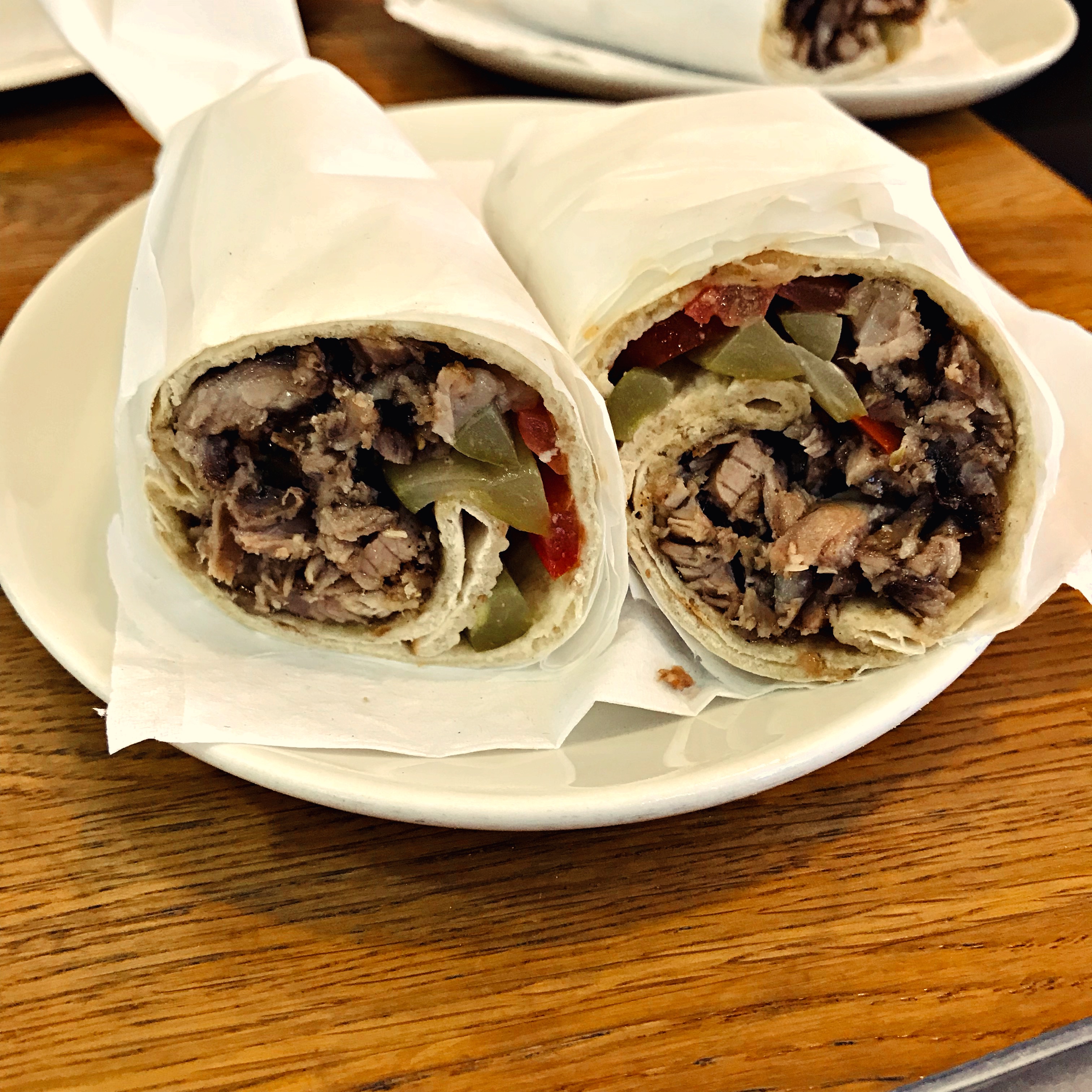
7. Lamb shawarma wrap, Bakery House

The sandwich of the gods.

Bakery House’s menu is an embarrassment of riches, many of which could easily have made it onto this list. The baby chicken, more boneless than a Tory Remainer and far more appetising, is one of my favourite things to eat there – as are the perfectly light falafel, not to mention the chicken livers, in a rich sauce which manages to be both fruity and fiery. But in the end, it was impossible to look past the lamb shawarma. How Bakery House manages to pack such rich flavour into shards of lamb I will never know, but when you team that up with a smudge of tahini, salad and sharp, crisp pickles you have the perfect sandwich. Well worth a short lunchtime walk out of town and miles better than anything you could pick up at the likes of Pret A Manger.

Bakery House, 82 London Street, http://bakeryhouse.co/

8. Quiche Lorraine, Workhouse Coffee

Greg’s 1, Gregg’s 0.

Workhouse Coffee might not be everybody’s first choice of a lunch venue. It has little to offer the tea drinker – owner Greg Costello seems to hold tea drinkers in much the same regard as I hold members of Britain First – and you may want somewhere with wi-fi, or comfy seats, or even a readily accessible loo. You might want to see the prices of everything clearly listed, and who could blame you? These are all fair challenges, but what you can’t knock is the wide array of baked goods and sandwiches he lays on (figuratively not literally, thank Christ). I once Tweeted that Workhouse’s quiche Lorraine should be available on the NHS and I stand by that. It’s a marvel: crumbly buttery pastry, creamy egg, salty bacon and ribbon upon ribbon of sweet, caramelised onion. Order one for lunch when you have some time to spare (they don’t arrive at your table too quickly) and properly take your time eating one of Reading’s great dishes. Far more expensive than the steak bakes up the road on the market place, but worth every single penny. I’ve eaten this many times, but never stopped to take a photograph: I think that tells its own story.

Workhouse Coffee, 10-12 King Street, http://www.workhousecoffee.co.uk/

9. Spiced chicken salad, I Love Paella at The Fisherman’s Cottage

Yes, I picked a salad. Deal with it.

This is, no doubt, where I will part company with many of you. How could I overlook the empanadas? The goat’s cheese, its surface golden and grilled, served with tomato jam? The salt cod churros, the kind of fishfingers Captain Birdseye would make if he actually gave a shit about food? And the chicken paella, the seafood paella, the arroz negro? Have I gone mad? Well, maybe, but the understated star of the menu is the spiced chicken salad. This chicken – thighs, as always with ILP – is beautifully spiced and liberated from the starch of a paella or some bravas it really sings. The salad – leaves and halved cherry tomatoes – might look like not much, but it’s everything. And the dressing is oil but no vinegar, leaving a dish that is all sweetness and spice with no sharpness. Ironically I’d never have had this dish if it wasn’t for my mother – it’s the kind of thing she would order and I would avoid like the plague – but I went to ILP with her once and she chose the chicken salad. My exasperated eye-rolling was replaced with powerful food envy. I’ve been ordering it ever since. (N.B. I Love Paella has now left the Fisherman’s Cottage which is now under new management.)

I Love Paella, 3 Canal Way, http://ilovepaella.co.uk/thepub/

10. Suckling pig, Pepe Sale

Roast dinners around Reading.

I’m often asked what the best roast dinner in Reading is, and I always cop out, telling people I don’t really review Sunday lunches. Reading used to have a magnificent blogger who did exactly that, and now he has moved to London where he writes brilliant weekly reviews. I’ve always thought that Sunday roasts are best done at home where you can have them exactly how you like and time everything perfectly. But actually, on reflection, there is a clear candidate for the best roast in Reading, the only drawback being that you can only order it on Friday and Saturday nights. Pepe Sale’s suckling pig is a phenomenal piece of work – beautifully dense slabs of pork, no sign of dryness, along with a crackling that’s so good you could almost weep. I realised in the course of writing this piece that I don’t have a photo of this dish, which is the cosmos’ way of telling me to go back soon.

Pepe Sale, 3 Queens Walk, http://pepesale.co.uk/

So, come on then: what did I miss?

Vel

Vel suffered a fire in August 2024 and has not reopened. I’ve left this review up for posterity.

I was on holiday in Bologna, buying a gigantic wedge of Parmesan in a food market of all things, when I got a message telling me that Matt Farrall had died. For those of you who didn’t know him, Matt was a raconteur, rambler, writer for the Whitley Pump and possibly the proudest Reading resident you could hope to meet.

He was one of the very first people ever to persuade me to give up my anonymity. He interviewed me for the Pump last year – we went to the Turk’s Head (back when it was good), ate food by Georgian Feast and just chatted and chatted. I kept waiting for the interview to start, and it never did – Matt seemed far more interested in speculating on the relationship status of the couple at the table next to us. Were they just splitting up? Just getting together? Not even a couple at all? It occupied us for much of the evening, as did the meatballs, the khachapuri and Matt’s inexhaustible supply of anecdotes, none of them less than uproarious.

But of course, Matt’s sly genius was that he still managed to get me to talk, the way curious people and natural writers do, and I told him many things I wasn’t expecting to: about my past, my family, all manner of information. He was smart like that. I still have the recording of that interview, and it’s more a document of a lovely evening than an interview at all; we were nearly a podcast waiting to happen.

Our paths crossed several times after that. We were both at the Hop Leaf celebrating the landlord and landlady’s tenth anniversary; to his credit, he didn’t reveal my secret identity to his pub buddies that night, at least not in front of me. We were at the same table for the first ever Saperavi Party at the Island, where he charmed the socks off my mother while eating more of the Georgian food he had come to adore. Matt was nothing if not charming: to know him was to love him, and even if you never met him you got that feeling from his writing. Good writers do that. You feel like you know them; you wish you could beetle off to the pub with them.

I went to his funeral, on a gorgeous sunny May afternoon, and the crematorium was so packed that tons of us were just standing outside, taking in the speeches, listening to the impeccable selection of music and, in my case, fanning myself with the programme. It was almost like being at a rock concert, and – not for the first time since I got the news – I found myself wishing Matt had known just how much he was missed. Matt had packed many different lives into just shy of fifty years, and I wonder if anybody knew the whole person or whether we all just got one fascinating facet. It was definitely hard to imagine a more eclectic crowd – colleagues, family, friends from way back. Glen, who runs Blue Collar. Adam from the Whitley Pump. Claire from Explore Reading. Afterwards we all went to the Back Of Beyond and drank until chucking out time, old friends and new. I like to think Matt would have approved.

I planned to put together a tribute to Matt but, for reasons I won’t go into here, it never quite happened. Nevertheless I wanted to do something to mark his passing, and I couldn’t think of a better way than to visit the venue of one of his last ever reviews for the Whitley Pump, Vel, a South Indian restaurant in his beloved Katesgrove. I took my mum, who remembered him fondly, although I did have to point out to her in advance that no, a dosa wasn’t basically a posh Findus Crispy Pancake.

Vel is described on its website as a “South Indian Kitchen & Bar” and I think what that means is that it’s made up of two rooms, with a view of the kitchen from one and the bar from the other. It’s actually quite a handsome, neutral, uncluttered restaurant – bare wood floors, tasteful bare walls, attractive muted wood panelling, nice tables and sturdy chairs. The bar is a fetching tiled affair and the kitchen – open and visible through the glass – might make for an interesting spectacle if you had a view of it (I saw a couple of the chefs putting long skewers on the grill at one stage, but that was about all I managed to catch). We took a table in the first room with the bar, close to the window so I could make the most of the natural light.

“It makes such a difference” I told my mum, herself no photographic slouch. “My food photos in winter are no good to man nor beast.”

“It’s not a bad table” my mum responded. “Good view of the wheelie bins.” I sometimes forget that my mum is more leafy Bath Road than downtown Katesgrove.

The place was almost completely empty when we arrived, but we had plenty of time to review the menu before we were approached by the waitress. They’ve made some effort to walk diners through it by breaking it up into sections – interestingly named ones, actually, from “Get Tempted” (starters) to “Get Fired” (starters from the grill or tandoor) and onwards to “Keep Calm Curry On” (which rather screams “get help”) and “Rice Rice Baby” (which is verging on “delete your account” territory).

That’s all well and good, but the next level of detail about what the dishes actually are was missing in action. For instance, the section covering dosa (or “thosai” on this menu) – entitled “Get Girdled” for reasons which escape me – had a plethora of bases and toppings or special dosa without really explaining what they all meant. Never mind, I thought. We’ll ask the waitress, that’s the whole point. What could go wrong?

“What’s the difference between a plain dosa and a ‘paper roast’?”

“One paper roast. What else would you like?”

“Err, no, we’d like to know a bit more about the paper roast.”

This went on: every time I asked about a dish I had to then explain, sometimes in excruciating detail, that I wasn’t ordering the dish but simply asking for more information. I don’t know whether it was a cultural thing, or a language barrier, or Vel having a bad day but whichever way it was I didn’t like it. It made me feel difficult, patronising or ignorant and none of those are how you want your customer to feel. I was tempted to get my mother involved, but the benefits of her cut glass diction would have been easily offset by the gathering storm of waspishness, so I thought better of it.

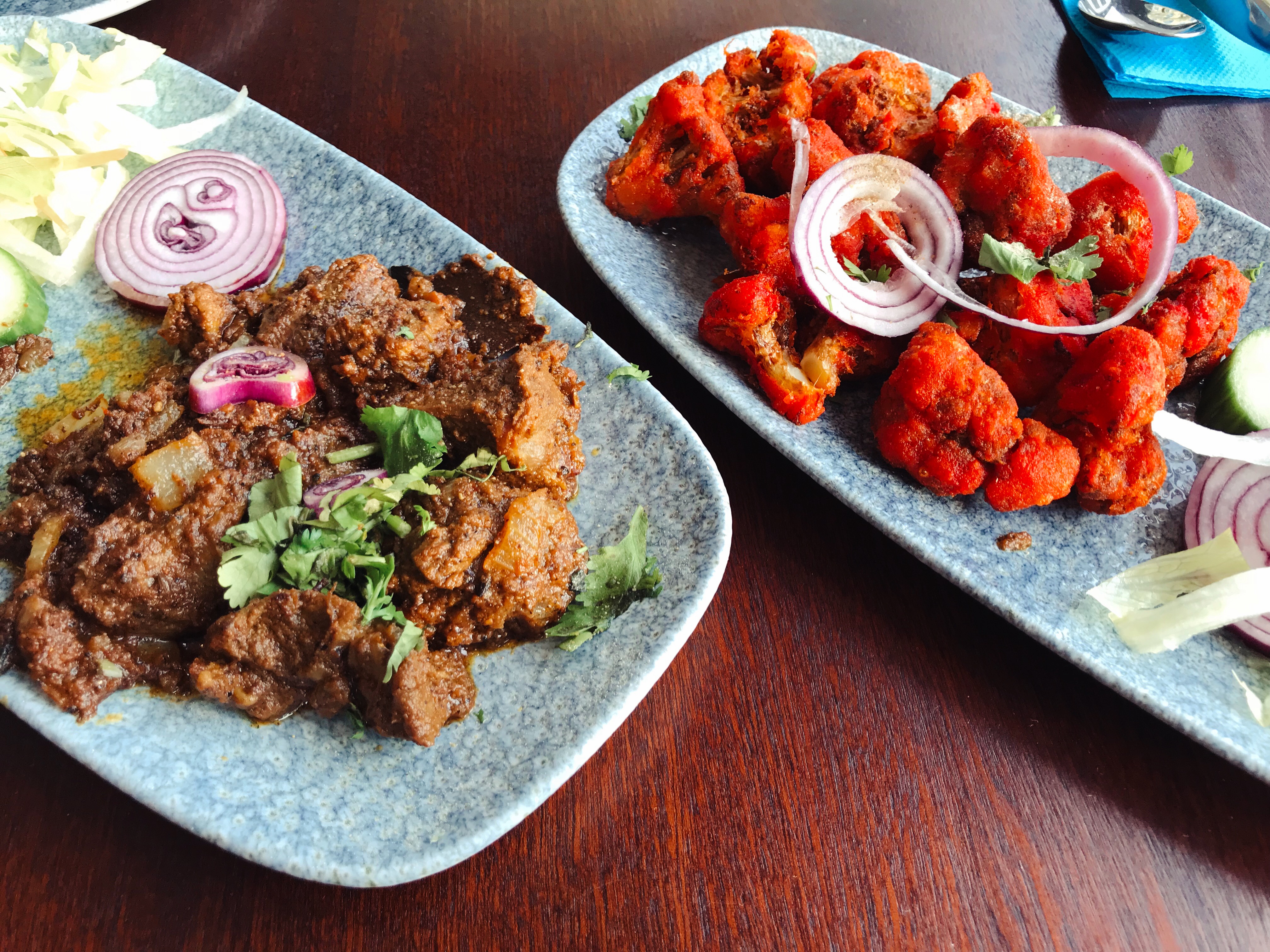
We got there in the end, drank our Kingfishers and, once the starters arrived things were positive. Gobi 65 is one of my go-to starters and Vel’s version was close to spot on. The bright red, almost scarlet colour was arresting and the coating was nicely spiced. The cauliflower underneath was lovely and firm and the florets were all a sensible size. But six pounds fifty felt ever so slightly on the steep side for a plate of veg and if you’re going to charge that they have to be crisp and absolutely piping hot and these weren’t quite that.

The mutton pepper fry was delicious – tender pieces of mutton in a lovely peppery sauce with just the right level of heat. But again, this was eight pounds and there wasn’t a lot of it and that did give me cause for thought. The crockery – and I don’t often talk about this in restaurant reviews – was attractive stuff with just a hint of sparkle in the glaze, but ultimately when they only put the mutton on half of a small plate and pad out the rest with iceberg lettuce I did find myself assessing the balance between style and substance.

I’ve always found dosa a bit confusing, and I’m never sure when they’re meant to make an appearance in a meal. Are they a starter? A main course? A light lunch? You might know better than me: we wanted to try one but neither of us fancied having it as the feature attraction, so we ordered one in between our starters and mains to give it a try. It looked gorgeous – a giant burnished cylinder of wafer thin pancake wrapped round some potato masala. It came with a little bowl of sambar (a sort of curried lentil stew, for the uninitiated) and three chutneys, one with coriander, one with tomato and nigella seeds and what I think was a coconut chutney.

Never having excelled at dosa I asked our waitress for some advice on how to eat it. She came out with some words and gestures and lots of smiles, but I was left none the wiser. So my mother and I just had at it, tearing off pieces and dipping as best we could. It was lovely, in truth – the masala was warming with green chilli and spring onion studded through it, the potato just the right side of firm. I loved all the chutneys, especially the tomato one, and the dosa itself was paper thin and beautifully buttery. Again, though, the pricing seemed steep – eight pounds was an awful lot more than I ever remembered paying at Chennai Dosa.

This was the point when things started to go wrong for Vel – not in terms of the food, but because of everything else. By now, two other tables were occupied and it seemed the kitchen couldn’t cope with having three sets of customers at the same time. So we waited and waited, saw food arriving at other tables, and waited some more. Our waitress brought poppadoms to our table by way of apology – a lovely thought but, really, yet more food was the last thing we needed.

It also gave us time to order more drinks, which also didn’t go smoothly.

“I’d like a half of Kingfisher please, and a prosecco.”

“A Kingfisher and a second?”

“No, a prosecco.”

A blank look. I was forced to resort to pointing at the menu and trying to speak as clearly as I could, which again was an uncomfortable experience. She wandered off and eventually returned with my half and an individual bottle of prosecco.

“I didn’t realise you wanted presco” she said. I decided to leave it there.

All told it was easily half an hour until our main course arrived, and few main courses are worth that wait. My mother had ordered the Chettinadu fish curry, having been talked out of the milder Kerala fish curry by the waitress. That almost redeemed the “presco incident”, because the sauce it came in was splendid – all the heat coming from black pepper rather than spice, but if anything even more interesting for that. The sauce, again, had lots of nigella seeds speckled in it and I also caught a note of roasted onion. The fish, which was apparently kingfish, was a cutlet with the bone in the middle and I liked that too: it broke into firm meaty flakes like a swordfish rather than being the soft mushy white fish you sometimes get in Indian curries. My mother started out a little underwhelmed by the dish but by the end I think she too was won over, if a tad full.

My chicken biryani was competent but not exciting. The pieces of chicken were well cooked and not dried out, and the rice had something about it but there were still a few bland clumps in there. There were plenty of cloves and cardamom and cinnamon, but they made the last bits of the biryani surprisingly difficult to eat as you were constantly sifting it for inedible bark and pods.

“It’s okay, but nowhere near as good as Royal Tandoori’s” said my mother. My mother is prone to compare all dishes with the best version she’s ever had, but I had to admit that she was right. The Royal Tandoori version has cashew nuts and just the right amount of mint and it did rather show this up. Even if it hadn’t, the following night I was lucky enough to get a sneak preview of the lamb biryani at Clay’s Hyderabadi and that – the rice fragrant with saffron and rosewater – blew this biryani squarely out of the water.

We didn’t investigate the dessert options (just as well, because looking at their menu I’m not sure there are any) so instead we settled up and moved on. Vel has been open for nearly four months, and I find it a bit dubious that it still only takes cash: for some that alone would be a deal breaker. Our meal came to sixty-two pounds, not including service. We could have spent less by ditching the dosa but, any way you cut it, this wasn’t a cheap meal for this kind of food in this kind of location. I’ve probably said enough about service already, but it would be unfair not to add that our waitress was lovely and friendly throughout, just a little wayward.

Is Vel worth a visit? You’ve probably formed your own view from reading this, and that will depend on how close you live to it, how important value for money is to you and whether you fancy paying cash and navigating some rather challenging service. Katesgrove and Whitley deserve good restaurants as much as anywhere else in Reading but, with the exception of Gooi Nara and the excellent Dhaulagiri Kitchen, I’m not sure there’s much to stop local residents making the trip into the town centre instead, despite all Vel’s interesting dishes (and, let’s not forget, attractive crockery).

Matt Farrall would tell you to give it another go if he was still with us, I’m sure, but that was Matt all over: a true local champion, a permanent optimist and a huge fan of the underdog. We saw eye to eye about a lot of things, but I never quite got his love of the likes of Sweeney Todd and Pau Brasil. The review over, my mother and I traipsed down Whitley Street behind a triptych of underdressed young ladies, their skin tone the kind of burnt orange that probably features on the Dulux colour chart as “Double Plus TOWIE”. I took her to the Hop Leaf for a pint and a debrief.

“It’s a nice pub, isn’t it?” said my mother, who – unsurprisingly – hadn’t been to the Hop Leaf before.

“Yes, I think so. It was one of Matt’s favourites.” I said.

My choice of venue had been deliberate. It’s what he would have wanted.

Vel – 7.0
73-75 Whitley Street, RG2 0EG
0118 9758551

https://eat-vel.co.uk/

Soju

One question I’m often asked is: why are your reviews so bloody long?

Well, it’s a reasonable observation. When I wrote a piece for the editor of Explore Reading, she gave me a word count of 800 words and expressed some scepticism about whether I’d be able to stick to it. “You normally haven’t even got round to talking about the food in one of your reviews by then” she said. A fair cop, I suppose: there’s always something to be said first about the context. There’s scene-setting to do, not to mention introducing the person you’re going to dinner with. And if all else fails, I can always get on my well-worn soapbox and pontificate about Reading (although not Caversham: heaven knows I’ve learned that lesson). The first eight hundred words fly by – to write, anyway, if not necessarily to read.

The problem is that, this week, that’s harder to do than usual. After all, Soju isn’t Reading’s only Korean restaurant. It’s not even the first: Gooi Nara up on Whitley Street opened before Soju (and I had a lovely time when I went there). It’s not necessarily that unique within the gastronomic Bond villain lair that is Atlantis Village – or whatever it’s called at the time of writing – because small chain Pho opened just across the way offering Vietnamese food (and I had an okay time when I went there). So where’s the angle? There probably isn’t one, but on the other hand Soju is a genuinely independent restaurant in a prime central spot in town, and it’s traded for a while without coming a cropper. That has to be worth a visit, I thought.

Subscribe to continue reading

Become a paid subscriber to get access to the rest of this post and other exclusive content.

The Real Greek

The Real Greek closed in Summer 2023. I’ve left the review up for posterity.

Well, you were meant to get a review of Brewdog this week, but nothing quite went according to plan. I turned up there with Steve, a long time reader of the blog who attended my first readers’ lunch at the start of the year, and right from the off things weren’t promising. We entered the cacophonous main room and found a spare table round to the left which was just about comfortable enough. Just about.

“I wish I’d brought my glasses” said Steve. Steve is wry, wise and silver-haired, knows an awful lot about food, catering and restaurants and he’s had more jobs – and stories about them – than I’ve had hot dinners. “This is the first time I’ve ever been in a restaurant and not been able to read the menu.”

I looked at the menu, all in the sort of distressed font that hints of a typewriter ribbon on its last legs. It was all burgers and dogs and puns (“Cluck Norris”, “Soy Division”) and, I’m afraid, it induced mild to moderate weariness.

“I thought it was table service here. It was when I came here for a drink the weekend it opened, but now I’m not sure.” I said.

Minutes passed.

“I’ll go up to the bar” I said.

As luck would have it, the night I planned to review Brewdog the team from Explore Reading was there to review the drinks and the food. They had a nice booth (not jealous, not at all) and were already a few beers under way. I wondered: did that make Steve and I the Jets or the Sharks? Was Steve nifty on his feet? Should I have brought backup?

At the bar, the Explore delegation told me that there had been a mix-up in the kitchen and they wouldn’t be taking food orders for half an hour. It was already eight o’clock and that, I’m afraid, is where I decided that life was too short. I looked over at the Explore table again. These were Reading’s hip young gunslingers: one of them was in her twenties, for crying out loud. I went back to our table.

“Come on,” I said to Steve, “we’re going.”

That’s how we found ourselves walking back across town as I frantically consulted my list for a Plan B and that’s how we ended up in the Real Greek, on the Oracle Riverside. I turned up, in truth, with no great enthusiasm; I hadn’t heard brilliant reports, unless you include the countless enthusiastic – and comped – blog reviews shortly after it opened last year, back when you couldn’t get in without a reservation.

But going through the doors on a midweek evening I actually found myself thinking how nice it looked – almost like a slightly more upmarket Pizza Express, with biggish tables and handsome chairs along the outside of the room and a section of sort of open booths in the middle. I wouldn’t have fancied one of those, as they seemed to be hard benches with no visible padding. I guess the sort of people who enjoyed an evening in Brewdog might have gone for them, I found myself thinking.

Steve and I persuaded the waiter to give us a round table for three, so as to improve both our views and give us the room to order everything we wanted, and had a look through the menu. It was proper small plates territory, with a range of hot and cold meze and, if you needed some inspiration, a range of suggested set menus down the right.

So far so good, but the menu also meticulously listed the calorie count for every dish on the menu. I really wasn’t a fan of this: it’s bad enough seeing the traffic lights on ready meals in Marks, without it starting to invade restaurants. Surely restaurants were meant to be a haven where you didn’t have to put up with all that? Ironically, it put me off ordering dishes at both ends of the spectrum: I like a bit of taramasalata, but when a portion was just shy of a thousand calories? And I love octopus, but if it’s only 161 calories how much of it do you really get for £7.50?

The menu recommended three to four mezes per person, so naturally – despite my niggles about calories – we ordered nine between us: Steve may run marathons, but I just knew that he was a trencherman beneath that wiry exterior. Our waiter turned up with two cold bottles of Mythos, cracked them open simultaneously and poured them at the same time into our glasses. Like all magic tricks you can’t remember how it’s done, don’t want to and, afterwards, struggle to describe it.

“That’s nicely done, isn’t it?” said Steve, which I rather felt gave me permission to be impressed.

We chatted away about our recent holidays – Porto for Steve, Bologna for me – and the first set of dishes arrived. The other gimmick at The Real Greek is that your sharing plates arrive in a tall stack, like afternoon tea. That might be your bag, it might not: I found it irksome but it was easy to take them off the rack and spread them out on the table as nature intended. If I’d been at a smaller table for two, it might have properly got on my nerves.

We started with some of the cold mezze. Revithia, which looked like a plate of lightly bruised chick peas, were delicious, singing with lemon and mint, a beautifully fresh and bright dish. The dolmades was also very good – light, crumbly and again rich with mint, not remotely claggy or glutinous. Only the Greek flatbread disappointed. It wasn’t piping hot, and it felt like maybe it had been sitting around a little too long before coming to our table. I think if I’d realised just how unlike a dip the revithia was, we wouldn’t necessarily have ordered it, and it seemed a little cheeky to charge an extra three quid for olive oil and dukkah.

Despite that, Steve and I made our way through the whole lot, waiting to be disappointed. By the end, we realised that disappointment had not come and, for the first time, I wondered if this meal was going to outperform my expectations. The waiter brought a bottle of Greek white (Makedonikos, apparently) which was fresh, not sweet and not sharp, and tasted really quite a lot like being on holiday, as some of the best wine does.

“It’s a good atmosphere in here” said Steve, taking in our surroundings. “Everyone seems to be having a nice time.”

It’s a little point, perhaps, but Steve was right. None of the tables seemed to have the grim note of contractual obligation, nobody seemed to be there because they had vouchers or had run out of ideas. Perhaps we’d just stumbled on the place on a really auspicious evening – or perhaps it was euphoria at having escaped from Brewdog – but as I took another sip of my wine I found I was really quite enjoying myself. Steve was telling me about his small granddaughter’s quest to notch up a Michelin star a year (she made one establishment make her a dish completely off menu, which makes her sound far more fearsome than any mere reviewer), and about wife number one and job number sixteen and I thought: how lucky I am that people read the blog and want to come to dinner with me.

The rest of the dishes rather came all at once, which actually was my failing rather than the restaurant’s. It’s weird how when you’re in a chain to some extent you act like you’re in a chain, and you order like you’re in a chain. If The Real Greek had been an independent place, another Namaste Kitchen, I would have ordered some dishes, eaten them, kept the menu and then ordered some more, but because it was a chain and the menu told you how many dishes to order, I ordered them all in one go. With hindsight, that was a mistake, but it didn’t stop everything we ate being good at the very least and often far more than that.

Particular highlights from the hot mezze included the pork belly, cooked so perfectly that you could almost have mistaken it for chicken thigh, all crispy skin and layers of meat, every bit of fat rendered to nothing. Steve and I did a very English equivalent of fighting over it, which involved each of us saying “no, you have the last piece” ad infinitum. We were similarly polite over the halloumi fries, salty and light and pretty close to perfect, especially dipped in the minted yoghurt. The least successful dish was the calamari, which turned up looking so much like octopus that I worried we’d ordered the wrong thing. That wouldn’t have mattered so much, but it wasn’t quite as fresh as promised and that made it harder going than either of us would have liked. When we said “no, you have the last piece”, we actually meant it.

What else? Lamb kefta was more like a single lamb burger than a kebab or meatballs, but it was still delicious and far nicer than it looked. I felt like there was a hint of feta smuggled away in it somewhere, but that could have been a trick of the light, or the white wine slightly skewing matters. Salt cod fritters were also light and delightful, with plenty of fish, not bulked out with spuds. Again, the lemon mayonnaise that came with it was spot on.

Finally, Steve’s favourite, the loukanika: three whacking great slabs of pork and beef sausage with a deep red smoked chilli relish. I had huge reservations about this, mainly because it screamed stealth spam, but it was beautiful – coarse, firm, juicy and with just enough spice. The relish set it off perfectly. Steve liked it so much he sent me a message the next day saying that he was daydreaming about eating it again (and Steve’s one of the only people I know who can send such a message without even the faintest hint of smut).

“This is really good, isn’t it? I can’t find much wrong with it.” I said, giving away I’m afraid that I had fully expected to turn up to an Oracle Riverside chain restaurant and find shitloads of issues, and that I was a tad perplexed that I couldn’t.

“Yes, it is” said Steve. Were we having a shared hallucination? Had they put ayahuasca in our Mythos?

We pressed on with dessert, because we were having too nice an evening to want to bring it to an end. That’s as noble a reason to order dessert as any, but the decision provided probably the meal’s biggest misfire in the shape of my baklava – a big stodgy slab with no real crunch or subtlety, no layers, no sticky sweetness. What you got instead was some faintly damp pastry, and a big claggy layer of crushed nuts, and the whole thing was cold and unimpressive. You got better baklava, back in the day, eating Georgian food at the Turk’s Head and (trade secret alert) I have it on good authority that they bought theirs from Costco. Steve’s chocolate mousse cake was considerably nicer, if not remotely Greek. “Not bad” he said, between mouthfuls, “but they’ve definitely bought this in.”

Service was bright and personable from start to finish. Our waiter was Italian, which led to a long conversation about my recent holiday in Bologna (I took the lead on this), football (obviously Steve took the lead on this) and where a self-respecting Italian eats in Reading (Pepe Sale, unsurprisingly). He was very proud of the food, told us what to order next time and talked with real warmth about The Real Greek, having worked for years in the Windsor branch before transferring to Reading. No smarm, no encouraging us to post reviews on TripAdvisor, just genuine enthusiasm.

Dinner for two, not including service, came to eighty-eight pounds. Not the cheapest meal in the world, and although we probably could have ordered a couple of dishes fewer it was never going to be as cheap as living it up at Brewdog. But I had such an enjoyable meal that I really didn’t mind.

Afterwards, Steve and I compared notes. I rated the meal slightly more highly than he did, and we beetled off to the Allied Arms for a debrief, shivering under the heaters and pretending it was nearly summer. But the next day, he messaged me.

“I think I might have marked it a bit low on reflection. I think you were more on it.”

“It was really decent, wasn’t it? I’m struggling to find fault.”

“The waiter definitely contributed to the whole thing. Lovely to have someone so enthusiastic – I almost thought he was called Sandra.” Steve went on, referring to Zizzi’s legendary waitress, As Seen On TripAdvisor (“the Skripals would never have been poisoned in our branch of Zizzi”, my friend Tim once said to me, “Sandra would never have allowed it.”).

I think that exchange probably sums up the verdict on The Real Greek as well as anything. It wasn’t my first choice, I went there by accident and my expectations were firmly under control. And yet, quietly and unshowily, it did an absolutely cracking job. Irritating gimmicks, iffy bread and so-so desserts aside, we enjoyed a really tasty meal in a lovely, buzzy room. Nearly everything we had was good, much was very good and some was excellent. To my surprise, I would go back again, and I can see the appeal of gathering a group of friends and trying as much of the menu as possible. So I’d encourage you to put your reservations to one side when you read the rating at the bottom, because for a certain kind of evening – with fellow diners who play nicely – The Real Greek is as good an option as anywhere you can find in town. My only tip is to dig your heels in and order little and often: it may be a chain, but that should never stop you being independent-minded.

The Real Greek – 7.7
The Oracle, RG1 2AT
0118 9952270

http://www.therealgreek.com/reading/

Thames Lido

Click here to read a more recent review of Thames Lido, from December 2024.

Here’s something that happens quite a lot: I have friends who read the blog and some have been known to put in a request to accompany me on particular reviews. “Anyone coming with you to Taberu?” one will say, or “Next time I visit you for lunch, shall we go to Comptoir Libanais? You could write it up for your blog.”

Not that I mind: it’s nice that people take an interest, and better to be spoiled for choice with dining companions than to have to ask nicely or, worse still, beg. But some reviewing opportunities are more prized than others, and none more so than Thames Lido. It opened last year, after years of money-no-object, it-takes-as-long-as-it-takes restoration work, extensively catalogued online in a series of beautiful pictures (whatever else you might think of Thames Lido, they get social media right in a way which puts other Reading restaurants to shame).

In the run-up, there were glossy pictures and features in the broadsheets, and after it opened it received a blandly positive review in the Guardian (which described it as “just off the Reading ring road” – thanks for that). This is no surprise – the original Lido in Clifton is well-established and well-reviewed and has impeccable connections – but the overall effect is that Thames Lido is probably Reading’s first ever destination restaurant. Just don’t tell anybody it’s in Reading, is the implication, in case it puts them off.

So who to take? The decision was made for me when Kat told me, in no uncertain terms, that she was accompanying me. I said yes, because I owe Kat a favour, but she was – on paper at least – an unlikely candidate. Kat has an interesting diet which involves eating sweet and sour chicken balls in the bath, and she’s partial to a battered sausage or a Tesco all day breakfast sandwich.

“Are you sure the Lido is for you?”

“Don’t be silly, I’ve eaten at hoity-toity places before.”

The way this was said reminded me of Rizzo The Rat from Muppet Christmas Carol. Oh well, I had my angle: the irresistible force meets the immovable object, Reading’s destination restaurant meets one of Reading’s most unreconstructed diners. What could possibly go wrong?

My misgivings were exacerbated in the run-up to the visit when Kat sent me a message.

“I’ll also be packing a Gregg’s sausage roll, in case the portions are too puny” she said. “I won’t whack it out on the table or anything, don’t worry. Although, practically speaking, a Ginsters chicken and mushroom slice is more appropriate. A sausage roll doesn’t have the necessary structural integrity.”

What have I let myself in for? I thought to myself as I approached the restaurant with Kat, emergency pasty presumably stowed away in her handbag for later.

When I say “approached the restaurant” that makes it sound like an easier process than it was, on foot on a gloomy March evening. It’s a little tricky to find an entrance – down the side road without signposts or the main road without pavement? – and one of the entrances takes you in to the restaurant while the other one, the main one I suppose, takes you in to the Lido proper. Even picking the right entrance, it was a bit confusing finding our way to the restaurant (and that flair for signposting, or lack thereof, extends to the bit partway through the meal where you try to find the loo). A minor thing, I know, which only applies the first time you go, but first impressions and all that.

The restaurant itself was – as so often – a long thin room, a shape that’s mandated by its position running alongside the pool. The view was spectacular, with steam rising from the heated pool, the fetchingly retro changing booths beyond. The occasional intrepid swimmer bobbed past and, like no doubt everybody who has visited Thames Lido, I was very impressed by the quality of the restoration. It carried through into the furniture – sturdy, handsome tables, generous and roomy for two people, and the kind of chairs you could imagine settling into. It’s a high-ceilinged, airy space and thought had even been put into that, with fabric panels hanging from the ceiling to absorb noise.

If you get a table alongside the pool, that’s great. The other tables – like the one we were given – feel far less special and force one of you to forego the view and stare at the bare brick walls. We asked to move as a poolside table came available and they moved us without complaint. The menus didn’t come with us and it took a fair amount of flagging down staff before they reappeared at our table.

We started by hitting the gin menu, which is divided up on the good/better/best principle with some at £7, some at £9 and some at £11.50. Yes, you read all those right, and tonic is extra. Only two tonics are available, so you get Schweppes for £1.50 or Fever Tree for £2. That makes most of the gins more expensive than the Lido’s cocktails, and some of the gins are also very oddly priced. I was surprised, for example, to see Gin Mare, readily available in supermarkets and pubs like the Fisherman’s Cottage, on sale for £11.50. Each of the gins had modish tasting notes made up of three adjectives, although how Gordon’s tastes of “historic” is anybody’s guess.

Do I sound cross? It’s probably because I was, a little. I’ve been to lots of establishments with gin lists, from pubs to Michelin starred places, and they all make great effort to pair the gins with different mixers, different garnishes, serve them in big balloons so you can almost breathe in the botanicals. Not so at the Lido, where both gins turned up in a highball with ice and lime, nothing more. The Jinzu with Fever Tree (total cost thirteen pounds fifty) was pleasant, light, sweet and floral, but the main thing I thought with each mouthful was just how expensive it was. “Hotel prices”, murmured Kat disapprovingly. The Psychopomp Woden with Schweppes was punchier, a brutal mixture of fennel and grapefruit, and a relative snip at ten pounds fifty. You only got 125ml of Schweppes as opposed to 200ml of Fever Tree, another thing the menu neglected to mention.

The gin took a while to arrive, so we grazed on the complementary bread with olive oil. Again, I had heard great things but this was tough going – nicely seasoned but dense and heavy with no light, crispy crust, more murder weapon than appetite whetter. “I was here for the set lunch earlier in the week and the bread was so much nicer” said Kat. “It was warm, soft inside and the crust was brilliant.” I couldn’t help wondering if this was the same loaf, a few days later.

The menu managed that rare feat of being interesting and nice to look at without having anything on it that you absolutely had to order. I was expecting some kind of plea bargaining with Kat (and if they’d still had the slow cooked ox cheek in Pedro Ximenez on the menu that might have happened) but as it was, neither of us had a first choice to go into battle for. We eventually placed our orders with the waiter, a rather disengaged man who spent much of his time serving us looking around, as if hoping to speak to someone more interesting (“he’s like a really rude date” was Kat’s observation).

I was in the mood for a leisurely evening, but even so I was pleased when the starters made their way to our table. They represented the high water mark of the meal. Kat’s wood roasted asparagus with almond sauce and cecina looked like the kind of dish to provoke full-on food envy: a generous sheaf of asparagus, thinnish spears, with the almond sauce and what looked like jamon, and a hoard of toasted almonds, little grenades of flavour, hidden underneath. I assume the asparagus was very early season – although it was odd that the menu didn’t mention this – and it was terrific stuff. Kat waxed lyrical about the almond sauce, saying it was salty but with a sweet edge, in a manner which suggested I might have misjudged her after all. If I was being pedantic, I’d say that cecina is normally beef rather than ham, but that hardly detracted from how delicious the dish was.

Burrata, if not as good, was still thoroughly enjoyable. Serving it with heaps of broad beans and peas, if anything, made it even cleaner and fresher, a little reminder that spring was just round the corner, even if it didn’t quite feel like it yet. A slightly funkier note was introduced with the liberal dusting of dukkah, which added spice and edge and saved the whole lot from being just a little too nice. I didn’t get the promised yuzu, but it didn’t feel like the end of the world.

Our wine arrived almost immediately after I uttered the words “do you know what, I’d really like my wine now” to Kat. The gins were nearly finished (well, you want to take your time on something that expensive), the starters had long since been dispatched and the main courses were about to turn up. It felt truly odd that the wine hadn’t materialised by that point. The waitress who brought them – and served us from that point forward – was considerably more likeable, chatty, knowledgeable and clued up than the chap we’d been talking to before, a clear reminder of the difference between being served and being looked after. We’d gone for a Jeune Musar, a pretty entry level Lebanese red at £33 (although still about a three times markup from retail price) – I liked it, it was nicely balanced and although it started out a little tannic it opened out nicely given a little time. A shame it wasn’t given more time, really.

I’d gone for the lamb leg (Pyrenean, no less) and was generally pleased with my choice. The lamb was cooked beautifully – I could have stood it a little pinker, but it was close enough – with a lovely layer of fat and a beautiful salty char on the outside. The beans, some of which I think were pureed or mashed, added a nice earthiness. The salsa verde was packed with parsley and mint and absolutely made the meal; I could have eaten it with pretty much anything. Only the rainbow chard – pretty but tough going – misfired, it felt like it had been added for betterment rather than enjoyment.

Kat, on the other hand, picked the dud: hake, with mussels, celeriac and saffron broth. The fish was a nice piece but it was underseasoned, with only half the skin crispy. “It’s all a bit bland except the broth”, she said “and that just gets saltier the more you have of it”. I had a taste and couldn’t disagree. Weirder still was the marriage of chickpeas – which you’d absolutely expect in this kind of dish – and lashings of dill, which you just wouldn’t. Dill is a distinctive enough taste that you’d expect it to be mentioned in the menu, but no joy. Kat left some, and Kat – as you can probably tell from the emergency pasty – is not someone to leave food.

The side dish I really fancied – cauliflower with lemon and zata’ar – was sold out so we went for the crispy fried potatoes with rosemary and garlic. The taste was good, but the texture felt neither crispy nor fried. It was almost like someone had just lobbed them in a baking tray for half an hour, and there was certainly no evidence that they’d ever seen hot fat. I couldn’t help thinking how much better Honest’s rosemary fries were. I couldn’t even be sure these were significantly better than Café Yolk’s fried potatoes, and they came out of a packet. Again, we didn’t finish them. “If they’d actually been crispy you’d have had to fight me for them” said Kat.

The reputation of the Lido’s ice creams precedes it – they make up most of the dessert menu, after all – so it felt almost compulsory to order some to round off the meal. It’s six pounds for two scoops, and although many of the flavours were tempting Kat and I fancied the same ones so we decided to just go for it (with hindsight, the tasting flight to share would only have cost a little more and would have made a better option). They came in beautiful little bowls, and bringing each flavour in a separate bowl was a lovely little touch, because this is an area where you really don’t want to cross the streams.

Of the two, the chocolate and beer ice cream was by far the best, a clever thing where the chocolate hit you first and then the malty darkness of the Estrella “Black Coupage” snuck in at the end. The salted butter caramel I found less impressive – it seemed to lack much in the way of salt. Kat liked the caramel shards, I found them a tad unnecessary. Overall I quite liked the ice cream although I wasn’t entirely sure whether I six pounds liked it. The texture, although free of crystals, was gritty rather than smooth and maybe not quite special enough.

“It’s okay” said Kat, “but, like everything else, it feels about a couple of pounds too expensive. Also, and I know this sounds silly, my ice cream is too cold.”

“I know the way to fix that. You just wait.”

The glass of dessert wine we had with it – a Banyuls, like a slightly sweeter take on port – was terrific. Lovely, if a little pricey, and consequently both an excellent and fitting way to bring the meal to a close. Dinner for two, including an optional ten per cent service charge, came to one hundred and sixty-six pounds. It’s possible to eat for less, but even if you skipped the gin and the dessert wine it would still have clocked in at over a hundred pounds.

This has been a tricky review to write, and it’s a particularly difficult review to conclude. It can’t be denied that the Lido is a fantastic restoration project. What they’ve done with the building is amazing, it looks beautiful and it does make you feel a little prouder of Reading just to see it. And I can easily see that it’s an expensive labour of love, and those costs need to be recovered somehow – whether that’s through swimming, or massages, or packages, or through the restaurant.

I’m also aware that practically everything I’ve read about the Lido has been glowing praise, so I stick my head above the parapet with no great enthusiasm to say that, good though it is in places, it’s not quite good enough. The building has a wow factor the food can’t live up to, and everything feels just a little bit too expensive. The service didn’t match the surroundings either. Maybe it would have been different on a night where the dream team of Matt Siadatan (previously of Mya Lacarte) and James Alcock (from London Street Brasserie) were on duty, but as it was everything felt patchy. The restaurant was far from packed, but from the wayward service you’d think they were run ragged.

I might consider going again for the set lunch, and I can see that jumping off the train on a summer afternoon and having tapas at the poolside bar could be hugely enjoyable, but as a standalone restaurant it didn’t leave me in any hurry to return. “It’s a real pity, isn’t it?” said Kat. “I was hoping to find THE place in Reading, and I really thought the Lido could be that, but it isn’t.” Let’s not leave the last word to Kat though, let’s leave it to Kat’s pasty. I have it on good authority that she consumed it for a late breakfast at around half-ten the next morning. As a review of the Lido it’s a lot more succinct than what you’ve just read, but it’s as good a summary of the verdict as the number at the bottom.

Thames Lido – 6.9
Napier Road, RG1 8FR
0118 2070640

http://www.thameslido.com/