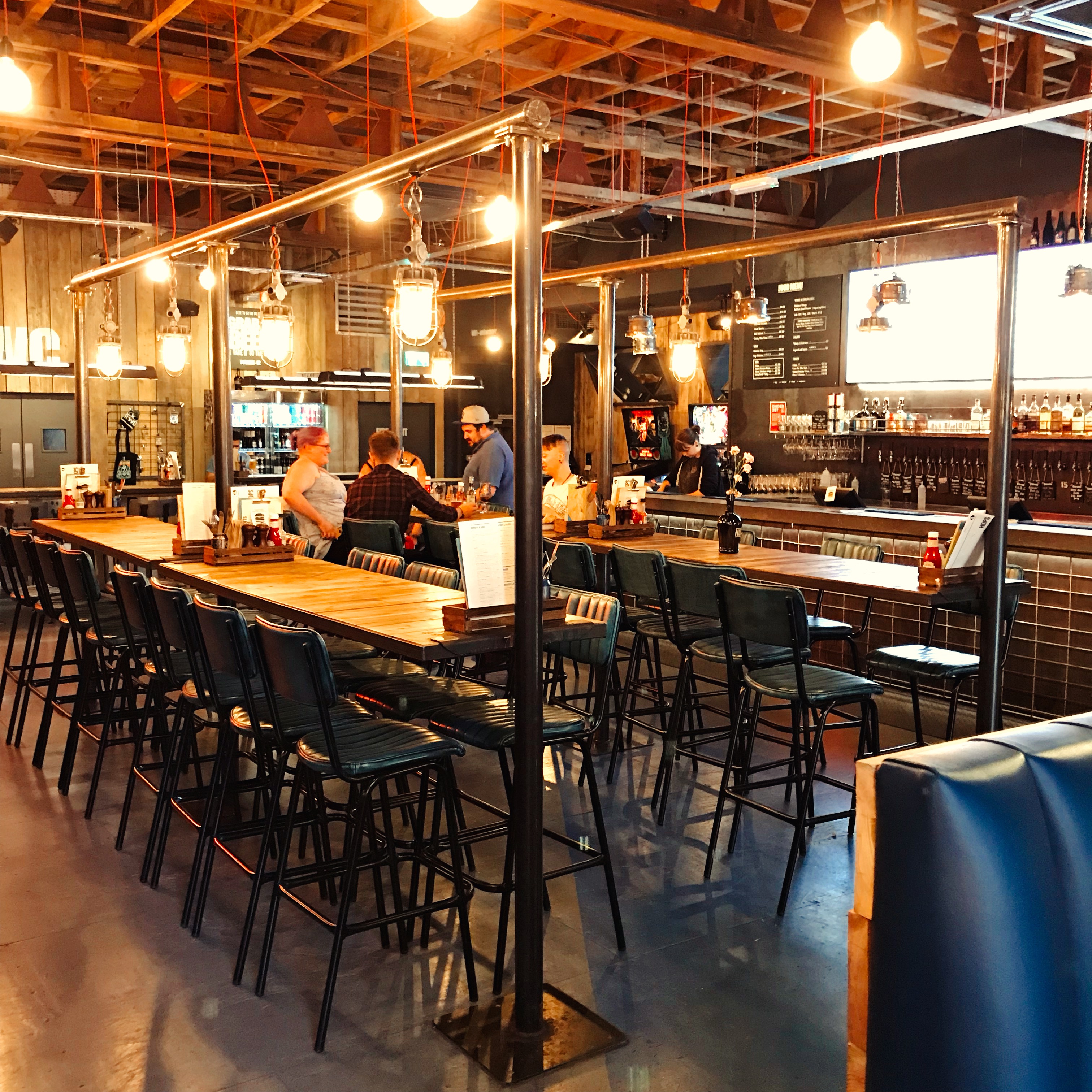
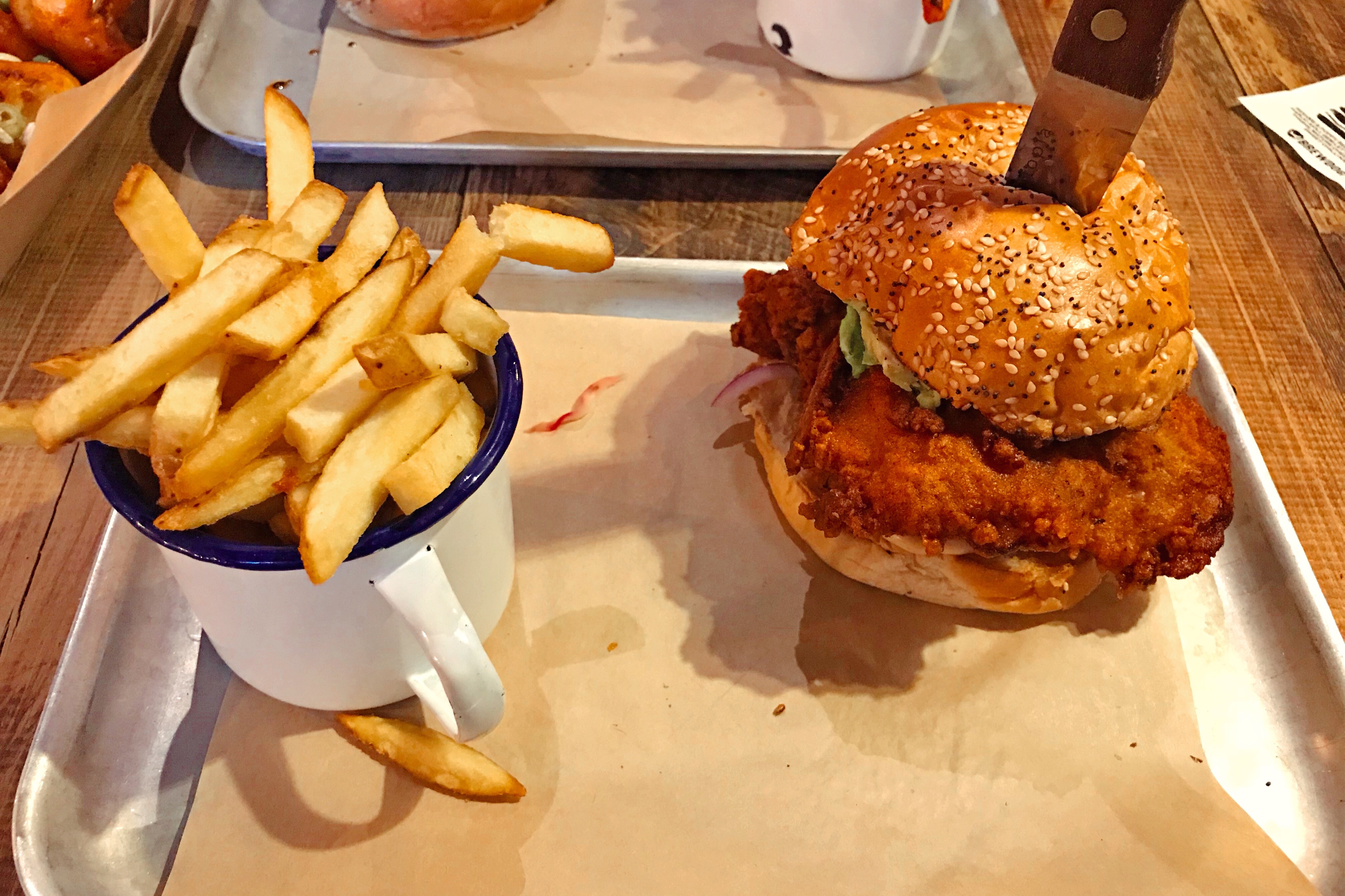
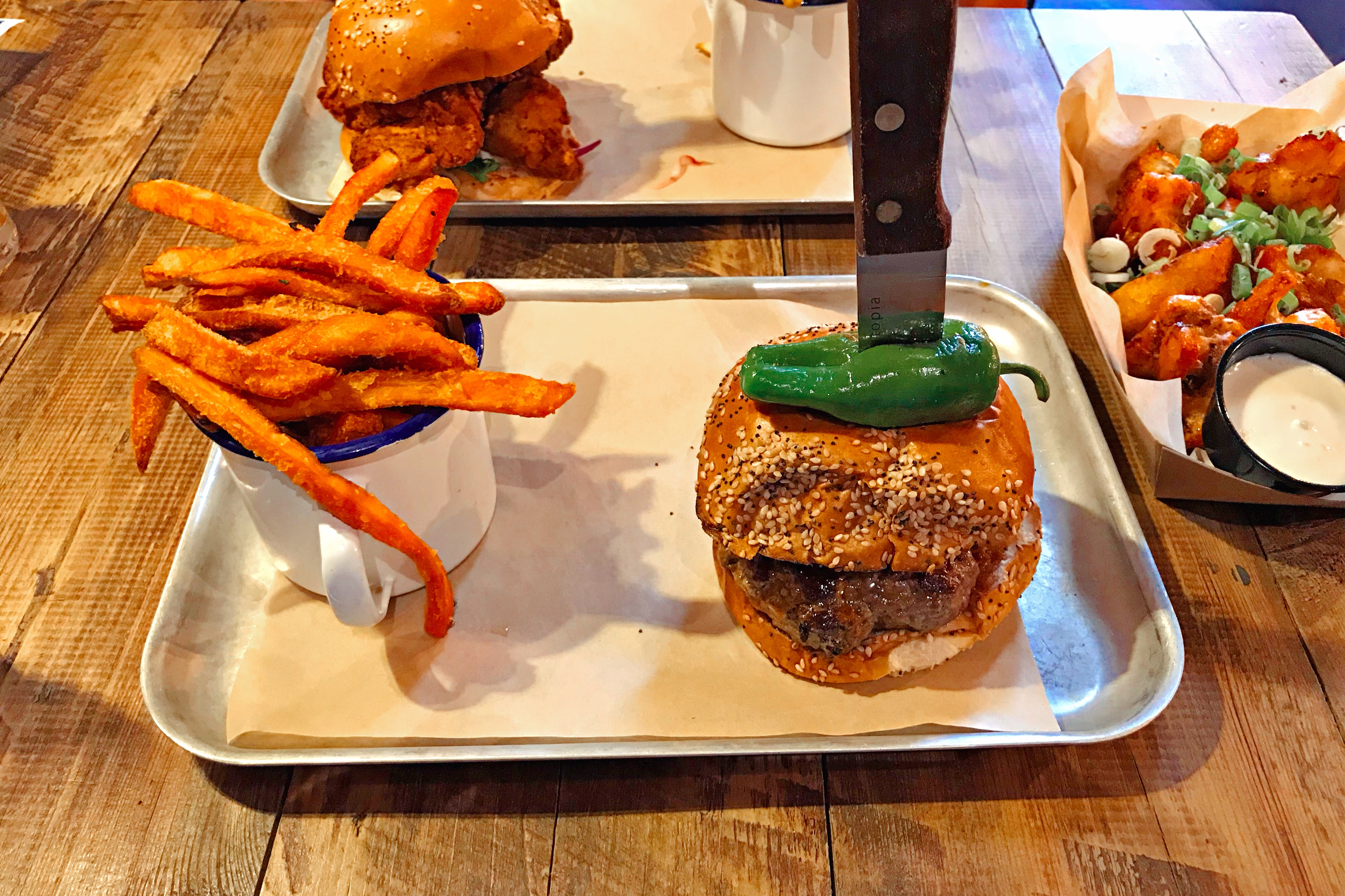
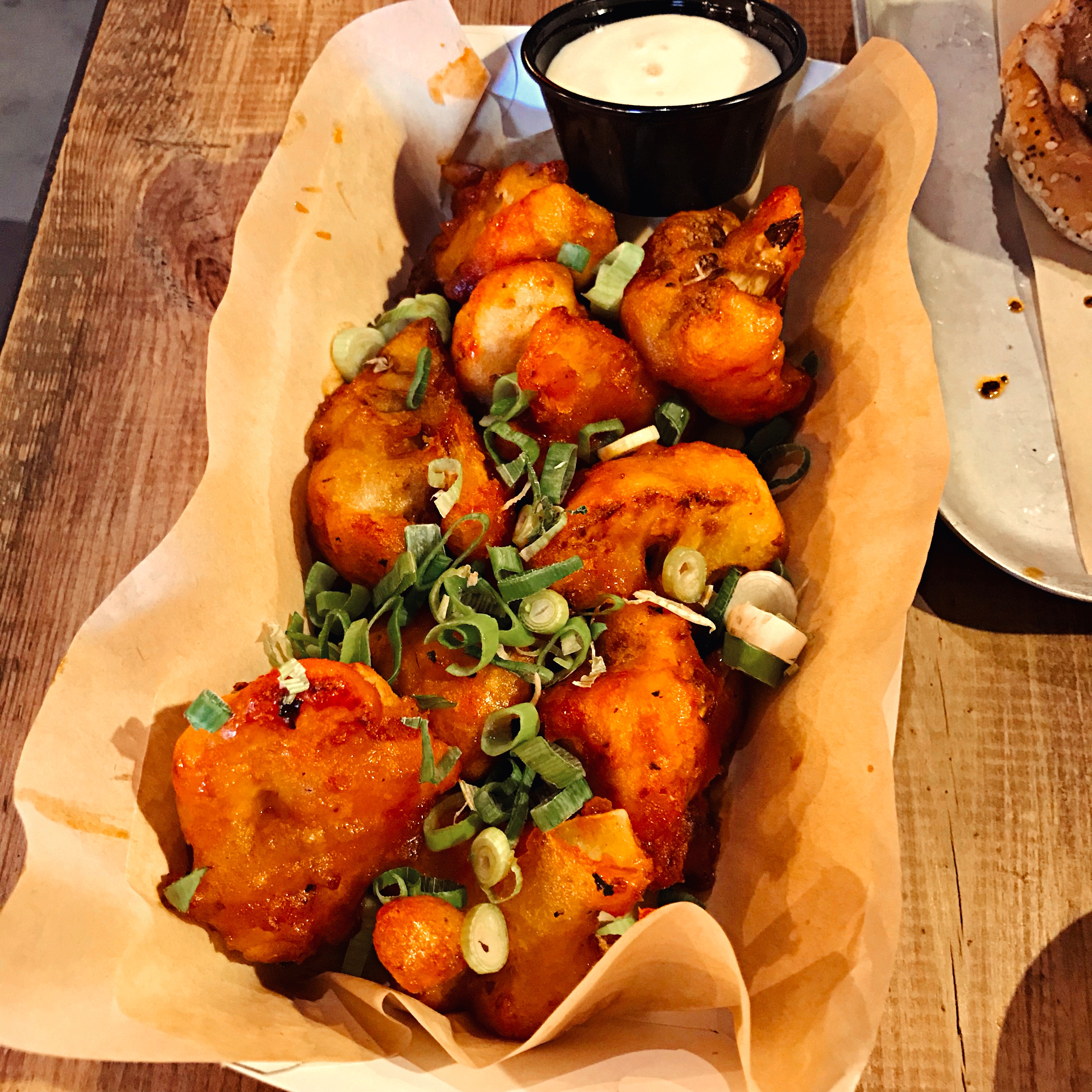
The Bottle & Glass Inn, Binfield Heath

Are you sitting comfortably? Do you have a drink: a cuppa, a beer or a gin (whatever your preference is, depending on when you’re reading this) to hand? Well rested and alert? Good, because we have lots to get through this week. Eighteen dishes, four courses, plenty of photos – so much in fact that I’m not sure whether I’m writing a review or organising a school trip (quiet at the back, you two). I’ll try to rein in my tendency to be prolix, and you’ll have to focus. Right, let’s do this.

It’s my fault we’re in this position. I went out to celebrate the fifth birthday of the blog – no, we don’t have time for me to wang on about that either – and I chose somewhere which looked special on paper. The Bottle & Glass Inn, in the pretty village of Binfield Heath, out towards Henley, had been on my wish list for a while. It reopened last year with great credentials, taken over by the former managers of London’s Michelin-starred pub the Harwood Arms. By October it had received a Michelin Plate, usually a sign that the tire-sellers consider a place marked for Great Things. How often do I review somewhere that’s been mentioned in Country Life, very much Edible Reading’s spiritual twin?

The other reason we have much to discuss is that on this occasion I went out on duty in a four. So it was my mother, my stepfather, my close friend Zoë and I (a team of all the talents if ever there was one) who pulled up outside the Bottle & Glass on a Friday night, ready to celebrate and – hopefully – to be wowed.

It’s a gorgeous pub. It’s thatched and beamed (it’s a listed building, unsurprisingly) and the bar looks like the comfiest, cosiest place to nurse a drink. Like many such places, they’ve built a tasteful extension where they actually feed people. I’ve sat in such extensions many times (The Wellington Arms, The Hind’s Head, The Crooked Billet and so on) and however nice they are you always feel a little like you’re missing out. Even so, the dining room in the Bottle & Glass was rather fetching: big capable tables, tastefully painted walls, a rather fetching green tweed banquette. Not perfect, though – the lack of softness and the bifold doors along one side made the room more deafening than buzzy, and the fact that there was another room beyond made this one feel a little like a fine dining corridor.
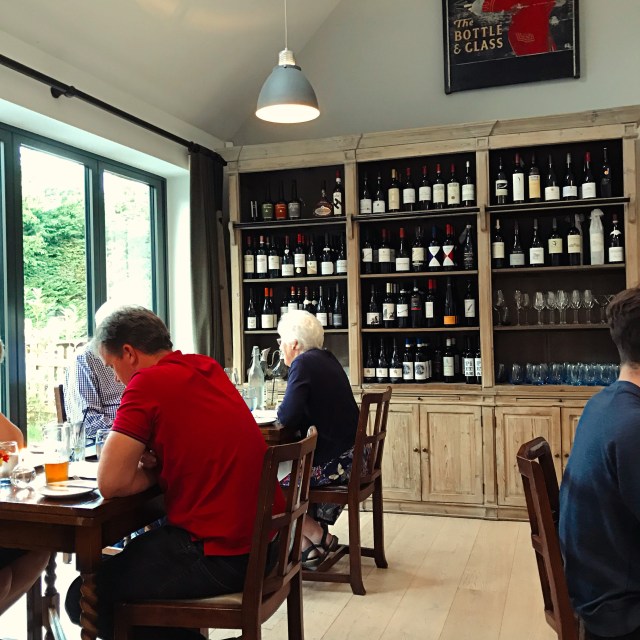
I liked the look of the menu, but it wasn’t without its complications to navigate. I know my mother well, and she didn’t take to it from the off; she doesn’t like pickles and, in one shape or another, they featured in every starter but one. The other complication was working out who would order what. My stepfather gallantly, insisted that we should all order separate courses (“for the blog”, he said). But that, combined with multiple requests of “can I order last?” turned the whole thing into one of those logic puzzles where X won’t sit on the right of Y, can’t sit opposite his ex-wife Z and is wearing red so can’t sit on the left of A (pretty soon logic puzzles will just involve trying to plan a dinner party for 12 people with a total of 6 different food allergies/intolerances/preferences, or whatever you call them nowadays).

Anyway, we eventually got there. And goodness knows we had plenty of time, because apart from bringing our wine – a very nice, robust Cahors which was just the wrong side of thirty pounds a bottle – we waited a long time, almost half an hour, before anybody came to take our order. It was especially frustrating as the menu had things in the “snacks” section that we fancied, and it would have been lovely to at least have those, and some bread, while solving our logic puzzle.

More disillusionment came when someone finally arrived at our table. They’d just sold their last of the grouse, he told us (maybe if they’d taken our order a bit sooner…). Worse still, they had run out of double cooked chips. Would we like some boiled new potatoes instead?

“That’s not really a very attractive offer, is it?” said my mum. The young waiter smiled blankly at her.

“How does anybody run out of chips?” I said after he had gone, incredulous. “I can understand you only have so many grouse, but chips?”

“Well, we are eating late” said my stepfather dryly (we’d turned up at half seven). “I don’t understand how you can have three side dishes on a menu and run out of one of them this early on a Friday night.”

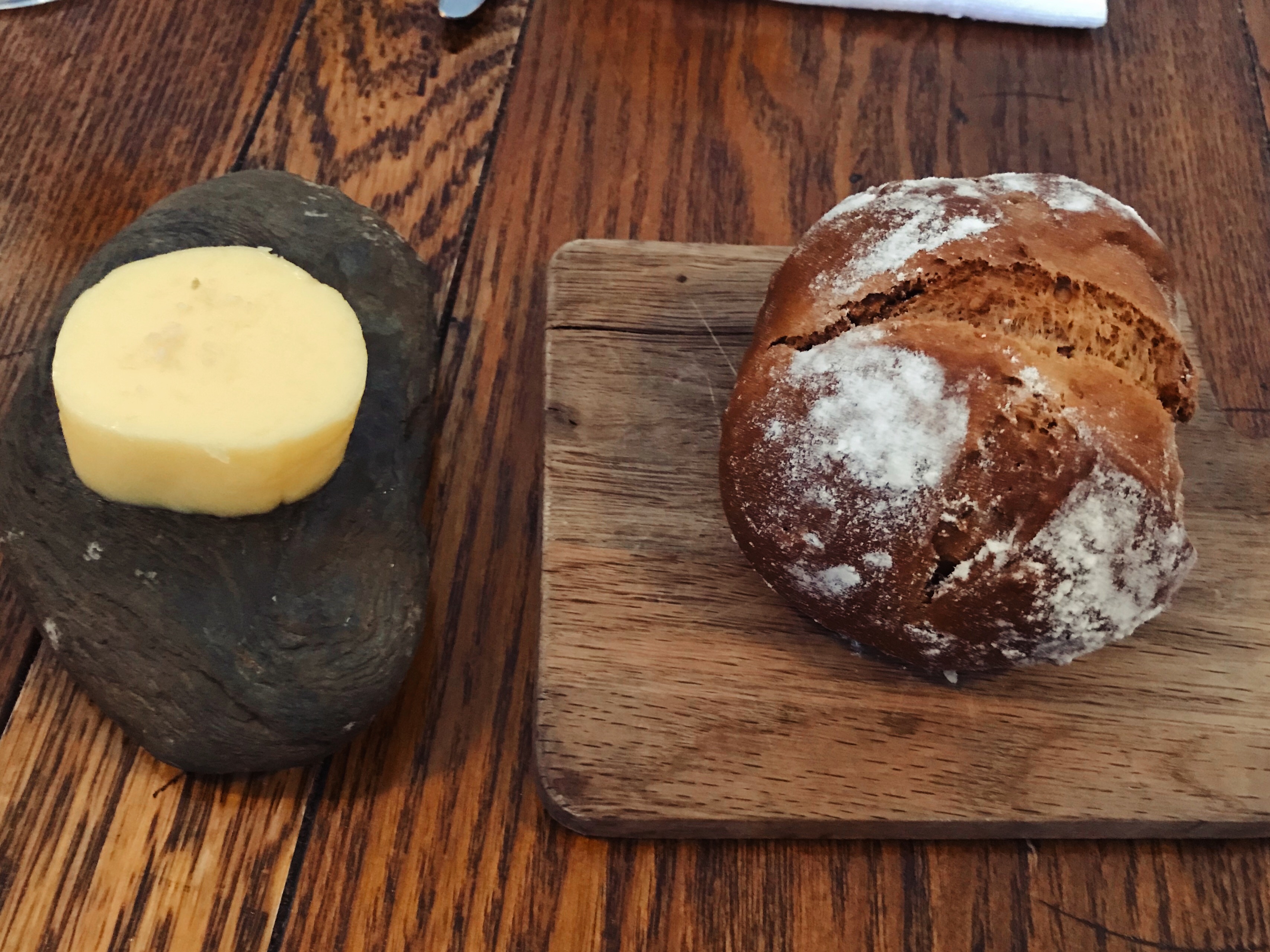
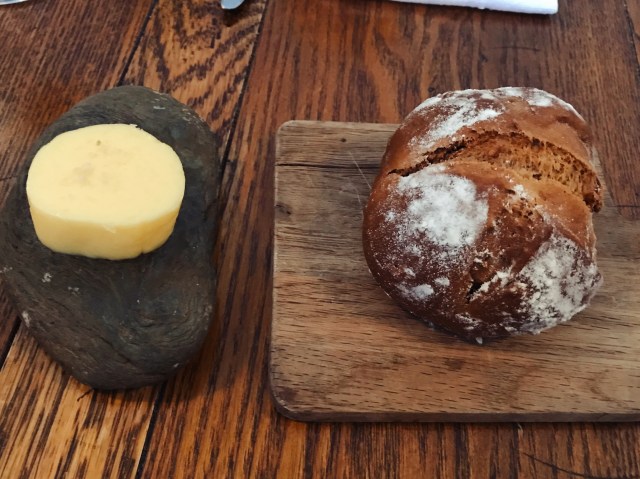
The bread was the first to turn up: soda bread, still warm, two little loaves between four. It looked decent, but breaking it open none of us was hugely impressed – the taste was disconcertingly reminiscent of pretzels and, like pretzels, these were on the dry and chewy side, lacking in seasoning. “The butter’s too warm” said my mother, and she was right, although we’d been given so little it seemed a moot point. “The bread at the Black Rat is much better” she added, referencing Winchester’s Michelin-starred pub – a reasonable point of comparison – and that reminded me of their amazing squid ink and parmesan rolls. This wasn’t a patch on that, and none of us raced through it.
Our snacks arrived not long after. The scotch egg was a beast of a thing, and easily divisible between four. It looked the part, and the texture was note-perfect but seemingly at the expense of the taste: like the bread it was under-seasoned.

The other snack was beetroot houmous, which was topped with more beetroot and served with sourdough which was verging on cremated. I liked the houmous, and it came with a healthy whack of garlic, but personally I’d have liked more of it and could have done without the extra beetroot. It worried me that the kitchen seemed worse at cooking toast than me (“the taste of carbon might have complimented the garlic” said my stepfather later, “but that feels more like happenstance than grand design”).

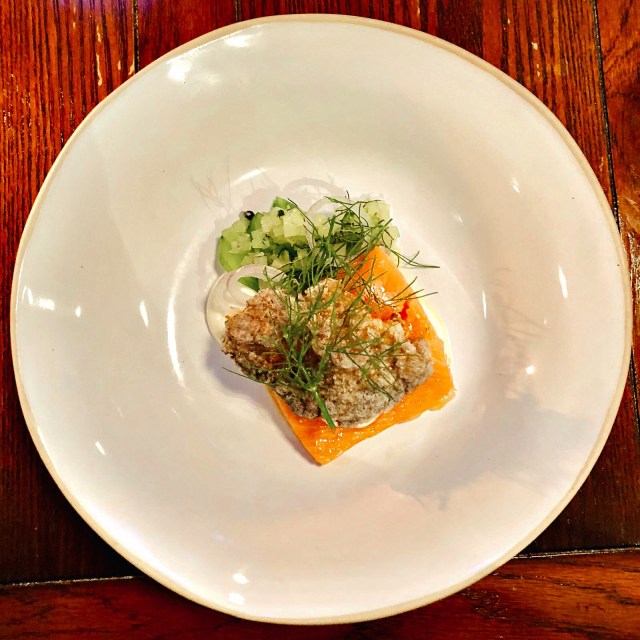
What with the burnt toast, the bland Scotch egg, the AWOL chips and the lack of grouse we all felt faintly mutinous by the time our starters arrived, so it was a relief to find that they were an improvement. Zoë’s was the pick of the bunch – a big, delicate-tasting piece of salmon, poached so that it broke into large, handsome flakes. The bubbled, crisped salmon skin on top was delicious and light, and the pickled cucumber was sweet rather than sharp. It was also unquestionably the most generous of the starters: I had a mouthful and was more than slightly envious.
My stepfather’s starter was my second choice on paper – bresaola with smoked bone marrow and summer truffle sounds like all the good things. My forkful suggested that the bresaola, hidden underneath everything else, was the star of the show but the whole thing was too bland when on paper it should have been so much more (it reminded me, in fact, of the unedifying two months I spent on Tinder last year).

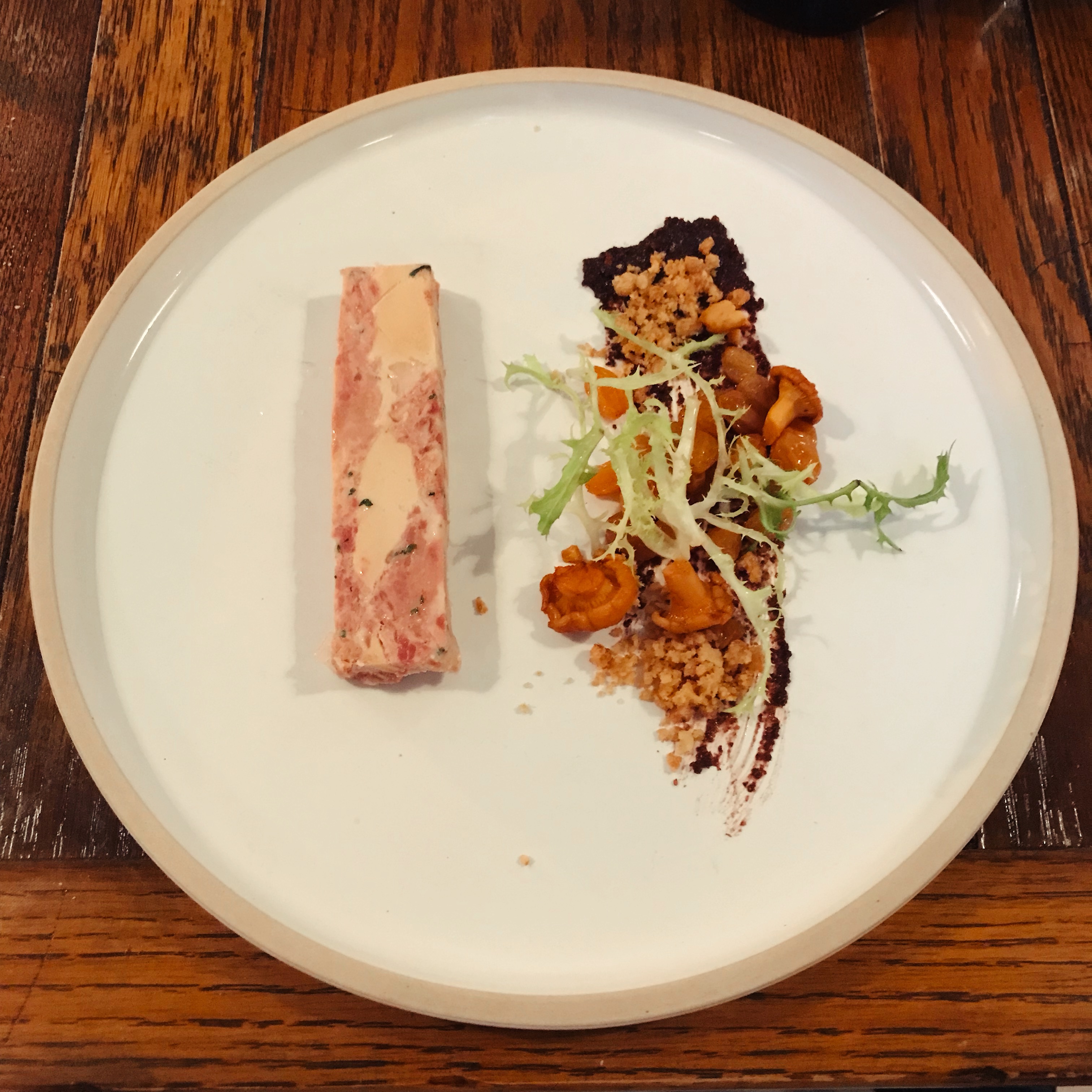
I had chosen the terrine, a slim slice of ham hock and foie gras which, neatly, was both clean and indulgent. Everything else on the plate went so well with it – golden, plump, sweet sultanas, pickled girolles and some kind of crumb or dust which tasted of the very best pork scratchings with the texture of the beautiful, salty powder left at the bottom of a packet. There was also some “violet mustard” which tasted, as far as I could tell, of mustard. So many tastes and textures here – sweet, sharp, salty and, of course, foie bloody gras – and so much to mix and match that, for once, I didn’t even feel like I would have liked some bread with it. Well, mostly. Like the bresaola, it had a little bit of frisée on top, as if to say See? It can’t all be delicious, you know.

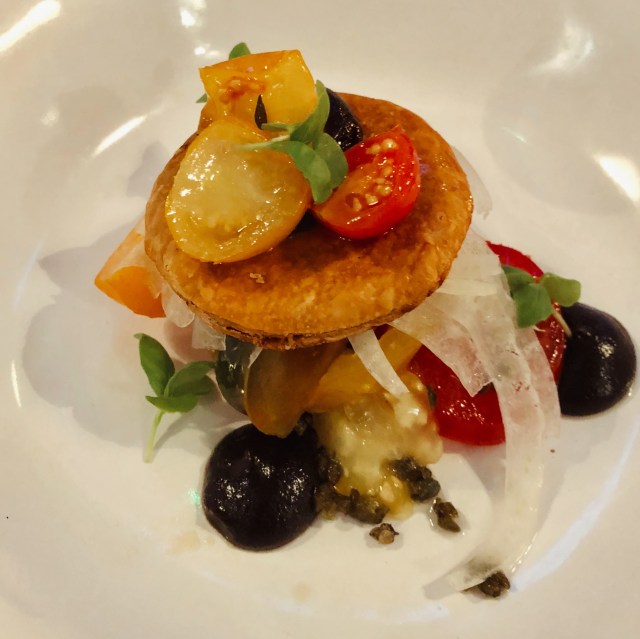
My mother chose the only pickle-free starter, which contained plenty of unadvertised capers: I’ll let you imagine how happy she felt about that. Billed as a salad of tomatoes with curd, black olive caramel and tomato tea it was a pretty, artfully stacked bunch of tomatoes along with an odd pastry disc which had been added for seemingly no reason. If you like tomatoes this might well have been the dish for you, but my mother was left baffled by it and so, to be honest, was I. It’s the kind of dish I wouldn’t have ordered in a million years, and tasting some didn’t change my mind (interestingly the Bottle & Glass’ Twitter feed has since shown pictures of this dish reworked, so maybe they too weren’t convinced by it).
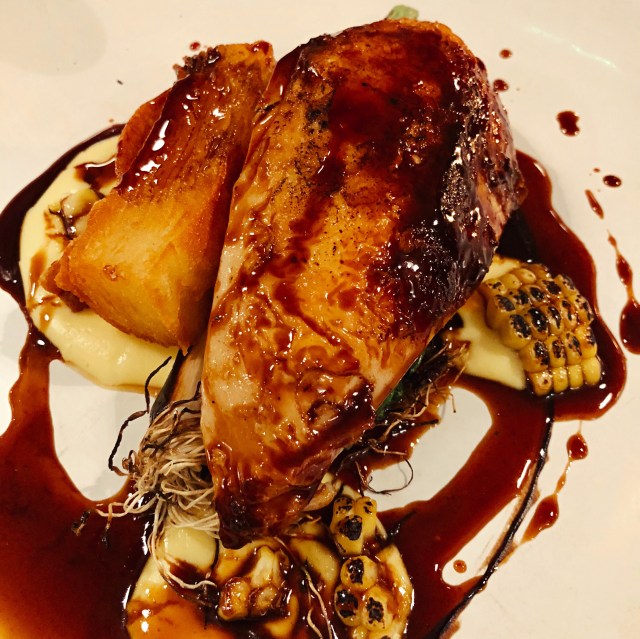
By this point, I increasingly thought it unlikely that all four of us would leave completely satisfied. My mother might have taken against the place, but I agreed that her main course was a little disappointing. Denied the grouse, she instead had the chicken. Now, I often think chicken can be a surprisingly good choice in a high end restaurant (especially if they can get the skin right), but the Bottle & Glass served up a gigantic chicken breast, no crispy skin, the usual sticky jus and some charred sweetcorn. There was also black garlic, which I really liked but which my mother found too sweet (sweetness in savoury food, and why it’s beyond the pale, is one of the culinary hills my mother is prepared to die on). Honourable mention has to go to the Maris Piper terrine, a gorgeous stack of wonderfully cooked potato, like a miniature pommes boulangère. Why couldn’t they have rustled some of that up for us, if they’d run out of chips? My mother left a fair bit of the chicken: my stepfather polished it off.
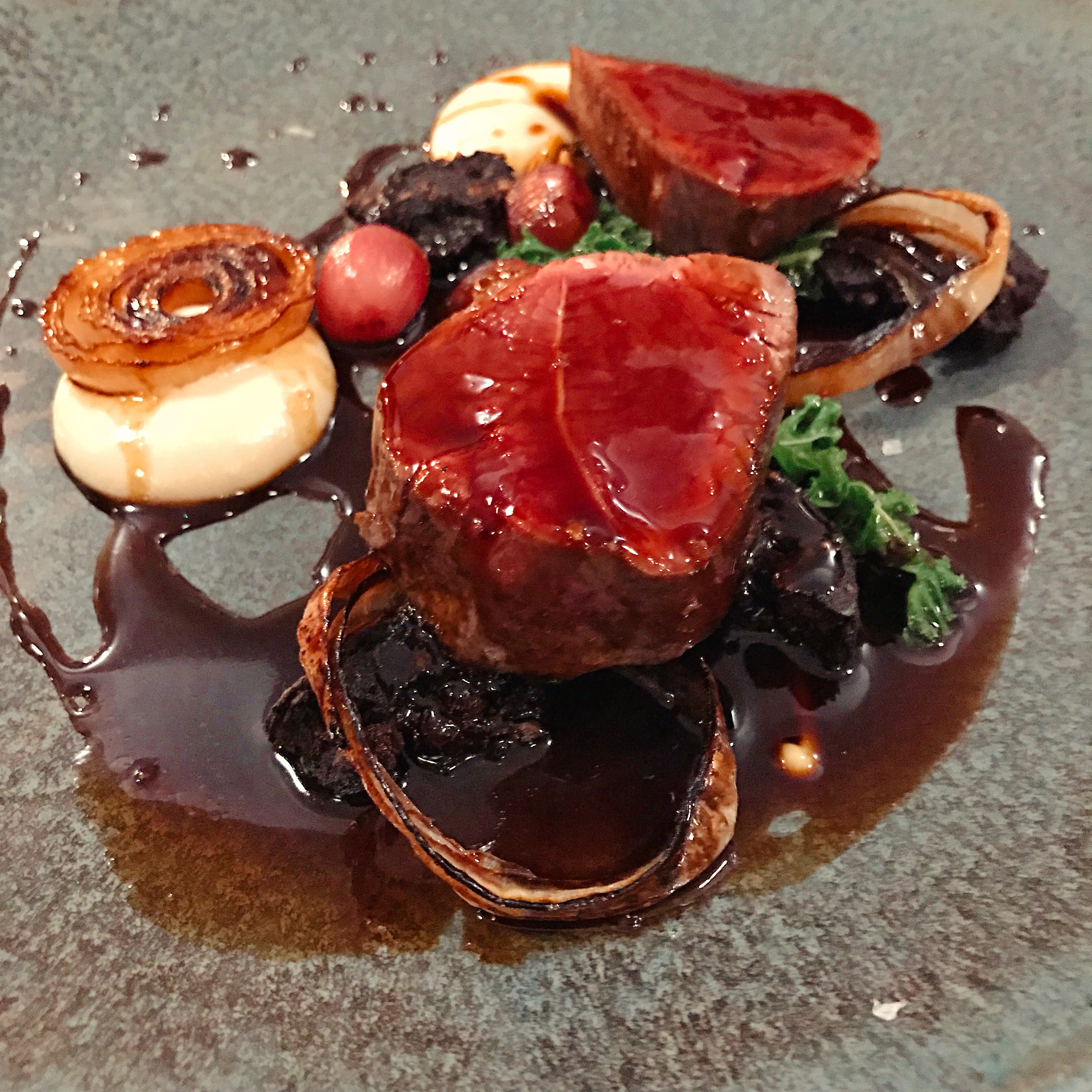
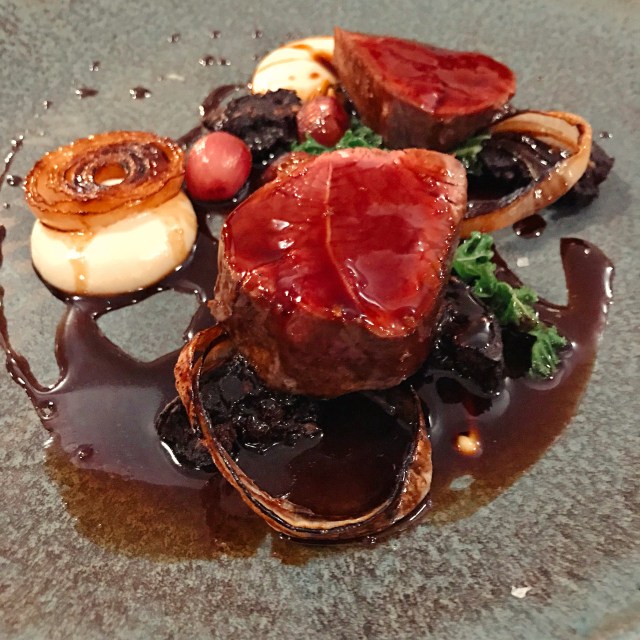
My dish was not just venison, but smoked venison – two pieces, seared on the outside but decidedly pink inside (“I think that looks a bit underdone” said my mother, but venison like Turkish delight has always worked for me). I’ve never had it smoked before and it was a revelation: on that basis the Bottle & Glass’ menu could do with a lot more smoking and a little less pickling. It came with the regulation Michelin-chasing sticky reduction, a purée which might have been celeriac, plenty of roasted shallots and rings of onion, sweet and caramelised and – this may have been why I ordered the dish – almost-crunchy nuggets of black pudding. This was more like it, although it did feel like a dish for the depths of winter plonked in the middle of the summer.
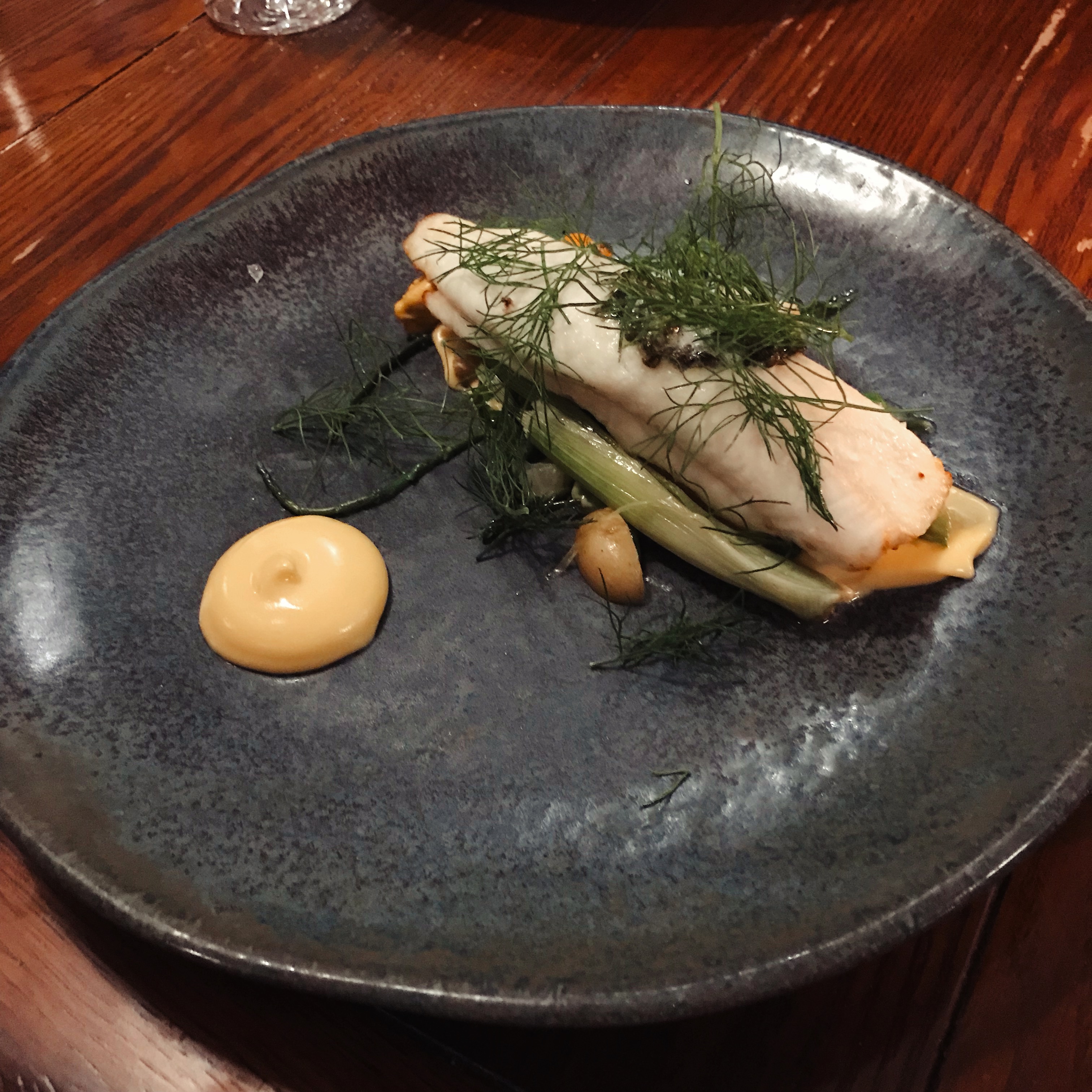
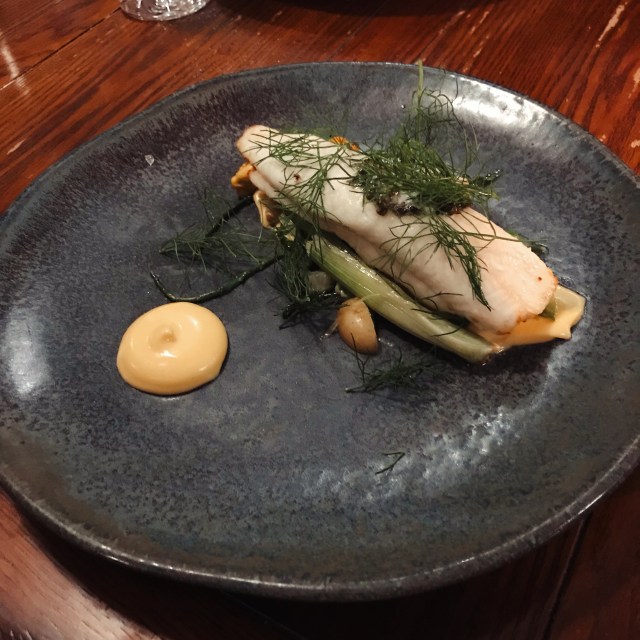
My stepfather is wont to order fish on a menu, when it looks interesting, and he chose the plaice with samphire, mussels and fennel. As you can see from the picture it was a delicate thing and, although he liked it, it was a too delicate for me. I tried some, and you couldn’t deny that the plaice was brilliantly cooked and the fennel lovely and sweet, but I did find myself thinking: where are the carbs? And where’s the rest? There was a little blob of white – possibly the advertised sorrel butter, possibly not – but I would have liked a good beurre blanc with this, or even a beurre noisette. “It was a good low carb option”, my stepfather emailed me later when I asked him for his thoughts, “as THERE WERE NO CHIPS”. Quite.
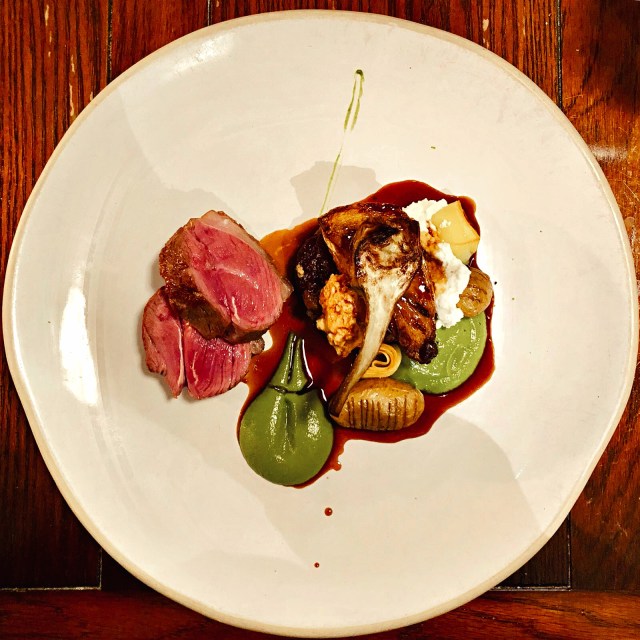
Zoë’s main was the best of the lot. Lamb rump and shoulder (thank heavens they didn’t wankily call it “lamb two ways”) was a very generous helping of pink rump and the highlight, a gorgeous piece of slow-cooked shoulder which simply fell apart. I was allowed to try that, and it was so terrific that I regretted my own menu choice. It made my helping of venison feel a tad stingy, put it that way. It came with artichoke and hasselback potatoes (teeny tiny ones which, again, were never going to redeem the Great Chip Shortage Of 2018), and some manner of green puree – pea, perhaps? – which had been plated up in a manner best described as unnecessarily spaffy.
We ordered some side dishes: neither of them added much but bulk. The new potatoes were nicely cooked and firm and tossed in butter and mint – or, according to the menu, “mint butter” – but the whole thing was oddly sweet. The Binfield Heath courgettes (“are they from an allotment then?” said my mother, slightly scornfully) might have ticked all the provenance boxes but really, the advertised thyme butter was missing in action and however multi-coloured they were, they remained big chunks of watery blandness. The sides were four pounds fifty each, and the main thing they achieved was to make me really want some chips.

By this point we’d run out of Cahors and three of us drank small glasses of Barbera d’Asti – it was pleasant enough, if lacking in the body and complexity of the red wine we’d just finished. That said, it reflects well that the Bottle & Glass offers quite a few wines by the glass and that, generally, you aren’t penalised for having smaller glasses. In preparation for the desserts to follow, we also ordered a couple of dessert wines. The Pedro Ximenez was, as it usually is, a treacly, sugary delight. My Banyuls was less impressive, again feeling slightly thin and lacking in the complex almost-sweetness you get with the best examples. By this stage I really wasn’t sure what I made of the Bottle & Glass: a feeling the desserts, as it turned out, would only compound.

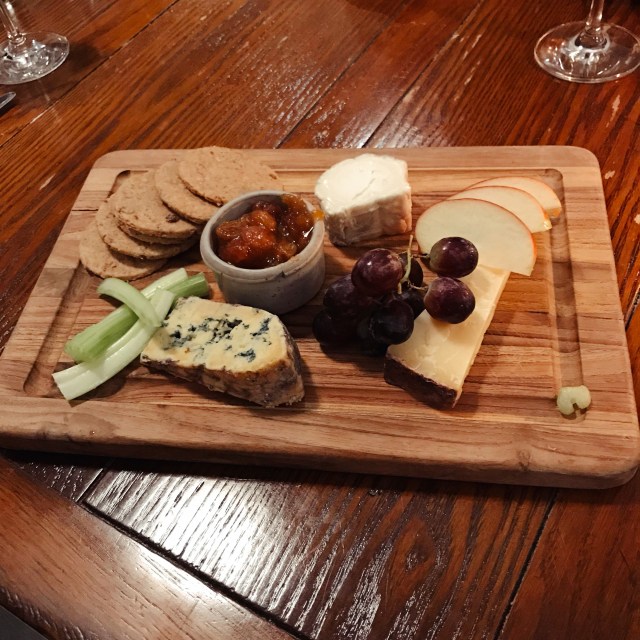
Continuing the trend of the evening, Zoë had chosen the standout, my mother picked the wooden spoon and my stepfather and I were somewhere in the middle. My stepfather’s cheeseboard was a pretty decent offering, I thought – Barkham Blue (it sounds ungrateful to say this, but it feels like Barkham Blue is increasingly ubiquitous on cheeseboards: the victim of its own success, perhaps), a crumbly Lincolnshire Poacher – to my money the equal of any mature cheddar you can lay your hands on – and Bosworth Ash, a very creditable goat’s cheese. I do admire a place confident enough to give you good helpings of a few cheeses – a lot of a little rather, than a little of a lot. Nice crackers and chutney, too.
I had gone, as I so often do, for the chocolate dessert and it wasn’t bad, although not what I was expecting from the description. “Chocolate cream” did form part of it, and it was pleasant enough, and then there was a big slab of something partway between a brownie and a ganache which rather dominated the whole thing. The best bit of it was the mint ice cream, perched on top – the sweetness that hadn’t worked with the potatoes went brilliantly here. Good enough, but not particularly exciting.

Zoë was delighted by her dessert, because you can call it a date and walnut sponge all you like but when it turns up hot with butterscotch sauce and ice cream it’s basically sticky toffee pudding. Having to listen to the raptures, this time, was slightly tempered by knowing that I never really get food envy when dried fruit is concerned.

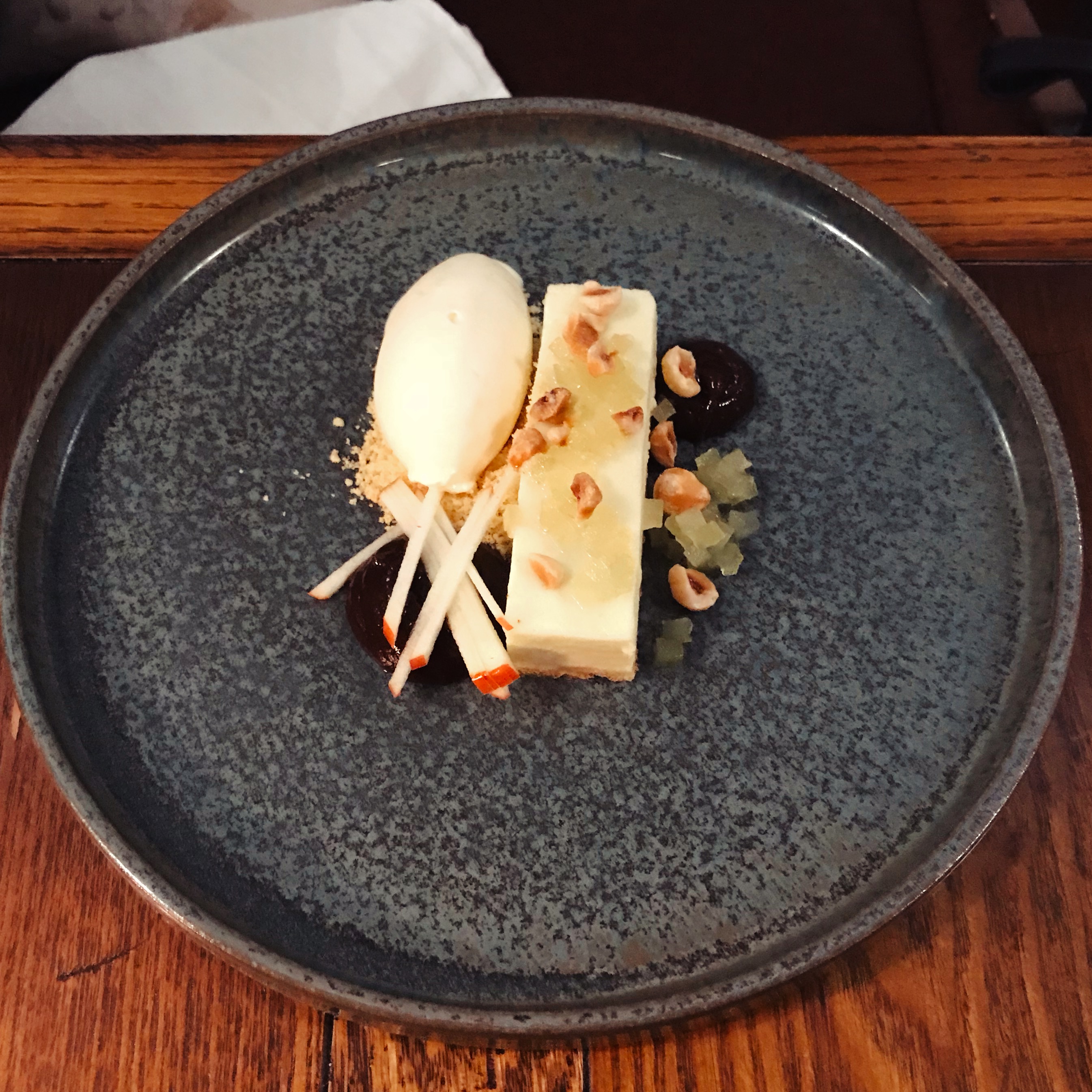
Having said that, my mother – tackling a pleasant, slightly prissy apple parfait with elderflower ice cream – might have felt differently. It looked pretty and clean, but when you’ve sat through two disappointing courses the last thing you want is a chaste goodbye kiss of a pudding. Even the post-dessert treats they brought over: chocolate coated honeycomb and fudge (which I suspect I enjoyed more than the other three) couldn’t undo all the damage.

I couldn’t help feeling that it was a meal of two halves. For the first half, service was lacklustre and some of the food we wanted just wasn’t available. During the second half of the meal service became almost too solicitous, as if they knew they had some ground to make up. My suspicion was just that they were swamped for the first hour or so, and that suspicion was confirmed when we settled up: they’d had a huge number of orders for fish and chips, they said, and something about not having enough potatoes, and being short of chefs, and at that point I’m sorry to say that, nice though the waiter was, I stopped listening. Perhaps I’m being unfair – quite possibly I am – but at the level the Bottle & Glass aspires to it’s partly about expectations, and they did a decent job of limboing under mine. Dinner for four – three courses each, some pre-dinner snacks, a bottle and a half of red wine and three glasses of dessert wine – came to £285, including a pre-added 12.5% service charge. You could definitely eat for less, though, and for the quality many of the dishes felt like really good value: especially that lamb.

With a meal this extensive, multi-faceted and complex I find it takes more time to digest the experience than the food. And the sheer variety of food we tried meant that we all had subtly different experiences: Zoë loved her meal, and was saying that she’d quite happily take her mother there for dinner. My own mother, on the other hand, won’t ever return: “I’d sooner go to back to the Crooked Billet” she said, as we pulled out of the car park. I can understand both points of view, and heaven knows the Crooked Billet isn’t the only competitor in these parts. You’re also not far from the superb Bird In Hand in Sonning Common and the very serviceable Reformation at Gallowstree Common, not to mention Orwell’s in Shiplake (N.B. Since writing this I’ve been advised that the Reformation has closed).

This is a well-to-do part of the country, and diners looking for good food in a pretty pub have plenty of choices. I’ve changed my mind several times about the Bottle & Glass even in the course of writing this review. I went away feeling a little underwhelmed, and then as I thought over the food I found myself revising my opinion. Some of it really was up there with any dishes I’ve had this year (although, in fairness, not necessarily the stuff I ordered on this visit). But then I think about the confusion of it: you serve dainty, precise food and yet you burn the toast. You proclaim how local your courgettes are at the same time as you run out of chips (can you tell I haven’t got over that?). And that, sadly, is what has stayed with me about the Bottle & Glass. So I didn’t have the perfect meal to celebrate my birthday, not by any means. But as a way of marking five years of eating, analysing and writing? Somehow it’s hard to think of a more appropriate venue.

The Bottle & Glass Inn – 7.4
Bones Lane, Binfield Heath, RG9 4JT
01491 412615

https://www.bottleandglassinn.com/

Brewdog

Regular readers might remember that I first attempted to review Brewdog about three months ago, unsuccessfully as it happens. I came, I saw, I was told they couldn’t even take orders for at least thirty minutes and I sodded off. To the Real Greek instead, in fact, where I had a surprisingly enjoyable meal with my friend Steve. He still messages me occasionally just to talk about sausage (the one at the Real Greek I should say, although I think Steve has a soft spot for most sausages, so to speak).

I decided I would leave Brewdog for another day when my frustration had subsided and I’d forgotten some of the faux wackiness which had slightly got my back up – the almost illegible menu and the zany pun-ridden dish names like “Hail Seitan” and “Clucky This Time”. So I turned up with my old friend Mike on a Monday night to check it out, hoping for better luck this time.

Subscribe to continue reading

Become a paid subscriber to get access to the rest of this post and other exclusive content.

Feature: Table for one

A more up-to-date version of this feature can be found here.

What a difference three years makes: back in 2015, when I last posted a guide to solo dining, I waxed lyrical about it as an experience but, truth be told, I didn’t do it that often. Now and again when my spouse went away on business, mainly, or on the odd occasion when I had a day off to myself, but my experience of it was more limited than my paean of praise made it sound. It probably shows in the piece, because – despite my best intentions – it read more as advice and consolation for those who found themselves unfortunate enough to be eating alone, rather than a celebration of the joys of a table for one.

These days I have a far richer experience of eating on your own, at all points on the spectrum. Separation, divorce, self-discovery, solo holidays, working out that some of your friends aren’t actually friends at all: all that Eat Pray Love bullshit has many effects but one of them, for me, was to give me a far better understanding of the benefits of going to a restaurant accompanied only by a copy of Private Eye (and my phone, for when the cynicism gets too much). Fast forward three years, and I’ve eaten on my own all over the place.

I’ve been jammed in at the bar at a hot – in both senses – packed no-reservation London place on a weekday lunchtime. I’ve spoiled myself by ordering from the a la carte menu at Nirvana Spa, in my fluffy white robe, peering at my paperback between courses. I’ve dined at Pierre Victoire, pretending to pay attention to a magazine while really people watching North Oxford’s finest eating and chatting, imagining all those different lives intersecting, albeit briefly, with mine. And last year I spent the best part of a week in Paris on my own, reinventing old favourites and discovering new ones. A good table, a good view, a good glass of wine and a good book, alone but not lonely; I might not have learned to completely love eating alone, but I certainly came to appreciate it.

Closer to home, there’s a lot to be said for a table for one and lots of occasions where it can be a positive pleasure. The quick solo meal on the way to meet friends in the pub, especially people from the “eating is cheating” brigade (just me, maybe, but I’ve always found that a dreary philosophy to live by). The drawn-out lunch on a Saturday when you have the day to yourself. Or even just the moment – and this might just be me – where I get off the train at Reading station (or Gare Du Ding, as I keep calling it) and I just can’t be arsed to cook. The sun is shining, I have nowhere in particular to be and I think how nice it would be to treat myself before heading home.

Not only has my life changed a lot in the last three years: Reading has too. Two of my choices last time around are not currently trading. I Love Paella has left the Fisherman’s Cottage (in contentious circumstances: less said about that the better) and Dolce Vita has left Kings Walk, forced out by a greedy landlord who wanted to make more money. If Namaste Kitchen was still running its menu from earlier in the year it would have made this list, because I couldn’t imagine anything finer than going there and having a beer, a plate of paneer pakora and a chicken chow mein (one of the joys of eating solo, in a small plates restaurant like Namaste Kitchen, is not having to share food for once).

And of course, I still miss Georgian Feast (the artist formerly known as Caucasian Spice Box) back when they cooked from the Turks Head. It became a regular ritual for me to head over there and eat on my own for the first half of last year: meatballs, spiced chicken thighs, sharply dressed salad and cheese bread – oh, and a pint of Strongbow Cloudy Apple. At the time I was living in a truly awful one bedroom flat, and it felt like having friends cook for you which, after a while, I suppose it sort of was; sometimes you can tell a lot about a restaurant by how it treats solo diners.

The other way that this list has changed since 2015 is that it reflects the rise of what, for want of a better phrase, I would call the Good Chain. Smaller, smarter chains are coming to Reading and they can often provide a little bit of the intimacy of an independent restaurant with some of the polish you associate with a bigger establishment. I make no apology for including so many of them here, because I’m interested in good restaurants – and good restaurants to eat alone in – and it’s not my fault that Reading doesn’t yet have the kind of independents, especially in the town centre, that get this stuff right.

I eat alone less often these days than I used to, nowadays, but a good meal alone is still a wonderful act of self-care, provided you pick the right venue. No quibbles about splitting the bill, nobody judging you for ordering too much, or having the expensive wine. No rush, nobody to please but yourself, and all that people watching. So here are my current recommendations – I hope they come in handy, and if you’ve always considered eating out on your own a step too far I really would encourage you to give it a try.

1. Bakery House

The perfect combination of food and anonymity.

I’ve grown to love an early evening meal alone at Bakery House. I sit facing out into that long, slightly chilly room, sip on an orange Mirinda (it’s basically Tango) and wait for the food to arrive. Some days I’ll munch on maqaneq: little, punchy sausages – you get an awful lot of them. On others I might go for the smooth, rich houmous beiruty, glossy and packed with tahini, beautiful piled on a big bubble of pitta, fresh from the oven.

That done, I can look forward to the main event. I tend to order the lamb shawarma – a big mound of intensely flavoured shreds of lamb, with garlic sauce, chilli sauce and terrific vegetable rice. But then there are also the delights of the boneless baby chicken, all charred skin and tender meat, a holiday on a plate. What could be better than being so transported?

The service at Bakery House can verge on standoffish, grumpy even. In other contexts that might be frustrating, but there’s something oddly comforting about how anonymous you can feel eating there. They don’t care whether you’re in a big group, on a date or alone, they’re simply there to bring you food and to leave you in peace. They’re like the barber that knows better than to talk to you when he’s cutting your hair, and some of my happiest, most meditative meals have taken place at Bakery House.

Bakery House, 82 London Street, RG1 4SJ
http://bakeryhouse.co

2. Cote

Three courses, because you deserve them.

Cote, for me, is for the full solo three course experience. Sitting on the banquette looking out into the room is one of the best, most uplifting ways that you can say “I deserve this”, whether you’re ordering from the set menu or the full a la carte. The latter sometimes has some brilliant specials – confit duck, perhaps, or the rare treat of a skate wing swimming with butter and festooned with capers (there isn’t much in life that rivals flipping a skate wing over halfway through eating it and realising that you have the thick side yet to come).

The set menu really comes into its own on summer days, when you can sit at a little table outside, with a view of the canal. I like to drink a Breton cider, crisp and almost sweet, and watch the world go by while I make my choices. Some of the dishes are good, and some are great, but all are stupidly reasonably priced, and the act of eating before 7pm means that you’re likely to be finished before the light has faded and the best of the evening has gone. I used to think “if I tried hard I could imagine I was in Paris right now”, but these days I think “I’m so lucky to live here.”

Cote, 9 The Oracle Centre, RG1 2AG
https://www.cote.co.uk/brasserie/reading

3. Franco Manca

Comfort food, elevated.

When it comes to comfort, little can top cheese on toast – and if anything can, it might be Franco Manca’s sourdough pizza. I have a real soft spot for their anchovy and caper version (ask for extra anchovies, because although Franco Manca is very reasonably priced you do to some extent get what you pay for). That said, their standard margarita is also worth a go, topped with whatever extras they have on the menu that day (the picture above, coppa and Ogleshield cheddar, was a particular high point). Oh, and have a blue cheese or pesto dip, because it really does transform the whole thing.

Franco Manca is perfect for a quick stop, but it’s actually not hard to make it more of a treat. Some of the starters – especially anything with mozzarella (smoked or otherwise), burrata or fennel salami – well worth lingering over, as long as you can overlook the fact that most of them are stuff you’d put on a pizza taken off a pizza and served cold on a plate instead. I can, anyway. And finally, the chocolate ice cream is pretty decent as is my personal favourite, a crafty affogato.

When I first reviewed Franco Manca I liked the food and was sceptical about the room, mainly because it was impossible to hear your dining companion. It turns out that really isn’t an issue when you go on your own, which means that what could be a wall of noise becomes a strangely comforting hubbub. Sitting outside, on a summer day, is also a lovely thing to do.

Franco Manca, The Oracle, Bridge Street, RG1 2AT
https://www.francomanca.co.uk/restaurants/reading

4. Honest Burgers

Meat and potatoes.

I said the Good Chains had this eating alone business down pat, and you would struggle to find a better example of that than Honest Burgers. Much has been made, quite rightly, of what a beautiful job they did with the interior. And plenty has been written about the virtues of the Reading burger, making the most of our local suppliers. Not to mention the King Street Pale, a truly wonderful beer which even I, more of a lager fan, can neck by the pint.

Well, yes. But for my money, the best thing to do at Honest is forego the Reading special and whatever the flavour of the month is and let Honest do what they do best, which is serve cheeseburgers. I go for their most basic burger, topped with cheddar, and that way you can really taste the quality of the beef, the char of the crust, the hint of salt.

Your mileage may vary, but in any case it really is another fantastic venue to eat well and unfussily, especially if you have somewhere to go shortly afterwards. My stepfather has got into the habit of grabbing an Honest before taking in a movie at Vue, and he is a man who knows what he’s doing.

Honest Burgers, 1-5 King Street, RG1 2HB
https://www.honestburgers.co.uk/locations/reading/

5. Kokoro

Dinner on the run.

Kokoro is an illustration of what I call the “yaki soba effect”. Back when I used to go to Wagamama, I always ordered the yaki soba, a big heap of noodles with chicken and prawns and pickled ginger and plenty of good stuff. It never let me down, and became my takeaway of choice for a while. Then I decided I really ought to branch out, but every time I did my meal was plain disappointing – and, usually, I had to watch someone else eat yaki soba in front of me while I pretended to enjoy chicken katsu curry (a dish which always looks a tad too scatological for my liking).

Kokoro is the same – it’s all about the sweet chilli chicken. I mean, just look at that picture up there. Look at it! Doesn’t it make you peckish? A glossy, fiery deep red sauce (and these days they give you enough to coat the rice or noodles) with clearly visible garlic – the best kind of garlic, if you ask me – and piece after piece of tender, crispy-coated chicken. They serve it in either a medium or a large cardboard tub: the medium is quite big enough for anybody, but the large only costs a pound more. The whole thing comes in at the six or seven quid mark, and it’s one of the very best dinners on the run Reading has to offer. You sit at a basic wooden table, polish it off and watch other people come in and place their orders – usually for the sweet chilli chicken, unsurprisingly.

Last time I went, I decided to try the chicken curry instead. It had lots of tender, chicken thigh cooked into strands. It had an anonymous brown sauce which tasted largely of nothing. It was, in short, not the sweet chilli chicken, and that’s when I realised that I won’t make that mistake again. Kokoro also sells chicken katsu curry, but who on earth orders that? People who don’t like the yaki soba at Wagamama, I suppose.

Kokoro, 13 Queen Victoria Street, RG1 1SY
http://kokorouk.com/

6. Sapana Home

Because the best things come in multiples of ten.

4EC1952D-7962-4818-9132-4C76DF3C89FC

Ten pan-fried chicken momo cost six pounds fifty at Sapana Home. They come on a plate, clustered round a little dish of hot dipping sauce, and when you have them pan fried they have a slightly caramelised exterior which seals the deal. A plate of Sapana Home’s momo, I think, can gladden even the heaviest heart. My favourite momo is the fifth one: before that, they pass too quickly and you eat them almost without savouring them, whereas after that you are maybe a little too aware that your pleasure – as most pleasures do – is inevitably coming to an end.

There are other dishes there I recommend, if you’re feeling greedy. The chicken fry is wonderful – pieces of chicken, spring onion and tomato with that same hot sauce. The chow mein, which is fundamentally the chicken fry plus noodles, is also splendid. And if you feel more adventurous I heartily recommend the samosa chaat, a glorious four-way pile-up involving samosas, yoghurt, crispy noodles and red onion.

Late 2016, when I took a break from reviewing restaurants, was a pretty bleak period in my life. Nothing was going right, and when I finished work and got back into town on the train I really didn’t want to go home any time soon, much of the time. What got me through many difficult days, back then, was a plate of momo at Sapana Home. It’s a little place, and it’s best to sit upstairs if you can, where there is daylight. The service is brusque but not unkind. There was a period when sitting there, eating momo and listening to the oddly comforting (if mindless) strains of Heart FM was truly my happy place.

If any further illustration was needed, it’s this. The photo above was taken last night: writing this made me want to go back, so I did. Things have changed a little since I last went: the music was classic Bollywood rather than commercial radio, and the momo (they now do lamb too, although I didn’t order them) were slightly less packed with filling, lighter and more delicate. It was like seeing an old friend after a while and realising they’ve lost weight. I did, for a moment, consider putting Kings Grill in this sixth spot instead. But I’ve kept Sapana Home on this list – it may be mainly for sentimental reasons, but momos six to ten were still as bittersweet.

Sapana Home, 8 Queen Victoria Street, RG1 1TG
http://sapanahome.co.uk/

Tuscany Pizzeria

Very sadly, Tuscany closed in May 2019. I’ve left the review up for posterity.

I don’t know how involved a review this will be; it’s hard to complicate a restaurant as simple as Tuscany Pizzeria.

I first had it drawn to my attention by regular reader Eleanor back in April: a pizzeria on the Oxford Road, she said, adding that it was “a choose your own toppings place I think”. I made a mental note to put it on my list and then a couple of months later Eleanor went there and Tweeted the kind of pictures that can’t help but make you hungry – huge pizzas with irregular bubbled crusts, plenty of cheese and all the toppings a person could hope for, the whole thing strewn with rocket. One of the pictures showed the front of the restaurant, with a blackboard on an easel outside saying that a twelve inch pizza was seven pounds, a fourteen inch pizza a tenner.

Surely it couldn’t be quite that straightforward, I thought, as I ambled down the Oxford Road in the sunshine with my very good friend Zoë, fresh from having enjoyed a sharp sour beer in the sunshine of the Nag’s Head, still Reading’s finest beer pub by some distance. But actually, when we arrived it did look just as no-frills as the pictures I’d seen had suggested: one table out the front, the word “TUSCAN” in block capitals above the big window, in a style which had probably aimed for rustic but had to settle for makeshift. The decal taking up much of that window promised “Gourmet Delicious Pizza Top Quality Italian Style”. Hmm, I thought.

Inside, the room had deep red walls with stuff on them best described as Italy by numbers: a picture of some Parma ham here, a drawing of the Leaning Tower Of Pisa there. The whole place couldn’t have seated more than ten people – well, more if you took one of the window seats, but when I was there somebody had helpfully leaned their bicycle against the window counter, making that impossible (in any case a laptop was open there, with the Tuscany Facebook page prominently visible on the screen). The pizza boxes on display made it clear that not all Tuscany’s customers chose to eat in. The tables were a strange sort of multi-coloured hue that looked like something Linda Barker might have dreamt up on Changing Rooms circa 1999.

Anyway, I liked it: it was small and intimate although, with no soft furnishings and most of the tables occupied, it also happened to be astonishingly loud. Most of what I heard, I think, was Polish: the owner of Tuscany is Polish, I believe, and so were most of the customers there on the evening I went (many of the reviews on Facebook are in Polish, too). Some might have been staff, all seemed to be friends of the owners. At the table next to me the group of four seemed to be tucking into something that looked like antipasti, even though I couldn’t see anything of the kind on the menu.

Come to think of it, I couldn’t see a menu anyway, just the counter where you went up and placed your order, which basically consisted of telling the chap how big a pizza you wanted and what toppings you wanted on it. Behind him, you could make out the place where he rolled out the dough and topped the pizza before sticking it in the oven (I didn’t spot whether there was a wood fired oven, but I suspected not). Zoë and I took it in turns to go up and place our orders and sat back down with a can of aranciata apiece: no alcohol licence here, although again, I think I might have spotted one of the chaps at a neighbouring table with a can of beer bought from one of the nearby shops. Again, I felt like I was in a restaurant where I just didn’t know the rules, or the rules differed depending on who you were, and I didn’t entirely enjoy that.

The toppings, incidentally, were a pretty wide range. The owner talked us through them – or the ones on display, anyway – at the counter . Most were reliably standard stuff: peppers, mushrooms, onion, olives, pepperoni, parma ham and so on. The only slight hints of the exotic were some artichoke hearts and friarielli, which is sometimes described as broccoli but is closer to turnip tops, a pizza topping I’d never heard of until I visited Papa Gee but which now seems to be everywhere. I noted, with disappointment, that I couldn’t see any anchovies or capers.

Tuscany’s Facebook page says that all of their ingredients come from Italy. I couldn’t judge that, and I certainly didn’t check any travel documents, but the olive oil was by Filippo Berio (whose Wikipedia page suggests they aren’t quite as Italian as you might think). Anyway, I didn’t care if the pizza wasn’t entirely Italian, here on the Oxford Road being served by a chap from Poland. I wouldn’t have cared if the artichokes were Spanish or the ham Albanian for that matter, provided the pizza was delicious. I didn’t vote to stay in the EU only to quibble about nonsense like that.

While we waited, I saw a pizza carried to one of the other tables and I found myself wishing it had been mine. It looked every bit as good as the pictures I’d looked at months before, with the added advantage of being both three dimensional and edible. But I also saw another dish arrive at another table, what looked like chicken with little strips of baked pizza dough. The chef had been cooking the chicken in a pan when I went up to choose the toppings for my pizza, and I wondered at the time what the dish was given that it wasn’t on the menu (and, of course, given that there was no menu for it not to be on) but I was too timid to ask. Soon after that our pizzas were ready and in turn we were asked whether we wanted rocket and parmesan on them. This was a nice touch, as was the fact that the parmesan was freshly grated onto the pizza before it was cut into slices and brought to the table (the only real element of table service at Tuscany).

Zoë had a twelve inch pizza and I, rather greedily as it turned out, had a fourteen inch pizza. If I was trying to describe the main differences I’d say there were two. First of all, the twelve inch pizza is put on a massive wooden board, cut into slices and then dished up onto a plate barely big enough to contain it. The fourteen inch pizza is just brought to your table on the massive wooden board. The second main difference is that the fourteen inch pizza is actually too big for most right-minded folk to finish, and that includes me. “I knew to just order a twelve inch,” said Zoë sensibly, “because I knew that was the size of an LP and that felt quite big enough.” Trust her to slip in a reference to music and be in the right, I thought.

The base was very good – properly thin, although the edges were more brittle and crispy than charred and bubbled. Not quite on a level with, say, Franco Manca but still pretty decent. What couldn’t be denied, though, was that Franco Manca looked properly stingy compared to this lot. Mine had sundried tomatoes, pitted black olives, artichoke hearts, mushrooms, parma ham and pancetta and although none of the ingredients could be described as exceptional (I’d have liked the olives, for instance, to be the wrinkly, salty kind that I truly love) the sum of the parts was still very good indeed. I drizzled basil oil on one half, garlic oil on the other and ate until I was full. Then I ate some more, then I reluctantly stopped.

Before that, I traded a piece with Zoë and apart from having – an unusual experience, this – envy that her portion was a little smaller than mine, it meant I got to enjoy hers, with lovely sweet shreds of red onion, pepperoni and mozzarella. Her pizza was basically mine without the airs and graces, a more robust meat feast you could say, and none the worse for it. “This is really good” she said between mouthfuls and, as so often, I found her rather difficult to disagree with.

As we were finishing the last of our slices, the people at the table next to me got up to leave and I took the opportunity to ask about the off-piste dish one of them had ordered.

“It’s chicken stuffed with cheese and wrapped with Parma ham” said the man. “He cooks it specially, if you ask him. He gets the chicken in fresh from just down the road – and I know it’s fresh because if he served me frozen chicken he knows I’d kick his ass!”

He chuckled, and I laughed along, wondering if ass-kicking was ever an appropriate thing to reference in a restaurant review. On TripAdvisor, perhaps.

That’s pretty much all there is to say about our meal at Tuscany Pizzeria. Once we’d finished, I settled up at the counter where our meal came to just under twenty pounds. The other diners had cleared out by then, so the owner came over and chatted to us a bit more. Tuscany had been open three months, he said, and they stayed late so they had quite a lot of takeaway trade when people headed home from the pubs.

“My landlord laughed when I told him I wanted to open a pizza place! He said that there were lots of pizza places on the Oxford Road, and I told him this wouldn’t be that kind of pizza place.”

He went on to tell us that business was good and that all their ingredients (“except the mushrooms, spinach and onions”) did indeed come from Italy. He showed us pictures of some of the dishes we hadn’t ordered – a pizza wrap (“lots of customers like this”) and pizza ripiena, essentially a pizza sandwich, like a calzone but without the fold. He sounded so proud of what he did that I started to think that he was right: this wasn’t that kind of pizza place. It was a different beast, and all the better for it. And then something occurred to me.

“Do you have anchovies and capers?”

He smiled.

“Of course I do. Next time you come in, ask.”

Smart guy: it’s precisely at that point that I decided there would be a next time. I could easily have been intimidated or deterred by Tuscany, and by the idea that other people could order different dishes and combinations, like unlocking secret levels in an arcade game. On another night, perhaps I might have been; I can definitely see that other diners might be, and this place won’t be for everybody. If you don’t live in West Reading, you might feel there are better choices closer to home, if you’re in the centre there’s Franco Manca and if you’re privileged enough to live north of the river you have Papa Gee (or, if you like that sort of thing, Quattro – or, I suppose, the Fox And Hounds).

But all that said, something about Tuscany actively made me want to fit in, to go again and to take advantage of all the other options. To try the anchovies and capers, have the ripiena, discover the secret password that lets you order the stuffed chicken or drink a cold beer at the table, brought in from elsewhere. I could see myself playing out my evening in reverse: going back with Zoë, having a pizza and then stopping by the Nag’s on the way home to enjoy more of their superb selection. That’s me, though: I can be that kind of stubborn so-and-so, and I like a kindred spirit. Even one who bloody-mindedly sets up a rather lovely, slightly incongruous Polish pizzeria slap bang in the middle of the Oxford Road.

Tuscany Pizzeria – 7.8

399 Oxford Road, RG30 1HA
07586 095400

https://www.facebook.com/Tuscany-Pizzeria-1971426149852568/

Afghan

Afghan closed following a fire in January 2020. I’ve kept the review up for posterity.

My dining companion this week is Martijn Gilbert, the outgoing (in every sense) CEO of Reading Buses. I realised Martijn wasn’t going to be your usual dining companion relatively early on in our meal at Afghan, just after we took our seats in one of the booths at the back of the room and began looking at our menus. I was looking at the menu, anyway: Martijn, on the other hand, was peering intently through the big windows out on to the Wokingham Road.

“What’s that doing there?”

“What do you mean?” I said, assuming he was talking about the presence of houmous on the menu of an Afghani restaurant.

“That bus that just went past. It’s a 14 – they go to Woodley – and this is the 17 route. If there’s a diversion in place I don’t know about it.”

“Is that a problem?”

Martijn gave me a kindly, indulgent look, as if he’d just heard something crashingly stupid but was far too nice to correct it, and said something about low bridges. It all sounded very convincing, although my mind was also whirring with other thoughts, mainly about how many main courses we could snaffle between the two of us. After all, Martijn had specifically told me he only had a salad for lunch to ensure he was in peak dining condition.

“If you don’t mind, I just need to phone the control room.”

So he did, and it turned out it was a known diversion and not some bus driver having a funny five minutes or, worse still, about to recreate Speed just outside the Early Café. But even that incident gave me an idea about what Martijn was like in work mode, and it was impressive stuff: the sort of perfectionism I also see in some restaurant owners, where they know everything about everything when it comes to their business. I aspire to that, which is why I re-read my reviews countless times before they are published on the blog – scanning for typos and needless commas, mostly – but I’m small time compared to this.

The irony about Martijn’s intervention was that I’d deliberately chosen Afghan to review with him because it was on the 17 bus route; just like the tote bag they sell in But Is It Art? says, the number 17 route is the backbone of Reading. Sometimes it seems like all human life joins and leaves that great thoroughfare at some point – whether it’s the leafy gentility of the Earley borders, the icon that is Cemetery Junction or the fleshpots of the Oxford Road. I used to commute to work on the 17, many moons ago at the dog end of the 90s, from a shared house on Talfourd Avenue where I was the only person not doing drugs, and I’ve always had a big soft spot for it; to me, as much as the River Thames, it defines the town.

It pleased me, too, that Martijn caught the number 17 to the restaurant – as did I. Martijn told me previously, during a boozy night in the Retreat, that if the number 17 route hadn’t already existed, nobody would have invented it: it simply made no sense to join up the far East and West of Reading in this way, and in any other town it would have been two separate routes. But Reading had it, and it worked, and people seemed to like it, so nobody has ever messed with it. “Our data shows us it isn’t always heavily used during the day” said Martijn, “but we’re not changing the timetable. It goes every seven minutes, without fail. That’s the 17 for you”. I loved that, another of many things to love about Reading.

Of course, I don’t just pick restaurants because of their public transport links and Afghan had come highly recommended by a number of people in the run up to my visit. One friend told me they had a real talent for cooking lamb, another friend enthused about her trip there a couple of days before my visit. My regular reader Mansoor – an expert in these things – recommended one dish in particular, telling me his wife had ordered it three times in two weeks. All that and independent and in an area somewhat lacking in decent restaurants: how could I not give it a whirl?

The room was pretty much unchanged from its previous incarnation as Lazeez – a big square, booths and banquettes around the edge and tables in the middle (I know that, because I looked up the old review for Lazeez and was struck by how much of it I could have just copied and pasted). Martijn and I were at one of the booths, which could have generously seated four but turned out to be just right for the quantity of food we ordered. The menu reminded me very much of the menu at Kobeda Palace, the Afghan restaurant at the other end of the 17 route, only a little wider and far more polished-looking: at Kobeda Palace you could be forgiven for thinking you were in a kebab house, with the preparation and cooking front and centre, whereas Afghan was more obviously a restaurant. Some dishes were more expensive, but many weren’t.

I managed to persuade Martijn to order a starter and three mains to share, and as nobody at Afghan tried to deter us I assumed that our order was deemed plucky rather than foolhardy. The first thing to arrive was a dish I’d been very excited about trying, the chapli kebab. This was the dish Mansoor’s wife had so admired, and it’s been described as the best thing to come out of the Khyber. As a die hard Carry On fan I found this difficult to believe, so I was determined to see what the fuss was all about.

A chapli kebab is quite hard to describe, but here goes: it’s sort of like a spiced lamb kofte but instead of being in your traditional cylindrical shape it comes as a flat patty more like a burger, cooked in fat and packed with onion and green chillies. When it arrived I thought it looked rather like a pair of smokers’ lungs, but from the very first mouthful I knew this was a dish to be reckoned with. How did they get the contrast between the almost crunchy outside and the juicy inside so bang on? It went beautifully with all three dips at the table – a green one full of coriander, a red number which looked like it would be diabolically hot but was more like a sweet chilli sauce, and a cooling yoghurt with mint.

“This is good” said Martijn, wasting no time setting out demolishing one of the kebabs, and I couldn’t disagree. The naan it was supposed to come with didn’t arrive until later, one of many oddities about the timing which slightly marred matters. Instead, we got the only conventional starter we’d ordered: bourani banjan, aubergine with tomato and yoghurt. Aubergine isn’t everybody’s cup of tea – often it isn’t mine – but this was a properly lovely dish and astonishingly good value at three pounds. The aubergine was sweet, sticky and beautifully cooked with none of that spongey boredom it all too often presents.

In an ideal world we’d have been left to finish that little lot before more food turned up, but that was not to be. Instead, a groaning dish of lamb biryani was brought over when we were barely halfway through. How much you’ll like Afghan’s biryani, to some extent, will depend on how you feel about meat on the bone – most of it slid off, but there was a bit of a variation in texture. I didn’t mind it, and I know that lamb on the bone is far more authentic for these things, but it wouldn’t be for everyone. The rice was well spiced (if not the best example I’ve tasted) but there was a lot of it, so the ratios felt a little off. On the other hand, this dish was nine pounds, so that feels like a quibble.

At the risk of inducing déjà vu, in an ideal world we’d have been left to finish that (not especially) little lot before more food turned up, but that too wasn’t to be. So we were partway through pretty much everything we’d ordered when a big dish of charsi lamb karahi was deposited at the table, along with our naan bread which, by that point, I’d pretty much forgotten about. The lamb karahi is ordered in multiples of half a kilo, so we’d ordered the entry level five hundred grams. When it arrived, I told myself it was okay because much of it would be bone: and, again, how you feel about this dish will partly depend on where you stand on meat on the bone. I found this a little trickier and less enjoyable – the sauce was deep, thick and peppery but lacked some of the spice and fragrance of, say, Kobeda Palace’s quite extraordinary karahi.

We had an ordinary-sized naan bread (which was meant to arrive at the same time as the chapli kebab) but we’d also ordered an “Afghan naan”, because I’d been told these were quite the talking point. And it really was – a huge thing which turned up vertically, impaled on some metal stand and brought to the table. It was so big it blotted out some of the remaining daylight outside, so big in fact that Martijn took a selfie with it for sheer novelty value. But the novelty value was the main value, I think. Getting it off its makeshift gallows was a faff, and it was a little rigid and crispy rather than soft and yielding – you could load stuff onto it, but it was much more difficult to use it for scooping. That said, the karahi was a relatively dry curry, so perhaps scooping was a bit hopeful anyway.

“It’s great that Reading has independent restaurants like this and not just lots of chains” said Martijn, grabbing another mouthful of the karahi and I sensed, not for the first time that evening, perhaps a little bit of regret at leaving his adopted town. I could see why – I mean, he might be able to actually buy a house in the North East but would he ever find an equivalent of the Maiwand Lion, or Smelly Alley, or the Nag’s Head?

“That’s the whole point” I said, pontificating on as usual before returning to more important matters. “Try some more of the chapal kebab now it’s cooled down. If anything, it’s even more delicious.”

Like quite a few of Reading’s more interesting restaurants Afghan is unlicensed, so Martijn had something fizzy and I ordered my beloved mango lassi. It was three pounds for a glass or six pounds for a jug, so I got a jug and Martijn helped me out with it, although we left a little. It never disappoints, but it did have the slightly gloopy and sweet taste of stuff that might not have been freshly made.

Dinner for two came to fifty-two pounds, not including tip, which really isn’t half bad when you consider that what we ordered probably would have easily fed three less gluttonous people. I haven’t mentioned the service, but that’s because it was pretty unobtrusive: pleasant enough, just attentive enough but nothing to write home about. The restaurant wasn’t busy on the night we went, but there were a few families and bigger groups. As so often, I was struck between the contrast of the quieter, more polished interior of Afghan and the scruffy, more boisterous Kobeda Palace. Your mileage may well vary, but I think I prefer the latter.

That comparison has weighed on my mind a lot since my visit because if you’re comparing like for like, for me at least, I think Kobeda Palace would win every time. With the exception of the chapli kebab – a delicious, intriguing dish I could gladly revisit – I thought Kobeda Palace won on points at every level. I preferred the ambience, I preferred the karahi, I preferred the naan. In fairness, Martijn was a big fan of Afghan, but I did wonder if that was because he just hadn’t been to Kobeda Palace. Perhaps just using that comparison isn’t fair, because Afghan is also in competition with Miah’s Garden Of Gulab a few doors down, or Vel, or any of Reading’s countless Indian restaurants. And on that level perhaps it fares a little better – the food I had was good, and interesting, and I saw enough on the menu to want to go back, to try the samosas, or something else from the grill.

And, of course, you also have to bear in mind that East Reading has a dearth of good restaurants: Garden Of Gulab is no great shakes, the Hope & Bear is another Mitchell & Butler pub, “Smokey’s House” looks best avoided and I Love Paella has, perhaps sensibly, left the Fisherman’s Cottage. In the kingdom of the blind, the one-eyed man is king and Afghan is very far from one-eyed. Maybe it has a bit of a squint, but it’s still possibly the best option in that neck of the woods.

After the meal Martijn and I wandered to the Hope & Bear for a gossip and a debrief, which gave me the opportunity to confirm my suspicions that the facelift it received when it rebranded from the Abbot Cook largely consisted of painting the whole thing green and putting new furniture in the garden. On our walk there, Martijn spotted a bus stop which wasn’t to his satisfaction, and took a photo.

“Do you think your staff will miss you randomly sending them photos of bus stops on your travels?” I said. He smiled.

“They know I keep them on their toes.”

The employees of Reading Buses might not miss it, but actually I will, and I suspect Reading might too: it’s nice to have somebody in charge who cares. We sat in the garden, pretending it was warm enough for a couple of pints, and discussed Martijn’s plans to get through all ten of the dishes on my list of Reading’s most iconic meals. I don’t think anything from Afghan will make the second edition, although the chapli kebab might scrape an honorary mention.

At the end of our evening we took the 17 together from outside the pub.

“This timetable is wrong too!” said Martijn, taking another photo. “It lists every single departure time from the stop, when our new timetables say they go every seven minutes. That’s the whole point, because we can’t be precise about exactly when a bus will go past.”

“And the newer timetables will look much cleaner, too.” I said, finally feeling like I was getting the hang of it. Martijn’s enthusiastic reaction suggested that maybe I was.

The bus pulled up and the driver let us both on, and if he was anxious about the prospect of driving the head honcho into town he kept a magnificent poker face. “I like to think they see me as one of the gang” Martijn told me, as we sat at the back and watched the Kings Road hurtle past, riding Reading’s greatest thoroughfare again. How many times have I taken this bus in my life? I wondered. It felt like the 17 had always been there, and I found myself hoping it always would be. And best of all, I got to travel back to the Village for nothing because I was taking the bus with the boss. I reflected later that it might be the only freebie I’ve ever received on duty: a freebie of which I’m strangely proud.

Afghan – 7.2
146 Wokingham Road, RG6 1JL
0118 9668802

https://www.facebook.com/afghanrestaurantreading/