Feature: 20 things I love about Reading (2024)

Eight years ago I wrote a piece listing my 20 favourite things about Reading. I felt a little grubby at the time, but in my defence this was back in the day, when listicles were mainly the province of Buzzfeed and hadn’t yet become the basis of so much of what we now call journalism,

Anyway, it took me by surprise, becoming by far the most popular thing I wrote all year: even my miserable experience at Cosmo didn’t attract quite as many readers. With hindsight, I can understand why – it’s nice to celebrate some of the brilliant things about this quirky place, the U.K.’s biggest town, that we call our home and so many of us have grown to love. I followed it up with a new version in 2019, which was equally popular, and now, five years on, here’s the third edition.

It’s a fascinating exercise to pull together a list like this every few years and a real indicator, on a personal level, of the shifting psychogeography of Reading. My view of the place has been changed by lots of things – I lived in the town centre in 2016, and in the Village in 2019. And now I live out by the university, and that changes your cat paths through town and the things you see and experience every day.

The pandemic, which happened not long after the second edition of this list, also had an effect, as it did on everything. I really appreciated living where I did during lockdown, and just how many green spaces were nearby. A couple of the places that are new on this list in 2024 are entirely down to how I came to experience Reading very differently during that period.

And, of course, the passage of time has other effects. Places close, or change to the extent that they’re no longer what they were. Or you outgrow them. The circle of life can change a place like Reading in a couple of years. In eight years it can alter it hugely, for better and for worse.

Dolce Vita, Tutti Frutti and the After Dark, that I used to love so very much, are gone. Pepe Sale is, too. The Harris Arcade is not the special place it was when the Grumpy Goat was there, and the Workhouse courtyard is now a guano-spattered graveyard: Greg Costello, like Elvis, has left the building.

So this list, like all such lists, can only really be a snapshot of your relationship with a place at any given time in your life. This is my fifty year old, remarried, content snapshot, and so it’s different from those other two versions. The next one, if I keep writing, will no doubt be different still.

And of course this won’t exactly match your list, which is as it should be. But try not to be annoyed that I didn’t find room for the river, or Reading Football Club (or even Reading City), Readipop, or Reading Pride, watching the half marathon, Thames Lido, or even that suburb north of the river.

Sorry-not-sorry about that. Because if this makes you appreciate those things, or others, even by being irked at me, or if it makes you construct your own list, or even if it makes you feel lucky to live in a town where so many lists can exist simultaneously – and simultaneously be true – then it’s done its job.

One last thing before I start. Food and drink feature in this list, of course, because I’m the one writing it. But if you want a more granular list of the very best food in Reading, you could start here.

1. The architecture

An ever-present on every iteration of this list, Reading’s architecture continues to amaze me and I’m always discovering something new. The obvious highlights are all well known like the Town Hall, Queen Victoria Street or our fetching branch of Waterstones. But you could look slightly further afield and see so many other beauties: Foxhill House, the Rising Sun Arts Centre, the Palmer Building, the site occupied by Honest Burgers. Or the McIlroy Building – still magnificent above ground level, even if the ground level houses the likes of Tesco, Creams and the British Heart Foundation. I still miss the Brutalist charms of the Metal Box Building, and I’ll miss the concrete car park above the Broad Street Mall, but I recognise I’m probably in the minority there.

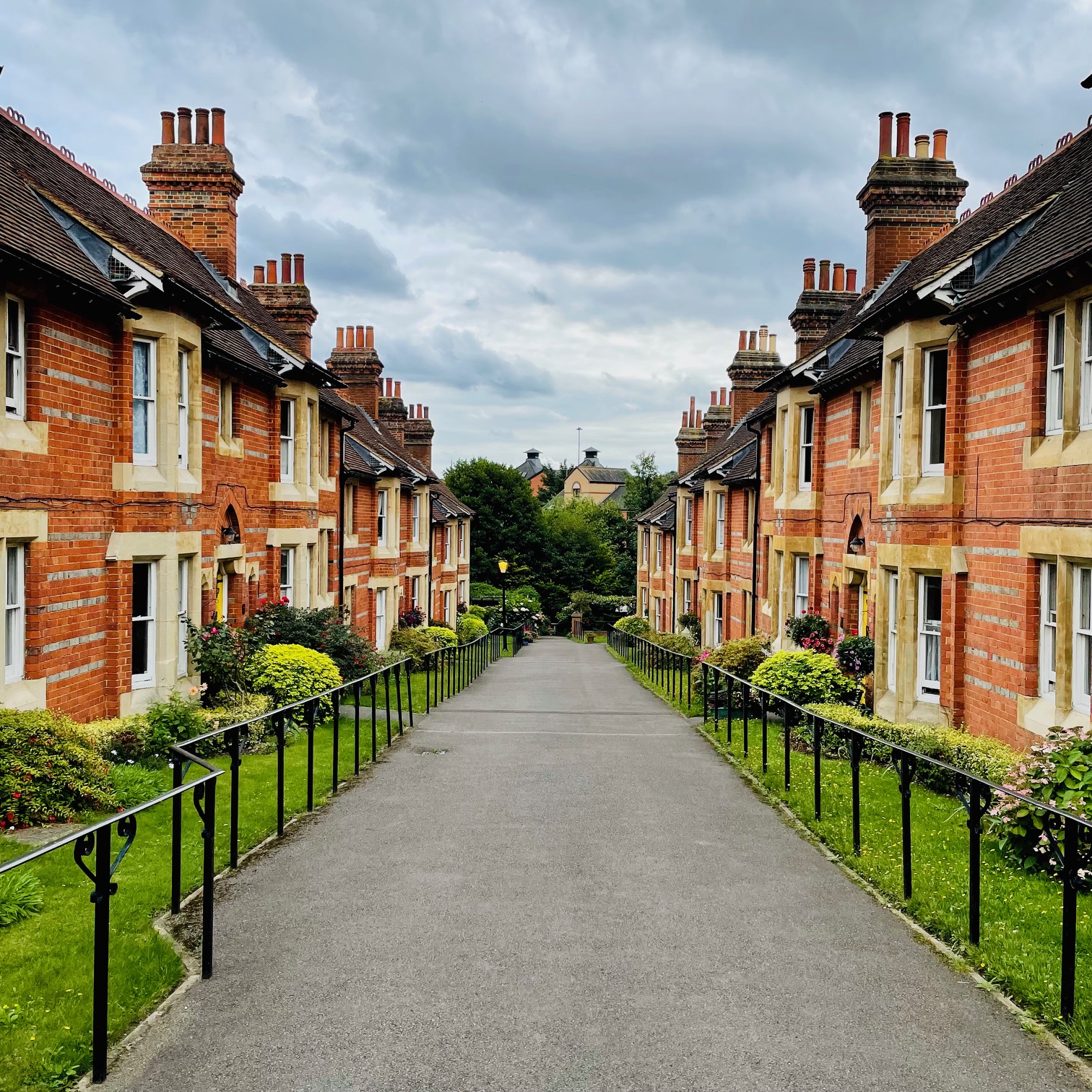
But beyond those buildings there are also so many attractive streets that show that Reading’s architectural treasures weren’t completely wiped out by the IDR. This may also form a bingo card of Places I’d Love To Live, but in no particular order there’s Eldon Square, New Road, The Mount, the alms houses off Castle Street, the handsome houses of Jesse Terrace, Alexandra Road, Hamilton Road and Eastern Avenue. A few months ago I was walking back into town after acupuncture on the Bath Road and, heading down Baker Street, I saw a run of houses I’d never noticed before that looked like they’d been dropped there, incongruously, from Bath or Cheltenham, or from a Jane Austen novel.

These little treasures are scattered throughout the town – the cliché is to say you have to look up, but sometimes you have to look around, too.

2. Blue Collar Corner
Glen Dinning’s permanent site on Hosier Street was a very long time coming and, for quite some time, felt like it might never make it through the machinations and bureaucracy of Reading Council (just to spoil the suspense, Reading Borough Council doesn’t make this list, along with the undignified behaviour of some of its councillors, Jason Brock’s grinning mugshot, Reading BID and so many other things). But eventually in March 2022 the dream finally became a reality and Reading has never quite been the same since.

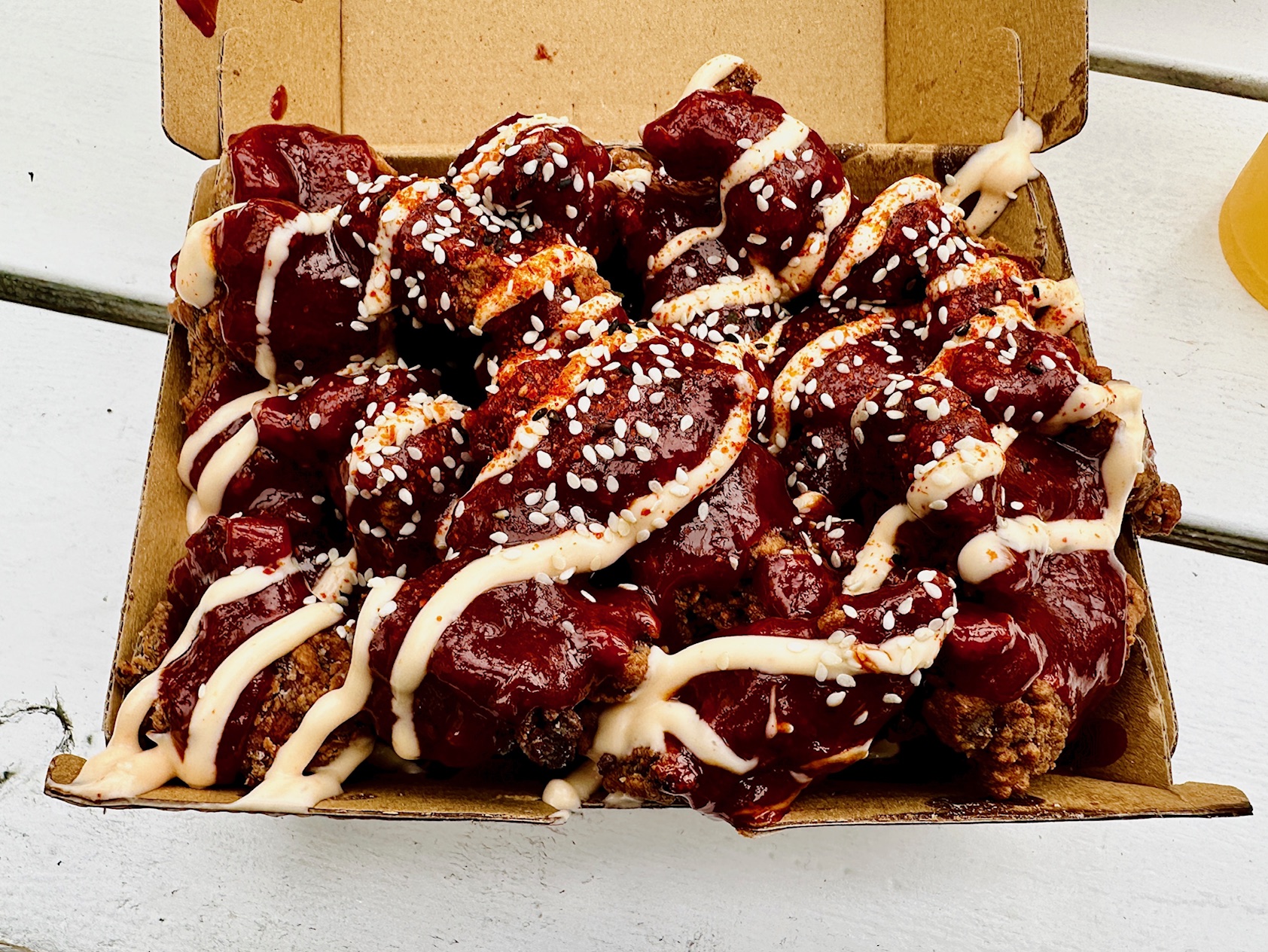
It’s easy to forget how lucky we are in Reading, or to think that our town is just like everywhere else. But Blue Collar Corner is a great example of how that’s just not true: you don’t get a purpose built, town centre showcase for great street food nearly anywhere else. You certainly don’t get one as high quality as Blue Collar Corner, with excellent local beer, a regularly changing roster of street food traders and some excellent events – WingJam and the British Street Food Awards not least.

When Euro 24 was on it felt like Blue Collar Corner really came into its own as a focal point in town, and sitting there pre-match with a pint and something excellent to eat I found myself reflecting on how much Glen’s long-held pipe dream had transformed the options in town – for places to eat, to drink al fresco and to celebrate. Of course, I was partly there because Gurt Wings was in town – like I said, Blue Collar runs excellent events, but Gurt Wings being in the house is an event in itself.

3. The Castle Tap

Possibly Reading’s most idiosyncratic pub, I really grew to love the Castle Tap in Covid. They put time and effort into their outside space (after, I think, some kind of Kickstarter appeal) and it was just a splendid place to sit and while away hours on a warm Saturday afternoon. For people like me, who still weren’t comfortable eating and drinking indoors, that was a real boon. So was their determination that you shouldn’t have to leave the pub just because you were feeling peckish: they encouraged you to order Deliveroo and eat it at your table, and even gave you the postcode for the entrance to the beer garden so your driver could quickly and easily drop you your food.

Back then they were on Untappd, so you always knew what they had on tap and in their compendious beer fridge. Although that has changed – being a verified venue doesn’t come cheap – it remains a great place to drink. It always has something interesting on keg, it regularly stocks top notch cider if that’s your bag and even their range of gins is spot on. But more importantly, as the epicentre of a lot of Reading’s diverse scenes it feels like something is always going on there.

On my last visit, fresh from dinner at Zia Lucia on a Saturday night, there was a band rocking out the front room, a joyous, raucous party in the back room and groups of people dotted across the tables outside, making the most of a gloriously random Reading evening. And when it comes to having a random Reading evening, few better places exist.

4. Clay’s Kitchen

I’m sure it will come as no surprise that Clay’s makes this list, as easily one of the most influential restaurants Reading has ever seen. They made my 2019 list, too. But what they’ve achieved in the last five years has, if anything, taken the restaurant to another level still – crowdfunding a move to a far bigger site over the river, creating a big buzzy space and receiving a glowing review in the Guardian, one of the only times a Reading restaurant has troubled the national press.

I do slightly miss their cosy little site on London Street, even if the orange walls and lack of natural light there made my food photos glow in a slightly post-apocalyptic Ready Brek-style, But it can’t be denied that the spot on Prospect Street is luxe, hugely well done and has given Clay’s the scope to experiment more with dishes, widen their menu, run events, get an excellent selection of Siren Craft beer in and become the all grown up best version of themselves they always wanted to be. And when Nandana is offering her peerless front of house service, however big the site is, it still feels as cosy and welcoming as the original London Street days.

5. C.U.P.

Still with two branches going strong in the centre of town, C.U.P. is Reading coffee’s great survivor, having outlasted Workhouse on King Street, Tamp Culture outside the Oracle and Anonymous Coffee on Chain Street.

These days, it’s unquestionably my first choice for coffee in town. Much has been made of how brilliant their mocha is, not least by me, but everything they do is excellent, including their little sesame petit fours which make an excellent accompaniment to the first coffee of the day – to any coffee, for that matter.

I know many people love the original branch next to Reading Minster, where people sit outside and chat long into those summer afternoons. But my favourite is the branch on Blagrave Street, which opens at 8 on weekdays. It’s where I grab a pre-commute coffee on the days I’m in the office but at weekends I love sitting up at the window and watching the world go by (it’s a particularly good vantage point when the half marathon is on, incidentally).

And of course, you can see the Town Hall, so at weekends you can also see the newlyweds emerging and being showered with confetti. And that always makes me think that earlier in the year that was me, which makes it an even sweeter spot. On my wedding day, after we’d set up the venue but before the getting dressed, the fetching of the flowers, the ceremony and celebration, my friend Jerry and I stopped for a mocha at C.U.P., the contemplative calm before the storm. It remains one of my favourite memories from the day.

6. Double-Barrelled Brewery
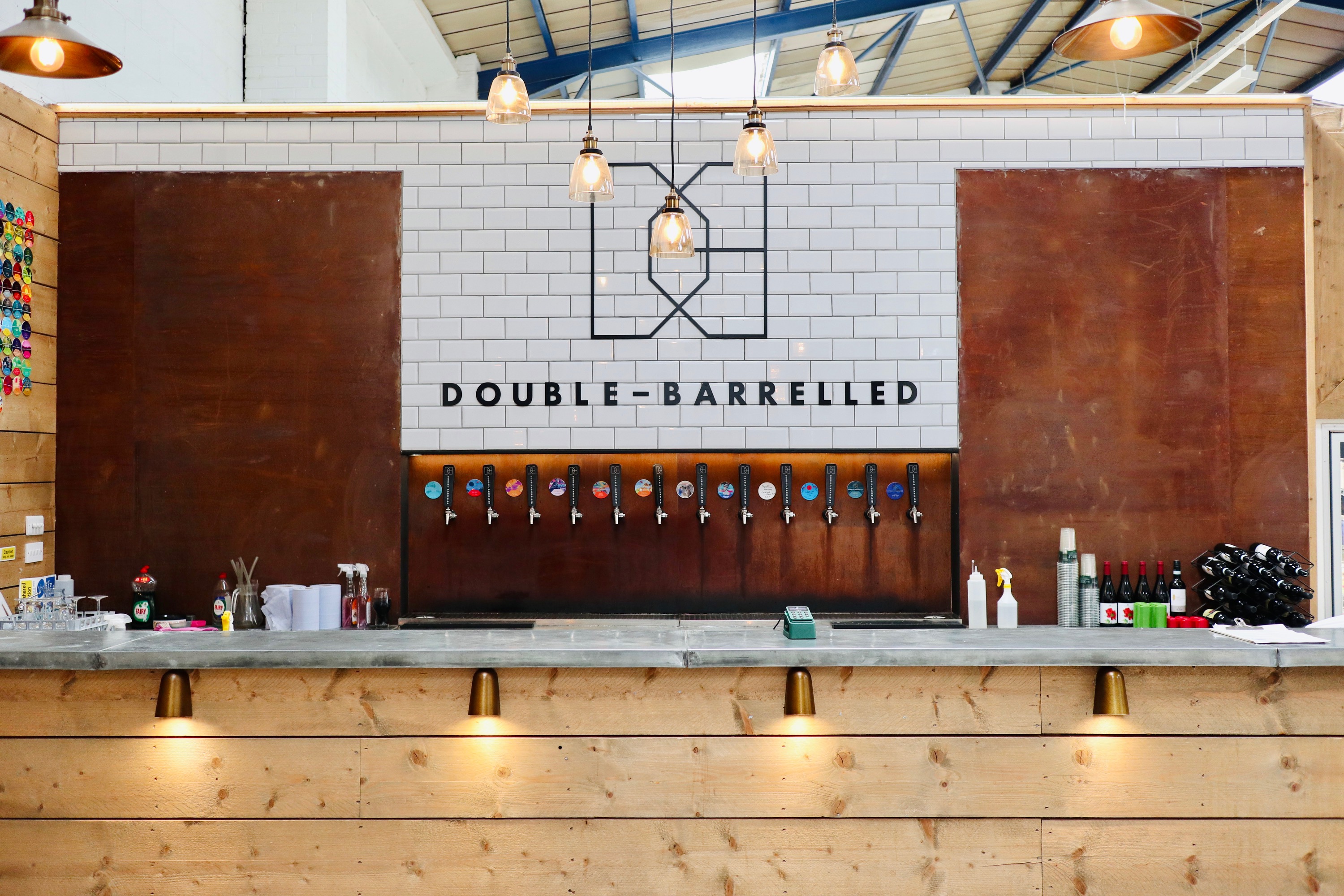
I know now Reading has Phantom, and Siren, and they are both perfectly nice places to drink craft beer. But my loyalties are with Double-Barrelled, who opened here first, back in 2018, and have been in the vanguard of Reading’s beer scene ever since.

You could argue that the tap room aesthetic is a tried and tested, generic model. Find a big site on an unpretty industrial estate, pop your standard issue folding benches and tables outside and in, book the occasional street food trader and off you go. But to me that understates Double-Barrelled’s achievement, which is to create something quite lovely at the end of the Oxford Road.

It’s a really good option for a lazy Saturday (or Sunday) afternoon pint, and a great spot for hosting birthday parties or just impromptu gatherings. I was even there on New Year’s Eve for their 90s themed party, which was rather marvellous. I lived through the 90s the first time around: you had nowhere half as good as Double-Barrelled back then.

Add in the fact that by stocking at least three other venues on this list they improve the quality of beer across the town, and you have a local business to really be proud of. There’s no room for improvement, except that the tap room is lacking truly first-rate beer snackery (Deya stocks Torres truffle crisps, just saying).

7. Forbury Gardens

The Forbury Gardens is a priceless spot, so close to the centre of town: god bless the Victorians, who thought about this kind of thing. It plays host to some of Reading’s best events – the Blue Collar cheese festival, the quirkiness of our annual Bastille Day Celebrations, WaterFest (when it nearly always rains). But it’s also just a brilliant place just to loaf, to picnic, to read a book, or to have a wander. It’s quite something at the start of spring, when the trees are in blossom, and come summer it really comes into its own.

But I also think about what Forbury Gardens represents. In the summer of the pandemic it became a symbol of the town and the town’s unity after that horrendous attack that affected Reading so deeply, and there was something pure and true about that. All sorts of opportunists wanted to use what happened to stoke up division and hate – can you imagine Katie Hopkins talking about Reading for any other reason? – and Reading was having none of it.

And when an image did the rounds on social media earlier in the year suggesting that a far right demonstration was going to go through Forbury Gardens, many of us felt defiled, offended at the very thought. I think that’s because everybody has their own precious memories of the place. For me it’s where I first met my wife, when we wandered through it and chatted, briefly, under that bandstand. Six years later, it was where we, along with all our wedding guests, stood under the Maiwand Lion as our photographer snapped and snapped. I will always love it for that, even if for nothing else.

8. Geo Café
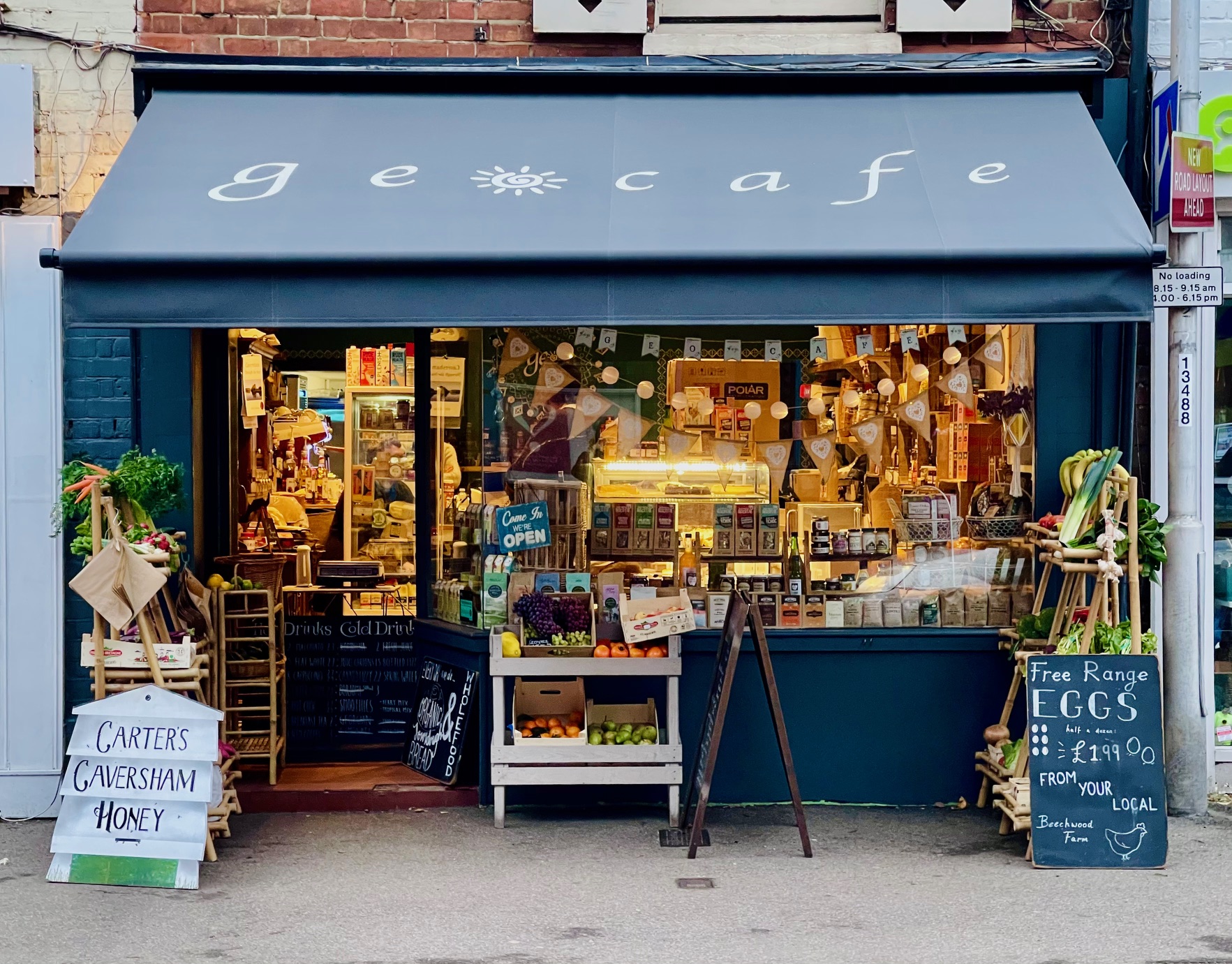
This is the point where I always have to put a disclaimer: owners Keti and Zezva are friends of mine and so you could easily discount my recommending this place as biased. But I don’t know: I reckon Keti and Zezva have created an environment where all of their regulars feel like friends, and that’s part of its magic. Besides, I think it would be hard objectively to deny that Geo Café is a truly special place.

Knockout pastries, made by Zezva in the little bakery upstairs. Some of Reading’s best, and best made, coffee, that never quite gets the credit it deserves. Moreish cakes, bought from a network of nearby bakers. Terrific produce, including local honey and some of the best butter you can get anywhere near Reading. Cracking bacon and eggs on toast, with a little smear of green ajika to add an acrid punch. Keti’s unimprovable Georgian wrap, with fabulous chicken thighs, red ajika and walnut sauce, one of the finest sandwiches Reading has ever seen.

And, out the back, Geo Cafe’s Orangery – sheltered in the rain, but magnificent in the sunshine, one of my favourite places to drink coffee, ruminate, waste time on my phone, pretend to read a paperback or do some gold standard people watching. Sometimes on hot days Keti wanders through, hosing down the floor to cool the place down, and you could be on the continent. You definitely don’t feel like you’re in Caversham.

And the best thing is that this has all almost happened by accident. When Keti and Zezva took over the spot previously occupied by Nomad Bakery I don’t think they intended to end up here, let alone to do so well that they opened a second branch in Henley. But somehow, even if not by design, through all the decisions they’ve made, good and bad, and despite (or because of) any mistakes along the way they have somehow, without realising, created the perfect café.

9. The Harris Garden

My discovery of 2020, the Harris Garden is one of my very favourite places in the whole of Reading. Only accessible from a single gate close to the edge of the campus, it is a fabulous, peaceful place full of botanical wonder, expertly looked after so there is always something new to see and to admire. You could be in the middle of nowhere, somehow insulated from the hum of traffic from Wilderness Road and Pepper Lane.

For an idea of how carefully and thoughtfully the place is tended, look at their website. But even walking round the place, as I’ve done many times, that comes across. You feel like you are in the middle of somewhere that sings with that care and love, and whether you’re horticulturally inclined or, like me, just happy to be there, it is among the loveliest experiences Reading has to offer. It is also true that in the summer of 2020 I had a few happily smudged sunny afternoons on a bench with my friend Jerry polishing off a bottle of red from plastic beakers, but that’s entirely beside the point.

10. John Lewis

Five of the things on this list have been on every version I’ve written of this list, and there’s a reason for that. They are in the permanent collection, things that have made Reading great for a very long time and will hopefully continue to do so for years to come. So I’m trying to think what I can say about Reading institution John Lewis that I haven’t said before, or others have said even more clumsily. I like to say it’s the closest thing Reading has to a cathedral, and I still think that’s true.

The town had something close to an existential crisis when, in the aftermath of Covid, there were rumours that Reading might lose its branch of John Lewis – as places both bigger (Birmingham) and smaller than us (Newbury) did. Saying goodbye to Woolworths or Clas Ohlson is one thing, and I know people mourned the passing of Wilko, but John Lewis is a different level to that. If it closed, Reading would despair: the only other shop I can think of that would provoke similar feelings is our remaining branch of Waterstones.

So instead, I’ll say one other thing about John Lewis: when I moved house, in the summer, we bought a new bed. Two six foot adults sharing a cosy double bed for six years is not a recipe for nighttime bliss and comfort, so we decided to finally upgrade using some of the money we got as a wedding present. And there was never really any question: we would buy it in John Lewis. We went in, we looked at beds, we lay on mattresses and then we got proper, superb, personal service from someone a good thirty years younger than me.

It was a reminder that retail, done well, is special. I know that a lot of what I buy from John Lewis is probably stuff like ironing board covers and towels, gadgets from the lower ground floor. But they are there for the important stuff, and have been for all of my adult life. I hope that’s always the case.

11. Kungfu Kitchen
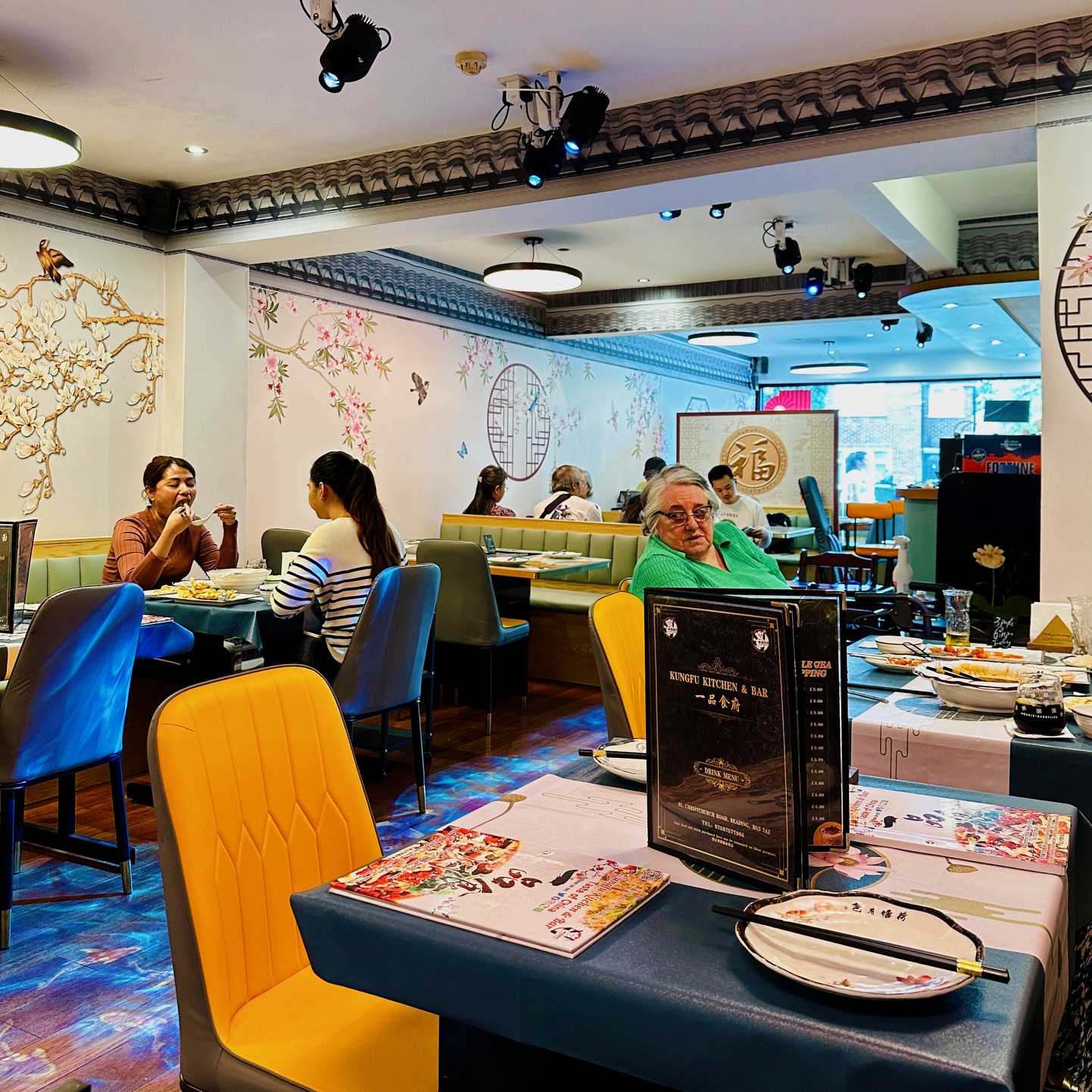
One of only two Reading restaurants to feature in the national press in living memory, Kungfu Kitchen is very much the Stones to Clay’s Kitchen’s Beatles. A lot of that is down to the exceptional food but a lot is also down to the formidable duo, Jo and Steve, who run the place. When people describe someone as a “force of nature” they are talking about someone like Jo, who takes no nonsense, tells you what she thinks – whether you’ve asked or not – and often also tells you what to do, what to eat, what you want. It’s part dinner, part dinner theatre, and I love it.

But if you’re reading this, the chances are you already know all of that. Their new home, a few doors down from the old one, is very snazzy, with overhead lights giving a pattern of koi carp swimming on the floor, Double-Barrelled on tap and random water features that Jo will switch on next to your table. This may send you scurrying to the loo: Jo is very proud of the loos. And once they finish converting the first floor of their new home to a karaoke suite, well, I dread to think.

I go to Kungfu Kitchen with my dad, who is pushing eighty and is devoted both to the salt and pepper squid and tofu and, to be honest, to Jo. Jo always refers to my dad as ‘Daddy’, saying things like What would Daddy like? and What shall I bring Daddy?. I half want to explain to Jo that there’s only one context in which it’s appropriate for her to call my dad Daddy, and to tell her that this context is also very much not appropriate. But truth be told I’m enjoying it too much. And, from the twinkle in my dad’s eye when we eat there, he definitely is.

12. The Nag’s Head
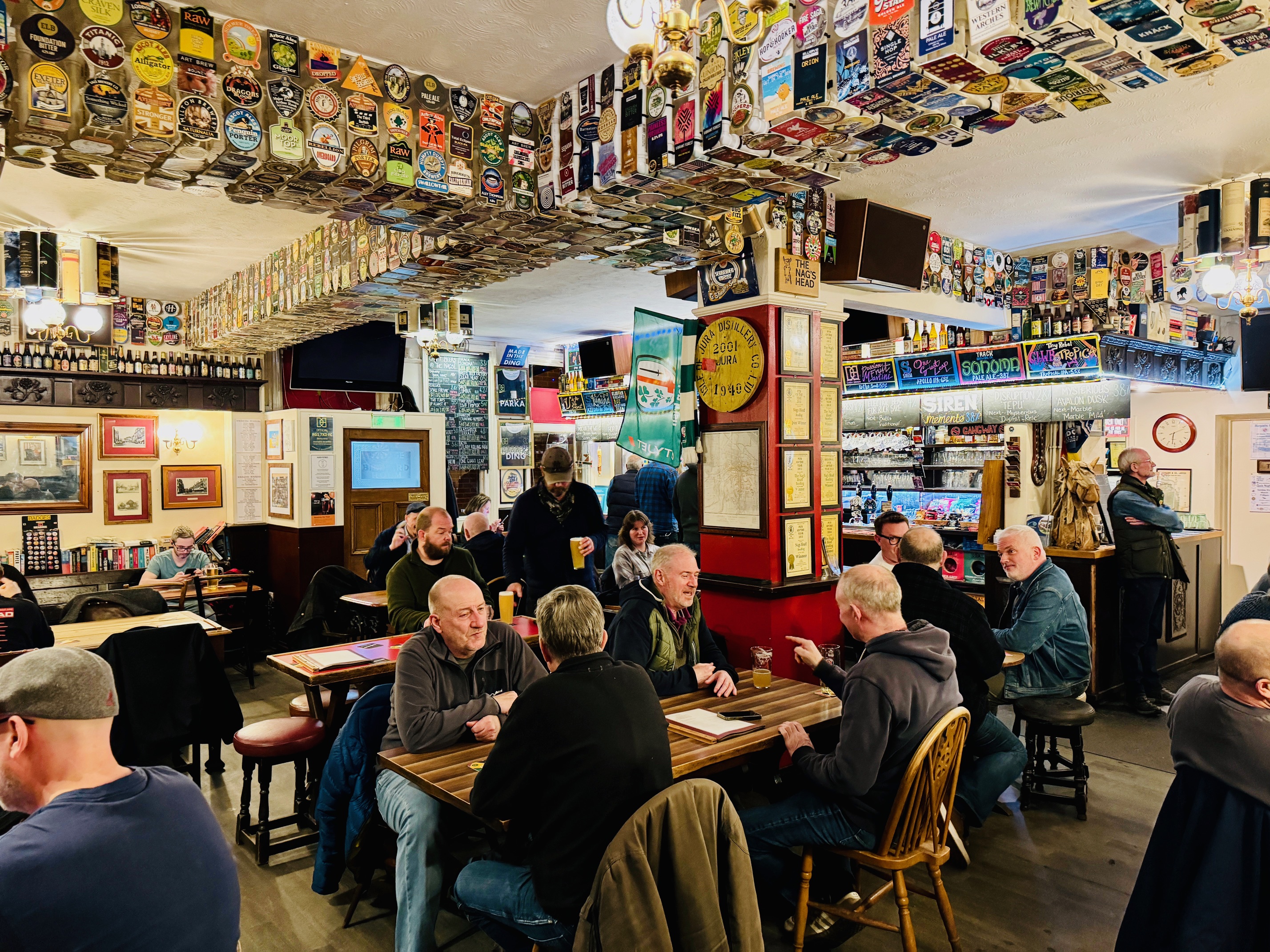
There is simply no better pub in Reading. There are few better pubs in the U.K., I suspect. It’s cosy and buzzy, it’s brilliantly run, it has superb beer and excellent snacks, the inside is a great place to booze in the winter and the beer garden is the perfect spot in the summer. We are so lucky to have the Nag’s, and it’s only when you go elsewhere that you fully appreciate that. I’m off to Oxford this weekend for the day, and it has some very good pubs. But it has nowhere quite like the Nag’s. Nearly nowhere does.

13. The number 17 bus
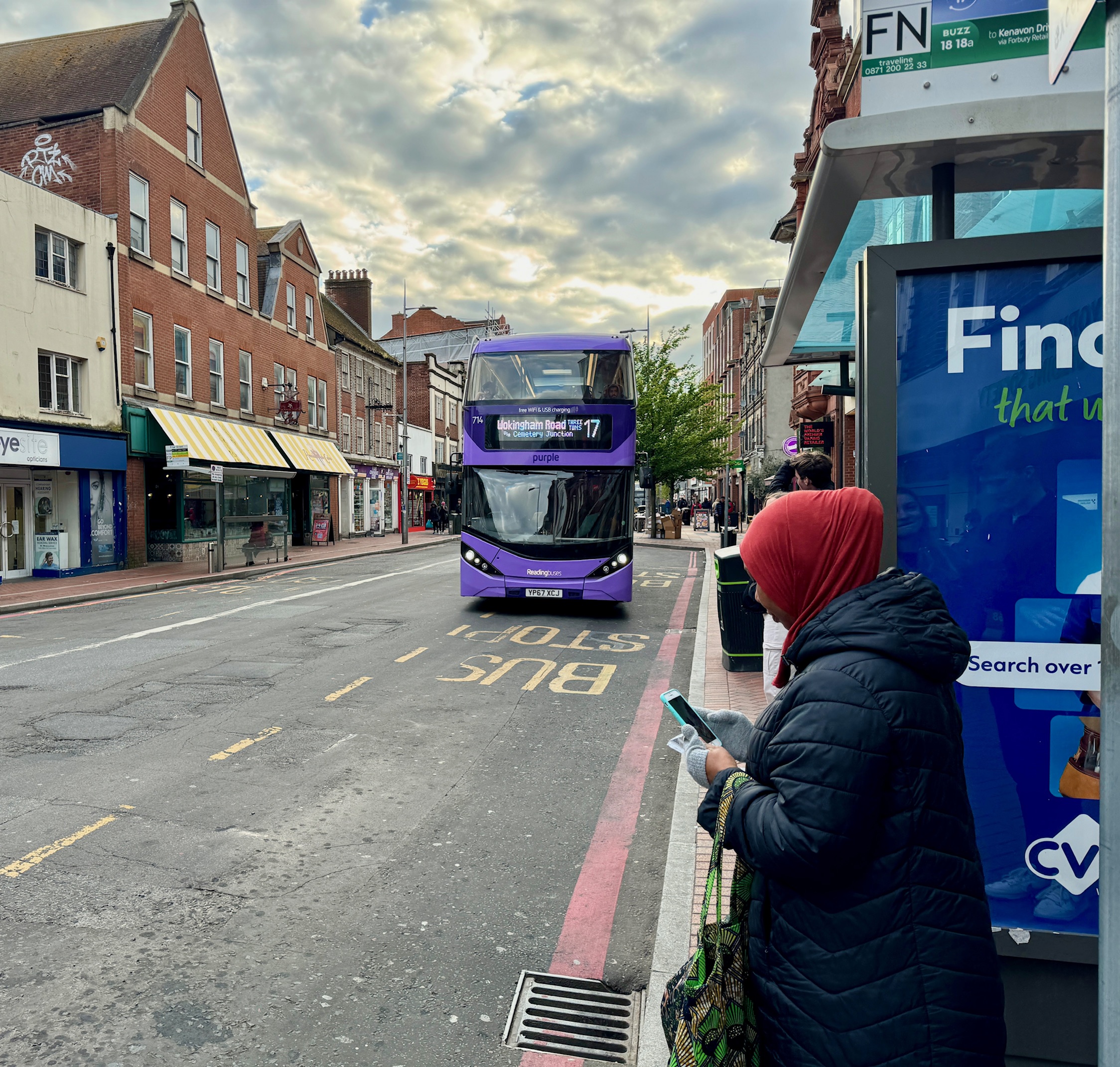
Few things in Reading are truly iconic, a word that is bandied around far too much by people who don’t know what it means, the kind of people who misuse words like literally and unique. The Maiwand Lion, definitely. Jackson’s Corner, back in the day, probably. Reading Elvis? Absolutely nailed on. The Purple Turtle? Perhaps. But for me, the 17 bus route is genuinely worthy of the epithet. I’ve said before that, more than the Thames, it is Reading’s great tributary and I stand by that – from the Water Tower to the Three Tuns, it runs west to east, and vice versa, and is the closest thing Reading has to Lisbon’s legendary Tram 28 (especially if you’re lucky enough, on a summer’s day, to hop on Fernanda, Reading Buses’ open top number 17).

Not only does it connect up both ends of Reading but it connects up restaurants, pubs and cafés. You could go from Hala Lebanese to the Retreat, from House Of Flavours to the Nag’s, from DeNata to Double-Barrelled without ever straying more than a minute from a bus stop. I recently did a section of the 17 bus route as a pub crawl with Reading CAMRA, from the Retreat to the Alehouse, and it was brilliant fun – and a reminder that there are an awful lot of pubs on that bus route (I might pass on the Wishing Well, mind you).

Martijn Gilbert, the former CEO of Reading Buses, once told me that if the number 17 hadn’t already existed it would never have been invented. It made simply no sense, he said, to have a single bus route that length, on a loop: it you’d been starting from scratch you’d have had one route from the Three Tuns to town, and another from the Broad Street Mall to Tilehurst. And yet it already existed, and it would be a brave CEO who fucked with it now. Tutts Clump Cider – run by Tim Wale, a Reading Buses driver who will only get behind the wheel of a 17 – named a cider after it. Double-Barrelled named a beer after it. But Is It Art sells merchandise describing it as the backbone of Reading. Quite right too.

14. The Oxford Road

If I was making a list of the things I like least about Reading, I think it would include people who slag off the Oxford Road. I always think there’s a certain lazy bigotry about some people on social media who have it in for one of Reading’s great thoroughfares, I suspect partly because of the presence of the mosque. And I don’t want to damn the Oxford Road with faint praise or patronise them with the word “vibrant”, so often a middle-class euphemism for scruffy.

So instead I will say that the Oxford Road is the real crucible of culinary imagination in Reading, and invariably where interesting things begin. It was the original home of Workhouse Coffee, and in time it has played host to the likes of I Love Paella, Bhoj, Oishi, Tuscany and countless more: Momo 2 Go and Kobeda Palace still grace it with their presence. Near the top you used to be a short walk from the Nag’s and from the sadly departed Buon Appetito, at the bottom you have Double Barrelled.

For a while I was worried that its glory days might be behind it, but a recent visit to DeNata restored my faith, and it has a clutch of restaurants and cafés I still need to explore. West Reading folk are rightly proud of their hood even if, unlike Caversham residents, they don’t feel the need to tell you they live there within five minutes of meeting you.

(Only kidding, Caversham residents. You know I love you really.)

15. Park House

I could have put Reading University campus in this list, quite easily – it’s a brilliant open space and Whiteknights Lake is a great spot for an amble – but instead I’ve selected the two jewels in its crown, the Harris Garden and this spot, Park House.

It is almost the perfect watering hole. In winter it has wood panelling and comfy sofas, a clubbable and conspiratorial feel. In summer, it has plenty of open space and big sturdy tables and is a sun trap for hours. And whatever the weather, it has a superb range of craft beer – mostly keg, nearly all from a plethora of local breweries – at prices that are either ridiculous, or subsidised, or both. The food’s not bad either. This summer I discovered that if I took the number 21 bus home from work and simply stayed on it for a handful more stops, I would find myself dangerously close to Park House. It was a very fortunate discovery.

16. Progress Theatre

One of Reading’s true gems, I don’t go to Progress anywhere near often enough and every time I do I wonder why I’ve left it so long. It has a varied programme of events, stages some interesting plays, supports youth theatre and local writers. I was at one of their stand-up comedy nights one Friday before Christmas and had an absolutely marvellous evening, despite attending on my own and sitting at the back like a sad sack.

A lot of people only know Progress Theatre because of their annual open air productions in the Abbey Ruins – and don’t get me wrong, they’re a highlight of the Reading year – but I do think people who haven’t made it to the Mount to experience the cosy loveliness of one of their other productions are really missing out. When I moved house in the summer I found myself a lot nearer to Progress: I plan to take full advantage of that.

17. Reading Library

I’m not the biggest fan of change, and I’m not the biggest fan of our council. So it won’t surprise you to hear that I’m very sad that the council is looking to move Reading Library from its current location to the council buildings on Bridge Street, a decision which I’m sure is partly led by the availability of funding and partly led by an awareness of how much the Kings Road site could fetch on the market. The new library will have fewer books in it, because apparently that’s what progress looks like.

But partly I’m also sad about it because I have a real soft spot for the current site in all its dated glory. A Saturday morning wander round the library, picking up things I’ve reserved or just idly browsing, is a very happy way to while away an hour, and Reading Library’s staff are always really excellent. I’ve found myself far more attached to the concept of libraries, as I’ve got older, and whenever I bimble round Reading Library I feel very lucky that the town has access to it. I will probably feel the same about the new site, eventually, once I stop grizzling – even if it won’t have the Holybrook running under it.

18. Reading Museum
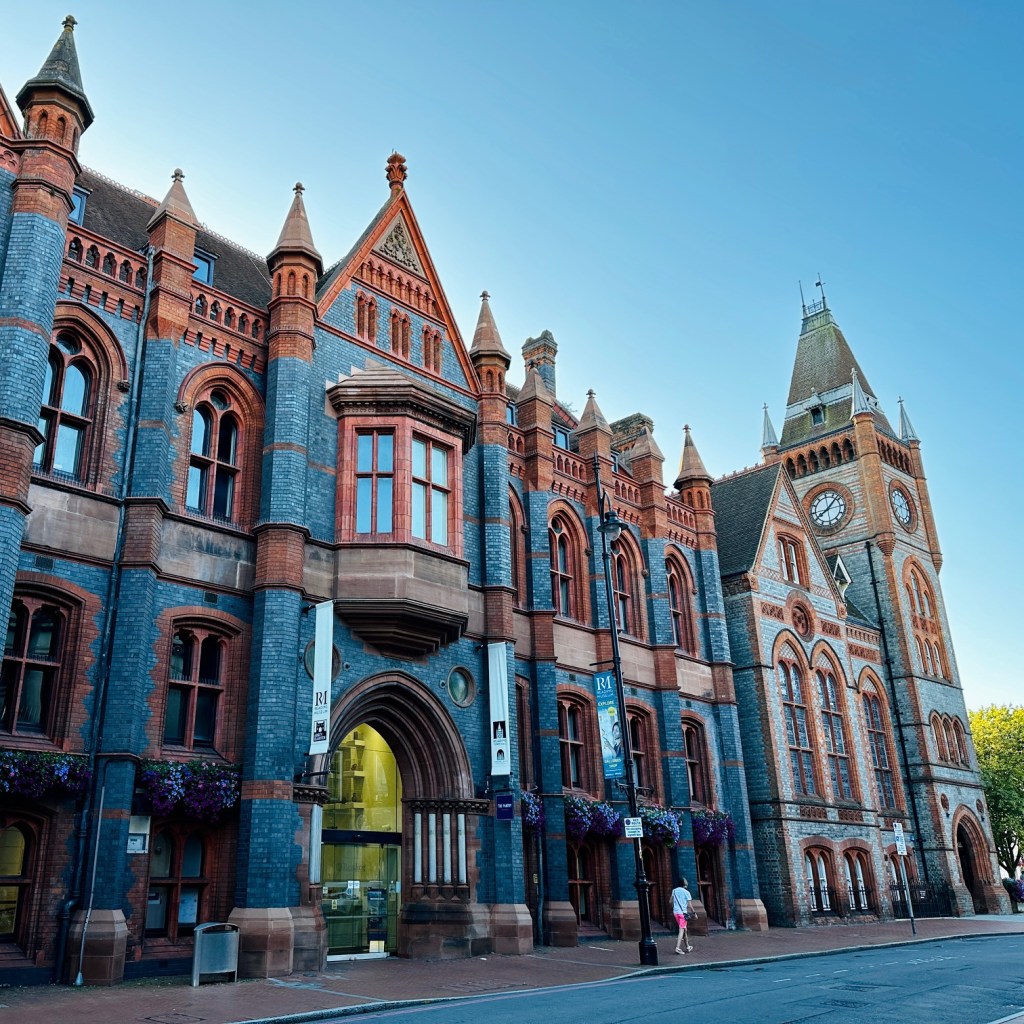
Reading Museum has been in every iteration of this list, to the point where I’ve probably run out of things to say about it. Yes, we’re lucky to have a full size replica of the Bayeux Tapestry. And yes, I adore the devotion the place has to biscuits – all that information about Huntley & Palmers, and the display cabinet full of intricate, decorative biscuit tins. And of course, Waterhouse’s building is Victorian red and grey brick perfection. But more than that, it really captures the spirit of the place and manages to do it without being dry or dusty. That it does so in such a fabulous building is the icing on the cake.

I also have a particular fondness for Reading Museum because I walked through it on my wedding day, on the way to its serene and tasteful ceremony room. But I do acknowledge that that’s just me.

19. The Reading subreddit

In my first ever version of this list, I included the Reading Forum, which used to be a brilliant outlet to chat shit about Reading and enjoy all sorts of asides and rabbit holes, usually from people who had lived here for donkey’s years. But it fell into disuse, and got taken over by a series of trolls who just wanted to post about how much they hated Reading. They talked about a grubby crime-riddled dystopia that didn’t remotely resemble the town I love: in truth, I think they just didn’t like Reading’s diversity. Or the mosque. Over time it changed from the Reading Forum to the “makes for ugly reading forum”, and I sacked it off.

As the latest adopter of all time, I joined Reddit’s Reading subreddit earlier in the year and it reminds me of how the internet used to be, when people weren’t such arseholes (see also: Threads). Yes, you see the same topics come up again and again: where in Reading you should live, where’s good to go out and so on, but the tone is always upbeat and positive. Nice stuff gets upvoted, bad stuff gets downvoted and the mods handle the rare offender. It’s Twitter 2009 all over again (they also put up with me posting links to my Reading reviews without running me out of Dodge, which is a relief).

A recent example was quite wonderful, I thought. It’s Reading Pride this weekend and someone posted saying that it was their first one in Reading but that they didn’t know whether to go on their own and thought they’d feel awkward. People descended on the post with offers of help, moral support or even just saying that the poster could hang out with them and their friends. Blimey, I thought. This is very different from the comments section on the Chronicle website.

20. “Via del Duca”
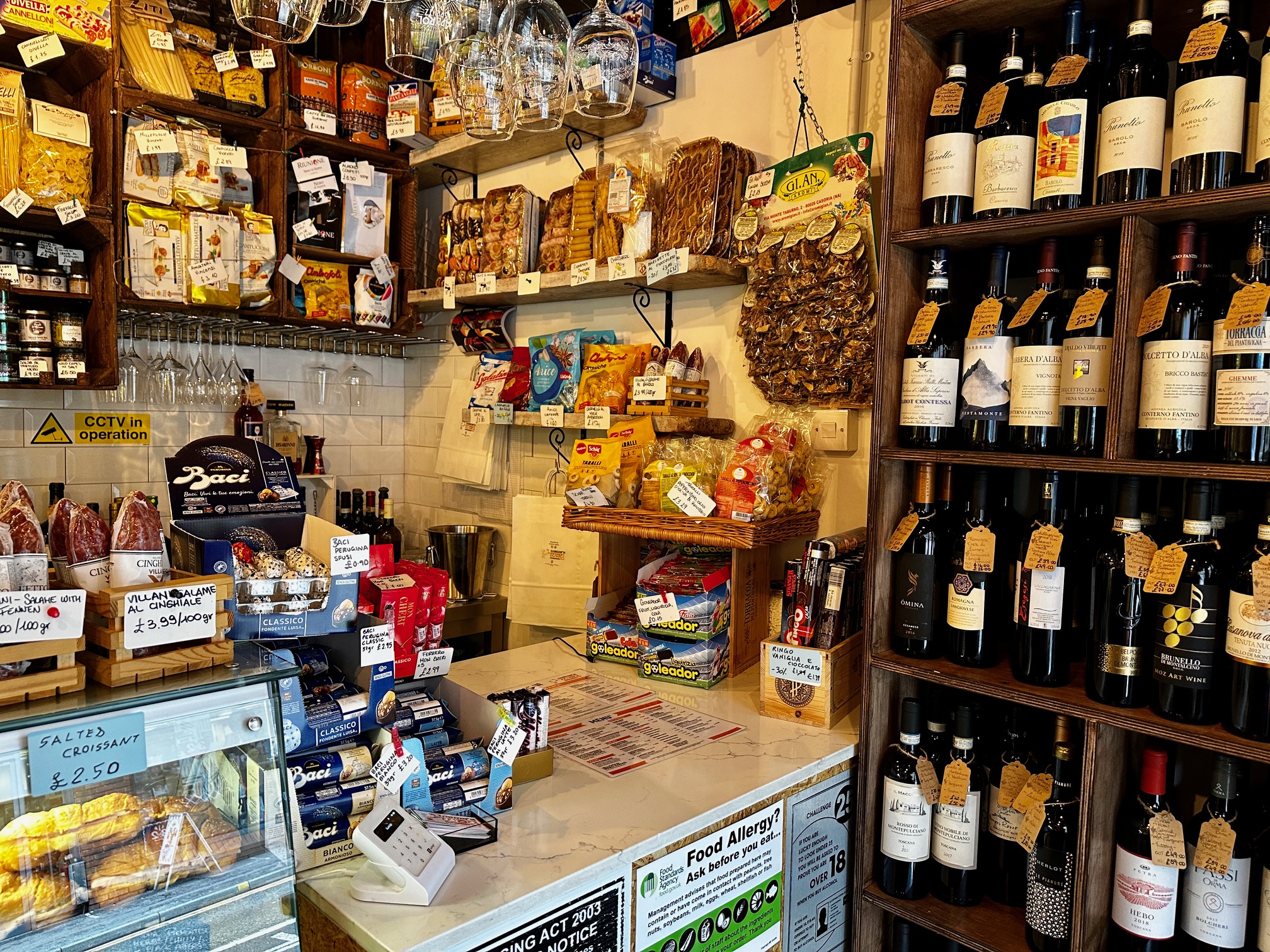
Call it Via del Duca, call it – as someone did recently – Very Little Italy, but whatever you call it the little stretch made up of Madoo and Mama’s Way is one of my very favourite gastronomic microclimates in town. The two businesses have an almost symbiotic relationship – similar but not the same, with the dividing line that Madoo sells coffee but not booze and Mama’s Way sells booze but not coffee.

But both of them feel like a happy slice of Italy plonked down, almost at random, opposite the likes of Rymans and the Oxfam Music Shop. Madoo is great for toasted sandwiches and salads, for grabbing a quick lunch, listening to Italian spoken all around you, European music on the radio, and feeling transported (you also can’t beat their cannoli). Mama’s Way is perfect in the evenings for sitting up at that window ledge with a glass of wine and an array of meats and cheeses before making inroads into a pinsa. They do a mean spritz, too, and I hear their barrel aged negroni is worth trying.

Just as importantly, for people who complain that Reading doesn’t have a good delicatessen any more, Mama’s Way is a positive cornucopia, an Italo TARDIS which contains more goodies on the inside than it looks like it could ever house from the outside. Their pork and fennel sausages are a particular weakness of mine, although the sadist that decided to put five of them in a packet has a lot to answer for.

Since January 2025, Edible Reading is partly supported by subscribers – click here if you want to read more about that, or click below to subscribe. By doing so you enable me to carry on doing what I do, and you also get access to subscriber only content. Whether you’re a subscriber or not, thanks for reading.

Restaurant review: The Coriander Club

There’s a neat symmetry to proceedings this week. Last week I found myself in London, on a bus to parts unknown and this week, although I’m back in Reading, it was a very similar experience. Because I was on the trusty number 1 bus heading out west to Calcot. Yes, Calcot. Have you ever been there, apart from to visit IKEA, unless you happen to live there? Did you know Calcot has restaurants? 

Well, for a long time it didn’t. And then in the summer of 2020, The Avenue Deli opened in a little run of shops. The name was a bit confusing, because from what I could see it was definitely a café and brunch spot, not a deli. But despite that, and despite opening in the worst summer for hospitality since records began, it built up a decent reputation: I suspect that, like Tilehurst’s The Switch, it benefitted from serving a community that doesn’t have anything else remotely like it.

But then last November, The Avenue announced that an Indian restaurant, The Coriander Club, was opening next door. The implication was that the two businesses were connected, a shared owner presumably, and The Coriander Club talked about offering an authentic taste of Punjabi cuisine. And since then the word of mouth has been good, and the restaurant’s well-maintained Instagram feed paints an interesting picture of food very much on the western edge of Reading. 

The trend for sleek, upmarket Indian restaurants is still one with some momentum round these parts. It all started with House Of Flavours many years ago, of course, but more recently the likes of Tilehurst’s Zyka, Chilis in town and Masakali at the bottom of the Caversham Road have tried to slightly reboot the curry house – to make it more of an interesting destination and less of an autopilot ritual of a Friday or Saturday night. 

I don’t include Clay’s Kitchen in that, because Clay’s has rather gone beyond that, just as its reputation has spread far beyond Reading. But even if Clay’s is the undisputed champion, there are a lot of Reading restaurants following in its wake, happy to go after a piece of that action. But, and no offence if you live in Calcot, in Calcot? It merited investigation – and I don’t get on a bus to Calcot for nothing, you know (“you really went out to the boondocks this week” was my friend Ivor’s take when I mentioned it the following night over a beer).

My companion this week was Liz, who had kindly answered the call when I recently asked for volunteers to join me on duty. I’d met Liz at a couple of my readers’ lunches and had no doubt that she’d bring something to the whole reviewing experience: a polymath and campanologist who had spent a year living in Beijing and worked at the university, she was also a proud resident of the Oxford Road who had given me countless tip-offs about new spots opening there over the last year or so. You can thank her, for instance, for my knowing about DeNata.

I thought that picking somewhere in Calcot would be a fitting choice for my West Reading correspondent, but somehow as the bus trundled past the tower blocks of Southcote and the spot where Radio 210 used to live it felt a bit like Calcot, in West Reading terms, was even more remote than Woodley on the other side of town. On the way, I discovered all sorts of snippets about Liz – that she didn’t hold with online shopping, that she didn’t eat bananas or eggs. I love those little details: they’re so often some of the most interesting things about people, minor details that somehow sketched the bigger picture.

“Have you ever been to Calcot? Apart from for IKEA, obviously.”

“Actually yes I have! Some of my fellow bell-ringers live there, so I’ve occasionally picked them up.”

I knew, on paper, that people must live in Calcot and it was just that I’d never met any of them, but I was still a little surprised.

“And is there anything there? Apart from the big Sainsbury’s and this restaurant, I mean.”

“No, not really.”

The Coriander Club is on the ground floor of one of those little runs of shops you see everywhere in the suburbs – in Calcot, in Woodley, in Caversham Park Village or in Emmer Green – and it is indeed right next to the bigger Avenue Deli. I think it used to be a chip shop until the owners of Avenue Deli took it over, and they’d made the most of it with some fetching outside space which would have been terrific on a warmer evening.

But even more surprising, to me, was how nice it was inside. The Coriander Club’s dining room isn’t the biggest – maybe twenty-four covers – but I was struck by what a good job they had done with it. The tables were well proportioned, the seats comfy, a little luxe and completely untacky; whenever I go to a new restaurant and discover they haven’t just thrown money at a bunch of Tolix chairs I mutter a little prayer of thanks. The big windows let light in and although the room was on the loud side it was more hubbub than din. Some rooms you just have a good feeling about: this was one of them.

I couldn’t help but compare it with the dim and unsuccessful dining room at Bombay Brothers, when I visited it last month. And, in contrast with my recent trip to Vegivores, they put us at a larger table that seated four, rather than putting us on one of the tables for two.

And the other thing to say about the hubbub in The Coriander Club is that it just goes to show the transformative effect customers have on a restaurant – that little room was almost full when we got there and completely full not long after that. On a Tuesday night, that’s good going. It reminded me of the buzz at Tilehurst’s Vesuvio, another oasis in a gastronomic desert, and one its locals have taken to their hearts.

The Coriander Club’s menu is nicely sized, it seemed to me (Liz wasn’t so sure: “it’s still five pages”, she said) and although I don’t know anywhere near enough about Punjabi cuisine to know how authentic or typical it was, I know a non-generic menu when I see one. There were definitely Indo-Chinese dishes on there, and stuff from the tandoor, and more than one biryani, but there were flashes of interest dotted throughout. And they didn’t feel like they’d been dreamed up by an external consultancy, Masakali-style.

Our server, who turned out to be the owner, was charm personified. “Read the descriptions of the dishes on the menu” she said. “They really do bring it to life.” That made me feel like she had written them, and that was a good thing.

The drinks menu wasn’t bad either. They had a decent range of wines, a reasonable number available by the glass, and although I offered to split a bottle with Liz she told me that one glass was generally her limit on a school night, so I left her to her Pinot Grigio. The glass it came in, again, suggested that thought had been put into every aspect of the place. I had their IPA, Bombay Bicycle. Now, it’s not that Indian (“brewed in the UK, but inspired by India” it says on the website – of the same people who make Kingfisher) but even so I appreciated having a beer on the menu that wasn’t just a fizzy lager.

Liz doesn’t like beer – “it tastes of beer”, she said, summing up for many people beer’s greatest strength – but the owner said she should at least give it a sniff because it smelled so good. Liz had a sniff. It smelled of beer, unsurprisingly. But I liked it – it was very nice, and went well with everything I ordered, so maybe macro breweries aren’t all bad after all.

I am very conscious, especially when I review Indian restaurants, that I have a bad habit of ordering the same things – hello chilli chicken, hello gobi Manchurian – so I was determined to make sure Liz picked some of the small plates and took me out of my comfort zone. She’d had her eye on the yoghurt bombs from researching the menu, having had something very similar at Mowgli, so we made them our first port of call. And they really were quite gorgeous – crunchy spheres packed with such a well wrangled cornucopia of flavours – the cooling yoghurt, crispy sev, potatoes and chickpeas. If you were civilised, like Liz, you finished one in two bites. Because I was eating with somebody civilised, so did I.

“These are like the Mowgli ones, but slightly smaller. But that really works, because it makes them so much easier to eat. And they’re not messy at all.”

I agreed with that – I’ve had similar dishes at the likes of Bhel Puri House where the challenge, Mission Impossible style, is to eat them before they disintegrate.

“And even the presentation here is quite considered. You don’t see edible flowers on dishes at many Indian restaurants in Reading.”

My selection from the starters was the thing that intrigued me most. I wasn’t sure what to make of kaleji poppers, deep fried chicken livers in a crispy coating, but what turned up was a real delight. It was, I suppose, as close to something like chilli chicken as I got that night, but having little crispy nuggets of chicken liver in a sticky, fiery sauce was such a good idea that I’m surprised I’d never encountered it before.

There was a lot that could have gone wrong with this dish – make a mistake and the texture of the livers would be positively unpleasant – but for me it was a resounding success. “My first bit of chicken liver was just too crunchy” said Liz, “but that was the only one.”

Last of all, another dish I would never have chosen myself and a really gorgeous surprise. Bhindi fries came as a moreish take on the likes of zucchini fritti, beautiful little strips of okra coated in gram flour and fried to rustling. The only way to eat these was with your fingers, and the fact that they had a little lurking heat sealed the deal: I loved them.

I started out thinking it might have been nice if they’d come with some kind of chutney for dipping, but ended thinking they were just dandy as they were. But Liz had an even better idea.

“These would be perfect to share with a glass of wine while you make up your mind what to order. If I come back here with my Calcot friends, I’d definitely do that.”

“They should have them on a separate snacks or nibbles section, to encourage people to do that.”

Things boded well, and as we swapped anecdotes and had a good old gossip about Reading life, the pluses and minuses of leaving X and whether every town had its own equivalent of Reading Elvis, I found myself positively enthused about what was to come. Could the main courses keep up the momentum?

The answer was, mostly, that they could. Still dead set not to order what I always ordered, I went for the special that night which had been sold brilliantly by the owner. I’ve never had a scallop curry before, and this one came in a veritable sea of sauce, the comfort of coconut offset nicely with the sharp-sour quality of tamarind. It was interesting, which isn’t the double-edged compliment it might sound, and I enjoyed it a great deal: the scallops, cut into sweet slices, went better than I might have expected.

That it wasn’t perfect was no bad thing, but it just highlighted that The Coriander Club could be even better. I thought the scallops were ever so slightly overdone, but also serving the curry in such a wide, shallow dish felt unnecessarily faffy. It meant you didn’t get the full benefit of the sauce, and that spooning it onto the rice was more involved and less rewarding than it could have been. And by this point the edible flowers on everything was right on the line between accent and affectation. The Coriander Club understood a lot about flavour, but they didn’t totally grasp that less was sometimes more.

I felt like the same weaknesses came out in Liz’s main course, shahi paneer kofta. This was a couple of kofta made from paneer and potato and again, for me, the presentation was a little fiddly – two kofta, rising out of the sauce like a pair of sunburned knees, ringed with concentric squiggles of yoghurt. Again, I thought a more unpretentious plating would have emphasised the good things.

But maybe that’s just me being me, because Liz – like a normal person – was too busy concentrating on the good things. “This is great” she said, “and I can’t believe how light it is. You should try some.” I did, and Liz was spot on – when you think of everything that went into those koftas it screamed stodge, so there was a real deftness about the execution.

The owner had cannily suggested we might want another vegetarian dish as a side, and it’s to her credit that this felt like rounding out the meal rather than upselling: she had that kind of charisma. We picked the aloo baingaan sabji – a baby aubergine and potato curry – on her recommendation and it was very well chosen by her. A drier curry, to contrast with the other dishes we’d both ordered. Sticky cubes of aubergine and floury potato, in a masala that packed more heat than anything else we’d eaten.

I would never normally order aubergine – though I might make an exception for Clay’s baby aubergine masterpiece – and it takes some doing to get me to order a vegetarian main. And yet I really loved this dish, another great advert for stepping outside your comfort zone and accepting that, even if only sometimes, other people knew a lot better than you did.

I haven’t really mentioned our sides, and I didn’t photograph them, but they were fairly middle of the road. Liz was a little disappointed by the coriander naan – “I wanted that to be absolutely honking of coriander”, she told me later. And I could see where she was coming from: the clue’s in the name after all. If you didn’t like coriander, why would you eat there at all?

By this time, with all our eating and gassing the other punters had left, and we got talking to the owner. She’d done such a good job looking after us that Liz briefly wondered if she’d figured out the nature of our visit, but I like to think she would have been the same with any and every table. She told us they’d opened in December, and that things were going well. She did indeed run the Avenue Deli as well – she was wearing an Avenue Deli branded top that night – but was passionate about making The Coriander Club an outpost for authentic Punjabi cuisine.

“We don’t just want to be another curry house” she said, and I thought that, nine months in, she was making more than a decent fist of that. She said that they were already getting customers from the likes of Camberley, and even from as far afield as South Africa. And I thought that I could understand that, and admired her mission and how committed she was to it. By this point Liz and I had both checked the Reading Buses app, realised we were dangerously close to being stranded here on the edge of Reading and I had failed to rustle up a taxi. “I’d offer to give you a lift, but Langley Hill is closed” said the owner, and I believed her. Our bill, all told, came to eighty-seven pounds, not including tip.

“What really impressed me” said Liz as we sat in the bus shelter waiting for a 26 back into town, “was how every sauce was different. All the dishes were distinct, and I really liked that.”

I thought about it, and thought that she was spot on. I didn’t feel like components were reused between dishes – well, apart from those edible flowers – and that made their menu, all five pages of it, even more quietly convincing.

“So what happens now, in terms of writing the review. How do you do it?”

“Well, I’ll make notes on my phone pretty soon – having the pictures really helps. And normally I try to sit down and do it the next night when it’s fresh, but I can’t this week because I’m out for my friend’s birthday tomorrow. Sometimes I’ll write some of it in Notes on my phone on the way to and from work. But when I sit down and type it all out, it depends what the place was like. If I loved it, it’s easy. If it was awful it’s even easier, though you have to avoid punching down. But the worst ones are when they’re meh. Those are a slog to write, and you wonder whether they’re a slog to read.”

Anyway, I am writing this on a Thursday night, and I’m delighted to say that it’s been a breeze writing this one. I enjoyed so much of what I ate, I loved the room, the owner is quite brilliant and the incongruity of The Coriander Club, slap bang on the perimeter of Reading, runs the risk of making nowhere special into something special. There are things I think they can improve – mostly around presentation and unnecessary fiddliness – but it’s a place that gets so much right that you barely notice the things that are slightly awry.

I think they could have an interesting future ahead of them and, regardless of whether they get more customers from Camberley or South Africa, they deserve a lot more from Reading. Fingers crossed they get them, because it feels like they have that rare combination of spirit and veracity that the likes of Masakali and Bombay Brothers are still trying, unsuccessfully, to fake. And best of all, now that Calcot has a restaurant that’s genuinely worth visiting, it can finally join the club.

The Coriander Club – 7.9
98 Royal Avenue, Calcot, RG31 4UT
0118 3271211

https://www.thecorianderclub.co.uk

Restaurant review: Planque, Haggerston

Our story this week starts with your narrator sitting outside an achingly hip café called Batch Baby in De Beauvoir Town, a part of London I’d never heard of, gulping down a latte before heading to a lunch reservation at Planque, an achingly hip restaurant in Haggerston, another part of London to which I had never been. It was a Saturday lunchtime, the sun was out – so were my legs, for that matter – and I felt very old and very fat, but mostly very old.

I had taken the Elizabeth Line to Liverpool Street and then hopped on a bus from Moorgate, wending its way past the horrendous roundabout at Old Street and out towards the North Circular, into the bits of London that are Vittles territory, rather than the province of broadsheet critics or restaurant bloggers. I had no idea what to expect of De Beauvoir Town but you couldn’t say it wasn’t interesting – handsome mansions one side of the road, stark and forbidding tower blocks on the other, presumably the legacy of a little light wartime bombing.

Those contrasts went further than the architecture. Up one side street, past a big red sign advertising The Sun, an establishment called the Happy Café offered a full English, and a “Sunday Roast Diner” (sic) with three veg, potatoes and gravy. Round the corner, Batch Baby was tasteful in an artfully yet carelessly thrown together sort of way, on the ground floor of a handsome building which apparently serves as a “community space and creativity hub”. The coffee was immaculate, and some of it was roasted by Sweven, the equally hip café in Bristol’s Bedminster. Do these places have a twinning scheme?

I sat outside, and I felt every year of my fifty years, and every stone of my no-I’m-not-telling-you-how-many stones. Everybody was thin and young and stylish and wearing dungarees and the sort of clothes you used to be able to buy in Shakti. And I remembered when they were first cool, back when I was at university, and then I realised that they were probably first cool in the seventies, before I was born, and that my parents probably looked at people wearing them in the nineties and felt how I felt in that moment, and that only served to make me feel older and wearier still.

Never mind. I loved the coffee, I took a picture, I applied my best filter, put it on Instagram, pretended I wasn’t fifty. And then I checked the time and scurried to the restaurant, just in time for my lunch reservation. On my way I passed a handsome old boozer, a cute Japanese canal by the towpath, a plant-based wine bar and bottle shop, a small plates restaurant with a sideline in sake. There was no denying it: I might not be in Dalston, but I was definitely Dalston-adjacent.

Planque is an exceptionally voguish spot which was recently listed as the 97th best restaurant in the U.K. by the National Restaurant Awards. I felt like I had seen it in dispatches everywhere and when my cousin Luke, who moved to London from Toronto a couple of years ago, suggested we should have lunch in town some time it turned out it was on both our lists. The chef was previously at P Franco, another legendary small plates and natural wine spot in Lower Clapton – another cool part of London to which I had never been – but Planque was meant, by all accounts, to be a step up even from that.

I’d seen reviews that had raved about the food, and others that had waxed lyrical about the interior. And to add to the exclusivity, although they allowed people like me to book tables in the restaurant there was also some kind of private members’ club element where you could cellar wine there, get discounted corkage rates and so on.

My swiftly grabbed photos of the room don’t do it justice but it is indeed a coolly attractive space. It’s built into two railway arches, but this has been lavished with funds and the interior, designed by a Danish studio, does have that very Scandi feel to it. Actually, it reminded me of many places I’ve eaten in on the continent, in Ghent or Copenhagen, but few in Blighty. But that also made me realise that in Europe, nobody would bat an eyelid about a dining room like this but here in England you can rely on people to lose their shit about it.

All that said, it was more a place to admire than necessarily enjoy eating in. The long communal table – again, something I feel like I’ve seen more in Europe than here – was very striking, and the wooden booths for four were attractive (although when Giles Coren reviewed Planque for the Times he complained about his arse going to sleep: now he knows how his dining companions must feel). But if you’re at a table for two, I think you do get a little diddled: those three tables were right at the start of the dining room, near the front door, close together and slightly unloved.

By this point Luke had arrived and we’d ordered a few aperitifs – a negroni for me and a Chartreuse and tonic for him. Luke is in his early thirties and lives in Clapton in an apartment which he assures me is slightly bigger than a studio. He runs multiple marathons a year, and his Instagram is a positive advert for being young and happy and living in London: if he isn’t jetting off to Australia or back to Canada, attending this wedding or that, running a marathon in one European capital or another he is in a beer garden or at a house party somewhere in London, surrounded by equally young and attractive people, living their halcyon days.

As if I didn’t feel old and fat enough already! Just once I’d like to see a picture of him heating up a depressing ready meal or watching Love Island, but it’s impossible to hold it against him. Too likable, you see.

At weekends Planque serves a set lunch only, which is yours for thirty-nine pounds and includes four small plates, your choice of main course and a set dessert. There are a few additional dishes in the bottom section, and with a little light questioning our server gave us a view on where in the meal they might turn up – so some would precede your small plates, some accompany your mains and a couple of cheeses which would come before your dessert (if you’re doing things right) or after it (if you’re not).

All pretty straightforward, but Luke and I couldn’t decide between the two mains. Steamed skate wing managed to combine one of my favourite ingredients with possibly the drabbest cooking technique there is, veal sweetbreads had undergone a similar experience by being turned into some kind of sausage and served with coco beans. Was Planque’s superpower taking the fun out of things? In the end, Luke said we should order both and share, which in most restaurants would be a perfectly viable option.

Wine first, though, and another reason to feel the exclusivity of Planque – and by exclusive I mean expensive. The cheapest wines at Planque are around sixty pounds, and the majority of the list comes in at three figures. My original choice was a Maccabeu from the Languedoc, but our server quickly and firmly told me it was very wild, and that I might well regret ordering it (why is it on the menu then? might be your question: I might have had that question in my mind too).

So instead he steered us towards a Corsican white which was a blend of Muscat, Vermentino and Bianco Gentile, an indigenous Corsican grape I’d never heard of. And, in fairness, it was a beautiful white wine. At eighty-four quid, you’d really want it to be. You can’t easily buy it elsewhere, which I guess is kind of the point, but what research I did manage to do suggested the mark-up was steep.

From this point onwards, though, concepts of value and its relationship to quality, and quantity, became foggier and harder to grasp. A good illustration was our opening dish – scallop tartelettes were divine, dimples of clean, pure, subtle high-grade scallop sheltering the crunch and sharpness of sea lettuce, like the tiniest gherkins. An exquisite couple of mouthfuls, one of the nicest amuses-bouches you could possibly imagine. Nine pounds, for the pair of them.

Then came the four small plates, pretty much at the same time as the tartelettes. I didn’t take a picture of the bread because I don’t think I’d clocked that it was one of the small plates in question. That felt a little cheeky, especially as it was literally the only ballast in the entire meal. Decent bread, gorgeous butter that spread at room temperature. Is that a course in its own right? Not convinced.

Far, far better was a little bowl of consommé, made with lardo and more scallop. If Planque had a gift for removing the fun, this was the most playful reversal of that. Consommé never looks like it’s going to be the most exciting thing you eat during a meal, but it can pack a massive punch that belies its unprepossessing appearance. That was definitely the case here, with that wonderful concentration of salt, sea and smoke. If there had been more of this kind of thing, I’d have been a happy man. I used some of the unremarkable bread to dab up the rest of the remarkable consommé.

The other two small plates also had that Nordic, beige feel to them. I guess using turbot is one way to make a roe dish seem luxe, but I wasn’t sure it delivered disproportionately well. Fish roe seems to be everywhere this year, and I’ve had something like this at Quality Chop House and 1 York Place. The former served it with salt and vinegar doughnuts, which were marvellous, and the latter with fennel, which was interesting.

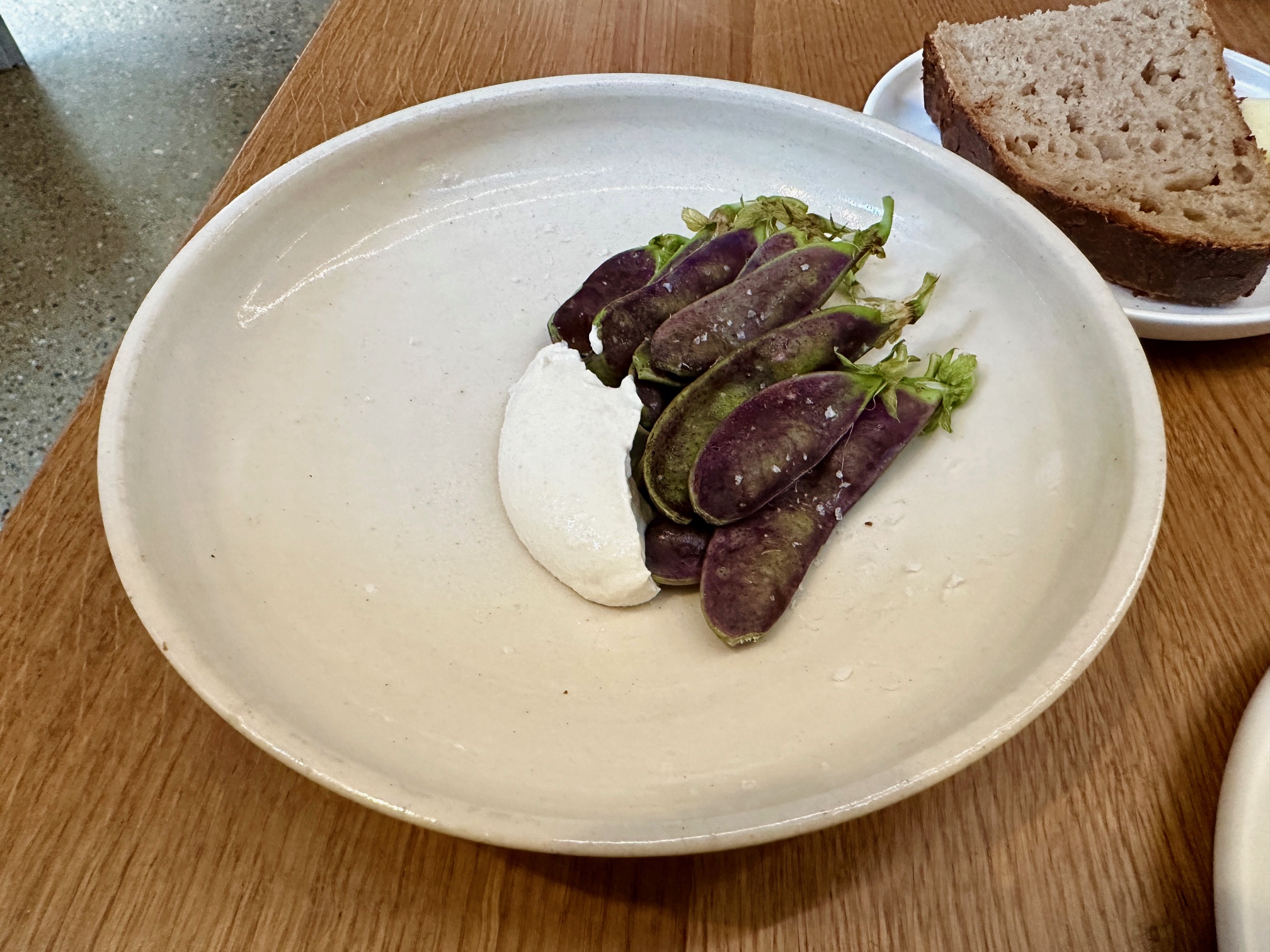
Here instead you had mange tout which I believe the restaurant grows itself, crudités without the crudeness. It was okay, but I felt like it was trying to improve me. Many people have tried to do that over the years, always without success.

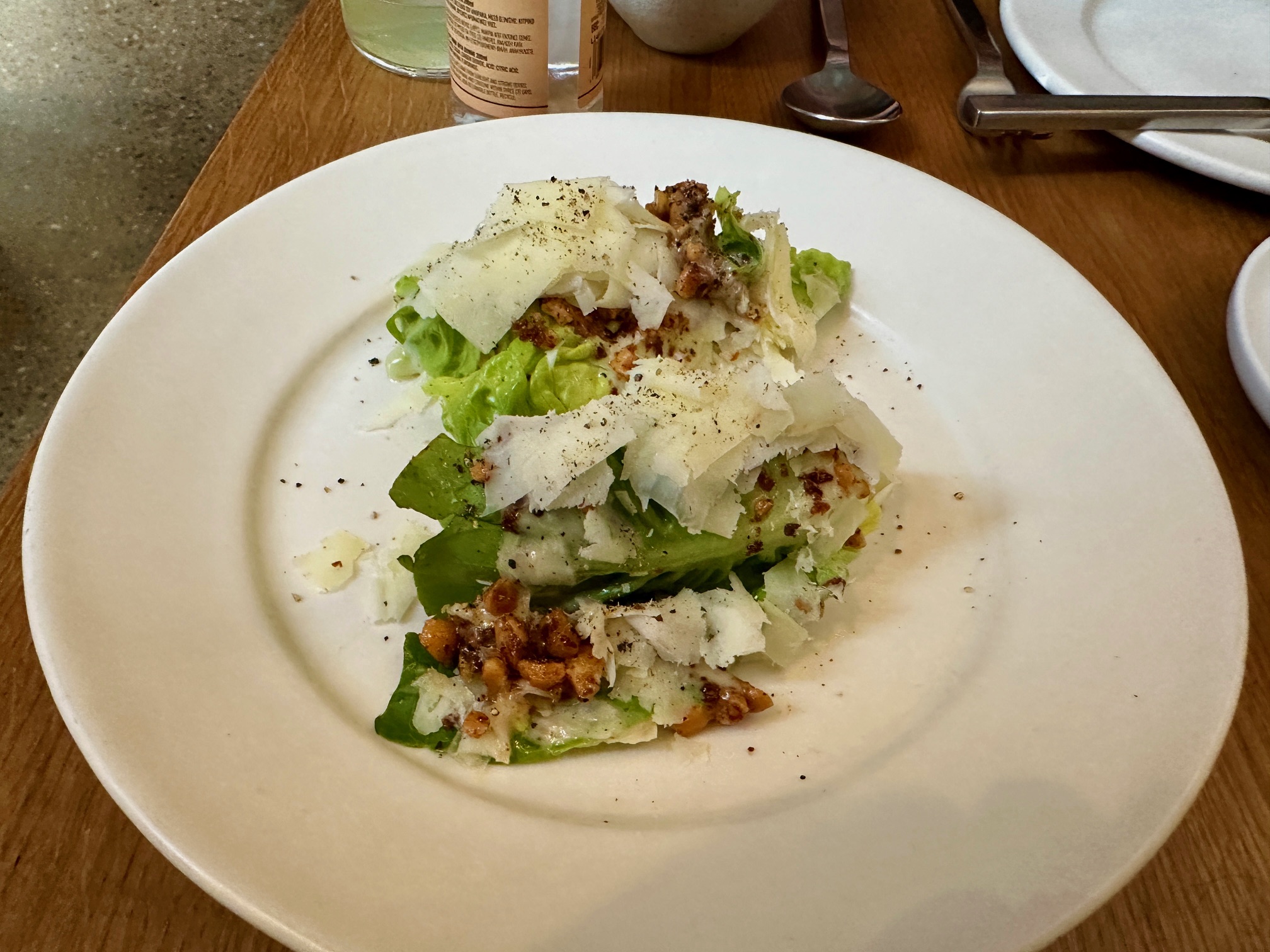
To me the very best of the small plates, and the single best thing I ate in my meal, was just described as lettuce, hazelnuts and Cora Linn. It was a salad, and when I say salad I mean two lettuce leaves scattered with hazelnuts, dressed and festooned with Cora Linn, which is apparently a Scottish take on Manchego. Again, if it sounded like it could be fun, Planque could make it plod. And if it sounded workaday, Planque could elevate it. I suppose that’s a skill of sorts, although not one I’m sure a restaurant should cultivate.

As you can probably tell, the small plates were small. But I was unconcerned, because our mains were on the way and I was counting on them to redeem matters. I was mistaken about that.

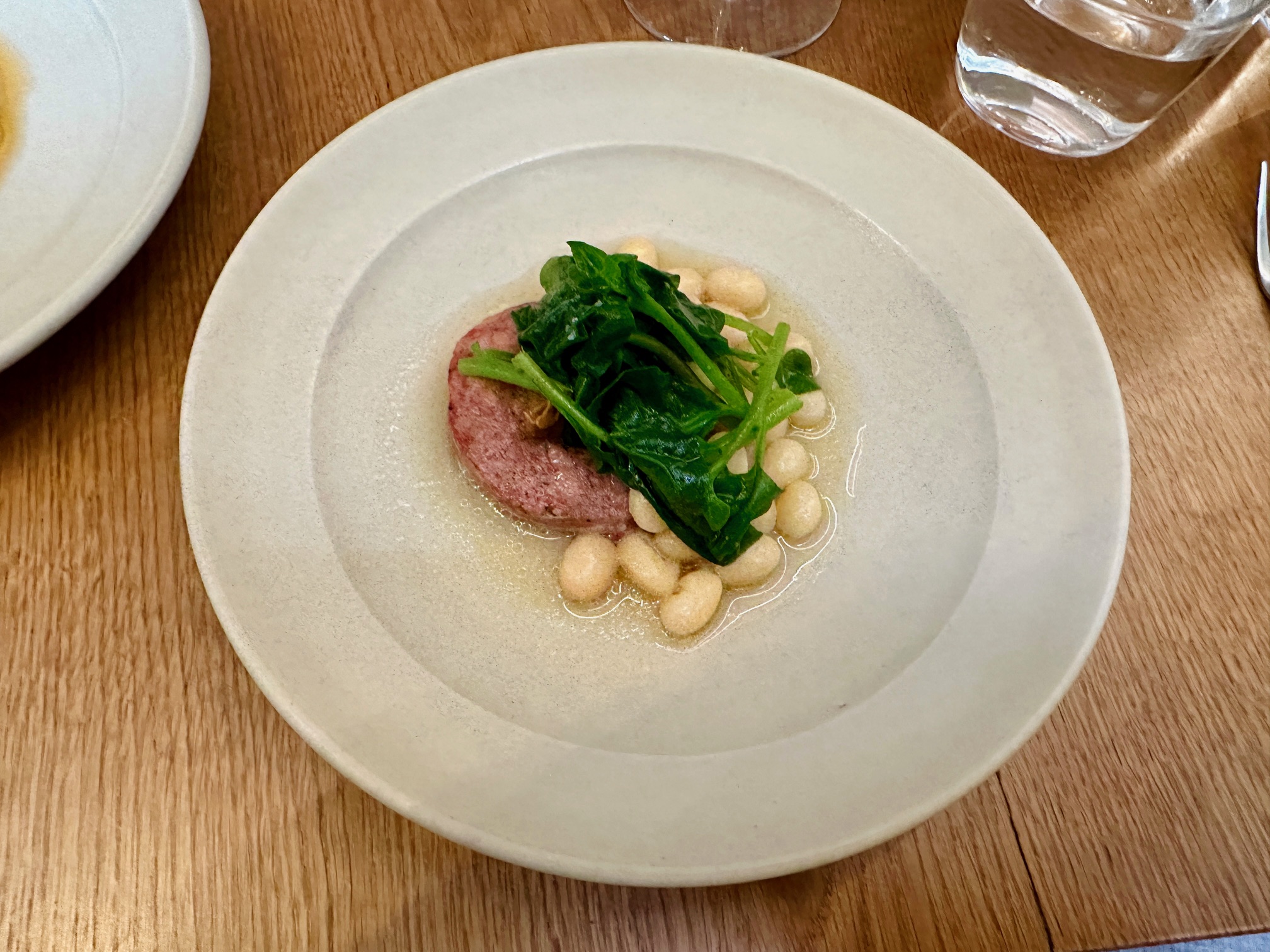
So first up, that veal sweetbread sausage. A single disc of it, with coco beans and some wilted greens draped on top. The sausage was, I do have to say, truly delicious – glossy, almost silky, rich stuff, and as far from mystery meat as you could hope to be. The beans were like many people I’ve worked with over the years – firm, nutty and a little boring. There was a meagre puddle of insipid jus. I dutifully bisected the sausage and doled out half of the coco beans onto a separate plate for my cousin, a properly joyless experience. Who wants to eat at a restaurant that literally turns you into a bean counter?

This was a small plate, not a main course, and it followed what had been billed as small plates but were in fact even smaller plates. I was getting a bad feeling about this.

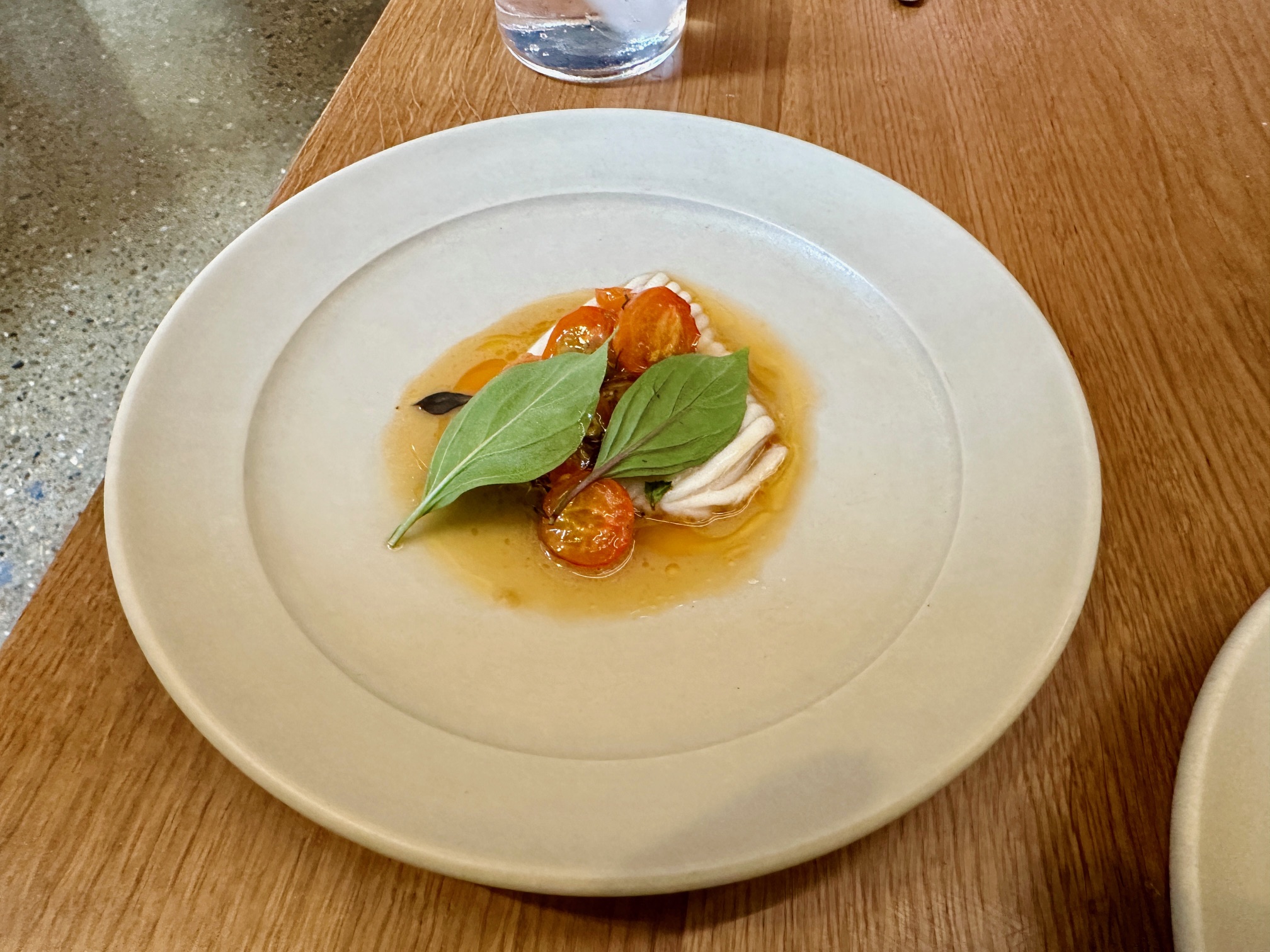
Was the skate wing better? No, not really. When you get so little skate that you can obscure it with two cherry tomatoes, for my money you have a problem. As we ate this dish, after Luke had put precisely half of it on a side plate for me, I explained to him how much fun skate wing can be. How enjoyable it was to have a big fat skate wing in front of you, littered with capers, and to slowly ease the flesh off the cartilage.

Here, the restaurant had done that for you, it just so happened that they’d done it on a fraction of a skate wing, after steaming it – the optimum way of ensuring that something is technically cooked but hasn’t been introduced to anything that could enhance its flavour. Here the flavour enhancement came from three or four perfectly pleasant little tomatoes, two leaves and a lobster sauce which was thin and not exactly honking of crustacean. Was this really the ninety-seventh best restaurant in the country?

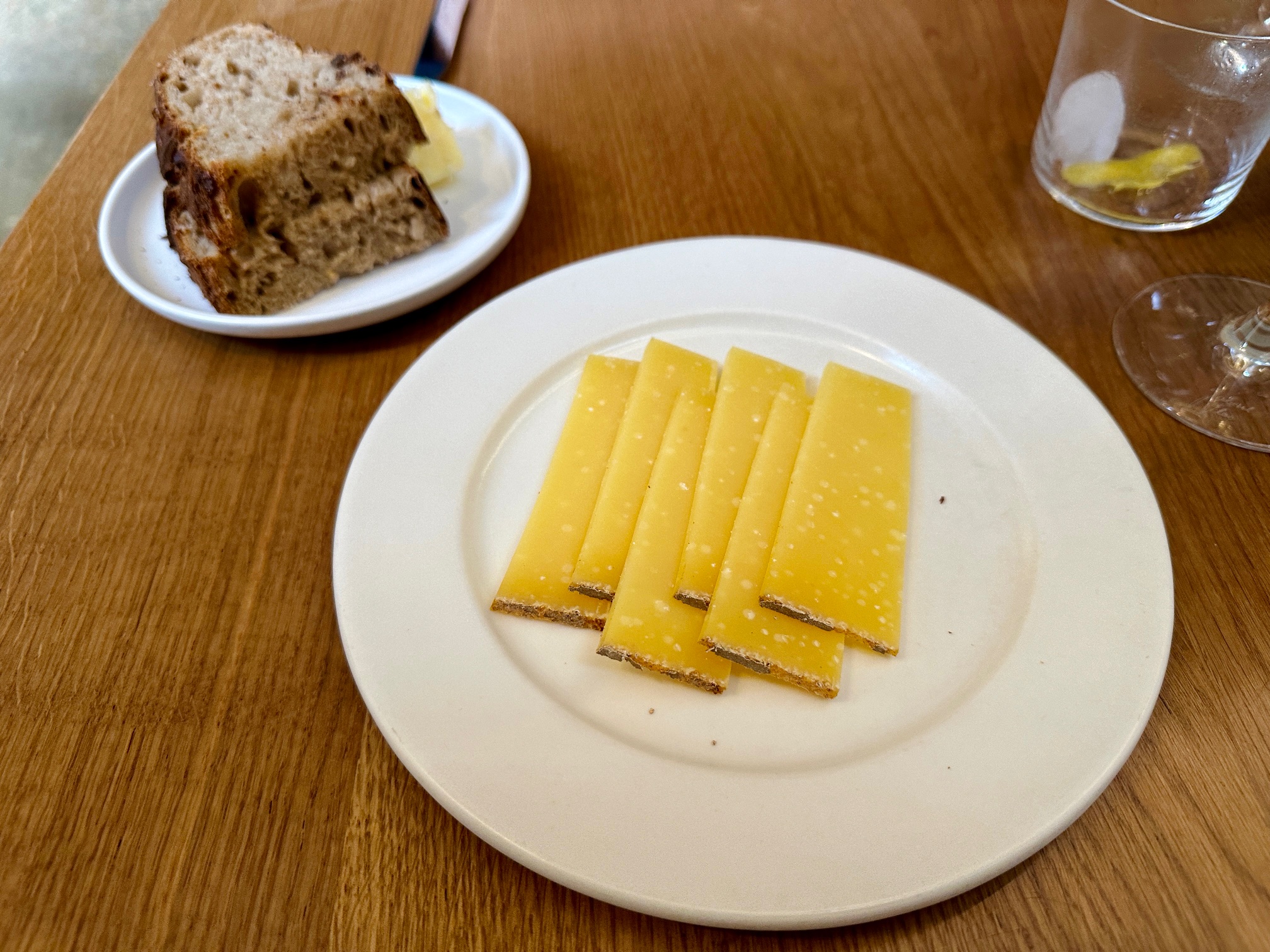
Feeling a tad peckish, we decided to interpose a cheese course between our small savoury plates and our no doubt small sweet plate. 24 month aged Comté was truly brilliant, with plenty of umami and grit to it. I thoroughly enjoyed it, and perhaps my expectations had been brutally crushed by this point but I didn’t even think it represented relatively poor value at nine pounds.

“Would you like some bread with that?” asked our server and, desperate for carbs, we said yes. Two more slices, four more quid.

Last of all, our dessert. If dessert isn’t fun a restaurant might as well give up and go home, and gladly Planque did rise to the occasion right at the end. The menu just called it sheep’s curd, plum and raspberry which doesn’t do justice to one of the best dishes of the day – a fantastic, well orchestrated collection of flavours that came together beautifully. The raspberry, lurking within, was the sharp surprise that brought it all together. I was frustrated, because this showed that the restaurant could do crowd-pleasing: it felt like they chose not to.

We decided that having a coffee or a digestif would be throwing good money after bad so, about an hour and a half after we first sat down, we got our bill. It came to two hundred and seven pounds, not including tip, and it’s to Planque’s credit that they don’t sneak in a twelve and a half per cent service charge but let you decide all that for yourself. And service, I should add, was very good – hushed but quietly authoritative, and I was very glad that our server saved us from what sounded like an exceptionally challenging wine.

But here’s the thing – even though the service was good, I didn’t get any warmth. And ironically that was absolutely in keeping with everything else. Planque felt like a cerebral restaurant, rather than somewhere to love, and when London has so many restaurants out there I do wonder who would go to Planque, decide it was absolutely their cup of tea and become a regular. Very thin people, I suppose.

I enjoyed some of what I ate, very much, but I couldn’t help feeling, at multiple times during my meal, where’s the rest? And that reinforced in my mind the vague presentiment that Planque was a restaurant to see and be seen in, more than it was a place in which to drink and be fed. So on that cerebral level I know that the kitchen can cook, I know the wines are good and I know the space they’ve created is very well executed. But I feel like they have missed something about hospitality, because all of that – even all of that – is just not enough.

When you leave a good restaurant, you should feel lots of things. You should feel like you’ve been privileged to have someone cooking for you, you should feel looked after. You should feel a rosy glow, and know that you’ve banked a happy memory. You should feel like telling people about it, and ideally you should feel like going back. This next bit might mark me out as not just old, not just fat, but also a bit of a Philistine, but here goes. Leaving a good restaurant should make you feel so many things. But you shouldn’t leave it, I’m sorry to say, feeling like you could murder a KitKat Chunky.

Planque – 6.6
322-324 Acton Mews, London, E8 4EA
020 72543414

https://planque.co.uk

Restaurant review: Vegivores

Do you remember back when supper clubs were a thing? It was around the start of the last decade, and they were huge in places like London and Brighton before finally making it to Reading in something like 2011. The first one in Reading was called Friday Dinner Secrets and back in the day, long before I started writing this blog, I gave it a whirl. It was run by a very nice couple – he was British, she was Argentinian – in the very plush and fancy basement of their rather grand house off the Bath Road. You turned up with a bottle or two of wine and ended up round a table with complete strangers, united by very good food and, for the most part, excellent company.

Well, excellent company for me, anyway: I do sometimes wonder if it was quite as enjoyable for the poor unfortunates sitting near me and my ex-wife, especially if I was showing off and telling any of my most atrocious stories. Many years later, despite the recent advent of Timeleft, supper clubs still seem like a weird anomaly in the history of how people met via the internet and how people learned to juggle online personas and real world personalities – and like forums and message boards, they were swept away by social media. Why meet people in the flesh when you can talk to them from your living room without ever leaving your phone?

Anyway, Friday Dinner Secrets was good fun; I went a couple of times, and I enjoyed myself, but when the couple wound it up I remember thinking “that’s a shame” without being crestfallen. Many years later, when the blog was nearly five years old, I did something similar when I hosted my first ER readers’ lunch at Namaste Kitchen, on a cold Saturday in January. It felt odd to emerge from the cocoon of anonymity and meet about twenty people I’d only previously known as avatars, but it was surprisingly good fun; six years and nineteen lunches later, those events are still going strong and I’ve become enormously fond of many of the people who come to them, be they regulars or newcomers.

I’m always impressed by newcomers and especially newcomers who come along to a readers’ lunch on their tod, and I always try to make sure they sit with interesting, welcoming people. For many people, meeting strangers is their idea of hell (let alone eating in front of them) so it always feels like a vote of confidence when people decide to take a chance on coming to one of those events. And I was thinking about the whole concept of dining with strangers this week as I strolled up the Caversham Road, on my way to dinner at Vegivores with Paul, a man I’d never met.

I should give the context. I’m very aware that many of my recent reviews have been solo visits, and from a purely practical perspective they don’t give you as well-rounded a view of what a restaurant, café or pub is like to eat at. I know some blowhard restaurant reviewers pompously insist on eating in a restaurant multiple times before they write a review, like they’re working for the New York Times, but in reality many of us base it on a single visit. And if that’s just you, just one set of dishes, the stakes are high. It’s all or nothing. And that increases the risk that you’ll get lucky and order the best dishes in a middling place, or the mediocre outliers in a good one.

So I put it out on Twitter, a platform I’ve ironically since decided to leave, that I was in the market for some new dining companions. Would anyone be interested? To my surprise, a few people were, and so Paul and I swapped messages and agreed to meet up and see how it went, our own two-person supper club.

“Would it change your mind if I told you the venue I want to review is Vegivores?” I asked him. I’ve wanted to go back for some time, painfully aware that I reviewed it on a dreich January evening in 2020, months before the pandemic changed everything. But in those four years it had survived and flourished, expanding its Caversham site and eventually opening a second in Bournemouth. I wanted to check on it again, and I was aware that every time I’d looked at their menu I’d seen plenty of things I could happily have ordered.

“Does it matter that I’ve been there a few times and I really like it there?” came the reply.

“Not at all! Going there with a fan, if anything, would be a plus.”

So there we were, at half six on a weekday night, meeting outside, saying our hellos and heading in to grab a table. In advance of that I had a peek through our messages and interactions, trying to work out what I was letting myself in for. For better or worse, you probably have an idea what it might be like to go for a meal with me – from my reviews, my dreary political pontificating on social media, all the greats. But what was Paul like? A look at his social media showed that we shared plenty of political views – hardly a surprise, as I don’t tend to be followed, Pied Piper-style, by Tommy Robinson fanboys.

But also, I remembered that we’d swapped some messages the previous summer when Paul was going to Barcelona on holiday for a month. I sent some recommendations, and as part of that conversation he told me that he was a relatively recent Reading resident, and that the blog had been really useful when he first moved to town. He and his partner were both teachers, so they were fortunate enough to get a big European trip most summers. And we shared a love of Geo Café in general, Zezva’s pastries and Keti’s welcome in particular. I figured that could well be enough to base an evening on. And it’s weird that, even from knowing little things like that, meeting someone you don’t really know is surprisingly easy and not remotely awkward.

Vegivores has expanded into the adjacent unit since I visited it four years ago, and is much more spacious without sacrificing what was quite a homely feel. The dining room’s a nice size, and they have a good outside space just next to Costa, a Caversham spot whose popularity remains one of Reading’s eternal mysteries. I thought it had good tables and bad tables, and the wooden bench along one wall looked a little unforgiving so we gave it a miss. An early misstep from the serving staff came when I asked if we could sit anywhere. “If you could sit at one of the smaller tables” she said, and on a quiet weekday night that felt a little unnecessary. Vegivores was a long way from being full, and during the course of the evening it never got much fuller, so it felt a bit unnecessary to stick us on a small table in anticipation of a packed night which never came.

We nattered away for quite a while without even getting to the menu, our drinks in front of us. Vegivores used to have beers by the likes of Siren on draft but now they have a pilsner made for them by local Mysterious Brewing, so I had some of that. And very nice it was too, crisp, clean and easy to sink, although – the ultimate trauma for any beer anorak – it wasn’t on Untappd so I wasn’t able to tell the world I’d tried it. Did it, in any meaningful sense, even exist? Paul tried Gasping Goose, a cider from Herefordshire makers Newton Court. We had some nibbles with this – some spiced seeds, which were a little something and nothing, fiddly to eat, and some really delicious spiced popcorn which was far nicer and, inexplicably, free.

As I’ve said, every time I’d looked at Vegivores’ menu over the past couple of years I’d seen plenty to like, so it felt like bad fortune that the night we visited I was less enamoured of it. I’ve always admired Vegivores’ inventiveness, and their refusal to simply make a meat dish with a meat substitute – tofu here, seitan there – but some of this is probably my prejudice against things dubbed as, for instance, “cheeze”. I’ve never had a vegan cheese substitute I liked, and I’ve probably been burned enough to stop trying. Pricing was pretty consistent with any mid-range casual dining place you care to name in Reading in 2024, with starters falling short of a tenner and most mains south of twenty quid

Even so, it was by no means a bad menu and it presented interesting choices. I always let my dining companion choose first, but when Paul picked a dish I wouldn’t have gone for it did open up various options. The drunken tofu knots with sesame, ginger and chilli, or masala butter hispi cabbage (an ingredient you see everywhere in the likes of Bristol and London but surprisingly rarely in Reading)? Decisions, decisions.

Paul had chosen one of the staples of the Vegivores menu, arguably one of their signatures, the gnocchi. In fairness, I can see why: the gnocchi looked great, with the caramelised, crispy, almost chewy edges that evidenced crowd-pleasing cooking. Throw in some cashew cheeze, pumpkin pesto, some sunblushed tomatoes – I miss chewy, intense sundried tomatoes, which you never seem to see any more – and you had a dish that might even have converted me to cheese substitutes. For my money, the balsamic glaze felt like an ingredient too much, but Paul had no complaints.

I’d gone for a starter that stood on its own two feet without needing meat, dairy or substitutes, Vegivores’ smashed peas. This was a proper treat, and undoubtedly my favourite thing I ate all evening. The peas had butter beans in the mix, although I wasn’t sure they added much except possibly bulk, but the freshness of the mint, basil and citrus – from preserved lemon, an ingredient I always love – properly elevated it.

Is it wrong that I partly ordered it to compare it to Nando’s “macho macho peas”? Possibly. But it emerged very well from that comparison. If I was quibbling, which we all know I often do, I would say the flatbreads were a little stodgy and lacking the rigidity for weapons grade dipping, I would say that I’d have loved to see far more of Vegivores’ home made crispy chilli oil and that scattering pea shoots over the flatbreads wasted the time of literally everybody concerned. But that’s all quibbling: it was a cracking dish, so just ignore me.

By this point the restaurant was a little busier, but still not very, and we were on to our second drink. It was a very nice place to be, looking out on to the precinct and in to the room, but I did think that I would have liked Vegivores to be busier: I’m sure they probably felt the same. But I was in no hurry for my food to arrive, and as we ate I heard a little more about Paul’s story. He trained to be a teacher in Bristol (“all I could afford was to go to Wetherspoons at the top of Park Street”) before moving to Reading, mainly because he had a friend who lived in Thatcham. By this point he had a girlfriend in Bristol, and they would alternate home and away weekend visits. Paul wanted to show her the best of Reading, which I imagine is where my blog hopefully came in handy.

At first, Paul wasn’t sure about Reading, he said. He thought it was a bit bland and featureless, and he wasn’t sold on living in Cemetery Junction and having post-work drinks at the Three Tuns on Fridays. But Reading cast its spell on him, by degrees, as it does with lots of people, and when he moved to Caversham it all fell into place. He moved in with his girlfriend – Reading 1, Bristol 0! – and became a regular at Geo Café, sometimes twice in one day at weekends, a love that only grew during lockdown. He told me how he and his girlfriend had a Saturday ritual where they would go, get coffee and pastries (Paul’s preference is for a cinnamon bun) and watch Saturday Kitchen. They were regulars at Papa Gee, to the point where the staff had decided they had a favourite table.

I loved this story, and what I possibly loved the most about it is that although it’s of course unique, I’ve heard variations of it over the years. People end up in Reading, by accident or happenstance, determined they won’t stay and convinced it won’t win them over. But the magic of Reading is that somehow, inexorably, you find your community, your place, and suddenly you love the place. One minute you’re thinking “maybe this will do”, the next you’re thinking “this will do nicely” and, if you’re not careful, you find yourself going out for dinner with a restaurant blogger because one day you read a Tweet and thought “why not?”. I rather liked that.

You might be able to tell by now that I probably enjoyed my evening far more than I enjoyed my food. My main course, the most expensive dish Vegivores does, was their black dal feast. Again, I picked it because it was authentically vegan without needing adjustment and again, it wasn’t quite there. The dal was earthy and comforting but I was hoping for more in terms of flavour and complexity. It was served thali-style, and the accompaniments didn’t do enough to lift it. The aloo jeera were perfectly pleasant potatoes, but didn’t quite have the same texture that had made the gnocchi so appealing. More problematic was the fact that the cumin was kept to a minimum.

And all the other gubbins, to me, didn’t quite work. The ribbons of red onion, also apparently with lemon, were acrid and sharp – I thought something sweeter, flash pickled, would have been better. The raita was sour rather than cooling, and although I loved the mango and cardamom chutney it didn’t feel like it went with anything else. Last of all, there was brown rice – you can have it with flatbread, but I switched given my starter – but there was a little too much of this. So it was all unbalanced, and I left a lot of my rice, along with most of the raita and the onion salad. Double carbs was also an interesting choice.

“I always feel bad talking about the price of dishes in my reviews, because it gets harder and harder to assess what fair pricing is and people need to accept that food is more expensive.” I said to Paul. “But this is twenty pounds, and I can think of a lot of better ways to spend twenty pounds on food.” It’s my own fault, really – Paul told me the burrito was good: I should have trusted his judgment.

I think Paul liked his main better than I liked mine, but again it wasn’t perfect. It was, however, bold and imaginative: a dark, fiery cluster of mushrooms and black beans with gochujang and garlic (“a lot of garlic”, said Paul, “this might be one of the most garlicky dishes I’ve had. That’s a good thing.”). Again, I thought it looked pretty decent, and I thought if I’d had my meal over again I might well have given it a try.

But again, it was unbalanced. Paul said the decision to serve it with a cold potato salad was an interesting one, and not unsuccessful. But the potato salad – a dense sphere of the stuff – though tasty, was dry, and the mushrooms, though sticky, were also dry, and that meant that the whole dish lacked a bit of contrast, a problem that couldn’t be rescued by draping some kale on top. Paul left about half of the potato, as I’d left half of my rice, and that meant that something in the kitchen was out of kilter.

But it was a good reminder that meals are about more than food, because I was having a very enjoyable evening. We compared notes on city breaks we’d loved, cities on our hit list (San Sebastien and Lyon featured, as they do with anyone who loves food) and our best meals in the U.K. Paul and his partner love a meal just round the corner at Papa Gee, but a few times a year they go to a proper destination restaurant: L’Enclume, in Cartmel, was mentioned as an almost religious experience.

And we had another thing in common, sort of. Paul and his partner got engaged quite recently, and the wedding is in April – a civil ceremony at a register office in London, and a celebration in a pub. Not long ago that was me, so we compared notes about weddings, and wedding planning, and all the trials and tribulations that go with that.

Although it was a thoroughly agreeable evening, neither of us wanted dessert. One of the things about the kind of food Vegivores does is that it really does fill you up: a shame, because I’ve since been told that the desserts are the best bit, and if I’d tried one I might have loved Vegivores more than I did. But I have a feeling that my overall view of Vegivores from my previous visit hadn’t really changed: it was a restaurant to admire, and definitely to respect, but not one I personally loved.

“I will say” said Paul, “that none of the dishes make you miss meat. I didn’t eat either of my dishes thinking what this really needs is some chicken.” And he is definitely right, I think, but that’s not quite the same thing as stopping you from thinking I wish I was eating chicken instead. And that maybe was where Vegivores slightly fell short for me. There were things I really enjoyed, but – and I’m sure this is more a me thing than a problem for people in general – the menu still felt a little more like a straitjacket than a magical mystery tour.

Our bill came to seventy-five pounds, not including tip, and having paid we said our goodbyes before going our separate ways – Paul down Gosbrook Road, back to his fiancée, and me to the centre, to hop on a number 5 bus out to Katesgrove.

“I’ve realised I don’t know your name” said Paul, so of course I told him. “Thanks, in the run up to this Esme pointed out that I didn’t know. Are you looking forward to going out tonight with Edible Reading?

On my walk back into town I thought about Vegivores, and that even if it wasn’t my cup of tea I felt happier to live in a town that had Vegivores in it. And I thought about Paul, and other people like him who find something in Reading that they didn’t even know they were looking for. And I thought that it was an appropriate night to go for dinner with him, because his story is the kind of story I associate with this town.

On a day where rumours had been flying round about ugly, racist right-wing demonstrations in town, of bigots gathering in Forbury Gardens, a place so symbolic of how Reading, brilliant and diverse, pulled together after tragedy, of those people threatening to march on anywhere with a mosque, I was glad I’d spend the evening doing something that reminded me that Reading is a warm, inclusive, diverse and rather special place. The march never materialised, and I had a properly lovely evening in which the food played a relatively small part. It turns out there’s a lot to be said for eating with strangers. Who’d have thought it?

Vegivores – 6.8
41 Church Street, Reading, RG4 8BA
0118 9472181

https://www.wearevegivores.com

Pub review: The Rising Sun

“I bet the word most overused in restaurant reviews is nice,” said my old friend Mike. We were sitting in the Rising Sun’s courtyard, the sun blazing down, drinkers and diners packed into the al fresco space, our empty starter plates in front of us. The starters had been, well, nice.

“I used to have a friend who said that about everything. Yeah, it’s nice. He said that about beers, about restaurants, you name it. And it wasn’t that he liked everything, it’s just that he didn’t have opinions about anything. With hindsight, not a massive surprise that he was a LibDem.”

“You say it when something’s pleasant, but if something’s bad and you don’t want to say so, you’d also call it ‘nice’, wouldn’t you?”

“Maybe, but the word I always overuse is lovely. When I write a review I go back, hit Ctrl-F and find every reference to lovely, try and reduce it to one per review.”

I do, in truth, not always succeed. Our philosophical discourse was interrupted by our very pleasant, distinctly overworked server coming to take our dishes away. “Did you enjoy your starter?” she said.

“Yes, thank you. It was lovely” I said. Mike raised an eyebrow as she walked away.

“See, you’ve used your one lovely up already.”

The Rising Sun is one of Reading’s biggest openings of the year, one of three big names to take a chance on a site in the town centre, and the last of the triad I’ve got round to reviewing, after Zia Lucia and Siren RG1. It opened at the end of June, and is owned by Heartwood Inns, the people who own Brasserie Blanc. They currently have about 20 pubs and backed by private equity, as so often seems the case, the Rising Sun is part of a eye-watering £100m investment aimed at almost doubling the size of their portfolio.

Heartwood Inns has restored the old Sun Inn on Castle Street, a pub I mainly remember for two things – having a bar billiard table and not being as much fun as the Brewery Tap, which was roughly opposite it. Apparently they’ve reverted to the previous name for the pub, although it does cause confusion given that Reading also boasts the Rising Sun Arts Centre; let’s hope the other Rising Sun, the old Tut N’ Shive pub at the end of Forbury Road, never makes a comeback.

I’d watched the renovation project taking shape as I walked past, either on my way to acupuncture or to Filter Coffee House. And it looked like they’d thrown money at the site until it had bounced off. Visiting on a very balmy midweek evening, I got to see the pub in full swing and it was really hard to deny that they’ve done an outstanding job. The courtyard, some of which is covered and some of which is made up of little sheltered booths, is an impressive space that manages to not feel in the middle of Reading at all: you certainly wouldn’t necessarily twig that Blue Collar Corner, and the skanky Broad Street Mall, are just the other side of the walled garden.

I’ve read some comments online saying that it feels like being in Spain: the weather helped, but I don’t think I’d go that far. It felt more like being outside Hotel du Vin in Henley or Brighton, a little bit of mega-grifters Muddy Stilettos‘ territory plonked in the centre of the Ding. The inside is every bit as fetching. I ate there the week it opened – on my own dollar I might add – and the dining room at the back of the pub is plush and sleek, even if the wallpaper felt a little over the top for my liking.

The other thing worth saying, because it’s something I find admirable about the Rising Sun, is that although it has a big outside space and a large dining room it’s clearly intended still to function as a pub, and the rooms closer to the front feel more like they are for drinking without eating.

Hats off to them for that, when so many food driven pubs get to the stage where you feel eating is compulsory. It’s a shame, though, that they didn’t have more interesting drinks to enjoy while you were there. The keg options were macro stuff like Camden Hells and Pravha, and even the cask choices were dreary old Doombar and Tribute: only Loddon’s Citra Quad was either local or interesting. The suggestion is that this crowd would rather have wine, a Spritz or a G&T, which struck me as a wasted opportunity.

We took our table outside, after some confusion where they decided they needed to clean it first and took a while to do so. Then I ordered a pint of cider, because it was very hot and I was very thirsty, and Mike decided he’d look at the wine list and take his time. And we waited. And waited. And waited. Eventually, it took so long that I decided I’d scrap the cider and join Mike on the wine, so I had to walk inside and up to the bar to ask if we could change our order. I found my pint and a jug of tap water waiting on the bar, where they’d seemingly been for a while, so I gave up and went back to my table. They wouldn’t let me carry it myself, although it would have been quicker.

In their defence, the place was very busy on what was pretty much the hottest day of the year so far. And actually, sipping my pint of Cornish Whatever-It-Was and watching the toing and froing it was apparent that the staff were working their socks off. It felt like the place needed a few more of them, but this space was built for a hot day and it was hard to imagine, even at a weekend, that they could possibly be more busy than this.

We ordered a bottle of Picpoul de Pinet, at a markup of nearly three times retail price, and pored over the menu. When it arrived it wasn’t as chilled as it needed to be – again, a consequence of being busy and that hot, hot day – and when we flagged someone down they very charmingly, very quickly brought us a wine cooler with ice in it. Not quite cold enough it was not quite there, but when it was colder and crisper it suited us just fine.

I remember looking at the Rising Sun’s menu in the run-up to them opening and thinking it looked a little unexciting: safe, beige, Middle England pretending to let its hair down sort of stuff. There were signs that it had been changed already since my first visit, but I stand by that. It’s all very Modern European, slightly Modern British but it wouldn’t scare anybody off. Like an upmarket Bill’s, you could say. So the starters were things like cheese soufflé, prawn cocktail, heritage tomato salad and ham hock terrine with very few signs of eccentricity or idiosyncracy. Most were at or close to ten pounds.

And then the mains were divided into sections that didn’t really seem to bear much relation to the dishes in them. The menu felt all over the place, with Merguez tagine next to bouillabaisse, a roasted pepper and aubergine tian – how often do you see the word tian on a menu any more? – further down. And then there was a section marked “Seasonal Favourites” which was a nice idea, but a pork and apricot roulade with Dauphinoise potato and hispi cabbage didn’t feel summery in the slightest.

There were steaks, presumably because people expect them, and a Classics section including a pie and a burger. It was a hard menu to choose from, but mostly because I felt like it had been pulled together by a committee. It all reminded me a little of Bel and the Dragon, and I hoped it wouldn’t underwhelm the way Bel always had.

Our starters arrived about forty minutes after we ordered, a wait that’s very much on the outer reaches of okay. I couldn’t talk Mike into a Scotch egg, one of the highlights of my meal at the Rising Sun in its opening week, but he did order a starter I’d had on that visit. Trout tartare was a refined, delicate, well-executed dish with plenty of trout on a base of avocado, the whole thing neatly topped with circles of pickled radish and a little heap of roe. A couple of slices of rye bread completed the picture, and Mike made pretty short work of it.

He thought, as I had in June, that it was a well constructed, pleasing, subtle plate of food. It was, in short, nice.

I am trying not to order the things I always order, so I chose the Morteau sausage salad rather than a terrine or a prawn cocktail. And it was interesting, so I’m glad I did. It was in some respects a classic brasserie salad – a pile of well-dressed endive, little nubbins of pancetta, a poached egg on top – Burford Brown, the menu said – which was good but, I think, could have done with being poached for slightly longer.

But what made it interesting, and almost more subversive than you’d guess from the menu, were the little touches. There were beautiful slabs of waxy potato, seemingly on the run from a Niçoise salad somewhere, but they had a welcome tang of vinegar which almost made me wonder if they were pickled. The crispy onions scattered on top, and the snips of chive, spoke of an attention to detail I hadn’t entirely been expecting. And the Morteau, cut into discs and fried until crisp, was a positive joy, supplying the salt the dish needed. It was a restrained, well behaved dish, mostly classic but with a few welcome twists. I rather enjoyed it: I cleaned my plate. But I’m struggling to describe it without using the N word.

If the two starters represented the understated, positive meaning of nice, the mains better illustrated nice as the adjective you use when you don’t want to be unkind. I’d chosen grilled prawns with black rice, prawn bisque, peas and broad beans. That does sound like a little taste of Andalusia here in the Home Counties, and I so wanted it to deliver. But what I got fell very far short.

The prawns, sanitised and shelled with the heads and tails left on, were okay if not remarkable. I wanted to see evidence that they’d been on a grill, but they were bland and unscathed. But the rice was what really let this dish down. I was hoping for proper arroz negro, with that distinctive, intense tang of squid ink, the whole thing salty and ozonic. I didn’t get that, so I suspect this was black rice where squid ink hadn’t played a part. But nor had this alleged prawn bisque, because what I really got was dull and cloying, with an almost-sweet taste to it. Worst of all, this wasn’t so much underseasoned as unseasoned full stop.

So far I’ve compared the Rising Sun to Bill’s and Bel and the Dragon, but just to load on the comparisons: I’ve never had a consistently brilliant meal at Thames Lido, but this dish is the kind of thing they tend to put on their menu, and I’d put good money on their version being a lot better than this. It was twenty pounds: I’m so anaesthetised to rising prices than I no longer view that as expensive, but it still didn’t feel like good value.

Mike went for the dressed crab with chips and crab mayonnaise. It looked okay to me – I remember the Rising Sun’s chips being one of the things they did relatively well – but he was ready with the faint praise again when we’d both finished.

“What did you think?”

“Well, it sort of is what it is. I appreciate them going to all that trouble to get all the crab out, but, well…”

“Nice?”

“That’s the one.”

I felt like we ought to have dessert, just to try all of the menu, and I just about managed to talk Mike into it. I think he probably ordered better than I did, and his sticky toffee pudding came with the sort of glossy butterscotch sauce you can almost see your reflection in. It had Normandy crème fraîche on top – which I would always pick over clotted cream, personally – and Mike appeared to like it. It seemed to have a completely random biscuit sandwiched between the crème fraîche and the sponge, which the menu neglected to mention. And I know I’m bandying around a lot of comparisons in this review but was it as good as, say, London Street Brasserie‘s sticky toffee pudding? Probably not.

I’d chosen a Basque cheesecake, having been lured in by seeing pictures of it on the Rising Sun’s Instagram account. And again, it was perfectly pleasant but not pleasingly perfect. It wasn’t the biggest piece, and the texture was slightly woolly. Despite strawberries being everywhere right now, the grand total of one strawberry had been quartered and arranged artfully on the plate along with blueberries and a squiggle of coulis.

It didn’t feel like they were pushing the boat out and again, Reading is very well served for Basque cheesecake. North of the river, Geo Café sells a phenomenal one and next door to them, at Serdio Ibericos, you can find another almost definitive version. The texture is a dream, the portions are impressively huge, and they cost a lot less than the eight pounds fifty the Rising Sun is charging.

By the time we got the bill the place was slightly less packed and it was a calmer, more agreeable place to be. But even so neither of us felt like ordering another drink so we settled up and sloped off to the Allied for a post mortem. Our bill for two – three courses, one pint and a bottle of wine – came to just under one hundred and thirty pounds, including an optional ten per cent tip.

I’m sorry that this review is a tad lukewarm – I expect you’ve figured that out by now – and that the rating further down is equally lukewarm. I should do the positives first and say that it is a great site which is both comforting and upmarket, well thought out and well designed. I can add that none of the food was actively bad, and there were some things – that salad, the Scotch egg I had on my first visit – that I rather enjoyed.

But that’s all the positives done. Because when I read back through some of the places I’ve compared the Rising Sun to, not always favourably, they’re far from aspirational. Thames Lido, which has never really delivered. London Street Brasserie, which has a long track record but is hardly exciting. Bel and the Dragon, which had a great location but could never offer dishes to match it. Bill’s, which to me is where people go if they don’t really like food.

Mike summed it up. “This is somewhere I could take my parents” he said, and it does fit the bill as a completely safe, totally unexciting place where you could have an average-to-reasonably-decent meal where everybody can find something on the menu and nobody will be offended. But, and I have a feeling I’ve said this before: what kind of ambition is that? Because Bill’s already exists, and London Street Brasserie already exists and I’m not entirely sure there’s enough space in the market between those two for the Rising Sun to swoop in, get shedloads of customers and make a lot of money.

In fact at those prices, provided you were prepared to forego that outside space (which, in about a month, everyone will be for the best part of six months) I suspect you’d be better off spending slightly less money going to Côte while you still can, before they follow the likes of TGI Friday and Browns and shut up shop.

The Rising Sun has a superb outside space, and they probably have a couple of months of goodwill as people are drawn in by the novelty and the sheer quality of the refurb. But, much like Zia Lucia and Siren RG1, I fear that they don’t have anywhere near enough about them to keep customers coming back. I worry that nice restaurants – and the Rising Sun is nothing if not nice – risk finishing last.

The Rising Sun – 6.8
16 Castle Street, Reading, RG1 7RD
0118 3049936

https://risingsunreading.com