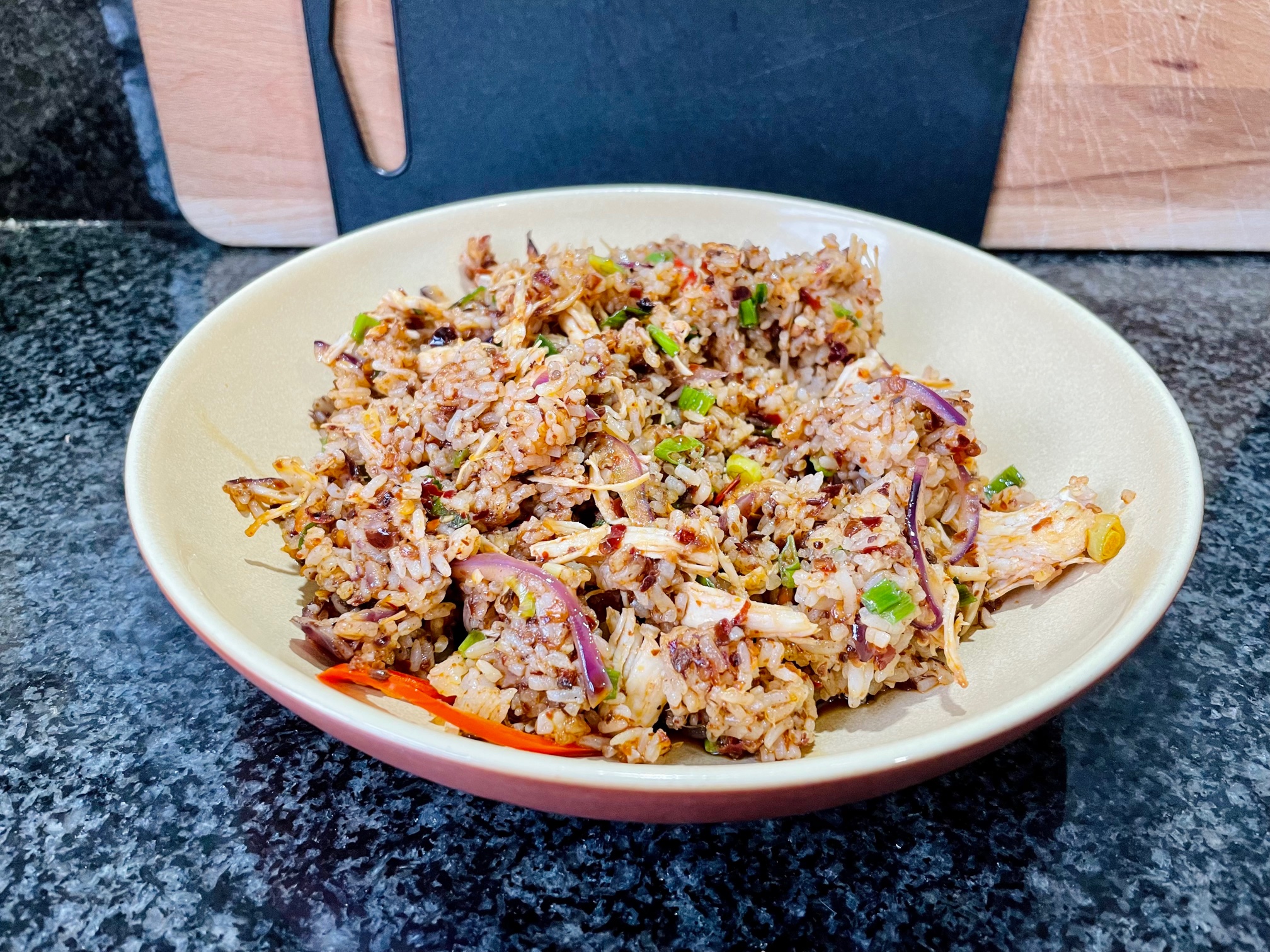
Takeaway review – Banarasi Kitchen at the Spread Eagle

As of October 2022 Banarasi Kitchen is no more and a new Indian kitchen, called Bagheera, will be operating out of the Spread Eagle under new management.

In its capacity as The U.K.’s Largest Town™️ Reading has many neighbourhoods and tribes who live in them. Some people are proud Caversham residents, some are firm supporters of Katesgrove, others fly the flag for New Town, or the university area. Just like having a favourite chippy, everyone has their own opinion and could happily argue the merits of living round the corner from Geo Café or Pau Brasil, just down the road from the river or from the Harris Garden.

Personally I’ve always lived either in the centre or on the east side, and I grew up in Woodley so I’ve always been more familiar with that end of town; the west side, out towards Tilehurst, remains a bit of a mystery to me. Despite that I have a huge fondness for west Reading, for its vitality and its charm. There’s always something going on out that way, and if you walk from the Nag’s Head to Double-Barrelled down the Oxford Road you see Reading in all its diverse glory. I get cross about the criticism that part of town gets: a lot of it always feels, to me at least, like poorly disguised bigotry. Something about that mosque really seems to bring out the worst in some people.

And there’s more to west Reading than just the Oxford Road: the Bath Road is grand and sweeping, with beautiful tall houses at its eastern end and the likes of Florida Court, green-roofed, pretty but incongruous, further down. The Tilehurst Road also has a lot going for it, and there are some lovely houses between it and the Oxford Road: Brunswick Hill, for instance, is always a good source of house envy. And off those main roads you can see lots of pretty little whitewashed houses with porches – places like Hollins Walk, or Benyon Court. You could almost describe them as Instagrammable.

And however well you think you know it, west Reading always throws up surprises. The fact that there’s a football ground not far from Double-Barrelled, for example, or the absurdly photogenic Wilder’s Folly a short distance from IKEA. I recently asked on Instagram, after a meditative coffee sitting up on Balmore Rise, what people’s favourite spots in Reading were. Several people mentioned McIlroy Park and its splendid view of the town: I’d never even heard of it before, and now it’s on my to visit list.

I also maintain that West Reading has always been Reading’s most interesting area in terms of food and drink. Something about it encourages people to try new things and take risks: it has Reading’s best beer pub in the shape of the Nag’s Head, and the Castle Tap and the Forester’s Arms are, in happier times, also worth a visit. It can claim to be the birthplace of Reading’s burgeoning coffee scene – the first Workhouse was there, back when C.U.P. and Tamp were just useful Scrabble words.

More to the point, it has consistently played host to a selection of some of Reading’s best restaurants. The wonderful and much-missed Bhoj plied its trade on that run of shops opposite Workhouse, and there was a halcyon age where Workhouse also allowed I Love Paella to operate out of its kitchen on evenings and weekends.

Bhoj and I Love Paella are sadly no more, but Kobeda Palace remains one of the best (and best-value) restaurants in town, and Bhoj has been replaced by Oishi, bringing sushi and sashimi to west Reading. I miss Tuscany, the brilliant Polish pizzeria a tiny bit further down the road, and the Jolly Fryer closer to town. Both were perfect for lining the stomach before a session at the Nag’s, but the other thing about having such a vibrant scene is that there’s always somewhere to take its place: I still haven’t reviewed Palmyra, the Lebanese restaurant which opened on the Oxford Road a while back, for example.

All this brings us neatly to Banarasi Kitchen, an Indian restaurant operating out of the Spread Eagle pub, between the Oxford and Tilehurst Road. They began cooking there last year and the pub joined Instagram to promote its new offering. Gradually I started to hear some noise about the food being worthy of investigation, and when I announced that I was going to start reviewing takeaways several people on Twitter told me I needed to check it out.

Banarasi Kitchen has a famous fan, too: none other than Naomi Lowe, the gluten-free genius behind Nibsy’s, who lives nearby and told me it was well worth a try (she particularly recommended the daal yellow butter fry, “although I bet you won’t have it with chips like I do”). That was all the encouragement I needed, so I fired up my laptop on a dreary Tuesday night, ready to order. But before I did that, I decided to consult a friend of mine who has forgotten more about Indian cuisine than I’ll ever know: I asked Nandana, co-owner of Clay’s Hyderabadi Kitchen and semi-regular fixture in the Guardian, what she thought of the menu.

“It looks decent.” she said. “I’m interested in the rye ke aloo, mustard-infused potatoes. That’s a very popular dish from west Bengal, close to the border with Bangladesh. I can see a few dishes from southern India too – murg kori gassi from the south-west coast and sea bass moili from Kerala.”

The menu struck me, from my inexpert point of view, as nicely balanced between some specific regional specials and an approachable mixture of more well-known dishes. So if you want to eat a rogan josh, a jalfrezi or a korma you can, and you can add onion bhajis or samosas if you like, but there are also momo and chaat, Punjabi cholay and railway lamb if you want something more off the beaten track. They even do fish and chips, burgers and salads, and a kids’ menu – which if nothing else is helpful if you really fancy a curry but the rest of your household is more conservative. Mains go from ten to thirteen pounds, and most starters are less than seven pounds.

Banarasi Kitchen is on JustEat, Uber Eats and Deliveroo (all under slightly different names) but I wanted the restaurant to take as much of my money as possible, so I phoned the restaurant to place my order directly. My older readers might remember that this used to be the only way it worked when getting takeaway – you rang them up, the line was invariably terrible, the place always sounded packed to the rafters and half the conversation consisted of you repeating yourself, or asking the person on the other end of the phone to. You read out your card details, you hoped they’d taken your address down correctly, you put the phone down and you waited, you waited and then you waited some more.

There was no such problem on this occasion, so I read out my order, gave my address and postcode and listened as the man on the other end of the phone read it back perfectly.

“Do you need my card details?” 

“No, we’ll take payment at the door.” This was another development since I last ordered a conventional takeaway, which must have been, I don’t know, around four years ago.

“How long do you think it will be?”

“Around forty minutes.”

This struck me as reassuring – I live a ten minute drive from the Spread Eagle, and if the ETA had been quicker I might have been concerned. In the event, it was just over an hour before my doorbell rang, during which time I hadn’t been constantly checking my phone to watch an icon of a scooter meandering round Orts Road or, worse still, standing on the bridge over the Oracle for five minutes. My driver may well have got lost, but I didn’t know about it and that suited me fine: it turns out that ignorance is bliss after all.

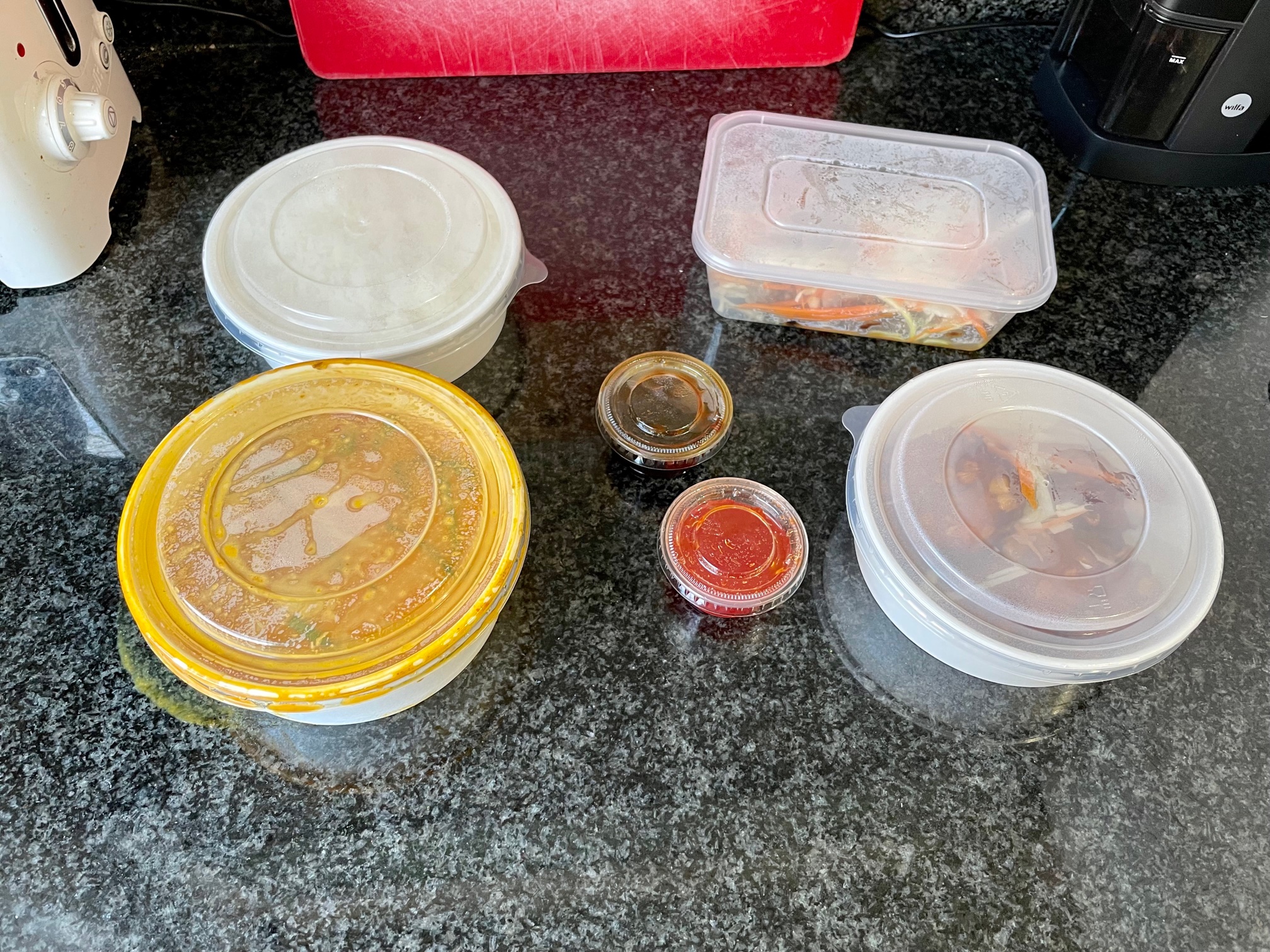
Sometimes, even when someone is wearing a mask, you can tell they’re smiling, and that’s how it was with the gentleman standing on my doorstep. He was wearing a shirt and tie, which immediately made me take to him, and he asked me how I’d heard about Banarasi Kitchen. I decided to go for the short version – “I’ve seen you on Instagram” – and quickly tapped my PIN in on the card reader before grabbing my food from his insulated bag. The packaging was a mixture of foil-lined bags for the bread, conventional plastic tubs for the curries, rice and chutneys and, randomly, a foil container for one of my starters. I’m pretty sure, though, that everything was recyclable – and, equally importantly, everything was piping hot.

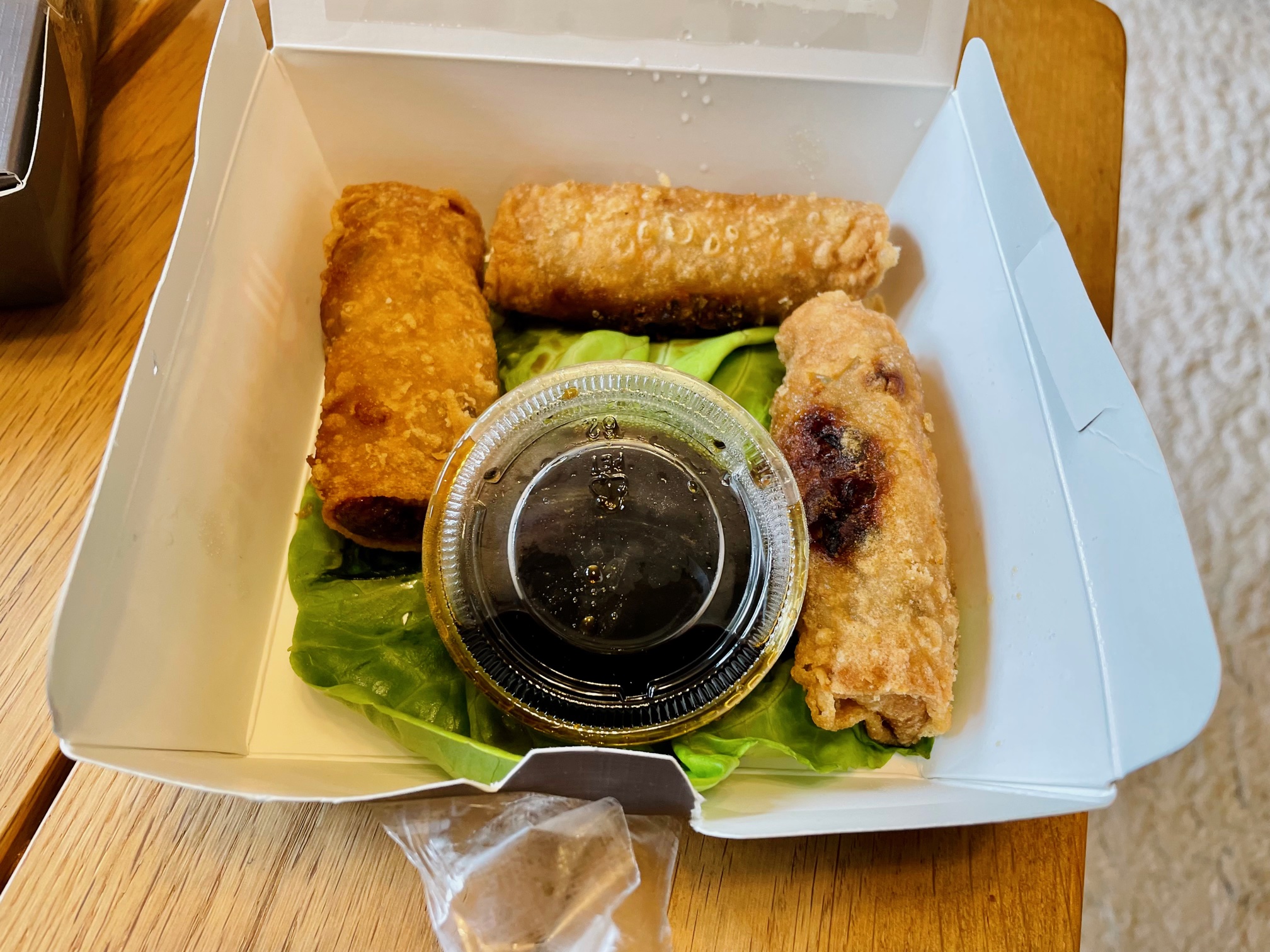
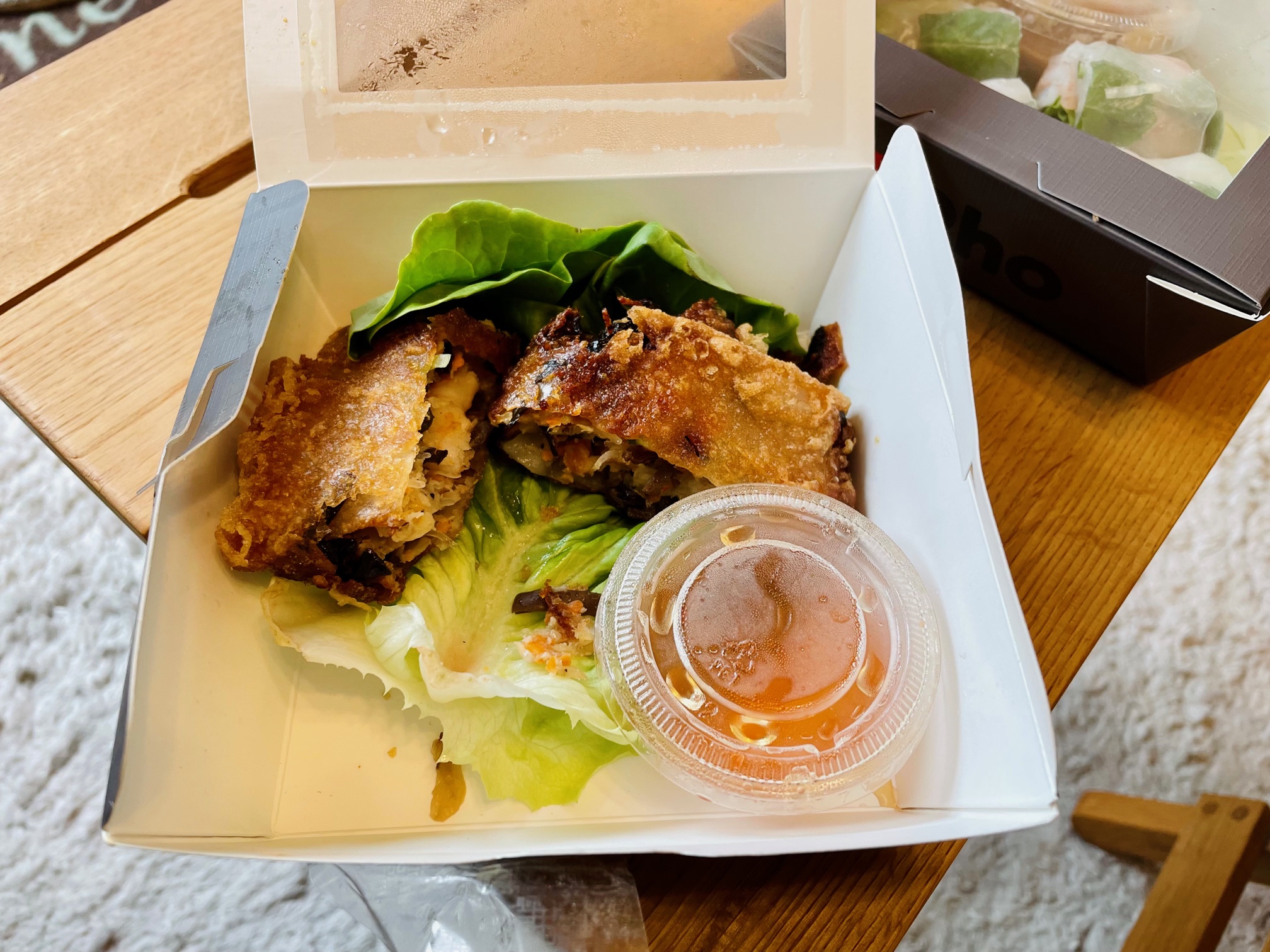
We ordered a couple of starters to eat as sides, because with a takeaway everything comes at once. The lamb samosas were rather good, with a little fire to them, although the decision to use filo pastry instead of something thicker made them feel slightly insubstantial. There were three of them, which might have caused more disagreement if there hadn’t also been three very respectable lamb seekh kebabs. I made do, not that it felt like any sacrifice, with two of these – and they were almost impossibly soft, well spiced and well seasoned. 

The two chutneys that came with the starters were very good indeed – one bright and zingy with bucketloads of mint and coriander, the other sweet with tamarind. I thought I would have liked some raita for the kebabs, but halfway through I found I was more than happy without it. 

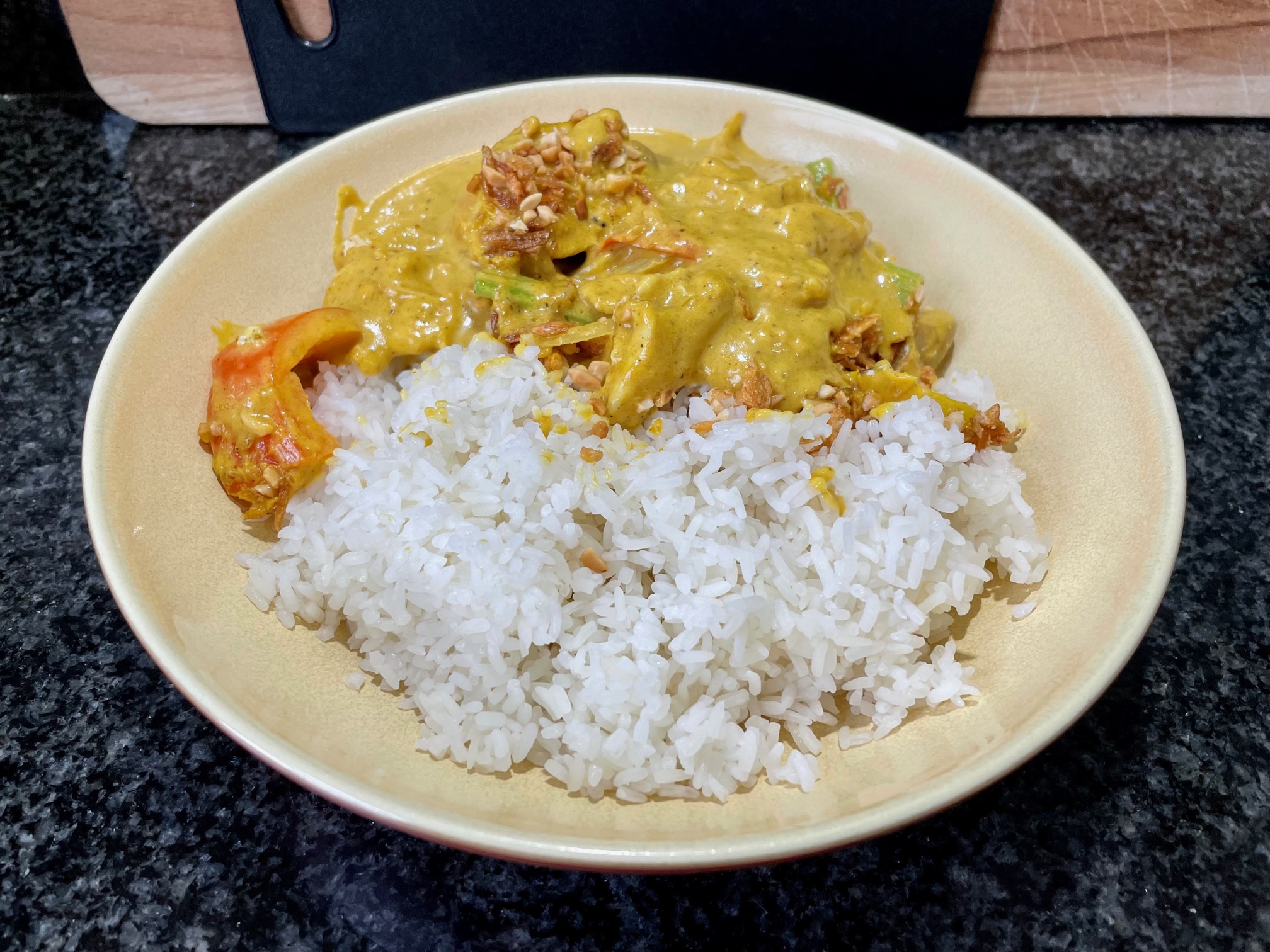
I’d picked the murg kori gassi, a Mangalorean chicken curry, after hearing Nandana’s thoughts on the menu and I’m so happy I did. Even on opening it, it didn’t feel like a boring curry made with a generic base sauce – it didn’t look like it had been near a tin of condensed tomato soup, and was a deeper hue with a good helping of curry leaves on top. It was an absolute delight: there was plenty of coconut in there which transformed every forkful of basmati rice and the chicken was both generous and tender. The heat in this dish built perfectly and it reminded me of dishes from Clay’s, in that the sauce was a feature attraction in its own right. The meat was almost secondary: next time I order from Banarasi Kitchen I may well go for the chickpea curry, or something with paneer.

I also couldn’t not order the daal yellow butter fry after hearing such glowing reports from Naomi. Again, it was an excellent decision to defer to someone better informed: this was everything daal should be, earthy and comforting with a good dose of beautifully pungent garlic. 

And although I ate some of the daal with rice, it was even better with bread. We’d ordered a keema naan, which I’m told was rather nice, and a laccha paratha which was probably the only disappointment of the meal – I was hoping for something buttery with plenty of layers, like the excellent example by House Of Flavours, whereas this was a little stodgier and closer to a naan. It did however do a brilliant job when it came to transporting daal from bowl to mouth, and it’s my fault anyway for not ordering chips as I was told to: a rookie mistake on my part.

My final choice, chilli chicken, was a dish I’ve ordered in many Nepalese restaurants, from Sapana Home to Namaste Momo. It’s a beautiful dish when done well, with a hot, sharp and sour sauce which contains, among other things, a little tomato ketchup. Banarasi Kitchen’s version was easily one of the best I’ve had, with a lovely acrid kick that made every mouthful perfectly balanced between pleasure and pain. The chicken was tender, although the pieces were strangely uniform in shape compared to those in the murg kori gassi, and the peppers and onions had the right amount of crunch for contrast. As with the murg kori gassi, every molecule of sauce was swept up and finished off: this just wasn’t food you left if you could possibly help it.

The whole thing made me incredibly happy on an otherwise nondescript evening, and reminded me of the joy that a truly good takeaway can bring – not having to worry about food, or masses of washing up, and just putting yourself in somebody else’s hands for one night. I miss restaurants, but I do also very much like being able to eat delicious food while watching crappy TV, without having to go out in the rain or change out of my comfies. When food is as good as Banarasi Kitchen’s, you don’t feel as if you’ve made any tradeoffs at all.

Our dinner – two starters, three curries, two portions of rice and two breads – came to just under forty-eight pounds, and when I looked at my bill I saw that the restaurant had knocked ten per cent off – impressive value when you think that they don’t charge for delivery. There are all sorts of offers and discount codes and vouchers on the delivery apps, but I would go direct to the restaurant any day of the week. I’m just sorry I didn’t get to leave them a tip, but I’ll make sure I do next time. Hopefully telling everybody how good they are (unless you’re one of those people who already knows) will do my bit to pay it forward.

So there you have it. I’m committed to reviewing a different takeaway every week for the duration of this third lockdown and I’m beginning to realise that it’s a lose-lose situation in some respects. If the meal is bad, you never want to use that restaurant again, and if it’s good you are disappointed that you have to move on to the next one. For those of you anywhere near west Reading I think the emergence of Banarasi Kitchen is extremely good news, and if you haven’t tried them yet I’m looking forward to seeing what you think. When life goes back to normal, I’ll be heading there in the flesh to review it properly. Not only that, but I hear the Spread Eagle has a decent quiz: I suspect I’ll be so glad to be in a pub again that I won’t even mind embarrassing myself by taking part.

Banarasi Kitchen
The Spread Eagle, 117 Norfolk Road, Reading, RG30 2EG
0118 9574507

https://banarasikitchen.com
Order via: Direct through the restaurant, or via Deliveroo, JustEat or Uber Eats

Takeaway review: Firezza

I’ve always been a bit bemused by the huge fuss in this country about burgers, which has been around since before I started reviewing restaurants and, for the time being at least, still shows no sign of abating. I used to like to moan that they’re just a sandwich until I even bored myself, and although the better examples – Honest in Reading and the likes of Patty & Bun further afield – have helped me to appreciate them more they’d still never be my first choice. But a really good pizza – even if it’s just a big bit of cheese on toast with a fancy accent – is another matter altogether.

Oddly, there’s something about their universality that makes them an especially comforting thing to eat abroad, if you can find somewhere that does a really good one. I’ve eaten them in Le Briciole in Paris, one of my favourite places for a low-key boozy lunch while pausing between beautiful boutiques, and in Linko in Helsinki, where they remain one of the safest meals you can have without risking having to sell a kidney. I’ve eaten pizza all over the place, come to think of it – one strewn with fiery merguez at Otomat in Ghent, another in the impossibly cool Old Scuola in Rotterdam, all concrete and marble, clean lines and attractive, cosmopolitan clientele. That meal was disappointing, actually, but only viewed through the prism of 2019; I’d sacrifice one of my remaining aunts to Satan for such a city break and such an underwhelming dinner right now.

When I went to Bologna I of course had pizza there too, even though it isn’t from that part of Italy, and on my last trip abroad before the world changed, in Copenhagen, I ate at another ridiculously hipster pizza place called Bæst in Nørrebro, just opposite the To Øl taphouse. The pizzas were small – we’d ordered three between the four of us which turned out to be one of my regrets of the trip – but even so they were exemplary: one, all leopard-spotted puffy crust and tiny grenades of ‘nduja, was one of my highlights of the holiday. The only place I never seem to bother with pizza is on trips to Spain – there, for some reason, it feels like it would be taking the piss to stray from tapas.

Back in the UK, I’ve found excellent pizza more difficult to come by – difficult, but not impossible. There are good examples in Bristol – Flour & Ash has closed down, a sad casualty of Covid-19, but Bosco is still as good a neighbourhood pizza restaurant as you could hope to find, in a neighbourhood where I hope to live in my next life. Closer to home, I’ve grown to love Newbury’s Lusso: how I miss that half hour lazy train journey, stopping everywhere in the West Berkshire countryside and ambling past a giant Harrods depot, seemingly plonked there out of nowhere. And in Reading, of course, you can’t talk about pizza without talking about Papa Gee in general, and their legendary Pizza Sofia Loren in particular.

Takeaway, though, is another matter: much as I love pizza I practically never order it as a takeaway. I’ve tried Franco Manca through Deliveroo a couple of times, and what arrived, although technically a pizza, was so forlorn that it quite put me off doing it again. And I would just never order Domino’s or Papa John’s these days: as I get older I get a clearer idea of what, for me, constitutes empty calories and that kind of thing is very much on the list. This month I’ve taken to watching The Masked Singer on ITV of a Saturday night – because January is nothing if not the month for masochism – and there are what feel like constant ads for Domino’s. In one, there’s a slow-motion clip of someone lifting a slice of pizza up where you see the ropy, gloopy, stringy ribbons of cheese connecting it to the rest of the pizza, straining but not snapping, almost endlessly elastic: to be honest, it makes me want to barf.

Enter Firezza, about which I have heard good things. It’s a small chain of pizza delivery places – most in London but with three random branches outside the capital in Exeter, Reading and Tunbridge Wells. The Reading branch is up on the Shinfield Road, and they used to trade there a while back before closing and then, a few years later, reopening under the same name in the same spot: your guess is as good as mine. The website tells a familiar story – the founder went to Naples, fell in love with authentic pizza and decided to recreate it back in Blighty – but it did seem to be a genuine small chain rather than a franchise arrangement, and the whole thing looked interesting enough to be worth a try.

I ordered through Deliveroo, only subsequently realising that you can order directly through the website: a schoolboy error which will teach me to do a little more research next time. That said, I had a Deliveroo credit to use up from a stone cold Bakery House delivery at the start of the year, and the restaurant was doing an offer through Deliveroo where orders over £20 were half price – so what could go wrong? This doesn’t turn out, I’m afraid, to be a rhetorical question.

The menu has a decent selection of pizzas in Firezza’s trademark square shape – 25cm squared, the equivalent of a 12 inch conventional round pizza – and gluten free bases are available, although they cost more (as do vegan cheese, extra toppings and – a bit stingy, this – basil or rosemary). As is the fashion, ‘nduja makes an appearance on several of the pizzas and there’s also a white pizza with Sicilian sausage and friarelli. 

There are also enough pizza toppings to inflame the militant wing who think chicken or, say, pulled pork don’t belong on pizzas. One of the pizzas boasts “imported Buffalo mozzarella D.O.P.”, which does make you wonder what kind of mozzarella they’re putting on all the others. There is also a variety of sides – chicken or mozzarella dippers, chicken wings, potato wedges and so on, but they all felt a bit Iceland for me so we passed on those. We ordered a couple of pizzas, sat back and relaxed. I even cracked open a beer.

Technology has achieved many things which twenty years ago would have been unthinkable, both good and bad. One of them, which I would say falls into the latter category, is the ability to see your delivery driver getting lost in close to real time. In the good old days, they would have taken roughly half an hour to get to your house while you sat there saying “what’s taking them so long?” to your significant other. 

I still don’t know whether I miss the good old days, and whether ignorance is truly bliss, but now, thanks to the wonders of smartphones and GPRS you can know precisely the answer to that question as you watch your driver buffeted around on Reading’s one way system, hurtle past the turning for your house, meander down the Kings Road all the way to Cemetery Junction, make some kind of u-turn, come back to the vicinity of your house and then do it all over again. There’s an option on the Deliveroo app where you can contact the driver, so we did that. It went to voicemail. Twice.

He eventually pulled up outside our house about twenty-five minutes after setting off, with a big smile.

“Did you get lost?” I asked, which is silly really because we both already knew the answer to that. It’s a ten minute journey door to door.

“I’m sorry. It’s my first day, and I’ve never driven round Reading before.” He beamed again as he handed the boxes over. “It’s still hot.”

Getting them quickly into the living room, it became apparent that he was half right – the boxes were indeed hot, but that’s because they’d absorbed all the heat that had come off the pizzas, never to return. The pizzas looked handsome enough, though, so we decided not to waste any more time and tucked into them. We took off the little plastic trivets (which I discovered during the course of researching this are called either “pizza savers”, “pizza stools” or – not sure I understood this one at all – “pizza nipples”) and got stuck in.

Another problem was that only a cursory attempt had been made to cut the pizzas into slices – a few small incisions, but not enough that you could actually break it into slices without grabbing a big knife. Minor, really, but a nuisance none the less. 

The more successful of the pizzas, I think, was the Porcini Di Bosco, a white pizza with porcini mushrooms, field mushrooms and truffle cream. There were plenty of fat, firm mushrooms on this, including some nicely meaty porcini, and the truffle cream was enjoyably aromatic: truffle isn’t for everybody, but I’ve always been a fan. The problems here were all from the delivery – partly because it just wasn’t hot enough and partly because a lot of the topping, randomly, had all shifted to one corner of the pizza. It was as if it had been stored at an angle, or had suffered from the driver going round a hairpin bend at speed.

The second pizza, the Gorgonzola, was meant to have gorgonzola, pepperoni and fresh basil on it. The basil had gone completely walkabout as, to a large extent, had the gorgonzola – in total we had two slices where it could be detected at all. So what was left was a pretty ordinary pepperoni pizza, apart from one slice in the corner which also had no pepperoni at all. So it was about 33% Gorgonzola, 16% Margherita and, all told, about 99% meh. 

What’s saddest about all of this is that the base itself, the dough, was really pretty good. You could taste in every mouthful what might have been, which in some respects made it worse. We also ordered two optional dips for the crust – garlic mayo with rosemary, which Zoë liked, and smoked barbecue which I thought was just okay. Our meal for two, not including rider tip, came to just under thirty-nine pounds before applying their 50% off promotion and just under twenty pounds after.

Reviews like this make me very glad that, for takeaways at least, I’m not giving out ratings. Some of what was wrong with the meal – the uneven toppings, that missing gorgonzola – was the restaurant’s fault, but the majority of the problems rest with Deliveroo. And even then, I feel bad picking on a delivery driver: it’s a thankless job, not a brilliantly paid one and not one I’d fancy doing. And yet I don’t think it’s asking too much that a delivery driver either knows how to get around Reading, or has a satnav that will take the hard work out of it, or phones a customer when he’s completely lost, or picks up the phone when a customer rings. 

Whether that’s the driver’s fault or Deliveroo’s for not having very stringent standards I really don’t know, but either way it puts me off using Deliveroo again unless the restaurant, or dark kitchen, is slap bang in the centre of town. I wish I’d known beforehand that I could order directly through Firezza: I might have paid more but I probably would have had a much better meal.

So is Firezza for you? Well, possibly: if you collect from them, or you live in Katesgrove, or Whitley, or the southern end of town, and you order directly through them, or you have a house that is relatively easy to find and you get a Deliveroo driver who has ever been to Reading before I do think it’s a superior alternative to Franco Manco or the likes of Papa John’s. I respect what they are doing, and I can see other customers could easily have a better experience than I did. 

The problem with reviewing takeaways is that they are so much more localised than conventional restaurant reviews – I know those of you down the Oxford Road won’t find this terribly useful (in fact, it will probably make you miss Tuscany) and my devoted cadre of Caversham readers will quite rightly stick to Papa Gee. Speaking for myself, I wouldn’t rule out placing an order directly on the restaurant’s website at some point in the future. One day. But for now I’ll stick to adding a pizza to my Waitrose delivery, cringing my way through The Masked Singer and daydreaming from time to time of Paris, of Copenhagen, of Rotterdam and of lovely, sleepy Newbury.

Firezza
256 Shinfield Road, Reading, RG2 8EY
0118 3382694

https://firezza.com/reading
Order via: Direct through the restaurant’s website, or through Deliveroo or JustEat

Takeaway review: Tasty Greek Souvlaki

To read a more recent review of eating in at Tasty Greek Souvlaki, click here.

A couple of years back – what feels like a lifetime ago, in fact – I found myself in Guildford at lunchtime on a summer’s day. I’d taken the train there, back when you could safely do that, for a mooch around and a spot of shopping (back when you could safely do that, too) and my thoughts turned to lunch, as they generally do pretty much any time from half-eleven onwards. I knew a place that did the most incredible bacon sandwich – toasted sourdough bread, plenty of just-right rashers of smoked streaky, Stokes brown sauce on top – but having marched to the top of High Street, I found it had closed down. What to do?

Salvation came in the form of a little souvlaki joint tucked away on a sidestreet near the castle, just down from a fantastic cheesemonger. The sun was out, and there was one table left outside: it was just too perfect. So we nabbed it, and fifteen minutes later I was eating a gyros wrap stuffed with meat and chips, accompanied with a glass of Cypriot beer for no other reason than just because. There was something about it – something about eating outside when it’s warm, something about the golden colour of lager caught in a ray of sunlight, that makes you feel like you’re on holiday even when you’re not. I’ve missed many things over the last twelve months, and one of them is lunches like that.

I have a long-standing love of gyros, of Greek food and of Greece in general, born of numerous holidays there over the years. When I was thirteen my parents took me to Corfu, the first time I’d ever been abroad, ever been on a plane, and I credit that holiday with kickstarting my insatiable curiosity about food. I ate stifado – rich stew with beef that fell apart, soft baby onions and the faintest hint of cinnamon – until it came out of my ears and enjoyed the lemonade, so exotic and so different from the clear, tasteless stuff back home.

The last time I went to Greece it was to Parga, a beautiful harbour town on the mainland not quite so well-known to British tourists. I remember sitting outside a little gyros shop at the bottom of the main street, having a long lazy lunch, drinking another beer and feeling like nothing could be that wrong with the world. Even seeing the frozen pillars of meat being unloaded from a van just outside could put me off my meal: it was sheer bliss.

It’s hard to believe that was over seven years ago, but Covid robbed me of a holiday last June in Rhodes. I had such wonderful plans (if you can use the word “plan” when you aim to do as little as possible) of sitting by the pool reading trashy novels and drinking beer and rosé, taking a taxi down to Lindos in the evenings to eat at restaurants and drink in bars. There’s one restaurant in the square called Mavrikos that does the most beautiful fish and seafood, and there are places that sell ambrosial frozen yoghurt, but I could guarantee that gyros would feature in that holiday too.

Back in January 2021, in the real world, Tasty Greek Souvlaki was an obvious choice for my first takeaway review of the year. It was one of the first openings after lockdown began, so one of the first new restaurants I hadn’t yet had the chance to review. It had opened on Market Place, where MumMum used to be – and heaven knows, 2020 was a difficult enough time to open a restaurant as it is without the additional handicap of being right next to Blue Collar and facing intense competition two lunchtimes a week. 

Nevertheless, most of the reports I’d heard had been very good: my other half had a gyros wrap from there over the summer when they did some catering for her work and had raved about it for weeks. I’d even been on the verge of reviewing their lunchtime offering, on one of the last days when it was warm enough to sit outside, just before our second lockdown was announced. So when Friday night came around and I fired up my phone to decide what to order, Tasty Greek Souvlaki was uppermost in my mind. Could it transport me back to Greece, if only for a few happy moments?

Tasty Greek Souvlaki gives you the option of ordering for collection by phone, but if you want delivery you have the choice of the big three: Deliveroo, JustEat or Uber Eats. I opted for Uber Eats on this occasion, partly because my last two experiences with Deliveroo had been truly awful and I wanted to give Tasty Greek Souvlaki the best possible chance, and partly because I had an introductory credit with Uber Eats burning a virtual hole in my virtual pocket. 

The menu gives you a wide range of options at various price points, from wraps to merida (meat on a plate with salad and chips), club sandwiches and mixed grills. You can even lob in a few additional skewers, if you’re feeling particularly hungry, and there are a handful of sides. This was well suited to takeaway food, because there weren’t really any starters: doing starters and mains by delivery always means you either have to keep something warm in the oven, eat something that has gone cold or hoover food so fast you need to mainline Gaviscon.

I wanted to try a bit of everything, and the menu had the perfect thing for me – the mixed grill for two, which includes a lamb, pork and chicken skewer, a “greek kebab”, some sausage, some pork belly and mixed gyros, along with chips, pita, salad and dips. You get all that for the princely sum of twenty-five pounds ninety-five, and although I found it hard to imagine wanting more food than that I added some halloumi to the order, more out of curiosity than anything else. 

Along with the service charge, and not including the rider tip, this came to just shy of thirty-five pounds: my delivery fee was low because I live a short drive from the restaurant, so your mileage may (literally) vary.

A nice touch which distinguishes Uber Eats from Deliveroo is that you pick the amount to tip the driver but that is provisionally added to the total and you reconfirm it at the end. I really liked that. I strongly believe that people should tip delivery drivers well, especially in a pandemic when they are doing work many of us wouldn’t fancy – but that strong belief has been tested over the last few weeks by Deliveroo drivers, including one who managed to get lost on the three minute drive from Bakery House to my house. I’m not convinced that some of Deliveroo’s drivers have ever been to Reading before, a view only reinforced by the fact that my last one pulled up in a black cab after I had spent ten minutes tracking him going anywhere but in the vague direction of my front door.

There were no such hairy moments with this order, and I tracked my driver making the smooth five minute journey from the restaurant to my house, only panicking slightly as he overshot and had to be waved back to the front door where we were eagerly (and hungrily) waiting for him. The order was double bagged for extra insulation, and felt hot as we rushed it into the kitchen. The whole process, from placing the order to arrival, had taken just over twenty minutes on a Friday night: not bad going at all.

Reviewing takeaways is going to involve talking about very different things to the restaurant reviews. In a restaurant, plating and presentation are all perfectly reasonable things to talk about. At home, if it looks messy you’ve nobody but yourself to blame, and you might be prioritising speed over style: who could blame you, for that matter? Instead, we get to talk packaging, so here goes: the order arrived in two cardboard boxes and a few plastic tubs – hot food in the boxes, cold food in the tubs. For the salad and dips, this made perfect sense but for the halloumi, served on a bed of lettuce, it just meant that the halloumi went colder quicker and was decidedly lukewarm on arrival.

There was no such problem with the cardboard boxes, which were nicely branded and had a reflective silver lining to keep the food hot. One was filled with herb-flecked chips and big pillowy triangles of pitta bread, the other was absolutely replete with meat, a carnivore’s delight. The photo doesn’t do justice to just how much meat there was – aside from the kebabs and sausage you can see, there was another kebab tucked away underneath along with some more pork and the whole thing was on top of an awful lot of gyros meat, both chicken and pork.

We dished it all out onto plates as quickly as we could and got stuck in. We were more interested in it being quick than photogenic, which is why you have no photo of it all on the plate: I’ll do better next time, I promise. But it worked, because, with the exception of the halloumi, everything that was meant to be hot was hot. If you’re eating at the table (as civilised people do) rather than on your lap in front of Rick Stein’s Cornwall (as I did) I can see it would make sense just to stick it all on the table and let people pitch in, especially if you grab a mixed grill as we did. 

And, on the evidence of my meal at least, you definitely should. The souvlaki, ironically given the restaurant’s name, were probably the least remarkable thing we had but were still decent – skewers of well-cooked chicken, lamb and pork. The lamb could have done with being a little softer and all of them would have benefited from more evidence of marination, but they all went perfectly with the dips – both a tomato one which was more tangy than spicy and an exemplary tzatziki full of julienned cucumber and a hefty whack of garlic.

Also excellent with both dips were the chips and the pita. I don’t know if Tasty Greek Souvlaki make their own chips, but if they don’t they’re very good at making you feel like they have. They were hot, crunchy and delicious and the speckled herbs all over them – oregano, I assume – were a very nice touch. And the pita was fluffy and downright terrific – better, or at least more to my taste, than Bakery House’s. The salad was just lettuce, peppers and cucumber – undressed, uninteresting and probably just there to offset some of the guilt of everything else. Two black olives failed to rescue matters: that’s a lot of heavy lifting to expect from olives. The halloumi was the biggest disappointment, as I said earlier, served on top of more undressed leaves and left to sweat in a plastic tub.

The rest of the mixed grill was where you found the really interesting stuff. A slab of pork was described as pork belly, but felt more like shoulder, as it lacked the fatty tenderness of belly. None the less, I thoroughly enjoyed it. I’m always dubious about things like “village sausage” as they can sometimes have a disturbingly smooth, homogenous texture (“all eyelids and arseholes”, as my ex-wife used to say), but this one was coarse, robust and herby. The “greek kebab”, essentially a kofta, was even better – juicy and deeply moreish. 

All of what I’ve described so far would easily have been enough dinner for two people. But, just as we are so often drawn to things that aren’t necessarily good for us, the thing I really couldn’t get enough of was the gyros meat. It was worth the price of admission entirely on its own – ribboned shavings of chicken and pork, some crunchy-crispy, some soft and yielding but all of it deeply savoury and utterly drenched in flavour.

There was actually more of it than we could physically eat – and that’s saying something where I’m concerned – but having left some, I felt a deep sense of sadness that I hadn’t sacrificed a mouthful of souvlaki or that pointless halloumi so I could fit more in. It stayed in the mind for the rest of the evening, and I’d be lying if I said I hadn’t thought about it a fair few times since.

Normally, my peroration would conclude with a rating and I’ve thought long and hard about whether to include them in takeaway reviews. The problem is that when you review a restaurant meal, you’ve reviewing a collection of factors that are all, broadly speaking, under the control of that restaurant. Whether it’s cooked right, whether it sits there under the lights too long, whether it looks like a dog’s breakfast. Whether the wait staff are lovely and welcoming, whether the room feels like a home from home. If I eat somewhere and I’m not a fan I can point out why, but it will usually be down to the restaurant.

But with takeaways there are so many variables in a chain of events which isn’t all down to the restaurant. Some are – the selection, the food, the quality, the packaging and the pricing. But equally, some significant ones are not – like who delivers it, how they deliver it and how those staff are treated and incentivised. On this occasion everything worked perfectly, but if it hadn’t and it was the driver’s fault it would seem harsh to give the meal a poor rating which, in your mind, could well reflect on the restaurant alone. Like so many things about the post-Covid reality, this is complex and nuanced and I’m reluctant to boil it down to a number. 

If that doesn’t suit you, and I’ll only put it like this on this one occasion, I’d say that ordering Tasty Greek Souvlaki through Uber Eats was a four star experience. I liked a lot of what I ate, I absolutely loved some of it, I thought it was extremely good value and I would do it again. Will that do? Possibly not: I’m sure some of you will be saying “what you’ve written sounds like a five star review to me”. That’s the other thing about ratings, they always kick off that discussion about whether you’ve been too kind, or too harsh.

Let me put put it this way instead: in the good old days, I would visit restaurants, love them and start mentally planning my next meal and what I would pick from the menu before I’d even paid my bill. In this brave new world, having committed to reviewing a takeaway every week in this third lockdown, I found myself wondering when I could fit in ordering a gyros wrap from Tasty Souvlaki for lunch into the bargain.

Surely there would be one day when I simply couldn’t face yet another cheese and pickle sandwich? Would it be so terrible to accidentally find myself on Uber Eats again? Perhaps I could get a cold beer out of the fridge that day and maybe, just maybe, there would even be sunshine. To my mind, food remains one of the best forms of escapism there is, and it’s beautiful, now more than ever, to be reminded of that. On the television, Rick Stein was knocking up something magnificent in his fancy Cornish kitchen but, somehow, I found I had no food envy at all. 

Tasty Greek Souvlaki
20 Market Place, Reading, RG1 2EG
0118 3485768

https://tastygreeksouvlaki.com
Order via: Deliveroo, JustEat and Uber Eats, or direct with the restaurant for collections.

Announcement: Takeaway reviews!

Happy New Year everybody! I hope that you’re keeping your resolutions, if you made any, and that you’re being kind to yourself if you’ve broken them. To be honest, in 2021, with things as they are, you could do a lot worse than giving yourself a year off borderline impossible targets for arbitrary self-improvement: most people, after all, get quite enough of that sort of thing in the workplace. 

Personally I’m aiming to follow the excellent example set by my friend Dave who succinctly said “New Year’s Resolution: stay alive”. That’s as ambitious as I plan to be this year, and anything beyond that is a bonus. That said, I did tell myself I would try and write something this year, especially in this third lockdown when we all have plenty of time on our hands – enough, who knows, that you might even fancy reading a weekly blog post from me. 

I did wonder about several different options. I briefly thought about bringing back last year’s series of interviews – there are plenty of interesting people in Reading’s food and drink scene (and beyond) that I never got round to quizzing. And I did wonder about doing another series of diaries, but I think they were probably a little niche by the end. Besides, there are only so many times (and only so many different ways) that you can ponder the eternal verities while shuffling round the Harris Garden for the three hundredth time. 

I also considered doing a series of short pieces in praise of particular aspects of Reading and Reading life – you know, to provide the unrelenting positivity with which I am so strongly associated. I even got as far as drawing up a list of candidates for that one: perhaps another time.

But really, that would be like turning up to a gig and playing nothing but songs off the new album that hasn’t come out yet, when everybody wants to hear the hits: the overwhelming response on social media has been that people want me to review Reading’s takeaway options, so takeaway reviews you shall have. The first one will go up at half-eleven next Friday, and I’ll try and put one up every week until the lockdown is over, everybody has lost interest or I’ve contracted botulism, whichever happens first.

Early in the first lockdown, I decided against reviewing takeaways. I said that it wasn’t a level playing field to compare them against eat in restaurants, and that I would feel bad about writing negative reviews. The best part of a year later, I think the landscape has changed enough that it’s worth a go. Takeaways and deliveries have become a big part of most restaurants’ revenue streams over the last twelve months, and they’ve had plenty of time to get good at it, pick a delivery partner or build their own ordering and fulfilment capability. 

And actually, I think the point of reviews is as important as ever: you want to know whether a restaurant constitutes a good use of your money. I still believe that we should be protecting the independents we want to survive, but it seems unfair to draw a line at the start of the pandemic and say that none of the restaurants that has opened since should be supported. It’s very brave to open a new business in times like these: those restaurants deserve consideration, too.

So, here are the general principles. I’ll review a different restaurant each week, and I will try and use a range of different delivery providers – so a mixture of ordering through Deliveroo, JustEat, Uber Eats and (where possible) direct via the restaurant. I’ll only review deliveries, not collection takeaways: mainly because a delivery service that can deliver to me is more likely to be able to deliver to you too, whereas if I traipsed over to e.g. Finn’s to pick up some fish and chips it’s quite possible that lots of people reading wouldn’t be close enough to have the same luxury. 

I know geography will be a problem, and that some restaurants I review won’t necessarily deliver to you, depending on where you’re reading from: that is, I’m afraid, the nature of the beast.

In the majority of cases, I’ll try and review places that haven’t previously been reviewed on the blog. The emphasis on deliveries also opens up some options I couldn’t have previously reviewed – whether that’s the Caversham Park Village Association delivering Caribbean food every Friday and Saturday, or Flavours Of Mauritius which is currently delivery only, or even somewhere like Rizouq down the Wokingham Road which is just too small to eat in anyway. 

I will try to prioritise independent businesses, although I may well also want to try some chain options which come out of dark kitchens, like Shake Shack and Burger & Lobster. And further down the line I don’t rule out trying heat at home meals (as offered by Clay’s, and numerous other high profile national restaurants), although for the time being I’ll be prioritising local restaurants because I want to try and keep my money in the local economy where possible. Let’s see how we go, and how long this lockdown lasts.

My takeaway reviews won’t operate on the same rating scale as the restaurant reviews, because you’re not comparing apples with apples. I’m still making up my mind whether to use ratings at all, but whether I do or not I will try and make sure the review covers things like how long it takes to get to me, whether it’s hot (the most crucial thing of all, obviously) and whether the packaging is wasteful or efficient, recyclable and so on. Sometimes when a delivery meal is disappointing it’s hard to know whether that’s the fault of, for example, the restaurant or the Deliveroo driver: so things won’t always be cut and dried but, as always, I’ll try to be fair.

I’ve had a brilliant response on social media when I put out feelers about reviewing takeaways, and as a result I’ve had plenty of great suggestions and am building up a pretty good to do list that will easily keep me occupied for the rest of lockdown. But I’m always open to more, so if you have any places you’d like to see reviewed please feel free to comment here, or on Twitter or Facebook, or just by dropping me an email – ediblereading@gmail.com.

Does that sound like a plan to you? Excellent. See you back here next week for the first review.

2020: The Year In Review (Part Two)

Last week, in part one of my review of the year, I wrote about all the restaurants and cafés that had closed and opened in 2020. But really, the story of this year in Reading’s food scene is the story of all the restaurants and cafés that don’t fall into those two categories, the ones who have hung in by the skin of their teeth and made it to the end of 2020 – businesses that began January aiming for “thriving” but, at some point over the last twelve months, downgraded their ambitions to “surviving”.

It’s easy to forget, as we all pause for breath at the end of the year, just what a torrid time hospitality has had. This time last year, Reading was a very different place. The biggest blot on the landscape was our benighted branch of Chick-Fil-A, already announced as due to close at the end of its six month “trial” lease in March but still, for the time being, selling chicken and homophobia (only not on Sundays). I never went to Chick-Fil-A, but it’s hard to imagine a meal there could have been as diabolical as my trip to Taco Bell in February.

If you stop to play it all back, the contortions that restaurants, cafés and pubs have had to go through seem like some kind of awful fever dream. In March they were told that they wouldn’t be closed by the government, but that they would have to stay open while that same government told their customers to stay away. Shortly after, they were closed in the first of so many u-turns, but there was then an agonising wait to hear the details of the financial relief available; at least one of Reading’s more popular chains decided to lay their staff off immediately, only to hurriedly rehire them once the furlough scheme was announced. 

The furlough scheme brought some relief, as did some of the grants and business rates relief, but one thing that’s often overlooked is that a reasonable proportion of the aid package came in the form of loans: facing a deeply uncertain future, hospitality had to go into debt to gamble on its own survival. What followed was over three months when restaurants were completely closed, except for takeaway and delivery. Some restaurants decided not to even do that, some took time out to consider their options and some began making the first of many, many changes to their business model (I can’t bring myself to use the word “pivot”, especially as many of our businesses showed so much grace – outwardly, at least – that it looked more like a pirouette). 

On Kennet Island, Fidget & Bob moved to selling groceries, produce and beer along with its fantastic range of sandwiches, coffee and cake. The other side of the river, Geo Café began a veg box delivery scheme, driving to a London market at four in the morning and then doing long hours making drop-offs all across Reading: very welcome at a time when many were shielding and delivery slots were well-nigh impossible to snag (eventually they got their own van in the café’s distinctive livery – I called it the “Kete-van” after its owner, until she told me to stop).

Another notable business in the early stages of our first lockdown was Valpy Street. Some restaurants have always had their own takeaway or delivery capability, and others – especially some of our chains – have always partnered with someone like Deliveroo or Just Eat. But for places like Valpy Street which had never done takeaway, they had to build this from scratch. One of Reading’s earliest adopters, they soon got busy and before long social media was abuzz with people enjoying their fish and chips and their roasts.

One of the most sought-after delivery slots was with Kungfu Kitchen, and there were few sights in 2020 happier than co-owner Steve standing at your front door, masked up, holding a bag of goodies. I soon became an expert in ordering KFK dishes that travelled well – that deep fried spicy fish, for instance, which would remain piping hot long after it was delivered, or the Xinjiang shredded chicken which was cold, spicy and (I later discovered) perfect crammed into a baguette the following day.

A lot of people were keen to see what possibly our most high-profile restaurant, Clay’s Hyderabadi Kitchen, did. And the answer, at first, was that Clay’s kept its powder dry. They took time out, put recipes up on Instagram showing people how to make simple versions of their dishes at home – even I tried one of them – and then quietly, without fanfare, went about donating large quantities of food to Whitley CDA. 

(They weren’t alone, either: one thing that distinguished many of our hospitality businesses is that they still, against such a terrifying backdrop, found time to feed the town’s people in real need. Only last week, the Lyndhurst provided 30 Christmas dinners to people in Whitley spending Christmas Day alone: you would need to go to the Whitley CDA Facebook page to discover that, though, because characteristically the Lyndhurst hasn’t mentioned it anywhere.)

In May, Clay’s finally made a much-anticipated decision: it had no plans to reopen but would instead deliver vacuum-packed curries customers could reheat at home. Its website crashed on launch day with the volume of orders and soon Nandana and Sharat’s car became as keenly anticipated as the arrival of Geo Café’s Kete-van: one street in Reading organised a weekly communal order which was delivered centrally and then distributed to all the residents. This was the summer of 2020, when many of us got to know our neighbours better – either through WhatsApp groups, weekly clapping or, in my case, waving to Ted from around the corner as he walked the dog daily.

Another pirouetting business in May was Nibsy’s, which started delivering its DIY doughnut kits across Reading. Of all the things I learned in 2020, one of the most surprising was that Nibsy’s cherry bakewells didn’t make me miss gluten in the slightest, although once I’d finished them they did make me miss Nibsy’s cherry bakewells. Like many cafés, Nibsy’s gradually reopened for takeaway in June, and as summer came along there was a feeling that the worst was past and a gradual reopening – rightly or wrongly – was around the corner.

One of the most significant events of the year happened at its midpoint, and has nothing to do with hospitality but plenty to do with community. Like most people I was at home on the 20th June when I got word of an incident at Forbury Gardens, and like most people I watched it unfold on social media with a real feeling of unease and horror. A friend of mine was there when it happened, on a patch of grass just along from where the attack took place, and one of his friends chased the assailant out through the cemetery and down Friar Street. He messaged me about it as it unfolded, clearly badly shaken up by the whole thing. Other friends got in touch to check that I was safe, an experience I’m sure was shared by many.

What happened at Forbury Gardens was an attack on three friends enjoying the summer sun, in possibly the spiritual epicentre of Reading, but it was also an attack on our town and on all of us. And in the days that followed, all sorts of people tried to use it to further their own agendas. It was odd to see Reading on the news, or to hear vultures like Katie Hopkins talking about us as some kind of failed multicultural experiment. But the way the community united in the aftermath of that incident, and in particular the way Reading refused to allow it to divide or define our brilliant, diverse, happy town was one of the most beautiful things about this year, a wonderful moment coming out of so much sadness. I criticise the council a lot, goodness knows, but their handling of this – dignified and measured – was note perfect.

In July, our restaurants, cafés and pubs were told they could reopen, albeit with new restrictions imposed by social distancing and the need for Covid compliance. Restaurants all said how happy they were to be seeing their customers again, with masks and visors on nonetheless, but the whole thing was tinged with trepidation. Ever the cheery soul, I said at the time that I felt restaurants were being hung out to dry and that people should pick the restaurants they wanted to survive and spend their money exclusively at those places (I may have been overly gloomy: time will tell).

In August, restaurants were the saviours of the economy, completely Covid safe and eating out was a Good Thing, as the government introduced Eat Out To Help Out. Opinion was divided on this – I know a lot of customers, especially on social media, were convinced that business was booming and that they had eaten out far more as a result of the initiative. But the restaurant owners who spoke to me almost uniformly suggested it just meant that they were busier at different times. For restaurants, that tended to mean times when customers were less likely to spend money on alcohol. 

One restaurant owner told me about a customer who turned up, spent the absolute maximum you could in order to get twice as much food, ate a tiny amount and then asked her to box it all up so they could take it home. When she expressed concern that they were circumventing the rules, she got a one star Tripadvisor review for her troubles. “I won’t miss some of the customers” she said, when the month came to an end. Others I talked to said very similar things.

The other big return of the summer was Blue Collar Street Food, which was restored to its rightful place on Market Place in June. Blue Collar had a year which you could see as emblematic of 2020 – two steps forward, two steps back. So we all celebrated in September when they took over the Friday market previously run by Chow (the right decision by Reading UK), followed by them hosting the regional heats of the British Street Food Awards later that month.

That was a wonderful weekend, highlighting some brilliant street food but also reinforcing just how strong our own street food scene had become. By this point, Blue Collar’s Glen Dinning had reinforced the market’s offering with some brilliant signings – Gurt Wings, for instance, on Fridays, doing the most terrific fried chicken and tater tots dusted with chicken salt, or Fink Street Food’s excellent mezze boxes. 

The queue for Sharian’s Jamaican Cuisine (now renamed the Bissy Tree for reasons nobody could understand) was as long as ever, but now there was more competition elsewhere in the market. And although the market had lost some of its longest-serving traders – no more Peru Sabor, or Purée’s phenomenal challoumi wrap – a degree of continuity with the past was maintained when Georgian Feast returned to the markets on Fridays and the air was thick again with the beautifully acrid hum of ajika. 

The other thing the Street Food Awards did which was so vitally important was to give Reading some civic pride, and an event people could look forward to and safely enjoy. In a normal year, we would all have been in Forbury Gardens enjoying Blue Collar’s Feastival, but this was the closest we could get. We celebrated Reading being picked to host the event, and Blue Collar’s triumph was our triumph too. Both days of the event sold out, and it went so well that Blue Collar was invited to host the final.

Another reason to be proud of Reading happened in August, when Clay’s Hyderabadi Kitchen finally launched a nationwide delivery scheme and we had to learn to share our treasure with the rest of the country. Positive reviews started to crop up on blogs, and with every collection you made at the restaurant, or at Fidget & Bob, Geo Café or (later) Double-Barrelled, being a Clay’s customer increasingly felt like being one of the first to know a secret that wouldn’t be under wraps forever.

All good things must come to an end, and just as it was expedient for the government to tell us all to eat out in August it became equally expedient to start to blame hospitality for the increasing rate of infection. The last weekend of October was the final of the British Street Food Awards but also the last weekend before a second lockdown took place in November. I was there with friends on Halloween and ate some absolutely beautiful stuff – a panko-crusted croquette made of shredded pig’s head, topped with kimchee, a “Bangkok brunch” of spiced pork sausage with duck fat confit potato and tiny fried quail’s eggs, tacos and fried chicken. 

Sitting in the garden of the Allied Arms in the cold afterwards, enjoying one last al fresco pint, it felt like summer was well and truly over. And it was, but this lockdown was different to the last. Blue Collar continued to trade on Wednesdays and Fridays, a welcome relief from time spent at home, and restaurants had honed their delivery capabilities by then. “Here we go again”, many of them said on social media, or words to that effect. They had done everything asked of them, taken painstaking precautions, and here they were again being told to close. Meanwhile, of course, the schools remained open.

The rest of the year, as we know, ended in tiers. When everything reopened at the end of the month, Reading was in Tier 2 and restaurants could stay open but only people from the same household could share a table. Restaurants were expected to police this, to add to their burdens. “We’re so excited to see you all again” was the overall message from restaurants – but who could blame them if, this time, the smile was more of a rictus grin? By this point, fatigue had set in: many of the restaurateurs I spoke to were just hoping to make it to Christmas in one piece and take stock.

And of course it was worse for pubs, who could only open if they were offering “substantial meals” and could only serve alcohol with those meals. Pubs scrambled to work up a food offering: Double-Barrelled’s taproom, for instance, rebranded as a “street food restaurant” so it could continue to trade. Others, like the Nag’s Head (possibly the safest post-lockdown experience I had this year) were forced to close because they didn’t serve any food.

And then, of course, the final blow. Reading was moved into Tier 3, which meant that yet again restaurants could only offer takeaway and delivery. It was one pirouette too many for some, who simply decided to close for the time being and put off decisions until the new year. A farcical twenty four hours later Reading was placed in Tier 4, which was like Tier 3 but without Christmas. Conservative estimates suggest things will stay this way until the spring.

The tone of many on social media was chipper, or at least phlegmatic, but the contrast between the public face and private misgivings was often clear. Double-Barrelled, for instance, put up a picture of their logo with the words “TAPROOM” and “STREET FOOD RESTAURANT” struck through, a clear (and funny) testimony to the constant one hundred and eighty degree turns required of hospitality all year. But on her personal Twitter account, owner Luci summed up the position even more succinctly. With a string of expletives.

There was still time for a couple more twists before 2020 limped to a close, both good and bad. In November, Blue Collar announced that Reading Football Club had terminated its contract to provide the food offering outside the ground on matchday, to widespread derision. The initial reports were that Compass Group, who serve the “food” inside the ground, were taking over – bad news for customers (and for donkeys, given how many of them have died over the years to provide Compass Group with burgers and sausages). 

That was bad enough, but the suggestion that the contract would then be sub-contracted to a London street food operator to provide something similar to Blue Collar, only cheaper and less authentic, added insult to injury. The outcry that Reading FC had shafted an independent business – run by a season ticket holder, no less – in the naked pursuit of profit was loud, consistent and completely on the money.

Finally, there was a feelgood story a couple of weeks before Christmas. On the 13th December people fired up their browsers or opened their newspapers to find that Jay Rayner had reviewed Clay’s Hyderabadi Kitchen in the Observer. It was a Christmas miracle, for a restaurant that was struggling to get by. Clay’s blog post on the subject tells the story better than I can, but it was the result of old-fashioned persistence: owner Nandana had emailed a number of restaurant critics and food writers asking if they wanted to give her food a try, and to their credit a couple of them – the Telegraph’s William Sitwell and the Observer’s Jay Rayner – had taken her up on the suggestion.

Of course, like everyone who has tried Clay’s food, they loved it and wanted to tell everybody. It reminded me of reading the email I had received from Nandana, nearly three years ago, telling me all about the restaurant they were planning to open. I clearly remember reading it and seeing all that passion for food, for recipes, and for telling stories, and I suspected even then that their food would be very special indeed. I wonder if Jay Rayner or William Sitwell had a similar feeling when they had received their own version of that email, many years later.

Clay’s was the first Reading restaurant to get a mention in the national press for over a decade – the last before that was Mya Lacarte, also in the Telegraph – and orders went through the roof. The following week when I turned up at the restaurant to collect my own pre-Christmas order I saw a front room full of vacuum-packed curries being crammed into boxes and envelopes, labelled and ready to go out for delivery. It was a heart-warmingly military operation. “This is probably just a flash in the pan” Nandana told me: I sincerely hope she turns out to be wrong. 

This is by no means a definitive history of 2020 for Reading’s restaurants. I’m far too partisan a person to write that. And there’s so much that happened this year that I didn’t get to mention and there are so many people I left out. I didn’t talk about the stupendous deliveries I’ve had this year from the Lyndhurst, or rhapsodise about their gurnard tacos. I haven’t mentioned Bakery House or Namaste Momo, both of whom have brightened flat evenings at my house through the arrival of their wonderful food. I haven’t thanked Anonymous Coffee for teaching me to love making coffee at home, or congratulated Vegivores for managing to expand in such a difficult time.

And there’s so much that happened in the town that’s really outside the scope of this piece. The way Reading Fringe Festival managed to adapt to an online-only event, or the way that the tireless Louize Clarke did likewise with her Festival Of Digital Disruption, capitalising on Covid to land a roster of speakers you could never attract at a physical event.

I haven’t mentioned the joy I’ve received every time a Covid email arrives from the council with an increasingly ridiculous giant picture of Jason Brock looking grumpy at the top. And I never talked about the couple caught shagging in the window of the Hope Tap: surely the most fun anybody has ever had in the Hope Tap (irony of ironies, I’m reliably informed that the couple picked that spot because it was the only part of the pub not covered by CCTV, failing to clock that it was slap bang in front of the windows).

I still have a feeling that for all the difficulties of this year, next year is when we’ll say painful goodbyes to businesses and institutions that we love. And I still maintain that the best thing we can do is throw our figurative arms around the businesses we most want to see survive.

But perhaps the best thing to take away from this awful, mad year is how wonderful community can be and how it can show the best in people. Our independent businesses have been persistent, imaginative and resilient. They’ve been relentless in adapting, innovating and putting on a happy face, during months when personally I’ve sometimes found it difficult to even get out of bed. It gladdens my heart that we’ve made it to the end of the year without losing so many of the businesses that give our town its character and soul. We are lucky to have them: I hope that 2021 is the year when, as a town, we truly get to return the favour.