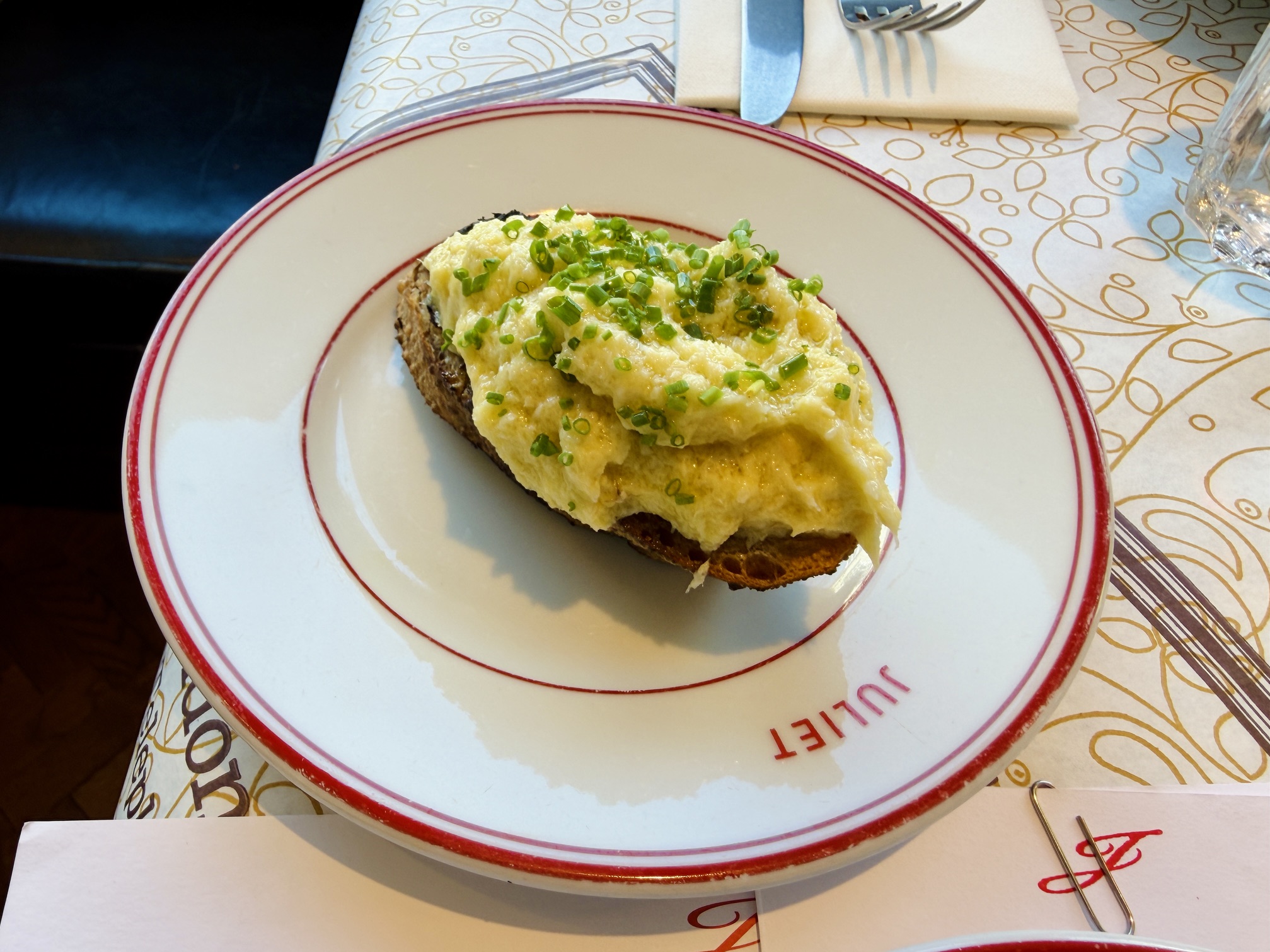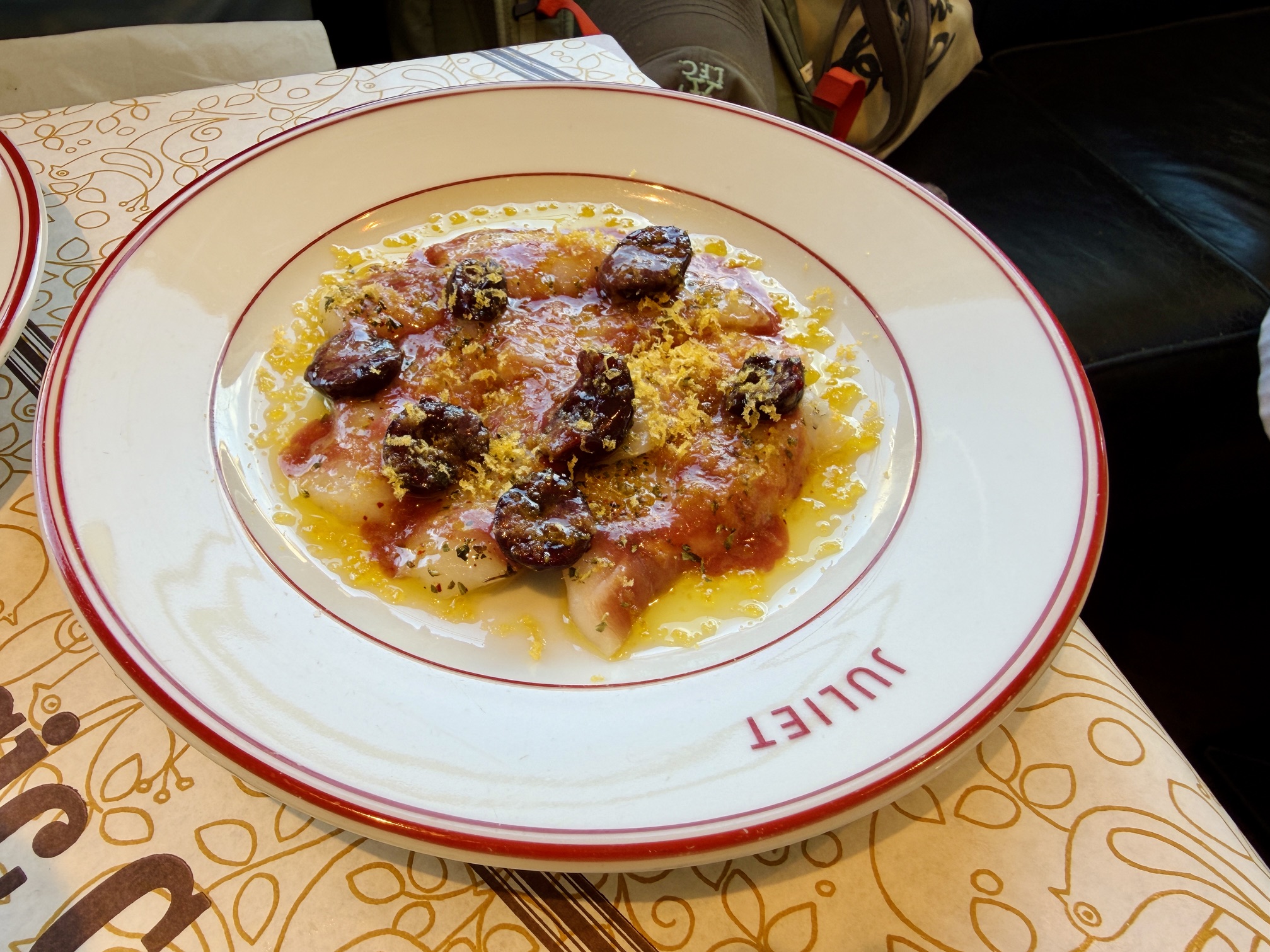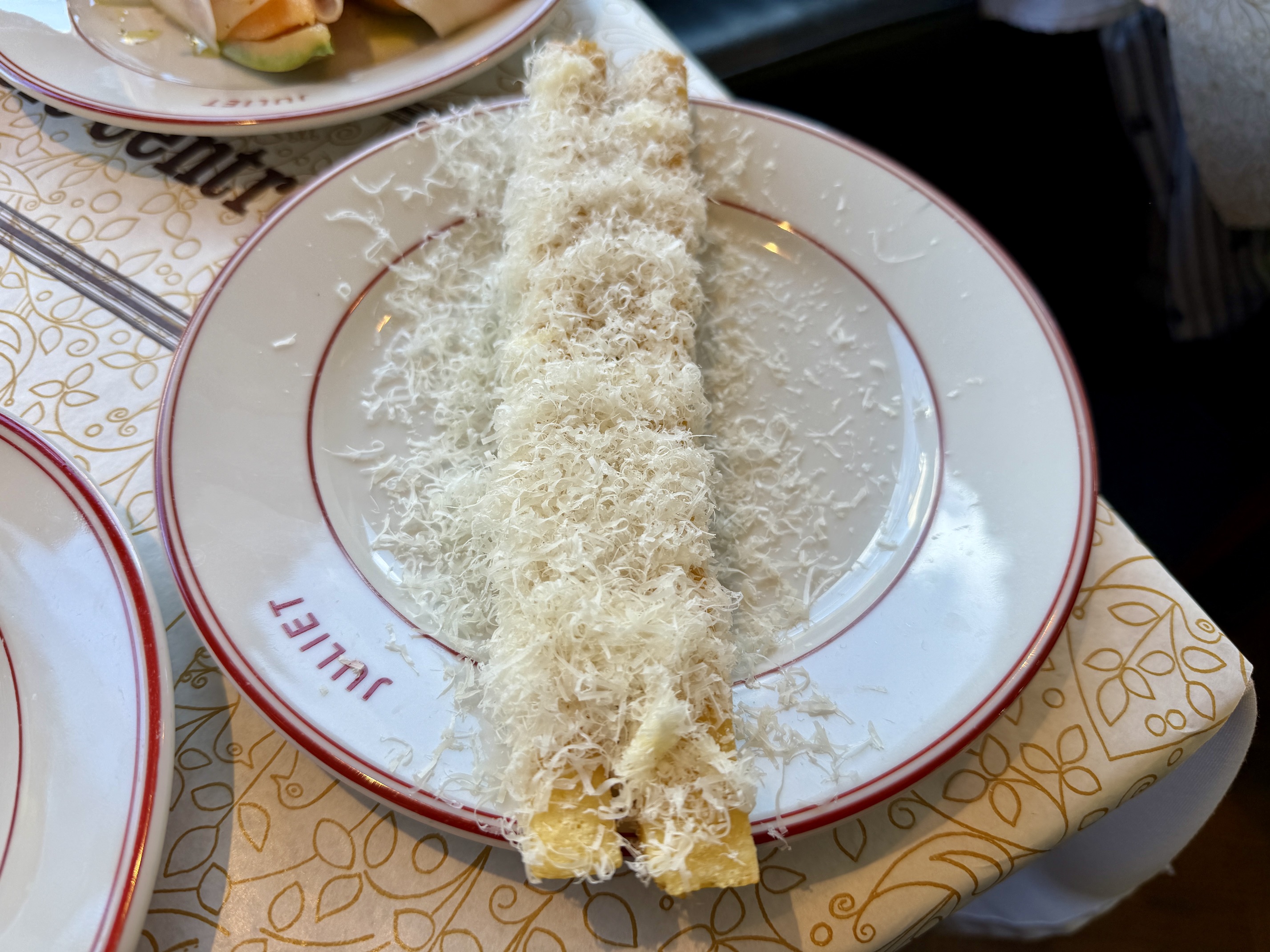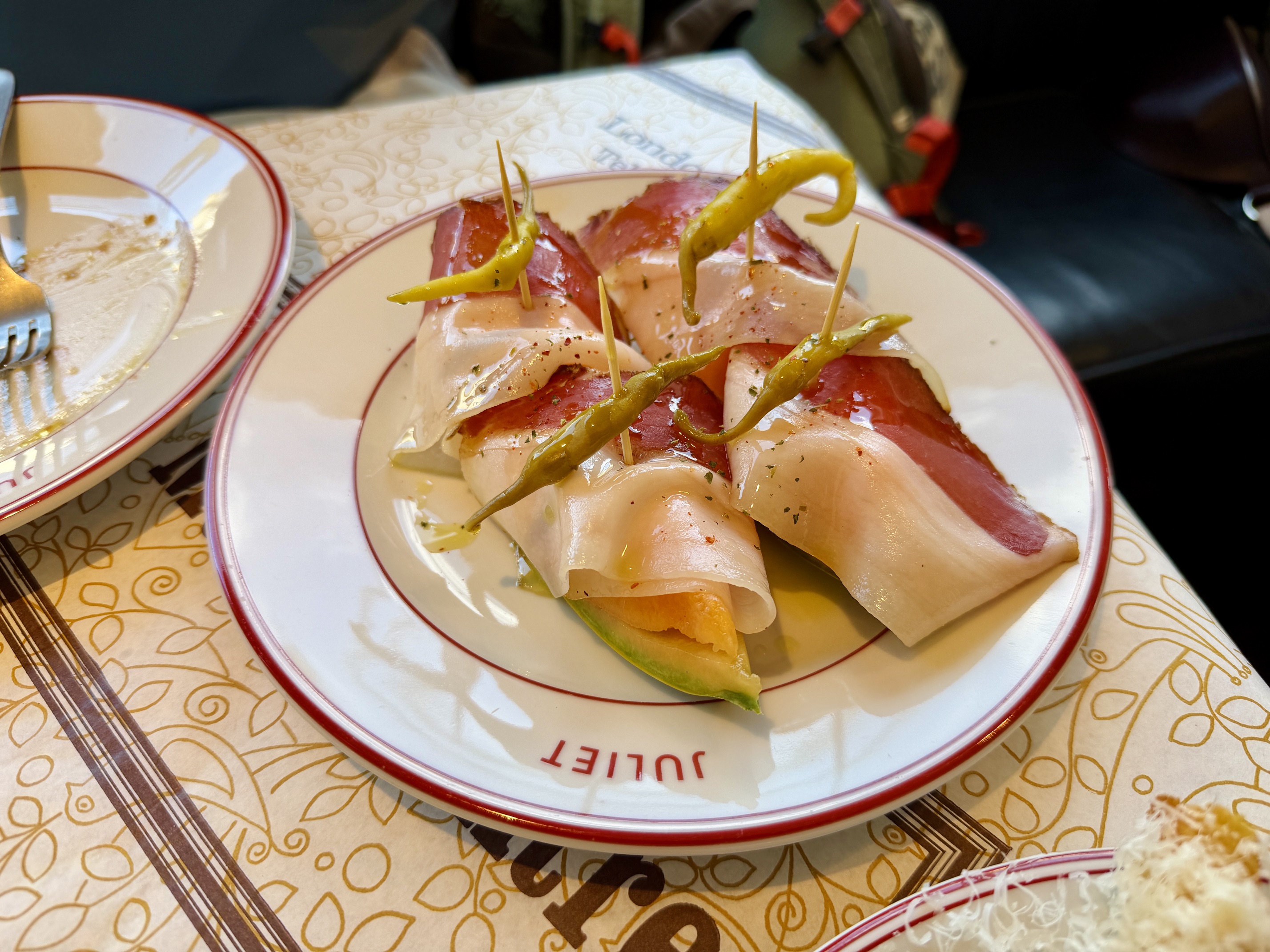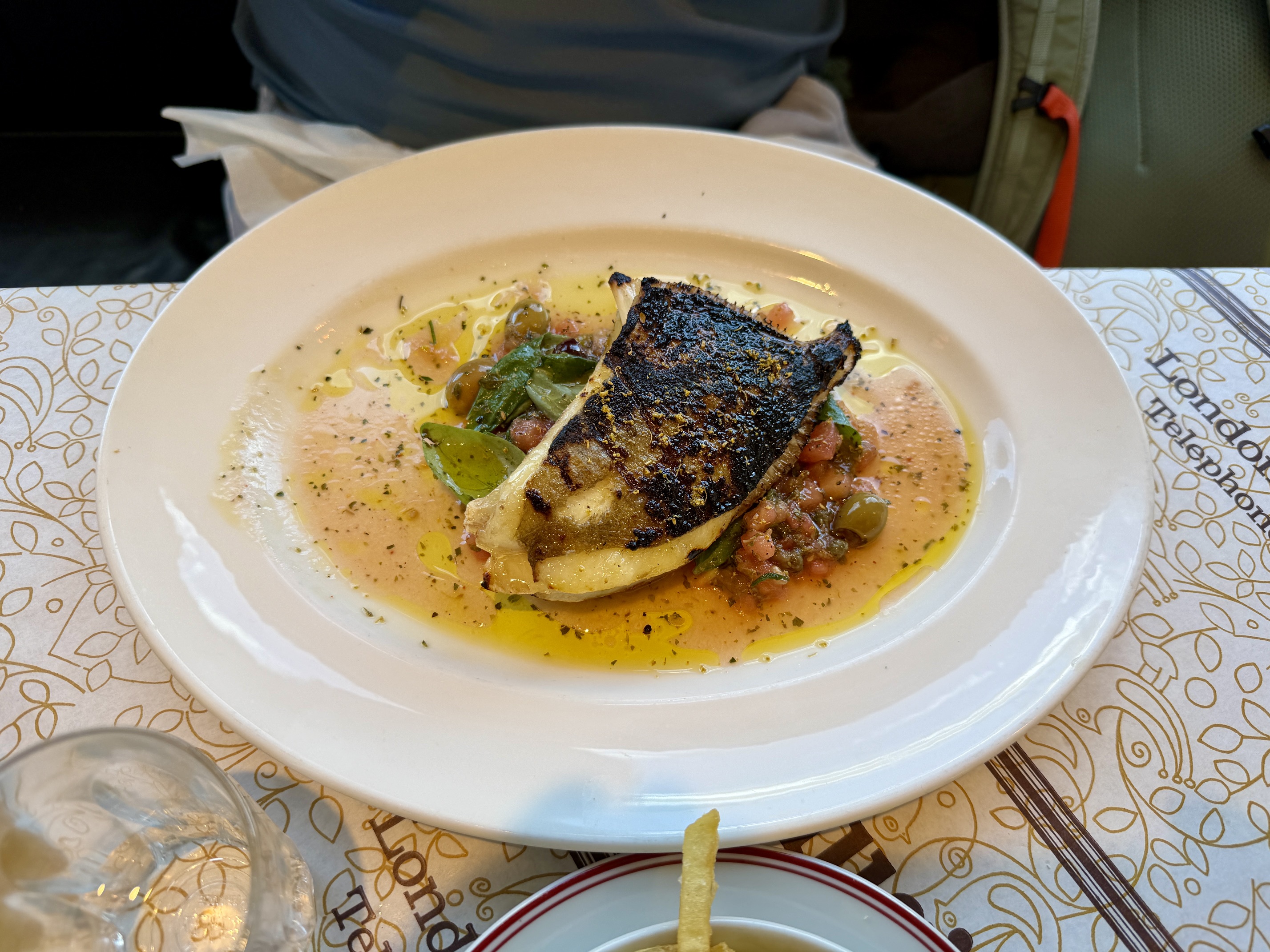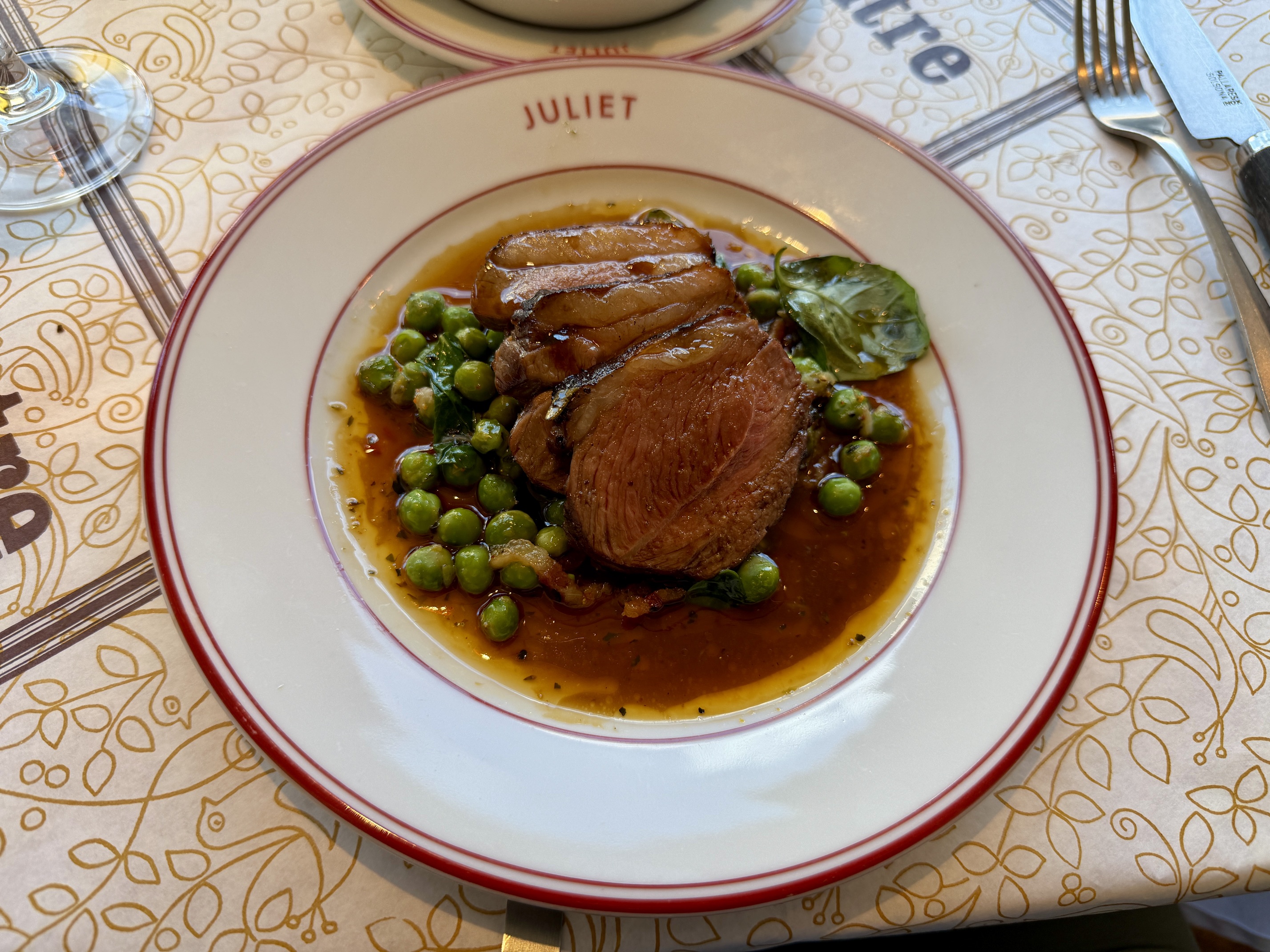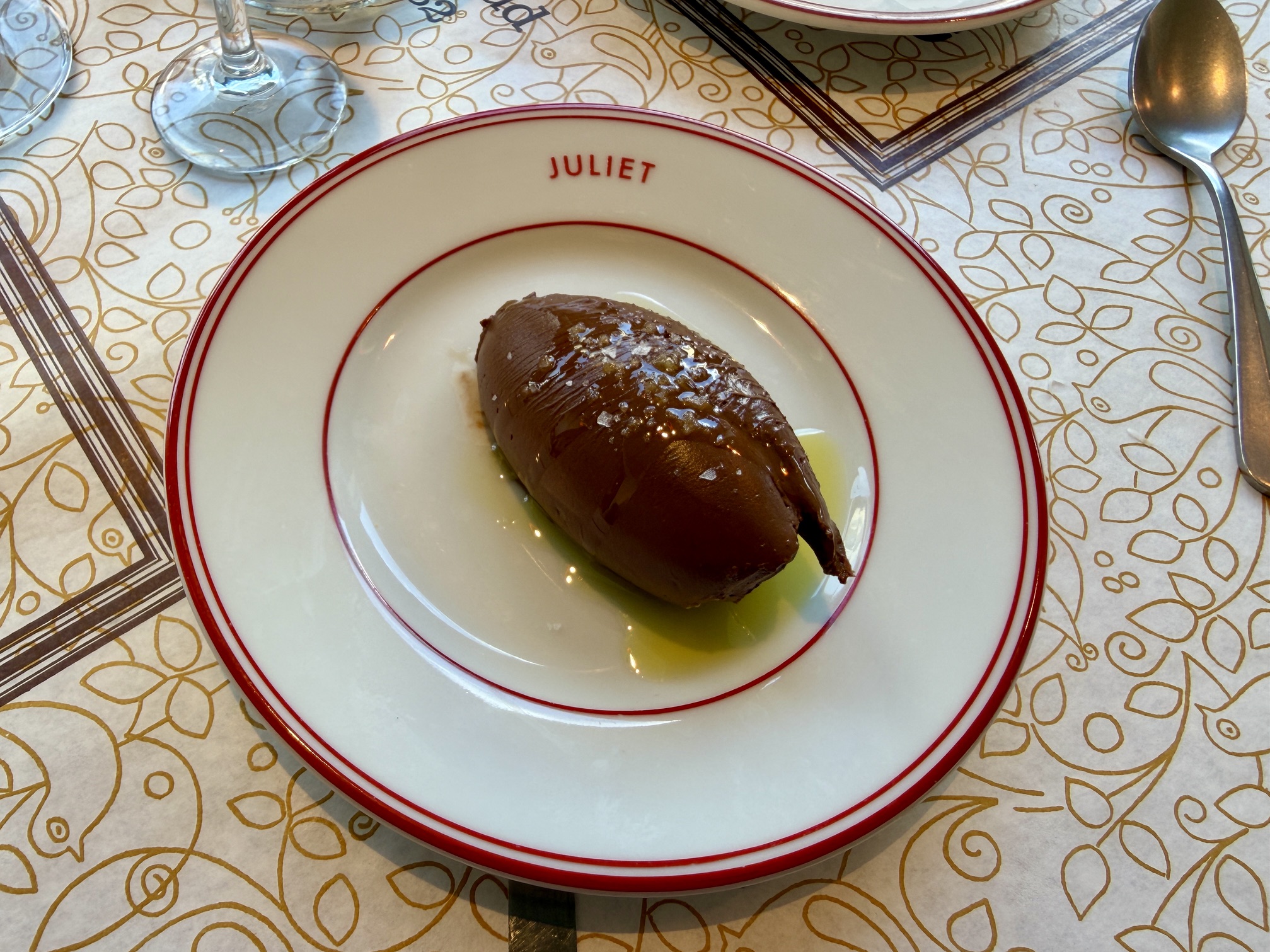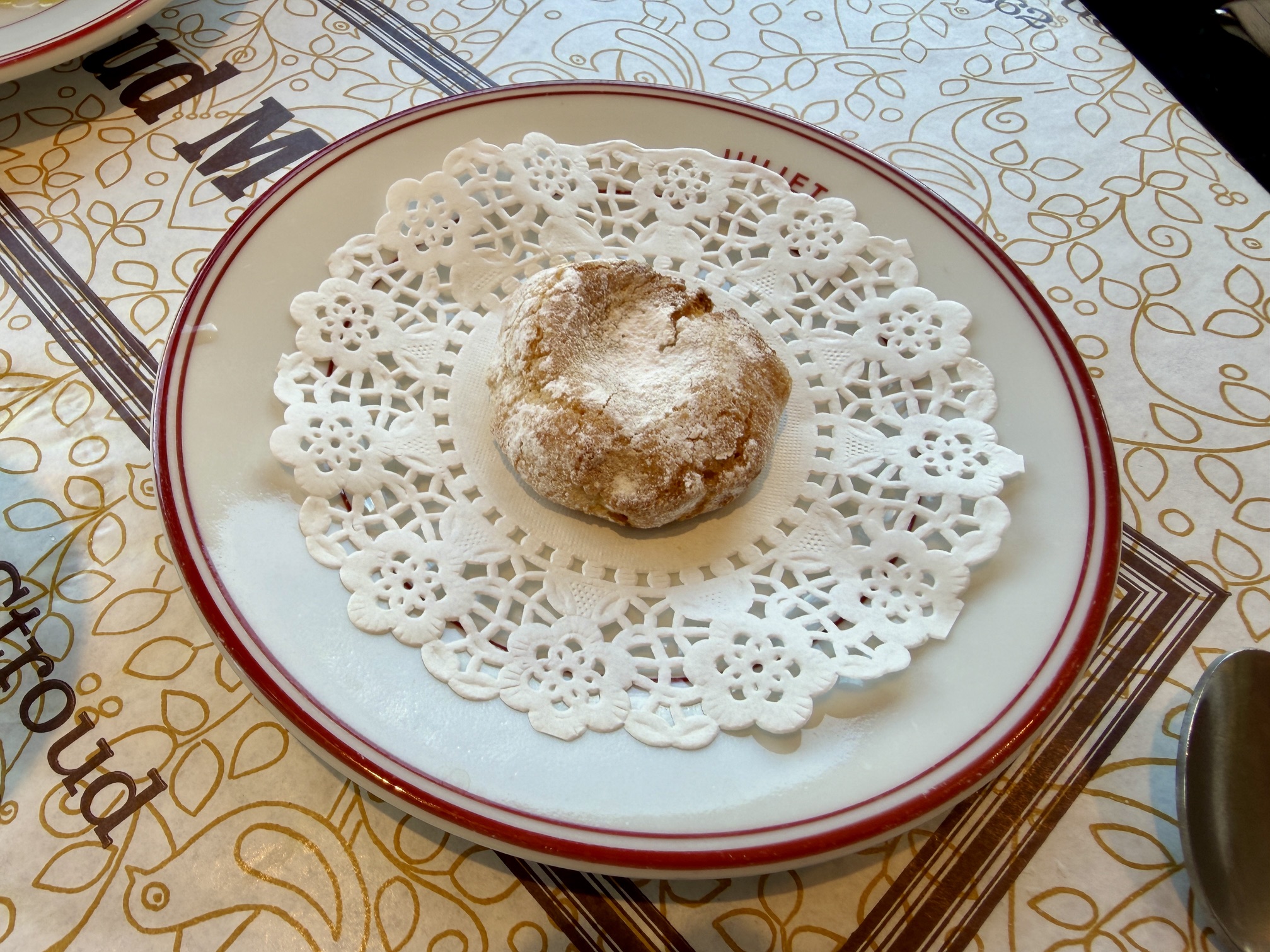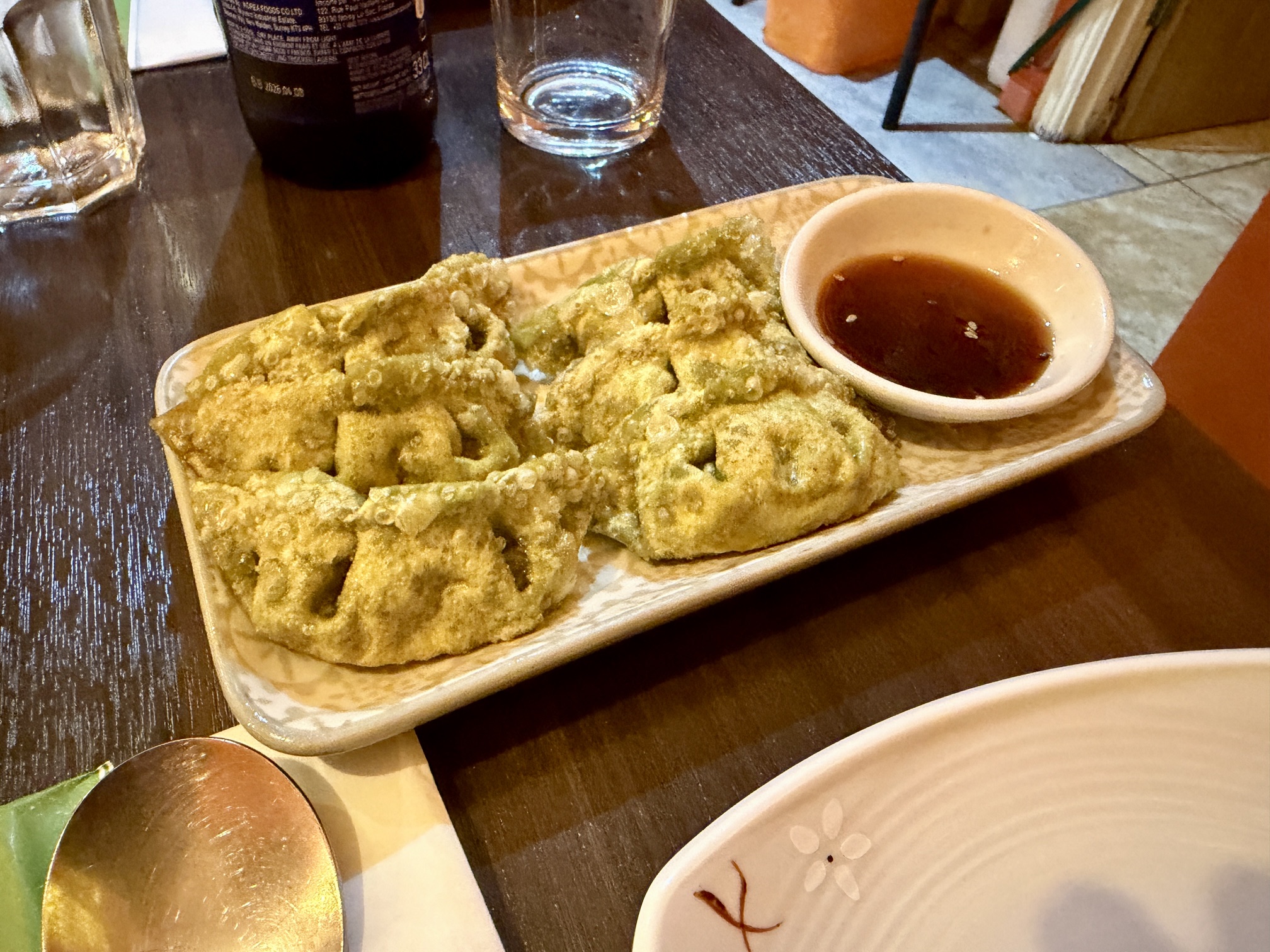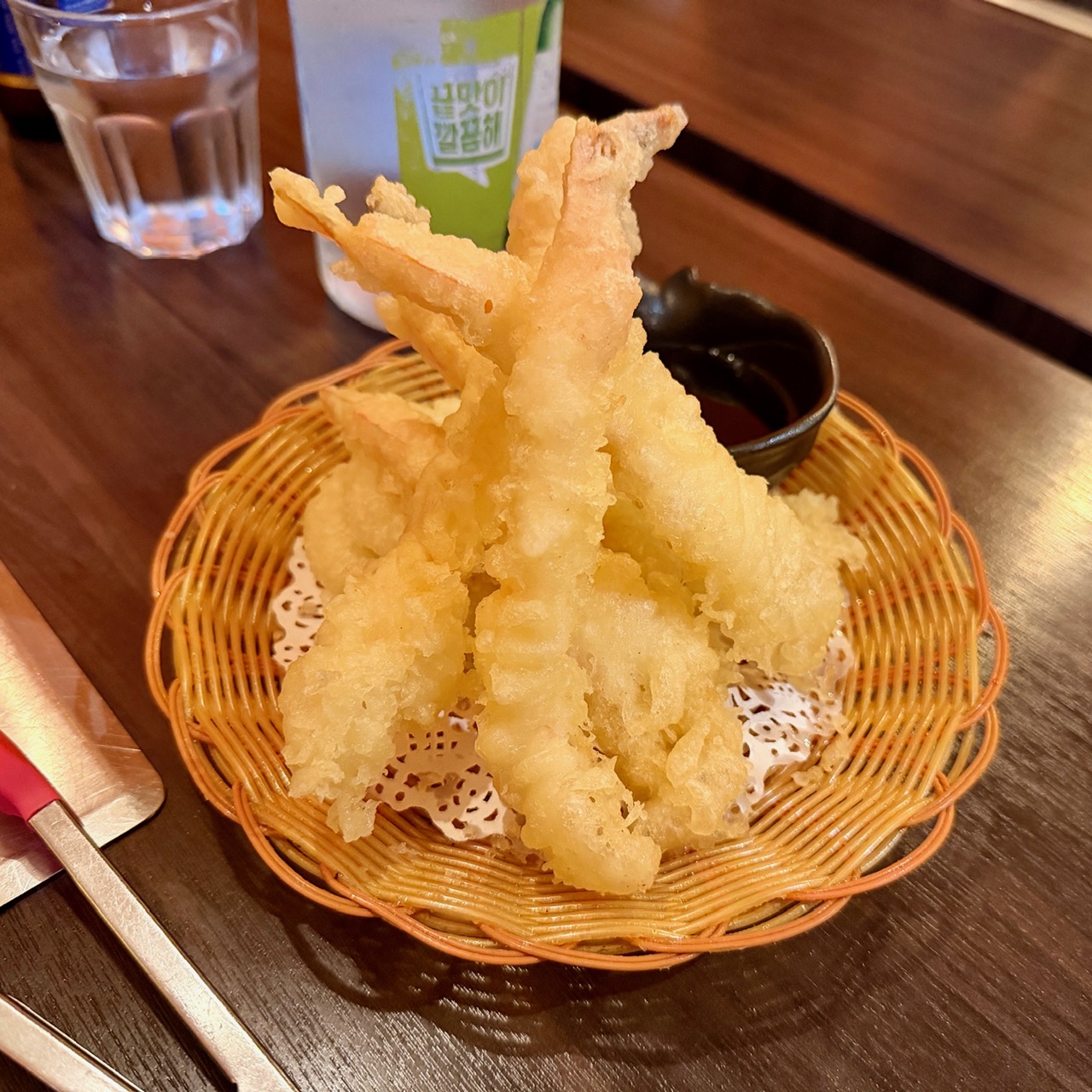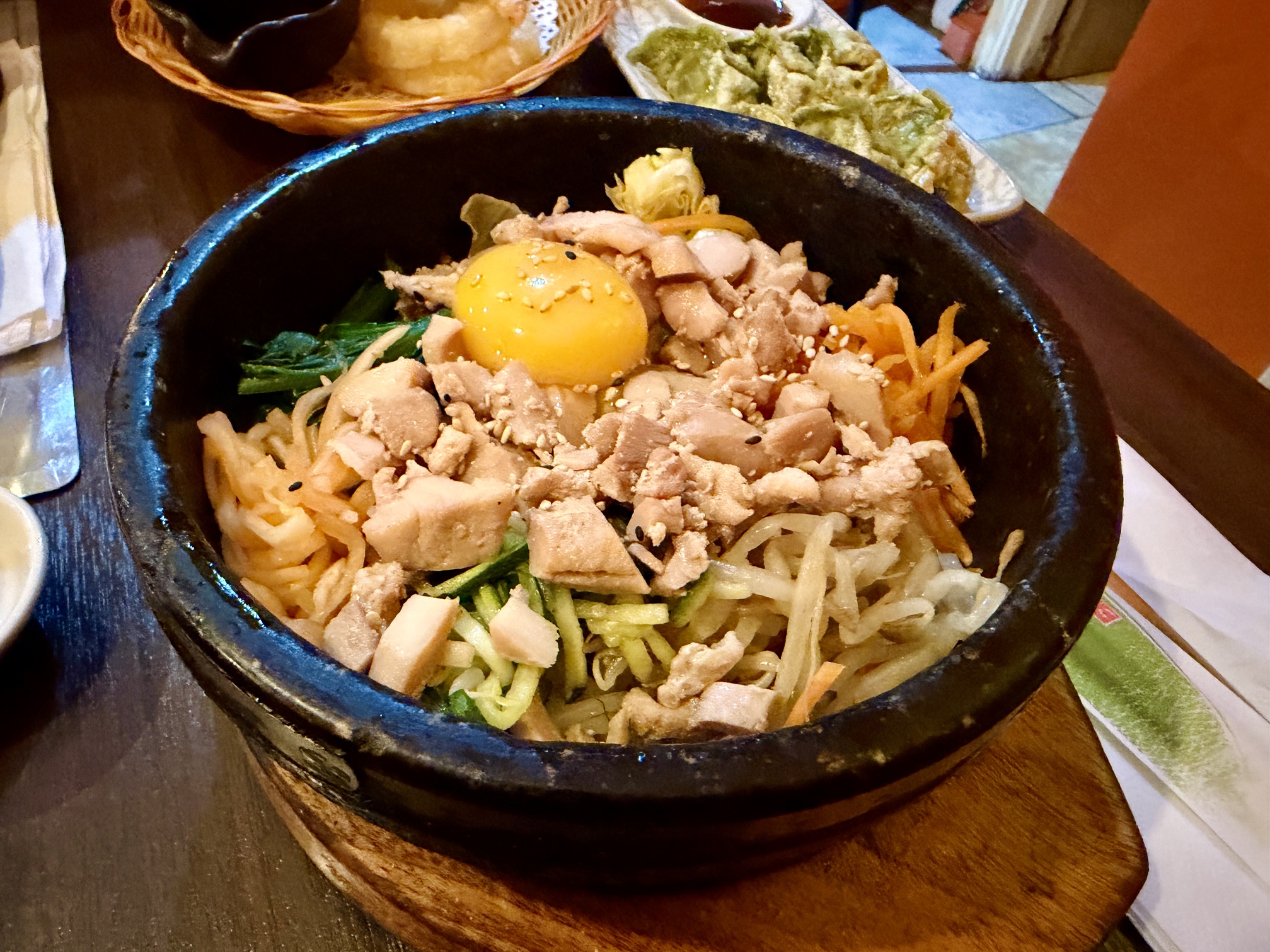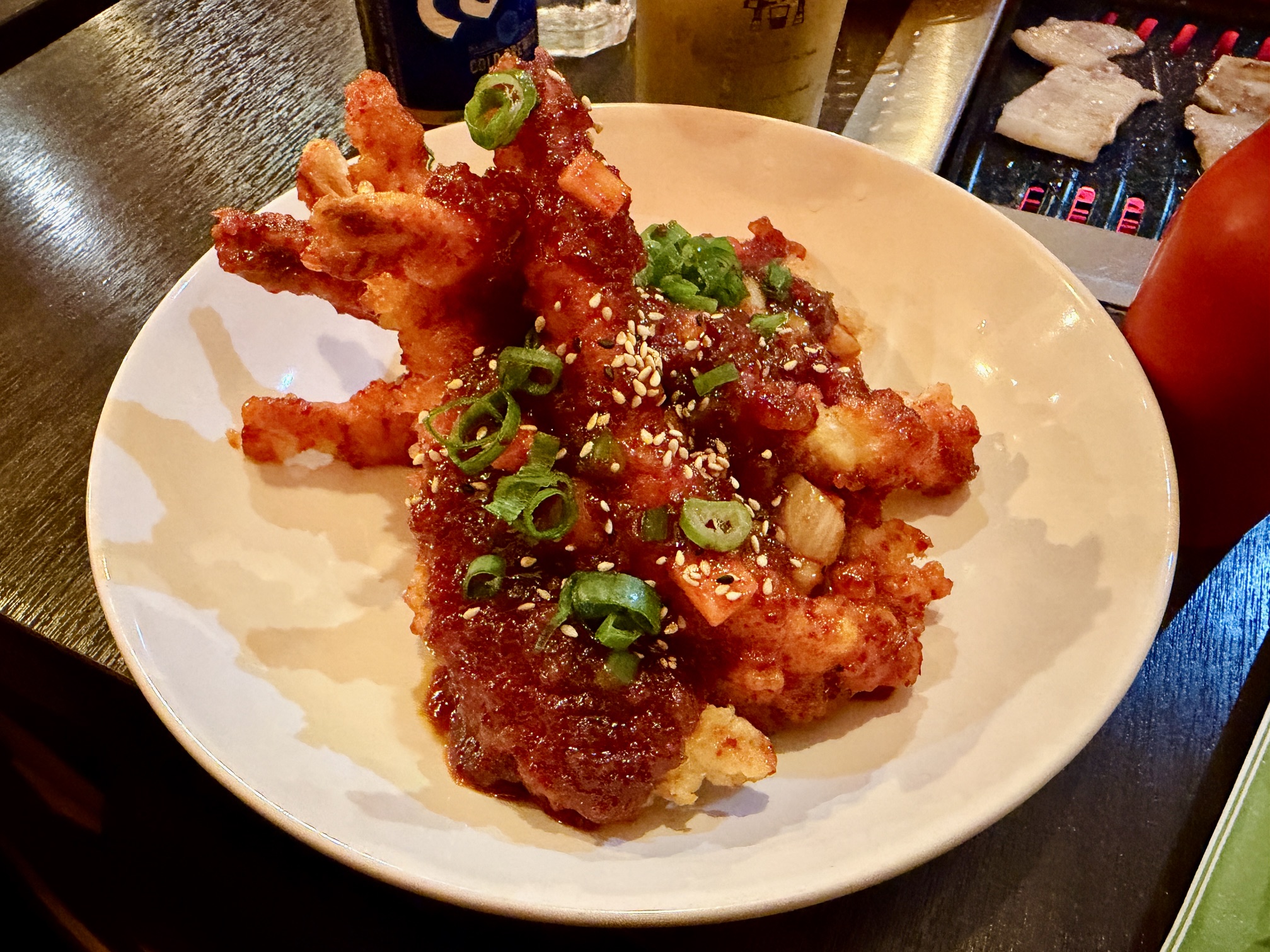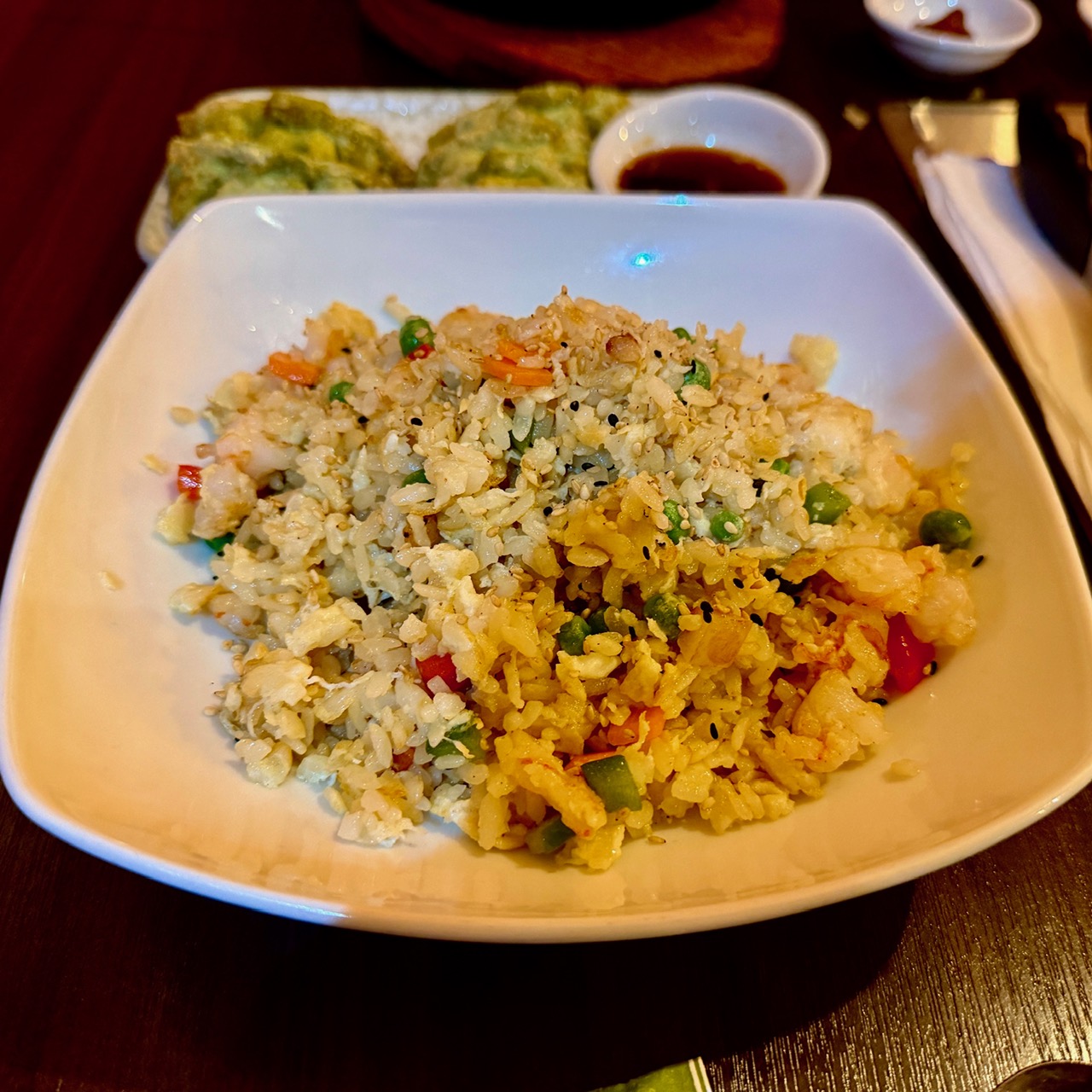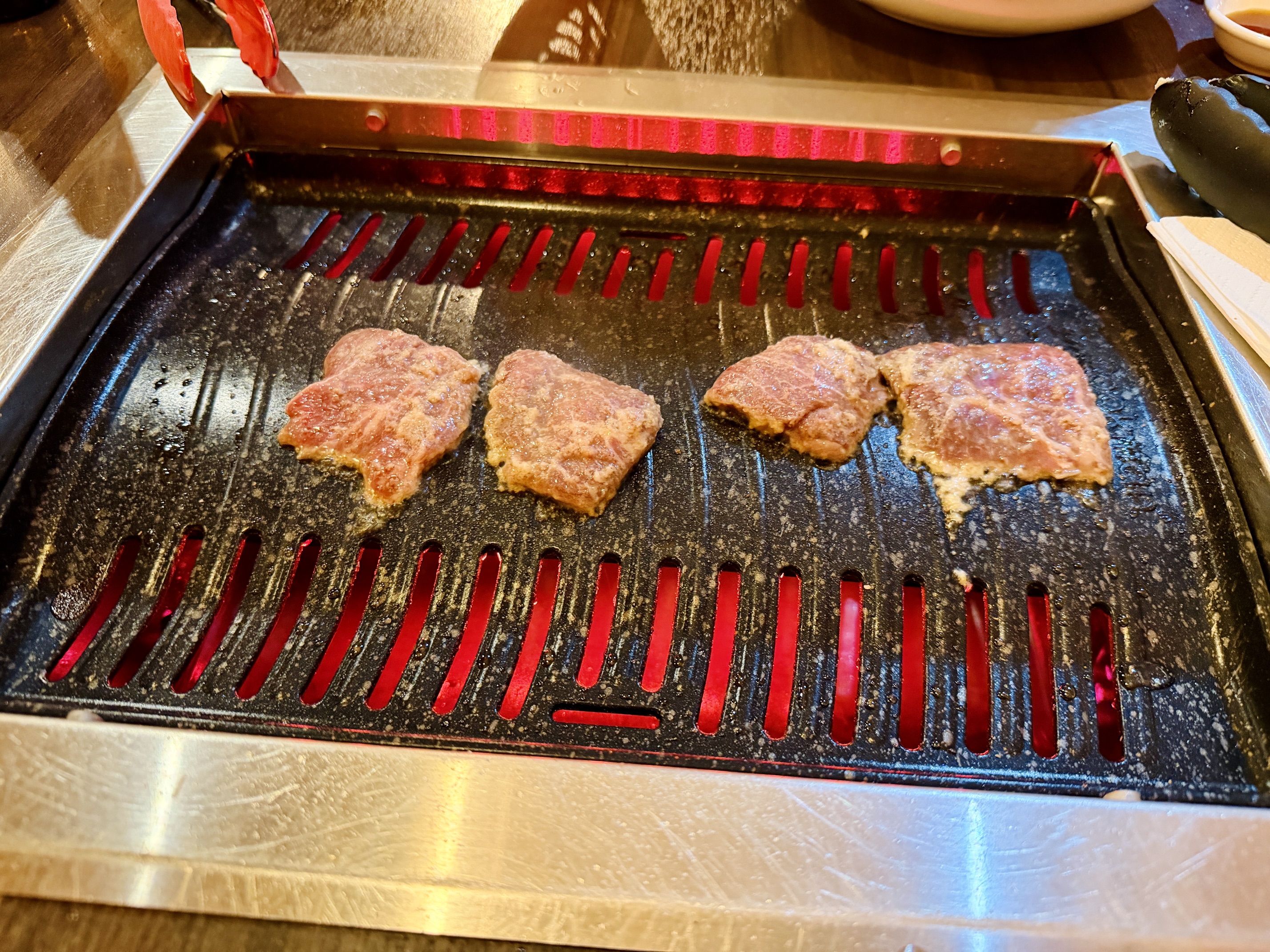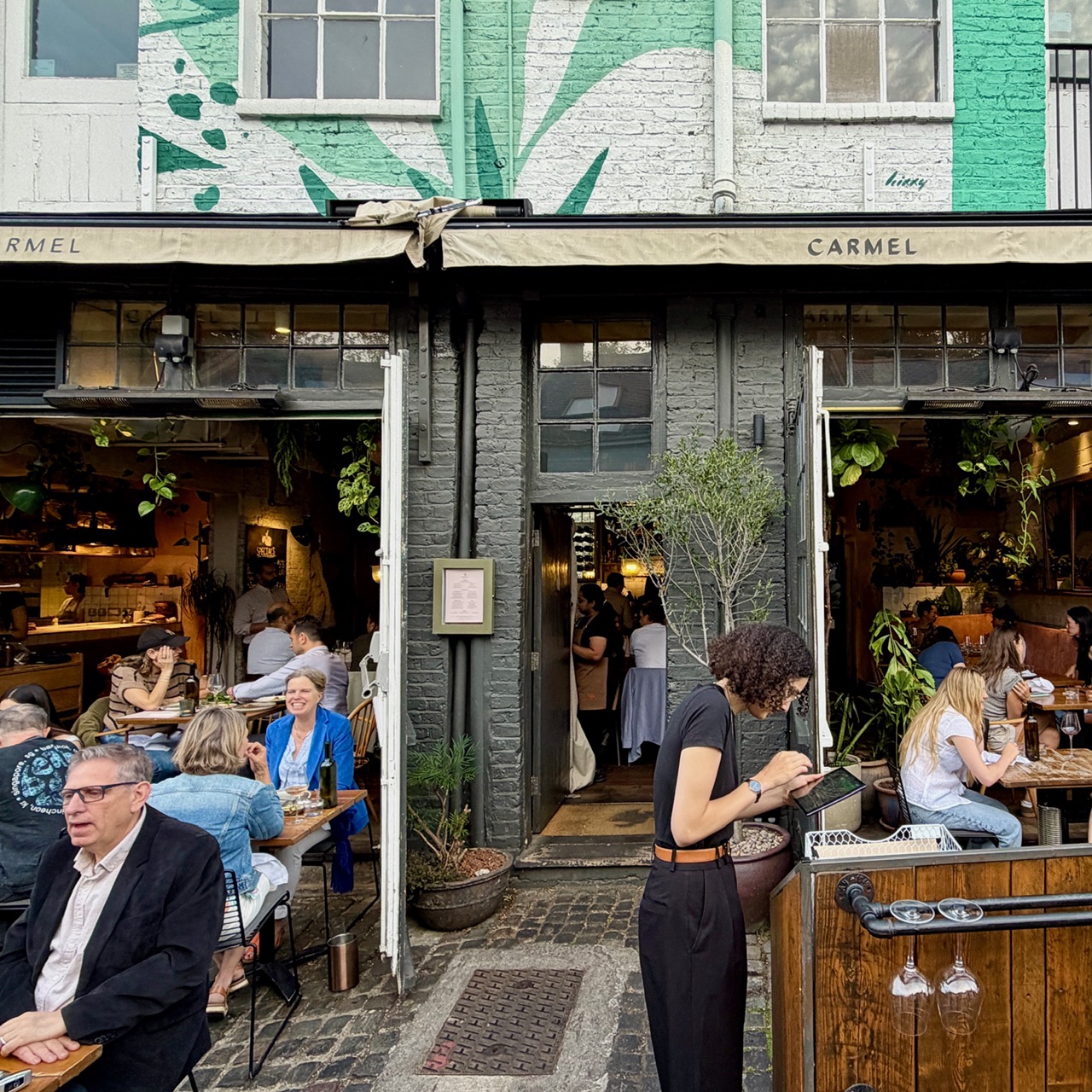
At Carmel in Queen’s Park, a restaurant usually described as some combination of Eastern Mediterranean and North African, a snack of anchovies comes with tahini and crostini. Crispy squid is served with aioli and lemon. Flatbread is topped with merguez and jalapeño relish, hispi cabbage with a macadamia dukkah. You can have slow-cooked lamb shoulder with salad and more flatbread, and something called “campfire potato” on the side.
Right, shall we wrap up there? I can give you the rating and, as people at work say when a conference call is shorter than expected, give you back fifteen minutes.
But I imagine you’re thinking No, not yet. You want to know why I picked the restaurant, what the room is like, whether I liked those dishes, what the service is like. How much it cost, and whether it was worth it. You might never have been to Queen’s Park, and want to know where it is and what kind of area it is. If I ended now – here’s the food and that’s it – you’d probably feel put out, and rushed.
Well, now you have a vague idea what it’s like to eat at Carmel, because I’m afraid it was one of those meals. Let’s get this out of the way early doors: our table was booked for quarter past eight on a Saturday night, the place was packed and I don’t think we ordered for at least 10 minutes, possibly more.
We ordered an aperitif, and a bottle of wine for later, and snacks and small plates, and then a big plate for sharing. We ordered what looked, to me at least, like a well-considered meal with a beginning, a middle and an end. Well, a pre-end anyway, because I’m sure we’d have stayed for dessert.
Having been stung in the past by meals where everything comes out too quickly, we asked our server for advice. Should we have our aperitifs and snacks first, then order the rest? No need, she said, because the kitchen would something something something and the food would come out something something. She was inaudible and, as it turned out, a little ineffectual, but we came away reassured.
Something like 10 minutes later, our first snack came out. Then, a couple of minutes later, our second. One of our small plates came with it and then, 3 minutes later, another. We hadn’t even got close to finishing our negronis – a shame, because they were great, the gin infused with sage – and our table was already packed with food.
Every time a server walked past, towards the buzzing terrace, with more plates I got the fear that they were going to be for our table. Surely they couldn’t be? The place was rammed, we’d only just got there and they’d taken 10 minutes to even ask us what we wanted. Yet they nearly always were.
Another 3 minutes later – thank heavens for time stamps on photos – our side dish came out, ahead of the thing it was a side dish for. And then, with grim inevitability, 5 minutes after that, out came the lamb. Absolutely ridiculous. It took 18 hours to cook and about 18 minutes to come to our table. All in all, about £115 of food arrived in the space of 15 minutes. And I have to wonder whether, at some point over the last couple of years, I started Doing Restaurants Wrong.
Because experiences like this seem to be more normal now, to the point where I wonder if it’s what some or many diners actually want. One recent review of Carmel on Google said “The service was the fastest I’ve ever seen, food was served around 10min after we ordered and it wasn’t some easy dishes”. He gave the place five stars, while describing an experience I might expect from KFC or Honest Burgers.
It wasn’t what we wanted, though. Zoë had finished a relatively early shift that night and I met her in London on an evening when we both had the next day off, so as close to a date night as we seem to get these days. We were in no rush, and I don’t think we seemed like we were. So how did it go so wrong?
With an experience like that there’s only so good a restaurant can be, but since my whistle stop summary at the start missed out so many important details let’s fill in the blanks. Queen’s Park is lovely, and one of those bits of London that belies its proximity to the centre: in Zone 2 but a mere seven minutes from Paddington, feeling like it’s not really London at all.
And Carmel is down Lonsdale Road, a pretty cobbled lane which was absolutely humming on a warm Saturday night. Londoners were thronged outside eating and drinking – some at restaurants like Carmel or Pizza Pilgrims but many just standing outside a pub called Wolfpack, or sitting on seats which may or may not have belonged to that establishment. It felt like a drinking flashmob, to the point where I wondered if people had brought their own furniture.
Carmel is an offshoot from Haggerston grill house Berber & Q, its more grown-up sibling, and it opened in late 2021. It was joined by critically acclaimed bakery and restaurant Don’t Tell Dad at the start of 2025, the overall effect being to create another of London’s many gastronomic microclimates.
I was tempted by Don’t Tell Dad, but the menu at Carmel read like an absolute dream. Something jumped out from nearly every item on it saying “pick me, I’m different”, little invisible exclamation marks drawing the eye here and there. Smoked taramasalata, hummus with zhug. Sumac and tahini, harissa butter and pomegranata molasses. Labneh and dukkah, fermented chilli, smoked salt, parsley pesto.
Restaurant reviewers, or anybody with an Instagram account, are used to saying that the camera eats first, but when you read a menu like this the eyes eat first: everything flows from there.
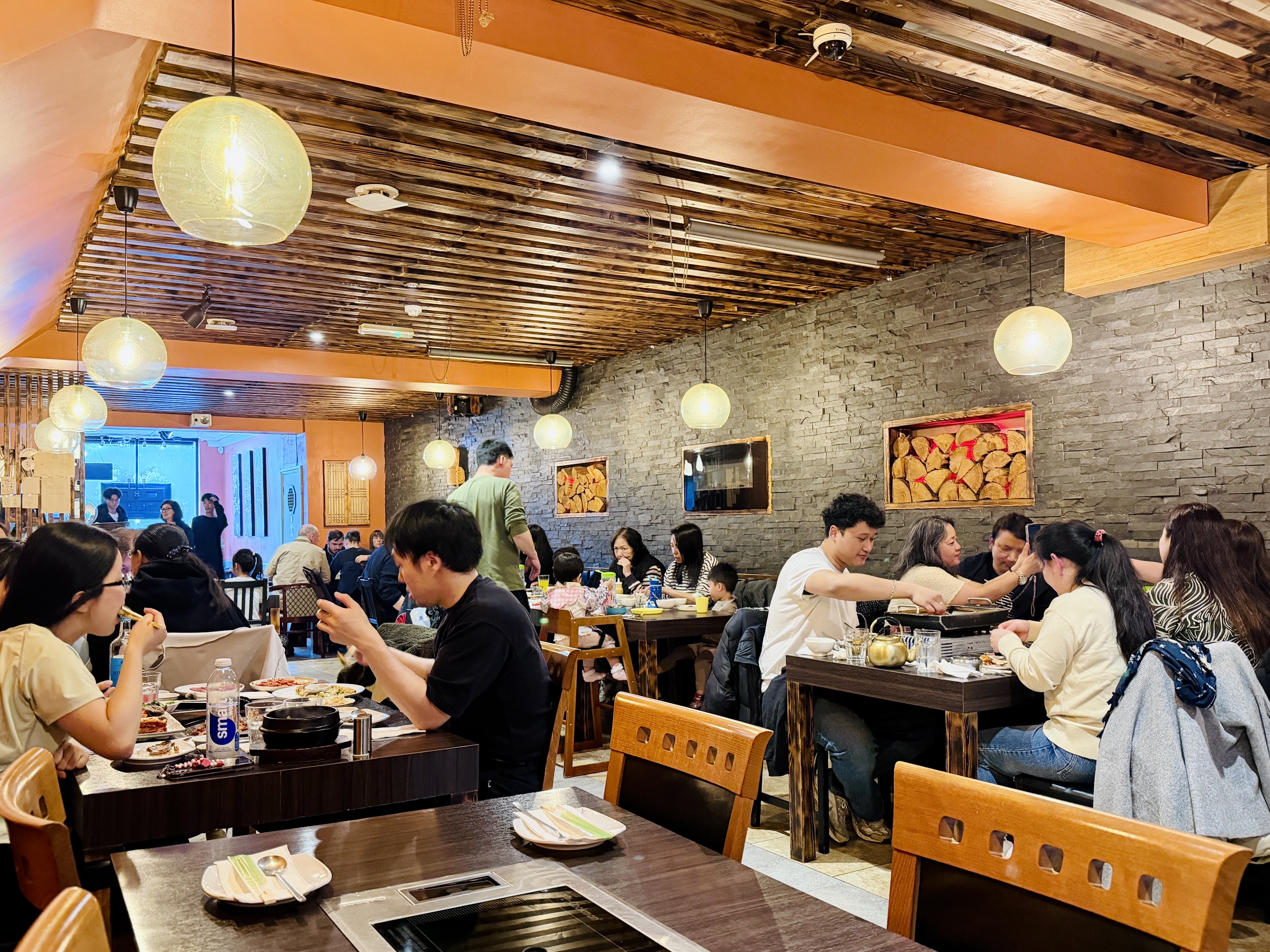
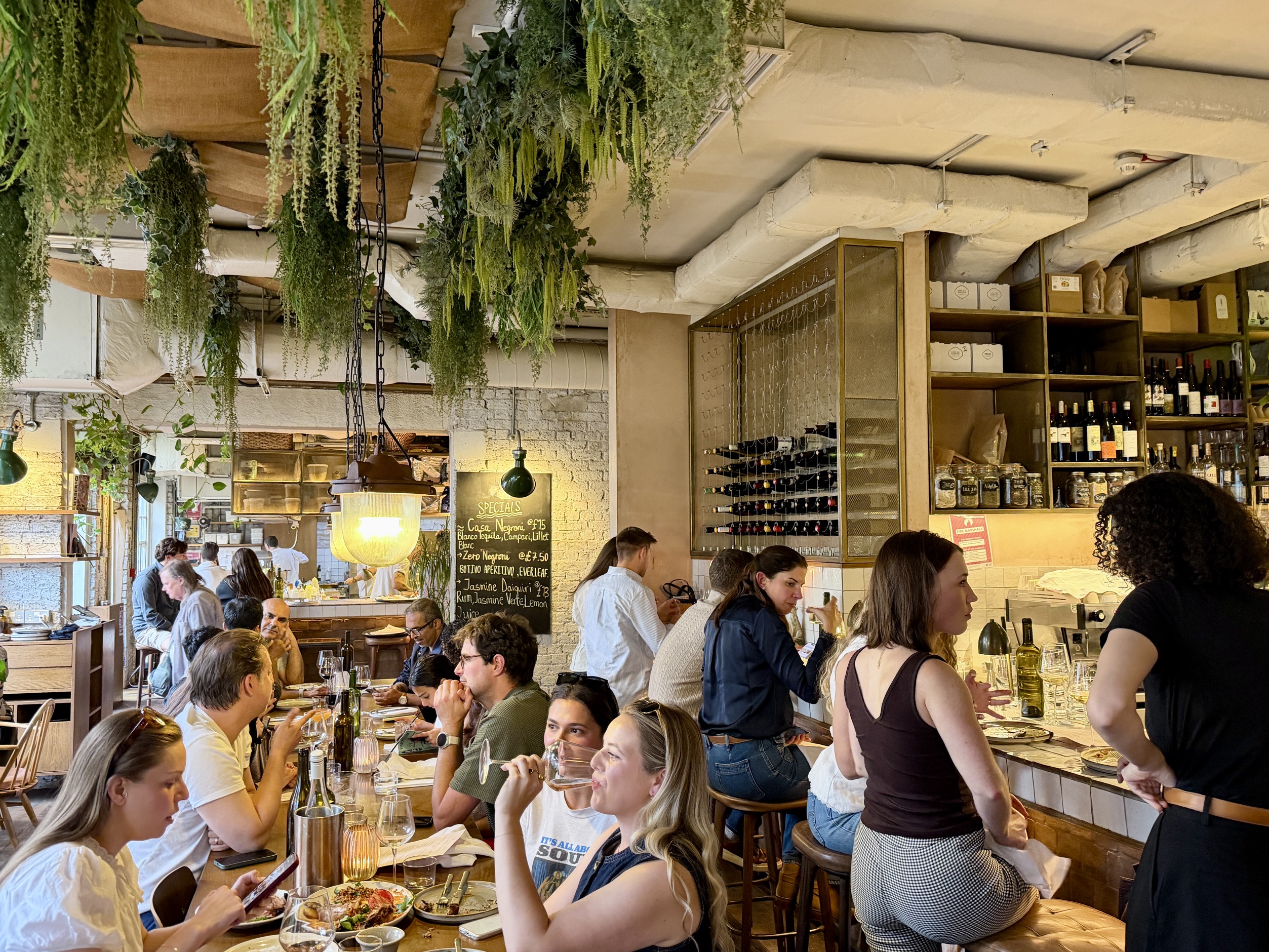
And the room was beautiful – I was glad we were inside rather than on that clamouring terrace because it’s such a gorgeous space, with exposed brick painted white, a white tiled bar, a long communal table and handsome Ercol chairs. It didn’t feel of its place at all, but reminded me more of places in Ghent, or Copenhagen – effortlessly cool Europe, rather than London.
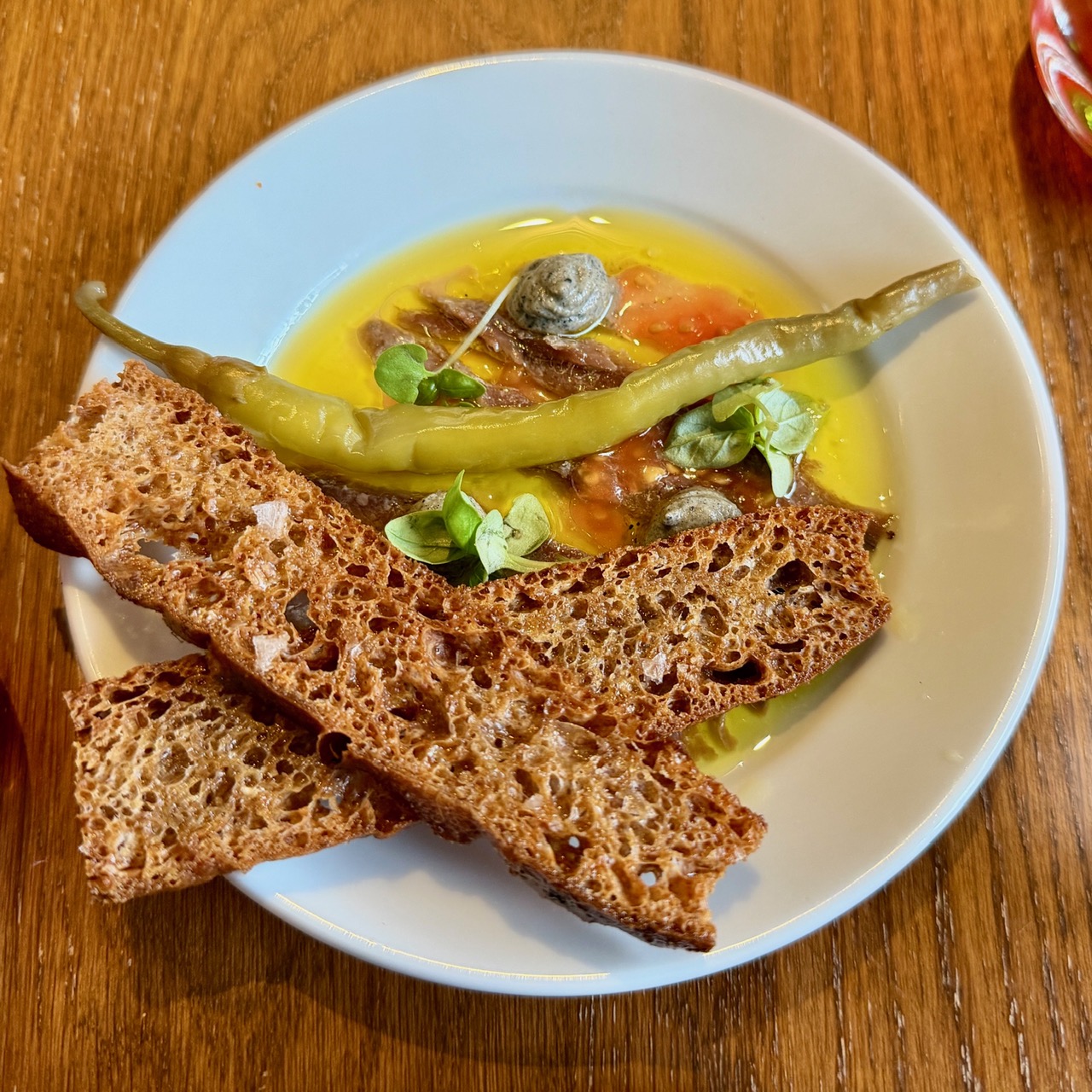
Leaving the woeful timing issues to one side, most of what we ate was good or better. Those anchovies, for instance, were a not ungenerous four, served swimming in oil with a pickled chilli, a little tomato, swirls of black tahini and two long strips of the restaurant’s wholewheat focaccia, turned into fancy Melba toasts. It was very nice, and in the parallel universe where Zoë and I ate this, finished our negronis, decompressed and talked about our day it would have played a beautiful part of a harmonious whole.
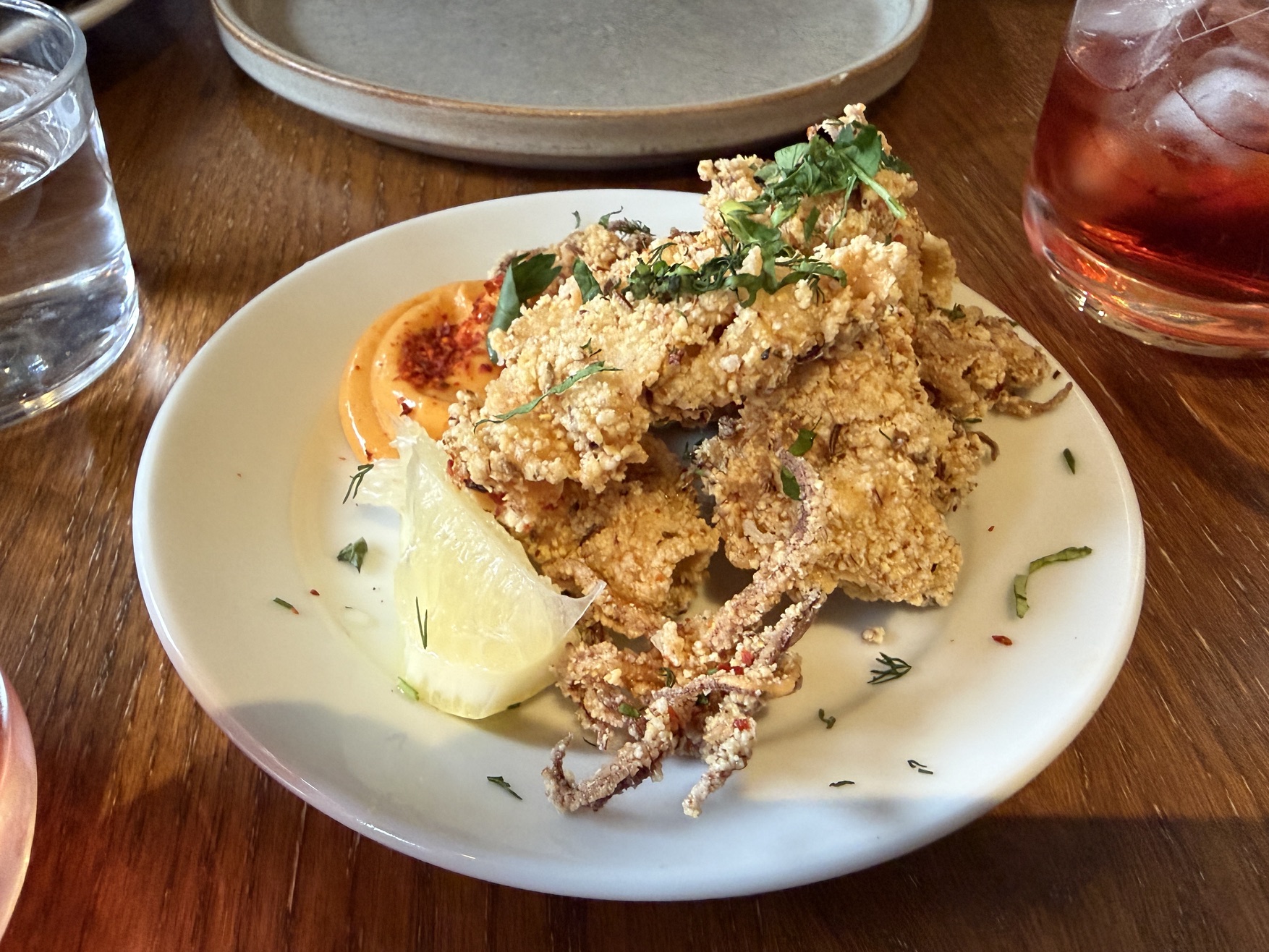
For that matter I loved the crispy squid, which managed to get everything right – the texture inside and out, just enough give but with a roughed-up, brittle exterior that hinted at something like polenta flour in the mix. This cost £10.50, as did the anchovies: if you gave me that £21 again I’d just order the squid twice.
We tried not to be distracted from our task of finishing it by the arrival of other dishes.
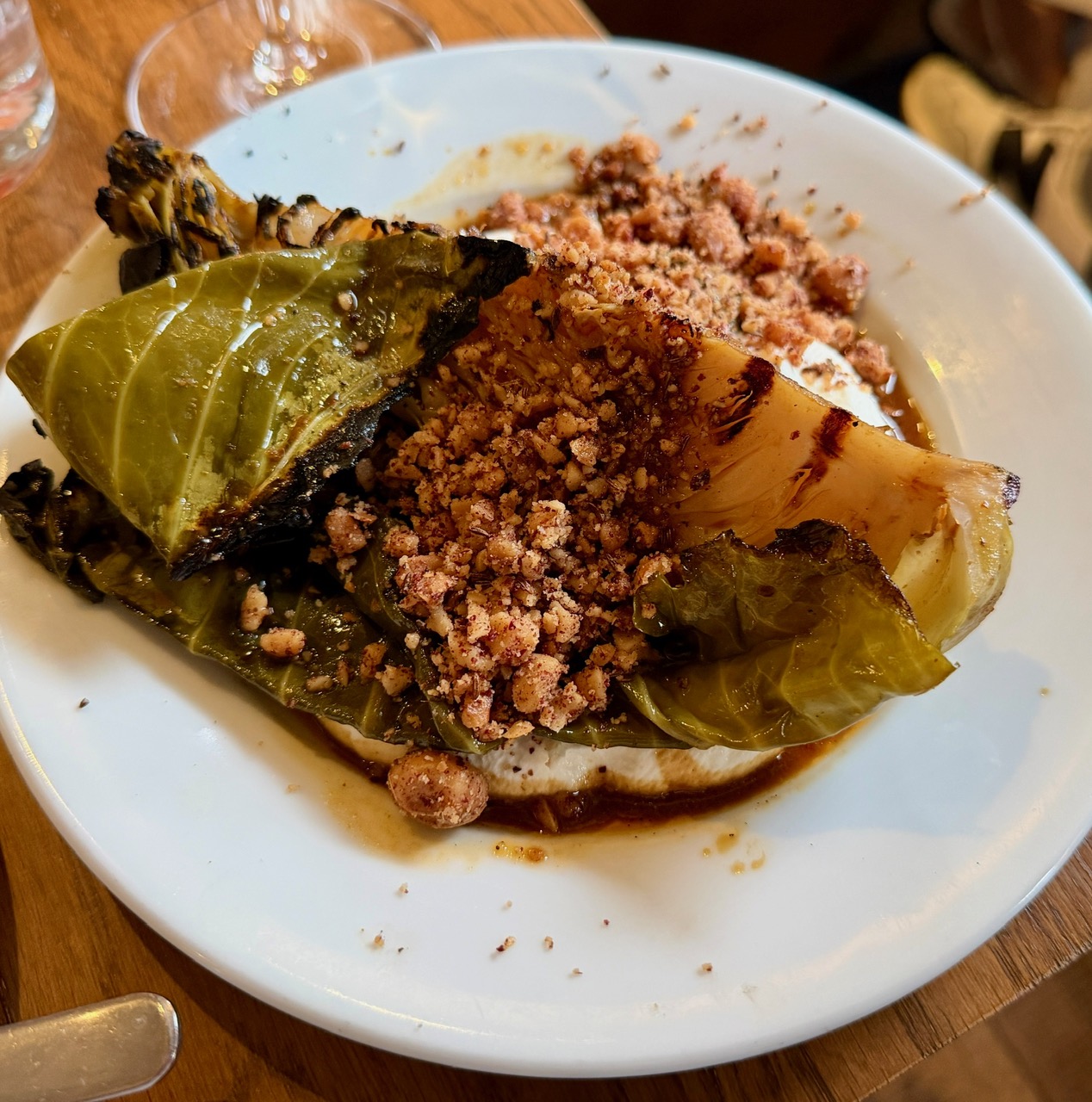
And Carmel’s Hispi cabbage deserved not to share the limelight with anything else. I know as an ingredient it’s almost as done to death as broadsheet critics complaining about its omnipresence on menus, but I still love it and my forkful of Zoë’s confirmed her good sense in ordering it.
It had the right amount of blackening, the tender leaves spot on underneath, and everything it was paired with brought out its best self wonderfully – a bracing labneh, fragrant ras el hanout and a really enjoyable dukkah which positively transformed the humdrum macadamia into something worth hoovering up. £16.50 for this, and worth every penny.
I’ve read somewhere about Carmel’s flatbreads being described as some of London’s best pizza. In fairness that was four years ago, before the capital lost its mind for pizza, and perhaps it was true then. I think it would be harder to make that case in 2026, but I did rather like it: the crust faultlessly puffy and spotted, the crater in the middle loaded with paydirt.
But the base was easily the best thing, and the stuff in the middle felt like it was fighting among itself. What was billed as merguez didn’t have the taut texture of a really good sausage, so was more pappy, like a meatball. The enormous dollop of jalapeño had a blistering heat that overpowered everything else, and the yoghurt plonked in there felt like it had one job only, to calm the jalapeño down.
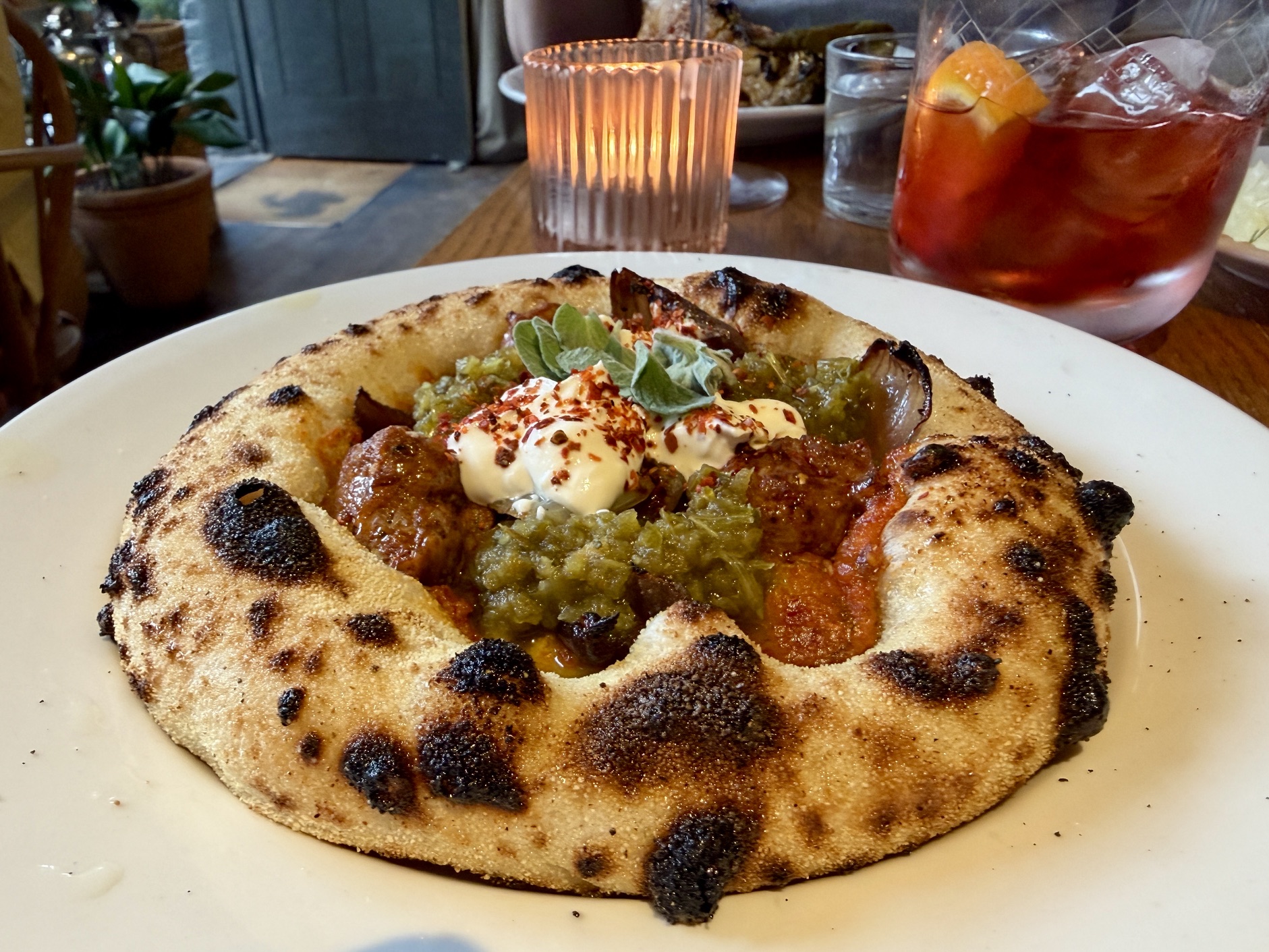
There were a few bits of onion – “petals” apparently – and allegedly some confit garlic that I didn’t get at all, but the whole thing felt shouty. This too was £16.50, and by this point I was wondering what that money would get you at Pizza Pilgrims a few doors down. More, better, slower, probably.
We just about managed to open our £40 bottle of rosé – by Judith Beck, a producer I’ve always liked – as our lamb came to the table. By that point much of the meal was behind us and 750ml of wine was in front of us, but we rolled up our sleeves and gave it our best shot. There is nothing like a cold, crisp rosé on a hot day, and this was nothing like a cold crisp rosé. We flagged a server down and asked if the wine cooler could have some actual ice in it. It was brought back with ice in it, and by the end of the meal our wine was almost cold enough.
So, the lamb. Pants, I’m afraid. It looked so good, like the platonic ideal of every kleftiko you’ve ever laid eyes on. Everything it came with was terrific, a salata mashwiya that was a sort of hot, roasted vegetable dish and a herb salad that zipped and zinged with the best of them.
We had the campfire potato with this and it, too, was good: scorched, and smashed and smothered in salsa verde and sour cream. The lamb was perched on another of Carmel’s excellent flatbreads, which meant that all the fat slowly permeated it, which is exactly what you want.
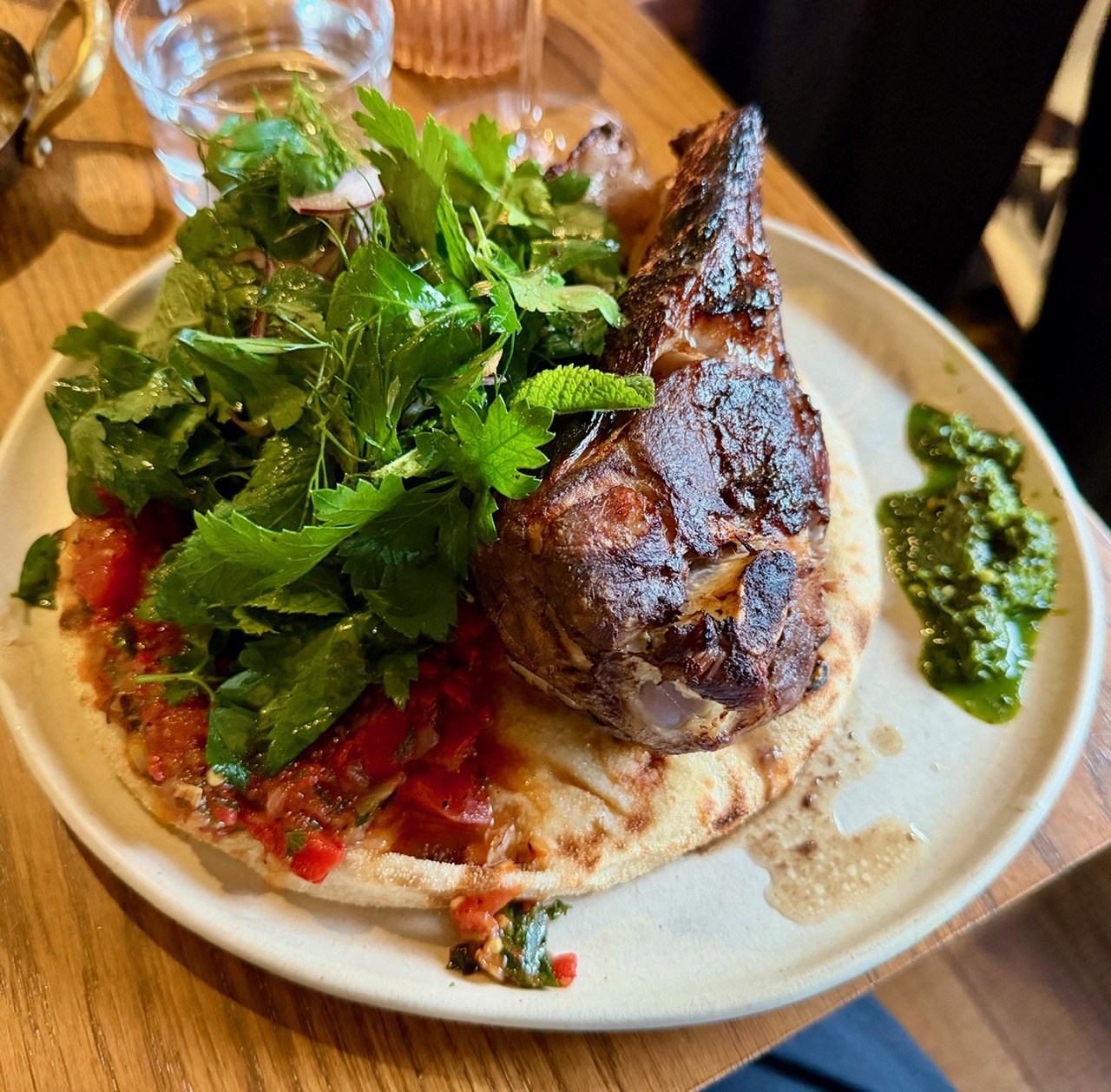
The fat, though. The fat was the problem. Because I know lamb is a fatty meat, and I like a bit of lamb fat, but this piece of lamb was 90% fat. A gelatinous hunk with a few scraps of well lubricated meat hitching a ride on it. That wasn’t apparent at first, but the more incisions we made the more we realised that the good stuff was vanishingly rare. The last time I saw anything wobble this much it was me, running for a bus.
I’ve read lots of comments and thinkpieces from restaurateurs saying that customers should be less English. If you don’t like something but you politely say it was nice, or fine, you’re depriving the restaurant of the chance to fix it. I was still happy to keep schtum, but when our server returned Zoë pointed out that the lamb was largely inedible blubber. So our server promised to feed that back to the kitchen and the management.
And when she returned, she explained that it she’d spoken to them but it wasn’t possible to tell how fatty a shoulder of lamb was until you cut into it something something something and this was a very fatty cut of meat and you know, something something something. So we gave up. We considered dessert, but also considered the timings of the last pre-purgatory train home from Paddington. We left the last of our wine and cut our losses.
The bill came in the shape of a piece of perspex with a QR code, and scanning it showed that the damage came to £210, including an optional 12.5% service charge. And I was sorely tempted not to pay the latter, which is something I never, ever do, but you had to flag down a server and specifically ask for it to be removed and at that point I just thought Okay, you win. You win with your breakneck pacing and wobbly lamb and incoherent service.
Nothing, it goes without saying, had been taken off our bill in relation to that £56 main course.
On the way back to the Tube station Pizza Pilgrims glowed with distinct look-what-you-could-have-won energy. We made our train, it only slighly whiffed of Burger King and I resolved that this was the very last review this year where I eat somewhere that offers small and large plates, has a concept or wants you to share everything. Not without being unremittingly high direction when I place an order. If you see me doing anything to the contrary, please stage an intervention. In your own time, mind you. No rush.
Carmel – 6.7
23-25 Lonsdale Road, London, NW6 6RA
020 38482090
https://www.carmelrestaurant.co.uk
Since January 2025, Edible Reading is partly supported by subscribers – click here if you want to read more about that, or click below to subscribe. By doing so you enable me to carry on doing what I do, and you also get access to subscriber only content. Whether you’re a subscriber or not, thanks for reading.