Restaurant review: Planque, Haggerston

Our story this week starts with your narrator sitting outside an achingly hip café called Batch Baby in De Beauvoir Town, a part of London I’d never heard of, gulping down a latte before heading to a lunch reservation at Planque, an achingly hip restaurant in Haggerston, another part of London to which I had never been. It was a Saturday lunchtime, the sun was out – so were my legs, for that matter – and I felt very old and very fat, but mostly very old.

I had taken the Elizabeth Line to Liverpool Street and then hopped on a bus from Moorgate, wending its way past the horrendous roundabout at Old Street and out towards the North Circular, into the bits of London that are Vittles territory, rather than the province of broadsheet critics or restaurant bloggers. I had no idea what to expect of De Beauvoir Town but you couldn’t say it wasn’t interesting – handsome mansions one side of the road, stark and forbidding tower blocks on the other, presumably the legacy of a little light wartime bombing.

Those contrasts went further than the architecture. Up one side street, past a big red sign advertising The Sun, an establishment called the Happy Café offered a full English, and a “Sunday Roast Diner” (sic) with three veg, potatoes and gravy. Round the corner, Batch Baby was tasteful in an artfully yet carelessly thrown together sort of way, on the ground floor of a handsome building which apparently serves as a “community space and creativity hub”. The coffee was immaculate, and some of it was roasted by Sweven, the equally hip café in Bristol’s Bedminster. Do these places have a twinning scheme?

I sat outside, and I felt every year of my fifty years, and every stone of my no-I’m-not-telling-you-how-many stones. Everybody was thin and young and stylish and wearing dungarees and the sort of clothes you used to be able to buy in Shakti. And I remembered when they were first cool, back when I was at university, and then I realised that they were probably first cool in the seventies, before I was born, and that my parents probably looked at people wearing them in the nineties and felt how I felt in that moment, and that only served to make me feel older and wearier still.

Never mind. I loved the coffee, I took a picture, I applied my best filter, put it on Instagram, pretended I wasn’t fifty. And then I checked the time and scurried to the restaurant, just in time for my lunch reservation. On my way I passed a handsome old boozer, a cute Japanese canal by the towpath, a plant-based wine bar and bottle shop, a small plates restaurant with a sideline in sake. There was no denying it: I might not be in Dalston, but I was definitely Dalston-adjacent.

Planque is an exceptionally voguish spot which was recently listed as the 97th best restaurant in the U.K. by the National Restaurant Awards. I felt like I had seen it in dispatches everywhere and when my cousin Luke, who moved to London from Toronto a couple of years ago, suggested we should have lunch in town some time it turned out it was on both our lists. The chef was previously at P Franco, another legendary small plates and natural wine spot in Lower Clapton – another cool part of London to which I had never been – but Planque was meant, by all accounts, to be a step up even from that.

I’d seen reviews that had raved about the food, and others that had waxed lyrical about the interior. And to add to the exclusivity, although they allowed people like me to book tables in the restaurant there was also some kind of private members’ club element where you could cellar wine there, get discounted corkage rates and so on.

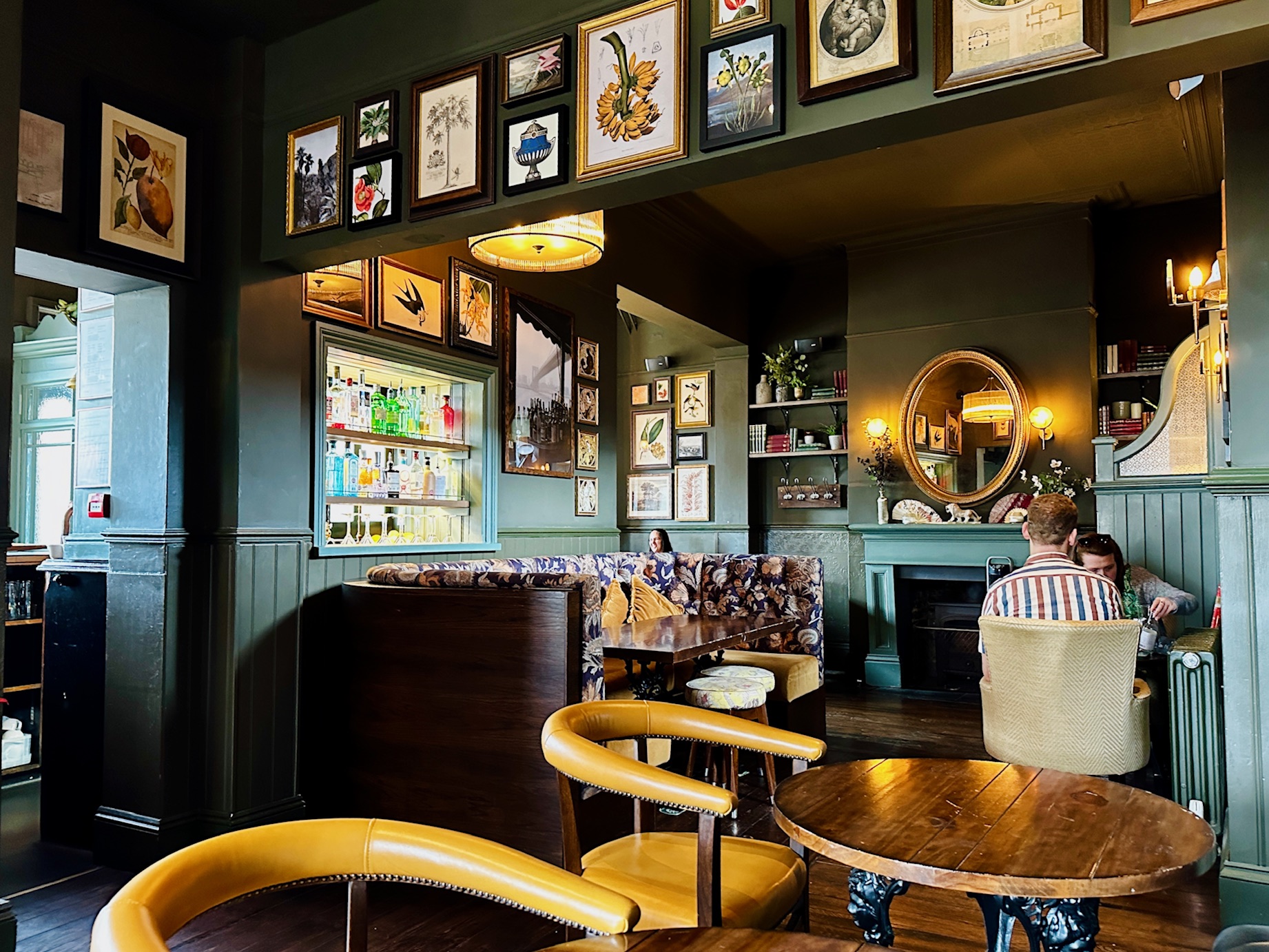
My swiftly grabbed photos of the room don’t do it justice but it is indeed a coolly attractive space. It’s built into two railway arches, but this has been lavished with funds and the interior, designed by a Danish studio, does have that very Scandi feel to it. Actually, it reminded me of many places I’ve eaten in on the continent, in Ghent or Copenhagen, but few in Blighty. But that also made me realise that in Europe, nobody would bat an eyelid about a dining room like this but here in England you can rely on people to lose their shit about it.

All that said, it was more a place to admire than necessarily enjoy eating in. The long communal table – again, something I feel like I’ve seen more in Europe than here – was very striking, and the wooden booths for four were attractive (although when Giles Coren reviewed Planque for the Times he complained about his arse going to sleep: now he knows how his dining companions must feel). But if you’re at a table for two, I think you do get a little diddled: those three tables were right at the start of the dining room, near the front door, close together and slightly unloved.

By this point Luke had arrived and we’d ordered a few aperitifs – a negroni for me and a Chartreuse and tonic for him. Luke is in his early thirties and lives in Clapton in an apartment which he assures me is slightly bigger than a studio. He runs multiple marathons a year, and his Instagram is a positive advert for being young and happy and living in London: if he isn’t jetting off to Australia or back to Canada, attending this wedding or that, running a marathon in one European capital or another he is in a beer garden or at a house party somewhere in London, surrounded by equally young and attractive people, living their halcyon days.

As if I didn’t feel old and fat enough already! Just once I’d like to see a picture of him heating up a depressing ready meal or watching Love Island, but it’s impossible to hold it against him. Too likable, you see.

At weekends Planque serves a set lunch only, which is yours for thirty-nine pounds and includes four small plates, your choice of main course and a set dessert. There are a few additional dishes in the bottom section, and with a little light questioning our server gave us a view on where in the meal they might turn up – so some would precede your small plates, some accompany your mains and a couple of cheeses which would come before your dessert (if you’re doing things right) or after it (if you’re not).

All pretty straightforward, but Luke and I couldn’t decide between the two mains. Steamed skate wing managed to combine one of my favourite ingredients with possibly the drabbest cooking technique there is, veal sweetbreads had undergone a similar experience by being turned into some kind of sausage and served with coco beans. Was Planque’s superpower taking the fun out of things? In the end, Luke said we should order both and share, which in most restaurants would be a perfectly viable option.

Wine first, though, and another reason to feel the exclusivity of Planque – and by exclusive I mean expensive. The cheapest wines at Planque are around sixty pounds, and the majority of the list comes in at three figures. My original choice was a Maccabeu from the Languedoc, but our server quickly and firmly told me it was very wild, and that I might well regret ordering it (why is it on the menu then? might be your question: I might have had that question in my mind too).

So instead he steered us towards a Corsican white which was a blend of Muscat, Vermentino and Bianco Gentile, an indigenous Corsican grape I’d never heard of. And, in fairness, it was a beautiful white wine. At eighty-four quid, you’d really want it to be. You can’t easily buy it elsewhere, which I guess is kind of the point, but what research I did manage to do suggested the mark-up was steep.

From this point onwards, though, concepts of value and its relationship to quality, and quantity, became foggier and harder to grasp. A good illustration was our opening dish – scallop tartelettes were divine, dimples of clean, pure, subtle high-grade scallop sheltering the crunch and sharpness of sea lettuce, like the tiniest gherkins. An exquisite couple of mouthfuls, one of the nicest amuses-bouches you could possibly imagine. Nine pounds, for the pair of them.

Then came the four small plates, pretty much at the same time as the tartelettes. I didn’t take a picture of the bread because I don’t think I’d clocked that it was one of the small plates in question. That felt a little cheeky, especially as it was literally the only ballast in the entire meal. Decent bread, gorgeous butter that spread at room temperature. Is that a course in its own right? Not convinced.

Far, far better was a little bowl of consommé, made with lardo and more scallop. If Planque had a gift for removing the fun, this was the most playful reversal of that. Consommé never looks like it’s going to be the most exciting thing you eat during a meal, but it can pack a massive punch that belies its unprepossessing appearance. That was definitely the case here, with that wonderful concentration of salt, sea and smoke. If there had been more of this kind of thing, I’d have been a happy man. I used some of the unremarkable bread to dab up the rest of the remarkable consommé.

The other two small plates also had that Nordic, beige feel to them. I guess using turbot is one way to make a roe dish seem luxe, but I wasn’t sure it delivered disproportionately well. Fish roe seems to be everywhere this year, and I’ve had something like this at Quality Chop House and 1 York Place. The former served it with salt and vinegar doughnuts, which were marvellous, and the latter with fennel, which was interesting.

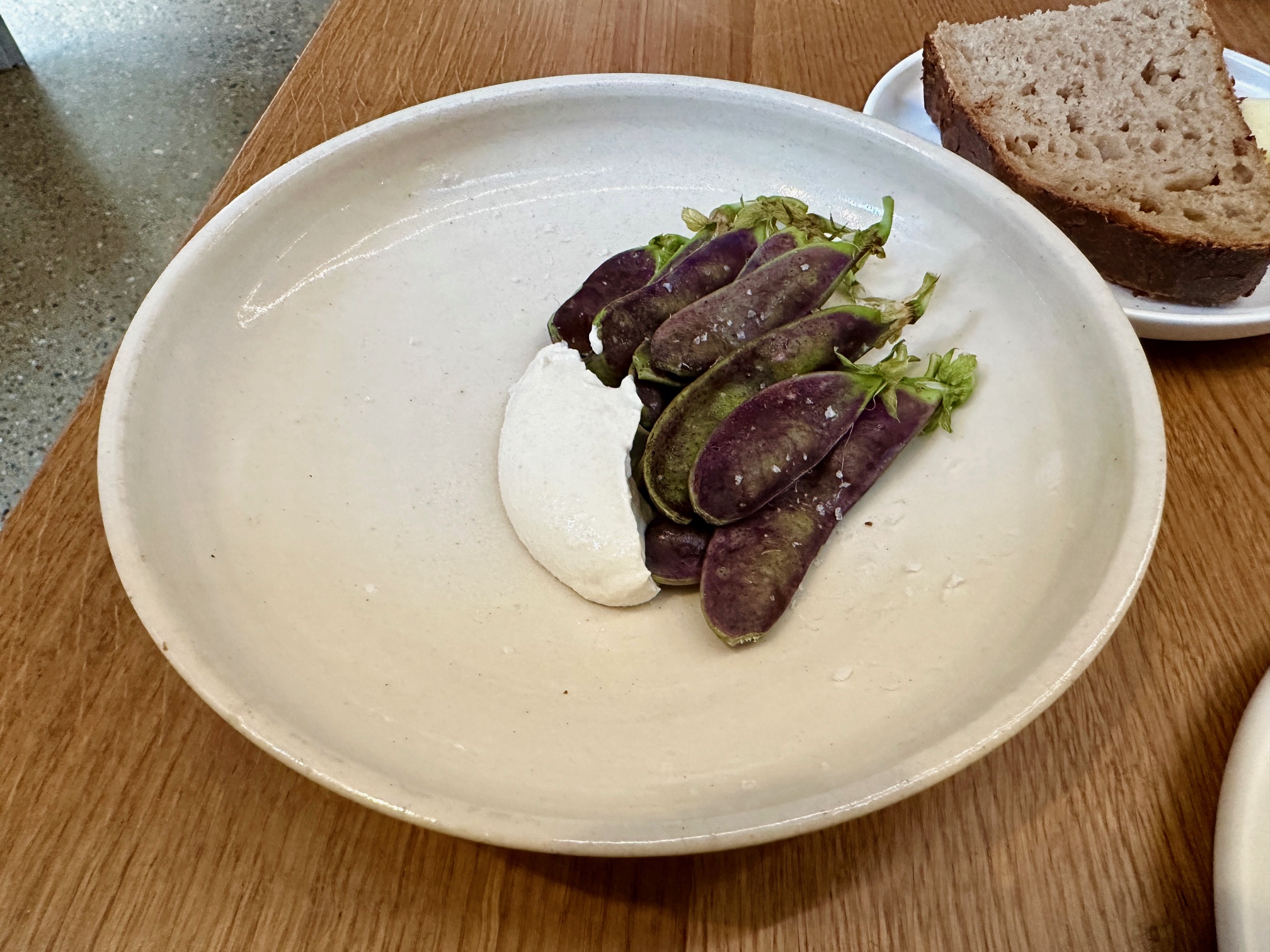
Here instead you had mange tout which I believe the restaurant grows itself, crudités without the crudeness. It was okay, but I felt like it was trying to improve me. Many people have tried to do that over the years, always without success.
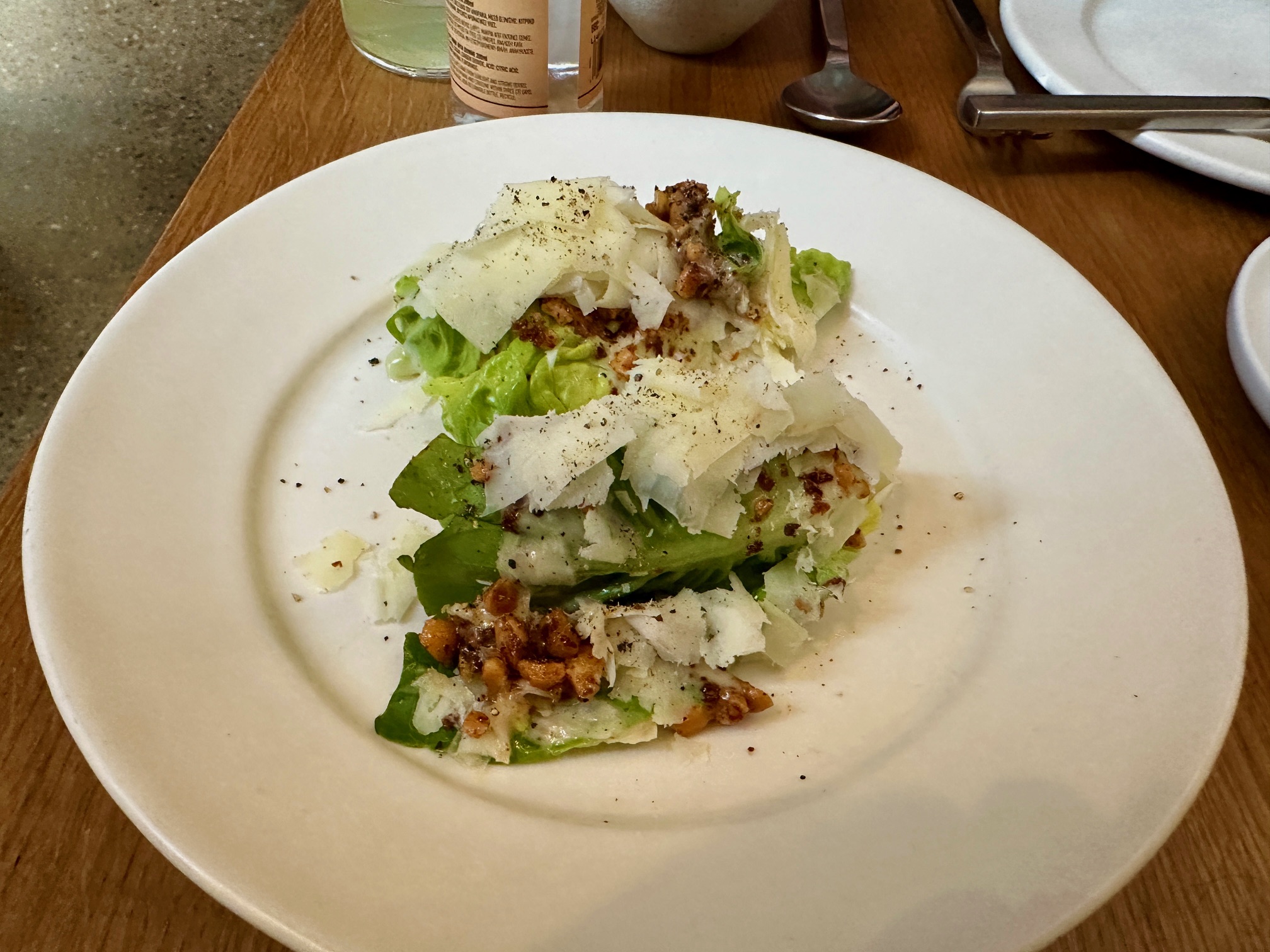
To me the very best of the small plates, and the single best thing I ate in my meal, was just described as lettuce, hazelnuts and Cora Linn. It was a salad, and when I say salad I mean two lettuce leaves scattered with hazelnuts, dressed and festooned with Cora Linn, which is apparently a Scottish take on Manchego. Again, if it sounded like it could be fun, Planque could make it plod. And if it sounded workaday, Planque could elevate it. I suppose that’s a skill of sorts, although not one I’m sure a restaurant should cultivate.
As you can probably tell, the small plates were small. But I was unconcerned, because our mains were on the way and I was counting on them to redeem matters. I was mistaken about that.

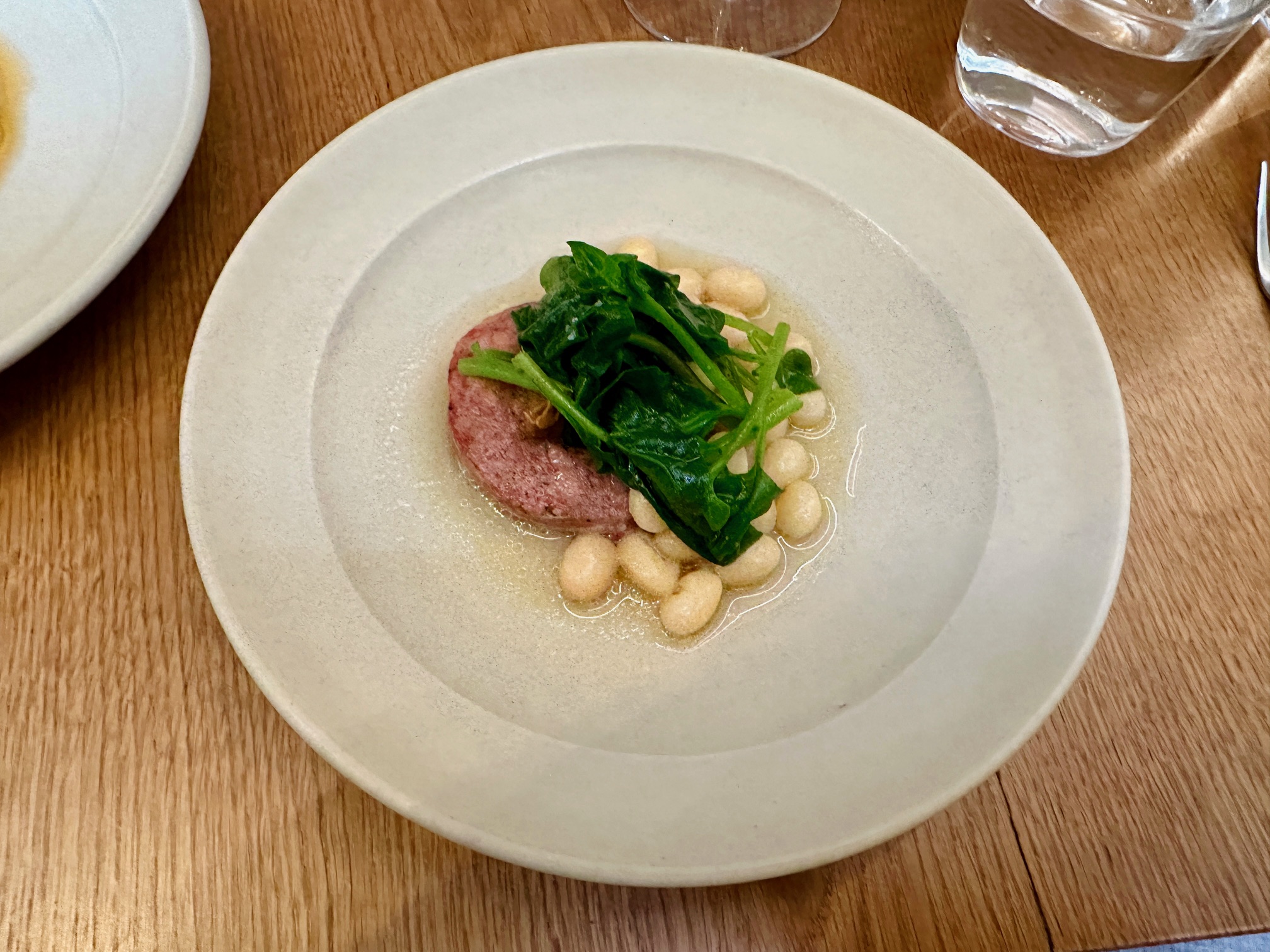
So first up, that veal sweetbread sausage. A single disc of it, with coco beans and some wilted greens draped on top. The sausage was, I do have to say, truly delicious – glossy, almost silky, rich stuff, and as far from mystery meat as you could hope to be. The beans were like many people I’ve worked with over the years – firm, nutty and a little boring. There was a meagre puddle of insipid jus. I dutifully bisected the sausage and doled out half of the coco beans onto a separate plate for my cousin, a properly joyless experience. Who wants to eat at a restaurant that literally turns you into a bean counter?

This was a small plate, not a main course, and it followed what had been billed as small plates but were in fact even smaller plates. I was getting a bad feeling about this.
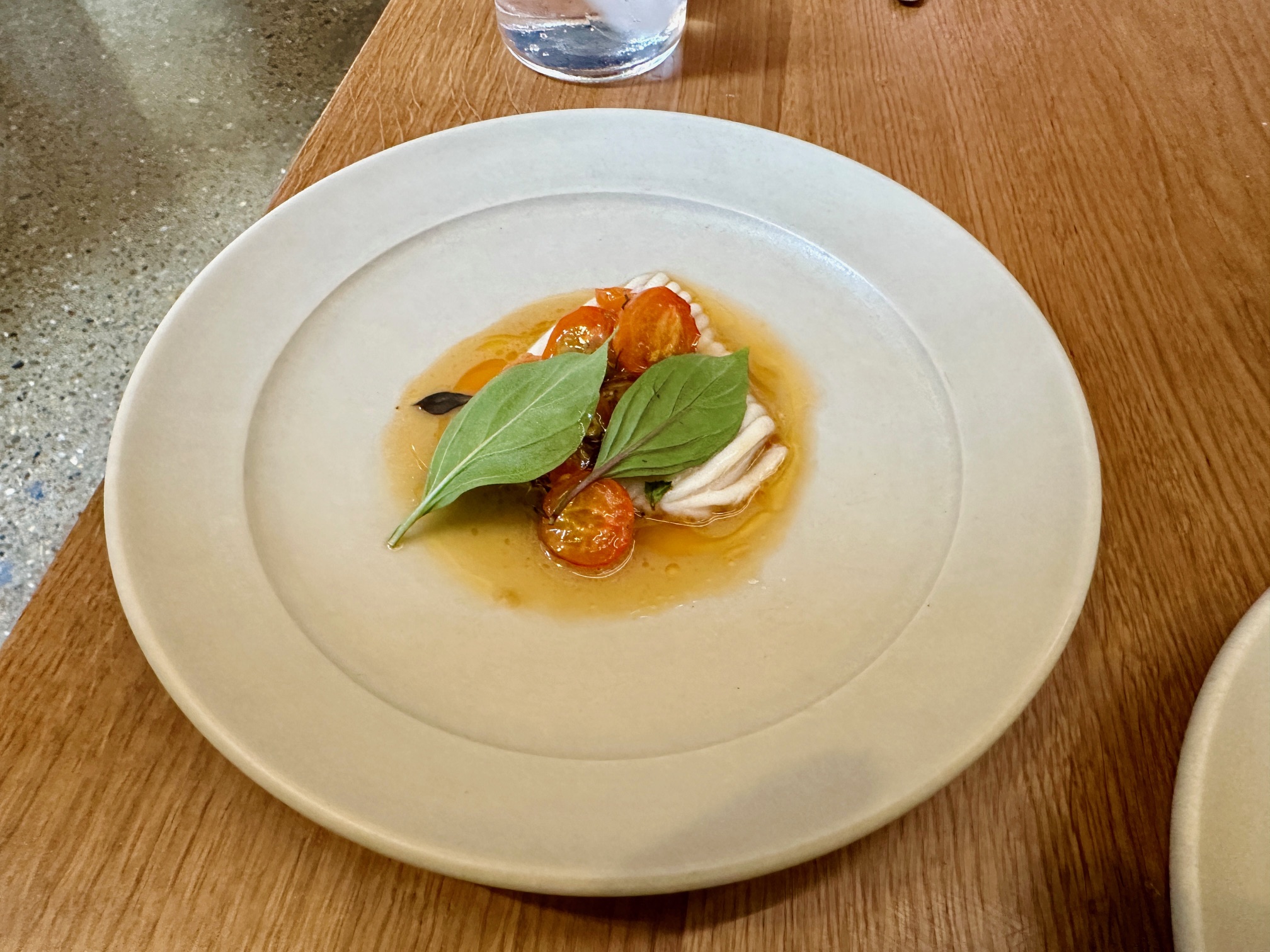
Was the skate wing better? No, not really. When you get so little skate that you can obscure it with two cherry tomatoes, for my money you have a problem. As we ate this dish, after Luke had put precisely half of it on a side plate for me, I explained to him how much fun skate wing can be. How enjoyable it was to have a big fat skate wing in front of you, littered with capers, and to slowly ease the flesh off the cartilage.

Here, the restaurant had done that for you, it just so happened that they’d done it on a fraction of a skate wing, after steaming it – the optimum way of ensuring that something is technically cooked but hasn’t been introduced to anything that could enhance its flavour. Here the flavour enhancement came from three or four perfectly pleasant little tomatoes, two leaves and a lobster sauce which was thin and not exactly honking of crustacean. Was this really the ninety-seventh best restaurant in the country?
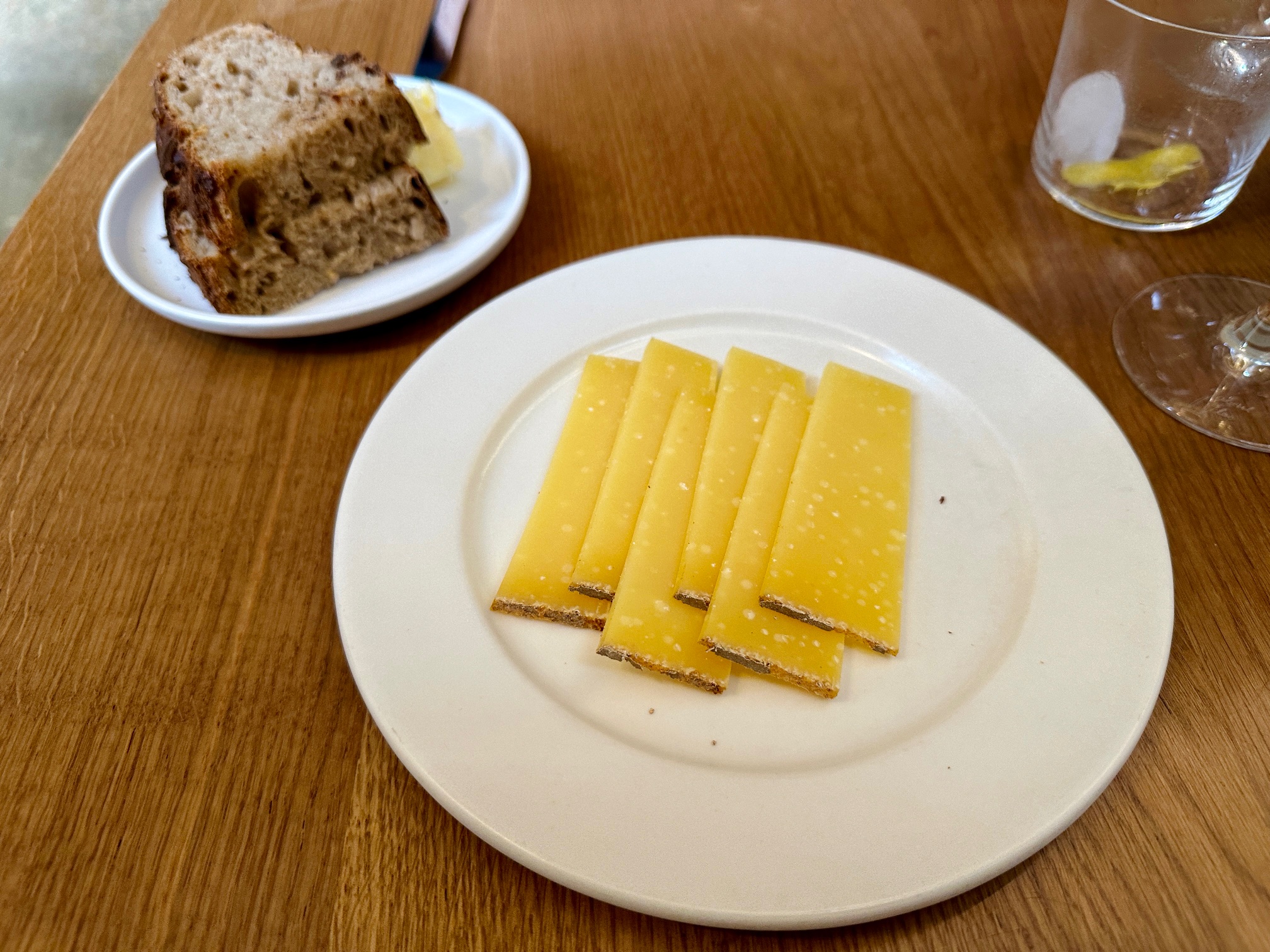
Feeling a tad peckish, we decided to interpose a cheese course between our small savoury plates and our no doubt small sweet plate. 24 month aged Comté was truly brilliant, with plenty of umami and grit to it. I thoroughly enjoyed it, and perhaps my expectations had been brutally crushed by this point but I didn’t even think it represented relatively poor value at nine pounds.

“Would you like some bread with that?” asked our server and, desperate for carbs, we said yes. Two more slices, four more quid.
Last of all, our dessert. If dessert isn’t fun a restaurant might as well give up and go home, and gladly Planque did rise to the occasion right at the end. The menu just called it sheep’s curd, plum and raspberry which doesn’t do justice to one of the best dishes of the day – a fantastic, well orchestrated collection of flavours that came together beautifully. The raspberry, lurking within, was the sharp surprise that brought it all together. I was frustrated, because this showed that the restaurant could do crowd-pleasing: it felt like they chose not to.

We decided that having a coffee or a digestif would be throwing good money after bad so, about an hour and a half after we first sat down, we got our bill. It came to two hundred and seven pounds, not including tip, and it’s to Planque’s credit that they don’t sneak in a twelve and a half per cent service charge but let you decide all that for yourself. And service, I should add, was very good – hushed but quietly authoritative, and I was very glad that our server saved us from what sounded like an exceptionally challenging wine.

But here’s the thing – even though the service was good, I didn’t get any warmth. And ironically that was absolutely in keeping with everything else. Planque felt like a cerebral restaurant, rather than somewhere to love, and when London has so many restaurants out there I do wonder who would go to Planque, decide it was absolutely their cup of tea and become a regular. Very thin people, I suppose.

I enjoyed some of what I ate, very much, but I couldn’t help feeling, at multiple times during my meal, where’s the rest? And that reinforced in my mind the vague presentiment that Planque was a restaurant to see and be seen in, more than it was a place in which to drink and be fed. So on that cerebral level I know that the kitchen can cook, I know the wines are good and I know the space they’ve created is very well executed. But I feel like they have missed something about hospitality, because all of that – even all of that – is just not enough.

When you leave a good restaurant, you should feel lots of things. You should feel like you’ve been privileged to have someone cooking for you, you should feel looked after. You should feel a rosy glow, and know that you’ve banked a happy memory. You should feel like telling people about it, and ideally you should feel like going back. This next bit might mark me out as not just old, not just fat, but also a bit of a Philistine, but here goes. Leaving a good restaurant should make you feel so many things. But you shouldn’t leave it, I’m sorry to say, feeling like you could murder a KitKat Chunky.

Planque – 6.6
322-324 Acton Mews, London, E8 4EA
020 72543414

https://planque.co.uk

Restaurant review: Vegivores

Do you remember back when supper clubs were a thing? It was around the start of the last decade, and they were huge in places like London and Brighton before finally making it to Reading in something like 2011. The first one in Reading was called Friday Dinner Secrets and back in the day, long before I started writing this blog, I gave it a whirl. It was run by a very nice couple – he was British, she was Argentinian – in the very plush and fancy basement of their rather grand house off the Bath Road. You turned up with a bottle or two of wine and ended up round a table with complete strangers, united by very good food and, for the most part, excellent company.

Well, excellent company for me, anyway: I do sometimes wonder if it was quite as enjoyable for the poor unfortunates sitting near me and my ex-wife, especially if I was showing off and telling any of my most atrocious stories. Many years later, despite the recent advent of Timeleft, supper clubs still seem like a weird anomaly in the history of how people met via the internet and how people learned to juggle online personas and real world personalities – and like forums and message boards, they were swept away by social media. Why meet people in the flesh when you can talk to them from your living room without ever leaving your phone?

Anyway, Friday Dinner Secrets was good fun; I went a couple of times, and I enjoyed myself, but when the couple wound it up I remember thinking “that’s a shame” without being crestfallen. Many years later, when the blog was nearly five years old, I did something similar when I hosted my first ER readers’ lunch at Namaste Kitchen, on a cold Saturday in January. It felt odd to emerge from the cocoon of anonymity and meet about twenty people I’d only previously known as avatars, but it was surprisingly good fun; six years and nineteen lunches later, those events are still going strong and I’ve become enormously fond of many of the people who come to them, be they regulars or newcomers.

I’m always impressed by newcomers and especially newcomers who come along to a readers’ lunch on their tod, and I always try to make sure they sit with interesting, welcoming people. For many people, meeting strangers is their idea of hell (let alone eating in front of them) so it always feels like a vote of confidence when people decide to take a chance on coming to one of those events. And I was thinking about the whole concept of dining with strangers this week as I strolled up the Caversham Road, on my way to dinner at Vegivores with Paul, a man I’d never met.

Subscribe to continue reading

Become a paid subscriber to get access to the rest of this post and other exclusive content.

Pub review: The Rising Sun

“I bet the word most overused in restaurant reviews is nice,” said my old friend Mike. We were sitting in the Rising Sun’s courtyard, the sun blazing down, drinkers and diners packed into the al fresco space, our empty starter plates in front of us. The starters had been, well, nice.

“I used to have a friend who said that about everything. Yeah, it’s nice. He said that about beers, about restaurants, you name it. And it wasn’t that he liked everything, it’s just that he didn’t have opinions about anything. With hindsight, not a massive surprise that he was a LibDem.”

“You say it when something’s pleasant, but if something’s bad and you don’t want to say so, you’d also call it ‘nice’, wouldn’t you?”

“Maybe, but the word I always overuse is lovely. When I write a review I go back, hit Ctrl-F and find every reference to lovely, try and reduce it to one per review.”

I do, in truth, not always succeed. Our philosophical discourse was interrupted by our very pleasant, distinctly overworked server coming to take our dishes away. “Did you enjoy your starter?” she said.

“Yes, thank you. It was lovely” I said. Mike raised an eyebrow as she walked away.

“See, you’ve used your one lovely up already.”

Subscribe to continue reading

Become a paid subscriber to get access to the rest of this post and other exclusive content.

Cafe review: DeNata Coffee & Co.

You can have a great network of informants, but sometimes there’s no substitute for getting out and about, keeping your eyes peeled. It’s a fact that our local journalists – what’s left of them, anyway – have forgotten, working from home. So last Saturday, after a very enjoyable lunch at Blue Collar and a coffee at Compound, my friend Dave and I took a wander down the Oxford Road to be virtuous and get some steps in ahead of a few afternoon beers at the Nag’s Head.

Much of what I saw was as expected. Traditional Romanesc are still there, in the spot where I had so many brilliant meals when it used to be Buon Appetito. Vampire’s Den, too (“is that really the only reference to Romania they thought people would get?” was Dave’s take). Oishi had definitely gone from “temporarily closed” to “never coming back in a million years” and Workhouse had been given a very attractive makeover, although the new store front didn’t seem to contain the name anywhere.

But there were, as there always seem to be, places that were news to me. Near the top of the Oxford Road, a place called AfrikInn was selling fufu, fried yam and jollof rice. SORRY WE’RE CLOSED TODAY SEE YOU TOMORROW said handwritten signs on the door and window. Further down, not far from Momo 2 Go, a place called Agnes’ Coffee Shop was open, selling coffee and Polish street food: the word Zapiekanki ran vertically down the brickwork, in a bigger font than the name of the café. I made a mental note of both.

But the place Dave and I were vaguely ambling to check out was Portuguese café DeNata, which opened in March this year, replacing – and this is where it gets confusing – Portuguese café Time 4 Coffee, which opened last August. It had been on my list for ages and although Dave and I were both full from lunch we figured an expedition to research pasteis de nata was a worthy pre-pint pursuit. Dave’s son has just come back from Lisbon on holiday, and hearing all about it made me very glad I had my own trip booked there later in the year.

We ordered a couple of pasteis, and the proprietor – instantly bright and personable – took great pride in showing me the menu; I chatted away with her for so long that poor Dave had to pay for the egg custard tarts. The owner asked me to follow DeNata on Facebook, and I dutifully promised I would. The place was bustling on a Saturday afternoon, and warm, but I didn’t pay it too much attention. Dave and I had a pub table to bag, after all, and a pastel de nata to inhale.

Anyway, the next day I left the house mid-morning, took a couple of buses and turned up at DeNata just before midday for lunch, to eat the meal you’re about to read about. So why did I do that?

Subscribe to continue reading

Become a paid subscriber to get access to the rest of this post and other exclusive content.

Restaurant review: Lucky Lychee, Winchester

Even though Reading is my patch and always has been, I get asked for recommendations elsewhere fairly often. And my blog is more useful in that respect, I hope, than it used to be, with a number of reviews from beyond Berkshire and a series of European city guides you can consult to help with lunch, dinner or even coffee choices. I’m always encouraged when people tell me the city guides have come in handy: a friend told me a few weeks ago that she and her boyfriend were trying to pick somewhere for a holiday later in the year and she actually said “can’t we just go somewhere Edible Reading has been?” Few higher compliments exist.

Somewhat closer to home, I do like to have a few choice spots in my back pocket for the occasions when people ask for my help. If you want somewhere in London or Bristol, I can sort you out. Ditto Bath, Oxford, Exeter, even Swindon. But beyond that it gets sketchy. My last trips to Cardiff, Edinburgh and Glasgow were so long ago that I’d struggle to know what’s hot and what’s not these days; I could suggest somewhere, but it would be based on research rather than personal experience. And as for the likes of Manchester, Newcastle, Birmingham or Liverpool, forget it.

I’ve felt for a while, though, that Winchester was a gap in my repertoire that I ought to fix.

After all, it’s a lovely city, it’s a half hour train hop from Reading and it has plenty to do – excellent shopping, great coffee, good mooching opportunities, historic streets, pretty pubs and a gorgeous cathedral. For a long time my dining option of choice there was Michelin-starred pub the Black Rat, but the last time I went it really wasn’t great and when it subsequently lost its star I wasn’t hugely surprised. A couple of years ago it closed down, the owner citing spiralling energy bills.

And the last time I ate in Winchester it was at Rick Stein’s restaurant there, where I had a pleasant, well-mannered, expensive meal that felt a little like Hotel du Vin but ever so slightly better; Winchester has a Hotel du Vin of its own, which gives you some idea of the kind of place it is. But that was in January 2020, just before everything changed, and catching a whiffy, clapped-out Voyager train to Winchester last weekend I was struck that it had gone from being a city I knew moderately well to a passing acquaintance with whom I’d lost touch but was keen to reconnect.

I had a solo lunch reservation at Lucky Lychee, a restaurant which operated out of a Greene King pub called the Green Man, a fifteen minute walk from the train station and not far from the aforementioned Hotel du Vin. The brainchild of couple James Harris and Nicole Yeoh, it started out in street food and home delivery before getting a residency at another Winchester pub and then moving to the Green Man two years ago. Harris and Yeoh met in Malaysia, and their menu spans Malaysian, Thai and Chinese dishes.

I had discovered it through an Instagram post I stumbled on which was singing the praises of Lucky Lychee’s brunch roti wraps, a fusion of Malaysian and British food, and although the post was written by a person who used the word “sossidge”, there was something about the food that looked unmissable. Sometimes you can just look at a menu and suspect two things: first, that you’ll eat well, and secondly that you’ll find it impossible to decide exactly how you will eat well. Lucky Lychee’s menu was one of those, and I reached the front door of the pub with a heady blend of excitement and anticipation.

It helps that it’s such a handsome pub, all dark muted tones and wood panelling. The front room looked like a proper boozer, if a classy one, with high tables and sturdy leather-topped benches. Further through, near the fireplace, there were comfy booths and tastefully-upholstered sofas. But I was sat in what I imagine was the dining room, on a banquette, looking out on the whole thing, sunlight sneaking in through the windows. The table opposite me was occupied, with a couple making inroads into a tempting-looking lunch order, but otherwise it was pretty quiet. It was one o’clock on a Saturday not that far from payday. Had I made a mistake?

Not based on the looks of the menu, anyway. I actually think a weekend lunchtime might be the trickiest time to visit Lucky Lychee, because you have a selection of what are dubbed snacks but looked like starters and small plates, their lunch menu – a slimmed down version of their evening offering – and the brunch menu.

And that’s where it got really difficult. Because the lunch dishes – 8 hour rendang, tom yum king prawn fried rice and the like – looked extremely tempting. But it was the brunches that first drew me in and that selection was calling to me every bit as much. The idea of curry sausages and fennel cured smoked collar bacon, bound up in a flaky roti wrap with lime mayo and sweet chilli sauce sounded too good to miss. A great hangover cure too, and after a couple of bottles of red with my friend Jerry the night before it sounded just the ticket. What to do?

In the end I decided to postpone the decision by ordering snacks and seeing how I felt after that. But first I ordered a drink. Lucky Lychee boasts a fascinating range of low intervention wines, but postponing the hair of the dog for the time being I decided to try an iced Milo, allegedly a popular chocolate malt drink in Malaysia. It was nice enough, though the ice took some time to get the overall experience below lukewarm. Perhaps the glass was straight out of the dishwasher: either way, it may well have been thoroughly authentic but I couldn’t shake the feeling that I’d just spent four pounds fifty on a Nesquik.

That was the last – the only – misfire of the entire meal, and everything after that was so terrific as to render it insignificant. Chicken karaage was a decent portion for eight pounds fifty, and if it ever so slightly lacked crunch, the flavour that had permeated the chicken thighs, from soy, oyster sauce and rice wine, more than made up for it.

Mayo is a frequent accompaniment for karaage but rarely is it anywhere near as good as Lucky Lychee’s, which was positively awash with citrus. I kept going back and forward between this and my second small plate, trying to figure out which I liked the best.

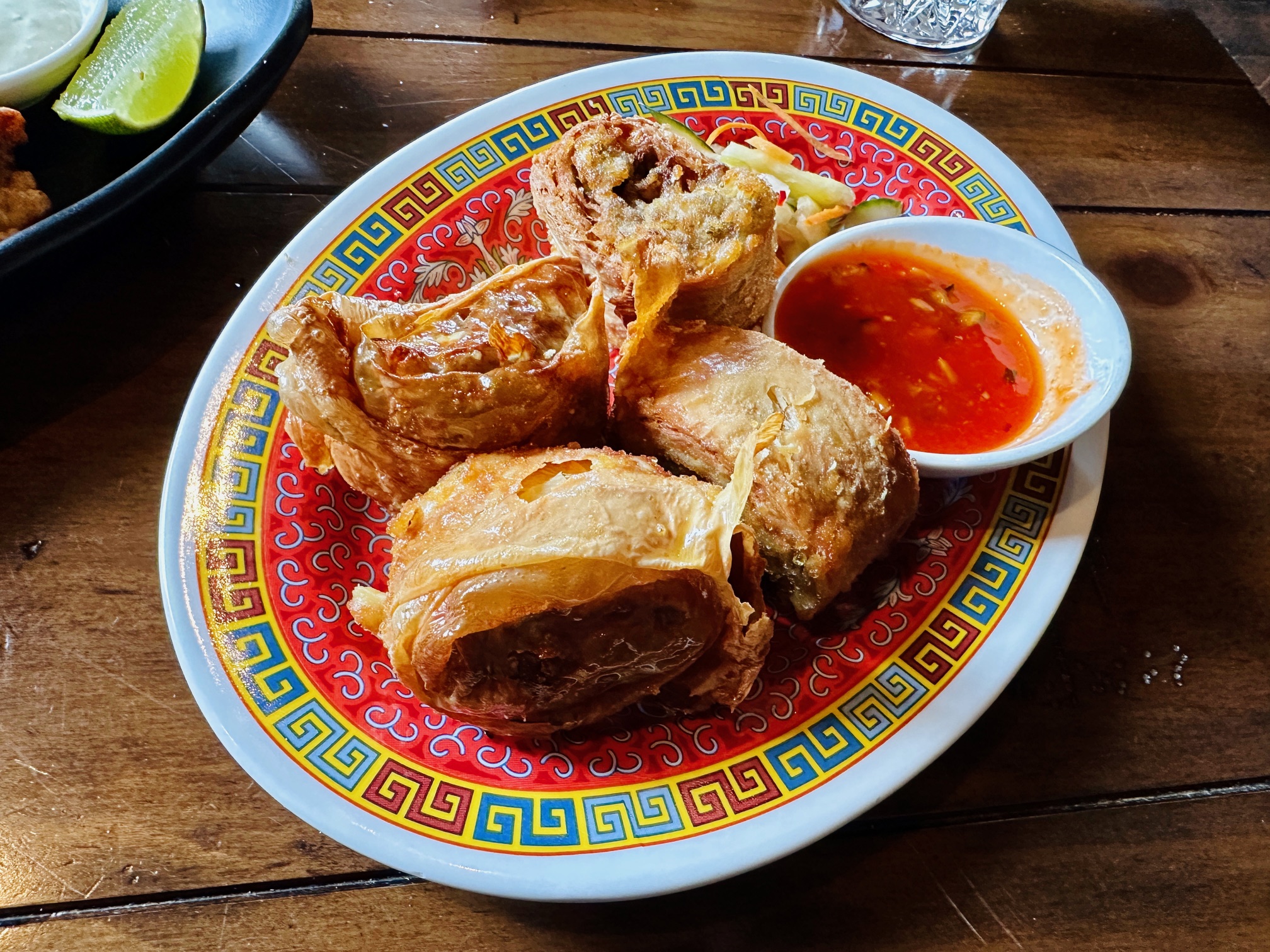
I think though, on balance, the second small plate was ever better. Billed as Penang pork spring rolls it was really nothing of the kind. I mean, technically it was, but the ratio of dense, delicious meat to wafer-thin, greaseless pastry made it something closer to a sausage roll (or, if you’re three, “sossidge roll”) that was all sausage and no roll.

But that’s not all, because the meat was beautiful – shot through with tiny dice of carrot and, I think, spring onion. The menu said that it was marinated in a 10 spice powder and I could well believe it, because I’m not sure I’ve ever had anything like it.

I’m conscious that this is my third solo review in a row – and yes, I might be auditioning for some additional dining companions. It meant I ordered slightly more food than I strictly needed, to try and give the menu a fair run out. But I was as pleased as Punch not to have to share these spring rolls with any other fucker. They were mine and mine alone, and it was a beautiful moment.

My server, who was downright lovely throughout, gave me a little time after my starters were cleared to make my decision. As I mulled it over, I ordered a glass of white wine, a German riesling which turned out to have plenty of zip and pith, and a little honey. And the more I thought about it, the more I couldn’t decide: brunch or lunch? Buttery roti or something with rice?

It wasn’t easy but in the end, believe it or not, I was thinking of you lot. I decided you’d find an idea of Lucky Lychee’s dinner and lunch options more useful than a brunch, however good. So I forwent that roti stuffed with good things, and decided that if I walked away disappointed it was all your fault.

Gladly, nothing was your fault and my main course was one of the most enjoyable things I’ve eaten all year. Billed as honey Marmite chicken, it wasn’t a combination I’d ever considered or even heard of, although a Google suggests that it is indeed a dish eaten in China and Malaysia. But honestly, it was such a phenomenal combination. The chicken, thigh again, was in a crispy, craggy coating, studded with sesame seeds, and it had all the textural interest that the karaage had only just failed to bring to the table. But what made this dish, and made it one I’ve thought about many times since, was the sauce.

What a sauce! You might not like Marmite, you might not like honey – for what it’s worth I love both of them – but this sauce from Lucky Lychee managed to completely transcend either Marmite or honey, being infinitely more than the sum of those things. So you had the huge, salty savoury depth that came from the Marmite (and, apparently, a bit of oyster sauce) and the almost smoky sweetness from the honey, dovetailing and transforming in a way that was nothing less than magical.

Add in some just-cooked peppers and a sprinkling of peanuts and you had one of the most intensely moreish dishes I’ve eaten in well over a year. Put it this way – last month I ate at Kolae, one of the most hyped restaurants in London right now, and I had some of the most fascinating dishes I’ve sampled in a long old time. But nothing there matched the joyousness of this honey Marmite chicken.

I spooned, and then scraped, every last bit of sauce onto my fluffy jasmine rice, I cleaned my plate as best I could without abandoning decorum, and I wondered when I could eat this dish again. I love fried chicken, which ultimately this dish was, but I couldn’t remember trying anything quite like it.

By this point I was gratified to see that a few more people had taken tables in the pub. A young couple came in, him with a London Review Of Books canvas tote, her with one bearing the logo of Shakespeare & Co, the legendary bohemian Paris bookshop, and took the table near the window that had been occupied by others when I came in. I smiled at them – I’m not sure when I reached the age where I’m twinkly and avuncular, but sadly that point has come – and then I peeked nosily as they ordered from the brunch menu.

One of them had ordered a roti that was served absolutely stuffed with beef rendang, and as I saw it come to the table I realised there was nothing for it: I was just going to have to return, sooner rather than later. I realised my mistake hadn’t been to order lunch instead of brunch, it had been not to order brunch, find some excuse to loiter around Winchester for five hours and then go back for dinner. Never mind – I was already planning multiple return visits, with a pretty good idea of at least one person, miffed to have missed out on this trip, who would insist on trying it out.

Lucky Lychee does have a dessert menu, but on this occasion it didn’t have enough to tempt me. It’s mostly ice cream and affogato, with just two more interesting options – a banana spring roll and a piña colada crème brûlée. I had it mind to possibly grab an ice cream from Chococo, across town, so I decided to settle up and amble to Coffee Lab for a latte. My bill came to just under forty-eight pounds, not including tip. The most expensive thing I had was the honey Marmite chicken, which was under fifteen pounds. It would be hard, I think, to spend fifty pounds on lunch better than this.

As you’ve probably gathered, I truly adored Lucky Lychee. And weirdly, just as with Bombay Brothers last week, I came away feeling that I hadn’t seen the restaurant at its absolute best. With Bombay Brothers that was driven by a faint hope that surely it could be better than that, but with Lucky Lychee it was more an awareness that, phenomenal though my meal was, I suspected they were capable of even more.

I need to go back – to try the brunch menu, to work my way through the other snacks, the curry puffs and sesame prawn toasts, and to try the full gamut of their main courses at dinner time. Char siu with honey rhubarb glaze has my name on it, as does the Guinness chicken with lychees. And that rendang.

Who am I kidding? I want to try all of it – and rarely have I come away from a restaurant so simultaneously delighted with everything I had and frustrated that I wasn’t able to polish off more. The other thing I kept thinking was that this is a restaurant operating out of a Greene King pub. So I cast my mind over all of Reading’s Greene King pubs – the Roebuck, the Palmer Tavern, the Outlook and so on – and thought how sad it was that none of them had done anything this bold. Another one to chalk up under I wish Reading had something like this.

Don’t get me wrong, its closest equivalent is the Moderation, a fine pub. But Lucky Lychee was properly next level stuff. As so often, going away from Reading reminds you of the things Reading is still missing. Maybe we’ll get a top notch Malaysian restaurant at some point, but I’m not holding my breath. On the plus side, I now have somewhere to recommend whenever anybody asks me where’s good in Winchester. But this is the drawback: how am I ever going to review anywhere else in the city, if it means missing out on eating at Lucky Lychee?

Lucky Lychee – 9.0
The Green Man, 53 Southgate St, Winchester, SO23 9EH

https://www.luckylychee.uk