It’s a fact of life in hospitality that restaurants open and close all the time. There’s an inexhaustible supply of plucky new businesses ready to sign a lease and try their chances, and you can almost measure how long someone has lived in Reading by how far back they remember the history of certain sites. Do you recall when Thai Corner used to be Bistrot Vino, or when the Nando’s on Friar Street was a place called Bistro Je T’aime? You’ve probably been here since the early days of the Oracle, if not longer.
In some cases a restaurant makes such a go of it that you almost completely forget the establishments that went before. Some people have long memories, and remember Mum Mum or that pretzel joint on Market Place, but for many people I imagine it feels like it’s always been Tasty Greek Souvlaki. And although I know rationally, in the back of my mind, that there used to be a great branch of Ha! Ha! on the Kings Road – and that after that it was a Turkish place, and a tapas restaurant, and a weird kind of pub that closed on Sundays – it’s been House Of Flavours so long that it’s jarring to imagine anybody else there. It’s a bit like how, after you’ve been in a relationship with a person long enough, your previous life feels as if it belonged to somebody else.
But there are some sites where you need not only a long memory but a good one, because so many restaurants try and fail to make a go of it on the same premises. The quintessential example of this is the site of the old Warwick Arms, which has been Bali Lounge, the Biscuit & Barrel, Cardamom and King’s Kitchen and currently goes by the name of the Aila. I only reviewed the first two of those, and most of the others closed before I could get round to them.
Or take Cozze’s site on the Caversham Road, which has been Chi’s Oriental Brasserie, La Fontana, Al Tarboush, Casa Roma and Maracas, all of which eventually went pear-shaped. (Incidentally, I heard a fantastic story once that when Casa Roma decided to change to a Mexican restaurant called Maracas they did it mainly because they realised they could reuse all the letters in their sign except the O: I so hope this is true.) But can there really be a god in heaven when the TGI Friday opposite has outlasted them all?
What’s behind these high-churn sites, I wonder? Is it bad judgment, bad luck or bad juju? Are they run by enthusiastic amateurs who bite off more than they can chew, or are some sites simply cursed – by lack of footfall, of parking or of access, or by the presence of better (or better-known) alternatives nearby? Or is it just that they haven’t found their forever home – or rather, their forever homeowner – yet? All that crossed my mind last weekend as I stepped through the front door of Madoo, ready for lunch.
Subscribe to continue reading
Become a paid subscriber to get access to the rest of this post and other exclusive content.
I’m delighted to announce the results of the competition I ran last month with Kamal’s Kitchen. As ever, this was a writing competition and I asked entrants to give me 250 words on the Reading institution they missed the most – and this clearly triggered a tidal wave of nostalgia, not only in the competition entries but also in the feedback I got on Instagram.
Unsurprisingly, some names came up again and again – so if, for instance, you miss Dolce Vita or Mya Lacarte rest assured that you’re far from alone. But there were also a few cafés and pubs that were mentioned in despatches – Tamp Culture and the Tasting House, obviously, and Tutti Frutti come to think of it. And then there were the more niche choices that marked you out either as having distinctive taste or a long memory (or both). So award yourself a handful of internet points if you find yourself missing Sardar Palace, or Brett’s, or Café Iguana. And you get bonus points if you remember Cartoons (although, like the Sixties, if you can remember Cartoons you probably weren’t there).
I found myself thinking about all the places I miss that nobody mentioned. Bhoj, back when it was down on the Oxford Road, the proof of concept that the people of Reading were very happy with the idea of eating excellent Indian food in a room with orange walls. Ha! Ha! when it was where House Of Flavours is now: it did a chicken and chorizo pasta dish which probably offended several national cuisines at once, but back in the early Noughties I couldn’t get enough of it. Cappuccina Café on West Street with its beautiful bành mì. Santa Fé on the Riverside, with its boozy 2 for 1 cocktails and its beefburgers served in a tortilla wrap. The 3Bs. Sahara. I could go on, but if I do I’ll just get sad.
I’m delighted that I wasn’t the judge for this one, and that dubious honour went to Nandana Syamala, co-owner of Clay’s Hyderabadi Kitchen. Nandana runs one of the restaurants people in Reading would most miss if it vanished off the map tomorrow, but also as a relative newcomer to Reading judging the entries gave her that Bullseye “look what you could have won” feeling. I asked Nandana how she felt about judging this competition, and here’s what she had to say:
The majority of the entries talked about the hospitality industry, and I’m really glad about that. I’ve always believed that a vibrant independent food and drink scene is what gives a town its identity, and makes it a much more fun place to live. All of us in hospitality aim to make a mark the way Dolce Vita or Mya Lacarte have, and be remembered with fondness many years after closing down.
But for me personally, what I miss the most is Tuscany on the Oxford Road. During the short time they were open, we developed a ritual of going to them with a bottle of wine after closing our restaurant by 10pm on a Sunday night. And honestly, that’s where we had some of the best pizzas in the U.K. Sometimes, when it was their closing time, they would bring in their not so secret stash of some of the best Italian charcuterie, and we’d share wine and our experiences. In fact, I may have been guilty of closing the kitchen early a few times, just so I could get there and have my favourite meal of the week.
Nandana is spot on: I miss Tuscany too. Anyway, without any further ado, here are the results. Oh, and the picture below is of a takeaway I had recently from Kamal’s Kitchen: he’s on delivery apps now, and those extraordinary pressed potatoes travel surprisingly well.
WINNER: Derek Goodridge
From the 1980s through to the early 2000s, Reading had an excellent delicatessen, County Delicacies, situated on St Mary’s Butts. At this time the store was really the only place in town that you could rely on for interesting food purchases. I was a regular visitor on Saturday mornings, along with pretty much anyone else wanting to stock up on cheese, charcuterie, excellent breads from DeGustibus bakery and lots more. Almost every visit ended with purchases that I hadn’t planned but were too good to resist: perhaps Italian fennel sausages, fresh rum babas, slices of proper cheesecake or possibly a cheese I hadn’t tried before but was persuaded to try.
The store was presided over at the time by the late Chris Rogers, who managed to keep the large queue of customers happy even though sometimes on Saturday it was several deep. He was assisted by “Saturday job” part timers, one of whom I discovered later was the young Kate Winslet. I recall that each purchase would be weighed and priced, then added up by hand on the edge of the wrapping paper, possibly the last store in the town to do so. The store changed hands in 2001 and Chris retired, finally closing permanently in 2010.
I’m obviously pleased that new independent food vendors are established in the town, so it would be wonderful if they were joined once again by a quality delicatessen run by knowledgeable people. Maybe one day!
Nandana says: I had no idea Reading had such a place! Reading this has reminded me about places like that I’ve visited in Italy, some even at highway service stations, and remembering the hours spent exploring the wonderful produce they stock. It makes me imagine how wonderful it would be to have a place like this in Reading (it made me crave a good rum baba too). The town’s changing: I hope we get a great delicatessen too very soon.
RUNNER-UP: Lucy Manners
I miss Fisherman’s Cottage. I miss the cod croquettes, I miss the potatas bravas with the right amount of smoke, the plump prawns in the paella, oh the paella, and everything with a lick of punchy aioli.
I went with friends and we laughed, grazed, chatted, grazed, gossiped and grazed some more. I walked down along the river to Fisherman’s Cottage several times with my first post divorce date for lazy sunny lunches and we talked about tapas in Spain and the future. I know why I miss it though. Not just missing the food, but the me I was when I was eating the food. After all, it wasn’t all good. I never quite ‘got’ the faux beach huts out back, and the calamari had more than a hint of elastic band the times I tried it.
Since Fisherman’s Cottage closed my then date is now by my side raising our two young children and juggling life. Lunches are often an exercise in eating quickly before a child needs you to cut more up, replenish the dip-dip, fetch another drink or asks for the bite from your plate you were saving for last. Rare meals ‘out’ just the two of us are a fiercely planned thing – on the calendar weeks in advance, locations debated with links, recommendations and menus WhatsApped during night feeds and quiet moments at the desk. I think if it was still open, Fisherman’s Cottage and a stroll down memory lane would be a contender.
Nandana says: This is one place in Reading we were lucky enough to experience! We went a couple of times before they closed and always had really enjoyable meals. This piece captures what a great restaurant can do – trigger memories of a place, of what you were at that time, and create a longing to go back and experience or feel that all over again. I can imagine I Love Paella doing exactly that: it’s dearly missed by many, including us.
Amen to that. Huge congratulations to Derek, who wins a meal for four including drinks up to a maximum of £120, and to Lucy who wins a meal for two, also including drinks, up to a maximum of £60. And many thanks to everybody who entered – and, last but not least, to Kamal’s Kitchen for being so generous.
I try my best, doing this restaurant reviewing lark, to visit places I think are likely to be either good or interesting, or ideally both; with a few notable exceptions, I don’t go anywhere where I think I’m definitely going to have a bad meal. And even if I have my reservations, I try to turn up with an open mind, ready to find the positives in my experience, however difficult that is. Sometimes the gods smile on me and I have a run of beautiful meals, one after the other. And that’s brilliant – exceptional meals are easier to write about, and people enjoy reading about them. Conversely, the worst thing is a run of bad meals. A succession of stinkers. That does rather break the soul.
The worst run I can remember started at the end of 2019. It began with a truly awful dinner at TGI Friday, and continued with the grisly spectacle of doner meat nachos at German Doner Kebab. But the straw that broke the camel’s back was going to the Dairy, the university bar and kitchen just down the road from the MERL. I’d always loved drinking there, especially on a hot day, but the food was bloody awful. That made three cruddy meals on the spin and nearly two months without enjoying a meal on duty: it was the kind of vale of tears that makes you seriously think about chucking the whole thing in.
Then at the start of this year, there was a surprising development: the Dairy published a completely new menu on Instagram. And it made all the right noises – beef came from the University’s farm four miles down the road, eggs were from Beechwood Farm (did you know that Beechwood Farm was run by Reading University alumni? I didn’t) and all the bread was supplied by Waring’s. Not only that, but the menu was full of the kind of things you might actually want to eat. Crispy fried chicken and pickled watermelon burger? Brisket and blue cheese ciabatta? Jerk spiced plantain and halloumi skewers? Count me in!
Something was clearly afoot at the University because a week ago Park House, its bar on campus, published a brand new spring menu. Again, it all looked distinctly tempting, and again the provenance was called out, with the beef coming from the University’s farm and name checks for the excellent Nettlebed Creamery and the Cotswolds’ Hobbs House Bakery. (Not everyone was overjoyed, mind you: I really can’t believe you won’t sell cheesy chips any more, said one comment). Park House has always been one of my very favourite places for a pint in the sunshine, but was it possible that it also offered great, affordable food under the radar? Zoë and I ventured out on a sunny spring evening to put it to the test.
Subscribe to continue reading
Become a paid subscriber to get access to the rest of this post and other exclusive content.
Last year, when I emerged from my cocoon and began reviewing takeaways, my first choice was Tasty Greek Souvlaki on Market Place, the thriving restaurant occupying the site where MumMum used to be. It was the natural choice: it was the first (and arguably the most interesting) new restaurant to open in 2020, and one which had quickly embraced delivery as its best chance to ride out an extremely challenging year in hospitality. So I ordered my first on duty takeaway from them, and very nice it was too (you can read about it here).
Tasty Greek Souvlaki is essentially a carnivore’s paradise, and the menu largely revolves around different quantities of different dead animals cooked in different ways: do you want them cut into cubes, threaded on a skewer and cooked on charcoal, or would you rather go for something a little more primal like chops? Or is your preference to have them pressed into a magical revolving pillar of constantly grilled elephant leg which is then shaved off in thin slivers and fried until crispy? Would you like it in a pitta or a toasted sandwich, with or without chips?
Some people would treat that series of decisions as one disgusted shudder after another. Those people, to be honest, are unlikely to eat at Tasty Greek Souvlaki, although I’m told the falafel wrap is decent (if not massively Greek). Personally, I found it too difficult to choose for a very different reason: I kind of wanted it all, so when I ordered takeaway I went for their mixed grill platter, which gives you exactly that. It was an embarrassment of carnivorous riches, it was a wonderful way of being transported to the Mediterranean without leaving your sofa. It was, not to put too fine a point on it, a cardboard box absolutely crammed with every which kind of meat.
I loved it, and ever since then the Big Box Of Meat has been a regular fixture at my house – not too often, because I didn’t want to kill the magic, but every few months on a night when we couldn’t face the cooking. It was always hot, it always arrived quickly and it never let you down. And it cost something like twenty-six pounds, which was ridiculously affordable.
But it was bound to be far nicer in the restaurant itself, plucked from the grill, loaded on to a plate and brought to the table without delay, and so I’ve been looking forward to a proper on duty visit to Tasty Greek for a long old time. Last Saturday, Zoë and I turned up just after midday for an overdue reunion with possibly Reading’s finest meat feast.
Subscribe to continue reading
Become a paid subscriber to get access to the rest of this post and other exclusive content.
A more recent, extended guide to Montpellier can be found here.
I never expected to find myself in Montpellier last month, as spring finally came to everybody’s rescue. Initially I was booked for a trip back to Malaga, a regular stomping ground, for warmth, sunshine and the kind of relaxation that comes from going back to somewhere you know well – no disorientation, no spending the first day finding your bearings, just the ease and delight of good meals in familiar haunts and lazy walks down well-remembered streets.
Anyway, a couple of things happened. The first was that Malaga was hit by unseasonal torrential rain, and Europe’s sunniest city became a cocktail of downpours and Saharan sand. Every day we checked Dark Skies but the forecast for the week we were there resolutely refused to improve. Granted, we’d probably have spent a fair amount of time sitting in restaurants and bars but the prospect of not getting any vitamin D hardly appealed, especially as at the time the U.K. was bathing in something of a mini heatwave.
The second was that I remembered a conversation I’d had at my readers’ lunch last November in the Lyndhurst. I was freshly back from Malaga that weekend, as it happened, and I got chatting at one of the tables with Phil and Kath about city breaks and how much we’d missed them since the start of the pandemic. And that’s when Phil and Kath let me in on the secret of Montpellier. It was a city they’d discovered by accident, on a stopover from Bordeaux to Marseille, but on discovering it they fell accidentally in love.
Phil and Kath went most years, they told me, and the more they talked about it the more indelible my mental note became. They’d never had a bad meal, they said: everything was beautiful and the city was a maze of tiny old streets, alleyways, squares and cafés, perfect for getting gloriously lost. So the week before my holiday I idly checked flights and accommodation and found that Montpellier was both easy and affordable to get to: less than two hours, direct, from Gatwick. I’ve had an idea, I said to Zoë. Half an hour later, everything was booked.
I’m extremely grateful that Phil and Kath came to that readers’ lunch, because Montpellier was everything they promised and more – a gorgeous city with loads to see and do (although I scratched the surface of that, because there were restaurants, cafés and shops that needed my urgent attention). The old city, L’Écusson, is indeed a wonderful maze of little lanes and sidestreets, with a tempting boutique, little square or sun-dappled restaurant terrace around every corner. But I also loved Les Arceaux, the area we stayed in, a little neighbourhood in the shadow (literally and figuratively) of the impressive aqueduct that looms over the west of the city. On our first morning there we went the market held under its arches, and wandered almost in a euphoric trance from stall to stall, wondering what it must be like to have regular, easy access to all that cheese, charcuterie, olive oil, wine and cider.
I don’t normally talk about accommodation, but the place we stayed was so agreeable that I must. Les 4 Étoiles is a grand 1930s house in Les Arceaux, and although it’s owned by Pierre it has been in his family for generations. The piano in the dining room belonged to his grandmother (there’s a framed picture of her over it) and Pierre encourages guests to play it: I didn’t, but I did hear notes shimmering through the house more than once. And our room was a luxurious but calm space, with a giant bed you could sink into. It had a little balcony and every morning I went out and looked down on the street outside, ecstatic to be elsewhere and, I suppose, somewhat at peace.
Pierre – chic, soft-spoken and unbelievably polite – was the perfect host, and breakfast in the dining room every morning was a delight, with good coffee, great bread from the bakery round the corner, local honey, fruit salad and pastries which I chose to consider mandatory. Our fellow guests were a real mix – from France, from Germany and from Belgium – and once I’d apologised several times for the English we had some fascinating conversations. It was interesting to get a different perspective: although I might consider the political situation back home tragic and rage-inducing, they were mostly amused by it. I expected them to be glad to be shot of us, as a nation, but if anything they were sad, and more than a little bemused.
Anyway, I had a fantastic week eating, drinking, shopping and generally being a flâneur, taking pictures with my new camera and enjoying a proper break for the first time in what felt like a long time. The food and drink scene in Montpellier was too big for me to even scratch the surface in four days, but every time I ruefully recognised that I wouldn’t get to visit everywhere on my list I mentally nudged items onto a different list, marked Next time. So with all that said, here’s my list of places to eat and drink in Montpellier – if it’s even half as effective as Phil and Kath’s sales pitch was to me, I’ll have done them proud.
Where to eat
1. Reflet d’Obione
Reflet d’Obione, near the Botanical Gardens (which, incidentally, I highly recommend) was a suggestion from Pierre and I’m so glad we took him up on it because our dinner at this Michelin-starred restaurant was the best I’ve had this year, and for that matter one of the best I can ever remember.
The Michelin Guide does such a bad job of selling the place that we nearly picked somewhere else. It says that it “unobtrusively reconciles gastronomy and gluten-free cuisine, cutting the levels of fat and sugar”. How dreary does that sound? But in reality, their nine course tasting menu was a magical experience. Everything was clever, precise and beautifully judged, each course was completely driven by the area and the seasons and the wine pairings – again, all of them local – were an absolute dream. We were in that hushed, conspiratorial space for something like four hours, the pause between every course just right, and I never felt rushed, turned or an inconvenience.
The good dishes were too many to mention, but the very best of them will stay with me for a long time. Chicken came served simply with salsify, but accompanied with a miniature tart made with offal and one of the most extraordinary things I’ve ever tasted, a smoked chicken broth like an intensely savoury latte, the rim of the glass dusted with lapsang souchong. Fish with an orange blossom butter was a beautiful surprise, as was a lake of Vieux Rodez cheese with gnocchi and truffle.
I was struck that here, dishes used a few ingredients in different ways but without overcomplicating things, so different from the almost needy parlour tricks you sometimes see in the U.K.’s starred restaurants. My last Michelin starred meal in this country was at the Woodspeen, and I feel like I’m sullying Reflet d’Obione a little by even mentioning the two in the same paragraph.
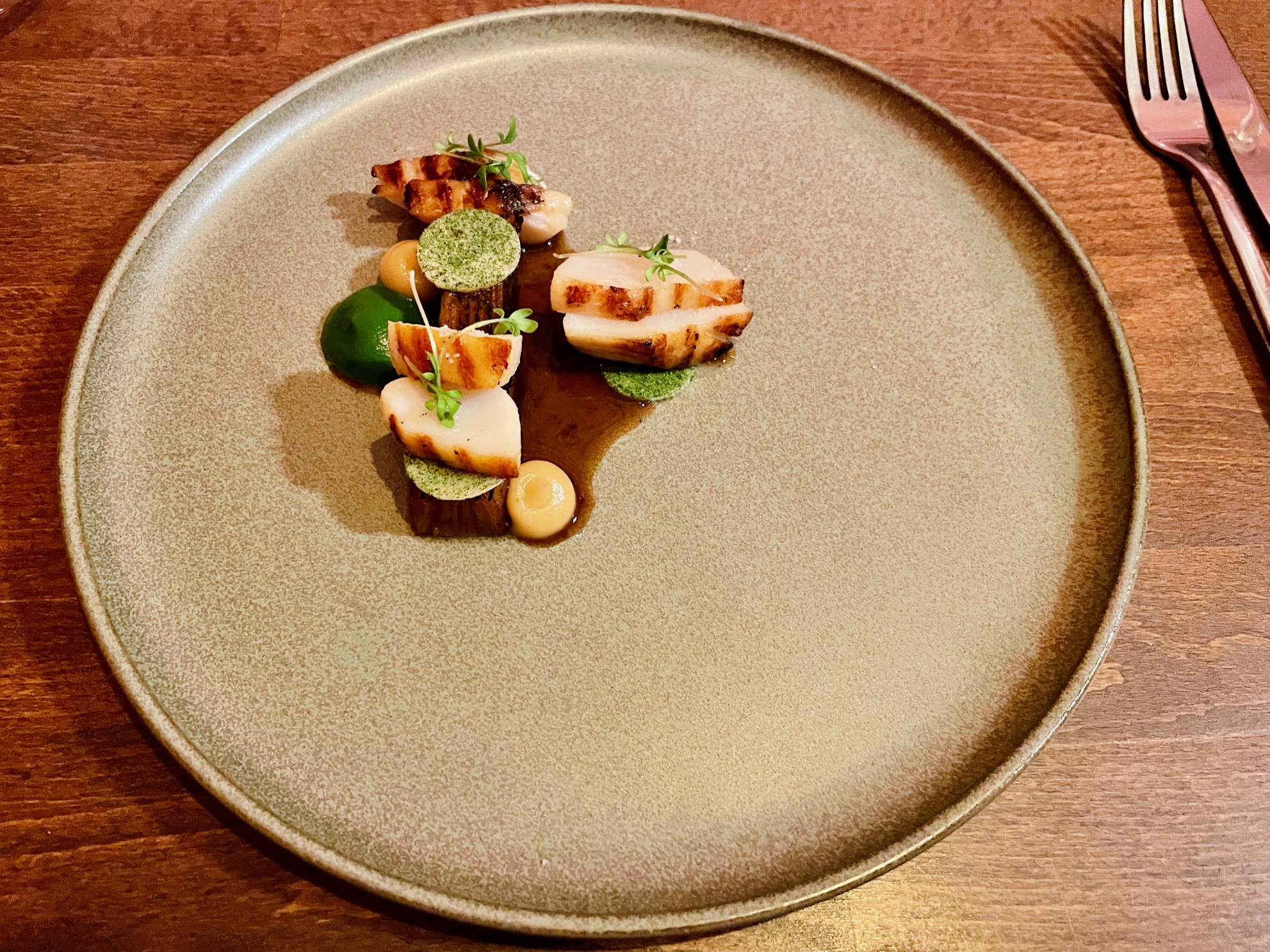
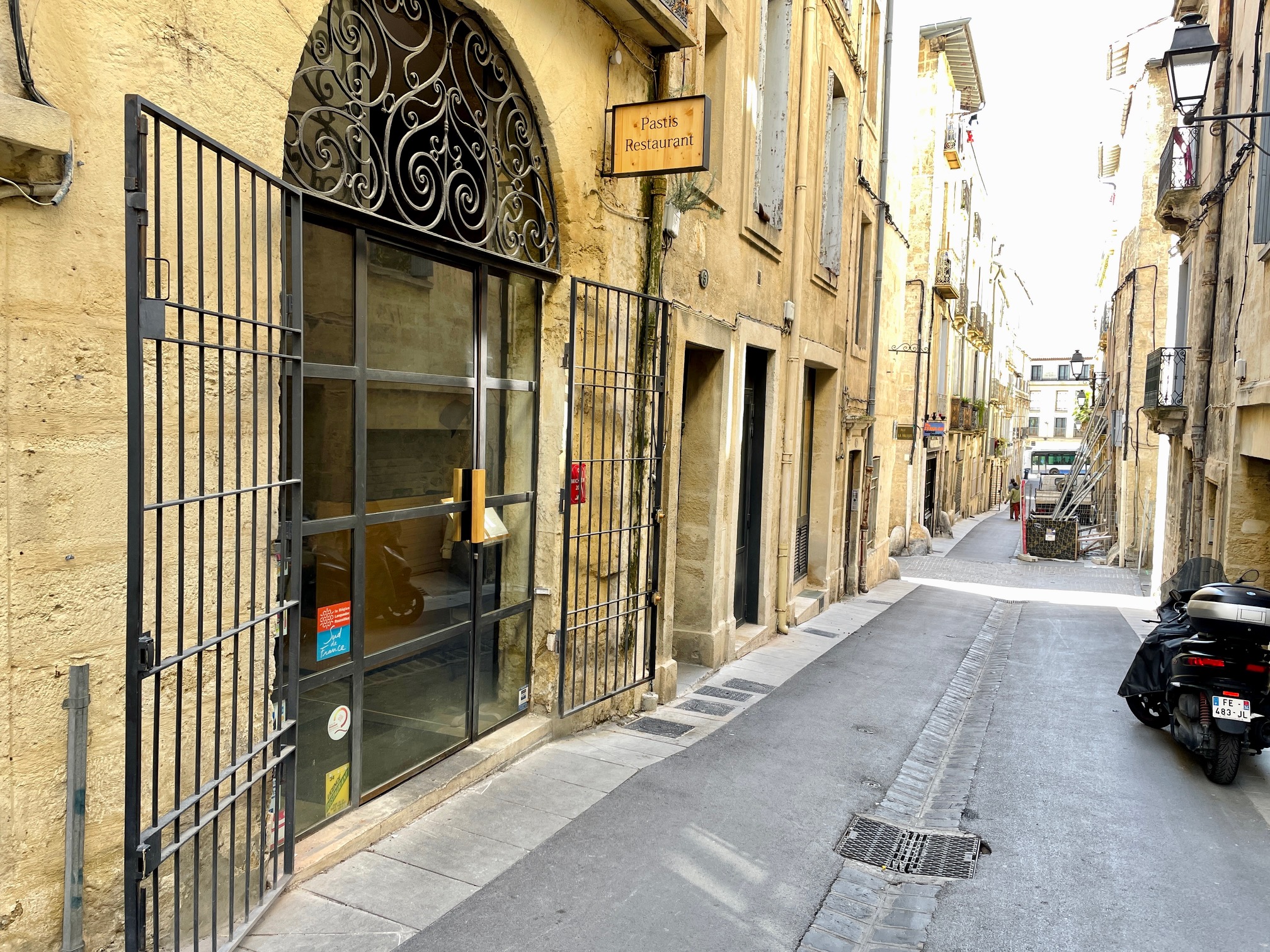
Pastis, also Michelin-starred, is a simple but superb restaurant in the old city. I had lunch there, in a very tasteful dining room that I would say is possibly the most beautiful beige space I’ve ever seen, the acceptable face of taupe. The menu here’s a surprise one (no swaps, unless you have allergies) but every one of the surprises was joyous. My highlight here was a dish made with local duck, served simply – that less is more thing, again – but accompanied with a bread roll hollowed out, stuffed with coarse, herby confit duck and then liberally soaked with rich, sticky jus. I left full and happy (and slightly smudged, after also putting paid to a knockout bottle of white Corbieres).
Street food’s yet to hit Montpellier in a big way – possibly because the regular food is simply so good, possibly because they have two rather grand food halls which meet that need. But out past the edge of the city, past an architecturally interesting area called Port Marianne (think Montpellier’s answer to Kennet Island, only more glam) you find the Marché du Lez, a gentrified street food market with lots of permanent traders. It’s sort of like Blue Collar Corner after a few hundred protein shakes.
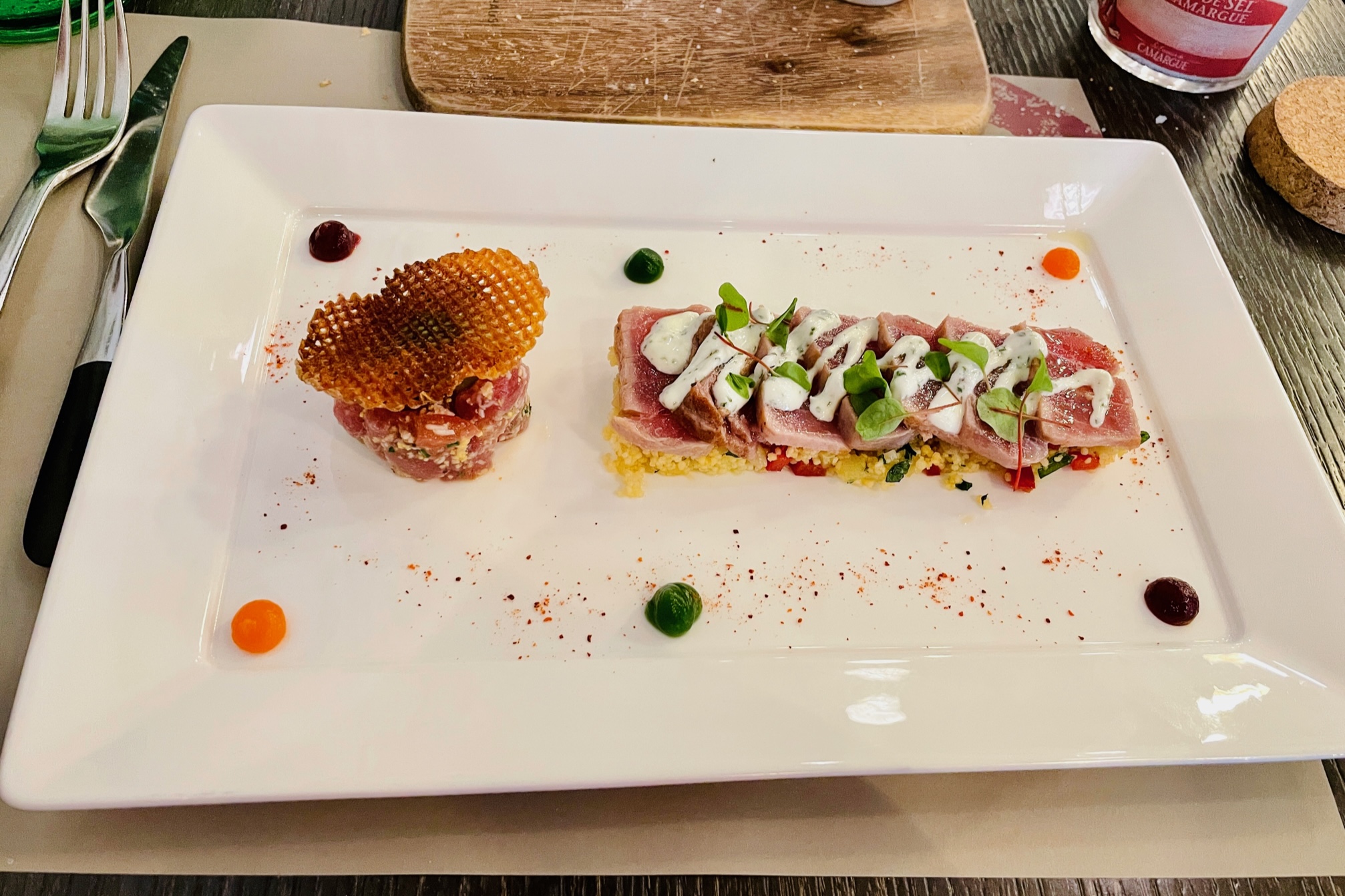
It feels like they built the infrastructure before the demand was there, because it was pretty empty when I visited, but just round the corner was the beautiful and buzzy Terminal #1 where I had an excellent lunch. It was worth it for the starter alone – a clean, almost mineral tuna tartare topped with avocado and what can only be described as the world’s best crisp, and an equally fine tuna tataki, only just seared on the outside. Lamb three ways – chop, slow-cooked shoulder and samosa, accompanied by a lavatorial smear of sauce – was less successful, but it was still well worth the trip out of the centre.
On our last night, we headed out on Montpellier’s fantastic tram network to Beaux Arts, apparently the bobo suburb of the city. I didn’t get to see it in daylight (a great shame: apparently the street art is amazing) but I managed to eat at Braise, a restaurant and wine bar with over 500 different wines, an open kitchen and a wood fire.
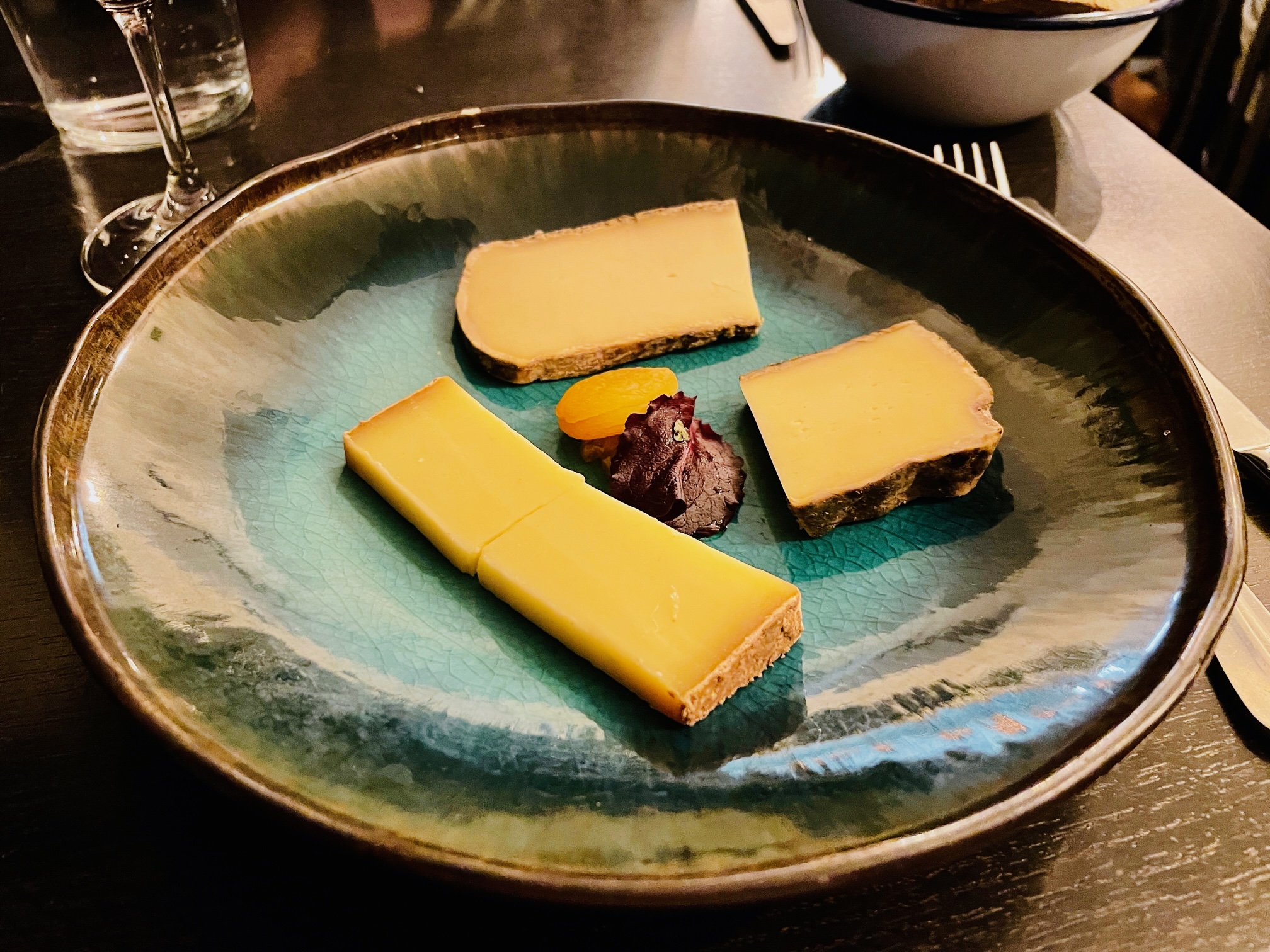
And if not every dish completely hit the mark, the best of it was memorable: grilled, smoked mackerel with cauliflower purée and sharp little florets of pickled broccoli; short rib of beef cooked deftly, soft and indulgent with a nicely astringent coleslaw; a cheese course featuring some of the best Comte I can remember. This was simultaneously the smallest and busiest restaurant I visited, and a completely tourist-free zone, so this is the place for you if you want to try something more cutting edge.
A recommendation from Phil and Kath, Le Bouchon Saint Roch was our choice for our first meal in the city. And it was a really good one – the restaurant practically glows on corner of a square in the old city, a warm inviting place it’s difficult to resist. Inside, the decor was a quirky celebration of pigs and pork in all their forms and the barrage of quirky French 80s pop had Zoë reaching for Shazam pretty much every four minutes.
The food was robust, earthy, unpretentious and absolutely perfect for the first night in a new city. I went to town on a very generous plate of charcuterie and then got stuck into a crumbly, almost-sweet boudin noir with a caramelised slice of apple. Dessert was all about the classics – a rich chocolate mousse loaded with cream and a rum baba so booze-soaked that even Zoë couldn’t handle it.
A little hole in the wall on rue des Étuves with a solitary table outside, JB & Co is a great example of how to succeed in business doing just one thing very well. It’s all about the jambon beurre here, and all you have to choose is which bread you want and which of their hams you want in it. The bread, as everywhere in France, is phenomenal. The ham, prominently displayed and sliced wafer-thin for you, is a joy. And of course there are just enough sharp, crunchy cornichons to bring the whole thing together. Yours for something like five Euros, and a better lunch on the run is difficult to imagine: I chipped a filling eating mine, but it was still worth it. Afterwards, they brought out a coffee and a little piece of freshly baked cake for us on the house, a lovely little touch.
Back in Blighty a couple of weeks later I picked up a jambon beurre from Pret on the run for my train. I always used to enjoy them, but Montpellier has ruined them for me.
Just at the edge of the old city, near Montpellier’s copy of the Arc du Triomphe, this bakery was my go-to for a morning pain au chocolat. A little place which currently only admits two customers at a time, the queue stretched up the street. But it was always worth joining – even compared to the pastries at breakfast this was next level, with world-beating buttery lamination. Everything in there was beautiful – cakes, pastries (sweet and savoury) and even the granola: if I’d had more room in my case, I’d have brought some home with me. Montpellier, like the rest of France, has the same density of good bakeries as London has Pret A Mangers. Where did it all go wrong for us?
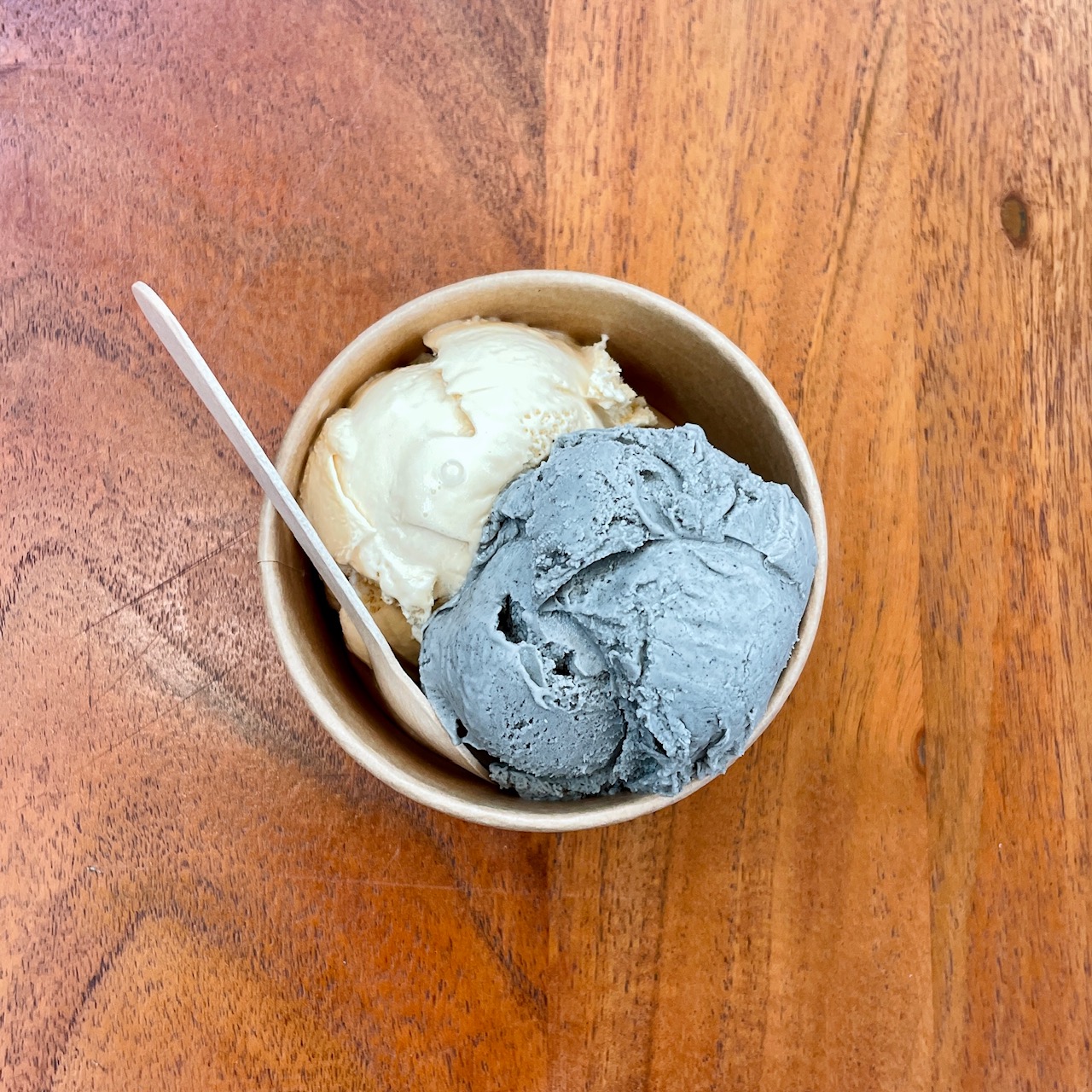
Les Halles Laissac is one of Montpellier’s two covered markets, and although it has a plethora of food stands selling wine, charcuterie, cheese and all the good stuff I was drawn to Les Glaces MPL which sells profoundly good ice cream. A massive array of flavours is on offer, and I can personally vouch for the salted caramel and my personal favourite, a stunning black sesame ice cream. Zoë went for chocolate and Nutella, although I think she slightly envied my more leftfield choices. The big names also have a foothold in Montpellier – I saw a branch of Amorino on my travels in the city – but I’d pick this place any day.
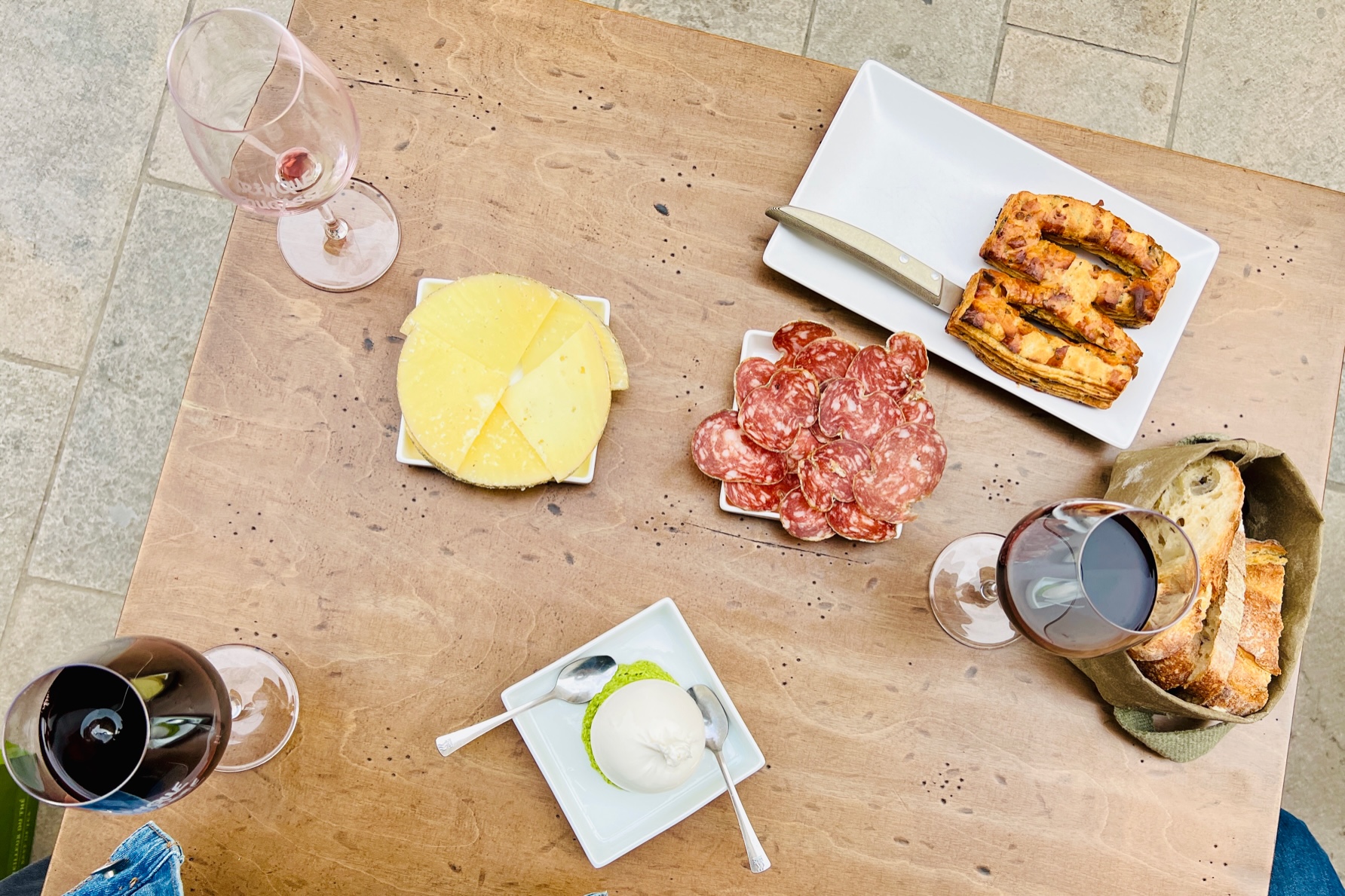
This was a brilliant spot for a few glasses of wine, some cheese and charcuterie and a spot of people watching, along with a welcome opportunity to rest our feet after an afternoon of retail therapy. There are something like four reds and four whites available by the glass, ranging from thoroughly decent to bloody marvellous, and the small plates include sliced saucisson with a mild hum of offal, a gorgeous burrata with pesto, all manner of local cheeses and of course the eponymous fougasse studded with olive, which is flaky, indulgent and worth the price of admission alone. For beer lovers there’s a wonderful shop a few doors down called Deli Malt which proved to be an invaluable introduction to Montpellier’s budding craft beer scene.
Of all of Montpellier’s little squares, one of my favourites was the almost ludicrously beautiful Place de la Canourgue. It’s more about the square than the bars on it, but on my first night I had a marvellous time sitting outside Latitude Café with a glass of pretty anonymous red enjoying those first sights and sounds of somewhere new. It wasn’t the warmest of weeks in Montpellier, but I can imagine that once summer is in full swing this would be a beautiful place for a morning coffee or to while away an hour with a drink and a good book. I did hear more English (and yes, I’m afraid, American English) at neighbouring tables here than anywhere else, so bear that in mind if that’s not your thing.
Latitude Café 5 Place de la Canourgue
3. Le Réservoir
Many cities have some kind of craft beer scene, and the template is a well-trodden one: some big warehouse either in an industrial estate or near the docks, on the edge of town, usually requiring a taxi to get to (our own Double-Barrelled follows in that proud tradition). Le Réservoir is not quite like that. It’s on the outskirts of the city, and our Uber driver, who turned up in an impressively over the top lipstick-red Tesla, had never heard of the place. But it feels properly in the middle of nowhere, with the distinct whiff of agriculture from its neighbours.
It’s relatively new – another example, like Marché du Lez – of being built in anticipation of the demand, rather than because of it. But inside it’s positively splendid, with twenty taps nearly all of which are devoted to local beer. The space is shared by two breweries – Brewing Bears, which does more conventional IPAs, and Sacrilege who specialise in mixed fermentation beers and saisons with all sorts of interesting fruit and weirdness going on. We tried a bit of both, and had a really fantastic afternoon doing it.
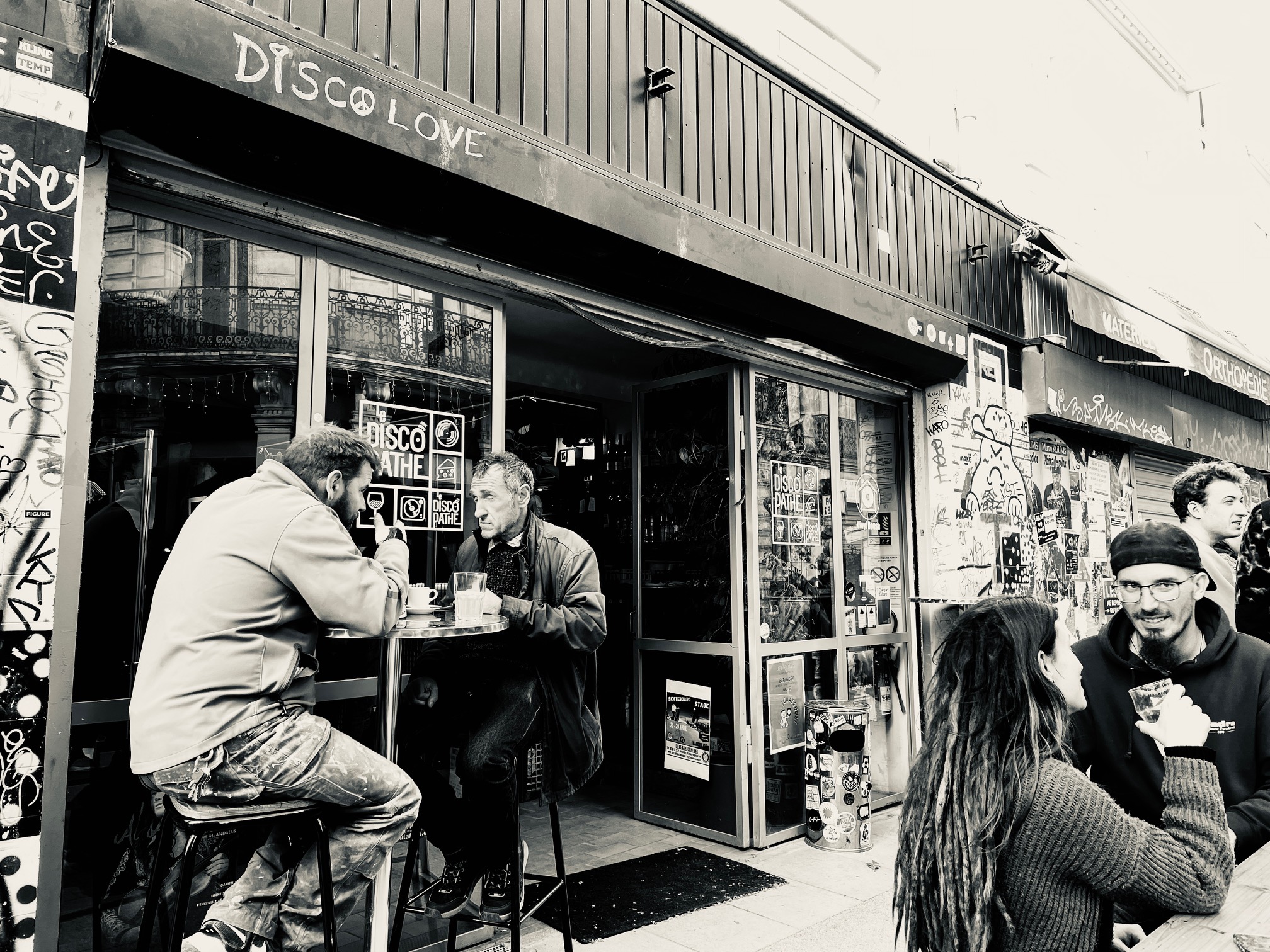
The walk from the old city back to our B&B went down Rue de Faubourg du Courreau, a scruffy, lively street reminding me of Waterloo’s Lower Marsh, and it quickly became one of my favourite parts of the city. Much of that was down to Le Discopathe, a vinyl and craft beer shop that sold records by day and served more of that excellent local beer by night.
You grab a spot at one of the trestle tables outside, get yourself a pint of something hazy, a bière d’ici, and just enjoy that feeling of being part of a buzz and bustle bigger than you. Sacrilege and Brewing Bears are well represented, but I also had a beautiful IPA from Brasserie le Détour. We became regular visitors during our holiday, and it was one of the happiest places in a city full of happy places. Opposite is a fantastic-looking rotisserie which immediately made it to the top of my list of restaurants to try on my next visit.
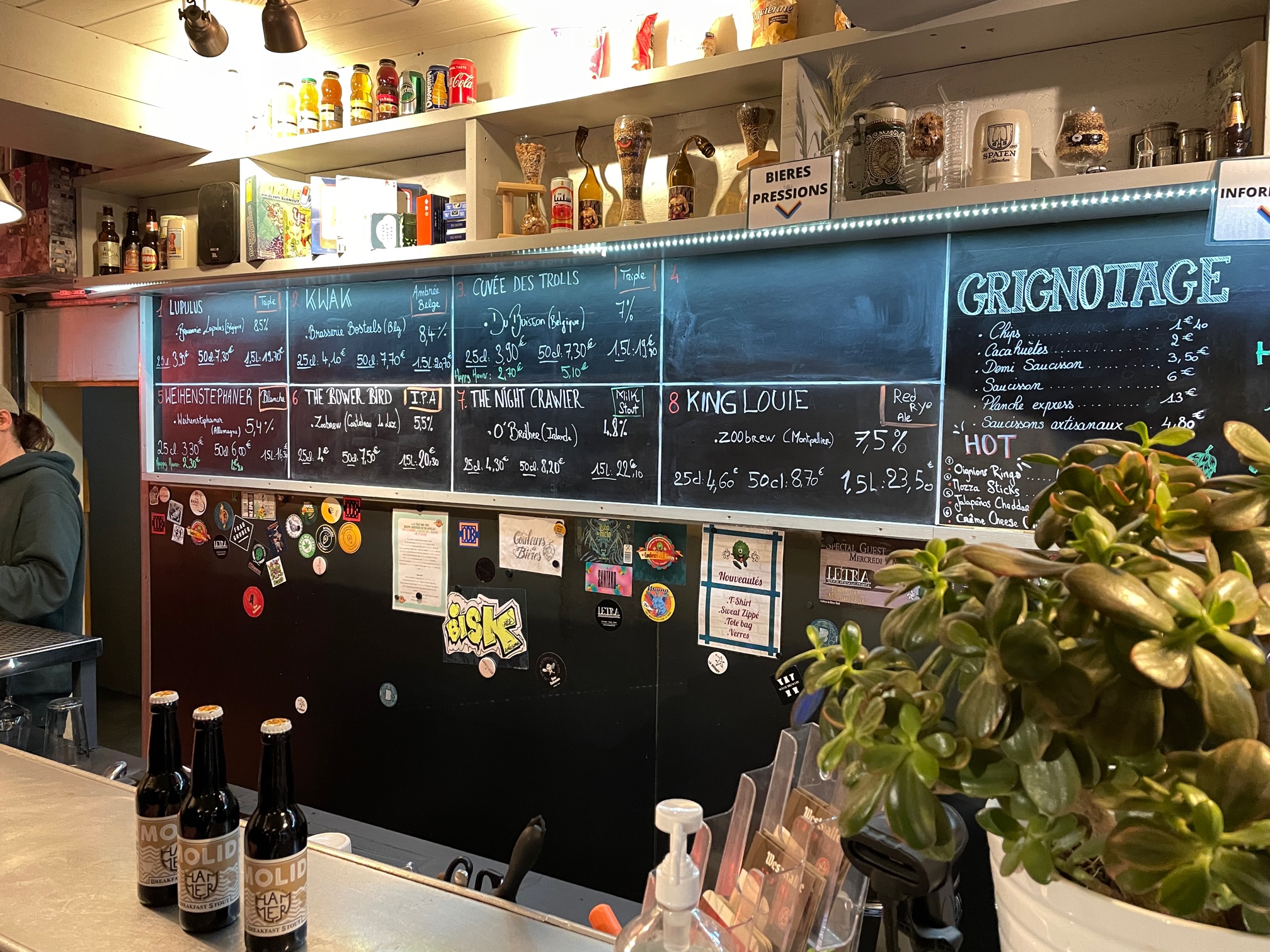
To complete our little beer tour of Montpellier, Couleurs de Bières Nord is a lovely little bar. It’s opposite the exotically named Stade Philippidès, and there’s something about watching people running round the track that really puts you in the mood for a cold, crisp beer. The list here skews little more Belgian, but there were a couple of beers on tap by ZooBrew, (yet) another local brewery, and it made for a excellent pre-prandial spot.
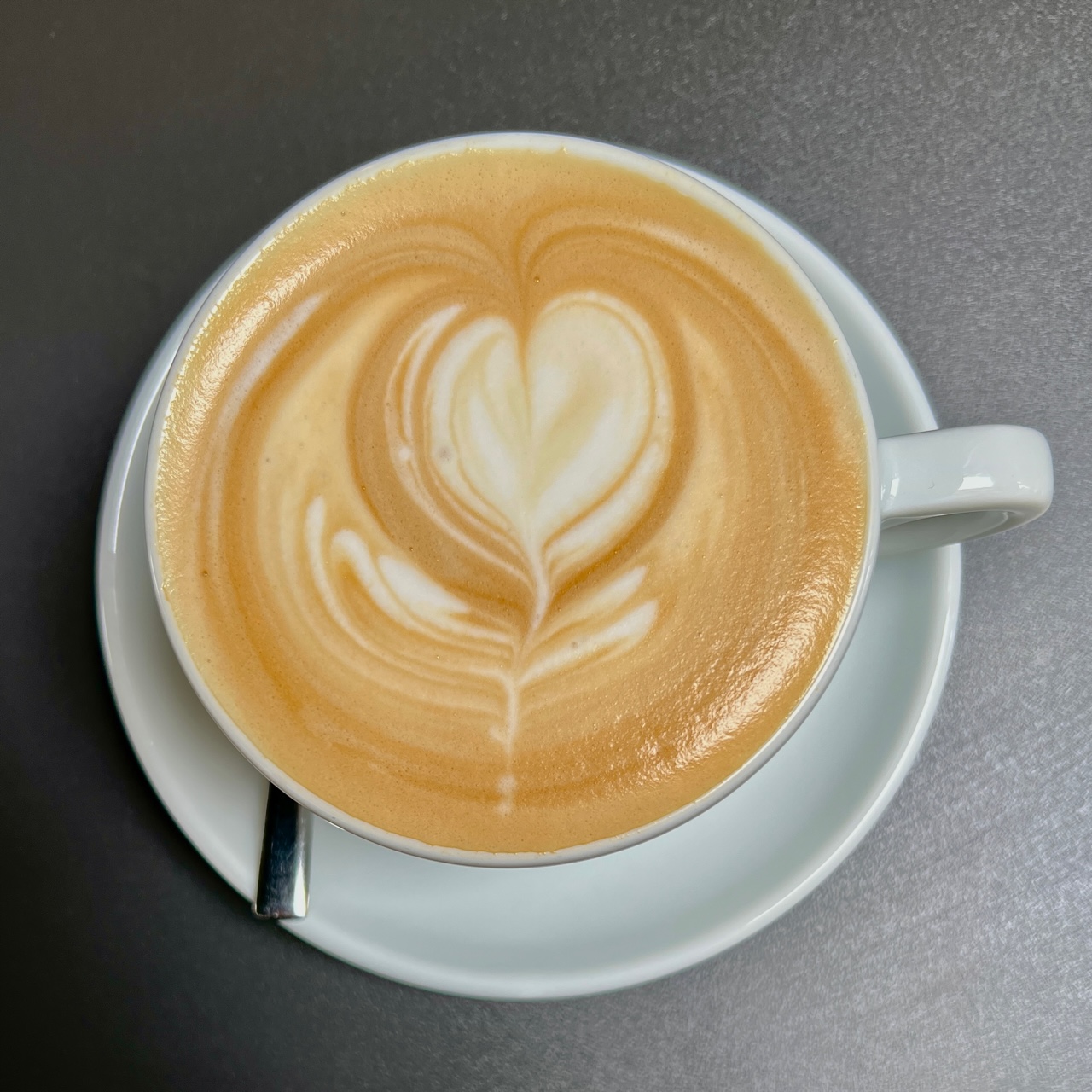
Cafe BUN was probably my favourite coffee place in Montpellier with a great spot just off Place de la Comédie and plenty of outside space for watching the world go by. It was the trailblazer (Montpellier’s answer to Workhouse, I suppose) opening in 2013 as the city’s first speciality coffee house, and I grew very fond of it during my trip. They roast their own coffee – I brought some home with me – and their latte was the nicest I had on my holiday.
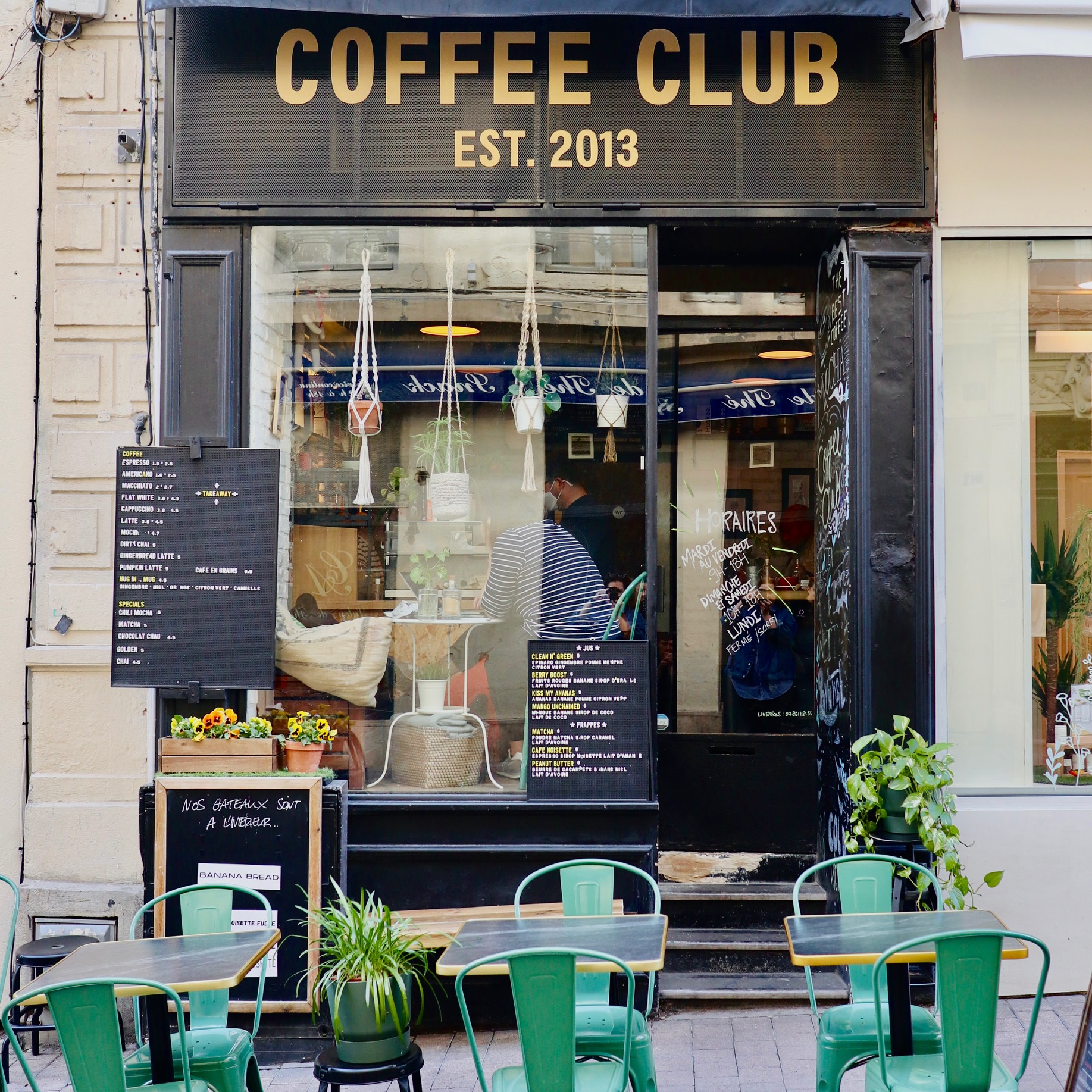
I also enjoyed Coffee Club, a tiny place on rue Saint-Guilhem with a little space inside and a nice spot at the top of the hill. This felt a little more expat than Café Bun – it’s owned by a Brit, which may explain that – but it was still a really good choice if you wanted a morning off café au lait and to try something similar to coffee closer to home. Also worth mentioning, further down the hill, is the splendidly named Maisons Régionale des Vins et des Produits du Terroir, which has a faultless selection of local wine, beer and other delicacies so you can take a little bit of the Languedoc home with you when you leave.
Coldrip, on the northern side of the old city, is in another absurdly pretty little square and also gets plaudits online for its coffee. Having perched at a table outside I can completely understand why – my latte was wonderful, and Zoë reckoned her mocha (complete with a little ramekin of Chantilly cream) was up there with C.U.P.’s: high praise indeed.
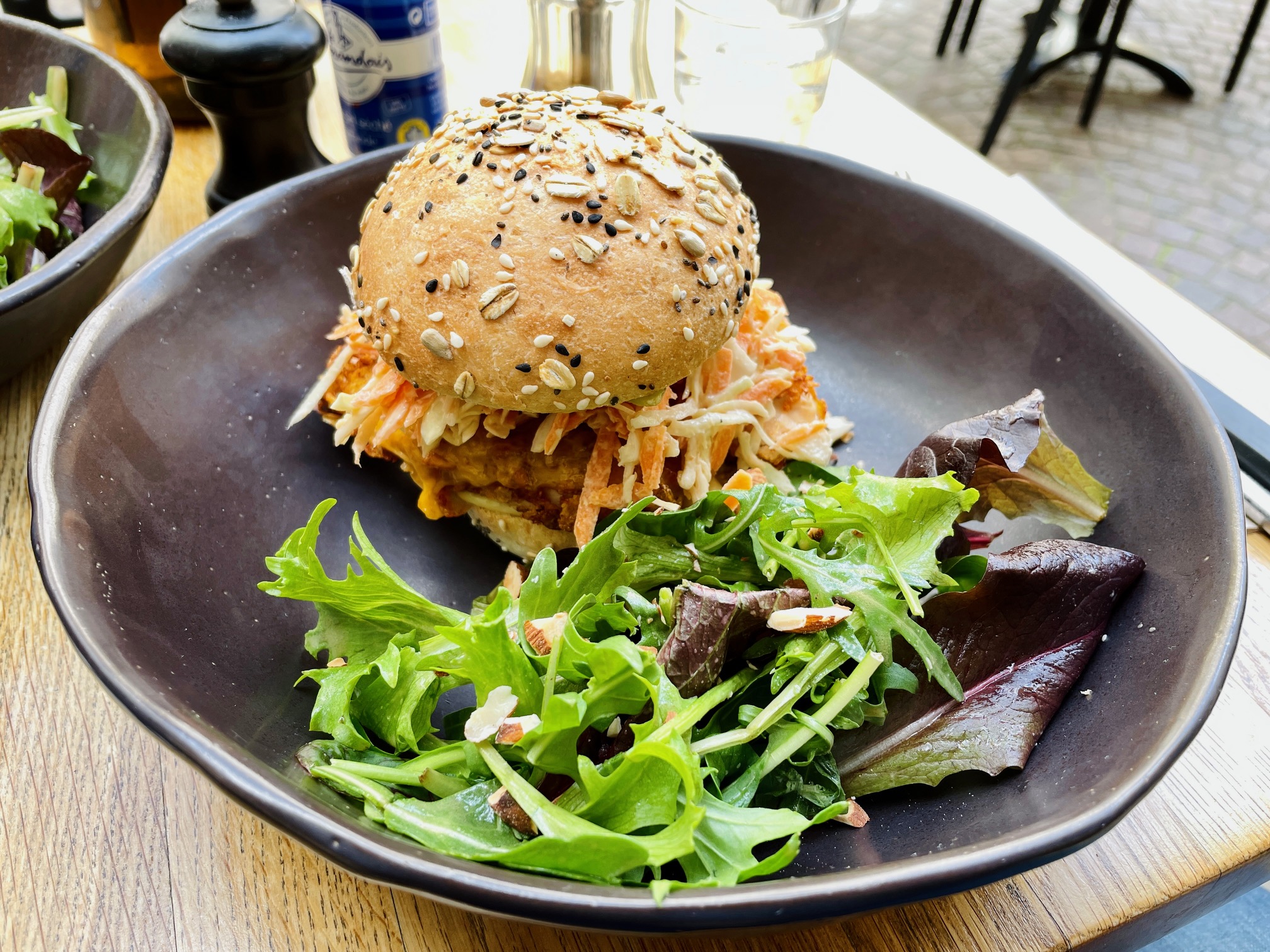
The brunch menu owes more to Australia than France – lots of smashed avocado, halloumi and the like – and watching it turn up at other tables did test my resolve. But they had a crispy chicken burger on their specials menu that day and it turned out to be a perfect final day lunch, really nicely done with a deceptively tasty coleslaw full of brightness and crunch and a delightful seeded brioche bun.






 Edible Reading