Restaurant review: Nando’s, Wokingham

Here are just some of the many reasons why I should not be reviewing the Wokingham branch of Nando’s this week.

1. It’s Nando’s.

Everybody knows what eating at Nando’s is like: everyone will have an opinion about it already. This review won’t change anybody’s mind, because those minds were made up ages ago. In the opening paragraphs of a review I usually give the context, explain a restaurant’s history and all that. How long it has been around, what it does, what makes it special, all that jazz. It’s one of the things that makes the preambles to these reviews so fucking long, which I know so many of you love.

But what’s the point?

It’s Nando’s for Christ’s sake, it has its own Wikipedia page. You can look at that if you’re interested, and read about its 40 year history, its 450 branches in the U.K., yadda yadda. You can repeat the niche pedantic point I sometimes reach for, if you like, that Nando’s is technically South African rather than Portuguese. But you won’t do any of that, I’m guessing. Because it’s Nando’s, and everybody knows what eating at Nando’s is like, don’t they?

2. Nobody, and I mean nobody, is reviewing Nando’s in this day and age.

Why would you review somewhere that feels like it’s been part of the rich tapestry of British life forever? When it first opened here, John Major was Prime Minister, and what feels like an eternity later its only role in the national conversation is to be like Debenhams or Woolworths, there and taken for granted until one day it’s gone and missed, presumably by people who never spent money there.

The last time Nando’s got significant attention in the national media was 15 years ago. Miranda Sawyer wrote an article for the Observer in 2010 trying to claim that Nando’s was cool, and a burgeoning phenomenon. If that fact alone doesn’t make you feel ancient, and it certainly does me, the cultural figures she name-dropped were Tinchy Stryder and Tulisa from N-Dubz. And they weren’t even the Debenhams and Woolworths of popular music, then or ever.

Oh, and it got reviewed in the Guardian the following year by John Lanchester, the novelist who had a brief stint as the paper’s restaurant critic. He got stick at the time, but I quite enjoyed his stuff, partly because it read like C-3PO with an expense account. “I’ve been to Nando’s literally a billion times” he said, pre-dating the trend of using the word literally to mean something other than literally by literally a few years; just a guess, but I don’t think he had.

Since then Nando’s has barely troubled the broadsheets, except for Jay Rayner popping up occasionally to say that he doesn’t mind it, presumably to try hoodwink readers into thinking he’s a man of the people. The Observer published something to celebrate the chain’s thirtieth birthday, but that’s probably it until 2032. Meanwhile the chain ploughs on, without publicity, as one of the few restaurant groups in the United Kingdom that doesn’t need publicity at all.

3. Everybody has a Nando’s order.

If we do have to have identity cards – and the notion does seem to be making a comeback – I think they should contain two other pieces of info apart from your name, date of birth etc. There should be a square with a colour on it, the Farrow & Ball shade that corresponds to exactly how you like your cup of tea: just think how much time and embarrassment that would save when you visit friends and family. And there should be a little box that lists your Nando’s order.

Because everyone seems to have one, and I don’t think they deviate from it often. Every now and again we’ll try something wacky, have the pitta or the rainbow slaw or (god forbid) lemon and herb but we invariably revert to our core order. I don’t know how many combinations you can put together from the main components of the Nando’s menu, but it must be a lot: John Lanchester would probably say it’s literally billions.

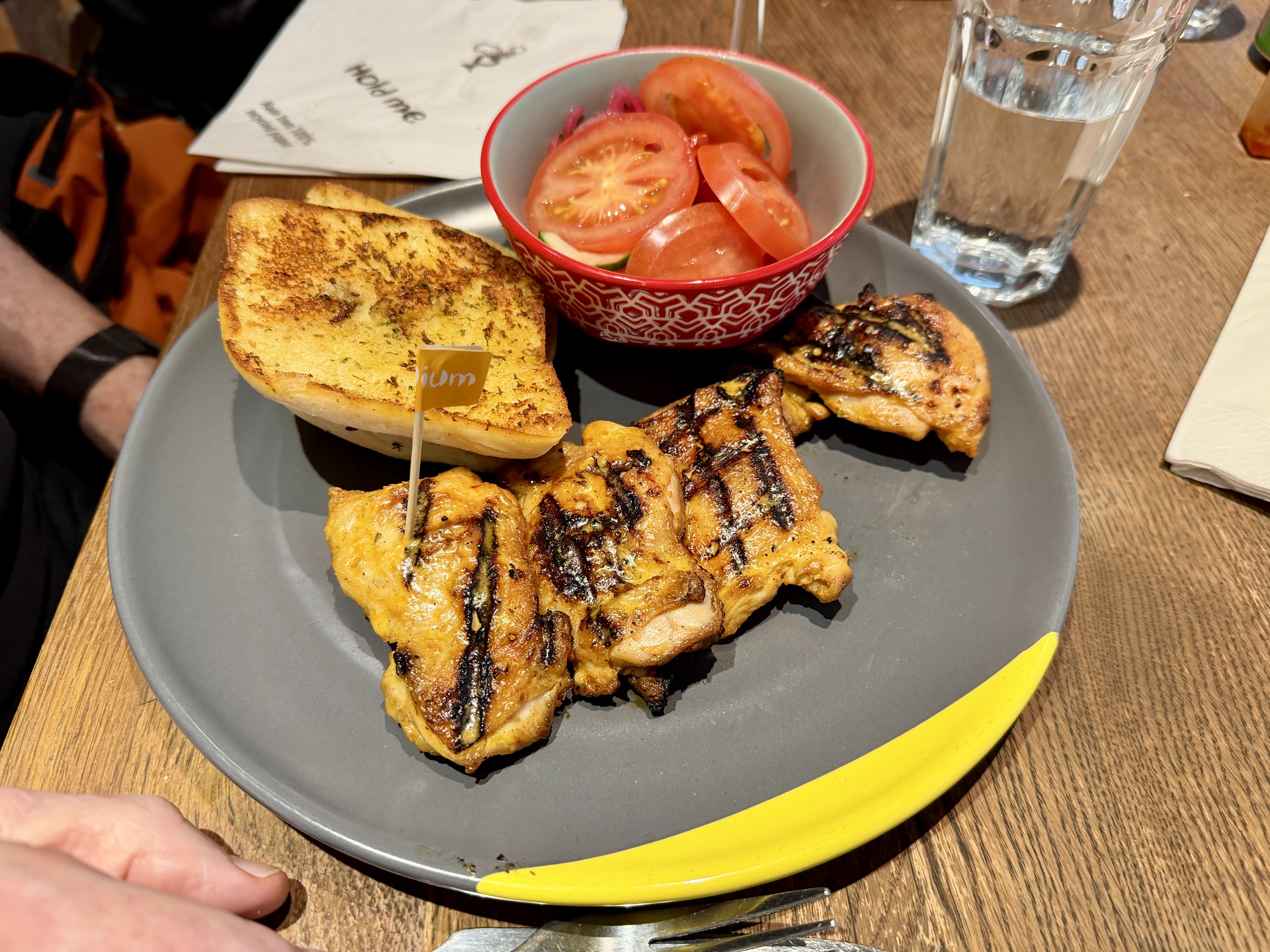
So for instance the box on my ID card would say Four chicken thighs, medium, spicy rice, macho peas, halloumi on the side. Because 99% of the time, in a Nando’s, that’s what I’ll order. I didn’t, this week, just to mix things up and at least pretend to explore the menu, but the rest of the time you could put money on me eating this.

Other people, like my wife, will extol the virtues of the broccoli, and I have friends who think chicken doesn’t count if it’s not on the bone. Some far out types would even have the wing roulette on their regular order. But my point remains: the restaurant lacks any element of surprise, and what you eat there lacks it too. So why review the place?

I know some people don’t drink tea, or don’t like Nando’s. I was on a conference call last week and, to break the ice, I asked people what their Nando’s order is. “I can’t stand the place” said one of the otherwise perfectly agreeable chaps, safe in the comfort of his home office. I guess we can put those types in the same category as conscientious objectors.

By the way, the other advantage of my ID card proposal is that, finally, we could work out who’s ordering the chicken livers. That would be the equivalent of having AB- blood, only rarer.

4. It isn’t even a Reading branch.

I know, I know: Wokingham. I can just hear the cries of “it’s called Edible Reading, for god’s sake” – haven’t heard those for a while, come to think of it. And despite having eaten Nando’s all over the place, from London to Gatwick to Bath, it’s true that I have a soft spot for one of Reading’s branches. The one on Friar Street, not the cacophonous enormous space of the Oracle Riverside, even though the latter is the first Nando’s I ever visited, converted by my ex-wife.

I rather like the Friar Street branch’s small and gallant attempt at some outside space, its homeliness and lack of polish compared to its larger counterpart. But it also faces an uncertain future because I suspect that, like Cosmo, it will be swept away by redevelopment. So although it was tempting, were I to review a Nando’s, to visit that one, it felt like a surefire way not to future-proof a review.

(Sorry. You get a long overdue Reading review next time.)

5. It wasn’t even my first Nando’s that week.

I’m not joking. Two days before my visit to the Wokingham branch of Nando’s, I found myself at a work offsite event on a business park at the far end of the Basingstoke Road, and for lunch our big cheese took us to Nando’s. By this time my visit to Wokingham was already in the diary, but what could I do? Say “I’m sorry but I can’t, I’m keeping my powder dry”? For Nando’s?

So the eight of us crossed the road to the Reading Gate branch of Nando’s, which is a huge, featureless glass box on the outside and strikingly spacious inside, with a second floor and everything. It felt like one of the biggest Nando’s I’ve ever visited, and the website Rate Your Nando’s – it’s honestly a thing – gives it an average rating of 4.42 out of 5 (I felt gratified to see that my favourite branch on Friar Street, with a rating of 4.73, is currently considered the fourth best in the country).

Everybody conformed to type, almost, and everybody ordered their usual. Tom, our youngest team member and not even thirty yet, ordered the fino pitta, hot, and I made a hackneyed joke about him getting home and popping his moist toilet tissue in the fridge. My boss, not a regular visitor and slightly thrown by the menu, had something called a “garlic churrasco burger” which they might have introduced since I ate at Nando’s last a couple of years ago.

There were a few curveballs, because I work with interesting folk. Our big cheese insisted on having a bottle of Heinz tomato ketchup at the table – I guess it takes all sorts – and we had to stage an intervention to stop my colleague Natasha ordering the halloumi burger. Their ID cards would be on the quirky side, I think.

Afterwards we all concluded that it had been an enjoyable lunch, which had entirely lived up to expectations without ever threatening to exceed them. We went back to our meeting room to carry on achieving those pesky deliverables.

Even though it was a Thursday in a business park on the edge of Reading, the sun shining, this unspectacular, boxy branch of Nando’s was packed. We queued for ten minutes or so before they found us a table. If Nando’s has jumped the shark, nobody had told the people eating in there.

6. They treat chickens very badly indeed.

This should probably be top of the list, and for many of you I suspect it would be. In February Nando’s, along with a number of other restaurant chains including KFC, Popeyes and Wingstop, pulled out of something called the Better Chicken Commitment. And as animal welfare standards go, this was a minimal one: you could treat your chickens appallingly and still meet the requirements of the BCC.

It didn’t specify what you could feed your chickens, or that you had to let them roam outdoors, or that you wouldn’t pump them full of growth hormones. It was a very low bar, and the likes of Nando’s decided they still wanted to limbo under it.

The sticking point was that the BCC also required all those restaurants to swear off using what have been described in the media as ‘Frankenchickens’, a strain of chickens like the Ross 308 engineered to reach maturity sooner in order that they can be killed and eaten quicker. If you thought kids grew up too fast these days, spare a thought for the Frankenchickens: ready to be eaten in a mere 35 days. And they aren’t a fun 35 days, either – these breeds have higher rates of organ failure, muscle disease, premature death.

Here’s the most shameful thing of all: I know about this because hereditary columnist Giles Coren, of all people, wrote a column about it in the Times a couple of months ago. Nando’s might be a national institution but when you’re on the same side of the argument as Taco Bell and Frankie & Benny’s and you’re enabling Giles Coren to comfortably take the moral high ground, a period of reflection might be in order.

Here is the reason why you get a review of Nando’s this week.

1. My friend Jerry had never been to one before.

It’s true, I found the one person who had never been to Nando’s, my dear friend Jerry. I don’t even know how it came up but we were chatting over a pint after a very successful review in Oxford and he let slip that he had got all the way to a happy and fruitful retirement without once troubling a branch of Nando’s. That was that: I resolved there and then that he would pop his peri peri cherry, I’d be there when it happened and I’d write it up for the blog.

It would be an adventure! Besides, I was fascinated by the concept that any adult could make it to 2026 without ever setting foot in one. Forget what I thought of the place, what would Jerry make of it?

Picking Wokingham, though, was serendipity. Jerry is currently the artistic director of the Wokingham Theatre, and they were putting on one of my favourite plays, Who’s Afraid Of Virginia Woolf? So Zoë and I booked tickets – I talked her into it by claiming that it was a romantic comedy – Jerry agreed to join us and we decided on an early dinner at Nando’s before strolling to the theatre.

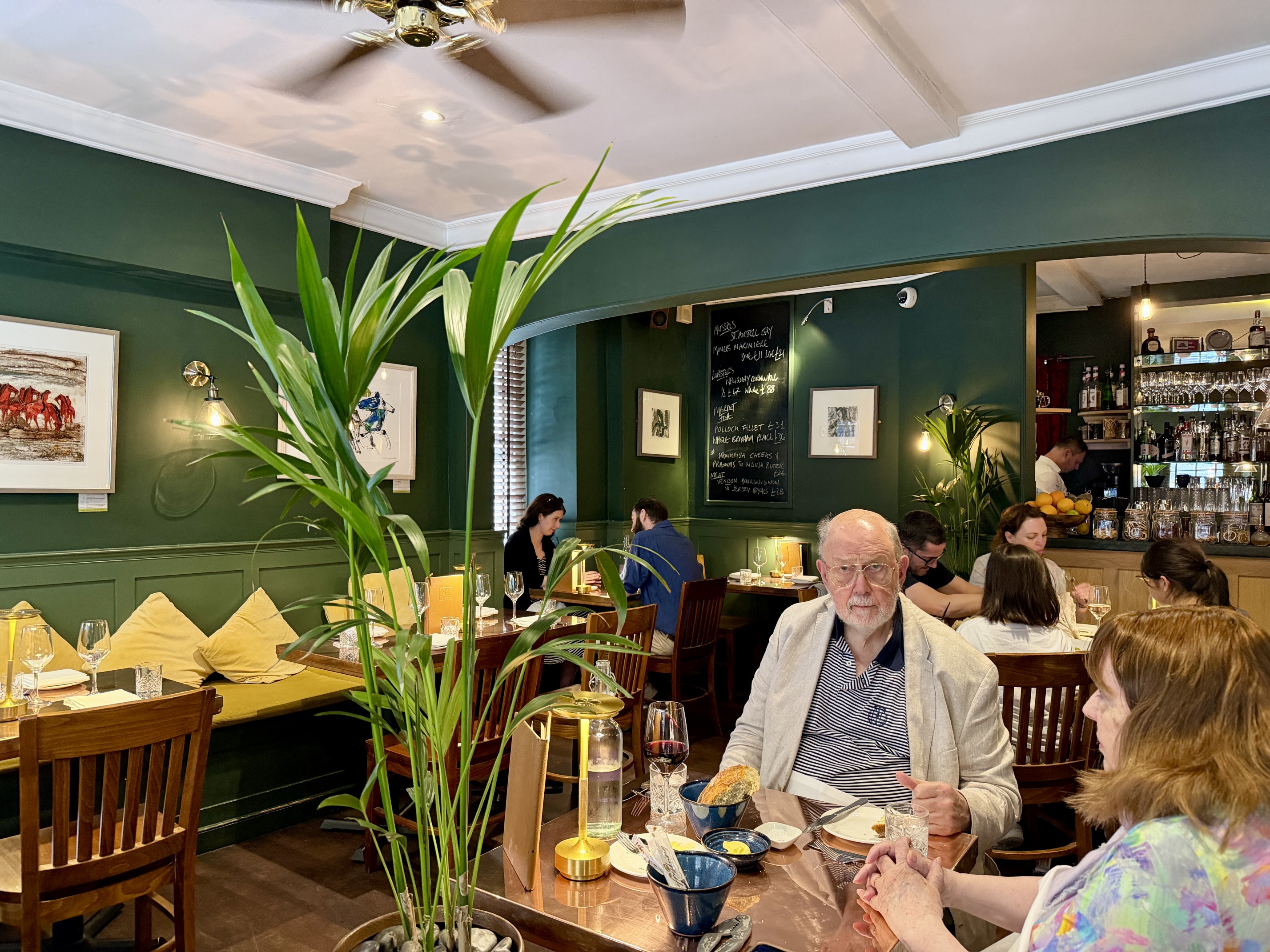
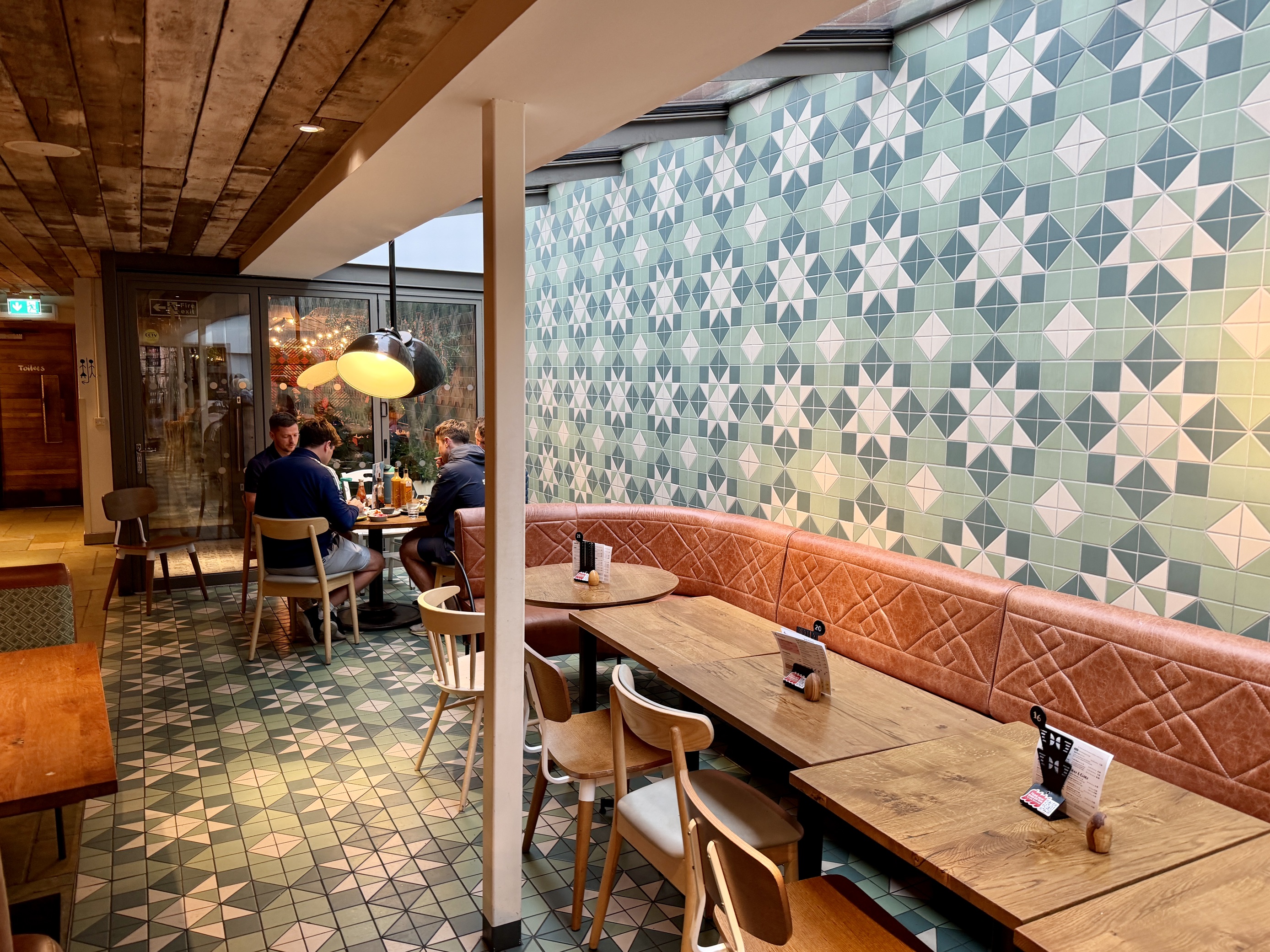
I’ve always liked the interior of the Wokingham branch. The front room is more bog standard but I have happy memories of the space at the back with its skylight and bold tiled wall, so I was glad we were seated there. We were there at 6, and the place was still quietish: by the time we left the tables along that tiled wall were all occupied by big groups. Nobody there thought Nando’s had jumped the shark either.

Normally in my reviews there’s a bit where I talk generally about the menu, how much everything costs and so forth. Is it all right if I skip that bit this week, and we take it on trust that you know all that? Excellent. I had downloaded the Nando’s app specially for this visit – like another British institution, Wetherspoons, they try to minimise the amount of time you spend on your feet – so after a bit of plea bargaining and talking Jerry through what was good and what wasn’t, I placed our order. The whole lot came to just shy of £120.

We ordered the majority of what Nando’s classes as starters, even though I expect many regulars don’t bother. Peri peri nuts were surprisingly bland and lacking in crunch, and padded out with macadamias, which I’ve always struggled to like. They didn’t feel like incredible value at £5.25 but, perhaps more significantly, because Nando’s lists this for everything it serves, you know that a portion contains nearly 800 calories. They felt unnecessary on multiple levels.

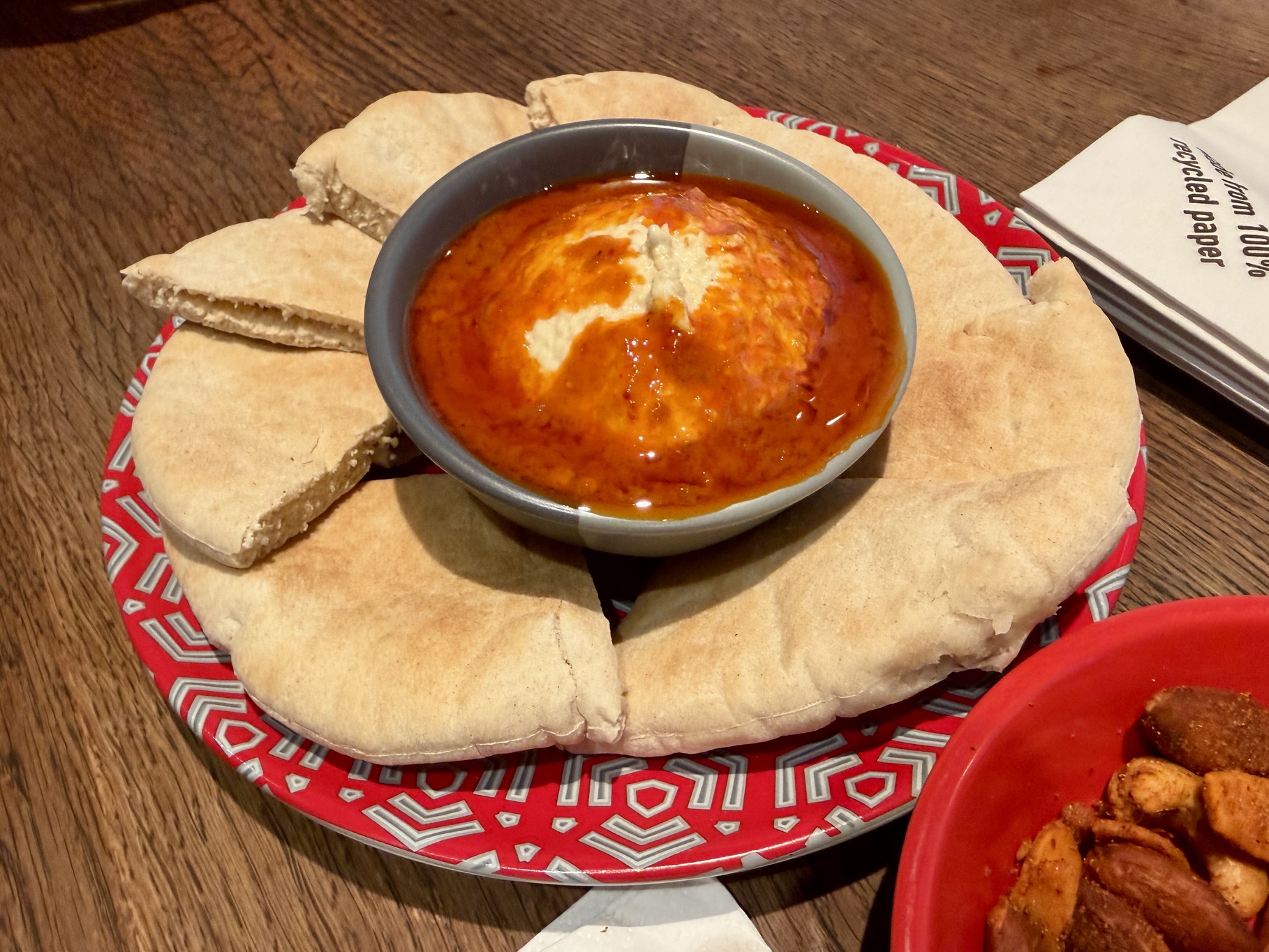
More reliable was that ever-present, Nando’s houmous with peri-peri drizzle. Nando’s houmous was about as good as the stuff you’d get in Marks, and the drizzle added a nice piquancy, even if the contents of the bowl started to look like a clumsily popped zit. The pitta wasn’t a great advert for ordering anything that’s served in one, being doughy, stodgy and manifestly ill-suited to dipping. Loading houmous on to a pitta with a fork felt against God and against nature, but we had no real choice.

This too was nearly 800 calories, more calorific than eating half a chicken. I don’t know if that’s a good advert for putting calorie counts on menus, but it’s not a good advert for Nando’s starters. The menu actually includes an item called “Dare To Share” where you can order three starters for just over £12: I’ve never considered ordering starters, or sharing them, an especially daring act so I’m not sure what they’re driving at there. What risk are you running exactly, besides obesity?

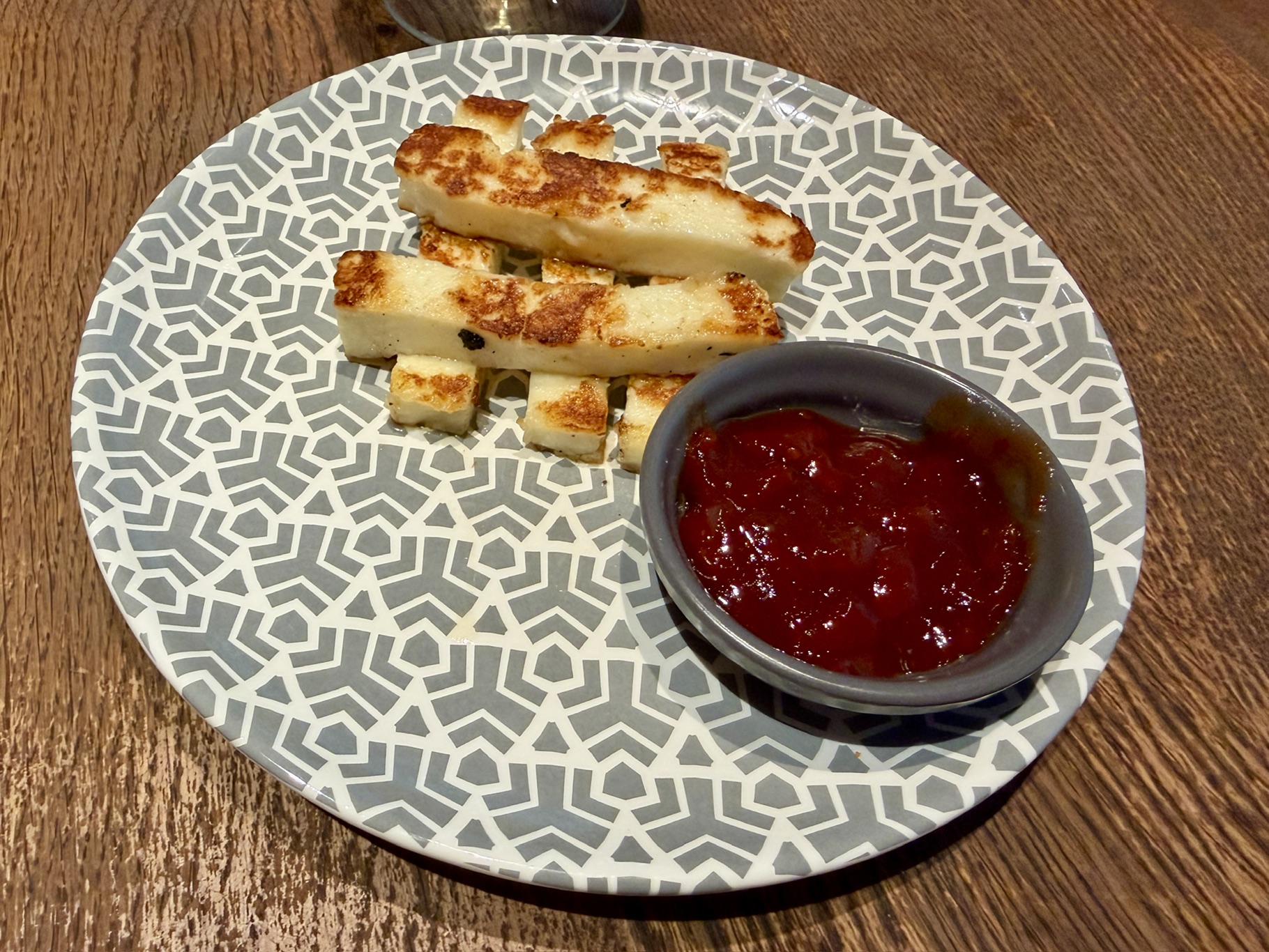
Nando’s halloumi fries came as a moderately tanned miniature jenga stack of five pieces of halloumi. You had to hand it to Nando’s for giving you a prime number of these, almost intended to make things difficult.

If you’ve never had halloumi before, or only had Nando’s halloumi, I imagine you’d be quite pleased with these. But I couldn’t help but compare them to the far superior ones at Honest Burgers where four larger, better halloumi fries cost you less. They’re also organic, served with a cracking chipotle jam rather than a hypersweet chilli jam, and somehow, magically, contain fewer calories. I promise this is the last time I’ll mention calories: I’m not that kind of writer and I’m hoping you’re not that kind of reader.

By this point Jerry and I were well into a glass of South African sauvignon blanc each (and I thought he didn’t like white wine) which was perfectly unobjectionable and a snip at just over £7 for a 250ml can. Zoë was on an AF beer – Nando’s stocks Beavertown’s Lazer Crush – and we also had some water and a bottomless Diet Coke on the go.

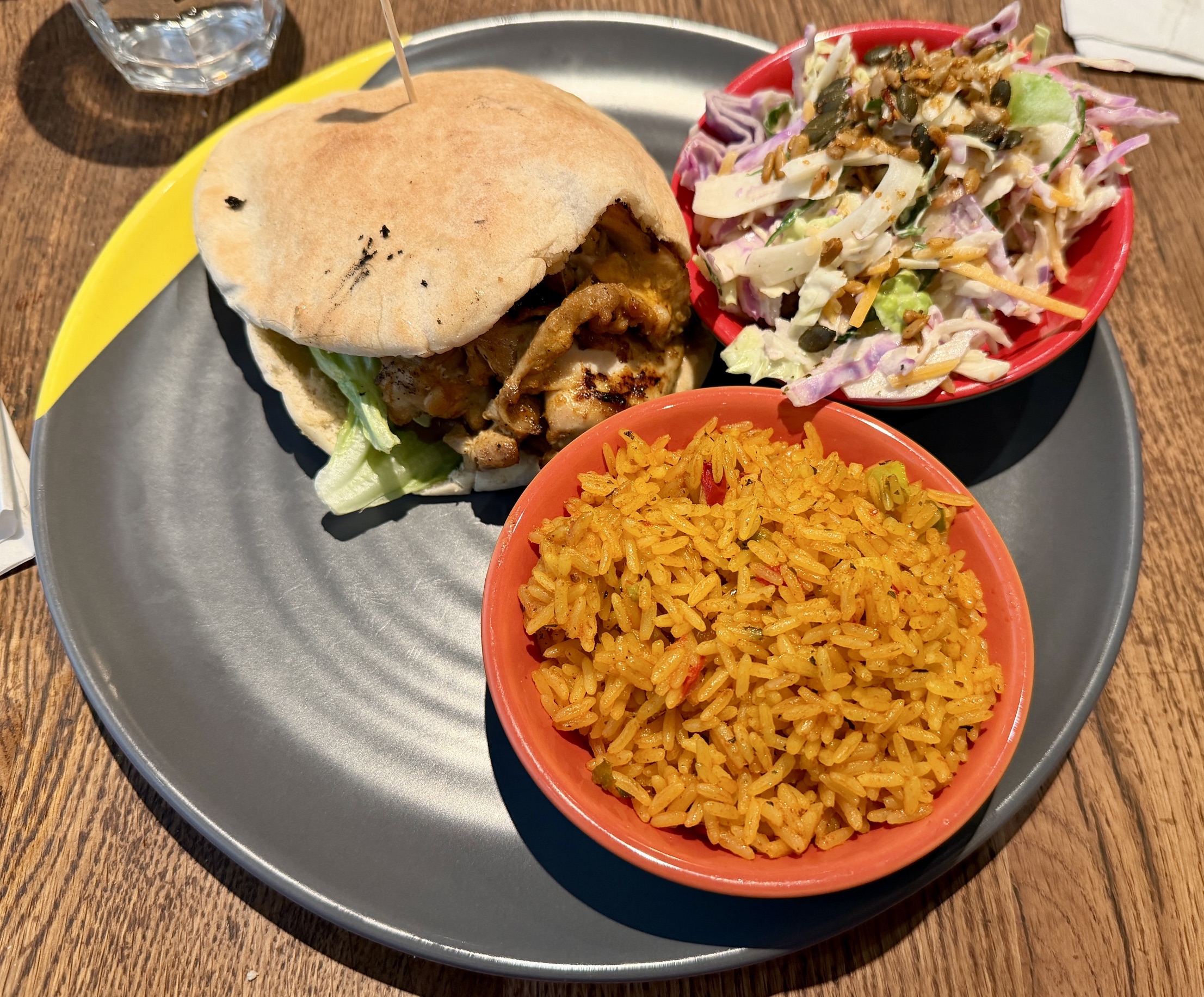
About 15 minutes after our starters all our variations on a theme came to the table with brutal efficiency. Zoë ordered a fino pitta with medium fries, spicy rice and some rainbow slaw: the latter was my mistake, as she’d wanted the macho peas. It was, I’m told, absolutely like every other fino pitta Zoë has had in the past, because that is what Nando’s do. If I went to Nando’s for dinner tonight and ordered this dish, this is what it would look and taste like.

Because Jerry and Zoë had both ordered chicken thighs, I went for the butterflied chicken breast. Back in the old days Nando’s didn’t do chicken thighs, and the butterflied chicken breast was my go to order. It was perfectly pleasant, maybe slightly dry and lacking the textural contrast and char you get from the thighs.

To try and order things I didn’t usually order, I’d asked for this as “Sweet Heat” rather than my usual Medium. The menu boasts that this is “BBQ for the bold” and is only available for a limited time. Hobble don’t walk to a Nando’s to try it would be my advice: what did I say about how people stray from their regular order and then go back to what they know? That evening, that was me.

I also had the spicy rice, which I always order: it was slightly clumpy in a manner that raised questions but otherwise tasted exactly like every spicy rice I have ever had in the past and every one I will have in the future. The same could be said of the garlic bread, a diamond-shaped ciabatta roll halved and toasted. It had magic powers: it didn’t taste much of garlic in the moment but gave unsubtle reminders for the rest of the evening. Just as it always does: you’re getting the idea by now, I imagine.

Jerry chose the boneless thighs, my usual selection, and ploughed through them with a gusto I found oddly touching. It reminded me that I’ve wished, many times, that I could forget I’d ever read one of my favourite books or listened to one of my favourite bands so I could experience the joy of discovering them all over again, a sort of benevolent Eternal Sunshine Of The Spotless Mind where you forget not to forget but so you can be reminded.

Would I use that power to wipe the memory of my first ever Nando’s? Of course not, but watching Jerry love his chicken and wonder where it had been all his life was the next best thing, I suppose. He was our very own Miranda: o brave new world, that has such restaurants in it. Jerry chose to pair this with more of that garlic bread and another relatively new innovation from Nando’s, the “Portuguese tomato salad”. Those tomatoes could be Portuguese, but I’d be amazed if they were.

We ordered two sides, one of which was negligible and the other of which was significant. First, Nando’s macaroni cheese, which allegedly comes “with a crunchy, garlicky peri-peri crumb topping”. It does not, really. It’s a ramekin of claggy blandness with some flavourless pale rubble on top: order it if you like macaroni cheese enough to eat average macaroni cheese, otherwise don’t bother. Who am I trying to fool? It’s already either part of your regular Nando’s order or it isn’t.

Our second side was a whole chicken.

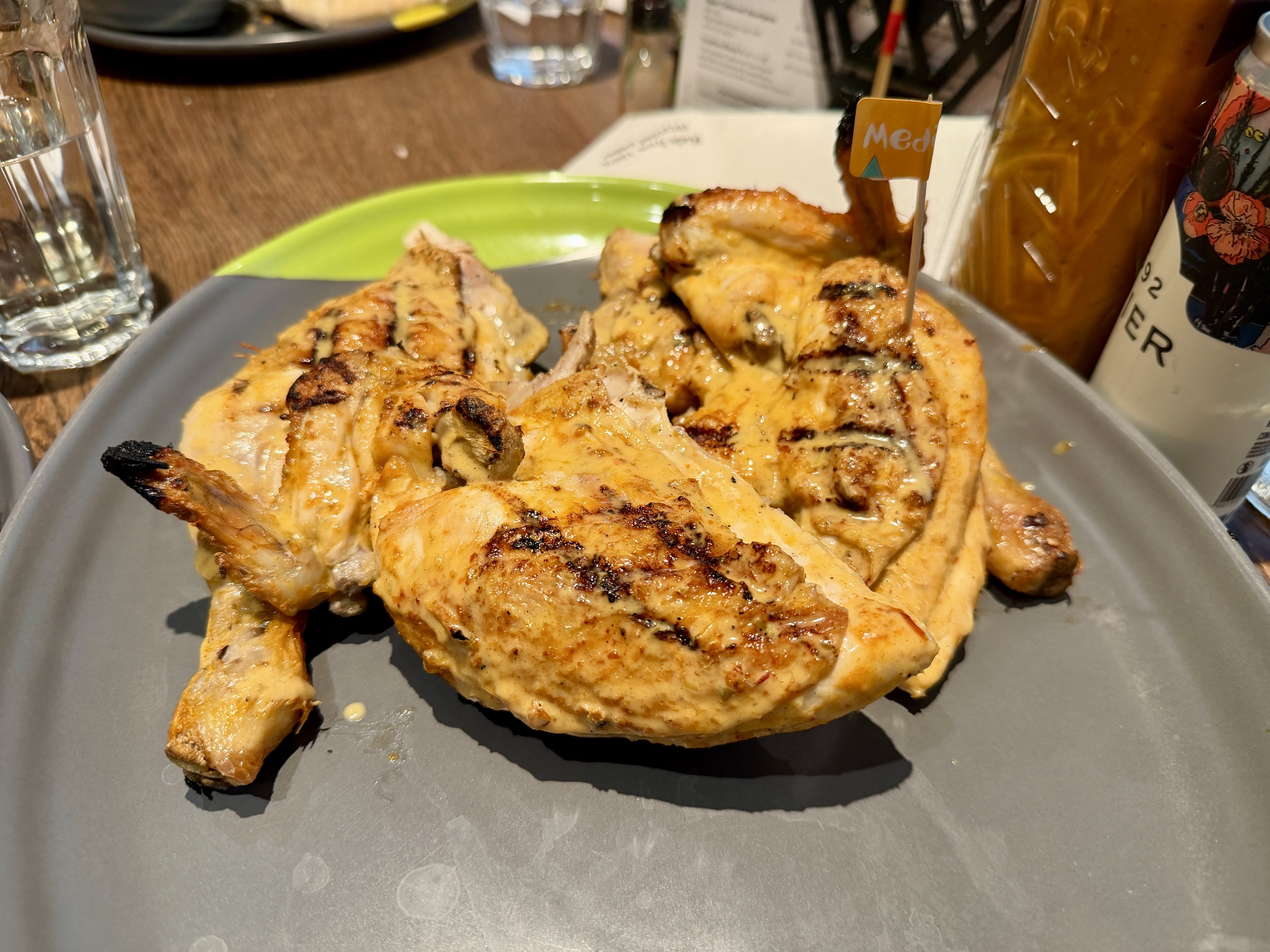
I know, it sounds a bit Henry VIII and we didn’t really need it, but I insisted because I wanted Jerry – who am I kidding, all of us, especially me – to try the product without whistles, bells, pitta, butterflying, filleting or general fucking around. Actually, for me this was probably the best thing in the whole meal and something I don’t usually think to order. Fairly plump and generous, the meat rich and not dried out, the skin scored and scorched.

Maybe this is where it all started out and Nando’s lost its way with all the variations on a theme it had to introduce over the following thirty-four years to hold people’s interest. But eating this I almost remembered what eating there the first time could be like.

Poor Jerry couldn’t tackle much of this, because he’d experienced Nando’s overload, but I made inroads into it on his behalf. It felt rude not to. A whole chicken on its own will set you back just over £17 and paradoxically, I thought it was the best value of anything we ate all evening. And yes, I’m aware that calling it a side order is an understatement and a half.

So what did we all come away making of Nando’s? Zoë said during our meal that it had aspired to a status a little like the NHS: people in the U.K. had come to expect that it would always be there, be accessible at the point of demand and be available fairly close to where they lived.

I wondered if she’d oversold it, but I looked up the most godforsaken places I’ve ever visited in this country – Runcorn and Great Yarmouth – and the former has a Nando’s a couple of miles away in Widnes. If you live in Great Yarmouth you have to go all the way to Norwich, but if I lived in Great Yarmouth I’d be looking to buy a one way ticket to Norwich at my earliest convenience.

Jerry loved it. “I’ll be going there again, or at least the Reading one” he told me later. I can well believe it, although there’s always a risk he was just being nice.

And me? Well, it remains in a particular niche – I imagine I might fancy one of my own volition every couple of years, if I can get past my misgivings about their particular brand of animal cruelty. But if a friend proposed eating there I would rarely say no, and if a work offsite happened to include a lunch there I’d feel like that was a pleasant surprise.

I imagine that, like the NHS or like Woolworths or Debenhams, I will appreciate knowing it’s there until one day the grim realities of the public finances and market forces mean it no longer is. On this evidence, though, I think that day may still be decades away, unless people start caring about chicken welfare a lot more than they do today.

So there you have it, the review of Nando’s that literally nobody needed – except maybe Jerry, but he was there anyway. I realised afterwards that I can easily count the number of bad Nando’s I’ve had on the fingers of one hand. I can count the number of amazing Nando’s I’ve had on the fingers of one hand, too: bad and amazing just aren’t what they do. Or perhaps it’s truer to say that I’ve had bad or amazing times at Nando’s, but the food had nothing to do with it in either case. Whatever. On that basis this time, with two of my very favourite people, had to be one of the best.

Nando’s – 6.7
29 Market Place, Wokingham, RG40 1AP
0118 9773220

https://www.nandos.co.uk/restaurants/wokingham

Since January 2025, Edible Reading is partly supported by subscribers – click here if you want to read more about that, or click below to subscribe. By doing so you enable me to carry on doing what I do, and you also get access to subscriber only content. Whether you’re a subscriber or not, thanks for reading.
Restaurant review: Cuttlefish, Oxford

“This should be lovely” said my dear friend Jerry as we took a table in the window at Cuttlefish, a couple of minutes’ walk away from the far side of Oxford’s Magdalen Bridge. “A fish restaurant!”

I was spending Good Friday with Jerry, in what I rather hoped would become an annual tradition – last year we spent it lunching at Gees – and as is habitual I had given him a range of options to choose from in advance. He passed on the London candidates I gave him: only the smaller plates appealed at Andrew Edmunds and The Hero, and the offal-heavy selection at Borough Market’s Camille was dismissed in a split second. That left Oxford, where Jerry was tempted by No. 1 Ship Street but thought, on balance, that Cuttlefish had more to tempt him.

All this worked out rather well, in truth. People have been bemoaning the lack of a fish restaurant in Reading for a long time – the easily pleased since Loch Fyne closed eight years ago and the more exacting since long before that. The nearest thing to it we have, I suppose, is Henley’s Shellfish Cow, but it always feels to me like a restaurant where they chose the name because they liked the pun and everything else followed from there.

Given that lacuna in Reading’s food scene a short hop to Oxford to see if there was anything suitable sounded like an excellent idea. Besides, after my last Oxford review there was a request to install Jerry as my permanent Oxford correspondent for all long boozy lunches: let it not be said that I never, ever give the people what they want. So Jerry and I rocked up at the start of the long weekend, the sun finally out, ready to investigate.

My preliminary research, however, had given me a bit of a sinking feeling, not that I told Jerry that. The fanciest thing about the website was Cuttlefish’s fetching logo, but lurking beyond that was a menu that seemed a little bit strange, a little bit cheap, a little too large and somewhat lacking in fish. Sure, they sold oysters and caviar and seafood platters, but for a fish and seafood place there appeared to be little fish on the menu.

Perhaps, I told myself, it was all in the daily specials depending what they could get that day. But it also felt a little all over the place, with classic fish and chips sitting uneasily next to squid ink spaghetti and “mixed seafood and chicken paella”.

Maybe some of that could be explained away as overlap with the La Cucina, the Italian restaurant next door under the same ownership. But that was before you got on to the five different types of burger, the steak frites, the brunch menu featuring eggs benedict and chorizo tortilla. Nothing about it shouted that Cuttlefish was a restaurant which had decided to focus on doing a few things very well.

That was sort of borne out by the dining room. It didn’t boast loads of jarring nauticalia, and the pictures on the walls were tasteful black and white numbers. But the Tolix chairs – would that I could go back in time and buy shares – felt low rent, as did the vinyl tableclothes meant, seemingly, to imitate planks of driftwood, which rather clashed with the attractive bare wooden floorboards. Never mind: we took a nice spot in the window and I wedged my arse into a Tolix. Behind Jerry, I could see that the paintwork of the bay windows was a little tired.

Service was lovely and friendly, but it started off shakily and never quite recovered. Jerry is a lovely and self-effacing man who always puts other people first, the kind who volunteers to take the crappy single bed in a communal Airbnb. Maybe it’s his Irish Catholic upbringing, but he is congenitally predisposed not to want his own way, to the point where he sometimes apologises even for having a preference.

I discovered this at lunch because, given that we were at a fish and seafood restaurant, I rather assumed that we’d be attacking a Picpoul de Pinet or an albariño, a riesling or a Chablis. Cuttlefish’s wine list, as you would expect, boasts all of those things, although it never gives a vintage and, in some cases, also neglects to mention the producer. But it was on this day, after years of friendship and several meals on duty, that I discovered that Jerry doesn’t especially care for white wine.

“I’m really sorry” he said, getting that apology in early. “But we can have white if you want.”

I stopped and thought. This was news to me, and I’ve been out for lunch with Jerry numerous times – including twice in Oxford – where I’ve pressed on and ordered a bottle of white without ever realising that Jerry only really enjoys red.

“No, don’t be silly! I’m not a purist about drinking white with fish.”

So we asked our server for help and that’s where our problems began. It felt like there was an unbridgeable language barrier between us, because I was unable to explain, somehow, that we wanted tips on which the lightest and fruitiest of the reds on the wine list was. It didn’t give many clues and there were no obvious candidates like, say, a Fleurie. It didn’t help that this part of East Oxford is a mobile reception not spot: no Vivino to come to the rescue.

“Do you mean the red wine that’s the least strong?” she said.

“No, I mean – which is the fruitiest. You know, not heavy. Which one would go best with fish?”

You’d expect the reds on this list to have been selected with this eventuality in mind, but perhaps not.

“Well, there is the Picpoul de Pinet” she said.

“No, I mean reds. That’s a white wine.”

There was a pause, and I wondered if I was expressing myself exceptionally poorly (if you’ve read enough of my reviews, you’ll know that sometimes happens). The pause lengthened into a silence, and I wondered if time was standing still. No: Jerry was still moving.

“I will get my colleague.”

By the time he arrived we’d given up and settled on a French malbec. This server smirked slightly as we ordered it, as if it was a bad choice, but really, by that point we’d done quite enough deciding and wanted to do some drinking.

It was called Beauté du Sud and the markup on it was reasonable to the point of baffling: £32 for a wine that will apparently set you back £25 retail. If I’d paid £25 for it retail I’d be beyond disappointed, but in a restaurant it wasn’t bad: not too heavy but perhaps a little jammy. Tom Gilbey would probably have had something to say about the sugar levels.

So by this point my hopes were not high, and that was compounded by another cardinal sin: our starters must have come out about five minutes after we ordered them, and you probably know by now how much I love that i.e. not very. But that’s almost the last bit of criticism you will hear from me, because from this point onwards – against all the signs and much to my bemused pleasure – nearly everything was rather good.

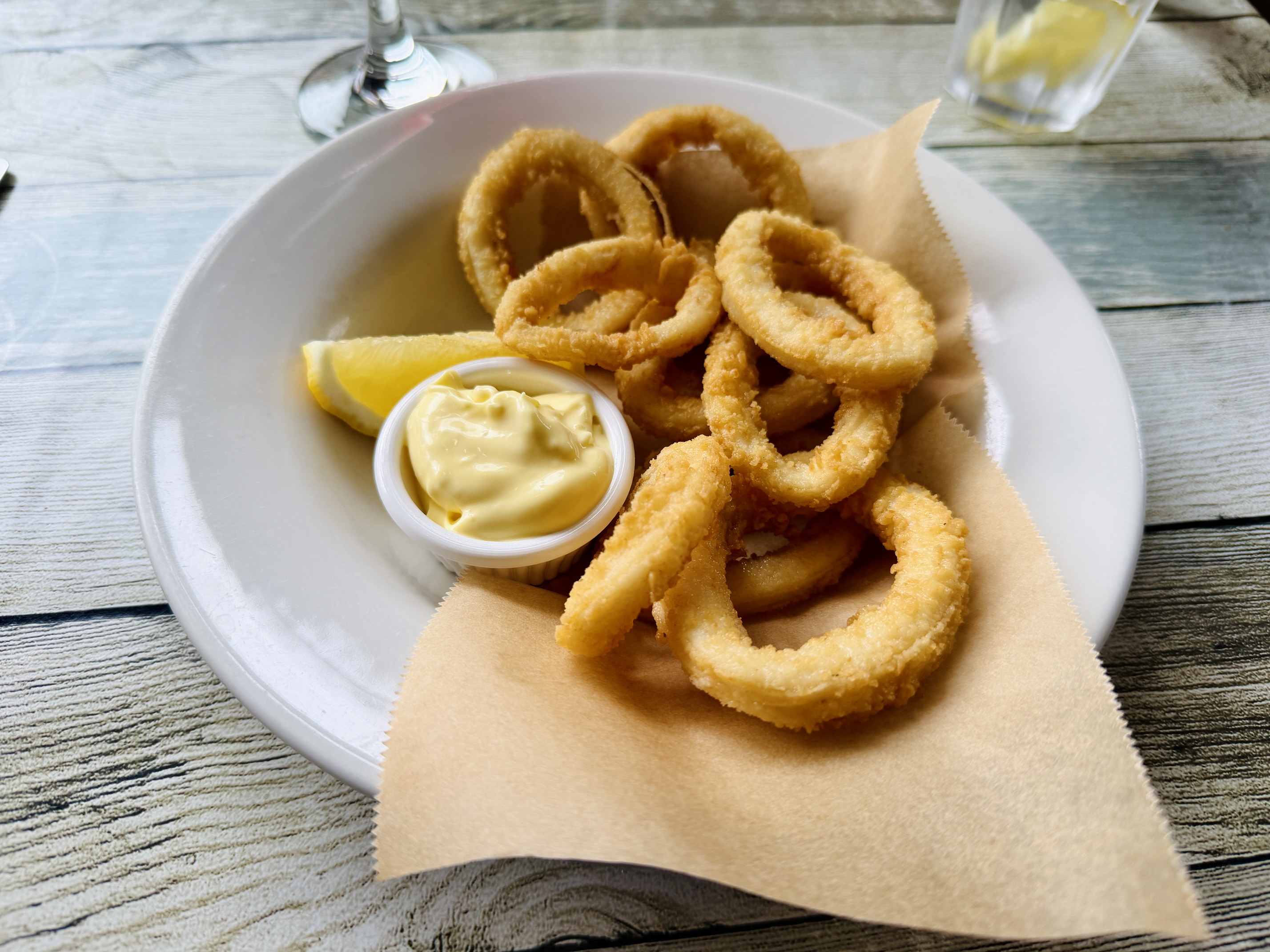
Take my calamari, for instance. They even looked pedestrian, and I was half expecting to wade my way through a bowl of breaded rubber bands. So imagine my surprise when I found they were delicious, lightly dusted with a coating that adhered, had crispness, and that they were tender without the slightest twang of elastic.

Dressed with liberally squeezed lemon and then dipped into a ramekin of golden aioli, they were the kind of dish the idea of this restaurant promised, a promise the reality of the restaurant looked as if it would renege on. It wasn’t the hugest portion for £9, but I liked it too much to care about that.

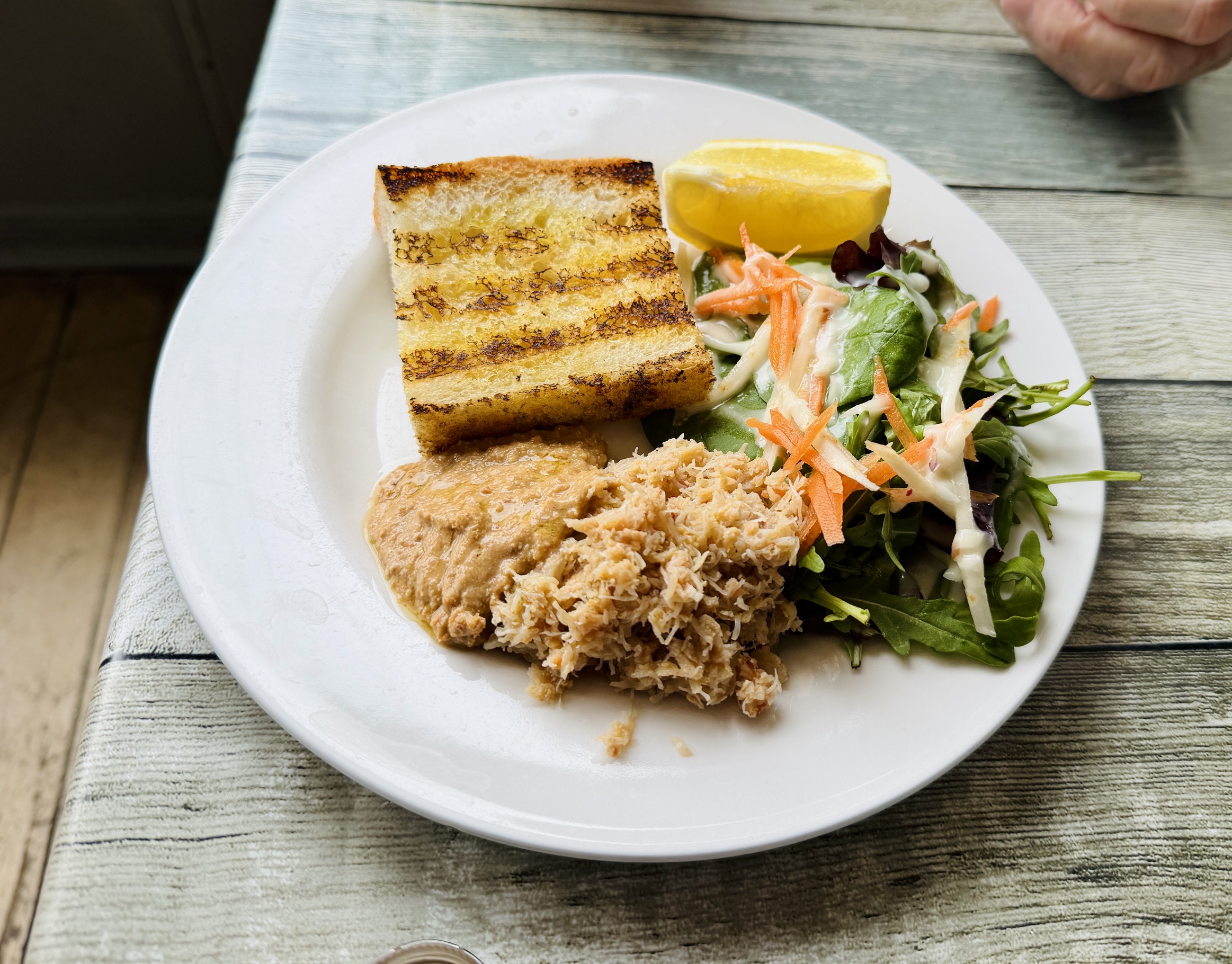
And would you believe that Jerry’s starter was equally good? He’d ordered crab, white and brown, with toast, and it was a simple and surprising – that word again – dish.

“This is so much nicer than those meagre pots you get at the supermarket” enthused Jerry, and he was right. I love the purity of white crabmeat but the dark meat is where the flavour is and this was rich and thought through, with a slowly building heat in the mix which, again, you might not expect. Even the tiger-striped block of toast was considered, was the perfect thing to load the stuff onto. I always think salads are padding in a dish like this, and this one definitely was, but even without it this felt like a very creditable way to spend £11.

By this point the restaurant was still less busy than you’d hope it to be on a long weekend, but there was a regular, if small, trickle of customers arriving and leaving. The people watching potential couldn’t match a spot in North Oxford, or down the Cowley Road, but Jerry and I had plenty to catch up on, so that didn’t matter.

We were having such a good natter that I didn’t even spend my time worrying that our mains would turn up as quickly as our starters did, so I was pleasantly surprised – yes, surprise once more – when they turned up a very agreeable half hour or so later.

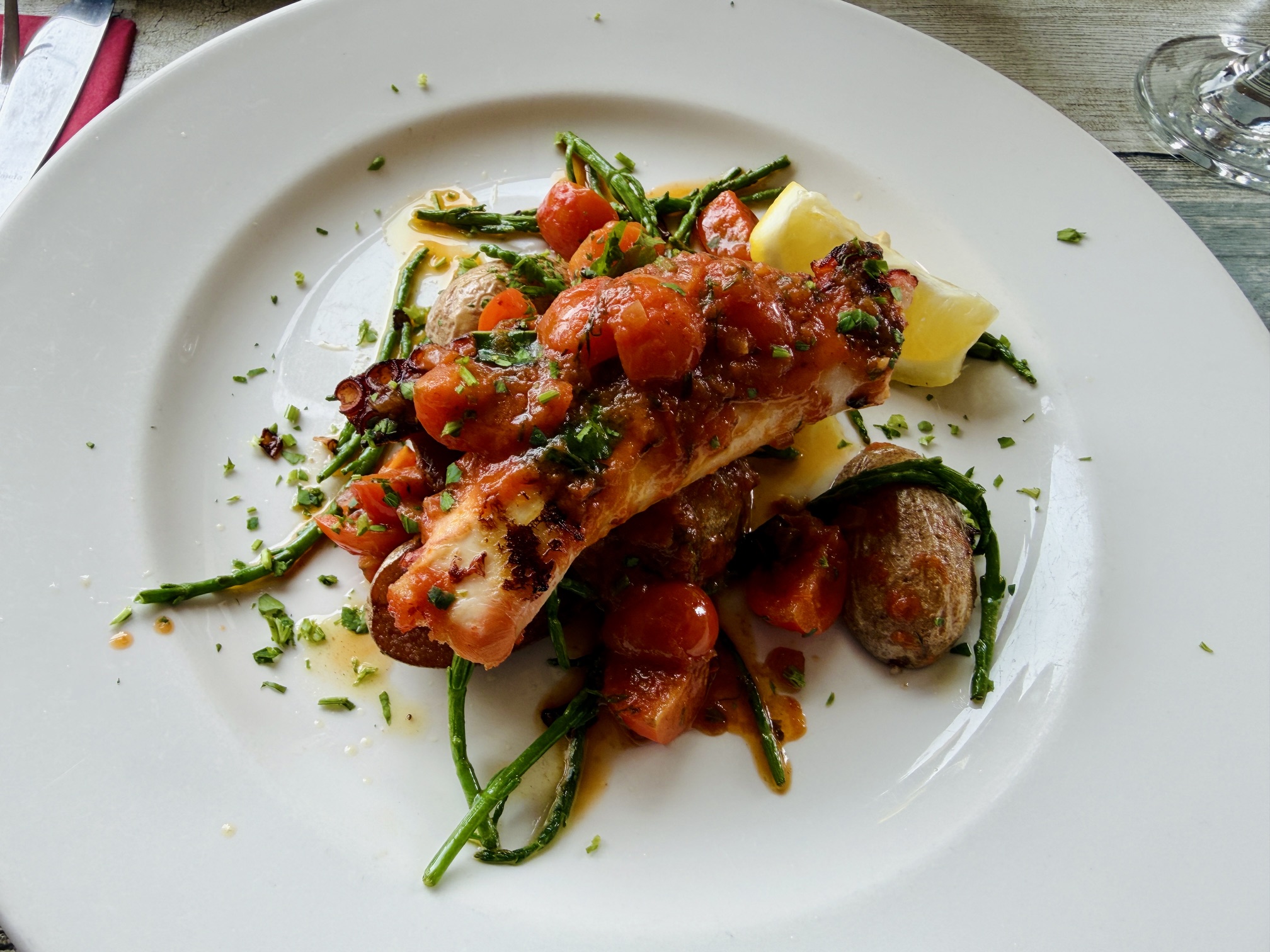
That said, I wish they’d given mine a little longer. The blackboard propped up outside the restaurant had promised two specials but one had already gone by the time we turned up at half-one, so I chose the other, the octopus. And on paper this dish had everything I could have wanted: firm, roasted baby new potatoes with a flash of bronzed skin, a little carpet of still-crunchy samphire, a beautiful sauce with plenty of sweet cherry tomatoes.

It almost was, and could have been, a taste of the Mediterranean (of Greece, where the octopus is usually previously frozen because stocks have never quite recovered from all that madcap dynamite fishing they used to do).

But the problem was that octopus is a tricky beast to get right and, unlike everything else the kitchen tried, their sure touch deserted them here. It was a proper chewy workout for the jaws, more than I would have liked, and it made me apprehensive about my forthcoming dental appointment and the inevitable top up of masseter botox which would follow. If I showed my dentist a picture of this octopus, perhaps he’d give me slightly more this time.

Only the narrow end of the octopus, blackened and crispier, was easy to eat. Even having said all that, I liked the dish so much that I was prepared to be forgiving: to get so close to the perfect dish, somehow, made me celebrate the 90% they had achieved rather that the 10% where they had fallen short. The whole thing sang with summer flavours, made the crummy weather of the previous week feel like an optical illusion, and for £18 I thought that was no mean feat.

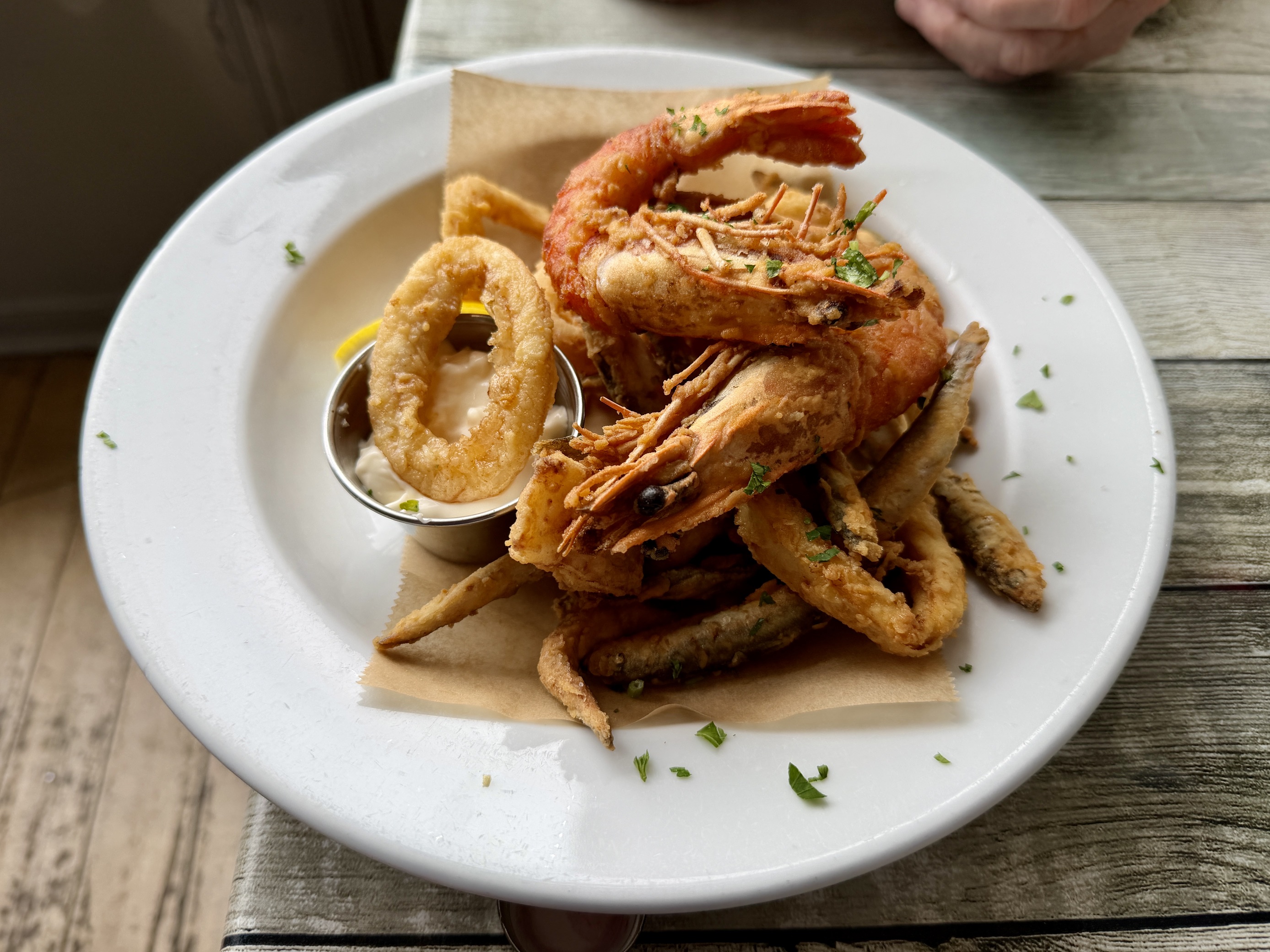
Jerry very much enjoyed his fritto misto, although I think it was more his thing than mine. One element, the calamari, was shared with my starter, but the other components were a couple of enormous prawns, some pieces of whiting and a lot of whitebait. You might, as Jerry does, like whitebait rather a lot, in which case I’m delighted for you, but I personally never eat anything that can beat me in a staring content. And whiting might be a perfectly worthy fish – the bit I had tasted decent enough – but somehow it felt a little basic to me.

Then again, this fritto misto was £15, so can you complain? Pricing at Cuttlefish was a little erratic, with many of the mains costing little more than some of the starters. I guess I had been conditioned to think it should have been more expensive, but then again it’s not like they were dishing up whole Dover soles or thick steaks of swordfish. I’d have liked it a little better, I think, if they had been.

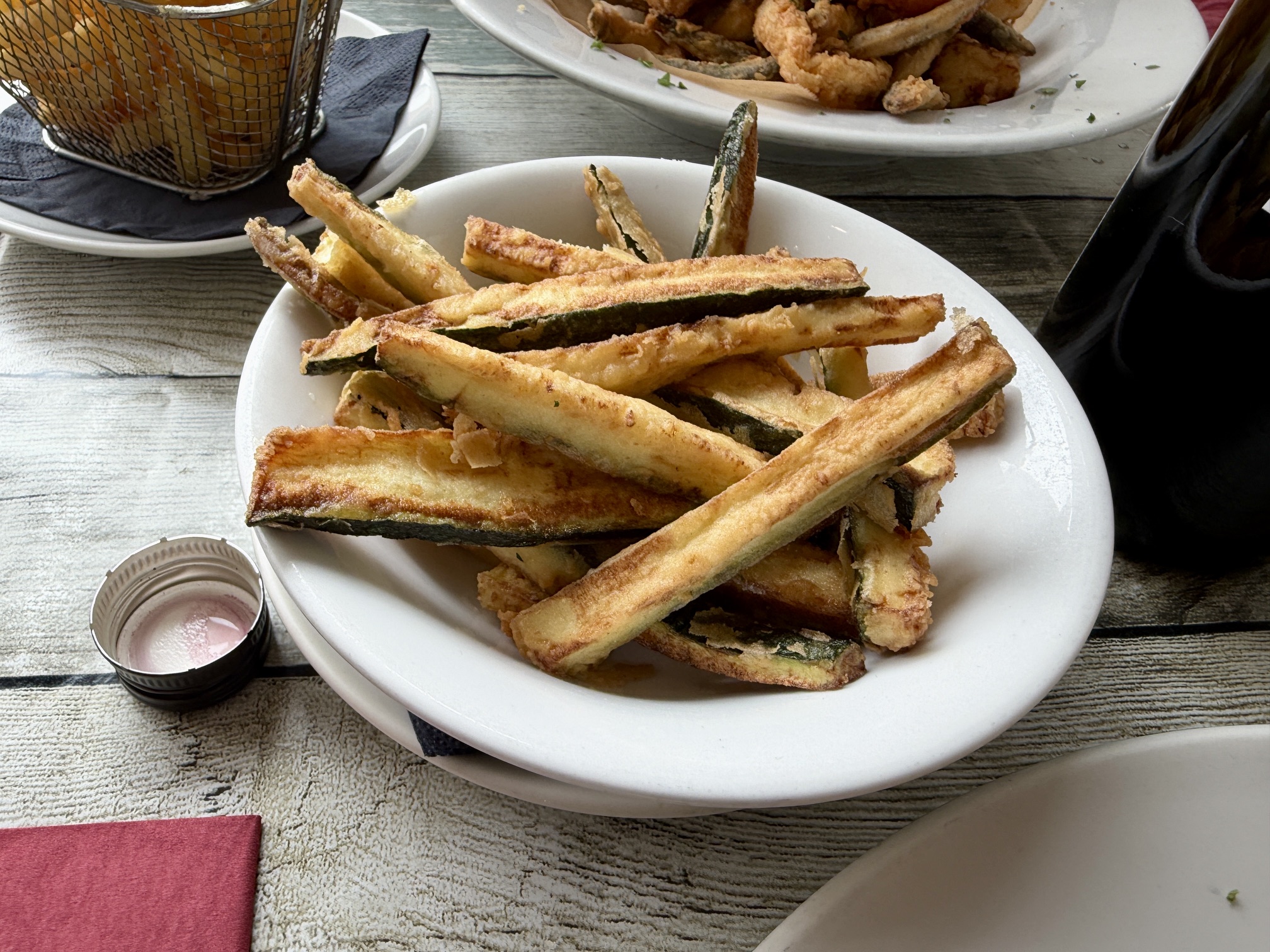
We had a couple of side dishes – Jerry because his main needed one and me because I’m greedy. My zucchini fritti were thick, soggy and under-battered, lacking salt or fun. Jerry’s french fries almost certainly came out of a packet and were served in the sort of miniature frying basket that dreary observational comics on Twitter used to slag off ad infinitum. I didn’t finish my courgette fries because they felt like empty calories. Jerry didn’t finish his frites because he just didn’t have room: I half expected him to apologise to our server for that.

After an impressive run I guess it was always a risk that the weird service would return and cause a dip, and so it did. We were asked if we wanted to order dessert, we asked if we could finish our wine first and were told “well, the kitchen is closing”. Nothing on Cuttlefish’s website says that it does that and, indeed, people were still taking tables shortly before that. But never mind: the dessert menu was full of staples like brownies, cheesecake and sticky toffee pudding and they did offer a glass of an unspecified Sauternes if you wanted to push the boat out, no pun intended.

Jerry went for ice cream, a classic Neapolitan trio of chocolate, strawberry and vanilla. I don’t know if they were supplied by others or made by the restaurant, but they were as pleasing as their pastel shades might lead you to believe they would be. A couple of the scoops had ice crystals in them, which strangely left me with the impression they were less likely to be bought in, but either way it was a solidly nice and thoroughly unexciting dessert.

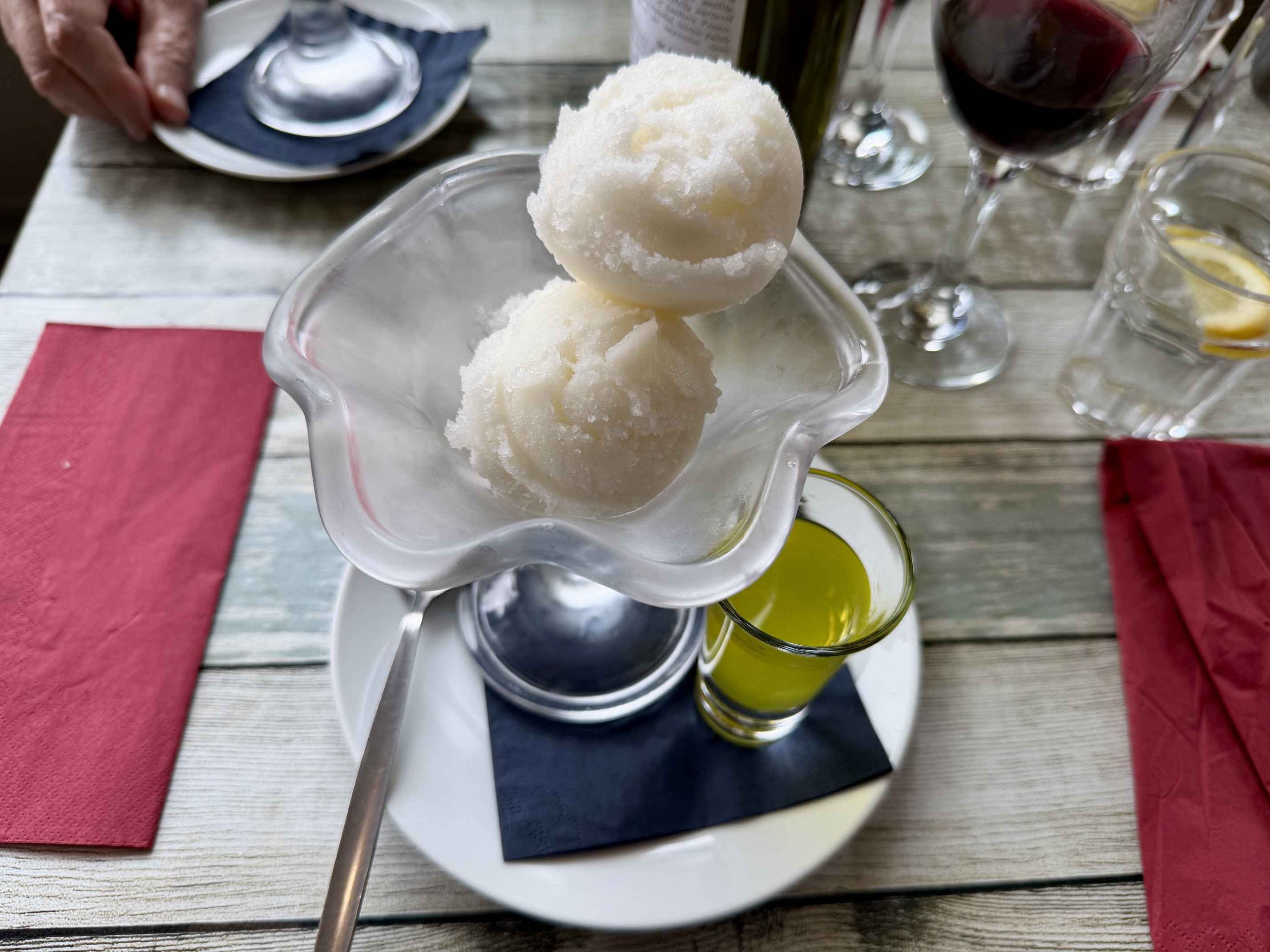
I picked from the specials, most of which were dessert with extra booze, be it a pastel de nata with a glass of port or an affogato with Frangelico on the side. I genuinely loved my two spheres of lemon sorbet with limoncello, and thoroughly enjoyed anointing the former with the latter. It felt like the kind of dessert you don’t see on menus much these days, a resolutely old school, tried and tested combo.

As it gradually melted to become the kind of Slush Puppy Oliver Reed would have considered a decidedly good time, I started to feel increasingly well disposed to Cuttlefish, despite its repeated efforts to stop me becoming so. £10 for this, and despite somehow costing more than the larger £7 selection of ice creams I couldn’t say I felt begrudging.

“This has been so nice” said Jerry. “So much better than those snouts and bollocks and trotters in London would have been.”

When our bill arrived it was only £113, not including tip, which did nothing at all to dissipate our collective goodwill. I think Jerry liked Cuttlefish more than I did, but Jerry is also a man who will take the single bedroom in an Airbnb to make his friends happy. In short, he’s just a spectacular human being. And yet I liked Cuttlefish too: I may be a crabby sod who needs to be worn down or won over, but I get there in the end. Once I do I’m as much of an advocate as anybody.

After that our afternoon took a happy, well-rehearsed trajectory. We wound our way to the Star Inn on Rectory Road, one of my two favourite Oxford pubs. Jerry sipped Asahi and I glugged Steady Rolling Man and, despite the utter lack of mobile reception, we got by the way people did in the days before smartphones, by simply chatting and gossiping and not looking things up when we didn’t know them, because there was no way of doing so.

We got into a chat with the academic at the next table, mainly because Jerry fell slightly in love with Nico, her greyhound, but he told himself it was okay that he couldn’t get away with dognapping Nico. “Greyhounds don’t lick”, he said to me. “I need a dog that’s going to show me proper affection.”

Nico’s owner told us stories about the fates faced by ex-racing greyhounds – she adopted him after an unsuccessful month-long career as a racing dog – and both of us came away from the conversation bitterly opposed to racing in all its forms. I have become a cat person in my middle age, but I’ll always make an exception for greyhounds.

It was in short a textbook Oxford outing, the kind to which I’ve become extraordinarily attached. I’m already looking forward to the next one, especially now I have a mandate from my readership to take Jerry out for lunch in the dreaming spires at every available opportunity.

I am increasingly aware lately that happiness can be fleeting, and you have to appreciate it as it happens, rather than simply realising further down the tracks with the benefit of hindsight. I had a brilliant time, and I don’t want these trips to Oxford – on Good Friday or otherwise – to ever come to an end. Fortunately, the city seems to have plans to keep me more than occupied.

En route to the Star I spotted a pub, the Port Mahon, which has decided to specialise in rotisserie chicken and mentally I made a note to put it near the top of my to do list. Once we got to the Star I couldn’t help but notice that they now have a permanent pizza trader. One who also serves a pint of dough balls in garlic butter and Parmesan: I saw them turn up at a neighbouring table, and it took all my strength not to order some. Next time. Or the time after that.

Cuttlefish – 7.4
36 St Clement’s Street, Oxford, OX4 1AB
01865 243003

https://www.cuttlefishoxford.co.uk

Since January 2025, Edible Reading is partly supported by subscribers – click here if you want to read more about that, or click below to subscribe. By doing so you enable me to carry on doing what I do, and you also get access to subscriber only content. Whether you’re a subscriber or not, thanks for reading.
Restaurant review: Me Kong

When I ran through the trends in Reading’s food scene last year, two stood out: the proliferation of new, casual pizza restaurants and a similar blossoming of restaurants to cater to Reading’s Hongkonger community. Last week I explored the former at Smelly Alley’s Zi Tore so it only seemed fair, this week, to dive into the latter at Me Kong, the newest of these restaurants to open.

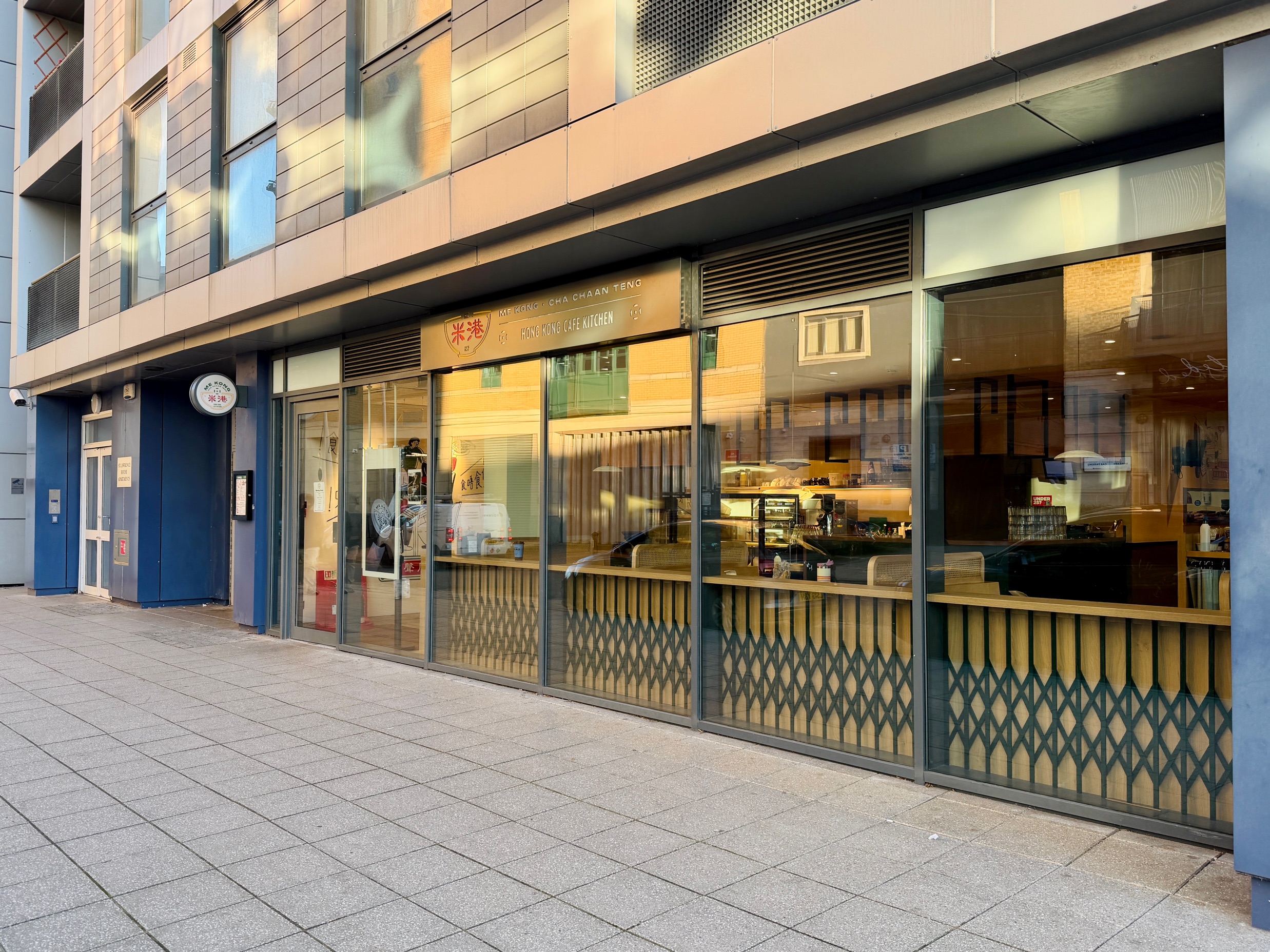
I identified some of these spots opening in 2025 – Woodley Food Stasian out in Woodley, Take Your Time where Dolce Vita used to be and the subject of this week’s review, which is tucked away behind Reading Library just down from The Blade next to the retro classic that is the Abbey Baptist Church. It’s a spot which somehow didn’t feel like it existed before Me Kong sprang up there: I can’t remember what, if anything, was there before.

But even that undersells the increase in restaurants catering to this market. After all Good Old Days Hong Kong, which I reviewed around this time last year, has been around since late 2023. Worse still, I missed out a couple of developments last year – YL Restaurant for one, which opened in the back of the supermarket that used to be the Warwick Arms a long time ago. And then there’s Soul Chill, a cafe that opened right opposite where I used to live on the corner of London Street and South Street. Its Google listing initially made it look like a bubble tea spot, but it boasts breakfast and lunch options.

All this, of course, springs from the introduction in January 2021 of the BNO Visa for Hongkongers, giving them the right to settle in the U.K. with a path to citizenship. Reading – always a multicultural, well-educated, polyglot place – has as a result both developed and embraced a significant Hongkonger community. With that come all the advantages of vibrancy, including – selfishly, for me – new and interesting places to eat.

Me Kong is a particular type of establishment, a cha chaan teng. These are “tea restaurants” that originated in Hong Kong in the Fifties, following on from the bing sutt, or ice room. Cha chaan tengs are often likened in print to the British greasy spoon or the American diner, but I think that’s more to try and find a term of cultural reference readers might understand. In reality they are a creature all their own, and a very eclectic one at that.

Food at a cha chaan teng is often described almost as a fusion of Chinese and European – another term often used is ‘soy sauce western’ – with dishes including Chinese ones with which you’d be familiar and more esoteric options like baked pork chop with ketchup, or macaroni soup topped with char siu. In Hong Kong cha chaan tengs are a great gastronomic leveller – swift, efficient and frequented by blue and white collar workers alike.

Plenty of my research suggested that cha chaan tengs are on the wane in Hong Kong, as for that matter greasy spoons are here, but it’s somehow fitting that a wave of them is opening in the U.K. Because I’ve read that when they first sprung up in Hong Kong in the Fifties it was because Hong Kong, run by the British, welcomed Chinese refugees. There are echoes of that, I suppose, in the situation now, seventy years later.

A taste of home, or nostalgia, makes perfect sense if you settle somewhere so far away from your roots, and last month I saw a few photos of customers queuing round the block to try Me Kong for the first time. But did this food also have the potential to win over a wider customer base?

Someone thought so ten years ago, when a restaurant literally called Cha Chaan Teng opened in Holborn, but the reviews were not good. Marina O’Loughlin, then writing in the Guardian, said the food gave her “the kind of clammy shame I’d feel if I woke up post-bender to find myself the fifth Mrs Gregg Wallace”, adding that “cha chaan tengs aren’t renowned for their cuisine”: what’s the opposite of a white saviour?

There is a difference, though. That restaurant was geared at customers of European descent, while Me Kong promises to be the real thing. So on a Tuesday lunchtime I pootled over with my great friend Jerry, who was especially interested in Me Kong because it’s probably the closest restaurant to his gorgeous, incredibly tasteful flat. Forget whether I liked it or not: I also wanted to see if Jerry could find a brilliant new local.

We got there around twenty past twelve and the place was already packed with a queue for tables, albeit one that hadn’t moved out onto the street. I will say though that although we as a nation like to think we’ve invented queuing, Me Kong has perfected it – quickly assessing each table size needed and gradually corralling us into different spots in the waiting area.

At the front there were counters showing off all of Me Kong’s baked goods – buns, pastries and the like – and so some of the people joining the queue were simply buying that stuff to take away. Nothing fazed Me Kong’s front of house, and after no more than five minutes we were ushered to a table.

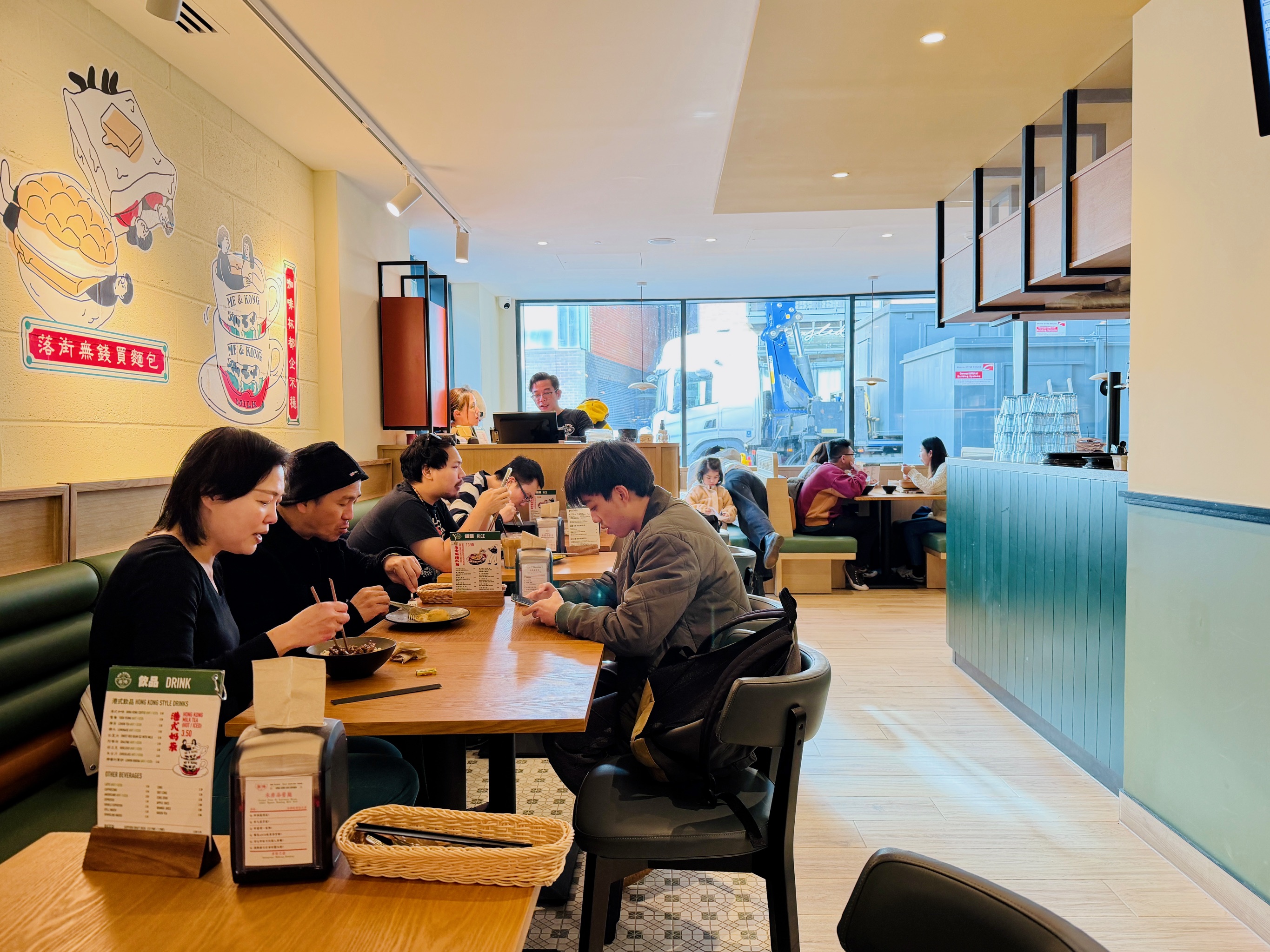
Me Kong’s interior is really rather impressive, I think. On one level it’s a front room with booths, a back room with tables and a corridor connecting them. But that doesn’t even begin to do it justice, on many levels. They’ve gone all the way through the building, so the front looks out on Abbey Square and the back onto the Holybrook, and that results in a really lovely space where everything feels airy and beautifully lit.

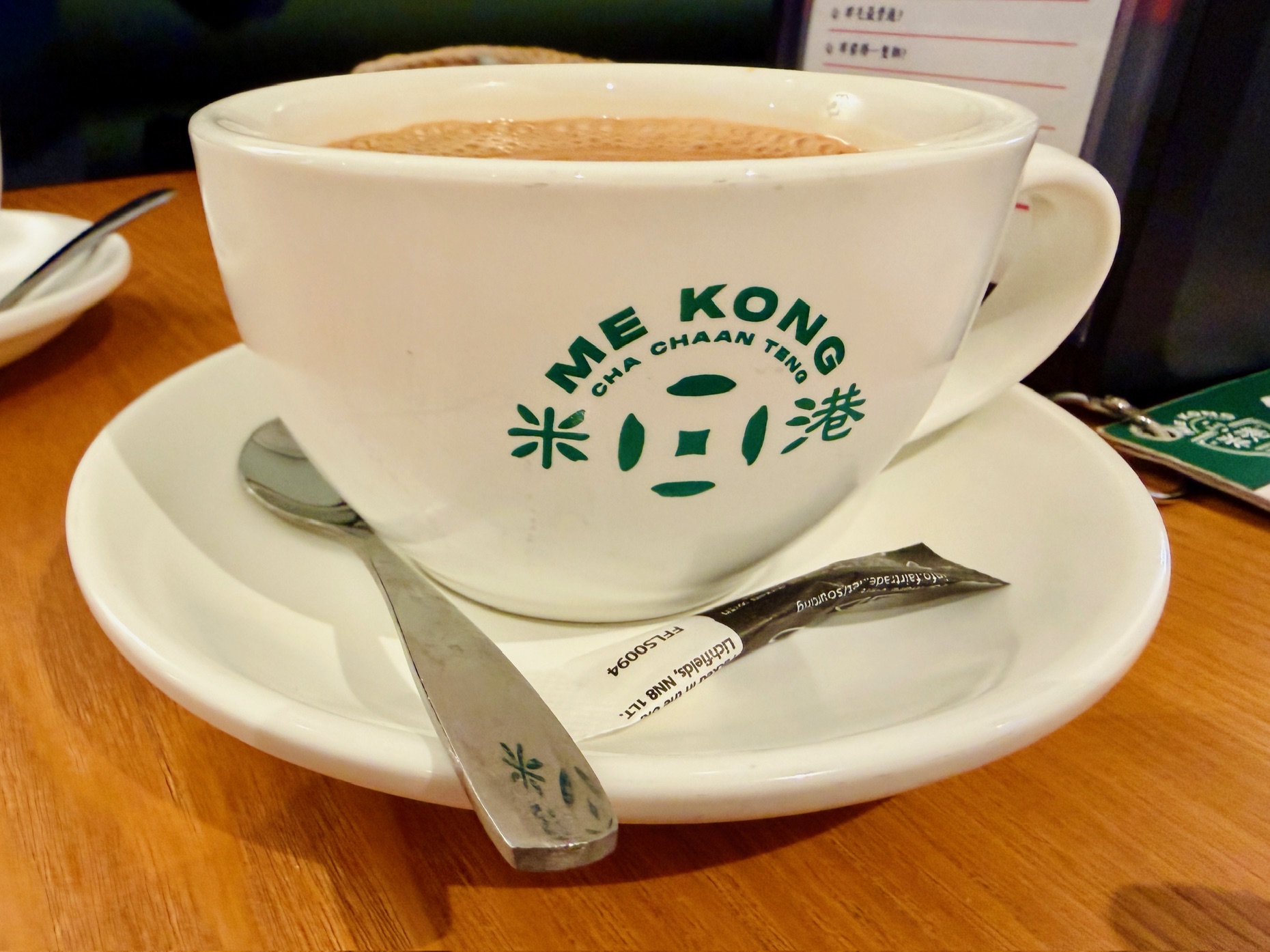
Not only that, but it felt polished and finished in a way new establishments so often don’t: the colour of the wood panelled counter; the tasteful banquettes; the bright line drawings on the wall, everything seemed really considered. And the branding, from the menus to the cups to the napkin dispensers, was extremely well thought out. I got the impression this wasn’t their first rodeo: I’d be surprised if it was their first restaurant, for that matter. It felt fully formed.

I should also mention that Jerry and I were, at the point when we sat down, the only customers of European descent in the place. But I never felt conspicuous, because the staff were just so terrific from start to finish. One server explained to us that they really wanted to promote this kind of food, and I got that impression throughout the meal.

In fact, I’m jumping the gun by saying this but I’ve never been to a restaurant where the staff were quite so keen to tell you what the gorgeous-looking dish that had turned up at another table was (“that’s the braised eggplant with garlic sauce” one of them told me, as I admired a delectable-looking pot on my left).

Me Kong’s menu, on a ring-bound set of cards with that impressive branding, was a proper box of delights with an awful lot going on. One section featured noodles, either dry or in soup, along with five set meals, another common feature in a cha chaan teng. These gave you the option of some Hong Kong classics – ham macaroni soup, say, or char siu macaroni soup – paired with a bun and either fried egg or omelette.

A large section of rice dishes again led with a staple of the cha chaan teng, baked pork chop with cheese and tomato sauce on rice. Many of these dishes were more on the fusion side, so were perhaps more for purists. Another page of the menu featured four clay pot dishes and five stir fries, and another page of snacks offered dishes like deep fried chicken leg with curly fries – again, an authentic cha chaan teng choice – along with a full range of options from the bakery.

I would say that with the exception of that aubergine dish, which looked like it might have had minced pork in it, there wasn’t much for vegetarians here. The page marked Vegetables featured various green veg with garlic or oyster sauce, but would feel limited if that was your lot. There was, however, plenty here for the cost-conscious. The most expensive dish on the menu was south of £15, those set meals were less than a tenner.

Plenty of decisions for Jerry and I to make – but first, tea. Me Kong does sell alcohol (Sapporo on draft, or Guinness) but I really wanted to try the Hong Kong milk tea, another speciality of this kind of restaurant. It’s hard to describe but imagine a very strong cup of PG Tips, souped-up builder’s tea, served with condensed milk, a very pleasing shade of deep amber, and you wouldn’t be far off. I put a sugar in it, but on reflection wished I’d added more.

I don’t normally put a picture of a cup up on the blog, especially one where you can see so little, but: see what I mean about the branding?

I’d read online that Hong Kong milk tea is strained through a sock, or something like it (hopefully one exclusively used for this purpose), often multiple times, to achieve a particular level of smoothness. I can’t say whether a hosiery department was involved, but it did have a certain pleasing consistency. Maybe it was the note of Carnation, or the power of imagination, but whatever it was I enjoyed it.

Jerry originally wanted to try a yuen yueng, a blend of coffee and tea also particular to cha chaan tengs, but they didn’t have any Hong Kong coffee so he joined me in a tea. He liked it, but less than me: when we had a follow up drink I opted for more of the same, and he had an iced lemon tea – specifically requested as slightly less sweet on the excellent advice of the table next to me.

Before I talk about the food, I did want to say something about that. I’ve already said that the staff were really keen to explain other dishes and illuminate us on the cuisine of Hong Kong. But I’ve never eaten in a restaurant where that evangelism so extended to the other customers, too. During our meal the tables on either side of us were occupied by multiple parties – restaurants like this tend to be brisk – and so we got to rubberneck all manner of delights. Not only that, but the people ordering them were more than happy to tell us what they were.

All that meant that although we played it relatively safe with our order we saw more than enough to work out what to have next time. That macaroni soup topped with satay beef looked like an interesting, comforting order, but I was even more intrigued by a dome of rice crowned with an omelette draped over it, the whole thing then decorated with vertical strips of char siu. The traditional pork chop baked with cheese came in an earthenware dish, the kind you might associate with a lasagne, and I got a sufficiently good look to decide I’d leave that one to the experts.

Nicest of all were the lovely pair of civil engineers on my left. They worked in Thames Tower and had found out about the place and one, whose family were from Hong Kong, had decided to bring her colleague along to see if it recaptured the food of her memories.

She ordered a clay pot dish that I considered but been put off ordering because of the mystery meat component of “Chinese sausage”, and she even kindly let me sample a bit. It was delicious, with a sort of air dried texture like salami and a complex, fragrant flavour. I made a note not to let it deter me next time.

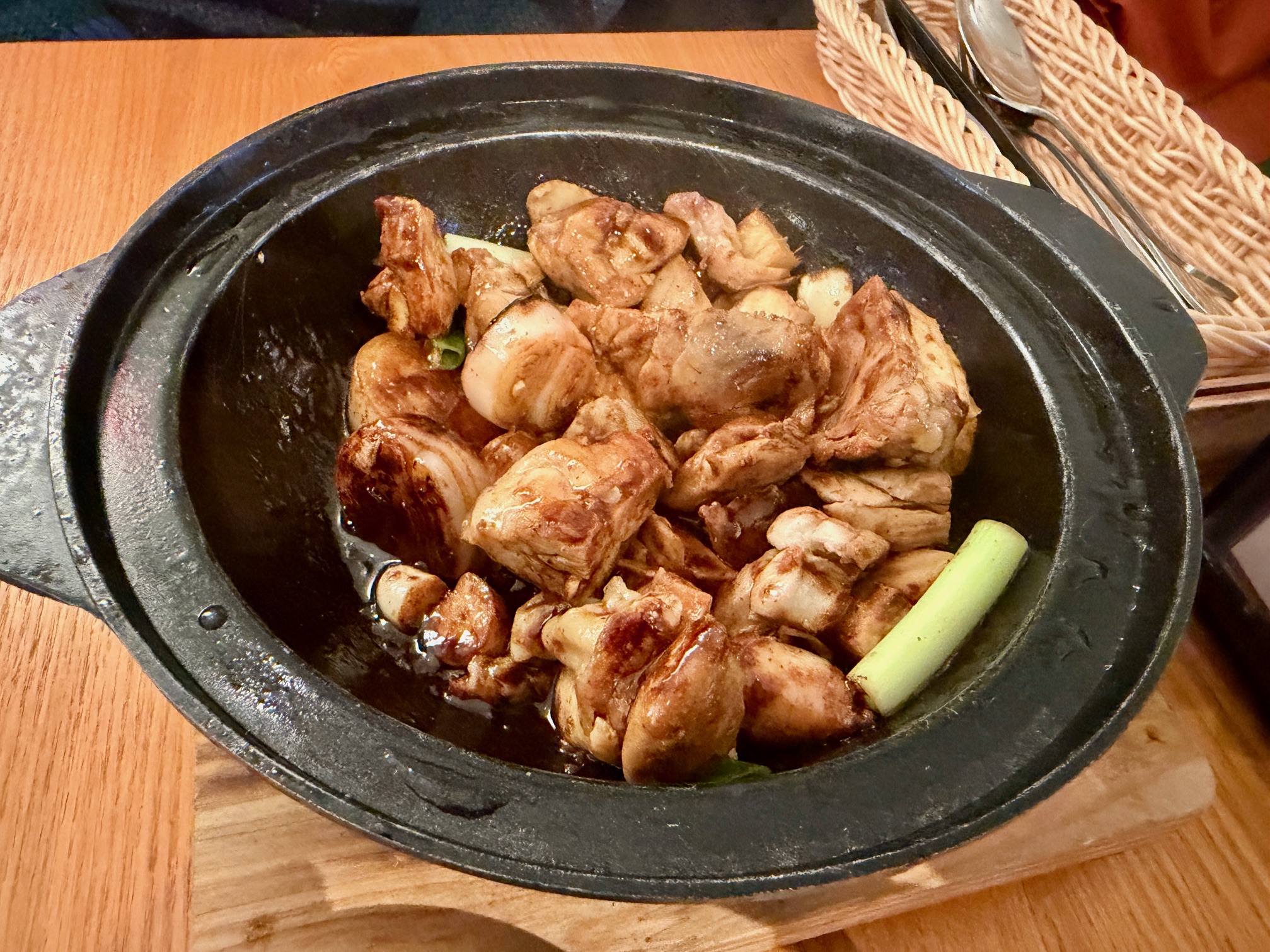
So yes, I chose the conventional option, the black bean chicken pot. But I am so happy that I did, because it was simply outstanding. A hefty pot full to bursting with boneless chicken thigh, skin on, cooked absolutely bang on so it was firm but had just enough give, no evidence of the velveting that can sometimes make chicken off-putting. Huge bits of spring onion, caramelised until heavenly, coexisted with all that chicken and extra goodies: little cubes of potent ginger and plenty of equally burnished nubbins of garlic.

But all that would be nothing without the sauce, a black bean sauce of ridiculous savoury depth, a glossy number with notes of Marmite which clung to everything: to the pot, to every crevice of chicken, to each layer of onion, each piece of ginger and garlic, every grain of steamed rice. This was deliciously viscous stuff, and I made it a mission to ensure that I left as little of it gleaming at the bottom of that black pot as I possibly could.

There is a part of me that is very tempted, just after noon on Friday when this review goes up, to find myself in that place again eating exactly this dish: it was that good.

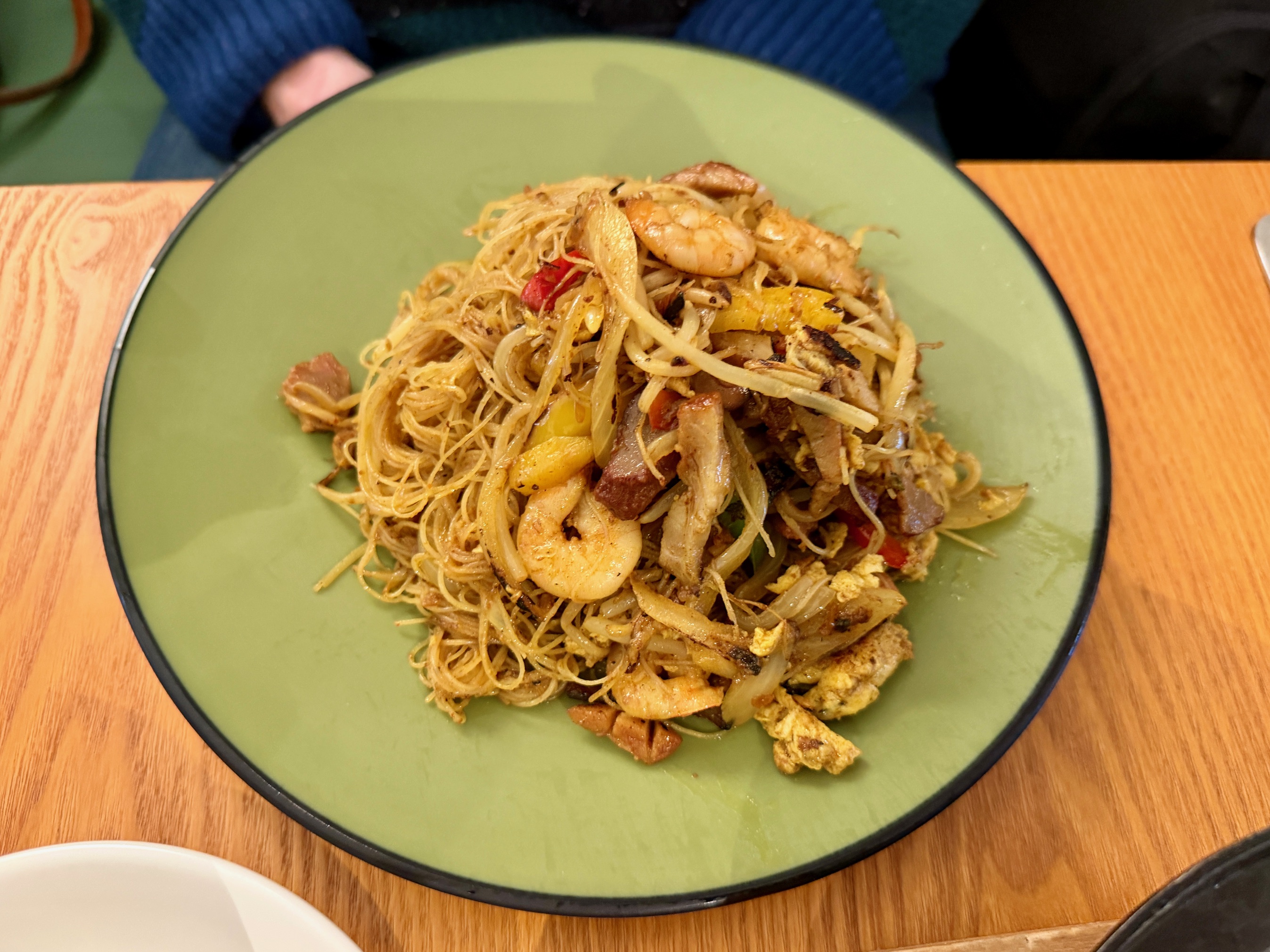
Jerry had chosen every bit as well as me, going for the Singapore vermicelli with char siu and prawn. This was a magnificent one-stop shop, a very generous tangle of rice noodles tumbled through with chilli, prawns, strips of pork, beansprouts and fried egg. The menu described it as spicy, our server said it wasn’t so hot. Having tried a few forkfuls, I’d probably split the difference and say it was nicely challenging.

What saved it from chilli overload was a certain nuttiness, although I’m not sure where it came from. Perhaps it was the curry powder, an essential component of this dish which gives it its ochre hue. Professor Wikipedia advises me, pleasingly, that Singapore noodles have nothing to do with Singapore but are also a post-war Hong Kong creation.

The thing that made me happiest about these noodles was how much Jerry loved them. He told me he could happily see himself coming here of an evening, ordering these and sitting there taking it all in: he added that previously his go to had been the pad thai at Rosa’s Thai but that this was easily a rival for it. Getting people to eat at Me Kong instead of Rosa’s Thai is, I suppose, as good a mission statement for this blog as any: I’m glad it had that effect on my friend if nothing else.

But I can also see exactly what he meant about it being a space where you’d want to spend time. It was so busy, so beautifully efficient and well run, and so popular – with friends, with couples, with families. Small children were everywhere, but for a moment you could forget you were in the U.K. because they were, without exception, impeccably behaved.

The word that jumps out at me – that restaurants don’t always aim for and in any case don’t hit often enough – is fun. Everything about Me Kong was a riot, from its cheerful, charming staff to its delighted, curious kind customers. How could anybody experience that and not want to be part of it again?

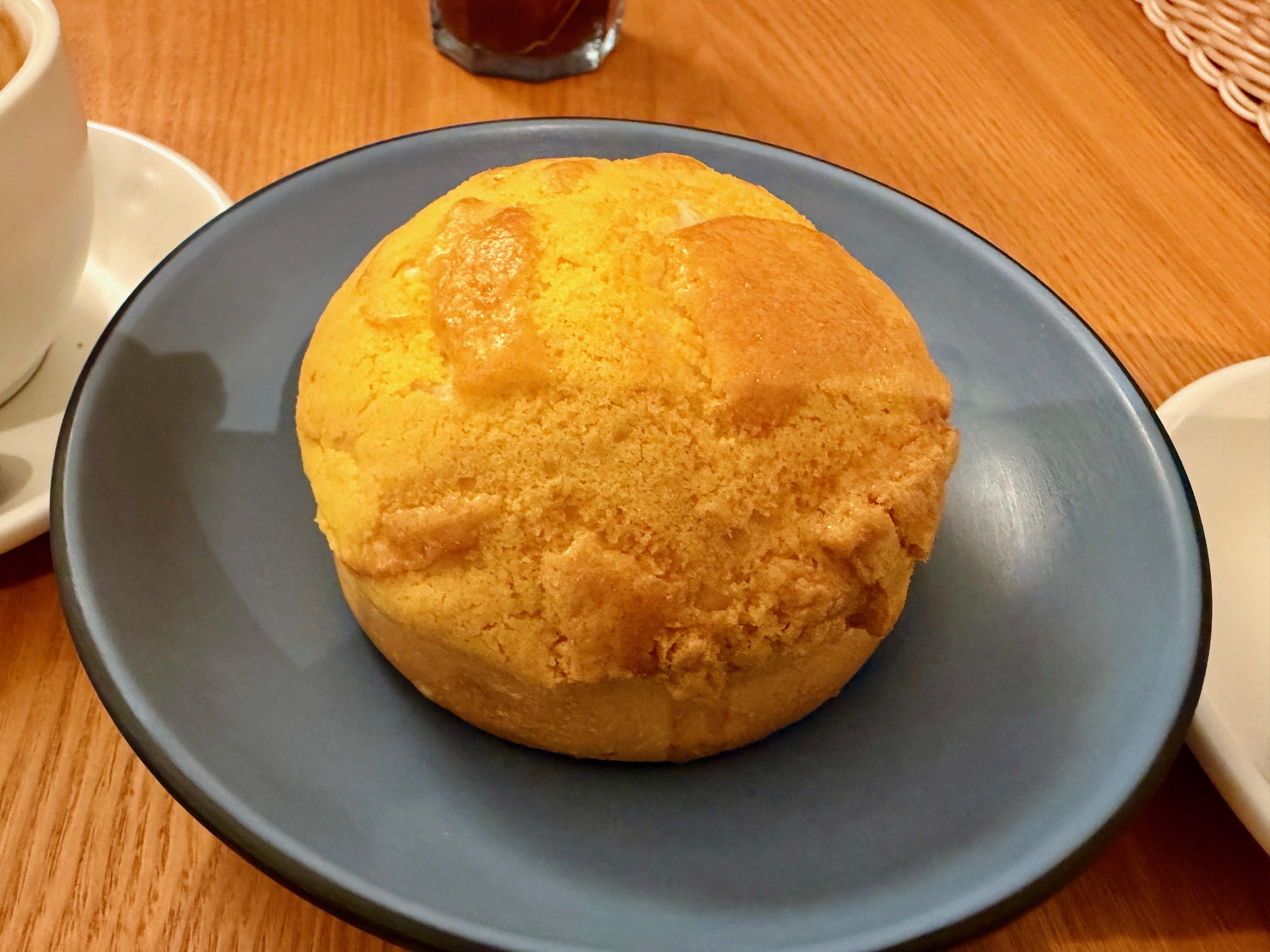
Determined to cover as much of the menu as possible we stayed for some sweet treats and this was when, maybe, Me Kong’s sure touch faltered ever so slightly. I wanted to try the real staples here, so we started with a pineapple bun: no pineapple is involved, but it got the name because the sugar crust on top can, apparently, vaguely resemble a pineapple. I rather liked this – it reminded me of an iced bun, but with a crust rather than icing on top. Worth trying so you can say you’ve tried it, absolutely, but I don’t know when I’d feel a hankering for one again.

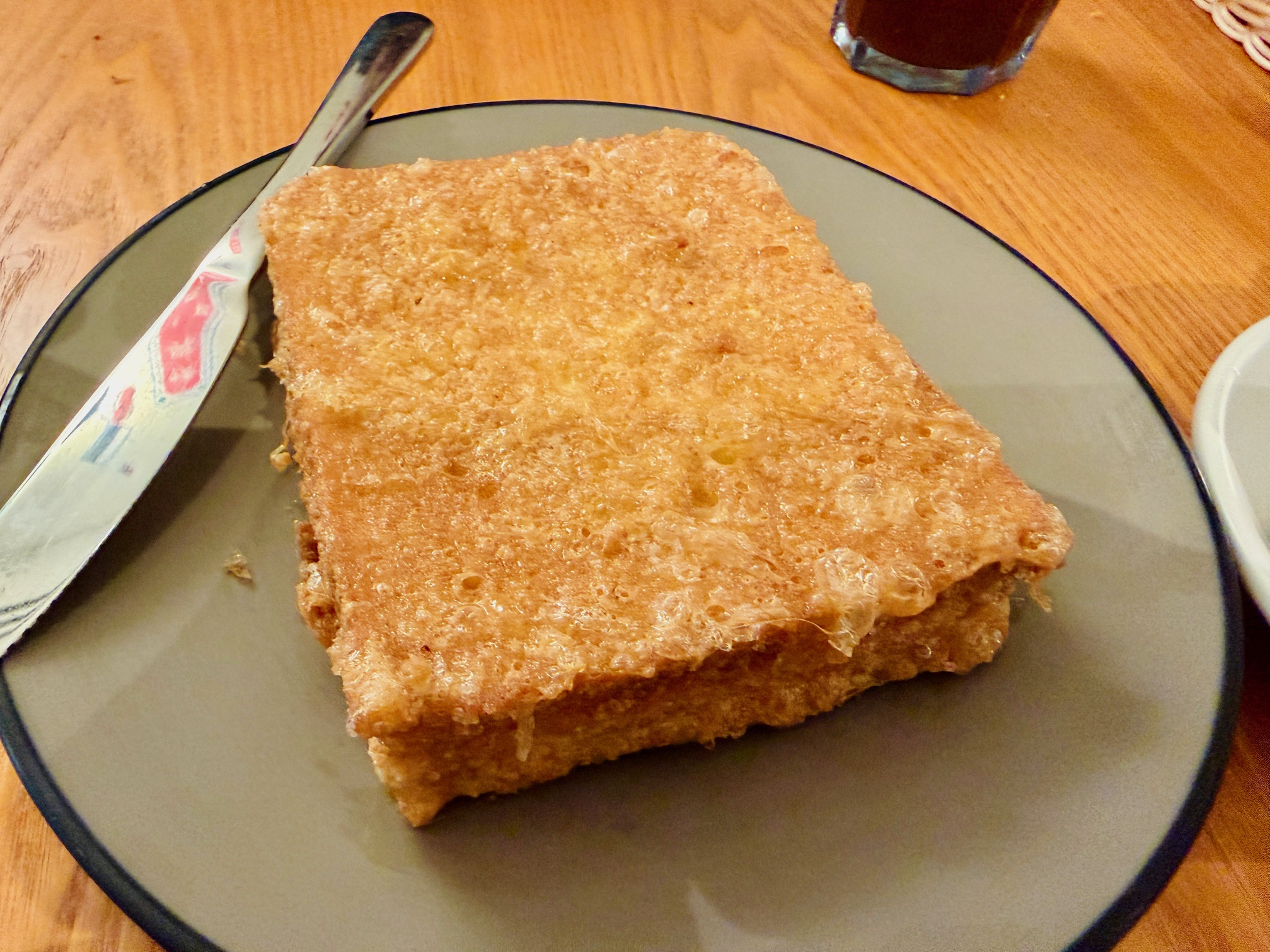
I really expected to love the French toast, another Hong Kong signature, but it didn’t quite hit the spot. Two slices of white bread, joined together with a thin mortar of punchy peanut butter, came fried and brought to the table with a little pack of Anchor butter to melt on top. Jerry said that those cultural references – Anchor butter, builder’s tea – added to that feeling of nostalgia, and I could see where he was coming from.

But for me this was just a little too stodgy, a little too light on the fun considering how many calories were involved. Ironically it needed to be more indulgent: the very nice civil engineer at the next table told me that often this was served with maple syrup, which would have utterly transformed it, but the server told me that they didn’t do tweaks or customisation for anybody, which I respected.

We didn’t finish it, because as an experience it was just a tad too grubby: I didn’t feel, as Marina O’Loughlin did, shame equivalent to waking up married to Gregg Wallace, but perhaps something comparable, like having a mucky dream about Nadine Dorries.

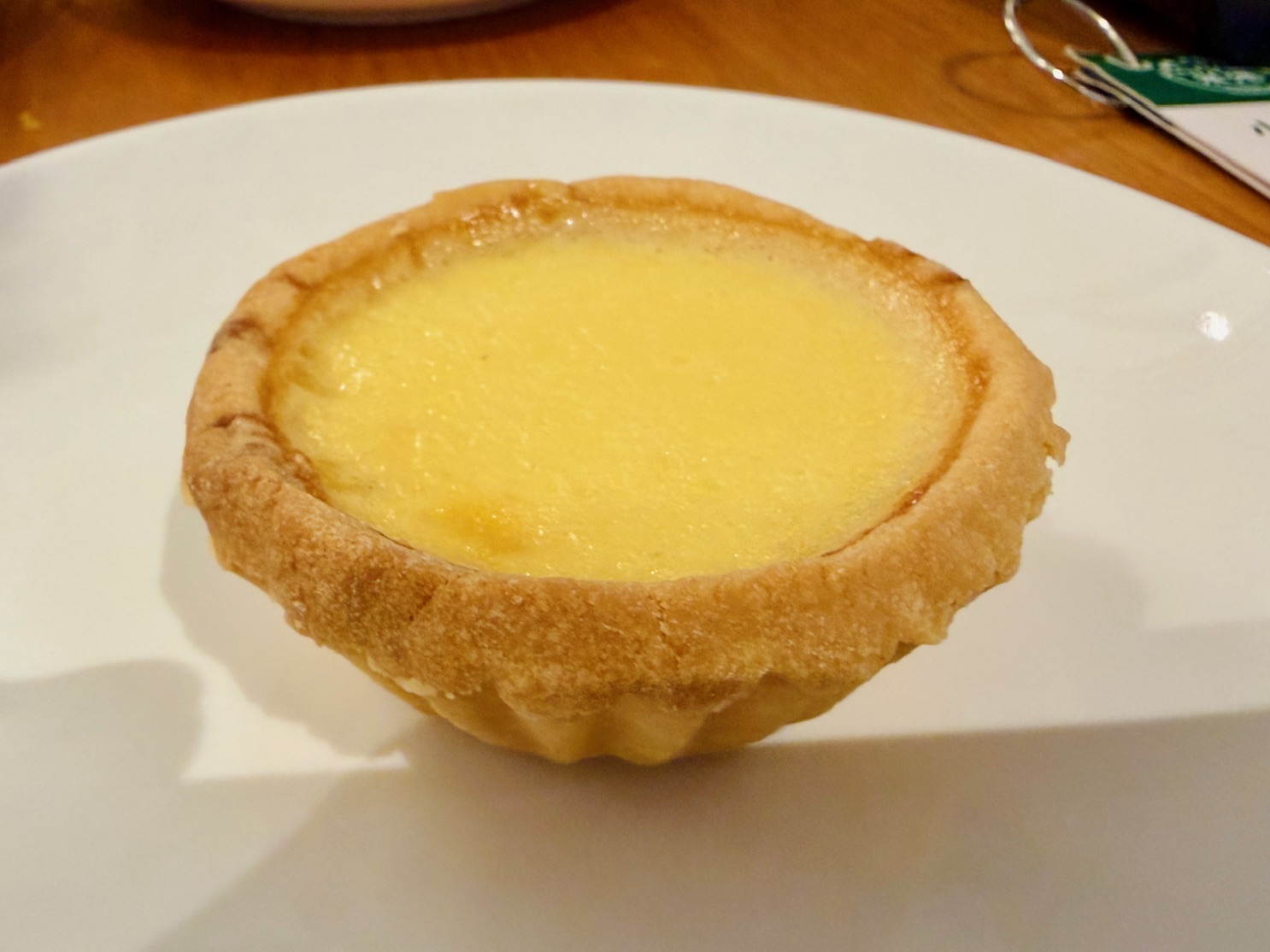
The last of our trio of desserts was a similar experience: I’d asked for an egg tart and been told that we’d have to wait twenty minutes for a fresh batch to come out of the oven. So we did, and when it came it was still warm and the pastry, buttery and short, was truly exemplary.

And yet I wanted to like the filling so much more than I did. I don’t know whether I was expecting the appealing wobble of a pastel de nata, or the nutmeg-dusted propriety of its English relative, but this was more egg white than egg yolk, somewhat lacking in richness and far more like blancmange that had found itself a very nice house. Again I wouldn’t order it again but I’m glad I tried it and for £1.70, only 10p less expensive than the pineapple bun, it was not an expensive mistake.

Our bill for everything came to just over £54, and there were two remarkable things about it. One is that if you order food they knock a very specific 51p off the price of each of your drinks, so they each cost £2.99. The second is that the service charge they add is only 8%: I questioned this with our server saying it wasn’t enough, and he laughed. “Next time you can tip a hundred pounds!” he said.

He also told me – and this might be useful to you, though it wasn’t to me – that if you spend over £40 they have a deal where you can get free parking at the Queens Road Car Park.

I hope the tip is so low because the staff there don’t need to rely on it to be fairly paid, because they very much deserve that. All of them were just terrific, and I know this has a strong whiff of and everyone stood up and clapped, but it’s true: practically every one of them said thank you to Jerry and I as we walked through the restaurant on our way out. I sent the pictures of our food to Zoë later as I was relaxing at Jerry’s with a cup of tea and a medicinal glass of red, and got exactly the reply I was expecting: perhaps you’ll take me some time soon.

This is precisely the kind of review, and the sort of restaurant, I wanted to kick off the year with. Me Kong is an absolute blast, brilliantly run and happens to do some excellent food, and I scoped out enough options on my first visit to give me plenty of food for thought on my second, third and fourth – if I can tear myself away from that chicken in black bean sauce, that is. It is already incredibly busy in a way most Reading restaurants in January would kill for, but I can see that continuing even after the novelty value has died off.

But what I also loved about it was how inclusive it was, how keen it was to tell its story far and wide. That spirit deserves to be returned in kind by Reading’s restaurant-goers. And it also made me a little proud of Reading: that our diverse, happy, tolerant town can still attract people like that and businesses like this, despite all the naysayers and bigots in the comments section of the Reading Chronicle.

I think if you read this blog you’re not like those people, and I think you’d find an awful lot to like at Me Kong. I wouldn’t be at all surprised if, in the months ahead, I see some of you there. I certainly won’t be in Rosa’s Thai, that’s for sure.

Me Kong – 8.4
St Laurence House, Abbey Square, Reading, RG1 3AG
0118 3431543

https://www.facebook.com/MeKongReadingUK/

Since January 2025, Edible Reading is partly supported by subscribers – click here if you want to read more about that, or click below to subscribe. By doing so you enable me to carry on doing what I do, and you also get access to subscriber only content. Whether you’re a subscriber or not, thanks for reading.
Restaurant review: Arbequina, Oxford

Late last Saturday morning I was sitting outside Missing Bean on Turl Street with my great friend Jerry, drinking a gorgeous latte in the summer sun, about to tuck into a pain au chocolat with impeccable lamination; I remember thinking that, on a day like that, there felt like no better place to be than Oxford in the sunshine. The train up from Reading had been packed, and we’d stood in the vestibule making conversation with our fellow captives, two young polite Swedes with perfect teeth and an Australian who had fought her way there to the loo and, realising how spacious it was, was tempted to lock herself in there for the rest of the trip.

And when we got to Oxford – well, it was a Saturday in August and the weather was fine, so naturally the city was packed. A curious blend, throngs of tourists swarming round Radcliffe Square, the Bodleian and the Covered Market but also packs of graduands, in their gowns, on their way to the Sheldonian Theatre for their final rite of passage. The Oxford year isn’t like the calendar year and this all happened on the very outskirts of it – one academic year ended, another not quite ready to begin, the city reclaimed by residents before the whole thing started again in October.

Nonetheless, from where we were sitting the view was gorgeous, the food and drink were excellent and the people watching was close to unparalleled. I’d asked Jerry if he was free on the off chance at very short notice and had been delighted that he was, and at this point we were barely an hour into what would turn out to be another effortless nine hour chinwag, punctuated by this walk or that, this spot of shopping or another, lunch, coffee, beer garden, train home. Even at the start of the day, I knew it would be a good one: with Jerry, it always was.

But would it be a good lunch? I’d thought carefully about this, because although I always have a wonderful time with Jerry when he joins me for a review I cannot say, hand on heart, that we usually have a good meal. I’m not saying that he’s a jinx, far from it, but I feel guilty that he’s joined me for some of the most middling meals I’ve had for the blog in the last few years. He was the person I took to Zia Lucia for pizza that was nothing more than pleasant, and then he also came with me to Maidenhead’s Storia for much the same experience.

Then to cap it all, the last time we lunched it was in Oxford – at Gee’s, where £200 got you a lot of disappointment. Because Jerry is so lovely, he never resents us marring our time together with mediocre food, which makes him a far better person than me. But I still feel bad about it, and I decided after that lunch in Gee’s that Jerry, more than anyone who comes out on duty with me, deserved a nice one. But where to take him?

The thing is, places I review for the blog probably fall into three categories. There are the ones I expect in advance will be good: these are more likely to happen in places like Oxford, London or Bristol that support a large and thriving restaurant scene. And then there are the places I merely hope will be good, and that hope can run the whole spectrum from reckless optimism to wishful thinking. Don’t get me wrong: I always hope for the best but sometimes, especially in Reading, that hope can border on the blinkered or forlorn.

Originally I was going to take Jerry to the Chester Arms, out off the Iffley Road, which falls into the first category. It’s famous for one thing and one thing only – its enormous steak platter, which comes groaning with handmade chips, cabbage and streaky bacon and béarnaise sauce, which they have been serving up for over fifteen years. I’ve heard about it so many times but never managed to make it there, but as we were deciding where to go Jerry dropped the bombshell: he’d just had a dental implant, so needed something a little less taxing on the molars. Would I mind if we went somewhere else?

So the subject of this week’s review falls into the rarer third category: places I have been, that I remember liking, where the mixture of hope and expectation is more of a balancing act. You don’t so much expect they’ll be good, you more hope that they’re as good as you remember. And Arbequina, the tapas restaurant down the Cowley Road, definitely falls into that category. It’s been there nine years, very much blazing the trail in that part of Oxford, and after getting a rave review in the Guardian the year after it opened it’s stayed out of the limelight, even though it’s one of only two Oxford restaurants to be mentioned in the Michelin guide.

It’s quietly done its thing. No cookbook, no appearance on Saturday Kitchen or Great British Menu, just keeping going and keeping afloat. Growth has been steady and incremental: first it expanded into the neighbouring unit four years ago and then, earlier this year, it announced that it was crowdfunding to open a second site in Oxford’s Covered Market, The council had approached them with an offer – not something that would ever happen here in Reading – and so far the crowdfunder is just over half the way there, with the restaurant still hoping to open the new site later this year.

So yes, Arbequina has history. And I have history with it too, because I’ve been eating there, on and off, for the last eight years or more. Plenty pre-COVID, when I always adored it, but only once, for some reason, since the pandemic ended. That was three and a half years ago, and it sowed seeds of doubt that maybe Arbequina wasn’t the restaurant it used to be. But I should have checked in on it long before now, and ambling across Magdalen Bridge with Jerry, in good time for our lunch reservation, I found myself getting excited about a reunion with somewhere that used to be one of my favourite places.

It’s in the fun part of the Cowley Road, past the restaurants Florence Pugh’s dad used to own, past Spiced Roots, but just before brilliant café Peloton Espresso, or Truck Records, or – far further up – the turning into the food enclave of Magdalen Road. It’s a lovely site that has kept the old shop fronts from the chemist and watchmaker who used to trade there, the tasteful writing in orange sans serif on the glass the only sign of Arbequina’s name. The room inside is lovely, with unpretentious decor, a handful of tables, both low and high, and a long zinc bar where you can sit and watch all the work in the very small open kitchen.

But it was a Saturday in August, and the awning was out, and neither of us could think of anything finer than sitting out on the pavement watching the Cowley Road live and breathe, so we did exactly that. I ordered a rebujito from their cocktail menu – a drink I grew to love in lockdown but which I had for the first time at Arbequina, rather than in Andulusia – and Jerry joined me. It was fresh and zippy, a harmonious blend of the lemon, mint and that savoury note of fino.

The other thing we had right from the off, while we made up our minds about the rest, was Arbequina’s tortilla. I remembered it well enough to know that you simply had to order it, and I also knew from repeated personal experience that sharing a slice felt like a good idea right up to the point where it turned up and you could only eat half of it. So I insisted that we got a couple, and Jerry agreed – partly because he’s just a very agreeable cove and partly because I sold it as about as kind on his teeth as it’s possible to get.

But ‘kind’ undersells it, because it’s a positively indulgent treat and, however good anything else you eat at Arbequina might be, it always sets the standard for other dishes to beat. I had forgotten, over the last three and a bit years, just how good it is, but it was magnificent: so soft, only just structured on the outside and a glorious mess within.

Egg, potato, onions, thyme – that’s all there is to it, but of course that’s a hopelessly reductive way to describe a masterpiece. Jerry did better, dubbing it sumptuous. Why do I never use that word in reviews? Maybe I was waiting for this dish.

Because you could have tortilla in dozens of places, in Spain and in this country, and not approach the brilliance of this. Every forkful but the last was wonderful, and the last was wonderful yet heartbreaking. But I knew that at least not sharing it meant that last forkful took longer to arrive. It was so sweet, so exquisite that I thought I tasted things in it – maybe nutmeg, maybe cinnamon – that weren’t there.

When Ben, the manager who looked after us that day, took our empty dishes away he explained that there really was nothing else in there. The sweetness came from the onions, which were cooked for a mind-blowing twelve hours. When Jerry heard that he said “I don’t envy your gas bill” and the manager smiled. Jerry had accidentally hit on one of the reasons hospitality is so thankless right now, and he meant no harm by it.

That tortilla under our belts, it was time to take a serious look at the menu and plan our assault on it. Many of the dishes I remembered from previous visits – chicken thighs with romesco, or toast thickly spread with ‘nduja and honey – were no longer there, but the menu still read nicely. Just shy of twenty dishes, most of them at or adjacent to a tenner: only one approaching twenty quid and a last, Iberico tenderloin to share, closer to forty.

It didn’t break into sections, or flow quite the way that the menu at, say, RAGÙ did, but it had plenty of potential and so Jerry and I did what I’d done countless times before – made a list of things we definitely wanted to eat, broke it up into waves and decided to order and graze, little and often. And along with that we had a gorgeous white, an Asturian albariño blend with a certain bracing saline quality: I’d chosen it for no other reason than that I’m on holiday in Asturia soon, and fancied getting a sneak preview.

My verdict? Roll on next month. At £45 it was the most expensive white on a very compact list – four reds and four whites, mostly from Spain, and a bigger selection of natural wines from all over. But the markup was far from harsh, because I reckon it would cost you about £20 retail.

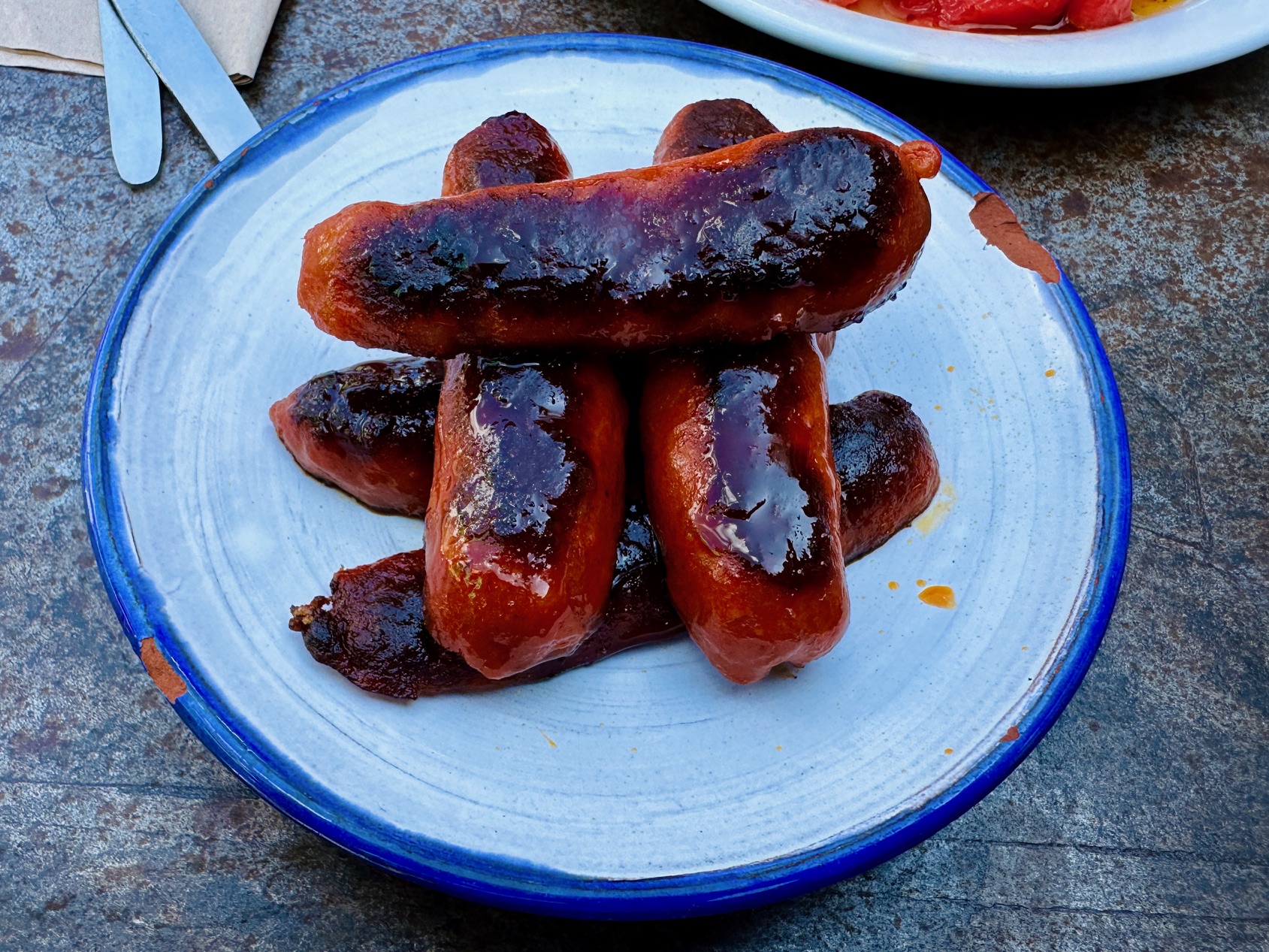
Sometimes things can be delicious because they’re simple, and Arbequina’s chorizo was a classic example. Sliced lengthways and cooked on the plancha until the outsides were caramelised and blackened, it was superlative stuff. Not cooked in wine or cider, not sliced and fancified, just cooked and served. I’d love to know where Arbequina buys it – it’s certainly not Brindisa, because theirs can be a bouncy horror compared to this.

It irked me that they gave you five of them, though, because that’s an especially tricky number to share. Well, with anybody but Jerry, anyway. “Go on, you have the last one” he said. He’s just lovely like that.

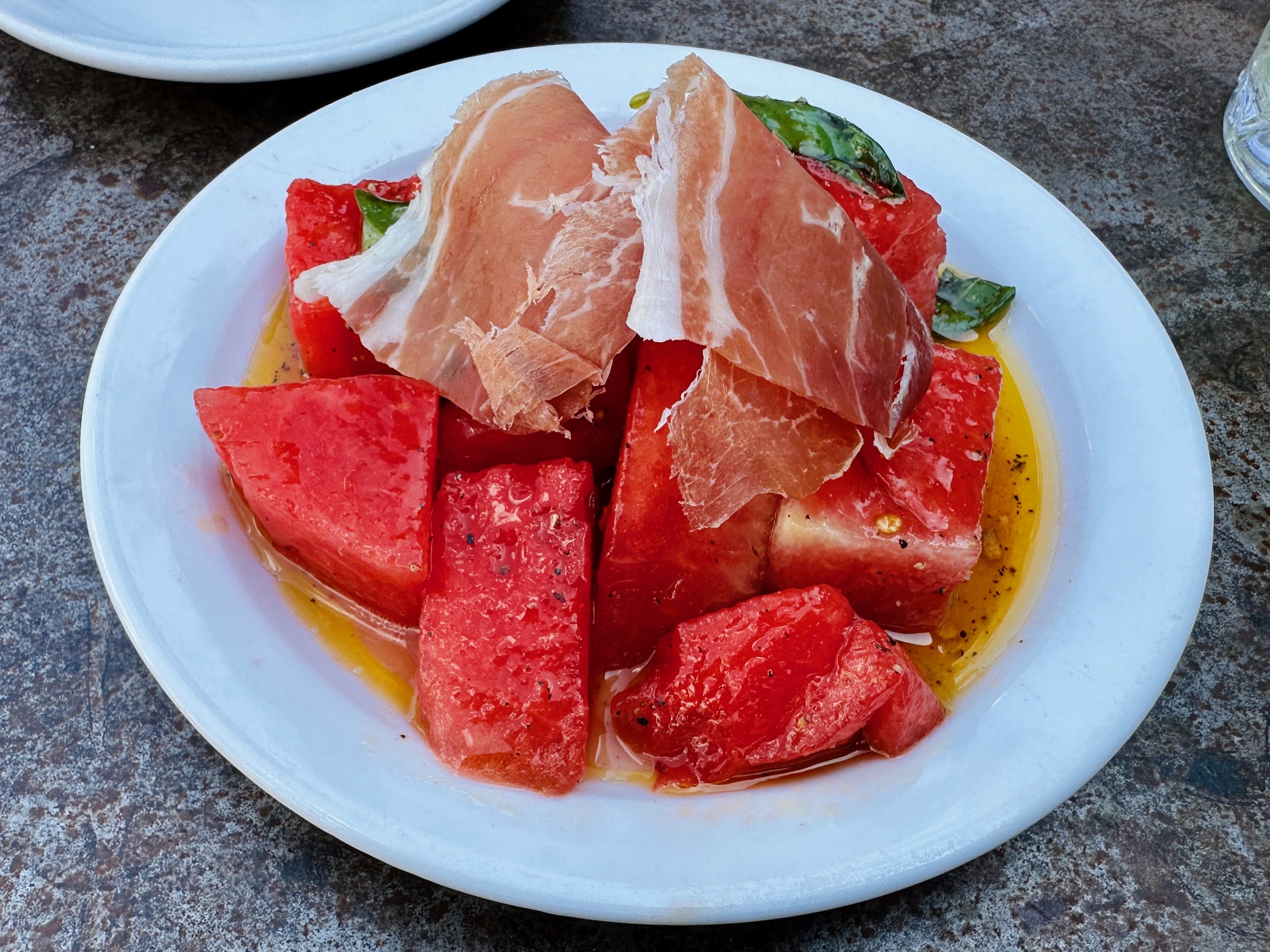
Almost as simple, even more beautiful to look at – and perfect for a sunny al fresco afternoon – Arbequina’s watermelon with jamon was a joyous dish. The melon was plump, sweet and vibrant, and very much the star of the show. But where it wasn’t quite as successful as, say, the similar dish I had at RAGÙ recently, was that the supporting players were perhaps hiding their lights under a bushel somewhat. The two bits of jamon folded on top felt slightly meagre, the honey and chilli rather lurked at the bottom of the plate, shunning the limelight.

But to be fair, if you’re comparing this with the dish at RAGÙ it’s only fair to also note that this was £8, and the Bristol restaurant’s version was over 50% more expensive.

Jerry was in no rush – I always forget that he’s not a trencherman like I am – so at this point we asked the manager if we could hold fire, sip our wine and come back to the menu. And he let us do exactly that, keeping us posted on when the kitchen would take last orders so we could have the leisurely lunch we had in mind. Jerry and I had plenty to catch up on, so we nattered about all sorts, only punctuated by Jerry having an almost Tourettes-like reaction to every single electric scooter going past. I love the multitudes people contain: Jerry is possibly the most affable person I know, but he really hates those electric scooters.

The one dish Jerry really wanted from the menu was Arbequina’s take on an Andalusian classic, berenjanas con miel, or fried aubergine with honey. Now, I wouldn’t have ordered this because I’ve never liked it in Spain – usually the aubergine is sliced thin and fried in a crispy batter, and drizzled in a dark sticky molasses that is a million miles from honey. It takes some doing, in my book, to make aubergine a good thing and this dish, whenever I’ve had it abroad, doesn’t pull it off.

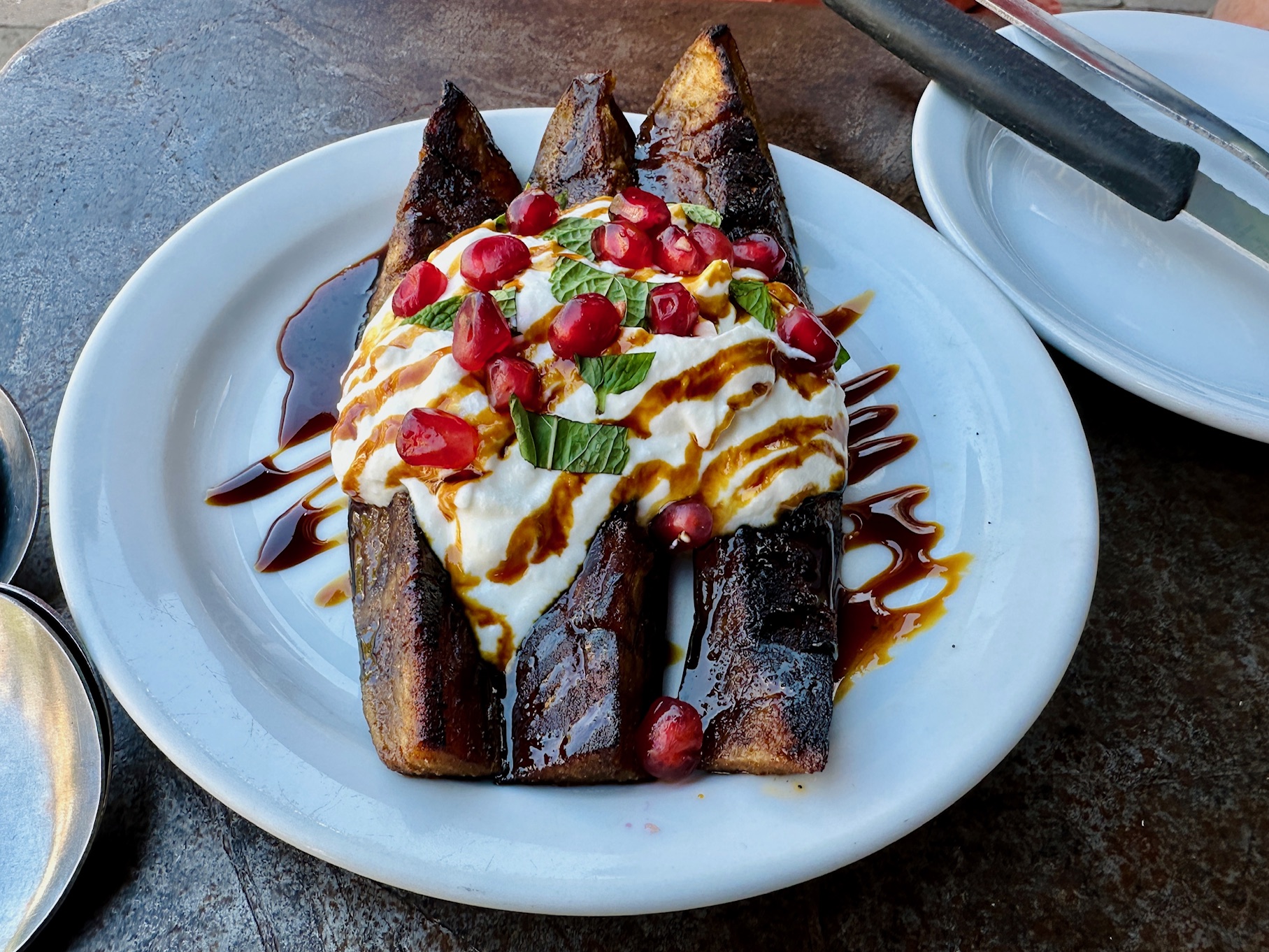
But Arbequina’s version takes everything that could be good about that dish and junks the rest. So we got three soft, caramelised wedges of aubergine, drizzled with an ambrosial molasses without any sour, burnt note, the whole thing bathed in a mild whipped feta – almost more yoghurt than feta – and scattered with pomegranate and torn mint. Have I sold it to you? I hope so. Arbequina sold it to me, both literally and metaphorically. One to add to the vanishingly small list of aubergine dishes I actually like, most of which are on the menu at Kungfu Kitchen.

Our last two savoury dishes were, apart from the tortilla, the highlights of the whole thing for me. I am a terrible rubbernecker in restaurants and I kept seeing a dish go past to other tables which looked eminently snackable, a giant heap of fried, crispy, golden things. But I wasn’t sure what it was, and when I asked the manager I couldn’t explain it well enough – I blame the wine – to get him to tell me what the dish was. But then Jerry wanted the prawns, so it turns out we ordered it by accident.

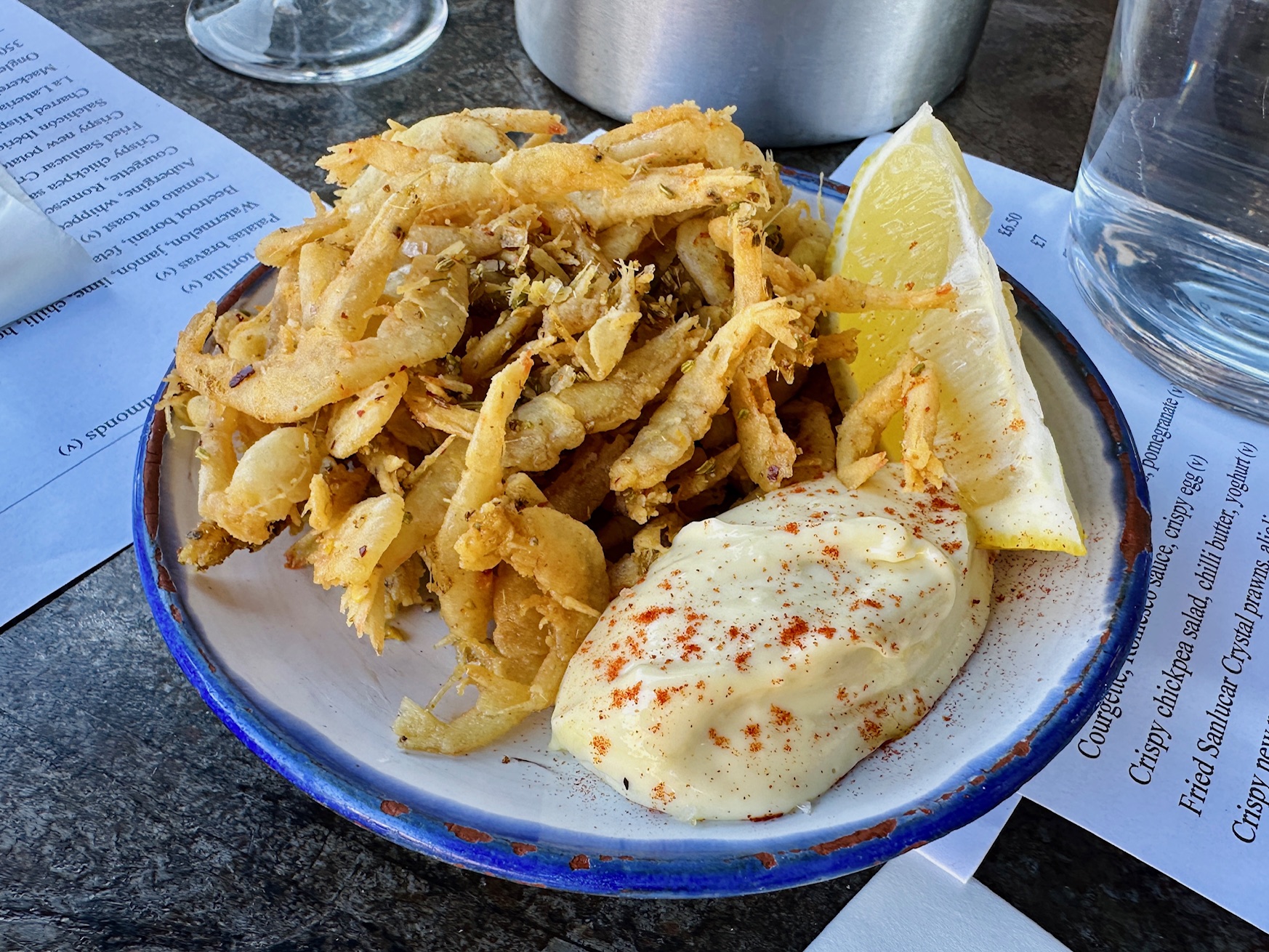
So these, it turns out, are Sanlucar Crystal prawns – little critters, soft shell, fried in a golden coating, dusted with chilli and served with a generous dollop of alioli. Never had them in my life, now fully wondering where they’ve been for the last fifty-one years.

And again the funny thing is that like the aubergine, this wouldn’t normally be in my wheelhouse at all. I don’t like whitebait, can be squeamish about eating things whole. I’m not one of those macho restaurant bloggers who likes to wank on about sucking the head of a prawn – they try to channel Bourdain, but really they’re Swiss Toni – and, with the exception of one meal in Kolae I’ve managed to convince myself that I really don’t want to munch on a prawn’s brains.

So why did I love these so much? I really don’t know, but I did. I keep using the word fresh in this review, or it feels like I do, but that’s what they were – so fresh, so light, so simple, with that spritz of citrus, that whisper-quiet crunch and the ozonic tang of the sea. On the Cowley Road. Now, I love the Cowley Road but I’m not going to pretend for a minute that eating these prawns there was in any way a congruous thing to do.

I hadn’t especially wanted Arbequina’s patatas bravas – I often think they’re a way to needlessly bulk up meals in tapas restaurants – but I was drawn to their more exotic sibling on the menu. And it was another really wise choice: billed as crispy new potatoes with tonnato and salsa verde, it was a real humdinger. The slices of potato, thicker than crisps but very much sharing that lineage, were stellar, a triumph of texture.

The thick slick of tonnato was perfect for dipping and dredging: I didn’t get an enormous amount of tuna from it but I did get plenty of savoury saltiness, so I’m guessing anchovies played a part. And I don’t think salsa verde showed up to this dish at all. In its place, I suppose they had deconstructed it by instead scattering everything with salt, parley and lemon zest. I probably would have preferred a salsa verde, because I love the stuff. But I’d forgotten about the salsa verde when this dish turned up so instead I just thought isn’t adding lemon zest to this clever? They knew better than I did.

By this point we’d been there the best part of an hour and a half, in which time tables had come and gone but the restaurant had kept a happy trickling momentum of customers in the sunshine. The Americans at the table next to us ordered some of that tortilla, and inexplicably left some of it: we decided, on balance, that we didn’t know them well enough to offer to take it off their hands.

We both fancied something from the dessert menu, and I talked Jerry into a red dessert wine which came in a wide, low tumbler and was like nectar. I didn’t catch the name, and my bill doesn’t give the detail, but red dessert wines are always worth a try if you find one, and I suspected it would go better with the chocolate mousse even than a Pedro Ximenez.

Other desserts are available, of course. Arbequina was offering a panna cotta, a Basque cheesecake or the almond-rich wonder that is a Tarta de Santiago. But I think chocolate mousse should be on far more menus than it is, so whenever I see one I order it – and Jerry, being kind to his vulnerable gob, followed suit. It was, as so often, the perfect way to finish a meal.

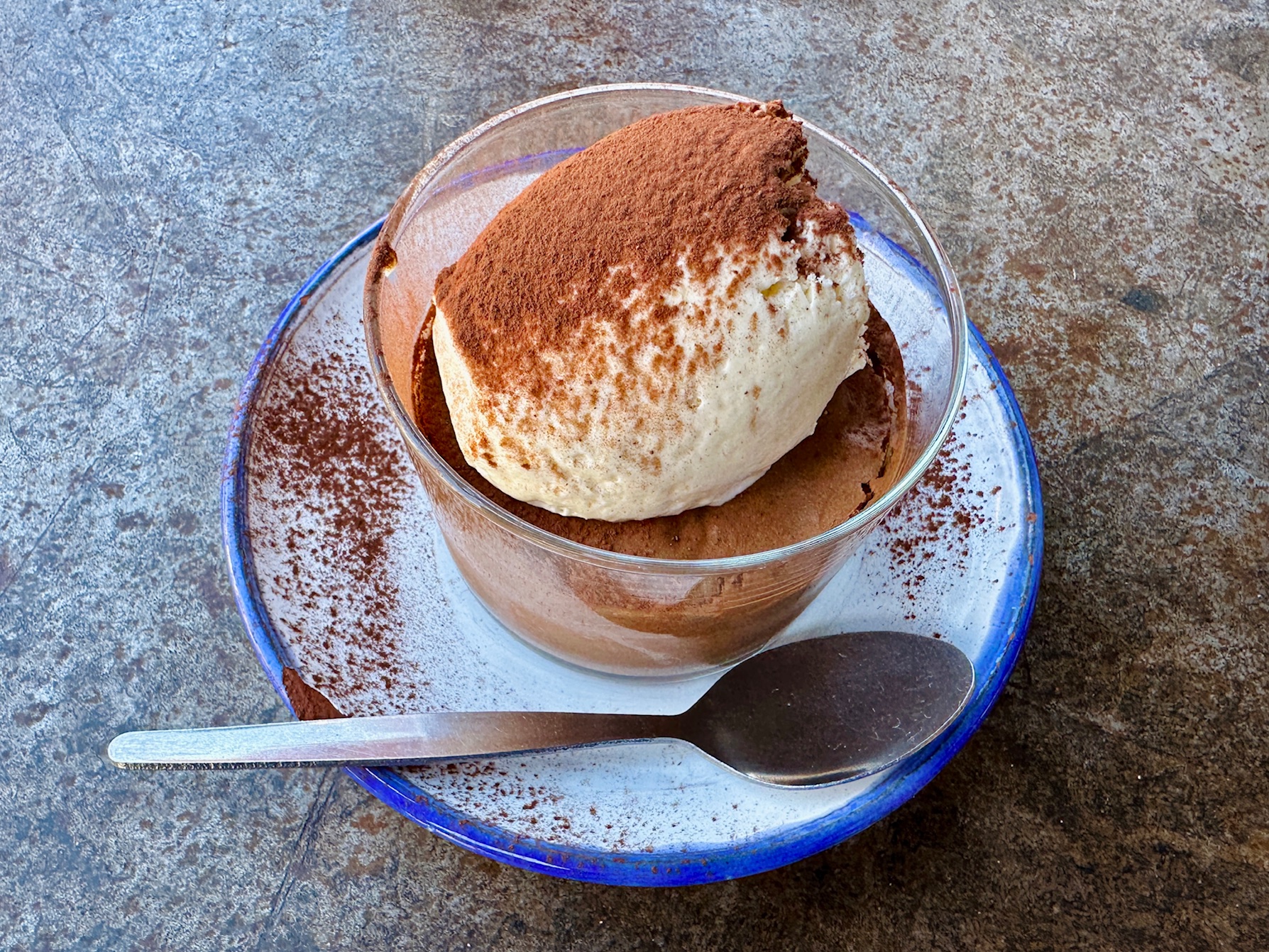
I’ve had Arbequina’s chocolate mousse plenty of times, often enough to track its evolution. It used to be a dense quenelle of the stuff – drizzled with olive oil, scattered with coarse salt, served with a torta de aciete for good measure. But over time, Arbequina’s version of this dish has changed, become less uncompromising, dropped the olive oil and become, on the outside at least, more conventional.

But don’t be fooled: it might come in a glass, the torta de aciete may have been replaced with a dome of crème fraîche but the mousse is still theirs, and still sublime. The salt now runs through the whole thing rather than just finishing it off, and it works beautifully.

It was the right way to end a lunch that had been unassailable in its rightness. Our bill came to just under £175, including tip, and nothing about it had felt out of kilter or anything short of marvellous. We settled up with glad hearts, and were on our way – the grand total of a couple of doors down to have a post-lunch coffee outside Peloton Espresso.

But then another delightful discovery lay in store – a short walk down the Cowley Road and we came to Rectory Road and the Star, the best Oxford pub I’d never been to and another long overdue discovery. It was like a cross between the best things about the Retreat and the Nag’s Head, with a huge handsome beer garden and Steady Rolling Man on tap.

So we grabbed a table, carried on chattering, beers passed, tables of people – and the people watching opportunities they presented – came and went. We had nowhere to be, and every reason to linger. Really it was the best afternoon, and one of the best things about it was knowing that at last, Jerry had got the excellent meal he deserved. Finally, I got him a nice one.

Much later on, we retraced our steps, walking east to west through Oxford, the sun setting in the distance. The pavement outside Arbequina was even busier, with people about to have one kind of outstanding dinner or another. The Cowley Road was alive, the antithesis to the stuffiness we’d encountered right in the centre. “It’s bit like the Oxford Road isn’t it?” said Jerry as we sloped back towards Magdalen Bridge. And I replied that it’s what the Oxford Road could be like, with better landlords and more imaginative restaurateurs. Still, it’s nice to dream.

Arbequina – 8.9
72-74 Cowley Road, Oxford, OX4 1JB
01865 792777

https://arbequina.co.uk

Since January 2025, Edible Reading is partly supported by subscribers – click here if you want to read more about that, or click below to subscribe. By doing so you enable me to carry on doing what I do, and you also get access to subscriber only content. Whether you’re a subscriber or not, thanks for reading.
Restaurant review: Gees, Oxford

In 2026 Gees appointed Nick Galer, formerly of The Miller Of Mansfield, as its new head chef which means this review is no longer current. I have kept it up for posterity and will re-review Gees in due course.

For my money, there are a few finer things in life than a long, leisurely Saturday lunch with a very good friend. Especially when you’re in a fetching room, in a beautiful city, faced with a cocktail, an appealing menu and excellent people watching opportunities. In fact, one of the only things finer than that is to do exactly what I’ve described above, but on a Friday, with four whole days off stretching out in front of you. So I was very happy indeed to find myself sitting in Gees’ gorgeous conservatory on Good Friday with my dear friend Jerry, Easter weekend only just beginning.

By this point, the day had already got off to a magnificent start. The train to Oxford was quiet, deserted almost, and it was the first time in as long as I could remember that it only took a couple of minutes to exit the station, a station whose abysmal design doesn’t seem to have significantly changed in the thirty or more years that I’ve been making that journey. We had a bimble round the Covered Market, we bought bread and cheese for later on, we had a beautiful latte in the Missing Bean on Turl Street, chatting away non-stop. 

Jerry and I had never been to Oxford together before, so we compared our experiences of the city over coffee, looking at the connections between his mental map of the place and mine. I thought how nice it was to introduce him to some of my favourite spots, particularly as if it wasn’t for Jerry (it’s a long story) I might not know Oxford half as well as I do. The weather could’ve been nicer – the day was dry yet overcast, which never paints Oxford’s buildings in their best light – but the company was unimprovable.

I had chosen Gees for our lunch because it had been on my to-do list for quite some time. A glorious spot on the Banbury Road mainly famous for its conservatory slash greenhouse dining room, there’s been a restaurant on the site for nearly forty years, a mind-boggling record. It started out as Raymond Blanc’s restaurant, with John Burton Race in the kitchen, then five years later it became Gees and has stayed that way ever since. It’s now part of The Oxford Collection, a small and exclusive group including The Old Bank and Old Parsonage hotels, and their respective restaurants.

That length of tenure means that Gees was already trading when I turned up at Oxford in 1992, sporting terrible spectacles and even worse clothes, to study my degree alongside some of the brightest people I have ever met (and some of the thickest too, would you believe). Not, of course, that I would’ve eaten there then. As I’ve said before, my meals out were limited to regular trips to the fish and chip shop on Carfax, and the rest of the time I was either heating up an M&S chili con carne in the microwave of our communal kitchen, or enjoying – and I use that word as loosely as humanly possible – the food in my college halls.

Many Oxford colleges have an excellent reputation for food, as it happens. They also have shitloads of land and investments, and in one case their own deer park. My college had none of those things, which is probably why they accepted the likes of me: the food there was purgatorial. So Gees was for a long time a kind of mythical place, the sort of restaurant other people went to, people with wealthy parents and substantial allowances. It wasn’t until much later, probably twenty years or so later, that I went there, just once.

That too was in another life, with my then wife and a bunch of our friends who turned out, when push came to shove, to be her friends. I don’t remember much about that meal, except that it was deeply convivial, but I do remember following it up with a lot of drinks in one place or another and stopping on the way to the station for a shameful KFC. I always intended to return to Gees, but somehow I never did.

I was quickly reminded, as we stepped through the door, what an attractive place it is. Most of the seating is indeed in that big conservatory, with its banquettes, leather-backed chairs and handsome tiled floor, and it makes for a great place to eat. Even on a cloudy day the room fills with light, and something about that light, the room’s airiness, the bustle of its supremely efficient staff and the chatter from prosperous neighbouring diners created a truly brilliant atmosphere. If I gave out ratings for rooms alone, Gees would take some beating. 

Gees’ menu is sort of modern European, with something from everywhere. Oysters and in-season Wye Valley asparagus were on offer, as were Serrano ham croquetas and braised octopus with romesco. But Italian dishes and ingredients tend to dominate – pizzetta, pasta, burrata, aubergine parmigiana, the list goes on. It’s as tempting a menu as any I’ve seen on my travels for a while, and on another day I could have ordered almost anything on it.

I think I read somewhere that Gees was influenced by the River Cafe, and I could imagine that in both the menu and the surroundings. Not that I’ve ever been to the River Cafe: for all the rave reviews I’ve read, paying nearly forty pounds for an asparagus starter has always been beyond my means; that said, I’m sure some of my Oxford contemporaries have been more than once. Gees’ asparagus was perhaps more keenly priced at under twelve pounds. Starters more generally weighed in at between ten and twenty pounds, pasta dishes close to twenty and main courses between eighteen and thirty-five. Not River Cafe levels, but not cheap either.

Another thing to love about an unhurried lunch is the possibility of an aperitif. So Jerry had something which the bill described as a “Bergamont Spritz”. It’s not in the drinks menu online, so I’m assuming it contained gin, some kind of sparkling wine, bergamot and – surely – a typo. I had something called a Contessa Negroni which swapped out Campari for Aperol in the classic, simple, three ingredient cocktail. You might wonder why this has never been done before, and now I can tell you: because it doesn’t taste as nice as a proper negroni.

That was all forgivable, though, because the bar snack we ordered to go with them was a real cracker – little dabs of anchovy sandwiched between two sage leaves, battered and fried. These were outrageously good, salty little treats and a really excellent idea. A far better idea than putting Aperol in a negroni, anyway. I wasn’t to realise, at that point, that my bar snack would be far and away the best thing either of us ate all day, so instead I sipped my cocktail, enjoyed the surroundings and felt pleased with the course the day was taking. At all the tables around me, people were doing much the same.

The problem is that after that, despite the room being lovely and our bottle of txakoli being cold, fresh and zippy it felt to me like Gee’s menu delivered wobble after wobble. Take my starter, which was described as venison tonnato. Now, I thought that sounded like an interesting idea: a vitello tonnato swapping our the veal for venison could, after all, possibly work. And it might still be an interesting idea, but it wasn’t in a million years what this dish was.

Instead of thinly sliced venison, you got a piece of venison fillet, cooked through without pinkness, thickly sliced and drizzled with a pale sauce that contained absolutely no tuna. Not the slightest hint of it, not even a whisper of tuna. I don’t know what it tasted of – not a lot, really – but it meant that both the main ingredients of vitello tonnato were missing, replaced with things that were damage not homage. And then there was a big pile of salad, because this starter cost fifteen pounds and they had to find ways to distract a paying customer from realising that this wasn’t in any way what they had ordered.

Ordering a salad by mistake seemed to be quite an Oxford thing: I was reminded of a similar incident at Branca when I went there earlier in the year. I didn’t mind that then, because my stealth salad at Branca was still an excellent dish. This, not so much. If it had been called “venison salad with tonnato dressing”, while not 100% accurate, I’d have had fewer quibbles. Of course, if it had been called that I’d have ordered something else.

The problem is that not only is stealth salad seemingly an Oxford thing, it’s also – to paraphrase Dr Dre – a Gees thing. Jerry’s soft shell crab with saffron aioli was nice enough, but you get an idea even from the picture below of how diddy it was. Again, salad appeared mainly to be there to fill negative space, a kind of gastronomic find the lady deception. A different salad to that accompanying my starter, with shaved fennel and olive oil. Again, not mentioned on the menu but, in truth, a large part of proceedings. Jerry gave me a forkful of his crab. There was so little that I felt guilty taking it.

Jerry is on some kind of medication that reduces his appetite (although, gladly, not where booze is concerned). He quite enjoyed this, but I think you’d have to be on that medication to find it enough. And Jerry’s drug regime came in even handier with his main course: butterflied sardines, which apparently came with tomato, sumac pickled onions and chermoula.

I try not to talk about value much in restaurant reviews these days: things cost what they cost, and restaurants need to make money. So for me to mention it, pricing has to verge on the egregious and, at twenty-two pounds, that’s why I’m bringing it up here. Here they are in their glory, all five of them. This, to me, looks like a starter. Is that all there is? you might ask. Where’s the tomato?

Well have no fear, because this dish – the generosity never starts – came with tomatoes and radicchio. Rocket, too, to match the rocket dumped in the centre of the Maltese Cross of disappointment that was those sardines. Double rocket, the treat nobody ever asked for: still, it beats pea shoots, I suppose. Why did the menu not mention that this was yet another salad? Was Gees just a glorified salad bar, and nobody had told us? Was it north Oxford’s upmarket tribute to Harvester, Gregg Wallace’s favourite restaurant? It was a puzzle and no mistake.

Yet I couldn’t help feeling that really we had just ordered exceptionally badly, because the dishes arriving at other tables looked more like actual food. A tall, substantial burger was brought to one of our neighbours, with a decent-looking portion of chips. Lamb cutlets piled high on a plate were put in front of the chap next to him, although in fairness they were on top of some little gem lettuce and peas. See? Another salad.

My main gave Gees one last chance to dish up something more convincing. And I’ll say this for my chicken cacciatore: it was not a salad. But it wasn’t great either. The pool of stretchy polenta was pleasant enough: I would probably always choose mash over polenta, but the menu clearly advertised it, so I couldn’t complain. And I did really love the sauce my chicken came in: rich with tomato, sharp with capers, studded with judiciously-cooked carrots and celery, a vegetable I always think is underrated in this context.

The chicken was the problem. I’m really partial to chicken thighs on the bone, but you have to achieve one of two things and ideally both. A crispy skin, if you can get that right, is a truly wondrous thing. But I would pass on that if the chicken is so well cooked that it flees the bone at speed, and breaks into strands. That’s when chicken thighs become properly magical. If Gees had achieved that the chicken, with that sauce and some of the polenta (if you must) would have made for splendid mouthful after splendid mouthful.

But to get both of those wrong, to have flaccid skin and firm, almost rubbery meat that needed to be prized away from the bone? That’s really not great. And to charge twenty-eight pounds for two undercooked chicken thighs that weren’t fit to grace the sauce they came in? Cheeky doesn’t even come close.

No side dish could rescue this sorry affair, though in Gees’ defence their braised leeks in feta and dill, served warm, were delightful. I’m no fan of dill, generally, yet I loved this dish and at six pounds it was better, and better value, than nearly anything else we ate. About the same size as those sardines too, come to think of it. It was a beautiful lipstick – applied to a pig, yes, but a beautiful lipstick nonetheless.

Would you have stayed for dessert? We nearly didn’t but felt like we had to see it through, like a disappointing box set. To Gees’ credit I asked who they bought their ice cream from and was told they made it in house. That probably swung it, and Jerry was delighted with his affogato, served with Pedro Ximenez.

I mean, again, if I’m being a stickler (which I am), if you swap the espresso for PX then what you have might be lovely but it’s no longer an affogato, just as the negroni wasn’t a negroni, the tonnato not a tonnato. Gees seemed to have taken Lewis Carroll, another Oxford type, very seriously when he wrote in Through The Looking Glass that “When I choose a word, it means just what I choose it to mean”. Words, salad, word salad: it was all the same to Gees. Let’s call the whole thing off.

To close on a damp squib of faint praise, Gees’ ice cream is pleasant stuff. I tried vanilla and chocolate – don’t expect any leftfield flavours – and both were very good. Smooth, no ice crystals, plenty of specks in the vanilla and an excellent balanced depth in the chocolate. Two scoops for eight pounds didn’t feel like highway robbery, although it made the nine quid Gees charged for Jerry’s single scoop with a slug of Pedro Ximenez seem decidedly impudent.

What else is there to say? The whole meal, service included, came to two hundred pounds between the two of us, including an optional 13.5% service charge. The cognitive dissonance is strong in this one, because I had a lovely time and the best of company, the room is hard to fault and the service is excellent. You almost enter some kind of trance where despite the preponderance of foliage on the plate and the underwhelming nature of so much of what you eat, you still have a very nice time.

It was, food aside, as enjoyable a lunch as I’ve had this year. Just think how much of a riot we’d have had if the food was at the standard of somewhere like Upstairs At Landrace, a restaurant considerably more reasonably priced than Gees! And there’s the elephant in the conservatory, the question of cost and value. Because when the bill arrives the spell is broken, and you think about what a hundred pounds could buy you anywhere else.

I have to hand it to Gees because they are very popular and an awful lot of people have become very taken with the place. But unless we ordered very poorly, I do have to ask myself: how on earth did Gees manage that? I’m starting to feel bad for Jerry because whenever he comes out with me on duty, however nice a time we have, the food seems to be pricey and middling. Take Zia Lucia, or Storia in Maidenhead: the poor guy can’t catch a break. I will have to think much more carefully about our next meal out, because Jerry deserves some food as brilliant as he is.

To make amends, after we finished our lunch I took Jerry to the Rose & Crown on North Parade, my very favourite Oxford pub. We sat in the back room and polished off a couple of pints, and I told him how I used to drink there thirty years ago, and how it almost felt like it hadn’t changed a bit. A lovely international group – three French, one Slovenian – perched on the end of our table and we ended up in conversation about all sorts of things: the English; Brexit (always Brexit); where to eat in Montpellier; Oxford’s best restaurants, you name it. None of them mentioned Gees in that context, and I can’t say I blame them.

It was only later that I realised that the Rose & Crown, like Gees, has been under the same management since the Eighties, which means that those first drinks I had there, fresh out of university, were under the same landlords looking after me and my very good friend over thirty years later. That gave me a warm feeling in a way that nothing I ate that day managed, however lovely Gees seemed on paper. Forty years, whatever way you look at it, is one hell of an achievement, even in a city which has a track record of keeping establishments alive for many, many centuries. I am glad there are still institutions like Gees and the Rose & Crown in Oxford. But when I go back, only one of them is on my list for a return visit.

Gees – 6.5
61-63 Banbury Road, Oxford, OX2 6PE
01865 553540

https://www.geesrestaurant.co.uk

Since January 2025, Edible Reading is partly supported by subscribers – click here if you want to read more about that, or click below to subscribe. By doing so you enable me to carry on doing what I do, and you also get access to subscriber only content. Whether you’re a subscriber or not, thanks for reading.