Lazeez

Lazeez closed in February 2018, and will be replaced by a new restaurant, apparently called Afghan. I’ve left this review up for posterity.

Pardon the pun, but eating out is often about your gut reaction, and some of the oddest meals I’ve had while reviewing have been ones where my head tells me one thing and my gut tells me another.

Usually, that happens in fancy, precise, pristine places: my head admires the artful arrangement of ingredients on the plate and the provenance (which always, however well-intentioned, has a whiff of name-dropping about it) on the menu, but my gut tells me this is food for people who love to tell people where they’ve eaten, rather than food for people who love to eat. Lazeez, a newish Pakistani restaurant down the Wokingham Road, is that unusual beast, the same phenomenon in reverse. I can see lots of reasons why I would dislike my meal there, so how come I didn’t?

I went partly because despite being three months old it had nearly no digital footprint whatsoever – no reviews, nothing on TripAdvisor, although I’ve been told by one reader that it was easily as good as House Of Flavours. But also, I was also intrigued by the notion of a Pakistani restaurant, as I don’t think Reading has any others which specifically identify themselves as such. In a rare piece of research not involving Wikipedia, I even asked a colleague at work, currently planning his wedding in Islamabad, what Pakistani food is like. “Pretty much the same as Indian”, he said.

It’s an interesting place to open a restaurant, two doors down from Miah’s Garden Of Gulab, which either demonstrates huge confidence or a fundamental lack of market research (even now, having eaten there, I can’t decide which it is). But it’s quite a nice room, a big square with booths and banquettes round the edge and tables in the middle. One interior wall has rather tasteful brick-effect tiles, another has very attractive lattice-work with lighting panels behind it which, disconcertingly, change colour on a regular basis. I can imagine on another, busier, night it could all be a bit much, but on a quiet weekday night (and it was quiet – we were the only table there) I rather liked it while at the same time knowing I shouldn’t. It was a disconnected feeling I had to get used to.

Certainly the menu was compact by the standards of Indian restaurants I’ve been to: no poppadoms on offer, a smallish selection of starters, a similarly manageable range of mains (grilled, chicken, lamb or vegetarian) and a handful of specials, including lamb trotters – maybe another time, eh? – and the only seafood main on the entire menu. Two other things jumped out from the menu. One is that the restaurant doesn’t have an alcohol licence, which I suppose will rule it out for some people but didn’t bother me. The other, more significantly, is how inexpensive everything is: most mains hover around the six pound mark, the costliest starter is four pounds.

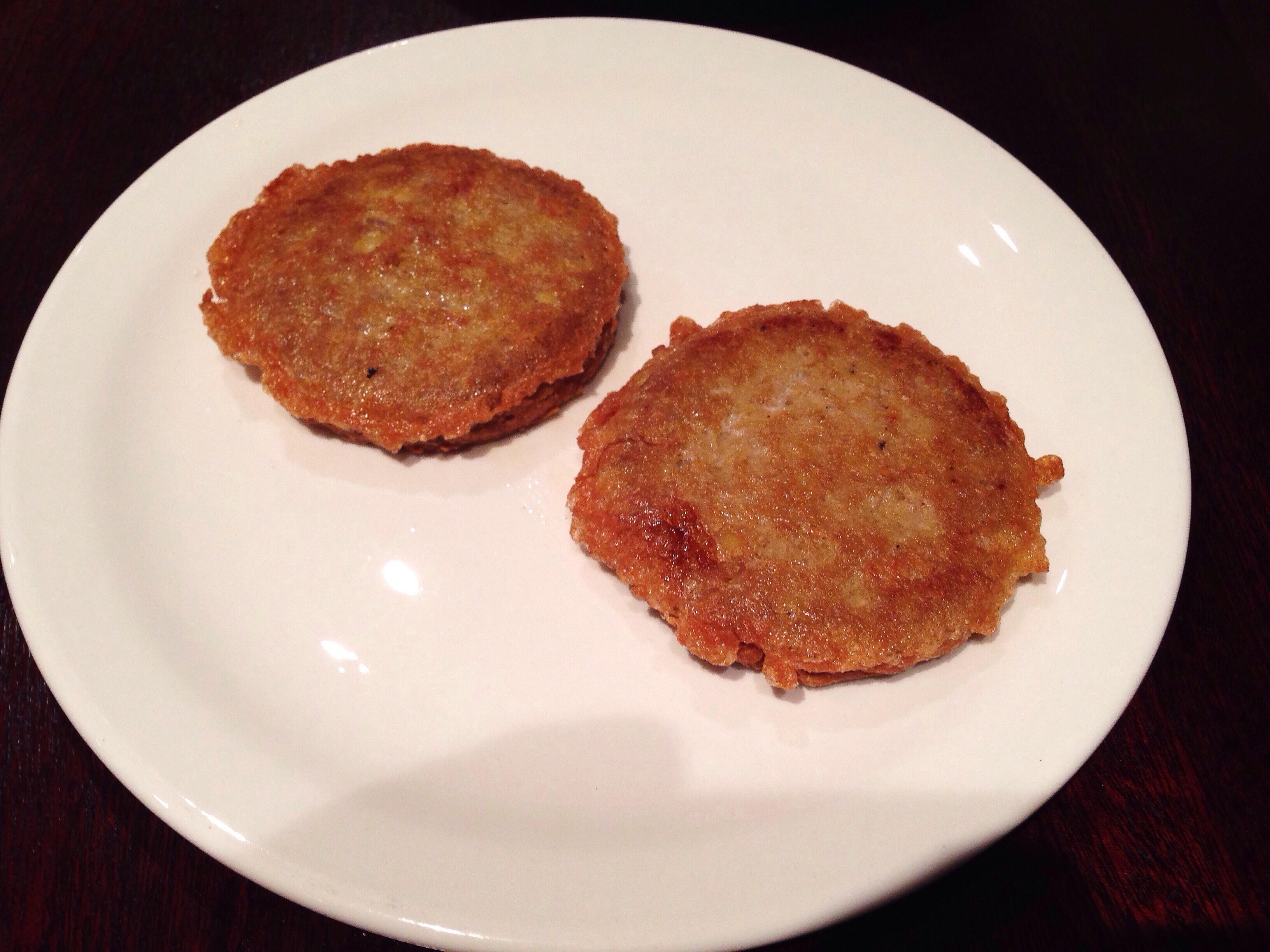
So, cheap and nasty or cheap and cheerful? The starters were the first evidence. Shami kebab, which I ordered as a change from the usual sheekh kebab, sounded interesting – a mixture of finely minced lamb and ground dal. I liked it more in theory than in practice – two round pucks which had a vague flavour of lamb but none of the texture that goes with it, and a heat which went from “meh” to “my word” by the end of the dish. If anything they were more like spicy rissoles, which sounds more like a euphemism for a medical complaint than something you’d clamour to pick off a menu.
LazeezShami

Chicken tikka was a more traditional choice and was better, if not perfect. I was a bit surprised by how neatly cylindrical it all was, cut into equal sized chunks by someone very good at cutting things into small chunks (a trick which was to be repeated with the main courses). It was quite tasty, if a little bit lacking in the tenderness of the best examples I’ve had in Reading. I couldn’t decide how I felt about it, torn between “this is only four pounds!” and “well, it’s only four pounds”. Both starters came with a perfectly decent selection of perfectly decent raita, mango chutney and something a bit like a hot chilli mint sauce.

LazeezTikka

No sooner had the starters left than the mains, two sizzling karahi dishes on little wooden stands, were whisked to the table. This is one of my pet hates in any restaurant, and more than anything it made me wonder if Lazeez quite got how restaurants are meant to work. I understand it must be dull standing around in a kitchen when the room out front only has two customers in it, but that’s no excuse to curtail what’s meant to be a pleasant, leisurely evening for those two customers. Still, I could hardly send them away and again, I found myself thinking that given the price perhaps I was the one with the wrong expectations.

Karahi chicken was pleasant. Chunks of chicken and, I think, some little shreds of chicken were in there and I spotted a few little batons of ginger on top. The sauce was red, a little spiced but pretty unremarkable. The whole thing was a little well-mannered for me, as if someone had fitted a normal dish with a silencer. It was also ever so slightly on the small side and the pieces of chicken were also a tad diddy, especially if you’re used to the massive pieces in many Indian restaurants where you have to cut them in half or risk somebody having to perform the Heimlich manoeuvre. Still, at the risk of repeating myself, it was six quid.

The star of the night was the bhindi gosht – lamb curry with okra. The okra was what made it – sticky rather than slimy, still firm and really quite delicious with the gently spiced sauce and the sweet shreds of onion. This managed to be subtle rather than bland, in contrast to the karahi chicken which got that balance wrong. But again the pieces of lamb, though tender and soft, were small and few and far between. Both dishes, the karahi chicken and the bhindi gosht, were shiny with oil to the extent where I had slight misgivings.
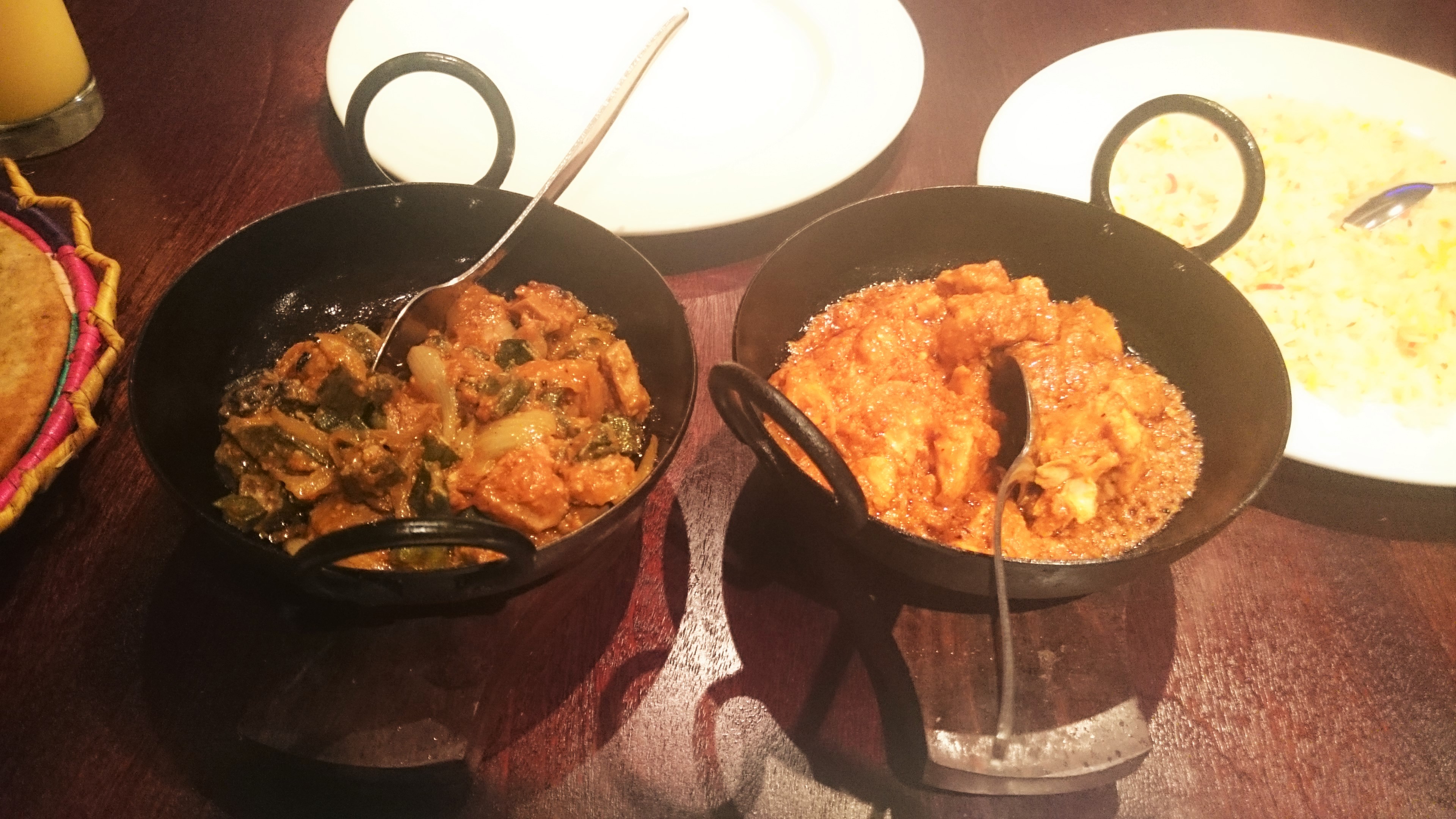
LazeezMains

Rice was rice, no surprises there. There wasn’t enough sauce to need it all. More of a clanger was the aloo paratha. I love paratha; I know it’s unhealthy but there’s something about those buttery layers of bread that makes me come over all unnecessary, and the idea of such a thing stuffed with potato really appealed to me. Unfortunately, what came out was a stodgy, oily thing, the shape of a frisbee, full of cubes of potato and peas as you’d find in the middle of a samosa. Arg and Lydia from The Only Way Is Essex are switching on the Broad Street Mall lights this weekend, but even those two combined are not quite as dense as that paratha was. We abandoned half.

On a more positive note, possibly due to the lack of an alcohol licence, Lazeez doesn’t just do glasses of mango lassi. Oh no. They do a jug of the stuff. For seven pounds. It’s not every day you can go into a restaurant and say “and I’ll have a carafe of the mango lassi” and they deserve some credit for that alone (it was very nice too, to the extent where I wish I’d skipped the shami kebab and had a jug to myself). I should also say that service was lovely, if a tad eccentric. Obviously there are no real excuses for a meal which took – no word of a lie – forty minutes from start to finish, but the waiter was very friendly and genuinely interested in us, what we thought of the food and the Indian restaurants around town. Dinner for two came to thirty-two pounds, not including tip. We didn’t have dessert, mainly because my stomach felt more oiled up than a Chippendale.

Sometimes the act of writing a review is the final thing that crystallises my view of a restaurant. You’d think that would happen here, and yet despite all that’s gone before I feel a certain warmth towards Lazeez. Yes, there were lots of mistakes – the timing, the execution of some of the dishes, their oiliness – and yet it feels like Lazeez is a chrysalis from which a good restaurant might at some point emerge. I even wondered whether I was really in the target market for Lazeez or whether it’s aimed towards the Pakistani community in Reading (it wouldn’t necessarily surprise me; on my way home I wandered into Home Taste across the road and asked if I could look at a menu. “Not unless you’re learning Chinese” grinned the man behind the counter).

Crucially, what might keep Lazeez going is that it fills a gap in the market; it’s cheaper than most of its competitors and it’s an easier, more casual place to grab dinner (especially before going out drinking, or if you’re with teetotallers) than Miah’s. Put it this way, given a choice between the two I’d still go to Lazeez nine times out of ten, even though ten times out of ten my head would probably tell me that Miah’s is a “better restaurant”. But that’s how it goes: the gut wants what the gut wants, after all.

Lazeez – 6.7
146a Wokingham Road, RG6 1JL
0118 9668802

http://www.lazeezrestaurant.co.uk/

Miah’s Garden Of Gulab

N.B. After losing its alcohol licence because it hired illegal workers, and after failing to transfer the licence from father to son, Miah’s Garden Of Gulab closed in 2020. A new restaurant called Gulab Indian Kitchen has opened on the same site. It is not clear whether there are any links between this and the previous restaurant. I’ve left this review up for posterity.

There’s been lots of change in the world of Reading restaurants recently. Wolf, offering “Italian street food” – if such a thing exists, and I have to say I’m skeptical – opened not long ago on Broad Street. Not far away, lunchtime sushi and noodle joint Itsu opens soon in the spot at the John Lewis end of Queen Victoria Street; even if you don’t like sushi it’s got to beat the crimes against the English language perpetrated by previous occupant “Fone Bitz”. A short stroll down Chain Street, Argentine chain CAU is now open for business in its innovative split level pitch next to the Holybrook. And if you stroll past CAU and into the Oracle, Manhattan Coffee Company is now trading on the top floor (an independent in the Oracle! I know! How did they pull that off?).

The thing I notice most often about new places is that they’re packed. Every time I go past CAU it’s rammed, often on both floors (it’s not the biggest of restaurants, and seems even smaller when it’s full of people). We like novelty value – we upgrade our phones every couple of years and, it seems, we enjoy upgrading our restaurants too. I like shiny new things as much as the next person, but something about this troubles me: what about all the tried and tested stalwarts? It’s a fine line between classic and dated – not moving with the times is one thing, but being left behind by the sheer rate of change is another.

For many years the mainstays of Reading’s Indian restaurant scene were Bina and Standard Tandoori in Caversham and the Garden Of Gulab on the Wokingham Road (and the much-missed Sardar Palace on Cemetery Junction – mind-boggling décor and bottles of Chateauneuf du Pape for fifteen quid: I loved it there). Annual reviews in the local paper, references to John Madejski hunkering down for dinner, the occasional award – their primacy was undisputed. But recently something else has changed: when GetReading published the shortlist for its inaugural curry awards earlier this year none of them was anywhere to be seen. In their place were the pretenders to the throne: River Spice, Bhoj, House Of Flavours.

House Of Flavours was the eventual winner and it’s hard to deny that it deserves its success; it’s a brilliantly run restaurant, the food’s immaculate and the location is perfect. But I couldn’t help thinking about the old guard. Surely they hadn’t gone bad overnight? I always complain about how people should use it or lose it (a sentiment as true of South Street Arts Centre, incidentally, as it is of I Love Paella) but what if I didn’t go to a place like Garden Of Gulab only to find one day that it wasn’t there any more? So my choice this week was made.

The interior conforms to the classic formula of many Indian restaurants: the bar at the front, with a small waiting area for people collecting takeaway, and the dining rooms beyond. There are three in total and all of them looked clean, presentable and a little dated, although the one at the front was reassuringly busy for a weekday night. It makes much of its awards and certificates, which are all displayed in the waiting area, and in fairness they win them on an annual basis: shortlisted for the British Curry Awards year after year and with a couple of TripAdvisor certificates too. I was determined to give the menu a chance to impress me by moving away from the standards and seeing what the kitchen had dreamed up to supplement them. There was plenty there: a full range of interesting-sounding combinations (some with pictures of the food, which wasn’t as heinous as it might sound) and a couple of very credible vegetarian options.

First though, the traditional poppadoms: light and warm, served with no less than six different dips. Miah’s seems proud of these, although they do charge you a quid for the privilege which feels slightly cheeky. Of them the mango chutney was quite thin and unremarkable, as was the raita. My favourites were the lime pickle – sharp, sour, almost salty – and a beautiful heap of grated coconut and carrot which was sweet and savoury all at once. Things had started well, although that extra quid lodged in the gullet somewhat.

GulabPop

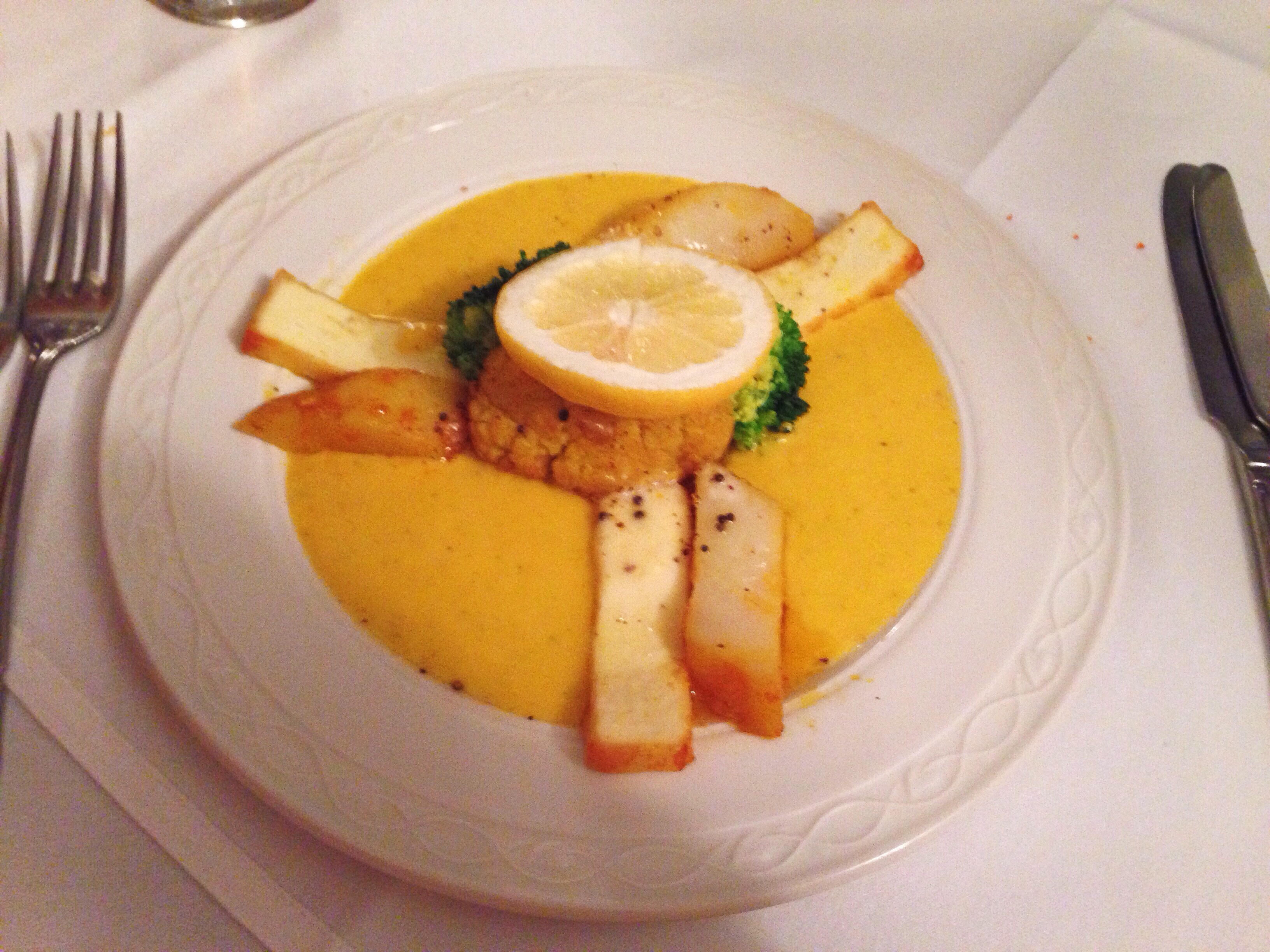
I decided to try a mixture of the traditional and the unconventional for starters and Indian tandoor pool, broccoli and cauliflower grilled in the tandoor, sounded too good to miss. I love the way Indian cooking can bring vegetables like these to life and I was genuinely fascinated to see what turned up. The dish was meant to come with milk cake, pimentos, olives and ginger. Forgive my ignorance, but I have no idea whether it did or not and I’ve eaten the bloody thing. There were slices of what I assumed was paneer, and certainly tasted like paneer. Was that the milk cake? Based on my Googling, I don’t think so. There were also little wedges of what I was pretty certain were potato. Not mentioned anywhere on the menu, but I got a second opinion and my companion thought they were potato too.

I didn’t see any pimento, olive or ginger anywhere. The broccoli and cauliflower had no char or texture to indicate they’d been cooked in a tandoor, if anything they seemed steamed. The whole thing was in a lake of sweetened sauce and topped with a random slice of lemon. It felt like an ill-advised attempt at the Masterchef invention test, or a Bollywood remake of cauliflower cheese. It felt, to be honest, like a mistake.

GulabPool

My other starter was the mixed starter for one, and this is the point where things went awry. My dining companion won’t eat raw coriander; it’s fine cooked, but raw I’m told it tastes like Fairy Liquid (it’s genetic, apparently). So we clearly pointed that out when placing our orders. Now personally, I don’t think this is asking too much: the recipe didn’t need to be changed, the sauce didn’t need to be modified, just no leaves sprinkled on the top as it left the kitchen, thank you. But it seemed like perhaps it was: the dish came out sizzling away but as the scented steam cleared, before the plate even got to our table, it was obvious that the dish was festooned with coriander.

What to do? Well, we did what any self-respecting Brit would do – we apologised for the fact that they hadn’t done what we asked and sent it back. Two minutes later a new plate came out – except it wasn’t, it was the same plate, just with some of the leaves dusted off (or maybe they removed them with tweezers – however they did it, it was only a partial success). Feeling a mixture of embarrassed about our fussiness and determined not to give in, we sent it back again. When the waiter came back to the table I couldn’t tell whether this was a reunion or a new meeting, but the dish that was put in front of me was lukewarm and weirdly oily. There was almost no coriander, but by this point the lack of coriander wasn’t enough of a selling point on its own: it needed to be perfect and it just wasn’t.

The other starter had long been dispatched by this point so, having had enough, we told them we didn’t want the mixed starter any more and they took it off the bill. By this point my companion was on the borderline between exasperation and apoplexy and I was starting to realise that a mistake like this doesn’t just ruin a course: it can ruin an evening, too. The waiters seemed either uncomprehending or annoyed by our ingratitude – not sure I wanted to know which.

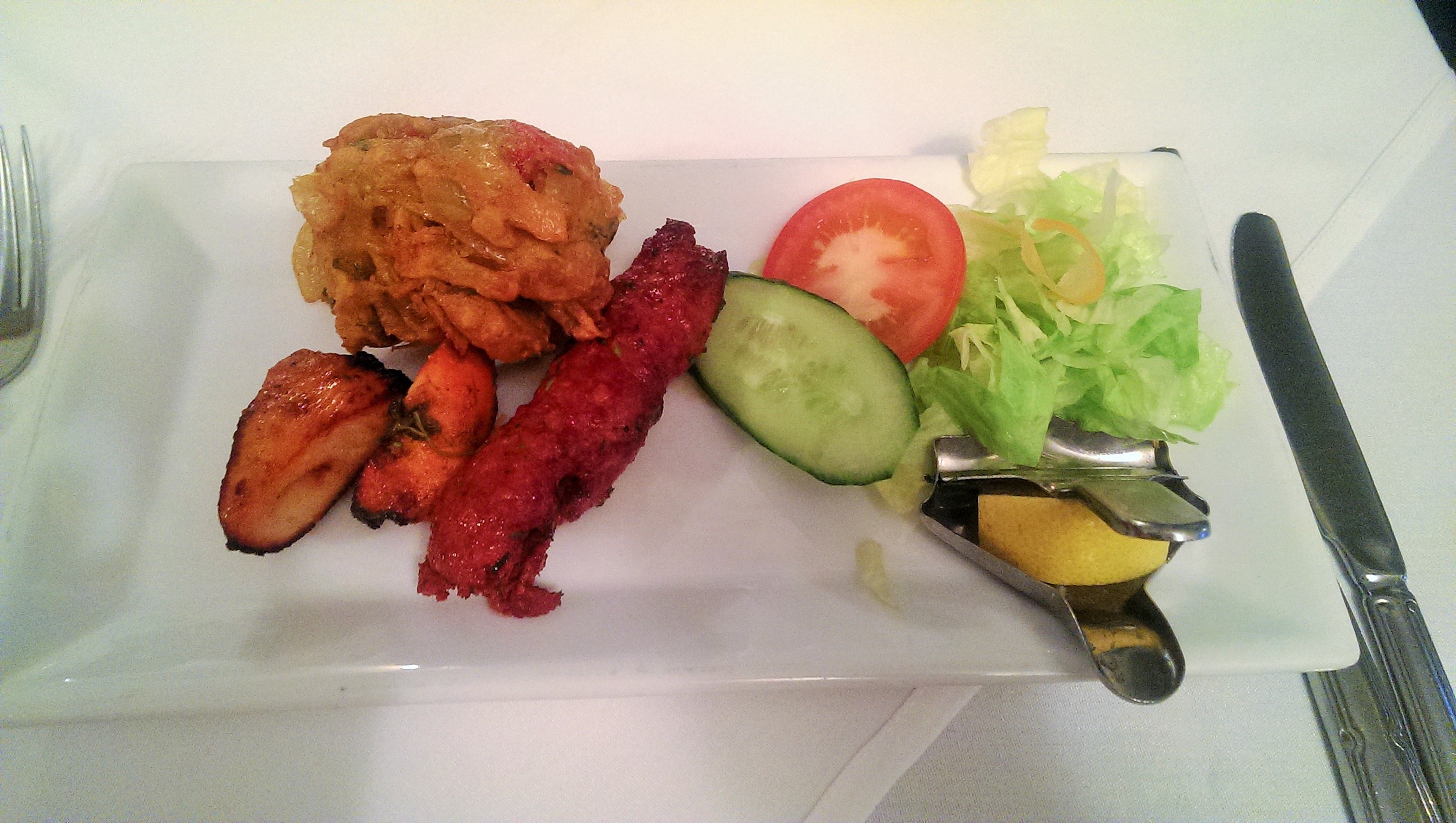
The saga has a bizarre postscript: they then brought the mixed starter again. My companion was geared up to explode when they ever so nicely apologised and told us it would be on the house. It was a small sheekh kebab, some chicken tikka and a whopping onion bhaji, dressed with the usual pointless bit of salad and one of those lemon squeezers like my mum had at the back of the kitchen drawer. Was it worth all that palaver? No, not really. The chicken tasted good but the texture was off-putting – unnaturally soft and smooth to the point of feeling (but not tasting or looking) undercooked. The kebab was pleasant but didn’t stand out in any way from those I’ve had at a dozen other Indian restaurants across town. I liked the onion bhaji – coarse and nicely spiced – but not enough to have waited three iterations for it. And although it was nice to get a freebie (makes a change), I’d rather they’d got it right first time, or at least fixed it properly first time.

GulabMixedNoCoriander

The mains arrived shortly after my second starter was taken away (although in fairness they did ask if we wanted to wait). Lamb shank was probably the most successful dish of the evening but even this wasn’t without its faults. The good bit: it was a huge hefty shank – nobody’s going to go hungry ordering this – and the sauce was beautiful. Smoky, spicy, hot, earthy and dense, thickened with lentils, packed with cardamom pods and pepper it was everything I was looking for in a sauce. Scooped onto the naan or jumbled up with the rice it was truly delicious.

But the lamb needed ever so slightly longer – you could eat it, and there was lots of it, but that extra time would have added the final touch of softness, made it truly collapse to the point where it too could be mingled with that sauce. The nan bread, too, wasn’t faultless – too small, thick and dense where it needed to be thinner and airier. I barely ate half of it, and once I’d finished the whole thing I just wanted to click my fingers and be at home, in some pyjamas with an elasticated waist, lying in the recovery position and digesting the whole lot like a python.

GulabLamb

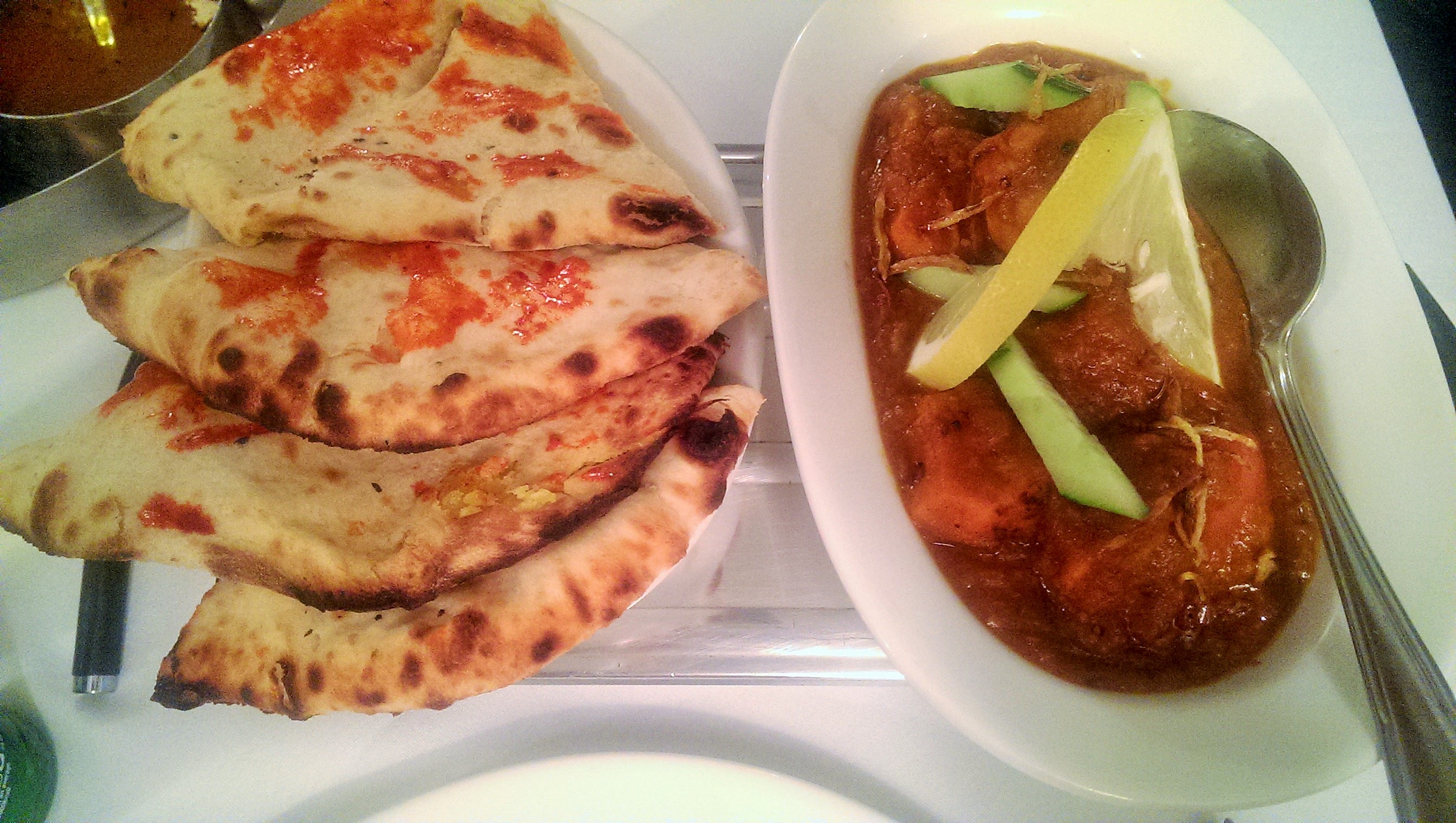
My other dish was murgh jeera adrath, chicken breast in cumin, ginger and honey sauce. Again the chicken had that jarringly soft texture which made it a little unappetising, and it seemed exactly the same shape as the pieces in the starter. It was unsettlingly homogeneous, in fact, and once I realised this it rather put me off it. The sauce was interesting but, again, a bit sweet and slightly lacking in complexity: honey, cumin and ginger is an intriguing combination but it worked better on the page than on the plate. “It tastes like the kind of curry you’d order if you don’t particularly like curry”, said my companion, not without good reason. The peshwari naan ordered to accompany it, however, was heavenly. Rich and jammed full of sweet sticky coconut, I found it easy to chomp through a lot of this at the expense of the curry. I couldn’t understand the blood-red colour of it; I wondered if the head waiter’s firstborn had been sacrificed in order to appease the coriander gods.

GulabChickenMain

We didn’t have many drinks – a reliable pint of Kingfisher, a mango lassi which felt a little too thin and straightforward to have been truly made fresh and a ginger ale (the last mainly because of its renowned ability to aid digestion) and the whole thing came to just over forty-six pounds, not including service. You’ve probably already got an idea of service from the rest of the review, but the incident over the starters was a turning point: before that they were off-hand and a bit remote, afterwards they were genuinely lovely and couldn’t do enough for us. My companion thought it was a tacit acceptance that they’d taken their eye off the ball. I think it’s because my companion can be pretty terrifying when crossed.

So, what have we learned? Personally, I’ve learned that if they’d brought out some starters without coriander this review would have been half the size and the meal would have been twice as enjoyable. Maybe the review would have been twice as enjoyable, too. I’ve also learned that when a restaurant fixes a problem slowly or badly it can be worse than when they don’t fix a problem at all. But I’m not sure what else I’ve learned about the Garden Of Gulab: I might not have seen them at their best, but the restaurant all those certificates praise in the waiting area didn’t feel like the restaurant I ate at that night. Maybe, after all that, the real difference between the young pretenders and the old-timers is the newcomers have the hunger and the drive to build up a customer base and keep it.

Miah’s Garden Of Gulab – 6.7
130-134 Wokingham Road, RG6 1JL
0118 9667979

http://www.miahs.co.uk/restaurants/garden_of_gulab/

Giggling Squid, Henley

Although most ER reviews are of independent restaurants, I’m not against chains for the sake of it. Not all chains are the same: there are big and small ones, good and bad ones – just as there’s a difference between the silver chain you’d hang a pendant from and the lunking great thing you’d use to secure your bike to the railings.

I was struck by this wandering round Henley on a sunny Bank Holiday Monday, because they have chains just like Reading does, only different ones. So there are shops like Space NK and Joule’s – the next tier up, you could say, places in the same bracket as Jigsaw and LK Bennett. It’s the same with cafés and restaurants, so Henley has a Maison Blanc, a Hotel du Vin, and a CAU. I did briefly consider going to CAU to find out what we had to look forward to when the Reading branch opens this month, but nothing about the décor appealed: the nasty rigid white chairs and sterile banquettes screamed “downmarket Gaucho”.

Besides, I was on my way to a more intriguing phenomenon: Giggling Squid has grown from a single branch in Hove six years ago to a chain of thirteen restaurants (many of them opening in sites which used to belong to other chains – a handful used to be branches of Strada, Henley’s was previously an ill-fated Brasserie Gerard). And there are more on the way – the management wants to make this the first nationwide Thai chain, with plans for somewhere between fifty and eighty sites. It’s funny how, despite the popularity of Thai, Indian and Chinese food they still tend, by and large, to be chain-free zones (unless you count the delights of Ken Hom’s Yellow River Café, one of the Oracle’s first ever tenants way back when). I’ve never understood why that is – was Giggling Squid going to challenge that status quo?

It’s a lovely old building at the bottom of Hart Street and it’s been done up very nicely. On the way there I walked past Henley’s long-serving restaurant, Thai Orchid and it was the picture of an old-fashioned Thai restaurant, all dark wood, ornate panelling and intricate, inlaid, glass-topped dining tables. Giggling Squid couldn’t be more different, with its pale walls, exposed beams and almost Scandinavian bleached bentwood chairs. The front room, where I sat, was more traditional – the big room at the back was much better lit and I’d rather have sat there, but I didn’t have much choice in the matter. Which brings me to the second thing I noticed about it: it was absolutely rammed (I was lucky to get a table at all without a reservation, and quite a few couples who came in after me were turned away).

Giggling Squid bills itself as “Thai Tapas & Thai Restaurant”. The idea of anything other than Spanish food describing itself as tapas makes me feel a little exasperated, but what it essentially means is that at lunchtime, rather than having a traditional a la carte menu the main options are one of six “tapas sets”, each of them a mixture of three different dishes and jasmine rice. You can order lots of tapas separately instead, although I’m not sure why anyone would unless you really disliked the set combinations, or you can have what they describe as “one big dish with rice” or a “two dish meal combi”. This all felt overly complicated for me – did I want one big dish, two middling dishes or four small dishes? was there an option of having eight minuscule dishes? – so we went for a tapas selection each. And some prawn crackers. And some chicken satay (which by my reckoning makes a total of ten small dishes, sort of).

Despite the restaurant being extremely busy everything arrived very quickly indeed. Prawn crackers came in a metal pail and were good but unexceptional. It was a huge portion of crackers and an absurdly tiny ramekin of sweet chilli sauce – I couldn’t help feeling I would have liked less crackers and more dip, but they were pleasant enough and lasted just until the rest of the food turned up.

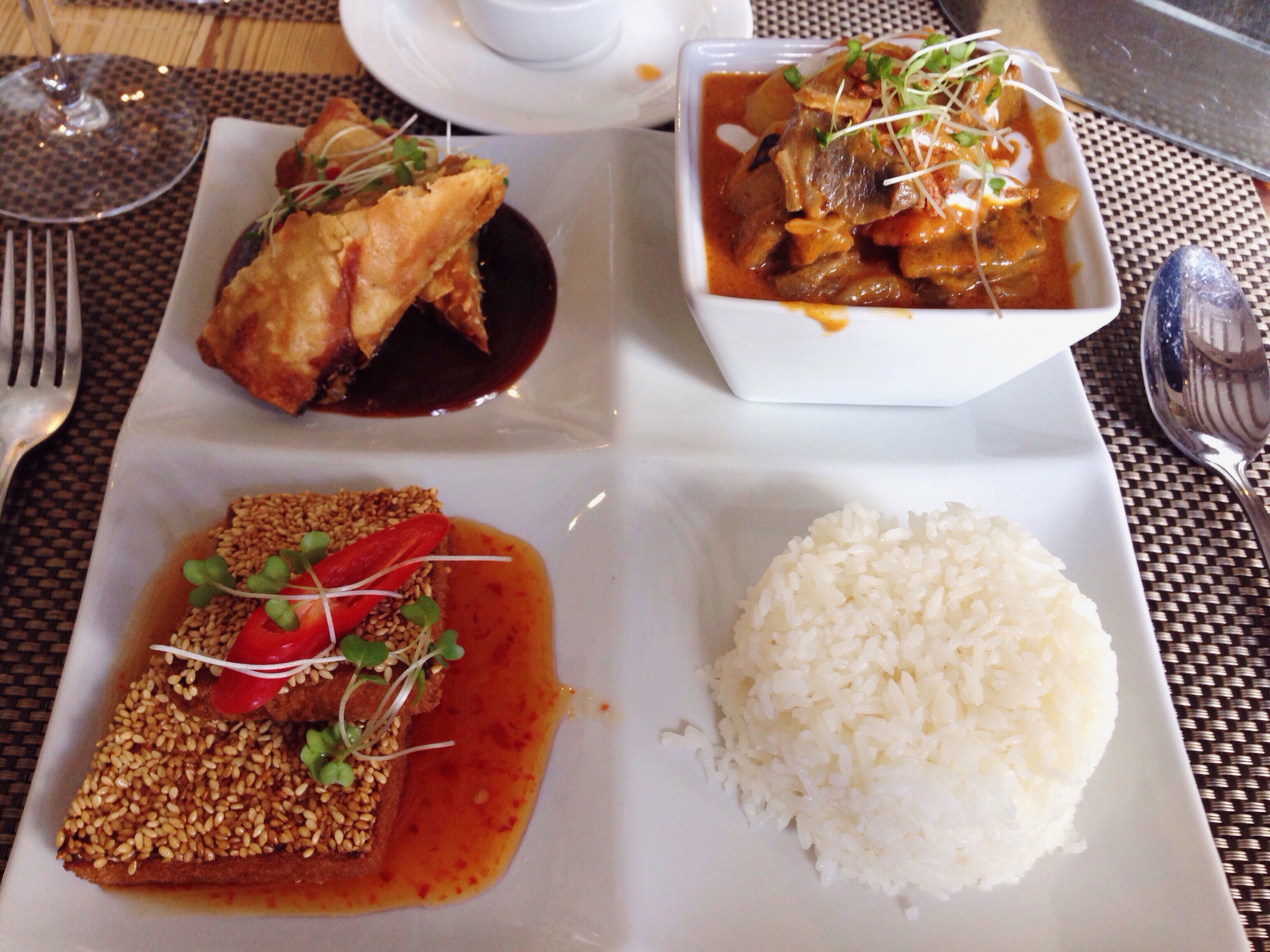
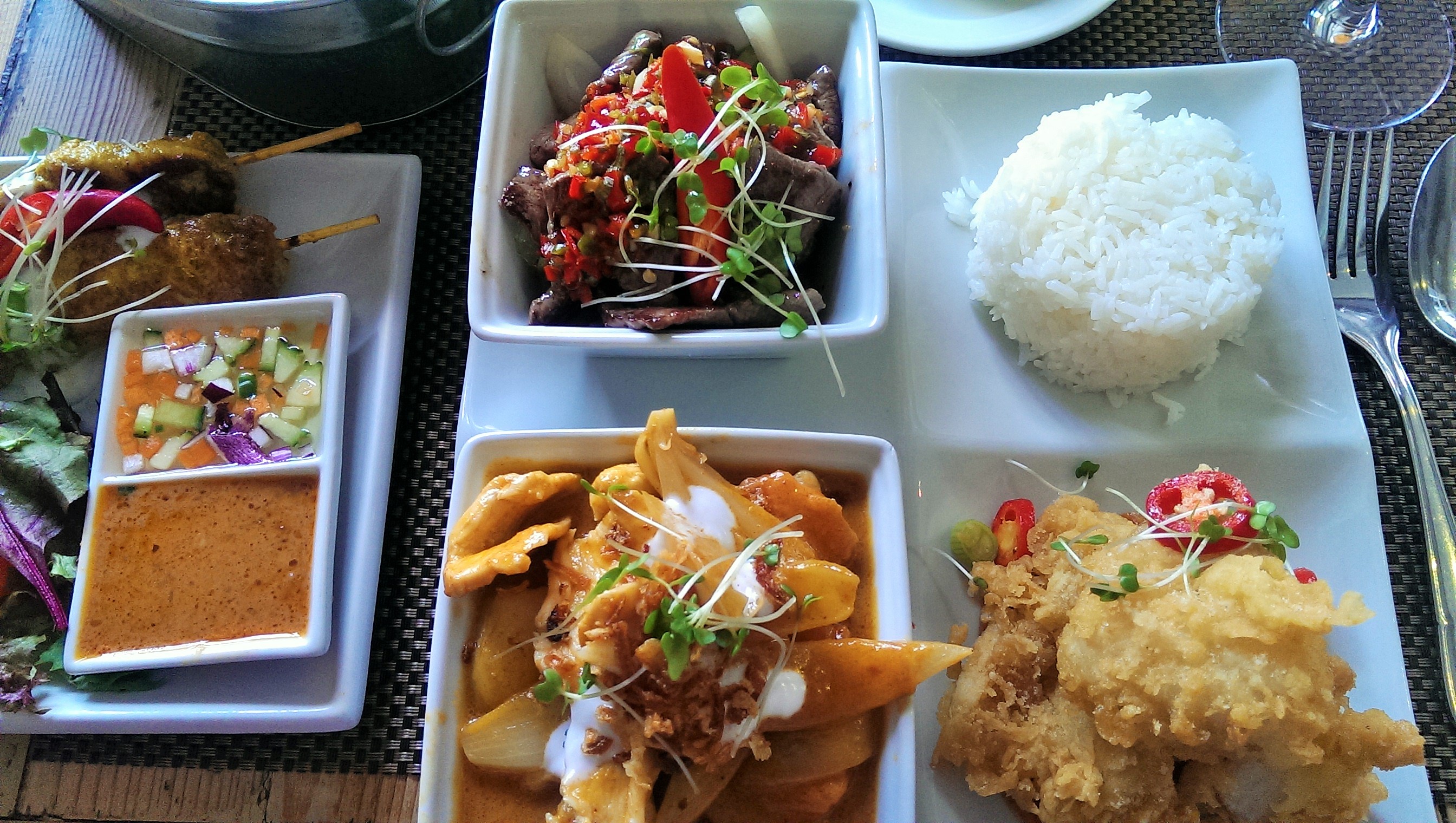
So, on to the tapas (if I really must call it that) itself: a square plate divided into four with something different on each section. Much as I might have wanted to turn my nose up at the concept I couldn’t fault the food. Shredded duck spring roll was a huge thing, full of dense strands of duck, served on a surprisingly subtle puddle of hoi sin that wasn’t just relentless sweetness. Prawn toasts were much better than I expected, crispy and light with a gorgeous layer of toasted sesame, served with more of the sweet chilli sauce. Salt and pepper squid was not at all chewy and the batter was beautifully light (maybe too light, as it did fall off the squid the moment it was challenged with a fork) served on another puddle of sauce – this time hot chilli with no sweetness. The beef salad was the cousin of the chicken salad I raved about from Art of Siam – soft, tender strips of beef on top of a bowl of salad filled to the brim with hot, sharp, sour sauce. It was agony and ecstasy to eat and would be perfect for anyone with a bit of congestion – the heat would soon clear that up.

WealthySquid

Because of the set combinations we’d gone for (“Two Giggling Squids” and “Wealthy Squid”, I have no idea why they’re called that, so don’t even ask) we had massaman curry two ways. The lamb was gorgeous, slow cooked and reassuringly free of wobble and the chicken was in tender, slender slices. There were nice firm chunks of potato, lots of onion and a healthy (or unhealthy, depending on how you look at it) sprinkling of crispy fried onion on top. The sauce was perhaps a little subtler than I’m used to but still went beautifully with the rest of the rice – and I’ve always thought, and said many times, that the rice and sauce at the end of a Thai main course is the best bit.

2Squids

The chicken satay, ordered as an extra out of curiosity, was probably more food than we needed but again, it was very good: tender, soft chicken, not dried-out fibrous breast meat, easy to slide off the skewers and dunk in a fresh clear dipping sauce or a spiced but fragrant satay sauce that was a lot more than hot Sun-Pat. We finished the lot, although it put paid to any plans I had for dessert – a pity, as I had my eye on the black sesame ice cream. Still, there’s always next time.

The menu, come to think of it, was full of little flashes of personality like that which made it feel a lot less like a chain. That really came across in the wine list in particular which managed that rare trick of getting a slightly irreverent tone without making you want to cringe. Written by the co-owner, it compared the Chardonnay – described as something like “rich and fruity” – to her husband before mentioning the extensive research he had done trying to find some reds that went with spicy food. That sort of thing might make your toes curl, but I found it oddly charming (oh, and we had a couple of glasses of the Chardonnay: if her husband is anything like that she could have done an awful lot worse).

Service was harried but friendly. It felt difficult to get attention right at the start, but given how popular the place was I was impressed by how efficient they were; at the end, when the lunchtime rush was fading out, the waiters were a lot more friendly and interested. We went from sitting down to being out of the door in just over an hour which I think is fair enough on a busy lunchtime, especially when you’re only really having one course. Lunch for two – two tapas sets, prawn crackers, chicken satay and two glasses of wine – came to £40 with a semi-optional 10% service charge on top. The tapas sets were just under £12 each, which I thought was pretty decent value.

The owners of Giggling Squid have talked about Côte as the chain they’d like to emulate and I can see why – it’s a great example of how a chain can get everything right and be consistent without being faceless. And I think Giggling Squid does that too; I liked almost everything I had, it’s a lovely spot, it’s very tastefully done and the service is good. I do wonder, though, whether the reason they haven’t chosen to target Reading is that it already has three well-established Thai restaurants with good reputations – the kind of day-in, day-out consistency that is the brand promise of most chains. I wonder too what Giggling Squid will be like if it hits its targets, has a hundred branches worldwide and takes over all the vacant Stradas, Bella Italias and Café Rouges out there. But that’s all years ahead: in the meantime, it’s worth going so you can say you were there in the early days (or back when it was good, depending on how it all turns out). I might see you there, because the whole experience made me want to go back – partly for that sesame ice cream, but mainly to try the evening menu, which is so packed with tempting-looking fish and seafood dishes that I literally wouldn’t know where to start.

Giggling Squid – 7.7
40 Hart Street, Henley-On-Thames, RG9 2AU
01491 411044

http://www.gigglingsquid.com/branches/henley.html

L’Ortolan, Shinfield

L’Ortolan closed in August 2024. I’ve left the review up for posterity.

Despite Reading being a pretty affluent town it’s always been short on Michelin stars. There’s a gathering around Bray (Orion’s Belt, if you like) and the two star Hand and Flowers out at Marlow but the only truly local “star” is L’Ortolan, in Shinfield (so close, it’s RG2 which I guess makes it our Alpha Centauri). As with most people I expect a Michelin star to make a restaurant fussy and pricey – although if Michelin themselves are to be believed, stars are awarded for food alone and, technically at least, have nothing to do with table linen or waiters in waistcoats. Even so, driving into the countryside to try L’Ortolan gave me a sense of trepidation: not just about whether the food would be any good, but also about whether I’d be up to reviewing it.

Stepping over the threshold of Ortolan is like stepping inside a machine; the smartly dressed, suited staff are everywhere, taking coats, ushering customers to the bar, bringing drinks, wiping up invisible spills from the hardwood floor, plumping cushions. Everything looks impeccable, like a modern day clockwork Downton Abbey. Over a drink in the bar we were served canapés on a slate, just enough to get our tastebuds firing. Michelin starred dining is full of these bits and bobs – pre-pre starters, pre-starters, pre-desserts – and these were a nice enough introduction. There were little airy crackers with potato and onion, a thin wooden cone full of maple and truffle popcorn, the maple hitting you first and the truffle sneaking in at the end. The best of them were goose and foie gras croquettes, smooth and rich, Eton Turkey Twizzlers.

People often say it’s possible to eat affordably at a Michelin starred restaurant (normally, ironically, in a review where they’ve made no attempt to do so) so we were both picking from the lunchtime prix fixe. Three courses, with three or four choices per course, comes to thirty-two pounds: or it will do, at least, if you don’t pick one of the dishes with a five or ten pound supplement. Narrow, yes, but not so narrow as to be constricting, with lots of interesting choices to make. So we sat in the bar, sipping our pre-prandials, feeling pampered and making our decisions. Only when our orders had been taken and our glasses were empty did we go into to the restaurant proper: places like L’Ortolan are very good at letting you take your time.

Being taken through to the dining room revealed two rooms, one on the austere side, and the other, a conservatory room with a tented ceiling, harking back to the Raj. I was glad to be sat in the latter as it felt a little more relaxed. Tables in both rooms were the same, with smart linen, a fancy glass plate at each setting (soon whisked away, which begged the question of what it was there for) and comfy if slightly awkwardly angled velvety seats.

A big bowl of bread soon arrived and we tucked in while waiting for our starters to arrive. The best of them was a small treacle baguette, which was a golden saffron colour inside and slightly sweet with a hint of black treacle, The other breads – sourdough, focaccia and a small seeded roll – were nice, if not quite at the same heights, and there was plenty of room temperature butter (stinginess with butter is one of my bugbears, but then I do like a lot of it).

Before our starters arrived there was a pre dessert – an espresso cup of soup (isn’t it always?). This was a rich but light mushroom velouté which had a hint of truffle, a tiny sourdough crouton and a deliciously sweet and sour pickled mushroom. I enjoyed it so much that fighting the urge to clean the inside of the cup with a piece of bread was quite a titanic struggle; I didn’t want to let the side down with all the other genteel tables around me.

The starters were both beautiful to look at. The duck liver (introduced as foie gras when brought to the table) with blood orange and basil marmalade was heavenly, even for something so sinful. The liver was just cooked with a slightly caramelised outside. Next to it was a small dome of creamy duck liver parfait with pain d’epice crumb, all lovely and gingery. On a slice of flattened puff pastry were neatly laid slices of blood orange, resting on some of the marmalade. The marmalade itself was more like a curd, a thick smear of it (they do love smears in restaurants like this) on one side of the plate. Ordering this involved paying a five pound supplement, but it was a good decision: it was the best thing I ate all afternoon, and writing this makes me want to have it all over again. In particular the sweet richness of the liver with the tart blood orange was fantastic, and not a combination I’d ever have imagined before.

OrtDuck

The other starter also looked gorgeous, but looks were the main thing going for it. On paper, confit salmon, pickled cucumber and ketjap manis gel sounded terrific but what turned up had a strong air of seeming like a good idea at the time. The salmon was lovely – subtle, fresh and breaking into flakes with no effort at all (which took me aback, since it looked so much like sashimi). And I wouldn’t have minded it being so petite, if it had had more interesting things on the plate to pair it with, but I wasn’t that fortunate. The pickled cucumber, big indelicate chunks, had almost no sweetness or sharpness so was watery and bland. The ketjap manis gel was sweet and intense. But the rest? Well, it felt an awful lot like sludge to me: swirls of two different other sauces spiralling round the plate, a little heap of horseradish snow and micro herbs strewn all over the shop. Wetness, wetness everywhere. Towards the end I found some sesame seeds – strong, intense, delicious – submerged where they were almost unnoticeable and beyond rescue. It was the sort of plate you never quite clean: it looked like a Pollock once I was finished. They brought more bread after that, and I started to wonder whether I’d need it.

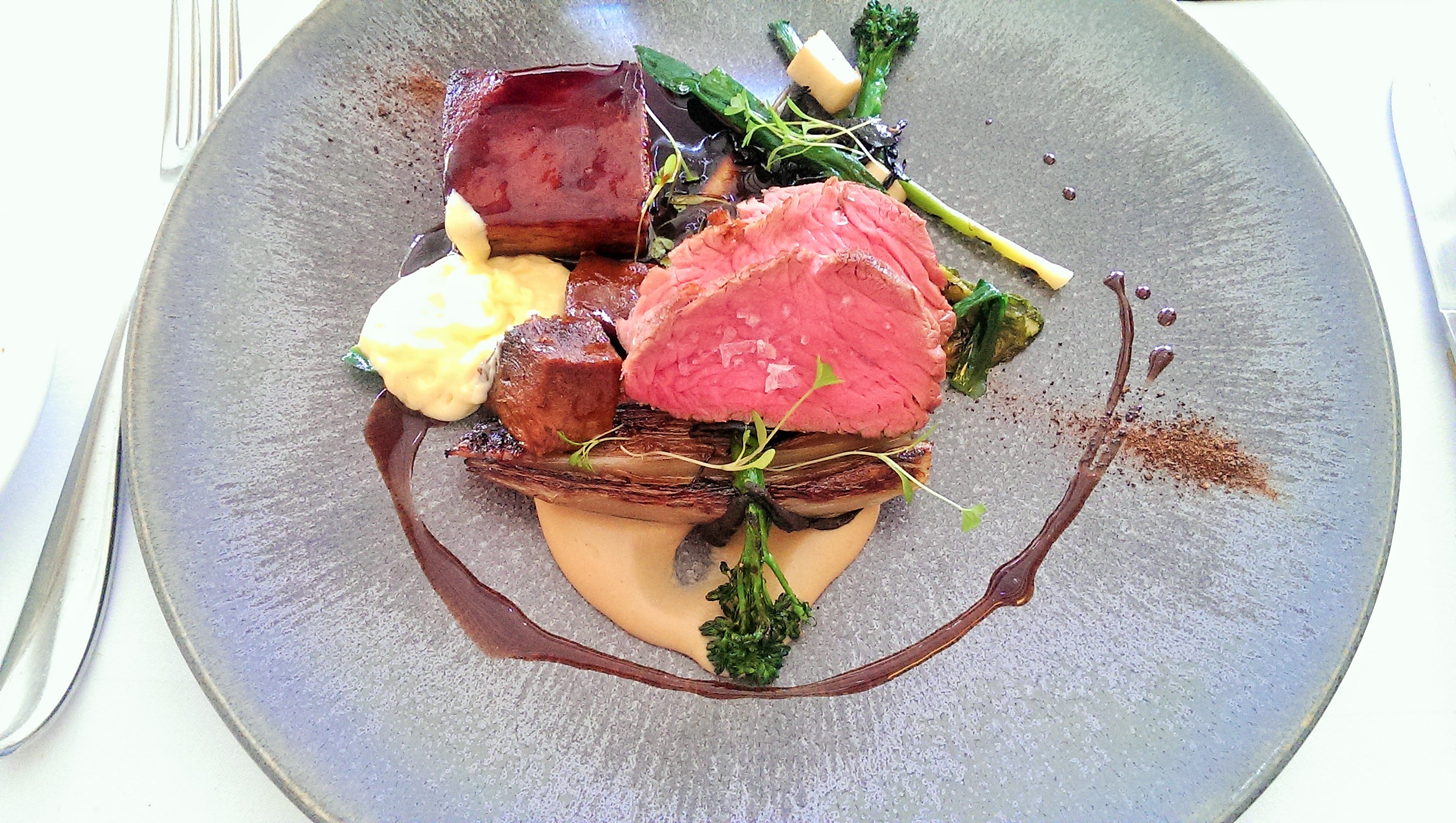
For main, the rump of beef was as lovely as the duck liver. It was three very pink (as requested) slices of beef with smoked pommes Anna on a red wine jus with bone marrow hollandaise. Underneath the beef was half a roasted banana shallot, a few pieces of tenderstem broccoli, two cubes of dense beef and a creamy mushroom sauce, dotted with mushrooms. The rump itself was a little tough under the knife but tender when chewed. The potatoes were wafer thin and richly flavoured (almost like the potatoes my mum used to cook in with the roast beef when I was a kid, although the Michelin inspectors never troubled my mum’s kitchen – or yours, I’d imagine). The shallot was sweet and the mushroom sauce was intensely flavoured. There was only one blot on the copybook – one of the cubes of beef, a big layer of fat running through it, was far too tough to cut or to eat – but apart from that, it was perfection, a high-end reinvention of a Sunday roast, where each ingredient was so concentrated and intense that size simply did not matter.

OrtBeef

The other main had sat up and begged to be ordered when I saw the menu: loin of lamb, Parmesan gnocchi, sweetbread popcorn, confit tomato. Again, it looked absolutely gorgeous, and the lamb was beautifully cooked, what there was of it anyway. But again the rest of the dish underwhelmed. The confit tomatoes were the best, little bright-coloured flashes of sweetness. The sweetbreads were an Eton reimagining of KFC popcorn chicken – nice enough but maybe not the surprise I’d been hoping for. The gnocchi was one single chewy wodge whose main role in proceedings seemed to be to show off how delicious the Pommes Anna on the other plate were. And, of course, more little spheres and splodges of sauce – along with, randomly, a smear of something that tasted like goats cheese. Oh, and more of those sesame seeds. I’ve never believed that food should ever be too beautiful to eat, but unfortunately this was more fun to look at than to eat. There was a ten pound supplement for this and I’m not really sure why, because it was smaller, lighter and far less special than the beef.

OrtLamb

More freebies followed with an impeccable pre-dessert: a little shot glass with creamy coconut rice pudding at the bottom, little cubes of rum jelly above it and a layer of passion fruit mousse at the top. I could quite easily have eaten a dessert sized portion of this. Not for the first time in a high end restaurant, I wondered why the free stuff always seems to taste the best. Maybe because it’s “free”: I know, ultimately, it isn’t but sometimes the mind is quite happy to let itself be tricked.

For dessert I simply had no choice but to have the cheese: I’d seen the cheese trolley wheeled past on several occasions while I finished the previous two courses and it was impossible to resist. There were a mind-boggling twenty cheeses on offer – going from the hard cheeses, past goats cheeses and on to some softer-rinded cheeses with varying degrees of stinkiness – all of which were explained in detail by the captain of the trolley, a really personable young man with obvious enthusiasm for his charges. I was allowed four, which were served with super thin slices of bread and crackers, and a choice of chutney and truffle honey. There were also grapes and celery just in case I wanted to offset some of the calories, although I’d given up counting by that point. The ones that stood out for me were the Burwash Rose, a rich, tangy, semi soft cheese with a rind washed in rose water and the Blue Murder, a Scottish blue so ripe it was in danger of running off the plate (or, rather, slate) and, for that matter, out of the building. The latter was particularly good with some of that honey, although the truffle couldn’t stand up to the cheese itself and was close to undetectable. This plate also attracted a five pound supplement but the variety was so good (perhaps not in the hard cheeses – I was hoping to see a really good Gruyere or Comte, but it was not to be) and the portion sufficiently generous that I didn’t begrudge them one bit.

OrtCheese

The other dessert was chocolate and cardamom ganache with orange curd and mint ice cream. Unlike many of the things I’d eaten, that was a pretty good description and – for the only time in the meal – what turned up was roughly what I’d expected to see. It was bliss: a long thin rectangle of smooth, glossy ganache, powdered with cardamom, was just gorgeous. The mint ice cream – green, fresh garden mint, a million miles from bright green mint choc chip – was so fantastic I didn’t want to pair it with anything else. The orange curd zinged with sweet sharpness. Best of all, perhaps, was the kitchen’s reinterpretation of Mint Aero – three little chunks of fluffy chocolate which imploded in the mouth, a piece of culinary pyrotechnics. Just beautiful. And, in case you’d forgotten the kitchen has a Michelin star, some pointless micro leaves.

OrtChoc

I knew the wine list would sting, and it did. As I was driving, the initial plan was to order wine by the glass but the prices by the glass were so punitive – seven or eight pounds for 125ml, easily a tenner for 175ml – that we decided it would be better value to get a bottle from the bottom end of the wine list and picked a Cote du Rhone for thirty-seven pounds (to give you an idea, that’s the fifth cheapest red they sell by the bottle). I was feeling really pleased with my bargain hunting until I got home, did some research and found that the same bottle retails for eleven pounds. Still, there was no bitter taste at the time.

Service was excellent, if a little cool. There was a constantly rotating team of waiters which served plates, cleared plates, poured wine and poured water, which gave the feeling of being continuously “served” but without a lot in the way of interaction. It was exceptionally well-run, just a tad emotionless. A few of the waiters – the captain of the cheese trolley, one of the waiters who topped up our glasses – seemed to have a little more charm, it’s just a shame that this was the exception rather than the rule. Perhaps customers at Ortolan (who do tend to be older and middle class, based on the clientèle when we were there) expect service of the “seen and not heard” variety, or perhaps my expectations have been skewed by too much casual dining. I would blame Michelin – lots of people like to – but I’ve eaten at other starred restaurants which felt a lot less, well, starchy.

The total bill, including a 12.5% “optional” service charge, for two drinks from the bar (one of them soft), a bottle of wine and three courses was one hundred and forty five pounds. So, I tried to eat cheaply at L’Ortolan and I have to say it’s just not really possible: we could have saved twenty pounds on supplements but even then it would be pretty difficult to get the bill under a hundred pounds unless neither of you were drinking.

I found L’Ortolan such a mixed bag that it’s difficult to wrap it all up in a neat and easy conclusion. I almost feel like there were two different meals here: the duck liver and beef were fantastically well-judged, well-balanced, generous and delicious dishes where it felt like there was more to them than expected. The salmon and lamb was the opposite – too delicate and light without enough oomph to stop them from being damp squibs. I guess the question is, if you went to L’Ortolan, which of those two meals you’d get. If it was the first, you’d be evangelising to friends, but if it was the second you’d be wondering what the fuss was about.

I think in the back of my mind I was partly comparing the prix fixe at L’Ortolan with the a la carte somewhere like Mya Lacarte and thinking about differences in the food, the execution, the ideas and the experience. In a straight-out comparison, I’m not sure L’Ortolan would win out very often, however stunning the building, beautiful the dishes, plentiful the freebies. Maybe that’s about me and the kind of dining I prefer, so disregard it by all means: it’s worth going to say you’ve gone, and you’re unlikely to have a bad meal if you do. But, to me at least, it still felt ever so slightly like eating in a machine – and good restaurants are a broad church of many things, but I don’t think machine is one of them.

L’Ortolan – 7.8
Church Lane, Shinfield, RG2 9BY
0118 9888500

http://www.lortolan.com/

Kyrenia

Bit of a weird one, this: Kyrenia changed its name in January 2016 to Ketty’s Taste Of Cyprus as it was under new ownership. They never changed the facade, just the website and menu. In Summer 2020 it reopened under a completely new name as Spitiko. I’ve marked this restaurant as closed, and kept the review up for posterity.

I’m sorry, but I’ve got a confession to make. I’m burned out. Running on empty. This whole business of going to a restaurant every week takes its toll, you know (I’m not expecting sympathy, don’t worry). And it’s the end of the year – Christmas party season is fast approaching and I’ve got very little left in the tank. So this week, rather than go somewhere that would be a voyage of discovery for all of us, I went somewhere I know well: I’ve been going to Kyrenia, Caversham’s Greek Cypriot restaurant, for as long as I can remember. I love it – and I’m going to spend this review telling you why, because when I visited it on duty it was as terrific as always.

Besides, it’s been a bit of a bad run recently, hasn’t it? So think of this week’s review as a present to me (because I bet you haven’t got me anything, not even a box of Toffifee).

Kyrenia’s dining room hasn’t really changed in all the time I’ve been going, because it doesn’t need to. It’s perfect, simple but smart – no exposed brickwork and bare bulbs here – with clean white tablecloths, crisp cloth napkins and comfortable unfussy chairs. There are black and white photos on the walls and not much else. The greeting is warm and friendly and Ihor, who runs the front of house, is charm personified (in an endearingly apologetic way, truth be told). Kyrenia has a number of different menu options – they do a la carte, it’s two for one on Tuesdays, there’s a smaller set menu some of the week, but the thing to do here is order the meze, especially if it’s your first visit. I can’t stress this strongly enough: for twenty four pounds a head you get an incredible array of courses and variety (that’s your first tip, right there).

The first thing to arrive were the cold meze, a range of familiar friends and a very easy way to be led astray. Houmous was rich and smoky with a touch of garlic, a world away from the contents of a plastic supermarket tub. Taramasalata – something I avoid anywhere else because it’s often too oily and fishy – was light and delicate. Tzatziki was zingy and fresh, just the right side of tart, the flavour softened with cucumber. All of these came with a basket of warm, griddled, slightly charred pitta bread. That alone would be a feast, that alone would be enough but the other cold dishes were equally delicious. Beetroot, apple and walnut salad was fragrant and sweet rather than sharp and astringent, and potato salad was light and simple, just potato, good oil and parsley.

If I’m being critical (and it’s hard, where Kyrenia’s concerned) the tabouleh wasn’t as vibrant – in colour or flavour – as I’ve had elsewhere, and the olives felt like a space filler, but they were minor issues. This was a wonderful range of dishes, and the nature of it means it works equally well if you’re dining a deux or part of a much bigger group (here’s your second tip: I’ve been in those groups and watched people make the classic mistake – overdoing it on pitta bread and filling up ahead of the other courses. Don’t do this, because the best is yet to come).

Meze1

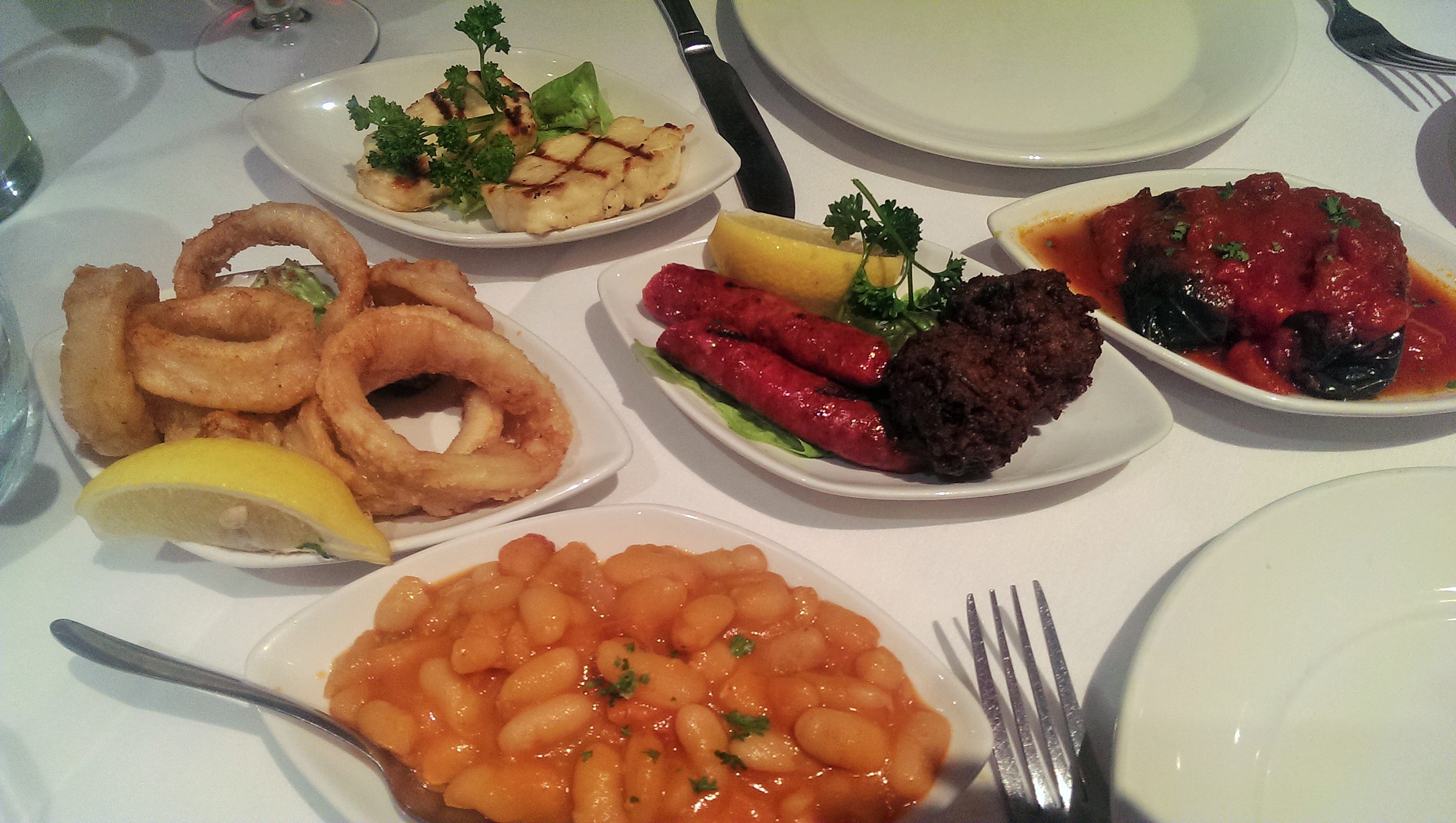
The hot meze only came out when the staff had checked that we were ready – a lovely touch, I thought – and when they did, as always, it became time to reassess how hungry I really was. Meze is about playing the long game, but the problem was that again, everything was too delicious to leave. Some of the classics – halloumi and calamari – were present and correct. The halloumi was unsurprising (halloumi in restaurants is pretty much always the same, everywhere) but still gorgeous, but the calamari was spot on – no hint of rubber, just light batter and fresh squid. They’re classics for a reason, after all.

Most of the other dishes were every bit as good. Lamb meatballs were possibly the pick of the bunch – juicy, coarse and savoury, studded with herbs and onions and a touch of garlic. Loukanika (Greek sausage) was Peperami’s glamorous continental cousin, warm with cinnamon, almost perfumed rather than one-dimensionally spicy. Dolmades had more of that delicious minced lamb folded into them, though there was probably too much leaf and not enough stuffing. The beans in tomato sauce were the only real disappointment – big, bland and filling, they were soon abandoned. Those six dishes may only merit a sentence or so each, but add that to the seven that came before and it starts to become clear: this is a marathon, not a sprint.

Meze2

Of course, I knew from personal experience to keep something in reserve for what came next: although again, only when the staff knew I was ready. The souvlaki – grilled skewers of pork and beef – were pleasant enough (possibly a tad on the dry side), but they weren’t the main attraction here because that was indisputably the kleftiko. I’ve had this dish countless times in Greece on holiday trying to find anyone who can match Kyrenia’s version, and I’ve given up now because what Kyrenia does to lamb is a work of utter genius: the almost godlike kitchen knows how to slow cook it until mere mortals like me struggle to describe how good it is.

It came on a large piece of bone but the merest whisper of effort soon sorted that out, leaving me with an awful lot of the most tender lamb I’ll probably ever eat. It broke into moist, sticky shreds, almost like confit, perfect for smooshing into the juices on the bottom of the plate before eating in nodding, smiling, euphoric silence. Again, because I feel I ought to be critical, the Greek salad it came with was a little underwhelming – but it’s only salad, isn’t it, and a cubes of feta is the perfect partner for a piece of lamb (that’s your third tip, if you’re counting).

Meze3

I also know from personal experience that if you’ve made the rookie mistake of filling up on pitta and tzatziki, Ihor will bag up all your leftover meat in a little foil parcel for you to take home and enjoy the next day. I also know from personal experience that it’s almost as good cold the next day, but take it from me if you go: pace yourself and eat it on the night.

One of the only other disappointing things about Kyrenia is the wine list. Greek wine can be absolutely fantastic, and is much underrated, but Kyrenia only sells a handful of bottles. None the less, the ones they do are lovely – we had a bottle of Naoussa Grande Reserve which was nicely balanced against both the meat and fish in the meal, far too easy to drink on a school night and not at all unreasonable at £23.50.

The last course at Kyrenia, the fruit salad, is really just a palate cleanser. I would be astonished if anyone could eat a “proper” dessert after all those meze so it seems apt that the meal ends with a plate of orange, melon, grapes and strawberry. It worked, though: fresh, bright, sweet and healthy (like Miley Cyrus before it all went so horribly wrong). It didn’t redeem the sins of all that lamb but it helped me fool myself, and very few desserts achieve that.

I’ve mentioned Ihor a few times, but service in general was perfect. All of the staff are so good at what they do, getting all the little touches right. Asking if you’re ready for the next set of courses, finding time to chat, knowing when to offer you extra pitta (although if you’ve read this far, you’ll know to turn that offer down – trust me on this). Again, to be critical I’d say that you should ask to be seated downstairs: sitting upstairs, in a smaller less buzzy room, far from the bar and the kitchen you can sometimes feel a little overlooked. That’s your fourth and final tip – ask for a table downstairs when you book, because they get busy at weekends. Dinner for two – all those dishes and a bottle of wine – came to £71 excluding service. It’s probably the best £71 meal I’ve had all year.

I recommend Kyrenia all the time – to friends and on Twitter – and it was getting to the point where not having reviewed it was looking like a glaring oversight. I went on duty hoping that they had a good night, but I really needn’t have worried because I’m not sure they know how to be anything but brilliant. There’s loads of stuff on the a la carte that I haven’t tried (I’d love to have a go at their stifado, or their monkfish souvlaki) and I know for a fact that their octopus is out of this world, but all of the best evenings I’ve had here have all involved the meze. Unlike most restaurants in Reading, Kyrenia feels like it’s perfect for everything – small intimate evenings, big raucous evenings and everything in between. It’s only a matter of time before I go back – in fact, on the way out I looked in the front door, still shining with that cosy welcoming light, and saw that they’re offering their standard menu on New Year’s Eve. See you there? I’ll be wearing the white carnation and the gold party hat and drinking the Greek red. Yamas (and Merry Christmas!).

Kyrenia – 8.6
6 Prospect Street, Caversham, RG4 8JG
0118 9476444

http://www.kyreniarestaurant.com/