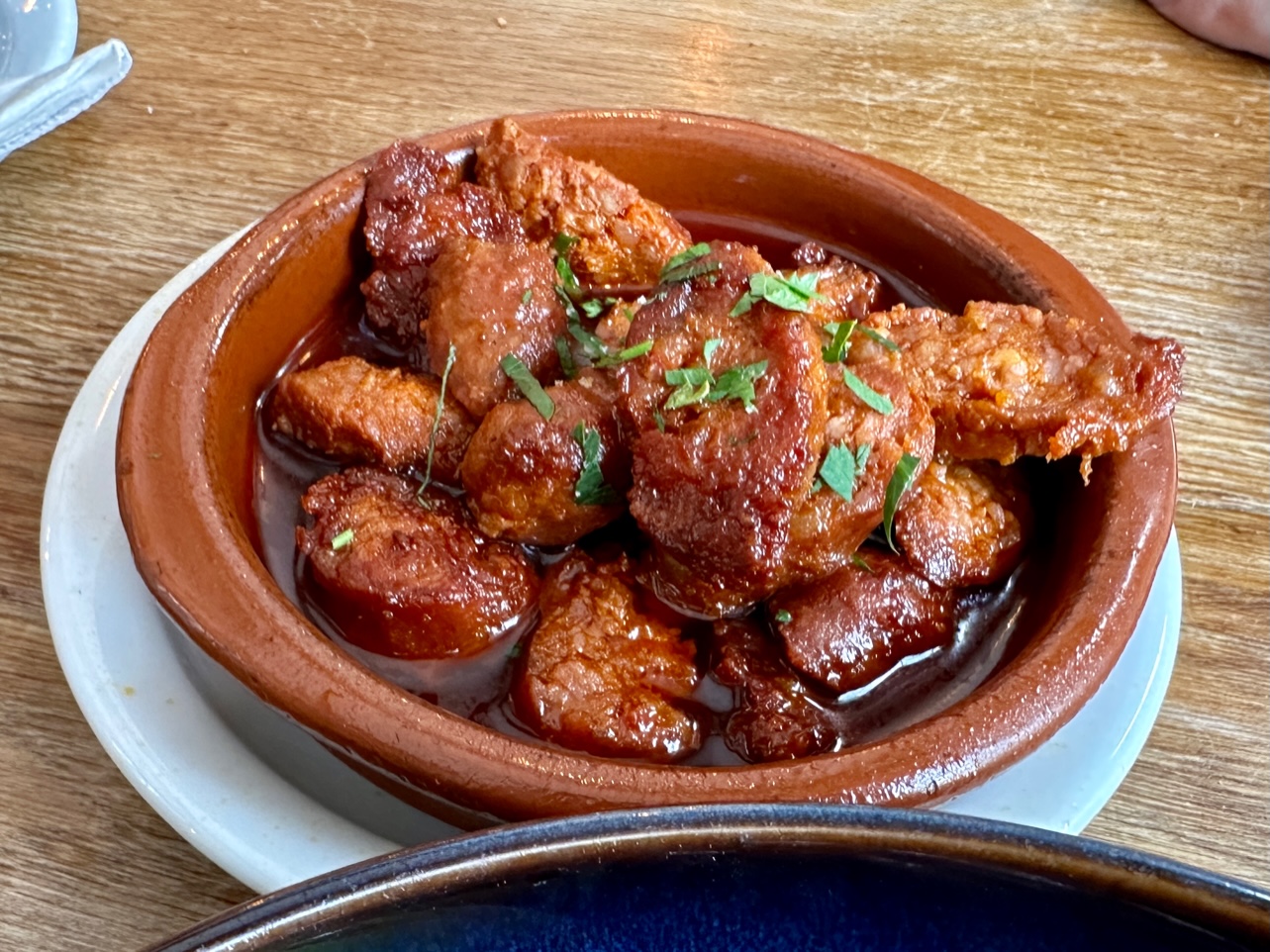
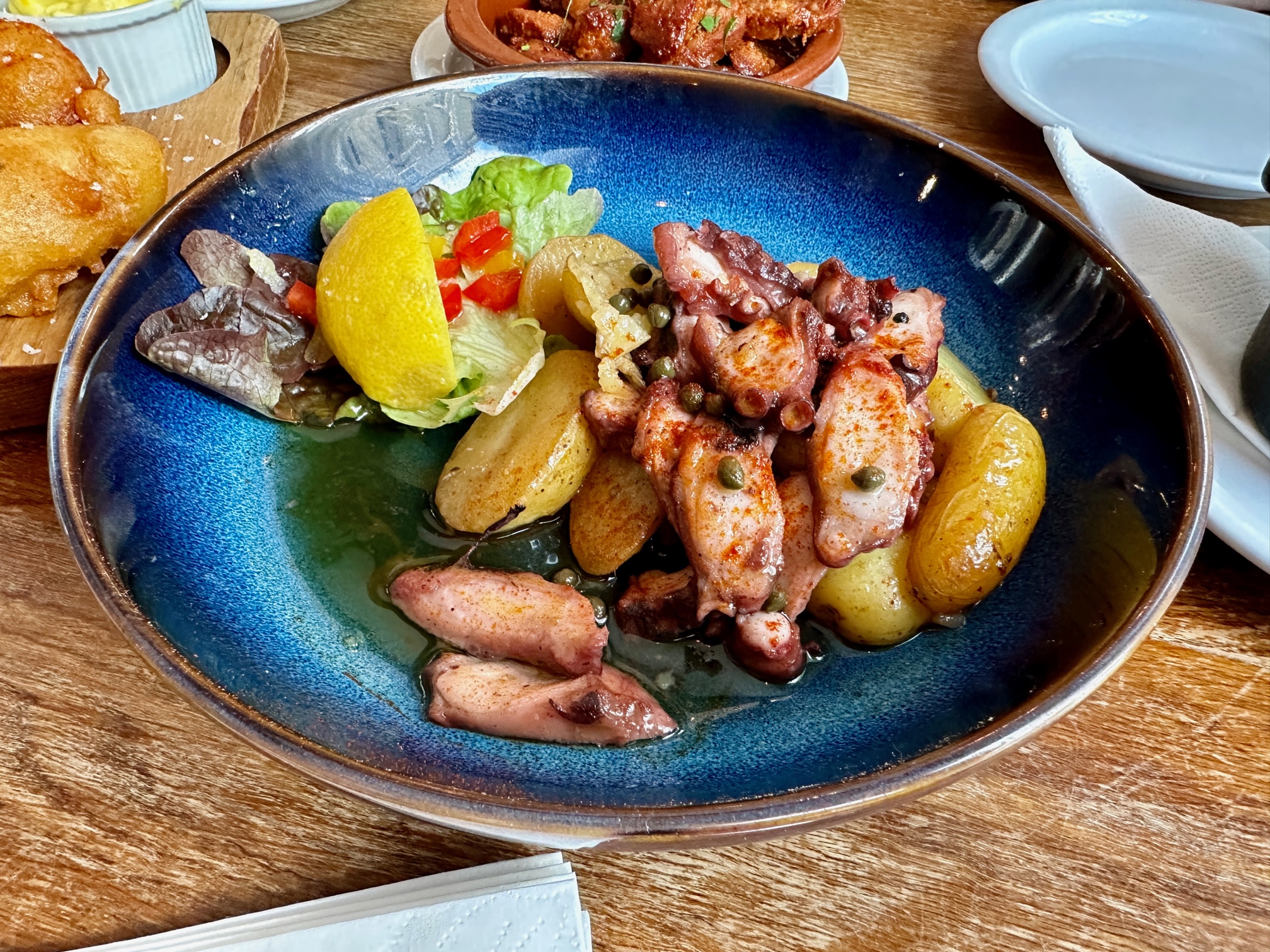
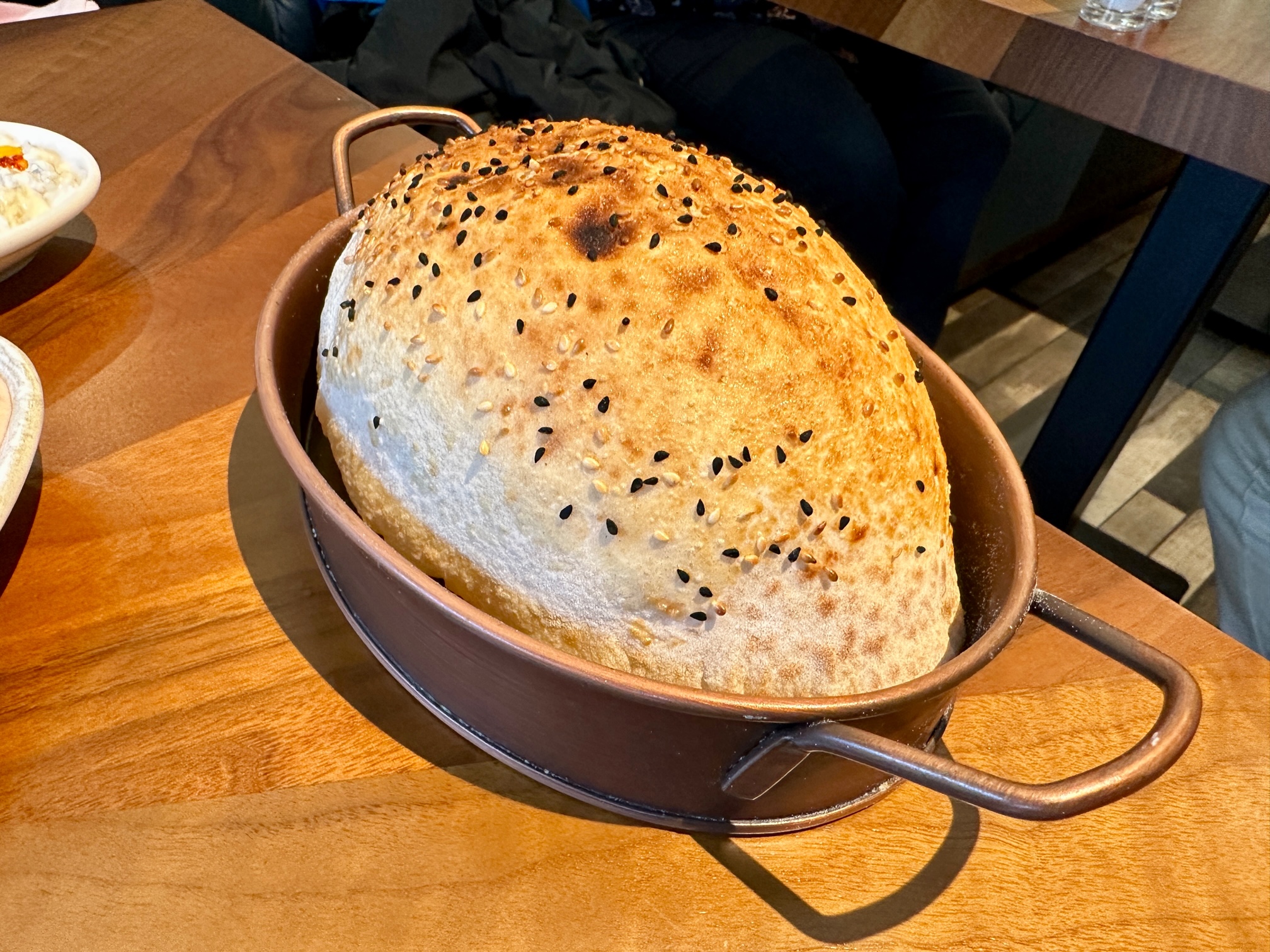
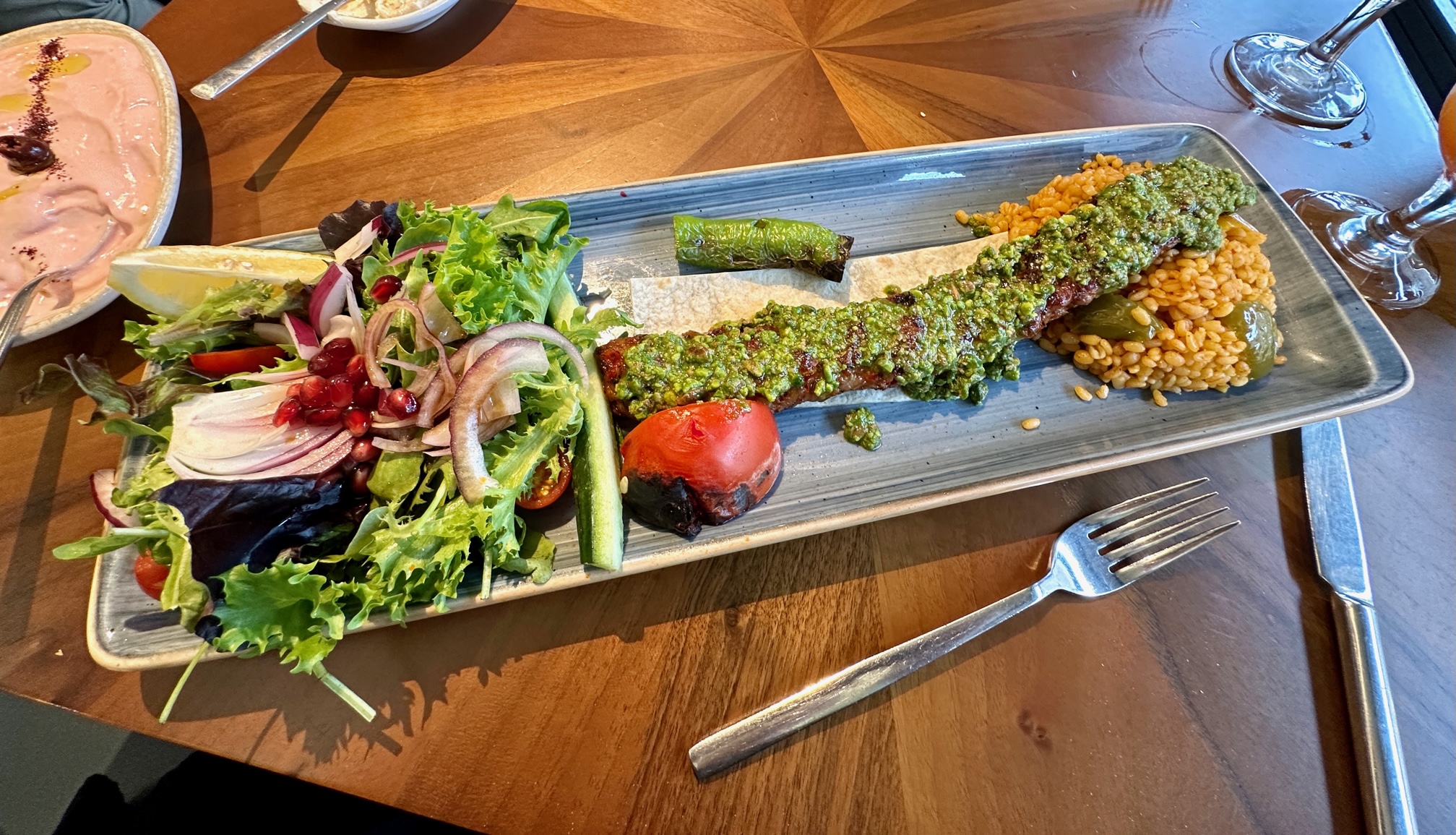
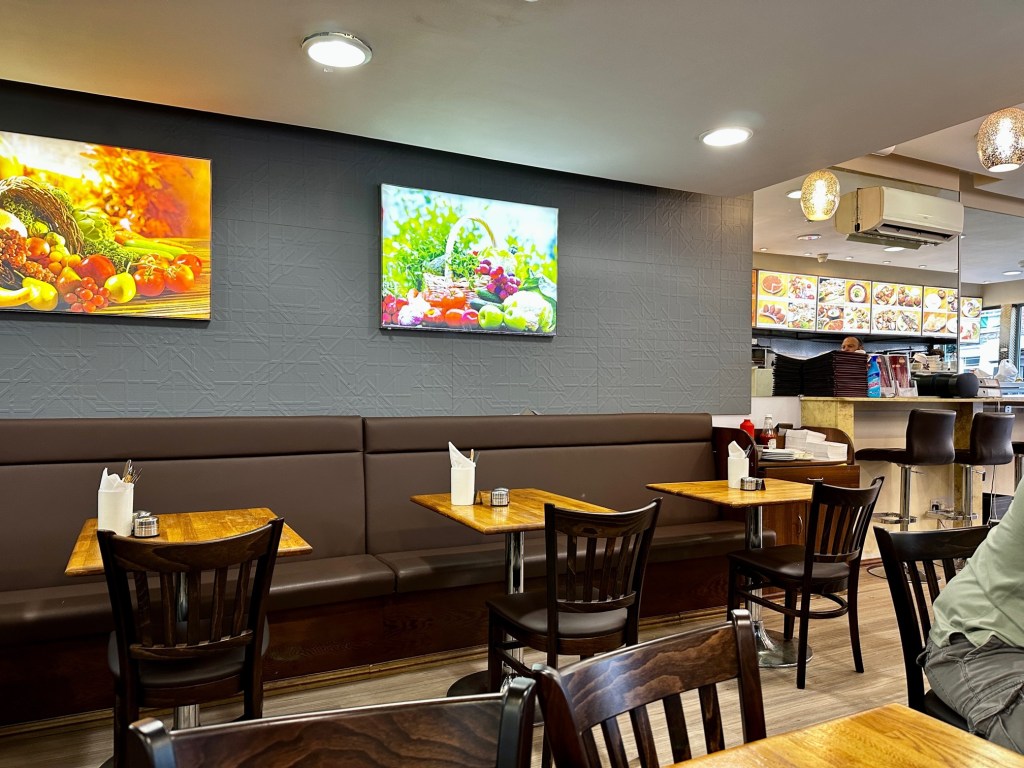
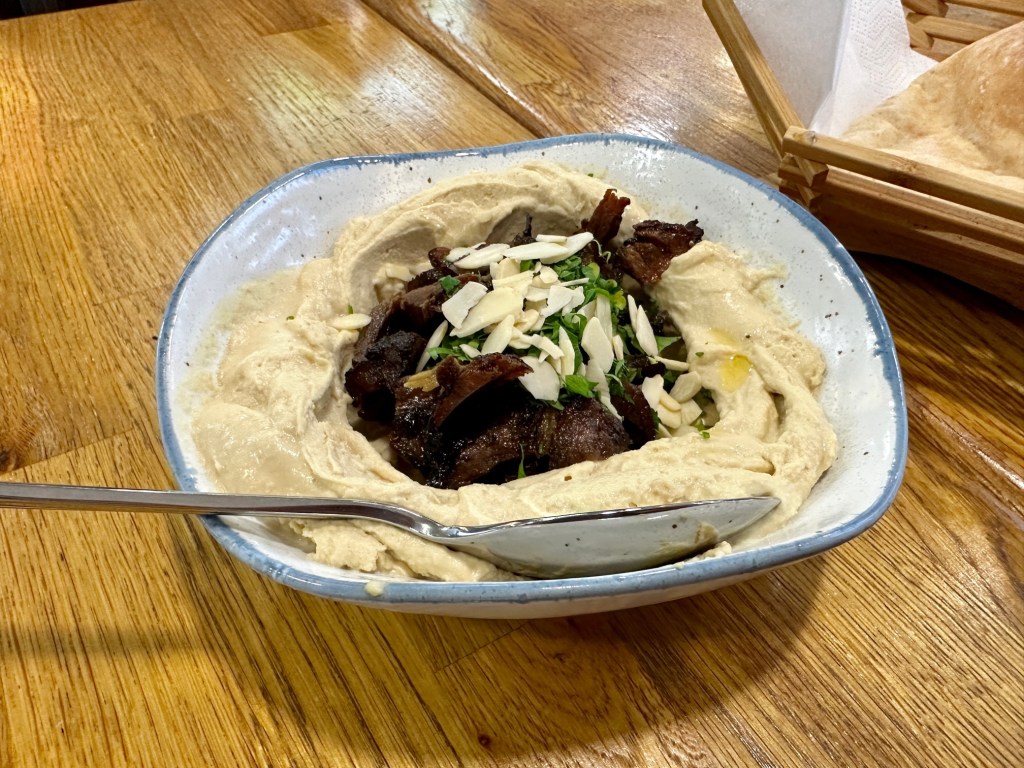
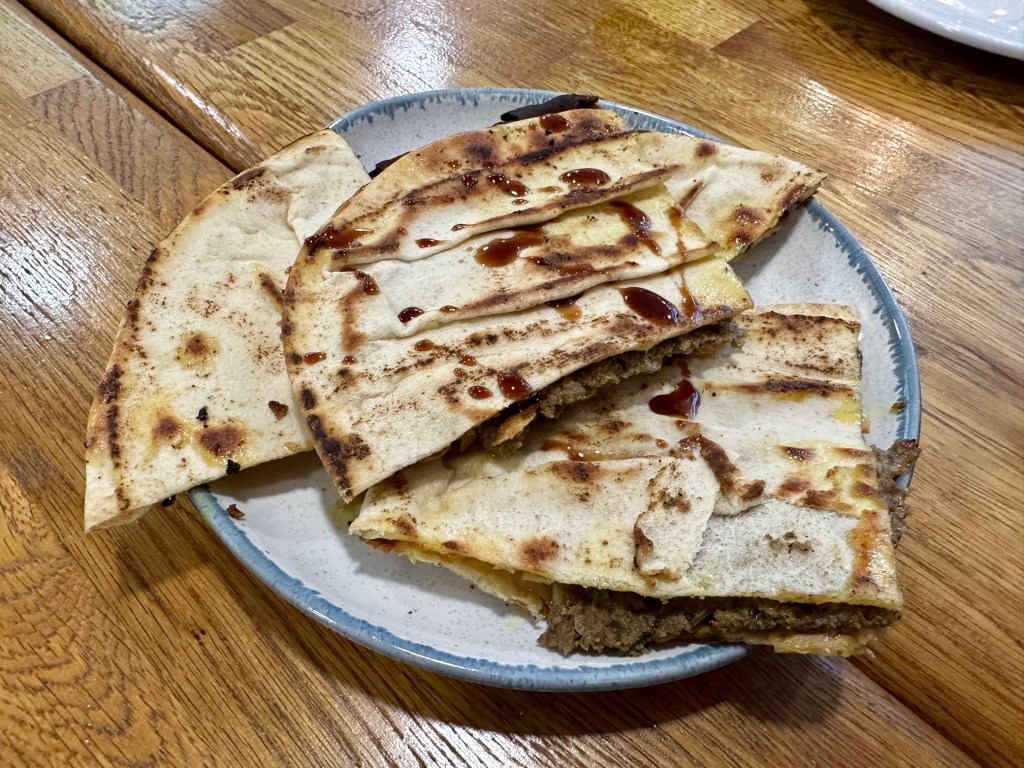
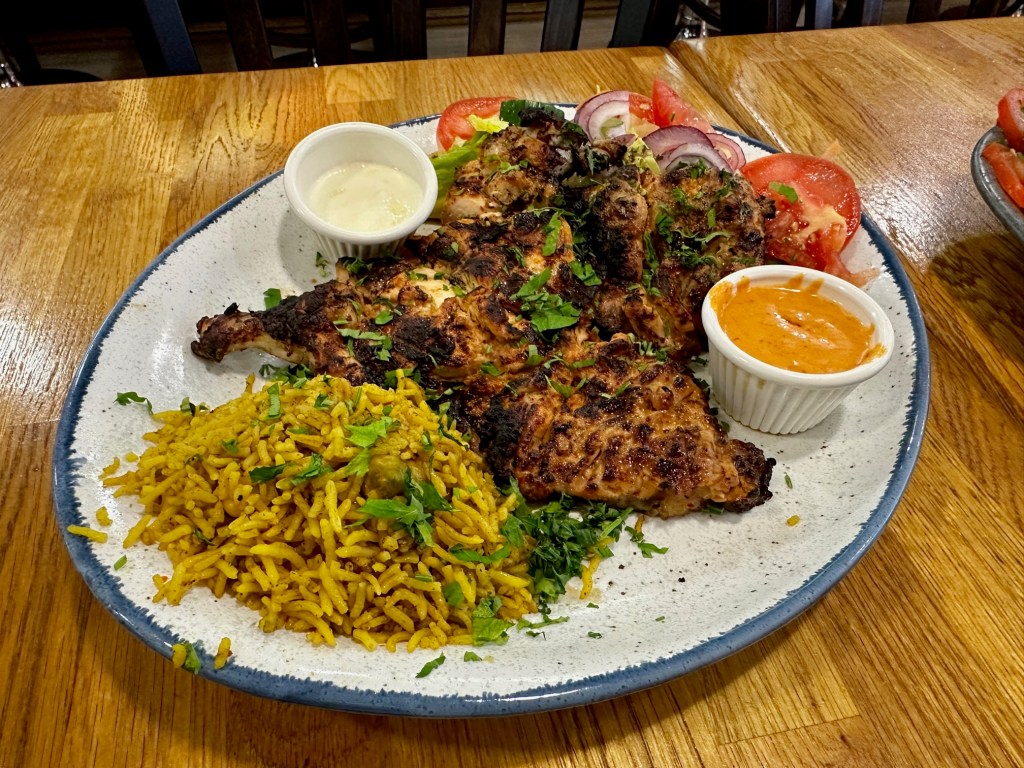
Bakery House rebranded as Lebanese Flavours in March 2025, although the menu and ownership are apparently unchanged.
It’s strange to find myself writing about Bakery House again. In 2015 when I reviewed it, not long after it opened, it was a genuinely game-changing restaurant in Reading – an authentic, uncompromising Lebanese restaurant with no alcohol licence, the perfect counterpoint to the grown-up La Courbe in town which offered a huge selection of Lebanese wine. From the front you could be fooled into thinking Bakery House was a kebab joint, but out back you were treated to gorgeous, gorgeous food. And plenty of people thought so: Bakery House prospered, while La Courbe (with lovely John Sykes as its landlord) withered and died.
And prosper it really did, becoming part of the fabric of town in a way few restaurants manage. You could easily make a case that Bakery House is one of the most significant Reading restaurants of the last ten years. The first couple of times that I ran the World Cup Of Reading Restaurants on Twitter, it was the runner-up: if Clay’s hadn’t had the temerity to open the previous summer, I’m sure it would have won the title in 2019.
But also, Bakery House is part of my story: I can’t think of any other restaurant, not even Dolce Vita, that has kept me company through so many different phases of my life. I remember eating there with my ex-wife shortly after it opened, or grabbing takeaway from there to eat in front of the telly at home, a few doors down. I had a girlfriend after that who went there with her family every Sunday without fail, the restaurant part of her rituals, the wait staff fussing over her kids.
Another partner met my mother for the first time sitting on the wall outside my crummy transitional post-divorce flat, eating a Bakery House shawarma wrap. And then I got together with Zoë, and it was one of the first Reading restaurants I took her to. One of our rituals would be to go to Nirvana Spa on a Sunday and then, rather than cook, to stroll over to Bakery House. Their food was always the perfect bookend to a carefree day, and given that Zoë often works at the weekend those days were particularly special.
Anyway, enough about me: you probably have your own Bakery House stories and I’m sure they’re far more interesting than mine. But apart from some lockdown deliveries, I haven’t eaten in Bakery House since the pandemic. And a couple of those deliveries were a bit wayward – little things, like the boneless baby chicken maybe being not quite as succulent as usual, or the rice that was meant to accompany it going missing in action.
Then I started to hear vague rumblings that the place wasn’t quite as good as it once was, and truth be told I started to worry. I had always blindly assumed that Bakery House would survive the twin storm of Covid and the Tory-induced cost of living crisis. What if I was wrong?
At the end of May I heard an intriguing piece of news from Mansoor, a regular reader of the blog. He told me that Bakery House had been bought by the owners of House Of Flavours. He’d been told there were no plans to change the menu or the chefs, and I was pleased to hear that the manager Mohamad Skeik, who I interviewed for the blog back in lockdown, was staying in position.
I didn’t know how I felt about that news – on one level I was relieved that Bakery House’s survival seemed assured, on another I felt bad that it might have been in question and that I hadn’t known. But also, was it really business as usual at Bakery House? I wanted to find out, so a few Sundays ago, after a relaxing day spent poolside at Nirvana, Zoë and I strolled down South Street to resurrect our pre-Covid tradition.
Subscribe to continue reading
Become a paid subscriber to get access to the rest of this post and other exclusive content.
It’s strange to think that I took nine years to review anywhere in Maidenhead, and then went there three times last year in relatively quick succession. The Elizabeth Line is, of course, the main reason for that, making the place only twelve comfortable, air-conditioned minutes away. But the other reason, which is similar but not the same, is the effect the Elizabeth Line is having on Theresa May’s stomping ground.
Speaking of the great woman, here’s a true story: I was within spitting distance of the former Prime Minister last year when she was the mystery star guest at my secondary school’s fiftieth birthday celebrations. Fuck me, it’s Theresa May! I said as she walked past the bench where I was drinking warm cider out of a plastic glass (fortunately she didn’t try to, although I’m pretty sure she heard me).
As I’ve mentioned before, all sorts of interesting restaurants are proliferating in Maidenhead now it has these shiny new transport links, and many are the sort of places you might wish Reading had. A Hoppy Place has the best part of twenty beers on tap with a scale and central location that combines the best of the Nag’s Head and the Grumpy Goat. Seasonality, which I reviewed last year, is the kind of seriously good small independent modern European restaurant that has long eluded central Reading.
Sauce & Flour – still hate the name – might not have been my bag but even so it was undeniably bang on trend. El Cerdo, which opened recently, is building good word of mouth for its tapas (Reading town centre last had a tapas restaurant in 2016, if you’re keeping score).
And finally, getting to the point, there’s Knead, the subject of this week’s review and the reason I plonked my arse on that iconic moquette about half an hour after I closed my laptop for the week, pulling out of Reading Station with Zoë, a weekend of sunshine, food and company ahead of us. Within another half an hour we were sitting in the sun outside A Hoppy Place with a couple of cold beers, a packet of pork scratchings and one eye on the menu of our dinner venue. Life was good.
Knead’s story is a time-honoured one involving many of the elements you often see in independent hospitality businesses. Husband and wife team (check) Olivia and Simon Perry bought a van (check) in 2018. Four years of street food events (check), catering (check) and pop-ups (check) later, they decided to take things to the next level and move into a permanent spot. They carried out some crowdfunding last year (check) and finally, in December they opened their first restaurant in the middle of Maidenhead.
I don’t mean to sound dismissive or to brand that narrative as a cliché. Scrolling back in time all that way to 2018, seeing the whole thing unfolding in reverse like Memento, I was struck by how hard the Perrys had worked to get to where they are. This was no flash in the pan, no affectation or fad but the culmination of years of work. It made me really want them to do well. It made me think about whether, really, I’ve ever stuck at a dream even half so long. And, of course, it made me hungry.
Knead is on the ground floor of a new build, like A Hoppy Place, Barista & Beyond and, for that matter, Dee Caf and that gives it advantages it makes the most of – proper space outside, big double aspect windows and a surprisingly generous room. I loved the framed prints and the “hydroponic wall”, thick with basil, and if the tables were cheek by jowl the place was so buzzy and happy, filled with the promise of a new weekend, that I was really unbothered by that. At the next table, a couple were sharing a pizza: come to think of it, maybe behaviour like that is why they have to cram them in.
“Who shares a pizza with restaurants struggling like they are right now?” I said, possibly louder than I intended, and Zoë gave me a look I know well, the one that silently says why do you have no indoor voice? I’d like to say I made a mental note there and then to order more food, but in truth that decision had been made hours before, as the train doors had closed.
Knead’s menu is good, small and pleasingly eccentric, by which I mean that it’s full of surprises. Half a dozen red pizzas, three white ones, a handful of nibbles and sides and a couple of sharing boards. That’s all, and many of the obvious pizza choices are missing – including the anchovy and caper combo I would normally pick on autopilot. Pizzas max out at thirteen pounds and everything is keenly priced – so again, what people are doing taking up a table and just eating the one pizza completely escapes me. I’m sorry, I won’t mention that again.
Another encouraging sign is that suppliers get a name check. Some, like Marlow Cheese Company or Agosti Gelato, who make their ice cream in Cookham, are local. Others like Islington’s Cobble Lane (who provide the cured meats) may not be but have a good reputation. I also absolutely loved Knead’s decision to stock beers by White Waltham’s Stardust Brewery, because I think nothing goes with pizza quite like beer. I had their Saaz Pilsner, which was crisp, bitter and rather nice, while Zoë tried their Optic IPA: a sip of hers made it clear that I’d made the wrong choice.
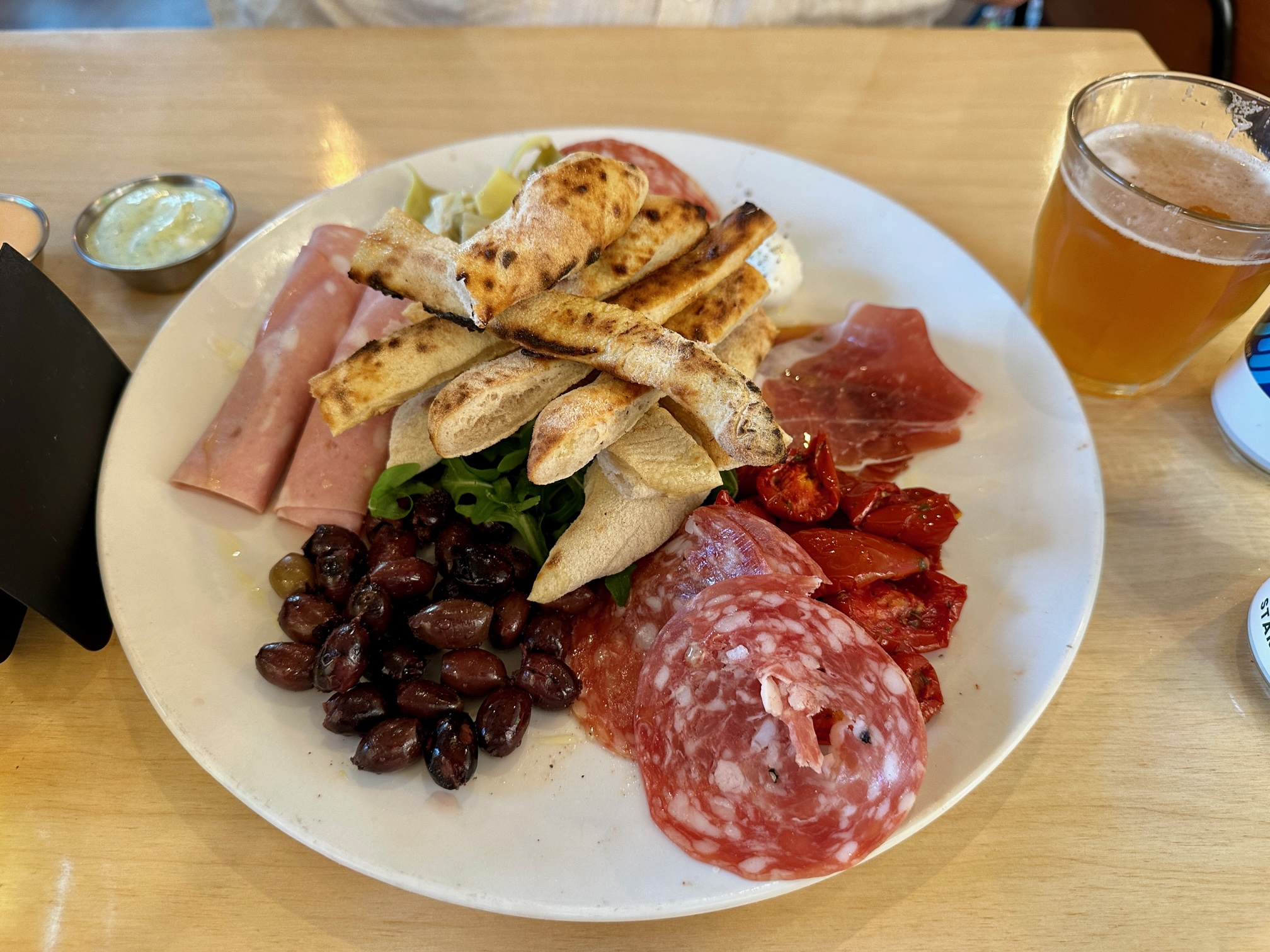
We started with Knead’s charcuterie sharing board, which clocks in at just under fifteen pounds, and it was easily the least impressive thing I ate all evening. This could and should have been an opportunity to showcase how well Knead buys, but it fell flat. The prosciutto had the sheen of something freshly decanted from plastic, the mortadella was – well, still something I’d never really choose to order. The salami was decent but unexceptional. Cobble Lane does lovely cured meats, but I’d be surprised if any of this came from them.
So with the charcuterie not exactly the star of the show, that left the rest. And the rest felt a little like padding. Artichoke hearts tasted thin and nothingy and had, I imagine, been fished out of a jar. Sundried tomatoes, bocconcini and olives were all perfectly unexceptionable, but you could get this in a plastic tub from M&S. And the “no waste focaccia” made from leftover dough was just sticks of pizza dough and not focaccia at all. Presentation just looked like everything had been shoved on a plate, an attempt to say “look how much you’re getting”.
I know I sound like I’m having a mither. But this kind of starter is one of my favourite things in the world when it’s done right, no better than something you can knock up yourself when it isn’t. In Reading, Mama’s Way does something similar that shows this up for the pale imitation it was. And at the Lyndhurst they’ve just introduced their own charcuterie board. For the same money you get generous quantities of three different types of charcuterie, all from Cobble Lane, and a thick slab of terrine, and they throw in a black pudding Scotch egg. I know that because I tried it the night before my visit to Knead. That’s how I know Knead was going through the motions.
But that’s not, I suspect, where Knead’s strengths lie, and perhaps they just have that dish on their menu because they think it’s something a pizzeria should have. Once we moved on to the pizzas themselves they became significantly more assured.
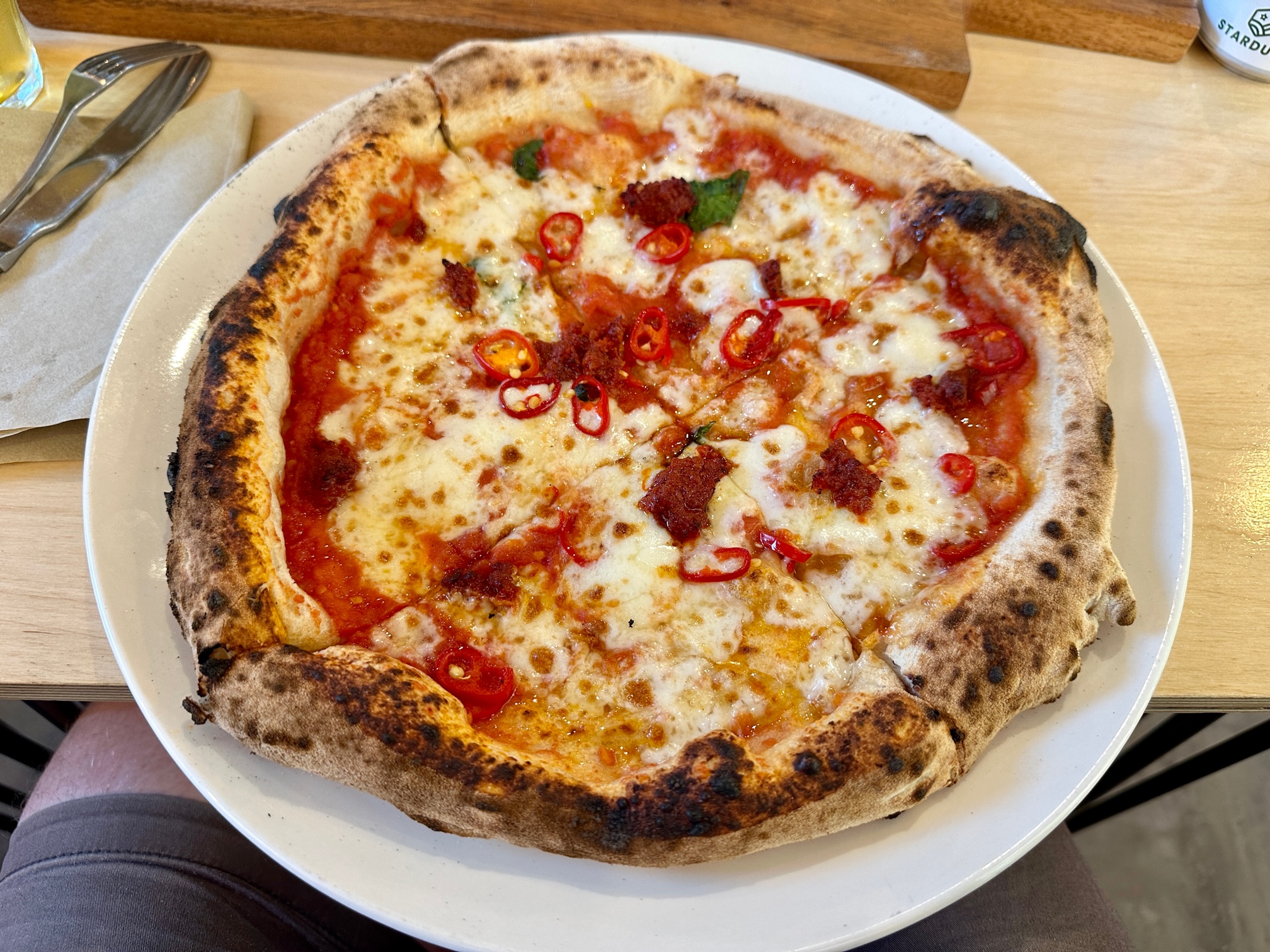
Mine, the “Sergeant Scoville” was that modish classic, the pizza with ‘nduja and some other stuff. In this case they hadn’t thrown the kitchen sink at it, so just ‘nduja, chillies and some hot honey from a London company called Dr Sting. Maybe my tolerance to heat has ramped up after years of Clay’s and Kungfu Kitchen, but I thought this was affably mild. The ‘nduja though, from Cobble Lane, was absolutely spot on with that almost-acrid, savoury punch, and they weren’t stingy with it. The hot honey got lost in the mix a little, but I’d love to see Knead pair it with some blue cheese.
Starting with the toppings, though, is a little arse about face because the fundamentals – the base and the tomato sauce – really were top-notch. A brilliantly chewy, speckled crust, a base that held together and a total package that wasn’t sloppy or untidy. Its closest peer in Reading these days would be Sarv’s Slice, which I really rather liked, but Knead’s pizza is a little bigger, a little better and a little better value. I also ordered a pesto mayo to dip my crust in, which I thought didn’t taste quite right. I subsequently realised from looking at the bill that it was vegan – given that neither pesto nor mayo should be vegan, I thought that was a tad disappointing.
Zoë’s choice, which she out and out adored, was a white pizza. Now, I have friends who think these are against God and against nature, but I personally think there’s a time and a place for them. Based on Zoë’s reaction to this one, the place might be Knead and the time might be the next time I go to Knead.
In the “Hello Gourd-Geous” (when did wacky names move past craft beer and just become what everybody does?) the ‘nduja was still present and correct but harmonising with a completely different backing band. This time it was a sweet creamed pumpkin base spiked with blue cheese (“and there’s loads of blue cheese”, Zoë added). She had a sriracha mayo dip for her crust, which would have been overkill for me but suited her just fine.
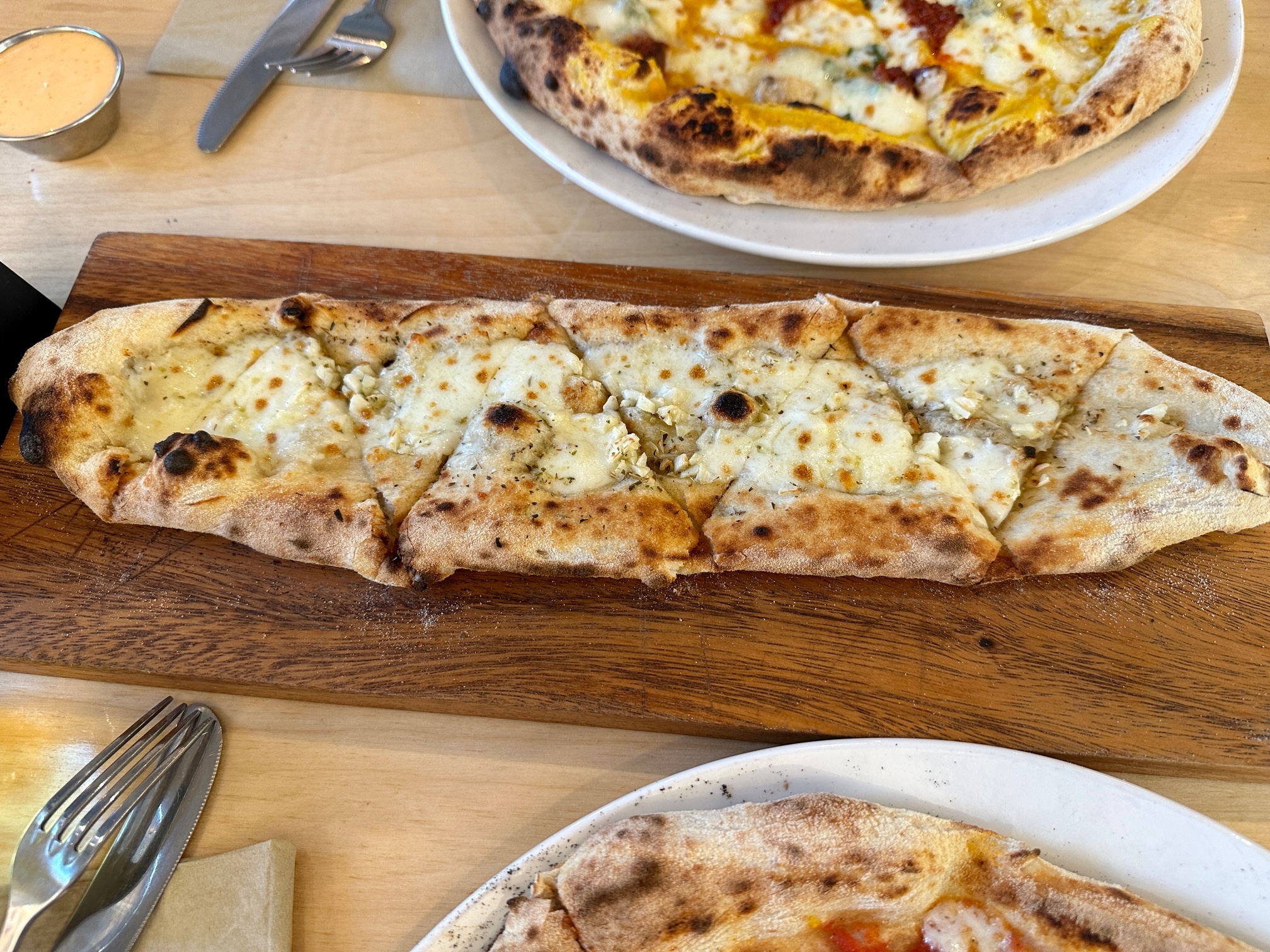
Out of sheer greed – why have one pizza between two when you can have two and a half? – we also ordered the “Dreamy Garlic Bread” with mozzarella. I liked it, but it’s a silly name: when something involves quite this much garlic a better name might be something like the “Fucking Honking With Garlic Bread”. Given that they’re probably trying to appeal to families, maybe not.
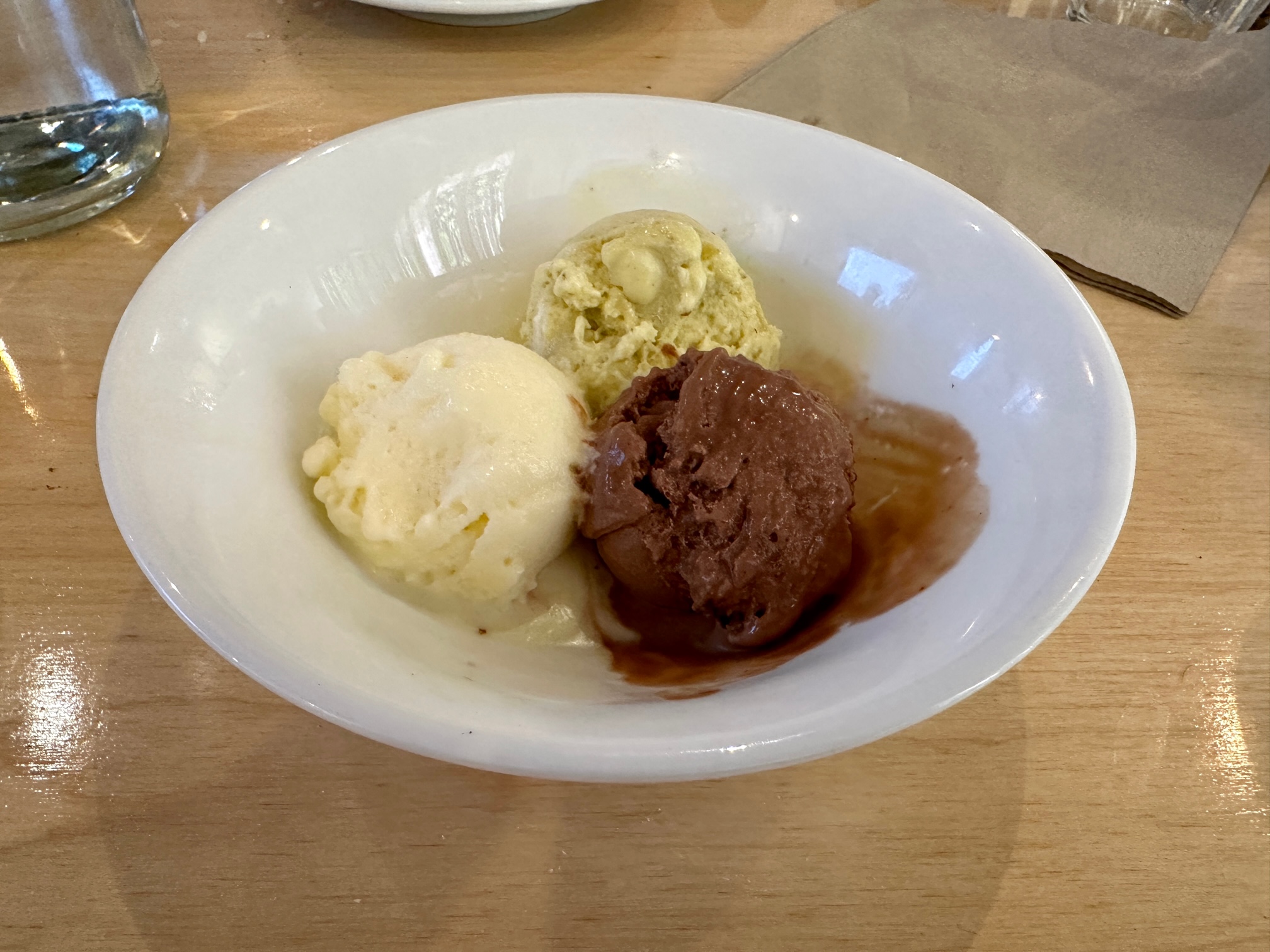
Dessert rather had to be done, although the selection is on the slender side. I really wanted to try the gelato, which is made locally with milk from the fantastic Lacey’s Farm. I was also drawn to this because the flavours speak of more than a passing acquaintance with Italy – pistachio was a very creditable effort, and the chocolate was nicely bitter, not making the easy concession to pack in sweetness. But what I really loved was the fior di latte ice cream. Our default ice cream in this country is vanilla, as if we can’t accept that ice cream could just taste of itself. It takes confidence in your raw materials to make an ice cream like this, and I loved it. Only a handful of ice crystals in a couple of the scoops spoke of a few quality control issues.
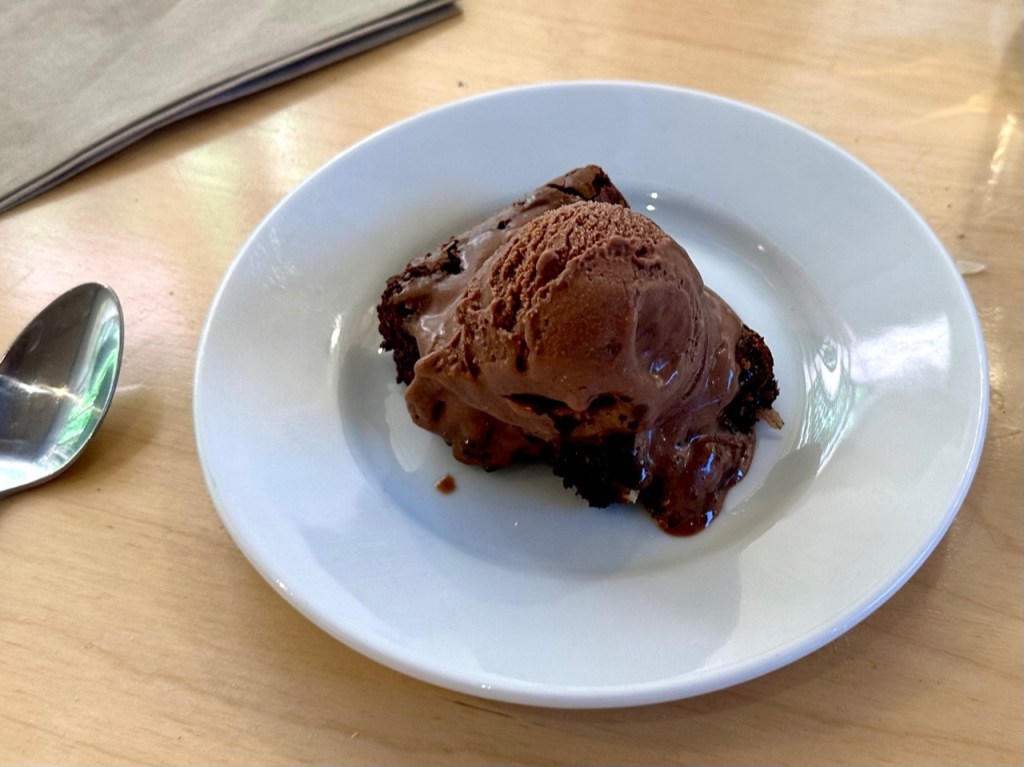
Zoë had a scoop of that bitter chocolate ice cream – a generous one at that – on top of a fudgy, gluten free double chocolate brownie. Just as I have friends who think a white pizza isn’t a pizza, I have other friends who think a brownie isn’t really a dessert. I have more sympathy with the latter school of thought, but anyway Zoë loved it.
Our bill for all that food and a couple of beers came to sixty-eight pounds, not including tip. I do also have to call out the service which was excellent throughout: Knead has a young, enthusiastic team who were working their socks off on a busy Friday night and you really wouldn’t have known that the restaurant was barely six months old. It has that maturity which comes, I guess, of working on their concept and striving for this for such a long time. I left with a full stomach and that warm feeling that comes from spending your money in the right way, with the right people. Nothing is quite as good as excellent hospitality when it comes to delivering that.
All in all I really enjoyed Knead. The only real misstep was that charcuterie board at the start – and if Knead is going to offer something like that they should do it properly and have the courage of their convictions when it comes to actually using the charcutier who supplies the restaurant. For that matter if they want to keep it local Bray Cured, just down the road, do some of the best cured meats I’ve had in this country. But that gripe aside, Knead was very hard to fault. The pizzas were very accomplished – better, on balance, thank anything we have in Reading – and the commitment to local suppliers for cheese, gelato and beer is laudable.
To have this a twelve minute train ride away, with an excellent selection of beer and cider practically next door, makes Knead a very easy place to recommend on a Friday or Saturday night, or even in the week if you can’t be bothered to cook – which, in fairness, describes me most evenings. So Maidenhead has an excellent high end modern British restaurant, a great town centre craft beer venue and a cracking indie pizzeria. For all I know, it might have a destination tapas bar as well. While these places are opening in Maidenhead, Reading got a Popeyes. Makes you think, doesn’t it?
Knead Neapolitan Pizza – 7.6 Unit A, Trinity Place, St Ives Road, Maidenhead, SL6 1SG 01753 973367
The Elizabeth Line has been a game changer when it comes to eating out: I’ve used it to reach three of the last four restaurants I’ve reviewed for the blog, all of them significantly easier to get to courtesy of the Tube’s new addition. It’s no coincidence, either, that last year I reviewed three restaurants in newly resurgent Maidenhead. Plenty of interesting options have become more accessible, which makes my job (not a real job, but you catch my drift) much more fun.
The phenomenon you might not be aware of, though, is the same thing in reverse, that some people think the Elizabeth Line opens up Reading as a destination. The first time I became aware of that was an article on the Good Food Guide website last August called “Where to eat Indian food along London’s Elizabeth Line” by food writer Sejal Sukhadwala. In it, she said that the new line made it possible for food lovers to eat a panoply of different Indian dishes at restaurants from Canary Wharf to the ‘Ding: among her recommendations, at the end of the line, was our very own Madras Flavours.
Since then, it’s been on my list to review, even if the opening sentence – “It’s worth travelling to Reading specifically for this sparkling Tamil vegetarian located just past the beautiful town centre” – made me wonder whether she’d actually been to Reading.
My suspicions were further enhanced when three months later the same author published another article, this time in the FT, entitled “An Indian restaurant crawl along London’s Elizabeth Line”. Hats off to her for getting paid twice for the same idea, and clearly there were enough good restaurants en route to justify two articles, but again the bit about Reading didn’t ring true.
On that occasion, Sukhadwala recommended House Of Flavours, a solid choice. But do you recognise Reading from this description? “Walk past Reading’s beautiful Abbey Quarter, which houses a library and a medieval church, and in less than 10 minutes you’ll find an impressively varied concentration of fine Indian restaurants in and around Kings Road.”
I can be guilty of romanticising Reading, but even I found this somewhat florid. “It’s worth booking a long weekend in Reading to discover the town’s high-quality Indian restaurants”, it added. It’s welcome to see Reading praised in the national press but, really, has she ever been?
Anyway, the article worked because it got me thinking about a trip to Madras Flavours. Previously, all I’d known about the restaurant was its impressive Deliveroo sockpuppetry, when in 2021 it went by over 40 different names on delivery apps, including my favourites “Soul Chutney” and “Fatt Monk” (come to think of it, that article in the FT recommended a restaurant called Fatt Pundit: maybe they share a branding expert).
Two years on Madras Flavours has weathered the Covid storm, often looks busy – especially at weekends – and seemed ripe for a visit. So I headed there on a weekday evening with Emma, who comes to my readers’ lunches and foolishly volunteered her services. “If you ever want a vegetarian perspective on your dining experiences, I’d be happy to help” she’d said.
Subscribe to continue reading
Become a paid subscriber to get access to the rest of this post and other exclusive content.
I have a note on my phone which is just a list of London restaurants. I mean, doesn’t everyone?
Strictly speaking, it would be more accurate to say that I have a note on my phone which is two lists of London restaurants. The first is a set of restaurants near Paddington, and dates from the time early in 2020 when I thought it might be a good idea to branch out. I figured that many of us end up having to drag our feet in London to take an off peak train home and that some reliable restaurants people could visit in the meantime might prove a godsend.
It was a good idea in theory, but I only managed one before suddenly all of us were taking far fewer trains, and heading to London became a pipe dream. But the list’s still there, and one day I may get back on it, exploring the Malaysian restaurants around Paddington, the Lebanese joints on the Edgware Road, or just revisiting my favourite little side street Greek place in Maida Vale.
The second list is of all the London restaurants I’ve always wanted to review but never got round to. Some, like Rules and Noble Rot, I’ve been to before. But others are ones I’ve read about in newspapers or in blogs and told myself I’ll visit one day. Like the Wes Anderson-esque French stylings of Otto’s in Clerkenwell, or the little dining room above Soho’s French House where Neil Borthwick, Angela Hartnett’s husband, cooks a small menu of Gallic classics. They’re not all French, I should add: Smoking Goat, Kiln, Quality Chop House all get a look in. Even with all the casualties in hospitality, I know this list will only ever increase in size. One day, it will see me out.
Manteca has been on that second list for quite a while. It started with a brief spell on Heddon Street (not far from where Casa do Frango is now) before spending some time in Soho and then relocating to Shoreditch’s Curtain Road in late 2021. At every step critics and bloggers have had nothing but praise for it, and looking at the menu in the run-up to my visit it was easy to see why. They make their own pasta on site – so far, so Padella and Bancone – but also specialise in nose to tail eating and make their own salumi, so nothing gets wasted.
The acclaim was so universal that this felt as close to a sure thing as you could get, so I made a lunch reservation for the Saturday of May’s last long weekend, so Zoë and I could try it out after a shopping expedition. Arriving a little late – finding your way there from Liverpool Street can be a bit of a horror show if you get lost in the Broadgate Centre – the welcome was warm and forgiving.
It’s a sizeable site, although you’d never know it was a Pizza Express in a previous life, and they pack them in, with the overall effect that you can barely hear yourself think (would-be restaurant inspector and all-round gastro-spod Andy Hayler complained that it was “like eating in a nightclub” – as if he’d know), and once you’re wedged into your table you’re going nowhere in a hurry. Our server initially tried to seat us at a dingy, unloved table right at the back, far from daylight, and when I asked if we could instead have a nicer table near the window she seemed taken aback, as if the idea had never occurred to her.
The menu’s brilliant at creating agonising dilemmas, more than nearly any restaurant I can remember. There are snacks and nibbles, small plates and a handful of pasta dishes – fewer than you might expect. Small plates are around a tenner, pasta closer to fifteen. Finally, there were some bigger dishes which came in at thirty pounds plus.
Our server explained that pretty much everything was designed for sharing. She also talked us out of ordering two of the large plates once she’d taken the rest of the order, a fact for which I was very grateful further down the line. I sipped a gorgeous cocktail made with Amaro and lemonade – how did I not know that was a thing? – while Zoë, as is her habit these days, tried (and loved) her negroni.
We started with a few snacks while we made up our mind and they contained the only dud of the meal. Focaccia was, to my mind, nothing of the kind, being dry and stodgy and only having a whisper of oil in it. The top crust was great, but that was the tip of the iceberg. And the iceberg was dense and heavy going. I should add that Zoë loved it, but she’d spent the week on a carb-free diet so she might just have been euphoric to be eating bread again.
Much better were the fried olives, little breaded spheres of sausage meat and olives that I could have eaten all the live long day. At three pounds each, though, you might be broke before you were full. Nonetheless, this was the first hint that something special was in store, a hint which quickly gathered momentum, becoming a firmly held conviction.
I’d seen the first of our starters on Manteca’s very distracting Instagram page, along with a caption that said it was only on the menu when they had the right cuts to make it. Ciccioli was lean pork, braised in rendered fat and then pressed into a cake and fried to a burnished crisp. It fell apart under the fork, eager to be dabbed with the sweet-sharp apple mostarda on the side. More than just the acceptable face of mystery meat, this was a symphony of flavour and texture and I wish I’d had one all to myself: if you go, and it’s on the menu, order it.
Less successful, possibly because it’s a dish that happens to share my porn star name, was hogget sausage. I liked but didn’t love it: knowing that Manteca does all its butchery on site reassured me that this was packed with the good stuff, but the texture was still smoother and closer to saveloy than I’d personally choose. The flavour more than made up for it, the whole thing draped in wild garlic leaves, because ’tis the damn season. Probably should have kept some of that slab of bread to mop up the juices – maybe that’s what the restaurant had in mind for it.
I think I read somewhere that Manteca used to do their pasta courses in a small and large, but they’ve done away with that now and a portion is very respectable size – enough for you to eat as a main, if you’re no fun, or a beautiful stepping stone between the smaller and larger plates. Manteca’s brown crab cacio e pepe is so fêted that it might be the closest thing the restaurant has to a signature dish, so naturally I ordered it.
It was a gorgeous, simple plate of soothing sustenance which didn’t outstay its welcome. The pasta – strozzapreti in this instance – was terrific, al dente almost to the point of squeakiness. And the crab didn’t dominate, playing nicely with the cheese and pepper to create something beautifully emulsified and far greater than the sum of its parts: if anything, the foremost note was a brilliant tingle of lemon that prevented it from cloying. Like most of my experience, it thoroughly justified the hype.
Wild garlic made another appearance in Zoë’s pasta. Chitarra, a sort of square spaghetti, if you can imagine that, was positively luminous with wild garlic, its edges fringed with racing green wild garlic olive oil. An egg yolk nested in the centre and although it looked slow-cooked and fudgy, once nudged with a knife sunrise spread across the plate. I didn’t try any, because it struck me as a messy thing to reach across the table and eat, but Zoë loved it. She tasted citrus in this too – lime, she thought, although that might have been synaesthesia because it was just so very green.
The one thing that doesn’t tell you about those two pasta dishes – one of the few frustrations of eating at Manteca – is that they came to the table ten minutes apart. When Manteca said their dishes were intended to be shared I assumed they couldn’t mean the pasta because nobody shares pasta, except in Lady And The Tramp. Perhaps they honestly thought we’d share the first pasta dish and then share the second, but they’d also said, in a Wagamama-esque spiel, that dishes from the same section of the menu would come out together.
Does it matter? On many levels, not really. We were having a lovely time, by this point we’d ordered a beautiful bottle of an Australian pinot noir/syrah blend and all was well with the world. But it’s always weird to sit there while your dining companion watches you eat and then have your roles reversed: it’s why I so rarely send steak back in a restaurant. More to the point, we only had the table for two hours – less, because we’d showed up a little late, so you’d think they’d be tighter on time. As it was, because they didn’t rush us through the pasta, which they should have done, things got more frantic at the end.
But this was the only misstep in a meal where even if we were slightly processed, it never felt like it. Manteca’s front of house team were quite fantastic from start to finish, working in one of the busiest, buzziest restaurants I’ve eaten in for a very long time. Also, given the acoustics, their hearing must be exceptional – for the first half of the meal Zoë and I probably had to repeat almost fifty per cent of everything we said.
Arguably, the best way to deal with the challenging noise levels is to dish up food so good it renders customers speechless. I think that might have been Manteca’s plan, and they achieved it admirably with the next set of dishes. Grilled duck breast, pink and tender underneath caramelised skin, was superb, and pairing it with sausage – I think also made from duck, but I might be wrong – was a masterstroke. But the thing that made the dish, for me, was the preserved quince that came with it: fruity, ever so slightly chewy, a fantastic foil for all that meat. It reminded me, ever so slightly, of Georgian fruit leather (don’t knock it til you’ve tried it) and I’d choose it over red cabbage any day. We were approaching full by the end of this dish, but we heroically soldiered on.
The accompaniments were a mixed bag. Grilled greens were a wan medley of cauliflower and chard, and although they tasted decent the texture was too limp for my liking. A thousand times better – and again, almost reason to visit on its own – were the pink fir potatoes, cooked until golden and crispy and smothered in something the restaurant calls “salumi brown butter” – little crunchy nuggets of meat, herbs and fat. I could have eaten these on their own and left the restaurant a happy man, but being able to pair them with duck, or sausage, or use them to soak up the pool of juices at the bottom of the plate, was nothing short of heavenly.
By this point we were decidedly full but still up for attacking the dessert menu, possibly with something from the restaurant’s extensive list of amaros, once we’d finished our bottle of red. Our minds were concentrated wonderfully by our server telling us we had less than twenty-five minutes before they needed the table, so we were forced to accelerate matters.
The dessert menu is skeletal, with just three options. Zoë’s choice, a chocolate choux bun filled with chocolate cremoso, tasted very nice indeed but I was delighted I hadn’t ordered it because I’m not sure I could have pretended to you that I could taste the “whey caramel” it apparently contained, or even for that matter tell you what whey caramel tastes like.
I’m also delighted I didn’t order it because the dish I did order, pistachio cake, was one of the finest desserts I’ve ever had. There was an awful lot going on here, all of it good on its own yet better together. The cake, which could so easily have been stodgy or unremarkable, had a beautifully dense texture with flashes of salt and pistachio in every spoonful. The ribbons of candied, pickled fennel on top added a fragrant sweetness that never overpowered: I’d have liked more of them, but fennel always has that effect on me. And the preturnaturally smooth pistachio ice cream was as good as anything I’ve had in Italy – or for that matter at Clay’s, who do a mean pistachio ice cream these days. Resting the sphere on a handful of salted, roasted pistachios, though, was an inspired touch.
Zoë had a spoonful, and her reaction was immediate: “you win”. If we’d had our table for longer, I think she’d have ordered one as a second dessert. It’s rare for me to rave about dessert, rarer still to do it about a dessert with no chocolate in it, but I’ve thought about this every day since my lunch at Manteca, wondering quite how they elevated something seemingly so everyday to a dessert so extraordinary.
As we were tight for time, there was no digestif. But there was still room for one last delight, so along with the bill we asked for a couple of pieces of beef fat fudge to send us on our way. I’m not always sure about beef fat in desserts – I still remember a beef fat caramel I had at an otherwise excellent restaurant in Cardiff for which no word other than “minging” will do – but this lent a certain glossiness while omitting the overtly bovine notes. It was one pound fifty for a generous cube, deftly sprinkled with salt, and it took all my strength not to ask them to make me up a box. I wasn’t hungry any more, but I knew I would be later. Or rather, I wouldn’t be hungry but I’d have made enough room for more of that fudge. Another time, perhaps.
Our bill for all that food, a couple of aperitifs and that gorgeous bottle of red – which I liked so much that before the end of the meal I’d tracked it down and ordered a few bottles online – came to just over two hundred and fifteen pounds, including service charge. You could eat there for less, and have less fun, but honestly, when you have a meal this good it costs what it costs, and you don’t give a shit. We emerged blinking into the Shoreditch sunshine, and made a beeline for the Mikkeller bar for a beer and a post match debrief. Our ratings are usually a gnat’s crotchet apart, but for this one they were identical.
You can see that rating just a few paragraphs below, but what’s more important is to talk about just how good Manteca was. Because the truth is, back when I used to eat in London more often – but wasn’t reviewing those restaurants – they never quite lived up to my expectations. To the point where I worried that I was becoming semi-professionally underwhelmed. So I did the likes of St John or Quo Vadis, the places everybody likes, and I wondered what I was missing.
I sometimes think that London has to survive on a bubble of hype because if it wasn’t for that, people would wonder why they’re paying such unsustainable amounts of money to live and work there. And indeed my two recent visits to highly rated London restaurants, Casa do Frango and Chick ‘N’ Sours, left me equally ambivalent. So I can’t tell you how happy I was to eat somewhere that not only justified the hype but made me want to add to it, to lend my voice to the chorus of voices shouting about how special Manteca is. Though hopefully you’ve been reading my blog long enough to know that I don’t really do hype. I’m just as likely to walk away from somewhere critically acclaimed feeling nonplussed as I am delirious with joy, if not more so.
So there you have it: Manteca served up one of my favourite lunches of the last ten years and is well and truly one restaurant ticked off my “places I must get to in London” list. Although it doesn’t make matters easier because now, when I try and work through the other restaurants on it, I’ll always be thinking, in the back of my mind, or I could just go back to Manteca. Anyway, hopefully you’ve read this and might add it to your own version of that list. I’m still kidding myself that everyone has one, because in my echo chamber they probably do.
This week’s review came about for a simple reason: I went to Nando’s. Six weeks ago Zoë and I were in town on a slow Sunday lunchtime, neither of us could face cooking that evening and we longed for the comfort of a known quantity. Judge all you like, but when I feel that way Nando’s makes it on to my long list, which means that occasionally it makes the shortlist, and sometimes it winds up on the podium.
I mean the Friar Street branch – no offence if you prefer the one in the Oracle – and my usual order is butterflied chicken, medium, with macho peas, spicy rice, garlic piri-piri sauce on the side. It always delivers, and it did on this occasion: I left sated and happy, putting a picture on Instagram to show that I’m not all preaching and indies. Later that day I got a message from my friend James (last seen on this blog living it up in Marmo).
“I’ve recently cracked how Nando’s do their chicken” it said. This was a very James thing to say: naturally I was intrigued.
“Don’t they just cook it, keep it in a drawer and then finish it on the grill after you’ve ordered it?”
“They slowly cook the chicken at about 90 degrees over a couple of hours, almost poached in a basic marinade.Then they grill and layer on the piri piri multiple times to create a layer of flavour: baste, seal and grill, turn, baste etc.”
Doing this sort of painstaking research was also very James. But better was to come, because when Zoë and I went to stay with him and his partner Liz over Easter weekend, he went a step further. “I’m going to recreate it”, he said. He was true to his word, so one night we sat down to the most glorious slow-cooked, basted and grilled piri piri chicken. James cooked the chicken, Liz made the macho peas, the coleslaw and fries were from the supermarket. The whole affair was even more soothing than the real thing: Nandos-esque rather than just Nandos-ish, if that makes sense.
“The place I keep meaning to try is Casa do Frango.” I said, between mouthfuls. “They started out with one near London Bridge and now they have three across the city.”
“Let’s do it!” said James.“I’d love to accompany you.” So we did: some people might find this eccentric, but James and I booked a Friday off work and headed to London on the train, on a pilgrimage for the best piri piri chicken outside Portugal.
Casa do Frango (the house of chicken: in Portuguese it sounds far more exotic than, say, the hut of pizza) came to my attention five years ago when the original branch got a glowing review in the Observer. And I always intended to go at some point, to see if it could get anywhere near the best piri piri chicken I’ve ever had, in a little Lisbon alleyway. That was at a place called Bonjardim and it remains a real death row food memory, the skin brittle and intense, rubbed with lemon and salt, the meat underneath a yielding feast. Nando’s, much as I like it, has never displaced it in my memory, but perhaps Casa do Frango could.
For this review I decided to visit Casa do Frango’s newest, most central branch. It’s on Heddon Street, just off Regent Street and a stone’s throw from Liberty, and I picked it partly because it’s become their flagship, partly because it fitted better with our plans for the rest of the day but mainly, in truth, with you lot in mind. After all, a decent affordable place to eat not far from from Piccadilly Circus might potentially be of use to a lot of you (although not one of my readers who recently got in touch to tell me that, although he read the blog religiously every week, the recent ones hadn’t been hugely useful given that he was allergic to chicken – sorry Tom!).
On the way in I realised that it must be the best part of three years since I’d set foot in central London, over three years since I’d taken the Tube. That means I’m a tedious Johnny-come-lately when it comes to how game-changing the Elizabeth Line is to Bond Street (although I enjoyed my guided tour of the Elizabeth Line, thanks to James who is quite the public transport enthusiast). It also meant I wasn’t prepared for how quiet it was on a Friday – not Vanilla Sky Times Square levels, but I’d never seen Regent Street so sparsely populated. “Thursday is the new Friday” said James.“Everyone’s working from home today.”
Heddon Street is a little alley literally lined with restaurants – a ramen place, an outpost of Gordon Ramsay’s empire, a pub called The Starman (the cover of Ziggy Stardust was shot outside) and a café called Ziggy Green, because people are nothing if not unimaginative. We walked past Michelin-starred Sabor, which looked gorgeous inside (“I’ve been, it’s great” ventured James) and I wondered if I’d have restaurant regret. But Casa do Frango is a handsome-looking spot, and I loved the tiles outside reading RUA HEDDON. The muggy drizzle said we were in London, but it still had the potential to be transformative.
It’s a big site, with two large dining rooms upstairs, some private dining and a very swish-looking speakeasy bar downstairs. We were in the back dining room, their first customers, ultra keen at high noon. It was a great space, ceiling fans whirring, the whole thing surprisingly well lit, tasteful bentwood chairs, brick, tile and warm burnt orange tones. We got a good table up against the wall so we both got a view of the dining room, and it slowly filled up over time. They lunch later in London, the lucky blighters.
The menu only has one main course – that chicken – so it’s all about the starters and sides. The chicken is twelve fifty – back in 2018 when the Observer visited it was still less than a tenner – but most of the small plate starters (billed as “to share”) clocked in between eight and ten. Technically you could eat here as a vegetarian, if you were dragged here, but you’d find it all foreplay and no shagging, so to speak.
I was particularly impressed with the drinks list. The compact selection of cocktails is more than skin deep Portuguese, so licor Beirão and ginjinha both make an appearance: I have happy memories of both. The wine list is one hundred per cent Portuguese, even down to the dessert wines, with a separate section for vinho verde, much of which is available by the glass. Even the port is the lesser-spotted Offley rather than a bigger name. We started with a gorgeous, zesty white port and tonic – I picked up the habit for these in Porto five years ago, they can quite make you forget about G&T – and made our choices.
To begin, that meant trying to eat a representative sample of the small plates. Bacalhau fritters were the best of them – salt cod is one of my favourite things about Portuguese food and these were light-shelled with the perfect balance of carby potato lending bulk and the fish landing the perfect hit of flavour. The aioli, golden and sunny, rounded things off nicely, though I wasn’t sure they needed to glue the croquettes to the dish with more of the stuff.
The pork croquettes were also decent enough, although they lacked the same wow factor. These were served with a mustard bechamel I liked slightly less, and although the flavour of the croquettes was good, the texture suitably silky, I couldn’t help thinking we’d ordered two dishes too similar. The chorizo, grilled with black olive mayo and pickled chillies, might have been a better choice. The croquettes and the fritters, at eight pounds, felt a tiny bit sharp for what you got.
I did love the salgadinhos – little empanadas stuffed with kale, mushroom and onion – though. It’s interesting how the mind can be redirected by pricing: at two pounds each these were technically the same price as a single croquette or fritter, but they felt bigger, better and better value. The salt flakes liberally sprinkled on top gave each mouthful a pleasing little saline spike.
Our final starter promised much but didn’t entirely deliver. A whole head of cauliflower, marinated so effectively in piri piri that its centre had a pinkish tinge, had been charred and then drowned in a vivid green slick of yoghurt and pistachio. Eating this dish felt like reading a well-written novel and not enjoying it as much as I thought I should. Everything worked – the flesh of the cauli firm, the sharp tang of the yoghurt augmented with lime – but by the end it felt like a slog. If the other small plates were a little small, paradoxically this could have benefited from being smaller.
The eponymous chicken arrived as we’d polished off a cold glass of Super Bock. This is where I’d love to dust off my hyperbole but instead, I fear I’ll be delivering some faint praise. There was literally nothing not to like, but perhaps nothing to rhapsodise over either. You get half a chicken per person, and yes, it was juicy and swimming in brick-red juices (“the key is to use smaller chickens” said James, knowingly). But the flip side is that tender though it was, there wasn’t masses of meat and some of it took more persuading off the bone than I’d expected. I was hoping for that hit of crispy skin, too, but the whole thing felt a tiny bit underpowered.
It didn’t compare to my memories of Bonjardim – perhaps the power of nostalgia meant it never could – but I wasn’t sure it was better than the rendition at Casa do James, either. I should add that James liked it more than I did, and he has the added benefit of knowing what he is talking about. We both largely eschewed the little tub of piri piri sauce it came with – “that’s for tourists”, said James – instead trying to get every bit of the glossy, spicy oil coating the bottom of the steel plate.
I should also mention the surprise MVP of our meal, hidden at the back of the photo above. Casa do Frango’s chips are nothing to look at – verging on blond and, on appearances, unlikely to deliver much. In reality they were phenomenal – salty with huge amounts of crunch and staying hot, seemingly, for ages. They didn’t have to be this good, god knows the ones from Nando’s rarely are, and yet this was the dish James and I kept coming back to for the rest of the afternoon. Those fries, though.
Perhaps the reason the chicken was lacking in crispy skin is because Casa do Frango had the genius idea of stabbing huge shards of it into its African rice. This was a phenomenal side, the rice studded with chorizo and sticky plantain and, with the exception of a few clumps, virtually flawless. If they sold a side that was just a bowl of crispy chicken skin I’d have bought several. And taken a doggy bag.
Our final side of Hispi cabbage, though, was too similar to that cauliflower starter, being a brassica charred and festooned with yoghurt. This one was accented with red pepper and a parsley sauce a little like a chimichurri or salsa verde. But even more than the cauliflower, this felt more like a virtuous trudge than an indulgence. The way it was plated was frustrating, too: one wedge of cabbage was perched on top of the other, with the end result that only one of them, really, was properly dressed.
I was ambivalent about dessert, but James had his heart set on one – for research purposes, no doubt – and so we acquiesced. It helped that we accompanied them with a glorious glass each of Moscatel de Setubal: Portugal never gets the credit it deserves for its superb dessert wines and this one was a glowing schooner of sweet, sweet sunshine (I neglected to mention the vinho verde we had with our chicken: superb and ever so slightly effervescent). The service was excellent throughout and our server steered James in the direction of the almond cake which she said was her favourite – she couldn’t eat gluten, which was part of why she loved it so much, but James adored it too.
Settling into my role as designated party pooper, I had a pastel de nata. Well, you have to: any coffee without one in Portugal feels like a coffee missing its soulmate. And although Casa do Frango’s looked the part, it was a fascinating study in contrasts where everything was not quite as it should have been – the pastry, which should be ethereally light, was heavy going and the custard, which should be just-firm with a little wobble, was gloopy. I should have seen the warning signs when they brought it with a teaspoon. What kind of egg custard tart needs to be eaten with a teaspoon? This one, it turns out.
So a proper mixed bag, with plenty to celebrate. But, like Joni Mitchell in Both Sides Now, I worry that it’s Casa do Frango’s illusions I recall. So let’s try and focus on the positives – the wine list is fantastic, some of the small plates are delicious, that rice will live long in my memory and I’m still astonished that the fries were so much better than they looked at first blush. The service – attentive, endearingly laconic, properly Portuguese – was a joy and every bit worth the twelve and a half per cent. It’s a beautiful room and, as I discovered on a foray to the basement, the handwash in the gents smells heavenly.
But I do wonder if the things I really enjoyed about this meal were more about the context of the meal than the food itself. I was on a day off, on a Friday with a good friend, with nothing to do but drift from restaurant to shop to bar to restaurant again. I was in London properly for the first time in eons and it almost felt like we had the city to ourselves. In those circumstances, many meals would feel special. It’s important to try and push that slightly to one side and focus on what we ate.
The whole thing – all that food and four different alcoholic drinks apiece – came to a hundred and sixty pounds, including the service charge. And that’s where you have to stop and think. Is the place better than Nando’s? Objectively yes, of course it is. Is it easily three or four times better than the significantly cheaper Nando’s? I’m not so sure about that. Does it command grudging affection like Nando’s? No, I’m afraid it doesn’t.
And, on Heddon Street at least, Nando’s isn’t even its competition. If you’re in this part of town there are plenty of other ways to spend your money at superior reimaginings of nationwide chains – a short walk away off Carnaby Street, for instance, you could stop into Pizza Pilgrims. It may be a step up from the likes of Franco Manca and Pizza Express, but if you manage to spend a hundred and sixty pounds between two there I’d be very surprised.
The strangest thing about my visit is this: even though pedestrian old Nando’s is an identikit recreated across the country, without the beautiful decor and attention to detail of any of Casa do Frango’s sites, I found this visit made me appreciate the former more than the latter. In fact, shameful confession time: I went back to Friar Street in between visiting Casa do Frango and publishing this review, just to check that I wasn’t on mushrooms, and I stand by what I’ve said. Doubtless that will get me excommunicated from the Guild Of Food Snobs, and I know I’m disagreeing with Jay Rayner again. But would you expect any less from me by now?
Casa do Frango – 7.1 31-33 Heddon Street, London, W1B 4BL 020 35355900