Restaurant review: Snobby’s, Bristol

Snobby’s, a wine bar and Italian small plates spot in Redland, has everything going for it, on paper. It is on one of Bristol’s most decorated gastronomic streets, opposite the critically acclaimed Dongnae and a few doors down from freshly Michelin starred Wilsons and Little Hollows, itself the holder of a Bib Gourmand. It’s received an approving write-up in the Financial Times and floppy-haired grifters Topjaw have featured the place.

It is, you would think, a safe bet. And yet it was at Snobby’s last week that I had arguably the worst – and definitely one of the strangest – experiences at any restaurant in nearly 12 years of eating out and writing about it. So, to channel my inner John Oliver, this week, let’s have a look at that. Because in the process I suspect we’ll find out a lot about what restaurants are supposed to be for, and what happens when they start to forget that.

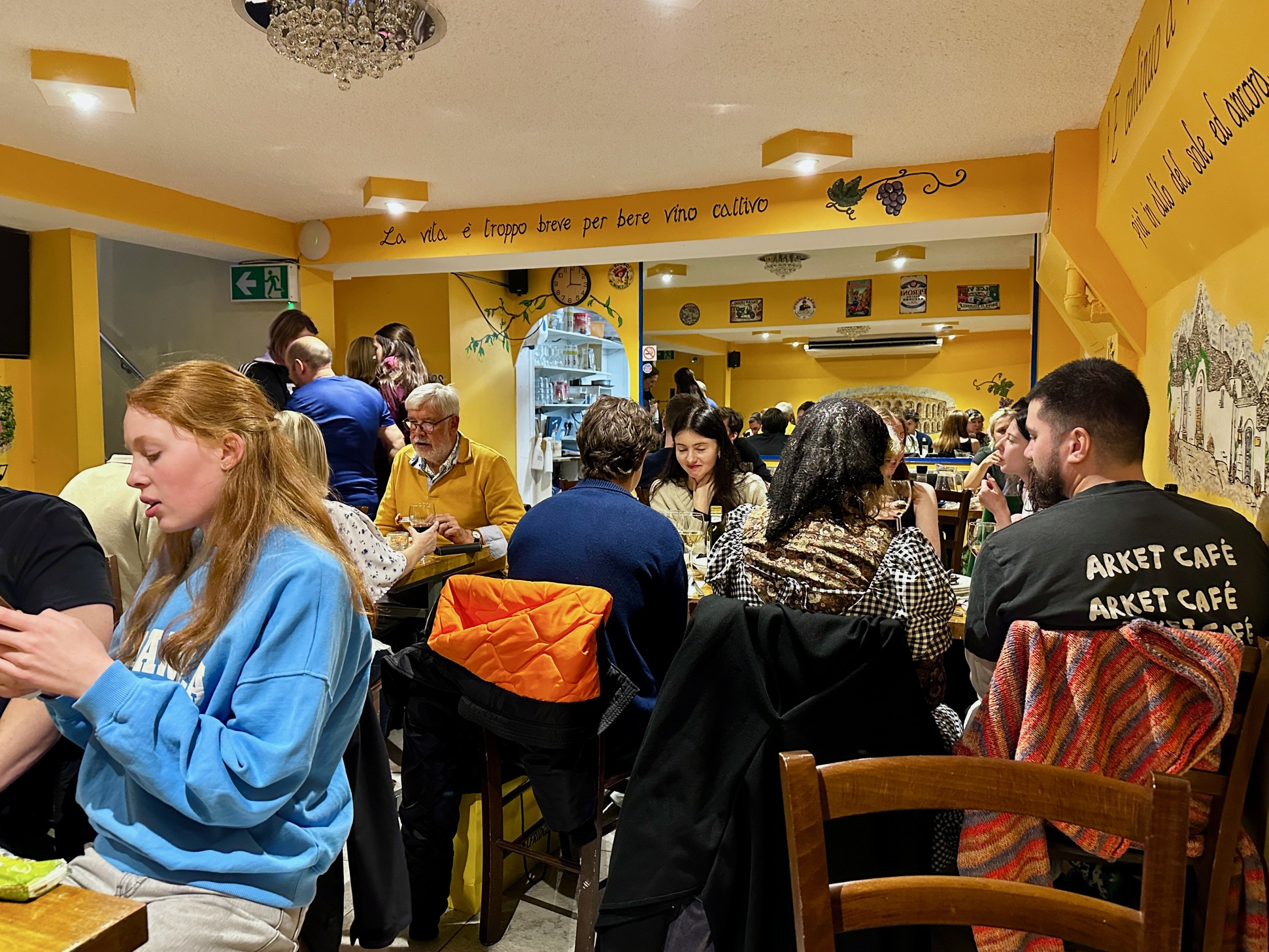
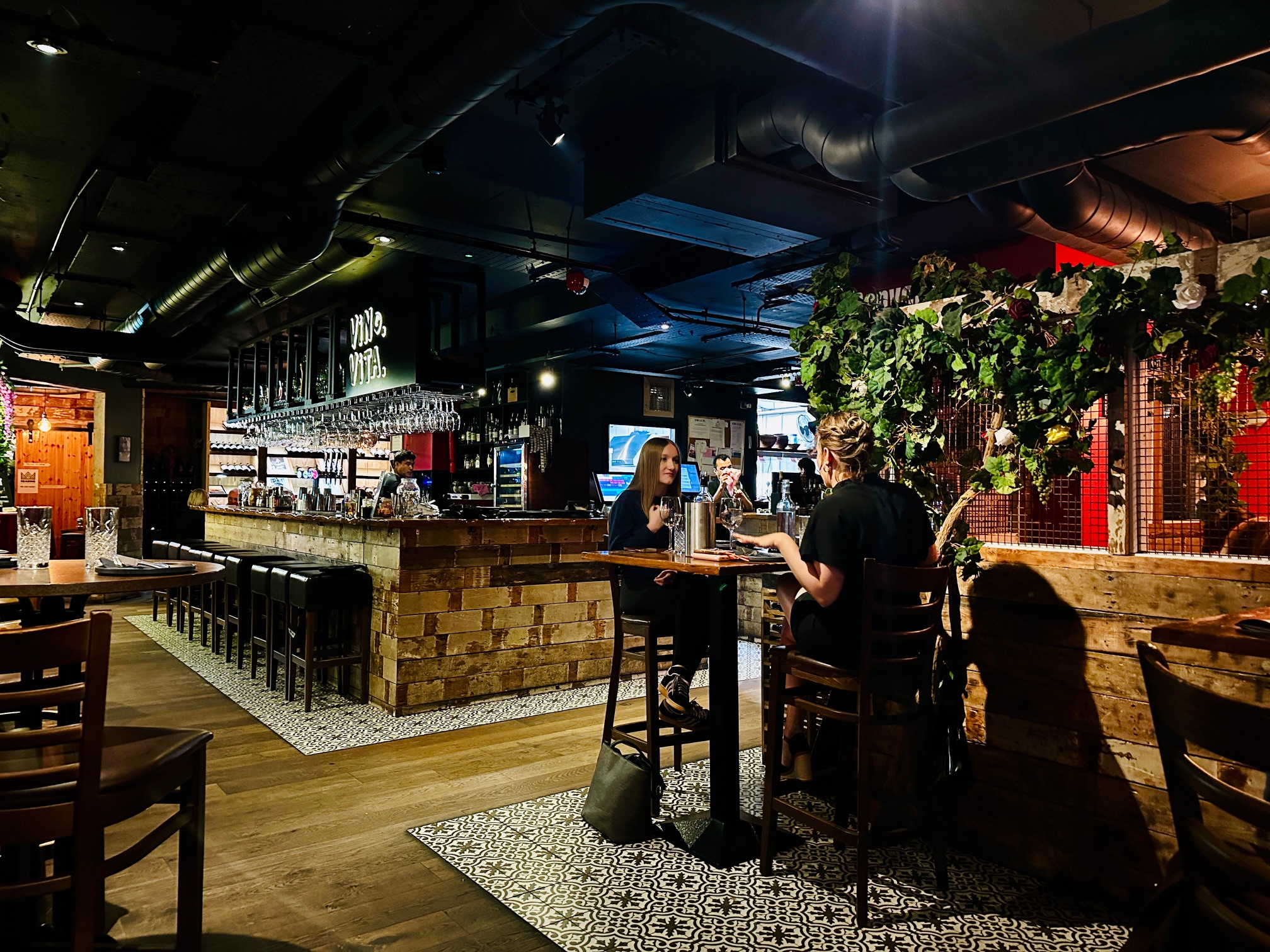
So what went wrong? Well, it wasn’t the room, which is a really lovely space, all pale wood tables, Hans Wegner wishbone chairs and deep green wood panelling. You enter the dining room through a buzzy terrace, and it feels like a lovely spot to while away a couple of hours.

Zoë pointed out that the banquette sat a little too high, like it had been put in by a contestant on Interior Design Masters who never ate in restaurants, but it was a minor quibble. We arrived just after 8 and although many diners were al fresco there were still plenty in the dining room.

The problem wasn’t with the menu, either. It was a compact affair with a handful of nibbles and then seven dishes, priced between nine and twenty quid. The menu recommended two plates per person, adding Don’t forget to share!

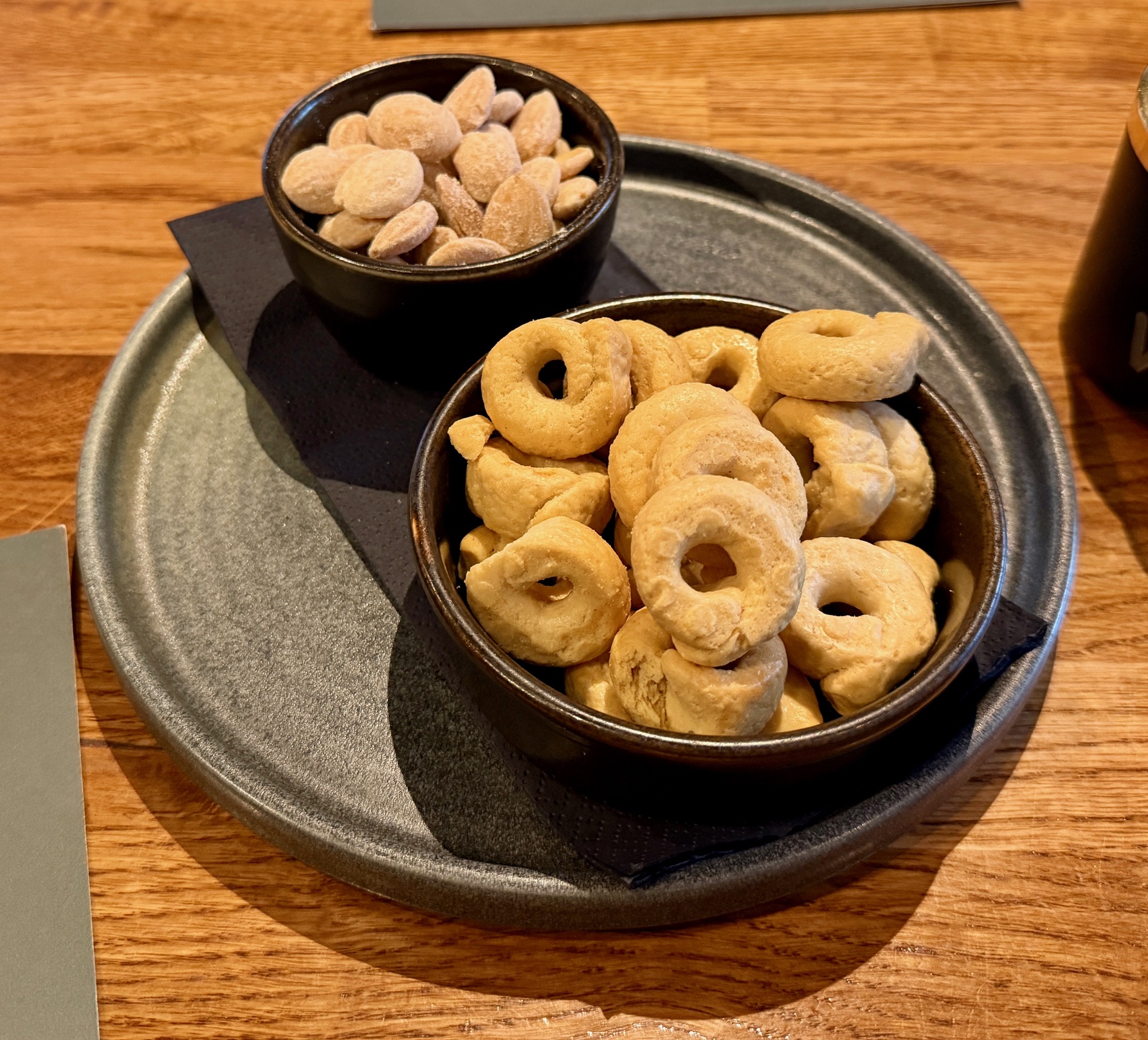
As we were trying to decide our server kindly pointed out that they were running low on focaccia, so we decided to nab a portion before any more diners took their tables and snagged the last of it. It was delicious, salty stuff cut into cuboids, brilliant dipped in olive oil and balsamic. The salted almonds, glossy with oil, were equally good. This was a promising start, we thought, five minutes in. It was, with hindsight, the last point at which any of this felt normal.

So, by then it was time to order proper food; it must have been something like twenty past eight by then. Feeling like trying as much of the menu as we could, and being in no rush, we asked our server if we could order a few dishes to be going on with, and more after that.

“I’m afraid not” he said. “It’s just that the kitchen is closing soon.”

The exact time it shut was not specified, and we were too taken aback to ask for details. Was there no wiggle room on that, we asked? Apparently not – the thing was, he said, we were their last customers of the night. At twenty past eight. What happened to we might run out of focaccia?

Never mind, we thought. We could order everything we wanted to try and at least control the order that our dishes came out in, so we could still experience something like the evening we had in mind. Would that be possible, we asked? Ah, that would happen naturally, the server said. The lamb dish we’d ordered was the thing that took most time to cook, about twelve minutes, whereas a couple of the small plates, served cold, would come out faster.

Now, you could take this to mean one of two things. One might be that the kitchen, being in the business of hospitality, understanding how to pace and sequence dishes to give diners an enjoyable meal, would space things out to maximise the enjoyment of their customers. Or it could mean that the first couple of small plates would come out almost immediately and the lamb dish twelve minutes after that. Can you guess which one happened here?

So yes, Zoë enjoyed her burrata dish, which arrived something like five minutes after we’d placed our order. It was more about buying than cooking, as this kind of dish often is, but everything was present, correct, nicely bought and displayed to its best advantage. The tomatoes, a bright array of red, yellow and green, were lovely and scattering the dish with more of those fried almonds was a nice touch, as was the slick of lush pesto anointing the whole shebang.

At exactly the same time, out came the monkfish crudo, which was less successful. It looked like a limpid pond of the stuff, micro coriander and thinly sliced radish floating on its surface, and I quite liked the orange and soya dressing and little spikes of some kind of seeds or peppercorns. But the monkfish felt too thick, coarse and meaty for the crudo treatment, and this, to me, just didn’t work.

I think it needed something more slight, translucent and refined, like the sea bass crudo I saw on the menu of another Bristol restaurant the following evening. But then maybe monkfish justified the price tag, at nearly seventeen pounds. At the price of a main in many restaurants you got a small plate here, whisked out mere minutes after we ordered it. Still, these two dishes had arrived close together, and the menu’s instructions said that we should remember to share, so perhaps it was okay.

Or it would have been if the next plate, a hot dish, hadn’t arrived literally two minutes later. Ricotta and parmesan gnudi – dumplings – came as a trio in an asparagus cream with more asparagus, petits pois and, allegedly, a miso butter.

I am not entirely sure that three dumplings encourages sharing, and I’m not sure it’s worth the best part of seventeen quid. But I’m equally sure that bringing it out at the same time that there are two other dishes already on the table hardly encourages sharing either. By the time Zoë got to trying any of this, it was lukewarm at best, as was her enthusiasm for the whole thing.

I nearly didn’t mention this, because it all happened so fast, but with all this going on and dishes turning up faster than we could make inroads into the dishes that preceded them, we also tried ordering some wine. The initial choice we’d gone for, we were told, was not cold enough, and so – amid the flurry of plates – we were also brought a possible alternative, which we didn’t massively like.

So we asked for an albariño, and the server who eventually brought it over was absolutely brilliant – enthusiastic about the wine, positive about the producer with loads of detail that brought it to life. It was the only example of great service we had all evening: Snobby’s should hang on to that person, and clone them if they can.

Meanwhile, with three dishes on our table and us struggling to eat them, along came the lamb dish we’d been told took twelve minutes to cook, approximately ten minutes after our first dishes turned up. You couldn’t fault the kitchen for efficiency, just for other things like understanding how meals are meant to work and the difference between a lovely meal out and Man v. Food.

And it’s such a pity, because the lamb dish showed, too, that you couldn’t fault the kitchen for talent. It was the nicest dish I had that night and one of the best things I ate all week – a slow-cooked, sticky, sumptuous cylinder of shoulder and leg, crying out to be pulled apart with a fork, resting on a moat of puréed cannelini beans and swimming in a decadent, reduced jus. Such a lovely dish, ruined by bringing it out as part of some kind of deranged conveyor belt.

Restaurant bloggers like to come out with a particularly wanky cliché where they say that restaurants take quality ingredients and “treat them with respect”. It’s empty nonsense, as if the alternative is to take them out, buy them a few drinks and then ghost them until the end of time.

But quite aside from that, treating ingredients with respect isn’t only about making a good dish out of them. It’s also about treating that dish with respect, serving it in a way that enables it to have its moment in the sun. That wasn’t happening here. And when you don’t treat your dishes with respect, guess what? You’re not really treating your customers with respect, either.

At the same time as the lamb, the arancino – that ideally we would have eaten closer to the start of the meal – had also materialised. Half an hour after we sat down, about fifteen minutes after we’d ordered, our five not that small dishes had all been brought to the table, leaving us scrambling to eat them before they went cold and moving our empties to the neighbouring unoccupied table for four (a minor gripe, but if they were going to bring it all out at once they could at least have put us on a table that could accommodate all that crockery: they had no other customers after all).

As for the arancino, Zoë had some and thought it was pleasant if unexceptional. It had scamorza in the middle, and a honk of truffle oil, but it was slightly big, stodgy and lacking in texture. She could only tackle a little of it and I decided that I’d rather eat the lamb, which I loved, than make inroads into the arancino.

Here’s the other thing: when a restaurant brings out five dishes – seventy-five pounds’ worth of food – in the space of ten minutes, not making any real effort to sequence them, you get too full to eat it all very quickly.

To emphasise how farcical this was, it was only around the point that the lamb and the arancino arrived that we finally got our bottle of wine. I thought it was rather nice, Zoë thought it too wasn’t quite cold enough. But we made up for that, because any residual warmth we had towards Snobby’s had well and truly vanished by then.

We struggled through some of the food, left half of the gnudi and half of the arancino, on account of it being too cold and our being too full. The plates were taken away without any questions in a strangely incurious fashion.

Normally this stage, when your empty dishes are taken away, is one for quiet and happy reflection. But instead, we both just gently fumed. You might expect that from me, but Zoë is as good-natured as they come, and this meal left her feeling positively aggrieved. It takes some going to piss her off, as her seven years and counting shacked up with me proves beyond reasonable doubt.

Chatting away about it, we couldn’t quite believe that we had been rushed through all those dishes at breakneck speed so that the kitchen could close – at twenty to nine, no less. And if the kitchen really did close early, perhaps Snobby’s should mention that to people making bookings at 8.15? Because they seemed quite happy to tell people making earlier bookings online that they only had the table for an hour and three quarters: it wasn’t as if this kind of communication was beyond them.

It got more ridiculous after that. Our food gone, and with a feeling that the wait staff were studiously avoiding asking us how it had been, we were left with the best part of a bottle of wine, with notes of stone fruit, citrus and… bleach? Yes, bleach: because at this point a strong waft of the stuff was emanating from the kitchen, obliterating any subtlety or enjoyment in the rest of our Albariño. Did the staff have a bus to catch?

Enough was enough, so we flagged down our server – the same chap who had told us the kitchen was closing and the food would come out as and when – to pay the bill and he asked us, in a perfunctory way, how it was. And that loosened the lid for both Zoë and I to say that no, actually, it hadn’t been all right. So we explained that we’d felt rushed, and not listened to, and that we couldn’t really understand how either the serving staff or the kitchen could have thought our evening was an experience anyone would willingly choose.

Zoë asked him, given that he’d previously told us the kitchen was closing, when exactly the kitchen shut. He said that it closed when the last customers had ordered. But, Zoë said, we were the last customers and we’d asked not to order all our food at once, so why were we railroaded into doing so? He had no answer to that.

Fair play to him: he listened, a little like a rabbit in the headlights, and at the end of it agreed to knock off our service charge. Which felt slightly like missing the point to me, because some of the service – especially the person who brought our wine – was excellent and really the problems were more fundamental than that. When two dishes had gone back to the kitchen half-finished, because the timing had been so completely out of kilter, a better step might have been to knock those off the bill.

And bless him, I’m sure he meant well when he said that he appreciated the feedback and that actually, it would help him in an ongoing debate he had been having with the kitchen. But what I took from that was that this had been an issue for a while, that it hadn’t been fixed, and that our crummy meal was collateral damage in the process of eventually resolving those problems.

I was delighted for their future customers who might benefit from that piece of learning, but it didn’t help us at all with our wasted evening. Our bill, with service knocked off, came to just short of one hundred and thirty-five pounds, for a meal that was over in something like thirty-five minutes. I know there is a risk, when you complain about an experience like this,that you might sound entitled. But really: would you have been happy with that?

The following day, I got an email from the owner of Snobby’s. I’d booked online and, having been tipped off by the staff, he contacted me via my email address. I explained to him what had gone wrong and, to his credit, he said that he needed to pick these points up with his staff. He said that he’d not been as close to the business in recent weeks, and that this was a timely reminder that he needed to do something about it. He didn’t refund anything, but did send me a voucher for the cost of the two dishes which we didn’t finish.

And that’s very decent, but I’m not sure I’d use that voucher, potentially throwing good money after bad. He said that he was sure I understood the pressure hospitality was under right now, and that the feedback would help them to survive in a competitive industry. I know that’s right, but the converse is also true: customers have less disposable income than ever before, and they simply won’t want to spend it on an experience like that. Eating out is more costly, so people do it less often, and when they do they don’t want to spend that kind of money and have an experience that feels sub-Wagamama.

The Bristol restaurateur Dan O’Regan (the owner of Lapin) writes a blog about running restaurants. In a recent piece he talked about kindness, saying that it’s “the only thing that’s ever made restaurants work”. He said that customers deserve warmth, and a feeling that they’re welcome, however much they are spending or whatever kind of meal they want to have.

I don’t say any of this out of unkindness myself. I could have not written this review, which is after all telling you not to go somewhere you might well not have gone anyway. But I did, not to vent my spleen – fun though that might be – but because this experience encapsulates something of what restaurants are supposed to do and how jarring it can feel when they drift from their purpose.

And it felt to me like Snobby’s had completely forgotten what the purpose of restaurants was, namely to look after customers, to make them feel welcome and cared for, and to prioritise their convenience over the convenience of the kitchen. Because if a restaurant’s aim is to minimise inconvenience to its staff, or even if it comes across that way, I can’t help but feel that somebody, somewhere, has put the cart before the horse.

A restaurant that does that, I think, has forgotten what restaurants are for and what makes them such wonderful places. They betray the promise that great restaurants make, the covenant they have with the customers that love them. And a meal is never just the food. It’s the food, the room, the service, the timing. In restaurants, as in comedy, timing is everything. Get that wrong and it’s closer to tragedy.

Anyway, fingers crossed that future customers benefit from the disappointing evening I had. I would really like to see Snobby’s turn things around, because it’s a lovely spot and it’s capable of cooking some excellent food. They might be redeemed, and I really hope that they are. But my voucher, I suspect, won’t be any time soon.

Snobby’s – 5.9
6 Chandos Road, Redland, Bristol, BS6 6PE
0117 9070934

https://www.snobbys.co.uk

Since January 2025, Edible Reading is partly supported by subscribers – click here if you want to read more about that, or click below to subscribe. By doing so you enable me to carry on doing what I do, and you also get access to subscriber only content. Whether you’re a subscriber or not, thanks for reading.
Restaurant review: Amò Italian Street Food

In the good old days, where you stood on certain binary debates was simply a way of positioning you in the world. Cream first or jam first? Plain or milk chocolate Bounty? Cheese and onion or salt and vinegar? Were you a fan of the Beatles or the Stones? Blur or Oasis? All these things used just to be a form of triangulation, little points on a chart that, taken together, might give someone an idea of you (and, since you’re asking: cream first; milk chocolate; salt and vinegar; the Beatles; neither).

When did that all change? 2016, I suppose, when we all became Leave or Remain, indelibly stamped, and at every stage from that point forwards. We’re always asked what side we’re on, and now it’s not a useful piece of trivia but a necessary step to place yourself on one side or another of a yawning chasm. Are you pro- or anti-Israel? Do you think J.K. Rowling is a hero or a villain? How about Farage, or Trump? Did you believe in lockdowns, masks, vaccines? Did you leave Twitter or stay? If you left, did you go to Bluesky or Threads?

Like the Tower Of Babel, we’re now all scattered to the four winds, trying to find our tribe and arguing, endlessly, with the others. It’s not a bit of fun, any more. And this is all rich coming from me, because I’m painfully aware that I’m as polarising as most. Happily, Reading faces another tricky choice now that’s potentially just as difficult, but hopefully less divisive: Paesinos or Amò?

The two pizza places opened on Kings Road, two doors and three months apart, the latest in a weird series of rivals in very close proximity, following the example of Pho and Bánh Mì QB in Kings Walk or Iro Sushi and You Me Sushi on Friar Street. What is it with that? You must be very confident in your product to open so near to a direct competitor, like Bánh Mì QB did, but with Paesinos and Amò, Iro and You Me so little time separated both arrivals that it must be an unhappy coincidence. Imagine pouring your heart and soul into a new business only to find that another one a lot like yours is doing exactly the same, a stone’s throw away.

Anyway, regular readers will know that I reviewed Paesinos a month ago with my Italian friend Enza (who is, just to confuse matters, an Amò superfan) and it received a glowing write up from me. But I knew, even as I was eating there, that I needed to prioritise visiting its neighbour, if only because Enza told me that it was as good as, if not better than, the restaurant I had so enjoyed. I couldn’t go with Enza, because she was so far from impartial, and this time I took my friend Jo, also of Italian descent, last seen checking out House Of Flavours with me.

Amò is, as I’ve said before, something of a joint venture between Madoo, the founding father of Reading’s Italian quarter which opened four and a half years ago, and Pulcinella Focaccia, a business that sold pizza and focaccia for delivery from premises out in Earley and has been trading for a couple of years; I’d never had food from the latter, but I’d heard plenty of good things. And arriving at Amò on a weekday evening I was struck that, in terms of branding and decor at least, it felt fully formed in a way that Paesinos didn’t so much, or Madoo for that matter.

Everything was tasteful and unfussy without being Spartan, with a bare wood floor and tables, seats and benches. It seated somewhere between fifteen and twenty people, so significantly more spacious than the likes of Mama’s Way or Paesinos, and it had a nicely calm feel to it. Amò’s logo was in the middle of a deep red swatch of paint on the wall behind the counter, and resting on that counter was possibly one of the most tempting displays in Reading.

Amò very cleverly changes up its offering around the time people start finishing work, so until 5pm you can try pizza al taglio or something from a changing array of Italian street food. They also, I think, offer focaccia sandwiches during the day, although most of them had gone when Jo and I turned up around half seven. After 5pm the sandwiches drop away but instead, alongside the slices of pizza and street food, you can order a whole pizza from a more varied menu.

The street food was all very tempting, all things that I would challenge anybody not to fancy eating. Arancini, croquettes, mozzarella bites and frittatini – fried pasta – were all tributes to the time-honoured method of coating something in breadcrumbs and frying it until it was golden, crispy and alluring. The lighter side of Amò’s offering is keenly priced, too. Most of the street food dishes are around a fiver, pizza by the slice is less than that and they do multibuys if you want two stuffed focacce or two slices of pizza. Whole pizzas top out at about fifteen pounds, unless you add sausage or Parma ham to one of the options.

And Amò’s pizza menu struck me as very clever, because – either by accident or design – it kept the overlap with its neighbour’s pizzas to a minimum. Amò has a list of the classics, of course, so you can have a margherita, or prosciutto cotto and mushroom, or sausage and friarielli. But on the other side of the small, laminated menu, you find loads of less conventional options, far more interesting than the kind of things you could find at Zia Lucia or even, dare I say it, Amò’s neighbours.

That meant pizza with a purple sweet potato base, topped with cacio e pepe cream, guanciale and sweet potato crisps, or pizza with a pistachio cream base and mortadella. Others had a truffle cream base, or pumpkin cream, or even a cavolo nero base (“it’s the gourmet version of the salsiccia e friarielli”, Enza had told me, when I was looking for recommendations).

You may find all of that a bit leftfield, or it might whet your appetite for wandering off Reading’s beaten pizza track. I think for me, though, it was neither: I chalked those up as things to try once I had road tested the classics.

But first, Jo and I had a chinotto each and ordered some of those smaller dishes to kick things off. And as we waited for them, she told me about her childhood holidays by the coast, near Salerno, buying balls of mozzarella as big as your head from some beachside hut and eating them with bread, nothing else required. It was brilliant, Jo said, but it did slightly ruin the mozzarella you can easily get in this country; like me, Jo considers it a seriously underrated cheese.

As so often I felt a little pang for a childhood I didn’t have, listening to Jo. But then there was something to be said for sitting in a caravan in Devon, rain drilling on the roof, eating hog’s pudding cooked in a frying pan – always with tinned tomatoes on the side – watching Roland Rat on TV-am, knowing that the evening would be spent playing cards and watching reruns of Shogun (the original, not the superb remake). Maybe those memories would sound exotic to an Italian: on balance, though, I guessed not.

Amò’s mozzarella bites may not have been the size of my head, but they were gorgeous nonetheless. Crisp-crumbed spheres, golden but not overdone, the shell holding just-molten-enough mozzarella, they were a proper delight. I might have had them with something to dip them into, but it was a minor quibble with something so delightful. So was the fact that however carefully I ate them, with my hands at least, a little liquid sprayed out, leaving incriminating marks on my shirt. I was too happy to care, and the attentive staff quickly brought extra napkins.

At five pounds fifty for four, they could have been the bargain of the meal, if not the month, but for the fact that we also ordered two of the frittatini. These are yours for three pounds fifty, or six quid for two, and come in two flavours. If you go to Amò, my advice is to make sure you have one to yourself or, as Jo and I did, order one of each and share. They’re a bit fiddly to break up – that crisp carapace presents resistance when you’re relying on a wooden fork – but they reward the effort, with dividends.

They were beautiful things, and when I sit down in six months or so to write my annual awards it’s hard to imagine they won’t feature in some shape or form. And their form – big, irregular golden pucks – belied just how wonderful they were on the inside.

Picture an arancino, but instead of risotto rice visualise a cluster of little tubes of pasta, and rather than a molten core, imagine the whole thing bound together with sauce. In terms of taste, contrast, texture and sheer tactility I’m not sure I can think of anything finer, and writing this paragraph I am deeply aggrieved that I cannot eat one right this minute, or indeed by the end of the day.

This is where Amò are an especially smart bunch, because during the day you could pitch up, have a chinotto, a slice of pizza or a sandwich crammed with porchetta and provolone, and add one of these for a mere three pounds fifty. That’s almost the price of subscribing to this blog for a month and, although it pains me to say it, it’s even better value.

Jo and I both loved the meaty version but would you believe that the vegetarian option, with fried aubergine and tomato, was even better? Jo described it as like being “slapped in the face with flavour” and believe me, apart from that fried pasta, nothing or nobody would get away with slapping Jo in the face with anything. One of the best things I’ve eaten this year, no notes at all.

Jo was very keen to try one of the pizzas by the slice, with meatballs on it, so that turned up next, thoughtfully cut up to share, a meatball perched precisely in the centre of each quadrant. This too was cracking, although I suspect the base on the pizza al taglio is slightly different to that on the whole pizza. The meatballs, in particular, were excellent – coarse and lacking in suspicious, smooth bounciness. It also, by the looks of it, was only available by the slice so, again, well worth adding to a lunch order.

By this point, as our full-sized pizzas arrived, the carbs were taking their toll, and we were already prepared to ask if some of our leftovers could be boxed up – something that rarely happens to me, because it’s rare that my capacity is defeated by a restaurant.

Jo made it a few slices into hers, the piccantina, which was topped with salami, mushrooms and Gorgonzola. I didn’t try it, and from a cursory glance I thought the porcini were common or garden mushrooms, but Jo had no complaints. She’d told me earlier in the evening that she hadn’t had pizza for a while: Jo is on a monthly treatment regime where anything she eats the next day tastes vile and puts you off whatever you ate for the foreseeable future. One of those next days had involved pizza, and Amò’s piccantina resuscitated her love for the stuff. That in itself is no mean feat.

I on the other hand had deferred to Enza’s judgement and ordered the sausage and friarielli. As so often with white pizza, it had a bit more structural integrity, so less of the Neapolitan droop you might get with other pizzas. And the base was admirable, nicely puffy with plenty going for it. You couldn’t fault the generosity either, with nuggets of crumbled sausage very, very liberally deployed.

There was very little not to like about the pizza, and if I was clutching at straws I might say that I’d have liked the sausage to have more of a whack of fennel, but that’s a minor thing. It was so well orchestrated with the friarielli that it was impossible to argue: this was a pizza without complexity or variety that kept it focused and hit the target.

I managed about half of mine, and the staff were nice as pie about bringing a couple of boxes so we could take our leftovers home. Everything we had ordered – all that food, four cans of soft drink – came to fifty-five pounds, which is a steal, and then we went to the Allied for a debrief. Two pints of forgettable macro fizzy booze at the Allied set us back nearly sixteen pounds, which is very much not a steal.

For once, I can also report back on the leftovers. Jo had hers cold the next day – no slice for her beloved dog Diesel, this time – and sent me an iMessage: tastes even better this morning, cold from the box, outstanding! I on the other hand revived mine in the oven on my lunch break, working from home, and it was the best lunch I’d had in ages. I wasn’t sure if my slight lull that afternoon was down to the carbs or a Teams call that felt especially like a trudge. Let’s put it down to the latter.

Having talked about Amò for all these paragraphs, I know I should return to my opening theme and compare it to its neighbour Paesinos. But it’s not easy to do.

If they were top trumps cards, Amò would win in a number of categories. It’s more versatile, on account of having a focused lunch offering as well as pizzas in the evening. It has arguably a wider range of sides and small plates. It’s bigger, too, with far more potential to eat there in larger groups; if you go to Paesinos as a four, you either won’t get in or you’ll take up two-thirds of the restaurant. Its pizzas are more imaginative and unconventional, so more of a challenge to the Neapolitan hegemony elsewhere in town.

On that basis, you’d have it down as a resounding victory for Amò and, for some of you, that might well be the case. On the other hand, Paesinos sticks to the classics, both for pizza and for its smaller dishes. I think its soft drink selection – and neither is licensed – is better and more interesting. The cannoli and tiramisu are worth the price of admission alone. And, speaking completely as a novice in these things, I think Paesinos’ dough and base may have the edge.

But the main reason why taking a Top Trumps approach doesn’t work is that Paesinos, for me, has a little something extra. There’s no Italian equivalent of je ne sais quoi, as far as I know, but there’s a small dash of magic in the smaller restaurant that means that rationally, although I know Amò has a huge amount going for it, it’s impossible to pick a winner.

So yes, I’ve reflected and reflected and it’s impossible to put a cigarette paper between these two places. The only thing you can put between them, it turns out, is another restaurant – called Just Momo, which helpfully doesn’t just do momo. So the rating down there reflects that: call it a cop out, if you will, but I stand by it.

Let’s not divide ourselves by being Team Amò or Team Paesinos, because as a town we can be better than that. Hopefully enough of you will pick each side that both places will continue to trade for years to come. Because the truth is that there’s one real winner in this contest, and that’s Reading.

Amò Italian Street Food – 8.6
2-4 Kings Road, Reading, RG1 3AA
07500 619775

https://amoitalianstreetfood.co.uk

Since January 2025, Edible Reading is partly supported by subscribers – click here if you want to read more about that, or click below to subscribe. By doing so you enable me to carry on doing what I do, and you also get access to subscriber only content. Whether you’re a subscriber or not, thanks for reading.

Café review: Pau Brasil

It was a muggy Saturday, the longest day of the year in fact, the mercury was nudging close to 30 degrees and, sipping my mocha outside C.U.P., I felt like the Only Living Boy In The Ding.

Scrolling Instagram all I could see was holiday snaps – people just back from Malaga and Cordoba, newlyweds honeymooning on a Greek island, someone I know on his annual holiday to Kalkan, spending three weeks in a little Turkish piece of paradise. The world had its out of office on, or at least it felt that way, and there I was, fresh from my haircut, halfway through a C.U.P. mocha, a little on the outside of things, looking in.

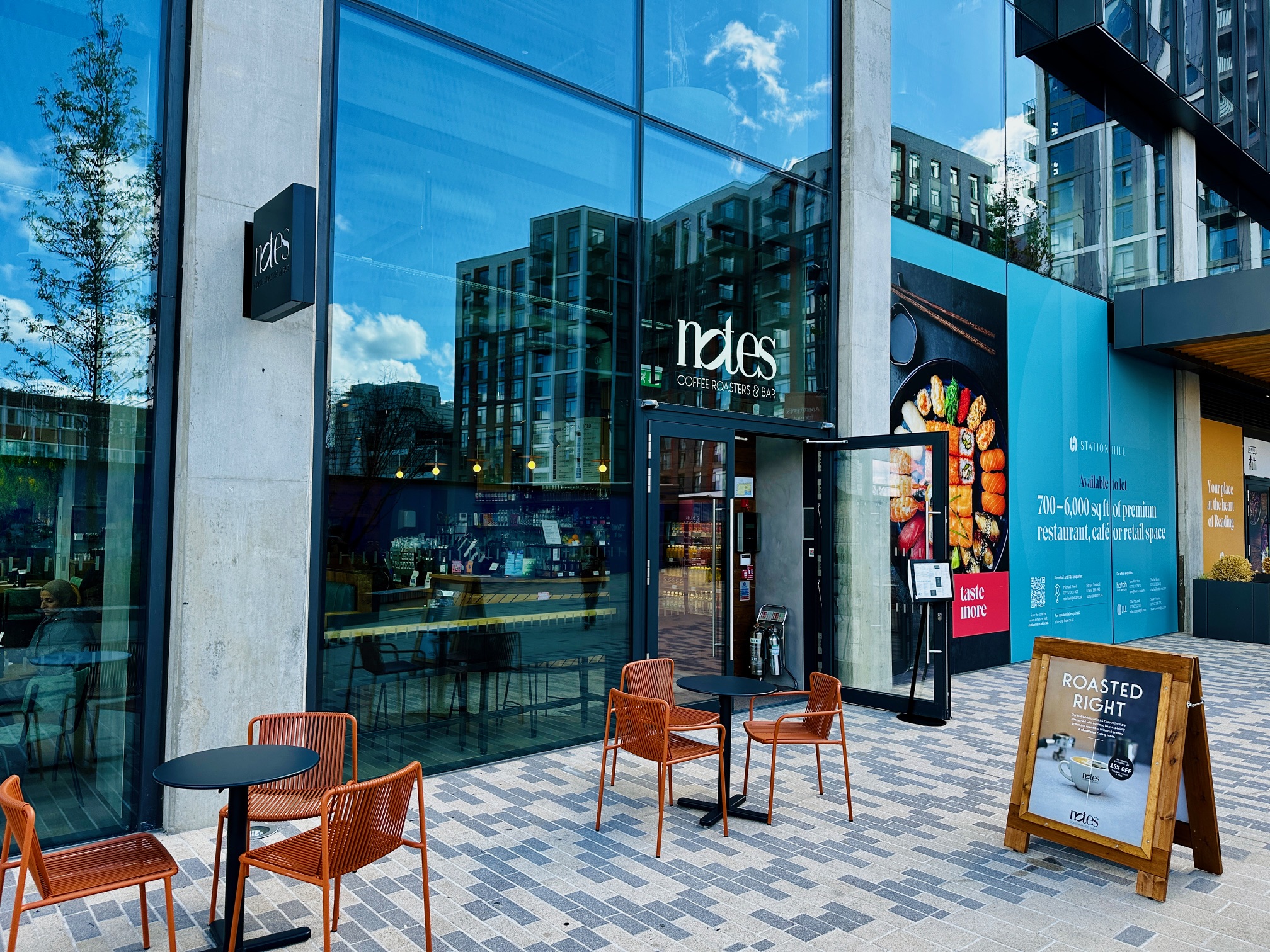
I wandered round town, but nothing lifted that feeling of dislocation. Station Hill was holding a mini festival to celebrate it opening – notwithstanding that it opened over four months ago – and the whole cut through from the station to Friar Street was lined with food stalls, drink stalls, music and crafts and hubbub. London coffee spot Notes, not yet open, had a stand selling coffee and another selling Aperol spritzes, and everywhere you looked there was someone else offering street food, largely vendors I’d not heard of.

The place was buzzing, although I put a picture up on Facebook and person after person said “if only they’d advertised it”. Still, it felt like everyone I know had somehow been spirited away out of town, and there I was, surrounded by people but alone. I thought of my wife, at the far end of the M4 busy at work, and all my friends dotted across this country and others, my brother on the other side of the world (this, by the way, is why I shouldn’t spend too much time on my own).

I could have grabbed lunch from one of the stalls, fetched a drink from Siren or the Purple Turtle’s pop-up bar, I could have participated. But something stopped me. It felt a little like a glossy celebration of house prices in Reading inching slightly further out of reach, it had a slight feeling of forced fun about it. But that’s just me: I’m not much of a joiner-in. Anyway, I had a lunch appointment to go to, one for which I was several years late. Time to get going.

Normally I ride the number 5 or 6 bus all the way up the hill, along Whitley Street and past the Whitley Pump roundabout, getting off at the nearest stop to my house and strolling home from there. But this time, in the sweltering, almost oppressive heat I alighted halfway up, where Silver Street becomes Mount Pleasant, and walked the rest of the way. And there it was, Pau Brasil, with its pretty cobalt blue door and its awning out. It had been a long, long time.

Back in 2004, over 20 years ago, long before Reading got Minas Café or De Nata, Brazilian café Pau Brasil opened on Mount Pleasant. It’s been trading there ever since, the culinary capital of Katesgrove before Katesgrove even got other restaurants. Back then the only nearby place I knew was a Chinese takeaway on Whitley Street called Tung Hing which I revered – it’s long since closed – and the closest I got to Pau Brasil was glorious scuzzy indie gigs at the Rising Sun Arts Centre, at the bottom of the hill.

I reviewed Pau Brasil in 2014, over ten years ago, and it’s safe to say that I didn’t completely get it, or love it the way I expected to. It’s one of my oldest reviews not to have been superseded, and I’ve wondered many times over the years whether I’d missed something about the place. I remember going with my ex-wife and leaving feeling like we just hadn’t grasped what made it special. She was indifferent about a banana and cheese toasted sandwich, I found the feijoada a tad wobbly.

We both wanted to like it, and came away still wanting to but not convinced that we’d managed it. “I’m not going to say that Pau Brasil is a bad restaurant” the conclusion said. “Sometimes I really regret choosing to give restaurants a rating, and this is one of those times.” This was back in 2014, when the end of one of my reviews arrived a lot sooner than it does nowadays.

Since I moved house last year, and Pau Brasil is a short downhill walk from my new abode, the place has been in my thoughts. I’ve caught myself musing, more than once, that a lunchtime visit was long overdue. Somehow this strangely stifling Saturday, with more than a hint of saudade about it, was the day to do it. If not then, when?

The welcome was warm and immediate, making me feel like I wasn’t a stranger. Pau Brasil has a deli, the counter and the kitchen downstairs and all its seating upstairs, and the first indication I had that the place has a devoted following was that I was asked if I had a reservation (there is no way to do so online, so I suspect regulars just do this when they stop in). Despite not having one, they managed to find room for me, so I headed up the stairs and was given the option of a couple of tables.

It’s a gorgeous room, far more homely and attractive than I remembered. It has a huge blue-shuttered window looking out on Mount Pleasant, letting in loads of light, and art all over the walls. One is painted a very fetching shade of red, one which made me think Why isn’t there an equivalent of Shazam for colours? only to find that firstly, there is, and secondly, I found it too fiddly to use. The furniture was simple and unpretentious, but nothing detracted from a certain serene energy.

A couple of tables were occupied when I got there, the big one with the plum view out of that window was already reserved. What I would say is that Pau Brasil has decided to prioritise space over packing diners in, which is to their credit, but it does make a couple of the tables on offer eccentric. I was given the option of a corner table where both seats faced the wall or a corner table where both seats faced the banister at the top of the stairs, and went for the latter because it had more natural light. Another option was to sit on a high stool up at a counter facing the wall – that fetching deep red wall, granted, but a wall nonetheless.

Back in 2014 I found Pau Brasil’s menu very tempting, and in 2025 that had not changed. It offered a range of salgadinhos, bite-sized snacks, for less than three pounds each, sandwiches for four pounds or a very compact selection of main courses for fourteen pounds (although you could have a smaller size for less). Just to spell out how remarkable that is, in ten years the mains have gone up from ten to fourteen pounds, I suspect the smaller dishes have barely budged in price: Pau Brasil seemed largely to be the land that inflation forgot.

I started out by asking my server – who I think, though I might be wrong, was half of a husband and wife team – whether they were in any danger of running out of pasteis de nata, having seen only a handful on display out front. He told me it was a risk and so I asked him to put one aside for me, for later. That potential pitfall swerved, I started out by ordering a couple of salgadinhos and a very cold beer.

And what a beer! On my bus out of town I’d texted Zoë saying I tell you what, if they have Super Bock I’m fucking having one. I arrived, I saw both it and Sagres in the fridge and my heart positively sang with joy. That iconic bottle came to my table, with a small, chilled glass, and those first malty sips made me feel less agitated, less irritated, somehow much happier to be solitary. Now I could settle down to people watching and relaxing, even if I had to crane my neck to do it.

Everything was unhurried, and my salgadinhos arrived about half an hour after I first took my seat. They looked so pretty on their plate, a symphony of blue, terra cotta, gold and red, and I found myself immediately wishing I had ordered more. I expected to like the salt cod fishcake, and it was no surprise that I did, but I was perhaps more surprised to find myself enjoying it every bit as much as I had its equivalent at De Nata.

Enjoy doesn’t even do it justice, I liked it an enormous amount. It had just enough comfort, just enough bite, it had a beautiful hit of salt from the bacalhau and it was golden, greaseless and a tactile pleasure to eat without cutlery. This kind of food is a proper gastronomic happy place for me and I could easily have inhaled two or three of them. Why had I spent the best part of a year with this on my doorstep without eating it?

My server had also brought some of Pau Brasil’s homemade chilli sauce and warned me, just as I had been warned in 2014, to use it extremely sparingly. My chilli tolerance has improved a lot in the last 11 years, so I was a little more cavalier than I would have been back then. It’s really very hot; my ability to take good, well-intentioned advice has probably not improved as much as it should have done over the same period.

The real star, though, was the chicken coxinha, a dome of airy dough stuffed with shredded chicken. I’d only ever had this dish at Minas Café, and I thought it was good. Eating it at Pau Brasil was to realise it could be superb. The rendition out in Whitley is a dense, solid affair, best tackled with cutlery. This by contrast was an ethereal gasp of a thing, the dough so light and the chicken at its core quite miraculous. Again, I could have easily eaten more and, again, I resolved to do so in the not too distant future.

From there, the pace slowed. Time seemed to pass slowly on Mount Pleasant, and in truth I was in no hurry. Tables came and went, and a group of three took the reserved table in the window. I watched as a giant plate of salgadinhos was brought over to them and they went to work, chatting and biting, dabbing chilli sauce and laughing. My portable fan whirred on the table, time became a trickle and I thought that all things considered, there were many worse places to be on a Saturday afternoon.

It proved a little tricky at that point to get attention to order more food, but eventually I did. The weekend special, which involved dried shrimp and sounded magnificent, had all but run out, and although it was tempting to order the feijoada I was determined for this meal not to be a carbon copy of my 2014 one. So I asked for the frango à Milanese and a Guaraná, Brazil’s national soft drink, having seen a can of it arrive at a neighbouring table.

This was where the gaps in the service felt a little bit more obvious, as we drifted past the lunch rush and into the afternoon. My beer was done and dusted, my glass of water had nearly run out too, but the soft drink showed no signs of arriving. Not only that, but my water had come with no ice, but then I saw the server bringing a load of ice to the bigger table. Half an hour in I was starting to feel a bit parched, so I got my server’s attention and asked if I could possibly have my drink before the food.

He apologised, clearly distracted rather than indifferent, and brought it over, and within five minutes my food had arrived too. The Guaraná, incidentally, was lovely: I would definitely drink it again on a hot day. I have a soft spot for slightly medicinal soft drinks, from chinotto to root beer, and this felt in the same family. It was also a splendid thirst quencher, and by then I was in need of one.

Did I like my main course as much? Well, yes and no. You couldn’t fault it for value, really: fourteen pounds for a complete, well-balanced plate of food felt like pretty good going. And it certainly had variety, too: a big, flattened, breaded chicken breast fillet had just enough crunch, and the coating adhered nicely.

There was plenty going on, from a well-dressed stripe of salad topped with tomatoes and very finely diced peppers to a little haystack of shoestring fries, from fortifying white rice to a heap of toasted cassava flour which added more interest and texture than I expected. Best of all were the beans, sticky and savoury with little nuggets of pork studded through them, I liked those a lot.

And yet I felt like something was missing, and I’m not sure what. It was wholesome, homely, hearty stuff but it perhaps didn’t wow me the way those salgadinhos had done. It was ever so slightly out of balance – there was a fair amount of rice left at the end, with nothing to pair it with – and the flavours were muted, subtle, well-mannered stuff. They brought more of the chilli sauce, but it ramped up the heat without necessarily lending another dimension.

I think overall, this is just how the Brazilian (and Portuguese) food I’ve had can sometimes be. It’s sturdy, and reliable, but it won’t knock your socks off – well, everything apart from the chilli sauce perhaps, although that’s too busy blowing your head off. The thing is, though, that I might never rave about a dish like Pau Brasil’s frango a Milanese, but in that moment, it was just what I was after. Also, I finished every scrap of my salad – which I never do – so that must count for something.

My main course done, there was one thing left to try. A coffee and a nata, just to test drive whether this was a coffee spot as much as a lunch spot or a snacks and beer spot. My coffee – I’d asked for a latte – arrived in one of those tall conical glasses I tend to associate with coffee before it got wanky, and it was pleasant, if slightly burnt-tasting. The table of regulars had theirs in smaller glasses, and at the end I asked my server what I should have asked for to get one of those. A media, he said, and I made a note. It wasn’t on the menu, so it paid to have the inside track for next time.

I’d asked my server whether they actually had a couple of nata handy and he did, so he brought me two. They weren’t flawless, but I did find myself wondering if this was the best day to judge them. The custard in them, although set, burst its banks somewhat when you tried to eat them, which I think was down to the heat of the day.

They were close enough, though, to remind me how much I love pasteis de nata, and dusted with cinnamon they made me feel very happy indeed, saudade banished for the time being. I’ll go back and try them in more clement weather. You may have noticed by now that I’ve mentioned going back a few times: I’m definitely going back.

All that remained was to go downstairs and pay at the counter, and at that point I saw another little example of brilliant service that endeared me to Pau Brasil. When I went to pay, my server told me that they’d put one extra nata aside for me, just in case I had two and decided it wasn’t enough. As it was I was replete and I passed on the offer, but I was oddly touched that they’d thought to do that.

My bill for all that food came to just under thirty-two pounds, not including tip. I’d been there pretty much two hours, unrushed and, by my standards, carefree. I couldn’t help but think of all of the places in the last eleven years that had chivvied me or made me feel like an inconvenience, taken far more of my money and given me far less of their time. I walked up the hill, in search of the relative coolness of my house, happy that I knew my neighbourhood just a little better.

It’s funny writing reviews and coming back to them many years later, some kind of weird Prisoner Of Azkaban wrinkle where you can see the past you, retrace your steps, watch yourself with fondness or embarrassment. You can both agree with and disagree with yourself all at once.

When I reviewed Pau Brasil in 2014 I said I could see myself going back there for a coffee and a nata, or a drink and some salt cod fishcakes. Although that wasn’t enough, apparently. “Too much of the food just wasn’t to my taste, and however nice a room is, however great the service is, the food is always going to be centre stage”, 2014 me said.

What on earth was his problem? I highly doubt Pau Brasil has changed that much in the last 11 years. A new lick of paint, perhaps, and art on the walls, but otherwise I expect it’s pretty close to the place I went in 2014. The prices are pretty close to 2014 prices, too. And yet I must have changed, because I look at past me and think that he missed the point in a big way.

A little oasis of otherness there halfway up Mount Pleasant, where you can have a coffee and a nata, or a cold Super Bock and the most terrific chicken cozinha. All that and it also does a hearty main, if you decide you want one. But you could never eat that, there, and still see it as a gem. What more did he want?

It is one of the marvellous things about being alive that you can change your mind, or realise you were wrong. I do each of those more often than you might think. It’s hard to tell, over a decade on, which has happened here, and I wouldn’t bet against it being a bit of both. Really, I have no idea.

But here’s something I do know. On a close, sticky Saturday afternoon, on the longest day of the year, when I felt like the only living boy in the ‘Ding, that little spot in the heart of Katesgrove gave me a happy, meditative couple of hours, with some enjoyable food and a delicious, badly-needed and much-anticipated cold beer. And for those two hours, as if by magic, I felt lucky, well looked after and reconnected: to the world in general and my home town in particular.

Money can’t buy that, as plenty of places in Reading prove. But choosing well where to spend it, it turns out, can.

Pau Brasil – 7.6
89 Mount Pleasant, Reading, RG1 2TF
0118 9752333

https://paubrasil.co.uk

Since January 2025, Edible Reading is partly supported by subscribers – click here if you want to read more about that, or click below to subscribe. By doing so you enable me to carry on doing what I do, and you also get access to subscriber only content. Whether you’re a subscriber or not, thanks for reading.

Pub review: The Drink Valley, Old Town, Swindon

Devizes Road is about a thirty minute walk from Swindon’s unlovely train station, a building with a whiff of the gulag about it. Or you can take a bus, which winds its way uphill and will get you there in roughly ten. Once you reach your destination, you’re not in Kansas any more. You’re still in Swindon, but in Old Town. And Old Town’s different.

Devizes Road isn’t a looker. It’s not the pretty street in Old Town: that’s Wood Street, around the corner, lined with delis and wine shops, tapas bars and spots for lunch. Devizes Road is another kettle of fish. It is, not to put too fine a point on it, a fantastic place to drink beer, a road literally lined with wonderful spots in which to do precisely that.

You have the Hop Inn, possibly the founding father of Swindon’s craft beer scene, and on the other side of the road you have the Tuppenny, a pub of which I’m inordinately fond that has Parka and Steady Rolling Man in its permanent collection and a beer fridge its own Untappd listing refers to as the “fridge of dreams”.

There’s Tap & Brew, the superb brewpub of quietly excellent local brewery Hop Kettle, with a beer garden that’s marvellous in the sunshine. Hop Kettle also has an upstairs bar called The Eternal Optimist with a speakeasy feel, at the end of the road above the marvellous Los Gatos, a restaurant which in itself would provide ample excuse for a trip half an hour down the railway line,

I’m not finished. You can now drink at The Pulpit, the Swindon outpost for local Broadtown Brewery, a relatively new addition. And as of late last year another option is The Drink Valley, another brewpub and in fact that brewery’s second Swindon branch, having made a success of their first one in the town centre.

Were you keeping count? I make that six great beer spots in the space of a five minute walk, three of them brewpubs or brewery taps of some kind. Forget schlepping all the way to London and dragging yourself south of the river to experience a London brewery crawl, hot and crowded and absolutely rammed with Steve Zissou-style microbeanies. A quick train journey west and you can have an equally terrific time without troubling the capital – why endure the Bermondsey Beer Mile when you can enjoy the Swindon Booze Street?

Besides, a friend of mine was in a pub near Borough Market the other week where the most expensive beer on the list was a mind-boggling £20 a pint: Old Town is far, far kinder on the wallet. I was in Old Town, as I invariably am, to have lunch and beers with my old friend Dave. Dave initially wasn’t mad keen on being a dining companion on this blog but as time has passed it’s turned out that he enjoys it far more than he thought he would. This is a very Dave phenomenon.

But the winds of change are blowing through Devizes Road, and much is different from when I was here last on duty. Burger spot Pick Up Point, which I so enjoyed last year, has closed down. Ice cream parlour Ray’s is under new management, and finding its feet. And The Drink Valley, the venue for this week’s review, has opened two doors down from Tap & Brew, its second branch slap bang in the heart of Swindon’s budding craft beer scene.

First, we took advantage of another welcome development: during the day, Tap & Brew now plays host to excellent local roasters Light Bulb Coffee, and when I joined Dave there just after 11 the place was jumping. Somehow it seemed bigger than when I was there last but in truth it was just packed, every table occupied with the kind of hipsters, families and pursuers of the good life that Dave wasn’t entirely convinced lived in Swindon. And yet there they were, that Field Of Dreams principle in action.

So before lunch I enjoyed a couple of superb lattes and Dave and I began the process of catching up. It’s funny, there are friendships where you don’t see somebody for ages and when you do, it’s as if no time has passed. Dave and I have, at times over the last thirty plus years, had a friendship more like that but these days I see him most months, a combination of great company, his empty nest, our mutual love of beer and good times and our spouses being busy at weekends. And even though I see him frequently there’s never any shortage of things to discuss, in his life or mine.

So we talked about our respective families, his son at Durham, his work and mine (we always conclude, on balance, that working for a living isn’t all it’s cracked up to be) the triumphs of Liverpool Football Club – Dave’s other lifelong passion – and our plans to go on holiday together to Bruges this winter, for the first time in nearly ten years. I fully expect it to be something like a cross between The Trip and Last Of The Summer Wine.

The Drink Valley, a name which would appear to make no sense whatsoever, opened in the centre of Swindon first, and its thing was craft beer and Indian small plates. Dave tried to get me to review it back then and I was tempted, because Reading has never had anything approaching a desi pub and I think it’s a concept that could do well almost anywhere. But he never tried too hard to persuade me, because it was in the centre of Swindon and Dave doesn’t go there from choice. An upmarket sister branch in Old Town was a much easier sell.

It’s hard to get much intel on The Drink Valley – I’ll drop that The from now on, if that’s okay with you – ahead of a visit. Their website used to be under construction, with wording saying “coming soon”, and a picture of their original branch. Now it just advertises a summer festival that takes place next week. The two Facebook pages give you a rough idea of the menu but the two Instagram feeds, much as they list promotions, live music or new beers, fail miserably at what must surely be two of the main functions of Instagram: to show you what the room looks like and what the food looks like.

That’s such a wasted opportunity, especially with Drink Valley’s Old Town branch because it was really quite gorgeous and, I would say, a cut above the decor of any of its neighbours on Devizes Road. Sturdy but tasteful tables were ringed with comfy armchairs in pastel colours, a deep red banquette running along one wall. The walls and wood panels were a beautiful midnight blue (“why does this colour always look classy?”, Dave wondered) and the overall effect was really pleasing.

Craft beer often feels like a bit of a sacrifice – never mind the interior, taste the IPA – and I’m not sure I expected Swindon to be the place that rebutted the idea that you have to choose between substance and style. It felt like the middle of a restaurant/pub Venn diagram, somewhere that wasn’t quite a restaurant or a pub but could quite easily pass for either.

The selection of beers, though, would definitely suggest pub rather than restaurant. Five hand pumps, all serving cask beer brewed by Drink Valley, along with just shy of a dozen options on keg. Four of those were also brewed by Drink Valley and the others featured breweries I knew well, like Polly’s and Vault City, and a couple that were new to me.

The most expensive beer maxed out at £8.50 for a pint, but it was a 7.3% sour so I doubt you’d be guzzling the full 568ml anyway, unless you were well and truly on a mission. We started with a half each of Ceres, a very approachable pale from North Wales’ Polly’s, and started the serious business of reviewing the menu. It was an interesting mishmash of small and big plates, of pub food and more leftfield choices.

So, for instance, there were just the four mains, a couple of which – fish and chips, sirloin steak – were the kind of thing you’d get at good and bad pubs across the land. Five burgers, too, mostly conventional fare, although the “bulgogi burger” with bulgogi sauce and kimchi mayo nodded to food trends. A couple of sharing platters and some loaded fries and nachos also felt reasonably mainstream.

But then we looked at the nibbles and starters and many looked like they’d wandered in from a different menu, one that ranged from Spain to Italy to Morocco, before upping sticks and taking a long flight east. Not only that, but some of the things on it were so eccentric that it didn’t feel like a Brakes van could have been involved in their genesis.

Take the first of our small plates – clusters of shimeji mushrooms belted with bacon, cooked in what was apparently an ‘nduja butter until the bacon was crispy and the mushrooms nicely done. This was a real delight, and both Dave and I loved it. The ‘nduja didn’t come through strongly for me, but it did lend a sort of salty funk that reminded me of blue cheese. I thought it was a superior take on devils on horseback, Dave thought it was everything good about a full English in a little package.

Either way it was clever, fun and quite unlike anything I’ve had. By this point I was on small beer number three, having tried a slightly too bitter pale by Rotherham’s Chantry Brewery and then moved on to a passion fruit mojito sour by Vault City which was sweet, boozy and surprisingly good with this dish.

“Try this” I said to Dave, offering him a sip. “It’s the kind of thing where you’ll try it and tell me it might be perfectly nice, but it isn’t beer.”

Dave took a sip and said exactly that. Which pleased me enormously, even though I wasn’t entirely sure I disagreed with him.

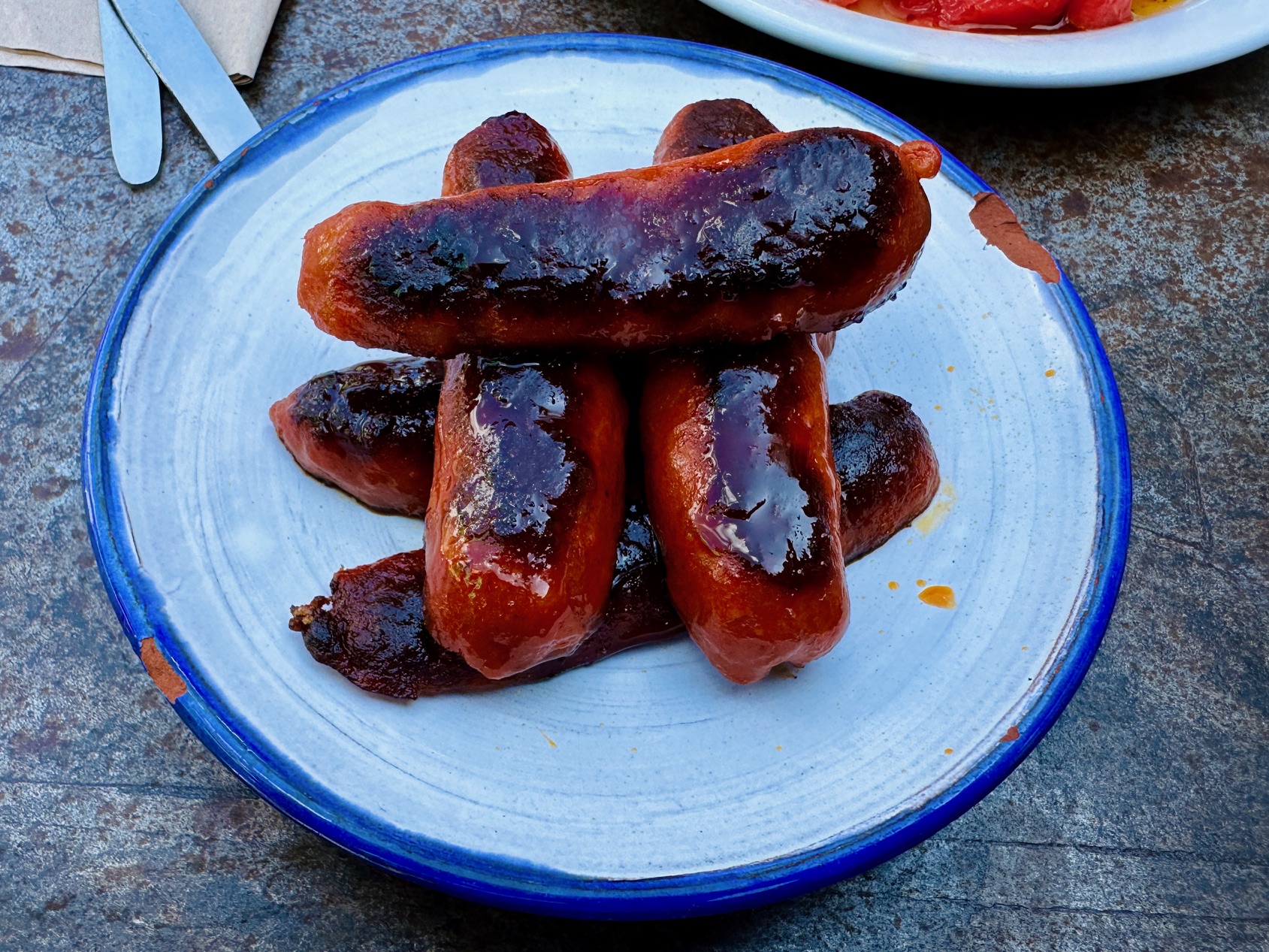
Those bundles of joy cost five pounds fifty for three, although as so often I think Drink Valley should work on giving you even numbers of these things to increase sharing and reduce arguments. Equally good, and equally good value, was a little bowl of nuggets of chorizo, cooked in wine, with a great mixture of chewiness, caramelisation and punch. This is such a simple thing to do, and such a perfect thing to have on hand when you’re drinking beer. And yet I don’t think I’ve ever been to a craft beer place, in this country at least, which thinks to serve it.

Drink Valley made good progress towards a clean sweep on the first impression with a very serviceable dish of Moroccan fried cauliflower. The spicing on the coating was impeccable, nicely arid with plenty of interest, and the cragged and crinkled exterior was cooked beautifully. The mayo, speckled with sesame, was a perfect dip, although I didn’t necessarily get the promised mushroom in it. The only fault with this dish was that cooking it perfectly involved getting all bits of it right: for me, the cauliflower had steamed slightly inside its glorious housing, lacking just a little of the bite I’d want to see.

But again, at less than six pounds I didn’t feel remotely robbed. What we were eating here were perfect beer snacks, and I couldn’t think of anywhere in Reading that offered something comparable. Well, except Siren RG1 I suppose, but when I ate there you got a little less for an awful lot more money, and it wasn’t much cop. Had Drink Valley stumbled on something here? Further research was undoubtedly called for, but what about the main courses we’d promised ourselves we would order?

The final dish, though, was decisively brilliant. Dave had insisted on us ordering salt and pepper squid, because he thought it was a really good dish to benchmark with. I was a little resistant to the idea, because I agreed with him and suspected Drink Valley’s rendition would fall short. Well – and Dave reads the blog these days, so I know he’ll especially enjoy this bit – he was right, and I was wrong.

What we got, in fairness, was not salt and pepper squid as I understand it. It didn’t have that distinctive coating, the way the same order at, say, Kungfu Kitchen would have done. But we got something even better. Six pieces of squid, beautifully scored, in a crispy salt and pepper-free coating, fried and brought to our table fresh as you like with some charred lemon and a nicely tangy srirachi mayo.

And my goodness: if you’d told me before the visit that I’d have some of the best squid I can remember anywhere in a craft beer bar in Swindon I’d have replied that you must be on mushrooms. But, would you believe, that’s exactly what this was. So fresh and tender, no twang of rubber, coated so well, cooked spot on, intensely moreish and dippable. And you got six pieces for a crazy six pounds fifty – so affordable and easy to divide up, even if you resented giving away half.

It’s safe to say that at this point Drink Valley wasn’t in any way what I was expecting. And then Dave said something somewhat wonderful.

“You know what, mate, I could pass on the main courses. They all come with carbs, and I’m getting enough of that today with the beer. I could just go another round of small plates, instead.”

What a cracking idea, I said. Let’s do that.

“Won’t that interfere with your review?”

I thought about it briefly and made an executive decision that actually, it could be the making of it. Because you may or may not want to know about burgers, steaks or fish and chips, but you can get those anywhere. And if you go to Drink Valley, which I slightly hope at least one of you will, you can have those then, if that’s your thing. But I couldn’t think of anything better than eating more small plates like the ones we’d had, on a rainy Saturday afternoon with an old friend. So up I went to the bar to order our second wave.

When I did, I talked to the chap who’d served us both our food and our drinks. They’d been open almost bang on six months, he told me, and things were going well. He said the idea was that the original branch was craft beer and Indian food, whereas this follow-up was craft beer and Korean food: I didn’t challenge that, although I wasn’t sure the menu quite bore out that ambition.

He said that they brewed offsite and didn’t currently have a tap room, although in the fullness of time they wanted to can their beers and sell them more widely. I told him how great the squid was, and he told me it was his favourite dish on the menu. I got that little glow of pride from him that always comes with people giving a shit what they do, and in return I felt happiness that Dave and I were in with a fighting chance of being his most gluttonous customers that day.

Our second wave of dishes was maybe not quite as successful as the first, but that’s always the way: you start out picking your must-haves, and trying to repeat your success always risks ordering an also-ran. For me the least successful dish we had were the pork ribs, roasted in miso and barbecue marinade. They were very close to greatness, but not quite close enough: they looked the part, and the marinade came through really well – and was rather interesting, at that.

But they weren’t big enough specimens and the meat took some pulling away from the bone, lacking substance and tenderness. Again, there was an odd number and I left the spare rib – pardon the pun – to Dave. He loves ribs, and is threatening to take me to a place in Bruges called Mozart where they do bottomless ribs: he told me, with great pride, how his son got through quite a few of them on his visit earlier in the year.

More successful was the wild mushroom bruschetta: two halves of toasted ciabatta roll topped with mushrooms that packed an impressive intensity of flavour, although – and I know this is a bugbear of mine – I really don’t think they were wild at all. I do wish people would stop making wild claims about their non-wild mushrooms, but I’ve been moaning about that for years and it shows no signs of abating. And while I’m moaning – everything we had at Drink Valley was excellent value, which made the nine pounds fifty conspicuously irrational pricing. Nothing this small is worth that, however good it tastes.

The remainder of our dishes restored the natural order. I had been sniffy about ordering the honey and mustard chipolatas, because in the immortal words of someone (I think it might have been John Inman), I don’t generally go near a sausage unless I’m confident of its provenance. To quote another famous person, my ex-wife used to say that cheap sausages are made up of, and this was her exact phrase, “eyelids and arseholes”.

I’ve always thought she was right about that but, again, Dave talked me into this one. And again – he’s going to be insufferable after this – he was right. The texture of these, in any other context, I might have found a little homogeneous but they were just coarse enough, just herby enough, just sticky enough to be a treat, especially dredged through the honey and mustard gathering at the bottom of the bowl. Also, just to say – these were allegedly cocktail sausages. I’d like to see the cocktail that went with them. It would be a tiki bowl and a half.

We also had something that, by this stage, was a bit of a variation on a theme. Strips of crispy chicken, served sizzling in a hot skillet, cooked in garlic butter, topped with slices of jalapeno and sitting on a bed of beansprouts and carrots. It’s a well-known fact that, unless you happen to find yourself in TGI Fridays, nothing that comes to your table sizzling can be entirely bad, and so it proved here.

The chicken was quite pleasant, but it came into its own towards the end of the dish when the bits we were slow getting to got crispy-crunchy, almost blackened. And by that point the julienned carrots and beansprouts, conversely, had softened and taken on the garlic butter, become a treat in their own right. This was a dish that required patience to get the best out of it. In that respect, I think I rather identified with it.

Oh, and we had some more squid. I couldn’t resist ordering that.

I’d like to tell you what Drink Valley’s dessert menu is like, but I mostly failed in that endeavour. They do a Basque cheesecake, like everybody else, and ice cream and a brownie and a chocolate orange torte, but none of that interested me and I had half an eye on ice cream at Ray’s later on. But they did have something that served as an excellent dessert: a chocolate caramel brownie stout, brewed by Drink Valley themselves. Two halves of it cost us £7.60, so less than two desserts would have cost, and it was twice as fun.

“Time for dessert, is it?” said the man behind the bar when I ordered these, and then he told me that when Drink Valley brewed it they invited staff to the brewery to test drive it. “I don’t remember much of that evening!” he told me, and after a half I could understand why. It was almost nitro-smooth, with a depth of flavour and thickness that belied its 7% strength. If they’d had it in cans, I’d have come away with a couple.

We were preparing to grab our brollies and go out and brave the heavy rain, and I was inwardly congratulating myself for how we’d tackled the menu when I saw our man heading past to an adjacent table with the fish and chips, made with batter using Drink Valley-brewed beer. I couldn’t help rubbernecking as it went past our table, an unbreakable bad habit of mine I’m afraid, and the chap gave me a little smile. Next time, it said. Next time indeed. Our meal – a total of nine small plates and seven halves of beer – had come to just under eighty-five pounds.

The rest of the day was every bit as winning as the start it got off to. I trudged mutinously round the Town Gardens with Dave while he literally stopped to smell the roses and told me how he and his wife had got into wandering along canals. “What have you become?” I said to him, adding “Do you know, I think you’re the only person I’d walk round a park in the pissing rain with when there are amazing pubs five minutes away?” It’s not Fleabag’s sister running through an airport, but it’s close.

After that, there was beer. Beer at the Tap & Brew, beer at the Hop Inn (Dave mentioned their Korean chicken burger was excellent: “now you tell me”, came my refrain). Then there was beer at the Tuppenny, and more beer at the Tuppenny, and then Dave’s wife kindly picked us up and gave me a lift to the station. And then the perfect end to a perfect day: catching the same train as my very own wife, coming back from Bristol with a tin of leftover goodies from the work bakesale. I maintain that the injection of sugar saved me from a brutal hangover – forget Dioralyte, I’m stocking up on cornflake cakes from now on.

Anyway, that’s enough about my minutiae: back to Drink Valley. I remember when I returned from Montpellier thinking that the French understood how to eat with beer in a way that had eluded us Brits. I had beer with karaage chicken, or padron peppers, or charcuterie and cheese and amazing bread, and all of it was magnificent. And what do we get in the U.K.? Inevitably it’s a street food trader – burgers, pizza or fried chicken, it’s nearly always one of those three – and you eat it on a bench or on your makeshift chair and think this is the life.

Don’t get me wrong, sometimes it is. Those things can be great, and when I’m next at Double-Barrelled eating something from Anima E Cuore I won’t feel like I’m slumming it. But Drink Valley reminds me, in the words of Frank Costanza, that there had to be another way. How I would love somewhere comfy and stylish that does an excellent range of craft beer and has a menu optimised for exactly that. Snacking, sharing, small plates and huge amounts of variety. I don’t want to keep going on about them, but Drink Valley is at the standard I really hoped Siren RG1 would attain.

Siren RG1 might well get there, as I’ve said before. But in the meantime, if Drink Valley is thinking about opening that third site I would implore them to think big and move further east. Until they do, Reading has nothing to match Old Town for such a concentration of great places to drink. It turns out you can also caffeinate superbly there and, crucially, eat well too. I’ll be back, because it turns out that Swindon is a destination in a way Reading isn’t quite. Their tourist board can have that one for free.

The Drink Valley, Old Town – 7.8
53 Devizes Road, Swindon, SN1 4BG
07827 484649

https://www.instagram.com/thedrinkvalleyoldtown/

Since January 2025, Edible Reading is partly supported by subscribers – click here if you want to read more about that, or click below to subscribe. By doing so you enable me to carry on doing what I do, and you also get access to subscriber only content. Whether you’re a subscriber or not, thanks for reading.

Restaurant review: Paesinos

Here’s a tip for you: if you want to discover how many Italians live in Reading just drop innocuously into conversation online, on a local Facebook page or the Reading subreddit, the question of Reading’s best pizza. Because if you do, Reading’s Italian contingent will come out of the woodwork. This calls for opinions, and they have plenty. They don’t fuck about, either.

“Being Italian and of partly Neapolitan descent, I am picky when it comes to pizza. Or better, I eat anything, but I know a good pizza from a bad one, and from a non-pizza” began Luca, on the Edible Reading Facebook page. He went on.

“The only real pizzas in Reading have been Papa Gee’s, for years. Then Sarv came, and Zia Lucia (both ok). I have recently tried Zi’Tore and above all Paesinos, the latter is possibly the best in Reading. The chef and manager is Sicilian and has previously worked at the Thirsty Bear. However, Thirsty Bear make American style pizza, while Paesinos make real pizza.”

Another of my Italian readers, Franz, was more generous about the Thirsty Bear. “It’s just a different style” he said. “Italian pizza purists perhaps will take a bit to adapt (I’m Italian, but open minded). A slice of their TriBeCa, curly fries and a pint is hard to beat. It just makes me happy and satisfied.” Franz also had opinions about Zia Lucia, and its “horrible, plasticky” mozzarella.

After that Luca and Franz ended up having a fascinating conversation about whether you could find good pizza outside Italy. Franz thought it was easy to do, these days. Luca disagreed, but said you could even end up getting what he called “non-pizza” in Italy, unless you were in Campania or Sicily. Just to chuck in a curveball, the best pizza Franz ever had was in the Swedish city of Norrköping. “It was Neapolitan style and was excellent, but then they had a corner in the pizzeria that was all dedicated to Totti so that confused me from an allegiance perspective.”

I could have listened to Luca and Franz discuss these niceties all day: it seemed that if you asked two Italians you were likely to come out of the conversation with at least three opinions. Over on Reddit, other Italians were weighing in. “Zi’Tore in Smelly Alley has taken the crown as the best pizza in town (in my humble, Italian, opinion)” said one. “And the pizza al taglio from Amò is even better.”

This is particularly topical because last week Sarv’s Slice announced that they were leaving the Biscuit Factory, after falling out with the owners both there and in Ealing. The reaction across the internet was one of huge sadness, coupled with genuine fear for the future of the venue. But this happens against a backdrop of Reading’s pizza scene exploding, so Sarv’s Slice might have quit while they were ahead: the market has become saturated since they opened in 2023, and even more so in the last six months or so.

Let’s run through the timeline. Last year Dough Bros opened out on Northumberland Avenue, and in the summer Zia Lucia opened in town. From then, things have only accelerated: at the start of the year Paesinos opened opposite Jackson’s Corner. Then Zi’Tore opened in February, in the old Grumpy Goat site. At the end of April, two doors down from Paesinos, Reading got Amò, a joint venture between the owners of Madoo and Pulcinella Focaccia, a pizza trader who operated from their home address out in Earley.

And believe it or not, last Wednesday another pizza restaurant, Peppito, opened on the first floor of Kings Walk, John Sykes’ restaurant sweatshop. The time between pizza restaurants opening in Reading appears to have some sort of half-life, so by the time this goes to press I wouldn’t be surprised if two more places had started trading, making all this out of date.

So the vexed subject of Reading’s best pizza isn’t something anybody, Italian or not, is going to settle in a hurry. But that’s no reason not to begin this important project, so last week I strolled down the hill from Katesgrove into town to check out Paesinos, the first of this year’s intake to start trading, on the Kings Road. I had a secret weapon, my very own Italian: my friend Enza was joining me to check this one out and see how it compared against Zi’Tore and Amò, both of which she’d researched extensively.

I was early, so I got to take in what must be one of Reading’s smallest dining rooms. Just three tables, each seating two people, although the table closest to the front door was so Lilliputian that it was hard to imagine adults sitting there, except to wait for a takeaway. A fridge hummed next to the counter, holding an interesting selection of soft drinks.

I spotted chinotto, one of my favourite things, and got one, with a plastic cup, while I waited. I’m used to the San Pellegrino version of this drink, that you can pick up in cans in Madoo. It’s dandelion and burdock’s older, more sophisticated cousin, wearing a rollneck and smoking a cigarette. But this bottled version, by Sicilian company Polara, was more nuanced, the rough edges smoothed off. I felt that all-too-familiar sensation, the gradual raising of expectations.

I looked through Paesinos’ menu. It was a single long laminated sheet with pizzas split into categories – classic, premium, signature, fusion – although the taxonomy they’d used was unclear to me. It certainly wasn’t pricing: most of the 13 inch, standard pizzas, were between thirteen and sixteen pounds whatever you ordered, many of them costing random amounts like £12.97, £13.96, £14.86. I liked the capriciousness of that.

They weren’t split into categories using any mindset I could understand. I could see something with “kebab chicken, jalapeños and buffalo sauce” being a fusion – or even a confusion – pizza, but a standard pizza bianca? Paesinos had attracted some commentary around its pizza Americana, topped with french fries and frankfurter: it might well be authentic, or authentically Sicilian, although I’d personally rather drink the bin juice from my food recycling after it’s been strained through Jay Rayner’s y-fronts. But whatever it was, surely it wasn’t “premium”?

All that said, there was something about the lack of polish in this menu that I liked. I could say it was trying to do too much, with its paneer and tandoori chicken, but nobody was making me order that stuff. In the core of it, ignoring the wackiness, there was a solid collection of options, many of them intriguing.

Then Enza arrived, and ordered a chinotto, and we got to catching up. Despite regularly exchanging messages, we realised we hadn’t seen one another in a very long time and there was plenty to discuss – her empty nest, my new house, all the life events and randomness that make you realise that you think you know what’s going on with someone via social media but that, really, you don’t.

The other thing I gathered, gradually, as we got to talking about Reading’s explosion of Italian restaurants, was that I was finally eating with someone even more determined to maintain their anonymity than me. Enza, it transpired, had been to Paesinos once before with her husband and very much enjoyed what they ate – the pizza “al portofoglio” or folded pizza for her (it translates as ‘wallet’), the tuna and red onion for him – but she was a far more frequent visitor to Amò a couple of doors down. So much so that she seemed to be furtively looking around, worried about being discovered, and lowered her voice when she mentioned Paesinos’ neighbours.

“I can’t help it!” she laughed. “I love it there. So much that I want to get involved. I keep telling them they should make the kind of pizzas you can only get in my part of Italy” – Enza’s from Potenza, in the ankle of Italy, halfway between Naples and Bari – “and if they do, I think I should get commission.” I offered to change her name for the purpose of this review, but she decided to let the chips fall where they may. At least they didn’t fall onto a pizza Americana, I suppose.

We started with appetisers, which meant a panzerotto each. Franz, on my Facebook page, had particularly recommended these, saying they were a speciality from Bari, where he came from. It was my first experience of Paesinos, and about as good a calling card as you could hope to encounter, a gorgeous crescent of fried dough filled with just enough mozzarella and tomato, too big to eat with your hands but not like a full-sized calzone. You got two for something silly like seven quid, and outstanding just about does them justice. As an introduction to the dough, too, it put down quite a marker. This huge, irregular pocket of joy made me very happy indeed.

“I tell you what, this is a lot bigger than the panzerotto I had in Montpellier” I said to Enza, between mouthfuls. She smiled.

“I wouldn’t say this is big by Italian standards. It is really good, though.”

In my mind I was thinking that I would come here and eat this again, but I was also remembering that the menu boasted pizza fritti, stuffed with ricotta and sopressata, and that I needed to try that. Enza also had a yen to sample the mozzarella in carrozza and maybe we should have tried that too, but I was put off by experiences of having it at Prezzo, many years ago, no doubt straight out of the freezer. I already had a reasonable idea that the only thing coming out of a freezer at Paesinos was the gelato.

“Would you say there’s never been a better time to be an Italian in Reading?”

“Absolutely!” said Enza, and then she told me a lovely story. I knew that she was a big fan of Zi’Tore, on Smelly Alley, and especially their cakes, many of which were ones you just didn’t find in this country. But then Enza told me all about the graffe, a sort of fried doughnut made in a distinctive loop shape, sugared but made out of a mixture of flour and potatoes. They’re specific to Campania, where she was born, and growing up in Salerno they were a regular childhood treat.

And then, some years later, Enza wanders into a cafe hundreds of miles away that’s just opened in her adopted home town, the unlikeliest of places, and finds them there. Graffe. And when she told me about this: maybe it was her excitement, or how well she conveyed it, or perhaps I was just having a lovely time, but even I felt it. I was vicariously moved, and I remembered the power food has to transport and transform.

It’s one reason to envy Italians, because what would I feel nostalgic about? Ice Magic, the chocolate sauce that was no doubt filled with chemicals so it hardened into a shell when you poured it on ice cream? The way Nice N’ Spicy Nik Naks used to taste before they were fucked with? Different permutations of processed food, and the excitement of a Findus Crispy Pancake? No, Britain had nothing to compete with graffe. Little wonder that Enza sounded so full of joy, although it did make me ponder how many privations she’d suffered through years of living here.

If the panzerotto set up expectations, the pizza fulfilled them. I’d chosen the Siciliana, my reference pizza of olives, anchovies and capers. It’s sometimes called a Neopolitan, presumably because every part of Italy wants to claim the best ever pizza as theirs. Based on what I ate at Paesinos, I can hardly blame them. Everything was exactly as it should be – the right amounts, the right proportions, the right balance. The saltiest of anchovies, generously deployed without being overkill. Purple, perfumed olives. Little clusters of plump, sharp capers (Enza preferred them salted, but give me the vinegary hit any day).

The base was heavenly. Puffed at the rim, beautifully irregular, a proper Neapolitan style pizza that drooped in the middle, although it firmed up as it cooled down. “The dough is completely different towards the end of eating the pizza” said Enza, and she was spot on. I loved the way that she tore a little bit of her crust off and tried it, on its own, before making inroads, a little ritual, almost like a benediction. I followed suit, and again that allowed me to admire Paesinos’ dough before all that other stuff happened to it. It was better after, but pretty much perfect before.

Later on I asked the pizzaiolo, who was indeed Sicilian, whether most of their trade was takeaway and delivery, given Paesinos’ size. He said it was, but that those people, however good his pizza was, missed out ever so slightly. “It’s 100% when it leaves the oven” he said, “but when it gets delivered it can only ever be 90%.” I think he’s right, and explains better than I can why, when you read the rating at the bottom, you need to come here rather than fire up Deliveroo.

Enza also loved my pizza, and preferred it on balance to hers, which isn’t to say that she didn’t enjoy hers. She went for the “dolce amaro”, a white pizza (premium, not fusion) topped with walnuts, gorgonzola, honey and radicchio. “I know people back in Italy who would disown me for ordering this” she said. Maybe she was right but they ought to try it before they knock it.

This had everything: salty, sweet and bitter in gorgeous harmony. The gorgonzola was so punchy that you smelled it, got that agricultural tang as you lifted a slice up, before you ever took a bite. But the honey – how nice to have honey rather than hot honey on a pizza, for a change – softened its roar. The walnuts lent texture and the final piece of the jigsaw, radicchio with bite and bitterness, was the clinching evidence of intelligent design. All that and, as a white pizza, it was easier and less messy to eat than the Siciliana. I really enjoyed it: Enza thought it a little unbalanced and needing something else, possibly black pepper.

Later on, when we debriefed over a beer in Siren RG1, I asked Enza how authentic that pizza was and she very kindly said something I’d never thought of before that made me feel stupid, in a good way. “Of course it’s authentic” she said. “It’s authentic because somebody has made it.” All these combinations start out as curveballs at some point, but if nobody ever innovated you’d have a cuisine that’s set in aspic. It’s 2025: nobody willingly eats aspic any more.

Paesinos has a small section of desserts, plenty of them tempting, and we decided that in the interests of research we ought to try some. Enza’s no slouch, so she asked the pizzaiolo which ones were made by Paesinos. In a flash, without hesitating or deflecting, he told us: just the two, the tiramisu and the cannoli. In the case of the cannoli he bought the shells in, but the ricotta filling was all his own work. That was good enough for us, so Enza decided to road test the cannolo and I – such hardship – ordered the tiramisu.

We also ordered a couple more drinks. The chap who’d prepared our pizzas suggested we try a bottle of something called Spuma, so I did, and it was night and day with the chinotto but equally lovely in its way – sweet and fresh, sunshine in a bottle. I thought it had a taste of grape juice, but online research later suggested it was more complex than that, with rhubarb and elderflower, cloves and caramel. It beat a Fanta Limon, and I say that as a fan of Fanta Limon.

By this point we’d got chatting with our chef, and he told us a little more about the desserts. Normally he imported the cannoli shells from Palermo, he said, but on this occasion he’d had to get them from Catania instead. That meant they’d be more brittle, smoother, less bubbled. He apologised, as if this wasn’t optimal, when discussing the difference between going to the trouble to buy these things from two different Sicilian cities. I admired that focus, that he felt there was an important distinction to be drawn between the best and the merely excellent.

And goodness, but it was exquisite. If this was the second-tier shell, I’d like to try the very best out of sheer curiosity. Beautifully presented – I loved the outline in icing sugar of the wooden spoon, as if at a crime scene – it was an utter joy. Initially Enza tried to press me to have half, using the ultra sharp knife our chef had brought to our table, but I convinced her to just let me try a section from one end. It was so delectable that I almost wished I’d taken up Enza’s offer. The ricotta was so light, so smooth, the chocolate chips it was studded with were so very generous. It made the ones at Madoo, for instance, feel pedestrian.

Everything was imported, we were told, either from Italy or specifically from Sicily. Enza loved it: I’m not making this up, but she honestly did exclaim Mamma mia (I nearly did too, and I was born in Bristol).

There was a story behind the tiramisu, and he told us that too. It was his fiancée’s recipe – she works at the Thirsty Bear – but she only finally let him have it once he opened Paesinos, despite them having been together for twelve years, despite the fact that they were getting married towards the end of the year. Many tiramisu recipes just used egg yolk, he said, but this one included egg white too, to give a lighter texture. The only other tweak was a little vanilla, to offset the flavour of the egg yolk.

It was another tour de force, and he also went to great trouble to tell me it was a bigger portion than you got elsewhere around town. He’d weighed the rival tiramisu you could get in other places, and weighed his, and his was more substantial. It was the best tiramisu I’ve had in Reading, and honestly I can’t remember eating a better one anywhere else. No wonder he was marrying his fiancée: if I had ready access to somebody who could knock one of these out, I’d be the size of a house.

The strangest thing happened after that: we had eaten, we’d drunk (no alcohol, Paesinos is unlicensed) and we ought to have headed straight off to compare notes over a beer. But I was in the company of two Italians, and they talked food, compared notes, discussed recipes, the best places to buy mascarpone, where he sourced his ingredients from. And like that conversation on my Facebook page at the start of this review, I could have listened all night. Being in the company of people whose passion for food verges on obsession – the real meaning of obsession, not that social media meaning that just means “I like this” – was infectious.

In the process I learned a few other things. Paesinos had been open nearly six months, and things were going well. Our chap knew the people at Mama’s Way, loved it there, didn’t see any of this explosion of Italian spots as competition. A rising tide truly did lift all boats, and the slow spread of Reading’s Little Italy round the corner to become a Not So Little Italy felt like a beautiful thing. Eventually we settled up. Our bill for everything came to just under sixty pounds; there was no option to tip – it’s almost as if they just didn’t expect anybody to – so I made a second card payment for that.

If I was giving advice to Paesinos – not that I’m qualified to – it would probably be to lose the things at the periphery of their menu, the pizzas with chicken kebab or paneer, the chicken nuggets, the peri peri fries. I think I saw somewhere online that they had burgers “coming soon”, and a look at their website suggests that they now indeed do a range of burgers. I don’t think they need any of that, but what do I know? Maybe their delivery customers will lap that up.

But actually, if I was giving advice to Paesinos it would be to carry on doing exactly what they’re doing. I cannot think of a pizza I’ve enjoyed so much in a long time, and I can’t think of a Neopolitan-style pizza I’ve liked as much in longer still. What a small, unassuming delight Paesinos is, and what a mind-boggling prospect it is that there’s a healthy debate, under way right now, about whether our town has places to eat pizza that are even better than it is.

I’m not qualified to weigh in on that: I’ve not visited its rivals yet, I’m not a fully paid up pizza obsessive and I’m about as far from Italian as it’s possible to be. So take this as my ill-informed, incomplete, English opinion: this might not be the best pizza in Reading, but if it isn’t, the place that can beat this is going to be one hell of a restaurant. Either way it’s the best pizza I’ve had in Reading, I think. I can’t wait to test out its competition. Even more so, I can’t wait to go back.

Paesinos – 8.6
Unit 4, 2 Kings Road, Reading, RG1 3AA
0118 2068806

https://paesinos.com

Since January 2025, Edible Reading is partly supported by subscribers – click here if you want to read more about that, or click below to subscribe. By doing so you enable me to carry on doing what I do, and you also get access to subscriber only content. Whether you’re a subscriber or not, thanks for reading.