
Stroud is lovely. Have you been? It’s so easy if you live in Reading: there’s a direct train that sets off once an hour, takes an hour and drops you close to the heart of things, less than five minutes from the foot of the town’s pretty, sweeping – somewhat steep – High Street. I’m there with my old friend Dave, who’s rapidly staking a claim to be my West Of England Correspondent, and he knows the town better than I do, so I let him lead the way.
The last time I was here was over four years ago, and it’s safe to say that although I liked it then, I didn’t remember it being quite this, well, good. Dave takes me into a mall called the Five Valleys Shopping Centre, to enjoy a brilliant latte at Rough Hands Coffee, along with a chocolate and sea salt cookie that is miles better than anything you could buy in any Reading mall. As he makes inroads into an almond croissant almost as big as his head, he tells me more about the place.
“It’s not like the rest of the Cotswolds, mate, it’s got a touch of Glastonbury about it. Let’s just say there are quite a few crystal shops.”
I look around. Although I’m sure Dave is right, I spot people queuing for coffee and baked goods, advertising their favourite brands on their totes. I see moustaches and those daft little Steve Zissou hats and more than a little Lucy & Yak – not all on the same person I might add – and truly, the place feels more hipster than hippy. You don’t get all this in Cirencester or Stow on the bloody Wold.
The edge blunted on my peckishness, we start exploring the Cotswolds’ most atypical town. The mall has a food court that, any other day, would make an excellent spot for lunch, and a boutique department store, Sandersons, that boasts a selection of niche fragrances to put many cities to shame. It’s so old school it no longer has a website, having decided to abandon e-commerce last summer.
But then we climb the high street and near the top, by a bookshop and an organic café, we reach the reason the place is buzzing so loudly on a sunny Saturday morning, the farmers’ market. It really is a delight, spreading from the splendidly named Shambles on one side of the street to the little maze of streets on the other, and perhaps the best way that I can describe it is to say that it’s a flagrant attempt to make me part with as much money as possible in the shortest possible time.
It’s like a deeply middle-class IKEA, where you arrive fully intending to buy just one thing but come away with a bag groaning with stuff you didn’t know you needed. I only planned to pick up some charcuterie, but also end up with a gorgeous seeded sourdough loaf from Hobbs House Bakery, a big bottle of grassy extra virgin olive oil and a business card from a lovely gentleman who may or may not end up making me a leather satchel by hand.
To limit myself to that takes all my strength, and on a cooler day I might have also left with cheeses, bean to bar chocolate, cakes, beer, doughnuts, pies, sausages, smoked salmon and a hernia; I reflect, later on, that it might be for the best that my slowly mending right arm still can’t carry more than a couple of kilos. It feels like every bourgeois need is catered for every Saturday from 9 to 2 in that compact but blissful space – did I mention the scented candles and room diffusers? – and that’s before we get on to the street food stalls or the little open air café using beans from nearby Rave Coffee.
It is, in short, idyllic. I can well understand why Stroud was named as one of the Sunday Times’ Best Places To Live this year, and why it won the whole thing five years ago. Last year Reading was mentioned in that august company, but this year the Sunday Times included Caversham in the list, a subtle way of saying “we got it wrong, only this bit of Reading is any cop”. For what it’s worth, even for the farmers’ market alone, Stroud pisses all over Caversham: Stroud is what Caversham would like to be if it grows up.
If I didn’t already have a restaurant reservation, and I hadn’t instead chosen to eat in the mall (pizzeria Fat Toni is meant to be good) I could easily have browsed and munched my way through the farmers’ market. I walk wistfully past a stall offering Thai food which smells better than any Thai restaurant I can remember. Lunch had better be good, I think.
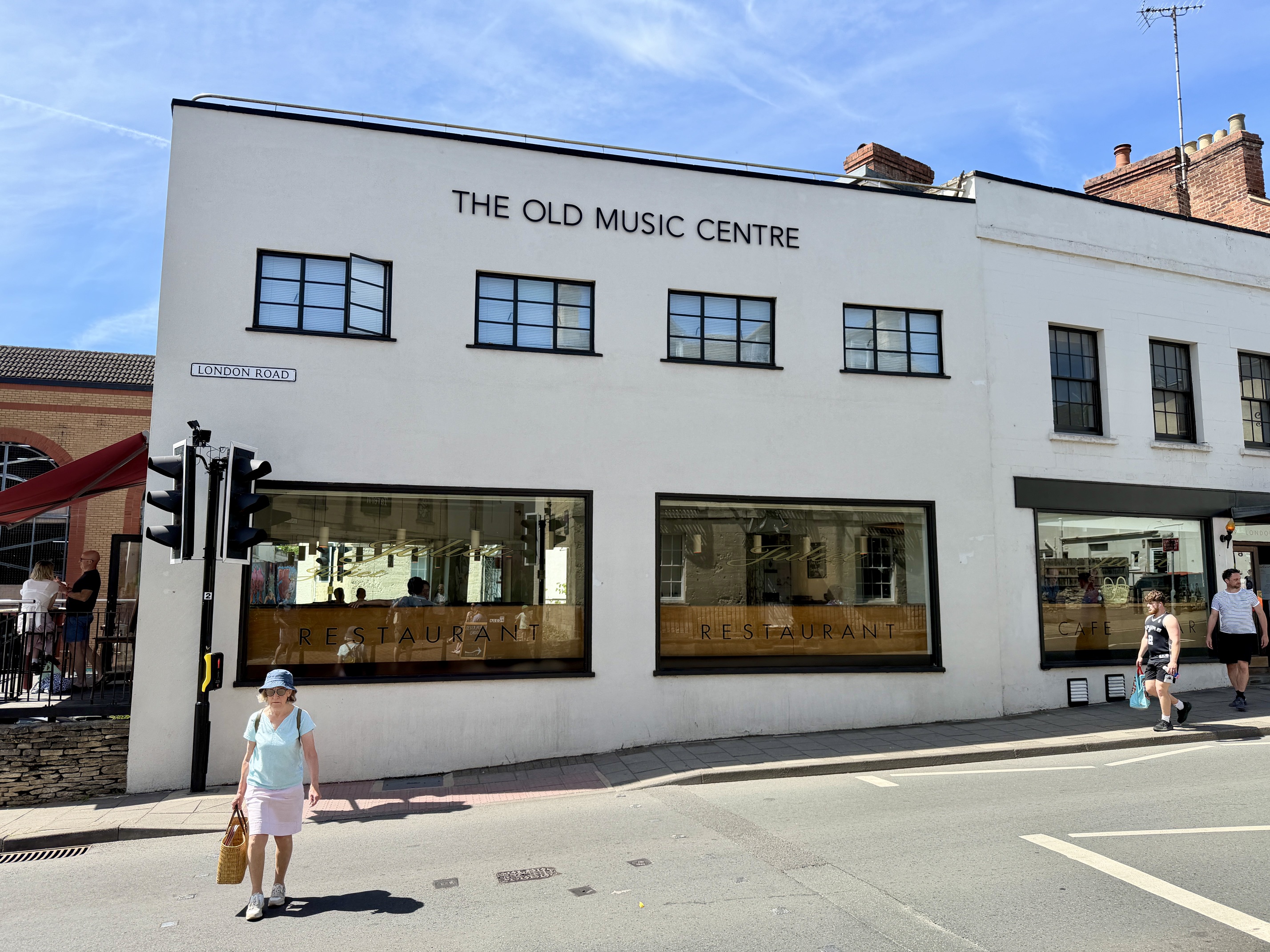
Our venue for lunch is at the bottom of Union Street, the hill with that Thai food stall on it, opposite a disused pub and some vivid street art. It occupies the ground floor of a handsome building, The Old Music Centre, which had fallen into disrepair before sculptor Dan Chadwick bought it fifteen years ago. First it spent some time as a factory and another restaurant, and finally in late 2024 it reopened as Juliet, named after Chadwick’s wife.
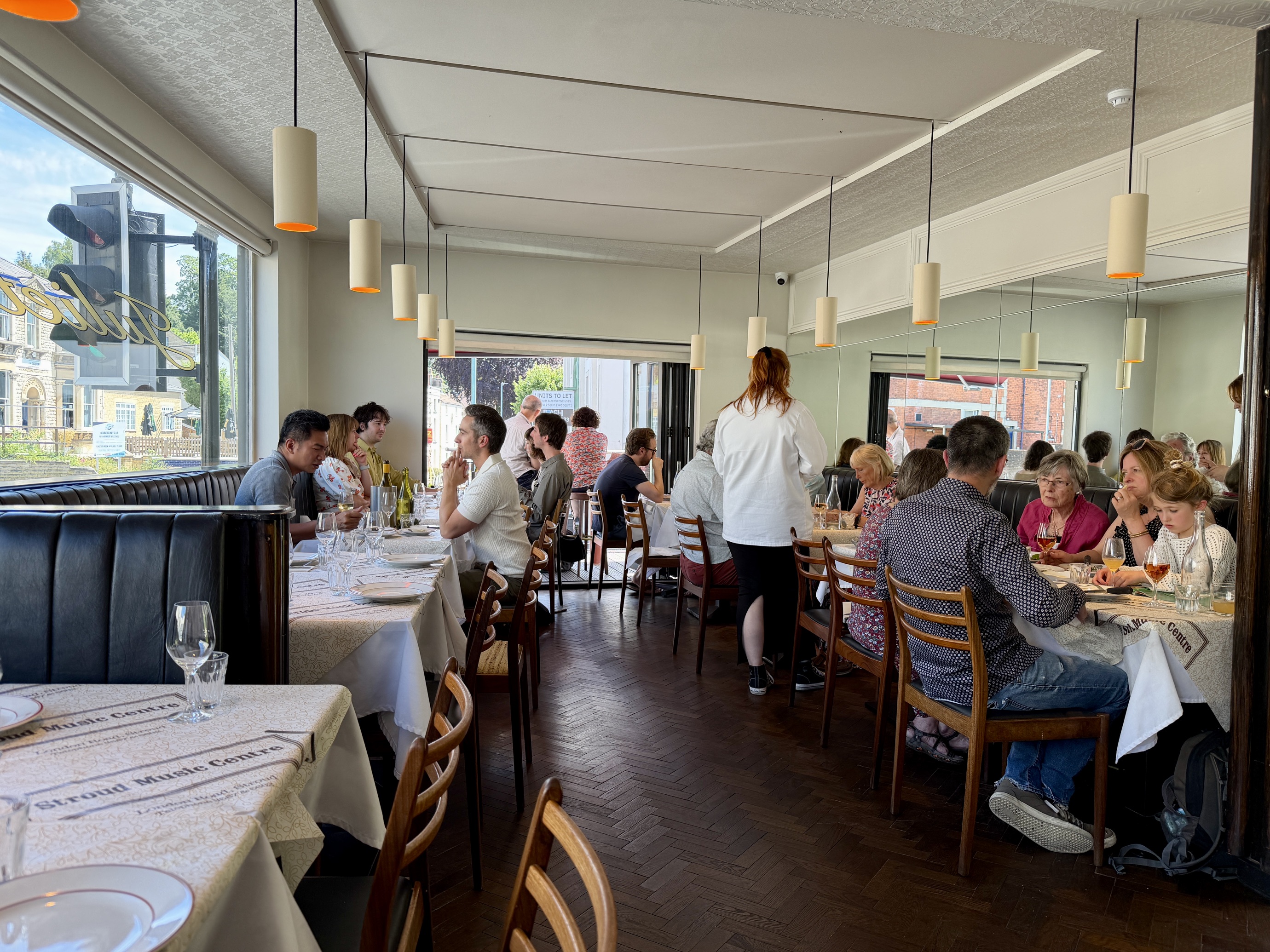
It’s a fetching space that makes full use of the building’s dimensions and huge windows: airy and busy without packing tables in like sardines. There’s a small private-ish dining room and a smaller terrace outside, but otherwise you’re in that long dining room, all black leather banquettes, parquet floor and clever use of mirrors to flood the place with light. It radiates confidence that you’ll eat well and have a thoroughly good time into the bargain.
The menu read well, divided into sections with a very enjoyable flow to them: snacks first, then starters, then mains with a small selection of desserts at the end. Decent pricing, too, with the majority of the snacks £5 or less, the dozen or so starters ranging mostly from £10 to £16 and most mains between £20 and £30.
So far so conventional, you might think, but as I ordered a Kir royale and Dave plumped for an alcohol free Peroni, our server – one of a uniformly charming brigade – chucked in a curveball by explaining the concept of the restaurant. Who doesn’t enjoy having a concept explained to them?
“All of our dishes are designed for sharing” she said. And I’m sorry to say that my heart sank a little.
Partly because I was not long back from Glasgow, where I’d got tired of that shtick, and partly because this menu didn’t read like that at all. There was a dissonance to it. It made sense with the small plates, pretty much, although not with the snacks (“you get halfway through the gazpacho then hand it to me”) but how did you share tagliatelle with rabbit ragu, unless you were in Lady And The Tramp? And who in their right mind shared steak frites unless it was a piece of beef big enough for that, which at £26 the steak on the menu almost certainly wasn’t?
“If you want to have the big plates to yourself that’s absolutely fine” she followed up, in a way that suggested my expression hadn’t been as subtle as I thought. “Just let us know so we can make sure they come out at the same time.”
This was very decent of her but, as so often with this concept, it rankled with me that eating simultaneously with your dining companion had become something you couldn’t take for granted, the Ryanair-isation of restaurants.
Anyway, no harm done: Dave and I agreed on some small plates to share, and picked a big plate each. All would be well. And we took long enough about it that I saw one of my original choices, the vitello tonnato, turn up at our neighbours’ table submerged in a thick mulchy sauce. I decided it was about as unshareable as could be.
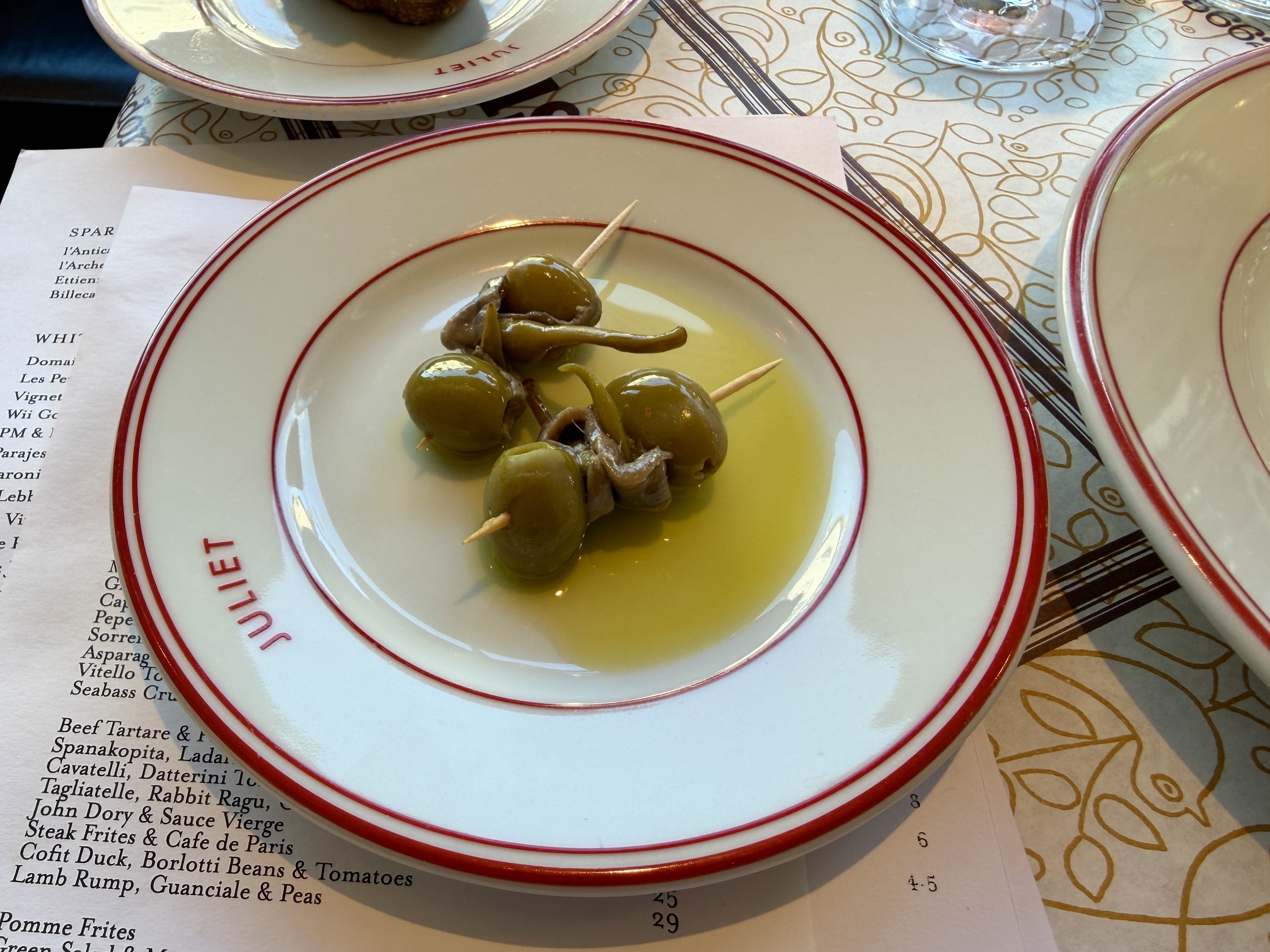
First, though, a gilda: a perfectly pleasant mouthful of anchovy snaking its way between two plump olives and a pickled chilli, the whole thing a study in muted greens and browns. A very enjoyable first bite of a meal, flavours not to be sniffed at, perhaps slightly petite at £3.50 a pop. That balance – never mind the quality, mourn the quantity – would prove to be emblematic: in my beginning is my end, as T.S. Eliot put it.
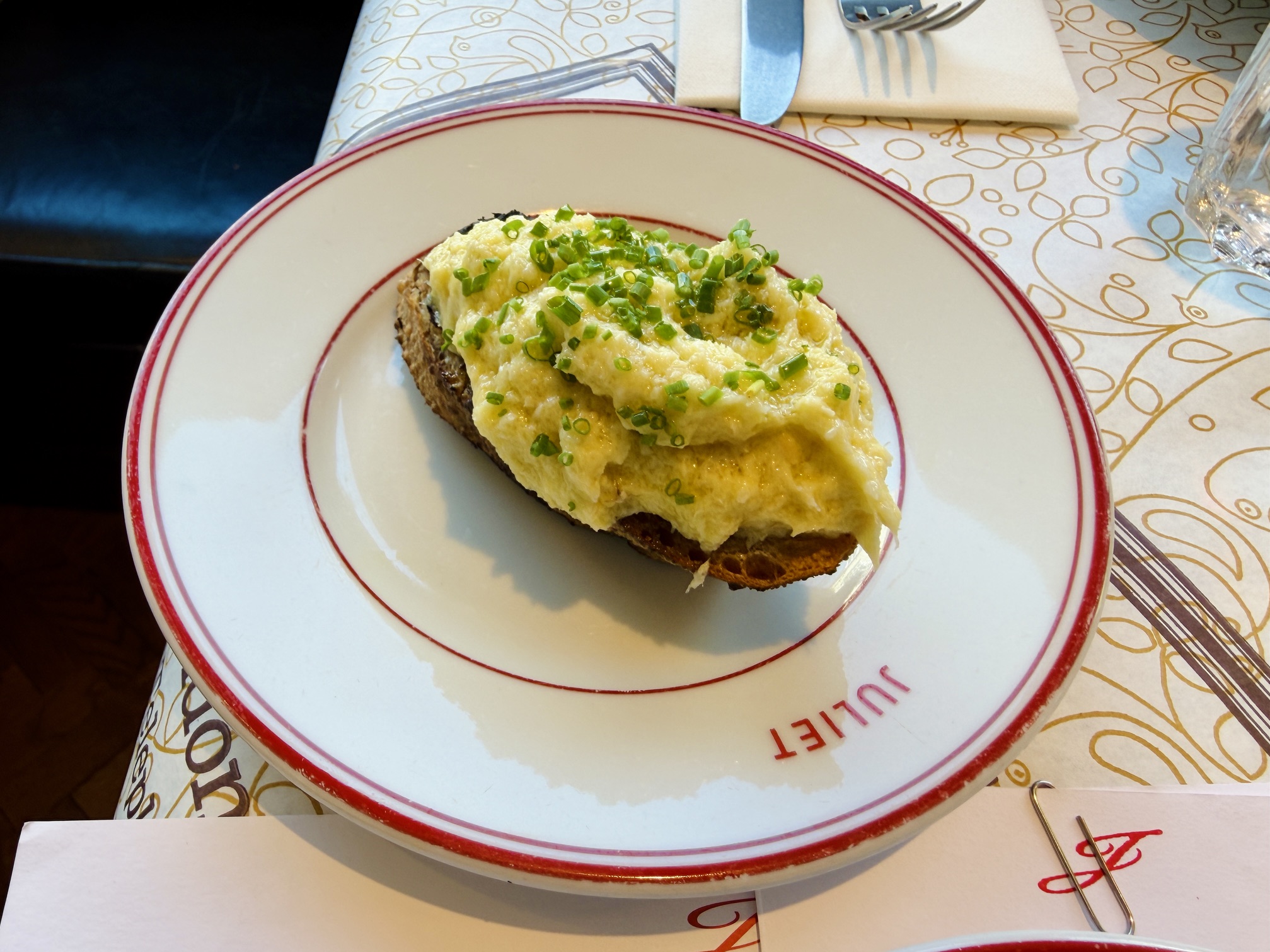
The other nibble we’d opted for was far better. I love salt cod, but I’ve never had it mantecato before – whipped, a litle like a brandade, velvety from all that emulsifying olive oil, salty, a beautiful golden hue. It was delightful, but the idea of sharing one of these between two really was for the birds.
Not only was it too good to share, but it would have been impractical to even try. The fact that the toast my salt cod was slathered on was also distinctly on the burnt side, making cutting it with cutlery or teeth more of a challenge than it should have been, reinforced that view. Fortunately we’d ordered two, and at £5 apiece they were infinitely better value than the gildas.
At this point things started progressing nicely, and the volley of small-plates-that-were-absolutely-not-starters-and-not-to-be-referred-to-as-such-under-any-circumstances showed off the best of what the kitchen could do, even if in one case that was ‘buy well’.
One of the strongest dishes of the meal was a really excellent sea bass crudo, taut leaves of fish brought to life with oil, bottarga, halved cherries and, I thought, a little orange zest. This was the gastronomic equivalent of dressing for the job you want, and for as long as we were eating it we could believe that the sunshine outside was the start of a glorious summer we had willed into being, by ordering dishes like this.
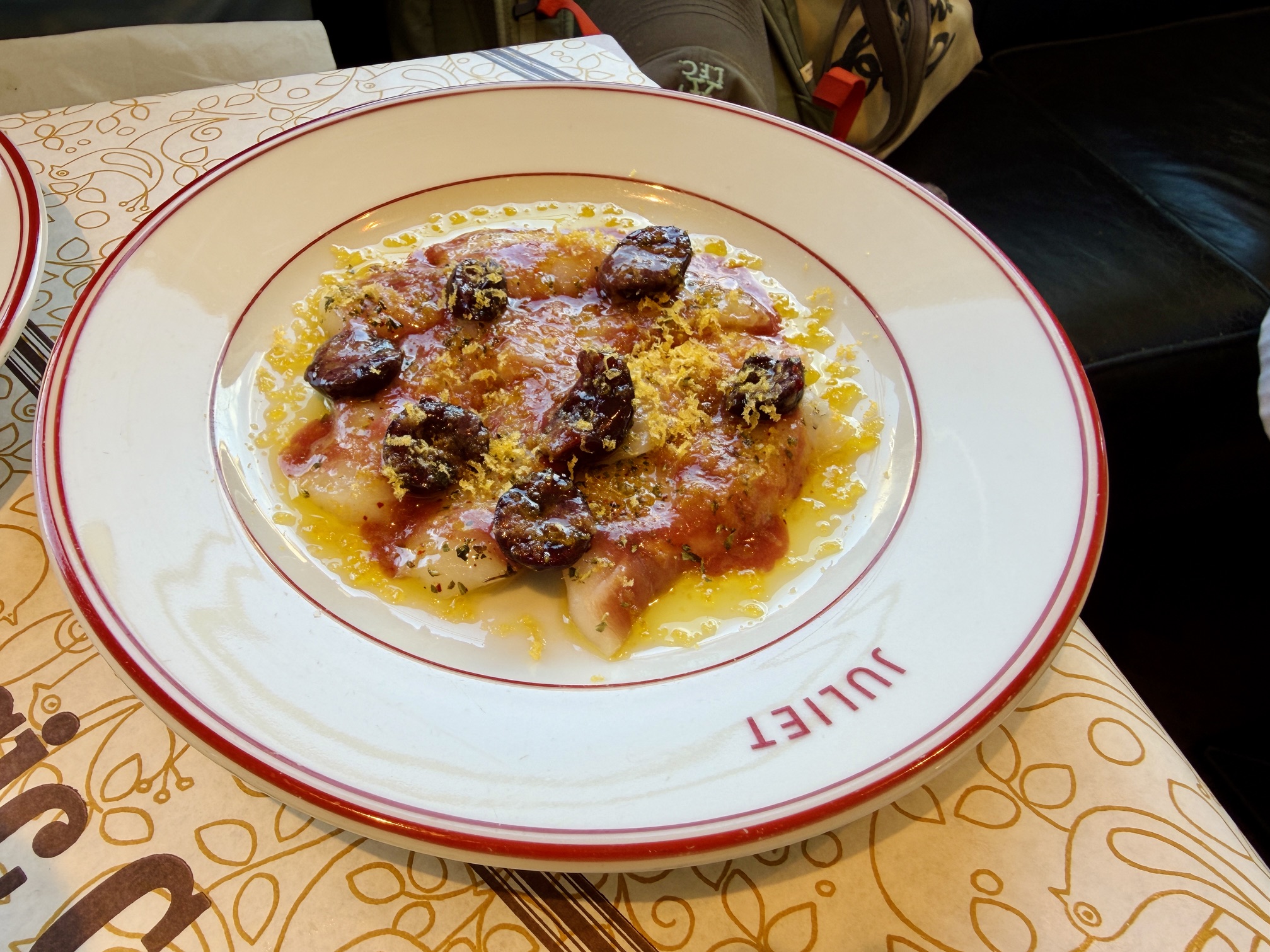
I had moved on to a really excellent glass of Muscadet: natural but not cloudy, with citrus and salt, which complemented this nicely. £9 a glass for a bottle which would cost you £19 online, a markup which might not sound unreasonable until you realise you’re only getting 125ml, a fact the menu neglected to mention anywhere. There’s that quality/quantity thing, again.
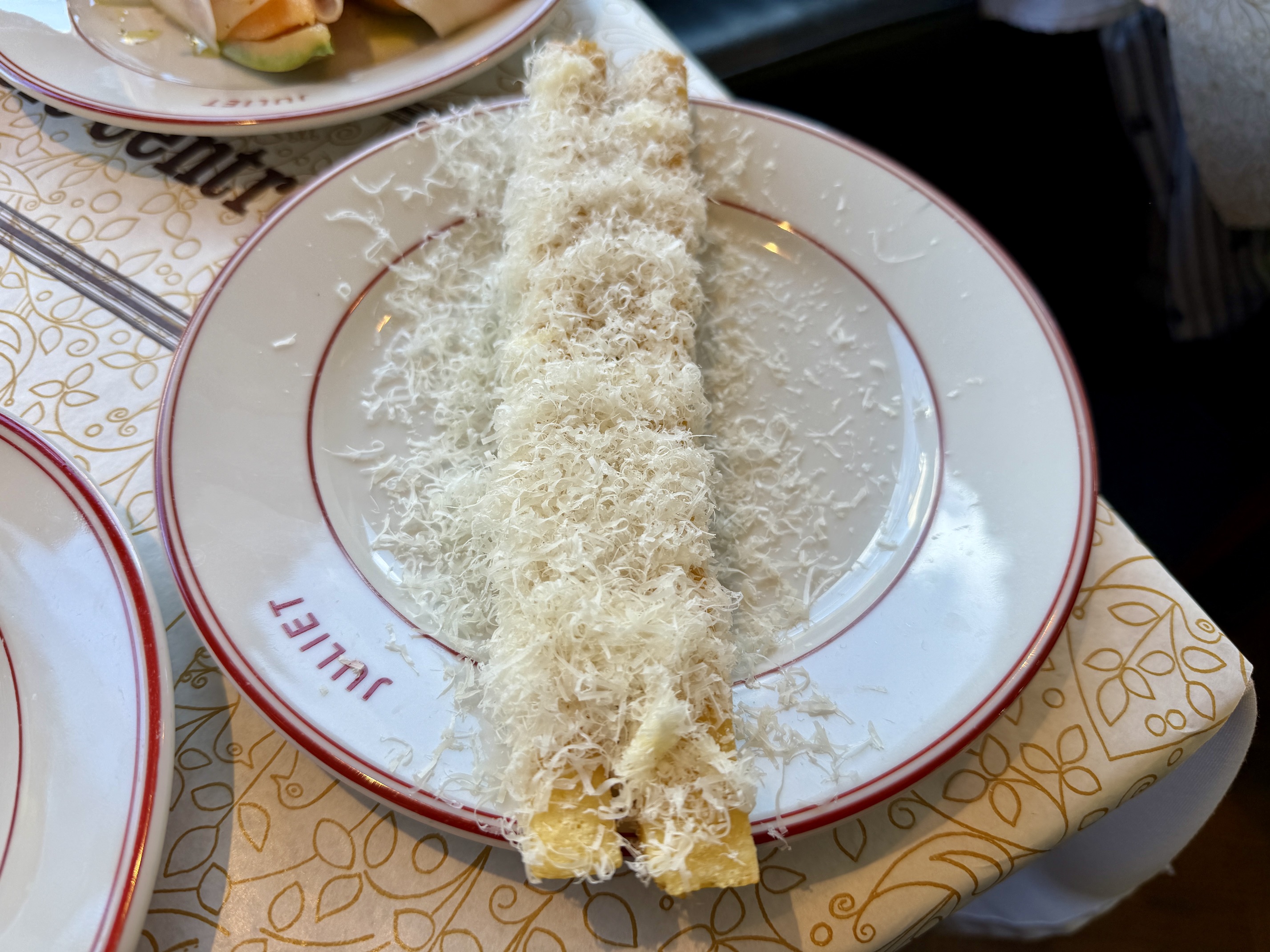
Also very enjoyable, if not terribly sophisticated, were two planks of panisse obscured by Parmesan. I liked this, but it was fairly one note: I’d rather they’d stuck the salt cod mantecata on a lozenge of panisse and made two decent dishes into one great one. Was it shareable? Yes. Was it worth £10 when the same money got you two of the salt cod snacks? Perhaps not.
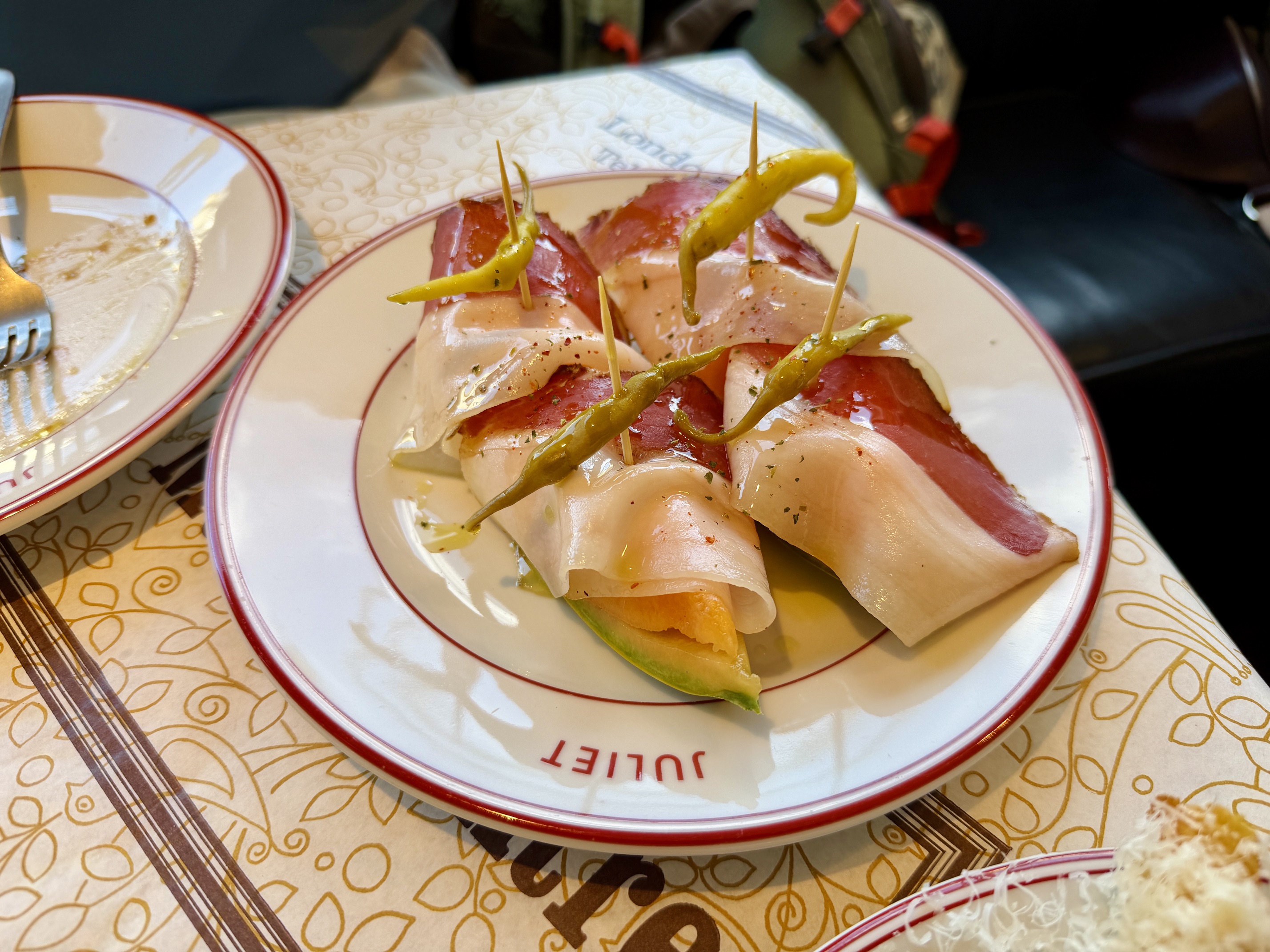
Nobody could say that the last of our small plates wasn’t sharable. Two wedges of fragrant, sweet as you like honeymoon melon came draped with speck and pinned with a couple more pickled chillies. It’s funny, I’d turned up to Juliet thinking that it was a French restaurant but that must have been the Mandela effect: the menu ranged across Europe, spending more time in Italy than France or Spain.
What that does mean, though, is that I had plenty of experience of dishes like this to compare it to. Very good melon and very good ham might have fallen out of fashion until recently but it’s never going to be a bad combination, especially when the sourcing is as meticulous as it was here. But was this dish, at £15, miles better than similar plates I’d enjoyed at Bristol’s RAGÙ or Oxford’s Arbequina, both of which had cost less? Not really, no.
Still, lunch was well under way and I couldn’t say I wasn’t having a smashing time. Dave and I had much to catch up on from our various misadventures, and I was determined to get the discussion out of the way about my dad’s funeral and Dave’s continuing unhappy relationship with Liverpool FC, so we could look forward to happier times ahead.
And the room was full of happy chatting diners, but by this point Dave and I were among the youngest people in there: the scruff and vitality of Rough Hands, the High Street and the market felt like they could have belonged to another town altogether.
I had moved on to a light, juicy syrah from Minervois (£7 a glass, so a little less painful: still 125ml though) and Dave had been tempted to drink a Früh Kölsch, reminded of a very enjoyable trip to Cologne a few years back. It came in the traditional glass, which was pleasing and correct but also meant that you were paying £4.20 for 200ml of beer. Did the folks at Juliet not like you getting drunk? Was that what was going on?
Despite being far from drunk, Dave really enjoyed his large-plate-but-definitely-not-a-main-course. It was a decent slab of John Dory, skin nicely blackened, on the bone but coming away with little encouragement, and the forkful I had was excellent. It came in what the menu described as a sauce vierge, but the presence of olives and capers suggested to me that this particular virgin might have lapsed into puttanesca territory. It happens to the best of us.
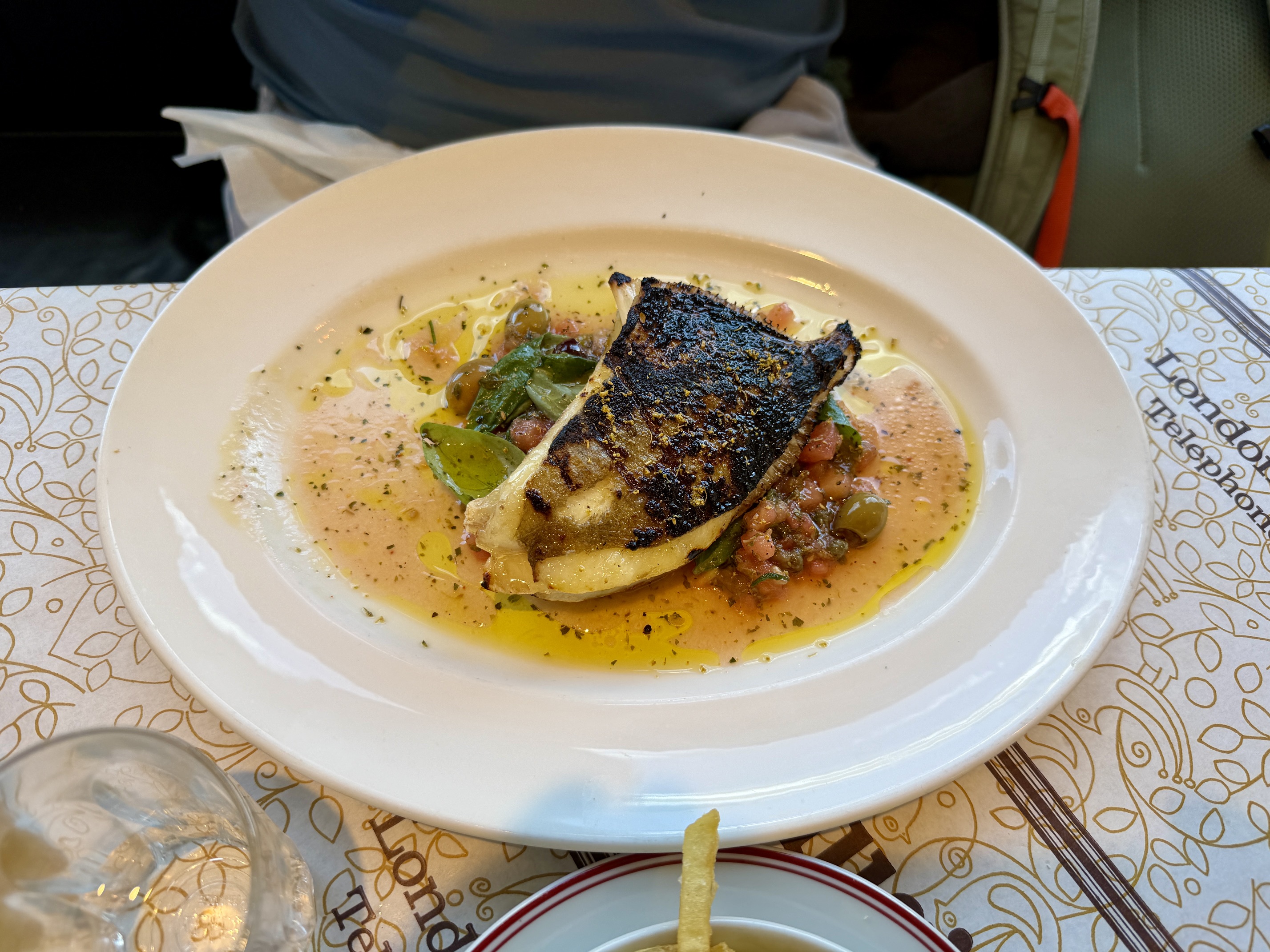
I wouldn’t say this dish was huge for £28, and I wouldn’t propose sharing it with anybody, but it was just about big enough, and went very well with Juliet’s frites, which were salty, light and well nigh flawless.
“I think if you’re paying that much for a main, it should come with some carbs” was Dave’s two pence. I’m glad it wasn’t just me.
My main tasted gorgeous. Taste was not the problem. Four slices of lamb rump, blushing just the right amount, were served fanned out on a moat of jus with peas and meagre ribbons of guanciale. As a dish, for quality, you couldn’t fault it. Can you see where this is going?
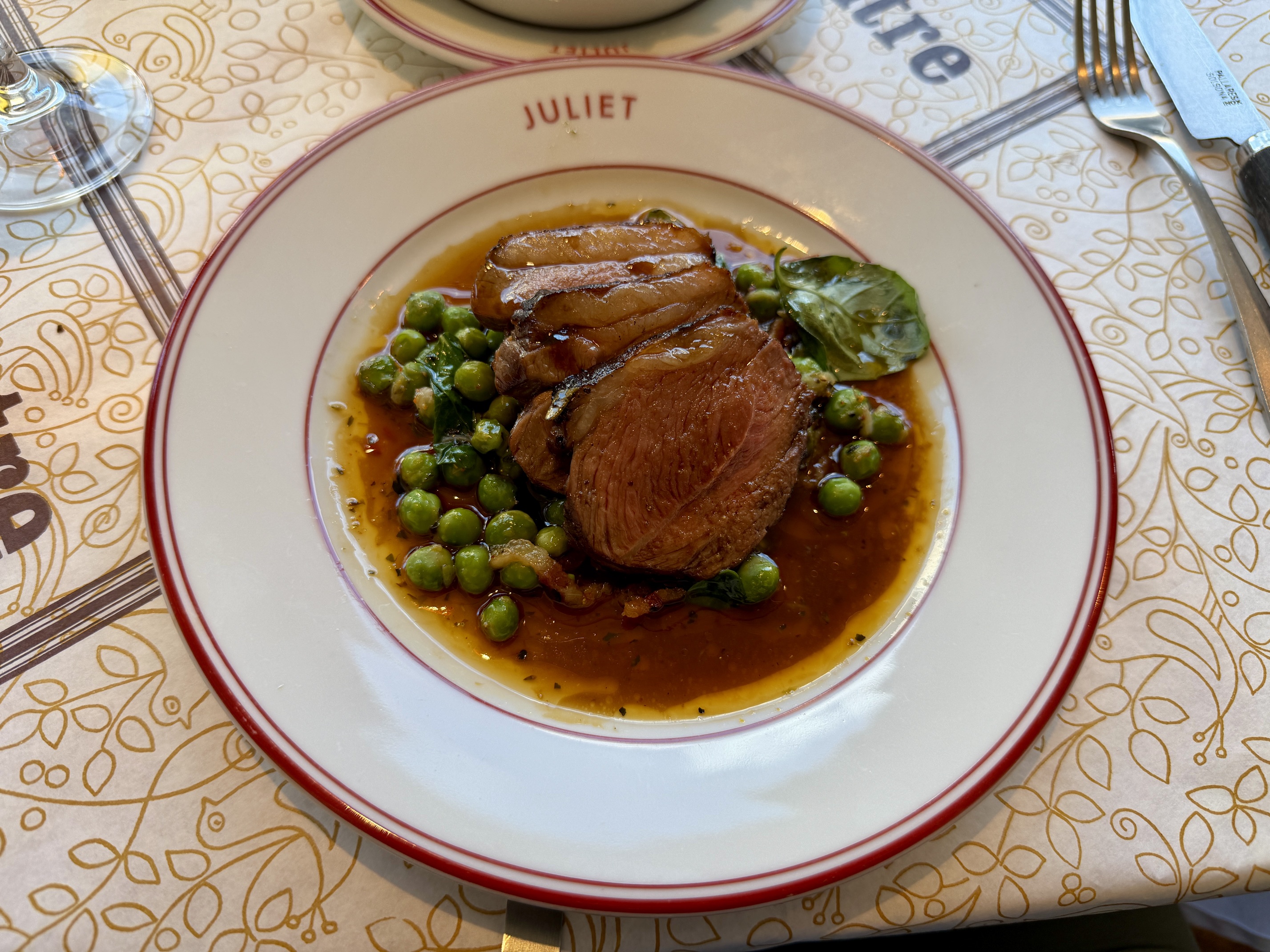
It’s difficult to show dimensions in these pictures, but this was not a large plate. It had the same dimensions as the ones that had brought our not-starters earlier on, but it cost twice as much as any of them. “Our large plates are designed for sharing” is a laudable aim, but it only works if your plates (a) work for sharing and (b) are actually large. It made me think of the beautiful duck I’d had at Pompette earlier in the year: that dish was for sharing. This dish was for jealously guarding, and still feeling peckish at the end. Thank goodness for those frites.
The lag between our penultimate and final courses gave Dave and I plenty of time to compare notes.
“If I came here again I’d just stick to the smaller plates and share” said Dave.
“I know what you mean, but whether these plates are big or small, or work as sharers or not seems pretty random.”
“Yeah, and your main” – see, we were still calling them mains – “wasn’t very big. But it’s the menu’s fault: if something costs nearly £30 I’d expect it to be larger than that” said Dave, gesturing at my empty smaller-than-you’d-like plate.
On balance, although it was tempting to compare this place with the likes of RAGÙ or Arbequina, the restaurant we both ended up using as a yardstick was Upstairs At Landrace, in Bath. There we had shared some small plates, had a main course each, come away fuller and, I’m pretty sure, spent a fair amount less. The Bath restaurant felt like the far better execution of an idea both places had come up with.
None of that, mind you, stopped us having dessert. Thankfully restaurants never try to make you share these, so we each had our own individual portion of chocolate cremeux. It was far and away the most successful thing we ate – glossy and moreish, just enough depth, not too much sweetness, and it came anointed with olive oil and sprinkled with flakes of salt. Truly unimpeachable, simple but superb. Why couldn’t it all have been like this?
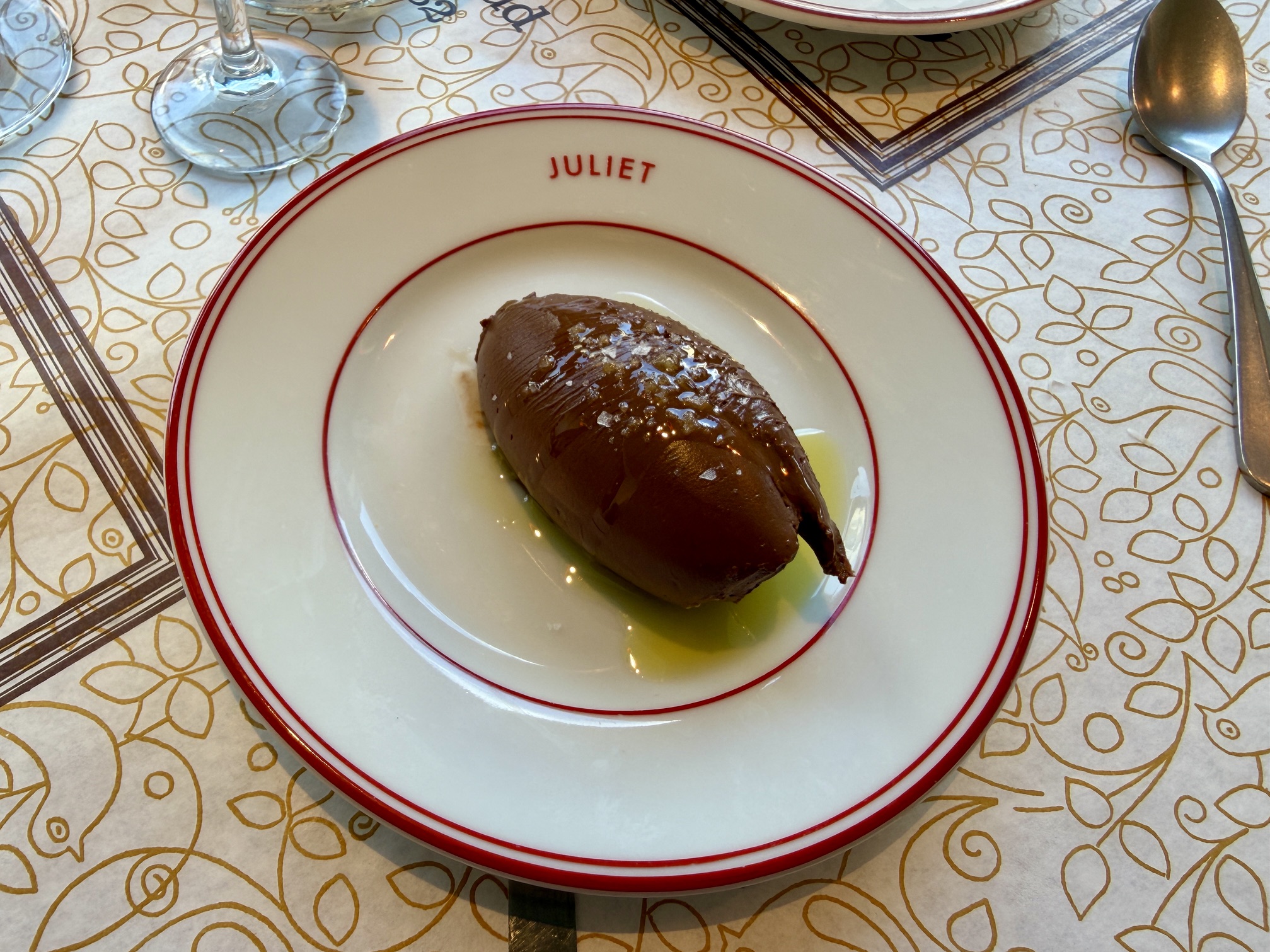
It went really nicely with a glass of Banyuls, again a relatively stingy pour at 50ml, but for £5.50 you couldn’t complain. It’s not like me to quote exact prices like a local newspaper, or to dust off the Weights And Measures Act, but everything was so controlled at Juliet that I almost feel compelled to.
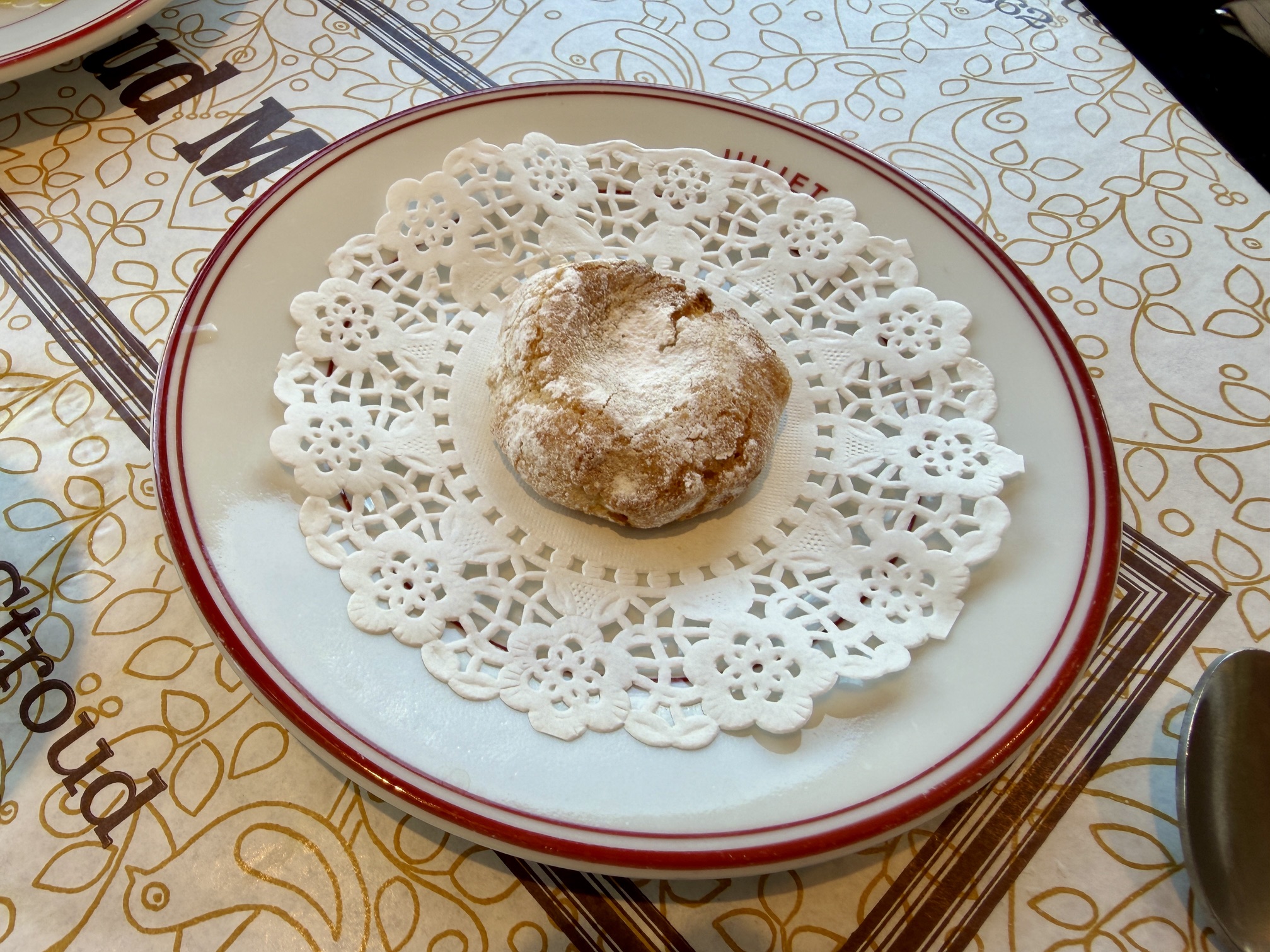
Last of all I ordered a ricciarello, a soft almond biscuit which is a speciality of Siena. It was gorgeous: ricciarelli are soft, irregular and crammed with almond, so not dissimilar to amaretti morbidi, but with an extra zing of citrus that makes them just a tad more interesting. I liked this a lot, and it was only a couple of quid. Ironically, considering it was one of the smallest things we ordered, I shared it with Dave.
After all that, we settled up: our bill for snacks, small plates, slightly less small plates, sides, dessert and small drinks came to £195, including a 12.5% service charge. Our bill at Upstairs At Landrace the previous year had been smaller: it was the only thing that was.
The rest of our day followed a well-trodden path. By the time lunch was over the market had packed up, and Stroud on a Saturday afternoon felt like Bruges after the coach trips pack up and leave or Mykonos when the cruise ships have moved on, a sleepy place with little sign of just how awake it had been mere hours before. We found a very nice pub called the Retreat that had striking red walls, gorgeous prints on them and Steady Rolling Man on draft, and we set the world to rights, or tried to, until it was time to take one of those regular trains back to our respective home towns.
Ordinarily, that is where this review would leave us, with Dave and I home from a day of fun, debriefing with our respective spouses. I would conclude by saying that Juliet is a good restaurant if not a great one, flawed in ways you could probably work around if you could be bothered, and possibly worth visiting if you found yourself in Stroud with £100 a head burning a hole in your pocket and more of an appetite to spend it there than on a cornucopia of fine goods from the market. But this week I have to close where I’d usually begin, by discussing the puzzling national consensus that Juliet is, in fact, an utterly phenomenal place.
The thing is, over the space of the twelve months since it first opened Juliet got unanimous rave reviews from almost every national critic. It’s rare for them to be of one mind, unless they know and like the owner – Jeremy King springs to mind – and rarer still that they reach that view about somewhere outside London. For any of them to stray that far afield is comparatively rare, but for all of them to descend on the same part of not-London is practically a unicorn.
Yet they all loved Juliet. Giles Coren, who had a house nearby at the time, said in the Times that “Juliet is not just great for a boondocks bistro; it’s great for anywhere in the world. It would be the best restaurant in Hampstead by miles. The best in Chelsea, no question.” Grace Dent in the Guardian, also writing to make sense of the provinces for Londoners, said it was “seriously worth a schlep to Stroud”.
What about William Sitwell in the Telegraph? “If this isn’t my favourite restaurant of 2025 I’m in for a year to remember” was his analysis. It goes on. Tom Parker Bowles said in the Mail On Sunday that he could stay all night and, not one to miss a Shakespeare pun, ended with “parting is indeed such sweet sorrow”: isn’t he erudite?
And then there’s arch bloviator Tim Hayward in the FT, what did he say? Well, your guess is as good as mine: in a windy old review entitled Raise your voices and howl for The Chefs he bibbled on about his trip there with “a small cadre of West Country foodisti”. Hayward’s writing always reminds me of the opening lyrics to the Beatles’ Julia, when John Lennon sings Half of what I say is meaningless. Even if that’s true, Lennon still had a better batting average than Hayward.
Sitwell’s was the only one of those reviews to explain that the menu is intended to be shared. None of them talked about whether the food lends itself to doing that, in terms of sizing or price. None of them really talked about cost or value at all, indeed Sitwell’s said that the price was “£126 excluding drinks and service”, which says to me that he spent more on booze than he’s comfortable admitting.
You would not get a good idea from any of those reviews whether Juliet is pricey, or will leave you feeling rinsed. This is what happens when you take advice from people who expense it all. They’re worse than cynics: they know the price of nothing and the value of nothing.
So what did they spend their word counts talking about? Parker Bowles had less than 400 words to play with, and name dropped the former restaurant critic he was having lunch with before discovering “another old mucker” up at the bar, who “is easily persuaded to join our table.” I’m sure his friend Dai Francis, whoever he is, was delighted to get a name check.
Coren told us that he bumped into Dom Joly there – thank god I wasn’t lunching at Juliet that day – before going on at length about how the owner Daniel Chadwick is “one of the best men ever to own a restaurant”. Was it ever going to be anything other than a rave? Maybe he should have recused himself, knowing that if he didn’t review Juliet another four restaurant critics still would.
But really, when three of the reviews manage to mention the sommelier by name but omit pretty crucial details about what a meal at Juliet is actually like, you do have to wonder if restaurant reviewing has started missing the point.
Amid all the showing off, name-dropping and knob-jostling, amid the florid hunt for the Next Big Simile, it feels to me like reviewers – critics and bloggers alike – have lost their way and forgotten what’s important: what’s it like to eat in a restaurant? Will I like it? How much does it cost? Is it worth the money? You can track chefs’ CVs all you like, you can talk about your buddies in the trade, you can vaguely patronise anywhere without an 020 area code, but all you’re really doing is bragging about what a great time you’ve had.
So there you go, they all had a ball. I’m not so sure, on balance, whether you would. But perhaps it doesn’t matter, because they sold their papers and it’s only money. Your money. And I can still finish by telling you that Juliet is a good restaurant but not a great one, flawed in ways you could probably work around if you could be bothered, and possibly worth visiting if you find yourself in Stroud with £100 a head burning a hole in your pocket and more of an appetite to spend it there than on a cornucopia of fine goods from the market.
I bet it’s a great day out on expenses, though.
Juliet – 7.6
49 London Road, Stroud, GL5 2AD
01453 367019
https://www.julietrestaurant.co.uk
Since January 2025, Edible Reading is partly supported by subscribers – click here if you want to read more about that, or click below to subscribe. By doing so you enable me to carry on doing what I do, and you also get access to subscriber only content. Whether you’re a subscriber or not, thanks for reading.

