Restaurant review: Caper and Cure, Bristol

I don’t know how many restaurant reviewers you read – apart from yours truly, naturally – but the shocking truth is that I don’t really bother with any of them. I’ve no interest, for instance, in reading Giles Coren wanking on in his Corenesque way about another country pub near his house in the Cotswolds, peppering it with his usual contrarian casual racism. If I want to be bored shitless by an edgelord, I’ll just fire up Twitter.

That’s rich coming from me, I know. The irony isn’t lost on me, and if everybody thought the way I do I’d probably have the grand total of about three readers. But there you go: with some of the big names I have a peek to see where they’ve reviewed, and I might scan through to see if they liked it – if it’s somewhere I might one day go – but beyond that I don’t really pay much attention. 

So for instance I know that Grace Dent from the Guardian had a meal in Maidenhead not too long ago that she really enjoyed. As a result I’ve added the venue to my to do list, but I won’t be poring over her deathless prose line by line before I go. Similarly the subject of this week’s review, Caper and Cure, received rave reviews in the Sunday Times and the Financial Times recently. I didn’t read them (because paywall, Rupert Murdoch etc.), but when I happened to be in Bristol for the weekend I made a beeline there to see what the fuss was about.

And yes, that means another Bristol review, which in turn means that some of you will look away now – or, more likely, didn’t click on the link in the first place. But I make no apologies, because for many years now Bristol has had, for my money, the most interesting food scene in the U.K. Cities and towns like Brighton (back in the day) and Margate always strike me as trying to be London-on-Sea, but what I love about Bristol is that it ploughs its own furrow, with no interest in being anything other than itself. 

Places that want to develop a food culture, like Reading, could learn a lot from that: if we got even a fraction of the kind of restaurants in our town centre that Bristol seems to say hello to every month, we’d be a much richer place for it. Besides, it’s just over an hour away by train. 

So Zoë and I turned up on a Saturday lunchtime to check it out. Caper and Cure is in Stokes Croft, a short stroll from Cabot Circus, the city’s main mall, at the point where Bristol starts to get properly lively and interesting. Beyond Caper and Cure, Stokes Croft becomes the Cheltenham Road and then the Gloucester Road, a fascinating indie-land of bars and restaurants, shops selling every kind of beer or wine and charcuterie (and a special prize surely has to go to the splendidly named Bristanbul, a Turkish bakery).

On the walk to the restaurant I saw the parts of this area that have defeated gentrification: the patch of land called Turbo Island still sports a couple of shabby sofas whose best days were decades ago, and the people sitting on them were already a few cans of lager to the good by early afternoon. The last time I was here I had a fantastic brunch at nearby Jamaica Street Stores: it closed last month after five years, partly because of growing issues with Turbo Island.

But Caper and Cure, a handsome blue and gold fronted restaurant on the corner, still felt relatively genteel; Stokes Croft institution Café Kino is next door, and the gorgeous Elemental Collective sells coffee and pastries the other side of the road. The building Caper and Cure is in used to be a chemist, back in the Twenties, and the room retains exceptional bones – generously proportioned floor to ceiling windows letting in tons of light, and a compact, almost-triangular dining room with about twenty covers. 

A fetching button-backed banquette ran along one side – we were seated at the slightly less attractive tables on the other side of the room, but it didn’t feel like there were any truly duff seating choices. There was a small counter at the back, the open kitchen beyond, and along one wall was a map of Europe showing the provenance of some of the ingredients used in the kitchen: a nice touch. Why was Bristol so good at making excellent dining rooms and kitchens out of such modest spaces, and why had none of that genius ever made it down the M4 to us?

For that matter, why were Bristol restaurants so good at putting a menu together which was simultaneously compact but where you wanted to order everything? Four starters, five mains, three desserts, a cheeseboard and a couple of specials. Starters around a tenner, mains fifteen to twenty quid, desserts maxing out at eight pounds. Absurdly streamlined, really, compared to the overkill of so many restaurants, and yet I could have ordered any combination of dishes (I should mention, too, that this being Stokes Croft vegetarians and vegans also had decent, imaginative choices). There’s a real talent to assembling a menu like this, to hitting all the bases and keeping it lean and appealing, and I for one wish more restaurants had it.

But before we made those agonising yet enjoyable decisions, we tried a couple of things from the snacks section of the menu. Cauliflower cheese croquetas were a real piece of wizardry, with spot on crunch and the smoothest, glossiest core, tangy with cheese and the sweetness of cauli. Each of them sat under a little Johnsonian toupée of Parmesan, each was stupendous. A ridiculous five pounds for these, and it took all my strength not to order more. 

But even better was the sourdough with jamon butter. The words “jamon butter” rather sell short what you got, a quenelle of salty, savoury spreadable jamon with a texture somewhere between whipped butter and rillette. It was one of the most moreish things I’ve eaten in years, and if they’d sold it over the counter I’d have walked out of the restaurant at the end of my meal with a tub of the stuff the size of my head, knowing full well that it wouldn’t survive the rest of the weekend. 

The bread that came with it was decent enough, but its one role was to provide a vehicle for eating the jamon butter that was more civilised than just devouring the stuff with your bare hands. If I’m being ultra-critical, one of the slices of bread was as much air as bread and if I’d been in the kitchen I wouldn’t have served it. But it upped the jamon butter to bread ratio, so it wasn’t all bad.  

A high standard had been set, and the starters just vaulted over that as if it was nothing. I’d chosen the sweetbreads, because I love them and they don’t turn up on menus in this country anywhere near often enough. Caper and Cure’s might well be the best I’ve ever had: pert and tender, in a dish where they played the starring role but with excellent support. That meant fresh, nutty peas, translucent slices of radish and some braised baby gem, but more importantly it meant a chicken butter sauce bringing the whole thing together triumphantly. It supplied another intense umami hit, fortified with little nuggets of pancetta just in case you weren’t having enough fun already. 

As we discovered over this and our other dishes, Caper and Cure specialises in those high-gloss, super-reduced sauces that speak of patience and expertise. Having finished my starter I was frustrated to see far too much sauce still in the high-sided bowl, but without prompting one of the wait staff asked if I needed some more bread. I didn’t think twice, and Caper and Cure’s bread with the remnants of my chicken butter sauce was, on its own, tastier than ninety per cent of the starters I’ve eaten in nine years of writing this blog.

Zoë was equally happy with her decision to order the burrata. It’s an ever-present on menus now, but I doubt many restaurants pair it with tomatoes quite as good as these (from the Isle Of Wight, of course). And more importantly I doubt many restaurants plonk the whole thing on their own exemplary tapenade, with the perfume of deep purple olives. I had a forkful of this, and although I couldn’t have not ordered the sweetbreads it also had much to admire.  

By this point I knew beyond doubt that we were in very good hands, and the only remaining question was just how special the rest of the meal might be. Our main courses answered that question emphatically. Hake, one of the two market fish on the blackboard, was cooked just right and perched on top of an absolutely glorious layer of pickled fennel, just sweet enough and just sharp enough: I’ve never had pickled fennel before, and now I’m just counting the days until the next time. 

A tangle of samphire heaped on top added a little saltiness and if the skin wasn’t as crispy as I’d have chosen, that was probably because the whole thing was swimming in a superbly glacé lobster sauce. It wasn’t all perfect, mind you; I’d personally have liked the orzo, the base of the dish, a little closer to al dente and the lobster sauce was more muted than it could have been. But those would have been minor niggles at the best of times: on such a successful plate of food, coming in at a ludicrous twenty-one pounds, they were just the only things I could find that fell short of flawless. It was still one of the most marvellous dishes I’ve eaten all year.

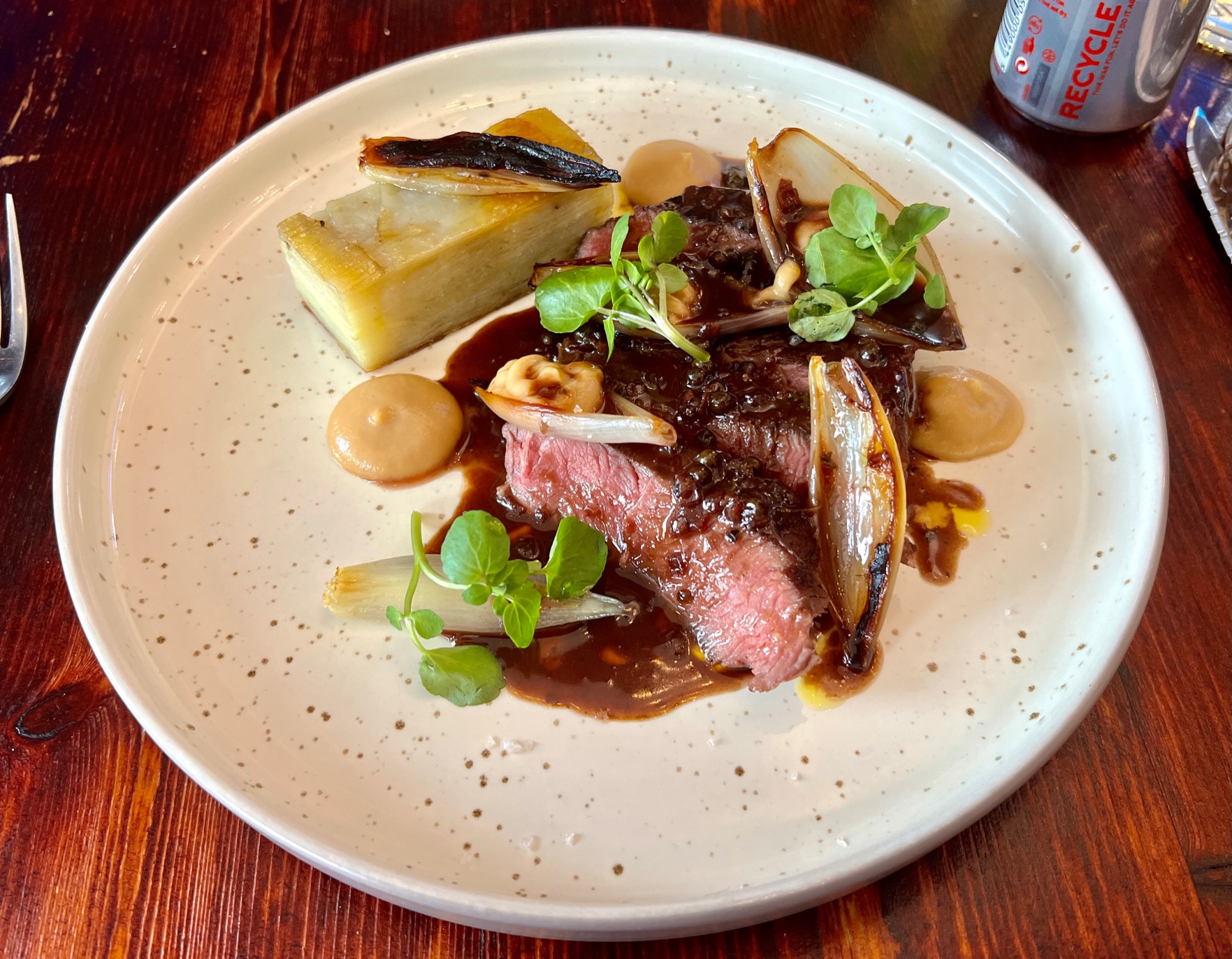
Zoë had absolutely no reservations about her rump of beef, and the couple of forkfuls I had were easily enough evidence to understand why. It was a beautiful piece of meat, cooked medium-pink but with a nice crust, but again it was all about how that ingredient played nicely with the delightful company it was keeping. In this case that meant another sticky, glossy sauce – peppercorn this time – little puddles of onion purée and banana shallots, also with a little char. And to add a little ballast, a perfect slab of Pommes Anna, as enticing and multi-layered as a great novel. This might have been one of the most marvellous dishes I didn’t eat all year, but at least it went to a truly deserving home
We had some Parmesan and truffle fries with our mains – completely unnecessary but also impossible to resist – and they were themselves a fascinating experience. It’s a dish that crops up on menus a lot lately, from Buon Appetito to the Last Crumb and beyond, but in most places it’s a way to tart up bought-in French fries and flog them for a fiver. Here they were the real deal, and when we’d finished our mains and used the fries to clean up the last of our respective sauces we picked at the rest with slightly oily fingers and glad hearts.  

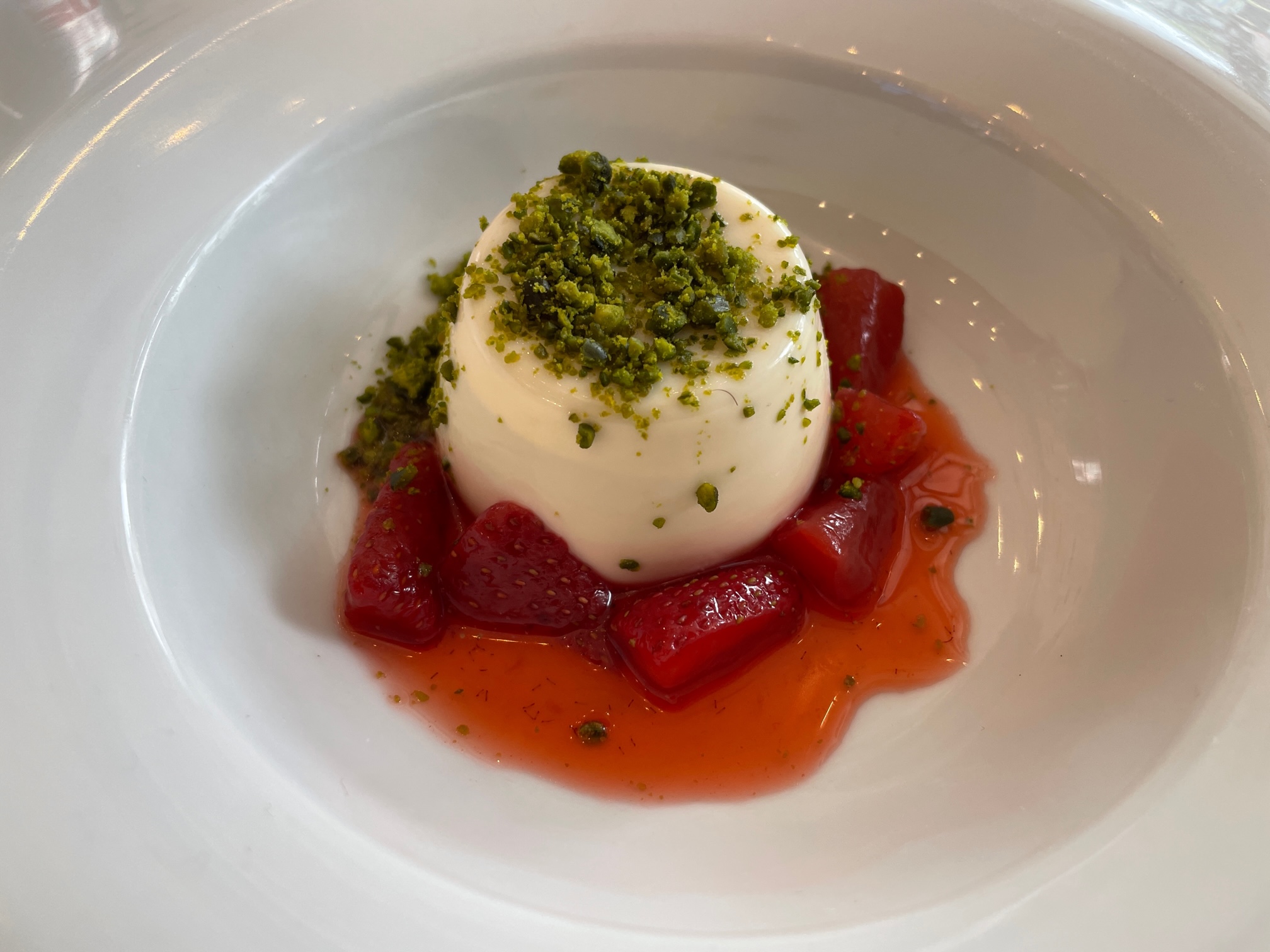
Dessert was the point at which things stopped being spectacular and settled for merely being rather good: technically there are only really two desserts on the menu along with a couple of cheeses and chocolate sorbet with coffee liqueur which felt like a distant cousin of the affogato. I rather liked my panna cotta, which had a pleasing wobble, tons of crumbled pistachio on top and a moat of strawberries and sweet syrup. But the advertised wild honey was the quietest of whispers, and without it the whole thing felt a little run of the mill.
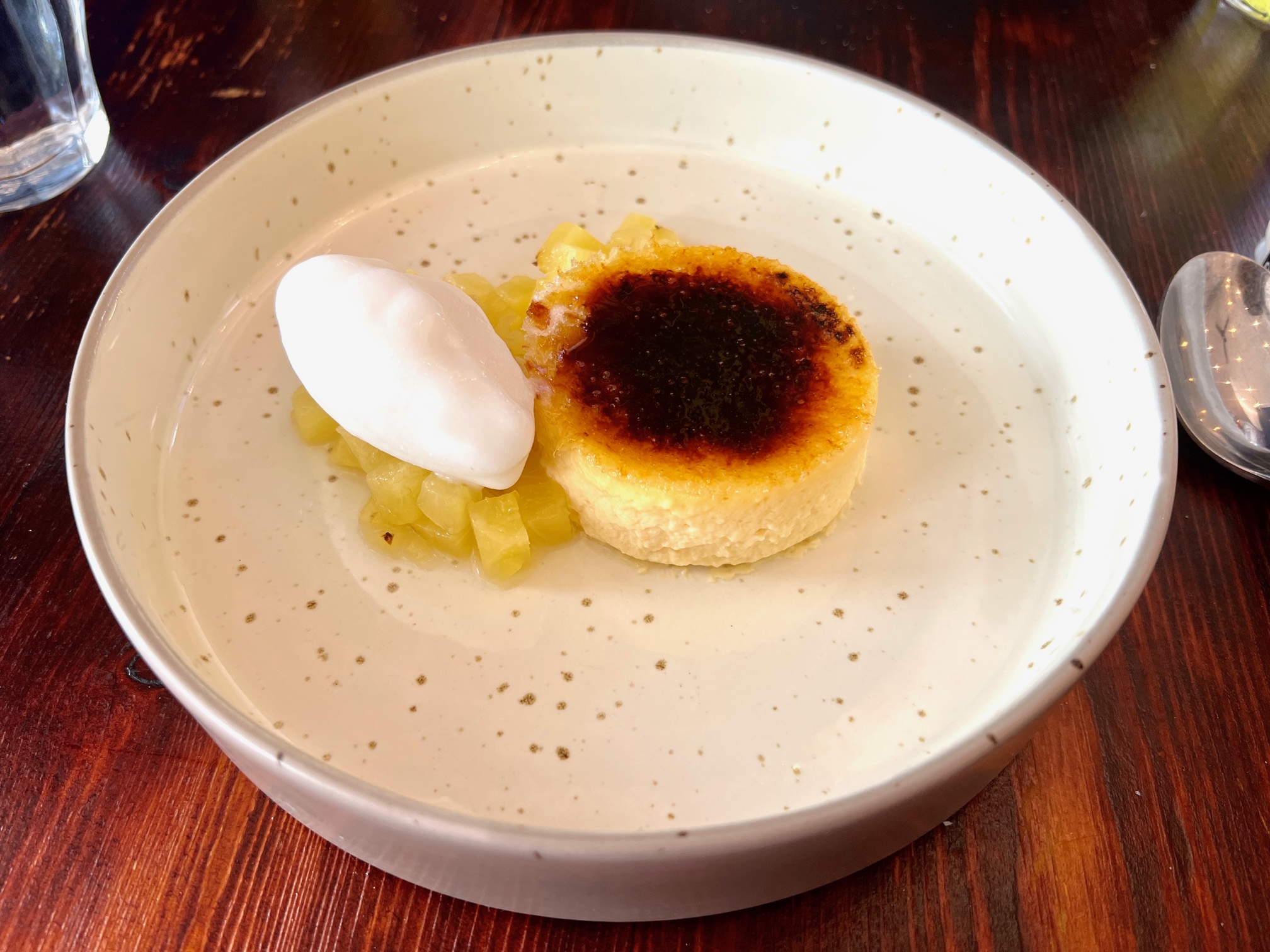
I thought Zoë chose better than me, but she wasn’t wild about her choice either. A rum brûlée was served denuded of a ramekin – how often does that happen? – with plenty of pineapple and coconut sorbet. I liked it, although again the rum was a little muted, and I thought it all worked well together. Zoë was less convinced, and I think on another day would have had the chocolate sorbet. But we were both being restrained, with a boozy evening ahead and (in my case) a gin sodden one behind me, so we steered clear of booze.
That means I can’t tell you anything about the wine list, which is a matter of some regret for me as it had plenty to appeal – and three special wines available by the glass, including a Georgian orange wine by Tbilvino which sounded well worth trying. But instead I’m afraid we were well behaved – I had a very good alcohol free pale ale by local Bristol Beer Factory and Zoë had soft drinks. Next time I go, which I anticipate will be the next time I visit Bristol, I’ll try it properly.

I haven’t really talked about service, but it was very much of a piece with everything else: smooth, efficient, friendly and good at making everything look easy. Offering me some bread with my starter was a great example, but really the whole thing seemed effortless. Caper and Cure wasn’t as busy as I expected but it had a real mixture of tables and types of diners, with more people coming in for lunch as we were leaving, and the whole thing had a nice flow and rhythm to it. I imagine it would be a truly enchanting place to have a boozy evening meal with friends, and next time I go there that’s exactly what I plan to do.

Our bill came to a hundred and twelve pounds, including a twelve and a half per cent service charge, and when the owner came to take our payment I pointed out that they’d slightly undercharged us. Before we left he asked where we came from, and if he was fazed that people had come all the way from Reading he concealed it well; I looked him up afterwards, and it turns out he’s also a professional actor (“you can just tell” said Zoë as we ambled up the Cheltenham Road in search of caffeination).

This is the second critically acclaimed Bristol restaurant I’ve visited this year, and the contrast with Sonny Stores couldn’t have been more marked. Restaurant critics like to talk about Bristol growing these restaurants – small, unpretentious places with short, magnificent menus and interesting wine lists – as if in a laboratory. And it’s true that the place is a Petri dish for culinary creativity, more than anywhere I know.

But I think it doesn’t do Caper and Cure justice to make it sound like just the latest place to fall off some gastronomic assembly line. There’s something uniquely special about it, and re-reading this review I’m not sure I’ve truly captured it in what I’ve written. It’s worth going to these places, even if they’re an hour and a quarter away by train, to remember what we have to aim for in Reading and that for all the Kungfu Kitchens, the Bakery Houses, the Lyndhursts and the Clay’s we still have some distance to travel.

If a restaurant like Caper & Cure opened in Reading it would be packed to the rafters every night and lauded as far as the eye can see. And yet in all the time I’ve been writing this blog, the best part of a decade, nowhere even slightly like Caper and Cure has opened here. At some point, we might all have to stop and think about why that is. Reading has the money, it has the prosperity and it has a discerning demographic. Why don’t we have the restaurants?

Caper and Cure – 9.2
The Old Chemist, 108a Stokes Croft, Bristol, BS1 3RU
0117 9232858
https://www.caperandcure.co.uk

Restaurant review: Marmo, Bristol

What’s your favourite restaurant? Your absolute favourite, I mean. I ask because a couple of weeks ago I was sitting in my friends James and Liz’s back garden in Bristol, drinking white wine on a sunny afternoon and having exactly that conversation. The wedding we’d been to the day before – on a Wednesday, no less – was that miraculous thing, a wedding where you’re not hung over the morning after, and so the day stretched out in front of us, feeling partly like a Sunday, partly like something else.

James refused to take part: he didn’t believe in picking a single favourite. So we talked instead about possibly allowing everyone to choose three. But if anything, that made it more difficult, because then you had to pick at least one from your home town and then you were forced to choose just the two restaurants from everywhere else you have ever been. 

Liz said that you couldn’t pick somewhere you’d only been the once, but that didn’t help either. Zoë started waxing lyrical about Eetkaffee De Lieve, a little gem in the sidestreets of Ghent, and I daydreamed about sitting outside at Uvedoble in Malaga, demolishing a little brioche stuffed with suckling pig. But which restaurant in Bologna to pick? And how could you leave out Paris? It was just too much of a puzzler.

“I think my favourite restaurant right now is Marmo” said Liz – with a hint of trepidation, because we had a table booked there that evening. And I understood that nervousness better than most, because there’s little as nerve-wracking as telling people that somewhere is good, knowing they’ve gone there because of you and then sitting there waiting to find out whether they’ve lost all faith in your good opinion. I get that all the time.

We went to Marmo with Liz and James’ friends Ed and Ben, a very entertaining couple they’d been telling me about for some time. It was clear straight away, as we took our seats at a Belgian beer bar in the old city, that they liked the finer things in life, which always makes me feel like I’ve found my tribe but also brings out the imposter syndrome.

On our walk to the restaurant Ed and Ben asked me which restaurants I liked in Bristol, and I couldn’t help but feel that this was a test. I didn’t go to Bristol often enough to be on top of the latest developments, but then I mentioned my love of the sadly departed Wallfish, a little neighbourhood restaurant a stone’s throw from Clifton Suspension Bridge, and there was a tacit nod that indicated that I might have just about scraped a pass.

Marmo is a single, buzzy room – all handsome white wood panelling and framed prints on the walls that you daydream about nicking (I also would have loved one of the branded wineglasses, come to think of it). There’s a tiny kitchen at the back, clearly in view, where all the magic happens. Our table was in the heart of things, close to the bar, and I tried to remember what this place had looked like in its previous incarnation as Bar Buvette, a wine bar I’d loved that made you feel like you were somewhere in the eleventh arrondisement.

The menu made you want to order everything, and was compact enough that we nearly did. There were a few snacks and then a 3-4-2 formation of starters, mains and desserts respectively, with one fish dish and one vegetarian dish on offer for each course. The menu looked carb light, but the waiting staff explained that you could have an intermediate pasta course to fix that, as the Italians do, or just have some bread. Starters were around nine pounds, the most expensive main was eighteen pounds fifty. The wine list – of which Marmo seems particularly proud – had a superb selection of red, white and orange wines, with a few producers I’d heard of and many I fancied trying.

In short, it was a menu to get lost in, and we did that while drinking glasses of Muz vermouth, served properly with ice and a wedge of orange. I loved it, and said that the tangy, fruity note in it was strangely reminiscent of brown sauce. There was an awful moment while I waited for someone to tell me I was talking bollocks, and then to my huge relief there was agreement around the table (Zoë didn’t enjoy the rest of the vermouth from that point onwards: “I tried”, she told me later, “but all I could taste was the vinegars”).

Aperitivi deserve accompaniment, so we kicked off with Marmo’s textbook sourdough. It came with butter, which no doubt would have been fantastic, but we were all more keen to dip it in smoked cod roe, perfectly salty and pastel pink, with a pool of olive oil at its centre. Also pastel pink was the mortadella, draped over gnocco fritto, little fried parcels of joy. I’ve never liked mortadella, not even in Bologna, but I loved it here; Marmo, like the best restaurants, can make you enjoy ingredients you wouldn’t normally look at twice.

We’d been torn between a couple of white wines – one from Jura which would have had more funk, and a more conventional Riesling from Staffelter Hof, a producer I recognised because one of their wines crops up on Clay’s fancy new wine list. I tried to palm the casting vote off to Ed, who clearly knew his wine, and he eventually plumped for the Riesling (I’m sure the fact that it was called “Little Bastard” was an unintended bonus). 

But then the staff came over and said that they only had one bottle of Riesling left, so we went for one of each. Those of us who tried the Riesling were delighted by its cleanness, the slight effervescence on the tongue. Those who decided to drink the Jura were pleased to have picked something so unusual, with agricultural notes of scrumpy and sherry knocking about harmoniously in the same glass. We all changed ends at half time, tried the other white wine and in the end decided that they were both terrific.

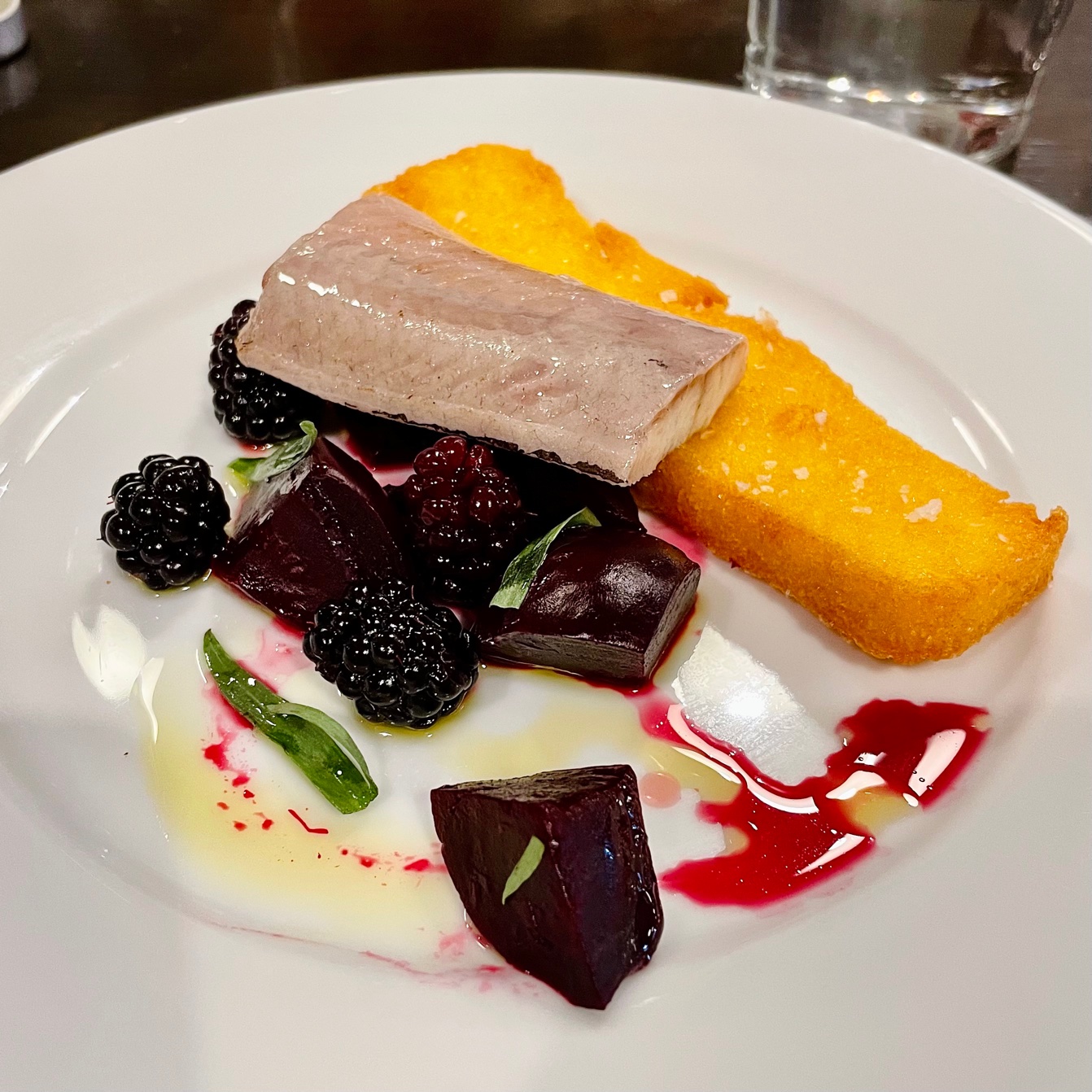
By this time the starters had turned up, and I got my first sign that I was in for an evening of sustained brilliance. I had gone for smoked eel, beautifully muscular and only lightly smoked, on an oblong of crunchy fried polenta. So far so delicious, but teaming it up with bright cubes of beetroot and blackberries with a balsamic sweetness was a killer blow. I could have eaten this all the live long day, and it left me wanting more – or, to be more specific, another portion. That’s what great starters do.

Although it was the most popular starter, a couple of us tried something else. Liz spoke highly of her marinated peppers, buried under an avalanche of Ticklemore, and I could see that I would have been equally happy with that. Ed had chosen the beef tartare, topped with chives and a slow-cooked egg yolk, flavour soaking into the bread below. How could you have food envy when you’d enjoyed your own starter so much? 

I was sitting between Ed and Ben – the kind of civilised couple who don’t have to sit next to one another all evening – and, being a civilised couple, they passed plates back and forth across me, or behind me, or through me so that neither of them felt left out. But I was having such a good evening that I was more than happy to be the proverbial dumb waiter. 

They were in the holiday mood – Ed’s mother was visiting their cottage in the Chew Valley over the weekend and then they were off to Cornwall for a well-earned break eating and drinking their way around that part of the world. They would spend much of the following week in their own favourite restaurants. I recognised kindred spirits, the kind of people – like me – who plan a holiday entirely around lunches and dinners, who enjoy going to places they know and love, experiencing the comfort, familiarity and total relaxation that comes with a pilgrimage like that. At the tail end of my own holiday, I couldn’t help but feel envious.

Given that Marmo was at least nominally Italian, I felt like we should have at least one Italian wine with our meal, so I chose a Tuscan red called Infraded, a deep, velvety Syrah. Ordering wine had been delegated to me by this point, but I was almost merry enough to be happy with that. Again, I felt like I’d committed a faux pas when the waiter told us this one was best served chilled, but Ed reacted with delight and I decided that on balance, I’d got away with it. It was, as you can probably guess by this point, predictably wonderful, and I made a mental note to see if there was anywhere you could buy some when I got home and Bristol was just a distant, happy memory.

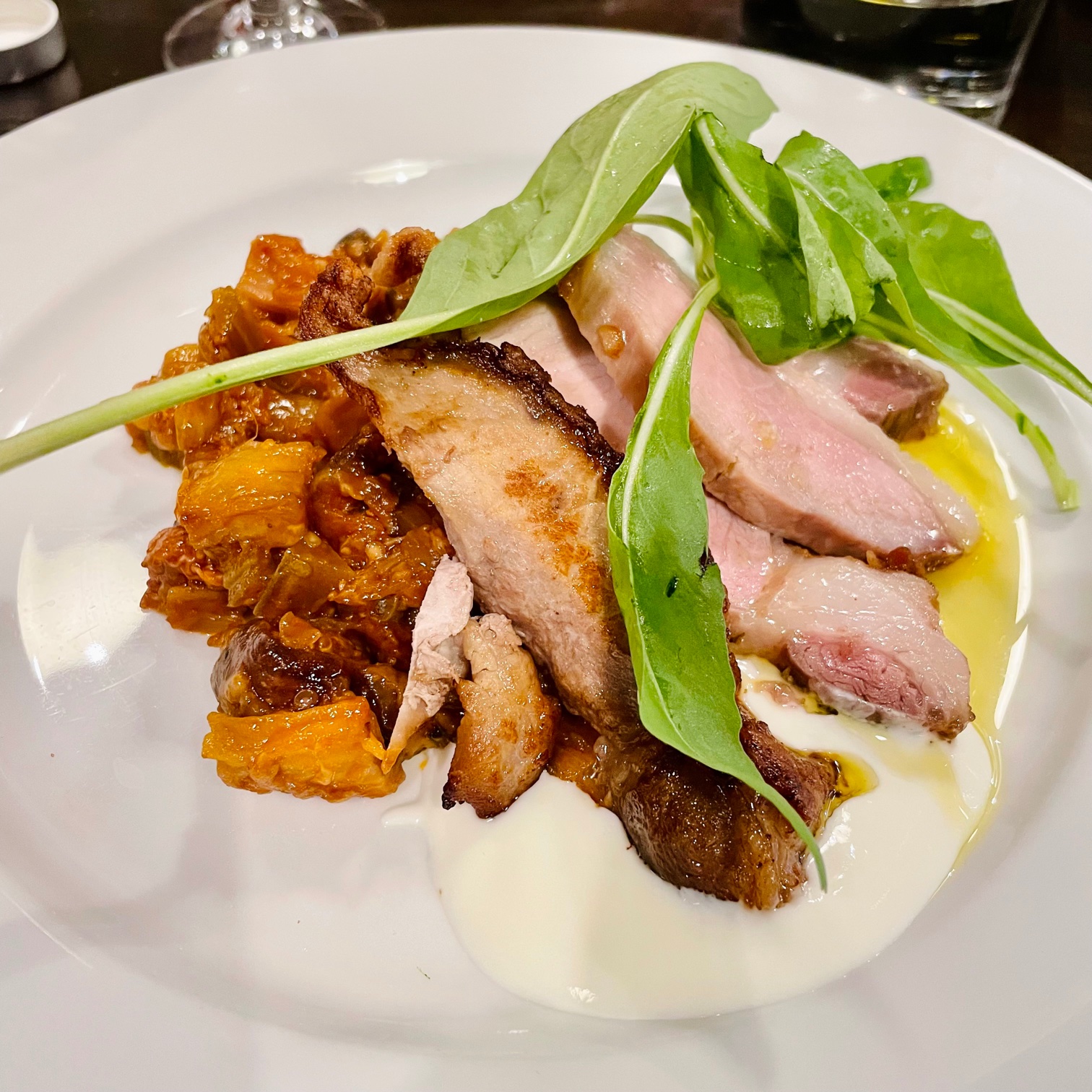
The main courses brought more fireworks. I’ve always heard Mangalitza pork spoken of in hushed tones as the Kobe beef of the pork world, but I’d never tried it before so I was keen to pick it off the menu. It came in glorious marbled slabs, just-pink and tender with the most beautiful melting fat: eating it I could understand why the Italians got so excited about lardo, and the idea of eating fat on its own. It was served simply with a handful of other elements, a wonderful caponata given a fresh edge with the judicious addition of fig, some good oil and a little slick of yoghurt. It was as good a single dish as I’ve eaten this year: I looked over at James, who had ordered the same thing, and saw him lost in a reverent silence.

That silence was eventually broken by Ed telling a story from the time when he used to manage a bookshop in Oxford.

“We had lots of celebrities in while I was there, but the best rider we ever had was from Roger Moore. And Roger Moore only asked for two things.”

“Really?” I tried to imagine exactly what vintage of Château Mouton Rothschild would feature in Sir Roger’s demands. “What were they?”

“A bottle of Jacob’s Creek and a Pret crayfish sandwich. That was all, every time. And by the end of a signing he was always absolutely fucked.”

This couldn’t help but make me warm to the great man. And of course, Ed had a picture on his phone of him with Jacob’s Bond, although it wasn’t clear how much wine had been taken by that point. Ed’s main course was a very attractive-looking pollock dish with mussels, and although he was taken with it, it it didn’t give me any buyer’s remorse about the Mangalitsa pork. Liz had chosen the vegetarian option, a very accomplished spinach and ricotta ravioli dish. Again, although it looked the part, missing out on it didn’t fill me with regret.

There were only two desserts on the menu and we all fancied the same one, the chocolate and hazelnut fritter, so five of us went for that while Ed nursed a grappa. It was an exemplary way to end the meal, a deep, smooth chocolate mousse, sharpened with cream and sandwiched between layers of the lightest of batters. Looking at the picture, it resembles nothing more than a witty dessert take on the ubiquitous burger: would that it was anywhere near as easy to get hold of, but it seems you have to travel to Bristol. We accompanied this with a sweet, fresh and generous glass of Coteaux de Layon (always a better bet than Sauternes, if you ever see it on a menu) – although Zoë had a negroni, because she’s developing a taste for them.

If I haven’t talked much about service it’s because they were so good. Completely unobtrusive but always there when you needed them, really friendly and enthusiastic and very good at what they did. We needed to pay at the same time as ordering our dessert so Ed and Ben could make their taxi on time, and all of that was no trouble and very efficiently sorted. 

Our meal for six, including a discretionary ten per cent service charge, came to just over four hundred and ninety pounds, or something like eighty-two pounds a head. That might sound like a lot, but we really went for it – aperitifs, snacks, a three course meal, plenty of wine and dessert wine. You could spend less and I have no doubt you’d still have a superb meal, and if you find yourself in Bristol at lunchtime they have a set menu which is even more impressive value. But either way I had no regrets – a couple of nights before I’d eaten at Paco Tapas, Bristol’s Michelin starred tapas restaurant, where I spent significantly more, eaten and drunk considerably less and not had quite as much fun. You pay for a meal, but you pay for memories too.

Even as I was eating at Marmo, I knew that the marker had been set down for the rest of this year and probably most of the next: as complete, satisfying and perfect three course meal as I could imagine. I would go to Bristol to eat here again, and I would plan trips to Bristol just so I could. It’s not my favourite restaurant – if only because you can’t give that accolade to somewhere you’ve only eaten at once – but it was my favourite meal for a long time. And if you ever wonder why I don’t give out higher ratings more often, this is why. I save the big guns for the great meals, and this is the kind of standard Reading restaurants need to aspire to, slowly but surely. I still hope we’ll get there. But in the meantime, we’ll just have to hop on a train.

Marmo – 9.4
31 Baldwin Street, Bristol, BS1 1RG
0117 3164987

https://www.marmo.restaurant

Brebis, Newbury

Brebis closed in July 2016. I’ve left this review up for posterity.

Let’s cut to the chase: Brebis is really, really good and you should go there.

It’s nice to have that out of the way. On with the review!

Brebis appeared on my radar a little while ago, though I can’t quite remember how. When I checked out the website, it looked like the real deal – a little unfussy French restaurant that just happened to be slap bang in the middle of Newbury. Now, I haven’t been to Newbury before on duty but after last week’s lukewarm review of a town centre bistro I decided to go double or quits and troll out to West Berkshire, an area I’ve previously rather neglected on the blog.

In my defence it’s been a long time since I’ve been to Newbury (years, I’d say) and I didn’t have fond memories of it; I remembered it, unfairly I’m sure, as a lacklustre market town with little to offer that Reading didn’t have. Well, I was plain wrong (and you can take that to the bank). I had a lovely excursion there of a weekend – it has a decent market (I very much enjoyed the fresh bread I bought), an irascible butcher (sausages for my dinner the following night) and a truly magnificent wine and beer shop that had a selection of gin (Japanese? Colombian? Welsh?) that knocked my socks off. I returned with groaning bags. But, more to the point, it also has an outstanding French restaurant that dished up one of the best meals I’ve had this year.

Brebis is in a pedestrianised bit of Newbury – it’s in an old house but, regrettably, with an unlovely view of the side of the Kennet Centre (think Broad Street Mall, not Oracle). Not terribly scenic but no matter, as the inside is a different affair. The walls are white with the occasional blackboard, the floor is stripped back to boards, the lampshades are all industrial without being faddy and the generously sized tables are smart rustic, with comfy chairs and really good quality linen napkins. Even the cutlery was reminiscent of Parisian restaurants I have known and loved (and there have been a few). So far so chic.

The greeting at the door was incredibly welcoming. We got in without a reservation and were shown to a table in the window and given a brief explanation of the menu (all on chalkboards, because Brebis is trialling the restaurant equivalent of the paperless office). This involved a good nosey around and some really tricky choices. During the day Brebis offers a prix fixe menu, offering a choice of two courses for just under twenty pounds or three for twenty-three. Only a couple of options for each course, and nothing I could see for vegetarians, but there was also a much bigger a la carte menu which repeated some of the prix fixe options. Starters on the a la carte were about eight pounds and mains around eighteen, and a suggested wine pairing was listed with every course, something I didn’t fully appreciate until later.

Fortunately for us, all of the dishes we fancied from the a la carte were also on the prix fixe, so I felt especially pleased as we made our choices, sipped our wine and looked out the window at the passers by (enjoying the “I’m inside having a lovely lunch and you’re not” feeling). They even played Edith Piaf on the Bose sound dock by the door. Really, it was almost too perfect. And before we even got to the starters there was an amuse bouche of beetroot crème fraîche on a wafer thin crouton, with a nasturtium petal on top. It was as tasty as it was pretty, the slightly sweet crouton combining beautifully with the crème fraîche. I’m never sure about edible flowers – they make me feel a bit like Ermintrude from The Magic Roundabout – but they definitely didn’t detract.

BrebisAmuse

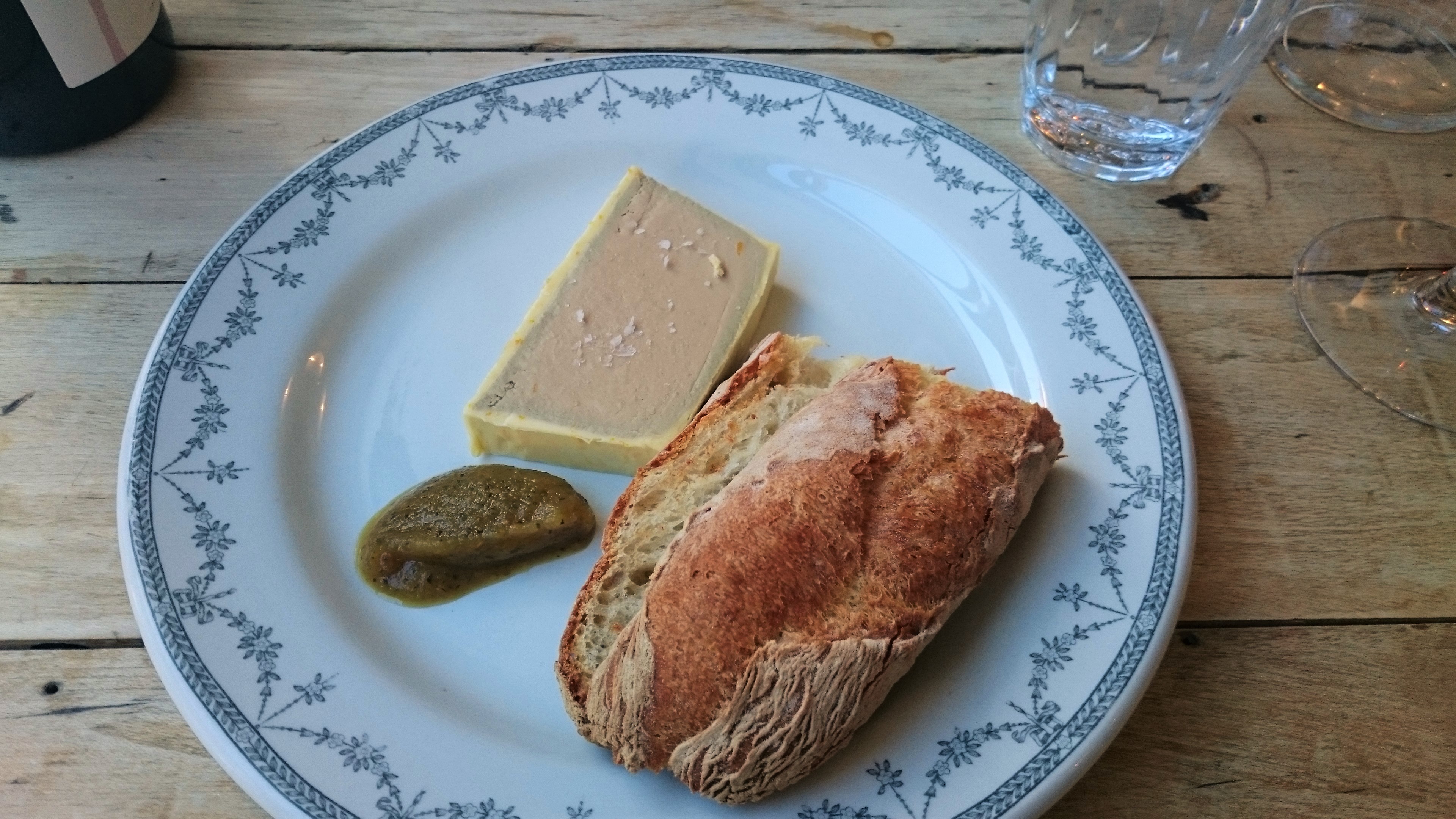
The first real glimmers of greatness came with the arrival of the starters, because it was around then that I started to think that everything was going to be quite a lot more than all right. Duck liver and foie gras parfait came with a decent wodge of home made baguette and courgette chutney. Goodness, it was marvellous stuff: rich, smooth and earthy, cool enough to keep its shape but easily spread on the gorgeous bread. And the bread! Crusty and chewy but with that spongey middle, a texture that the French take for granted in their Government-regulated ninety-five cent loaves but which you can’t find here for love nor money. The courgette chutney was spiced with a slight hint of curry which made it seem almost mango-flavoured, and although I liked it, it felt a bit unnecessary. But that’s by the by: I order foie gras and chicken liver parfait quite often, and I nearly didn’t order it here because I wondered if it would be a good test of the kitchen, but this was one of my starters of the year. Even the little touches – a few little flakes of salt on top of the parfait – were right on the money.

BrebisParfait

The other starter was also top-notch: a hefty helping of jambon de bayonne with a pile of celeriac remoulade in the middle. Really, the ingredients did all the work: the ham was terrific, every bit as savoury, coarse-textured and intense as its Italian or Spanish cousins. The celeriac remoulade, everyone’s favourite upmarket coleslaw, was an elegant balance of creamy and crunchy. And one final touch – the tiniest dabs of truffle oil, glistening on the ham. I’ve never had this with charcuterie before, and I’d normally be sceptical, but used sparingly it topped the dish off without overpowering it. A simple, perfect classic.

BrebisHam

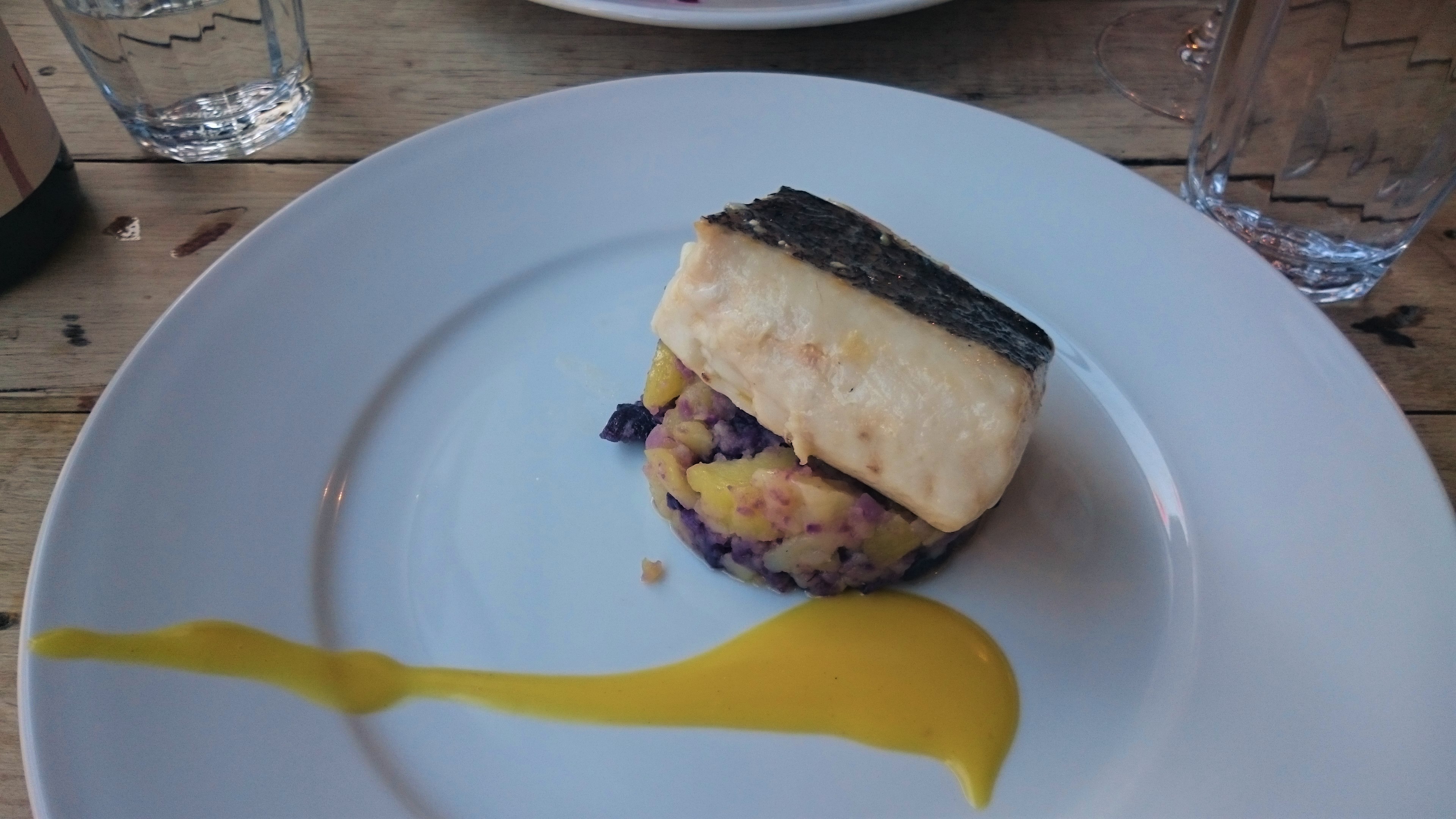
When the mains arrived I wasn’t sure which of us had picked better. I’m running out of superlatives already, but butter poached hake with purple potatoes and roast lemon purée was flawless. The chunky piece of hake was cooked through but beautifully moist from being poached (I daren’t think what butter poaching entails, although I have a vague idea: fortunately all meals I eat when reviewing are calorie free). Under that was a disc of crushed potatoes, some purple and some white, all very buttery and just the right texture – yielding but not super soft. On the side was a smear of lemon purée, rich and creamy with a hint of sharpness which was simply beautiful with the fish. I can’t remember when I have eaten something so delicate and harmonious this year, let alone on a set menu. Sometimes on a set menu you can get quite prosaic dishes, but this both looked and tasted dazzling, colour and flavour completely in step.

BrebisHake

The other main was definitely more the stuff of a prix fixe. Confit duck is beginning to get a bit done to death (partly, I suspect, because pubs and restaurants appreciate that it’s quite an easy thing to churn out) but by this stage I was more relaxed because I had a feeling Brebis might do a definitive version. And they pretty much did. The duck was just magnificent – lots of tender meat underneath, parted from the bone with no effort at all, but more importantly on top the crispy, salty skin breaking into delicious shards. The pomme purée it was served on was a fantastic mash, firm rather than gloopy, with thyme and little strands of bacon running through it. The jus was tasty, although I’d personally have liked a little more of it. Finally the only misfire possibly of the whole meal – some distinctly odd batons of beetroot which, for me, just didn’t go. Personally, I’d rather have had something hot and cooked rather than cold and crunchy, though of course, I still ate it.

BrebisDuck

The set menu has a fantastic wine offer – a half litre carafe for the bargain price of nine quid – but instead we went for a bottle of Lirac, a soft, fairly light Rhone Valley red that was a bit of a compromise solution given the two main courses. Even so it was cracking, eminently drinkable and decent value at just over thirty pounds. The wine list at Brebis is all French and everything except the very top end is available by the glass (with the cheapest 125ml wine by the glass at around three quid). I didn’t realise that, or that the way glasses are priced means that it’s just as economical to drink glasses as it is to order a bottle. Still, it’s a lesson learned for next time and there are worse things in life than having a gorgeous red with lunch.

After two excellent courses it would have been a crime not to have dessert. But then we couldn’t decide between the cheeseboard (yes, another cheeseboard) and the dessert menu. So in the end we had a cheeseboard to share followed by dessert. Yes, I know: this is bad and wrong and I certainly wouldn’t expect you to behave so terribly, but I rarely get to eat this well on duty so I went for it.

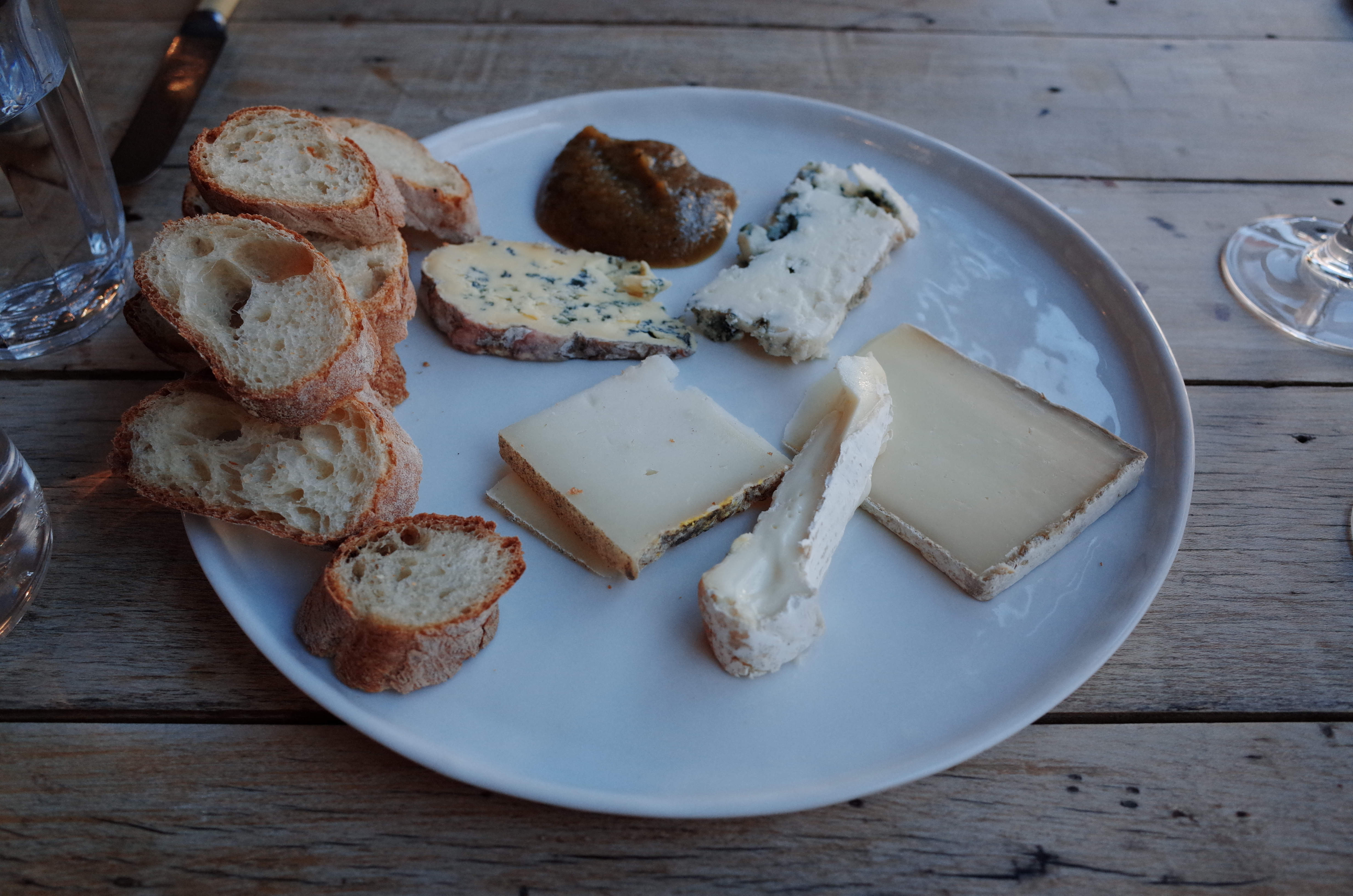
The holy trinity of local cheeses – Wigmore, Spenwood and Barkham Blue – were all present and correct, along with Woolsery (a Dorset hard goat’s cheese) and, because Brebis is French, after all, some Roquefort. Again, simplicity was key – no overcomplicating apple, celery or walnuts, just good cheeses, a pyramid of slices of the beautiful baguette from before, more courgette chutney and some room temperature butter. I scored it, I’m afraid, as France 1, Berkshire 0: Barkham Blue is one of my favourite cheeses but I think on this occasion the Roquefort just had the edge, being riper, softer and saltier. The cheeses were served cool but not chilled and the Wigmore was ripe enough to making a break for it across the plate. It all went terribly well with a glass of Muscat de Rivesaltes – red, unusually, rather than white, lightly chilled, with a beautiful raisiny flavour, a great foil for the saltier cheeses. All that for eight pounds fifty: miles better, and miles better value, than any other cheeseboard I’ve had this year.

BrebisCheese

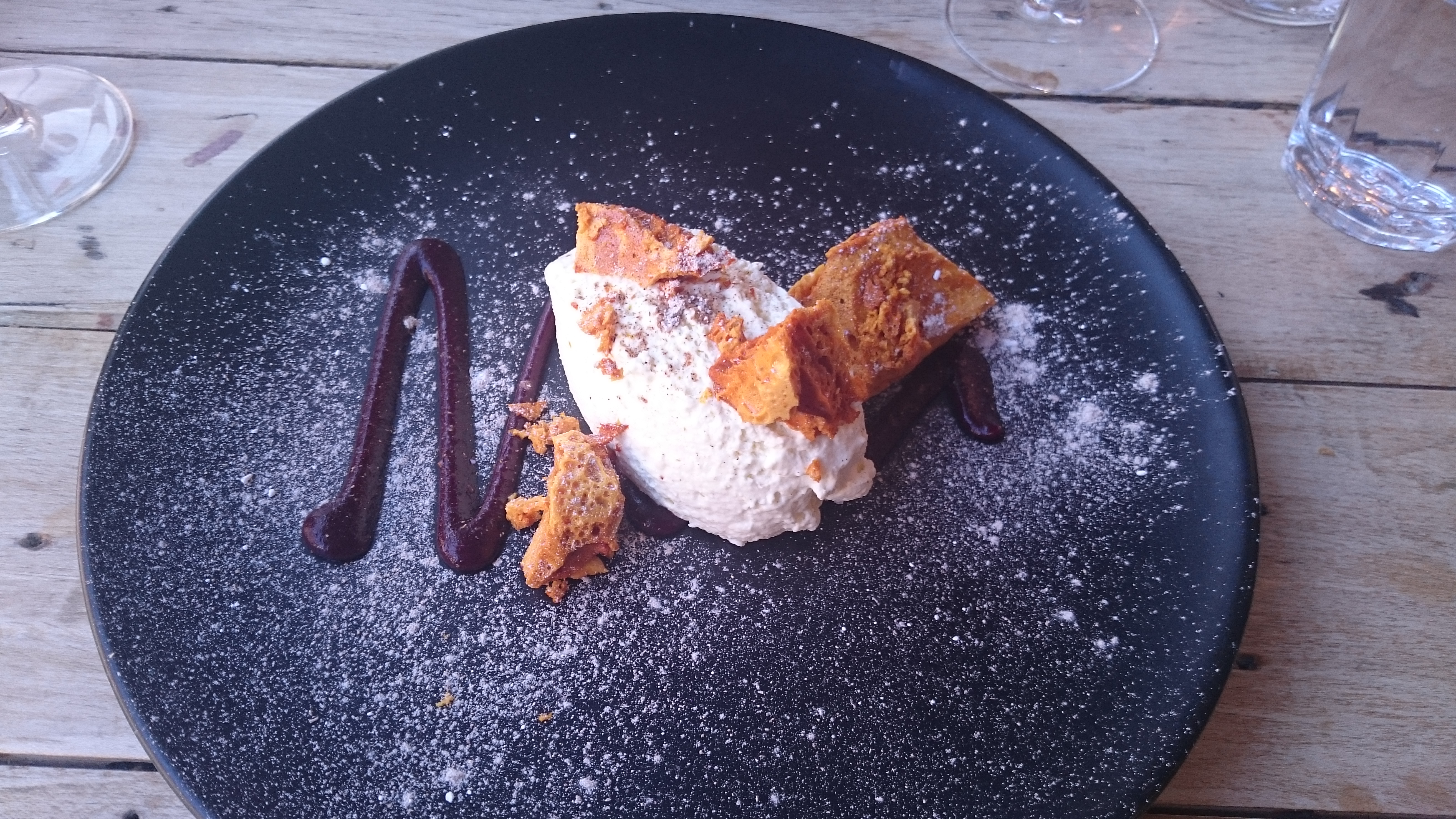
The desserts are, thankfully, quite small and chilled (I think a sticky toffee pudding or anything with custard would have killed me at this stage). Green apple bavarois (I had to Google it before ordering, to my shame and even then it wasn’t quite what I was expecting) was a lot easier to eat than it was to pronounce: it was a big quenelle of something halfway between a fool and a mousse. The apple was quite a light, refreshing flavour, which saved it from heaviness. Big chunks of honeycomb added some texture and there was a zigzag of blackberry gel underneath (which wasn’t really needed, if I’m honest, but it did look nice). Delicious, simple, clever: bit of a theme emerging, isn’t there?

BrebisBava

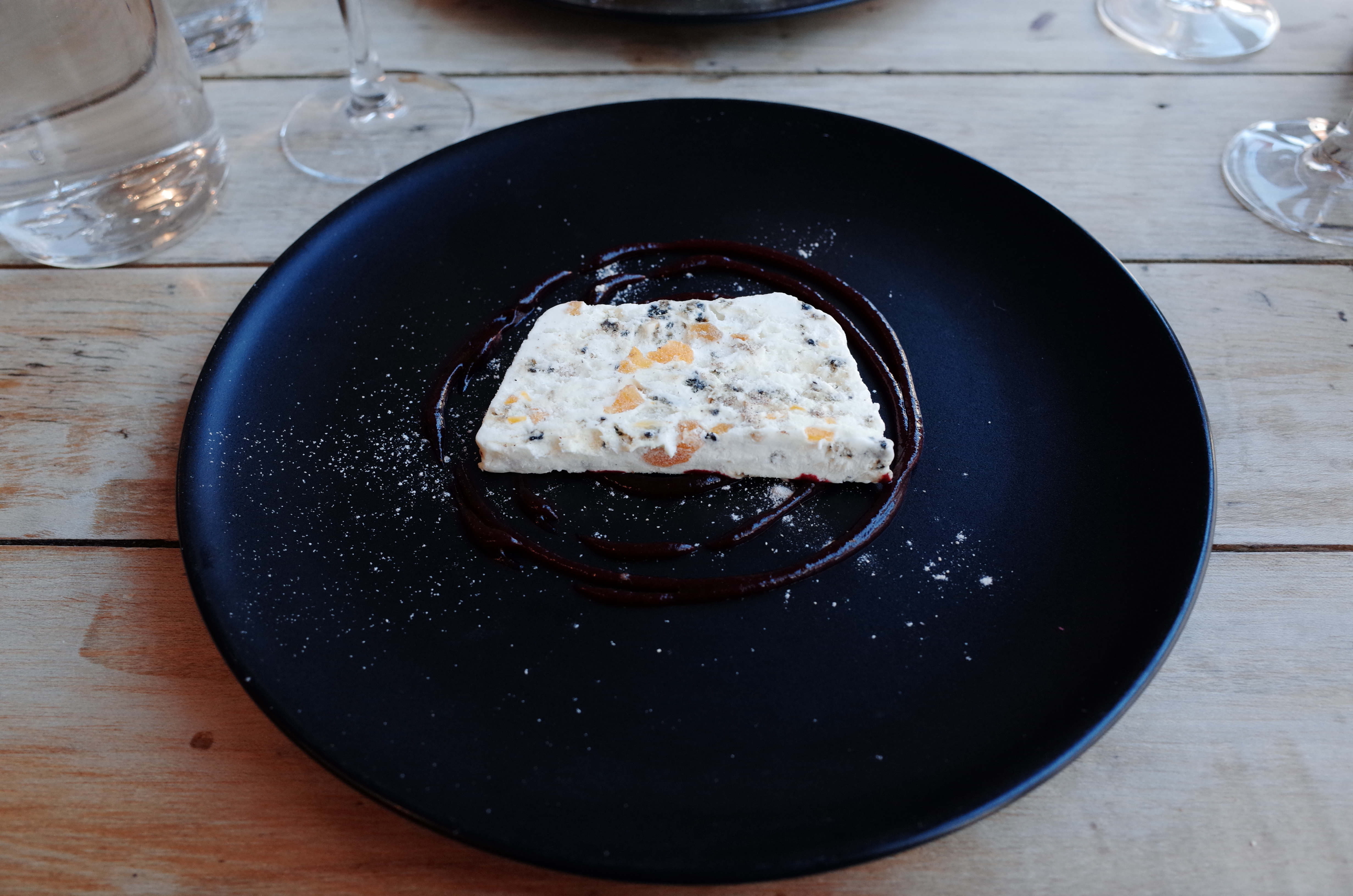
Iced nougat parfait was a lovely way to finish. A small slice of the parfait, with a honeyed taste to it, studded through with fruit and nuts – cold, fresh and clean but with just the right sweetness and texture. Again, there was lots of the blackberry gel on this one – and it was beautifully plated, such a simple, pretty dish – but it felt like it was more of a match with than with the bavarois. In truth it meant the two desserts we ordered were pretty similar and, in honesty, the bavarois was probably a better choice. But the worst of the two desserts here was still better than most desserts I’ve eaten this year, and it cost just over five pounds. We managed to squeeze in a glass of sticky, fragrant Cadillac with the dessert; by this point it seemed pointless to deny anything, being slightly squiffy with happiness.

BrebisDessert

Service was a one man job, namely one man doing a brilliant job. He was charming, chatty and enthusiastic throughout, knew his way round the dishes and the wines, brimmed with passion and was delighted to get good feedback. He was just as charming at the other tables and showed a real interest in his customer (some of our fellow diners were celebrating their anniversary: one of them definitely deserves some brownie points for the choice of venue). There was no superfluous topping up of wine glasses – a real bugbear of mine at the high end – everything was laid back and unfussily spectacular.

Our total bill, for three courses each, a cheeseboard to share, a bottle of wine and two glasses of dessert wine each (it sounds even worse when I put it like that) was just short of one hundred and twenty pounds, not including service. You could, in fairness, spend a lot less: if you didn’t get as carried away as I did, came here on the prix fixe and shared the set wine you could have a meal for two for about half that price. But I have no regrets: this has been one of my meals of the year, and it justifies all those times in 2015 when I’ve drizzled away money on mediocre food, underwhelming wine, indifferent service. Also, did I mention the Edith Piaf?

Normally I don’t talk about the ratings in my reviews, but this time I have to make an exception because, as you’ve probably already seen, this one breaks new ground. When I look at all the places I’ve given good ratings to over the last two years, fantastic though they are there’s always been something missing. The furniture’s a little uncomfortable, the wine selection is a bit uninspiring, the service just a tad too rushed. Or there’s one course that drops the baton, leaving me thinking If only… But Brebis literally didn’t put a foot wrong, and that puts it in another class. By the end of the starter I was wondering who I could take next time. By the end of the main course I was wondering how many visits I could feasibly make to Newbury before the end of the year. By the end of dessert I was wondering why this place wasn’t full and how they would feel about being dismantled brick by brick and forcibly relocated to Reading. Until that happens I urge you to jump on a train and go there. Take someone you either really like or really want to impress, or both. I might be at the next table; my next visit is already in the calendar.

Brebis – 9.1
16 Bartholemew Street, Newbury, RG14 5LW
01635 40527

http://www.brebis.co.uk/