Bill’s

If you’re surprised that I’ve written a review of Bill’s the main thing I can say is this – me too. I had written it off: it’s always struck me as a chain trying its damnedest to convince people that it isn’t one, the rustic reclaimed school chairs and blackboards full of homespun quotes a sleight of hand concealing a respectable-sized chain (over fifty restaurants and growing), backed by Richard Caring, who also owns or has owned parts of Strada, Carluccio’s and Cote. So I was surprised when someone suggested I review the place, but he made some interesting points; it wasn’t a chain when it came to Reading, he said, and it offers something different to other Reading restaurants.

My first instinct was to say thanks but no thanks, but then I thought about it a bit more. I’ve always said that not all independents are good and not all chains are bad, and one of the plusses of writing Edible Reading has been eating at restaurants I’d otherwise never have considered. Why shouldn’t that apply to Bill’s, too? So I found myself sitting in Bill’s on a weekday night, at one of those reclaimed chairs (are they reclaimed, I wonder, or do they have a supplier who makes all these distressed-looking chairs, tables and defeated-looking leather armchairs for them?) reading the menu, not entirely sure what I was doing there.

Subscribe to continue reading

Become a paid subscriber to get access to the rest of this post and other exclusive content.

The Bull Inn, Sonning

As regular readers will know, the overwhelming majority of restaurants I review are requested by people who read the blog week in, week out. If there’s one thing that comes out of those requests, it’s that you really want to see reviews of pubs that do food. And that, generally speaking, means leaving Reading and heading out into the countryside. There’s only one problem with that, which is that a lot of pub menus look really uninspired. In fact, once you read enough of them they all start to blur into one. They all do a burger, they all do fish and chips, they all do sausages and mash, they nearly all do confit duck these days. They’re all so similar, in fact, that you start to wonder if they’re all being supplied by the same person, perhaps in a big lorry of some description (surely not).

So I’m afraid I’ve cut a lot of the pubs from my to do list. They might be well worth a visit if they’re your local and you can stagger home afterwards, but I think they have a limited appeal for people those of us who would need to drive out into the sticks to go there. If I’m going to forego the delights of more than a solitary glass of wine I do want to feel like the food is worth it. So what stayed on the list? Pubs that had menus with a little bit more about them. Menus with interesting combinations of ingredients. Menus that weren’t going through the motions and dead behind the eyes. The Bull at Sonning was one of those pubs, so I turned up there on a midweek night to see if my menu spotting skills had let me down.

It really is a beautiful pub, inside and out. It’s your typical ancient timbered pub with enough low beams to require a special stooped walk, lest visitors wake up to find themselves on a trolley at the Royal Berks. It has a warm, inviting fireplace in the front bar, mismatched furniture all over the shop (I don’t think I saw two tables the same) and loads of nooks and crannies, just as an authentic pub should. Eating there a deux, in a little table tucked away, felt beautifully conspiratorial. What is also has, on a cold it-feels-like-winter-even-though-it-was-sunny-only-last-week school night is an absolutely packed bar and dining area (it was impossible to tell how many people were locals and how many had been drawn there by the recent not very extensively reported news about properties in the area – really, the Sonning residents should have worn badges, or red trousers, or both).

I got a sinking feeling when I looked at the Bull’s menu again and started to think I might have made a mistake. It’s a big old menu, broken into two parts: a section of pub classics on the one hand and what they term “chef’s creations” on the other. This felt like an awfully brave, rather clumsy (and slightly silly) way to describe half of your menu. I was also, and this is probably a bit unworthy, put off by the typos: the menu extolls the virtues of eating “seasonably” and includes “noddles”, which made me chuckle (I thought you were meant to use these but not necessarily cook with them). As if those fourteen main course options weren’t quite enough, there was also a handwritten sheet with half a dozen more specials on it. Things were starting to look distinctly iffy.

Well, to deflate the mounting sense of dread nice and quickly, I was worrying unduly: everything I had was fantastic. They may not be able to do a decent job of every single thing on that menu, but they barely made a mistake with anything I ordered (this is why I write restaurant reviews and not mystery novels).

I never order soup, because it inevitably leaves me too full for my main course. But when I saw that The Bull had honey roasted parsnip (probably my second favourite vegetable) soup with chestnut dumplings I was powerless to resist it. I was so glad I had it, too. It came in a miniature casserole filled to the brim with smooth puréed parsnip and nestled on top were two walnut-sized dumplings. On the side was a warm, crusty miniature loaf, in a miniature bread tin, and a small pot of room temperature butter (a detail many places get wrong, and such a bugbear of mine).

This dish was a good example, I think, of why I’d picked The Bull to review. The soup was very good – maybe a little underseasoned (a touch of spice would have gone well here) but beautifully sweet and smooth. But what elevated it were the extra touches – the bread and in particular the dumplings: rich and soft with their own hint of sweetness from the chestnuts. The loaf was slightly chewy (I wondered if it was quite as freshly baked as it appeared) but was more than up to its two main jobs: having butter melted onto it and being dunked into the soup to make sure no mouthful of parsnip got away.

Soup

The other starter was equally appropriate on a cold, miserable day and was every bit as delicious: mulled pear and Barkham Blue tart. Some people will read that and turn their noses up, which is fair enough, so perhaps I’m just speaking to the rest of you now, but my goodness it was gorgeous. Soft, spiced, slightly gritty pear covered in molten creamy blue cheese, the rind the only solidity left, all served on a disc of crispy pastry. Again, there were more cheffy flourishes than the dish needed – pickled walnuts around the outside, sweet caramelised red onions (maybe a few too many) on top and a mulled wine syrup traced around the edge. I could have happily eaten a tart like this the size of a paddling pool. It just had everything: sweetness, saltiness, crispiness, gooeyness.

Tart

Did the mains live up to that standard? Well, to my increasing surprise and delight, yes. Chicken pie, again, is exactly the sort of thing I’d seen and discounted on many pub menus. But here the filling was a slow cooked stew of tender thigh, soft leek and a rich, glossy gravy which was made to be soaked into pastry and devoured with gusto (the pastry, a flaky buttery lid, was perfect for the job). I know some people feel that a dish like this, with a top crust, isn’t technically a pie and I have some sympathy with that view. But it was too delicious for me to care. On the side, a decent but not overwhelming pile of dark, crinkly savoy cabbage simply steamed, buttered and salted: a great ingredient left to speak for itself. The only disappointment was the goose fat roasted potatoes. I’m sure there’s a rule somewhere which says that there’s no such thing as too many roast potatoes but I don’t think it applies when the potatoes are like this: they looked the part but lacked that almost glass-like exterior of a truly great roastie. Instead, they felt chewy and unremarkable, almost as if they’d been reheated. Still, by then I was full and at least, if nothing else, I wasn’t devastated not to be able to finish them.

ChickenPie

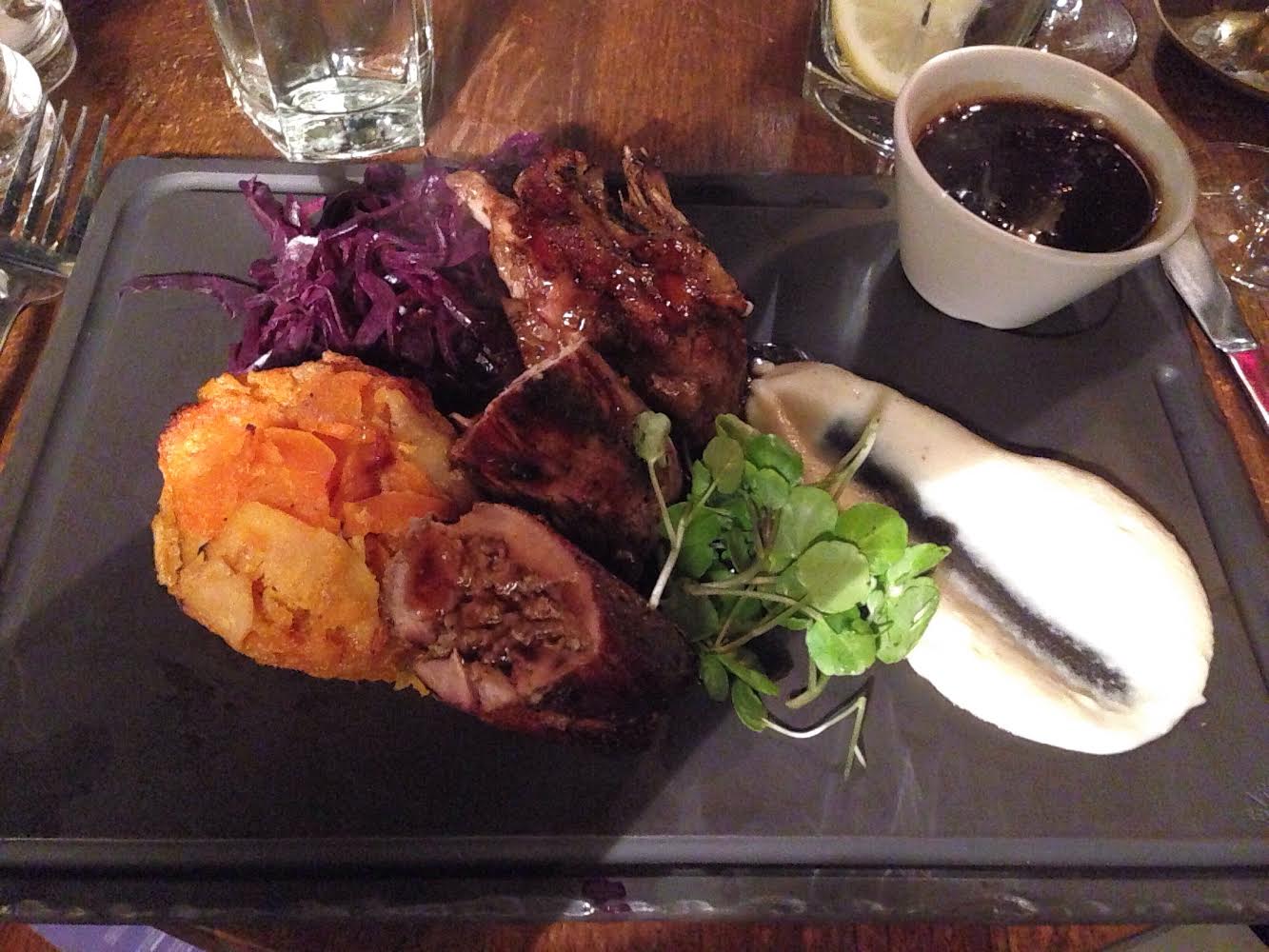
The other main was, despite being on their autumn menu, a wintry and comforting delight. There was so much going on on the plate (or slate in this case, as it happens) that it’s difficult to know where to begin describing it. So there was a confit leg of pheasant – delicious and gamey, if a bit difficult to detach from the spiky, spindly bones. There was a breast, filled with stuffing and rolled almost into a ballotine, rich, salty and herby. There was a big pile of red cabbage, full of the flavours of winter, a giant heap of spiced comfort. There was a root vegetable dauphinoise, so imaginative compared to a bog standard potato gratin, with a whack of garlic offsetting the sweetness of carrot and parsnip. And there was celeriac puree. It was described on the menu as “flavour bursting celeriac puree”, which again I found more than a little silly, but the last laugh was on me because it was exactly that – sweet but punchy, a little went a very long way. Bringing it all together was a little jug of something which was described as “mulled wine sauce” on the menu but just tasted like amazing gravy to me. I smiled from beginning to end while eating this dish: if plates of food were people, I’d have married it.

Pheasant

That main, as it happens, was recommended by our waiter – although, having read the description on the menu, I probably still would have ordered it if he’d said “my one tip is to avoid the pheasant, I’m pretty sure it has bits of asbestos in it”. But the service overall was pretty decent considering how full the place was. There were no empty tables when I got there, no empty tables when I left and the bar got buzzier as the evening went on. What were all these people doing in Sonning, a village which never troubles the national press? Your guess is as good as mine.

I’m sorry to confess that I’ve let you down, because I didn’t order dessert; I just didn’t have space (I blame all that soup) and there was nothing light enough that I could have managed it even after a breather. In any case, the dessert menu is probably the most conventional thing about the pub – brownies, sticky toffee puddings and the like – so I’m not sure I missed much, though I imagine they’d have done it well. Maybe with winter coming I’ll have to get into training to make sure I can manage all three courses. So instead, we settled up and left. The bill, excluding tip, came to sixty-two pounds. Apart from the two courses each we had a couple of pleasant, if unremarkable, glasses of red and a couple of drinks in the bar beforehand (the wine is much better value than the cider: a pint of cider is eye-wateringly close to a fiver). The main courses were definitely more at the restaurant than pub end of the price scale – the pie was fifteen pounds and the pheasant was seventeen pounds – but more than worth it, I think.

I can’t help but feel that the Bull has justified my new approach to picking pubs to eat in. It was a bit of a rollercoaster – I was excited before I turned up, distinctly unconvinced when I got there and then thoroughly wowed once the food arrived. The food was far better than I expected and got the balance just right – close enough to standard pub food not to alienate people who want that sort of thing but with just enough personality to interest people who are looking for a little bit more. What can I say? It won me over. If I lived in Sonning I would come here all the time, and as it is I’m wondering how quickly I can get away with going back. Maybe the village’s newest and most famous resident will drop by at some point; if she manages to get the Elgin Marbles returned to Greece I can’t think of anywhere more appropriate to celebrate.

The Bull Inn – 8.1
High Street, Sonning, RG4 6UP
0118 9693901

http://bullinnsonning.co.uk/

RYND

RYND closed in August 2016. I’ve left the review up for posterity.

My normal rule is not to review restaurants that have just opened. It’s not fair to judge a place in the first month when it’s finding its feet, and most restaurants in Reading don’t have a soft launch to phase themselves in. One minute they’re all boarded up with people beavering away inside, the next they’re open and the front of house and the kitchen are learning to work together to offer something seamless. It must be a steep curve, doing that with all those hungry, demanding customers at tables expecting everything to be perfect from day one.

My other rule is that I base my review on a single visit. In an ideal world it would be lovely to make multiple visits to a restaurant before writing a review, but life’s too short – especially if you want to read a new review every week. So instead they get one chance to impress and that’s it. Sometimes that can be a little unfair on restaurants: I’ve revisited some and found them to be better than I thought. Dolce Vita, for example, has constantly impressed me when I’ve gone back there and Bhel Puri House has become a reliable staple for a quick, interesting lunch. Sometimes it flatters places: Sushimania has never been anywhere near as good since as it was the time I went on duty.

All of this makes RYND a difficult review to write. In the interests of full disclosure, I went there “off duty” shortly after it opened and really liked it. I thought the food was interesting and well done and the service was excellent. But going back, just over a month after it opened, was like going to a different restaurant. What changed?

Well, the menu for a start. Sitting down I was presented with a different menu to the one I chose from on my previous visit – and, indeed, a different menu from the one on the website at the time of writing. The alterations were subtle but telling: no courgette fries any more, two of the burgers had come off the menu, one of the starters had been removed, you no longer have the option to order pulled pork as a main except as part of the upsold combo with chicken wings (odd, really: the menu boasts about how proud RYND is of its pulled pork but it’s not possible to order it on its own). The burgers that had been taken off were the basic options: a plain hamburger or a cheeseburger. The cheapest things on the old menu, as it happens.

That leads to the second change on the menu: the prices. Everything has been hiked in the month since the restaurant opened, the starters by around a pound and the main courses by between two and three pounds. All the burgers are now over a tenner, although in fairness to RYND you pay about the same for a burger at their closest competitors, the Oakford or Handmade Burger. Even so, it just felt a little cynical. Perhaps the initial prices were soft launch prices and RYND just decided not to tell anybody.

It wasn’t a brilliant first impression, but I put it to one side. After all, the prices weren’t necessarily unreasonable and RYND deserved to be judged on the food, the room and the service, just like any other restaurant. And the room, it has to be said, looks gorgeous. All that exposed brickwork and exposed light bulb filaments might be a trope that’s been done to death in London, Liverpool and Glasgow but in Reading it still makes a refreshing change to see somewhere so beautifully fitted out. It’s broken up nicely into lots of little sections with a long, atmospheric bar (when I went there were a row of very bearded chaps sitting at it, all check shirts and beanies, presumably having a craft beer and pretending to be in Williamsburg). The only drawback was the black banquette running round the room – it looked plush and comfy but was disturbingly like a church pew, with less give than Jimmy Carr and Gary Barlow put together.

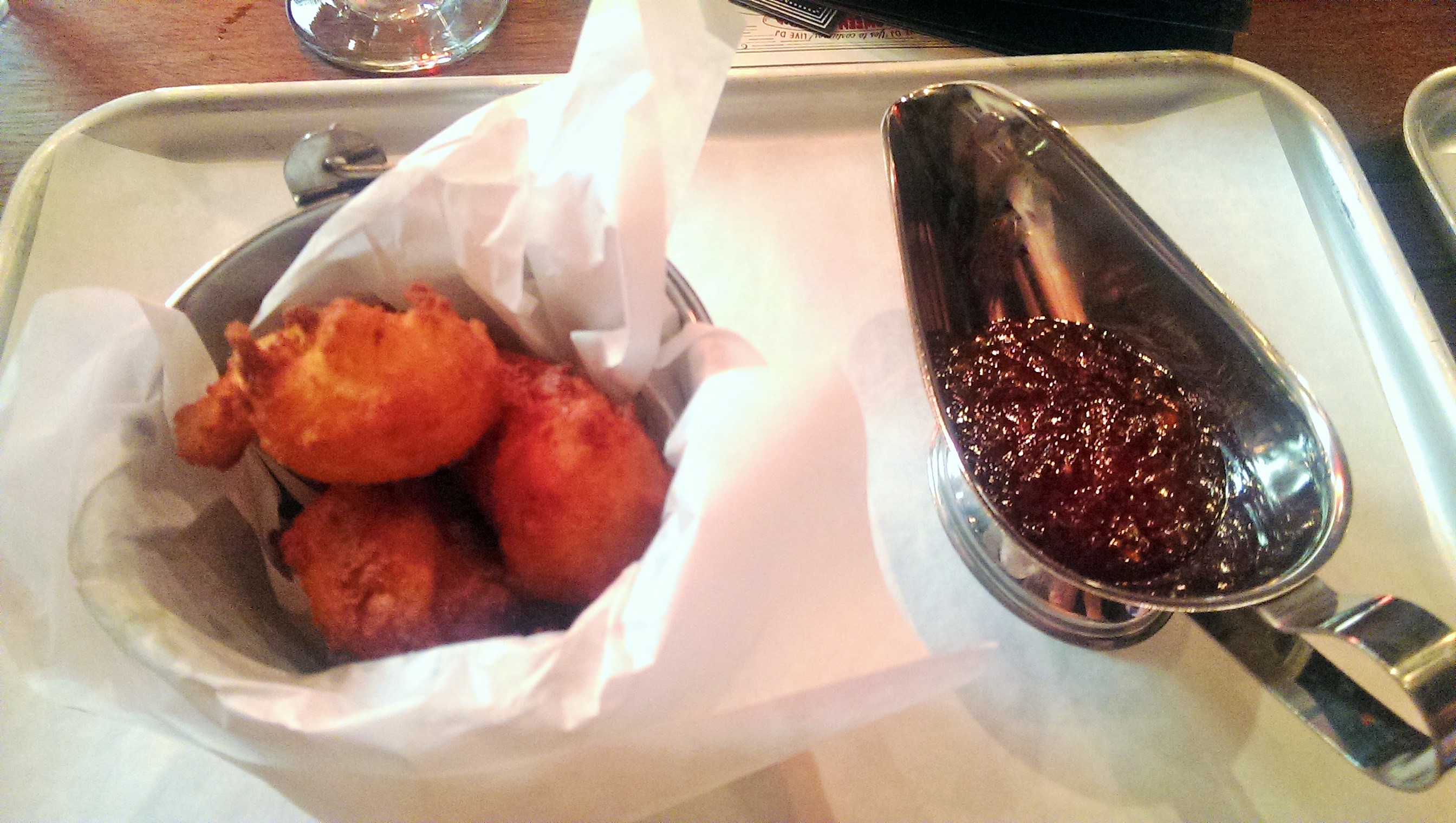
And the food? Well, the food is where RYND really fails to impress. Of the starters, hush puppies were pleasant enough – deep fried corn fritters with enough texture to just about compensate for the lack of taste, still a little too crumbly for my liking but quite nice paired with sweet, spicy, slightly smoky chilli jam (“quite nice”, with hindsight, may well have been the high point of the meal).

Puppies

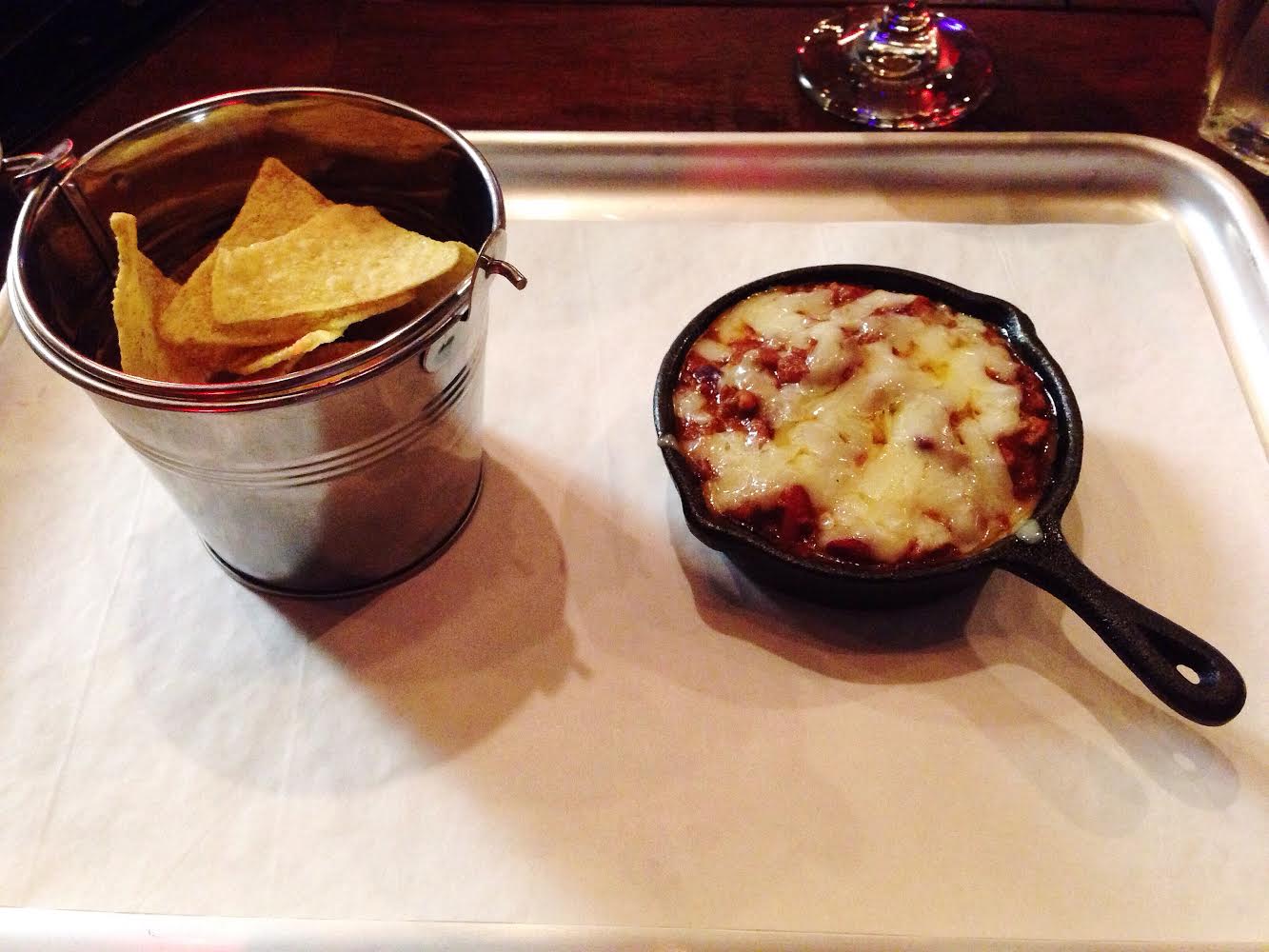
The other starter, the chilli bowl, was poor: a very small skillet of slightly anonymous chilli with a little heat but not enough, too much bounce and nothing interesting going on. I was hoping for something slow-cooked and complex, but this was miles from that (I’m no cook but I can make better chilli than this at home, and when I’m saying that there’s definitely a problem). Worse still was the little metal bucket of tortilla chips which came with it. Tortilla chips must be one of the cheapest things RYND serves up, and yet the bucket was barely two-thirds full. Again, it felt cynical.

Chilli

Pulled pork was possibly the crowning disappointment. Pulled pork should be dry and sticky with some smoke and spice, but this was just wet. Not moist, not even damp, but plain wet. It came in a sesame seed bun (with a needless wooden skewer: it was nowhere near tall enough to need one of those) drowned in mayonnaise. There was, I’m told, cheese and barbecue sauce and coleslaw in it but it didn’t feel like that at all. It didn’t even really feel like pork – with all that finely shredded mulch in mayonnaise I felt more like I was eating Reading’s most expensive tuna melt. It was so sloppy that eating it tidily was almost impossible – every bite forced more of it out of the other end on to the tray (of course it’s a tray, just like they’d have in Williamsburg). It wasn’t a sandwich, it wasn’t a burger, I’m not really sure what it was. A mess, I guess.

PPBurger

I did like the fries, though – flattened crinkle-cut slices like mutant McCoys, they were one of the better things I ate, especially dipped in the barbecue sauce. I think I’d probably describe the fries as quite nice.

The “smokehouse burger” was a run of the mill beef patty, a little bouncy in places as the chilli was. It was meant to come with barbecue sauce, mature Cheddar and crispy fried onions, but the onions were missing, substituted with a thick dollop of red onion marmalade so sweet and sticky that you could easily confuse it with dessert. The mini-pail of sweet potato fries on the side (I asked for these instead because I wanted to try them out) did little to lift the overpowering sugariness. In their defence, they were really good – crisp and light where sweet potato can often be a tad soggy and limp. With a different burger they would be worth the swap but with this one it all felt a little cloying. It just didn’t feel like an eleven pound main course, and until recently it wouldn’t have been one.

Service was pleasant and friendly: our waitress did have a crack at flogging us olives and recommending the most expensive main course, but that probably wouldn’t even have registered if I hadn’t already been irked by the menu so I won’t hold it against them. I should also mention the drinks – it was happy hour so I tried the spiced apple daiquiri which was pleasant but no more than that, and a 125ml glass of Portuguese red which was straightforward, uncomplicated and really easy to drink (hats off to RYND for offering small glasses of wine and pricing them fairly: many places don’t). The meal for two, two starters, two mains, those cocktails and a small glass of wine came to forty-six pounds, not including tip. Looking at the bill I saw the final piece of stealth margin maximisation – charged an extra pound for substituting sweet potato fries for standard fries, another thing the menu neglects to mention.

As you can probably tell, RYND got my back up from the start. But being dispassionate about it and trying to forget my earlier, better visit (and wider menu. And better pricing. Hmm. Suddenly there seems to be quite a lot to try to forget) I still can’t recommend it. Judging it on its merits, if I wanted this kind of food Blue’s Smokehouse does it many times better (and a little bit cheaper). And if I wanted this kind of food and didn’t want to leave Reading, I think I’d go to the Oakford which offers more, better burgers, again slightly more attractively priced. But I suspect RYND will do perfectly well all the same – it’s a kind of food people want to eat at the moment, the kind of place people want to eat it in and I imagine hipsters will enjoy telling each other that the Oakford is so last year.

Oh, one last thing: RYND is pronounced rynd as in quite nice rather than rynd as in cynical. But in reality it’s probably a bit of both.

RYND – 6.2
11 Castle Street, RG1 7SB
0118 9505555

http://ryndreading.com/

Shaun Dickens At The Boathouse, Henley

N.B. From November 2019 Shaun Dickens At The Boathouse re-branded as Bistro At The Boathouse, with the same chef at the helm but a significantly different menu. I’ve left this review up for posterity but to all intents and purposes the restaurant it covers has now closed.

Probably the strangest moment in my meal at (to give it its full name) Shaun Dickens At The Boathouse happened quite early on. We were sitting in the bar with an aperitif having just finished what the waiting staff had described as “snacks”. Things were shaping up nicely. My fino sherry had that dry, almost salty tang that I love. The parmesan and paprika doughnut was unusual and delicious, as was the long thin rice cracker dotted with (surprisingly mild) wasabi and smoked mackerel. Then a waiter came over.

“Shaun is ready for you now, would you like to take your table?”

I wonder if this was meant to be charming, but to me it was just odd. I’m used to being asked whether I’m ready to take my table, not whether the chef is; it made me feel more like I was seeing my dentist than eating out. Still, I suppose when you put your name front and centre you are kind of saying you’re a big deal (how many restaurants can you think of with the chef’s name in the title? How many where the chef hasn’t been awarded a Michelin star? Exactly.)

And the Boathouse, although it may have been overlooked by Michelin recently, did win “Best Of Britain” at the Tatler Restaurant Awards earlier this year, so it’s obviously been noticed by someone. Anyway, this didn’t really bother me: after all, if the cooking’s good enough who cares if the chef’s name is emblazoned on the drinks coasters? He can have a passport photo on every page of the menu for all I care, so long as he sends me away evangelising about his food.

The serving staff – uniformly bright, personable, knowledgeable about the menu and genuinely charming – stood out right from the off, possibly because of the surroundings: the Boathouse is a very beige room indeed. It’s a single big beige room packed with tables with beige nondescript chairs, beige walls lined with nondescript art (all riffs on Jackson Pollock) and with beige music playing in the background. Passenger, Coldplay, the list goes on… it was what Glastonbury would sound like if the lineup was picked by Simon Mayo. A short loop, too, because within two hours we were right back to the start of their playlist (the fact that I noticed this isn’t a good advertisement for the food). The bar, also part of that dining room, is cordoned off by a white, diaphanous curtain. It feels a bit like being in Princess Diana’s boudoir – which might be good news, I suppose, if that’s always been an ambition of yours.

The menu at the Boathouse is very compact – there’s the tasting menu (£65 for seven courses, which struck me as on the steep side) or the a la carte – which I went for – which has four options for starters and mains. These are priced a stone’s throw apart which struck me as odd – either you should charge a lot less for the vegetarian starters and mains or just go the whole hog and have a single price for three courses irrespective of what you order. (Of course, I’m partly saying that because I made the mistake of ordering the vegetarian main, but we’ll get to that.)

Normally at this point I would go into exhaustive detail about everything I ate. And there was a lot – what with “snacks”, the bread, the amuse bouche, the pre-dessert and everything else. But the problem is that it was all so competent and unexciting that it’s almost like trying to remember the details of a not very interesting dream on your way to work the next day. Everything was well executed, pretty and precise, but the wow factor I associate with cooking at this price point simply wasn’t there. Perhaps “fine dining” (does anyone really use that phrase without the protection of ironic inverted commas any more?) has had its day – certainly the fact that only a handful of other tables were occupied on a Friday night suggests there might be something in that.

There were high points, but ironically many of them were the freebies: beer and onion seed bread, baked on the premises I’d guess, was stunning with a crunchy, almost flaky crust and a soft middle. The whipped caraway seed butter was good, but the simple salted butter was even better. I’m not sure I ate anything that quite lived up to that standard.

The amuse bouche, actually, was a good indicator of the kind of meal we were going to have. A little sphere of what I think was chicken rillette with Jerusalem artichoke and sorrel oil was pleasant enough, if a bit bland and clammy, but the best thing about it was an intensely savoury crumb made from potato and chicken skin, like the powder at the bottom of a packet of pork scratchings. It was lovely, but it seemed like a lot of effort to go to for a tiny component of a tiny dish – misplaced effort, perhaps, when so much of the menu was crying out for a bit more flavour.

Of the starters, pork with smoked haddock and chick peas was a misfire. The chick peas, chick pea puree, little cubes of smoked haddock and a sweet, sour curried aigre doux was absolutely gorgeous, but the cold cylinder of pressed pork in the middle was really unappealing, a star of the show far too easily upstaged. I guess I was hoping for a compact cube of perfectly cooked pork belly, but it wasn’t to be.

The other starter, foie gras served two different ways, was really tasty – although the composite parts didn’t quite gel. The foie itself, served mi cuit, was nicely done with what I think were crumbled pistachios on top. There was also a separate foie gras terrine, looking like a little savoury cheesecake, which I thought was rather witty. As for the other things on the plate, the quince puree was nice and the cranberry chutney was a little too tart. This all came with a slice of toasted brioche, served separately so it didn’t interfere with all the prettiness on the plate, like an ugly relative kept out of wedding photos. Overall it was a bit quixotic, if beautiful to look at, but if you like foie gras (as I do) then it wasn’t going to disappoint. Probably the best value dish on the menu, too.

Foie

Mains continued the trend of style over substance. Monkfish with farro, preserved lemon and charred aubergine was similarly frustrating. The farro was like a pearl barley risotto and very nice it was too. The charred aubergine was, well, a single piece of charred aubergine. And the monkfish? Cooked absolutely spot on, so firm, almost like sashimi in texture, a big generous piece (resting on a totally pointless bed of spinach – why do restaurants do this?) but unseasoned and not really going at all with the farro. Eating that dish was a bit like listening to an epic fiddly guitar solo: there’s clearly lots of skill involved, but the only person really enjoying themselves is the person playing the guitar.

Monkfish

Roasted garlic gnocchi, girolle, confit turnip and tops with pecorino crisps promised to be a really interesting dish but turned out to be a huge disappointment. The gnocchi were about an inch high and slightly less across and there were, count them, three. They came with a small pile of slightly gritty mushrooms, another pile of pointless steamed spinach and some pretty little discs of turnip. Overall it was fine. Not exciting, not bursting with flavour, not substantial enough to remain in the memory. Worst of all, this dish cost twenty two pounds which struck me as rich. Richer than the food itself, in fact. Many restaurants do a three course set menu for less than this dish and I can’t think of an occasion when I would pick this over them. (The Boathouse does a separate vegetarian tasting menu, which I think is laudable, but it costs the same as the other tasting menu, which strikes me as cheeky.)
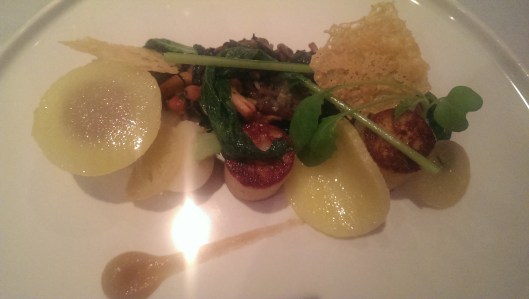
Gnocchi

By this stage, in the meal as in this review, I was pretty much going on because I felt I should rather than because I much wanted to. Also, I was still hungry, because three gnocchi isn’t going to bring on a Mister Creosote moment for anyone. Things didn’t improve. The cheeseboard should have been a high point – eight carefully selected British cheeses, including many I’ve not heard of before. And yet even these were pastel shades of cheese rather than bright primary colours; only the Admiral Collingwood (a punchy number washed in Newcastle Brown) and the Dunsyre Blue stood out. Eight rather stingy pieces to share cost eighteen pounds, and I couldn’t help but compare it with the cheeseboard just down the road at the Three Tuns, where for half the price you get three far more sensibly sized pieces of well selected cheese: a soft, a hard and a blue, all you really need.

Cheese

Things rallied slightly for the desserts. A pre-dessert of maple espuma with poached pear, thyme, thyme oil and candied nuts was probably the tastiest, cleverest thing I ate all evening. But by then knowing the kitchen could produce something like that just made me even more frustrated about what had gone before. Finally, the white chocolate parfait, topped with torched orange, studded with sweet crumbly pieces of tablet and served with a very fine salt caramel ice cream did its best to redeem matters, but by then it was too late.

I should also mention drinks, because they were all good, from that initial sherry to the Sauternes with the foie gras and the Tokaji with the dessert. The red, a Uruguayan Petit Verdot, was especially good – dark and inky with a rich whiff of pencil shavings about it. If they ran a wine bar, I’d definitely go (as long as they sorted out that infernal soundtrack), but as a restaurant my feelings are far more mixed. A lot of that comes down to the bill: one hundred and eighty-three pounds, not including tip. Obviously you could pay a lot less if you missed out the cheese, the aperitifs and the dessert wines but this is never going to be a cheap meal. That’s not the problem. The problem is that this is cerebral, clinical cooking, and for that money I wanted a lot more.

The best meal I’ve ever had was in a little restaurant in Barcelona which didn’t have a Michelin star but has picked one up since. I can still remember several of the things I ate that night, even though it was seven years ago. And for me, at the very top end of the spectrum that’s what I’m looking for when I go to a restaurant: flavours and combinations I’ll never forget, dishes I would rave about to friends, contenders for that hypothetical death row feast. Did the Boathouse come close to that? Not remotely. I might be able to forgive their food for being small, I could even overlook it being expensive, but on the train home I thought about whether I would sing the praises of anything I’d eaten and realised that none of it inspired any passion. The next day I had hot buttered toast with a nice thick layer of Marmite. Unpretentious, powerful, delicious: it was the best thing I ate all weekend.

Shaun Dickens At The Boathouse – 6.9
The Boathouse, Station Road, Henley-on-Thames, RG9 1AZ
01491 577937

http://www.shaundickens.co.uk/

The Three Tuns, Henley

Click here to read a more recent review of the Three Tuns, from 2025.

If you’ve been reading for a while you might have gathered that I’m a big fan of Reading. I think it has a lot to offer – although sometimes it only rewards those who make an effort – and I get quite annoyed at people who slate it. As a town is it what you make it. What it is missing, though, is a town centre pub that does really good food.

We have great pubs. What’s not to like about finding an empty booth in the back of the Hobgoblin (yes, I know it’s not called that any more but does anyone call it by its new name?) on Friday for a quick after work pint or getting a table outside at the Allied when the sun is shining and someone has apparently picked out all the prog rock tracks over 6 minutes long on the juke box (and there are a lot – the jukebox at the Allied seems to think music stopped somewhere in the mid 80s, with a few eccentric exceptions). We have some great restaurants. But what we don’t have is that combination of the two – somewhere to get a decent pint and a decent meal, preferably at a reasonable price. Possibly the closest, although it was still far from perfect, was the Lyndhurst Arms, but then that went and closed, which means I’ll never get to review their amazing stuffed pork belly (if you’ve ever tried it you’ll know I speak the truth) let alone go there after work again for a quick drink and end up staying for dinner.

This leads me, eventually, onto this week’s review. Yes, it’s a pub with a reputation for good food but no, it’s not in Reading. Previous trips out to Henley have proven that this kind of pub is a beast usually only spotted in the countryside, preferring the fresh air and customers who are prepared to drive (or are lucky enough to live nearby) instead of folk who would rather take public transport and have a drink. The Three Tuns is a different animal altogether, though: it’s in Henley centre, right on the market square (a big tick for that) and you can get there from Reading on the train in about half an hour (a second, smaller, tick). Of course, from past experience that’s no guarantee that it’s any good, but I turned up full of optimism.

As a venue you could easily miss it. It’s a sliver of a building tucked between Machin’s the butcher and an anonymous clothes shop. Inside it’s broken up into a number of rooms, all wooden floored and low beamed. Our table was in the middle room where most of the diners end up, in a space seating about sixteen people.

The menu here is healthily short. Five or six starters, mains and desserts with most mains under fifteen pounds and if you fancy it there’s a “pub favourites” menu which offers two courses for sixteen quid. We started with a basket of bread. This came with a generous ramekin of gloriously rich sticky caponata (like Italian Branston and one of the nicest ways to eat aubergine, though that might not be saying much) and two discs of – admittedly rock hard – dill and lemon butter. Both were delicious, though it wasn’t long before our starters arrived so we didn’t quite get the chance to savour the bread. I’d specifically told the waitress we were in no hurry for anything, so this should have rung warning bells.

The buffalo mozzarella wrapped in prosciutto was perfect. It was deceptively large – a whole ball of mozzarella – served with a proper dressed salad with sun dried tomatoes, pine nuts and shavings of parmesan – just in case a whole mozzarella wasn’t cheese enough (like Tony Blackburn I can’t turn down extra cheese). The prosciutto was generous enough to really taste but had been stripped of most of those fatty bits on the edge that can double as unwelcome dental floss. Served on a little wooden board, as is the fashion these days, it was a bit tricky to eat but I managed, even rescuing a few scraps which fell quite literally overboard. Ten second rule and all that.

Mozzarella

The salt cod croquettes, from the pub side of the menu, were just as good. Three plump croquettes, crispy yet soft inside, came with a little dish of beautifully yellow aioli. If anything I’d say the aioli looked more striking than it tasted, but it was still just what you wanted to dip a nice big forkful of croquette into. I know that croquettes, like fishcakes, can be a way for some kitchens to make lots of money flogging you what’s essentially mashed potato, but when it’s this good you just don’t mind – and, of course, salt cod is one of those ingredients where a little goes a long way. Clever stuff, and a bit of a culinary win-win.

The mains kept that standard up. Poached brill on a chorizo and butterbean cassoulet, from the specials menu, was a hit. My favourite part was the cassoulet itself, rich with tomato, a bountiful amount of chorizo giving the dish the salty, smoky taste that it needed. I could happily have eaten this without the fish – plain, poached fish is a bit like Orlando Bloom, lovely to look at but ultimately not very interesting (I guess I just like crispy skin and when it’s not there I feel a little short-changed). That said, it was generous to a fault – which definitely sets the Three Tuns apart from many restaurants who confuse “healthy” with “diet option”. It was perfectly cooked, but the seasoning was a tad strange – it was topped with dill, which might have gone with the fish but was jarring with the cassoulet.

Brill

The other dish was guinea fowl breast (“pan roasted”, apparently, which is a new one on me – I thought you pan fried and oven roasted things, but there you go) with potato hash, madeira jus and some of the nicest peas in the world. They came in a little casserole dish of their own, still with some bite, with big hunks of bacon, meat from the guinea fowl’s leg – a bit like confit duck – and braised lettuce which also still had some crispness. I could just eat a bowl of those peas now, I can tell you. Again, the supporting act was more interesting than the main event, but I didn’t mind: the guinea fowl was tasty enough (I have a soft spot for a chicken supreme, as it happens) but everything it came with turned it into a really satisfying dish. It even had me hankering for autumn, despite being on their summer a la carte.

Guinea

The wine list at the Three Tuns is compact, too – a dozen or so whites and the same number of reds with half of those available by the glass. We picked a bottle of durif (an Australian number – also known as petit syrah, if the menu is to be believed) which was phenomenal. Rich, fruity and a bit smoky, it was dangerously easy to polish off a bottle between two. It went brilliantly with the guinea fowl and just about didn’t clash with the cassoulet, thanks to that chorizo. Pretty impressive for just under thirty pounds, too.

Service throughout was excellent. The staff manage that clever service trick of being really good at what they do and on top of everything while also making it look easy and casual. When asked about the dishes our waitress knew the menu inside out, and we also got the “oh yes, good choice” that everyone wants to hear when picking what to eat. I like to feel that the staff have a vested interest in what their customers order and it definitely felt the case here.

The kitchen, sadly, was not quite so perfect. Whilst the food was excellent it came out too quickly: not quite so fast that you wanted to make a scene, but quick enough to disappoint slightly because I’d turned up wanting to make a leisurely evening of it. I’m always surprised by how many good restaurants get this wrong, and it’s not as if they seemed to want to turn our table. You’d think waiting staff would realise something has gone wrong with the timing when they’re asking what dessert you want and you still have half a bottle of red wine left to drink. So we did what anyone in that position should do, and kept them waiting: red wine with fish might be a little dubious but red wine with dessert definitely isn’t on my to do list.

But, of course, we did have desserts because everything up to that point had tasted so good and they were worth the wait. The pot au chocolat was knockout – again, a generous portion of quite a dark, firm mousse, rich with orange zest, cardamom and just a little hint of chilli lurking under all that. Deceptively complicated and yet so simple-looking, it was one of the nicest desserts I’ve had all year. The (I think) rosemary shortbread on the side added nothing, but only because the flavours in the pot au chocolat were pretty much unimprovable. Even a glass of dessert wine couldn’t do it.

Chocolate pot

I also wanted to try the cheeseboard because it’s not something I order often enough in restaurants (partly because there’s so much to remember! Five different cheeses? Pasteurised and unpasteurised? Cow and goat? Will they notice if I make some notes on my phone?) The Three Tuns cleverly takes the less is more approach: just three top notch British cheeses, which makes it awfully hard to resist. Barkham Blue is a local classic (possibly the best blue cheese in the world), Lincolnshire Poacher (not so local) is a really cracking hard cheese and Stinking Bishop is famous for its whiff. On this occasion the Bishop was more like “been working on London and the Tube was a bit sweaty” than properly stinking and, if I’m honest, all the better for it. A bit younger and richer – and firmer – rather than beating you over the head with all that gooey stench. If I had criticisms (and sadly, I did) they were too cold to properly release all that flavour and the biscuits were a bit uninspired, but even so it was a generous helping and washed down with a glass of ten year old tawny it made for a great way to round things (and me) off.

Bread and butter, three courses, the cracking bottle of red and a couple of snifters with dessert came to a hundred and ten pounds, not including tip, so it may be a pub, but the prices aren’t quite pub prices. But is it worth it? Absolutely. Almost flawless food, a great wine list, brilliant service and one of the cosiest, nicest rooms I’ve eaten in in a very long time. Obviously there are a few things I’d change – I’d have liked my food to come out a little slower, I’d like there to be a direct train from Reading to Henley or, better still, I’d like to pick it up and drop it somewhere in the middle of Reading. But maybe part of the magic is that I can’t. So until Reading gets a pub that can do food of this standard, somewhere that is in the middle of town but feels like it’s out in the country, I’ll be back. Tons.

The Three Tuns, Henley – 8.4
01491 410138
5 Market Place, Henley on Thames, RG9 2AA

http://threetunshenley.co.uk/