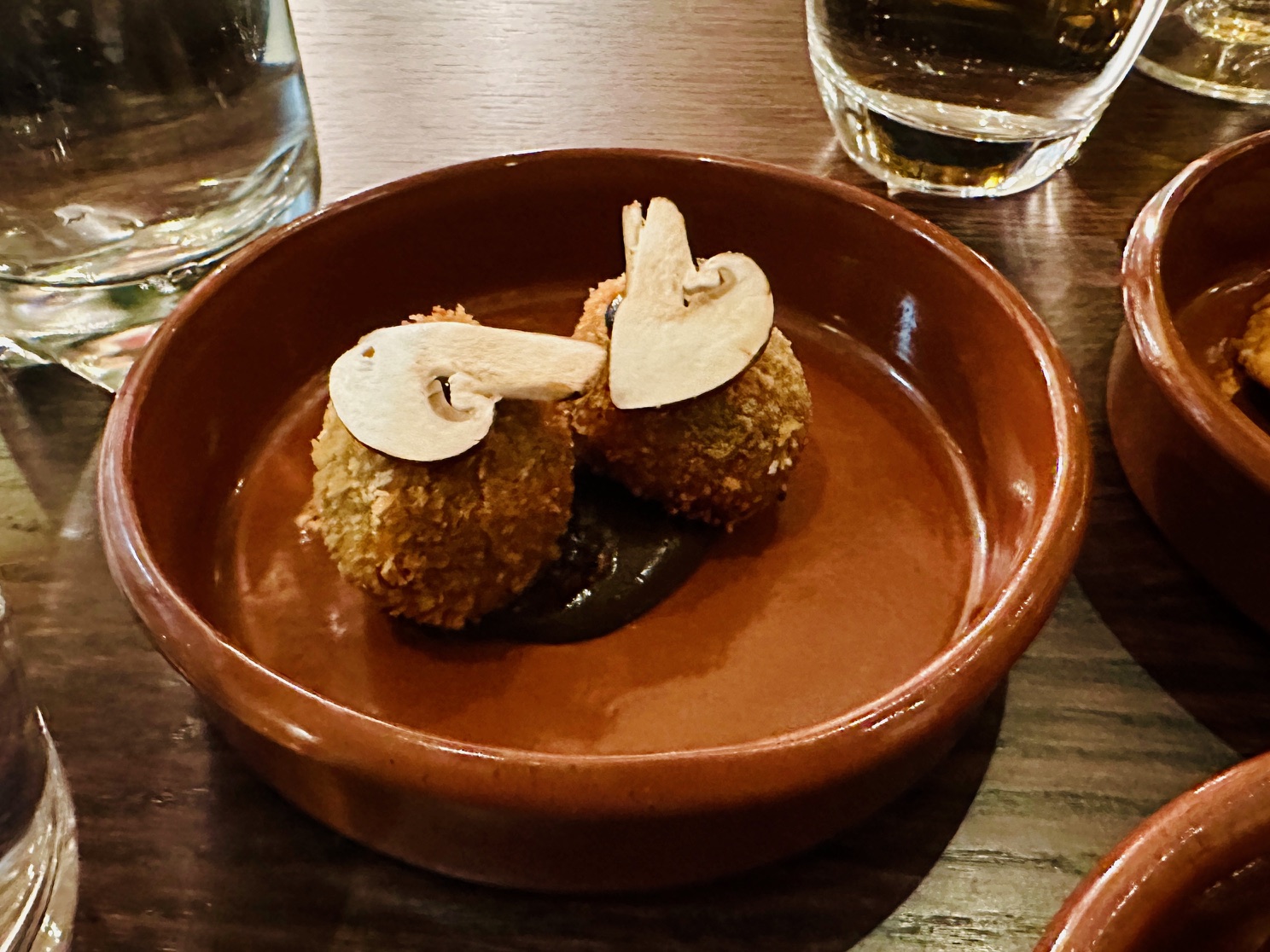
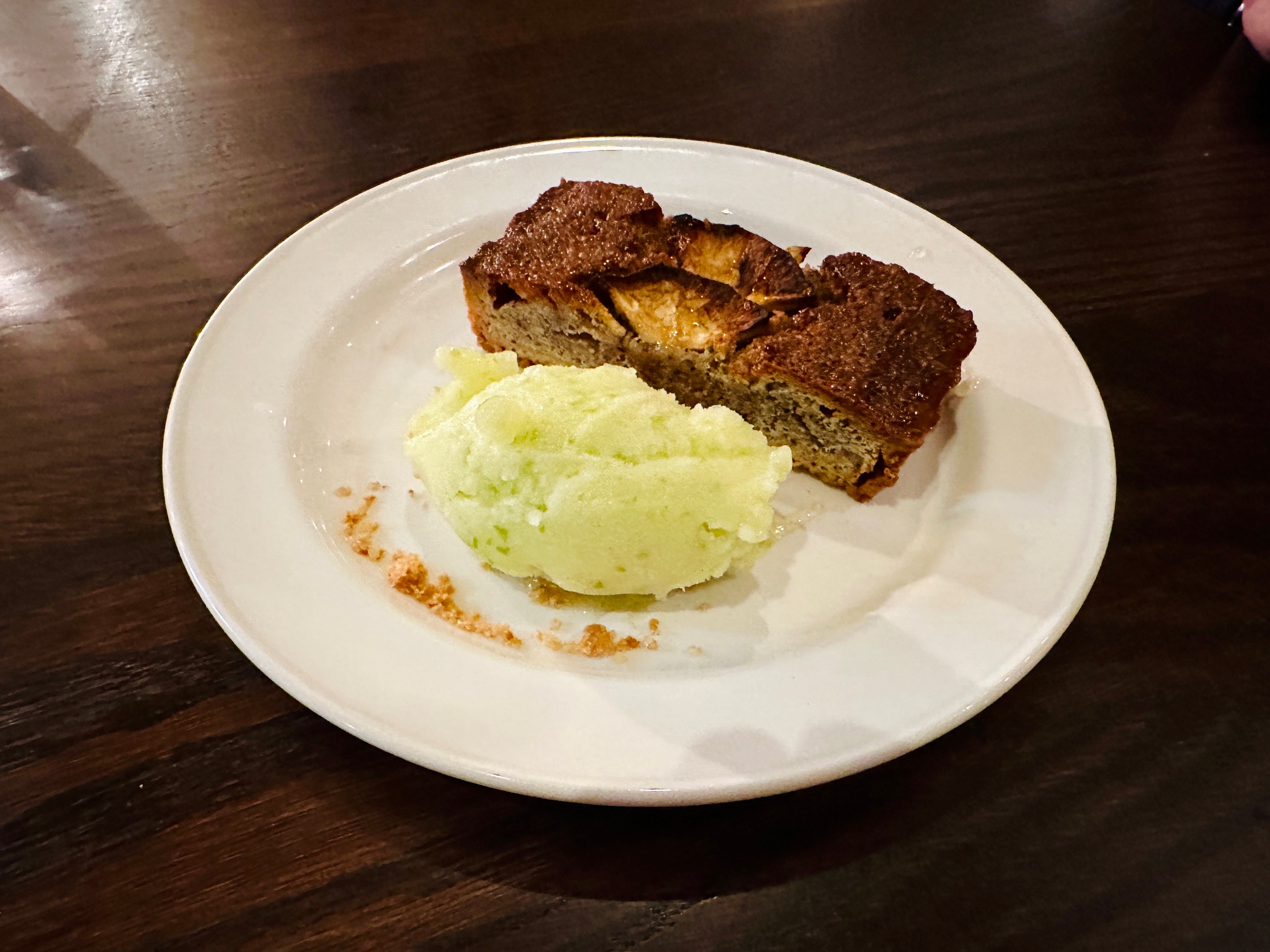
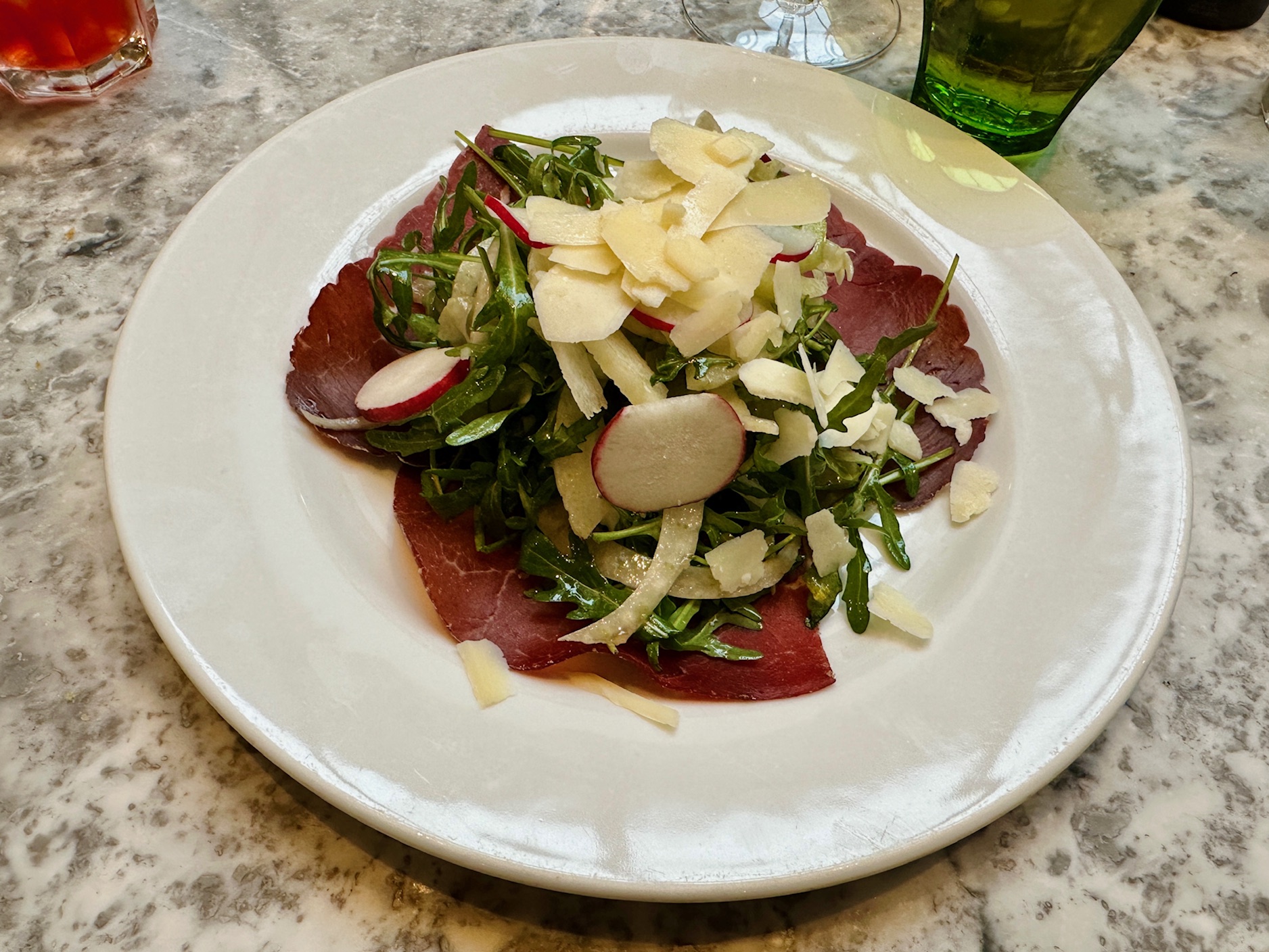
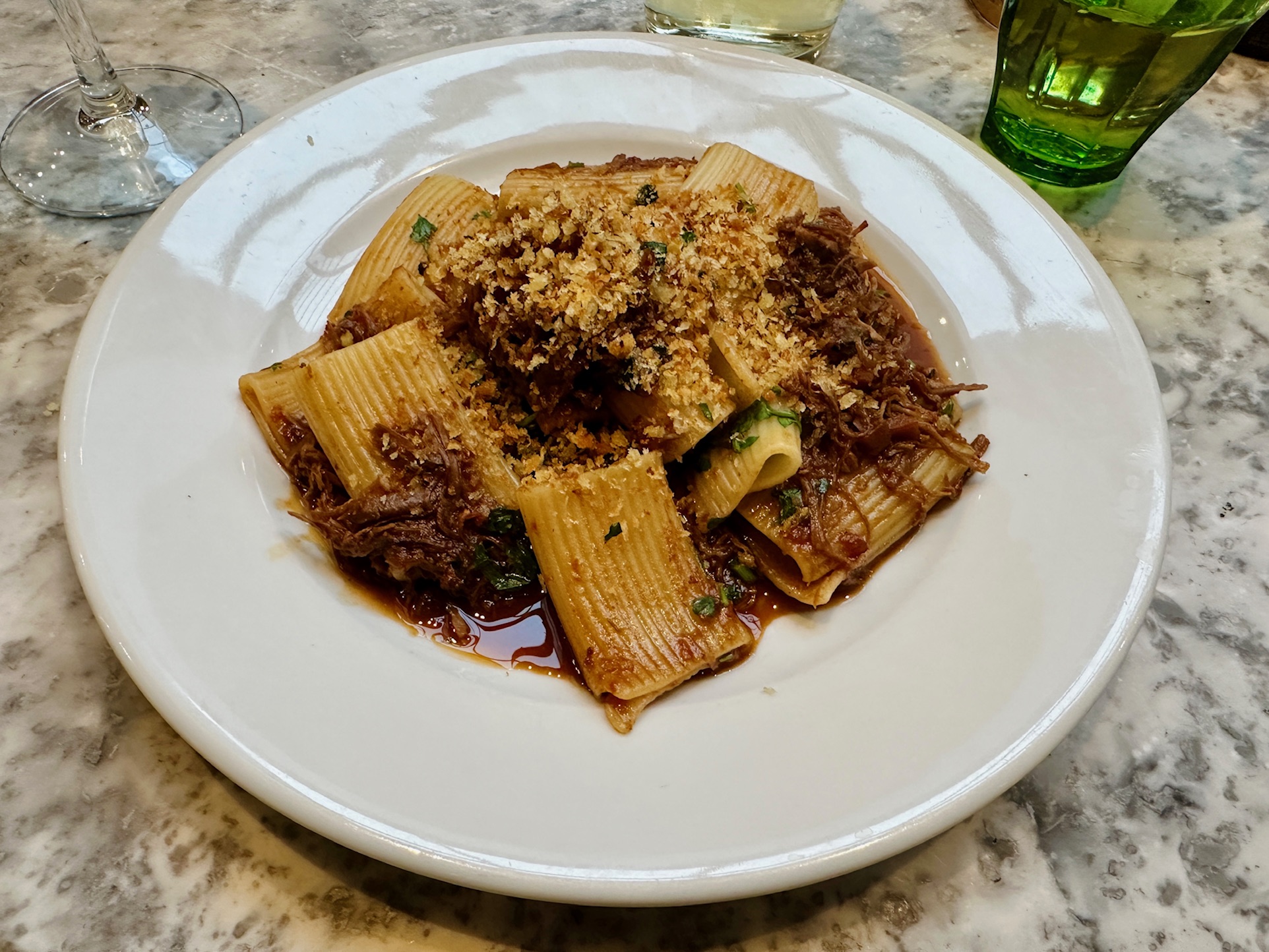
Restaurant review: The Drapers Arms, Islington

I was meeting Aileen, a very dear old friend, in London for lunch and she gave me carte blanche to pick wherever I wanted. “You’re the food expert”, her message said. “You choose.” And I have to say, that was more difficult than usual; I have a list of London places I want to get round to, but lots of them didn’t seem right for this. I didn’t want us to sit at a cramped table somewhere in Soho, elbows battling, or up at a bar watching an open kitchen. I might go to the edgy places with my cousin Luke, but lunch with Aileen required somewhere in the image of our friendship: comfortable, classy, unrushed with a long history. Somewhere worth celebrating.

Aileen and I, you see, have been friends for well over a decade. Long before I started writing this blog I used to write another – not about restaurants, about something else – and somehow Aileen chanced upon it. And somehow, I’m not even sure how, we went from writer and reader to firm friends. I don’t think I could possibly have appreciated at the time how fortunate I was about that. Because a few years later my marriage and my life imploded and things got almost impossibly hard and Aileen, arguably more than anyone, was the person who kept me together.

In the dark moments when nobody else was there, or (more likely) they had all gone to sleep, Aileen showed up for me time and time again. She always had the same mantra, which I railed against but over time discovered was true: this is a phase. It’s a phase, and it will pass. And it was, and it did, and she never once said I told you so, even though she could have done.

I like to tell people that she saved my life, and she likes to reply that I’m talking nonsense. She might be right, because she nearly always is, but if we hadn’t become friends I don’t know who or where I would be now: I almost certainly wouldn’t be here.

It was a huge honour for me that she was at my wedding earlier in the year, a wedding that might not have happened had I not met her. Late in the evening, when the guests were thinning out, we sat together outside the Lyndhurst and had a good old gas, as if the intervening months had never happened. And the next morning I managed to catch her in the hotel bar before she headed home to Milton Keynes, and that easy, joyous conversation was one of my highlights of the whole weekend. I told her we should do lunch in London soon. So we agreed to, and all I had to do was find somewhere suitable for the occasion.

I ended up choosing the Drapers Arms in Islington, because it just felt right. It’s been going for well over twenty years, one of the generation of London gastropubs that includes the celebrated Anchor & Hope near Waterloo, and in that time it has become an institution. It held a Bib Gourmand from Michelin for much of the last decade, losing it in 2018, but it still featured in this year’s list of the U.K.’s top 100 gastropubs. But the thing that most cements its status as an institution is that nobody talks about it online, because nobody needs to. You won’t find a recent review of it online, and the London restaurant bloggers stopped name checking it a long time ago.

All that meant that although I’ve always wanted to go, I didn’t have a very clear idea what to expect. Aileen and I wandered there, strolling up Camden Passage and looking at all the stalls and boutiques, before heading across to Upper Street and then ambling off the main drag, onto side streets filled with houses you wished you lived in. On the way I went past various restaurants I’d heard of – the likes of Bancone clone Noci, Alsatian brasserie Bellanger and regional specialists Hainan House – all of which have been reviewed by somebody a darned sight more recently than the Drapers Arms has.

It’s a handsome, imposing building, a three-storey, powder blue beauty, and going in the front room was flooded with sunshine from the windows and glass-panelled doors. There were unoccupied tables at the front, and I was hoping our reservation was at one of them, but instead we were led to a room further back which was dingier and less agreeable. Almost every table was taken, and we were seated at possibly the worst one there – equidistant from the terrace at the back or those big windows out front, starved of sunshine.

I plonked myself on a Thonet-style bentwood chair that didn’t entirely feel as if it could deal with my weight at the start of the meal, let alone the end. Around us all the tables were packed with loud, lively, chattering groups, and there was nothing to soak up the sound. I took a picture of the room much later on, which makes it look nicer than it was.

But maybe all that is a tad grumpy. After all it was busy, which you want somewhere to be, and the fact remained that it was an extremely attractive pub, even if we had the restaurant equivalent of the worst house on a good street. I especially loved the emerald-coloured bar, and a print on the wall advertising HP Sauce in the proper bottles.

“Mark brought some home from the supermarket recently in a squeezy plastic bottle and I made him take it back” said Aileen, talking about her husband. “It doesn’t taste the same when it’s not in a glass bottle. I reckon it’s thinner, too.” This, I realised, was one of many reasons why I loved the woman.

The menu changes every day and they publish it on the website, so it was much as I’d expected. It’s curious how some menus present you with very difficult choices while some, despite making all the right noises, are devoid of dilemmas. I would say that, however well it read, the Drapers Arms menu was the latter. Nine starters, all of which seemed to be either gutsy and rustic or, for my money, a little too virtuous. It was all a tad binary for me. You had the same number of mains, although four of them – the fun ones – were to be shared between two.

That made the whole thing a little more restrictive than I’d have liked and if you didn’t like offal or bone marrow, both of which made an appearance, I think you might have found things trickier still. Starters generally clustered between eight and fifteen pounds, mains started just shy of twenty but climbed, for the sharing dishes, up to ninety quid.

While we weighed things up Aileen ordered a negroni and I asked for a Bloody Mary, we clinked glasses and celebrated the prospect of a long lunch with a great friend. They didn’t ask me how spicy I wanted the Bloody Mary, which gave me confidence that it would be good. It was both spicy and very, very good.

It had been far too long since I’d had lunch with Aileen, and I didn’t realise that she was excited about featuring in the blog. “I’ve wanted to do this for ages!” she said. “And I don’t want you using a pseudonym for me, either.” Chatting away, I realised that we both had many of the same criteria when it came to restaurants getting a gold star or nul points. When our bread turned up, it turned out we both had a bugbear about fridge cold butter (Aileen checked it and thought it was okay, for my money it was still a little on the cold side).

My starter was a bisque, and Aileen rested her hand briefly against the outside of the bowl. “I don’t like it when hot food comes in a cold dish” she said. I hadn’t ever considered it, but she had a point.

The problem with the bisque, though, wasn’t one of temperature per se. It was a tasty dish where almost everything worked, but it wasn’t quite the sum of its parts. I loved the depth of the bisque and the crab meat tumbled through it. Spiking the whole thing with dots of deep green oil and red flecks of espelette pepper gave the whole thing contrast and depth.

The problem, and I never thought I’d hear myself saying this, was the octopus: there were a few pieces in the bisque and I just wasn’t sure, in terms of flavour or texture, whether they added enough to be worth it. This dish was fifteen pounds, and I couldn’t help thinking it might have been better, and been better value, without the octopus.

“Another thing that annoys me, while we’re at it” I said to Aileen, “is dishes like soup appearing in shallow bowls like this. It just means it’s really hard to get to all of it, and it goes cold quicker.”

“I agree with that” said Aileen. I cleaned up the rest of my bisque with some of the bread, which was fulfilling one of its most noble purposes: the edible jay cloth for sauce removal. The bread was okay, by the way: two big slices of sourdough and two pieces of baguette is hardly highway robbery for three pounds, but it wasn’t the most exciting.

Aileen’s starter was the kind of dish I would never order in a million years, and a great advert for bringing people with you to review restaurants whose tastes are not the same as yours. It was a bean salad with coriander, chillies and datterini tomatoes, served in a sort of filo pastry basket. Aileen loved it – the flavours worked well and the beans had a nice amount of bite. I had a forkful, which confirmed that it was indeed the kind of dish I would never order in a million years. I didn’t feel like there was anything bringing a fun factor to the plate, but that probably tells you more about me. It also felt steep at eleven quid.

Aileen is planning to retire at the end of the year, and was telling me how she plans to take over more of the cooking from her husband. This dish struck me as having a hint of Ottolenghi about it, and Aileen said she’d tried making some of his recipes. I’ve never followed her example: in my experience, they always seem to involve lots of ingredients and hours of processes, so perhaps they’re best left to the retired.

“Have you ever been to an Ottolenghi?” she said.

“Yes, just the once. I was at this event to commemorate the eightieth anniversary of the Cable Street Riots, because my then girlfriend knew someone who was in a Yiddish marching band.” This sentence, by the way, sums up perfectly how very strange my life was in the latter half of 2016.

“There was a march, and a demonstration, and lots of placards and Jeremy Corbyn was one of the people making a speech. It was so boring that we sloped off to the Ottolenghi in Spitalfields and they managed to fit us in. It was all right, but it felt like a glorified salad bar.”

This starter, to me, felt like the kind of thing you’d have at a glorified salad bar.

But no matter. Both of us had chosen far more substantial mains and had ordered a bottle of Gamay to go with them: initially I thought Aileen might have insisted on just having wines by the glass, but that negroni had persuaded her to throw caution to the wind. It was thirty-one pounds, so very much at the shallow end of the wine list, but the list went deeper than at many restaurants.

“That one said 300, and for a moment I thought it was the price” said Aileen.

“No, that is the price.”

“But this is a pub!”

“Well, yes. And no.”

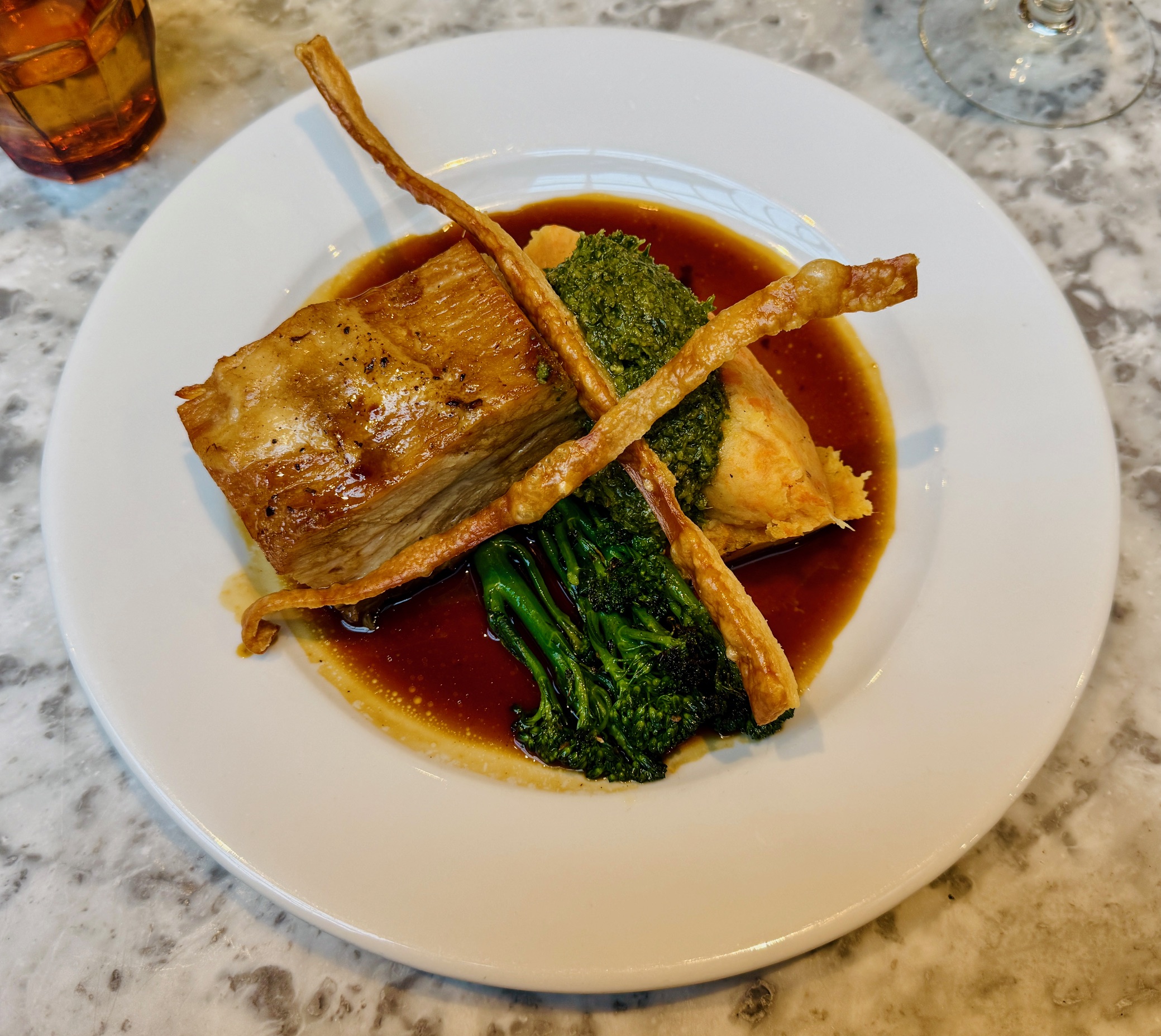
My main course was a sure sign that summer was long gone and that winter, as Leonard Cohen once put it, was tuning up. Lamb faggot and celeriac purée sounded like a glorious, fortifying treat and I was very glad Aileen hadn’t stuck a pin in it, because I always let my dining companions choose first. On paper it was beautiful, and at first sight it was every bit as appealing – a huge faggot, a splodge of mash, a moat of sticky gravy and one accent of not-beige, a crowning garnish of kalette tops. It was a dish to be enjoyed in a cosy pub, even one with three hundred pound bottles of wine on offer.

Things only went slightly awry when I ate the damned thing. The faggot had a terrific, coarse, crumbly texture and the celeriac purée was one of the nicest, silkiest ones I can remember. The kalette was a revelation – still firm, with a zip of mint that the dish badly needed. But the faggot was really heavy on the offal, to the point where it was a little too intense, a bit much even for me. I liked it at the time, and I finished it, but it sort of stayed with me for the rest of the day, in the way you don’t want.

Aileen had gone for my second choice from the menu, a beef and mushroom pie with a suet crust – or, for the purists among you, a stew with a lid. It came without accompaniments, so I was glad we’d also ordered chips and veg. It was placed on the table, and Aileen asked if it came with gravy (she is from Nottingham, after all). We were told, very nicely, that it did not.

At first, Aileen wasn’t sure about the whole affair but I think she warmed to it – the beef was all at the bottom but there was a fair amount of it, tender and breaking into strands. There was carrot and mushroom in there too, and she loved the green beans she’d ordered on the side, just-cooked and topped with crispy shallots. But even though this wasn’t a pie for sharing it was strange that it didn’t come with anything, including a plate to dish it up onto.

It reminded me very much of some of the great gastropub pies I’ve tried in the past, at Hackney’s The Marksman or The Magdalen Arms in Oxford, but it didn’t look quite as alluring as either of those. Still, it was eighteen pounds, one of which goes to Action Against Hunger, so you couldn’t really complain.

“That was lovely” said Aileen. “It needed gravy though.”

I’ve realised I didn’t get any pictures of the green beans or the chips. The chips were skin on (I thought that might be one Aileen’s list of restaurant no-nos, but apparently not) and clearly made in-house. And they were pleasant, but perhaps a little limp and unremarkable. I wanted that contrast of brittle crunch and fluff – and I didn’t care how many times they had to be cooked in order to achieve it – but these weren’t quite there. They were a decent vehicle for the last of my gravy, even so.

Our meal had been a little haphazardly timed – we didn’t get our bottle of wine almost until our mains turned up, so once they’d been eaten we had a lot of wine left. And service was brilliant at this point, leaving us in peace while we finished it and continued our epic conversation. I saw pictures of Aileen’s twins at their prom and wondered, as I’m sure she did, where the time had gone and how the little girls I’d first met all those years ago were suddenly sixteen.

Aileen in turn saw pictures of my wedding, and in between flicking through them and chatting about all sorts we caught up in the way that is such a tonic – a proper state of the nation natter encompassing work, family, friends, the past and the future. And I loved the Drapers Arms for this if for nothing else, for enabling this kind of afternoon.

Eventually, the wine was polished off and the dining room almost empty: I felt strangely proud of the fact that we’d outlasted all our fellow diners. So we got round to ordering dessert, along with a tea for Aileen and a bitter, middling latte for me. That section of the menu was very compact – a duo of cheeses and three desserts – and again, catered to people with different preferences to mine (I’ll eat most things, but I’ve never warmed to custard). So we both went for the lime posset and, like so much of what I’d eaten, it was nearly there.

As with my main course, almost everything was how you would want it to be. The strawberries on top were plump and sweet, the syrup they were in sticky and ambrosial. The shortbread was reassuringly irregular and crumbly: I saved mine to the very end. And the sharpness of lime in the posset worked so well, a welcome variation on a theme. But here’s the problem: the posset wasn’t properly set. Some of it was, but the rest was just liquid and hard to eat tidily, part dessert and part drink. So at the end of proceedings, you got a dish that was something like a synecdoche, a pretty good summary of the meal as a whole.

Our meal for two, including service charge, came to pretty much bang on one hundred and eighty pounds. And if that sounds like a lot, I’d say it could easily have been more. Our wine was distinctly entry level and we had, by accident rather than design, ordered the two cheapest mains on the menu. You could easily come away with a far more dented wallet than we did, although if you had an afternoon as terrific as the one I’d had you’d be fortunate indeed.

We wandered, full and happy, back to Angel tube station to go our separate ways. I could have talked for hours, but the idea of eating another mouthful or drinking another drop was more than either of us could contemplate (“I’m not sure I’ll even eat tomorrow” was Aileen’s verdict, although if she’s anything like me I’m sure she managed it). London looked beautiful in the autumn sun, and all around us Islington was gearing up for a busy Saturday night. We, on the other hand, were both dead set on being installed on our respective sofas by the time Strictly began.

When I think about the Drapers Arms, the thing I keep coming back to is that everything was good, and some of it was very good, but none of it was spot on. I imagine they have better days than they did the day I visited, I imagine there are nicer tables than the one we sat at, and iterations of that menu that would have suited me better. But I’ve had many far worse experiences, too, in countless places. So where does that leave you?

Yes, it was good but not perfect. And when it turns out like that you have to resort to your gut feel, try and weigh up all those almost intangible incidentals that define a meal. Because restaurant reviewers may not always tell you this – in fact many never talk about it at all – but there’s so much more to a meal than food, the room, or even service. I wish I’d liked everything a little more, and yet at the same time I know it will be hard to top as one of my favourite lunches of the year. So the Drapers Arms could have been better, but nonetheless I’m still really glad I went there. Happy that I ticked it off my list, and delighted that I chose it to host such a brilliant afternoon.

The Drapers Arms – 7.5
44 Barnsbury Street, London, N1 1ER
020 76190348

https://www.thedrapersarms.com

Restaurant review: Planque, Haggerston

Our story this week starts with your narrator sitting outside an achingly hip café called Batch Baby in De Beauvoir Town, a part of London I’d never heard of, gulping down a latte before heading to a lunch reservation at Planque, an achingly hip restaurant in Haggerston, another part of London to which I had never been. It was a Saturday lunchtime, the sun was out – so were my legs, for that matter – and I felt very old and very fat, but mostly very old.

I had taken the Elizabeth Line to Liverpool Street and then hopped on a bus from Moorgate, wending its way past the horrendous roundabout at Old Street and out towards the North Circular, into the bits of London that are Vittles territory, rather than the province of broadsheet critics or restaurant bloggers. I had no idea what to expect of De Beauvoir Town but you couldn’t say it wasn’t interesting – handsome mansions one side of the road, stark and forbidding tower blocks on the other, presumably the legacy of a little light wartime bombing.

Those contrasts went further than the architecture. Up one side street, past a big red sign advertising The Sun, an establishment called the Happy Café offered a full English, and a “Sunday Roast Diner” (sic) with three veg, potatoes and gravy. Round the corner, Batch Baby was tasteful in an artfully yet carelessly thrown together sort of way, on the ground floor of a handsome building which apparently serves as a “community space and creativity hub”. The coffee was immaculate, and some of it was roasted by Sweven, the equally hip café in Bristol’s Bedminster. Do these places have a twinning scheme?

I sat outside, and I felt every year of my fifty years, and every stone of my no-I’m-not-telling-you-how-many stones. Everybody was thin and young and stylish and wearing dungarees and the sort of clothes you used to be able to buy in Shakti. And I remembered when they were first cool, back when I was at university, and then I realised that they were probably first cool in the seventies, before I was born, and that my parents probably looked at people wearing them in the nineties and felt how I felt in that moment, and that only served to make me feel older and wearier still.

Never mind. I loved the coffee, I took a picture, I applied my best filter, put it on Instagram, pretended I wasn’t fifty. And then I checked the time and scurried to the restaurant, just in time for my lunch reservation. On my way I passed a handsome old boozer, a cute Japanese canal by the towpath, a plant-based wine bar and bottle shop, a small plates restaurant with a sideline in sake. There was no denying it: I might not be in Dalston, but I was definitely Dalston-adjacent.

Planque is an exceptionally voguish spot which was recently listed as the 97th best restaurant in the U.K. by the National Restaurant Awards. I felt like I had seen it in dispatches everywhere and when my cousin Luke, who moved to London from Toronto a couple of years ago, suggested we should have lunch in town some time it turned out it was on both our lists. The chef was previously at P Franco, another legendary small plates and natural wine spot in Lower Clapton – another cool part of London to which I had never been – but Planque was meant, by all accounts, to be a step up even from that.

I’d seen reviews that had raved about the food, and others that had waxed lyrical about the interior. And to add to the exclusivity, although they allowed people like me to book tables in the restaurant there was also some kind of private members’ club element where you could cellar wine there, get discounted corkage rates and so on.

My swiftly grabbed photos of the room don’t do it justice but it is indeed a coolly attractive space. It’s built into two railway arches, but this has been lavished with funds and the interior, designed by a Danish studio, does have that very Scandi feel to it. Actually, it reminded me of many places I’ve eaten in on the continent, in Ghent or Copenhagen, but few in Blighty. But that also made me realise that in Europe, nobody would bat an eyelid about a dining room like this but here in England you can rely on people to lose their shit about it.

All that said, it was more a place to admire than necessarily enjoy eating in. The long communal table – again, something I feel like I’ve seen more in Europe than here – was very striking, and the wooden booths for four were attractive (although when Giles Coren reviewed Planque for the Times he complained about his arse going to sleep: now he knows how his dining companions must feel). But if you’re at a table for two, I think you do get a little diddled: those three tables were right at the start of the dining room, near the front door, close together and slightly unloved.

By this point Luke had arrived and we’d ordered a few aperitifs – a negroni for me and a Chartreuse and tonic for him. Luke is in his early thirties and lives in Clapton in an apartment which he assures me is slightly bigger than a studio. He runs multiple marathons a year, and his Instagram is a positive advert for being young and happy and living in London: if he isn’t jetting off to Australia or back to Canada, attending this wedding or that, running a marathon in one European capital or another he is in a beer garden or at a house party somewhere in London, surrounded by equally young and attractive people, living their halcyon days.

As if I didn’t feel old and fat enough already! Just once I’d like to see a picture of him heating up a depressing ready meal or watching Love Island, but it’s impossible to hold it against him. Too likable, you see.

At weekends Planque serves a set lunch only, which is yours for thirty-nine pounds and includes four small plates, your choice of main course and a set dessert. There are a few additional dishes in the bottom section, and with a little light questioning our server gave us a view on where in the meal they might turn up – so some would precede your small plates, some accompany your mains and a couple of cheeses which would come before your dessert (if you’re doing things right) or after it (if you’re not).

All pretty straightforward, but Luke and I couldn’t decide between the two mains. Steamed skate wing managed to combine one of my favourite ingredients with possibly the drabbest cooking technique there is, veal sweetbreads had undergone a similar experience by being turned into some kind of sausage and served with coco beans. Was Planque’s superpower taking the fun out of things? In the end, Luke said we should order both and share, which in most restaurants would be a perfectly viable option.

Wine first, though, and another reason to feel the exclusivity of Planque – and by exclusive I mean expensive. The cheapest wines at Planque are around sixty pounds, and the majority of the list comes in at three figures. My original choice was a Maccabeu from the Languedoc, but our server quickly and firmly told me it was very wild, and that I might well regret ordering it (why is it on the menu then? might be your question: I might have had that question in my mind too).

So instead he steered us towards a Corsican white which was a blend of Muscat, Vermentino and Bianco Gentile, an indigenous Corsican grape I’d never heard of. And, in fairness, it was a beautiful white wine. At eighty-four quid, you’d really want it to be. You can’t easily buy it elsewhere, which I guess is kind of the point, but what research I did manage to do suggested the mark-up was steep.

From this point onwards, though, concepts of value and its relationship to quality, and quantity, became foggier and harder to grasp. A good illustration was our opening dish – scallop tartelettes were divine, dimples of clean, pure, subtle high-grade scallop sheltering the crunch and sharpness of sea lettuce, like the tiniest gherkins. An exquisite couple of mouthfuls, one of the nicest amuses-bouches you could possibly imagine. Nine pounds, for the pair of them.

Then came the four small plates, pretty much at the same time as the tartelettes. I didn’t take a picture of the bread because I don’t think I’d clocked that it was one of the small plates in question. That felt a little cheeky, especially as it was literally the only ballast in the entire meal. Decent bread, gorgeous butter that spread at room temperature. Is that a course in its own right? Not convinced.

Far, far better was a little bowl of consommé, made with lardo and more scallop. If Planque had a gift for removing the fun, this was the most playful reversal of that. Consommé never looks like it’s going to be the most exciting thing you eat during a meal, but it can pack a massive punch that belies its unprepossessing appearance. That was definitely the case here, with that wonderful concentration of salt, sea and smoke. If there had been more of this kind of thing, I’d have been a happy man. I used some of the unremarkable bread to dab up the rest of the remarkable consommé.

The other two small plates also had that Nordic, beige feel to them. I guess using turbot is one way to make a roe dish seem luxe, but I wasn’t sure it delivered disproportionately well. Fish roe seems to be everywhere this year, and I’ve had something like this at Quality Chop House and 1 York Place. The former served it with salt and vinegar doughnuts, which were marvellous, and the latter with fennel, which was interesting.

Here instead you had mange tout which I believe the restaurant grows itself, crudités without the crudeness. It was okay, but I felt like it was trying to improve me. Many people have tried to do that over the years, always without success.

To me the very best of the small plates, and the single best thing I ate in my meal, was just described as lettuce, hazelnuts and Cora Linn. It was a salad, and when I say salad I mean two lettuce leaves scattered with hazelnuts, dressed and festooned with Cora Linn, which is apparently a Scottish take on Manchego. Again, if it sounded like it could be fun, Planque could make it plod. And if it sounded workaday, Planque could elevate it. I suppose that’s a skill of sorts, although not one I’m sure a restaurant should cultivate.

As you can probably tell, the small plates were small. But I was unconcerned, because our mains were on the way and I was counting on them to redeem matters. I was mistaken about that.

So first up, that veal sweetbread sausage. A single disc of it, with coco beans and some wilted greens draped on top. The sausage was, I do have to say, truly delicious – glossy, almost silky, rich stuff, and as far from mystery meat as you could hope to be. The beans were like many people I’ve worked with over the years – firm, nutty and a little boring. There was a meagre puddle of insipid jus. I dutifully bisected the sausage and doled out half of the coco beans onto a separate plate for my cousin, a properly joyless experience. Who wants to eat at a restaurant that literally turns you into a bean counter?

This was a small plate, not a main course, and it followed what had been billed as small plates but were in fact even smaller plates. I was getting a bad feeling about this.

Was the skate wing better? No, not really. When you get so little skate that you can obscure it with two cherry tomatoes, for my money you have a problem. As we ate this dish, after Luke had put precisely half of it on a side plate for me, I explained to him how much fun skate wing can be. How enjoyable it was to have a big fat skate wing in front of you, littered with capers, and to slowly ease the flesh off the cartilage.

Here, the restaurant had done that for you, it just so happened that they’d done it on a fraction of a skate wing, after steaming it – the optimum way of ensuring that something is technically cooked but hasn’t been introduced to anything that could enhance its flavour. Here the flavour enhancement came from three or four perfectly pleasant little tomatoes, two leaves and a lobster sauce which was thin and not exactly honking of crustacean. Was this really the ninety-seventh best restaurant in the country?

Feeling a tad peckish, we decided to interpose a cheese course between our small savoury plates and our no doubt small sweet plate. 24 month aged Comté was truly brilliant, with plenty of umami and grit to it. I thoroughly enjoyed it, and perhaps my expectations had been brutally crushed by this point but I didn’t even think it represented relatively poor value at nine pounds.

“Would you like some bread with that?” asked our server and, desperate for carbs, we said yes. Two more slices, four more quid.

Last of all, our dessert. If dessert isn’t fun a restaurant might as well give up and go home, and gladly Planque did rise to the occasion right at the end. The menu just called it sheep’s curd, plum and raspberry which doesn’t do justice to one of the best dishes of the day – a fantastic, well orchestrated collection of flavours that came together beautifully. The raspberry, lurking within, was the sharp surprise that brought it all together. I was frustrated, because this showed that the restaurant could do crowd-pleasing: it felt like they chose not to.

We decided that having a coffee or a digestif would be throwing good money after bad so, about an hour and a half after we first sat down, we got our bill. It came to two hundred and seven pounds, not including tip, and it’s to Planque’s credit that they don’t sneak in a twelve and a half per cent service charge but let you decide all that for yourself. And service, I should add, was very good – hushed but quietly authoritative, and I was very glad that our server saved us from what sounded like an exceptionally challenging wine.

But here’s the thing – even though the service was good, I didn’t get any warmth. And ironically that was absolutely in keeping with everything else. Planque felt like a cerebral restaurant, rather than somewhere to love, and when London has so many restaurants out there I do wonder who would go to Planque, decide it was absolutely their cup of tea and become a regular. Very thin people, I suppose.

I enjoyed some of what I ate, very much, but I couldn’t help feeling, at multiple times during my meal, where’s the rest? And that reinforced in my mind the vague presentiment that Planque was a restaurant to see and be seen in, more than it was a place in which to drink and be fed. So on that cerebral level I know that the kitchen can cook, I know the wines are good and I know the space they’ve created is very well executed. But I feel like they have missed something about hospitality, because all of that – even all of that – is just not enough.

When you leave a good restaurant, you should feel lots of things. You should feel like you’ve been privileged to have someone cooking for you, you should feel looked after. You should feel a rosy glow, and know that you’ve banked a happy memory. You should feel like telling people about it, and ideally you should feel like going back. This next bit might mark me out as not just old, not just fat, but also a bit of a Philistine, but here goes. Leaving a good restaurant should make you feel so many things. But you shouldn’t leave it, I’m sorry to say, feeling like you could murder a KitKat Chunky.

Planque – 6.6
322-324 Acton Mews, London, E8 4EA
020 72543414

https://planque.co.uk

Pub review: The Rising Sun

“I bet the word most overused in restaurant reviews is nice,” said my old friend Mike. We were sitting in the Rising Sun’s courtyard, the sun blazing down, drinkers and diners packed into the al fresco space, our empty starter plates in front of us. The starters had been, well, nice.

“I used to have a friend who said that about everything. Yeah, it’s nice. He said that about beers, about restaurants, you name it. And it wasn’t that he liked everything, it’s just that he didn’t have opinions about anything. With hindsight, not a massive surprise that he was a LibDem.”

“You say it when something’s pleasant, but if something’s bad and you don’t want to say so, you’d also call it ‘nice’, wouldn’t you?”

“Maybe, but the word I always overuse is lovely. When I write a review I go back, hit Ctrl-F and find every reference to lovely, try and reduce it to one per review.”

I do, in truth, not always succeed. Our philosophical discourse was interrupted by our very pleasant, distinctly overworked server coming to take our dishes away. “Did you enjoy your starter?” she said.

“Yes, thank you. It was lovely” I said. Mike raised an eyebrow as she walked away.

“See, you’ve used your one lovely up already.”

Subscribe to continue reading

Become a paid subscriber to get access to the rest of this post and other exclusive content.

Restaurant review: Sanpa, Wokingham

I’ve been writing this blog for nearly ten years, and I’ve been moaning that Reading needs a good tapas restaurant for most of them. Certainly I was saying that from the moment, back in September 2013, when I had the misfortune of visiting Picasso just off Caversham Bridge (“one tapas is enough for two people” was the warning sign, looking back). Surely, given the popularity of small plates in general and tapas in particular, someone would give it a bash?

That said, there was a halcyon period, between 2015 and 2018, when Reading was graced with I Love Paella, first in Workhouse Coffee down the Oxford Road, then at The Horn in town, and finally at the Fisherman’s Cottage by the canal. But the owners of the pub decided to let them go, so they could offer their own menu which looked disconcertingly like I Love Paella’s. It didn’t work: the pub closed and changed hands.

And what have we had since then? Numerous restaurants that do good small plates, but only one place, Thames Lido, for tapas (their “poolside bar menu”). I know the Lido has its fans, but having had nothing but inconsistent meals there – and having watched them churn through chefs like it’s nobody’s business – for me that tapas itch remains unscratched.

It’s baffling, because it’s a style of eating that has readily taken root elsewhere. In Bristol you can choose between Bravas, Gambas, Bar 44 or Paco Tapas. London options include Barrafina, Brindisa, Salt Yard and Iberica, and I’ve barely got started. Closer to home Goat On The Roof opened in Newbury last year (I liked it, when I went) and more recently El Cerdo has started trading in Maidenhead, part of its ongoing explosion of interesting-looking new restaurants. And this kind of restaurant keeps coming – Salty Olive, a pintxo restaurant, is opens soon in Wokingham. Yet Reading’s tapas market remains resolutely untapped.

In my experience, great tapas restaurants in this country tend to be run by Brits fanatical about Spain, Spanish culture and Spanish food. Often, rather than recreating what you would get in Andalusia, they set about building a superior re-imagining of it. The 44 Group, run by the Morgan family, is a great example, completely obsessed with produce and producers. Arbequina, down Oxford’s Cowley Road, is another.

Even tapas restaurants which feel more authentically Spanish, more an attempt to create a traditional tapas bar in this country, are often set up by Brits. I’ve always had a huge soft spot for Los Gatos, easily the best restaurant in Swindon, perched up in the Old Town: it’s only in the process of writing this week’s review that I discovered that it, too, was founded by a British couple and named after Malaga’s legendary bar of the same name.

So really, I should have ventured out to Maidenhead this week to try El Cerdo. It fits the bill I’ve just described: the website talks about a love of Spain and Spanish flavours, the menu makes all the right noises. Muddy Stilettos raved about their (no doubt free) food, and it appears – from a look at Companies House – to be owned by Brits. That would be the obvious choice, but who likes obvious choices anyway?

Instead I decided to revisit the one tapas restaurant I can think of that appears, from what I can gather, to be owned by a Spaniard, Wokingham’s Sanpa. It’s been running since 2012, and I visited it back in 2016, when I loved the place. They then moved to a new house (as did I – twice) and our paths diverged. But people get too hung up on the shiny and new, so before I reviewed the shiny and new I decided it was time to get myself to Wokingham with Zoë and see whether the intervening years had been kind to Sanpa.

It’s one of the town’s older buildings, two conjoined cottages, all beams, white walls and cosy, farmhouse-style chairs and tables. The two dining rooms are separated by a hearth and the second gives a view into the open-ish kitchen. It looked homely, not unpleasant but also, in honesty, not drastically different to when I visited this building last in 2016, back when it was home to a restaurant called Jessy’s.

It was also, and this never flatters a dining room, empty. Marie Celeste empty. Not with a few tables settling up, not with reserved signs marking the space of the diners yet to come. Just empty. I don’t know about you, but I always feel guilty if it seems like I’m the only thing standing between staff and an early night.

Despite that the welcome was warm and immediate and it felt like a nice, if cavernous, place to stop on a midweek evening. And looking at the menu I could see plenty of reasons to settle in for a few waves of small plates. Most of it very much looked the part, although a couple of dishes – bacalhau à bras and chicken fajitas – did seem to have wandered across from other restaurants.

Pricing for tapas was all clustered around the eight pound mark – although some dishes were £7.95 and others £7.59 for reasons which seemed capricious at best. The bigger plates – steak, lamb shank, three different kinds of paella – were grouped together under a section endearingly entitled “Other things to order”, even though that literally describes everything on a menu, if you think about it.

My favourite part – and I’ve never seen anything like this before – was a sternly worded box in the bottom left. It said, and I’m quoting verbatim here, Please make sure that you know what this dish looks like or taste (sic) like. Due to the level of controversy and the cost of this dish, we regret to inform you that we will not be able to refund this dish of (sic) your bill if you’re not comfortable with the outcome of your order.

I followed the asterisk, expecting it to be something contentious like octopus, or sweetbreads, but instead found a rib-eye with blue cheese and Rioja sauce. Is steak and potatoes really controversial, or were they playing it safe because it was just shy of twenty-four pounds?

The wine list was okay, if not hugely tempting. I was in the mood for a Spanish beer – always so enjoyable with tapas – but all they had was San Miguel by the bottle. So we decided to grab a jug of sangria and that turned out to be an excellent choice. It was expertly put together to taste as if it had no alcohol in it, even though you knew it did, and if it contained a slug of rum or brandy it was nicely blended and concealed. It tasted, to be honest, like holidays – and what’s not to like about any drink capable of that?

Our first wave of dishes was a decent reflection of the strengths and weaknesses of the kitchen. Bread was bought in but serviceable enough, and the allioli tottered under the weight of an industrial quantity of garlic. But the colour was Hellmans-pale not golden, the consistency woolly, closer to fridge-cold butter than the good stuff. Chorizo in cider came, not as an earthenware dish full of slices of chorizo, caramelised at the edges, rich with juices, but rather as two hulking sausages, plain and unadorned. This didn’t fill me with hope but actually they were terrific, the kind of quality you can’t easily get your hands on in this country.

If that dish didn’t give the bread much to do by way of moppage the next more than made up for it. I’d loved Sanpa’s prawns in garlic on my visit seven years ago and was keen to reacquaint myself with them. They were still very nice indeed, sizzling away in a little skillet surrounded by nuggets of garlic somewhere between golden and crunchy.

This, more than the allioli, felt like the bread’s destiny, to dive and scoop and play in that pool of oil and garlic. I remembered halfway through that I was in the office next day, and felt bad for my colleagues. But if you wanted an illustration of what’s happened over the last seven years you couldn’t find a better one – the dish cost about a pound more than last time, but contained roughly half as many prawns.

Then there was the dish for which I had the highest hopes: panceta a la parilla, described in the menu as “ideal as finger food”. From that I was hoping for little cubes of pork belly, something close to chicharrones. Instead we got three slabs of belly, plainly grilled, without much accompaniment. It wasn’t quite cooked to the point where the fat starts to render and everything gets gloriously sticky, and I found a couple of shards of bone in my piece.

I found myself thinking about what this dish would have been like in the market at Malaga, the whole thing dressed with a little herbs, the tomatoes thicker and tasting properly of tomatoes, as they always do abroad. Abroad they would have been bright with grassy olive oil and scattered with rock salt. Did I think the chef was running on autopilot because he hadn’t bothered to do any of that here, or had I decided that because I could see, through in the open kitchen, that he was cooking with his headphones on?

A meal like this is definitely a game of two halves, and as we cogitated and fine-tuned our next selection of dishes the staff – who were absolutely brilliant throughout, by the way – took our dishes away. I asked our server if she had any recommendations – “you’ve already had quite a few of my favourites” she said, which I liked.

By this point another couple had come in and were sitting the other side of the room, which had the advantage of making me feel like less of a lemon. Again, I worried about all the good restaurants unable to pack them in on a midweek evening; I doubt, back in Reading, Popeyes was having this problem. I felt a moral responsibility to order more dishes – and another jug of sangria, although there was nothing moral about that.

Our second wave of dishes showed the same inconsistency but, if anything, were more disappointing. I’d decided against the patatas bravas, our server’s recommendation, instead picking the patatas con crema de Cabrales. This was the same cheese, by the way, that featured in that Absolutely No Refunds Ribeye. The possible reason for that is that Cabrales is stinky. It is one of the most agricultural blue cheeses there is, perfect with Asturian cider, though pretty good on its own. This potato dish should have been salty and funky – a handful, no less.

And yet the surprisingly dark sauce just didn’t have the oomph, and there wasn’t enough of it. What there was had slipped through the cracks and landed in a pool at the bottom of the dish, rather than coating each crunchy cube of spud. A real shame, because the potatoes themselves were excellent. A good opportunity squandered: was it down to those headphones again?

Albondigas were another recommendation and, again, just missed the mark. The meatballs themselves were genuinely lovely – a coarse mix of pork and beef, clearly handmade and as good as most I’ve tried. But drowning them in a gloopy sauce of tomatoes and peas coated the accomplishment in an emulsifying layer of blah. And I didn’t see the point of putting more cubes of potato at the bottom where they just wound up bedraggled and soggy. The meatballs should have been the star of the show – again, my mind wandered to Malaga and to its marvellous Uvedoble, where the meatballs come perched on a bed of shoestring fries, the meaty juices soaking in, the whole thing unimprovable.

Croquetas were probably the most disappointing thing I ate. These were apparently made with Serrano ham, though good luck finding much of it. They’d been fried to the point where the shell was a permacrust, the inside again woolly rather than silky. Had they been previously frozen? I wouldn’t have bet against it. Just over six pounds for these tiddlers didn’t feel like amazing value (and these days, things being how they are, I don’t talk about value as much as I once did).

Last but not least, a round of goats cheese with tomato jam. This, again, is a dish I remember fondly – this time from I Love Paella – but Sanpa’s was a pale imitation. Maybe it’s because we ate it last of all, but it didn’t have that almost brûlée crust – instead it was a little like cardboard. Underneath the goats cheese was still decent, although I like pretty much any goats cheese, and the tomato jam was a classic, if sweet, combo. But again I felt underwhelmed; I knew Sanpa could get their hands on decent ingredients – the chorizo showed as much – but I didn’t feel like they always did enough with them.

I feel bad saying all this, partly because I wanted so badly to like them and also because, as I said, service was brilliant all night. It takes real skill to be that happy and engaged on a Wednesday in the middle of spring, looking after a restaurant of precisely four customers. But the staff did exactly that, and I imagine they come into their own on a bustling weekend night, when I sincerely hope Sanpa is packed with happy diners. But also, much as I wanted to like them, I couldn’t imagine a Saturday night where I would be among them.

Our meal came to just shy of ninety pounds, not including tip, and tempting though it was to have a pint and a debrief in the Crispin next door, we headed for the station. I found myself simultaneously hoping that Sanpa continued to prosper – I’m sentimental like that – and wondering, if my meal had been representative, how they really could.

“I bet the people who run that restaurant have never been to Arbequina or Bar 44” said Zoë as we boarded our train home.

“No, probably not. But why would they? They’re Spanish, they probably feel they have authenticity on their side.”

“But that’s the point, you have to adapt or die: if they don’t, they might get left behind. Last time you gave them a rating of 8 or something, this time it’s going to be much lower. What will it be like in another five years? And some of the touches in our meal tonight just felt dated. Like that squiggle of balsamic glaze under the goat’s cheese, who does that any more?”

I nodded silently in agreement at my other half, easily a better restaurant critic than I am these days, as the train trundled back to Reading.

Sanpa – 6.9
37-39 Denmark Street, Wokingham, RG40 2AY
0118 9893999

https://www.sanpa.co.uk

Restaurant review: Mama’s Way

Without question, Mama’s Way is the smallest venue I’ve ever reviewed. There are three stools outside on Duke Street, looking out on our thriving branch of Ryman: I suppose you could sit there with an Aperol Spritz, but best of luck eating at them. Inside, up at the window, there are three more stools with a ledge in front of them. The bits of the ledge that aren’t accommodating goods on display, that is.

And there are goods on display literally everywhere in that little room. Chocolate eggs hang from the ceiling this time of year, the wall nearest the door is lined with Italian wine, amaro, vermouth – even mirto, the Sardinian liqueur. Under the counter, lit enticingly, is a cornucopia of cheeses, again all Italian, and a delectable range of cured meats just asking to be sliced. On the counter is a makeshift wall of panettone, and above that glasses hang down, ready to be filled with Aperol or Crodino.

It doesn’t stop there. Eye level might be buy level but if you stoop, there are multiple types of balsamic vinegar and oil, black rice, snails in jars, every kind of paté or pesto you could want. On the far side another fridge gently hums, keeping burrata and scquacqerone cool, next to them sit ’nduja, blocks of bottarga, fists of sausages crammed with fennel. You could get lost in the place, walk out with countless treats you weren’t intending to buy. Perching on a stool next to Zoë, people watching the passers-by heading into town, I fantasise about lock-ins, imagine the fun you could have.

Subscribe to continue reading

Become a paid subscriber to get access to the rest of this post and other exclusive content.