Unlike any restaurant reviewer I know of, I publish the list of restaurants I intend to visit. It’s regularly added to as places open and people tip me off about their favourite venues, in Reading or slightly further afield, and every time I review somewhere it drops off that list – until, maybe, many years later, the time is ripe for reappraisal. From the outside, it probably just looks like a bunch of restaurants, in alphabetical order.
But the reality, for me at least, is that it’s a nuanced to do list. It’s almost more of an in-tray, never more so than at the beginning of the year, and the order in which I tackle it depends on a number of factors. Because not all of those spots have anywhere approaching equal priority in my mind, and that dictates how quickly I get round to them. I’m aware, for instance, that it’s a fair old while since I visited Newbury or Wokingham on duty: over three years for the former, nearly three years for the latter. I ought to rectify that.
Then there are the new places that I really need to review, if only because they look interesting. If not for my accident I would have reviewed Pho 86 and Nua by now, and spots like Blip and Matteo Greek Grill & Bakery also merit investigation sooner rather than later, to see if smashed burgers can take off in Tilehurst or whether at last somebody can make a go of the old Colley’s Supper Rooms site. I’m curious myself about the answers to those questions, so I need to go exploring at some point.
And of course the accident currently factors into these things. So places near the top of the in-tray, for the time being, need to be fairly close to home and at least slightly lend themselves to eating with one hand; my motor skills are gradually improving with physio, but writing one of these reviews still involves wrangling with the delights of Apple Dictation, which understands what I’m saying about as often as my wife does when her hearing aids aren’t in.
Every to do list has that one thing on it that you should have done a very long time ago, the item that sticks out like a sore thumb and makes you feel guilty. And in my case that item, the subject of this week’s review, is Italian restaurant and cafe Zi Tore, the one which took the spot on Smelly Alley vacated by the Grumpy Goat back in October 2023: yes, it really has been that long since the Grumpy Goat shut. Hicks Baker weren’t quick off the mark getting someone to jump into this particular grave, but Zi Tore opened nearly a year ago with co-owner Paolo Lanzetta, a proud Neapolitan, in the kitchen.
The Reading Chronicle covered the story as only they could, getting the name of the restaurant wrong – it’s not ‘Zia Torre’ – and accidentally giving Lanzetta dual nationality. “It has always been my dream to open a restaurant like this so people can try authentic Italian and Nepalese cuisine” they misquoted him as saying: you can’t get the staff, can you? That’s our local paper for you though, they just don’t know their calzone from their momo.
All that means that I am very long overdue checking out one of the trailblazers of the Italian invasion that hit Reading in the first half of 2025. I’ve reviewed Paesinos, reviewed Amò – not without controversy – and failed to get to Peppito’s before it closed five months after opening. But Zi Tore remained the blind spot: I tried to get there early one evening in May, only to get turned away because they seemed to be closing early, but I’ve not been back since.
And everything I’ve heard since then has been good. I’ve had comments to the effect that they’re staying open later these days, feedback borne out by their later opening hours on Google. Long-standing reader Mansoor, a man I trust on many things, said that of all of Reading’s new restaurants last year Zi Tore was the one he ended up visiting most frequently. And my friend Enza, my authority on all matters Italian, has loved Zi Tore for a long time, especially their graffe.
I’ve also heard rumours that one of Amò’s pizza chefs, short of work now that the restaurant has been closed for over a month without explanation, had crossed town to start working at Zi Tore. So that was it: slap bang at the top of the 2026 in-tray. On a drizzly weekday, during a week that was originally meant to be time off but was now filled with medical appointments, Zoë and I wandered up Smelly Alley to finally give it a whirl.
Zi Tore has done a lovely job of the exterior and the frontage and the window, with arancini and pizza slices tantalisingly on display, draws you in nicely. But beyond the counter, I found the interior a little inhospitable. It’s difficult to describe it without harking back to the site’s Grumpy Goat days, but the back room on the ground floor, where all the beer used to live, was a slightly unlovely space with a handful of tables, starved of daylight or much ambience.
Upstairs was much better, although that also brought back memories of the site’s previous life. It’s a nice space with a fetching mini mezzanine looking out over Smelly Alley, and taking the bar out had definitely created more room. But even here the furniture felt functional and a little sterile, as if they’d bought it piecemeal.
One table with makeshift bench seating could accommodate six people, one of the plum spots up by the window had an actual bench and low table – great for coffee and cake, perhaps less so for lunch. It was also, not to put too fine a point on it, Arctic: an aircon unit in the ceiling was switched off, its remote on a nearby low table set to a random 30 degrees. It all felt a little spartan, not quite finished, even though the place was on the verge of celebrating its first birthday.
Zi Tore’s menu had the kind of concision that pleases restaurant reviewers: seven different Neapolitan pizzas, two types of pasta – ravioli or gnocchi – with one of three sauces, a lasagne and three smaller dishes under the heading “Street Food”. That was slightly marred by a separate paper pizza menu, a recent addition perhaps, with another half a dozen pizza options. Some felt like the kind of combinations you’d get at Amò, making me wonder if the departing chef had taken a few ideas with him.
Pricing was standard issue, with pizzas ranging from £10 for a margherita all the way up to £17 if you wanted porcini, roasted potatoes and sausage (typing this, that ensemble sounds rather good to me). Pasta dishes were between £12 and £15 depending on your shape and sauce of choice, and the smaller plates were less than a fiver. The other tempting dish, the pizza fritta, was a tenner and looked like a fish out of water in the street food section of the menu.
Cakes are not on the menu, so you have to go up to the display and ask at the counter: I didn’t indulge my sweet tooth on this occasion, but the cake I saw turning up at a neighbouring table looked thoroughly decent. I didn’t see any graffe – the loop-shaped potato doughnut beloved by my friend Enza – but perhaps they’re a weekend thing.
Zi Tore also doesn’t do table service, so you go up with your order and your table number and let them have it. I ordered a couple of coffees, a couple of small dishes, a pizza and a pasta dish: all that set me back just over £44, which felt like decent value. It was certainly comparable with its peers at Amò and Paesinos, although Zi Tore’s offering is slightly different from theirs.
It’s a shame to start the year with a regular complaint about timing, but I would have liked the coffees quickly – it was cold outside and almost as cold inside – and then the small dishes, then the main events. Zi Tore wasn’t hugely busy, with about four other tables on the go when we arrived, but in reality we waited what felt like quite a while and then everything turned up a matter of minutes apart.
No matter: the coffee, the starting point, wasn’t half bad. It arrived in those tall, almost-conical glasses I slightly associate with the last century, but my latte was very enjoyable and Zoë liked her mocha. In Reading’s coffee hierarchy this wasn’t competing with the likes of C.U.P. or Lincoln – or even trying to – but it was significantly better than Madoo‘s coffee, which has always been its Achilles heel.
Small plates, turning up twenty minutes after we ordered, were a mixed bag of realised and unrealised potential. I didn’t mind the sausage and friarelli arancino, just the one for £5, but it lacked a little pep. It was lukewarm, the shell had no real rigidity to it and inside the filling wasn’t brilliantly distributed: a big knot of dense sausage meat at the bottom, almost as if it had been placed there to stop the whole thing toppling over, like a Weeble.
It’s not that I didn’t enjoy it, more that I knew better were out there: it didn’t match Amò’s but, on the other hand, it was far better than the ones at Vino Vita.
Far, far better was the montanara, a simple but exquisite treat, a pleasingly irregular, puffy oval of fried pizza dough topped simply with tomato, mozzarella and a solitary basil leaf. This was so enjoyable, and justified a visit to Zi Tore in its own right: there’s nowhere to hide when something has so few components, and it’s a great way to showcase how good your raw materials are. At £3.50, this is one of the Reading lunch scene’s bargains, and although we shared it between two – and it was big enough for you to do that – the wise move would be to come here and order one to yourself.
But the other wise move might be to order just that, because as I was eating it I did find myself thinking if only this was hot. It was fried pizza dough, I’m sure it was as hot as balls to begin with, and I wondered what had cooled it so: was it adding the toppings, or was it the fact that it sat around until everything else was ready or almost ready? Or could it have been that the upstairs was so Siberian that you couldn’t affort to wait until after your arancino to tuck into it? I think some benefit of the doubt is probably due here: I would go again and give this another try. Even on the upper reaches of what you could describe as ‘piping warm’ it was a very good choice.
The timestamps on my and Zoë’s photos tell me that our bigger dishes arrived less than five minutes later, and it’s good that we’d finished our smaller ones or there wouldn’t have been room on the table for everything. Zoë called shotgun on the pizza, and had ordered simply, the Diavola, a relatively classic pepperoni pizza with chilli.
First things first: it looked the part, and the rim was nicely speckled, blistered and spotted. This is, for better or worse, a very classic Neapolitan pizza, with all the pluses and minuses of that genre, still enjoying its moment in the sun in Reading as it is replaced with American interlopers and hybrids (and whatever ‘London-style pizza’ is) in the capital. That’s the extent to which I keep up with pizza trends, but in theory I’m still happy with the original forebear of all these mutations.
And yet, from the bit of this pizza I tried, this wasn’t my favourite rendition of it in Reading. Everything was very loose and sloppy, more so than at Zi Tore’s rivals on the Kings Road, which meant the centre was like what I imagine sex with Rupert Murdoch must be like, a droopy challenge. I heard someone online say “if it ain’t messy it ain’t fun” at some point last year, and personally when it comes to food I’m not sure I’ve ever disagreed more.
But there was other problems here. The dough would have been best in class in Reading back in the days when Franco Manca got us all excited, but with the competition from the class of ’25 it was mid table – and that’s before we get to Zia Lucia’s charcoal base and its almost mythical effects on punters’ innards.
And the pepperoni didn’t do it for me either – now, it might well have been pepperoni rather than salami, but for me the benefit of pepperoni is its narrower gauge, the amount you can fit on a pizza, all those little chalices of fat dotted across the surface. Six big discs arranged with geometric precision didn’t have quite the same curb appeal. Zoë told me she also expected more pizza and more bite – from actual chillies, rather than a dusting of chilli flakes.
Does this sound miserable? I’m so sorry if it does, because I was so hoping to like this. Especially as Zoë left about a third of it – which would not have happened at Amò or Paesinos – and, just as damningly, I didn’t take it off her hands. But I do feel more unsure in my judgment than usual, because people I like rate Zi Tore and I, too, really wanted to.
I’m afraid to say, though, that the pizza beat the pasta hands down. I’d chosen ravioli – made fresh every day onsite – rather than gnocchi, and the porcini mushroom sauce over the ragu on the recommendation of others. And again I wonder if my antennae were just out of kilter that day, because I did not like it at all.
Didn’t like any bit of it, actually. The ravioli, six very large specimens, had bottoms more thick and dense than Robert Jenrick, when I was hoping for lightness and delicacy. I also think they could have stood to be smaller, or for you to have fewer of them, although if I’d liked them you can bet I wouldn’t have said that. The filling was meant to be ricotta and parmesan, but all I got was ricotta and an aggressive blast of citrus. Not a light zing of the stuff, but the sort of brutal clubbing you associate with bathroom products.
I tried eating them without the sauce to check that my tastebuds weren’t playing up. But yes, again, an overdose of lemon. Perhaps if there had been less, and more balancing saltiness from the parmesan, which was completely missing in action, it might have worked. But as it was it didn’t, and it slugged it out with the mushroom sauce for dominance. Those two components simply couldn’t get along at all: perhaps I should have known that and not combined them but, if they didn’t go, why was it an option on the menu?
Might I have enjoyed this better if the sauce took centre stage, paired with gnocchi? I tried that on its own, too, and decided the answer was probably no. It felt somehow less than the sum of its parts, without any savoury depth from the mushrooms, which might have been porcini but I was not convinced. And again, the presentation of this was about taking a plate and trying to fill it to the perimeter with stuff, just because. I would have liked less: lighter, more delicate presentation but with punchier, better balanced flavours.
Again, the ultimate heckle. There were six ravioli. I wanted to stop after three, but thought that would seem rude: isn’t it strange how as a paying customer you can still feel like that? I contemplated leaving two on the plate but felt that even that would somehow be discourteous or ungrateful. So I ate another, and then decided I’d done my duty. I was undeniably full, make no mistake, but it had felt like a friend cooking for you in all the wrong ways.
I so wanted not to begin the year with a review like this, especially after all the hoo-ha last year every time I stepped into any Reading restaurant which was even vaguely Italian. I’m surprised, given the smear campaign I found out about, that I was even allowed on the premises at Zi Tore.
But the cosmos has well and truly taught me a lesson. I made the mistake of saying in my round up of 2025 that I might be better off giving every Italian restaurant a rating of 6.6 and saying it was ‘quite nice’ from now on, and fate rewarded me with this experience. Look at the rating below: you couldn’t make it up, but if I moved it a notch up or down I’d only be doing it so as not to look as if I was fulfilling a prophecy.
So I need to at least be more nuanced when I sum up Zi Tore than to say that it’s quite nice. That doesn’t reflect the complexity of the reality, anyway, and visiting the restaurant nearly a year after it opened you can’t put the things you aren’t wild about down to growing pains or opening before they’re ready. The experience I had there is the experience I was supposed to have.
It is fantastic that a hospitality business took the space vacated by the Grumpy Goat, and that there is still one oasis of food and drink on a run which used to be synonymous with food and is now full of mobile phone repair shops nobody seems to visit (and, to be fair, Reading’s finest branch of Timpson). It’s also fantastic that it’s independent, and laudable that Zi Tore makes everything onsite and offers options you can’t get elsewhere in town that have made at least one Italian I know ecstatic and a little less homesick.
And I can see that I would return to Zi Tore, believe it or not. I’m really sorry that I didn’t love the pizza or pasta, but one of those window seats on the mezzanine with a cup of coffee, a montanara and the chance to explore some of their cake after that would very much appeal to me. Especially as the service was so good, and happy and helpful. But I don’t know if Zi Tore will survive and make enough money if all its customers order like me, or whether it really wants just to be a café given the expansion of its pizza menu and its opening hours.
Fortunately for Zi Tore I suspect not all of its customers order like me, or think like me, and Reading is a big enough place that it might well carve out a large enough share of the market keeping at what it does. But the market may well contract further in 2026, and so I wish them the best of luck. At the time of writing it’s still unclear whether Amò, closed for over a month on Kings Road, will reopen. Ironically, it might be good news for Zi Tore if it doesn’t.
Zi Tore – 6.6 7 Union Street, Reading, RG1 1EU 0118 9561531
Since January 2025, Edible Reading is partly supported by subscribers – click here if you want to read more about that, or click below to subscribe. By doing so you enable me to carry on doing what I do, and you also get access to subscriber only content. Whether you’re a subscriber or not, thanks for reading.
What were you doing when you were 21? If you’re a regular reader of this blog I imagine that, like me, you’ll have to cast your mind back to answer that question. In this sense I envy the generations after me, everything digitised, lives captured in hundreds of smartphone photos, people who can probably tell you exactly what they were doing on nearly every day of their twenty-second year.
Personally I was in my last year at university, frantically cramming for final exams I would dream about for years afterwards, navigating fraught relationships and sticking my head firmly in the sand about What Came Next and What I Would Do With My Life (thirty years of that now and counting, thank you very much).
My life was about to lose what little comfort and structure it had and, for me at least, most of the rest of that decade made up my wilderness years. I’m not sure I’d go back to being 21 if you paid me, despite all the people my age who will say “if only I knew then what I know now”. All they really mean is that they regret not getting laid more often, but we nearly all regret that.
I’ll tell you what I wasn’t doing when I was 21: I wasn’t starting my very first hospitality business, taking a massive gamble in a post-pandemic climate where the cards are stacked against restaurants, cafés and bars. But, nearly 30 years after I turned 21, that’s exactly what a chap called Mac Dsouza did.
That business was Filter Coffee House, on Castle Street, and it’s fair to say that it was an immediate success. I stopped by a couple of weeks after it opened, sampled its banana bun and was instantly smitten. So much so that about a week later, when I wrote a piece about Reading’s 50 best dishes to make 10 years of the blog, I managed to sneak that banana bun in there. I might have been relatively early on the bandwagon, but people were already talking about Dsouza’s café. By the time I reviewed it early in the New Year, its place in Reading’s affections was secured.
Dsouza, though, was not the sort to rest on his laurels. So even as the café kept trading, evolving, taking away its seating and moving to takeaway only he was working like a Trojan elsewhere. So he cropped up at Caversham’s Sunday markets to sell more coffee and treats, converting the RG4 crowd to his astonishing masala hot chocolate.
By then Filter Coffee House’s menu had expanded to include a range of affordable sandwiches, although I was more drawn to the specials they did at weekends. However you looked at it, what Dsouza achieved in a couple of years was quite something.
And what were you doing when you were 23, do you remember? I was back at my family home in a suburban terraced house in Woodley, temping in the cashier’s department of the insurance company where my brother worked. It was boring, and this was an office before smartphones, email and the internet so it’s hard to adequately convey quite how boring it was. But Labour had just put an end to eighteen years of Tory rule, and the joy was so extreme that it was almost tangible.
Despite earning fuck all, I always seemed to have enough money, possibly because my main aim at that point was to get drunk at the Bull & Chequers – midweek or weekends, back then nothing ever resulted in a hangover – and go clubbing. I was still impersonating an ostrich with reckless abandon, while my contemporaries became management consultants, solicitors and barristers. I was writing cheques for other people, putting files in alphabetical order and pretending to care what had happened in EastEnders when talking to Maureen or Eileen; everybody in my department was in their sixties, about to retire on the cusp of the information age.
When Mac Dsouza was 23 he opened his second business, Mac’s Deli. It’s not a deli at all, but a café squirrelled away on an industrial estate about a twenty minute walk from Theale station. It opened just over two months ago, and seemed to be a continuation of what he was offering at Filter Coffee House: coffee and a variety of sandwiches, this time mostly involving his own shokupan – Japanese milk bread – baked on the premises.
Dsouza documented every aspect of setting up his new business on Mac’s Deli’s Instagram page, so followers got to see the place coming together – logo first, then the fit out, then the countdown to opening. Since then Instagram has depicted an extraordinary-looking business where everything is made onsite, with even the sauces created by Dsouza rather than bought in. Weekend specials have run the gamut from 6 hour pulled pork to honey butter toast, a little nod to the legendary dish at London’s famous Arôme Bakery.
The menu at Mac’s Deli reminded me of all sorts of things. It was reminiscent of specialist sandwich slingers overseas like Montpellier’s Bravo Babette and Deli Corner, It felt a little Hackney, too, which I should add is a compliment. But it didn’t feel very Theale, which I should also add isn’t necessarily an insult. The location felt incongruous compared to everything else, and when people asked me if I planned to review Mac’s Deli I always said the same thing: “it looks very nice, but it’s a bit out of the way”.
What changed is that a couple of weeks ago my boss and I, on a Friday in the office not far from Mac’s Deli, decided to go scout out the place. So we went, we had lunch, we both absolutely loved it and I decided that I had to find a way to go back and visit on duty. I mentioned it to Zoë when I got home, showed her a photo of my sandwich and an executive decision was made: I was going back, in a couple of Saturdays time, and she was coming with me.
I doubt most people get to Mac’s Deli by taking the train to Theale and doing the flat, featureless 20 minute walk to the industrial estate. But we did, and if I didn’t already have some idea what the food would be like I might have given up halfway there. But at around that point, because Dsouza is no slouch, the signs for Mac’s Deli began appearing on fences with its distinctive winking sandwich logo and endearing font, a chequered stripe underneath, everything in blue and white.
This might sound like a silly thing to pick up on, but Mac’s Deli’s branding is so brilliantly done. Everything is that blue and white, from the billboards to the signage outside Unit 22 of the business park, to the framed prints on the walls. It’s so impressive, so fully-formed, and that branding and language even follows through to the tables and chairs and the beautiful striking wall, a solid block of Majorelle blue, behind the counter.
Don’t be fooled by the photo below, by the way: I took it after the lunch rush had gone but when we arrived, just after 1 o’clock, every single table was occupied. The room inside seats 18 people, and we only got in by squeezing on the end of the last table that wasn’t completely full. I hope the very nice couple who let us perch there have a great time on their trip to Bruges next Easter, whether they end up using my city guide or not.
Mac’s Deli’s menu largely revolves around bread, and making the most of that shokupan. So unless you want a salad or a “health bowl” (overnight oats and the like) you are picking between sandwiches or things on toast. The breakfast menu is half a dozen sandwiches, available all day, and the lunch menu adds another four, along with a couple of grilled cheese sandwiches. The lunch sandwiches cost between £9 and £11 and come with home-made shoestring fries, the breakfast ones cost roughly £3 less and are a fries-free zone. I guess I can see the logic behind that.
The lady who took our order – service throughout was brilliant, by the way – apologised and said that we would be waiting a while. I expected that, to be honest, because the place was rammed and everyone there had arrived before us, so we waited patiently on our half of a table for four, rubbernecking as sandwich after sandwich arrived at neighbouring tables or, indeed, were brought to the couple at our table. They’d ordered two of the sandwiches we’d chosen, so Zoë got a very good idea of her impending good fortune.
The only slight quibble I had was that it would have been nice for our coffees to arrive while we were waiting on the sandwiches, but it was no biggie. They were really, really busy and I could see staff in the kitchen out back, including Mac himself. It was a veritable hive of activity.
Zoë had chosen the sandwich I tried on my previous visit to Mac’s Deli, the patty melt. Which is handy, because it means I can tell you what it’s like: otherwise I wouldn’t be able to, because it was so good that Zoë had no intention of sharing it with me. I’ve been saying for as many years as I can remember that a burger, ultimately, is just a sandwich. Well, that’s what this was, but saying it was just a sandwich was a bit like saying that Guernica was just a doodle.
So yes, the burger was outrageously good: a thick, crumbly patty of dry-aged beef, not pink in the middle but not needing to be either. Mac’s Deli buys its meat from Aubrey Allen – audaciously ambitious for a caff on an industrial estate – and that came across loud and clear. Remember all those debates about whether brioche is the right thing to contain a burger? Turns out the answer is to make excellent, almost-fluffy Japanese milk bread and then toast the outside so it holds everything together.
But there was still more, in the form of a sublime layer of caramelised onions, some American cheese and a house mayo with truffle and garlic which managed not to overpower everything else going on. Zoë, a lifelong vinegar hater, was not best pleased at the thick slabs of gherkin in the mix, mostly because they weren’t mentioned on the menu, but she picked every single one out and devoured everything else. “It’s okay” she told me, “there’s no contamination.”
She adored the patty melt, and having tried it on my exploratory trip to Mac’s Deli I could completely see why. For my money, this is not only the best burger you can buy in and around Reading but a ludicrous steal at £10.95, impeccable shoestring fries thrown in (more if you add bacon, which of course Zoë did). It was better than Honest, better than 7Bone, better than Monkey Lounge. In fairness the burgers may come close at Stop & Taste, or at Tilehurst newcomers Blip Burgers – owned by the people behind Zyka and The Switch – but Mac’s Deli’s patty melt will take some beating.
I had chosen the bacon (or Bae-Con, according to the menu) sando, and if it wasn’t quite as successful that doesn’t mean it wasn’t excellent. It was a much simpler affair, deploying the cheese and the garlic truffle mayo, swapping out the burger for a fried egg and bacon and omitting the shoestring fries. If you ate this sandwich and were then told that for an extra three quid you could have had the patty melt, I think you’d be filled with regret.
But some of the things that meant I wasn’t as wild about this sandwich were on me, not Mac’s Deli. They were up front that they were going to use that mayo and American cheese, and if I found the sandwich slightly claggy and one-note as a result, they weren’t to blame for that. I would sooner have had a slightly more conventional bacon sandwich – I’d love to see Mac’s take on brown sauce – or even one with something like gochujang that could provide the clichéd cut through slightly missing from this sando.
I’d also have liked smoked streaky bacon, and plenty of it, rather than back. But again, that’s more about me. I will say though that the egg was cooked exactly how I like it, the yolk fudgy rather than runny. Given that the menu promises the egg sunny side up, that might have been a happy accident.
One of the benefits of the sandwiches at Mac’s Deli is how sharable they are, coming in that blue gingham wrap – that colour scheme again – and sliced neatly into halves. That meant that for research purposes we could share another sandwich, the chicken caesar. There was an awful lot to like about this too, especially the chicken which was in craggy, fried tenders a million miles away from a sad, pale supermarket goujon.
So it was very much my kind of thing but again, the precise balance of flavours meant it wouldn’t be for everybody. Zoë found the caesar dressing too vinegary and, for what it’s worth, I agreed with her: that didn’t put me off it, but it did mean it slightly lacked the saltiness Caesar dressing should bring to the table. Part of that, I think, was because instead of being incorporated into the sandwich and the dressing the 30 month old Parmesan had been cropdusted over the whole shebang.
I get that this looks the part, makes for a very pleasing contribution to anybody’s Instagram grid, but for me it’s a little bit style over substance. Not only is it hard to stop the stuff going everywhere, but it meant that the flavour wasn’t completely integrated. It was however a very good advert for Mac’s Deli’s chicken caesar salad, which has all of that and bacon as standard, and the option to add extra fried chicken if you yourself are also feeling extra.
By this point the coffee had turned up, although we mostly drunk it at the end when we’d polished everything off. In my case that also included a pair of revelatory hashbrowns which I suspect had been bought in but which were elevated with a liberal dusting of rosemary salt which had a positively transformative effect. I’d love to see Mac make his own hash browns at some point: maybe that will be another weekend special, one day.
Coffee, by the way, was gorgeous – both my latte and Zoë’s flat white were impressively smooth. Bags of coffee by Square Mile, the roastery founded by patron saint of coffee James Hoffman, were on display next to the machine, although it was unclear whether they were also available to buy. But all this is a huge statement of intent – coffee by Square Mile, eggs by Beechwood Farm, meat by Aubrey Allen – and you have to hand it to Dsouza for that.
I didn’t want to leave without trying something sweet and was torn between the cookie, the brownie and the Basque cheesecake. The lady behind the counter steered me in the direction of the brownie and I’m so glad she did. I have no idea whether these are made on the premises or, as with Filter Coffee House, Mac’s Deli takes advantage of Berkshire’s network of excellent suppliers and bakers.
But whoever made that brownie knew exactly what they were doing: an outstanding brittle surface giving way to a dense, ganache-like core, the whole thing adding up to the best brownie I’ve had anywhere near Reading since the Grumpy Goat closed down. £2.50 for that, and I can’t remember the last time I spent £2.50 anywhere near so well anywhere else. The whole lunch – and bear in mind we shared three sandwiches between two – cost us £41.35.
On the walk back to Theale station, which felt nowhere near as long as the walk there had been, Zoë and I compared notes and enthused about our lunch. I have no idea why Dsouza picked that location, of all locations, for his sophomore album. Perhaps he knew something nobody else did about the demand for weapons grade sandwiches in Theale, or maybe the catering and storage facilities on that industrial estate allow him to supply to Filter Coffee House and leave the way open for further expansion.
But a smart person would put money on Dsouza knowing exactly what he’s doing, because the place was full when I went on a weekday and full when I turned up on a Saturday. Full of people who, like me during my visit, seemed unable to quite believe their good fortune. Mac’s Deli still feels like a bit of a mirage in that location – a sort of step-sibling to Stop & Taste in that respect – but if anybody eating there is pinching themselves it’s not because they want to wake up from a wonderful dream. They simply can’t believe it’s that good.
If Mac’s Deli was in the centre of Reading it would wipe the floor with many of its peers, so it might be better for all of them that it’s not. But perhaps the next one will be, because from the ambition Dsouza has displayed so far it’s hard to believe he’ll look at Filter Coffee House and Mac’s Deli and decide that such a small empire is enough for him.
Can you remember what you were doing when you were 25? Me neither. But I’m very interested to see what Mac Dsouza does in a couple of years, when he reaches that age. Until that day comes, he’s already given us an awful lot to enjoy.
Mac’s Deli – 8.5 Unit 22, Moulden Way, Calcot, RG7 4GB
Since January 2025, Edible Reading is partly supported by subscribers – click here if you want to read more about that, or click below to subscribe. By doing so you enable me to carry on doing what I do, and you also get access to subscriber only content. Whether you’re a subscriber or not, thanks for reading.
This week’s review partly came about because of a gentleman called Andy Hayler. Now, you might not know who Hayler is, but in terms of food he’s something of a phenomenon.
The shadowy world of Michelin exists behind an impenetrable curtain, with nobody sure how they work or what dictates who gets listed, is awarded Bib Gourmands and stars – or, sometimes, has them taken away. Andy Hayler is the closest thing we have to a Michelin inspector working in plain sight. He has a blog, which has been around since the 90s, in which he has documented hundreds of meals in restaurants, giving each restaurant – and every dish – a mark out of 20.
I’ve rarely seen anything get lower than a 10, and very little approaches the top of his scale, but that’s because a fair amount of what Hayler has reviewed is at the highest end of dining. There was a time when he had eaten at every three starred restaurant in the entire world, although he stopped keeping up with Michelin when, as he puts it, they devalued what three stars should signify by giving them out in some territories to restaurants that were nowhere near the standards he had experienced elsewhere.
Hayler has a sort of cult, niche status in food. I’ve read a couple of pieces about him in recent years, both verging on hagiographies. He’s been described as “the best living food writer”, and I’ve read interviews that gush about his effortless recall and the esteem in which he is held by chefs and restaurateurs. He is the cognoscenti’s critic of choice and no mistake.
I think he attracts some of those plaudits because of what his reviews both are and aren’t. They don’t, in some senses, read like reviews at all, more like audits from someone scrupulous and meticulous who has forgotten more good meals than most of us will ever have. Although it doesn’t sound like he forgets many of them: why would you, when you document them all in such extensive detail?
I think the respect also comes from his refreshing lack of ego; Hayler would be the first to draw a distinction between himself and many restaurant reviewers. “I wouldn’t ever pretend I was any sort of fantastic prose master. I’m not trying to throw in a load of stuff about my journey to the restaurant and the trendy people on the table to the left” he has said, subtly throwing shade on half the piffle I come out with every week.
Don’t worry, there’s no way he meant me personally: in fact, he once described one of my pieces, about Maida Vale’s Paulette, as a “lovely review” which I found surprisingly touching. “Most of the newspaper critics want to be writers first, I want to focus on the food” he said more recently. I suspect the people who read him admire that purity of approach, and it does mean that when he thinks somewhere is dismal or overrated, which happens occasionally, it’s really very amusing.
What’s also admirable is that Hayler goes where he likes, reviews wherever he wants: money seems to be no object, and he doesn’t follow the fads. You won’t find him, for instance, reviewing Brasserie Constance, a restaurant operating out of Fulham FC’s Craven Cottage, unlike nearly every broadsheet critic over the last few weeks. Instead, his two or three reviews each week involve him going wherever he pleases, in London and abroad.
His two main weaknesses seem to be eating at the Ritz in particular and eating Indian food in general. Hayler is a regular visitor to Epsom’s Dastaan, and the little group of restaurants it has spawned in Surbiton, Richmond and Leeds. He’s also a frequent diner in Southall, and when he gave a warm review to Hounslow’s review of Crispy Dosa last November it caused a Mexican wave of regional bloggers checking out their nearest branch to touch the hem of his virtual garment (been there, done that – four years ago).
“If Mr Hayler thinks it is OK, it is a fair bet I will probably like it” one said. “You can be assured that if Andy says a restaurant is worth visiting then it really will be” said another. That’s proper soft power, and all from the opinion of a chap you mightn’t have heard of.
Hayler even came all the way west to Caversham last year to review Clay’s, something I’ve been waiting for him to do for a very long time. He gave it 14/20, which may not sound like a big deal but actually is. “Clays is a very impressive family-run restaurant, the food shows a lot of care, and the chefs are clearly putting some real effort into reproducing an authentic taste of India” he concluded, after paying particular tribute to Clay’s cabbage pakora, lamb chops and, of course, bhuna venison (Hayler also tried methi chicken, a dish he seems particularly to favour).
Seeing Clay’s reviewed by Hayler was like watching somebody you know being interviewed in the national news, and it made me proud. It didn’t make the local paper the way Grace Dent’s write-up had, but in its way it was every bit as significant. Hayler, as he said, is all about the food.
Now, by this point even my most supportive readers are probably thinking ‘this is an even more circuitous intro than usual, what has this got to do with anything?’ Well, I’ll tell you: every week Andy Hayler does a roundup on his blog, and every week the byline gives a couple of destinations. From South Kensington to Mayfair one might read, or From Piccadilly to Rome. Fancy restaurants and/or jetsetting are invariably involved. And then, at the start of the month, one made me do a double take. From Winnersh to West London, it said.
Winnersh? Our Winnersh?
It was not a misprint. Andy Hayler had come all the way to Winnersh to try out Club India, an Indian restaurant that opened back in July where the old Pheasant pub used to be. I mentioned that development when I reviewed Dolphin’s Caribbean, back in June, What I said, looking back, feels a little graceless, especially as they sent me a lovely email inviting me to a pre-launch event. I read the blurb and thought it sounded potentially interesting, but then again: Winnersh?
Andy Hayler had no such compunctions. Club India’s consultant chef had held two Michelin stars at his restaurant in San Francisco, although Hayler’s verdict on that place was that if a chef had gone there trying to pick up tips “he or she would either burst out laughing maniacally or seek to throttle any passing Michelin inspectors; possibly both”. But the head chef had headed up the kitchens at a couple of London restaurants Hayler really rated. So he went, he enjoyed it, he dished out scores out of 20 for all the dishes and, of course, he ordered methi chicken.
Overall he gave it the same rating, 14 out of 20, as Clay’s. “Club India was a thoroughly enjoyable experience, the food and service excellent, and at an affordable price. I wish I could say that more often these days” was his conclusion. That was good enough for me, so on a Friday night after a couple of pre-prandial beers in town Zoë and I hopped on the number 4 bus to go and see if Reading really did have a rival to Clay’s Kitchen, tucked away in – this may not be the last time I say this word slightly incredulously – Winnersh.
You can tell it’s a former pub, but the glow up is nice and, on the inside, pretty subtle and tasteful. The room I was in, at the front, was muted wallpaper and leather banquettes, but every room was slightly different and the one the other side of the bar from mine, with its tiled floor, was my favourite. When we got there around 7.30 it was already very busy with big groups and couples on dates, in full swing with a busy service ahead. Hayler said it could seat 70, which sounded about right, with outside space too.
I guess it’s easier to have more space than you need in this part of Reading than it is in Caversham, but in any case it was bustling on a Friday evening. The tables were more Winnersh than desi when I arrived, although I would say that balance shifted as the evening went on. It certainly felt like a restaurant that wanted to attract both demographics, and anybody else besides.
Our table had a good view of the room and of the very strong service. The man who seemed to be running the show, sporting an impressive man bun, thick white stripe right down the middle of his dark luxuriant beard, was a class act, but in fairness everyone who looked after us all evening was lovely, polite and enthusiastic, even the ones who seemed a little nervous. It had the swagger of a restaurant that had been there a lot longer than three months.
We started, as you might, with apéritifs and poppadoms – and if that seems like an incongruous pairing, Club India does a good job of making them feel like they go together. Zoë liked her negroni, although she wasn’t sure it tasted quite like a negroni and couldn’t put her finger on why. I had something called an Amber Signal, which I suspect featured in the Johnny Depp defamation case a few years back. It was a blend of Aperol, whisky and Drambuie and felt surprisingly grown up by my standards, something to sip slowly and mindfully. Both cocktails came in glam, exceptionally heavy-bottomed glasses that could have doubled as a paperweight or a murder weapon.
The poppadoms were splendid, by the way – warm, thin, greaseless and very hard to stop at just the one each, which is probably why we didn’t. But the chutneys were the thing: you pay £3.50 or so for these but they were all made by hand and far more interesting than the usual fare. The mango chutney was thick and rich with nigella, the raita so robust that I thought Greek yoghurt must have been involved. There was a mixed berry number which surprised, possibly mostly through novely value, and best of all an inspired shrimp chutney which we managed, being our best selves, to equitably divide despite the unworthy temptation to hog the lot.
The menu at Club India takes a long time to go from first read to decision, because you want to order most of it. It is the only restaurant I can think of in Reading with a tasting menu, at a very reasonable £45 a head, or £70 if you throw in the wine pairings, and if it had contained the dishes I’d really fancied from the à la carte you’d be reading about it right now: nevertheless, it sounded like really solid value.
But the à la carte was just too tempting – about a dozen starters, the same number of curries, some biryani dishes and plenty of vegetarian dishes which you could downsize to try as a side dish. They also had a separate vegan menu, so they could definitely make many of the vegetarian dishes without ghee. Starters ran the gamut from £5.50 to £15.95 and the most expensive main would set you back £18. Pricing, put that way, looked pretty reasonable – and although the obvious reference point for this restaurant, given my preamble, is Clay’s I also had Masakali in the back of my mind. Club India’s menu is far more streamlined than Masakali’s, and to my mind less expensive.
From this point on, you might find yourself wishing I adopted Andy Hayler’s much more concise method, because I’m afraid we very much went wild in the aisles picking a lot of dishes, ordering like the place might close down tomorrow. Andy Hayler might have said curry leaf calamari was good, the apricot glaze giving an extra dimension (13/20). I would say that I really loved this jumble of sticky ribbons of squid, somehow crispy and caramelised without succumbing to bounce or toughness. The menu says that it’s grandma’s recipe: I loved my grandmother very much, but I might have sacrificed her to the devil himself in return for one who could cook like this.
Just as terrific were the lamb chops, two glorious inverted commas of meat, best end blackened from the tandoor but still blushing on the inside. Up there with the best lamb chops I’ve had, and I’ve tried them at Clay’s, and at Didcot’s extraordinary Zigana’s Turkish Kitchen. At sixteen pounds you’d need them to be, but for me they delivered in spades and I was very glad we ordered them.
If you believed the menu, these came with coriander chutney and a smoked aubergine raita: it didn’t feel, from my recollection or looking at this photo, like that’s exactly what was going on. There was allegedly beetroot in the marinade, it felt like it had escaped into the smear on the plate. But to be honest whatever smudge of sauce you add, whatever spiralised veg and leaves you artfully zhuzh on top this stands or falls on the meat and the meat alone. Zoë, far more primal about these things than me, picked it up by the bone and gnawed until she could gnaw no more.
Completing our trio of starters was the only dish, apart from those poppadoms, that Andy Hayler and I both tried on our visits. 12 hour braised, spiced pulled pork rested, in a beautiful tangle, on an uttapam, a thicker, slightly spongy variant on dosa. I really wanted to try this dish for so many reasons – because it’s just absolutely up my alley, because Hayler raved about it, giving it a rare 15/20 and because I’d had something similar at a beer pairing lunch at Clay’s Kitchen last year, and that dish had been one of the best things I ate in 2024.
Did it come close? Yes. You would have struggled to put a poppadom between them, in terms of interest and quality. Clay’s version used minced pork rather than pulled pork, and there was something deeply texturally satisfying about Club India’s slow-perfected strands. Club India’s rendition had more whistles and bells, a coconut chutney, microshoots and fripperies. But if you stripped all that away, you just ended up with a small plate – from either restaurant – that would grace any starter menu, anywhere.
The spicing was a beaut, the coconut chutney went perfectly, I loved it from start to finish. We shared this, as we did the other two dishes, but I could gladly have polished one of these off solo. I could equally have said that about the other two dishes, too.
At this point the restaurant was at its liveliest, I had a gorgeous glass of New Zealand sauvignon blanc on the go and I had that warm feeling that comes from knowing I’m eating at a discovery – no, not a hidden gem, but a find. The starters we’d eaten, for my money, were up there with most Indian restaurants I’d dined at, and at or around the quality I’d come to love at Clay’s.
Could Reading finally have another contender for the crown? I found myself, mid-meal, daydreaming about the rave review I would scurry home and write. Zoë was thinking that this was a place, not a million miles from Woodley, that she could persuade her parents to visit. And that wasn’t all. “Are you thinking this would be a suitable venue for one of your readers’ lunches?” she asked me. I had been doing exactly that.
So it saddens me to piss on the proverbial chips and say that the rest of the meal was a gentle descent from that summit. It didn’t end up in the slough of despond, but it settled somewhere that felt more like settling. And although that’s a shame, in the wider scheme, it doesn’t mean that anything we ate from there on in was bad, it just wasn’t quite as extraordinary.
Take the kadaknath chicken curry we’d ordered. One of the things I really liked about Club India’s range of curries was that it mixed up stuff you’d heard of – butter chicken, rogan josh, methi chicken and so on – with dishes I wasn’t familiar with. Kadakhath is a particular breed of Indian chicken that the menu says is particularly known for its gamey flavour, and Club India uses black leg chicken to get as close to that as possible. From that, I was hoping this would be a bit like Northern Spain’s pitu caleya, but this was pretty unremarkable. Breast rather than thigh, too, which reminded me how Clay’s approach to chicken curries is so different from everywhere in Reading.
That’s not to say I didn’t like it, or that I didn’t like the gravy, made with fenugreek and crushed peppercorn. I actually very much enjoyed its savoury, almost perfumed depth, those slight wintry hints of leather about it. But everything felt out of kilter. The chicken was submerged in a lake of the gravy, slightly unbalanced, and the gravy wasn’t quite interesting enough to carry things on its own, even dolloped onto some perfectly nice saffron and cumin pulao.
I’m sorry to keep mentioning Clay’s, but it was inevitable that I would in trying to benchmark somewhere like Club India. The gravies at Clay’s, each of those distinct, exceptional sauces, is so captivating that the meat is merely, in many cases, a vehicle. You clean up every last molecule in the bowl with your rice, with some bread, with your spoon, with a finger if you must. Club India didn’t quite reach that standard, which meant that the curries were just a little too wet.
Better, although still not quite there, was a curry described simply as Champaran meat. This was my favourite thing from this section of the meal, and the sauce again had depth and complexity. But what elevated this was the really terrific lamb, marinated overnight and with an almost unbeatable texture, leg at a guess, slow-cooked until it could cleave like kleftiko; this dish is cooked over charcoal in a sealed pot, which probably contributed greatly to how wonderful it was.
Again, I’d have liked it a little more sticky and a little less swimming, but that didn’t stop it being head and shoulders above most curries you’d get in Reading.
We ordered a couple of vegetable side dishes, one because I insisted and one because Zoë did. Mine was baby aubergine in a sauce with jaggery and tamarind, two of my very favourite things. And yes, a sauce that combined them was as sweet and tangy as you would expect, and I loved that. But I didn’t want a bowl of the stuff with two – just two – baby aubergines bobbing in it. And that, slightly unfortunately, is what I got.
Zoë on the other hand had put in a request for Club India’s okra stir fried with peppers and onions. If she was writing this review she would tell you that she really liked it, and for that matter that she really likes okra. But you are stuck with me, I’m afraid, and Clay’s thinly sliced, crispy take on okra is, I think, the only variant of this ingredient I have ever enjoyed. I feigned generosity telling Zoë she could finish this but she knew, deep down, that it was because I wasn’t a fan.
I will say this, though, Club India’s keema naan is the best I have ever had. This is another to file under ‘Zoë always orders it, and I nibble a bit without any great enthusiasm’. I’ve lost count of the number of times I’ve taken a bite and been confronted by weirdly scarlet, oddly bouncy mystery meat. That fate does not befall you at Club India: the meat lurking in the middle of a deliciously airy naan is properly belting stuff.
It made me want to try their sheekh kebab next time – and credit to Club India, not only do they list the provenance of some of their ingredients but the lamb for the Champaran meat comes from one place, namely North Wales, while the lamb for the sheekh kebab comes from Romney Marsh, completely the other end of the U.K. You do have to at least slightly admire that.
By this point we had checked the timetable for the bus back into town and realised that neither of the options – namely leaving in ten minutes or lingering at Club India for over an hour – were going to happen. So we embraced the concept of a taxi and rewarded ourselves with dessert. I was hoping the gajar halwa that Andy Hayler had rather enjoyed would be on the menu, but the compact selection of four had already moved on since then. It was the one area where Club India’s imagination felt like it had run out, because when one of the four options is a chocolate brownie with vanilla ice cream I think, as an upmarket Indian restaurant, that you’re playing it far too safe.
Playing it safe rather defined my dessert, too. A mango cheesecake, a small dainty cylinder, was genuinely quite charming and went nicely with the diddy glass of dessert wine I’d ordered with it (a 50ml pour is on the small side, but it was £5 so it didn’t matter so much). But again, the menu promised a hint of chilli and if it was a hint it was too subtle for me. I’d have preferred a clanger of chilli, if we were picking between extremes, and it rather appeared that we were.
I think Zoë ordered better, although she mightn’t have agreed. Rasmalai tiramisu was, for me, far more imaginative and more in keeping with the rest of the menu. I’m not sure it was really reminiscent of either, more like the two had been put in separate machines and teleported into a blend, like something out of The Fly. But I liked it and envied Zoë, and the pleasingly squeaky sort-of-cheese in the base made it something you’d eat to experience, let alone to taste. For me that fusion, that experiment worked.
Zoë seemed to feel differently, but she does like okra and me, so there are already a couple of valid question marks against her judgment.
At the end of the night, Uber on the way, I settled the bill and found myself thinking it was generally decent value. We had a couple of aperitifs, a couple of dessert wines, I had a glass of white and then there was that onslaught – of poppadoms, of three starters, of curries and side dishes and rice and naan and dessert. We’re not going to play The Price Is Right, but when it came to £170, including a modest 10% service charge, I felt like I’d had a lot of evening for my cash. We were there nearly two and a half hours, enough time to watch multiple sittings come and go, and to watch the staff properly earning their money.
So where do you benchmark Club India, after a meal like that? Well, first of all: Winnersh and Woodley, that eastern edge of Reading, is very fortunate to have it on their doorstep. I think it will do very well, partly because it is indeed good and partly because nothing around there even comes close to it.
In terms of the kind of place it is, the most obvious comparison, for me, is Masakali; they are trying to be similar restaurants, but Club India far surpasses its predecessor on the Caversham Road.
Club India is the restaurant Masakali hopes to be when it grows up, and an illustration of the difference between having your menu dreamt up by a head chef, with some advice from a decorated chef in an advisory capacity on the one hand, and having your menu mechanically assembled by some kind of offshore committee slash agency on the other. Quality will out: Club India is way ahead of that competitor.
But as for the others? If everything else had managed to sustain the extraordinary quality of those starters, the arrival of Club India would be one of the big Reading food events of 2025. That it doesn’t is a pity, but it doesn’t change the fact that even Club India’s more ordinary dishes still feel like a cut above most places.
So if they don’t quite reach the level of Clay’s Kitchen, they should console themselves by knowing that they are in good company there, in a support group made up, pretty much, of every restaurant in Reading. But if you are comparing them to the next level down, the likes of Chilis, I think they can give a very good account of themselves.
So there you have it. I guess if I was Andy Hayler, I would have summed this up by saying, in his inimitable style, 12/20. But I’m not Andy Hayler, I’m me, and so I’ll conclude this review with that slightly enigmatic score below. It’s the only way I know.
Club India – 8.1 355 Reading Road, Winnersh, RG41 5LR 0118 3048701
Since January 2025, Edible Reading is partly supported by subscribers – click here if you want to read more about that, or click below to subscribe. By doing so you enable me to carry on doing what I do, and you also get access to subscriber only content. Whether you’re a subscriber or not, thanks for reading.
Can you believe it’s the best part of a decade since I reviewed anywhere in Henley? I didn’t realise that until I sat down to write this review, and I was so surprised that I thought it was a mistake. But no, there it was: June 2016, a visit to the Little Angel, just over Henley Bridge from the not-so-little Angel On The Bridge with its popular riverside terrace. I quite liked the place, and ate there again a couple of years later at a friend’s wedding reception, but even so I’ve not written up a Henley restaurant or café for nearly ten years.
Was it a lack of options, general neglect or just one of those things? I’m not entirely sure, but I do remember keeping a vague eye on Henley and although a couple of new places have sprung up since my last trip on duty none of them had tempted me quite enough: the Hart Street Tavern is meant to be decent, but I seem to recall that it’s run by the same team as the Bottle & Glass, so I wasn’t in a mad rush to scarper to Henley to check it out. And there’s Shellfish Cow, I suppose, a sister restaurant to Wallingford’s surf and turf specialists, but again I just wasn’t sufficiently curious. A dodgy pun doesn’t necessarily make for a great restaurant.
I remember taking a solo trip to Henley almost exactly a year ago. I must have been influenced by my public transport-loving wife, because I did it mostly to try out the brand new Aqua, Reading Buses’ number 28 which now runs frequently from Friar Street to Bell Street, winding through Playhatch and Shiplake, picking you up from Berkshire and dropping you off in Oxfordshire, a world away.
Once there, I’d found myself completely at a loss as to where to lunch.
My finger was nowhere near the pulse, so all I really knew was that I didn’t fancy going back to anywhere I’d reviewed in the past. I could have gone to Geo Café, of course, on the off-chance that my friend Keti, the owner, was there but I felt like I should show some sense of adventure. A wander round Henley, which was still as pretty as ever, suggested that most of the options were starters-mains-desserts places rather than spots for a light lunch.
I was almost stumped, and I ended up in a café slash deli just down from the Town Hall, opposite where Henley used to have an utterly preposterous Harrods café, a place which simultaneously managed to seem posh and lower the tone, the way new money can.
Although the Harrods café closed some time ago, my lunch venue was clearly its spiritual successor. I had a solitary crumpet, the diameter of a coffee cup, topped with some smoked salmon and a poached egg. For fun, I put the picture on social media and asked people to play The Price Is Right: it cost me an eye-watering £12, and at least half of the guesses I got thought it would come to even more than that. It was middling, the coffee was worse. Afterwards I strolled to Geo Café and, over far better coffee, resolved that a sense of adventure was overrated.
But Henley’s scene isn’t as stagnant as you might think. Echoes, an outpost of Phantom Brewing, has opened there and does very good beer, served by an enthusiastic team. Flyte, a bar offering a combination of tacos and cocktails, opens next month. Last March Dominic Chapman, the Michelin starred chef formerly of the Royal Oak at Paley Street and the Beehive at White Waltham opened his eponymous restaurant in the Relais hotel at the bottom of Hart Street. Little by little, things are starting to change in Henley.
And then there’s the Duke, a curious beast, a pub which opened in January where Mexican restaurant Pachangas used to be. It started trading at the beginning of the year, and an article in the Henley Standard made all the right noises about everything being cooked over fire, an emphasis on small plates and all that other stuff everybody says.
At first all went well, and they paid for a London blogger to come up and review what looked like a surprisingly stingy selection of dishes from the menu. He enthused, giving it an 8/10 which probably would have been a 6 or a 7 if the food hadn’t been free, but since then the menu seemed to have drifted closer and closer to the mainstream, and then last week the pub abruptly announced on social media that it was shutting until further notice “to rebuild our team”, which suggests that all is not going swimmingly.
Neither the Duke nor Restaurant Dominic Chapman has troubled the guide books or restaurant inspectors, which made it even more of a curveball when last month Michelin added sixteen venues to its guide and one of them was in Henley. Out of nowhere, seemingly, they had listed the Three Tuns, the pub on the market place next to superlative Henley butcher Gabriel Machin. Part-owned by the butcher, too, as it was a joint venture between Machin’s owner Barry Wagner and Nigel Sutcliffe, who runs the also-listed Oarsman in Marlow.
The intent was to take advantage of that fantastic produce, to be a sort of chophouse in the Oxfordshire town. As for the Three Tuns’ success this year, meteoric only just does it justice: it reopened in May, and in September it was listed by Michelin. Nobody knows exactly what brings restaurants to the attention of the inspectors – who still seem to have a blind spot where Clay’s is concerned – but however it happened, being noticed after four months is exceptional going.
When I learned that, I resolved that I needed to get there as soon as possible. But it also gladdened me enormously, because the pub used to be a favourite of mine ten years ago, when it was run by Mark and Sandra Duggan, and I ate there frequently in another life, reviewing it in 2014. The last time I went, just before the Duggans left the pub, was with Zoë, just after we got together. I remember having an exquisite Caesar salad, so good it was bittersweet.
Because I was glad Zoë got to try it before it changed hands, but sad about all the meals we wouldn’t have there. And that listing in Michelin raised my hopes that, much like my blog, it too could have a second era that surpassed its first. So Zoë and I alighted from the Aqua last Saturday and went to investigate, stopping at Echoes on the way for a few pre-prandial pales and a very happy chance encounter with readers Steve and Tracy.
I should add that Zoë insisted, by the way – both on joining me for this one and on taking the bus to get to Henley. Neither of these facts will surprise regular readers.
Subscribe to continue reading
Become a paid subscriber to get access to the rest of this post and other exclusive content.
If you find yourself deciding to spend a city break in Oviedo, as I did, in the run-up to your holiday you will invariably be asked the same question by everybody you tell. Where? they will all say.
And you might well struggle, as I did, and wind up explaining that it’s sort of west of the Basque Country, but near the coast, in a region of Spain called Asturias that is still largely untroubled by tourists. You’ll probably, as I did, say that it’s famous for cider and blue cheese, and for fabada, a bean stew packed with pork which has a revered status in the city.
You might also mention that Oviedo features in the Woody Allen film Vicky Cristina Barcelona, and that Woody Allen loves the city and that there’s even a statue of him which, this being continental Europe, nobody has defaced or pulled up and lobbed into the nearest body of water. Actually, you might not mention that, because you might not know it. I knew it and I never mentioned it, because advertising that you’re a Woody Allen fan just isn’t done these days.
But in the run up to your trip, if you’re asked, you’ll probably just say that it’s west of Bilbao and mention the cider. And people will generally say “okay” or “I’ve never heard of it” and all of you will get on with your respective lives.
Having returned from Oviedo, if asked, I would instead say, firstly, that it’s one of the best cities I’ve visited for food and drink. At the end of a holiday Zoë and I always play a game where we both list the five best things we’ve eaten on the trip. Sitting having a beer on our final day in Oviedo we had to conclude that it was rarely this difficult to narrow it down, and then we went and had one last dinner which, if anything, made it even more complicated.
Asturian cuisine – and yes, it does at least slightly revolve around fabada and cachopo, an enormous slab made of two pieces of veal, cheese in the middle, breaded and fried – is very hearty indeed. Forget going to Malaga or Granada and picking over lots of small dishes: in Oviedo even a main course might be big enough that two people can quite easily share it. I am rarely defeated by meals, but even I had to wave the white flag a couple of times in Oviedo.
That might make it sound like it’s wall to wall gut-busters, but that doesn’t do the food justice. I had plenty of interesting, intelligent food across the city, and I also discovered – beyond the cider – great beer and coffee and a scene that had something for everyone. It was named Spain’s city of gastronomy last year, but even so it still feels like a relatively well-kept secret.
Not only that, but Oviedo is a handsome place. The old town is exceedingly pretty, steep streets meandering from one square to another, and there’s a beautiful cathedral, an imposing monastery and a picture perfect pastel-shaded food market. But there are also wide boulevards and, right in the centre, the Campo de San Francisco, the lungs of the city, a gorgeous and spacious park which lends itself gladly to a happy meander. On one side of its perimeter there are beautiful, brightly coloured houses on a sloping hill and you get a sense, almost, of another San Francisco.
Oviedo is not buzzy or boastful the way Malaga or even Barcelona is: it is a much more stately, sedate place and over the best part of a week I came to like it very much. It’s a grower not a shower, with nothing to prove, and it had a certain ease with itself that I very much admired. So different from many of the places I tend to visit on holiday – less scruffy, somehow more grown-up. On most of my holidays I come home with dozens of pictures of street art, snapped with my proper camera like the wannabe hipster I am. In Oviedo, there was comparatively little that I saw.
I must admit, though, that my first impressions of the city were distinctly mixed. The first day of my holiday, nothing went right. The shitty train to cruddy Gatwick decided to stop at Redhill and spit us all out with, it seems, no suggestions about how we should reach our final destination. Our plane sat on the runway for almost an hour because, and this appeared to be news to people, it needed a full tank to get to Spain and didn’t have one. The bus from Asturias airport felt like it took an eternity: the airport is far closer to Aviles than Oviedo, it turns out.
And then we decided to grab a late lunch on Calle Gascona, Oviedo’s famous cider boulevard, the one that features in every newspaper article about the place. Somehow it felt a little tired and unlovely, and grabbing a table outside at one of the places recommended by one of the broadsheets, a little too late for lunch, we felt like an inconvenience.
I won’t mention the place, although maybe I should, to encourage you not to go there, but it was not an experience for the ages. The croquetas were decent enough, the big slabs of cheese fridge-cold, the bread rock hard. A twenty Euro plate of calamari were thick bouncy straps of the stuff, no lightness or delicacy. And the American at the next table talked volubly and relentlessly at her tablemates, who appeared to be a captive audience. I think she might have been doing part of the Camino de Santiago, and I could picture her husband, back home, having a very pleasant fortnight in relative peace and tranquillity.
It turned out that she was a vet. I know this, because she mentioned it roughly half a dozen times in the space of thirty minutes, and as I dipped a piece of particularly rubbery squid through the crust on top of a purgatorial dish of alioli she started talking about prolapses and fistulas in more detail than I would personally have liked, i.e. in any detail at all. The squid bordered on inedible, the grey clouds overhead threatened rain. This doesn’t bode well, I thought to myself.
Anyway that was the last time I had a bad meal for a whole week, although it did put me off returning to Calle Gascona, and from that point onwards it was sunshine and strolls, coffee and cakes, beer and cider and terrific meal after terrific meal, and I was relieved to find that first experience a passing aberration, the exception that proved the rule, the rule being that Oviedo rules.
When I returned from holiday, thoroughly passionate about telling people why this grand yet modest city deserved more credit, I realised that because I’d been unable to find a decent guide to Oviedo in the run-up to my trip I’d just have to write one. So here it is, and I hope that if you’re considering an expedition to this most classy of cities – or have already decided on one, and have come here through the vagaries of Google looking for advice – it helps you to make the most of what I found to be a downright wonderful place.
And when you fly home, tell people that it’s not all about cider and blue cheese, because there’s miles more going on than that. Oviedo deserves a legion of ambassadors, and I for one am proud to be one. Fingers crossed this piece helps to create a few more.
1. La Corte de Pelayo
The evening after that awful lunch on Calle Gascona we had dinner at La Corte de Pelayo, on one corner of the Campo de San Francisco, and my holiday experienced the great reset.
It’s one of those places where from the moment you walk through the front door, you know that everything will be absolutely fine until the moment you leave: smooth, attentive service, a cosy, classic dining room and pockets of delighted diners everywhere you look. It’s been going for over 20 years, although that makes it a positive newborn compared to some of the businesses that feature in this city guide, and it had that air that it was probably exactly the same when it first opened and would be exactly the same in 2045. I loved that about it.
I was determined to immerse myself in Asturian food, so I ordered their fabada – which, I should add, is on the menu as a starter. I haven’t experienced anything quite like it: the pot of beans was brought to the table and ladled, with great ceremony, into the bowl in front of me before being set down on the table, in case I wanted a top up. The compango, a long plate with pork, pork sausage and morcilla, was placed nearby, looking for all the world like a carnivore’s idea of the best petit fours ever, for you to cut and add however you liked.
It was truly heavenly: the beans firm and creamy, the pork lending smoke and salt, the whole thing giving me complete clarity on why this dish, in this region at least, has attained a mythical status. I understood why every year they give out awards for the best fabada Asturiana (they also do this for cachopo, as we will see, and for Pote Asturiano for that matter), and why La Corte de Pelayo had been a finalist in those awards several times.
Don’t get me wrong, the meal had other dishes in it too. Zoë ate gorgeous jamon ibérico, sliced by hand as it should always be, and we shared some pixin, pieces of fried monkfish. She had secreto ibérico as a main, and I had an extraordinary shoulder of lamb, presented on the plate like one of those flying birds that adorned the walls of so many Seventies living rooms. There was an apple tart that made me very happy indeed, and a glass of ice cider – a drink I came to love far more than cider itself during my time in Oviedo.
But it was the fabada I have thought about countless times since. I put pictures of the meal on my Facebook page and a reader who knows Oviedo well told me to enjoy the city. I asked him if he had any recommendations and he said “I’m afraid you’ve been to the best place already!” I don’t know about that, because it turned out that there were many other superb meals to be had. But I didn’t order fabada again.
Cocina Cabal, where I had lunch on my second day in Oviedo, was a thoroughly sophisticated spot. From the very start, when we waited by the gorgeous bar out front and had cold beer straight from the tank, to the bit where we were led into a tasteful, muted dining room and given a menu awash with temptations I liked it very much. It’s named after chef Vicente Cabal and most of the tables have a view of the open kitchen, although I had an even better view of my wife.
Everything was clever, pretty and carb-free – qualities I have aspired to for many years but seem fated never to attain – and although I found the plating somewhere between “fussy”, “geometric” and “designed by a serial killer” I thoroughly enjoyed all of what I ate. Octopus and stellar pork, edged with exceptionally light crackling, was a new take on surf and turf for me, and although I wasn’t entirely sure any of it went with celeriac purée or mango chutney I was happy to spend a few minutes eating (and completely failing to make sense of) it.
My veal with sweetbreads and salsify showed similarly worrying presentation, all parallel lines and artful smears, but I rather liked it, even if it could have done with more sweetbreads. But then, what dish couldn’t? Dessert was a white chocolate sphere full of passionfruit mousse that melted away when dark chocolate sauce was poured on it, an idea which I think was cutting edge quite some time ago, but I appreciated the execution all the same.
But perhaps the trick was in how you ordered. Zoë enjoyed two colossal ingots of foie gras with apple and Pedro Ximenez, and outrageously good suckling pig with a bright and moreish kumquat purée, so arguably the menu just had cheffier and less cheffy stuff, and I, ever the ponce, had skewed towards the former. Nevertheless it was a very good meal, and even pushing the boat out with wine and (more) ice cider it still cost us something like £160. When I consider some of the meals I’ve spent that on in the U.K. of late, I start to have dark thoughts.
Looking at Cocina Cabal’s menu again now, I see that their fabada was the best in the world back in 2022. Next time, I’m having that.
Although that fistula-ridden experience on my first day put me off Calle Gascona, it didn’t put me off sidrerias in general. It did, however, make me a bit more discerning about which ones to try, which is how we ended up at the more modern, more interesting La Puerta de Cimadevilla on Thursday lunchtime. On the edge of a pretty square in the old town, it was much less frowsty than some of its Gascona-based peers and was thoroughly fizzing with custom throughout my lunch there: we turned up early, without a reservation, but later on saw people getting turned away.
The staff at La Puerta de Cimadevilla were lovely, and brought us much more into the whole cider-pouring experience, and it was a real joy to watch them pouring it from a great height into the corner of our wide-bottomed glasses in the traditional style, the practice of escanciar or ‘throwing’ the cider, in order to aerate it. Zoë was a little more sceptical – “they’ve all got one wet shoe” was her take on this venerable custom – but even she got into the swing of it, I think.
Incidentally, we saw next to no British tourists in our week in Oviedo and I wonder if the cider has something to do with it: imagine our nation of binge drinkers having to attract the attention of serving staff every time you wanted another sip of your drink. It would never catch on. The thing to pair cider with in these parts is blue cheese, and La Puerta de Cimadevilla’s cabrales croquetas, sweetened with honey and topped with a walnut, were a properly knockout combination.
But really, the reason we were there was to try the other pillar of Asturian gastronomy, the cachopo. La Puerta de Cimadevilla is proud of theirs, with no less than four different ones on their menu. Not only that, but they include two that have been decorated: the cachopo that was declared the best in Spain back in 2023 – there’s a poster proclaiming this on the outside of the restaurant, no less – and another that was a finalist as recently as this year.
We ordered the 2023 champion because you would, wouldn’t you? And I loved everything about it, from the slightly preposterous presentation to literally everything else. It comes on its own special bespoke board, loudly proclaiming that it is indeed the ‘El Capricho del Rey Ramiro I’ and, just as endearingly, the restaurant’s other celebrated cachopo has its own unique, subtly different board. I don’t know how you can’t slightly love a place that gets so proud of its achievements: it was certainly beyond me.
But more than that, it was simultaneously delicious and colossal. There is no question at all that you couldn’t take one of these down on your own, and even between two it almost proved beyond us. The restaurant has a whole separate page on its website talking about every painstaking element of this, from the meat that’s used to the paleta ibérica laid on top of it, from the mixture of cheeses in its gooey core to the blend of breadcrumbs, corn and cheese that make up its ultra-crunchy coating. There’s even chestnut purée in the mix somewhere, the kind of thing some dullards would describe as the hero ingredient, no doubt.
All that sounds great, but the proof is in that moment when you make your first inadequate incision into the gigantic slab of Asturian food history and understand the fuss. Before that, my only experience of this kind of dish was the Andalusian flamenquin, a cigar of pork loin, jamon and cheese that I used to think was the best breadcrumbed thing ever. The cachopo has forced me to revise my opinion somewhat, but I also suspect more research is necessary.
Equally brilliant and frustrating was the fact that the menu contained countless other things I would have loved to try that were rendered impossible by the sheer volume of cachopo you had to put away. Of all the restaurants in the guide I think this was the one Zoë most wanted to return to, to eat their tomatoes with bonito. The table next to me was so struck by a neighbouring table’s ensaladilla russa that they specifically asked what it was and I could see them making a mental note for next time. They even do a fabada – who doesn’t? – and you wouldn’t bet against it being marvellous.
The night I ate at Gloria, the heavens opened and the stars aligned: it was the one time during our stay in Oviedo that it properly chucked it down, which just so happened to be the night we had a reservation at the restaurant two minutes’ walk and a few doors down from our hotel.
Not just any restaurant, though. Chef Nacho Manzano has Oviedo’s only Michelin starred restaurant, NM, situated in the El Vasco mall, a huge shopping centre I really struggled to like. But Gloria is the restaurant he shares with his sister Esther, less showy but properly lovely. Strangely I can’t tell you what the main dining room looked like because we were seated in the front room, by the bar, with just one other table, occupied by a pair of friends catching up. But actually that made it feel intimate, like private dining almost, and if I was in the zone allocated to tourists I soon found I didn’t mind one bit.
Gloria’s was another of those menus – Oviedo seemed to be full of these – where the starters and main courses cost pretty much the same, leaving you with little or no idea how to structure a meal, what was to share and what was to eat on your own; I sometimes suspected that most of the servers in Oviedo thought we should share everything and couldn’t understand why we wouldn’t. But we were helped by a brilliant server at Gloria who very firmly told us when something was too big for us to order one apiece, and everything was so delicious that we ended up sharing it all anyway.
That meant, unusually, tuna two ways – an exquisite tataki just-cooked, dressed in impeccable extra virgin olive oil and strewn with garlic, and a hefty piece of loin halved and served blushing with gorgeous tomatoes sharpened with citrus, nutty beans like edamame and crispy onion. The former was maybe too delicate to share, the latter quite the opposite, and one of the best things I ate in the entire trip.
Our server talked us into splitting arroz con pitu de caleya between us, which was probably wise but did leave me wanting more at the end. Pitu de caleya, or roadside chicken, is a noted Asturian free-range chicken, and serving it with rice in this way is something Manzano reintroduced first at his three-starred restaurant Casa Marcial. If this was the diffusion line, it felt very far from being short changed: the rice was rich beyond measure with the juices from the chicken and the chicken itself – darker, leaner and gamier than the usual fare – was glorious.
Having been restrained thus far we earned the right to spoil ourselves for the rest of the meal, so we did. A cheeseboard full of Asturias’ finest completely redeemed the dismal Calle Gascona selection from our first meal in the city, and then a chocolate cremoso topped with the smoothest hazelnut ice cream, ringed with olive oil – yes, a whole one each – brought matters to a resoundingly successful conclusion. I probably don’t need, by now, to say that the latter was accompanied with another glass of ice cider but there you go, I’ve said so anyway.
The rain had died off by the time we walked back to our hotel to do some serious digesting. How could it have persisted, after a meal so good it had the power to banish pathetic fallacy?
Let’s get this bit out of the way first: no, I don’t know where the name comes from, yes, it sells the bean dish and no, I didn’t order it. So snigger if you must, but El Fartuquin was possibly the most traditional sidreria we ate at, and a very successful and popular one at that. The basement room looked like the picture above when we sat down at 9 on a Friday night, but within half an hour every table was packed. Everything about it had that assured air which seemed to permeate much of the city, and everybody was having a terrific time; I heard no English spoken anywhere.
If it was only solid by the standards of this holiday, that didn’t mean it wouldn’t have been an outstanding meal in any other context. I really liked the pixin, nuggets of fried monkfish with a little pot of alioli, and I quite admired the brave plating choice to serve the skeleton of the monkfish next to it, like something cooked up by H.R. Giger, to leave you under no illusions about where those delectable morsels had come from.
I also rather enjoyed yet more pitu de caleya – I’d got a taste for it by then, you see – this time in a dark and potent stew which contained maybe a tad too much mustard for my personal liking, although I found a way to see past that. Zoë decided, more out of hope than expectation, to have her own personal cachopo and was even more defeated by it than she had been the last one. This is as good a point as any to reiterate that Asturias doesn’t do small portions: Oviedo would not, for instance, be an Ozempic-friendly city break.
I felt a little like El Fartuquin only really suffered by comparison with the other meals we had in Oviedo, rather than anywhere else, so it’s still one to consider if you find yourself in the city for an appreciable length of time and you’re disinclined to eat at the same place twice. I’d also add that, despite being a sidreria, it had an excellent list of reds, including many I’ve sampled on previous visits to Malaga. The kind pricing of wine in the city is another reason why the bill never stings anywhere near as much as it would back home.
We had lunch at El Ovetense on our final full day of the holiday and it was a place I discovered entirely by chance that very morning.
How it happened was this: we were still buzzing from a very happy evening spent drinking at Cerveceria Cimmeria (number 10 on this list, just down there) and, following them on Instagram, I saw that they’d shared a beautiful picture of the place on their Instagram stories. The person who took it was a very talented local food photographer – I forget her Instagram handle – and all the photos in her grid were of food she’d cooked herself with one exception, a couple of dishes from a place called El Ovetense. And they looked good. Drop-everything-change-your-plans good.
So I did some more research, fell well and truly down the rabbit hole and found an article from last year in El Pais which left me with no doubt in my mind that I needed to snag a table there. El Ovetense, in the old town, is technically a hotel restaurant, and has been trading since 1959. The founder’s daughters Natalia and Ana run the place now, and it has achieved legendary status for two dishes. So naturally, after turning up at noon to ask Ana nicely for a table on the terrace, only to be told that they didn’t open until 1pm, those dishes are exactly what we (eventually) ordered.
One was the pollo con ajillo – chicken with garlic – which doesn’t begin to explain how incredible this dish was. Tons of the crispiest jointed chicken, skin cooked until brittle, the whole thing issuing a siren song to be parted from the bone, came festooned with industrial quantities of crunchy fried garlic, the whole lot sitting on a layer of the finest chips, which slowly became permeated with all that garlic and all those juices as the meal went on. Seventeen Euros for this, and it could easily have served two on its own. Seventeen Euros! I could honestly weep.
But the other dish, which is even more the signature of the restaurant, is their jamon asado “Serafin style”, named after the restaurant’s founder Serafin Garcia. I never got to try jamon asado when I visited Granada last year, and I felt like I’d missed out at the time, but I know now fate was keeping me waiting for this, a rendition which I can’t imagine being surpassed.
Picture a plate groaning with gorgeous sliced ham – apparently there are 16 slices per portion, carved with a special knife so fine and sharp that it’s like playing the violin. Picture that ham draped over a rubble of crunchy potatoes, and then picture a rich sauce, somewhere between a jus and a gravy, poured liberally over it all. Only Natalia and Ana handle the preparation of this dish, and they cook up to 20 kilos of ham a day for the purpose. It is the kind of dish that not only the restaurant, but also the city, deserves to be famous for.
The ham, the spuds, that gravy, the many phenomenal forkfuls made up of those elements… it was, as with many dishes in Oviedo, not for the faint hearted but one for the memory banks and the record books. We also had yet more spuds, this time in a salty and arresting cabrales sauce and we didn’t need them, with all that other food and all those permeated potatoes, but we ate them all the same because they were as fantastic as everything else.
It is probably for the best that I discovered El Ovetense on my final day, completely by chance, because if I’d been there on my first day I might not have gone anywhere else and then you wouldn’t have this guide to read. But if you decide you want to visit Oviedo, this is the place to make sure you visit and these are the dishes to make sure you have. And yet, I found myself wondering – if they are this good, what other unsung gems are hiding further down the menu, when they stick two absolute showstoppers right at the top?
El Ovetense Calle de San Juan, 6
7. Casa Fermin
My final meal in Oviedo – unless you count something wolfed down at the airport the next day, which I’d rather not – was at Casa Fermin, just down from La Corte de Pelayo and so very near to the park. It was, I suppose, the Big Fancy Meal of the holiday, and after lunch at El Ovetense I was worried our trip would end with a whimper rather than a bang.
I worried needlessly, because although Casa Fermin was very different to El Ovetense it was, in its way, as good a meal as any we had on the trip. The dining room looks a smidgen sterile in pictures but was actually a very striking one to which photographs possibly don’t do justice. The enormous tablecloths that get caught under your feet seem to be a Spanish thing – Cocina Cabal had these too – and they’re a bit Total Eclipse Of The Heart, but the space was peaceful, hushed, luxe and poised.
And the food was very good indeed, in the same kind of bracket as Cocina Cabal but with, for my money, everything taken up a notch. We eschewed the tasting menu for the à la carte and were again rewarded with a slightly confusing range of options where some dishes were small and clearly to be consumed solo, others were big and clearly designed to share and, well, with the rest it was anybody’s guess.
This, though, is where the serving staff really came into their own. We ordered a few individual things, a few dishes to share which were brought to the table already divided and what that meant, all in all, was that we kind of designed our own tasting menu with the help of our server, very much the best of both worlds.
So we had a croissant each, deeply flaky and buttery, crammed with tuna tartare and we shared a feather-light rectangle of brioche topped with a translucent film of Iberian pancetta and piled with caviar. An arroz con pulpo, similarly, was divided into two bowls and was extremely generous for two: god knows how they expected one person to polish that off as a starter and have room for everything else.
I lucked out, though, with the suckling pig. Pressed into the most divine oblong, the meat all succulent and the crackling onomatopoeically doing exactly that, it was superlative stuff. I liked the hazelnut pesto they served it with perfectly fine, but I loved the smoked pineapple purée, something I would never have anticipated in a hundred years and which was an eye-opener and a half. It even made me think that possibly, just possibly, there might be a place for pineapple on pizza, provided you smoked it first.
All of that went beautifully with a white wine from the Canary Islands which was complex with almost oxidised notes, and even though everyone at the surrounding tables seemed more classy, more genteel and an awful lot more Spanish I had an absolute whale of a time throughout my meal.
Dessert was the best way I could imagine to finish a week of miraculous meals, a sort of ice cream cheesecake made with a local cheese called Gamonèu; I’d forgotten how the Spanish love to include savoury notes in cheesecake, and this had a little pungent punch which elevated it far above the workaday. It came with a tiny moat of ice cider: I took this as a cue to have one final golden glass to match.
I had no real concept, before I went to Oviedo, of how different Asturias would be to Andalusia, where I’ve spent far more time. So I was expecting that, like Malaga or Granada, Oviedo would be awash with jamon shops with stacks of bocadillos in the window, ham shining under the spotlights, churrerias left right and centre and vermouth bars here and there.
Well, in my experience Oviedo is not like that. There is jamon, and I eventually chanced upon a couple of shops, and I didn’t make it to either branch of the only churreria, Churreria Guty, that I came across online. Next time, perhaps. And Oviedo is a cider city first, a wine city second and although it has a little grid of streets – the Ruta de los Vinos – around Calle Manuel Pedregal, I didn’t make it there either. I know, I know, what kind of a guide is this?
So the closest I got was Casa González Suarez, a little spot celebrating its centenary this year. It served vermouth, and had a limited menu of ham, cheese and bocadillos, and it was the perfect place for a short, casual pit stop after the morning coffee and before the afternoon amble. The ham was cut by hand, and came on a paper plate – it wasn’t bad, but I’ve had better. The cheese, also on a paper plate, was more refrigerated than I’d have liked.
The vermouth, though, and the service were splendid, and I liked the room. Lunch for the two of us cost less than twenty quid. Asturias is almost different enough to Andalusia to be a different country – they worship different ways to eat a pig there – but I enjoyed my brief, affordable excursion to the south.
If Oviedo is cider first, wine second, where does that leave beer? Well, from my homework and exploration, in a limited number of very safe hands.
Cerveceria l’Artesana, on a street parallel to Calle Gascona, was a really fun and rather popular craft beer bar which very much lived up to the usual aesthetic of those places – a long thin corridor of a room with high tables against the wall, and a bigger room up the stairs at the back which had more room but less personality. I was heartened by how many people were in there on a Wednesday night, and I liked many of the beers I had.
Some of those, like piney pale ale La Vuestra, were brewed by the venue, and others, like a very drinkable DIPA called FOMO, are by other Spanish breweries – Bilbao’s Luagar in that case. An excellent can fridge gave me the chance to reacquaint myself with the Girona brewery Soma, whose beers I’d so enjoyed the previous year in Granada.
Having got there, we were having such a good time that we stayed for food. L’Artesana’s Instagram makes much of the fact that they make all their food on the premises, and I very much got that – everything was robust, substantial and frighteningly good value. Empañadas were Venezuelan rather than Argentinian, so made with corn dough rather than pastry, more like an arepa, and were colossal and stuffed with chicken. We got two for a price you’d gladly pay for one, and both were impressively sturdy.
Fingers de pollo (for some reason they preferred fingers to goujons when lifting a word from a foreign language) were actually really good chicken tenders, again absolutely whopping and brilliant dunked in a pot of moreish honey mustard dip. The only thing that defeated me was their burger. It cost something like twelve Euros and was a behemoth, and it was the first but not the last time I didn’t clear my plate in an Oviedo venue.
You couldn’t dispute the quality, and l’Artesana even makes its own buns and burger sauce, but it was a little too thick for me, and a little too pink in the middle: close to tartare, really, underneath the crust. Never mind. I would go back, I would pick dishes that looked more like snacks and beer food and I would still leave full and happy, wallet far from dented. It was another illustration that when it comes to what you should eat with craft beer, the U.K. still has plenty to learn.
My homework had identified Cerveceria Cimmeria as a place to try for beer, and early in my time in the city I clocked that it was on the same hill as La Gente – number 13 on this list – a few doors down. It was closed during the day, so it was impossible to tell what it would be like. There was a Löwenbräu sign outside, and the name of the pub was in that sort of Celtic, sort of Advanced Dungeons & Dragons font I remember well from my misspent teenage years. I couldn’t possibly have known, at that point, that I was gazing upon one of the best pubs I’ve ever had the luck to drink in.
Returning on a week night, minutes after they opened, it was a revelation. A beautiful spot with some low tables in the window and along one side, a bar and stools taking up the other half of the room. Lovely wood panels, walls covered with beer swag and everything scrupulously clean. Twelve beers on offer – including one cask handpull – and a dizzying array of styles and breweries, from Spain and beyond. The lager was Löwenbräu, the cask beer was Shepherd Neame’s very own Bishop’s Finger, but beyond that it got really interesting.
That meant excellent IPAs from Spanish giant Garage, Asturian brewery Caleya and Malandar, from Cadiz. There was an imperial stout by renowned Basqueland Brewing and, from far further east, a delectable sour by Latvia’s Arpus and another corking pale from Berlin’s Fuerst Wiacek. Not only that, but Belgium was well represented with a Lindemans and the Straffe Hendrik Tripel on the board.
I don’t think I have ever seen such a canny but compact selection of beers, such a well balanced lineup of countries and styles where I wanted to try nearly all of it. I resolved to try nearly all of it.
I didn’t realise at the time, but now I do – Cimmeria is the kingdom featured in the Conan The Barbarian stories, which might have explained the font on the outside. The place was filling up with the kind of diverse craft beer drinking crowd you never see at these places in the U.K., and Def Leppard was playing on the stereo. It was how my corner of our sixth form common room would have been back in 1991 if (a) we had been cool; (b) we’d lost our virginity; and (c) we’d been allowed to drink on the premises.
I looked at Zoë, and I could tell she was in love with the place. Maybe it was the beer, maybe it was the Leppard. It was probably, in truth, a bit of both. But I was in love with it too.
All that and snacks – a bowl of crisps, popcorn or nuts with each round, and a simple but effective menu of cheeses or empañadas. We ordered a mushroom and cheese empañada each and were told they wouldn’t come out for a while because they needed to be baked properly, which is exactly the answer you want to hear, and when they arrived they were gorgeous.
We liked Cimmeria so much that it was a huge wrench to leave for our dinner reservation, and we resolved there and then to move a few things around so we could do it all over again the following night. So the next evening we were stood outside at 7, when it opened, we grabbed the same table and it was, if anything, even better than before.
Cimmeria was following both Zoë and me on Instagram by then and one of the owners, who was charm personified, told us that we had been spending our time wisely from what she could see of our travels. That was lovely of her, but none of it was spent quite as wisely as those happy hours in Cimmeria.
We left for our final restaurant of the trip happy to have found possibly the only pub I’ve been to that comes close to rivalling Bruges’ magisterial ‘t Brugs Beertje and devastated that we’d only had two short evenings there.
Cimmeria celebrated its thirteenth birthday the month before we arrived in Oviedo. I wish it many, many more very happy returns – and, speaking of returns, I can’t wait to go there again.
El Lúpulo Feroz is on the outskirts of the city, out past Calle Gascona and the El Vasco mall, in the only bit of Oviedo I visited that felt decidedly residential. I wanted to try it as the third in my trilogy of craft beer places and I found that, aesthetically at least, it had much in common with l’Artesana. Their back room was a very attractive spot – blood red walls, beer memorabilia everywhere, from Belgium, Czechia and even dear old Blighty. It was oddly pleasing to see an illuminated Bass sign on the wall, the beer free from its usual connotations of little Englander pubman gammonistas.
Speaking of beer, the venue had a tap takeover by Danish brewery Amager Bryghus the night I visited, and I liked what I had. Oviedo has no verified Untappd venues for beer – not that kind of city, not yet – but I later discovered, once I’d got home, all the places I hadn’t made it to: Bär Berlin, Vivalabirra and the courageously named Cerveceria Lord Vader (let’s hope Disney never find out about that one). Plenty kept in reserve for, hopefully one day, an updated version of this guide.
I suspect that the coffee scene in Oviedo isn’t quite as advanced as in other Spanish cities I’ve visited. The Best Coffee app, a regular staple for me on my travels in the U.K. and overseas, drew a complete blank on the city, and even further research only threw up a handful of places. One, Pionero, was in the northwest of the city, the other side of the Campo de San Francisco from the old town and so very close to my hotel, which meant a couple of very happy contemplative coffees there in the mornings before heading off to explore.
It was a very nice spot with extremely friendly, helpful staff and although the inside was quite serviceable they had a couple of tables outside with a view out onto the street, and thus people-watching, so I tended to plonk myself there. No sunshine, really, so al fresco potential was strictly limited but all the same I found it a brilliant spot to start the day. Coffee was decent – definitely a step above the generic cafe con leche – if not top tier, but Pionero also roasts and sells beans to take home. I’m very looking forward to that first V60 with them.
La Gente is on Calle Martinez Vigil, the steep street by the monastery that is also home to Cerveceria Cimmeria. For both those reasons, it probably became my favourite street in the whole of Oviedo over the course of the week. La Gente has a lovely little terrace, overcoming the gradient of quite a challenging hill, and was far and away my favourite spot to sit, drink coffee and take in the surroundings.
I think I liked La Gente’s coffee slightly more than Pionero’s, possibly influenced slightly by the fact that their lattes are tall and generous, so more my personal thing than a cortado or a flat white. I found out from the owners of Cimmeria that La Gente had only opened at the start of the year, and what impressed me was just how part of the community it already felt, full of brunchers, chatters and even dog walkers (owners Kate and Andrew own a miniature schnauzer, Lando, who features in much of their branding).
They are brunch specialists, which means that if you go there around lunchtime you’ll struggle to get a seat and, if you’re not eating, you might well feel guilty about depriving them of a table with a higher spend. But the rest of the time it was just a brilliant space to sip latte and make a plan of attack for the day’s wandering, sightseeing and eating. The interior was absolutely lovely too, although it was a tad too warm to spend time in there.
I also liked the sense that as a business it was still evolving. On one visit I heard one of the owners and a member of staff discussing the menu for the season ahead, and I got the impression from the blurb and postings on social media that La Gente either offered, or was looking to offer, natural wine on selected evenings. Other than that, it’s worth pointing out that, like Pionero, La Gente closes pretty early during the week – so if. you do want an afternoon flat white make sure you get there before the shutters go down at 4pm.
One thing you can rely on from a city guide of mine is that if I go somewhere in summer, I’ll find somewhere for you to eat ice cream. To be honest, even in the less clement months I can usually snaffle one but on a sunny day in Oviedo my thoughts turned to tracking down a tarrina – that is to say a tub – of something cold and captivating.
Enter Diego Verdù, an Oviedo institution which has been trading for nearly 150 years; as we’ll see in the remainder of this list, the people who make sweet treats in the city have had a very long time to become excellent at it. Diego Verdù started out making turron, but by the 1930s it had also decided to turn its hand to ice cream. And thank goodness it did, because both of its branches – the very pretty almost-original premises on Calle de Cimadevilla and the second more modern one just down from the Woody Allen statue – sorted me right out on this trip.
All the flavours that I tried were magnificent although, as befits their vintage, most of them kept it fairly establishment. I loved their chocolate, and their pistachio, but the most leftfield I tried on this visit was chocolate with pimento which I thought downright bloody great. For all I know they may occasionally experiment with yuzu, cinnamon or even cabrales – just imagine – but I didn’t see any of that on my travels.
Sitting on a bench – both branches are takeaway only – and attacking a massive tub filled with two generous scoops for less than four quid, I was quite unbothered by that. Oviedo just isn’t the kind of city for off the wall stuff, and is none the poorer for it. Unlike with coffee, Oviedo is positively enlightened when it comes to helado, and both shops are open until 8.30pm. There’s also a little kiosk on the edge of the Campo de San Francisco, which boasts many benches perfect for sitting, eating and sighing.
Diego Verdù is not the only Oviedo institution that’s been brilliant for longer than any of us have been on the planet. Confiteria Camilo de Blas has been in the city since 1914, although they were trading in Leon for another forty years or so before that. The thing they are most famous for, and possibly the emblematic goodie most associated with Oviedo, is the carbayon.
Now, carbayon originally referred to a huge oak tree, beloved by and symbolic of the city, to the point that natives of Oviedo called themselves carbayones. It was felled in 1879 to make way for Calle Uria, the ‘modern’ street connecting the old town to the train station which is now home to department store El Corte Ingles. That’s progress for you. That tree, I suppose was the Metal Box Building of Oviedo (one for my Reading readers there) but in 1924, the mayor of Oviedo commissioned the confiteria to create a sweet treat and this new incarnation of the carbayon, an incredible sweet pastry named after the tree, was born. That is also progress for you.
And what a treat it is. A lozenge of puff pastry filled with almond cream and then topped with a glossy layer of an exceptionally sweet coating which, depending on who you Google, either involves egg yolk or egg whites or both. Either way it also includes a lot of sugar, and makes for a very satisfying shell. This is one for those of you with a sweet tooth, like me. Zoë and I picked a couple up from their second branch on Calle Jovellanos and inhaled them on a bench in the Plaza de la Constituciòn and they were, to my mind at least, unimprovable.
“It’s like a cross between a yum yum, a frangipane and an éclair” was Zoë’s verdict, and I made a mental note of her saying that because she summed it up better than I could. All that for about £2.80 each, so cheaper than a Picnic brownie and even more indulgent. My boss likes to quote Philip Pullman, repeating the definition of an éclair as a cake that is “long in shape but short in duration”: I brought him back a carbayon and he loved it, although he was even more delighted that it was far less short in duration.
The third of Oviedo’s amazing venerable confectioners is Confiteria Rialto, which celebrates its hundredth birthday next year. It also has two branches in the city centre and it also sells carbayones. But the thing it’s synonymous with is Moscovitas, thin almond biscuits half coated in chocolate, to the extent that even its domain name references Moscovitas, not Rialto.
When I put some pictures on Facebook regular reader Rodrigo – the chap who told me I’d eaten at Oviedo’s best restaurant on my first night – asked if I’d tried Rialto’s Moscovitas, and fortunately I was able to post a photo of me holding one of Rialto’s distinctive red and gold bags, containing two luxurious-looking boxes of the things. But actually, I didn’t try them until I got home, when I was glum about being back in Reading and wanted a taste of elsewhere.
And once I did, I was crestfallen that I’d limited myself to just the two boxes, because they were extraordinary. Every single one irregular, every single one made by hand, each one thin and light, with just enough crunch and just enough substance, each one making you want another. Imagine the most rarefied chocolate Hob Nobs you could imagine, square it and you still wouldn’t be close. Rodrigo also told me that he has a recipe for Moscovitas which approximates to the Rialto classic, and I churlishly pooh-poohed him. Now I’ve tried them, I may have to ask him nicely.
One last tip, which is both about Rialto and Oviedo more generally, is this: Asturias Airport does a better job than nearly any airport I’ve been to of celebrating the region it serves. So you can buy – and not at exorbitant prices either – some of the city’s greatest hits, whether that’s more carbayones from Camilo de Blas, beautiful ice cider, compangas and chorizo from Calle Gascona stalwarts Tierra Astur or, last but not least, more of those Moscovitas. So if you don’t get to Rialto, you can still pick some up for your journey home. If you do, can I trouble you to get an extra box for me?
Since January 2025, Edible Reading is partly supported by subscribers – click here if you want to read more about that, or click below to subscribe. By doing so you enable me to carry on doing what I do, and you also get access to subscriber only content. Whether you’re a subscriber or not, thanks for reading.

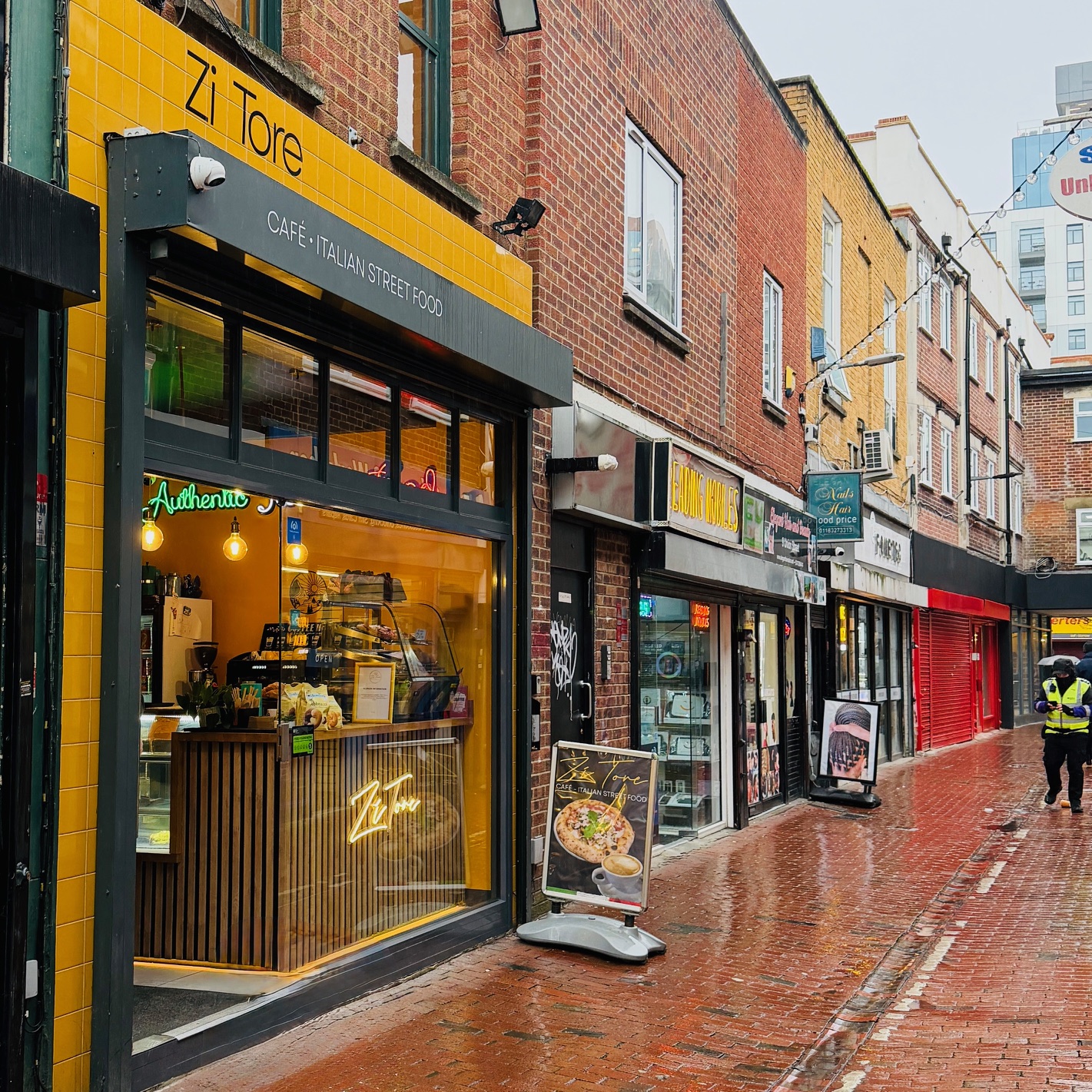
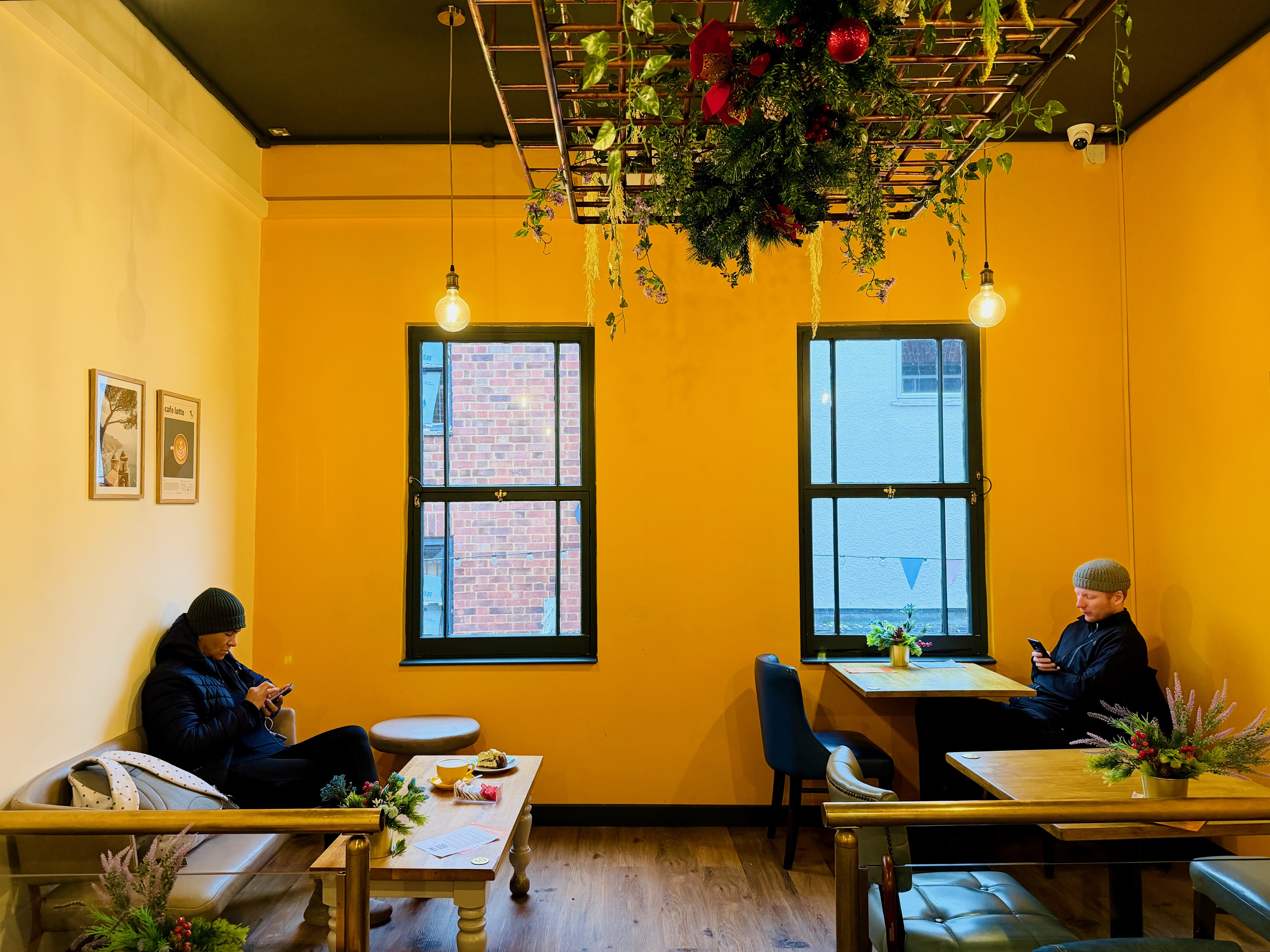
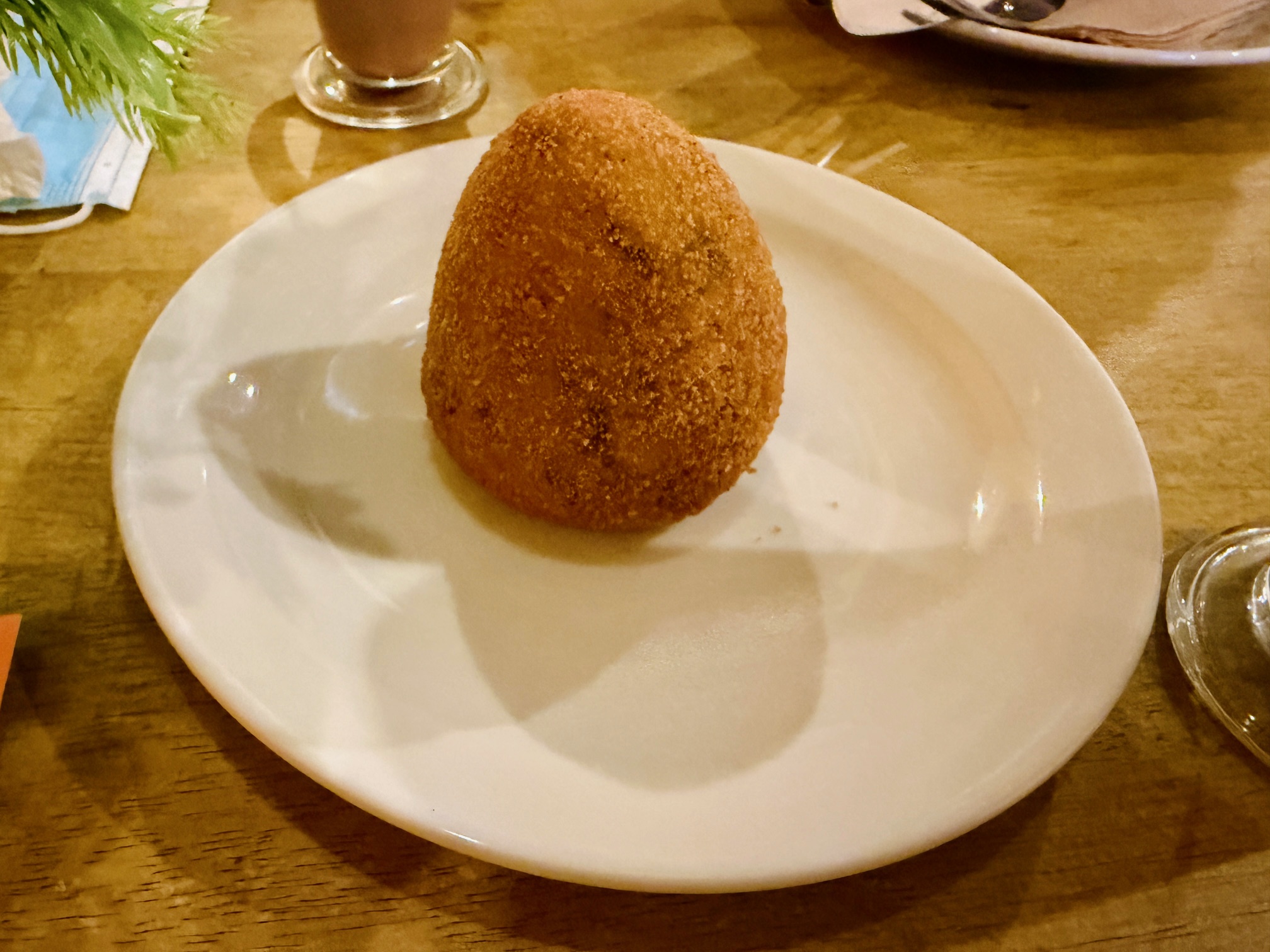
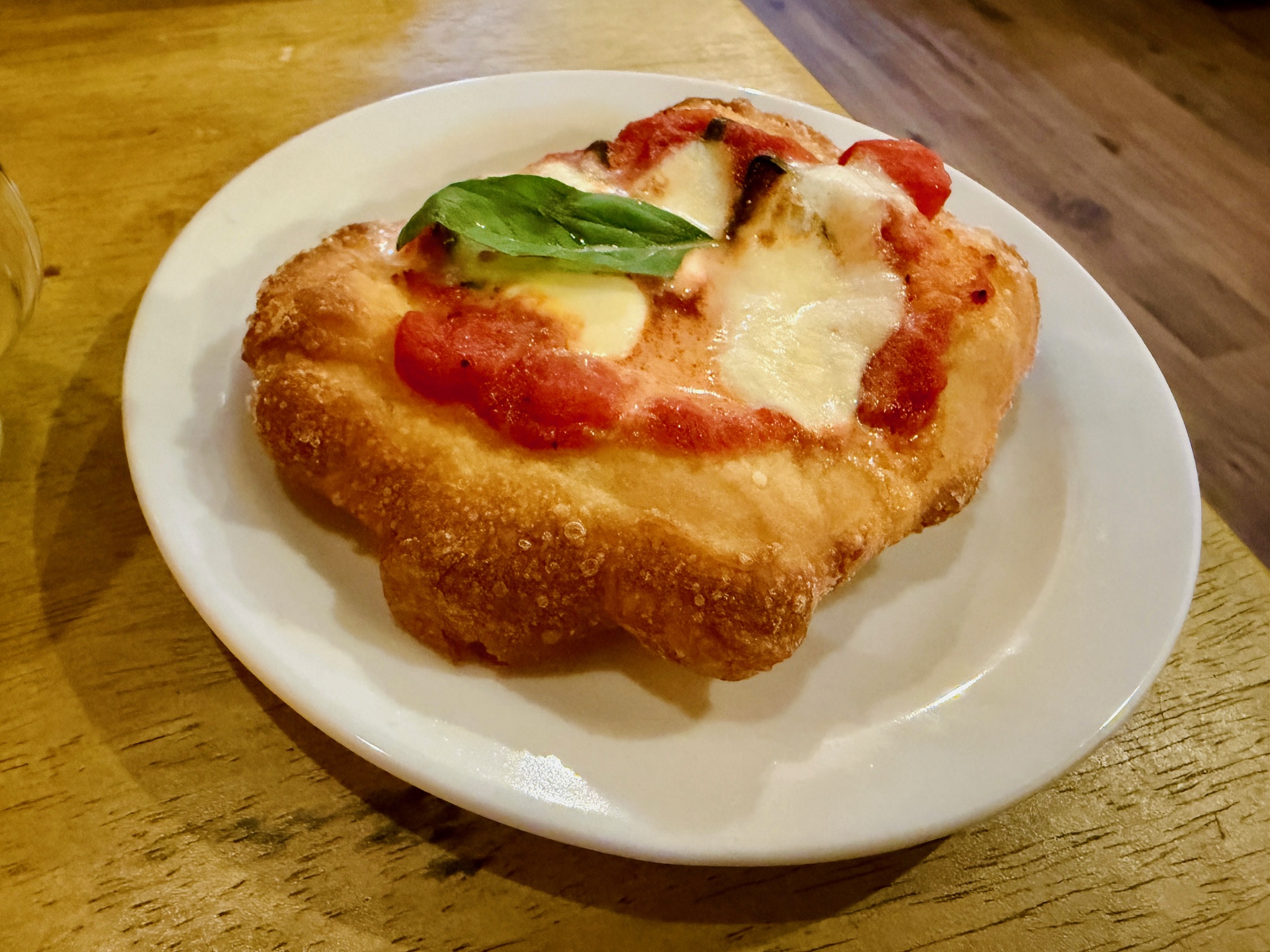
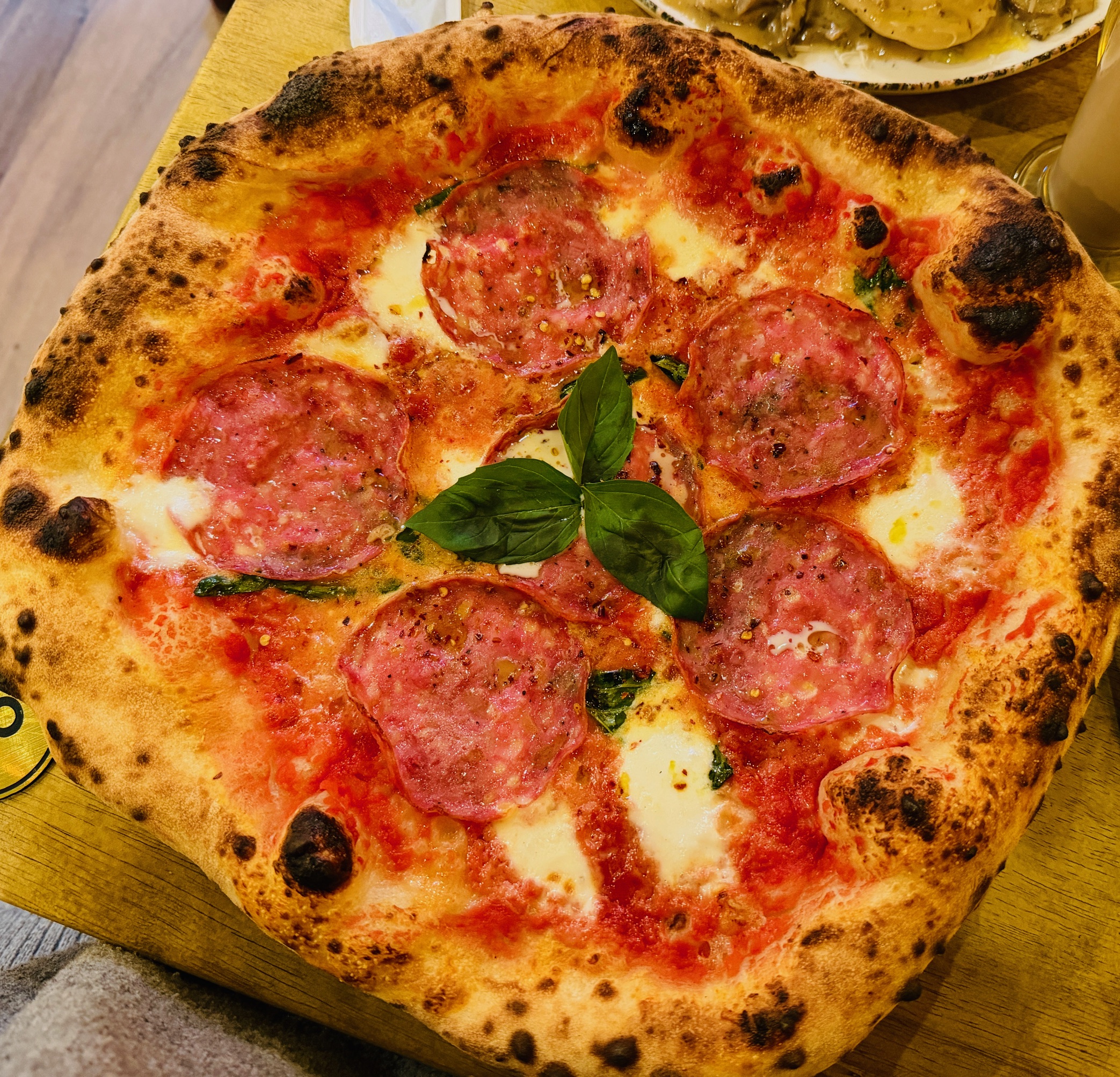
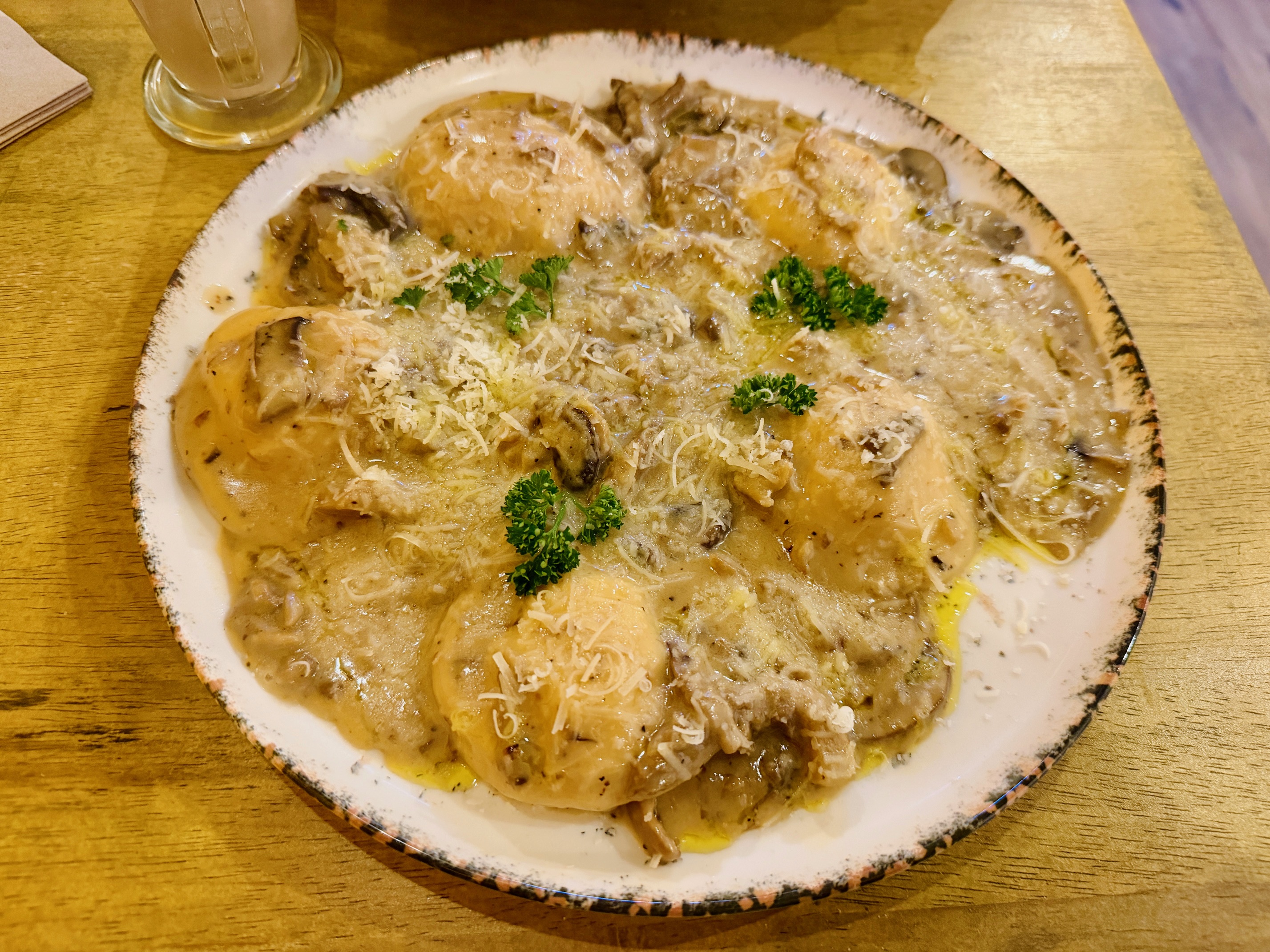
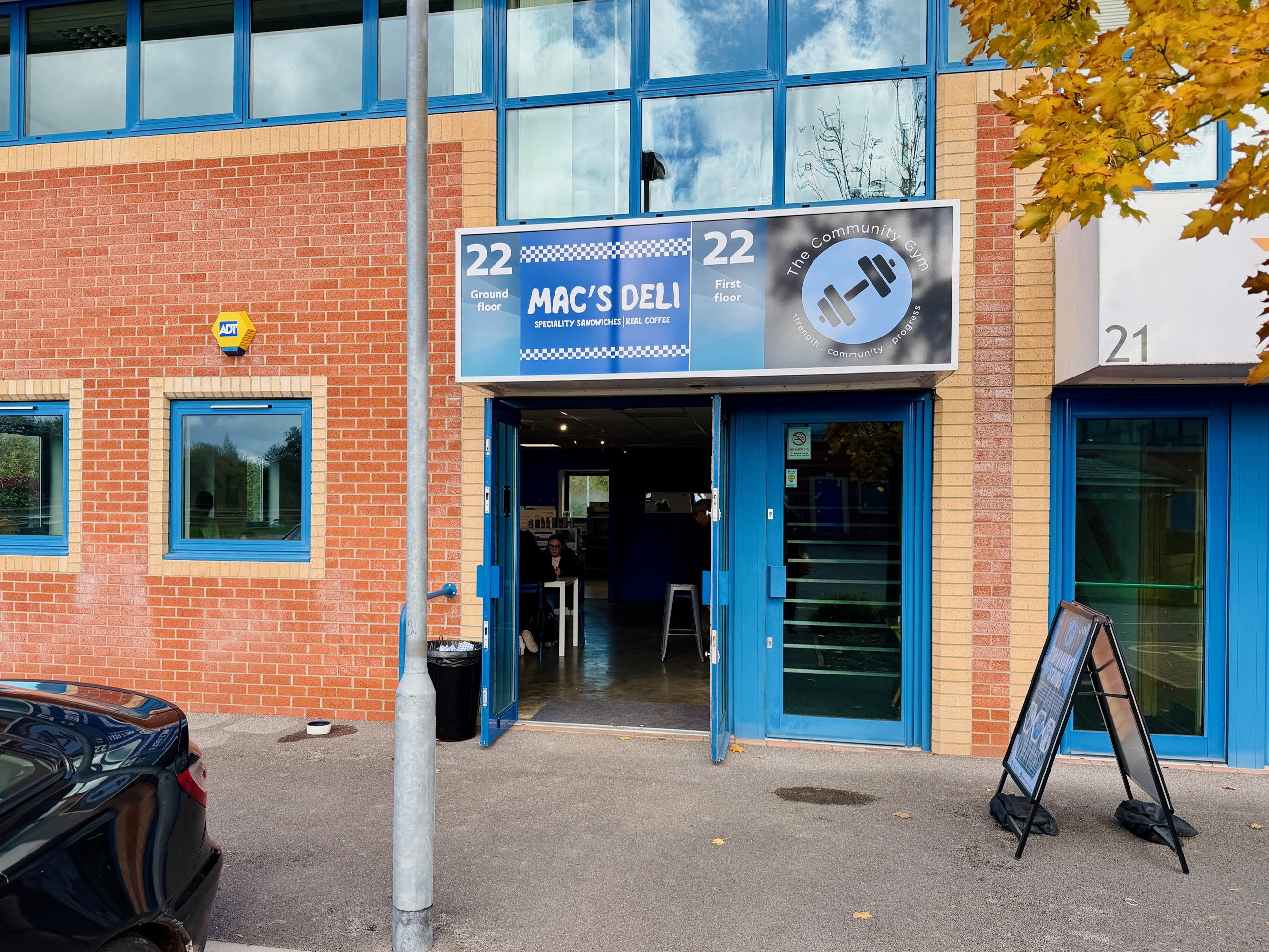
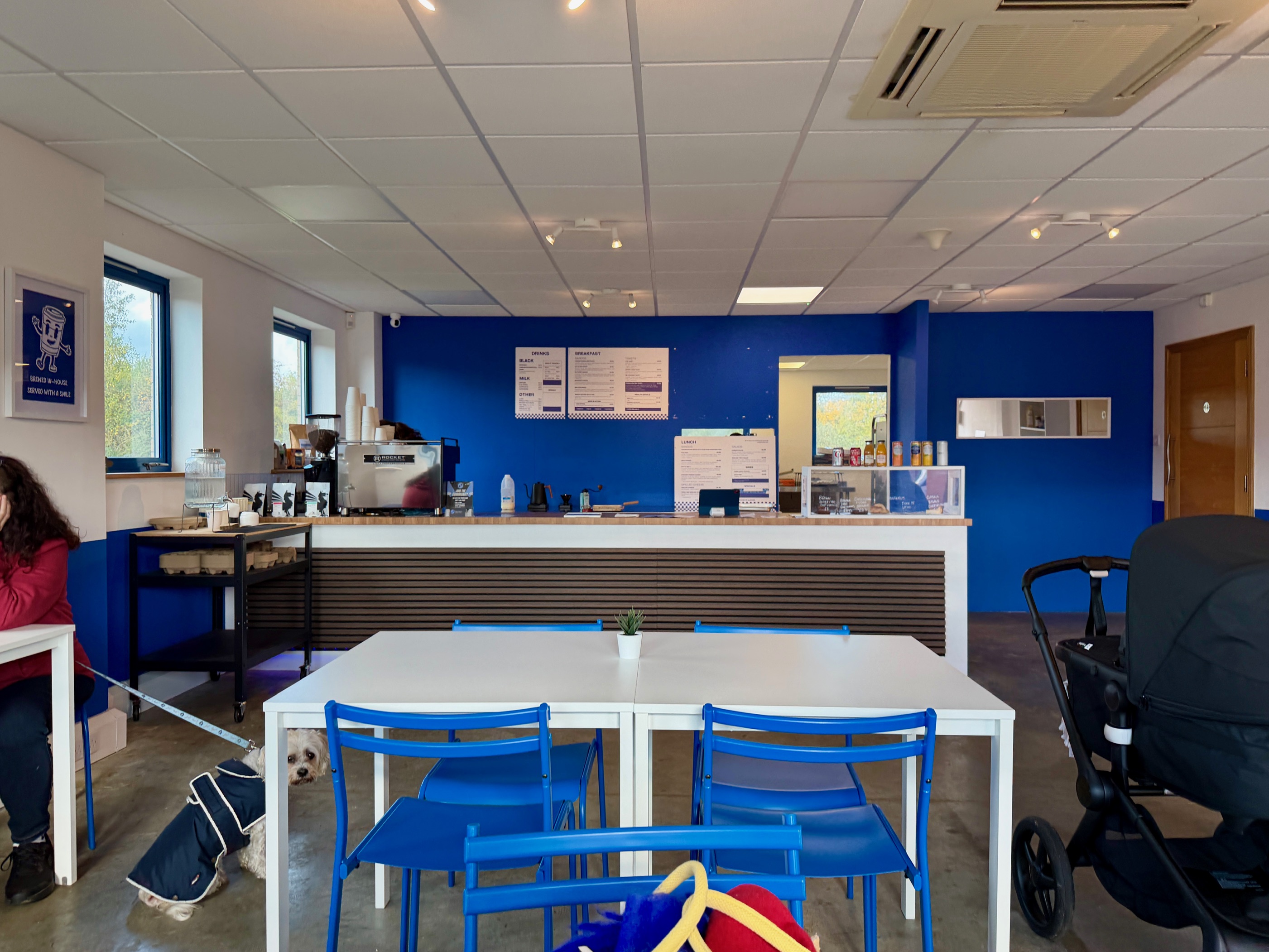
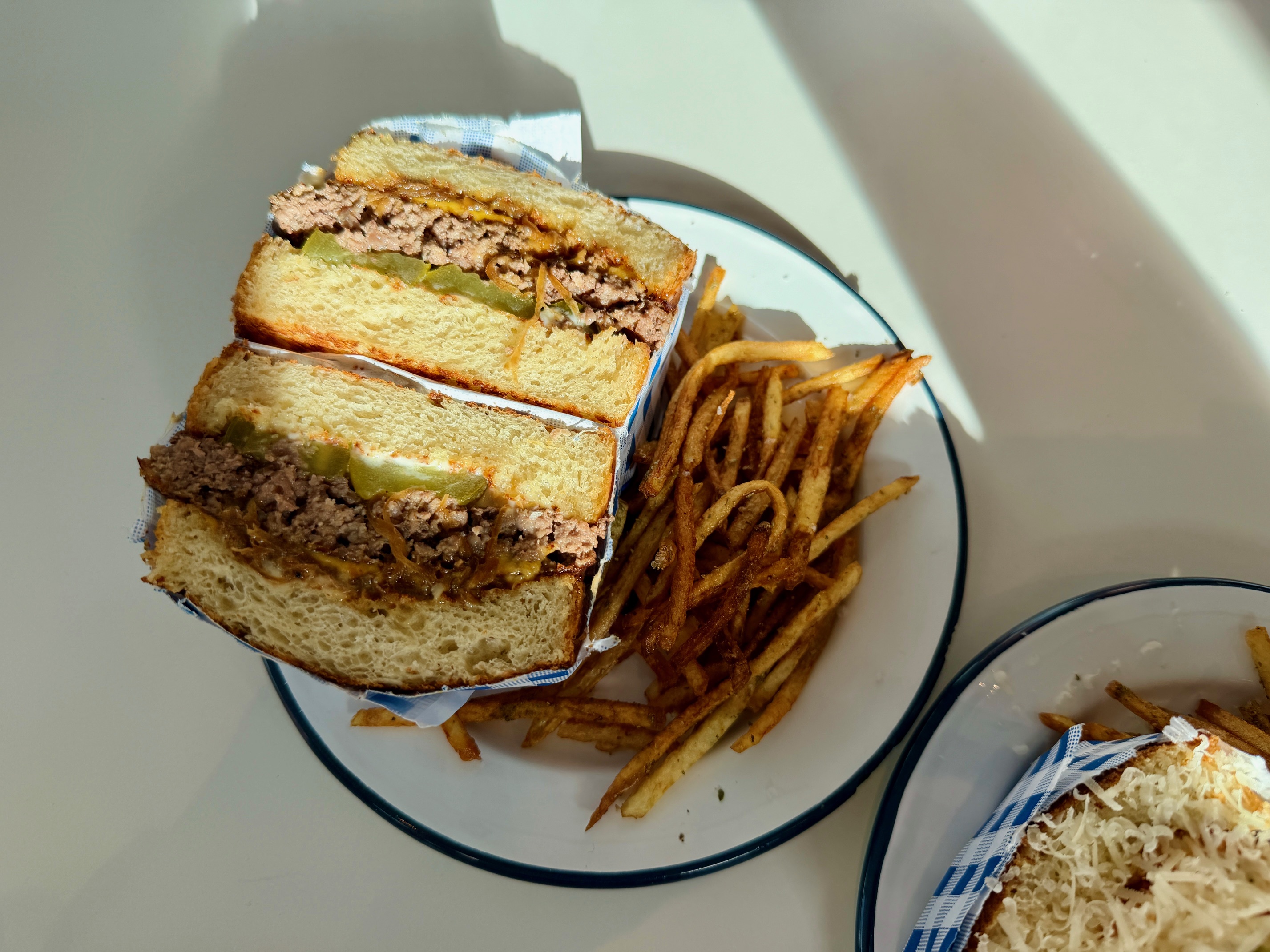
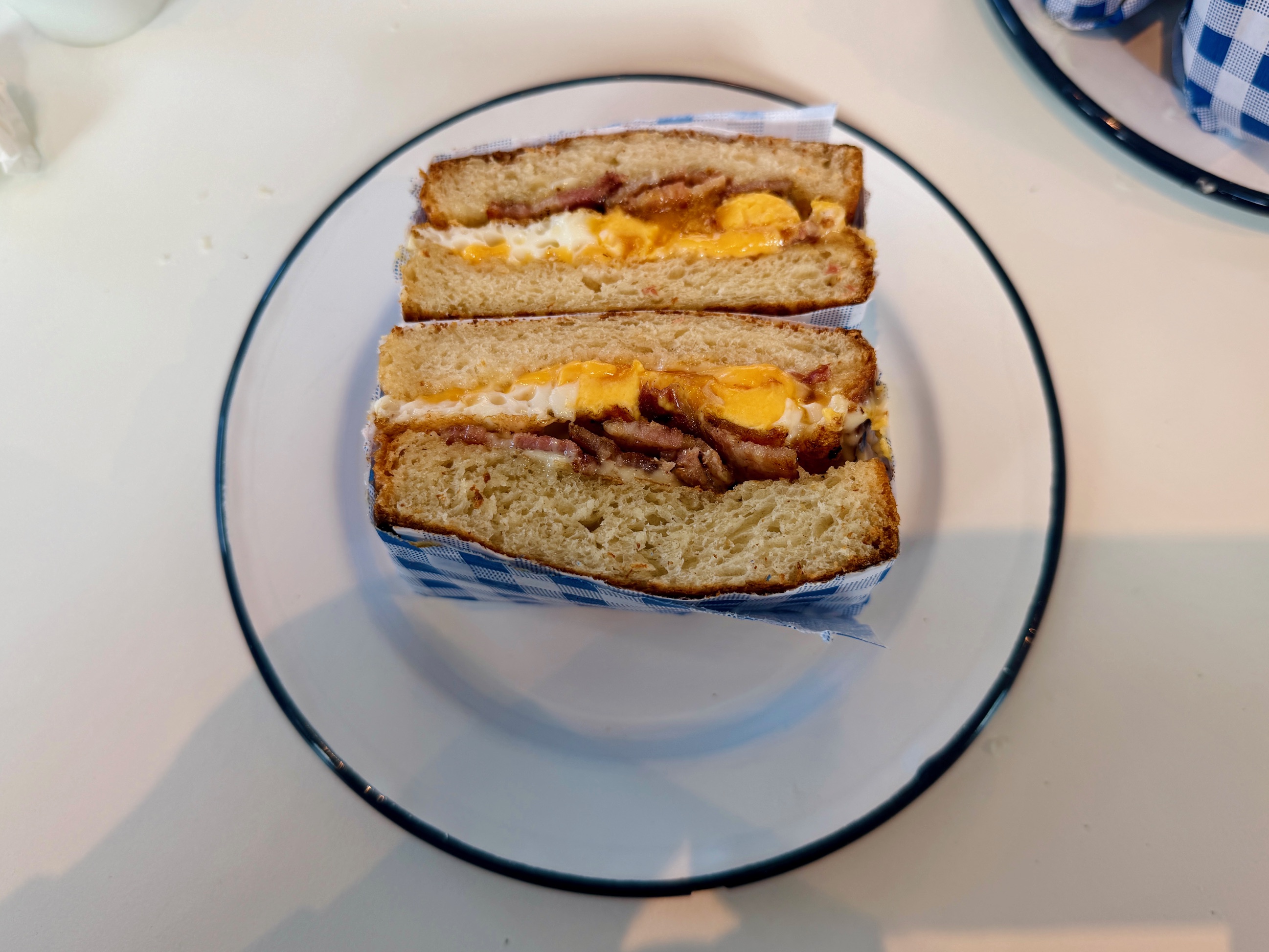


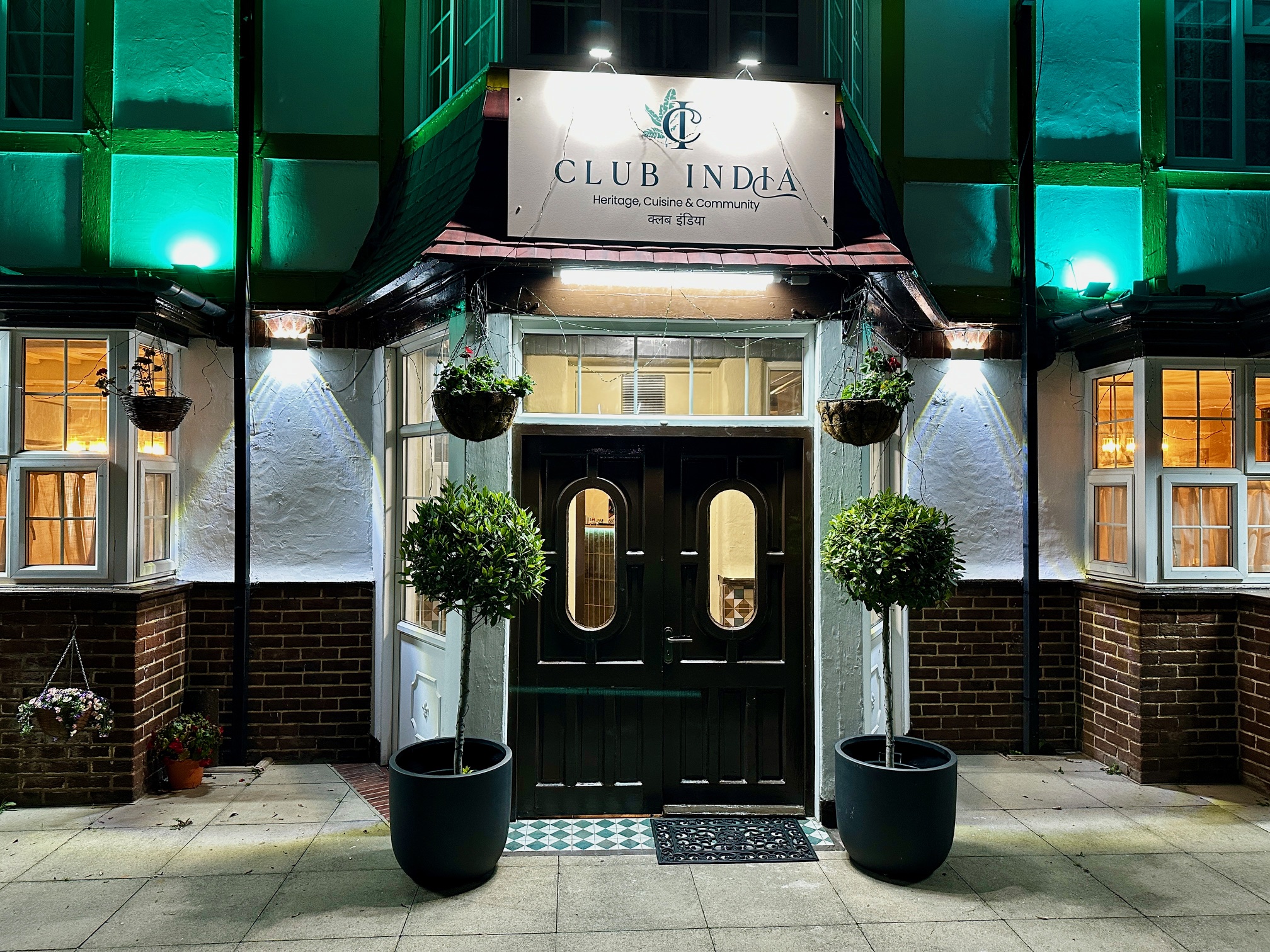


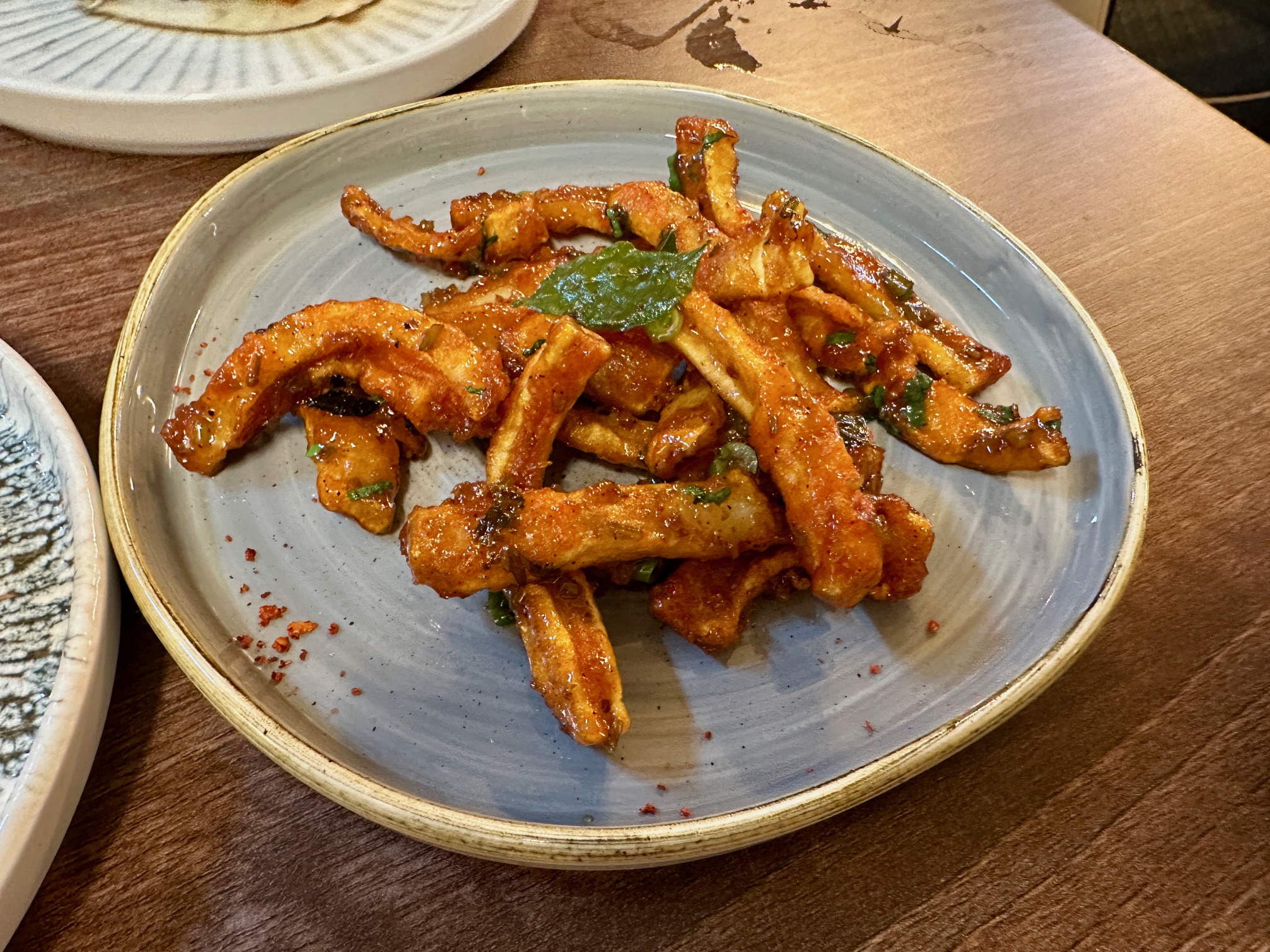

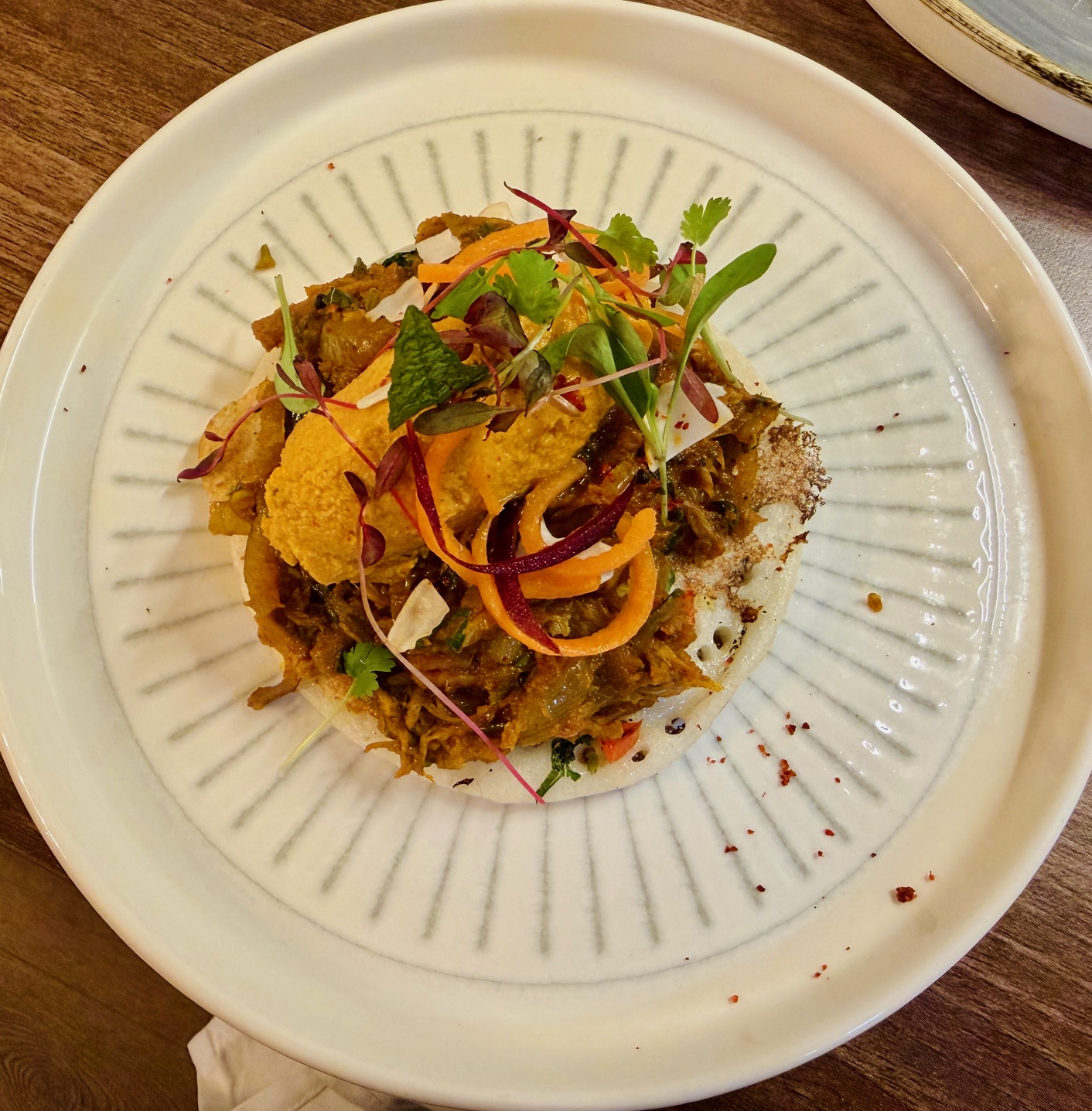
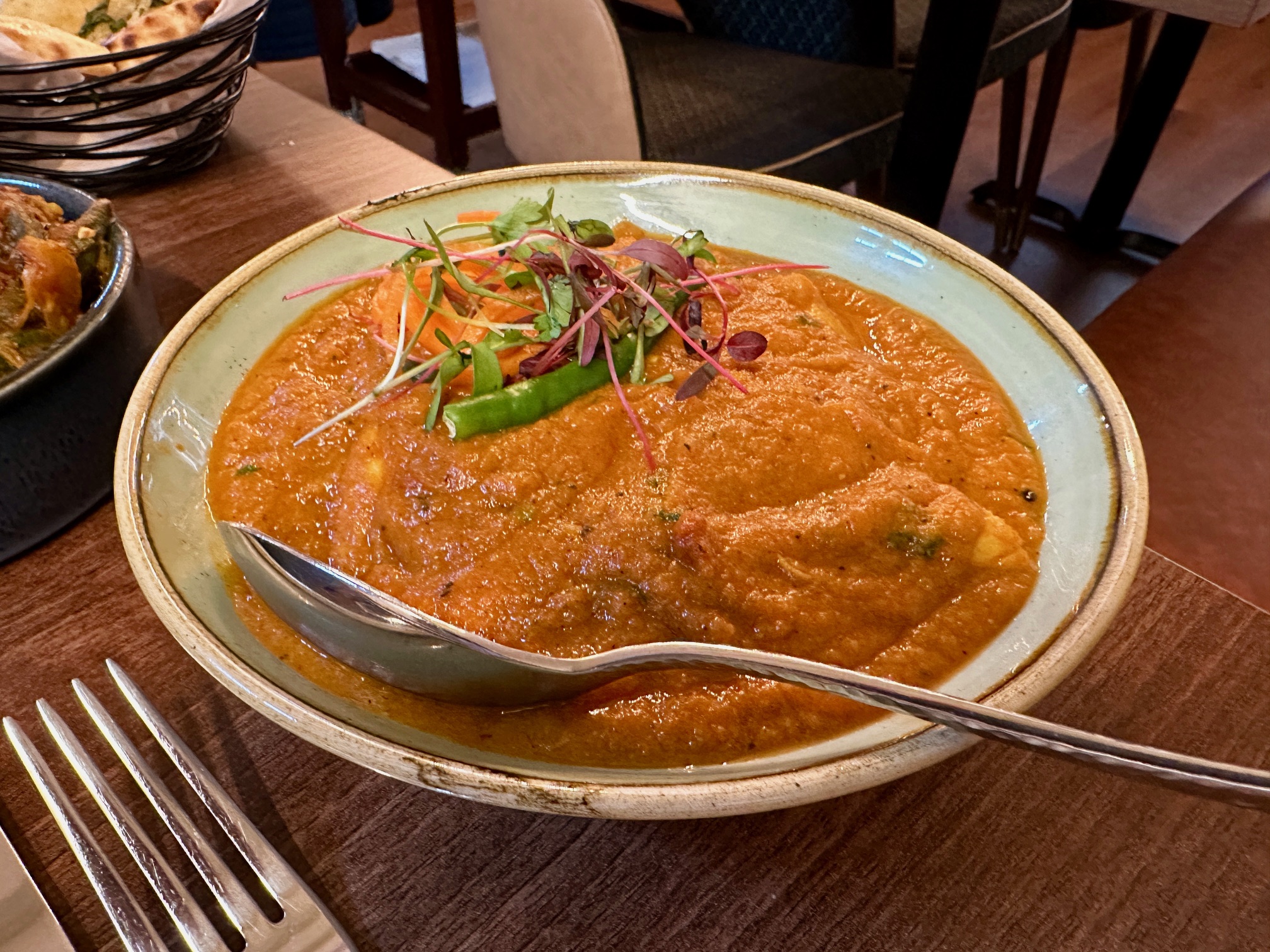
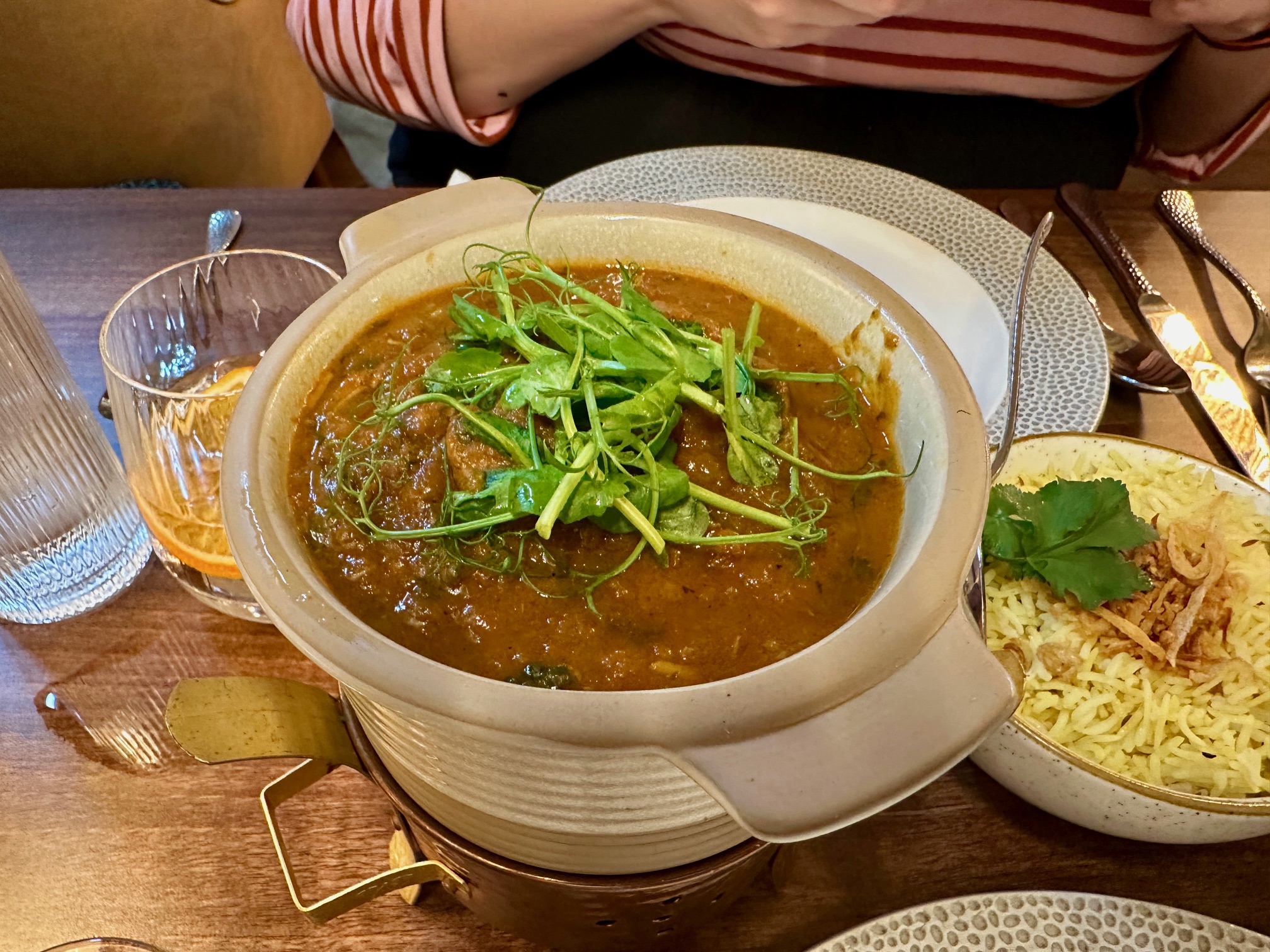

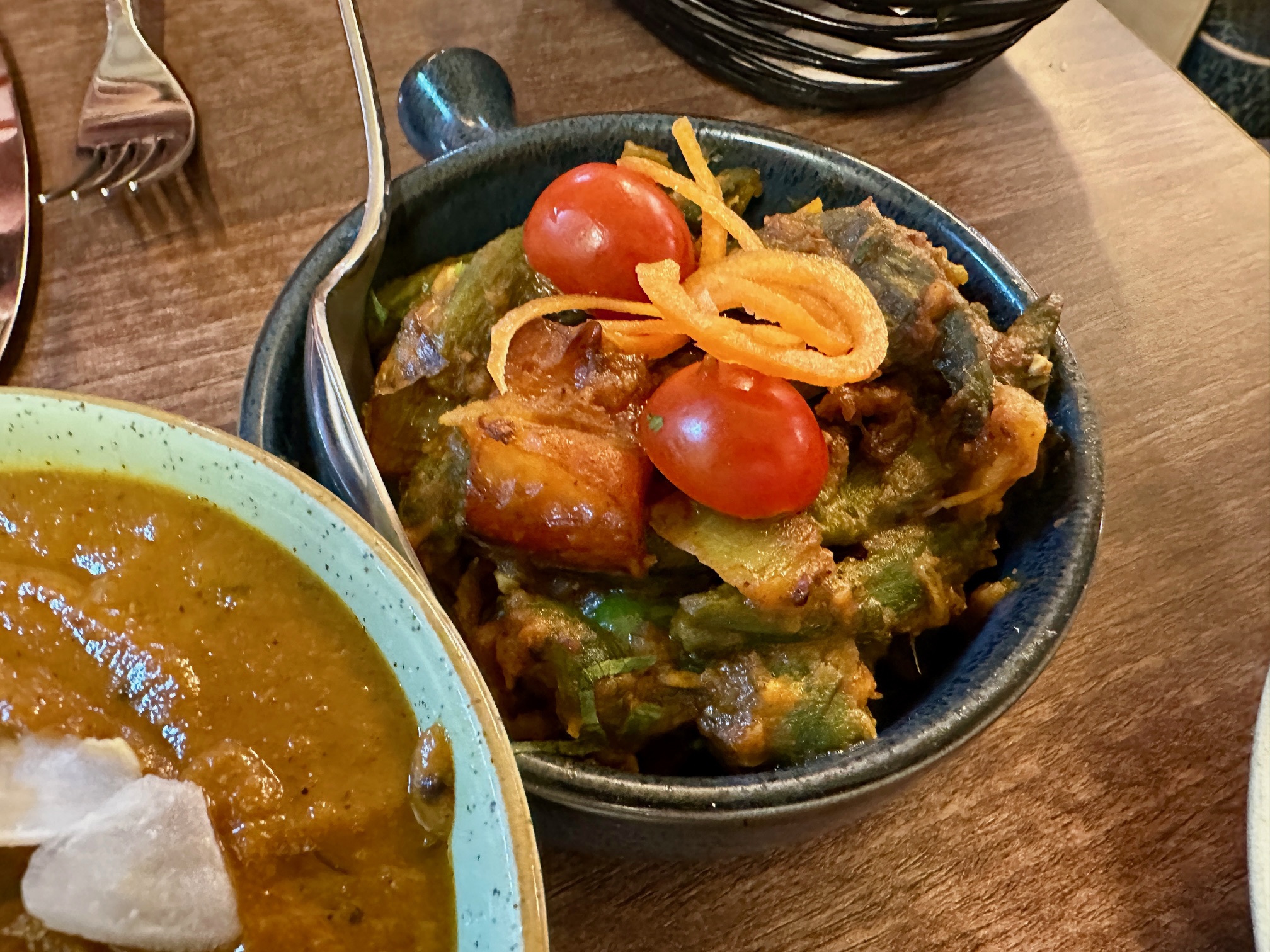

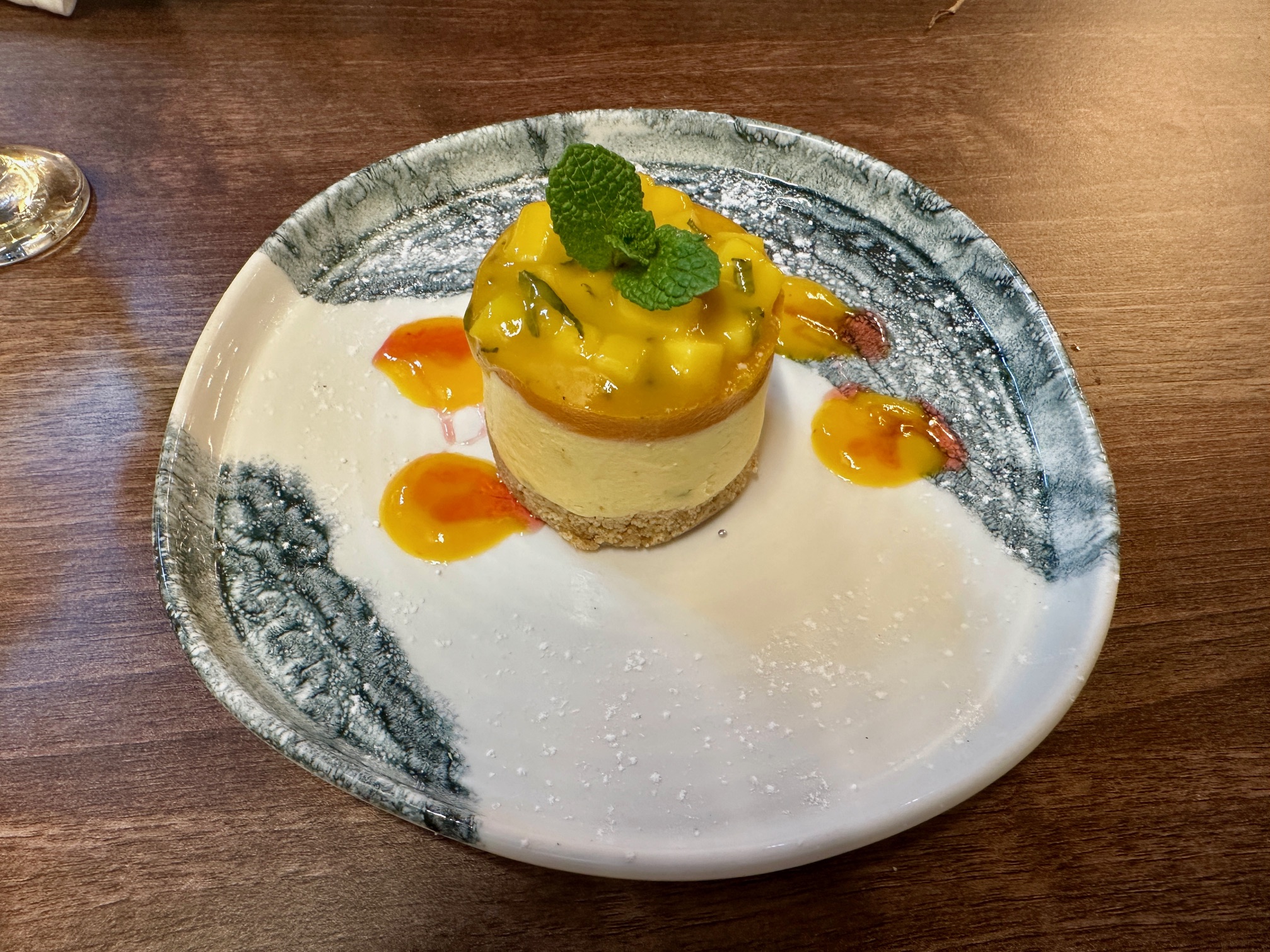
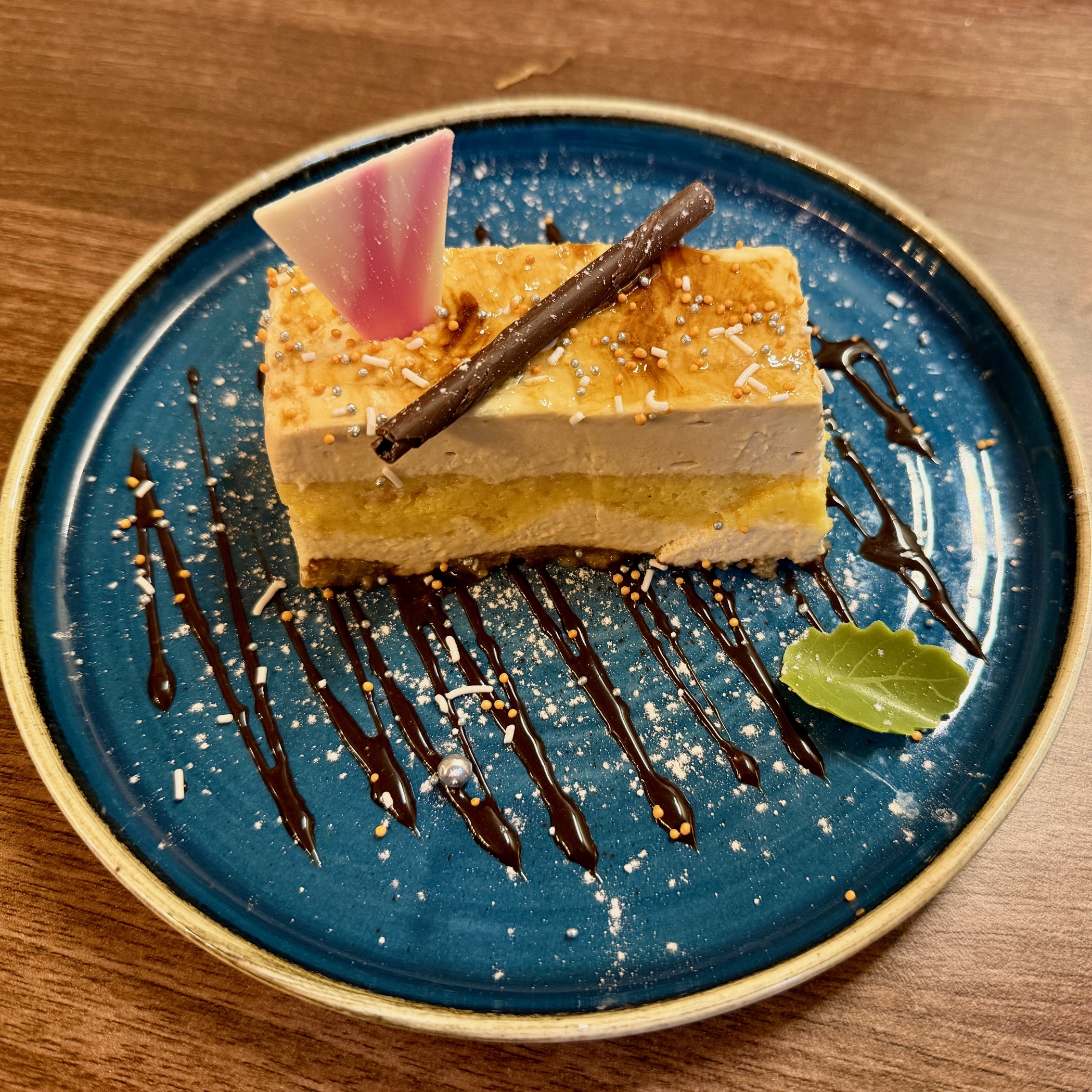


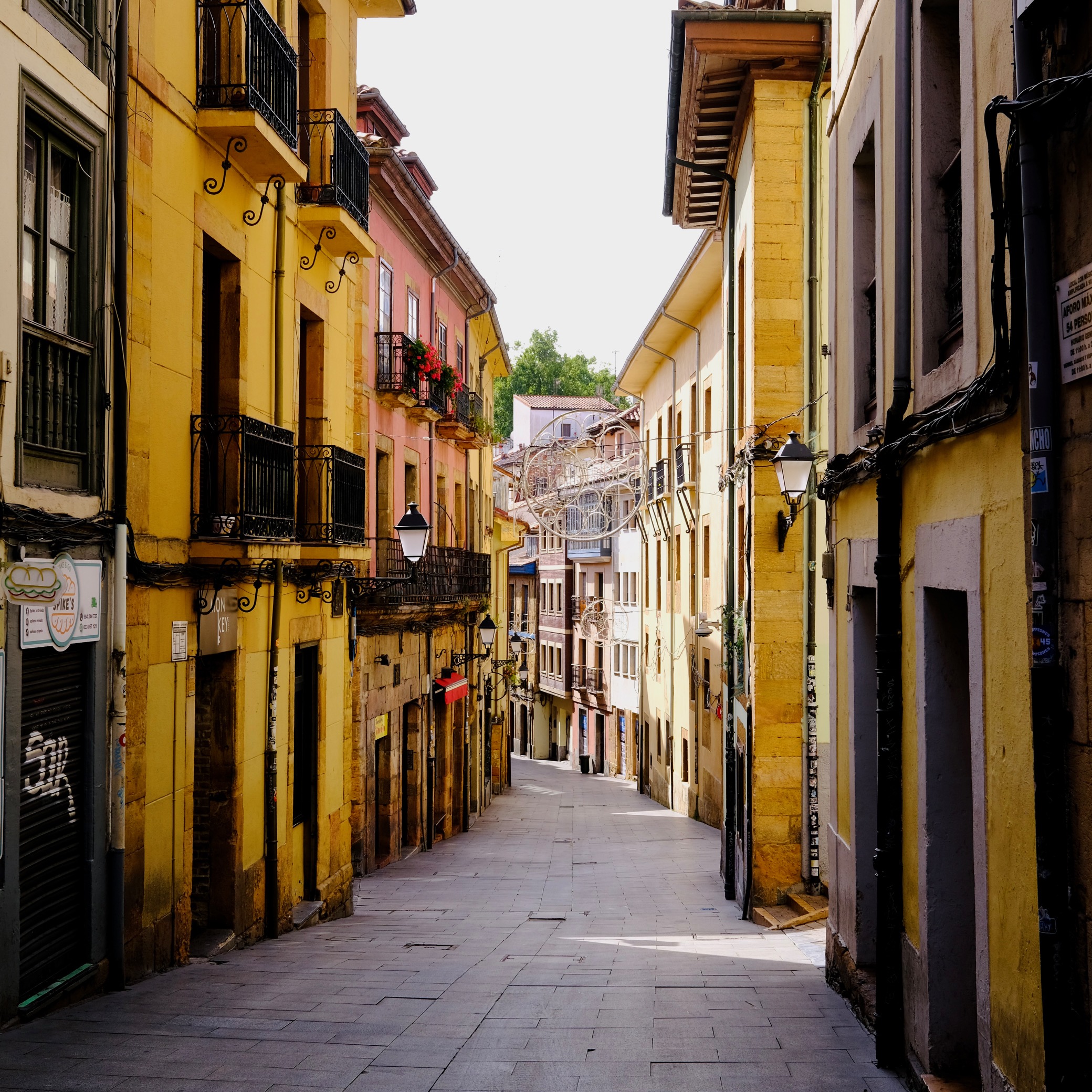


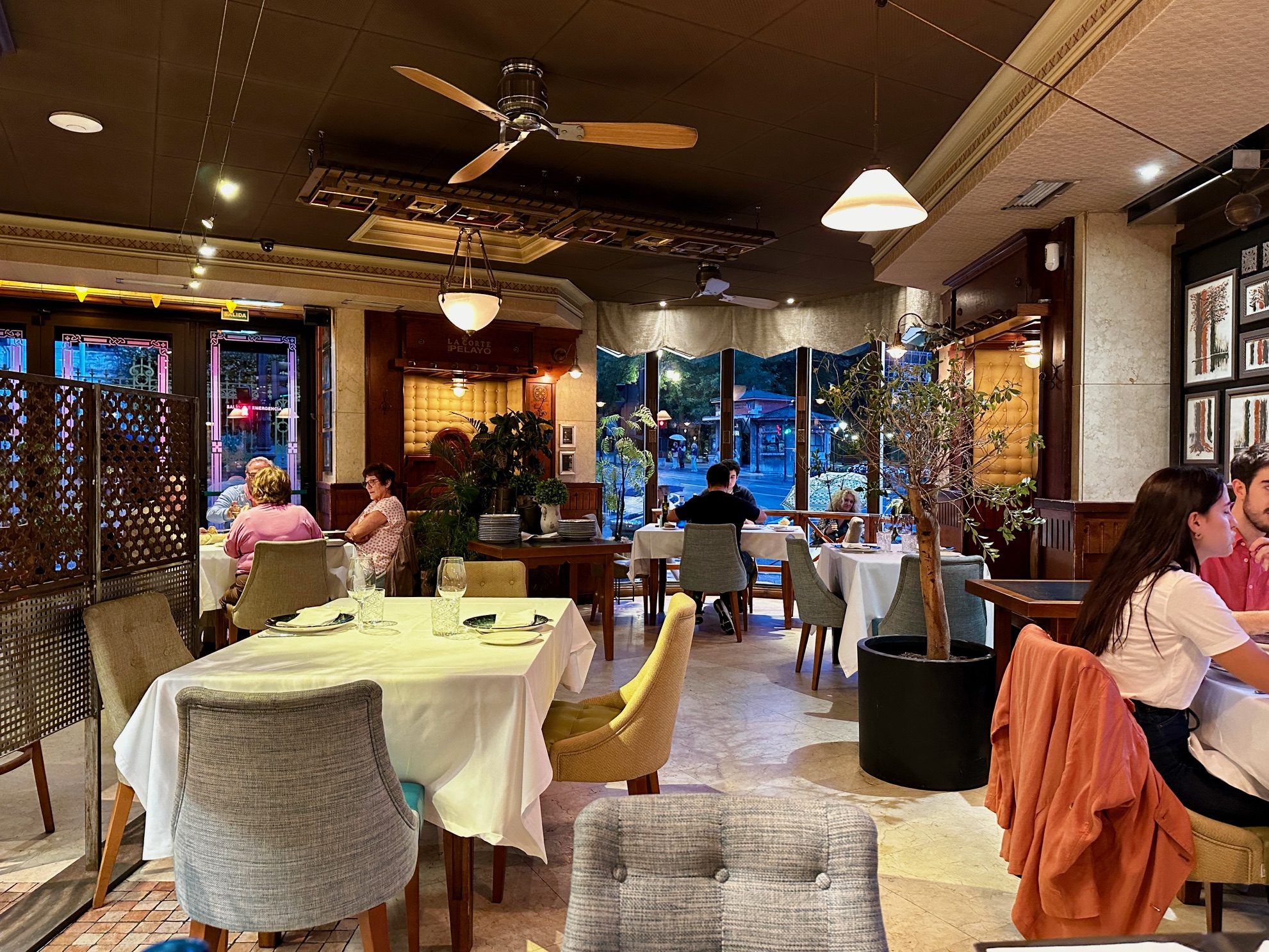


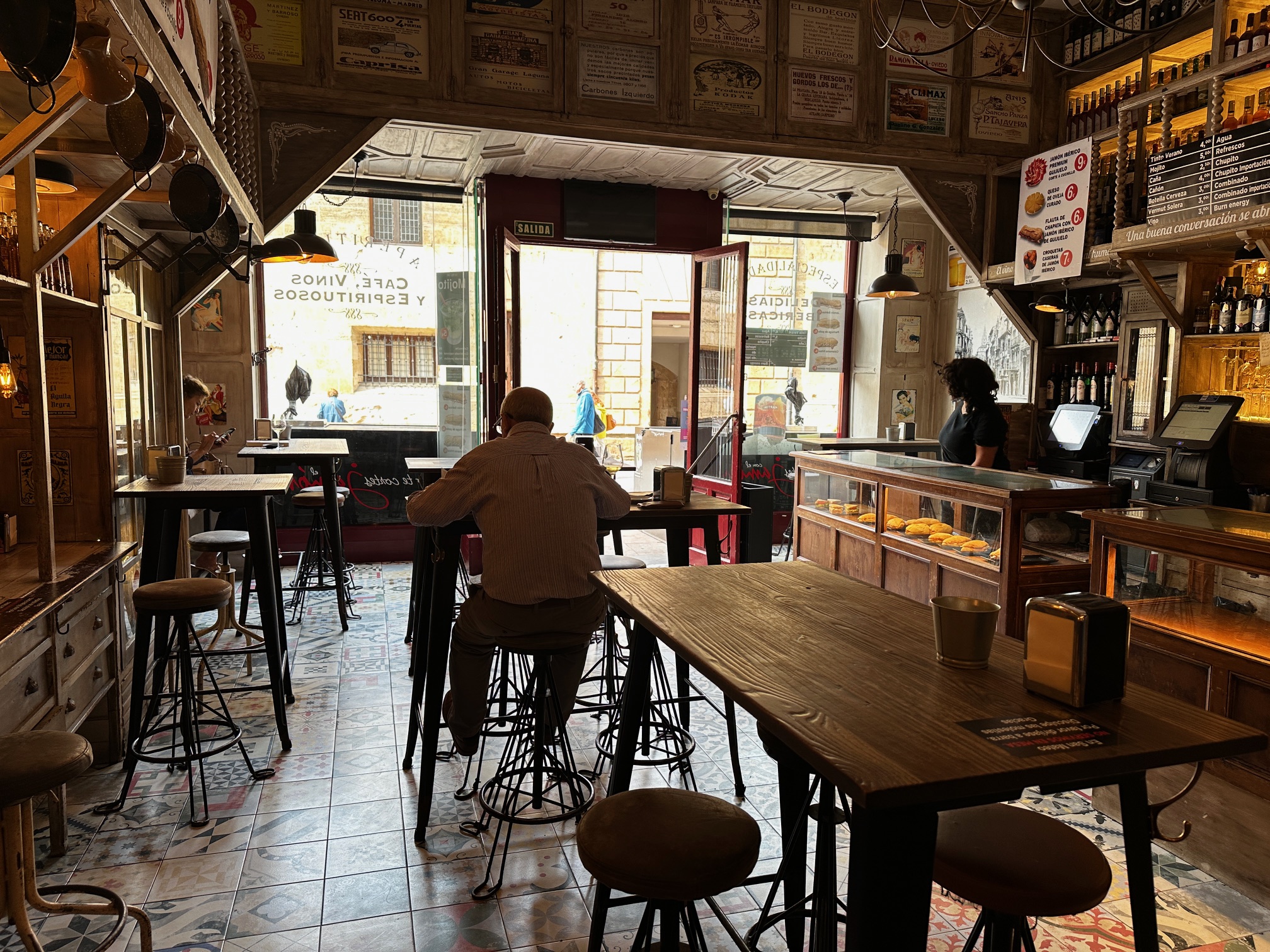
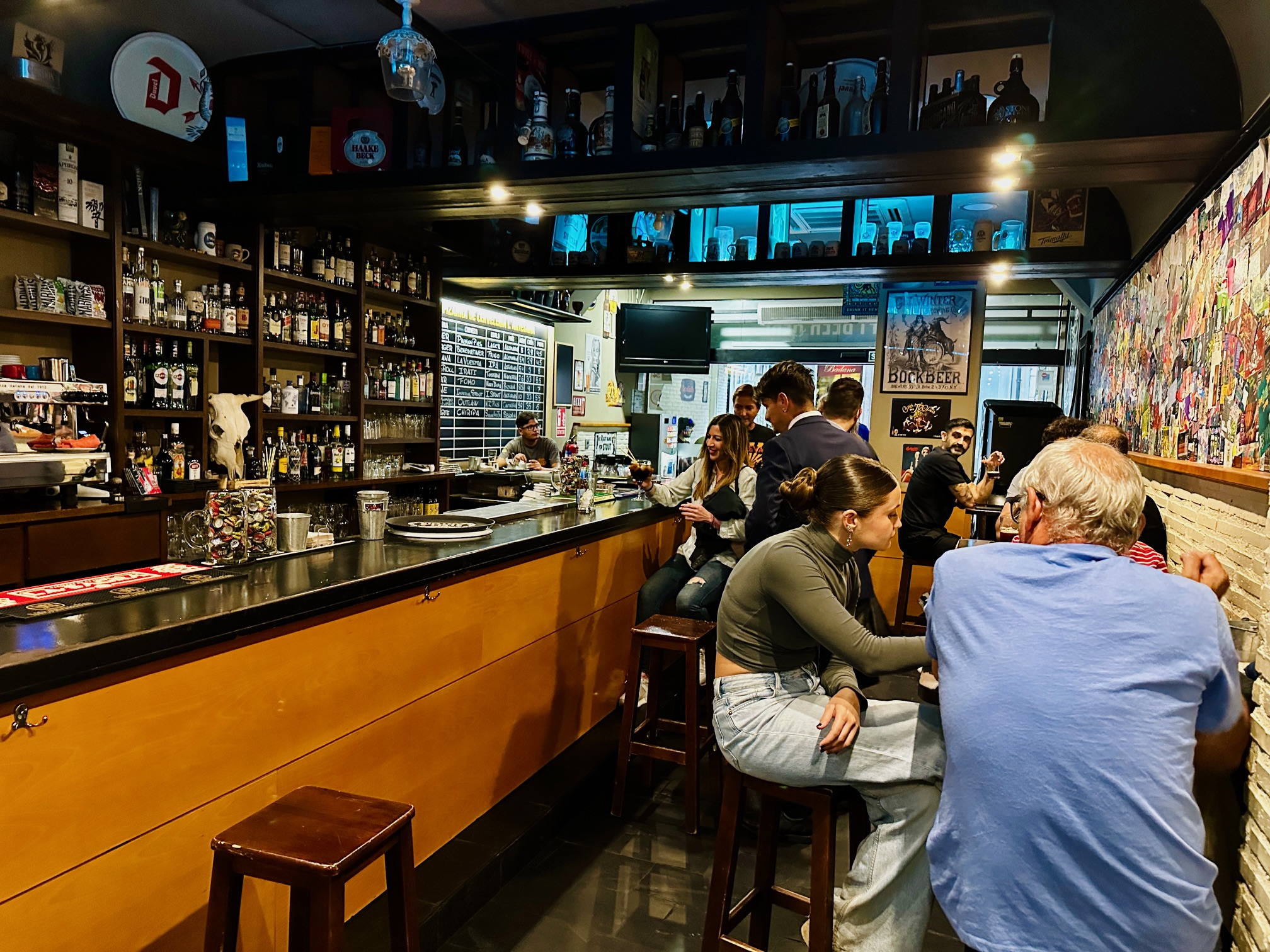


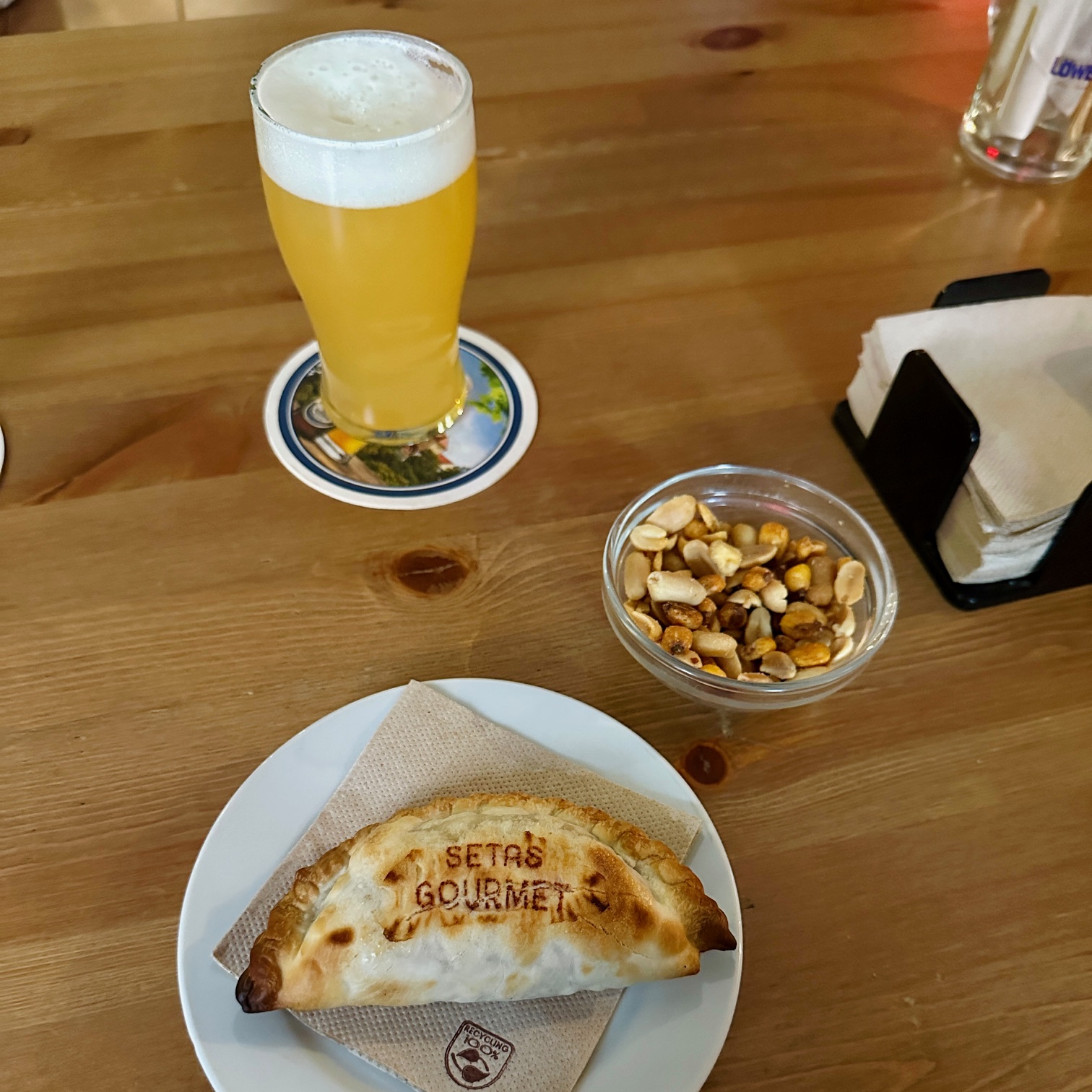


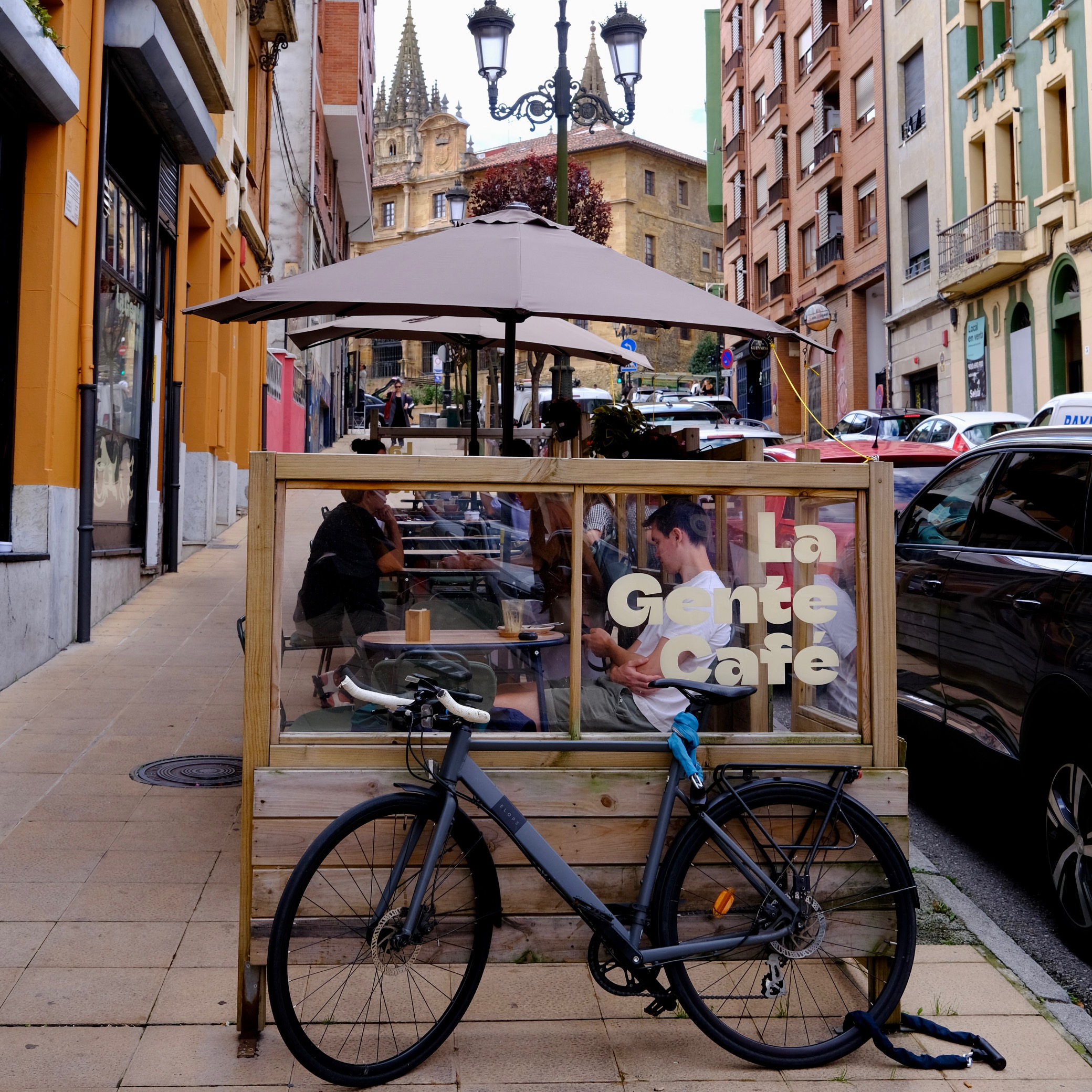


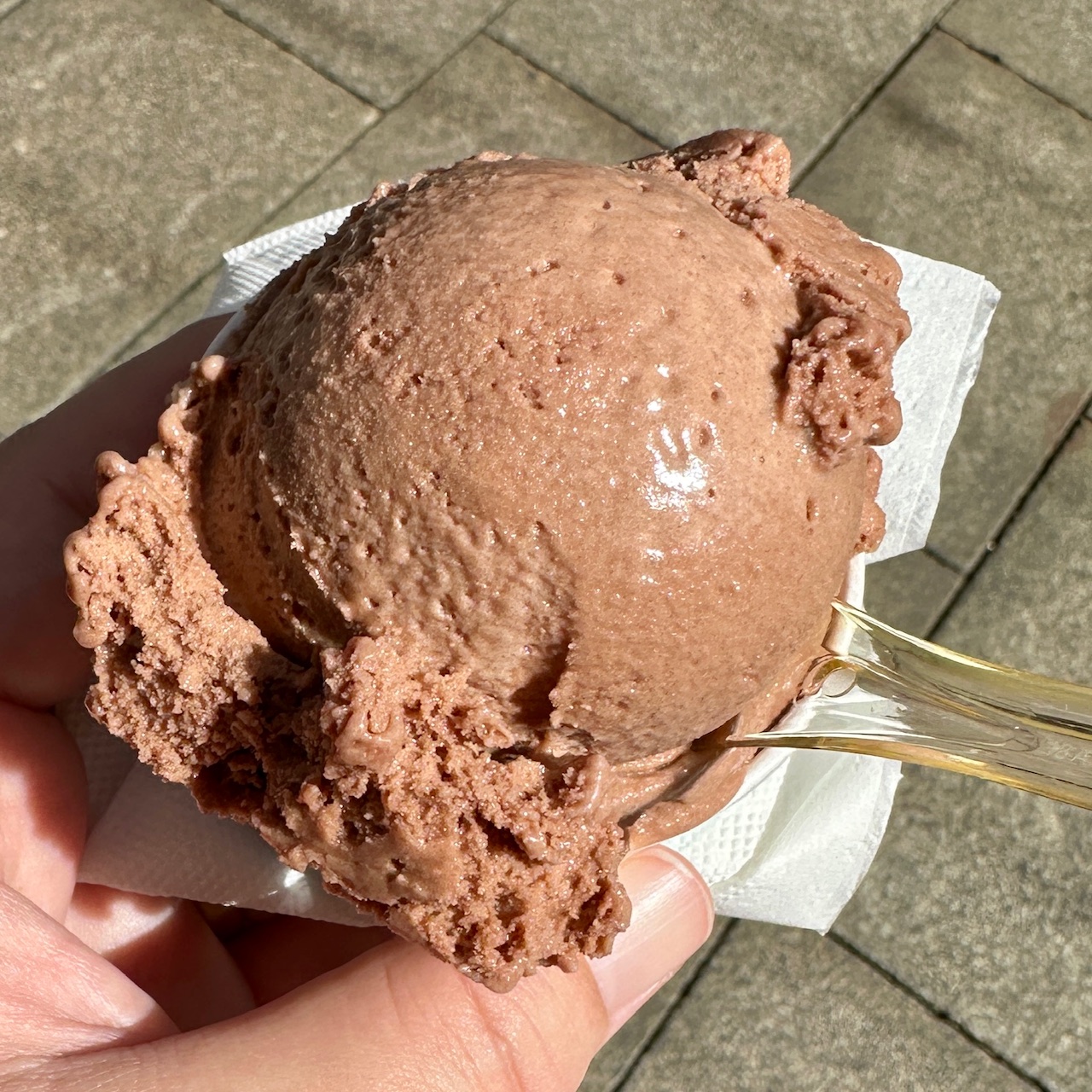


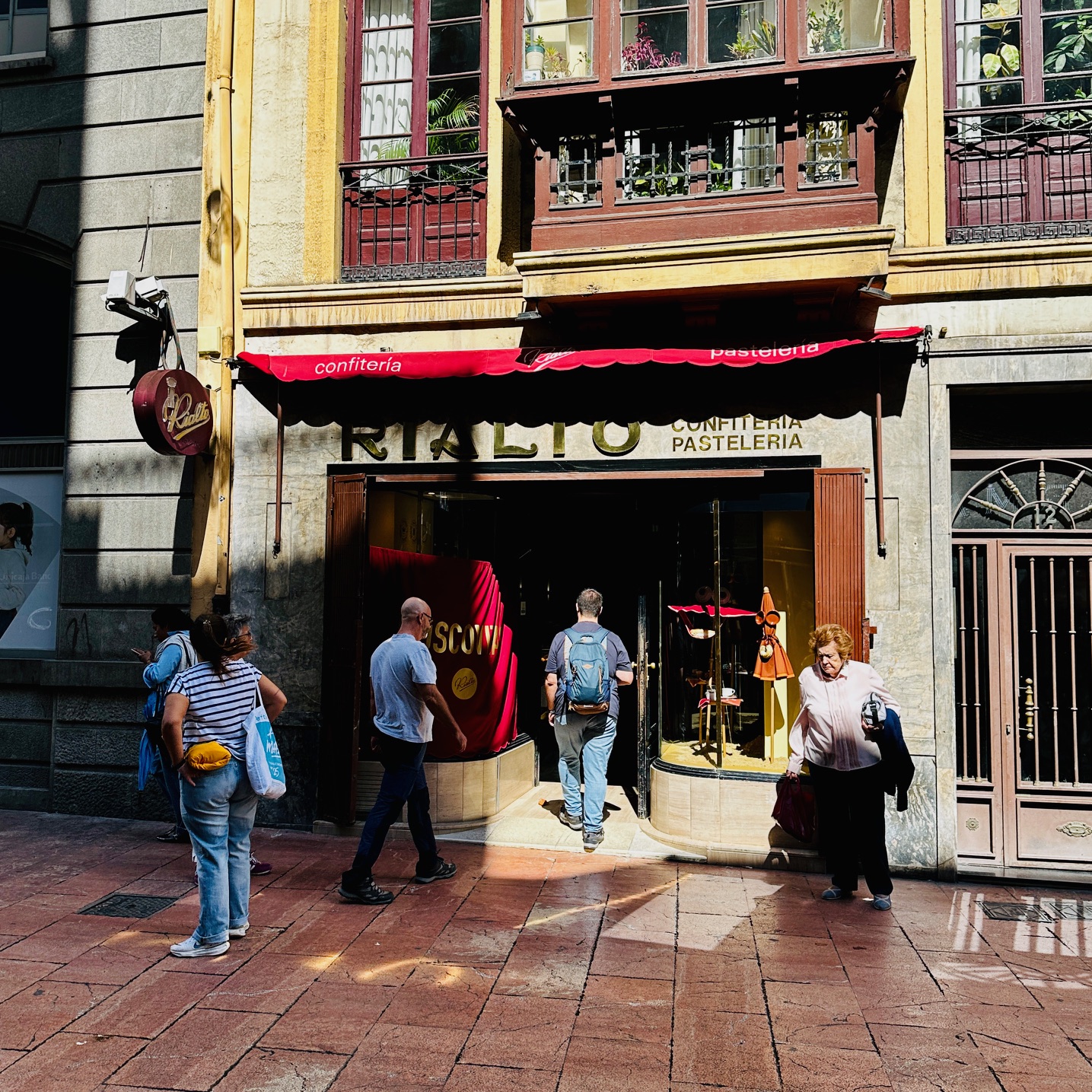
 Edible Reading