
Graeme and I are a fine pair when I meet him on Cemetery Junction for our trip to Namak Mirch. He had an operation on his foot in January and is standing there, crutch in hand, wearing trainers for the first time since being discharged: his wife has given him a lift to our meeting point. My injury is more invisible these days – people can only see the beginning of the cursive scar that flows from my elbow to my shoulder when I wear short sleeves – but I still can’t lift much, not until the man who sliced me open is happy with the x-rays.
I crossed the border into my fifties a couple of years ago, Graeme is not far off it: in the pub after dinner we agree that getting old is no fun, even though a viable alternative is yet to be discovered. Graeme says that it seems as if one minute you don’t feel old and then suddenly the tipping point comes and almost immediately you do; I know what he means, and feel like, for me, that happened at the end of last year. I’ve had one of those tough weeks when you feel far older than you want to be. But still, one benefit of ageing is that over time friends become old friends, and you can meet them for dinner.
Graeme moved back to Reading last year and now lives in a pretty house in Newtown, far from his previous place in Thatcham and the bucolic delights of Paggies Bar, a spot he steadfastly refused to take me to. I picked Namak Mirch for us partly because it is practically the nearest restaurant to his house – well, that or the The Fisherman’s Cottage. In the run-up to Graeme’s big move I recommended Deccan House to him ad nauseam, because I’ve enjoyed its takeaways so much in the past, but I’d received some inside information that Namak Mirch might give it a run for its money.
Namak Mirch has taken over the old spot where Star Karahi, the Pakistani restaurant so beloved of Reading’s black cab drivers, used to be. Not entirely – one of the signs outside still gives the old business’ name – but the place is definitely under new ownership. Last October I got a tip-off from Jacqui, a regular reader of the blog, that a friend of hers who previously ran a takeaway business from home had taken on the site.
Jacqui started out buying her samosas, then her Friday night curries, and then she sent me a couple of pictures of a distinctly attractive looking dinner from Namak Mirch: nothing fancy, just a lamb curry, a bed of rice, some grilled chicken wings and a simple salad. You could go past the restaurant in a car and barely notice it, and in fact I did a couple of times including a drive home from my dad’s on Christmas Day. But a glowing report from Jacqui, who knows her food, was enough to place it on my to do list.
The interior of Namak Mirch is about as no-frills as you can get. Three tables, covered with linoleum tablecloths, seat no more than a dozen people, the chairs mismatched and occasional. On our visit we were the only people there, although this was during Ramadan and a delivery driver or two did turn up while we were eating.
But there was something homely about it nonetheless. Some of the starters, snacks and other dishes were on display under the counter, cardboard starbursts in Day-Glo shades taped to the glass giving names and prices, the whole thing strangely retro. Besides that, the menu was all listed on a board overhead, the aesthetics of the greasy spoon somehow appropriated for a restaurant serving Pakistani dishes.
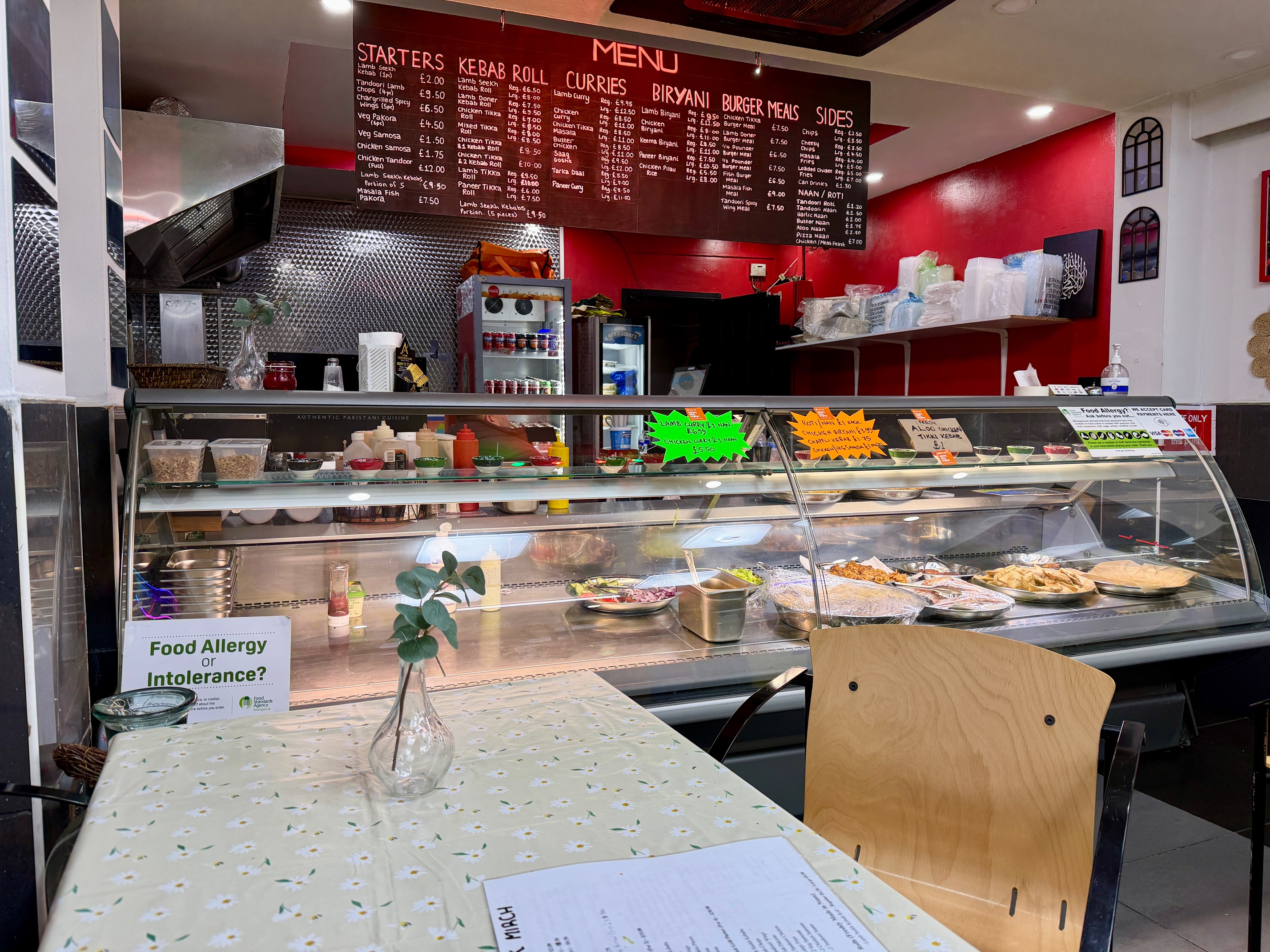
That menu was pretty compendious, a mixture of starters, kebab rolls, curries and biryanis, most available in multiple sizes. Over on the far right of the menu, fittingly, were the crazy choices, the burgers and cheesy chips for wackos who simply refuse to integrate.
There was also a laminated menu on the table, unbranded except for the restaurant’s name written in Sharpie, which didn’t entirely match the one over the counter, including some mixed grills and other dishes not to be found on the blackboard.
Nothing at Namak Mirch was expensive, with the costliest dishes coming in at £12.50 and most far, far below that. The snacks emblazoned on some of those highlighter coloured pieces of cardboard were the cheapest, coming in at £1 apiece.
We started with those and the friendly chap behind the counter, who told us his wife runs the kitchen and makes everything from scratch, was happy for us to order them and decide on the rest of our meal later. There isn’t really table service per se, more that your plates are plonked on the counter and you take them to the table yourself. I didn’t mind that at all, once I realised that expecting Graeme to do that was insensitive in the extreme. His barely functioning foot trumped my partly functioning arm.
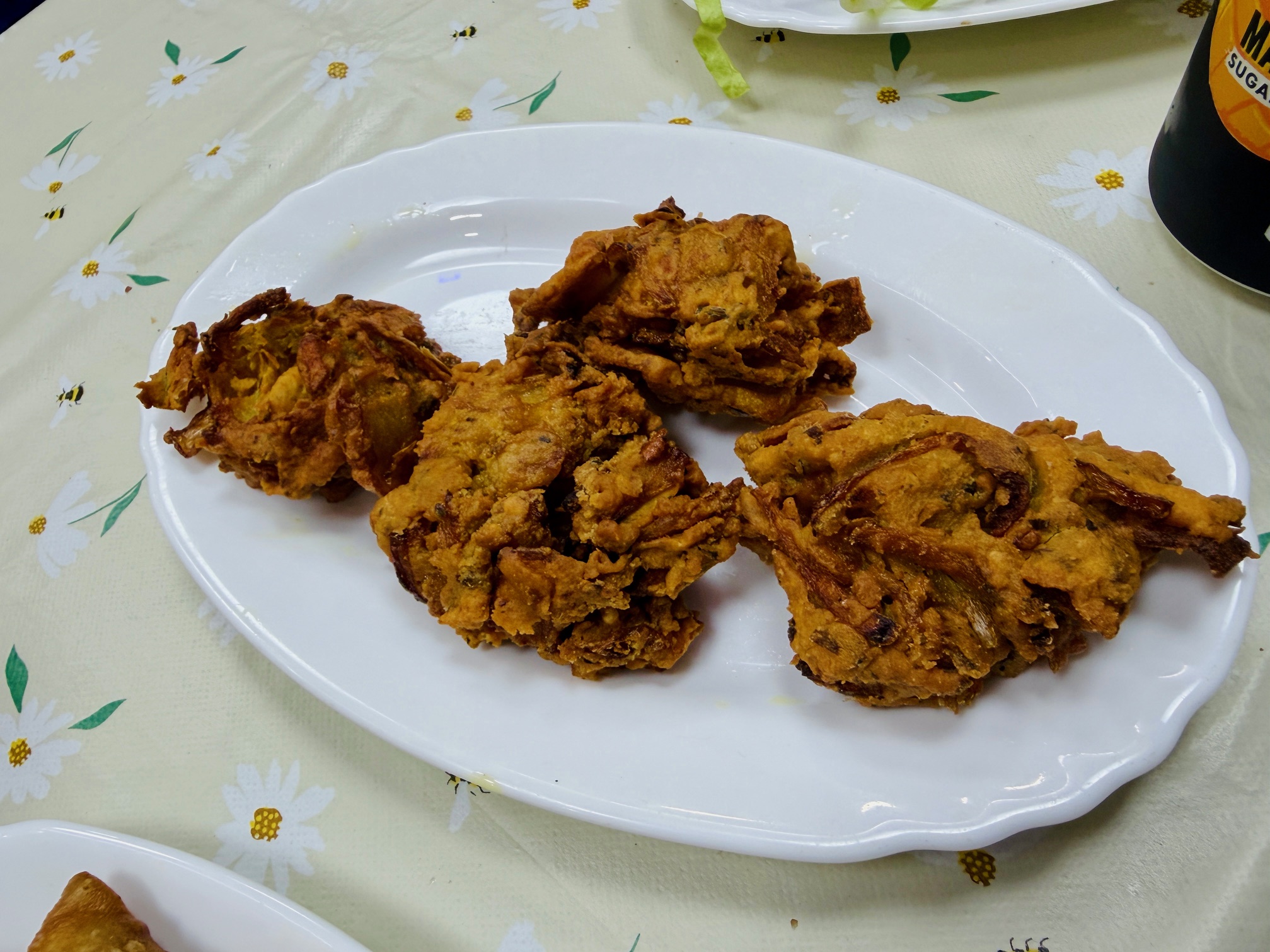
So the first things we ate, along with being among the best, were unbelievably affordable. Namak Mirch’s pricing structure can be a bit chaotic, and what you read on one menu doesn’t necessarily match up with what you end up being charged. So for instance, the menu says you get six vegetable pakoras for £4.50. We didn’t know that, so just ordered the four.
They were crisp but not overdone, utterly greaseless and perfect dipped into the little tub of spicy tomato sauce or the raita on offer. I could easily have ploughed through half a dozen with Graeme, in fact I could easily have ploughed through half a dozen on my own. The four we accidentally ordered showed up on the bill at the end as costing £2. Surely some mistake, to offer terrific food at sweetshop prices?
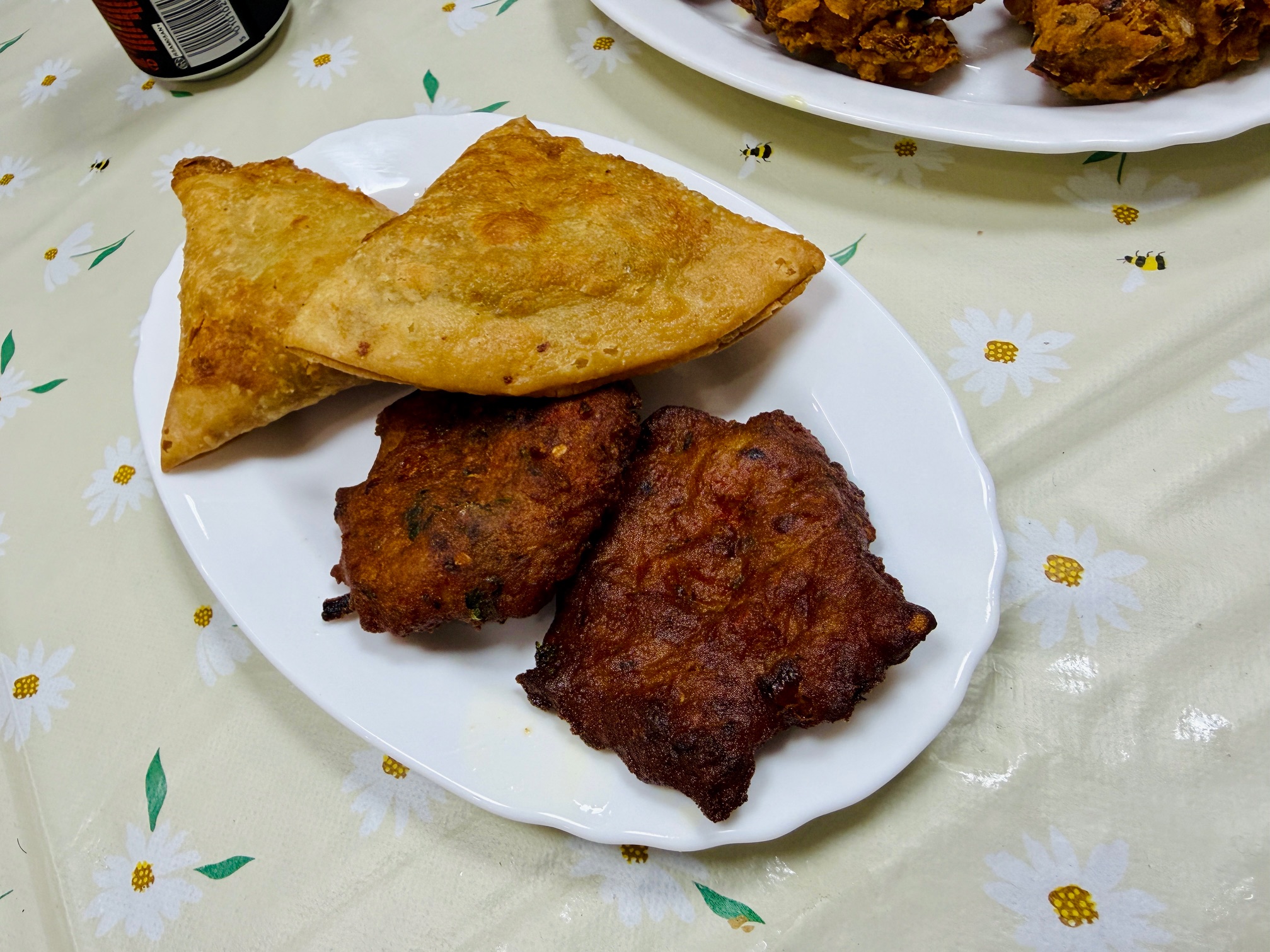
Also costing £2 were a pair of samosas, golden and generous, packed to with minced chicken. These were Graeme’s pick of the snacks, I liked them but I feel I’ve been spoiled by the world-beating vegetable samosas at the Wokingham Road’s legendary Cake & Cream, which last time I went cost something silly like 70p a pop. Despite moving to East Reading, possibly my very favourite part of town, Graeme is yet to try Cake & Cream. I’ll let him off, though: he doesn’t need a doctor’s note for that one.
Even better, and for my money my favourite of the snacks, were the chicken aloo tikki. Deep copper-coloured irregular fritters made with chicken and potato, these – to my mind anyway – took everything that was great about the pakora and the samosas and, à la The Fly, merged them into a single unbeatable snackette. And when I say “for my money” I mean “for one pound sterling of my money”. My goodness. I could just come to Namak Mirch and eat these, if it wasn’t for the inconvenient fact that the rest of the menu is equally loaded with winners.
But I didn’t know that at this point. I was catching up with Graeme, congratulating him on his new home, discussing my recent travails and marvelling at how well a can of Tango Mango Sugar Free went with all this gorgeous scran. I already envied Graeme his new house on one of Reading’s prettiest streets, was I going to end up coveting his local restaurant as well? It felt like it was going that way.
After much reflection, an enjoyable spot of picking out our favourite dishes like we were assembling some kind of gastronomic Fantasy Football team and lots of awfully polite “no, you pick your favourite” toing and froing, Graeme and I had assembled a selection of five dishes to let us sample as much of the menu as possible. We thought we might have over-ordered, but Namak Mirch’s pricing is so reasonable, and we so reckoned we were onto a winner, that we both agreed it was a risk worth running.
When I got to the counter, that slight air of lovable chaos set in again around portions and pricing. Now, I should say that I don’t mean you get diddled with hidden expenses: I mean that you believe your dishes are going to be a certain size and cost a certain amount and then you find that actually, they are somehow magically even bigger or even cheaper. It was baffling and benevolent.
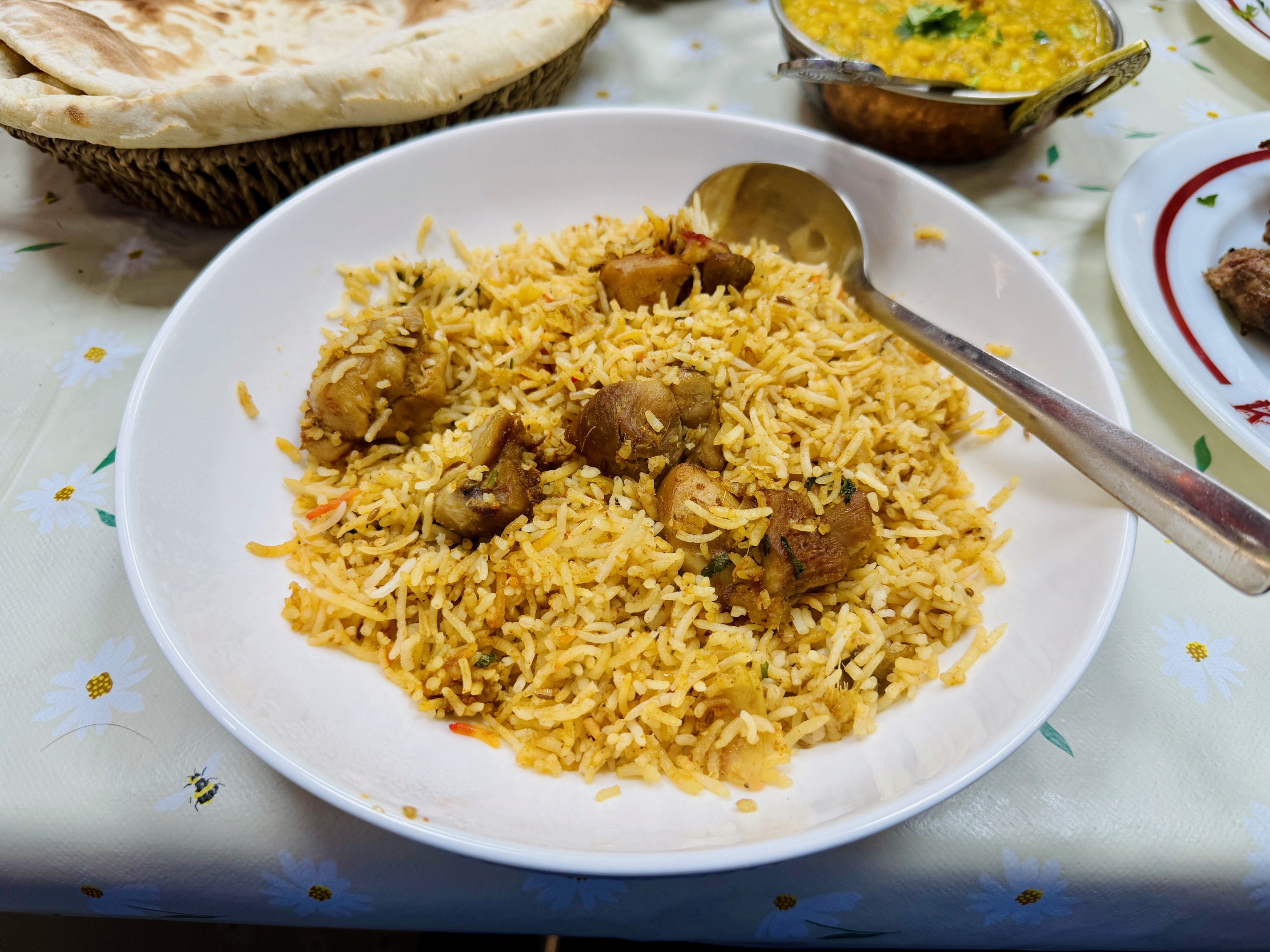
A great example is that I wanted to order us a boneless chicken biryani to share, a large dish that – on paper, at least – will set you back £11. And I was about to do exactly that, when the beaming man behind the counter told me, in the style of once famous local lush and Pride Of Reading Awards uber-ligger Chris Tarrant in Who Wants To Be A Millionaire, that he didn’t want to give me that. He said that as a Ramadan special they were doing a chicken thigh biryani, not on the usual menu, for £3.99. Would I like a couple of those instead, he asked me? It was not a difficult question.
Not only wasn’t it a hard question, but it was an excellent idea. We got two exceptionally generous portions of fragrant rice, studded with tremendous pieces of chicken thigh, the whole thing pungent with cloves. I mightn’t necessarily have wanted to eat this on its own, but as a bed to absorb gravy or curry it was unimprovable. When Ramadan is over I’m sure the chicken biryani will made an excellent alternative – or keema, or paneer, both of which Namak Mirch offers. But really, £3.99? How was Namak Mirch making any money?
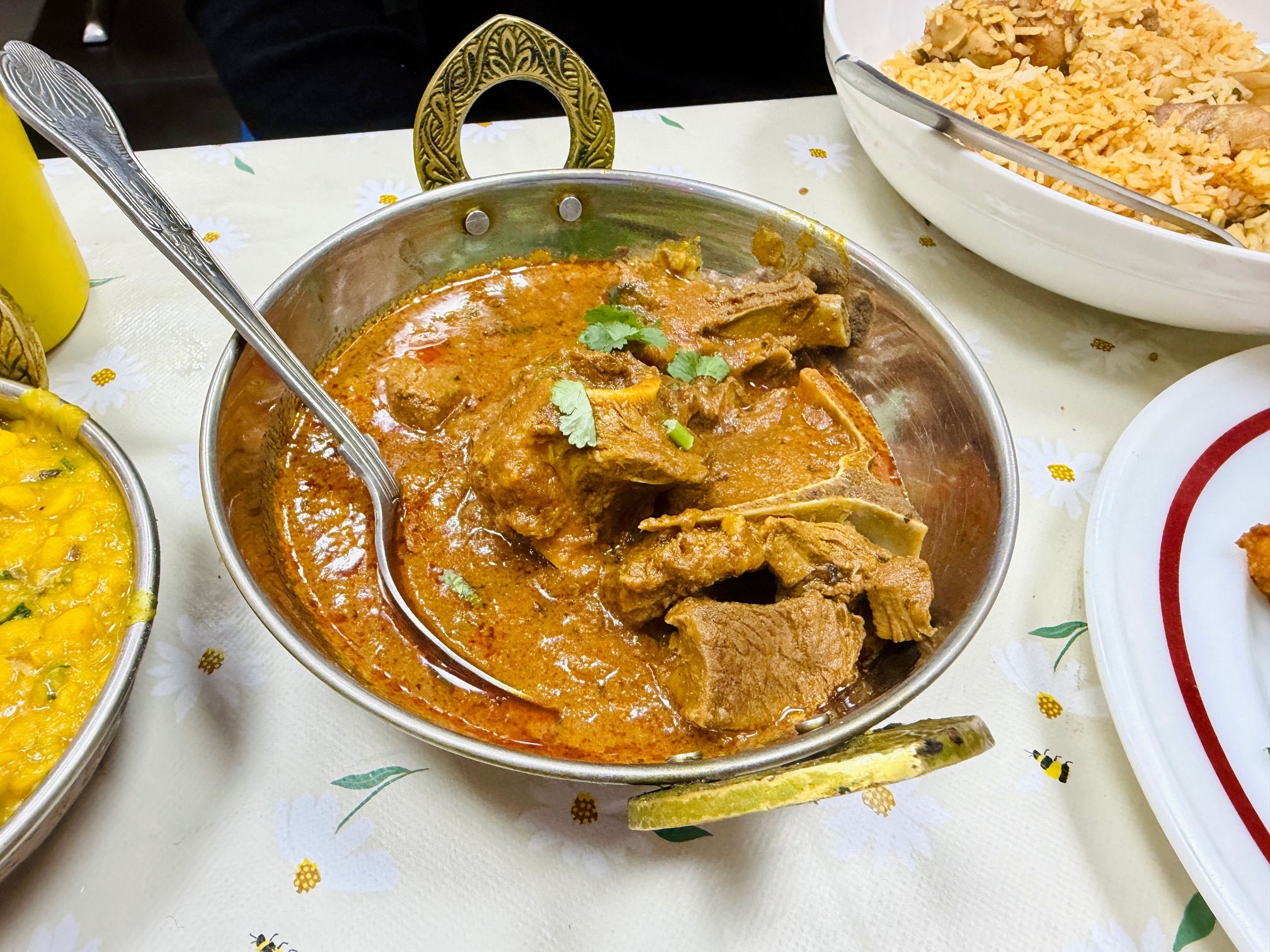
The wayward pricing affected a couple of other things we ordered. Graham was drawn to the lamb curry on the bone, and it was a superb choice. The lamb took minimal persuasion to leave home, so to speak, and properly go for a dip in a sauce which was rich, fruity and comforting, with a gentle heat that had me dabbing my nose only towards the end of the meal. Better still was the marrow, eased and winkled out of the bone and enriching every forkful it came into contact with. Graeme reminded me that this was why curry on the bone was better and, despite us both having all sorts of fun and games with our own bones, I couldn’t disagree.
We asked for a large, were billed for a medium and I suspect a medium is what we got. You could almost believe that they knew we’d ordered a little too much but were too polite to tell us. Still, it was a princely £9.50 and would have more than served one person handsomely. On the menu it’s meant to cost £9.95, but that was Namak Mirch: nothing cost precisely what you expected it to.
Further confusion reigned with the tarka dal, something Graeme really fancied. When I ordered it, the chap behind the counter told me it came with homemade roti on a special deal – another special deal – and of course we went for that. What arrived was some perfectly credible flatbread, which had the kind of gaps and holes that said it had been made by hand back in the kitchen. I liked it. but we were too full to properly attack it. It did however suggest that Namak Mirch’s kebab rolls – freshly made in naan, according to the printed menu, merited investigation.
But we also got not one but two metal bowls of tarka dal. We said we’d only ordered one and the chap waved it away, saying we could have the second one anyway. We were hardly complaining, and we complained even less after we’d tasted it – the most perfectly soothing bowl of big, floury lentils in a sauce that gently hummed with garlic without bragging about the time and care that had gone into it. Graeme’s wife Amy is a vegetarian: between this and the paneer biryani I suspect Namak Mirch will have her bit of their next takeaway order well and truly covered.
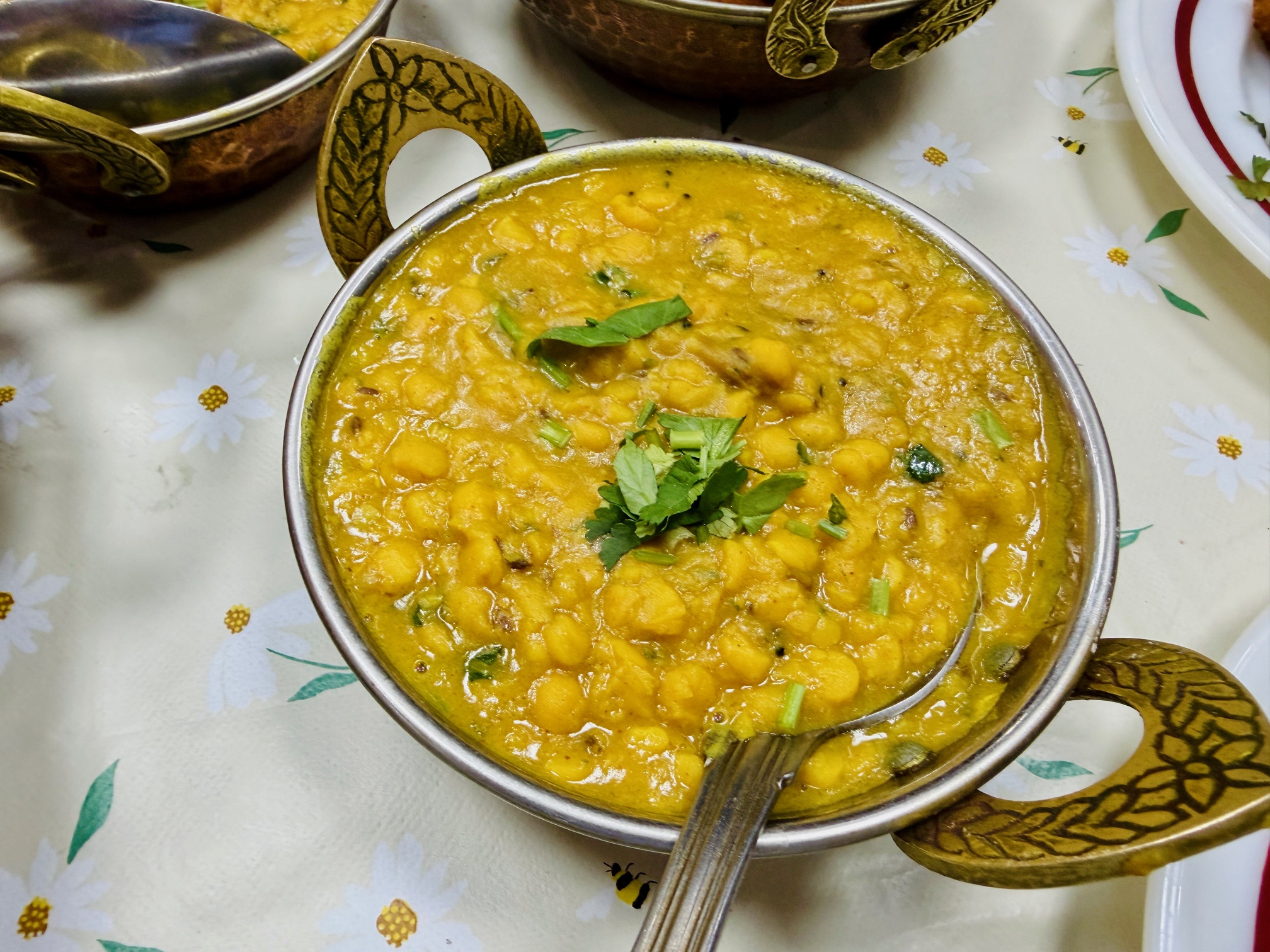
Again, when the bill arrived it was a bit of a case of The Price Is Right. We had allegedly been charged for two portions, at a cost of £8. You could read their menu from now to the end of the day and never find a permutation of tarka dal that cost either £4 each for two or £8 for one. But either way, two bowls of that faultless dal for £8 felt like some kind of misprint, or cosmic error.
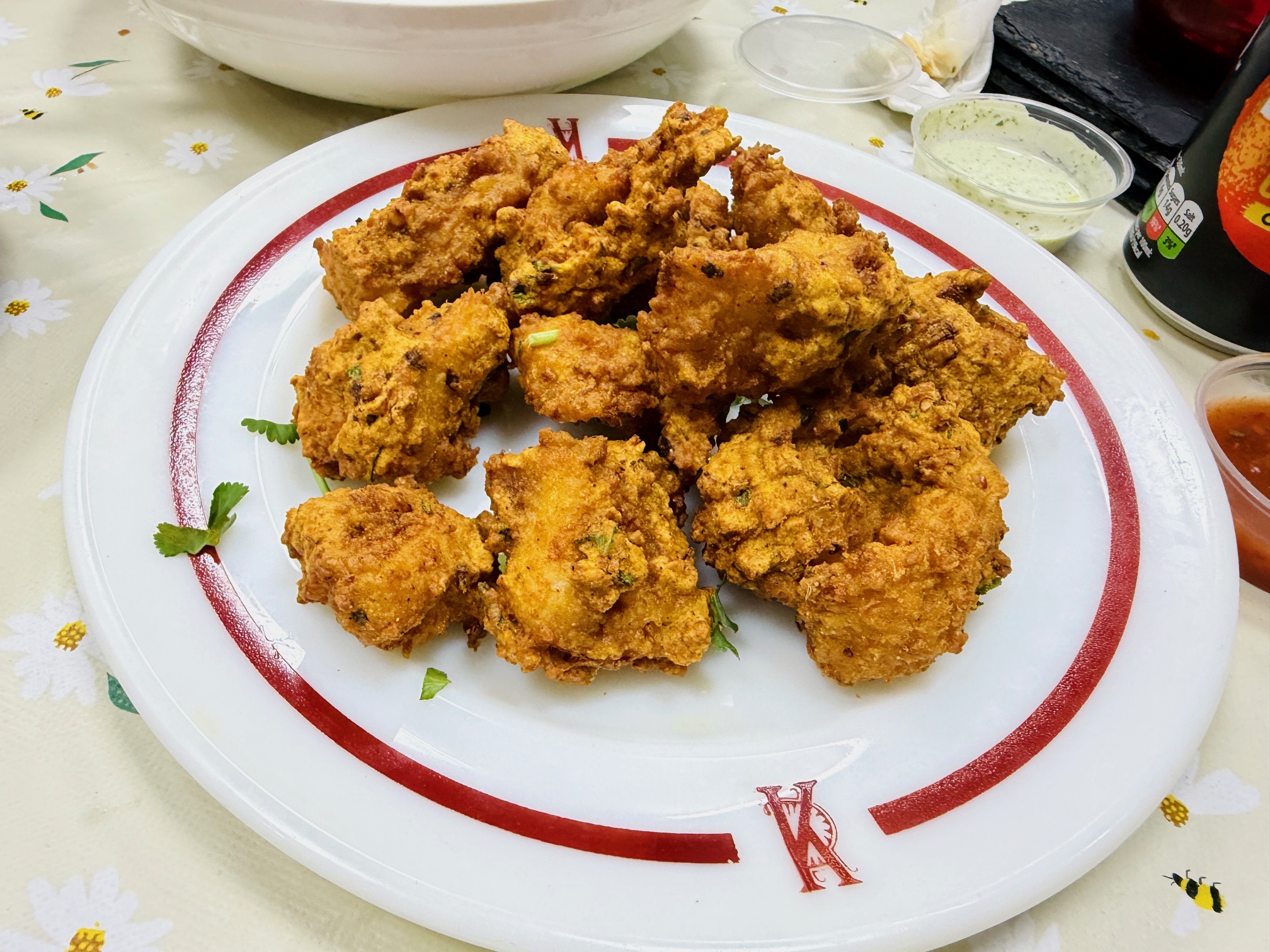
That would have been enough food, but there were a couple of other things I really wanted to try. One, the masala fish pakora, was possibly my single favourite dish of the evening, a big pile of irregular golden nuggets of fish, the coating all gram flour and herbs and the inside pearlescent, cooked no more and no less than each piece demanded. This deft touch reminded me of Kungfu Kitchen’s deep fried fish in spicy hot pot, a spiritual sibling even if it originated thousands of miles away in Chengdu.
By this point the staff had just given us a big squirty plastic bottle filled with raita, the kind kebab shops use to anoint your late night purchases, so we didn’t have to exercise restraint. I think they’d worked out that, on that evening at least, restraint simply wasn’t our bag.
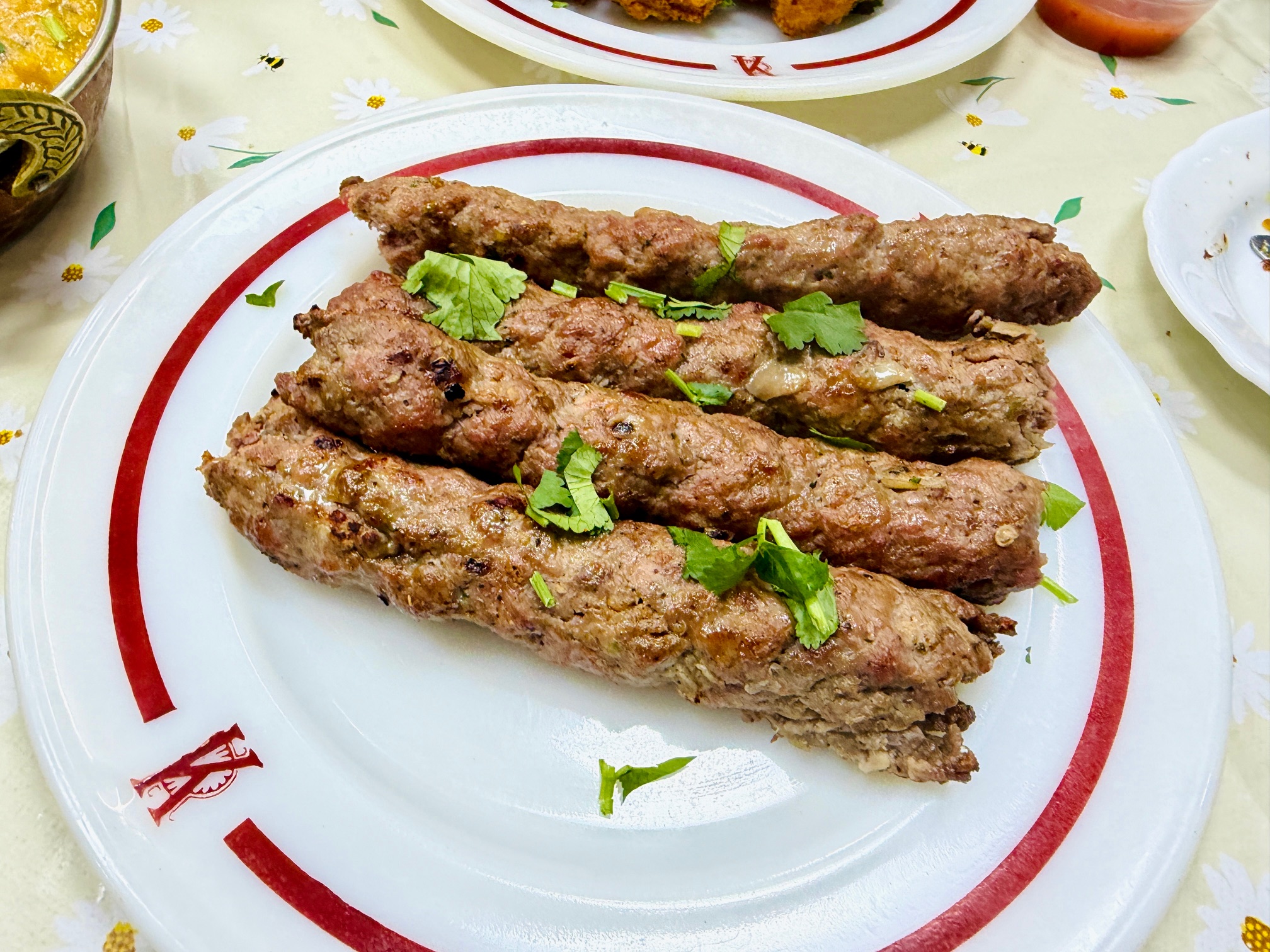
Last of all, we had to try Namak Mirch’s sheekh kebabs (I say had, I mean wanted). These are £2 each or five for £9.50 and when I’d asked for four the owner said he would happily do us five for £9: I’ve never eaten anywhere where the pricing felt quite so optional. I said it would just cause a diplomatic incident if we had to share a fifth one but really, four was plenty.
Again, they looked divine and the lamb in them was superb, the texture impressive, coarse with no bounce or padding. I think they were – almost – some of the best sheekh kebabs I’ve ever had. That almost is because the spicing of these was far more clove heavy than the biryani had been, to the point where it was a little like eating a pomander-flavoured sausage. A liberal trawl through the raita took the edge off it but a slightly gentler hand in the kitchen would turn these into world-beaters to rival – well, to rival the rest of the menu really.
I had no idea what our bill would come to, but when I went up to pay all our food – which may or may not have been part of special offers, Ramadan only deals or spur of the moment decisions by the proprietor – came to just shy of £50, including a couple of soft drinks. That didn’t include a tip, and I insisted on tipping to an extent which surprised the owner. But really, we were the only customers there that night and our food was almost without exception outrageously good, and I worried about how Namak Mirch would survive charging such timid prices.
He told me that they’d only been open a few months, and that things were going well – quiet at times, busy at others, very much impacted by Ramadan, for better and for worse. He seemed delighted that we had so loved our food and reiterated that his wife, out back, made it all from scratch. I told him his friend Jacqui had recommended it to us and he laughed. “That’s my wife’s friend! They’re all my wife’s friends.”
And then, because in my experience some truly hospitable cultures and people feel bad about things like being tipped and immediately try to give you something in return, he insisted that we stop for chai and, about ten minutes later, brought us two beautiful sweetened cups of the stuff. Because that wasn’t enough, we also got a little bowl of dates stuffed with almonds. It was simply lovely: my friend and I sat there sipping our chai as our cups sat on that lino tablecloth, we ate our dates, we watched the traffic hum past, heading into town, and we both reflected on just how good a meal it had been.
Neither of us had missed alcohol at all, either, but that’s because we knew that when we were done we could manage the short walk to the Hope & Bear, which had an acceptable pale for me and an impressive range of single malts for Graeme. We still had plenty to discuss but we did keep coming back to one particular topic, which was just how good Namak Mirch was. On that night, when both of us really needed that kind of warmth and hospitality for our own various reasons, Namak Mirch was a beacon of how things should be, and I was deeply thankful for it.
I hope other people make a pilgrimage there, even if working out the menu and pricing might be beyond even the intellect of Hannah Fry, and that they discover what I discovered. For my part I’m already wondering when I can go back, because I knew before the meal was even over that this one fell into the category of restaurant Zoë likes to describe as why didn’t you take me? Graeme, I have a feeling, might be back even sooner. He lives round the corner after all, the jammy bastard.
Namak Mirch – 8.5
251 London Road, Reading, RG1 3NY
0118 9669492
https://namakmirchonline.co.uk
Since January 2025, Edible Reading is partly supported by subscribers – click here if you want to read more about that, or click below to subscribe. By doing so you enable me to carry on doing what I do, and you also get access to subscriber only content. Whether you’re a subscriber or not, thanks for reading.
 Edible Reading
Thanks for this ! A pleasure to read, to know th