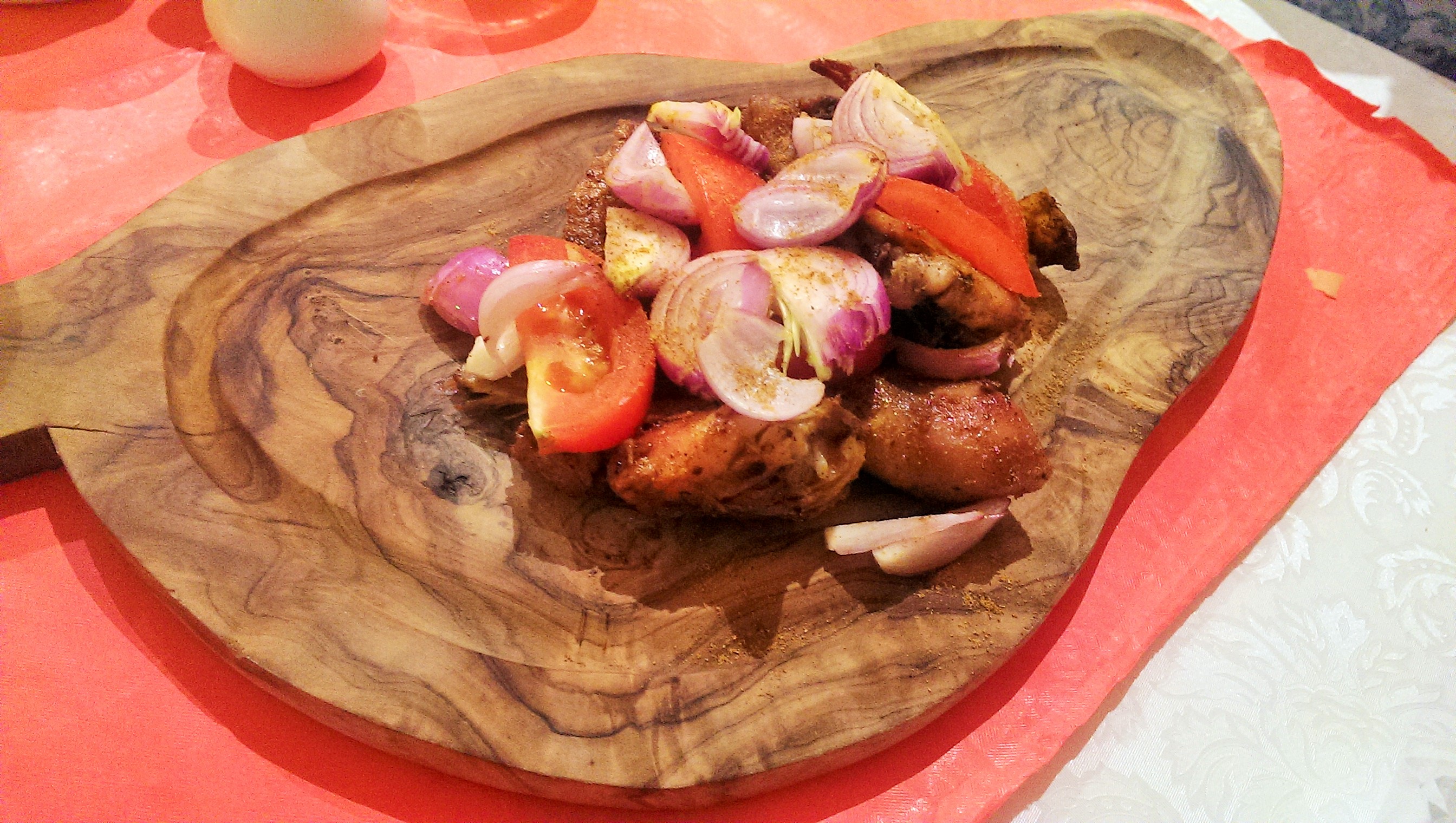
Pappadams

Pappadams closed in November 2025 and is due to reopen as a new restaurant called Anjappar. I’ve left the review up for posterity.

Planning which restaurants to review involves considerable deliberation here at ER HQ. Imagine me with a little rake pushing figurines round a map of Reading (and wearing a tricorn hat! I must buy a tricorn hat) and you wouldn’t be far from the truth. Should I review a pub this week? An Indian restaurant? A lunch place? Somewhere cheap, somewhere fancy? Time to go out of town?

This week’s review was meant to be of a pub. First I was going to review the Queen’s Head, but I checked the menu and it was exactly the same as the Moderation’s, which I’ve already reviewed, and I didn’t think a review which said “I went out of my way to have different things to last time but, you know, it’s pretty much the same” would excite anyone. Then I was going to review the Lyndhurst, but the menu didn’t inspire me (there’s something about the word goujon, and the way it’s used by English pubs, that undermines all the gastronomic beauty of the French language) and nor did the rather surly welcome behind the bar. So anyway, it was meant to be a pub this week but no dice: instead you get Pappadams.

Pappadams is a little place down the King’s Road, after the library but before you get to the architectural wonder that is King’s Point. It’s a small room which can’t seat more than thirty people, although there’s another bigger room upstairs (“we’ve got the World Cup on up there if you want to watch”, the waiter told us conspiratorially; it didn’t lure me up there). It’s handsome enough, if basic – square tables, nice comfy chairs, cloth napkins – with the huge glass front covered with a beaded curtain so you don’t feel like you’re eating in a goldfish bowl. When I got there on a Tuesday evening it was about half-full – mostly with Indian couples and friends.

I wouldn’t know a South Indian dish from a North Indian dish from an anglicised Indian dish, but the waiter was excellent at navigating us through the options and offering lots of advice, particularly on some of the Keralan specialities on offer. I found the menu quite endearing, with sections marked “from our fisherman’s net”, “from our vegetable garden” and “from our butcher’s farm” (a butcher and a farmer, I guess that’s one way of cutting out the middle man). The dishes are rated on the time-honoured chilli scale, although eccentrically things are either rated with zero, two, three or four chillies (only one dish, “Lamb Dragon” had four chillies – it sounds more like a masterpiece of genetic engineering than an actual main course, or maybe it’s both).

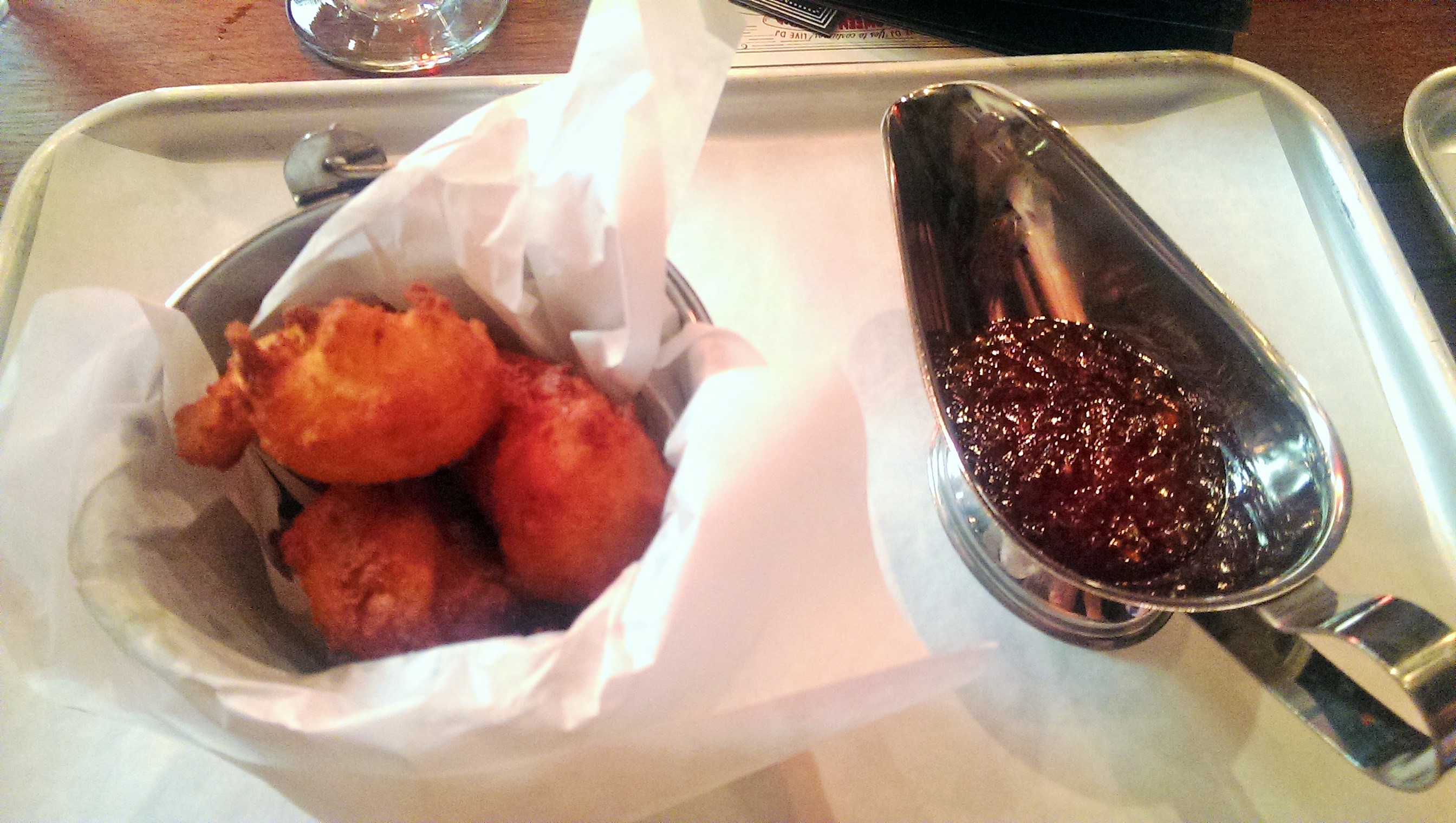
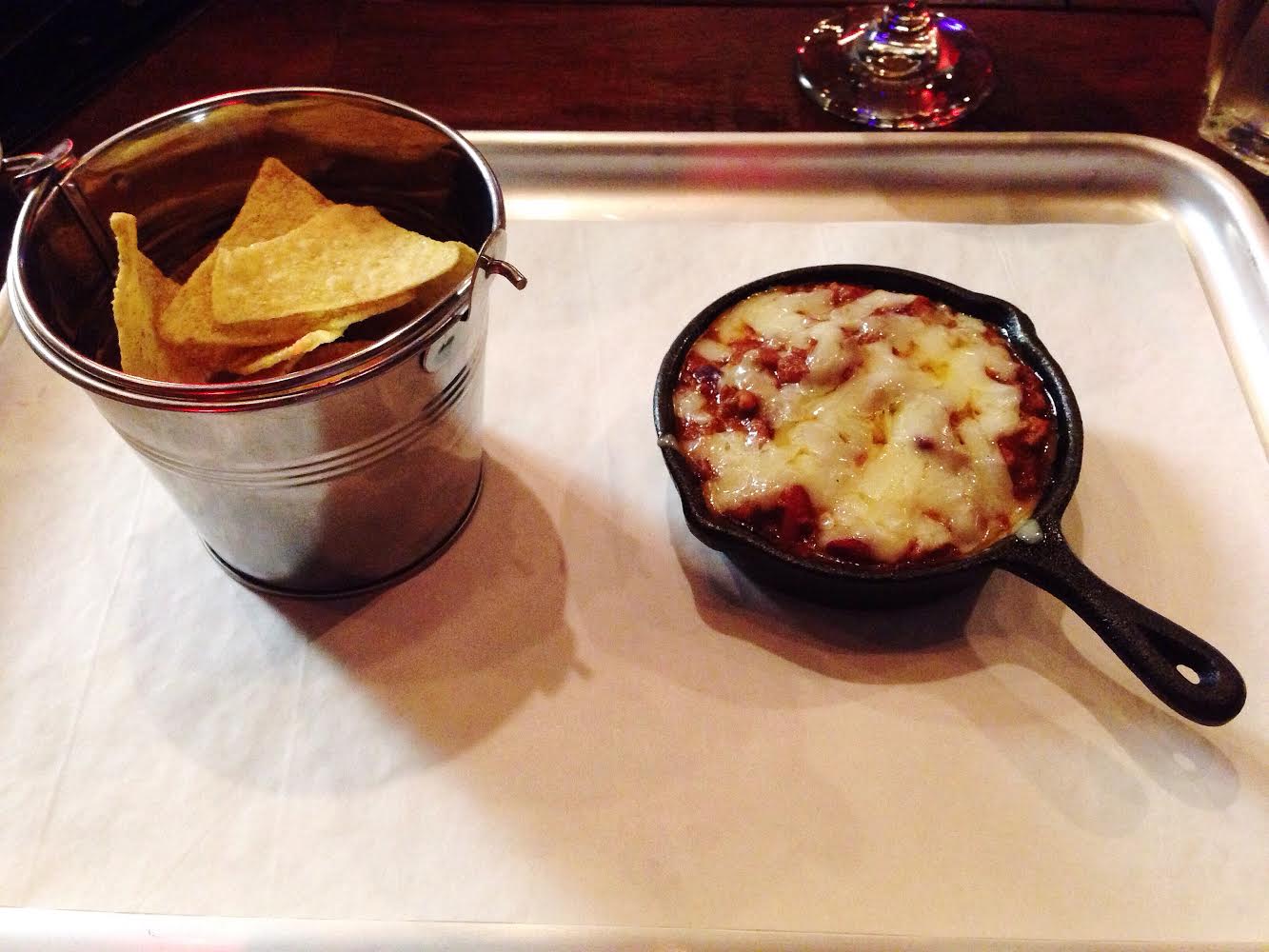
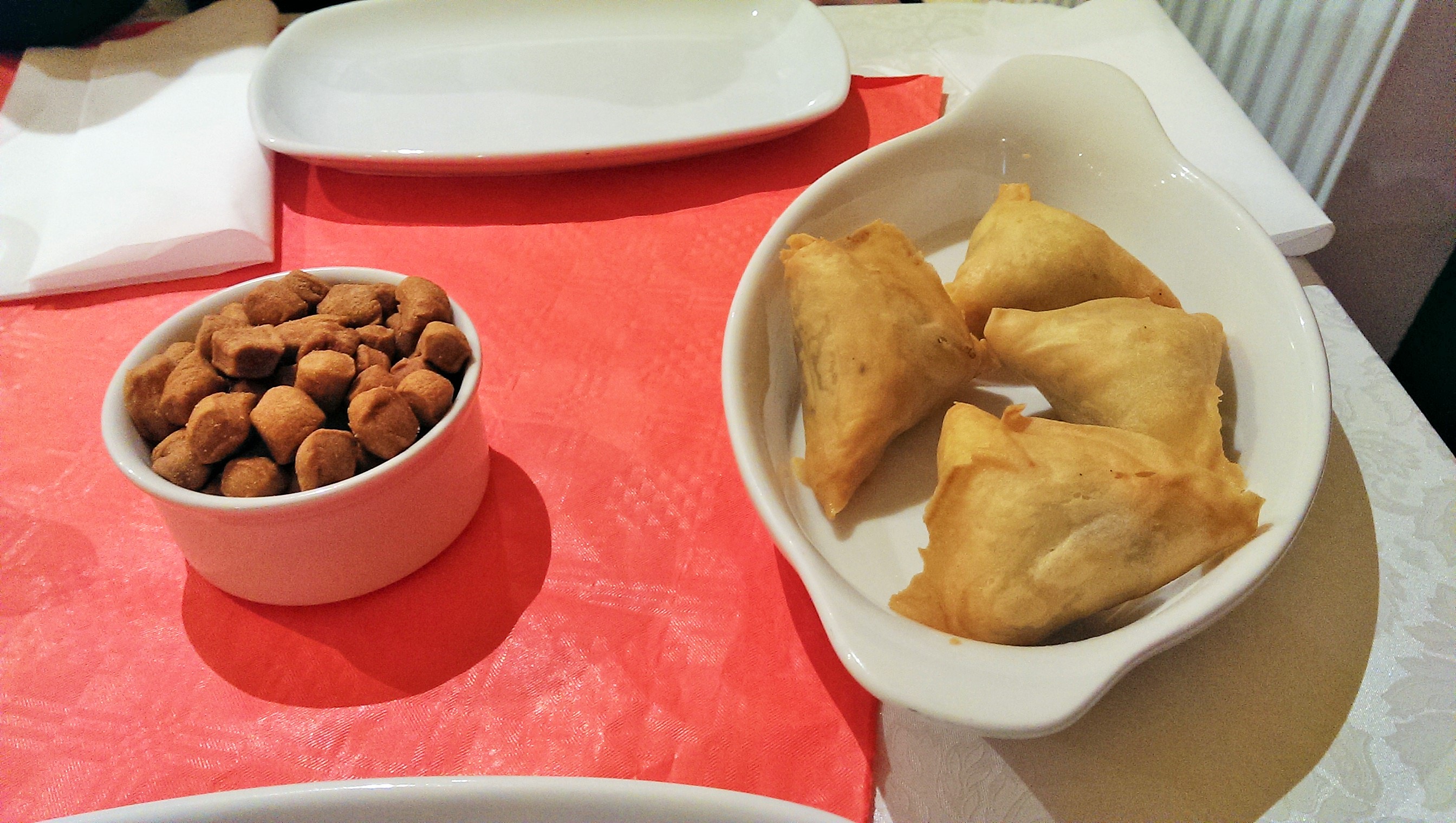
Starters were delicious although I couldn’t shake the feeling, maybe as a result of reviewing other Indian restaurants, that I’d had the same kind of things ever so slightly better elsewhere. Paneer shashlik was lovely, big squares of cheese, charred and chewy around the edges, sizzling on a plate with peppers and onions. The lamb tikka was less successful: the flavour was perfect, deep and intense, soaking into the sizzling onions underneath, but the texture was more tough than tender, requiring a lot more cutting and a little more chewing than I’d hoped.

Starters

After we finished our starters, something happened which happens very rarely in Reading restaurants. The waiter came back, asked if we’d enjoyed our dishes and asked how long we wanted to wait before the kitchen started cooking our mains. Why don’t more restaurants do this? I’ve lost count of the number of times my main arrives hot on the heels of my starter, leaving me with half a bottle of wine to polish off while telling waiters, with an increasingly rictus grin, that yes, I would like dessert but no, I don’t plan to order it until I’ve the rest of the wine in front of me, wine that was only there because they’d been in such a hurry to feed me. Even if Pappadams didn’t get brownie points from me for anything else, they’d get some for that alone. Service was excellent throughout. Early on I was asked if we’d like to move across to a bigger, better, freshly vacated table – another thing not enough waiters consider. They may not have won me over by inviting me to watch the nil-nil draw in the Mexico-Brazil match, but otherwise they didn’t put a foot wrong.

Mains were, well, divisive. We took advice from the waiter and went for two Keralan specialities. Fish mappas was an anonymous white fish (I’d put my money on tilapia, but not with any great confidence) in a sauce of coconut milk dotted with nigella seeds. I liked the sauce – so different from a Thai sauce, lacking that slightly cloying sweetness they can sometimes have – but the fish wasn’t for me. I like my fish to be firm, to flake, to have a little give but not too much. This was softer and mushier than I personally like it, but that might be a matter of personal taste. It all got finished, but that was more to do with the person opposite me.

The other dish, cochin kozhi curry, was even more divisive because I couldn’t quite decide whether I loved it or just liked it. A chicken dish, this too was made with coconut, although the sauce couldn’t have been much more different to the sauce that came with the fish. It was dark where the other was light, thicker and stickier where the other was more liquid. It had proper smokiness (almost with those notes of leather Jilly Goolden has spent a career trying to kid us into thinking she can spot in a glass of Rioja) and lots of clever aromatic flavours that came through a little further on. But here’s the problem: it was really, really salty. I could just about manage it (although it did cause me to gulp my mango lassi towards the end) but I can imagine other people would be put off by it. The chicken, unlike the fish, had the texture just right: putting up just enough fight and then falling apart under a fork. Both mains felt a little mean on the meat to sauce ratio, with a big bowl of sauce left over at the end after time spent fishing for the meat.

Mains

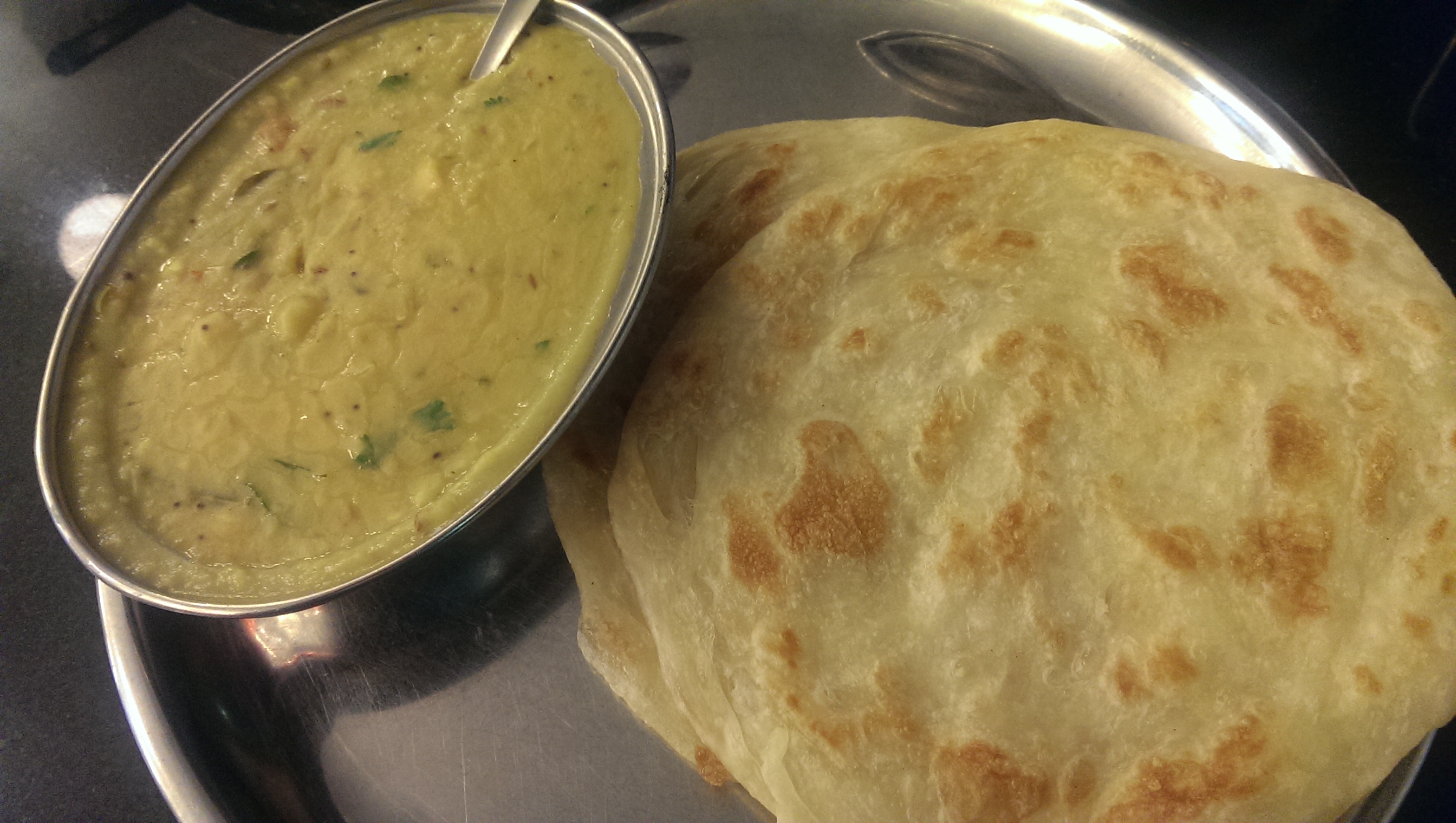
The side dishes were unremarkable. Rice with cumin was a little bland (although, compared to those sauces, most things would have been) and the paratha was thick and heavy compared to others I’ve devoured in recent months. Like so much of what I had that evening it was good, but I was left remembering that I’ve had better.

Where I’ve not had worse for a while was the wine. The house red was perfectly decent (no notes of leather – even Jilly Goolden would have struggled to locate them, I imagine). The white, on the other hand tasted slightly peculiar and not especially like wine (an achievement, I know). If I’d opened the bottle at home I would have poured it down the sink and I’ve rarely had wine that bad in a restaurant. After that we switched to other drinks – Cobra and mango lassi, more reliable staples. The lassi came with pistachio crumbled on top – a lovely touch, I thought. We didn’t stop for dessert (too full for gulab jamun, this time at least) and the whole thing came to just under £50, not including tip.

I feel for Pappadams. If you picked it up and plonked it in any of a dozen other towns it might well be the best Indian restaurant there. It just has the misfortune to be down the road from House Of Flavours and in the same town as Bhoj, and it strikes me as caught a little between the two. The prices and the décor are more like Bhoj, the location puts it firmly in competition with House Of Flavours. If you made Top Trumps cards of all three restaurants, I’m not sure Pappadams would win in any category (although it would come close on service). But that doesn’t quite do the place justice, because although the best is the enemy of the good the fact remains that Pappadams is a good restaurant. I can see myself going there when I fancy Indian food and don’t want the faff of House Of Flavours or the schlep to Bhoj.

As I left the waiter asked me if I wouldn’t mind putting a review on TripAdvisor if I’d enjoyed my meal, in a way that struck me as well rehearsed. I can understand why: it’s a packed market, and restaurateurs need all the help they can get. I didn’t, but I’m sure other people will. I hope they do, too.

Pappadams – 7.2

74 Kings Road, RG1 3BJ
0118 9585111

http://www.pappadamsreading.co.uk/

Tasting House

The Tasting House closed permanently in April 2021. I’ve left the review up for posterity.

The real challenge with Tasting House, as a reviewer, isn’t what you would think. The real challenge is explaining exactly what it is. It works rather differently to all the other places I’ve reviewed because it is, fundamentally, a wine shop. It’s a wine shop that also lets you taste a variety of wines and dishes up platters of charcuterie and cheese should you get hungry (“Sample. Stay. Shop” is how the website sums it up: alliterative, abrupt, accurate). It’s been open since September last year and I’ve been meaning to review it for ages, so I dropped in one drizzly weekend to give it the ER going over, even though I knew this would involve making the ultimate sacrifice: drinking at lunchtime.

The “sample” element of Tasting House is served by the “Enomatic” (a machine described as a “wine vending machine” by the chap behind the counter). It’s a self service system where customers buy a prepaid card, pop it into the slot at the top of the machine, grab a glass and dispense some wine. There are sixteen bottles hooked up to the machine (seven white, eight red and, if you’re feeling especially frivolous, one rosé) and you can pick a tasting measure (25ml), a small glass (125ml) or a large glass (175ml) depending on whether you want to taste or drink. The cost of each measure depends on the bottle in the machine with a taste starting from about 50p. Along the bottom of the machine is a card for each wine giving information about the grapes, the taste and what food they’d pair well with – another indication that this is as much about taking it home as having it with the food on offer.

I won’t go into the wines in any detail because by the time you read this they may well have changed. In total we tried four wines between us (drinking sensibly, honestly) from riesling to shiraz and really enjoyed the whole ceremony of button pressing, glass swirling, sniffing and pretending to know what we were talking about. Actually I really enjoyed most of them but somehow that’s not the point, because you get to try things without committing to a whopping glass and bad choices aren’t so disastrous. The staff were clearly very passionate and knowledgeable and full of recommendations for people who feel unsure about what to pick (though I’m ashamed to say that I pretended to know what I was doing – much like I do writing reviews, in fact).

For the “stay” part of the visit Tasting House does four different boards, either in singles or doubles, with an array of different charcuterie and cheese. I won’t go into the permutations (because there are a lot: I love a list as much as the next person but that would stretch even my patience) but you get some of five different meats on the one hand and six different cheeses on the other. Depending on what you order you also get various other bits and bobs – sundried tomatoes, chutney, cashews, olives and/or cornichons. This means that picking a board involves a bit of horse trading and can seem needlessly complex – it might be easier if they just let you pick a certain number of elements and get on with it. As it was, we ordered two different platters and tried to get as many different ingredients as we could, something which might have been easier with a spreadsheet.

I’m not going to list everything that passed my lips, either. Instead, let’s talk about the big hits and flops. In the first camp: the Waterloo, a gorgeous, creamy, buttery local cheese a lot like a very good brie; the salami which was rich, salty and almost crumbly; the chorizo, soft and lightly piquant; and my favourite, the coppa which was dense and dry with a hint of fennel seeds and black pepper. I also loved the houmous – thick and delicious – and the tomato chutney, which went beautifully with a crumbly chunk of Montgomery cheddar (and hats off to Tasting House for picking such a top-notch cheddar, too).

And the let-downs? The bread, for one: white, fluffy, soft-crusted and unremarkable, served in giant hunks for dipping in the olive oil rather than going with everything else. This was a particular shame for me because I’ve always thought good cheese really needs good bread or a decent cracker. The other big disappointment was the prosciutto which felt flabby, shiny and supermarket-soft. I wasn’t expecting pata negra carved by hand in front of my very eyes – although I wouldn’t turn it down, don’t get me wrong – but I did want something on a par with the salami and this wasn’t it. England does some great hams of its own (Cumbrian air-dried ham, for example) but if Tasting House isn’t going to dish up something of that quality maybe it should stick to the other charcuterie on offer.

Also, if I’m being picky I prefer my cheese to be at room temperature so that the flavours open up more: both cheeses were chilled if not chilly. Maybe this is something to do with health and safety but it did mean they weren’t quite as delicious as they could have been. Still, despite the misses if you wash it all down with a glass of shiraz you have a very pleasant (if not terribly light) lunch.

TH2Service was friendly and laid back without ever committing the cardinal sin of overfamiliarity. A bit too laid back, if I’m honest – the boards took a while to come, although that might be because they seemed a bit short staffed when I went. As it happened I didn’t mind, it fitted in with the feel of the place, it was a weekend and I was in no hurry to go anywhere. They played an interesting range of music, some I’d heard of and some I wanted to Shazam, and we sipped our wine and waited. It felt a bit like visiting a cool friend while they rustled up lunch for you from all the cool things in their cool fridge. (Did I mean “cooler friend”? Does this make me cool or uncool? I’m so confused.)

It’s a shame the furniture doesn’t make you want to linger more – it’s hard and basic, black metal tables and chairs around the room and wooden high tables and stools in the windows. Again, I felt a bit confused by Tasting House – they’ve extended their opening hours recently to 10pm but it doesn’t feel like a bar. I suppose it could work as somewhere to have a quick drink before heading on somewhere else, although you could stay there all evening if you’re suitably upholstered yourself.

I didn’t try out the “shop” part on this visit, though I was quite tempted to pick up a bottle of the riesling. The website states that they have over 200 wines in the shop which range from “everyday drinking” (under £10) to one I saw on the top shelf which clocked in at just under £400 (I suppose that might be everyday drinking too, but only if you’re the Sultan Of Brunei: even John Madejski probably wouldn’t drink that these days).

My bill came to seventeen pounds for two platters and I put twenty pounds on my card for wine – though there was still a fair chunk of that left (honest!). I do think that it’s a little unfair that diners can’t have wine with their lunch without having to make that upfront investment, although it’s canny on the part of Tasting House I suppose: it locks you into going back so you don’t let your money go to waste. So yes, I will go back. I can see myself popping in after work one evening and trying a few tasters or glasses of wine for what feels like no money at all. Maybe that will lead to another charcuterie board, maybe I’ll go on and eat something bigger somewhere else. Maybe next time I’ll stay long enough to figure out if it really is a bar, a restaurant or a shop. Actually I’m not sure I’ll get to the bottom of that, but it might be fun trying.

Tasting House – 6.8
30a Chain Street, RG1 2HX
0118 9571531

http://tastinghouse.co.uk/

Tampopo

N.B. Tampopo closed in June 2015. I’ve left the review up for posterity.

If I’m honest, I wasn’t predisposed to like Tampopo. It always felt like another link in the vast chain of chains on the Oracle Riverside, a bookend at the opposite end of the shelf to Wagamama. I found the concept a bit strange: food from throughout East Asia, a range of dishes from – among others – Singapore, Thailand, Indonesia, Vietnam and Malaysia. Can you imagine a pan-European restaurant, serving boeuf bourguignon alongside pizza, paella, fish and chips, moussaka, schnitzel and herring? If you can imagine it, and I can’t, would you really recommend that anybody go to it?

So I turned up ready to be underwhelmed, and was pleasantly surprised from the moment I walked in. Like Wagamama, Tampopo offers the threat of communal eating – long tables which imply that, if the restaurant is busy, you won’t be eating on your own. Unlike Wagamama, they’ve made some effort to make that seem less stark and unpleasant – tables feel more compact, the seating is made up of (surprisingly comfy) stools rather than large benches and the lighting is warmer and more attractive, giving the room a glow. On a Monday night there was no danger of sharing a table with anyone, but even if I’d had to it wouldn’t have felt like the end of the world.

The culinary first impressions were also good. Edamame were considerably more interesting than their counterparts at the other end of the Riverside, dressed in chilli and sesame oil and coarse flakes of salt. The wine that accompanied them was also very good – a viognier was light and peachy and the Gewürztraminer was delicious, fresh with (at the risk of sounding like something out of the Carry On films) a strong hint of banana. They do glasses in 125ml, too – something I wish more restaurants would sign up to.

Regular readers will be unsurprised to hear that I ordered the “Tampopo sharing platter” to start. I’m beginning to feel less ashamed about this habit, rationalising it as an opportunity to try as many different things from the kitchen as possible (that’s my story, anyway, and I’m sticking to it). And I’m unrepentant, because it was an excellent choice – a big black slate arrived at the table with six different items from the starter menu, neatly laid out in a grid, each with an accompanying dip or garnish.

StarterThe least remarkable were the coconut prawns – butterflied, breadcrumbed and served with sweet chilli sauce, they were the stuff of sharing platters everywhere. Everything else, though, was either a pleasant surprise or a very pleasant surprise. The chicken satay, for instance: so often a pedestrian space filler served up with some warm Sun-Pat, but Tampopo’s was a world away from that. The chicken was soft and tender (I wondered whether it might be minced rather than the fibrous fillet you usually get) and the sauce was deep, rich, chunky and much more savoury than satays in so many other places in Reading. The corn fritters made a pleasant change from the usual fishcake – lighter, taster and without the slightly disturbing sponginess fishcakes can have. The gyoza were plump and soft, full of minced pork, subtle and lighter to eat than they looked on the plate.

The last two were things I’ve not tried before. Goi cuon were cold, soft rice paper rolls packed with vegetables, noodles and coriander – fresh and clean, if almost impossible to eat tidily (whatever you think of a traditional spring roll, it’s at least easy to dunk in a dipping sauce). Bulgogi, Korean grilled beef, was also good, with a smoky char to it. It came served on a lettuce leaf which is meant to serve as an impromptu wrap – a great idea, although it did mean that the beef didn’t stay hot for long. That was fine though, because it didn’t stay uneaten for long. The only letdown was the kimchi that came with the beef – an oddly bland pile of cabbage without the eye-watering, intense taste I’m used to. It was the only place where the menu felt like it lacked the courage of its convictions.

I’m not one for listing the price of dishes in brackets in a restaurant review – there are other places you can go for that – but this one is worth emphasising: that selection of starters, for two, was £13.95. Pretty impressive stuff, and it built up a feeling of goodwill that the rest of the meal would have to go some to ruin. Good starters are like that.

Another nice touch came when the waitress – who was excellent all evening, friendly and helpful without being matey or patronising – took our empty slate (and extra napkins, because it’s messy stuff) away.

“Was that okay for you?”

“Yes, it was gorgeous.”

“I’m glad you liked it, it’s one of my favourites. I had it for lunch, actually.”

She was also full of good advice on which mains to order and came across as genuinely passionate about Tampopo’s food. Another waitress, later in the evening, asked what we made of the menu and showed real interest in feedback. She also told me that Tampopo was only a small chain (five branches, three of them in Manchester), and that Reading was the baby of the family, having only been open for three years. So much for my preconceptions about eating in a faceless chain – and in fact, a subsequent look at the website suggests that the owners either have a genuine passion for this kind of food or are phenomenally good at faking it. Either way I was struck that all of the serving staff felt like ambassadors for the restaurant, also a million miles from the experience in most chains.

Could the mains live up to the start? Well, not quite. Com Hué, a Vietnamese rice dish, was the biggest disappointment of the evening. It was almost like a Vietnamese paella – rice with chicken, squid and king prawns, along with coriander, red onion, spring onion and carrot. Bits of it were beautifully cooked – the squid in particular was more tender than I’d expected – but the overall effect was a bit restrained for my liking. I often worry with subtle food that it’s my fault for not having a refined enough palate, but the good Vietnamese food I’ve had has positively sung with flavour, whether it be mint or lemongrass or coriander. This had none of that, and I don’t think it was my fault. All the other dishes tasted of something, but this was food with the mute button on. I didn’t finish it.

Main2Happily, the other main course was streets ahead. Khao Soi, a Thai dish of chicken and yellow noodles in red curry sauce, was delicious. The sauce was creamy and coconutty with decent sized but perfectly soft pieces of chicken, the noodles were small enough to twirl and there were tasty crispy onion pieces on top. I was apprehensive because of the two chillies next to it on the menu but actually the flavour was well balanced with loads going on – a good whack of garlic and ginger with the creamy sauce taking the edge off the heat. This is the sort of curry I want to eat on a cold, wet night (and I probably will soon, Reading summers being what they are). What it reminded me of, and I mean this in the nicest possible way, was curry sauce from my local chip shop when I was a kid, when the chippie was a treat, all this eating out was a lifetime away and Thai food was still a few years from hitting our shores. I’m not even sure I’m saying it tasted like that, but it took me back to that magical time when foreign foods were new and exciting without being intimidating.

Main1The side dish was nothing to write home about. I went for wok fried greens – you have a choice of broccoli or pak choi in oyster or tamarind sauce. My broccoli was some kind of mutant strain that looked so much like pak choi that it’s almost impossible to tell apart from it, except for the presence of a few tiny florets. Even wilted it was almost impossible to eat with chopsticks and not quite worth the bother of doing so. A pity, really, because the tamarind sauce – like so much of the food at Tampopo – was really tasty, sweet and sharp at once.

I’ve always found desserts a bit of an Achilles’ heel in this kind of restaurant so I was amazed not only to find a few things I fancied ordering but to really enjoy them into the bargain. There isn’t much on the menu from the Philippines (just the one main) but they contribute one dessert – churros and chocolate (popular since Spanish colonial times, if you believe the blurb on the menu). These were some of the better churros I’ve had in this country; thin piped doughnuts with a good balance of crispy and chewy. Better still, the chocolate sauce was thick, intense and tasted of real chocolate, as opposed to the watery, synthetic chocolate flavoured sauce so often dished up with churros on the continent. They were perhaps a little over-zealously dusted with icing sugar but that was soon tapped off (nothing stands between me and fried dough, I can tell you).

ChurrosThe other dessert was another weakness of mine which I always order on the very rare occasions when I see it on a menu. Black sesame ice cream was gorgeous – there’s something about the hit of those sesame seeds in such a surprising context that really works. This wasn’t the best example I’ve had (a chunk of ice in the middle of it was disconcerting) but it was close enough for me. The other flavour I tried, cinnamon, was creamier and blander and mainly left me wishing I’d had two scoops of sesame instead.

Dinner for two – edamame, three courses, a side and a couple of glasses of wine – came to fifty-nine pounds, not including tip. Again, it’s worth mentioning what good value Tampopo is. Aside from those starters, which I’ve already enthused about, the most expensive main was £12. Neither of the desserts cost more than £3. The Oracle can be a punishing place for restaurants to make a living, and I was impressed by the balance between cost and quality here – and the service, which was miles better than at most Oracle restaurants I’ve been to (Browns and Pizza Express, I’m looking at you).

If I was summing up Tampopo in three words I think they’d have to be these: better than Wagamama. They occupy very similar spaces but Tampopo avoids everything that gets on my nerves about the latter: unforgiving lighting, unwelcoming furniture, the rote instruction that your dishes will arrive in a random order whether you like it or not (I can’t tell you how much this irks me) and the feeling that you are meant to eat your food quickly, leave and go to the cinema. Tampopo isn’t necessarily a place to settle in for an evening, and still feels like somewhere you’d eat before going on somewhere else, but it manages to make that feel like an experience in itself rather than a transaction. I will definitely be back, and in future when I go to a restaurant I might try leaving my preconceptions at home.

Tampopo – 7.6
The Riverside, Oracle Shopping Centre, RG1 2AG
0118 9575199

http://www.tampopo.co.uk/

Ruchetta, Wokingham

As of September 2025, Ruchetta is in the process of closing and reopening under the name Angelo’s, to tie in with a second branch of Angelo’s opening in Reading on Station Hill. As a result I’ve marked this as closed, though I’ve kept the review up for posterity.

There are two kinds of expensive meal. There are the ones where you know in advance that they’re going to be expensive, where you look at the menu beforehand, brace yourself, tell yourself it’s a special occasion. Then there are ones where you’re taken by surprise; maybe you order the really pricey main course you weren’t expecting to, or pick a really fancy bottle of wine, or throw caution to the wind and get a second bottle of the less fancy wine. However it happens, there are some meals where you get carried away, it all adds up and you get a little shock when you take that first look at the bill.

Why am I saying this? Because, to begin at the end for once, Ruchetta is the most expensive meal I’ve reviewed so far – and I knew it was going to be costly before I even stepped through the door. And why’s that important? Because when you know a meal’s going to be expensive, lots of things happen. The anticipation is completely different – I get excited about reading the menu, start looking forward to it (something that doesn’t always happen, believe me). But also, price inevitably becomes another dimension, and each dish is assessed not only on whether it’s good, but also on whether it’s worth the money. It’s only natural that the bar is set higher: after all, you can be pleasantly surprised by a ten pound lunch in the middle of nowhere, but it’s harder to be pleasantly surprised by an expensive meal in a beautiful little house in the prosperous market town of Wokingham.

It really is a beautiful house, too. I don’t know Wokingham well but Ruchetta looks very much like the kind of restaurant it ought to have, really standing out (if you think Reading has a lot of chains, you ought to walk round Wokingham some time). It’s slightly off the main drag in a tiny, nicely jumbled building with a mosaic of little rooms. I sat in the conservatory – partly to get better light for photos – and regretted that more and more as the evening went on, feeling rueful that I hadn’t chosen one of the more snug, atmospheric sections at the front of the house. That said it was a pleasant room with crisp white linen and smart white plates, although the tables do feel a little close together; I was glad the one next to us was empty, or else I would have felt very overlooked.

The menu’s one of the most difficult I’ve had to choose from. There is something magical about good Italian food at the best of times, but the menu at Ruchetta really is the kind where you’re aggrieved that you can’t have everything. We tucked into the bread basket (white and a brown which resembled sourdough, with good salted butter) and sipped our Prosecco in the early evening sunlight, haggling and agonising until the decision could be postponed no longer. If the waiter had arrived two minutes earlier, or two minutes later, you’d probably be reading a review of four completely different dishes.

I adore truffles, and I nearly always order them when I get the chance. The distinctive aroma was noticeable the moment I entered the restaurant and I reckon it subliminally influenced both choices of starter. The first was one of the simplest things you could have, truffle ravioli in butter and sage, and it was a delight. The pasta was al dente and richly flavoured with the earthy, dirty truffles. The dish was topped with thin slivers of parmesan and a handful of young sage leaves. But most importantly a whole pencil sharpener tub of those heavenly truffle shavings had been sprinkled on the top of the dish making the flavour even more intense. Eating it was close to an ecstatic experience, the forkfuls close to the end simultaneously magnificent and agonising.

Truffle pastaThe other starter called to me because it was just so unusual that I had to try it: baked white onion in sea salt, filled with truffle fondue with pan-fried foie gras and caramel. The foie gras was just delicious – a generous piece, soft and yielding, perfect with or without the smidge of sweet caramel. The truffle fondue was less successful – it was salty and tasty and rich with truffle, but very liquid and I really had no idea how I was meant to eat it. They didn’t bring a spoon, but I ended up finding one from a neighbouring place setting and improvising. I thought the point of fondue was to dip something in it, and without that something it was more like a very cheesy soup (I briefly pondered whether I was meant to use the foie but surely not: far too expensive to use as a glorified soldier). The quail egg didn’t really add anything and the white onion had been baked just enough that it made an excellent bowl but not enough that it made a sweet and tasty way to mop up the rest of your fondue. I’m glad I can say I’d ordered it, but it felt like was two starters, neither of which quite worked, joined at the hip.

Fondue

Nearly all the mains at Ruchetta are around the twenty-five pound mark, so it didn’t seem too much of a stretch to order the half lobster thermidor (twenty-eight pounds, and not even the most expensive dish on the menu). It was just lovely. The meat had been removed, cooked in the sauce, returned to the shell and topped with cheese. I loved the note of tarragon in it, which surprised me as I’m usually not a fan and didn’t realise it would be in there (like most people outside the Royal Family, I don’t eat lobster thermidor very often). It came with sauté potatoes, in thick slices rather than cubes, which were cooked well and left plain to keep the lobster as the main event. The side salad seemed lost in all of this: the tomatoes were a mixture of green and red but were pithy and lacking in flavour and was either undressed or underdressed, I’m not quite sure which.

Lobster

The other main, roasted saddle of lamb stuffed with spinach and garlic with lamb sauce and vignole (peas, artichokes, broad beans in mint and pancetta – no, I didn’t know either) was the most disappointing dish of the night. This is going to sound like a stupid thing to say, but the lamb was, well, too lamby. The taste of it was almost overripe, verging on agricultural, and drowned out the lighter flavours of the rest of the dish. It appeared to be stuffed just with spinach, which made for a soggy slog, and if there was any garlic in there I didn’t get it. The peas, artichokes and broad beans, potentially a symphony of spring flavours, were pleasant but bland because there wasn’t enough mint to lift them. Most damningly, it wasn’t particularly hot: the lamb, in particular, felt a bit lukewarm. Also, I know this was a light dish but it felt like it needed carbs of some kind. Not everybody who orders it is going to be lucky enough to be able to pinch some sauté potatoes from another plate, as I was.

Ruchetta is one of very few restaurants that offers wine in carafes; a terrific idea for when it’s hard to decide what wine to pick or if you don’t fancy a whole bottle of something. There are a few affordable wines on the list but nothing under the twenty pound mark, so the carafes aren’t as tempting as they normally would be (they’re also 425ml rather than the regulation 500ml, which somehow seems a little stingy). Because of this we ordered a bottle of Italian viognier (much crisper with more citrus than the French ones I have experienced) and a carafe of Barbera d’Alba which was red, robust and unremarkable. I knew we’d struggle to drink both but a carafe of the Gavi I had my eye on was the same price as the bottle of viognier which made me object to buying it (just because you know the restaurant is going to be expensive doesn’t mean you lose all concept of value, after all).

In the end we finished the red and with only half the white drunk the staff offered to cork it so we could take it home – a nice gesture, I thought. That was fairly typical, as service was excellent throughout. All the waiting staff had that charm which just stays on the right side of over-familiarity, something I associate with good Italian restaurants (and I think all of them were actually Italian, though I may be wrong) and they made sure we never felt hurried. In that respect, it definitely felt like a special occasion – nobody wants to be turned when they’re spending this kind of money.

Desserts, like the mains, were at opposite ends of the spectrum. Lemon posset was a glorious thing, wobbly and zingy, topped with cooked rhubarb and dangerously easy to devour. Everything in it should have been tart and sharp and yet it wasn’t (the grilled figs and little pearls of what looked like fruit caviar on the top did their bit to balance it out). The moist orange cake with citrus mascarpone was more prosaic. It was tasty enough and I was happy to eat it all but compared to the complexity of the lemon posset it seemed a bit basic. All the desserts cost seven pounds – an amount I was happy to pay for the posset but much more grudging to part with for the cake. Funny the calculations you make in your head when you know a restaurant is expensive. We also had a couple of dessert wines with these – a Labrandi and a moscato – and both were beautiful choices.

PossetI said at the start that there were two types of expensive meal. Well, as it turns out Ruchetta is both: the total bill for two people – three courses each, two glasses of prosecco, one bottle of white, a carafe of red, two glasses of dessert wine – was £160. This is the bit where I usually say “but it’s possible to eat far more cheaply”, but I’m not sure it’s entirely true of Ruchetta. Their set lunch during the week is a cheaper, but it’s still £19 for two courses. Sunday lunch is £32.50 for two courses. You could spend less, but I still think it’s the kind of restaurant where the size of your bill is always going to take you somewhat by surprise.

I also said at the start that when a restaurant is expensive the bar is set higher, and that’s why I can’t wholeheartedly recommend Ruchetta. There’s a lot to like: the service is terrific, produce and seasonality is clearly important to them (when I went there were lot of asparagus specials on offer. A lot) and the menu is a tempting, readable mix of classic Italian cooking and more creative, inventive dishes. But I’m not sure which restaurant Ruchetta is meant to be: the unpretentious neighbourhood Italian or the high-end destination restaurant. The pricing suggests the latter, but the execution of some of the dishes (the fondue dish, the lamb) and the way the tables are squeezed together feel more like the former. I was left wondering if someone had got carried away with the calculator when pricing the menu. I went expecting something really special and whilst I really enjoyed it wasn’t quite special enough. If these dishes were priced at the twenty pound mark and there was good wine for, say, eighteen pounds a bottle, I would be making my way to Wokingham again and again. As it is, it will have to wait for the next special occasion and hope that, in the meantime, I don’t find somewhere a little more consistent.

Ruchetta – 7.5
6 Rose Street, Wokingham, RG40 1XU
0118 9788025

http://www.ruchetta.com/

Cappuccina Café

N.B. Cappuccina Café closed in June 2014. I’ve left the review up for posterity.

Cappuccina Café wins one accolade right from the off; I think it might have the ugliest view of any café or restaurant in Reading. From my seat, through the glass front window, I could make out “Sam 99p” on West Street, with its rather hyperbolic slogan Yes! Everything’s 99p or less (it’s hard to imagine anybody walking past and actually saying that). Still, Cappuccina Café isn’t unique in having a bad view. From Picnic you can see the tables outside Munchee’s which house some of Reading’s most glamorous smoking al fresco diners. From the terrace at London Street Brasserie I once made out somebody on the grassy bank opposite urinating against the bridge (stay classy, Reading). None the less, I wanted to make the visit because Cappuccina Café is a fusion of Vietnamese and Portuguese and you don’t see that every day – not in Reading, not anywhere.

First impressions were mixed. It’s a very long room with the counter at the front, the kitchen at the back and the two overstretched waiters constantly doing a long walk from one to the other and back again. Only one person was serving when I got there, and he didn’t seem to be able to make up his mind whether to take my order or attend to the large pile of dishes in plain view in the sink, a pile which made me a tad nervous about ordering anything at all. As it was, he ineffectually pottered around in the general vicinity of the sink before coming back to check what I wanted (I had half a mind to tell him to do the washing up first). Was their dishwasher broken?

It’s a pity because the interior is quite handsome – smartish tables and chairs, a nice banquette along both sides of the room and tasteful tiled walls. There were plenty of cakes visible up at the counter and all of them looked distinctly tempting. I went on a Sunday lunchtime and it was full of families, most of them Asian – presumably Vietnamese, though I couldn’t tell for sure – all tucking into bowls of what I imagine were pho. Normally I’d take this as a good sign, but after recent experiences I approached things with a note of caution. The whole place did have the air of a crèche about it with plenty of kids roaming around – which ironically means this may be the most family-friendly place I’ve reviewed so far.

The general chaos continued well after I placed my order. One of the dishes I picked was bánh mì, the famous Vietnamese baguette which has been so popular in London over the last few years. It looked to me like the staff got a baguette out of the oven behind the counter, part assembled it behind the counter (next to the sink) and then took it all the way to the back of the restaurant, past my table, to add the rest of the ingredients. As a study in time and motion it was weird to put it lightly. To make matters worse, despite being (you’d hope) the easier to prepare of the two things I’d ordered it arrived a good couple of minutes after the other dish. By this stage we’d gone well past chaotic and were cantering into haphazard with reckless abandon.

When the bánh mì arrived I had waited so long, with such mounting despair, that I was expecting it to be indifferent. It should have been, because up to that point everything else was. To my surprise and relief, it was anything but. The barbecued pork was moist but not fatty, crispy, warm and utterly delicious. The menu said it was marinated in honey, five spice and lemongrass and I got all of that but especially the lemongrass. The shredded carrot (which I think was pickled), the little strips of cucumber and the daikon added crunch and yet more freshness, although the coriander seemed to be missing in action – a shame, because it would have fitted in perfectly. It was the kind of dish where you have a big grin after the first mouthful which lasts until well after the last, the sort of food that makes you shake your head in slow joy. It made me realise how underwhelming most sandwiches in Reading are – miserable clammy things, heavy and cold and soggy with mayo.

Banh mi

The grilled chicken with rice (com ga nuong) was so much more than the brief description would have you expect. The main attraction was a large leg of chicken which tasted like it, too, had been marinated in spices (including Chinese five spice and lemongrass) with a delicious crispy skin. For the size of the chicken leg there wasn’t a great deal of meat but what was there was moist and tasty, if a bit hard to get off the bone. On the side was a neat hillock of plain rice topped with a little pile of fried onions and a heap of pickled red cabbage and carrot which was just lovely with a forkful of chicken. The only out of place thing on the plate was the afterthought of salad, so forlorn and unloved that it just shouldn’t have been there.

Chicken

I felt it would be wrong to leave without also sampling the Portuguese section of the menu, so I went up and ordered a couple of pasteis de nata for dessert. These came warmed – again, in an oven rather than a microwave – ready to be dusted with cinnamon and wolfed down. For me, a Portuguese egg custard tart is one of the seven culinary wonders of the world, ideally fresh out of the oven, dusted with icing sugar and cinnamon and dispatched in two, maybe three mouthfuls at most. The pastry is light and flaky, the top golden brown and not quite burnt and the filling ever so slightly wobbly and flecked with vanilla. These weren’t like that – too firm, not warmed through enough, no icing sugar – but they were still pretty good, and a darned sight closer than I ever hoped to get in Reading, in a little spot on West Street with a prime view of the 99p shop. Pleasingly they were also ninety-five pence each, which makes them far better value than anything you could pick up in “Sam’s”.

Pasteis

The whole thing – bánh mì, chicken with rice, two tarts, a cup of tea and a soft drink – came to fourteen pounds. A comparable lunch would have cost just as much in Pret, Costa or Nero and wouldn’t have been anywhere near as good. To me, Cappuccina Café is part of something interesting happening to Reading’s lunch scene. All over the place independent cafes are springing up – from Lincoln down the King’s Road (coffee and bagels) to Arepas Caffe at the other end of West Street (Venezuelan food and churros), to Shed in Merchant’s Place (toasties and “Saucy Friday”) – not to forget the granddaddy, Picnic (salad and cakes). There’s no excuse any more for the laziness of going to the usual players on Coffee Corner. So yes, the service is iffy, the layout is a nightmare and they really need to fix their dishwasher, but with all that said I’ll still be going back to Cappuccina, and sooner rather than later. They have three other types of bánh mì and I fancy trying them all, collecting the Vietnamese equivalent of stickers in a Panini album.

Cappuccina Café – 7.0
16 West Street, RG1 1TT
0118 9572085

https://www.facebook.com/cappuccinacafe