I expected something from House Of Flavours to make it onto my list, but I always thought it would be the chicken pistachio, the dish everybody talks about. And then I went back to House Of Flavours earlier this year and although I tried the chicken pistachio (and it was very nice, too) this dish is the one that really caught my attention.
From the Indo-Chinese section of their menu, the Chicken Buhari – better known as Chicken 65 – isn’t lumps of meat bobbing in sauce but a richer, thicker, stickier affair, chicken coated in yoghurt and spices and fried into spiced, moreish wonder. I have a sneaking feeling it doesn’t really work as a main course, and it’s too big to eat as a starter, so your best bet is to persuade somebody to add it to your order and share. Although the downside to that, of course, is that you have to share it.
29. Chocolate mousse, The Lyndhurst
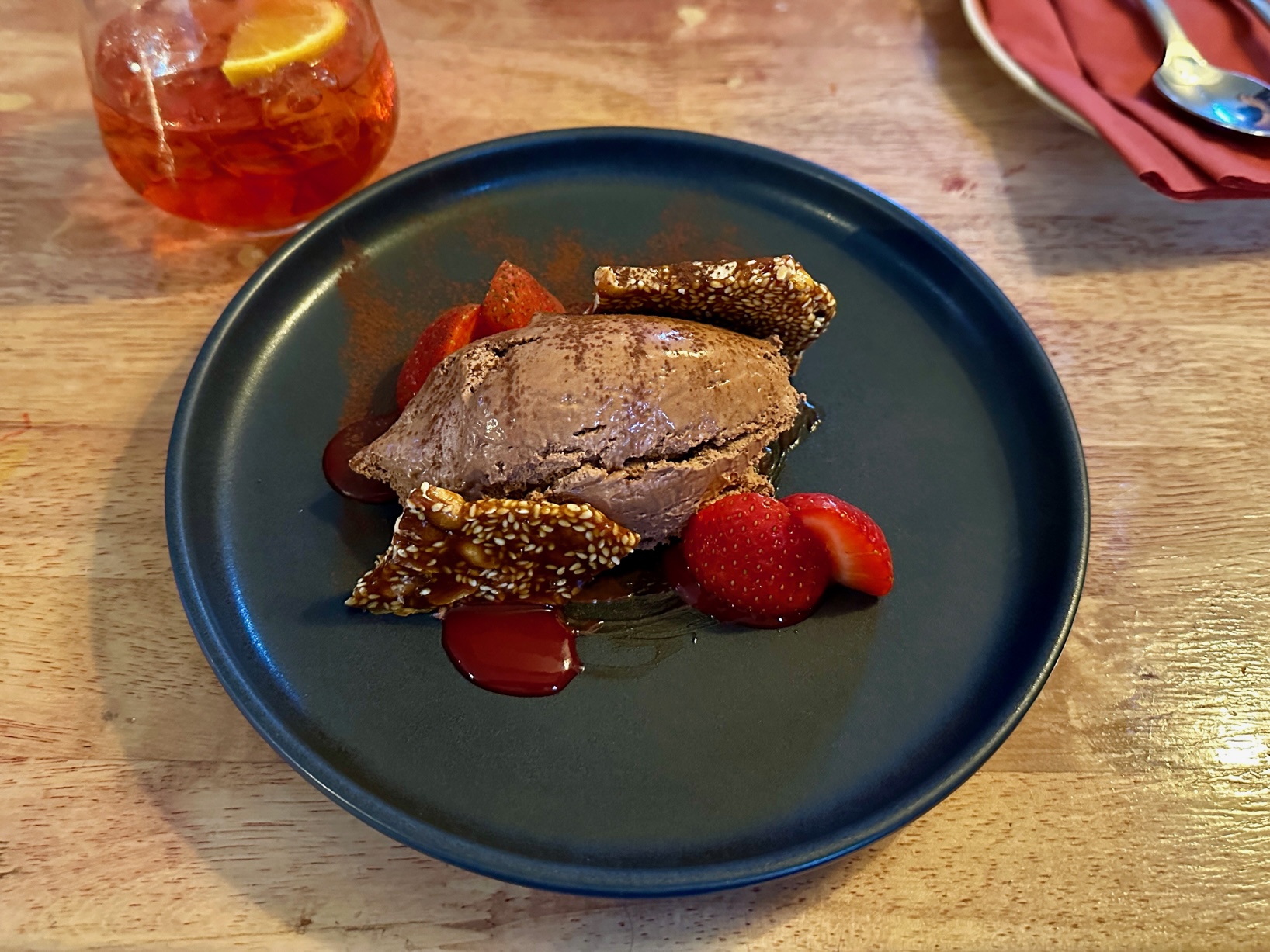
I am a huge fan of chocolate mousse, and although it turns up regularly on the continent – I could have had it every night in Paris back in March – it seems to be harder to spot on menus here in the U.K. I’ve had lovely versions further afield, in Bristol or in Newbury, but until recently you had to go to Côte to get your fix here in Reading.
Gladly, the Lyndhurst must have somehow heard my unspoken prayer, because they recently added one to their dessert menu and now you don’t need to leave town in order to eat a superlative example. You get a phenomenal, generous dollop of the stuff and although the presentation varies – sometimes it’s with red fruits and coulis, sometimes it’s not – the thing that doesn’t change is that it comes sandwiched between two slabs of outrageously good peanut and sesame brittle, which is delicious and not so brittle that it endangered my composite fillings.
28. Jerk chicken, rice and peas, Sharian’s Jamaican Cuisine
If you go to Blue Collar on a Friday – the original market, not the permanent site, there’s only one time when you won’t see a massive queue outside Sharian’s Jamaican Cuisine, and that’s when they haven’t got round to serving yet. After that, you need to be prepared to wait a while. Some of that is due to the speed with which they do things, because nobody rushes those guys. But a lot of it, too, is down to demand. And it’s justified: people queue across Market Place for a reason.
The pick of their menu, for me, is the jerk chicken – a lot of it, hacked into chunks, tanned on the outside and tender underneath, smothered with hot sauce and served up on a bed of rice and peas, with coleslaw and iceberg lettuce so you can feel slightly more virtuous. It really is so, so good, and I miss the times when I was a gentleman of leisure because I used to eat it far more often. These days, when you can be waiting half an hour to get to the front of that line, not so much.
27. Chapli kebab, Kobeeda Palace
A bit like the incident at House Of Flavours that started this section of my list, Kobeda Palace’s appearance in my top 50 is a bit of a curveball. I’ve been enthusing about their karahi chicken ever since I first visited the place back in 2016 and I fully expected it to grace the higher echelons of this hit parade. So I went back to Kobeda Palace last month with Zoë, for research purposes you understand, ordered half a kilo of the stuff and… well, I liked it but I didn’t love it. Not to worry, because I had ample dishes on my longlist that could have squeaked into this rundown and it would have been none the poorer for it.
But what I didn’t reckon on was how much I’d love the dish I ordered that night just to make up the numbers, Kobeda Palace’s chapli kebab. A flattened disc of lamb, shot through with fiery chillies, all crispy-edged and harbouring a glowering heat, it was just crying out to be wrapped in naan and dipped into one of the three chutneys they brought to the table. Smash burgers may be all the rage, but it turns out Kobeda Palace has well and truly been there, done that and got the t-shirt. If I hadn’t liked it so much, I might have had the presence of mind to take a photo.
26. Thalassery mutton curry, Pappadams
I enjoyed this dish so much I ordered it two times in quick succession, less than a fortnight apart. Pappadams’ mutton curry is a proper bear hug of a thing, with slow-cooked, rugged chunks of tender mutton in a thick, sticky sauce that is more warming comfort than aggressive heat for heat’s sake. This is one to bear in mind as we move into autumn and the air has that thinner, sharper feel to it, and eating a bowl of this would be a great way to cancel out the gloom of the shortening days.
25. The Regular, Smash N Grab
I love Smash N Grab. I love what they do, and I love the way they pluckily carry on from their little hut on Cemetery Junction, dealing with their belligerent neighbour and all the challenges their location brings. But they don’t get on my list because I find myself rooting for the underdog, having read through their social media. They get on my list because their burgers are the absolute business.
A lot of people complain about the modern trend of burgers to build up rather than out, a thick, Scooby Doo-style sandwich with more tiers than a wedding cake, impossible to eat. Smash N Grab has clearly thought about that because although their burgers are immense they are wide rather than tall, built around their excellent smashed burgers. Although they have many variations on the theme their original and best makes my list: The Regular, two of those patties, ribbons of sweet, caramelised onion, gooey American cheese and their own burger sauce. I personally like to add mushrooms to mine, your mileage may vary. It’s impossible to eat one tidily, but it’s also impossible to eat one without a smile on your face.
24. ThaiGrr!’s Roar, Thai Grr!
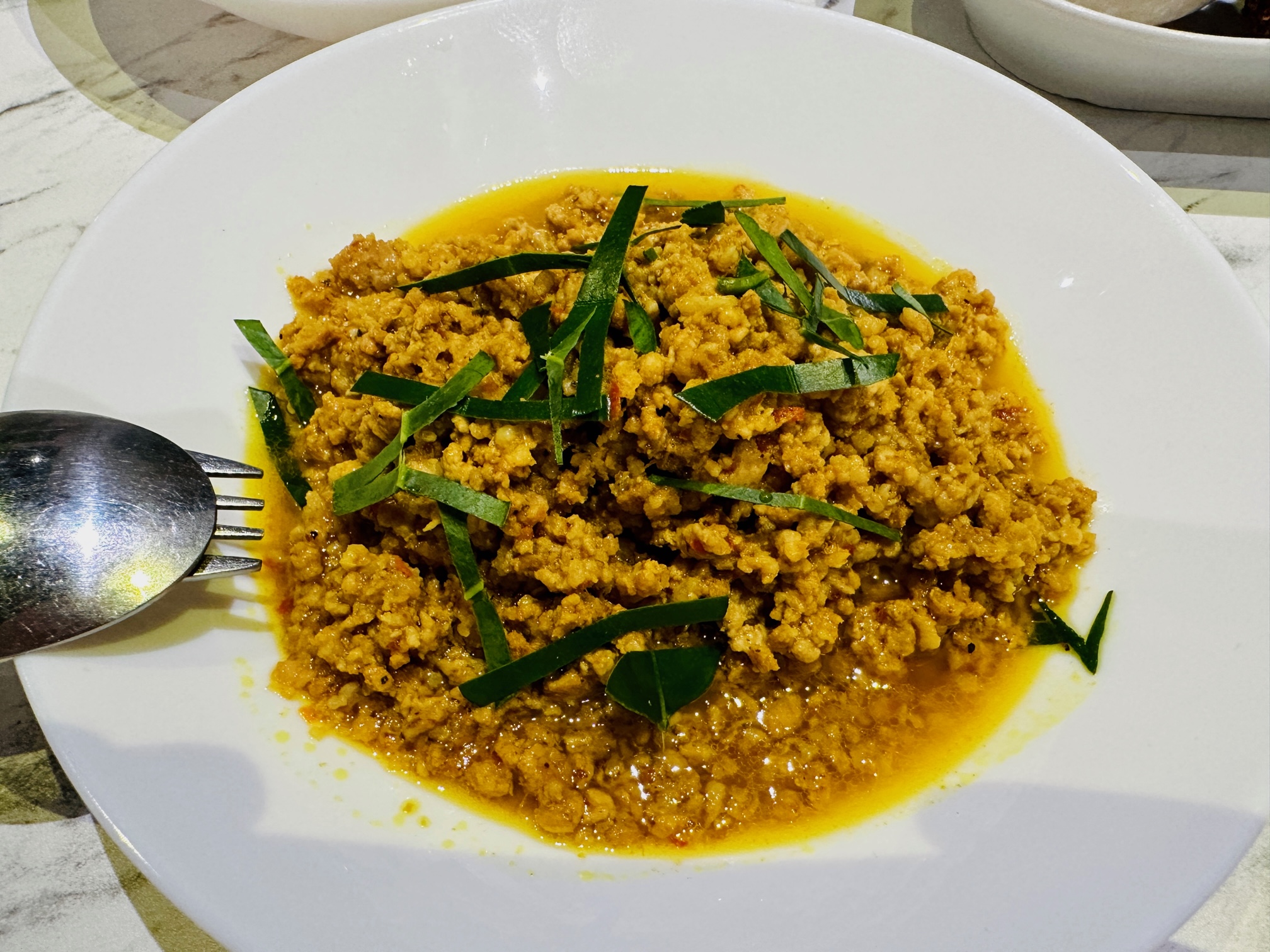
ThaiGrr!’s menu can be a bit of an intimidating one, once you step away from the red curry, green curry, pad Thai and massaman that make up the core of their menu. Beyond that the choice starts to get bewildering, especially when you factor in the number of different permutations of minced pork or minced chicken – as a salad, with aubergines, with fried egg, the list goes on. What you actually want, in my experience, is ThaiGrr!’s Roar, their eponymous dish.
Most of their standard mains are all there ready and waiting to be dished up, as at somewhere like Kokoro, whereas their specials they cook for you there and then. And of them, ThaiGrr!’s roar is the finest I’ve had – a potent dish of minced pork, with lemongrass, shrimp paste and kaffir lime, Thai food with the stabilisers off. Despite the four chillies on the menu, I find it’s not as overpowering as I initially feared but you do get a huge spectrum of flavour and, as you approach the end, a lingering desire to do it all over again.
23. Chocolate roll, Geo Café
Geo Café used to bake everything – bread, baguettes, pastries, you name it. At some point they stopped doing bread, which I believe they buy in, but the baguettes and the pastries, fashioned by co-owner Zezva’s own fair hands, continued. And it’s just as well they did, or the residents of Caversham might have staged the most middle-class revolt you’ve ever seen.
Everyone has their favourite, and I’m sure some of you are reading this and saying You fool, what about the pistachio medialuna or how could you overlook their cardamom buns? I know, I know, pipe down, they’re all good. But my vote goes to the chocolate roll, a hulking great distant cousin of the pain au chocolat which is bigger, burlier and denser, beautifully lacquered and buttery, packed with deep, dark chocolate. It’s a brooding thing, in the image of its creator, but like its creator it’s also a bit of a sweetie.
22. Kothey chicken momo, Sapana Home
Happiness is still a plate of Sapana Home’s pan fried momo, all to yourself, with a mango lassi, listening to the music on the radio and watching people amble down Queen Victoria Street. You used to be able to get all that for a tenner, but although it costs more now it’s still very keen value. Other momo are available, and all their momo are available cooked several different ways, but the slightly caramelised crust of the pan-fried variant edges it for me.
I’ve had this dish so many times – in good times and bad, with friends and alone – and in as far as a dish can keep you company, you couldn’t hope for better company than this. My favourite momo, of the ten, is number four: the headlong rush of the first three has passed, you’re properly appreciating them and you haven’t yet reached the terrible sadness of the final two. It’s a metaphor for something, but I don’t know what.
21. Mezze box, Fink
My pick of all the permanent fixtures at Blue Collar, Fink is consistently superb and its mezze box is the way to eat everything they do so well in one convenient package. So you get a couple of pert, vinegary stuffed vine leaves, couscous and olives, some foliage, three different sauces of varying heats – all of which are bloody marvellous – and the topping or toppings of your choice.
I tend to go for their chicken shawarma, which is beautifully spiced and seasoned thigh meat, cooked bang on, and their falafel which are as good as anybody’s in town, with the possible exception of Purée. All that and you can almost convince yourself that this, because it’s sort of, almost a salad, is the healthy option. Since Gurt Wings left Blue Collar this is my order of choice every Friday. Back when Gurt was still trading in Reading, it was my order of choice every Wednesday.
A great philosopher – Kermit The Frog in Muppet Christmas Carol, no less – once said that life is made up of meeting and partings. He was right, and that’s as true of restaurants as of anything else. Last week, as part of the blog’s 10th birthday celebrations, I wrote about the most joyous meetings, the happiest moments when a new restaurant came to town and changed the game. This week it’s time to look at the other, more sombre side of the coin, the restaurants we’ve loved and lost.
Maybe that sets a miserable tone I don’t intend, because on each occasion our town was lucky to see these places, and it’s better for the fact that they traded here, however briefly in some cases. All of them leave behind happy memories, of evenings that were part of the fabric of our lives, and of Reading itself. And most of them, in some way, contributed to the forward movement of the food and drink scene in the UK’s largest town.
After all, there’s a finite number of buildings in Reading, despite developers’ best efforts to bung flats everywhere, and sometimes a door can’t open until another has shut. If the Baron Cadogan hadn’t closed we wouldn’t have Clay’s on Prospect Street, if Café Metro had thrived maybe Kungfu Kitchen would have opened in another town. And much as I loved Ha! Ha! back in the day, and didn’t mind Mangal in that spot, they both had to leave Kings Road for House Of Flavours to find its home. It’s interesting that of the places that make my top 10, many have not had somewhere else open in their place. Maybe those ones just couldn’t be topped.
This has been an exceptionally difficult list to whittle down and rank. Part of that is down to the sheer volume of places that have closed over the years I’ve been writing this blog. Some attained a status where people probably thought they’d never close, others were the sort of places that always looked touch and go to make it to the one year mark (I’m thinking of the more eccentric places to open in Reading here: Faith Kitchen springs to mind).
Although I’ve drawn an arbitrary line to only cover restaurants that have closed since I began this blog ten years ago, I know people have Reading restaurants they’ve missed for longer than that. Santa Fe on the Riverside, for instance, or Ben’s. The one I particularly mourn from the more distant past is Chi’s Oriental Brasserie, a restaurant that still crosses my mind from time to time. And it’s easy to feel sad, but we should be positive and happy these restaurants graced our town at all, whether it was for a long time or a good time.
Making these choices was excruciating, and to demonstrate exactly how excruciating here are some of the great places that didn’t make my final cut. I couldn’t find space for Tampopo, which closed in 2015 and proved that you can run a credible independent restaurant out of the Oracle (and that the Oracle, ever the hooligan, will then kick you out to make space for TGI Friday).
Siblings Home in Caversham, the Collective of its day, didn’t quite make my list either: Reading wasn’t quite ready for a take on Labour & Wait back then, more’s the pity. Similarly I couldn’t fit in two of the Oxford Road’s best restaurants of the last 10 years, Bhoj and Tuscany. Bhoj, back in the day, was just a wonderful place to eat and I developed a huge soft spot for Tuscany and its unpretentious approach to pizzas where you basically told them what you wanted on it and they made it for you there and then.
Bhoj moved into town, overextended itself and closed. Tuscany, on the other hand, suffered the saddest fate to befall restaurants: it just disappeared. No announcement on social media, no explanation. First the Google entry said it was temporarily closed, then it was permanently closed, and you never got to say goodbye. A couple of my top 10 closed that way: it still hurts.
Honourable mentions also go to the Tasting House, a place which went through many subtly different incarnations over seven years but was always worth a visit and Zest, which decided to call it a day after the pandemic. And finally, possibly the most difficult one to omit was Cairo Café. The fact that it hovers just outside the top 10 gives you a good idea of the pedigree of the others.
When Cairo Café closed I felt a particular sadness, but it was a useful reality check: bad reviews can’t break a restaurant and good reviews can’t make one. And, as always, there’s a cautionary tale hiding in place sight: if there’s somewhere you love, and you can afford to pay it a visit, do. Recommend it to friends. Do your bit to send people there instead of Côte or Wagamama.
Because restaurants are more at risk of closure now than at any time I can recall, and it would be a shame to look back, in a year’s time or ten, and wish you’d done more. If you wanted any illustration of this, San Sicario was trading when I started writing this piece. At the point of hitting publish, it has closed for good. That’s how quick it can happen.
All that said, let’s be positive again and celebrate ten truly brilliant places that are no longer with us. I hope that, whether you agree with my list or not, reading it brings back some happy memories of the places that have enhanced Reading over the last ten years. It’s definitely done that for me.
10. Cappuccina Cafe (closed May 2014)
The chances are you never went to Cappuccina Cafe. In fact, you may have never even heard of it.
It was on West Street, not too far from where Cairo Café was until recently, and it had one of those backstories that are so rife in Reading’s hospitality scene. A husband and wife team, one of them Portuguese and one of them Vietnamese, deciding to set up a cafe which, however incongruously, combined those two cuisines. Portuguese food has never really thrived in Reading, and as for Vietnamese Cappuccina Café opened before its time, long before the likes of Pho, Mum Mum and Banh Mi QB.
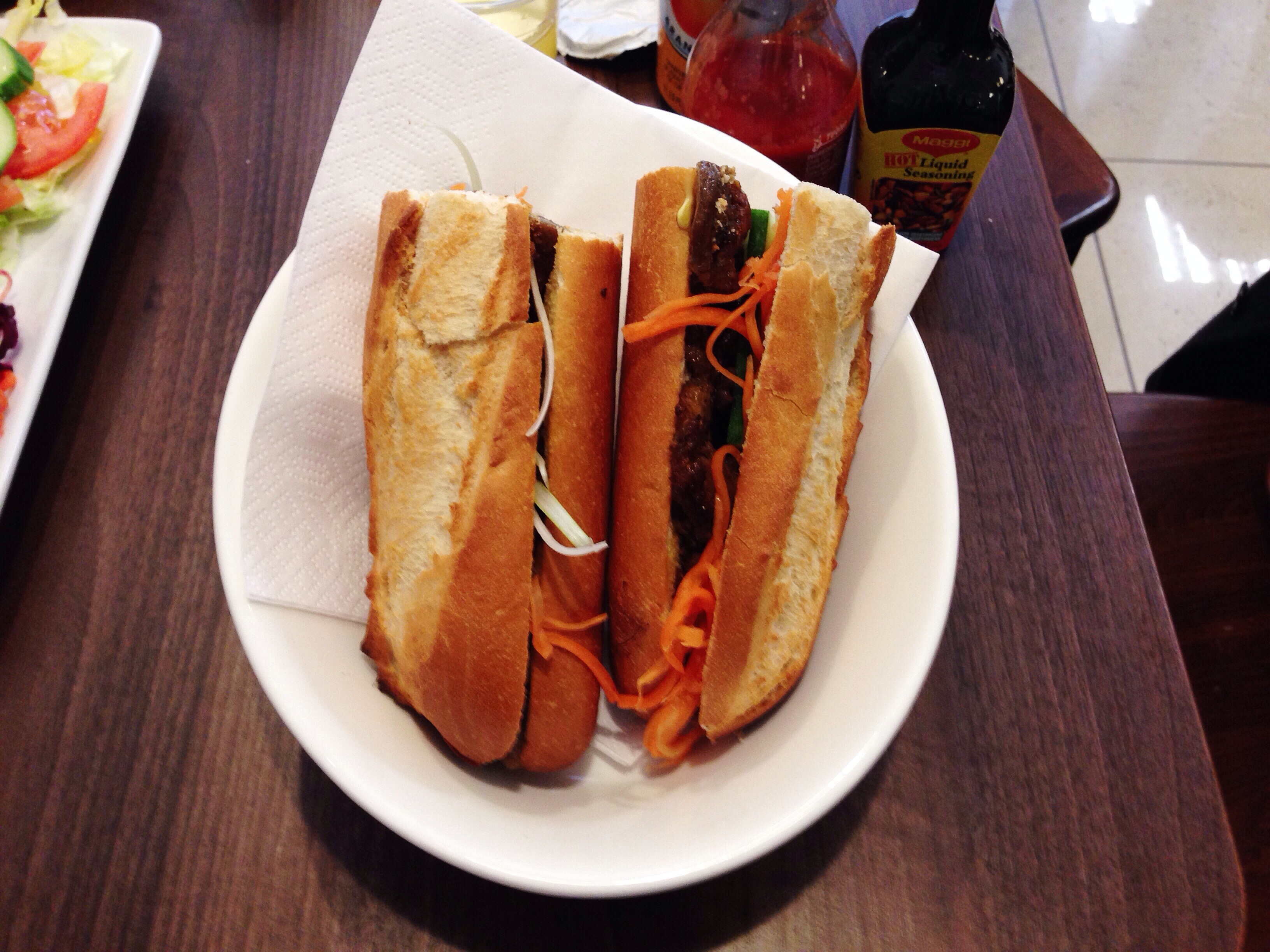
And the food was good. I had marinated chicken which was good but not amazing, but an outstanding banh mi and a very enjoyable pastel de nata – again, they’re everywhere now but they weren’t in 2014. I made a mental note to go back, and then before I could, mere weeks after I published my review, it was gone. My friend Wendy read the review and went several times a week so she could try all the different banh mi. I kept saying I’d join her: I didn’t, and then I couldn’t. And now, really, my nine year old review is the only evidence anywhere that this place ever existed at all.
So Cappuccina Café makes my list for a few reasons. The food, sure, but also because it was snatched from us so soon. Partly, too, because it’s emblematic of all the great restaurants and cafés you might never get round to visiting, a sort of Tomb Of The Unknown Restaurant, if you will. If you don’t agree with this one, or you don’t know it, just substitute your own biggest regret in the number 10 slot. I imagine you have one.
9. Nibsy’s (closed June 2021)
I don’t know if you could blame anybody for deciding to sell their business in the summer of 2021. Those bounceback loans were falling due, many people – me included – were still staying clear of eating and drinking indoors and, if you had premises in the town centre, you’d reached the uncomfortable realisation that people weren’t working there during the week, shopping there at weekends and spending money in your café or restaurant.
On that level I tend to think that Naomi and Jon, who owned Nibsy’s, were smart to get out when they did. Especially as what lay ahead was a sluggish recovery from Covid just in time to get walloped by utility bills, the price of ingredients, the challenge of getting and retaining staff and all the other Brexit bonuses which bless us all.
But it was still a huge shame to see one of Reading’s most innovative, trailblazing businesses call it a day. Naomi has since written on social media about how maybe she just needed a break, but I suspect it was still a clever move. Not for her worrying about how to survive the winter ahead, or having to stop customers using charging sockets for their laptops, or any of the other things that have become necessities for small business owners.
And how lovely that as part of the sale they protected Nibsy’s legacy, making sure they sold the business as a gluten-free going concern and keeping the brand name, with the faint promise that it might one day return. Even so, it was sad to see such a well realised independent business in the town centre calling it quits. Few places inspired so much devotion – yes, from customers who didn’t eat gluten but also, I suspect, from a number of well-wishers without skin in that particular game.
8. Forbury’s (closed April 2019)
Some of the restaurants on this list went out in their prime, at their absolute peak. That’s usually down to the owners selling up or wanting to do something else, or of course that perennial Reading favourite, the toxic landlord. But a couple of places on this list, sadly, were past their best by the time they threw in the towel. Forbury’s is a good example of that, I think.
By the time it closed in 2019 it was a shadow of the restaurant it once was, possibly a victim of that kind of business lunch falling out of favour. The last few times I went the food was just a little too much for a little too little, the market menu not heaving with bargains the way it once did. Maybe it hurt them to have a restaurant literally opposite in the Forbury Hotel: that would have annoyed me, if I was them.
But believe me, few restaurants could match Forbury’s in its pomp. For really wonderful a la carte dishes, for a superb, excellent value set menu, for a wine list full of indulgence that always had some finds on it and, finally, for always feeling really special in a way that its rivals – Cerise and London Street Brasserie – never did. It was a sort of hushed temple to gastronomy, eating there felt grown up and I loved it. As Bob Dylan once said, I was so much older then, I’m younger than that now. But I enjoyed feeling grown up, for a while.
Best of all, every summer they did a wine and cheese night where you drank wine after wine, ate from a seemingly bottomless trolley of wonderful French cheeses, ate charcuterie and remoulade and tartiflette and rolled home feeling like you lived in the best town on earth. That night, at least, you did.
7. Chef Stevie’s Caribbean Kitchen at the Butler (closed August 2022)
Although Chef Stevie was at the Butler for little over a year, it was a very happy year that just about spanned two summers for Reading residents. With that sunlit courtyard and benches out back and a menu equally full of sunlight – excellent dumplings, rich goat curry, deep, delicious jerk chicken and macaroni pie – it was a return to pop-ups, and the first significant collaboration between a pub and a chef since before the pandemic.
I was really sorry to see it go, but it happened gradually. First they announced they wouldn’t be cooking some nights, then a couple of times I wandered over only to find that Chef Stevie wasn’t in the building. And then, last summer, he announced that he was moving on. He left to cook at a water park in Windsor, only for it to close shortly after in tragic circumstances.
I sincerely hope that we haven’t seen the last of Chef Stevie in Reading, but even if we have we’ll always have those two summers, sitting just off Chatham Street bathing in the sunshine, a cold pint of Neck Oil glowing on the table, jerk chicken on the way.
6. I Love Paella at the Fisherman’s Cottage (closed July 2018)
I’ve already written about I Love Paella as one of Reading’s most influential restaurants of the decade, but its departure was also a hugely sad event which deprived Reading of one of its most special places, especially in terms of al fresco dining.
As a venue, the Fisherman’s Cottage really had it all with I Love Paella in the kitchen. Brilliant outside space, a lovely dining room with light flooding in from the conservatory roof, an excellent range of craft beer and, the thing that brought it together, Enric and Edgar’s outstanding food.
Whether it was those almost-legendary salt cod churros, empanadas of every stripe, a beautiful salad festooned with hot grilled chicken, goats cheese caramelised and served with a smudge of tomato jam, pretty much everything they did was fantastic. They served flamenquin once, the Cordoban speciality of breaded, deep-fried pork loin stuffed with ham and cheese, and it was like an instant plane ticket to Andalusia.
And, of course, there was the paella. I’ve never forgotten how beautiful it was, but you could easily eat it and forget that other main courses even existed. In I Love Paella’s early days they had served individual portions of not-quite-paella, but this was the real deal – a huge pan of the stuff, plenty of chicken thighs on top and, underneath, the socarrat – the word for that crispy, toasted rice at the bottom of the paella pan, all concentrated flavour, the very best bit of one of the very best dishes Reading had to offer.
When I Love Paella left the Fisherman’s Cottage I got all kind of grief for being vocal about it on social media. I don’t want to go through all of that again, so let’s just say it was a shame that they left at such short notice. The Fisherman’s Cottage brought in a new team, and put together a menu which looked very similar, but they couldn’t recapture that lightning in a bottle (the pub is now under new ownership). It’s a shame. But it was good while it lasted.
5. Buon Appetito (closed April 2023)
This is most recent closure on my list, which means it’s still a little raw. Buon Appetito closed without ever making an official announcement, and customers turned up to bookings to find the place shut, lights off. I think they still haven’t formally confirmed that they’re shut, or why that happened. Rumours have swirled around, as they do.
But it’s such a sad loss. When I wrote various features about Reading restaurants – the best place to eat solo, the best place to eat al fresco, who did Reading’s best pizza – Buon Appetito came up again and again. Now, I wouldn’t for a minute say that Buon Appetito did the best food Reading has ever seen. There’s only so good pizza can be, after all, although I still remember their amazing pistachio tiramisu.
But Buon Appetito understood how to make a restaurant great. Have a wonderful outside space where you can bask in summer and be warmed by heaters on the winter. Serve a reliable menu and a mean Aperol Spritz. Play fun music, and have warm, personable people looking after you who seem to genuinely care whether you have a good time.
These might all sound like basics, and they should be, but when they all properly come together, as they did for Buon Appetito, the end result can be something magical. Restaurants are only partly about the food, you know. They’re really about the experience, and how everything combines to make that experience special. Buon Appetito, like the restaurant that tops this list, truly understood that.
I know the way this list is written makes it sound like I’m up on the mountain handing down tablets of stone, but it is of course a personal list and my placing of these restaurants reflects my experiences. I had many sunny evenings out on that terrace drinking spritzes and eating Neapolitan pizzas, nowhere to be and nothing to do the next day. But the meal there I really remember was in the dead of winter, at the start of last year.
Zoë was admitted to the Royal Berks just before Christmas 2021 with Covid, after struggling with the virus for a week. She was in there for four nights, and I couldn’t visit her. She didn’t have the breath to speak so we would have FaceTime calls where I rattled on and she nodded, wan and exhausted, until I had tired her out. Some people clam up when they’re frightened but not me: you can’t shut me up.
Every day I dropped a little care package with the nurses and went home to watch Game Of Thrones, hoping it would take my mind off it. It was a time I don’t care to remember. And then she was discharged, on a lot of medication, and a slow period of convalescence began. It was weeks before she was even up to going for a walk again.
And when she was, in mid January, Buon Appetito was the first place we visited. It was cold, but the heaters were on outside and we had a pizza each and all in all it was a truly magnificent meal. If the staff thought we were mad to eat outside at the beginning of the year, they were too lovely to let on and that meal was the first time things had felt normal in a very long time. I’ll always love them for that.
4. Mya Lacarte (closed May 2017)
Last week I wrote a piece about the restaurants that changed Reading the most in the ten years that I’ve been writing this blog. Mya Lacarte was probably the most influential restaurant of the previous ten years, and although I never reviewed it – they knew who I was, and I wrote something for their website, back in the day – it was still very much a force for good when I first started blogging in 2013.
When it opened, in that spot where Papa Gee is now, Reading had seen nothing at all like it. Almost the perfect neighbourhood restaurant, with an emphasis – real, not fake – on local ingredients and a true star in the kitchen in the shape of French chef Remy Joly. It had a dream team in service – co-owner Matt Siadatan and Alex Darke running front of house, both alumni of London Street Brasserie (the most influential restaurant of the decade before that).
It felt like a little bit of Brighton had been planted in Caversham, and it flourished. They had a mailing list, and if you were on it you were invited to their seasonal tasting nights, where you got to sample all the wonders that were about to be added to the menu. And those were just wonderful nights, when everything came together and that corner plot was a beacon of warmth and hospitality and you felt like a member of the best club on earth.
The food was always exemplary and often imaginative. I still remember a dish that was simply tomato presented different ways: I think it included a consommé and a sorbet, and it was one of those things you eat and remember for years. Mya was the first place I tried sweetbreads. I’d never instinctively trusted a kitchen like that before, but with Mya I would have let them serve me anything.
Like Forbury’s, its final years weren’t its best: the restaurant changed hands in 2016 and closed the following year. By that stage there was little left of the extraordinary comet that blazed across the sky of Reading’s food scene. Siadatan went on to run Thames Lido when it first opened, I think Darke worked there too. Reading had good restaurants after Mya, but much as I love many of them, we’ve never quite seen its like again.
A lovely postscript to this is that Mya lives on in more than memories. When I went to hot new Bristol restaurant Cor at the start of the year I raved about it. A little while later I got a mail from Siadatan telling me that he in turn had received an email from the head chef at Cor saying how happy she was with the review. She started out, it turns out, working for him at Mya all those years ago. Small world.
3. Kyrenia (closed January 2016)
We lost Kyrenia in stages, in the weirdest way. First it was bought, and became Ketty’s Taste Of Cyprus (the new owner, Ketty, is not Cypriot by the way). But the menus still said Kyrenia, and so did the sign on the restaurant. Then the menus started to change. And then their brilliant front of house, a kind chap called Ihor with a splendid moustache, left and that was that. Nothing was left of the restaurant I loved. Eventually they changed the name again, to Spitiko, and for all I know it might be decent: I should go back.
But Kyrenia, back when it was Kyrenia, was a superb restaurant. Tasteful and restrained inside, just packed enough to be cosy without being oppressive, it was my favourite restaurant for many, many years. I celebrated my thirtieth birthday there – in fact, I celebrated many birthdays there. I also celebrated Fridays there and Saturdays there. And if I had nothing to celebrate I’d just go there anyway and celebrate Kyrenia being Kyrenia. With a bottle of Greek red open, Ihor working his magic and a buzz developing, there was a time in Reading when there was no better place to be.
The food was always the same and always excellent – and if it’s always excellent, you don’t mind it being the same. I nearly always ordered the mezze – this restaurant was equally perfect for pairs and big groups – and if I close my eyes I can still imagine their beetroot salad, or that sensation of almost burning my fingertips on pita fresh out of the oven, waiting to be plunged into taramasalata or tzatziki.
I always told people not to fill up on the bread because you had to save space for the kleftiko, the most phenomenal lamb, cooked until it fell off the bone, a mixture of char, caramelisation, softness and perfectly rendered fat. I always ignored my own advice, but managed to fit in the kleftiko anyway. And I always made it difficult for myself by also making sure I had some octopus. Nobody had ever cooked octopus quite as well as Kyrenia, and I wonder if anybody ever will.
Writing this piece has been like composing a series of postcards from the past. I’ve loved everywhere on this list, but if you gave me a Tardis and said I could head back to any of them for one last meal, I would be sorely tempted to choose Kyrenia, just so I can remember how it was at the very height of its powers.
2. Tutti Frutti (closed October 2017)
Zoë, who has listened to me putting this list together, thinks I’m nuts to have Tutti Frutti so high up on it. “It was just a café in the station” she says. Well, she’s rarely wrong but this time she is: Tutti Frutti was so much more than that.
I really hate the phrase “if you know, you know”. It drips with smug. It often means I know and you don’t, and is usually weapons grade subtweeting accompanying an image of somewhere somebody has eaten, all coy, not telling you where the fuck it is. It always has a hint of gatekeeping about it, to me. Fuck that. I on the other hand made it my business, back in the day, to tell everybody about Tutti Frutti.
To have an independent café in the station, when everything else was run by Compass Group, felt rare enough. That it did fantastic coffee with top notch, full fat, unhomogenised milk was even better. Then add on their regularly changing range of ice cream, made with the same great ingredients, on the premises and you have something truly special.
And that’s not all. They also made a mean sandwich, the kind I would make if I was any good at it (which I’m not). And inspired by ice cream cafés in Australia, where the owners used to live, they were open until ten so you could sit there in the station, have a post dinner ice cream and watch the world go by. I’ve said it before, but there was something Edward Hopperesque about that. Factor all of that in and Tutti Frutti started to look even more exceptional.
That’s before we get to the service. Run by married couple Paul and Jane Stockley and a staff of personable bright young things, it was never anything short of brilliant. Paul in particular was the kind of old-school shopkeeper who could have stepped off the set of Mr Ben, always aproned, always calling customers sir and madam.
He could be a martinet to his staff, but I loved him and his quirky little cafe. I commuted to work every day then – so last decade – and a morning that didn’t start with a latte from Paul was a bleak morning. And a fair few days finished with an ice cream. His peach and amaretto was a dream, the Kinder Bueno was equally fabulous. I managed to talk Paul into making a Barkham Blue ice cream and he tried to do it a couple of times, although he never quite got it right.
I went on holiday in October 2017 and, as I always did when going on holiday, I stopped at Tutti Frutti to pick up a latte for the RailAir. It was their last day open: the next day I started to get reports that they had closed, just like that. Nobody ever got to say goodbye.
From what I heard, it was a dispute with Great Western who run Reading Station. They put a generic hoarding up saying a new business would be in that spot soon, six years later the site is still vacant. Their greed robbed us of a wonderful business – I just hope that for them, as for the landlord of the last place on my list, it was worth it.
1. Dolce Vita (closed June 2018)
As I said when I was talking about Buon Appetito, the best restaurants are not about food, although you should always be able to get decent food at a great restaurant. The place Buon Appetito always reminded me of was Dolce Vita, very much its spiritual forebear, and Dolce Vita was a truly great restaurant where the food was almost the least remarkable thing about it.
That’s not to say it didn’t serve good dishes, because it did. Ironically Dolce Vita’s pizza and pasta were its weakest offerings but some of its dishes, like its saltimbocca or monkfish with squid ink pasta, could stand up to any dish in Reading at the time. But I sometimes felt Dolce Vita, with its Greek owner, Greek chef and Greek staff, was a Greek restaurant masquerading as an Italian one. And whenever there was anything even remotely Greek-looking on their specials menu, like glorious courgette fritters, you were well advised to order it.
It was the staff and the welcome at Dolce Vita that made it incredible, though. Yes, the room was a big and handsome one, with gorgeous sturdy tables and some outside space that was heavenly in the summer. And yes, the drinks list was always decent – although I think it’s a sign of how much I loved Dolce Vita that I could overlook them stocking Peroni. But yes, the thing that Dolce Vita achieved in this town that has never quite been equalled was the quality of its staff.
It is a rare achievement for a restaurant to make you feel like friends are cooking for you in their home, but somehow Dolce Vita managed that time after time. It became a second home for me, for a while, and it never felt weird to go and eat there instead of shuffling home and cobbling something together from the contents of the fridge.
When Dolce Vita closed, it completely came out of the blue. It was impossible to imagine Reading without it, but their landlord (John Sykes, in case you hadn’t guessed) tried to hike the rent and they very firmly said no thank you and called it a day. For a while their sister restaurant in Wokingham carried on – I’m sad I never went – and then it closed too.
How much money would Sykes have made in rent if he had left Dolce Vita alone? I don’t know. But I can tell you how much money in rent he’s made on that site since: zero pounds and zero pence. It must be tough being as amazing with money as John Sykes.
But Dolce Vita does live on, in Reading. It was one hell of a finishing school for Reading hospitality – Maria and Nas went on to start C.U.P., and although they moved to Bristol their two Reading branches are doing brilliantly. Kostas and Alex moved back to Greece.
And Paul ran Pho for a while and is now working at Veeno. You can see him outside, on a summer afternoon, charming and chivvying people on to their packed terrace. It’s no coincidence that Veeno seems an awful lot busier, since his arrival there. That I can remember the first names of all the people who looked after me on my many visits to Dolce Vita really does tell you something. It was that sort of place, and not many places are that sort of place.
But Dolce Vita lives on, too, in the minds of all the people who went there. Sometimes I’ll get talking about them at a readers’ lunch with someone who loved the place as much as I did and we’ll always share enthusiasms, stop for a second, sigh, and say “there was a restaurant”. When I was deciding how to rank these, Zoë had some sage advice. “The place you’ve talked about most since we got together is Dolce Vita” she would tell me. And she’s right. If I think about it for a minute I am transported to their balcony with a glass of white wine, good friends around me and my starter on the way. I know you can never go back but really, there was a restaurant.
The Elizabeth Line has been a game changer when it comes to eating out: I’ve used it to reach three of the last four restaurants I’ve reviewed for the blog, all of them significantly easier to get to courtesy of the Tube’s new addition. It’s no coincidence, either, that last year I reviewed three restaurants in newly resurgent Maidenhead. Plenty of interesting options have become more accessible, which makes my job (not a real job, but you catch my drift) much more fun.
The phenomenon you might not be aware of, though, is the same thing in reverse, that some people think the Elizabeth Line opens up Reading as a destination. The first time I became aware of that was an article on the Good Food Guide website last August called “Where to eat Indian food along London’s Elizabeth Line” by food writer Sejal Sukhadwala. In it, she said that the new line made it possible for food lovers to eat a panoply of different Indian dishes at restaurants from Canary Wharf to the ‘Ding: among her recommendations, at the end of the line, was our very own Madras Flavours.
Since then, it’s been on my list to review, even if the opening sentence – “It’s worth travelling to Reading specifically for this sparkling Tamil vegetarian located just past the beautiful town centre” – made me wonder whether she’d actually been to Reading.
My suspicions were further enhanced when three months later the same author published another article, this time in the FT, entitled “An Indian restaurant crawl along London’s Elizabeth Line”. Hats off to her for getting paid twice for the same idea, and clearly there were enough good restaurants en route to justify two articles, but again the bit about Reading didn’t ring true.
On that occasion, Sukhadwala recommended House Of Flavours, a solid choice. But do you recognise Reading from this description? “Walk past Reading’s beautiful Abbey Quarter, which houses a library and a medieval church, and in less than 10 minutes you’ll find an impressively varied concentration of fine Indian restaurants in and around Kings Road.”
I can be guilty of romanticising Reading, but even I found this somewhat florid. “It’s worth booking a long weekend in Reading to discover the town’s high-quality Indian restaurants”, it added. It’s welcome to see Reading praised in the national press but, really, has she ever been?
Anyway, the article worked because it got me thinking about a trip to Madras Flavours. Previously, all I’d known about the restaurant was its impressive Deliveroo sockpuppetry, when in 2021 it went by over 40 different names on delivery apps, including my favourites “Soul Chutney” and “Fatt Monk” (come to think of it, that article in the FT recommended a restaurant called Fatt Pundit: maybe they share a branding expert).
Two years on Madras Flavours has weathered the Covid storm, often looks busy – especially at weekends – and seemed ripe for a visit. So I headed there on a weekday evening with Emma, who comes to my readers’ lunches and foolishly volunteered her services. “If you ever want a vegetarian perspective on your dining experiences, I’d be happy to help” she’d said.
Subscribe to continue reading
Become a paid subscriber to get access to the rest of this post and other exclusive content.
The Imperial Kitchen has rebranded as Dynasty, although the menu and ownership are apparently unchanged.
I’ve had meals in some weird and wonderful places in the course of writing this blog, but I’m not sure many can top spending a night in Genting Casino, the gambling den near Rivermead. Getting off the bus just outside the Moderation, I trudged down the Richfield Road with a vague feeling that I wasn’t sure where I was going and no idea what to expect. On the other side of the road, I spotted the glowing lights of a purgatorial Toby Carvery. Some consolation, I thought: at least it was unlikely that I was about to visit the worst restaurant in the neighbourhood.
Inside the casino, at the front desk, I handed over my passport and filled out some forms – you have to do that to become a member, to be able to eat here. The rather taciturn man behind the counter seemed to take delight in drawing this process out for as long as possible. Had I ever been to their Southampton casino, he asked. When I said no, he seemed nonplussed. Was I sure? I did try to explain that I’d never been to Southampton full stop, but it took a full five minutes before he was convinced that I had some weird south coast doppelgänger, rather than being part of some sort of Oceans Eleven style conspiracy to defraud multiple branches of the Genting casino chain.
By this point my friend Sophie had turned up, and went through the same palaver. The main thing I was struck by was that her passport – full of stamps and visas from her many work trips to Eastern Europe, spoke of a life more fully lived than mine. Once we were given our cards – which you don’t have to swipe or seemingly ever use again – we were free to wander to the restaurant.
The inside of the Genting Casino is a very strange place. With no natural light and the phosphorescent hum of slot machines, you could almost be anywhere at any time. It could be a Wednesday afternoon or the small hours of a Sunday morning and you’d be none the wiser: it’s open until 4am, and even on a Monday night there was a steady stream of punters shuffling to the card tables. You could imagine stepping outside and finding yourself on the Strip in baking heat, as opposed to on the edge of an industrial estate in that part of the world neither Caversham nor west Reading wants to claim as its own.
Not that the place was Casino Royale, by any stretch of the imagination. I had turned up shabby, my default sartorial choice, but I didn’t feel especially underdressed. The place has a dress code – no shirts, no football shirts, although a lot of the big screens were showing the football – but nobody looked like they’d made much effort, with the exception of my dining companion. Many of the customers were Chinese, which explains a lot about why I found myself there in the first place.
Subscribe to continue reading
Become a paid subscriber to get access to the rest of this post and other exclusive content.
Cairo Café closed in April 2023. I’ve left the review up for posterity.
Something I often bang on about often in restaurant reviews is that feeling of being elsewhere, of the power some places have to completely transport you, in mind if not in body. Restaurants as travel agents, taking you somewhere else without having to rack up a huge hotel bill or get to the airport two hours early, or feel that sense of gloom about no longer being able to join the “arrivals from the EU” queue.
Last Saturday evening I had dinner on the sunlit terrace at Buon Appetito, and I felt like I could have been anywhere on the continent but nowhere near Reading. My Aperol spritz shone a luminous orange, soft jazz was playing on the speakers and my pizza was speckled with savoury bombs of gorgonzola left, right and centre. At the end of the meal the manager brought over a couple of amaros for us to try – one from Sicily, rich and sweet, the other from Calabria, medicinal with rosemary and mint. Could I really be a stone’s throw from the Oxford Road? It felt hard to credit.
I had a similar feeling the following day, pretty much from the moment Zoë and I walked through the front door of Cairo Café. It’s where Beijing Noodle House used to be, in a site they’ve bizarrely divided into two not side by side, as usual, but front and back: you walk down a corridor to get to Nepalese restaurant Chillim Kitchen out back, but at the front, with a much smaller bright yellow sign advertising its presence, is Cairo Café.
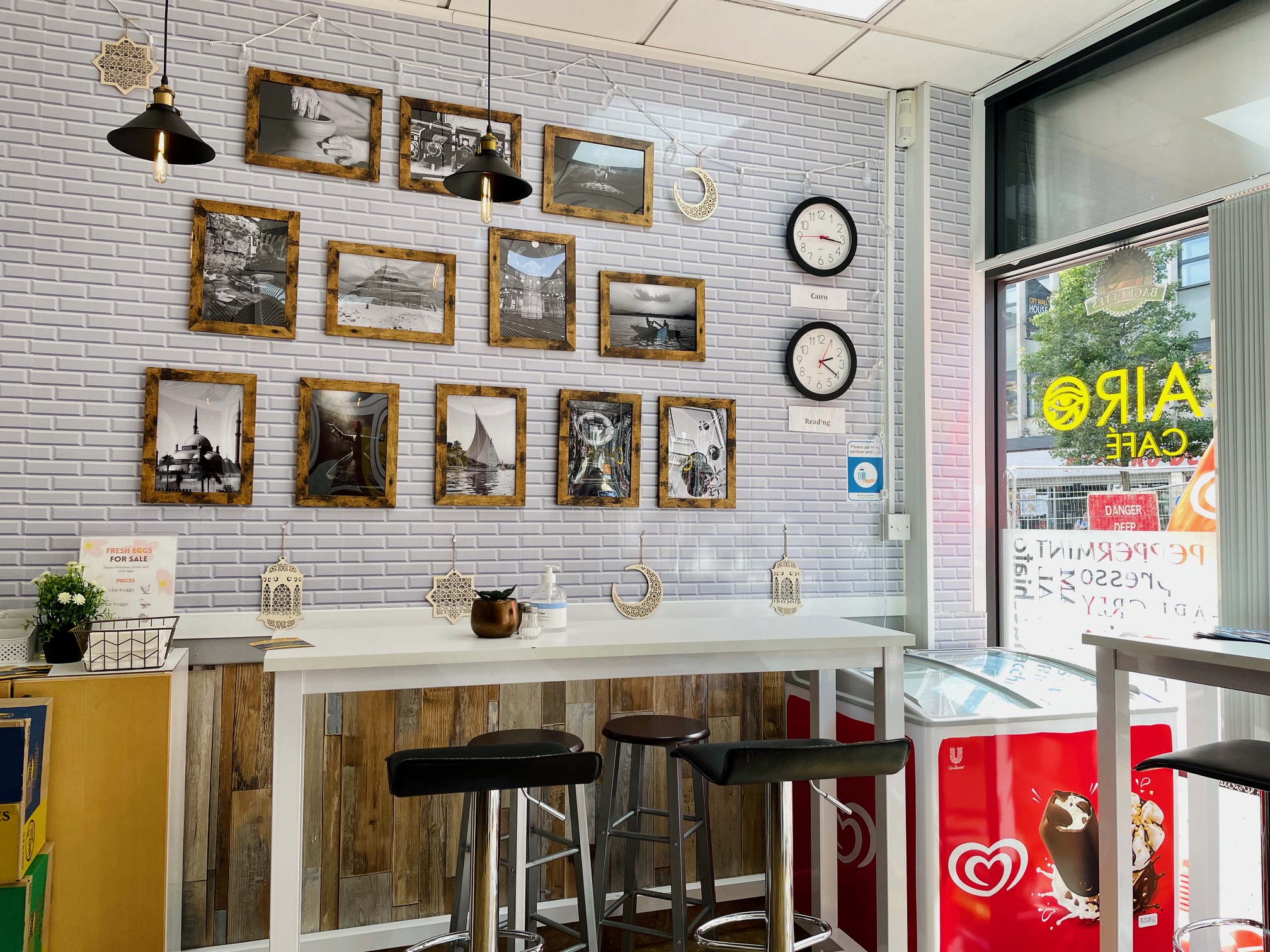
Inside is a little room that could maybe seat ten people, if they knew each other extremely well. Two small tables for two are on the left, all vibrant tablecloths, and on the right is a high table seating four. A couple more stools are up at the window staring out onto West Street, which offers a characterful viewing experience. It’s tiny, but I loved it, with all the little touches like the black and white photos on the wall and a couple of clocks showing Cairo and Reading time.
Like many places serving lunch in town, the menu – in bright yellow above the counter betrays a certain amount of bet hedging. You can have a conventional panini or baguette, if that’s what you want, and the menu gives you all the mainstream choices – tuna mayo, brie and bacon, chicken tikka and so on. And at the counter you can see all the steel dishes with those fillings, if you want to try the same sort of thing you could easily get somewhere like Pierre’s. But the middle of the menu, marked “Cairo Street Food”, is the reason I went: a range of Egyptian dishes, some of which I’d tried and some I’d never heard of. And the kitchen, just about visible out back, is where all of these are conjured up.
“I’m sorry, but we don’t have any falafel” said the owner, aproned and smiling. “It’s been a crazy morning.” Undeterred I asked him to explain a few things on the menu I hadn’t heard of before, and discovered that warak enab was what I would recognise as dolmades, stuffed vine leaves. He went on to explain that sakalans was an iconic Egyptian dessert, a sandwich made with halva, cream and honey: I made a mental note not to leave without trying it.
I placed my order – this is a venue where you pay at the end – and took a seat. The room had a strangely serene calm, and despite knowing that all the noise of the less salubrious end of town was just the other side of the door, I had that feeling of being transported, of not being in Kansas any more. I could see the owner up at the counter plucking fresh mint leaves for our tea and I had that dangerous feeling that comes from time to time, the slowly building hope that I might have discovered a gem. The tea, by the way, was cracking: fresh and fragrant.
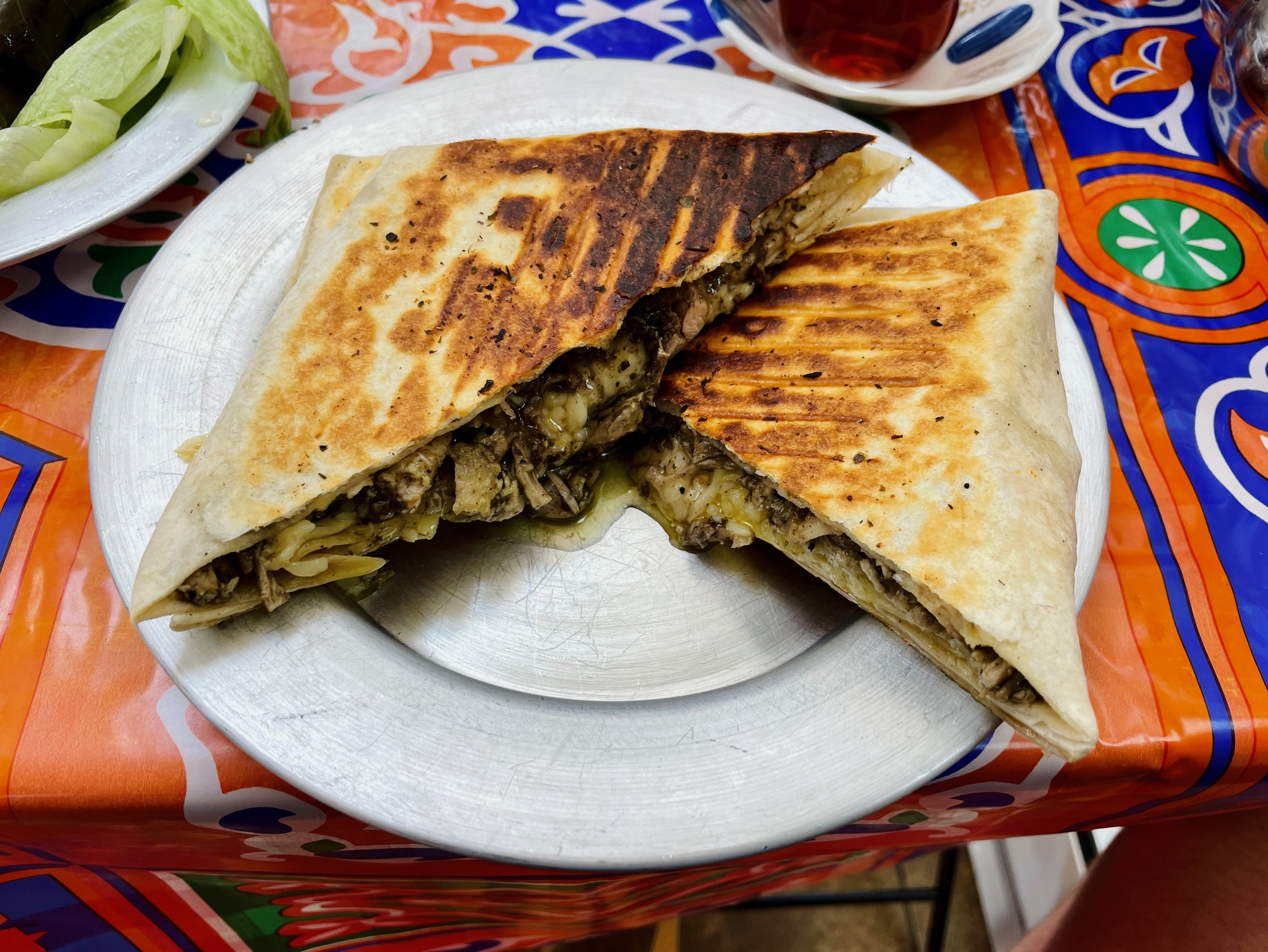
Things improved still further when the chicken shawarma wraps arrived on their little tin plates. So many places don’t know how to assemble a wrap so it can be eaten, so instead either all of it falls out of the end or you get a giant indigestible clove hitch of tortilla. You wouldn’t want these people rolling you a joint, put it that way. By contrast Cairo Cafe’s wrap was a stunner, carefully assembled as a square and flattened under a grill – neat, no wasted space, and the crisped exterior almost reminiscent of a pastilla.
And the chicken inside was terrific: the whole filling was, in fact, with some kind of beautiful alchemy of chicken, cheese, mint and (this might have been my imagination) a hint of something like cinnamon. I ate it slowly, partly because it was hot but mostly because I didn’t want it to end. This cost a ridiculous – and in all honesty, unsustainable – four pounds fifty. You should go and try it, before he puts his prices up. He should put his prices up.
While we ate our wraps, in a sort of wordless euphoria, something lovely happened. A couple of gents came in to the café looking for a late lunch, but clearly in a rush. The owner explained that he was preparing our dishes and that it would take him a while to put some baguettes together. Were they willing to wait? It transpired that they weren’t, and so they scarpered and as the owner came over to take our plates away he was splendidly unapologetic.
“I’m not making food in a hurry. I want to give people something they’ll remember” – a quiet smile at this point, because the two chaps in question looked like they might have struggled to recall what they did the night before – “even if only for a little while.”
I was happy that we’d been prepared to wait, because our remaining choices, from the more resolutely Egyptian section of the menu, all came together and largely kept up a very high standard. Possibly the weakest thing were the waraq enab: I love stuffed vine leaves, but these weren’t quite the best I’ve had, a little too saccharine. I don’t know if they’re made on the premises – they might be, because they felt a little ragged and slightly loosely wrapped – but I’ve had better, both at Bakery House and at Blue Collar, from Fink as part of their superb mezze boxes. A good example of wayward pricing, too: these cost as much as a shawarma wrap. I know which I’d rather have.
But the other two dishes we’d chosen returned to the high standard of those wraps. Moutabal was a bright, zingy thing shot through with parsley, perfect loaded on to pitta (the pitta, again, was a slight weakness: a little hard, and not quite enough of it, although I’m inclined to be more forgiving than it was). It didn’t have the smokiness I associate with some examples – this was a light and happy dish, not a dark and brooding one – but I didn’t like it any the less for that. Dark and brooding gets boring, doesn’t it.
Even better was the sojuk, a marvellous surprise and one of the nicest things I’ve eaten this year. I was expecting something like Bakery House’s maqaneq – sausages cooked and served simply with onion and lemon juice – but what I got instead was wonderful pieces of coarse, caramelised sausages, punchy and brick-red inside, in a thick, spiced gravy (if I didn’t know better, I’d have likened it to a curry). Slow-cooked, soft pieces of green pepper and green chilli were in the mix, giving the potential for every mouthful to be a gorgeous sunburst of heat.
Again, this was four pounds fifty and again I worry about the owner’s ability to make money charging so little. I ate forkful after forkful in beaming delight: Zoë loaded some on to a piece of pitta, dolloped some moutabal on top and said something to the effect of “this is really fucking good” between mouthfuls. It was, simply put, one of my favourite discoveries of 2022 so far, and I’m not sure I’m capable of going back and not ordering it.
As we reached the end, and sipped what was left of our mint tea, there was a moment of perfect peace. The hubbub of West Street had died away, no customers came in, the owner was out back. The clocks on the wall ticked away the advancing seconds, in Reading and Cairo, and I thought to myself: there’s something slightly magical about this place.
When the owner took these plates away, I asked him a little about Cairo Café. He’d been trading for four months, he said, and things were going well.
“Do you sell more stuff from the Egyptian side of the menu than the conventional dishes? It would be sad if most people who came here didn’t try this.”
Another grin.
“Yes, we do. But I try hard to convince people – we give out little samples, too.” I was reminded again of this man’s spiritual family here in Reading: people like Jo at Kungfu Kitchen, Nandana at Clay’s, Keti at Geo Café and Kamal at his eponymous new restaurant. People who believe in the narrative power of food, of telling stories, of welcoming you into their home with the food they grew up with.
“I’m glad customers don’t just come here for an English breakfast.”
“We don’t do one! We do that stuff in a baguette but we don’t do a full English. We sell an Egyptian breakfast instead” (it comes with falafel and shakshuka, by the way, and it sounds excellent).
“What should I order next time I come here?”
“I know we’ve sold out, but our falafel are really good. And you should try the beef livers.” I made a mental note: the menu says they come ‘all the way from Alexandria’.
The sojuk had a wonderful building heat, so I wanted something cooling and I’d left room for dessert so we ordered a couple more things. Again, the owner apologised that they would take a while but by that point I thought the prospect of another half an hour in Cairo Café was a positive boon, so I wasn’t complaining. First to arrive was a cooling drink which had rather been misplaced in the “Fresh juices” section, a drink made with yoghurt, milk and honey. I absolutely adored this – as a dairy fiend it’s right up my alley at the best of times, but what I loved about it the most was how light and delicate it was. It didn’t have that thick stubbornness a lassi can have, and the sweetness was almost floral, complementing things rather than beating you round the head. To add to the random pricing, this was four pounds but, for me, worth every penny.
Last of all, I had to try the sakalans. This took a while to prepare and I can honestly say I’ve never had anything like it – a warm, almost-crunchy baguette split lengthways and crammed with cream, honey and huge wedges of halva. I’ve loved halva for years – ironically, since my mother brought some back from a holiday in Egypt, and as a huge fan of sesame in all its forms this dish had a huge amount to appeal to me. The idea of sticking it in a sandwich had never occurred to me, but eating this I was delighted that it had occurred to someone. Zoë was a little less convinced by it, I suspect, but she was also either fuller, or more restrained, than me.
Our bill, for all that food and an hour and a half of serene, unmitigated delight, came to forty-five pounds, not including tip. I felt a compulsion to keep telling the owner how much I’d enjoyed everything, but eventually I realised I’d have to button it and stop thanking him. Besides, I have the opportunity to tell all of you instead, so it’s not as if I’m going to get an ulcer from suppressing anything. I went on my way absolutely convinced that I would be back, and positively evangelical about making sure some other people went there too.
My overwhelming feeling when I discover somewhere like Cairo Café is to think: how lucky are we in Reading? How lucky are we that despite the best efforts of the unholy trinity of Messrs Brock, Sykes and Horton-Baker, that cabal of the unimaginative, avaricious and dim-witted, people still come here to open their restaurants and their cafés, to battle away against the misguided focus of our public bodies and the bleak indifference of our local media. How lucky are we that we still get a gem like Cairo Café defying all of that inertia and doing their damnedest to get a foothold in this town?
It reminds me, many years ago, of another café only a few doors down from where Cairo Café is now: Cappuccina Café, a modest little place serving banh mi and pasteis de nata. I visited it, I rather liked it, I wrote a review and within a month it was closed. It remains, even now, one of the Reading closures I’m saddest about – more so, in a funny kind of way, than all the Mya Lacartes and Dolce Vitas out there; everybody misses them, but when I think of Cappuccina Café I sometimes think it’s mourned by me and me alone. I’m determined to do my bit to ensure that Cairo Café doesn’t go the same way. So please, go there and try the food: it has, I think, a little spark of magic. And heaven knows, we all need to keep that alive in Reading, as much as we possibly can.











 Edible Reading