Café review: Barista & Beyond

Barista & Beyond closed in February 2024. I’ve left the review up for posterity.

If I was giving out ratings for having a heartwarming backstory, it’s hard to imagine any business would finish above Barista & Beyond in my list. The café was set up by social enterprise Ways Into Work, which supports people with disabilities, those on the autism spectrum or with mental health challenges to get into work. It offers internships, including at the café, and a better cause is difficult to envisage. I’ve wanted to visit Barista & Beyond for some time, and I’ve been paying close attention to their social media, which I highly recommend following.

It tracks the creation of the space last year, them beginning to trade in November and, for reasons I didn’t entirely grasp, their grand opening in March. It paints a lovely picture of the business, which is just past the IDR, between the Oxford Road and Chatham Street, around the corner from Rise Bakehouse. Looking through Barista & Beyond’s Instagram I got a real picture of their mission to, as they put it, change lives one job at a time. It depicts a happy little spot, nicely fitted out, with pictures of bright smoothies in the sunlight and fresh, vibrant salads. It also features an interview with their intern, Charlie, which I defy you to watch without feeling at least a little moved: put it this way, he’s a lot wiser at eighteen than I was.

So I really wanted to go, and last weekend it reached the top of my to do list: Zoë and I headed west past the Broad Street Mall, but in truth I had a certain amount of trepidation. This is not an establishment I would enjoy giving a negative review to, so I wasn’t overjoyed about the possible risk of that. But there was also the equal and opposite danger, that I would patronise Barista & Beyond, measure them against different standards or pat them on the head for simply existing at all. I would hate to do that, and I doubt they would want a review like that. So I approached the front door hoping they did well, but determined not to say anything that could sound like “didn’t they do well”?

It really is a lovely spot, with an almost European feel, like you could be in Rotterdam or Ghent. They have plenty of outside space which catches the sun, so much so that we decided to eat inside. But the inside is lovely too – very spacious, with tables clustered along the walls and next to those full-length windows, white tiles and lime green banquettes. They haven’t chosen to pack people in, to the extent where the room can feel a little bit empty, but there was a steady stream of punters coming in to get takeaway coffees or the smoothies. I couldn’t blame them: the smoothies looked good.

The website says that everything is made fresh every day, and the display cabinet showed off sandwiches, salads and wraps. They serve breakfast before midday, which I was sadly too late for, but the range of options was good but not huge: three toasties, two wraps, a BLT and a couple of salads. I couldn’t see prices anywhere for the food, although their website does list them and only the breakfast is more than a fiver. I ordered a couple of sandwiches and two coffees which came to just under twenty pounds, presumably because they added VAT.

Coffees came first – a flat white and a latte – and were so hot that we left them to cool down, drinking them after our sandwiches. The flat white looked the part, with a fine foam, while the latte perhaps set lower expectations.

“I wonder if they’ve had training on how hot to get the milk” said Zoë. “At Workhouse the temperature is very carefully controlled, but here it feels like they might have heated it until it’s boiling and then poured it in.”

I agreed, and when I finally got round to sipping my latte I was prepared for the worst. But actually it was lovely: nicely balanced without the slightest scorched bitter note. I always think coffee in Reading falls into three different tiers – the top one is made up of the likes of C.U.P., Compound, Workhouse and the Grumpy Goat, the middle one is the chains that are mediocre but not terrible like Nero and Pret and then the bottom one is the awful burnt stuff you’re best off avoiding. Just to confound me, Barista & Beyond sits between that top and middle one – not as good as Compound a couple of minutes’ walk away but not miles off either. I couldn’t tell if this made me happy or relieved, but perhaps it didn’t matter.

Zoë ordered the chicken caesar wrap. It’s good that she did, because I wouldn’t have: to me, looking at it in the cabinet, the chicken seemed too thick, too uniform, too catering pack. But Zoë thought it was superb, the caesar dressing with a good thud of garlic and the whole thing really enjoyable.

She also pointed out, and she’s right, that Barista & Beyond makes wraps properly – nothing falling out of the bottom and yet no stodgy wodge of tortilla crumpled together at the bottom for you to wade through either. Many places whose wraps I enjoy don’t assemble them as carefully as Barista & Beyond. It’s also worth pointing out that your sandwich comes, standard issue, with a sizeable number of good quality ready salted crisps, and some salad: largely undressed, so not really my bag, but your mileage may vary.

I’d chosen the tuna melt and also found much to enjoy. I don’t know if Barista & Beyond buy their bread from Rise round the corner, but I wouldn’t have been surprised if they had. For what it’s worth, I thought it was nicer bread than the stuff I remember last time I had a Tuna Turner at Shed, robust and grill-striped with a nice thick crust. It’s not possible to talk about tuna melts in Reading, really, without the spectre of the town’s most famous version on Merchant’s Place, and if Barista & Beyond’s fell short it wouldn’t be too hard to close the gap.

The menu talks about red onion, which would have made a huge difference, but there wasn’t any in my toastie. Something was needed to give contrast and crunch, whether that was red onion, capers or, as Shed also use, jalapeños. Any of that would have made this an even better tuna melt. But was it better than one you’d get out of plastic packaging at Costa, Starbucks or Pret? Of course it bloody was, and you get a heap of ready salted crisps thrown in for good measure. To come second to the Tuna Turner, in this town, is no disgrace, and I suspect this sandwich did exactly that.

Wanting to give the place more of a runout after our sandwiches, not quite ready to leave with our coffee approaching prime sipping temperature, I went up and ordered a couple of slabs of chocolate brownie. Again, I have no idea whether they were from Rise – I’m guessing not, but if they were they weren’t Rise’s best effort. Not terrible by any means, but too much reliance on sugar and not enough on cocoa, the texture a little one note without enough contract between the brittle and the fudgy. A couple of very gratifying chunks of chocolate made the occasional bite a joyous surprise, but it needed more.

I tried eating it with a fork, but soon abandoned that – the brownie didn’t have enough give, and I could already picture it flying across that wide open space. Still, you got two generous squares for six pounds, so not unreasonable value but not reaching the heights of brownies you can pick up at the Grumpy Goat, at Workhouse or at – I’m sorry, but this is true – Prêt A Sodding Manger. I was hoping these would give Barista & Beyond a little bounce to the rating at the end, but really they confirmed the decision I’d already made. I didn’t hang about to take a picture, though, so the brownie can’t have been that bad.

I’ve been putting off talking about the service, careful of walking that tightrope I mentioned at the start of this review, but here goes: it was superb. We were served by two different members of staff, one of whom was Charlie of Barista & Beyond’s Instagram fame. And perhaps it’s not possible to shed those preconceptions, or the first impression I’d got from watching that video, but he was just excellent. Nothing was any trouble, and every time he told me I was “very welcome” or to have a lovely day I was positive that he meant every word.

You don’t always get this in hospitality, talking to someone who comes across as absolutely loving their job, feeling lucky to do it and wanting to do it as well as they can. In turn I felt quite lucky to be looked after by Charlie and it made me think, far more than I expected to. I know hospitality is underpaid and undervalued, I know that it struggles to find people since the pandemic and that awful thing that some bigots voted for in 2016.

I know, fundamentally, that the solution to that is to pay people more, which restaurants can’t do for the same reasons they can’t charge more for food, because people seem to think it’s the one part of the economy that skips along carefree while our supermarket bills go through the roof. Go figure. And I can understand why the people that do work in cafés, particularly ones that serve crap coffee and pay dud wages, might not want to bring the sunshine day in, day out. But I didn’t get any of that from Charlie, and watching the other customers filing in to get coffees and smoothies I don’t think they did either.

Comparisons, at times like this, are necessary but can sound brutal. Does Barista & Beyond do the best coffee in the area? I’m afraid not: you need Compound Coffee for that. I suspect you can get better cakes at Rise, and Barista & Beyond’s sandwiches are solid but not in the top tier of Reading’s lunch choices. Barista & Beyond is a good café, not a great one, although it has potential. But it is a great idea, not a good one, and the service and the experience will stay with me long after I’ve forgotten ninety-nine per cent of the lunches I eat this year.

You may read all this and come away wanting to give it a try, to spend your money doing some good; I have a feeling that people who read my blog, like me, might not weigh all these factors as dispassionately as others do. I imagine that if you do visit, whoever they have behind the counter at that point, you may find it gives you food for thought. And that’s something you simply can’t find just anywhere. Have I avoided sounding patronising? I really don’t know, but I honestly hope so.

Barista & Beyond – 7.0
5 Alfred Street, Reading, RG1 7AT
07749 497412

https://www.baristaandbeyond.co.uk

Restaurant review: Iro Sushi

Three sushi restaurants opened in Reading last year, and Iro Sushi is the last one I’ve got round to reviewing. I managed Intoku last summer, where I thought the food was excellent but everything around the food – service, timing, polish – had gone missing in action (some of our food had, too). Then a couple of months ago I went to You Me Sushi, where I was very pleasantly surprised by some decent sushi and sashimi, albeit in a slightly sterile environment. But it was only last weekend, on a scorching Saturday, that I finally made it to Iro.

Even then, shamefully, it wasn’t my first choice for this week’s review. I was originally going to a town centre venue I thought was ripe for reappraisal, but as the day got hotter and hotter I realised I needed something cooler and subtler. So Zoë and I ambled up Queen Victoria Street hoping that the window seats at Iro Sushi were free, and felt very lucky when we discovered that they were. An A-board outside advertised “CHICKEN KASTU CURRY”: I hoped it wasn’t a portent.

Subscribe to continue reading

Become a paid subscriber to get access to the rest of this post and other exclusive content.

Restaurant review: Madras Flavours

The Elizabeth Line has been a game changer when it comes to eating out: I’ve used it to reach three of the last four restaurants I’ve reviewed for the blog, all of them significantly easier to get to courtesy of the Tube’s new addition. It’s no coincidence, either, that last year I reviewed three restaurants in newly resurgent Maidenhead. Plenty of interesting options have become more accessible, which makes my job (not a real job, but you catch my drift) much more fun.

The phenomenon you might not be aware of, though, is the same thing in reverse, that some people think the Elizabeth Line opens up Reading as a destination. The first time I became aware of that was an article on the Good Food Guide website last August called “Where to eat Indian food along London’s Elizabeth Line” by food writer Sejal Sukhadwala. In it, she said that the new line made it possible for food lovers to eat a panoply of different Indian dishes at restaurants from Canary Wharf to the ‘Ding: among her recommendations, at the end of the line, was our very own Madras Flavours.

Since then, it’s been on my list to review, even if the opening sentence – “It’s worth travelling to Reading specifically for this sparkling Tamil vegetarian located just past the beautiful town centre” – made me wonder whether she’d actually been to Reading.

My suspicions were further enhanced when three months later the same author published another article, this time in the FT, entitled “An Indian restaurant crawl along London’s Elizabeth Line”. Hats off to her for getting paid twice for the same idea, and clearly there were enough good restaurants en route to justify two articles, but again the bit about Reading didn’t ring true.

On that occasion, Sukhadwala recommended House Of Flavours, a solid choice. But do you recognise Reading from this description? “Walk past Reading’s beautiful Abbey Quarter, which houses a library and a medieval church, and in less than 10 minutes you’ll find an impressively varied concentration of fine Indian restaurants in and around Kings Road.”

I can be guilty of romanticising Reading, but even I found this somewhat florid. “It’s worth booking a long weekend in Reading to discover the town’s high-quality Indian restaurants”, it added. It’s welcome to see Reading praised in the national press but, really, has she ever been?

Anyway, the article worked because it got me thinking about a trip to Madras Flavours. Previously, all I’d known about the restaurant was its impressive Deliveroo sockpuppetry, when in 2021 it went by over 40 different names on delivery apps, including my favourites “Soul Chutney” and “Fatt Monk” (come to think of it, that article in the FT recommended a restaurant called Fatt Pundit: maybe they share a branding expert).

Two years on Madras Flavours has weathered the Covid storm, often looks busy – especially at weekends – and seemed ripe for a visit. So I headed there on a weekday evening with Emma, who comes to my readers’ lunches and foolishly volunteered her services. “If you ever want a vegetarian perspective on your dining experiences, I’d be happy to help” she’d said.

Subscribe to continue reading

Become a paid subscriber to get access to the rest of this post and other exclusive content.

Restaurant review: Manteca, Shoreditch

I have a note on my phone which is just a list of London restaurants. I mean, doesn’t everyone?

Strictly speaking, it would be more accurate to say that I have a note on my phone which is two lists of London restaurants. The first is a set of restaurants near Paddington, and dates from the time early in 2020 when I thought it might be a good idea to branch out. I figured that many of us end up having to drag our feet in London to take an off peak train home and that some reliable restaurants people could visit in the meantime might prove a godsend.

It was a good idea in theory, but I only managed one before suddenly all of us were taking far fewer trains, and heading to London became a pipe dream. But the list’s still there, and one day I may get back on it, exploring the Malaysian restaurants around Paddington, the Lebanese joints on the Edgware Road, or just revisiting my favourite little side street Greek place in Maida Vale.

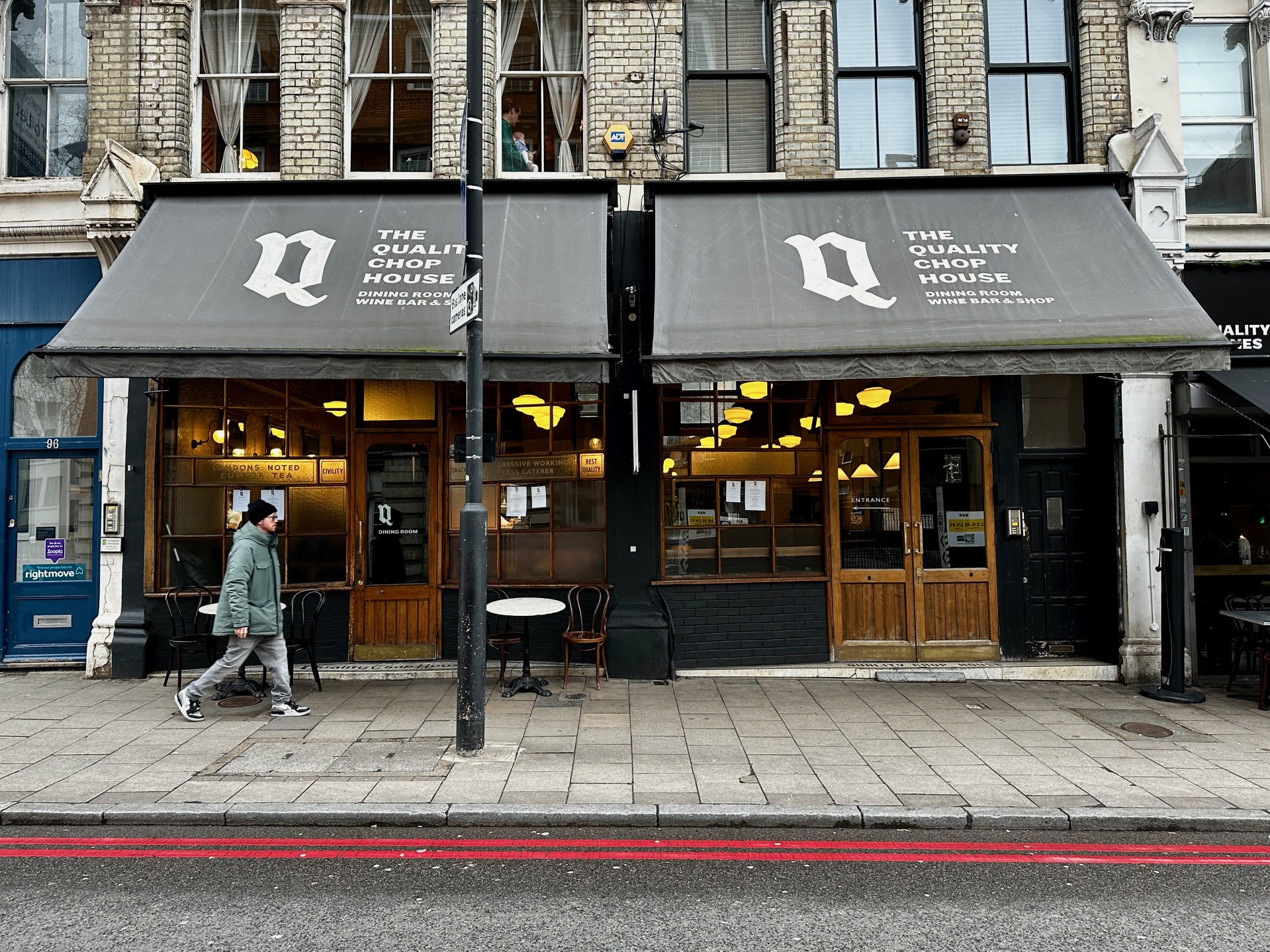
The second list is of all the London restaurants I’ve always wanted to review but never got round to. Some, like Rules and Noble Rot, I’ve been to before. But others are ones I’ve read about in newspapers or in blogs and told myself I’ll visit one day. Like the Wes Anderson-esque French stylings of Otto’s in Clerkenwell, or the little dining room above Soho’s French House where Neil Borthwick,  Angela Hartnett’s husband, cooks a small menu of Gallic classics. They’re not all French, I should add: Smoking Goat, Kiln, Quality Chop House all get a look in. Even with all the casualties in hospitality, I know this list will only ever increase in size. One day, it will see me out.

Manteca has been on that second list for quite a while. It started with a brief spell on Heddon Street (not far from where Casa do Frango is now) before spending some time in Soho and then relocating to Shoreditch’s Curtain Road in late 2021. At every step critics and bloggers have had nothing but praise for it, and looking at the menu in the run-up to my visit it was easy to see why. They make their own pasta on site – so far, so Padella and Bancone – but also specialise in nose to tail eating and make their own salumi, so nothing gets wasted.

The acclaim was so universal that this felt as close to a sure thing as you could get, so I made a lunch reservation for the Saturday of May’s last long weekend, so Zoë and I could try it out after a shopping expedition. Arriving a little late – finding your way there from Liverpool Street can be a bit of a horror show if you get lost in the Broadgate Centre – the welcome was warm and forgiving.

It’s a sizeable site, although you’d never know it was a Pizza Express in a previous life, and they pack them in, with the overall effect that you can barely hear yourself think (would-be restaurant inspector and all-round gastro-spod Andy Hayler complained that it was “like eating in a nightclub” – as if he’d know), and once you’re wedged into your table you’re going nowhere in a hurry. Our server initially tried to seat us at a dingy, unloved table right at the back, far from daylight, and when I asked if we could instead have a nicer table near the window she seemed taken aback, as if the idea had never occurred to her.

The menu’s brilliant at creating agonising dilemmas, more than nearly any restaurant I can remember. There are snacks and nibbles, small plates and a handful of pasta dishes – fewer than you might expect. Small plates are around a tenner, pasta closer to fifteen. Finally, there were some bigger dishes which came in at thirty pounds plus.

Our server explained that pretty much everything was designed for sharing. She also talked us out of ordering two of the large plates once she’d taken the rest of the order, a fact for which I was very grateful further down the line. I sipped a gorgeous cocktail made with Amaro and lemonade – how did I not know that was a thing? – while Zoë, as is her habit these days, tried (and loved) her negroni.

We started with a few snacks while we made up our mind and they contained the only dud of the meal. Focaccia was, to my mind, nothing of the kind, being dry and stodgy and only having a whisper of oil in it. The top crust was great, but that was the tip of the iceberg. And the iceberg was dense and heavy going. I should add that Zoë loved it, but she’d spent the week on a carb-free diet so she might just have been euphoric to be eating bread again.

Much better were the fried olives, little breaded spheres of sausage meat and olives that I could have eaten all the live long day. At three pounds each, though, you might be broke before you were full. Nonetheless, this was the first hint that something special was in store, a hint which quickly gathered momentum, becoming a firmly held conviction.

I’d seen the first of our starters on Manteca’s very distracting Instagram page, along with a caption that said it was only on the menu when they had the right cuts to make it. Ciccioli was lean pork, braised in rendered fat and then pressed into a cake and fried to a burnished crisp. It fell apart under the fork, eager to be dabbed with the sweet-sharp apple mostarda on the side. More than just the acceptable face of mystery meat, this was a symphony of flavour and texture and I wish I’d had one all to myself: if you go, and it’s on the menu, order it.

Less successful, possibly because it’s a dish that happens to share my porn star name, was hogget sausage. I liked but didn’t love it: knowing that Manteca does all its butchery on site reassured me that this was packed with the good stuff, but the texture was still smoother and closer to saveloy than I’d personally choose. The flavour more than made up for it, the whole thing draped in wild garlic leaves, because ’tis the damn season. Probably should have kept some of that slab of bread to mop up the juices – maybe that’s what the restaurant had in mind for it.

I think I read somewhere that Manteca used to do their pasta courses in a small and large, but they’ve done away with that now and a portion is very respectable size – enough for you to eat as a main, if you’re no fun, or a beautiful stepping stone between the smaller and larger plates. Manteca’s brown crab cacio e pepe is so fêted that it might be the closest thing the restaurant has to a signature dish, so naturally I ordered it.

It was a gorgeous, simple plate of soothing sustenance which didn’t outstay its welcome. The pasta – strozzapreti in this instance – was terrific, al dente almost to the point of squeakiness. And the crab didn’t dominate, playing nicely with the cheese and pepper to create something beautifully emulsified and far greater than the sum of its parts: if anything, the foremost note was a brilliant tingle of lemon that prevented it from cloying. Like most of my experience, it thoroughly justified the hype.

Wild garlic made another appearance in Zoë’s pasta. Chitarra, a sort of square spaghetti, if you can imagine that, was positively luminous with wild garlic, its edges fringed with racing green wild garlic olive oil. An egg yolk nested in the centre and although it looked slow-cooked and fudgy, once nudged with a knife sunrise spread across the plate. I didn’t try any, because it struck me as a messy thing to reach across the table and eat, but Zoë loved it. She tasted citrus in this too – lime, she thought, although that might have been synaesthesia because it was just so very green.

The one thing that doesn’t tell you about those two pasta dishes – one of the few frustrations of eating at Manteca – is that they came to the table ten minutes apart. When Manteca said their dishes were intended to be shared I assumed they couldn’t mean the pasta because nobody shares pasta, except in Lady And The Tramp. Perhaps they honestly thought we’d share the first pasta dish and then share the second, but they’d also said, in a Wagamama-esque spiel, that dishes from the same section of the menu would come out together.

Does it matter? On many levels, not really. We were having a lovely time, by this point we’d ordered a beautiful bottle of an Australian pinot noir/syrah blend and all was well with the world. But it’s always weird to sit there while your dining companion watches you eat and then have your roles reversed: it’s why I so rarely send steak back in a restaurant. More to the point, we only had the table for two hours – less, because we’d showed up a little late, so you’d think they’d be tighter on time. As it was, because they didn’t rush us through the pasta, which they should have done, things got more frantic at the end.

But this was the only misstep in a meal where even if we were slightly processed, it never felt like it. Manteca’s front of house team were quite fantastic from start to finish, working in one of the busiest, buzziest restaurants I’ve eaten in for a very long time. Also, given the acoustics, their hearing must be exceptional – for the first half of the meal Zoë and I probably had to repeat almost fifty per cent of everything we said.

Arguably, the best way to deal with the challenging noise levels is to dish up food so good it renders customers speechless. I think that might have been Manteca’s plan, and they achieved it admirably with the next set of dishes. Grilled duck breast, pink and tender underneath caramelised skin, was superb, and pairing it with sausage – I think also made from duck, but I might be wrong – was a masterstroke. But the thing that made the dish, for me, was the preserved quince that came with it: fruity, ever so slightly chewy, a fantastic foil for all that meat. It reminded me, ever so slightly, of Georgian fruit leather (don’t knock it til you’ve tried it) and I’d choose it over red cabbage any day. We were approaching full by the end of this dish, but we heroically soldiered on.

The accompaniments were a mixed bag. Grilled greens were a wan medley of cauliflower and chard, and although they tasted decent the texture was too limp for my liking. A thousand times better – and again, almost reason to visit on its own – were the pink fir potatoes, cooked until golden and crispy and smothered in something the restaurant calls “salumi brown butter” – little crunchy nuggets of meat, herbs and fat. I could have eaten these on their own and left the restaurant a happy man, but being able to pair them with duck, or sausage, or use them to soak up the pool of juices at the bottom of the plate, was nothing short of heavenly.

By this point we were decidedly full but still up for attacking the dessert menu, possibly with something from the restaurant’s extensive list of amaros, once we’d finished our bottle of red. Our minds were concentrated wonderfully by our server telling us we had less than twenty-five minutes before they needed the table, so we were forced to accelerate matters.

The dessert menu is skeletal, with just three options. Zoë’s choice, a chocolate choux bun filled with chocolate cremoso, tasted very nice indeed but I was delighted I hadn’t ordered it because I’m not sure I could have pretended to you that I could taste the “whey caramel” it apparently contained, or even for that matter tell you what whey caramel tastes like.

I’m also delighted I didn’t order it because the dish I did order, pistachio cake, was one of the finest desserts I’ve ever had. There was an awful lot going on here, all of it good on its own yet better together. The cake, which could so easily have been stodgy or unremarkable, had a beautifully dense texture with flashes of salt and pistachio in every spoonful. The ribbons of candied, pickled fennel on top added a fragrant sweetness that never overpowered: I’d have liked more of them, but fennel always has that effect on me. And the preturnaturally smooth pistachio ice cream was as good as anything I’ve had in Italy – or for that matter at Clay’s, who do a mean pistachio ice cream these days. Resting the sphere on a handful of salted, roasted pistachios, though, was an inspired touch.

Zoë had a spoonful, and her reaction was immediate: “you win”. If we’d had our table for longer, I think she’d have ordered one as a second dessert. It’s rare for me to rave about dessert, rarer still to do it about a dessert with no chocolate in it, but I’ve thought about this every day since my lunch at Manteca, wondering quite how they elevated something seemingly so everyday to a dessert so extraordinary.

As we were tight for time, there was no digestif. But there was still room for one last delight, so along with the bill we asked for a couple of pieces of beef fat fudge to send us on our way. I’m not always sure about beef fat in desserts – I still remember a beef fat caramel I had at an otherwise excellent restaurant in Cardiff for which no word other than “minging” will do – but this lent a certain glossiness while omitting the overtly bovine notes. It was one pound fifty for a generous cube, deftly sprinkled with salt, and it took all my strength not to ask them to make me up a box. I wasn’t hungry any more, but I knew I would be later. Or rather, I wouldn’t be hungry but I’d have made enough room for more of that fudge. Another time, perhaps.

Our bill for all that food, a couple of aperitifs and that gorgeous bottle of red – which I liked so much that before the end of the meal I’d tracked it down and ordered a few bottles online – came to just over two hundred and fifteen pounds, including service charge. You could eat there for less, and have less fun, but honestly, when you have a meal this good it costs what it costs, and you don’t give a shit. We emerged blinking into the Shoreditch sunshine, and made a beeline for the Mikkeller bar for a beer and a post match debrief. Our ratings are usually a gnat’s crotchet apart, but for this one they were identical.

You can see that rating just a few paragraphs below, but what’s more important is to talk about just how good Manteca was. Because the truth is, back when I used to eat in London more often – but wasn’t reviewing those restaurants – they never quite lived up to my expectations. To the point where I worried that I was becoming semi-professionally underwhelmed. So I did the likes of St John or Quo Vadis, the places everybody likes, and I wondered what I was missing.

I sometimes think that London has to survive on a bubble of hype because if it wasn’t for that, people would wonder why they’re paying such unsustainable amounts of money to live and work there. And indeed my two recent visits to highly rated London restaurants, Casa do Frango and Chick ‘N’ Sours, left me equally ambivalent. So I can’t tell you how happy I was to eat somewhere that not only justified the hype but made me want to add to it, to lend my voice to the chorus of voices shouting about how special Manteca is. Though hopefully you’ve been reading my blog long enough to know that I don’t really do hype. I’m just as likely to walk away from somewhere critically acclaimed feeling nonplussed as I am delirious with joy, if not more so.

So there you have it: Manteca served up one of my favourite lunches of the last ten years and is well and truly one restaurant ticked off my “places I must get to in London” list. Although it doesn’t make matters easier because now, when I try and work through the other restaurants on it, I’ll always be thinking, in the back of my mind, or I could just go back to Manteca. Anyway, hopefully you’ve read this and might add it to your own version of that list. I’m still kidding myself that everyone has one, because in my echo chamber they probably do.

Manteca – 9.0
49-51 Curtain Road, EC2A 3PT
020 71395172

https://www.mantecarestaurant.co.uk

Restaurant review: Sanpa, Wokingham

I’ve been writing this blog for nearly ten years, and I’ve been moaning that Reading needs a good tapas restaurant for most of them. Certainly I was saying that from the moment, back in September 2013, when I had the misfortune of visiting Picasso just off Caversham Bridge (“one tapas is enough for two people” was the warning sign, looking back). Surely, given the popularity of small plates in general and tapas in particular, someone would give it a bash?

That said, there was a halcyon period, between 2015 and 2018, when Reading was graced with I Love Paella, first in Workhouse Coffee down the Oxford Road, then at The Horn in town, and finally at the Fisherman’s Cottage by the canal. But the owners of the pub decided to let them go, so they could offer their own menu which looked disconcertingly like I Love Paella’s. It didn’t work: the pub closed and changed hands.

And what have we had since then? Numerous restaurants that do good small plates, but only one place, Thames Lido, for tapas (their “poolside bar menu”). I know the Lido has its fans, but having had nothing but inconsistent meals there – and having watched them churn through chefs like it’s nobody’s business – for me that tapas itch remains unscratched.

It’s baffling, because it’s a style of eating that has readily taken root elsewhere. In Bristol you can choose between Bravas, Gambas, Bar 44 or Paco Tapas. London options include Barrafina, Brindisa, Salt Yard and Iberica, and I’ve barely got started. Closer to home Goat On The Roof opened in Newbury last year (I liked it, when I went) and more recently El Cerdo has started trading in Maidenhead, part of its ongoing explosion of interesting-looking new restaurants. And this kind of restaurant keeps coming – Salty Olive, a pintxo restaurant, is opens soon in Wokingham. Yet Reading’s tapas market remains resolutely untapped.

In my experience, great tapas restaurants in this country tend to be run by Brits fanatical about Spain, Spanish culture and Spanish food. Often, rather than recreating what you would get in Andalusia, they set about building a superior re-imagining of it. The 44 Group, run by the Morgan family, is a great example, completely obsessed with produce and producers. Arbequina, down Oxford’s Cowley Road, is another.

Even tapas restaurants which feel more authentically Spanish, more an attempt to create a traditional tapas bar in this country, are often set up by Brits. I’ve always had a huge soft spot for Los Gatos, easily the best restaurant in Swindon, perched up in the Old Town: it’s only in the process of writing this week’s review that I discovered that it, too, was founded by a British couple and named after Malaga’s legendary bar of the same name.

So really, I should have ventured out to Maidenhead this week to try El Cerdo. It fits the bill I’ve just described: the website talks about a love of Spain and Spanish flavours, the menu makes all the right noises. Muddy Stilettos raved about their (no doubt free) food, and it appears – from a look at Companies House – to be owned by Brits. That would be the obvious choice, but who likes obvious choices anyway?

Instead I decided to revisit the one tapas restaurant I can think of that appears, from what I can gather, to be owned by a Spaniard, Wokingham’s Sanpa. It’s been running since 2012, and I visited it back in 2016, when I loved the place. They then moved to a new house (as did I – twice) and our paths diverged. But people get too hung up on the shiny and new, so before I reviewed the shiny and new I decided it was time to get myself to Wokingham with Zoë and see whether the intervening years had been kind to Sanpa.

It’s one of the town’s older buildings, two conjoined cottages, all beams, white walls and cosy, farmhouse-style chairs and tables. The two dining rooms are separated by a hearth and the second gives a view into the open-ish kitchen. It looked homely, not unpleasant but also, in honesty, not drastically different to when I visited this building last in 2016, back when it was home to a restaurant called Jessy’s.

It was also, and this never flatters a dining room, empty. Marie Celeste empty. Not with a few tables settling up, not with reserved signs marking the space of the diners yet to come. Just empty. I don’t know about you, but I always feel guilty if it seems like I’m the only thing standing between staff and an early night.

Despite that the welcome was warm and immediate and it felt like a nice, if cavernous, place to stop on a midweek evening. And looking at the menu I could see plenty of reasons to settle in for a few waves of small plates. Most of it very much looked the part, although a couple of dishes – bacalhau à bras and chicken fajitas – did seem to have wandered across from other restaurants.

Pricing for tapas was all clustered around the eight pound mark – although some dishes were £7.95 and others £7.59 for reasons which seemed capricious at best. The bigger plates – steak, lamb shank, three different kinds of paella – were grouped together under a section endearingly entitled “Other things to order”, even though that literally describes everything on a menu, if you think about it.

My favourite part – and I’ve never seen anything like this before – was a sternly worded box in the bottom left. It said, and I’m quoting verbatim here, Please make sure that you know what this dish looks like or taste (sic) like. Due to the level of controversy and the cost of this dish, we regret to inform you that we will not be able to refund this dish of (sic) your bill if you’re not comfortable with the outcome of your order.

I followed the asterisk, expecting it to be something contentious like octopus, or sweetbreads, but instead found a rib-eye with blue cheese and Rioja sauce. Is steak and potatoes really controversial, or were they playing it safe because it was just shy of twenty-four pounds?

The wine list was okay, if not hugely tempting. I was in the mood for a Spanish beer – always so enjoyable with tapas – but all they had was San Miguel by the bottle. So we decided to grab a jug of sangria and that turned out to be an excellent choice. It was expertly put together to taste as if it had no alcohol in it, even though you knew it did, and if it contained a slug of rum or brandy it was nicely blended and concealed. It tasted, to be honest, like holidays – and what’s not to like about any drink capable of that?

Our first wave of dishes was a decent reflection of the strengths and weaknesses of the kitchen. Bread was bought in but serviceable enough, and the allioli tottered under the weight of an industrial quantity of garlic. But the colour was Hellmans-pale not golden, the consistency woolly, closer to fridge-cold butter than the good stuff. Chorizo in cider came, not as an earthenware dish full of slices of chorizo, caramelised at the edges, rich with juices, but rather as two hulking sausages, plain and unadorned. This didn’t fill me with hope but actually they were terrific, the kind of quality you can’t easily get your hands on in this country.

If that dish didn’t give the bread much to do by way of moppage the next more than made up for it. I’d loved Sanpa’s prawns in garlic on my visit seven years ago and was keen to reacquaint myself with them. They were still very nice indeed, sizzling away in a little skillet surrounded by nuggets of garlic somewhere between golden and crunchy.

This, more than the allioli, felt like the bread’s destiny, to dive and scoop and play in that pool of oil and garlic. I remembered halfway through that I was in the office next day, and felt bad for my colleagues. But if you wanted an illustration of what’s happened over the last seven years you couldn’t find a better one – the dish cost about a pound more than last time, but contained roughly half as many prawns.

Then there was the dish for which I had the highest hopes: panceta a la parilla, described in the menu as “ideal as finger food”. From that I was hoping for little cubes of pork belly, something close to chicharrones. Instead we got three slabs of belly, plainly grilled, without much accompaniment. It wasn’t quite cooked to the point where the fat starts to render and everything gets gloriously sticky, and I found a couple of shards of bone in my piece.

I found myself thinking about what this dish would have been like in the market at Malaga, the whole thing dressed with a little herbs, the tomatoes thicker and tasting properly of tomatoes, as they always do abroad. Abroad they would have been bright with grassy olive oil and scattered with rock salt. Did I think the chef was running on autopilot because he hadn’t bothered to do any of that here, or had I decided that because I could see, through in the open kitchen, that he was cooking with his headphones on?

A meal like this is definitely a game of two halves, and as we cogitated and fine-tuned our next selection of dishes the staff – who were absolutely brilliant throughout, by the way – took our dishes away. I asked our server if she had any recommendations – “you’ve already had quite a few of my favourites” she said, which I liked.

By this point another couple had come in and were sitting the other side of the room, which had the advantage of making me feel like less of a lemon. Again, I worried about all the good restaurants unable to pack them in on a midweek evening; I doubt, back in Reading, Popeyes was having this problem. I felt a moral responsibility to order more dishes – and another jug of sangria, although there was nothing moral about that.

Our second wave of dishes showed the same inconsistency but, if anything, were more disappointing. I’d decided against the patatas bravas, our server’s recommendation, instead picking the patatas con crema de Cabrales. This was the same cheese, by the way, that featured in that Absolutely No Refunds Ribeye. The possible reason for that is that Cabrales is stinky. It is one of the most agricultural blue cheeses there is, perfect with Asturian cider, though pretty good on its own. This potato dish should have been salty and funky – a handful, no less.

And yet the surprisingly dark sauce just didn’t have the oomph, and there wasn’t enough of it. What there was had slipped through the cracks and landed in a pool at the bottom of the dish, rather than coating each crunchy cube of spud. A real shame, because the potatoes themselves were excellent. A good opportunity squandered: was it down to those headphones again?

Albondigas were another recommendation and, again, just missed the mark. The meatballs themselves were genuinely lovely – a coarse mix of pork and beef, clearly handmade and as good as most I’ve tried. But drowning them in a gloopy sauce of tomatoes and peas coated the accomplishment in an emulsifying layer of blah. And I didn’t see the point of putting more cubes of potato at the bottom where they just wound up bedraggled and soggy. The meatballs should have been the star of the show – again, my mind wandered to Malaga and to its marvellous Uvedoble, where the meatballs come perched on a bed of shoestring fries, the meaty juices soaking in, the whole thing unimprovable.

Croquetas were probably the most disappointing thing I ate. These were apparently made with Serrano ham, though good luck finding much of it. They’d been fried to the point where the shell was a permacrust, the inside again woolly rather than silky. Had they been previously frozen? I wouldn’t have bet against it. Just over six pounds for these tiddlers didn’t feel like amazing value (and these days, things being how they are, I don’t talk about value as much as I once did).

Last but not least, a round of goats cheese with tomato jam. This, again, is a dish I remember fondly – this time from I Love Paella – but Sanpa’s was a pale imitation. Maybe it’s because we ate it last of all, but it didn’t have that almost brûlée crust – instead it was a little like cardboard. Underneath the goats cheese was still decent, although I like pretty much any goats cheese, and the tomato jam was a classic, if sweet, combo. But again I felt underwhelmed; I knew Sanpa could get their hands on decent ingredients – the chorizo showed as much – but I didn’t feel like they always did enough with them.

I feel bad saying all this, partly because I wanted so badly to like them and also because, as I said, service was brilliant all night. It takes real skill to be that happy and engaged on a Wednesday in the middle of spring, looking after a restaurant of precisely four customers. But the staff did exactly that, and I imagine they come into their own on a bustling weekend night, when I sincerely hope Sanpa is packed with happy diners. But also, much as I wanted to like them, I couldn’t imagine a Saturday night where I would be among them.

Our meal came to just shy of ninety pounds, not including tip, and tempting though it was to have a pint and a debrief in the Crispin next door, we headed for the station. I found myself simultaneously hoping that Sanpa continued to prosper – I’m sentimental like that – and wondering, if my meal had been representative, how they really could.

“I bet the people who run that restaurant have never been to Arbequina or Bar 44” said Zoë as we boarded our train home.

“No, probably not. But why would they? They’re Spanish, they probably feel they have authenticity on their side.”

“But that’s the point, you have to adapt or die: if they don’t, they might get left behind. Last time you gave them a rating of 8 or something, this time it’s going to be much lower. What will it be like in another five years? And some of the touches in our meal tonight just felt dated. Like that squiggle of balsamic glaze under the goat’s cheese, who does that any more?”

I nodded silently in agreement at my other half, easily a better restaurant critic than I am these days, as the train trundled back to Reading.

Sanpa – 6.9
37-39 Denmark Street, Wokingham, RG40 2AY
0118 9893999

https://www.sanpa.co.uk