We’re on the home stretch now: Halloween and Bonfire Night are in the past, Christmas is on the horizon. This review is published on Black Friday, a day many of us would prefer not to acknowledge. It all adds up to one thing – we are close to having survived another year of interesting times, of pay cuts and price rises, of soaring expenses and the spectre of Covid, still lurking in the background. The future is uncertain – for our electricity bills, for our weekly shop, for keeping global warming below 1.5C, for our Twitter profiles – but for now, we’re all still here. Group hug, anybody? Actually, scratch that: who else needs a drink?
The New Year is always a time to look ahead and make great plans, but as a perpetual glass half empty type I find this time of year is when I look back and can see all the things I didn’t achieve over the last twelve months – the pounds I didn’t lose, the money I didn’t save, the books I never finished and the exercises from my physio I always found very good reasons not to do. But I never mope for too long – the sweet release of the socialising season, the festive beers waiting to be drunk and all the people to catch up with soon sweep all of that away. Besides, by Christmas Eve ITV4 (yes, it’s a thing) is pretty much wall to wall Carry On films, and you can’t mope watching one of those. I can’t, anyway.
As we approach the end of the year I also find myself looking at my to do list here at the blog. Forget shopping days: there are only a handful of reviewing Fridays left til Christmas and so many places I’ve not made it to yet. So how do I decide what to prioritise for the tail end of the year? Should I go back and try one of the interesting places that have sprung up in Wokingham, or another of Reading’s new sushi joints? Is the Secret Santa present my readers really want a piece where I go to Jollibee and dutifully endure that weird spaghetti dish with chopped frankfurters in it? And how about that new kebab place on the edge of the Broad Street Mall, immortally described by the Reading Chronicle as “Slow-roast Dubai restaurant Donor and Gyros”?
But there’s a particular subsection of my list that I feel deserves particular attention as 2022 shambles to an end. At the start of this year, when the weather was shite and our booster jabs hadn’t kicked in, I was still reviewing takeaways. But I know that what people really want, especially now life is a little more as it was, are restaurant reviews. And there are a handful of places where I had decent takeaways over the past couple of years but have never returned to try out the full eating in experience, blind spots that I ought to rectify.
In some cases there are reasons for that – Banarasi Kitchen has recently left the Spread Eagle pub to be replaced by a new Indian kitchen called Bagheera, for instance. I probably would have gone to Osaka by now, but for the fact that they had a one star hygiene rating for four months over the summer. Palmyra, which did me a very nice takeaway in the spring of 2021, only takes cash which rules it out of contention. Cash only in 2022, after two years that have all but killed cash as a going concern. “Fuck that” grizzled Zoë, as we walked away from it recently.
But I also had a fantastic takeaway from the subject of this week’s review, little Momo 2 Go down the Oxford Road, back in February – so good, in fact, that I’ve ordered from them several times since. Surely it was time to try it in the flesh? So Zoë and I wandered over on a midweek night to pay it a long overdue visit.
Subscribe to continue reading
Become a paid subscriber to get access to the rest of this post and other exclusive content.
Adda Hut closed at some point in the summer of 2024. I’ve left the review up for posterity.
This week you get a simple, straightforward review of a simple, straightforward restaurant. But before that, I’d like to apologise to any of my readers in Woodley.
Because I’ve never reviewed anywhere in Woodley, in the best part of ten years. It’s one of those satellites of Reading that has escaped my attention. I made it out to Lower Earley – just the once, back in 2014 – although I can’t see myself going back any time soon. And this year, finally, I reviewed somewhere in Tilehurst, long an omission. But Woodley has never been on my radar. I’ve reviewed more places in Bristol than in Earley, Woodley and Tilehurst put together, a fact I know delights so many of you.
I assure you it’s not because I’ve taken against Woodley. In fact, I’ve always had warm memories of the place. The thing is, I grew up there – or pretended to – and it was the first place I lived when my family moved to Reading in the early Eighties. So I have happy memories of mucking around on the airfield, and walking the dog round Dinton Pastures, of going up the precinct and spending my pocket money in Beatties, the games shop. Of buying my teenage diaries from the Newscentre (and filling them with awful shite) and of buying new pairs of shoes every year from Milwards in time for the start of the school year. (You’d be better off wearing the boxes, my mum said most years: size twelves, you see).
I came back to Woodley after university and lived there until the late nineties and, with my schoolfriends who were also marooned there, we would go to the Bull & Chequers and drink to forget that we were stranded in suburbia. It was forever 1996, and someone in that pub liked to put enough money in the jukebox to play What’s The Story, Morning Glory? in full, from beginning to end. And that was nightlife: if you didn’t like it, you caught a coach to Utopia. Or on summer nights you could walk across Ashenbury Park to drink at the Land’s End and pretend you were in the countryside. And back then, I can’t even say I was that dissatisfied. That was enough, for a while.
Anyway, I thought Woodley’s role in my life was over and done, preserved in aspic, but then something happened which I didn’t expect: I got together with Zoë. She grew up on the same streets as I did, a few years later, and her parents still live there. So my past became, to some extent, my present and I saw Woodley afresh, through different eyes. And actually that was properly lovely. After all, it was an excellent place to grow up, and for all I know it still is. If I could tell eighteen year old me that he’d still be walking home past Bulmershe School in the summer of 2022 he’d probably have been horrified, but life is full of surprises.
One thing that has changed is that, at long last, Woodley has a few potentially interesting restaurants. Not that I ate out in Woodley as a kid – the treat was a takeaway from Hong Kong Garden, and a VHS from the video store next door if you were lucky – and for many years it was that or Red Rose, the solitary Indian restaurant (it’s still going). When the George, a bog standard Chef & Brewer pub, opened on the edge of town it was genuinely a source of excitement.
But nowadays Woodley has the highly rated La’De Kitchen, right opposite the Waitrose. It has a surviving branch of Cozze which has outlived the one in the centre of Reading. There’s a fancy-looking takeaway pizza place that looks a cut above Papa John’s and a dessert shop doing waffles, sundaes and milkshakes. And last but not least there’s Adda Hut, the subject of this week’s review.
I picked it because it just looked different enough to be worth a try – its website talked about serving the food of Kolkata, and its menu was relatively small and focused, a bhuna and dhansak-free zone. My very old friend Mike, a drinking buddy from those Bull & Chequers days, was home staying with his parents for the tail end of the year, so he joined me there on a dismal, sodden evening, the shopping precinct lashed with wind and rain.
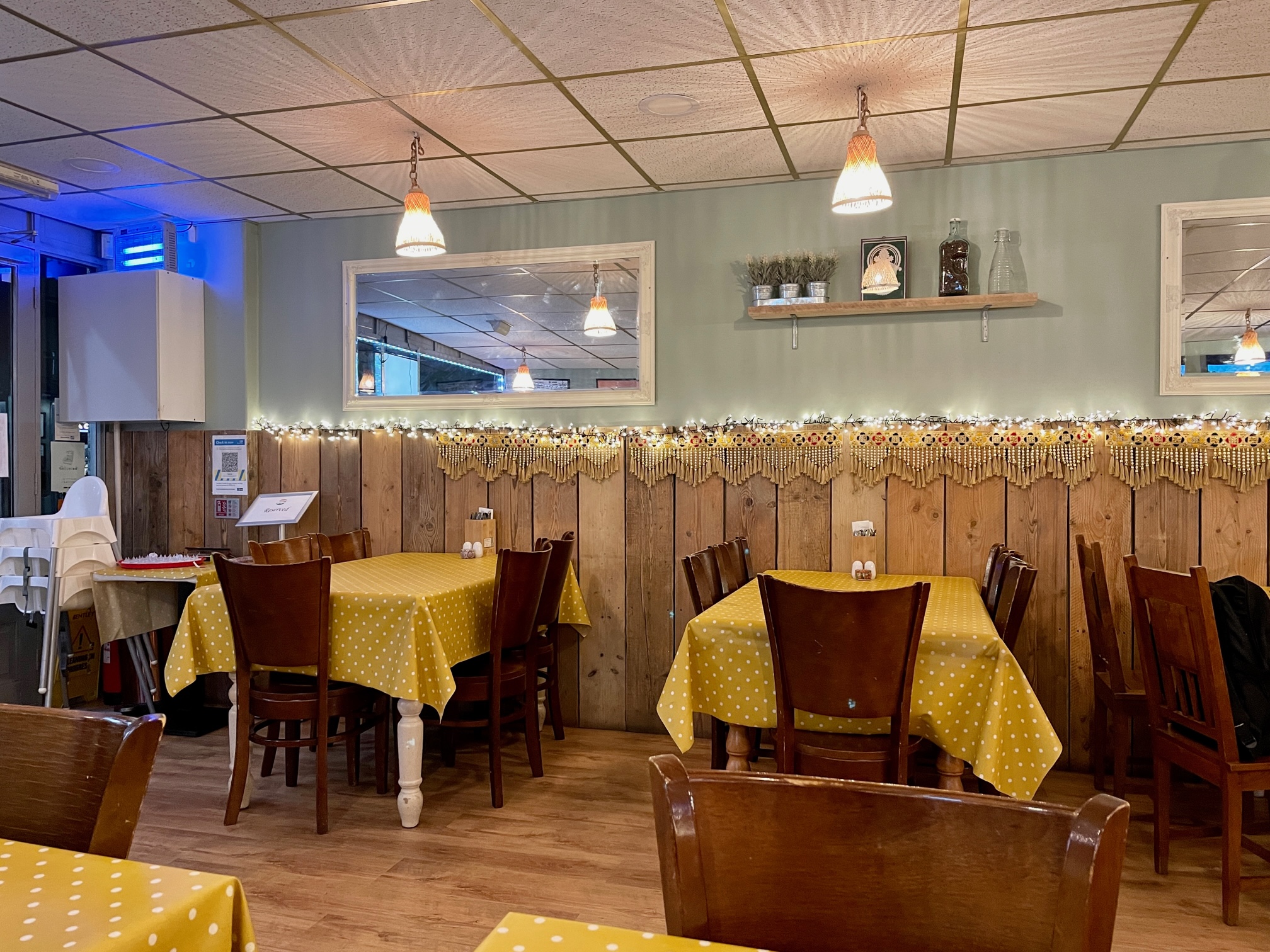
It truly was an inhospitable evening, the kind where nobody in their right mind sets foot out of doors, but even so it was jarring to arrive in an empty restaurant. I mean completely empty: one table was occupied by a couple of members of staff, one tapping away on a laptop and the other staring into space, but otherwise it was as dead as they come. It’s hard to judge a restaurant when it’s completely devoid of atmosphere – especially when it’s not their fault – but for what it’s worth I quite liked the room, all muted colours, wood panels and twinkling lights. We were the only customers all night, although I was relieved to see a steady stream of Deliveroo pickups.
As I said, it’s quite a narrow menu and that’s the first thing that alerted me that it might not be generic stuff. Ten or so starters, labelled “Calcutta Street Food”, a dozen meat and fish curries and a good range of vegetarian dishes. Two biryanis, which by central Reading standards is a starvation diet. But also, everything just looked a little out of the ordinary – lots of meat on the bone, plenty of fish dishes and many things I’ve just not seen anywhere else.
It’s a dry restaurant, although they don’t charge corkage if you want to bring a bottle, so I had a very enjoyable mango lassi and we shared a jug of tap water – the decadence! – while we made up our minds. One of the two staff members, who had the air of being the owner, came over and answered our questions about the menu, making suggestions and recommendations and pointing out specialities. I would say we played it fairly safe but fortune might favour the brave, especially if you like fish on the bone as the menu has rather a lot of that.
I really enjoyed both our starters. Their speciality is Calcutta Fish Fry, but instead we went for the fish pakora and I don’t feel like I missed out at all. It was an impressively generous helping of fish in a light and only slightly spicy coating, with just the right amount of crunch. A crazy amount of food for six pounds, and a real plate of joy. It came with a sort of acrid mustard dip which I started out actively disliking but ended up constantly dabbing more pakora into, unable to make up my mind. Mustard sauce and mustard gravy appear multiple times on the menu, so perhaps that too is a Kolkatan speciality.
Even better, and my star of the night, were the mutton chops. Now, the description here is misleading. The wait staff told me that rather than being chops they were in fact croquettes of minced mutton and potato, breaded and fried. That made me expect something a little more like the mutton rolls I’ve had before but what turned up was bigger, better and nothing like that at all.
Instead they were huge bronzed spheres, looking like arancini on steroids, with a permacrust which gave way under pressure. But if they looked like arancini, what they resembled more than anything was a Scotch egg where the kitchen has dispensed with the annoying faff of including an actual egg. Instead you just got a warming filling of lightly spiced mutton, almost haggis-like, and the whole thing was quietly beautiful. It came with two dips – a thin, red, spicy one which I loved and another which I would put good money on being ketchup.
“That was really good, and just big enough” said Mike. “I’ve got room for the mains.” This is why Mike is thin, and I am not: those starters were generous, but if they’d been twice as big I’d have had no complaints. By this point in the evening we’d spent the princely sum of twelve pounds.
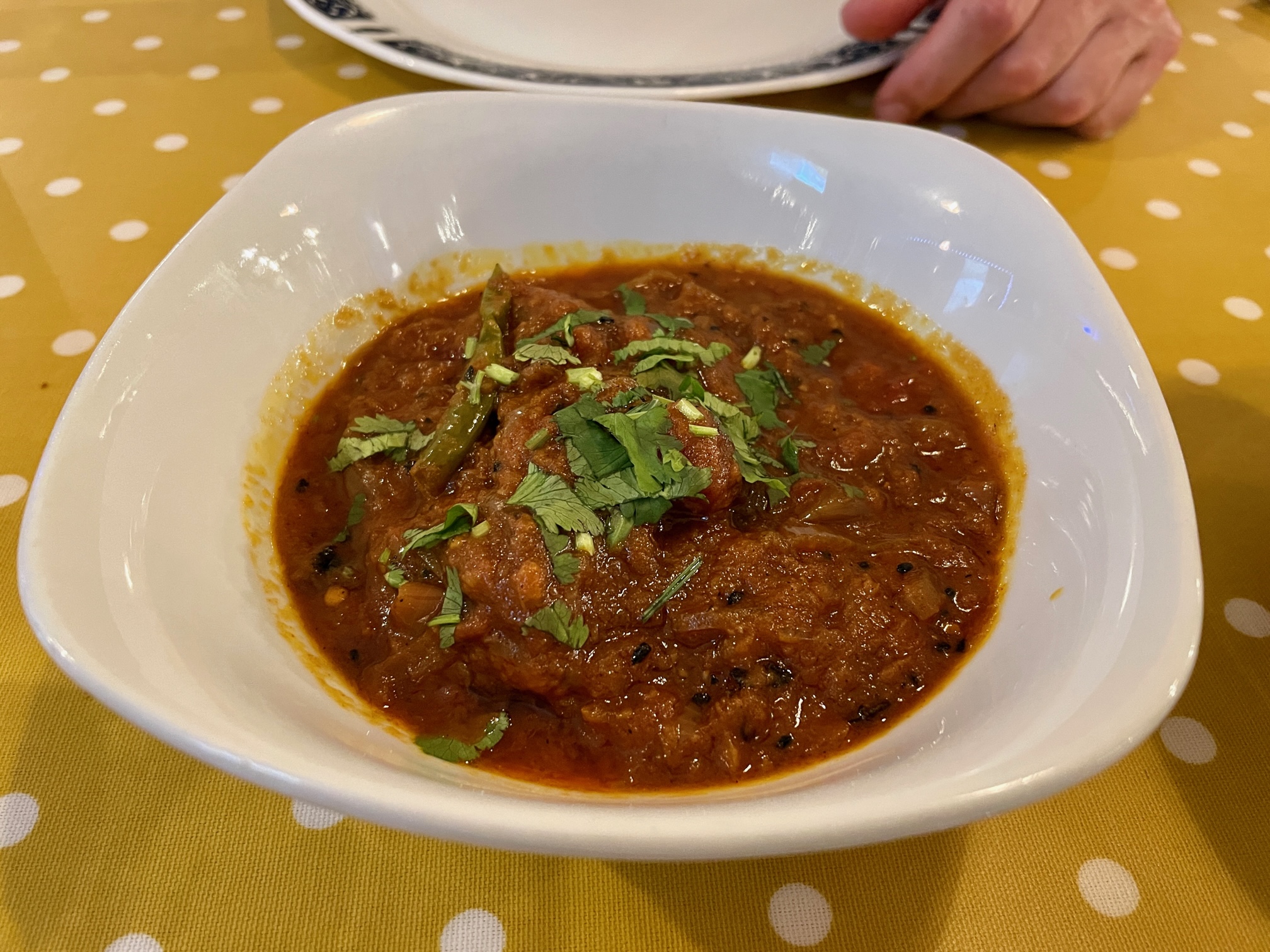
Could mains live up to that? They came pretty close. Mike wanted to try the tawa mutton curry, and it looked the part with a thick, brick red gravy. And the gravy was the absolute best bit. I loved it – deep and sticky, with thin ribbons of slow-cooked onion that suggested someone had taken their time over elements of our meal. If I’d just had that gravy with rice and bread I’d have been a happy camper, and in that respect it reminded me of some of the very best Indian food I’ve had.
And the mutton wasn’t bad, but I was expecting slow-cooked meat that broke into strands whereas this was leaner, more tender but perhaps slightly less interesting. We practically finished it all, though. I left one piece of mutton which was bouncier than I liked, but between us we polished off every molecule of sauce.
What I liked about the fish curry we also ordered was that although it looked decidedly similar to the mutton curry – you might have struggled to pick them apart in a lineup – the taste was distinctly different. This was a thinner, sharper sauce studded with nigella seeds, and big wodges of skin-on filleted fish that easily broke up into smaller pieces. Equally intriguing, although the mutton had the edge, but best of all I honestly felt like these two dishes had different start and end points. Obviously you never really know what goes on in a kitchen, but I didn’t feel like Adda Hut was using gallons of chopped tomatoes and packets of curry powder.
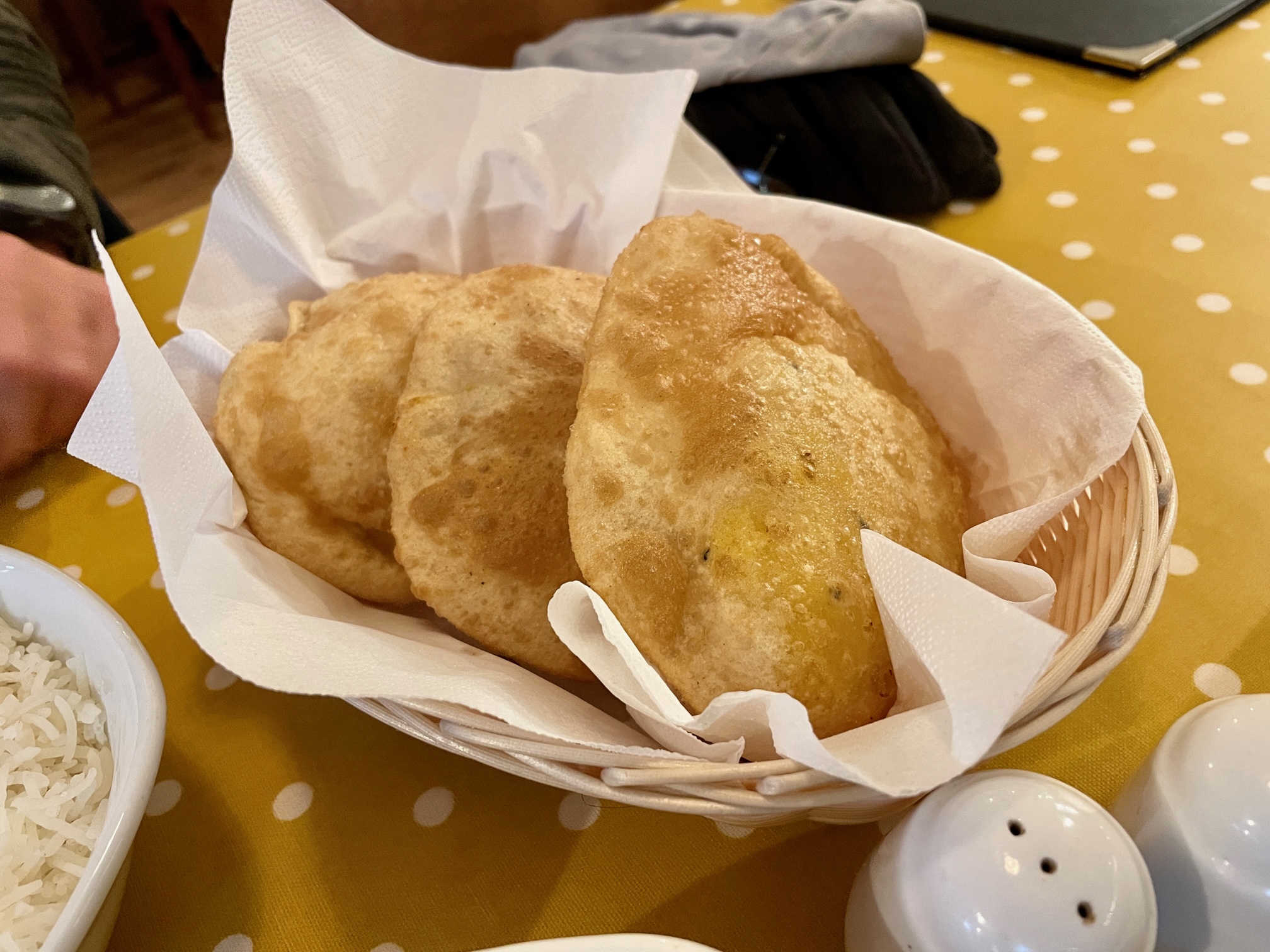
When the sauce is that good, you need to have vehicles for it. Steamed rice was – well, it was steamed rice, you don’t need me to tell you about that – but they also serve an interesting range of breads. No naan here, but paratha and puri stuffed with peas or lentils. We ordered the latter and I absolutely loved it with both curries – just a smear of lentil inside the bubble of bread, but still beautiful torn into pieces and loaded with the last of that gravy. Spice levels were slow and subtle, which is not the same as bland: I was still dabbing my nose by the end.
Our bill for all of that, including a service charge, came to just over forty-five pounds. And when the bill arrived I wished I’d tried more – given their desserts a chance, or ordered a cauliflower curry on the side. I felt bad that their one table of the evening hadn’t spent more money. But I suppose what I’m really saying is that I knew there were things I could order next time.
“How long have you been here?” I asked as the man I thought was the owner came to take our payment.
“Just over a year.”
“And how’s Woodley treating you?”
“Pretty well, actually. The weekends are manic.”
That relieved me, and we headed out into the miserable squall for a post dinner drink at Bosco Lounge – somehow going to the Bull & Chequers would have been a nostalgic step too far. Bosco Lounge was buzzing, still sending food to tables at half eight, and a large group at some nearby tables appeared to be doing some kind of art class. We had a debrief where we both concluded that Adda Hut was rather nice in its quiet, unshowy way and that we’d positively warmed to the place.
Later on I ventured back out into the relentlessly hammering rain to catch my bus, and the lights were still on in Adda Hut, although the chairs were stacked and they were giving up for the night. Bosco Lounge had felt fuller than it deserved to be, and when I passed Cozze it was still doing decent trade. By contrast Adda Hut felt quieter than it should have been, and that didn’t feel right.
I started this review with an apology to my Woodley readers, but I hope I have enough of them to give Adda Hut a try, even if I don’t necessarily manage to persuade the rest of you to head out in the direction of RG5. Because as I rushed past it brolly up, on that miserable evening, I found myself oddly grateful to this little outpost that had served me and my old friend some decent, interesting food on a night when many restaurants would have been eyeing the front door and waiting to close. A hard winter is coming, and not every restaurant will survive it. I very much hope Adda Hut does.
I get a fair few requests to recommend somewhere to eat in Reading. And when I do, I can usually come up with something: if you tell me how central it needs to be, your budget, what kind of food you like and how many of your party are vegans, or vegetarians, or coeliacs, I can find you somewhere suitable. It’s very rare that I’m completely stumped.
But there is an exception to that, which I suppose you could best describe as the Special Occasion Restaurant. It used to be called fine dining, before that phrase became a term of abuse. But special occasion restaurant probably sums it up better – somewhere you want to go to spoil yourself, or treat someone, or celebrate anniversaries, birthdays, engagements or exam results. Yet even describing it that way makes me realise what a niche and endangered species it might be.
The thing is, a lot of restaurants can make an occasion feel special. It’s what they’re meant to do – the good ones, anyway. And isn’t special occasion dining a concept that has outlived its usefulness, as eating out becomes a special occasion, full stop? After all, we’ve staggered through two and a bit years of Bad Times, and summer has come to an end just in time for Even Worse Times to hove into view. I mark a special occasion these days by bunging the central heating on.
That said, it’s too early to say whether the latest coming storm will hit all of hospitality, or whether parts of the sector will fare better than others. Casual dining might be protected, in terms of demand, although it will have less of a buffer against rising costs. Chains may have enough of a war chest to see them through, as they did in the pandemic. But what about the top end? Is this a luxury people will forego, or will people ring-fence those kinds of meals? I imagine many restaurants, both new and well-established, are asking themselves those questions with some anxiety, especially with their peak trading period a month away.
I have to say, though, that even before the pandemic Reading never really boasted that sort of restaurant. In the town centre, the closest we had were places like Forbury’s (which, back when it was good, was very good), Cerise and London Street Brasserie. Only the latter is still going, although it’s not always felt quite special enough, I think. Further out of town we had Mya Lacarte which, in its early years, was terrific but faded away and closed. And I suppose we have Thames Lido. The location is special, if nothing else.
So for that kind of meal, people have always gone further afield – to London, which isn’t far in the scheme of things, or to one of the pretty pubs between here and London that trouble the Michelin and the Good Food Guides. Or out Henley way, for dinner at somewhere like Orwell’s: not Henley itself, mind you, as its upmarket restaurant Crockers closed its doors for the last time last month. “People won’t pay for fine dining but restaurants like Côte Brasserie do really well here” said the owner. “I have never been so badly disrespected as I was in Henley”: someone’s not going to get tapped up by the tourist board any time soon.
So where do I recommend, these days? Well, my go to used to be the Miller Of Mansfield in Goring – very pretty, terrific food and accessible by train if you all want to drink – but then it closed at the start of January: the cause of death was a greedy landlord, as usual (N.B. it’s since reopened under very different management). Since then I’ve struggled a bit, telling people there are better options further afield; the last time someone asked me, I suggested Goat On The Roof.
So that’s the thinking behind this week’s review – could Maidenhead’s Seasonality be a suitable option? The compact family-owned restaurant, run by husband and wife team Wesley and Francesca Smalley, got a rave review in the Guardian back in July and that, combined with the short sample menu on their website, made it look like an intriguing prospect. I never need much persuasion to hop on the Elizabeth Line, stopping only for a pre-prandial pale at A Hoppy Place, so I booked a table for Friday night with some anticipation. Could I finally find somewhere of a standard similar to places like Marmo and Caper & Cure without having to trek over to Bristol?
Seasonality was a short walk from the train station and, at first glance at least, was pretty unassuming. The dining room’s best feature were the big windows that I imagine let plenty of light in, but by nightfall, without that glow, the place was neutral and a little spartan. The only exception to the muted furniture was a weird-looking marble bar area, a little like a kitchen island, where you could perch side by side on bar stools and stare at the wall together: they tried to seat us there but I politely asked if perhaps we could have a conventional table instead.
The evening improved from there, and Seasonality do one thing of which I approve heartily, seating couples at adjacent corners rather than opposite one another so you both get a good view of the space. The place was quiet when we arrived, but by the end of our meal every table was occupied (except that weird kitchen island – another couple was seated there but made a break for a real table the moment one became vacant).
“It’s a bit dark” said Zoë, who is always better at critiquing the decor than I am. “I don’t understand why none of the lights are on over the window seats.”
The menu was a mixed bag – attractive but small. Based on the name (not a huge fan of the name, incidentally) I imagine the menu changes at least four times a year but I hope they tinker with it more frequently than that because otherwise it has decidedly limited replay value. Three starters, three mains, three desserts. A few snacks to start you off and a couple of sides. Starters just under a tenner, most mains twenty-five quid, desserts the same price as the starters. That’s your lot.
On the plus side, that means that in this review you’ll read about the majority of what was on offer, but the minus is that if you enjoy the delicious agony of narrowing it down, or if you’re a vegetarian or a vegan, or find that the menu happens to contain one of your flat-out no-nos this might not be for you. I gave Zoë the first pick of each course, because manners, and I was delighted that in at least one case she went for the option I fancied least, giving me at least the illusion of choice.
The wine list was small and perfectly formed too – something like four reds and four whites, maxing out at forty quid. Ironically this is an area where I often think less is more, so I was happy with that and our bottle of Morgon, which was about thirty two pounds, had plenty of fruit and just enough about it to bridge the gap between the mains we went for. But before all that we started with a couple of things from the “snacks” section of the menu. The bread was lovely: two quadrants of a little loaf, still warm from a little gentle toasting and spot on with a pat of cultured butter (from Ampersand, who used to supply butter to Geo Café).
Better still was the other snack – sheets of lardo dotted with figs, grapes, sunflower seeds and micro herbs. This was the moment when I realised the evening would be nothing if not interesting. The salty whack of that lardo tempered and toyed with by a whole palette of other flavours and influences – the bright sweetness of fruit, the freshness of little leaves of mint – was a true delight, and unlike anything else I’ve tried this year. Besides, look at it: it’s like an edible Kandinsky.
More fascination was to follow, not least because Zoë’s starter, which I’d dismissed as very much not my bag, knocked it out of the park. “Tunworth Cheese Soup” hadn’t appealed to me – a soup, made of cheese? – but more fool me: what turned up was a soothing bowl of lactic lusciousness, comforting but not too heavy, scattered with the crunchiest croutons and finished with verdant spots of olive oil. I used to have a friend who said she never ordered soup in a restaurant because every mouthful was exactly the same. Ordinarily I would have agreed with her, but with this masterpiece that was rather the point.
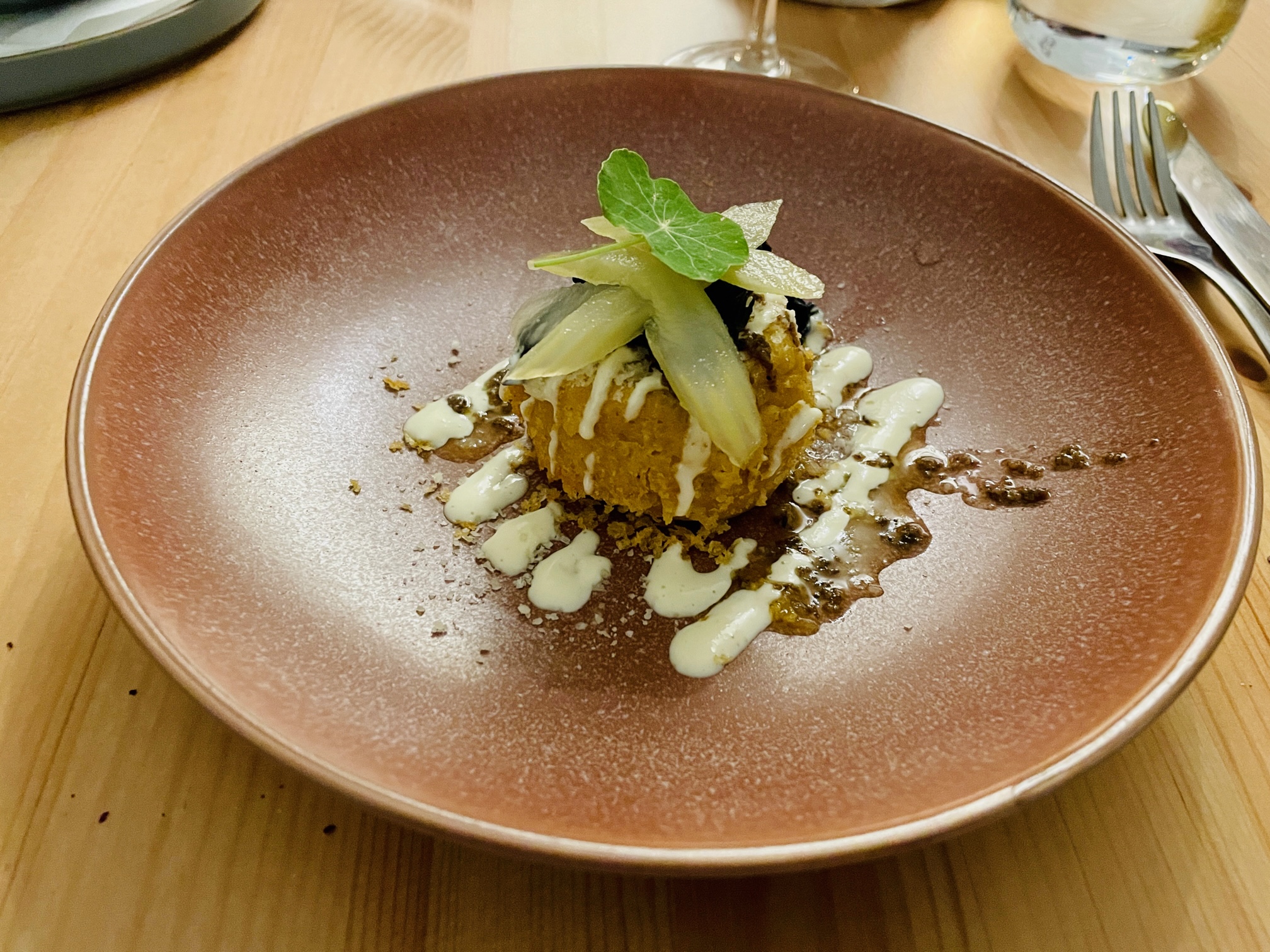
By comparison my starter felt like a good idea not executed right. On paper a potato and Jerusalem artichoke fondant with mushroom ketchup sounded right up my alley, but the flavours and textures of this dish were out of whack. Maybe it was the balance of the potato and the artichoke, but the whole thing had an oddly spongey feel to it without any crunch or crispness. The outside had no upside.
That made it feel a bit like a vegetarian fishcake, and there was nowhere near enough umami punch from the underpowered mushroom ketchup to lift it. Only the fennel, which I thought might be pickled, broke up the beige and reminded me of Bristol’s lovely Caper & Cure where I last had it. The starter we didn’t try was bergamot cured trout with oyster custard: only three options on the menu and I’d picked the wrong one.
Mains reassured me that my starter was a blip. Mine was a beautifully cooked piece of hake topped with tightly curled, muscular brown shrimp and served on top of a ribbolita of coco beans, croutons and cavolo nero – more broth than sauce but still absolutely bewitching stuff. I thought I detected more of that fennel chucked into the mix, which I found a little strange – the dish didn’t need it and with a menu so small it seemed odd to have duplication.
Similarly the “Cookham greens” we ordered as a side – a tranche of cabbage a bit like a hot wedge salad – was drizzled with a dressing or sauce that looked very similar to the one that had adorned my starter. But even with those minor quibbles, the hake was a great dish. Could I think of anywhere in Reading that served food like this? Not really.
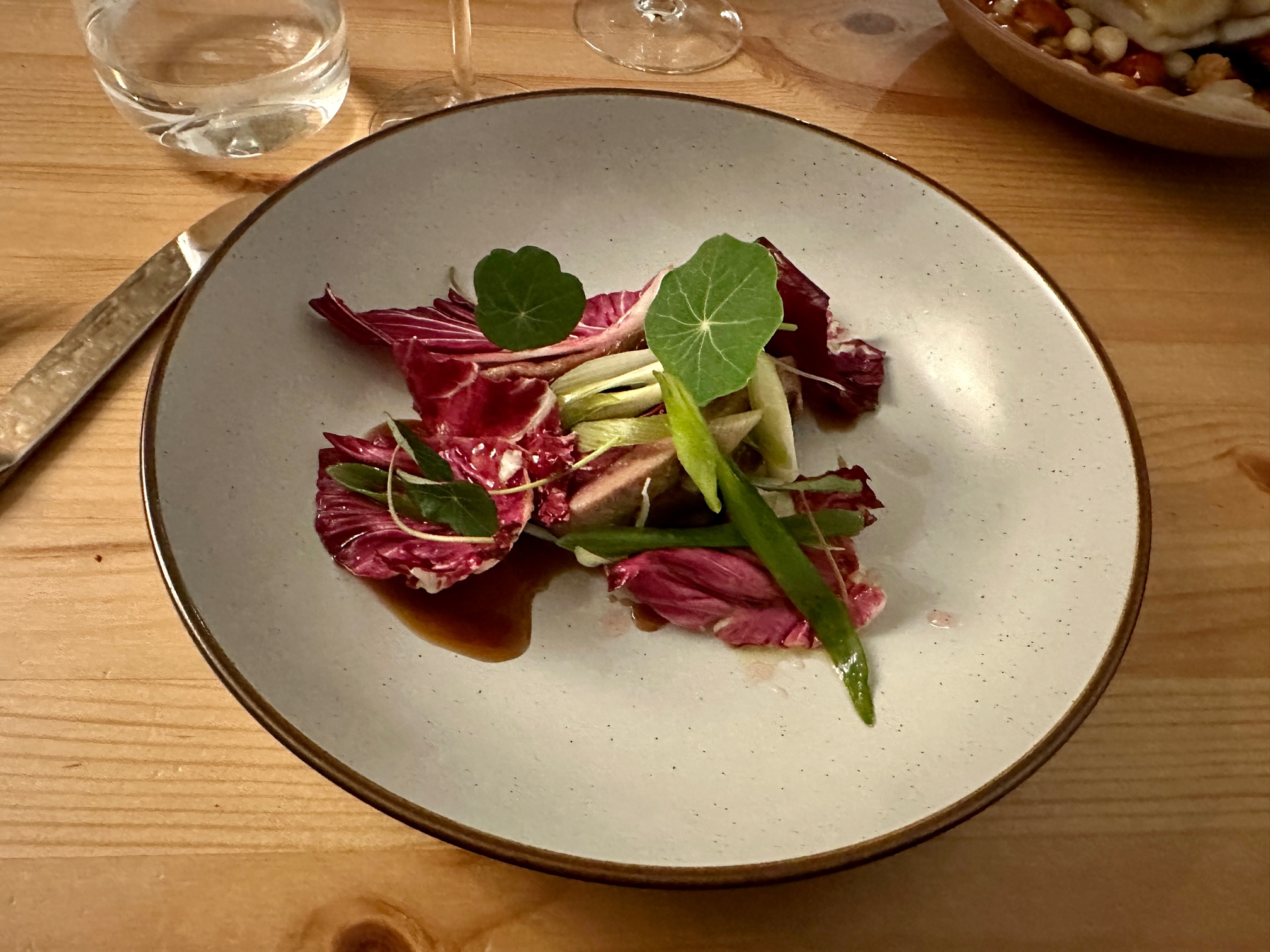
Zoë’s main showed more of that imagination and skill and again, had one truly impressive component. Venison was really nicely done, although pairing it with radicchio made it feel, and look, surprisingly insubstantial. But what saved the day was the other element of the dish, a bowl of salty, savoury, spiced venison keema topped with – another genius touch – something called “crispy potato” which, to me, had the feel of puffed rice (unless of course it was meant to be puffed rice, in which case the potato had gone AWOL).
The forkfuls of this I was allowed might have been my absolute high point of the meal, yet even so those two separate parts, the fillet and the keema, didn’t cohere into a single dish so in that sense, enthralling though it was in places, it didn’t entirely work. Seasonality does a set lunch Wednesday to Friday for a ridiculously reasonable £18 and when I last checked it included a roe deer keema pie and hispi cabbage: now that I could eat every week for the rest of my life.
The wine list included a few dessert wines so once we’d finished our mains and our bottle of red we grabbed a Sauternes and a Pedro Ximenez (both impeccable) and ordered dessert. Again, Zoë had first choice and again she chose better – a slab of cake studded with hazelnuts, surrounded by a moat of deep chocolate sauce and crowned with a sphere of smooth, indulgent nut butter ice cream was just a superb plate of food. I wouldn’t necessarily thank you for a sticky toffee pudding but I might well beg you for one of these.
Despite seeing them mangled on Bake Off the other week (they’re a favourite of Brexiteer ghoul Prue Leith) I didn’t really fancy îles flottantes so I opted for the other option – the vicissitudes of a tiny menu again – the crème brûlée. Now, I must say that this is something I almost never order because I can nearly always find something I’d rather eat.
It’s a blessing that I did, though, because it was the nicest I’ve had in ages. It had perfect texture, a wonderful note of tonka and a little freshness from the fig leaf – so much more to it than plain old vanilla – and a caramelised lid with a perfect snap and a wonderful burnt sweetness. I’d forgotten how enjoyable that first tap of the spoon can be, and everything that comes after. I also liked the palmier unceremoniously dumped on top of it but, again, it didn’t really go and felt like two desserts uneasily merged into one.
I haven’t talked much about service, but it was good and friendly if perhaps slightly lacking in polish. Little things like not taking cutlery away, or not bringing it out, along with just a general feeling that they were very agreeable but slightly on the green side. At one point the chef came out and talked to a few tables, which was wonderful to see, and I got the impression that a fair few of Seasonality’s customers are regulars. I can see why, too.
Our bill – for four courses, a bottle of wine and a couple of dessert wines – came to a hundred and seventy pounds, which included a twelve and a half per cent service change. Grace Dent’s review in the Guardian said that a meal including drinks and service at Seasonality costs around forty pounds a head: either prices have rocketed in just over three months, or Grace Dent is on mushrooms. I know which my money’s on.
So does Seasonality do enough to become a serious prospect for Reading residents wanting to treat themselves? Yes and no. There are a fair few things in the latter column. The service needs more polish, the room is a little unspecial. The narrowness of the menu is going to be a big problem for some people, and I saw lots of little quirks that need ironing out – dishes that didn’t completely work, or didn’t come together, a certain amount of duplication which felt jarring across such a small menu.
Yet despite that Seasonality has a real charm and real skill that thoroughly won me over and made me want to come back sooner rather than later. There is imagination and talent on display in spades across that menu – in that phenomenal lardo dish, in the depths of that Tunworth soup, in my majestic hake or Zoë’s wonderful hazelnut cake. Those real highs, those fireworks, make me think that it would definitely do you a turn if you wanted to go somewhere different to celebrate – especially if you were getting there by train.
So although it’s not yet the finished article, I think Seasonality has more than enough showstoppers and jawdroppers to merit a visit. I keep thinking about the very best of what we had and trying to imagine anywhere in Reading that can quite match it, and the answer is that I can’t. The high points reminded me far more of places in Bristol than in Reading, and anybody that reads the blog will know how much of a compliment that is. So I will be recommending this a lot in future, because it proves something I’ve long suspected. You don’t need a special occasion to eat at some restaurants. Some restaurants are the special occasion in their own right, all by themselves.
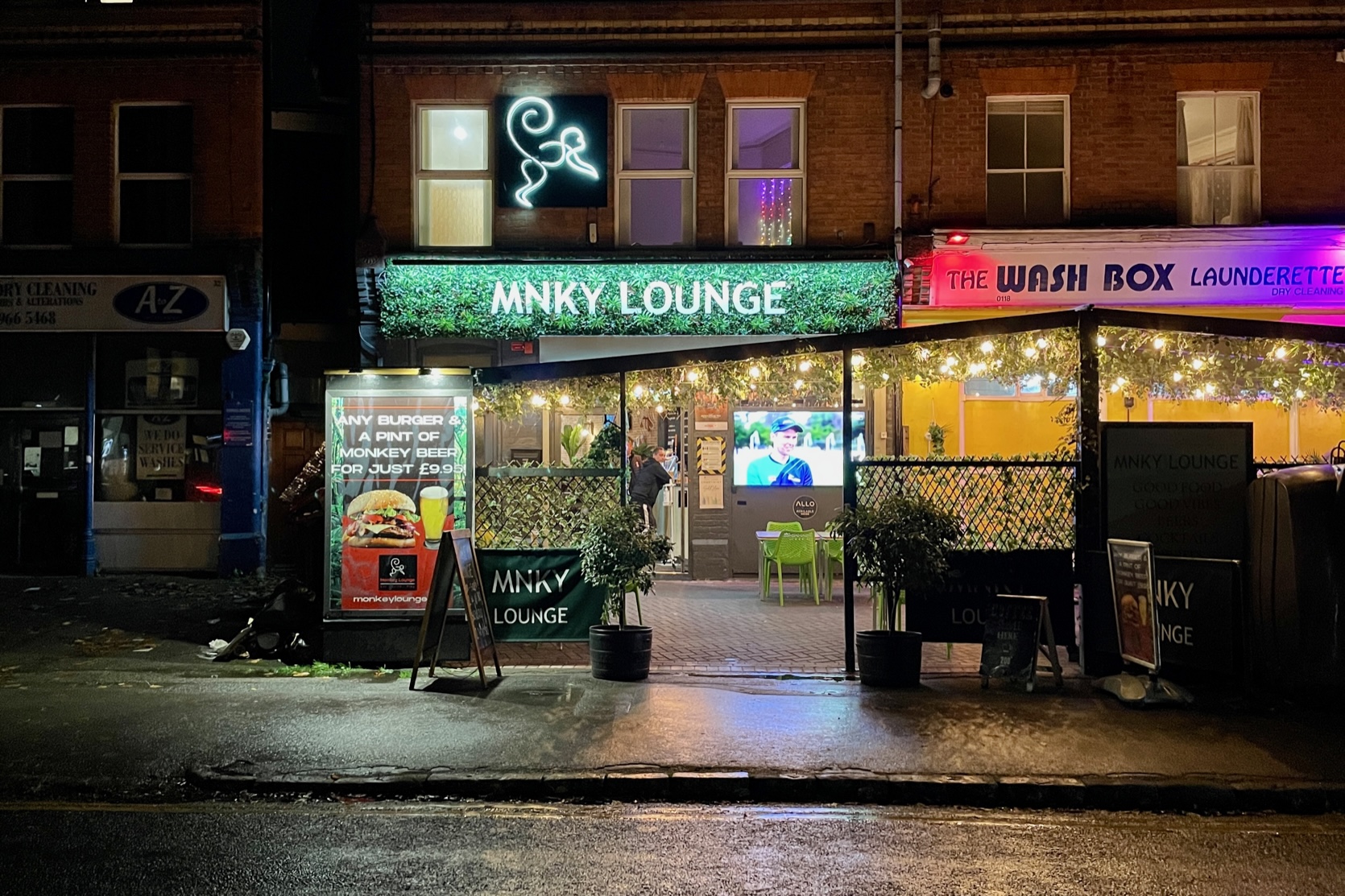
It wasn’t the most clement of evenings when I left my house and wandered through the streets of East Reading in search of Monkey Lounge, the subject of this week’s review. It was already dark at six o’clock, and there was a distinct, thin nip in the air – not see-your-breath cold, but close enough to remind you what see-your-breath cold feels like. It’s really not a reminder I wanted. And the leaves on the pavement of Erleigh Road, usually a golden autumnal carpet to rustle and crackle as you kick them up with your shoes, were a sad and sodden mulch, the last vestiges of a dreary day of stop and start rain. Make no mistake: summer is over, and autumn will be over soon, too. Where did 2022 go?
Monkey Lounge had been on my list for most of 2022 without ever quite reaching the top of it. It’s just along from Café Yolk, where Reading institution the Fruit Bat Bar used to be (I think I drank there once, over twenty years ago, waiting for my washing to finish in the launderette next door), but it opened back in 2020, the year when nobody in their right mind would have opened a bar or a restaurant.
And yet it’s still going despite everything stacked against it. And that, for me at least, includes the name: it was originally called MNKY Lounge – yes, all capitals – but they’ve sensibly changed their name to the longer version. And no, they have nothing to do with the Lounge group which counts Caversham’s Alto and Woodley’s Bosco among its members (it’s a wonder the group hasn’t sent Monkey Lounge a strongly worded legal letter, to be honest).
Monkey Lounge first came to my attention properly at the start of the year when they sent me a message on Instagram. They said that they were well known in East Reading for their gourmet burgers and warm hospitality and wanted to know if one of my team wanted to try a complimentary meal there (bless them for thinking this blog is a team effort, but I’ve never been one of those saddoes who pretends to have multiple writers cobbling this together).
I declined, as I always do, but I did ask them to tell me more about their burgers. And that was that, because they never replied. But I’ve kept an eye on Monkey Lounge’s Instagram ever since. And I have to say, and I mean this with all kindness, that nothing about it would necessarily induce you to pop in for a meal. A lot of their Instagram feed is sports related, telling you which European football fixture you can watch next on their big screens, interspersed with the occasional picture of their food.
And the food didn’t look bad, but it didn’t make you want to drop everything and make dinner plans. Although having said that the consistent message on Monkey Lounge’s social media, to be fair to them, is that they think they do Reading’s best burger. It’s a proud boast: the competition is fierce. It’s probably not true. But – and this was running through my mind as I dodged the giant puddles on London Road, and the cars planning to drench me with them – what if it was?
Subscribe to continue reading
Become a paid subscriber to get access to the rest of this post and other exclusive content.
The Imperial Kitchen has rebranded as Dynasty, although the menu and ownership are apparently unchanged.
I’ve had meals in some weird and wonderful places in the course of writing this blog, but I’m not sure many can top spending a night in Genting Casino, the gambling den near Rivermead. Getting off the bus just outside the Moderation, I trudged down the Richfield Road with a vague feeling that I wasn’t sure where I was going and no idea what to expect. On the other side of the road, I spotted the glowing lights of a purgatorial Toby Carvery. Some consolation, I thought: at least it was unlikely that I was about to visit the worst restaurant in the neighbourhood.
Inside the casino, at the front desk, I handed over my passport and filled out some forms – you have to do that to become a member, to be able to eat here. The rather taciturn man behind the counter seemed to take delight in drawing this process out for as long as possible. Had I ever been to their Southampton casino, he asked. When I said no, he seemed nonplussed. Was I sure? I did try to explain that I’d never been to Southampton full stop, but it took a full five minutes before he was convinced that I had some weird south coast doppelgänger, rather than being part of some sort of Oceans Eleven style conspiracy to defraud multiple branches of the Genting casino chain.
By this point my friend Sophie had turned up, and went through the same palaver. The main thing I was struck by was that her passport – full of stamps and visas from her many work trips to Eastern Europe, spoke of a life more fully lived than mine. Once we were given our cards – which you don’t have to swipe or seemingly ever use again – we were free to wander to the restaurant.
The inside of the Genting Casino is a very strange place. With no natural light and the phosphorescent hum of slot machines, you could almost be anywhere at any time. It could be a Wednesday afternoon or the small hours of a Sunday morning and you’d be none the wiser: it’s open until 4am, and even on a Monday night there was a steady stream of punters shuffling to the card tables. You could imagine stepping outside and finding yourself on the Strip in baking heat, as opposed to on the edge of an industrial estate in that part of the world neither Caversham nor west Reading wants to claim as its own.
Not that the place was Casino Royale, by any stretch of the imagination. I had turned up shabby, my default sartorial choice, but I didn’t feel especially underdressed. The place has a dress code – no shirts, no football shirts, although a lot of the big screens were showing the football – but nobody looked like they’d made much effort, with the exception of my dining companion. Many of the customers were Chinese, which explains a lot about why I found myself there in the first place.
Subscribe to continue reading
Become a paid subscriber to get access to the rest of this post and other exclusive content.