Ruchetta, Wokingham

As of September 2025, Ruchetta is in the process of closing and reopening under the name Angelo’s, to tie in with a second branch of Angelo’s opening in Reading on Station Hill. As a result I’ve marked this as closed, though I’ve kept the review up for posterity.

There are two kinds of expensive meal. There are the ones where you know in advance that they’re going to be expensive, where you look at the menu beforehand, brace yourself, tell yourself it’s a special occasion. Then there are ones where you’re taken by surprise; maybe you order the really pricey main course you weren’t expecting to, or pick a really fancy bottle of wine, or throw caution to the wind and get a second bottle of the less fancy wine. However it happens, there are some meals where you get carried away, it all adds up and you get a little shock when you take that first look at the bill.

Why am I saying this? Because, to begin at the end for once, Ruchetta is the most expensive meal I’ve reviewed so far – and I knew it was going to be costly before I even stepped through the door. And why’s that important? Because when you know a meal’s going to be expensive, lots of things happen. The anticipation is completely different – I get excited about reading the menu, start looking forward to it (something that doesn’t always happen, believe me). But also, price inevitably becomes another dimension, and each dish is assessed not only on whether it’s good, but also on whether it’s worth the money. It’s only natural that the bar is set higher: after all, you can be pleasantly surprised by a ten pound lunch in the middle of nowhere, but it’s harder to be pleasantly surprised by an expensive meal in a beautiful little house in the prosperous market town of Wokingham.

It really is a beautiful house, too. I don’t know Wokingham well but Ruchetta looks very much like the kind of restaurant it ought to have, really standing out (if you think Reading has a lot of chains, you ought to walk round Wokingham some time). It’s slightly off the main drag in a tiny, nicely jumbled building with a mosaic of little rooms. I sat in the conservatory – partly to get better light for photos – and regretted that more and more as the evening went on, feeling rueful that I hadn’t chosen one of the more snug, atmospheric sections at the front of the house. That said it was a pleasant room with crisp white linen and smart white plates, although the tables do feel a little close together; I was glad the one next to us was empty, or else I would have felt very overlooked.

The menu’s one of the most difficult I’ve had to choose from. There is something magical about good Italian food at the best of times, but the menu at Ruchetta really is the kind where you’re aggrieved that you can’t have everything. We tucked into the bread basket (white and a brown which resembled sourdough, with good salted butter) and sipped our Prosecco in the early evening sunlight, haggling and agonising until the decision could be postponed no longer. If the waiter had arrived two minutes earlier, or two minutes later, you’d probably be reading a review of four completely different dishes.

I adore truffles, and I nearly always order them when I get the chance. The distinctive aroma was noticeable the moment I entered the restaurant and I reckon it subliminally influenced both choices of starter. The first was one of the simplest things you could have, truffle ravioli in butter and sage, and it was a delight. The pasta was al dente and richly flavoured with the earthy, dirty truffles. The dish was topped with thin slivers of parmesan and a handful of young sage leaves. But most importantly a whole pencil sharpener tub of those heavenly truffle shavings had been sprinkled on the top of the dish making the flavour even more intense. Eating it was close to an ecstatic experience, the forkfuls close to the end simultaneously magnificent and agonising.

Truffle pastaThe other starter called to me because it was just so unusual that I had to try it: baked white onion in sea salt, filled with truffle fondue with pan-fried foie gras and caramel. The foie gras was just delicious – a generous piece, soft and yielding, perfect with or without the smidge of sweet caramel. The truffle fondue was less successful – it was salty and tasty and rich with truffle, but very liquid and I really had no idea how I was meant to eat it. They didn’t bring a spoon, but I ended up finding one from a neighbouring place setting and improvising. I thought the point of fondue was to dip something in it, and without that something it was more like a very cheesy soup (I briefly pondered whether I was meant to use the foie but surely not: far too expensive to use as a glorified soldier). The quail egg didn’t really add anything and the white onion had been baked just enough that it made an excellent bowl but not enough that it made a sweet and tasty way to mop up the rest of your fondue. I’m glad I can say I’d ordered it, but it felt like was two starters, neither of which quite worked, joined at the hip.

Fondue

Nearly all the mains at Ruchetta are around the twenty-five pound mark, so it didn’t seem too much of a stretch to order the half lobster thermidor (twenty-eight pounds, and not even the most expensive dish on the menu). It was just lovely. The meat had been removed, cooked in the sauce, returned to the shell and topped with cheese. I loved the note of tarragon in it, which surprised me as I’m usually not a fan and didn’t realise it would be in there (like most people outside the Royal Family, I don’t eat lobster thermidor very often). It came with sauté potatoes, in thick slices rather than cubes, which were cooked well and left plain to keep the lobster as the main event. The side salad seemed lost in all of this: the tomatoes were a mixture of green and red but were pithy and lacking in flavour and was either undressed or underdressed, I’m not quite sure which.
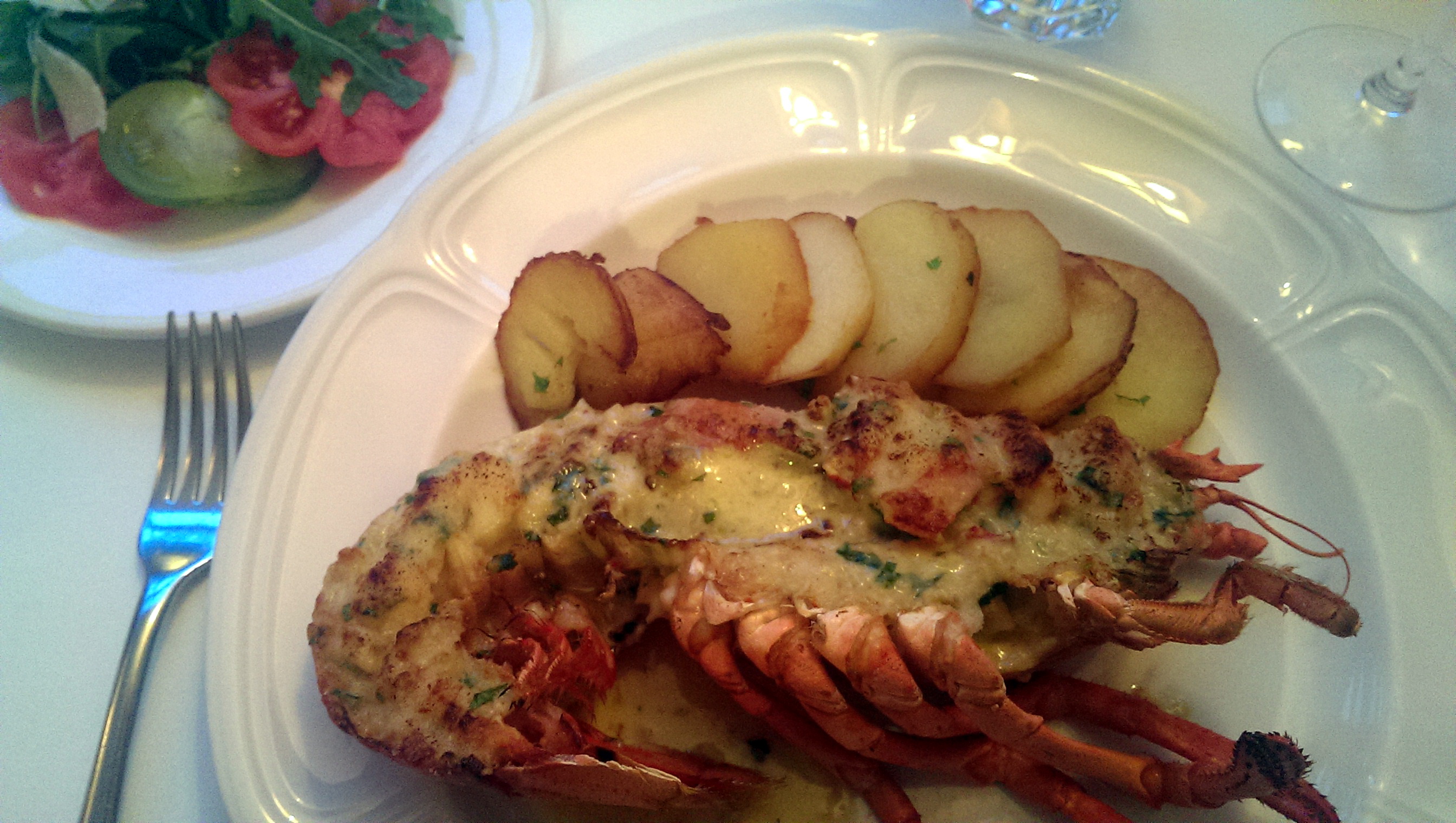
Lobster

The other main, roasted saddle of lamb stuffed with spinach and garlic with lamb sauce and vignole (peas, artichokes, broad beans in mint and pancetta – no, I didn’t know either) was the most disappointing dish of the night. This is going to sound like a stupid thing to say, but the lamb was, well, too lamby. The taste of it was almost overripe, verging on agricultural, and drowned out the lighter flavours of the rest of the dish. It appeared to be stuffed just with spinach, which made for a soggy slog, and if there was any garlic in there I didn’t get it. The peas, artichokes and broad beans, potentially a symphony of spring flavours, were pleasant but bland because there wasn’t enough mint to lift them. Most damningly, it wasn’t particularly hot: the lamb, in particular, felt a bit lukewarm. Also, I know this was a light dish but it felt like it needed carbs of some kind. Not everybody who orders it is going to be lucky enough to be able to pinch some sauté potatoes from another plate, as I was.

Ruchetta is one of very few restaurants that offers wine in carafes; a terrific idea for when it’s hard to decide what wine to pick or if you don’t fancy a whole bottle of something. There are a few affordable wines on the list but nothing under the twenty pound mark, so the carafes aren’t as tempting as they normally would be (they’re also 425ml rather than the regulation 500ml, which somehow seems a little stingy). Because of this we ordered a bottle of Italian viognier (much crisper with more citrus than the French ones I have experienced) and a carafe of Barbera d’Alba which was red, robust and unremarkable. I knew we’d struggle to drink both but a carafe of the Gavi I had my eye on was the same price as the bottle of viognier which made me object to buying it (just because you know the restaurant is going to be expensive doesn’t mean you lose all concept of value, after all).

In the end we finished the red and with only half the white drunk the staff offered to cork it so we could take it home – a nice gesture, I thought. That was fairly typical, as service was excellent throughout. All the waiting staff had that charm which just stays on the right side of over-familiarity, something I associate with good Italian restaurants (and I think all of them were actually Italian, though I may be wrong) and they made sure we never felt hurried. In that respect, it definitely felt like a special occasion – nobody wants to be turned when they’re spending this kind of money.

Desserts, like the mains, were at opposite ends of the spectrum. Lemon posset was a glorious thing, wobbly and zingy, topped with cooked rhubarb and dangerously easy to devour. Everything in it should have been tart and sharp and yet it wasn’t (the grilled figs and little pearls of what looked like fruit caviar on the top did their bit to balance it out). The moist orange cake with citrus mascarpone was more prosaic. It was tasty enough and I was happy to eat it all but compared to the complexity of the lemon posset it seemed a bit basic. All the desserts cost seven pounds – an amount I was happy to pay for the posset but much more grudging to part with for the cake. Funny the calculations you make in your head when you know a restaurant is expensive. We also had a couple of dessert wines with these – a Labrandi and a moscato – and both were beautiful choices.

PossetI said at the start that there were two types of expensive meal. Well, as it turns out Ruchetta is both: the total bill for two people – three courses each, two glasses of prosecco, one bottle of white, a carafe of red, two glasses of dessert wine – was £160. This is the bit where I usually say “but it’s possible to eat far more cheaply”, but I’m not sure it’s entirely true of Ruchetta. Their set lunch during the week is a cheaper, but it’s still £19 for two courses. Sunday lunch is £32.50 for two courses. You could spend less, but I still think it’s the kind of restaurant where the size of your bill is always going to take you somewhat by surprise.

I also said at the start that when a restaurant is expensive the bar is set higher, and that’s why I can’t wholeheartedly recommend Ruchetta. There’s a lot to like: the service is terrific, produce and seasonality is clearly important to them (when I went there were lot of asparagus specials on offer. A lot) and the menu is a tempting, readable mix of classic Italian cooking and more creative, inventive dishes. But I’m not sure which restaurant Ruchetta is meant to be: the unpretentious neighbourhood Italian or the high-end destination restaurant. The pricing suggests the latter, but the execution of some of the dishes (the fondue dish, the lamb) and the way the tables are squeezed together feel more like the former. I was left wondering if someone had got carried away with the calculator when pricing the menu. I went expecting something really special and whilst I really enjoyed it wasn’t quite special enough. If these dishes were priced at the twenty pound mark and there was good wine for, say, eighteen pounds a bottle, I would be making my way to Wokingham again and again. As it is, it will have to wait for the next special occasion and hope that, in the meantime, I don’t find somewhere a little more consistent.

Ruchetta – 7.5
6 Rose Street, Wokingham, RG40 1XU
0118 9788025
http://www.ruchetta.com/

Bhoj

Bhoj relocated in July 2016 to Queens Walk at the back of the Broad Street Mall, and in February 2018 they closed. I’ve left the review up for posterity.

If you had to name the best restaurant in Reading, which would you nominate? Mya Lacarte? Forbury’s, perhaps? Or would you go further afield and opt for l’Ortolan, still our only Michelin-starred restaurant? Well, TripAdvisor would say that you’re wrong. According to them Bhoj, a relatively little-known restaurant down the Oxford Road, is currently Reading’s best restaurant (Forbury’s and l’Ortolan don’t even scrape into the Top 20). Is that proof that TripAdvisor can’t be trusted when it comes to restaurants, or a heartwarming tribute to democracy in action? I felt I owed it to myself to find out.

The parade of shops on the Oxford Road where Bhoj sits, after Reading West station but before the mosque, isn’t the most inviting location for a restaurant. With a sex shop and the euphemistically named “Skunkworks” (apparently a “one stop shop for lifestyle choices” – which I’m sure it is, provided you’re Afroman) within 100 yards it’s a very different experience to the little enclave next to Forbury Gardens or the more polished surroundings of the Oracle Riverside. Bhoj is only about ten minutes away from town on the number 17 bus and the mix of shops en route makes for an interesting journey (how do all those barbers survive?) even if I was cursing my bad luck that somebody was already at the front of the top deck, stopping me from driving the bus.

The restaurant itself is fairly small – less than 30 covers – and whilst basic in terms of decor it’s spotlessly clean and neatly laid out (the fairy lights were a particularly nice touch). On the night I went, there were only a couple of other tables occupied although it’s clear that a lot of customers use Bhoj for takeaway as I saw one of the waiters leaving with bags full of goodies several times throughout the evening. Service, though, was excellent from the moment I arrived to the moment I left: our waiter – friendly and cheery in an orange polo shirt – wasn’t just knowledgeable about the dishes but (and you forget how rare this is in Reading until you experience it) enthusiastic too, happy to explain everything in a way that meant I didn’t feel stupid asking.

If anything, the menu is a tad spartan – smaller than many Indian restaurants I’ve been to and particularly strong for vegetarians (I showed it to a vegetarian friend after and she said “you should have taken me along to do this menu justice”, with a tone of genuine envy). As so often in restaurants I go to nowadays, I found this reassuring; it made me feel like each of the dishes might be distinctive rather than another permutation of the same orange liquid with different chunks of protein bobbing around in it.

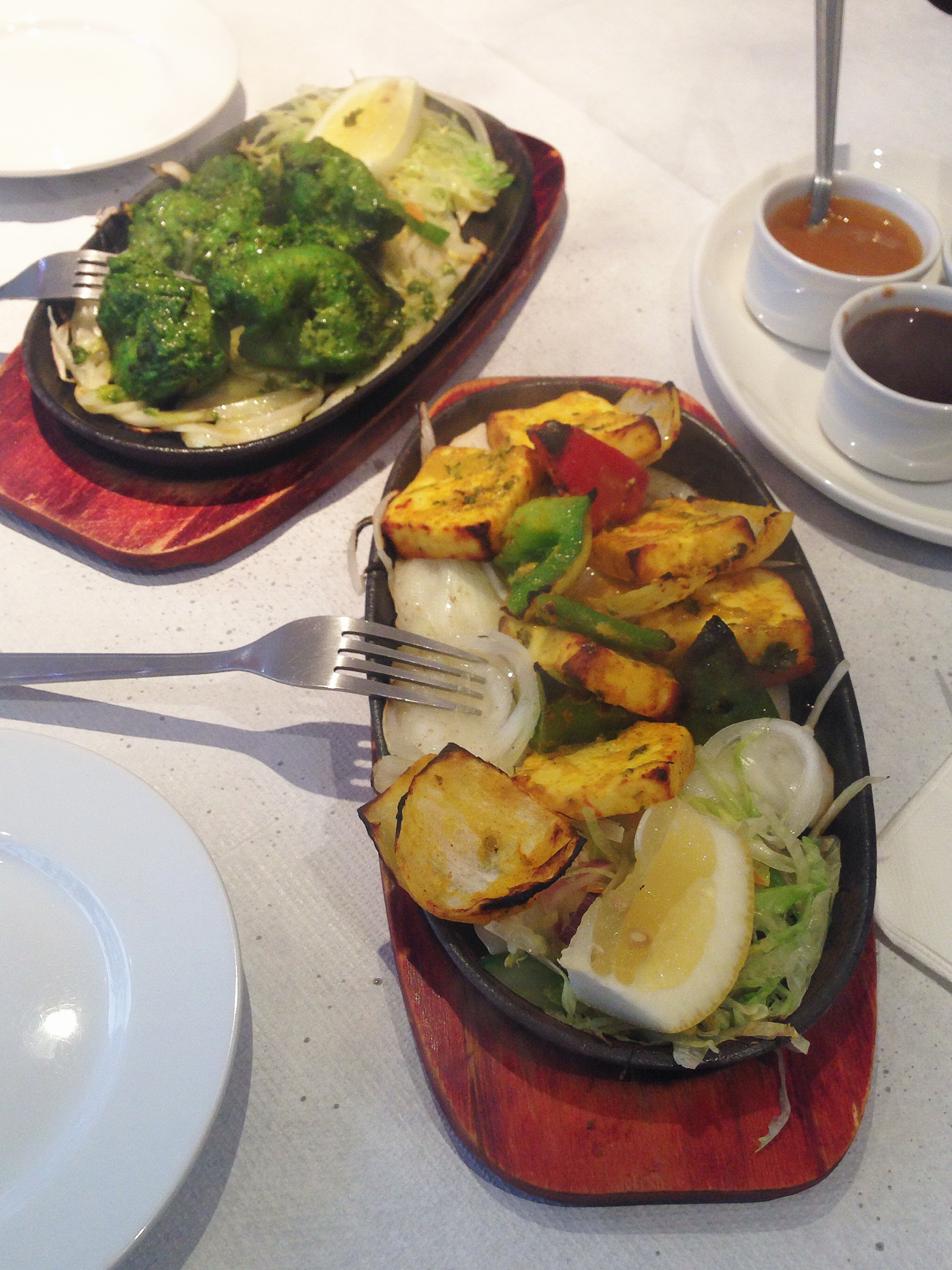
Both starters arrived on those sizzling platters which inevitably induce envy in neighbouring tables: who doesn’t like a dish that audibly announces its arrival? This was great in theory, although by the end the paper tablecloth was so spattered that it looked like we’d been out for dinner with Roy Hattersley. Saffron paneer tikka was served in large flattish squares, gently spiced with chunks of peppers mixed in. I liked it, although it didn’t blow me away and the spices didn’t come through strongly enough. Ironically, I think I was hoping for a little more sizzle and a bit more caramelisation.

Bhoj startersMurgh hariyali tikka – recommended by my waiter as a good contrast – was, well, green. Not pastel green. Not pale pistachio green. I am talking Kermit The Frog green; worryingly green, if I’m honest. It was a huge relief when my knife sliced through to reveal the familiar white flesh beneath. The flavour and colour come from the fresh herb paste that the chicken is marinaded in; I was expecting the mint and coriander (and I think I got a bit of ginger), but there was definitely more than a little garlic in there too. The taste was lovely, but stopping by the newsagent the next day and buying a packet of Extra Strong Mints before heading to work is probably advisable. I did find the chicken a little on the firm side, not as soft and tender as I was expecting from something marinaded before cooking, but even so there was a pitched battle for the fifth piece (do restaurants dish up an odd number just to watch people bicker? I’ve always wondered that.)

There was more of a pitched battle, mind you, for the onions underneath the chicken. Isn’t that silly? Onions are as cheap as can be, so how could they possibly be one of the tastiest things I ate all evening? But it’s true, I promise: sizzling, continuing to cook at the table, soft and sweet, spicy and caramelised, coated in all those juices. They were incredible, and we pounced on them like yummy mummies hitting the Boden website come sale time. It wasn’t dignified, but it was delicious.

You may be wondering why I didn’t mention the poppadoms. There’s a reason for that: I totally forgot to order any. Perhaps that’s the trick to leaving an Indian restaurant without being stuffed to bursting: traditionally I always have poppadoms and by the time the mains arrive dinner is as much a food marathon as it is a treat (I guess your fellow diners are the equivalent of running mates on the other side of the finishing line, cheering you on). I’m glad I forgot on this occasion because the mains were dishes to be enjoyed, not endured.

Dhaba chicken – again, recommended by the waiter – was so gorgeous that I could overlook it being fundamentally meat in an orange sauce. I was expecting it to be hotter than it was, and maybe a little less sweet, but the heat was that clever kind which builds up gradually. Bhoj’s menu, rather unhelpfully, just describes it as a “tangy sauce” so I can’t even bluff and pretend I picked out all the things in there. As always, Indian food shows up how much I struggle with describing such a complex combination of flavours – I got cumin, I got coriander, but beyond that we reach the limits of my powers of description. I can tell you, though, that the chicken wasn’t the star of the show: it was that glorious sauce, mixed in with the jeera rice (speckled with cumin seeds) or heaped onto a scoop of torn, buttery paratha.

Even better was the karahi lamb. This was a drier, hotter curry than the dhaba chicken and easily one of the best things I’ve eaten so far this year. The lamb, in what looked like firm chunks, gave in to the slightest pressure from a fork. The sauce was sticky, rich, intensely savoury: heavenly. I would say that my idea of restaurant hell might well be eating a chicken korma while sitting opposite somebody having Bhoj’s karahi lamb and not being able to try any. Even the bit where I accidentally crunched on a cardamom pod couldn’t dampen my ardour for this dish: I want to have it again, and soon (did I mention that they do takeaway?)

Bhoj mains

When Bhoj first opened it didn’t have a license so was a BYOB establishment. This has now changed, but the drinks list still feels very much like an afterthought. Generally we stuck to mango lassis and these too were streets ahead of other ones I’ve tried in Reading – fresh and recognisably packed with mango rather than the more generic sweet versions I’ve had elsewhere in Reading. Wine drinkers, though, are faced with a real Hobson’s choice: Blossom Hill by the glass or Jacob’s Creek by the bottle.

I was torn – the snob in me would rather not have gone there, but I really fancied wine with my main. What to do? I might get excommunicated from the Guild Of Food Snobs for saying this, but who cares: reader, I had the Blossom Hill and it wasn’t bad. Easy to drink, uncomplicated, went okay with the curries, nothing to dislike (and who’d have a Burgundy with a biryani anyway?) Perhaps, like restaurants people rate on TripAdvisor, it’s popular for a reason; judge away by all means, but I might well have it again next time.

The bill, for two starters, two mains with rice and paratha, three lassis and that rogue glass of Blossom Hill came to £45. I’m not sure how much £45 buys you at l’Ortolan but it’s not a lot. And I would say that it’s worth coming here even though they do takeaway, because the service is brilliant and without it I probably would have ordered what I always have and not discovered some of the great dishes on Bhoj’s reassuringly compact menu.

So, is Bhoj Reading’s best restaurant? Objectively probably not: the room is basic, the drinks offering is limited, my starters weren’t perfect. But personally, I think the best answer to “what is Reading’s best restaurant?” is probably “who cares?” Bhoj’s chef is never going to appear on Great British Menu or be gushed over by critics. They’re never going to do a tasting menu. But that’s the elitist tip of the iceberg, and the rest of the iceberg is what food should really be about – eating something tasty. Sounds oversimplistic, but it’s true. There are times you want three fiddly, fancy courses, and times when you just want to sit down and eat something you know you’ll adore. There are nights when you want to see a wine list the size of a novella and watch a flunky decant your vintage claret into a carafe shaped like a lab flask. But there are also times when you want to sit in a restaurant two doors down from “Skunkworks”, lit by fairy lights, over a fat spattered paper tablecloth and eat delicious, dark, sticky, flavourful lamb, hoping nobody will come in and spot the miniature bottle of Blossom Hill in front of you. God bless Bhoj.

Bhoj – 8.2
314 Oxford Road, RG30 1AD
0118 9581717

http://www.bhoj.co.uk/

Bel And The Dragon

Bel And The Dragon announced in August 2023 that it was closing and reopening as The Narrowboat, a Fuller’s pub not part of the Bel group. The Narrowboat closed in March 2024. I’ve left the review up for posterity.

I changed my mind about whether to review Bel And The Dragon several times. Initially I was all for going, and then I looked at the website: the menu looked suspiciously similar to the one I’d ordered from the last time I went there, well over a year ago. And that, in fact, was almost identical to the menu when the local paper reviewed it nearly two years ago. Bel’s website boasted a passion for seasonal, local, sustainable food – but the evidence suggested otherwise, so I decided not to bother. But then I was told that I might be being a bit harsh, and that the menu had changed only recently, so I decided to give them a chance.

There’s no attractive way to approach Bel And The Dragon, especially on foot. You can go down the canal next to some rather forbidding-looking blocks of flats, or down Kenavon Drive, past the questionable delights of the Toys R Us. Even the address, Gas Works Road, sounds grim. It’s a pity, because the building itself is handsome (I’m not sure what it used to be: Bel’s own website says it’s an ex biscuit factory which I don’t think is correct) and the inside is gorgeous too, with lots of banquettes and booths round the edges of a big bright high-ceilinged room.

Looking at the menu induced déjà vu because, as feared, the majority of it had indeed remained unchanged for two years, the mention of English asparagus the only concession to seasonality. The drinks we had while making up our mind did nothing to calm the sinking feeling. The “Bloody Caesar” – a Bloody Mary variant featuring clamato juice, lime, horseradish and sherry – was all citrus and no tomato, thinner, sharper and more joyless than Gillian McKeith. The house wine was even odder – the menu claims that they bring a magnum over, you drink as much as you want and are charged by the 125ml. In reality, what happened is that they brought 125ml and charged me, at the end, for 175ml (by which point I was too exhausted even to complain).

Service at Bel is the triumph of quantity over quality. At times the dining room had over half a dozen aproned types wafting around but they spent most of their time talking to one another and trying their hardest to avoid interacting with diners. They seemed to be having a lovely time, but I did wish they’d been more interested in making sure that I was, too. One was either a trainee or on work experience because her sole job seemed to be to stand there deferring to someone else: at one point I made eye contact and smiled (because I wanted to see the wine list) and she smiled back and then went back to staring off into space, seemingly her main skill. Perhaps she just thought that I really enjoyed being ignored: I suppose it’s possible.

So, I’ve bitched about the menu, I’ve bitched about the service, time to bitch about the food, right? If only it were that simple: some of it wasn’t bad, which makes this review harder to write than I was expecting. A starter of scallops, cauliflower puree and sherry caramel, for instance, was very good: four nicely cooked scallops, a generous helping of sweet puree and little crispy miniature florets around the side (and a scattering of micro herbs, because chefs still think we give a toss about micro herbs: I have no idea why). To put this in perspective, it was twelve pounds – as much as some of the mains – so it should have been pretty good but even so it wasn’t disappointing. I was so geared up, by that stage, for disappointment that not being able to be disappointed was almost disappointing in itself. I’m not sure if that’s a win-win or lose-lose situation.

Scallops

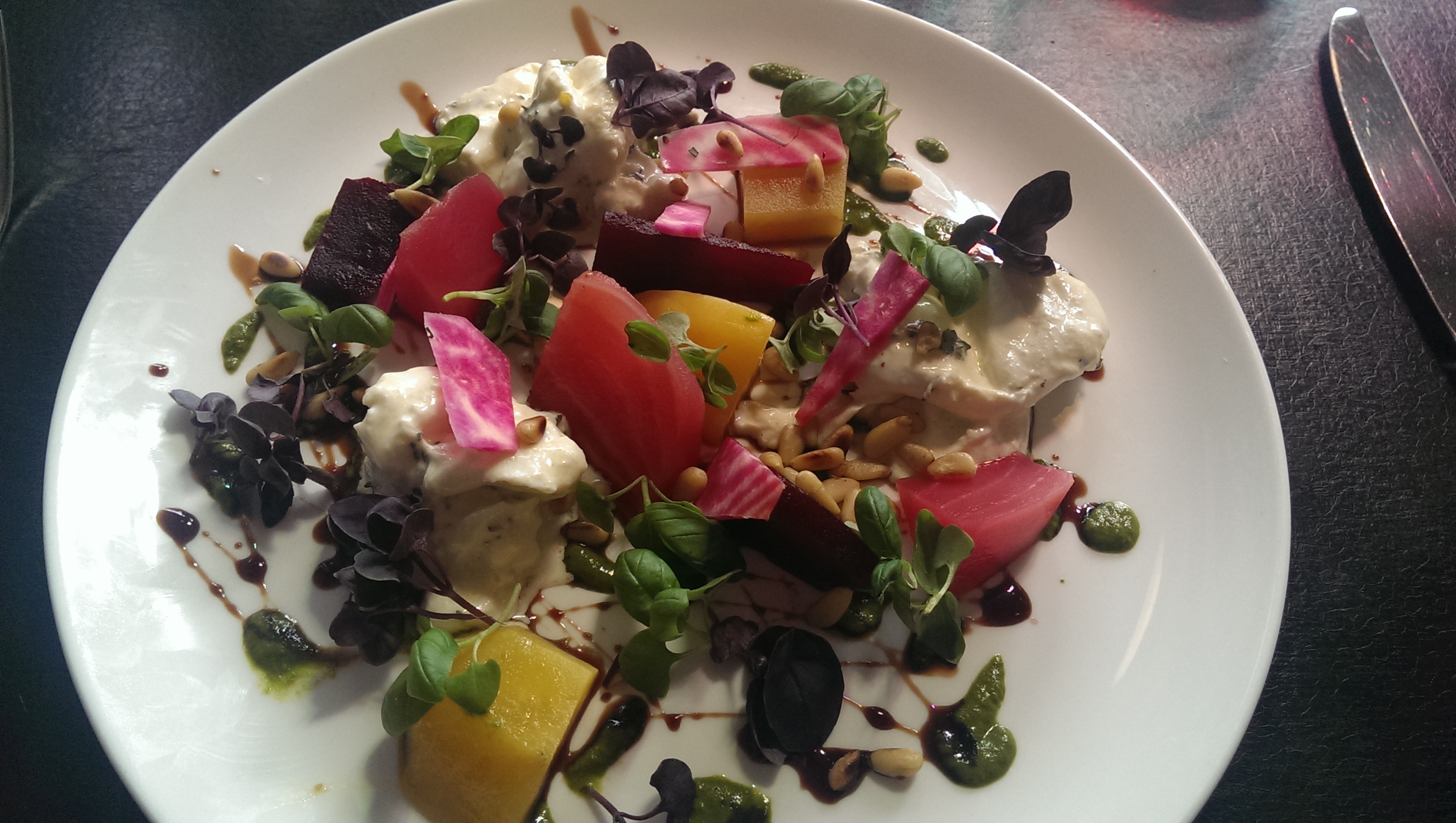
The burrata, on the other hand had been treated so badly that I fear the chef had never seen one before. It looked as if had been torn to pieces by an angry mob before being studded with slightly chewy thyme leaves and strewn on a plate with far too much beetroot. Sure, there were four types of beetroot and a few toasted pine nuts, but what should have been the centrepiece of the dish really wasn’t. Where I expect a burrata to be a soft, yielding pouch of rich, creamy delight this was a tough, abused poor relation. I don’t know what had been done to it prior to it reaching my plate but it had grown a thick skin to make up for it.

Burrata

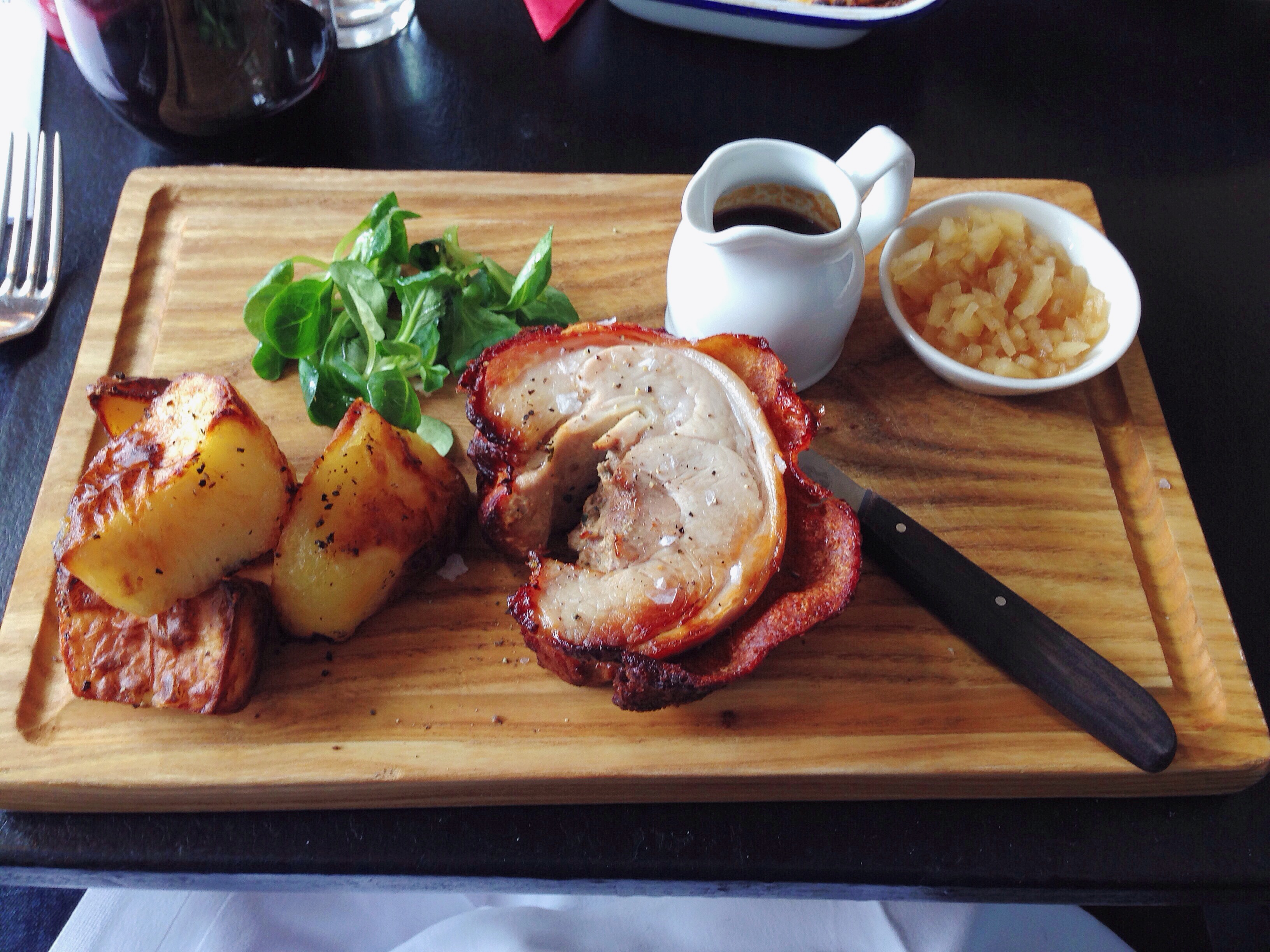
Of the mains, roast suckling pig was a delight and easily the best dish of the visit. A healthy (or rather, unhealthy) portion of pork, cooked just the right side of dryness, came on a board with a little jug of rich, savoury gravy and some spiced apple chutney which added a bit of sweetness and moisture. The crackling – light, salty and sinful – was how I imagine Quavers would taste in heaven. But, inevitably, there were still disappointments. Bel’s menu says that they are very proud of their duck fat and thyme roasted potatoes, but on this evidence I can’t see why; there was no evidence of thyme and none of the gorgeous, rough, crispy exterior you get from a potato well-roasted in duck fat.

Pig

The side dish, ostensibly “cauliflower, smashed garlic and pecorino” was cauliflower cheese. No more, no less. If they’d used pecorino, and I’m not convinced, it was a waste of pecorino. The garlic just didn’t turn up at all (maybe because it was smashed). At eighteen pounds – with an extra three for the cauliflower cheese – it wasn’t quite good enough to justify the price: eating the dish felt a bit like watching the meter running in a taxi heading somewhere you don’t even particularly want to go.

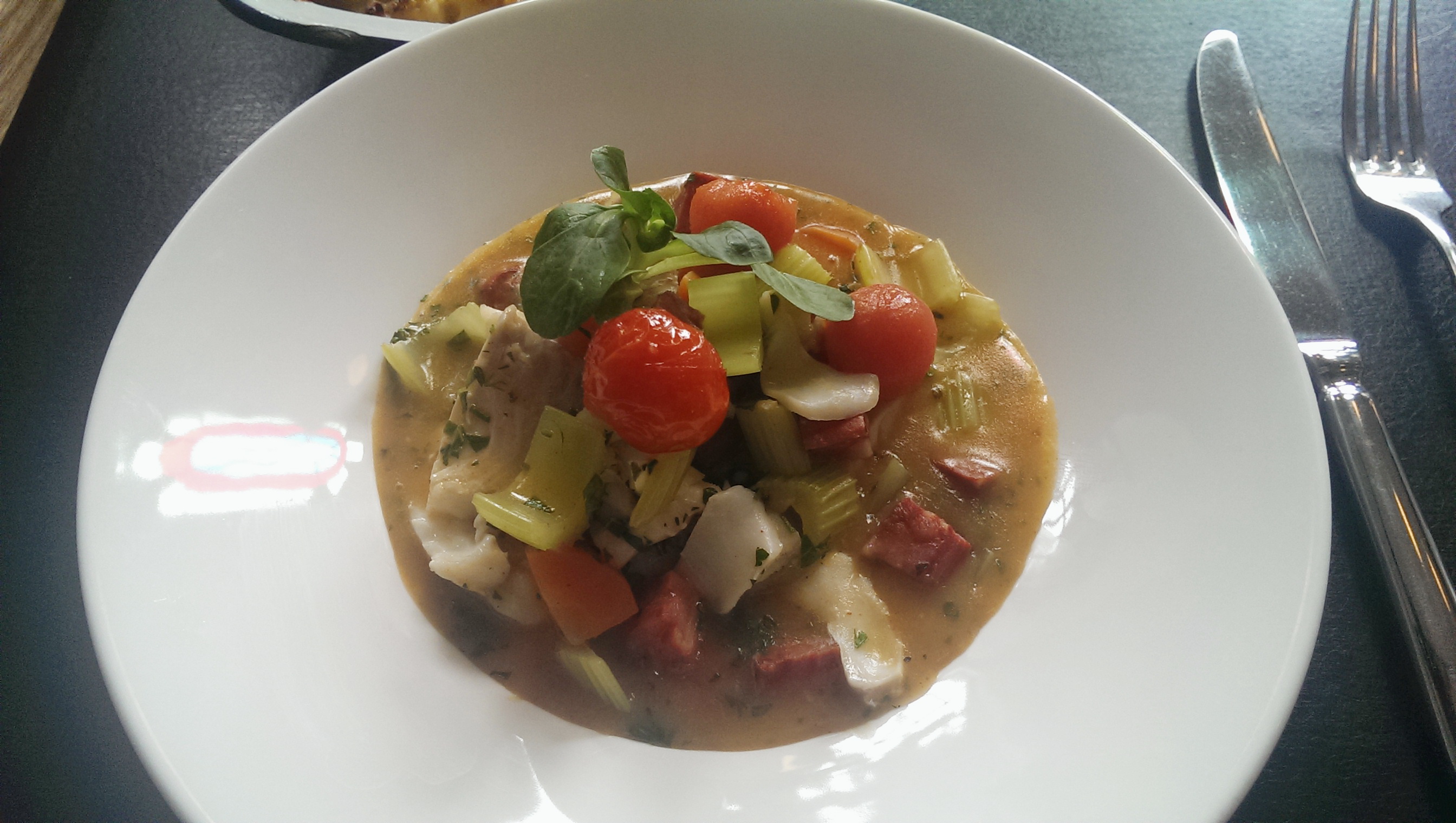
The haddock, chorizo and white bean stew looked appealing when it came and the flavours didn’t disappoint but, after digging around for a moment, I realised that there was an absence of beans. I couldn’t find any. None. I asked one of the flotilla of waitresses about this and she said that perhaps they had been pureed into the sauce but she would check with the kitchen. Then she returned with another explanation… apparently the stew is cooked in a large pot and the beans all sink to the bottom so, on this occasion, when they served it up it just turned out that none made it into my bowl! Not one solitary bean. (No, I didn’t believe it either.) To make up for this the kitchen dished me up a generous side portion of beans, which just happened to be exactly as many as you would find in a tin. These seemed to be in a different sauce to the stew but I didn’t want to ask any more questions and was just grateful they turned up at all.

The stew itself was very pleasant with some decent sized pieces of haddock, quite a few diced bits of chorizo (though this was on the rubbery side, which suggested it was either poor quality or hadn’t been cooked for long enough) and an awful lot of celery. The advertised “smoked tomatoes” were instead three unsmoked cherry tomatoes which had been grilled for just long enough for their skins to split. Overall it was a decent dish, once the beans were in, but I wouldn’t say more than that.

Stew

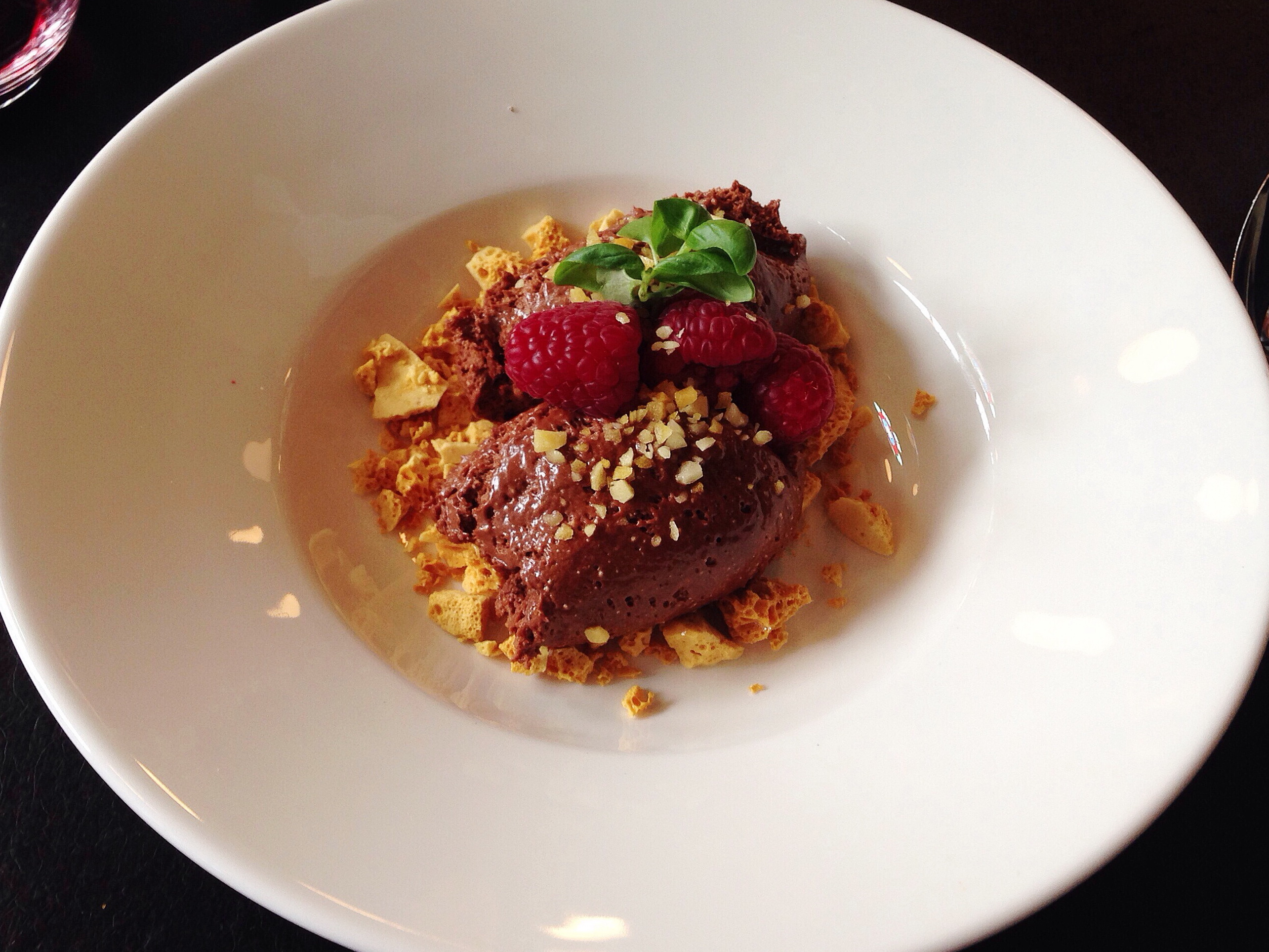
Pricing at Bel is all over the place. The starters are an expensive bunch – most around the eight or nine pound mark – and the mains vary widely from the reasonable (my stew was twelve pounds, as is the fish pie) to the punitive (the idea that two people would really fork out sixty-six pounds to share a rib of beef on the bone is either hopeless optimism or exploitation, not sure which). But the desserts are all a consistent six pounds. The Valrhona chocolate mousse with honeycomb and popping candy was indifferent stuff. I got a lot of sweetness and no cocoa, which meant this either wasn’t Valrhona or was Valrhona hopelessly maltreated. The honeycomb just added to the relentless sugariness, as did the popping candy, and the three meagre raspberries didn’t have enough sharpness to put up a fight against it.

Chocolate

Eton mess was exactly as you would expect an Eton mess to be – a big dollop of strawberries (in April: so much for seasonal there, too), smashed meringue and cream. The only thing slightly elevating this above the sum of its parts were the tiny pieces of fresh mint that had been mixed in. The gigantic knickerbocker glory glass it came in took my opinion back down a notch, mind – I’d have preferred something more elegant and (I can’t quite believe I am saying this) smaller. Wanting a smaller dessert: hardly glowing praise, is it?

Three courses for two, with a Bloody Mary, a missold glass of house rosé and two glasses of red wine which aren’t interesting enough to merit any mention other than this, came to ninety-eight pounds. This includes an optional ten per cent service charge of the kind which is actually close to compulsory, as you’d have to make a scene and ask them to take it off (I was tempted to, but by the end they had worn me down to the extent where I just wanted to go: it turns out that indifference is contagious).

The best way of summing this up is that if you went to Bel you wouldn’t have a bad meal but you wouldn’t have a great meal either. I didn’t eat anything actively bad, and nothing made my heart sing. But – and this might be the clincher – you’re unlikely to have a cheap meal. I’m afraid, despite some tasty dishes, I still don’t see what Bel’s USP is, or why anybody would choose it for dinner. It’s not seasonal, it’s not particularly imaginative, it’s not good value and the inconvenient location and indifferent service wipe out any of the advantages of that lovely room. Perhaps I’ll go again when they overhaul their menu, in which case they should pencil me in for some time in 2018.

Bel And The Dragon – 6.6
Blakes Lock, Gas Works Road, RG1 3EQ
0118 9515790

http://www.belandthedragon-reading.co.uk/

The Abbot Cook

The Abbot Cook closed in April 2018 and is reopening later in the month as a new pub called the Hope & Bear. I’ve kept this review up for posterity. 

The Abbot Cook is another of those pubs that falls into my “lovely old boozer” category. Since the end of its days as a tired student pub it’s been stripped back and refreshed to capture that shabby chic look that so many places have these days. At the Abbot Cook, though, it really works with the parquet wooden floors, fireplaces and sash windows. On a midweek night it’s busy enough to be buzzy but the music is still muted enough that you can have a conversation without yelling (yes, I know I sound old: I’m okay with that). The long bar offers plenty of decent draught beers plus just enough wines by the glass to make the choice a challenge. So the stage is set for a good performance. Right?

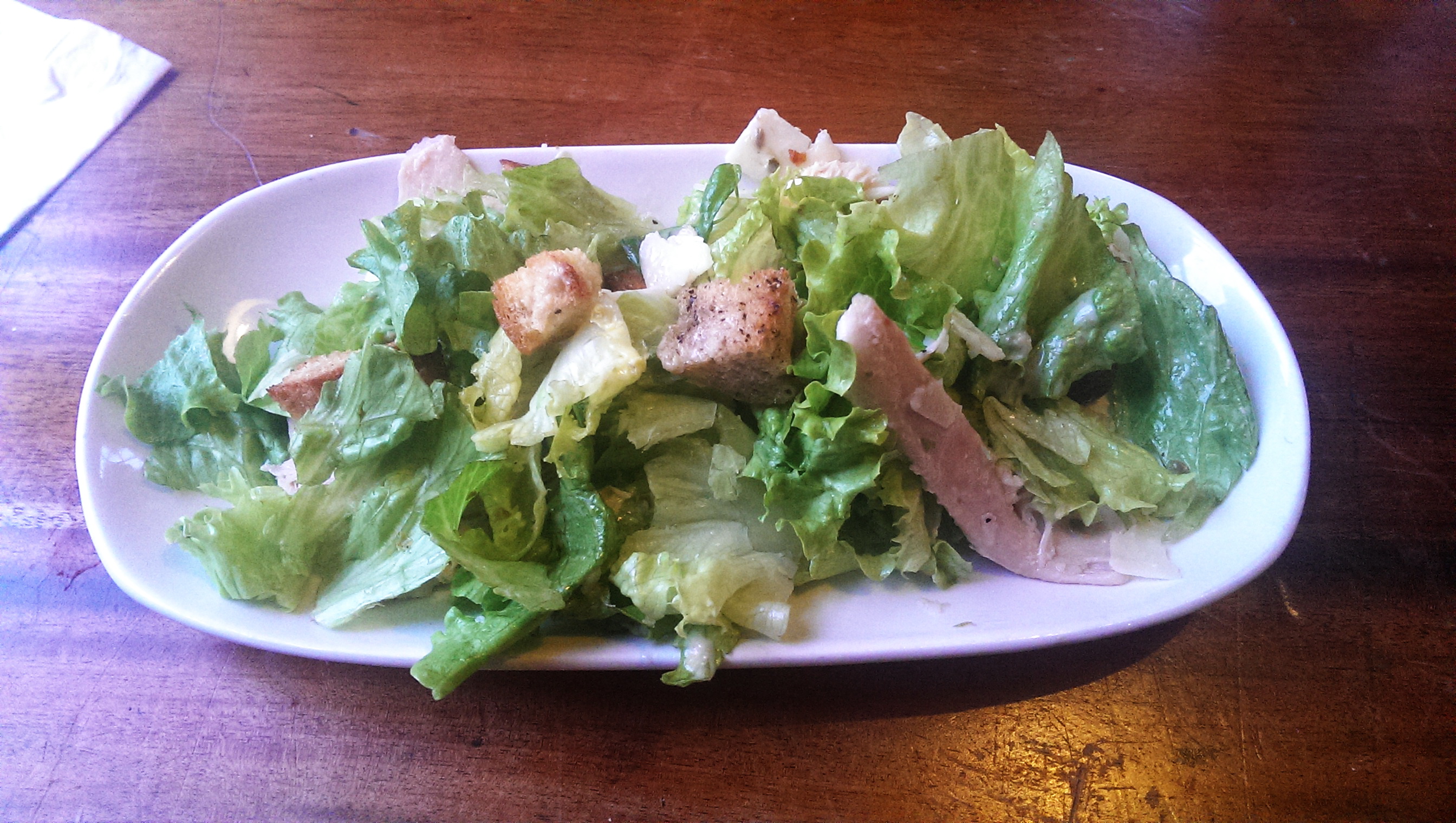
The first act didn’t come off too well. We picked a couple of conventional-sounding starters and shared because we couldn’t decide. The “roast chicken Caesar salad with croutons, anchovies and house Caesar dressing” was decent enough, if small, but crucially the anchovies were missing. I know a lot of people don’t love an anchovy but I think they’re an essential part of a Caesar salad, that salty tang that balances out the creamy dressing and makes ordering a salad worthwhile rather than just worthy. The rest of it was going through the motions, really, a handful of croutons, some decent roast chicken (cold, sadly, but you can’t have everything) and generous amounts of parmesan. But, in truth, all I really noticed was the anchovies that weren’t there.

Caesar

The salt and pepper squid with lime mayonnaise also disappointed. It was hard to tell if the squid was fresh because it had been cooked to the point of brittle crunchiness. The lime in the mayonnaise was presumably in the same place as the anchovies, and the mayonnaise itself was suspiciously white and thin and tasted of not much. The little pile of pub salad on the end of the plate wasn’t dressed and seemed a little sad, as if it were just trying to make the plate look fuller. I’m not sure that this was any better than the sad excuse for calamari that was served up by the ill-fated Lobster Room; at least that was identifiably squid.

Squid
We picked mains from the specials board just because they sounded a bit more exciting than the meals on their normal menu (which is the usual array: lots of different kinds of burgers, fish and chips, fishcakes).

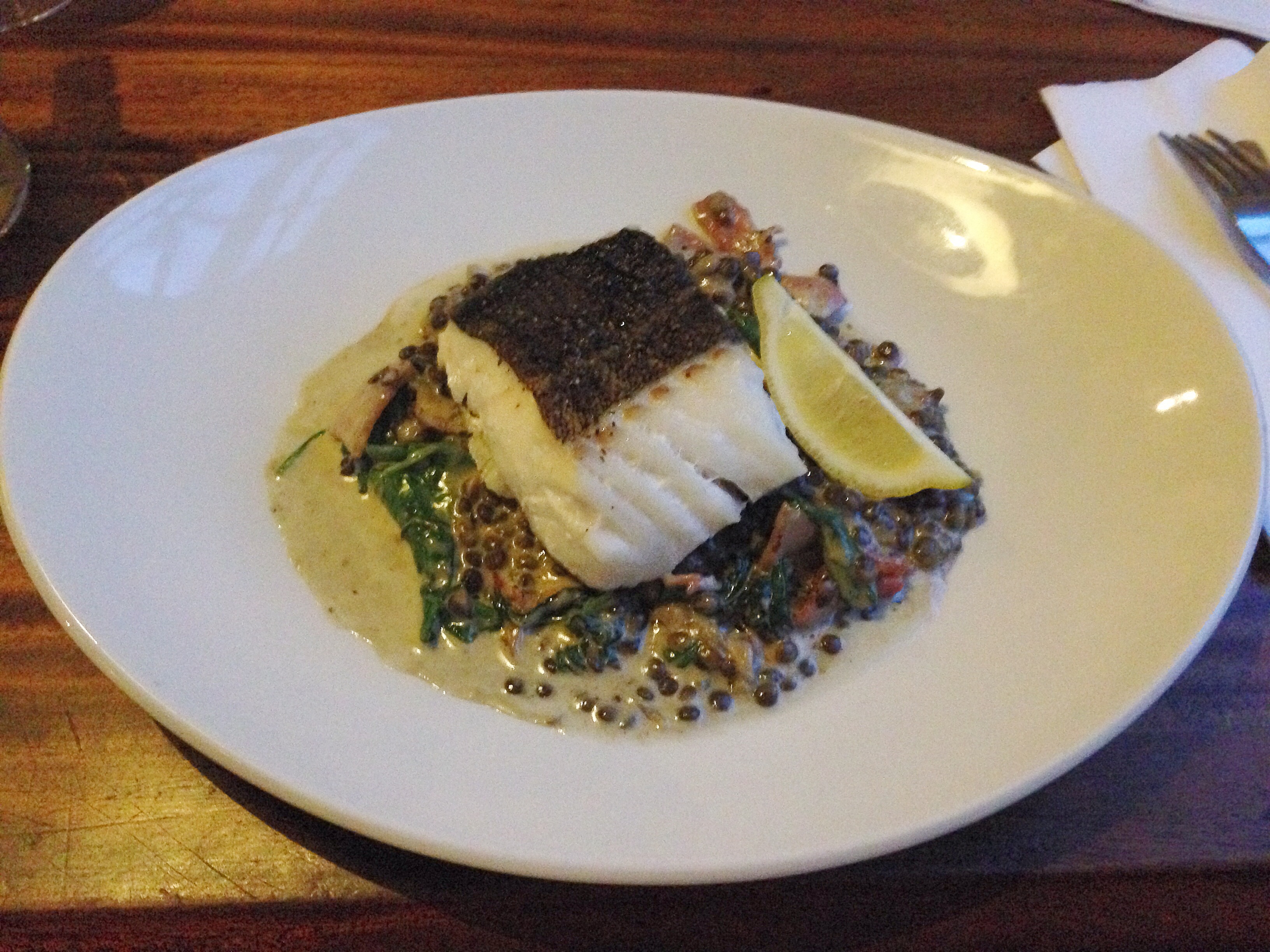
The “pan fried Atlantic cod supreme with bacon, spinach and puy lentils” was a good example of how to ruin a lovely piece of fish. The cod itself was fantastic – cooked just right and falling into big, thick flakes (I would have liked a crispier skin, but it was a minor detail). The rest of the dish let it down terribly: there was bacon, but not the small crispy smoky pieces which would have worked well. Instead, you got huge undercooked floppy slabs of the stuff. There were lentils and spinach, yes, but what the specials board neglected to say was that there was cream – a lot of cream. Not a cream sauce, just cream. A lake of unseasoned cream, in fact: my mouth felt coated with the stuff for hours afterwards.

CodThe “chicken breast and Cornish brie in bacon, baby potatoes and red wine mustard sauce” was at least evidence that someone in the kitchen could cook. The stuffed chicken breast had a layer of sun dried tomatoes tucked into the brie through the middle and the bacon, this time, was cooked just right so that there were no rubbery strings. The potatoes had been pan-fried so that some of them were a little browned then a layer of steamed kale added before the whole lot was doused in a rich, creamy wholegrain mustard sauce. I didn’t get much in the way of red wine in there but it would have been overwhelmed by the mustard anyway. This is the sort of dish I would never cook at home because of the overwhelming calorie count: as a pub dish it was enjoyable, even if I was facing potato-geddon by attempting to finish it (I didn’t, but it was a close call).

Chicken

We took advantage of the wide range of drinks and tried lots of different things, reinforcing my view that the Abbot Cook was a much better pub than it was a restaurant. A pint of Blue Moon was spot on – subtle and refreshing with a suitably metrosexual slice of orange sticking out of the rim. The Sangiovese (is it me, or is this a wine that has fallen out of fashion? I haven’t noticed it on a menu for a while) was nice for starters but was bettered by the much cheaper South African Chenin Blanc I followed it up with; crisp and fresh but not too dry (I prefer my whites on the off-dry side, although I like to think I stop well short of Blue Nun).

I didn’t have high hopes for dessert after all that, so we hedged our bets and shared a salted caramel and chocolate tart. Again, the menu was being a bit economical with the truth: the base was crushed biscuit rather than pastry so I’d say it was a cheesecake rather than a tart. The caramel taste wasn’t particularly strong but the top was scattered with coarse salt crystals which worked really well with the dark chocolate ganache. The website for the Abbot Cook doesn’t say if the desserts are home-made or not. I’d love to be wrong, but I suspect it’s the latter and the plate is just dressed with that irritating zig zag of out-of-a-squeezy-bottle chocolate sauce to make it look otherwise. It’s a shame that one of the nicest things I had that evening probably had the least to do with the kitchen.

The service doesn’t quite compare to other restaurants because there is no table service. Staff at the bar were always really friendly and clearly happy to chat to customers, but service at the table was a bit more lackadaisical with the waiter, if you’d call him that, checking up on us quite late into each dish while calling us “guys” or, even worse, “friend”. I wonder if he thought he was in Hoxton or Brick Lane rather than Cemetery Junction: still, he was very smiley.

In all the bill came to sixty pounds for two starters, two mains, one dessert and four drinks; indifferent food representing indifferent value for money.

The Abbot Cook is another example of that sad genre I see an awful lot of: an attractive pub doing unremarkable food. It’s such a handsome place, in an area which is short of nice places to drink, but I struggle to think of it as a destination for food in its own right. I guess the food is good enough to eat there if pressed by a friend, but no more than that. It’s a real shame: the interior deserves better, and I remember when it first opened that it really seemed to have some culinary aspirations (although, in fairness, they are currently running monthly events matching food with beer which suggest a bit more ambition). These days the menu seems to be more about burgers and fried chicken which is aimed more at the student clientele of their previous incarnation. As one of the few pubs in Reading that has a decent garden (albeit on the sometimes very busy London Road) I know I’ll be back there for a summertime drink, but I’m no hurry to eat there again. Not until they sort their act out.

The Abbot Cook – 6.0
153 London Road, RG1 5DE
0118 9354095

http://www.theabbotcookreading.co.uk/

Dolce Vita

In a surprising move, Dolce Vita closed in June 2018. I have left the review up for posterity.

I don’t know how you approach a restaurant review, as a reader, but before I started this blog the first thing I did was check whether I knew the place being reviewed. If I didn’t, the whole process was a voyage of discovery, reading the review thinking Does it sound like my kind of thing? Could I get there? Would I want to? But when I’d already been to the restaurant in question it was a very different test involving a different set of questions which all boil down to one: Do you agree with me? And, of course, we all judge on that basis. I like people who like the things I like, just like everybody else.

This is especially the case when the reviewer has gone to a place you really like, one of your favourite places. Then you feel protective and read the review thinking I hope the restaurant don’t have an off night, or even The reviewer had better not pick on it. One of the things really successful restaurants do is make customers into loyal customers, and make those loyal customers feel like part of a club. At its best, it’s a tribal thing: look at the incredible loyalty inspired by Mya Lacarte, or Tutti Frutti.

Dolce Vita, I think, is another of those places. I’ve had a lot of people telling me I should go there – enthusing about the food and the service, saying that they return again and again. So, if you’re one of those loyal customers, reading this and preparing to bristle protectively on Dolce Vita’s behalf, you can relax: I really liked it.

Of course, you might approach restaurant reviews by going straight to the end and reading the rating first, in which case you already know that and are waiting for me to get on with it (I understand: I ruin some novels that way too).

Despite knowing Dolce Vita by reputation I’ve rarely gone there. It’s another restaurant that feels like it’s always been there, in Kings Walk, perched on that ledge above the outer reaches of the Oracle looking out over all the changes that have happened over the years (personally, I’ve tried to erase all memory of Brannigan’s, with its chilling boasts of “cavorting”). Yet it’s never really crossed my mind when deciding where to eat, because I just couldn’t remember if it was any good; a strange type of amnesia I don’t get about many places in Reading.

The dining room’s big, a long rectangular airy space with lots of light from the skylight and the patio doors leading out onto the balcony. I can imagine that, if the sun ever comes out for long enough, the balcony would be a lovely place to drink rose and eat summery food but there was no chance of that on this visit: it was wet and windy so we grabbed a table by the window and looked out at the rain-spattered furniture, daydreaming about what might have been. Speaking of furniture, this isn’t something most restaurant reviews talk about (maybe with good reason) but Dolce Vita has some of the most handsome dining furniture in Reading: solid oak chairs and tables that make some of the wobbly painted tables in otherwise good restaurants seem rather cheap.

The menu is huge, and makes no pretence at being anything else. You are handed a sheet of A3 and left to wonder how a kitchen can do all of those dishes well. It also feels like a mismatch – there are pizzas and pasta, unsurprisingly, but also several Thai dishes, a couple of Greek dishes (which may have found a home here after Kyklos, Dolce Vita’s sister restaurant closed down in January) and, randomly, a Scotch egg. This all gave me misgivings but I decided to stick to Italian and hope for the best.

The burrata suggested I’d done the right thing. It always looks like a little bag of treasure to me and so it proved, creamy and fresh, well matched by the grilled peppers and aubergines. The whole thing was brought together with a very nice tomato, chilli and mint sauce and worked very well. I did find myself wishing, though, that the vegetables had been freshly grilled and still warm rather than chilled. It was a nice dish, but didn’t involve much in the way of cooking.

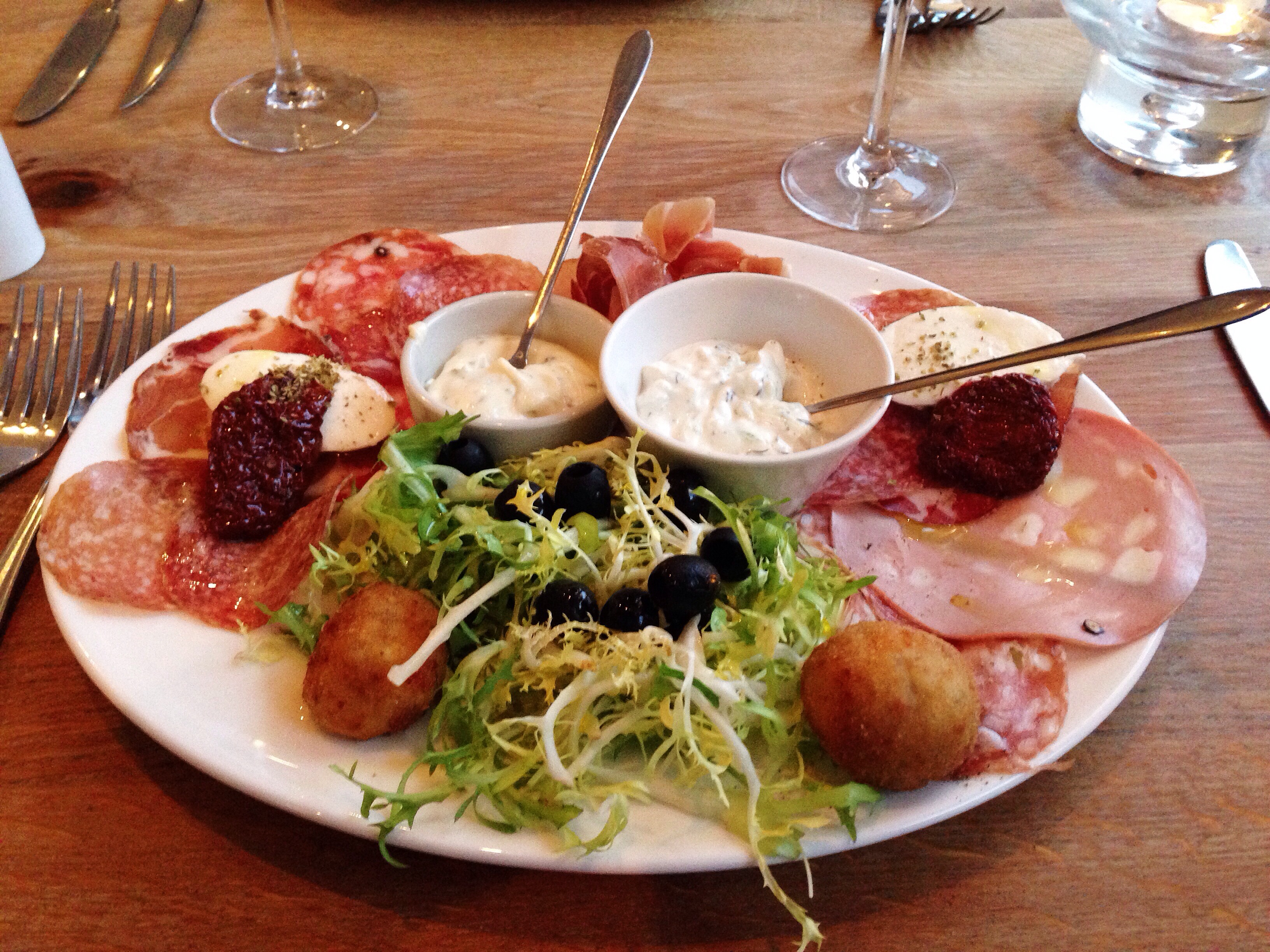
BurrataThe antipasti was a very similar story, a great assortment of salami, pleasingly dry and savoury Parma ham, coppa and mortadella, along with some mozzarella, sundried tomato and two dips, an aioli with a hint of citrus and a very good tzatziki (oh, and some baguette – Did I forget to mention the baguette?) If that makes it sound like a lot of food that’s because it was. In hindsight, for a tenner, it was probably meant to serve two although the menu didn’t make that clear – none the less it was excellent stuff.

AnitpastiThe mains were nicely timed, turning up just at the point when I was ready. The Milan pizza – mozzarella, Italian sausage, wild mushrooms, caramelised onions, fontina and Grana Padano – was recommended by the waitress which made the selection process that bit easier. It makes such a difference going to a restaurant where the staff know what their dishes are and are prepared to state a preference, and that was pretty symptomatic of the excellent service in Dolce Vita in general (I also got great recommendations for wine and, later, for dessert). The pizza base was close to perfect – thin enough to be crisp but with enough thickness to have some flavour of its own and not just feel like transport for cheese and tomato. The Italian sausage was excellent, coarse and herby almost to the point of being fragrant and I loved the caramelised onion with the cheeses. For my taste I thought there were too many mushrooms but that’s probably just me.

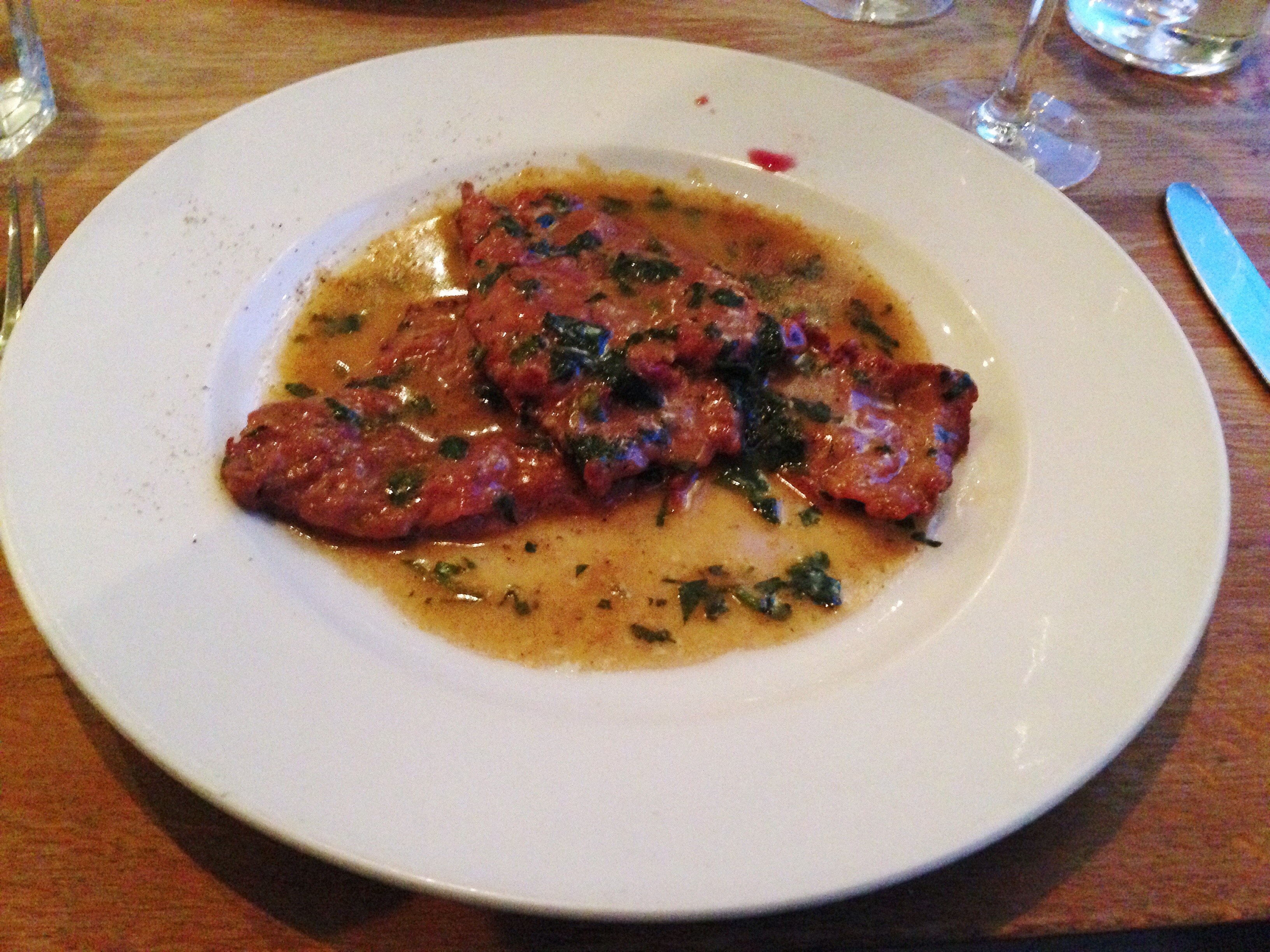
PizzaIf the pizza was good, the veal saltimbocca was great. It was a generous portion of veal, three good-sized pieces, wrapped in Parma ham and perfectly done. The sauce promised Marsala but I didn’t get any of that, just lemon, white wine and lashings of sage: perfection. In any case, Marsala would have made the whole thing too sweet. Similarly, the truffled mash turned up without a hint of truffle and again, I didn’t mind. Too many flavours would have made the dish a mess, instead of the simple classic I got. The French beans, however, did turn up buttered as promised: a lovely contrast to many restaurants, even good ones, that dish up bland and naked vegetables. All that was seventeen pounds – not cheap, but I’ve spent that much on many worse dishes in Reading.

Saltimbocca

The wine, also recommended by the waitress, was a bottle of Montepulciano. I’m no oenophile, which is pretty obvious from my reviews, but I like to kid myself that I got plummy red fruit and a touch of black pepper. Even if I’m wrong, it was dangerously drinkable at just under eighteen pounds (and again, hats off to the waitress for recommending one of their cheapest reds: no sneaky upselling here).

Considering I visited on a weeknight, the restaurant was surprisingly full and buzzy with a real mixture of groups – dates and birthday parties and business dinners, all equally at home. I also heard some Italian being spoken at one table which I took to be a good sign. The service was just excellent all evening, which is something I’ve always heard about Dolce Vita; I felt like I got five star treatment but watching other diners and seeing the easy way the serving staff chatted to them all, it was obvious that everyone else was getting it too.

When you’re having an evening that pleasant it’s a shame to leave without having dessert, so we gave the kitchen another chance to impress. The caramel and Baileys bread and butter pudding (again, recommended by the waitress) was divine. Rich and sticky, studded with sultanas and served with a light vanilla custard, it was a trademark example of those upmarket school dinner puddings I’m so partial to. I couldn’t detect the Baileys and the caramel notes, if they were truly there, were subtle to a fault but even so it was a great way to end the meal. Well, that and a small glass of sweet, fresh Sauternes. The other dessert – Dolce Vita’s hazelnut praline tiramisu – might be my favourite tiramisu in Reading, and I’ve tried a lot. A nice firm slab of indulgence, not too big, with a little layer of crunchy praline hidden inside like a bonus feature. Almost unimprovable (although I did have a go by pairing it with a glass of vin santo).

The total bill for two, for three courses, a bottle of wine and a couple of glasses of dessert wine was ninety pounds – not cheap (although we did have a lot of food) but nothing felt like poor value. I think at least some of that is down to the service, which was up there with any town centre restaurant I’ve been to.

Like I said at the start, if you’re a fan of Dolce Vita you can relax – I had a great evening there. I still have misgivings about the frightening size of their menu (there was also a specials menu adding another set of bewildering options – including roast chicken pie – to the mix) and I’d probably stick to what I know they do well, but on the night I went they didn’t put a foot wrong, and they did it without any of the experience ever seeming mechanical. By the end, I found myself thinking that it would be so easy to come here on another evening later in the year, sit on that patio, soak up the last of the sunshine, have a few beers and a pizza and leave having spent less than twenty pounds. And if the summer ever comes, there’s a strong possibility that you’ll find me there one evening, doing exactly that.

Dolce Vita – 7.6
Kings Walk, RG1 2HL
0118 9510530

http://www.dolcevitareading.com/