TGI Fridays

TGI Fridays closed in June 2024. I’ve left the review up for posterity.

There are plenty of reasons to take against Matt Rodda, my local Member Of Parliament. His faintly gormless look at photo opportunities, for one. His position on Brexit – I’m sorry, I went there – which contains more fudge than Thornton’s and ignores the strongly held views of his constituency. His ineptitude at social media, where he never engages with anyone and sometimes manages to post photographs the wrong way round (he used to be a journalist, apparently: an old media one, I’d guess). And of course there’s the matter of his robotic Twitter style where every description of an event starts with “Good to”: Good to show support for school meals, says one. Good to talk to Katesgrove residents, says another. I dubbed this “Rodda Syndrome” on Twitter and after that he started to mix it up – some Tweets began “Important to”, others began “Interesting to”. It’s a nice try, but I’m not convinced that Rodda’s Twitter feed would pass the Turing Test.

So yes, I have a number of misgivings about my local MP, but the biggest is that he is responsible for the review you’re reading today.

Well, not entirely, because I rather brought it on myself. It happened on the 8th June last year, election day. I headed to the church on Watlington Street to cast my vote (more in hope than expectation) and then I went home, fetched my suitcase and made for the station. I was going to Paris for my first ever solo holiday, my post-divorce present to myself and the opportunity to reclaim one of my favourite cities, to make sure it didn’t become inextricably linked to memories of my marriage. What could possibly go wrong?

Fast forward to about midnight and I was back in my slightly cramped hotel room, several red wines to the good having had a truly repellent meal. They’d plonked me up at the bar on a seat which might as well have borne a plaque saying “exploit the solo tourist”, the plates were small and yet the terrine, which looked like Pedigree Chum, was far too big. I grabbed some chocolate, crisps and a bottle of Orangina from a little Carrefour on my way back to the hotel and when I found the TV in my room had BBC News 24, I realised I’d be able to hear the dulcet tones of David Dimbleby and see the results come in. I’ve stayed up and watched every general election since 1992 and continuing that trend – albeit on the other side of the Channel proving how big, brave and independent I was – made me feel a little less lonesome.

By the small hours, exhausted but undaunted, I and a small number of other Reading Tweeters were staying up for one reason and one reason alone: to see if Rob Wilson would lose his seat. It was very far down the list of Labour targets, but suddenly there was a buzz that we might see Wilson deposed. We don’t have enough time to go into all the reasons why I thought that would be Reading’s Portillo moment (although let’s not forget his nine pence expenses claim for a taxi ride which was physically impossible) but, emboldened by the spirit of revolution – and clearly not rehydrated enough by the Orangina – I took to Twitter. “The exit poll has Reading East falling to Labour. If that happens, I will review TGI Friday”, I said.

Whoops.

I’ve never forgotten my promise, however hard I tried, so on a Monday night towards the end of the year I showed up at TGI’s Oracle branch to finally keep my word. Picking an accomplice for this review proved difficult: originally I had suggested making it a big party to celebrate Wilson’s downfall, but when it came to it that felt needlessly cruel to my readers (and the admin involved in writing up all that food didn’t appeal). Instead I took my friend Sam, a long-standing reader of the blog with extensive experience in hospitality and, more specifically, of working front of house in chain restaurants. Surely, I thought, Sam could help me take a fair and balanced approach to the flagship outpost of one of Reading’s most prominent chains.

“Have you seen Pulp Fiction before?” chuckled Sam as the waitress seated us in a little booth for two, all leatherette banquettes with a good view of the restaurant. Sam is an extremely amiable chap who sounds as posh as you like and, despite only just being in his thirties, can inexplicably get away with calling everybody “kiddo”. He was still sporting a Movember moustache (“it’s on a week’s probation” he told me) and the overall effect was somehow more Battle Of Britain pilot than best-avoided uncle. Actually, despite it being ersatz in the extreme I somehow admired the fit-out of TGI Friday. Everything looked polished and fake without being cheap.

A chorus of “Happy Birthday”, led by the serving staff, erupted at a nearby table. It wouldn’t be the last of the evening.

The menu made decisions surprisingly difficult, but not in a good way. I tried very hard to overcome my preconceptions when looking through it, but it seemed like such a cookie-cutter approach to American food that I found it hard to care. Burgers, ribs, fajitas and tacos were all present and correct, and there were frequent references to TGI’s “Legendary glaze”, which may or may not have been a reference to the expression of the waiter who brought us our first beers. The menu was broken into sections with names like “Rib, Dip, Hooray!” and “Love Me Some Chicken”, which was bad enough but some of the names of the dishes genuinely made me want to get up and leave. Particular offenders included the “Gravy Seal”, a burger which had had the kitchen sink thrown at it and was apparently “a tasty triple trip over sea, air and land” and the “It’s Mine, Nachos!” about which no more need be said.

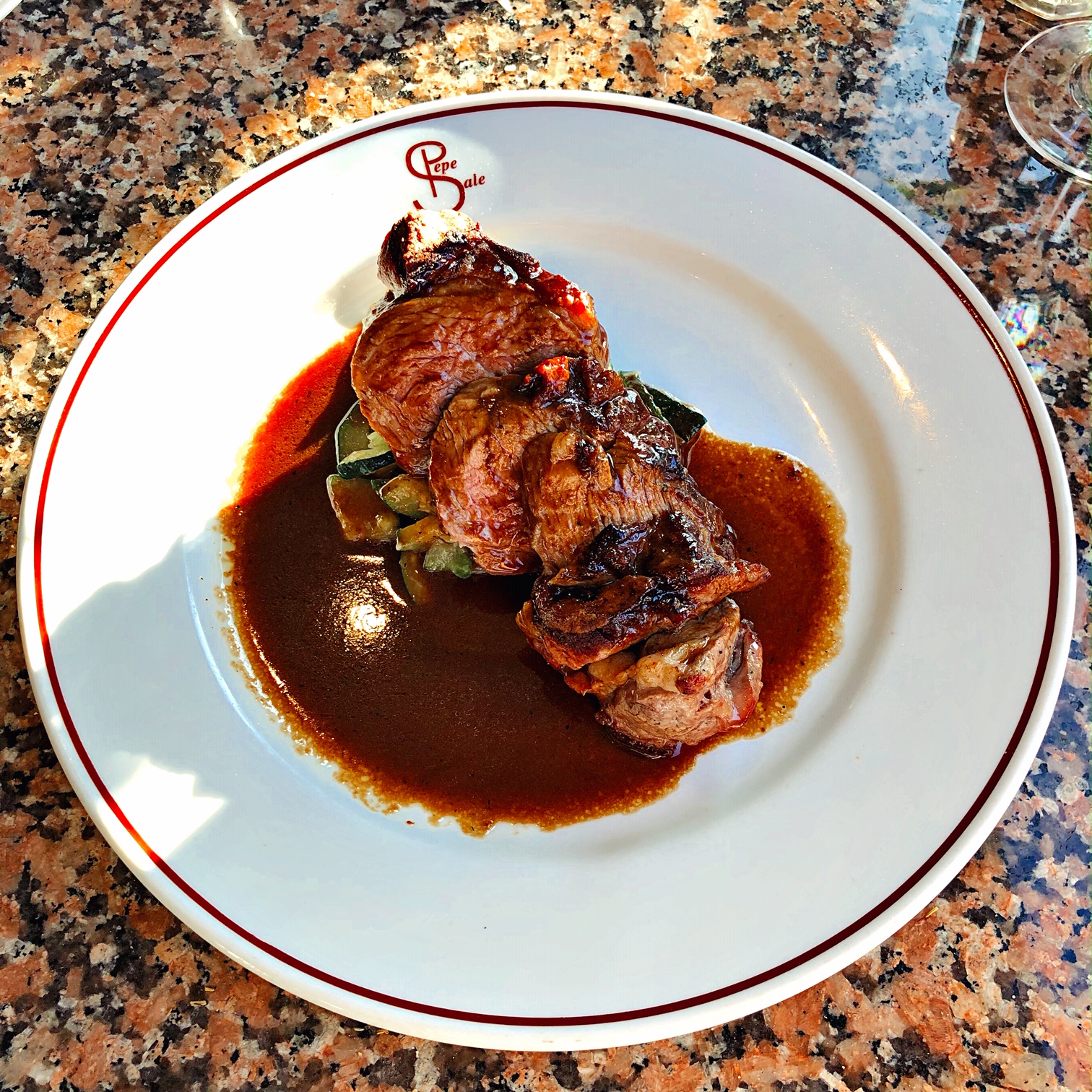
“I’ve decided” said Sam. “It’s got to be the Warrior Burger.” I knew this was likely: Sam had been talking about this life choice for about two weeks in the run up to our visit. I ummed and aahed and then I saw and heard a spectacle at a neighbouring table closer to the pass which made matters more straightforward; a plate was put down in front of a diner with a sizzle audible from some distance away, and smoke filled the air. Another glance at my menu revealed that this was the “Sizzling Crispy Duck Fajita”, and so my decision was made.

“Good choice, kiddo” said Sam, necking a hefty swig of his Sam Adams. I looked at my Budweiser, one of the only draft beers on offer, and took a sip. It tasted of Budweiser. I made a mental note that more of it might be required.

At this point you are no doubt expecting me to detest every single thing that followed, so allow me to confound both of us by telling you that the first of our two appetisers wasn’t bad. The sesame chicken strips were a hit with both Sam and I: a reasonably generous helping of chicken with a little crunch, some heat from the chilli flakes and some sweetness from that Legendary (I can’t stop capitalising it, because that way it’s more obviously their word and not mine) glaze. The extra dish of dipping sauce, which I think was also glaze, was more than anybody needed, and a mere taste of it confirmed that it was Dignitas for tooth enamel. None the less, I liked this dish: the fried chicken at Soju it wasn’t, but we still polished it off in a state of mild surprise.

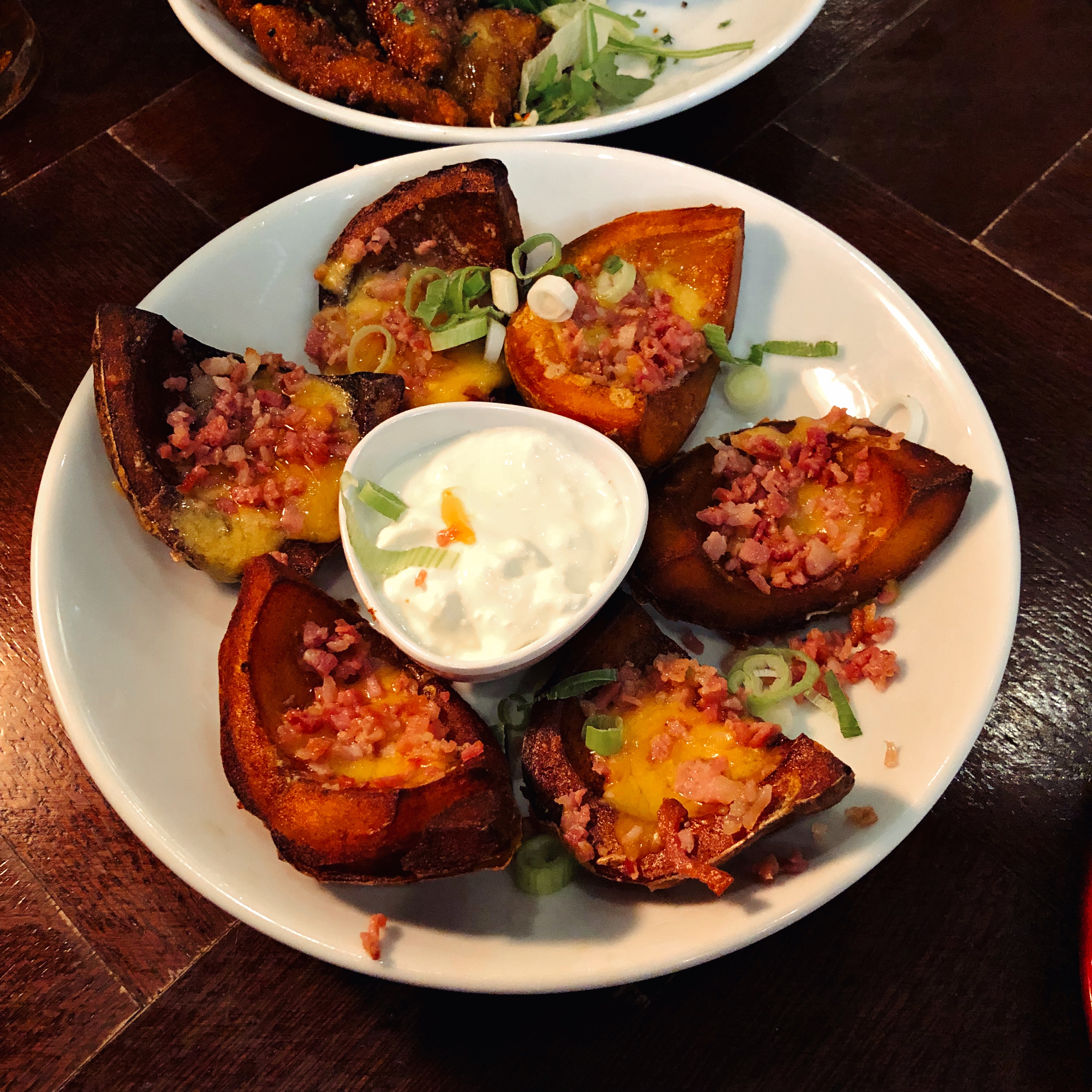
The other starter, loaded potato skins, had to be done; I suspect that it’s been on the TGI menu since time immemorial, a 90s time capsule in gastronomic form. The menu said they were “potato skins filled with melted cheese”, and the last time I saw a fib of that magnitude it was on the side of a bus: the skin wasn’t crunchy and moreish and barely featured in the dish. Nor did the melted cheese. Some of the skins had very little: “filled” wasn’t the right description, and “meanly sprinkled” would have been closer to the mark. The predominant feature of the dish was in fact the flesh of the potato, which means they were less potato skins and more just chunks of potato. We’d chosen to have them with bacon, but it was more like highlighter-pink indeterminate mince than lovely, crispy, salty bacon. The whole affair contained more flesh and gammon than the average Question Time audience, and was about as appetising. The sour cream gloop in the middle did nothing to improve matters, and nor did the token spring onions.

“Well, it’s not terrible so far” I said, trying to put a brave face on things as we sat there for what felt like quite some time waiting for them to take our empty dishes away. Terrible was not far away, because split seconds after they were whipped off the table in a monosyllabic fashion our main courses arrived. My duck was set down in front of me completely devoid of any sizzle, smoke or steam, a moment even more lacking in theatre than the renditions of “Happy Birthday” at the other tables (two and counting).

“I’m really sorry” I said, because I felt one of us ought to apologise for what I was looking at, “but this isn’t sizzling.”

“Oh, it definitely is” said the waitress, trying to style it out. There was a pause while I tried to make up my mind whether it was worth explaining what the word sizzling really meant. It probably only lasted ten seconds but in my mind it felt like easily five minutes of awkward silence. It was eventually broken by the waitress.

“I mean, if you touch it you’ll find it’s really hot.”

I looked at Sam, Sam looked at me. Our expressions mirrored one another, and we sat in silence while the waitress brought the rest of our food and left us to it.

“What was that about?” said Sam. “That was like hearing Trump talk about the crowds at his inauguration.”

It was true: there was something post-truth about what had just happened. With hindsight, I actually think that it might have been for the best that my duck arrived without any smoke and mirrors, because it made it easier to get right to the heart of the matter, namely that it was truly awful. It was sinewy, and a struggle to get much meat off the bone apart from the breast, which had a weird, cotton-woolly texture. It was topped with a bizarre salsa which looked a little like finely diced vomit (and, I suspect, more of the Legendary Glaze) and sat on a bed of onions which had no hint of caramelisation, on account of never having sizzled.

This was a dish that really didn’t know whether it was Tex-Mex or Chinese, so decided to fail dismally at both. There were tortillas which were thick and more like cardboard than the thin pancakes which might have worked, and shredded cucumber and spring onion to make the cognitive dissonance even worse. Finally, there was more of the gloopy Legendary Glaze, although this time it had an odd lumpy texture like frogspawn, or a very loose stool. It was sweet to the point of offensiveness, and after I’d assembled a couple of fajitas my fingers were so sticky I wasn’t sure they’d ever be clean again. It could have been worse if I hadn’t had a spoon to dish up the glaze, although admittedly I’d had to ask nicely for one of those (how exactly did they imagine I was going to do it?). By the end I was reduced to scraping all the crud off the duck, eating it on its own with a knife and fork and realising that even that couldn’t rescue matters.

This dish cost seventeen pounds fifty. I thought of all the times I’d had delicious confit duck at Cote, a couple of doors down, for considerably less money. Then I thought of what else seventeen pounds fifty could buy you in this town and I started to feel quite angry, although it could have just been a sugar rush from the Legendary Glaze.

“This is the worst crispy duck fajita I’ve ever had.” I said. “Of course, it’s also the best and, if I have my way, it will be the only crispy duck fajita I ever have. Also, this really isn’t a restaurant for diabetics.”

Sam’s Warrior Burger was no better. It managed to simultaneously be overcooked and lukewarm, which takes some doing but really shouldn’t be considered an achievement. The patties were a tad grey and nothing about the dish looked appetising.

“It’s been cooked with one purpose and one purpose alone” said Sam, “and that’s to eradicate the risk of anybody getting food poisoning.” It didn’t feel like an ambitious mission statement.

“Not a fan then?”

“No. All these whistles and bells like the mozzarella dippers are just there to draw attention away from the poor quality meat.”

“So how much of this do you reckon was previously frozen?” I asked, reckoning that Sam knew a bit about that kind of thing.

“Most of it. Probably the burgers, definitely the mozzarella sticks and probably the bread too. The fries are okay, I suppose, and that dip” – Sam gestured at little dish of what looked like mustard – “isn’t bad. But really, it isn’t good at all.”

The Warrior Burger costs over fifteen pounds. “Maybe lots of people eating here have vouchers” said Sam. Either that or a lobotomy, I thought to myself.

Unable to finish my meal, and eventually bored of the staff’s complete unwillingness to take our empty plates away, I wandered upstairs to wash my hands obsessively like Lady Macbeth until no trace of the glaze remained. The upstairs, almost as big as the downstairs, was completely empty (“there was no upstairs when it was Tampopo” said Sam, sagely, “so god knows where the staff get to change or relax or keep their stuff now”).

Coming out of the bathroom, I discovered a voicemail on my phone from TGI Fridays asking why I hadn’t shown up for my table and whether I planned to. “We’re very busy and we can definitely give the table to somebody else” said the voice huffily. I looked at the deserted tables around me and I wondered whether I’d wandered into some kind of dream sequence. Maybe I hadn’t actually gone to TGI Friday and none of this had ever happened, I thought. Perhaps it wasn’t too late to scrap the review and take Sam to eat somewhere better, like literally anywhere.

Back at our seats our crockery and cutlery was still in front of us. I told Sam about my voicemail.

“That sums this place up” he said. “It’s all so half-arsed. I mean, did you notice the state of the tables and chairs out front on the Riverside when we walked in? If this was my restaurant and the front looked like that, I’d sack myself.”

The waiter took our plates away and asked if we fancied dessert. It was tempting to see if there was anything more sugary than the food I had already had, but morbid curiosity is no justification for throwing good money after bad.

“No thanks mate” said Sam. “I think we’ll just finish our drinks and get round to asking for the bill.”

The waiter wandered off, got the bill and slammed it wordlessly on the table in front of us almost immediately. Finally we had something in common: he was as keen for me to leave the restaurant as I was. But there was one final quirk to the service when the waiter discovered that we planned to pay by card. He came over with the card machine, entered the amount and then wandered off, leaving us to stick our card in and enter the PIN. This struck me as a novel approach and different from literally every waiter and waitress I have ever encountered. Dinner for two came to sixty-seven pounds, not including tip, and it was only Sam’s generosity and good humour that meant that we tipped at all. Personally I would have just paid, departed and then left them a voicemail explaining that I wasn’t going to tip them, but with hindsight I’m glad Sam prevailed.

“The thing is though” said Sam, “the service really was poor. I know some of this is the kitchen’s fault, and some’s the menu’s fault, but the waitress should never have brought a sizzling duck dish that wasn’t sizzling.” And he was right, because even if the food had been middling and indifferent (I should have been so lucky) the service could still have improved matters considerably. It was a meal with no care factor evident anywhere.

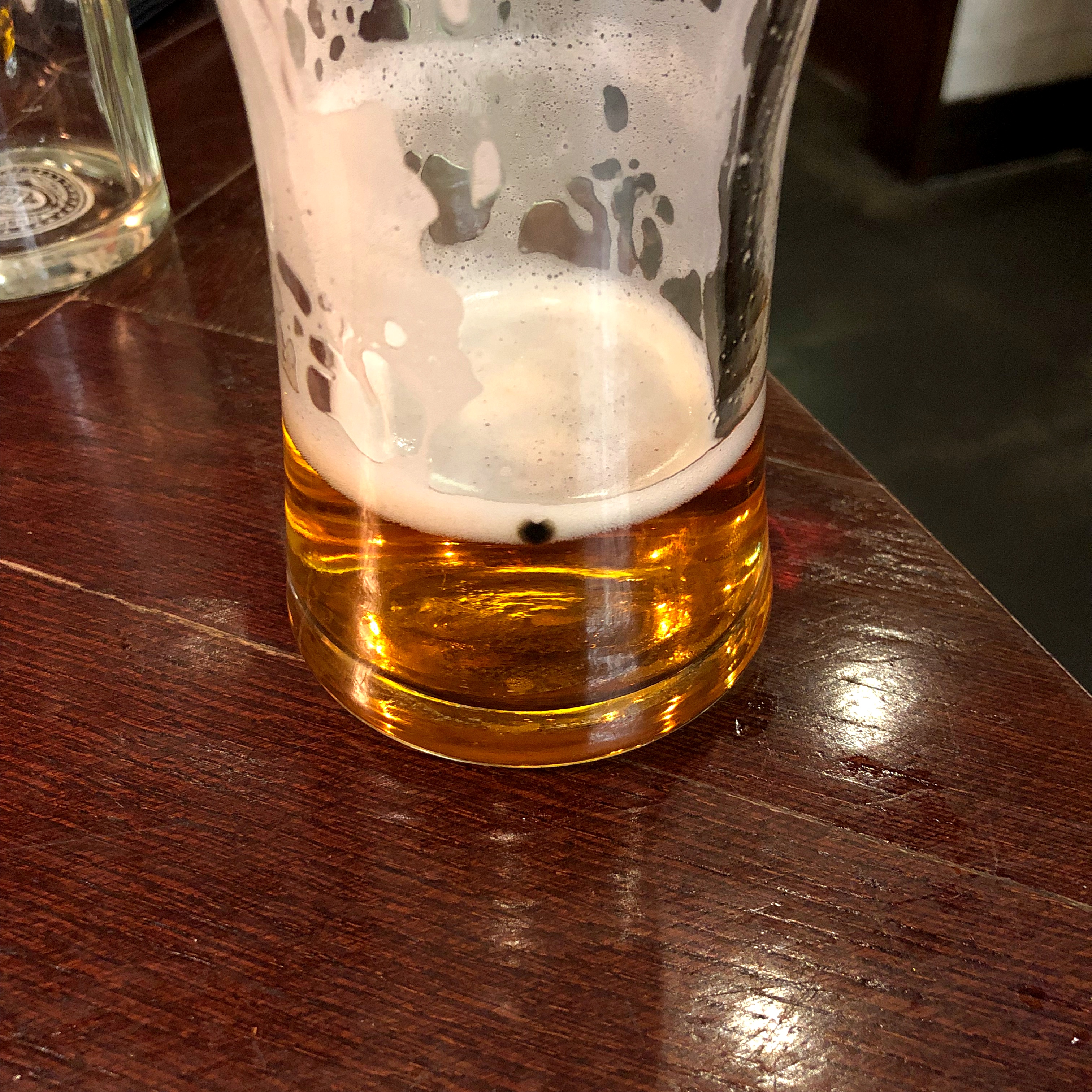
There was time for one last sting in the tail, because as we were finishing our drinks Sam examined his pint glass. There – close to the bottom, on the inside – was a grim-looking black smudge of goodness knows what.

“What’s that?” said Sam in horror. We examined it, neither of us wanting to touch it.

“I have no idea, but when the pint was first poured it was probably even bigger. Most of it has probably, err, dissolved.” I realised immediately after I said it that this wasn’t helpful.

“Oh well, I could do with losing some weight. This just wasn’t how I planned to do it.”

Afterwards, commiserating in the pub, I told Sam that I thought that TGI Friday was like the WH Smith of restaurants: I couldn’t understand why it still existed, because you could get everything it did better somewhere else. If you want cocktails you should go to Milk and if you want burgers, you should go to Honest. If you want ribs, you should go to Bluegrass and if you want fajitas you should go to Mission. If you want crispy duck fajitas, you should see your doctor.

But it’s worse than that, because not only do other places do this food better but, without exception, they are cheaper. I could cope with expensive and mediocre, and I could just about cope with cheap and bad, but the combination of costly and diabolical leaves me baffled. Who eats at TGI Fridays these days? And one other thing: this isn’t about snobbishness, it’s about standards. Earlier in the year I went to the Beefeater on the Bath Road, with my family. It wasn’t my choice, and in the run-up I did make a few unworthy jokes about the evening that lay ahead. But actually, the service was lovely, the food was okay and the steak itself was rather nice. I went away feeling a little ashamed of myself, but at TGI Friday I just went away feeling dirty and exploited (and not in a good way, either).

So there you have it, my final review of 2018 is easily the worst meal I’ve had all year and one of the very worst meals I’ve had in over five years of writing this blog. Thank you for reliving it with me (don’t have nightmares) and I only have one last thing to say. It’s this: good to never have to go to TGI Fridays ever again. Important to avoid it for the rest of my days. Thanks a bunch, Matt Rodda.

TGI Fridays – 3.6
Unit 8, The Oracle, RG1 2AG
0344 2646052

https://www.tgifridays.co.uk/locations/get/Reading%20Oracle#/

Bench Rest

Bench Rest stopped operating out of the Tasting House in September 2019 after less than a year. The Tasting House closed in April 2021. I’ve left the review up for posterity.

One of the interesting phenomena of Reading’s restaurant scene is the number of talented chefs and restaurateurs circling the town trying to find premises to cook in. This year has seen more of this than most: first, right at the beginning of the year, Georgian Feast stopped cooking at The Island (still one of the strangest places I’ve ever eaten dinner by a country mile). I had just got used to wandering over on a Sunday lunchtime to enjoy their gorgeous boat-shaped pizzas for lunch, and then they were gone.

Then, in the spring, the affable Kamal and his talented chef left Namaste Kitchen by mutual consent: very sad news for me, as I’d become hooked on my almost weekly trips to the Hook And Tackle for sukuti and boneless fish fry. More was to follow: in the summer I Love Paella parted company with the Fisherman’s Cottage, shortly after which the pub unveiled a new menu which – how shall I put this? – borrowed heavily from ILP. Imitation may be the sincerest form of flattery, but flattery is rarely so tacky; I’ve not been back since.

Then there were the goings-on at Nomad Bakery, the permanent premises taken on by Laura of local supper club Pop-Up Reading. Laura left Nomad in July, and although Nomad’s Twitter feed made it sound like an amicable (if emotional) parting of the ways, an Instagram post by ex-TV presenter, regular Nomad visitor and Caversham resident Simon Thomas suggested shabby treatment and a falling out with Laura’s co-investor. It was later amended to remove those comments: make of that what you will.

Anyway, as we reach the end of 2018 some of that has settled and some is still in flux: Kamal is still looking for somewhere to open a new restaurant, as is Enric of I Love Paella. Georgian Feast started working at Nomad Bakery and recently confirmed a new menu (as Geo Café) offering many of the classic dishes they used to serve at Blue Collar, the Turk’s Head and The Island: it’s still as clear as mud, but it appears that Nomad Bakery may be no more. And finally, probably the move most long-awaited by Reading’s fooderati – in October the Tasting House announced that Laura would be running a new venture there at weekends called Bench Rest: tapas on Friday and Saturday nights, and brunch on Saturday and Sunday daytimes.

The early reports looked interesting, as did the pictures sweeping Twitter and Instagram. The menu was constantly changing and evolving, all built around Mediterranean flavours and the fresh bread which has always been Laura’s biggest passion (her LinkedIn profile says “My life revolves around flour, H2O and a little bit of salt”, which is an appealingly simple mission statement), with an emphasis on vegetarian food – or, as it’s modishly called these days, plant-based dining.

Bench Rest is probably one of Reading’s most keenly anticipated openings for several years, so it only felt right to visit on duty before Christmas. I wasn’t initially sure whether to go for brunch or tapas, but a look at the respective menus made it an easier decision: practically every single brunch option involved eggs, breakfast isn’t a dish I’d personally choose to make plant-based, and I find these days I can take or leave Jam Lady jam. Besides, eating small plates gave me a better chance to try a wider range of the menu, so I turned up on a Friday night with my regular dining companion Zoë to find out what was what.

Now, before I get on to the food it’s sadly necessary to explain some stuff about the set-up, because some of what was less than satisfactory about the evening didn’t have much to do with Bench Rest. The Tasting House, back when I first reviewed it, was an uneasy one-stop shop which served charcuterie boards, wine by the glass to drink in and wine by the bottle to take away, and didn’t really know whether it wanted to be a wine bar or an off licence. Over time the furniture got more comfortable, the place got redecorated and rearranged and now it is effectively three different businesses in a kind of houseshare. The Tasting House serves the wine, does food during the week and runs wine testing events upstairs. Bench Rest takes over the kitchen at weekends. And finally, during the day, Anonymous Coffee sells coffee and cakes from the counter at the front.

With Bench Rest, this all felt pretty seamless – we ordered at the counter, got a prepaid card to use at the Enomatic machine to buy wine by the glass, and paid for the whole lot at the end. But the room makes much more sense as a wine bar than as a restaurant, and the layout is cramped and problematic. There’s one huge table at the far end of the room, nearest to the open kitchen, that can seat around eight to ten people. All the other tables are smallish tables, most of them for two, and the emphasis has been placed on packing in punters rather than making it an enjoyable experience. Our table was nearest to the wine and the Enomatic machine, and it felt like people were constantly walking past us, giving the feeling of being in a corridor rather than a restaurant.

It could have been worse – there are also higher seats but rather than being up at the counter, or at the window where you’d have something to look at, you were seated at a high ledge facing the wall. All the poor unfortunate couples there were sitting with their back to the ledge, on their high stools, forlornly looking out at the tables feeling envious. I guess they really do want to maximise the number of customers, but I didn’t especially want to be that kind of customer.

Much as they might have envied my table for two, another problem was it had definitely been designed with drinking in mind: the moment you ordered almost any food there wasn’t enough room for it. Even with a small plates menu, this was difficult and involved constant balancing and juggling; one serving dish ended up precariously perched on the pot containing cutlery, and the whole experience felt like a cross between Jenga and Tetris. It was all very odd: the space worked perfectly as a bar, or as a café, but seemed incompatible with its third purpose as a restaurant.

Perhaps the food would leave me less bothered by such details, I thought, as I looked at the menu. It was a nicely compact selection – a handful of snacks (olives, nuts and the like), one “glorious gourmet toastie”, a meat and cheese board and a selection of seven small plates, most of which were vegetarian. Seven is a sensible number of dishes but even then the menu felt a little bit fussy, dividing them between “cold mezze”, “hot mezze”, “tapas” and “raciones”, fiddly and needlessly educational. We ruled out the snacks, because they felt more about buying than cooking, and the board (for similar reasons, and because it felt very much like what the Tasting House used to serve before Bench Rest came along) and decided to try a selection of the small plates.

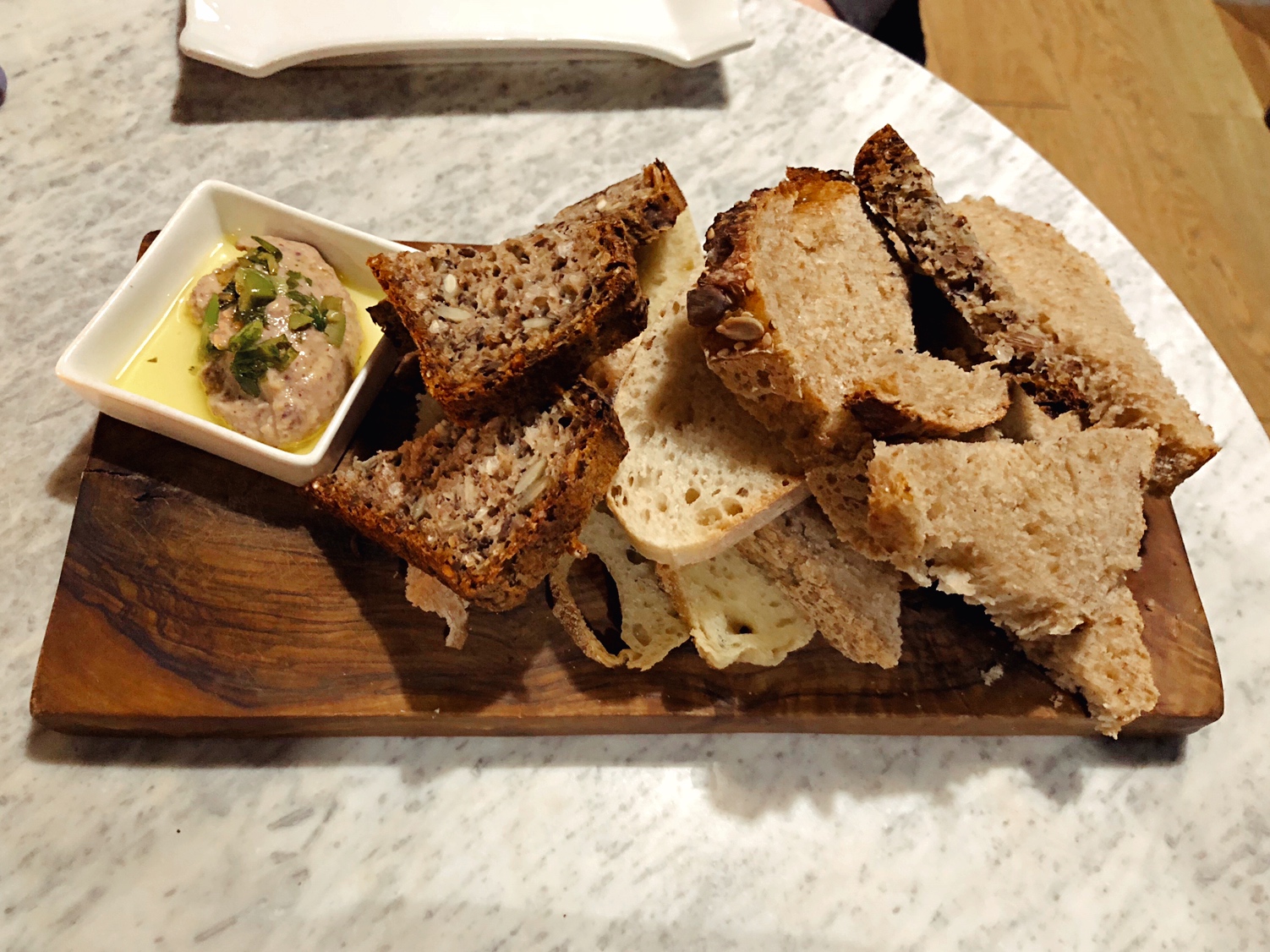
All the small plates came with a selection of sourdough bread, and Laura brought this to the table first, excitedly talking us through it. There was a rye bread, a ciabatta and a spelt sourdough – served with a little extra, a ramekin of black bean houmous. You couldn’t argue with the quantities, but I expected to love them more than I did. The rye bread was simply terrific, but the other two were lacking in crust and felt like they could have done with a little more salt. The texture either suggested that the slices had either been very lightly toasted or left cut and exposed to the air a little too long: either way, I wasn’t won over. Also – and this may well just be me – I really found that I wanted either some good quality salted butter to spread on it or bright grassy olive oil to dip it in. Neither was supplied, and although the black bean houmous was pleasant enough it didn’t bridge that gap.

The first small plate was houmous with chickpeas, tomatoes and whipped feta. It sounded great on paper, but it didn’t quite work in practice; really good houmous, like the stuff from Bakery House, is silky and rich, whereas this was coarser and slightly on the bland side. The flecks of whipped feta set it off nicely, as did the beautiful sweet marinated tomatoes, although there weren’t enough of the latter. And I like gherkins more than the next person most of the time but, nice though Bench Rest’s home made pickles were, they simply didn’t go with houmous. The combination of the houmous being a little too claggy and the bread not having quite enough oomph wasn’t a pleasing one.

The beetroot croquetas, on the other hand, were lovely things. Two biggish croquettes, rich with beetroot, dished up on a smear of fragrant tapenade with some crumbled goat’s cheese and served with grape must mustard (“my new favourite thing!” said Laura as she brought these to the table). This was a proper clear your plate dish, and the bread came in handy for mopping up every last smudge of food. The flavours worked brilliantly: I would have liked a little more goat’s cheese, and two croquettes for seven pounds fifty felt slightly on the steep side, but it was still hard to be critical about a dish that tasted quite unlike anything else in town.

The other two small plates were more substantial affairs. Patatas rotas, puerro y jamon was spicy potatoes (they looked fried but were described as roasted) with sweet leeks, topped with a couple of slices of prosciutto and an egg. This was hearty stuff (it felt more like an escapee from the brunch menu, in some ways) but I liked it and we properly picked over the whole lot. The ham felt a little like an afterthought – again, I’d have liked more and for it to have had more texture and been crispier. The egg was a little overdone, which meant most of the yolk couldn’t spread its sunshine over the plate. Even so, you couldn’t argue with the flavours. This dish was just shy of nine pounds, but again it felt ever so slightly less than its money.

Last of all we had the cauliflower shawarma, a dish I’d wanted to try ever since it was on Laura’s menu at Nomad Bakery. This was a beast of a thing, gently spiced, festooned with seeds and topped with some kind of sweet relish which could have been tomato, could have been red pepper or could have been something else entirely. It was like nothing I’ve ever eaten in Reading, a dish which had more to do with Ottolenghi than the Oxford Road, and I really enjoyed it. I wasn’t sure whether it came with the advertised houmous and lemon tahini – it felt more like yoghurt to my no doubt ignorant mind – but as a combination of tastes and textures it was one of the most interesting things I’ve eaten this year. We couldn’t finish it, and leaving some was a decision made with a heavy heart.

Normally I would go into detail about the drinks, but there seems little point in some ways because the range of wines in the Enomatic changes so regularly that I can’t guarantee any of them would be on sale were you to eat at Bench Rest. I particularly enjoyed the Medoc, which was rich but not too tannic, and I really loved the Australian Riesling which was much more sweet and approachable, as New World Rieslings tend to be. The Enomatic dispenses either 25ml, 75ml or 125ml and most of the wines I had were £5 for 75ml so again, this isn’t a cheap experience by any means.

The wine being self-service also disposes of much of the traditional service in Bench Rest. I would say the service from Laura, who really appeared to be working her socks off all evening, was exemplary – friendly, approachable and passionate about her food (endearingly so, in fact). The service at the counter when ordering, from long-serving Tasting House employee Jack, was also very likeable and efficient, but I did notice that he struggled to get one of the other staff to help out because she was too busy having a good old chat with her mate (I feel for Jack: we all have days at work like this). We settled up just as the acoustic singer-songwriter in the corner was getting into full flow (could have been worse, it could have been Ed Sheeran) and our meal for two – four small plates, five 75ml glasses of wine and one devil-may-care-push-the-boat-out 125ml glass of wine – came to sixty pounds, not including tip. In fairness, we did leave very full: perhaps there’s something to be said for this plant-based diet after all.

It’s a shame that the time-honoured ER ratings go from 0 to 10, because rarely have I so badly wanted to give a rating of “Hmm”. Some of the food in Bench Rest is excellent and much of it is imaginative. It’s probably more plant-based and virtuous than I would personally choose, but I am quite aware that that says more about me than it does about them. But, despite their efforts, the alliance with the Tasting House is an uneasy one which doesn’t show off the food in the best light, or create an environment where it’s particularly enjoyable to eat. The dishes may well involve a great deal of work, and it’s impossible to fault the kitchen’s devotion or imagination, but they still feel ever so slightly on the pricey side and like there’s something – and I can’t quite put my finger on what – missing. I hope it settles down, or that Laura eventually finds a bigger canvas on which to paint, but more than anything else it made me miss I Love Paella. Here’s hoping that 2019 brings further homecomings for some of Reading’s other dispossessed restaurateurs.

Bench Rest – 7.3

30a Chain Street, RG1 2HX
0118 9571531

https://www.bench-rest.com/

MumMum

MumMum closed in June 2019. I’ve left the review up for posterity.

One of my biggest regrets in Reading’s restaurant scene is a little place you probably never visited called Cappuccina Cafe. It was on West Street, looking out over an especially grotty 99p shop, it was a fusion of Vietnamese and Portuguese food, and it did the most wonderful bánh mì (the Vietnamese sandwich, served in a baguette, which bears the hallmarks of Vietnam’s French colonial past: an early example of fusion food, you could say). I reviewed it in May 2014 and – and this may be a record – it closed a month later. I never got to go back, but one of my friends loved the bánh mì so much she developed a several times a week habit before it turned into yet another nail bar.

It was part of a general saga of decline on West Street. First Fopp shut – I still miss that place – then Cappuccina Cafe, then Vicar’s closed after over 100 years of purveying meat to the people of Reading and finally Primark decamped to the old BHS store. It’s part of a general trend which leaves that end of Broad Street looking increasingly grotty, and possibly also explains why Artigiano decided to divest themselves of their branch, deep in the heart of no man’s land: it’s Broad Street Bar & Kitchen (for) now. That area desperately needs some love and imagination, two qualities our council seemingly lacks the ability to provide, foster or inspire.

Fast forward four and a half years, and finally another restaurant has appeared in Reading looking to fill that bánh mì shaped gap in the market. Literally in the market, as it turns out, because MumMum opened on Market Place in October, where the ill-fated Happy Pretzel used to be, just down from the post office. I was tipped off about it not long after it opened and I’d been watching with some interest, waiting for a month to pass so I could check it out on duty. It’s actually a surprisingly tricky place to visit for lunch, because it isn’t open at weekends, but I had a Monday off after coming back from holiday so I stopped in to check it out with Zoë, my partner in crime and regular dining companion.

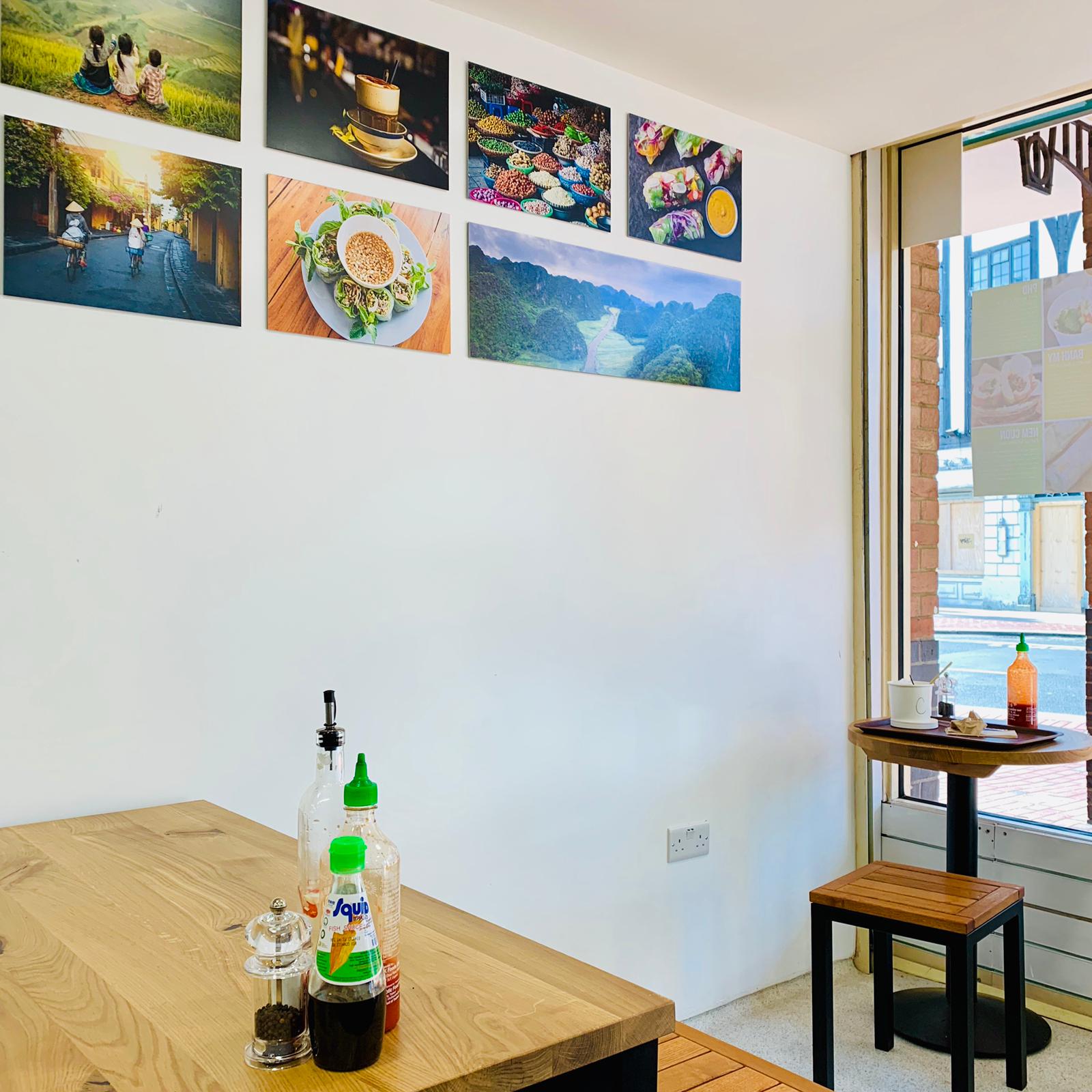
From the outside, MumMum was all windows (with a laminated menu – but no opening hours – blu-tacked to them) but going in I was surprised by what a nice space it was. It was clean and neutral without looking basic: pleasant, plain low tables and higher tables with stools where you could perch and look out of the window. Far more seating, in fact, than I expected and without ever feeling cramped. You could look through into the kitchen, although some of the preparation took place at the counter: while we were there I saw one of the staff carefully, skilfully assembling summer rolls with tofu.

MumMum only really does three things – bánh mì, pho (the Vietnamese equivalent of ramen – meat and noodles in a rich broth), and summer rolls, which are like spring rolls but served cold and wrapped in rice paper rather than pastry. You are carefully walked through the process of ordering. There’s a cabinet on the left where you pick up your tub of pho (small or large, chicken or beef) and/or your summer rolls (pork, prawn or tofu). You pay at the counter, which is also where your bánh mì are prepared and where they add the broth and herbs to your pho, sort of like an uptown Pot Noodle. The signs and barriers turn this into a neat little queuing system, although they then brought everything to our table which felt more like a traditional restaurant experience.

The pricing is a bit more confusing, mainly because there are a range of meal deals and, if I recall, the prices on the menu behind the counter didn’t quite match the ones on the menu in the window. With a meal deal you get either a bánh mì or a small pho with a drink (although not apple juice, apparently) and a single summer roll (they usually come as pair). This does save you a little money, although the bánh mì meal deal is more expensive than the pho meal deal. The former is six pounds, the latter six pounds fifty (or six pounds eighty, according to the menu outside).

In reality they charged me twelve pounds for two meals, and they then knocked a quid off because I agreed to take a loyalty card, which was slightly random because I didn’t need to give any personal details and how the card worked wasn’t at all clear. By the time you go, if you do, the prices may well be different again, so good luck working out how much everything is meant to cost. In the meantime, allow me to apologise for possibly two of the most tedious paragraphs ever to feature in an ER review, and let’s get on to talking about the food.

Zoë took one for the team and ordered the pho – I hadn’t been wowed by my previous encounter with this dish, so I was happy to leave her to it. It did look very clean and virtuous, and everything was done well, so little shreds of chicken, noodles, vegetables and plenty of coriander were all present and correct. In pho much is often made of the quality of the broth, just how long they’ve laboured over it and the depth of flavour they manage to get in to it. I tried enough of Zoë’s pho to think that either they’d fallen short or pho just wasn’t for me (most likely the latter).

“I love the coriander”, Zoë said at the end, “but it didn’t have quite enough flavour.”

I did point out the unused bottles of sriracha, fish sauce and indeed MumMum’s very own home-made garlic and chilli vinegar at this point, only to receive a nonchalant shrug. But I could hardly make much of it, because when I’d had a similar dish at Pho earlier in the year I had done exactly the same thing. Unlike Pho, MumMum didn’t give you extra mint and coriander and goodies to stick in there to taste. I understand why: MumMum is very much more no-frills, and the packaging is more geared to the takeaway crowd, but the overall effect was just a little too understated.

The bánh mì was more like it, although still not quite there. There was chicken, plenty of it in fact, and although it wasn’t fresh off the grill and straight into the baguette it was still piping hot and reasonably tasty. There was plenty of what I think was shredded pickled carrot and daikon, which lent cleanness, bite and crunch. The excessively thick discs of cucumber all down one side I could have done without, but that might be more to do with me and my feelings about cucumber. And there was a little coriander and mint, although really just enough to make me wish there was more. It needed more full stop, and I could see plenty of ways that could have been done, whether by adding more zing and lime, a lot more coriander and mint, some peanuts or – the traditional element of a bánh mì, this – some pâté. It was a few steps above an entry-level hot chicken sandwich, but that was all. I wasn’t sure whether this was marketed at normal lunchtime shoppers or fans of Vietnamese food, but whoever it was aimed it wasn’t quite on the money.

What it really needed, I decided, was the satay sauce which came with the summer rolls. These were quite remarkable and easily the highlight of the visit; I’ve had summer rolls before and never quite got it, but these were properly delicious. It’s very hard not to keep trotting out the same adjectives to describe Vietnamese food: fresh, clean, delicate, blah blah blah. Believe me, I know that. But they seem so appropriate in this case, and in any event I’d rather not embarrass us all by dashing off to the thesaurus.

In some ways, the summer rolls should have been no more successful than the bánh mì or the pho, but that combination of crunch and subtlety worked here when it didn’t quite elsewhere. The prawn summer roll, Zoë’s choice had three prawns along one edge, my pork summer roll had a slice of roast pork rolled along the outside. In both cases it was a weird experience to take off the clingfilm and then see an equally transparent layer you could actually eat in the form of the rice paper. But the real winner was the satay – properly deep and rich with a beautifully simmering heat. A small quibble is that the little plastic tub it came in was far too small to allow proper dipping. A bigger quibble is that I just would have liked more satay sauce in general. And of course, the main quibble was that my bánh mì hadn’t come slathered in the stuff. Oh well, maybe next time I’ll just ask for a couple of tubs on the side.

“That’s the hit of the whole fruit” said Zoë, devouring hers, and I couldn’t disagree. They’re four pounds for two, and I could well imagine foregoing the bánh mì next time and just having a couple of the summer rolls instead. But, on the other hand, there was a fried egg bánh mì which also sounded intriguing. And that, in a way, is rather a telling thing about my visit to MumMum – you could argue that it was only a partial success, you could say it was still more unrealised potential than actual accomplishment, but I had still already mapped out what I’d eat on my next two visits.

Service was good, prompt and kind although it had a strangely downcast quality to it. We were handed a slip with a code we could use to enter a TripAdvisor review (and details of their website which, the last time I tried it, didn’t work). The chap who brought our food over was lovely and friendly. But, as we were leaving, I asked the other lady serving how things had gone in their first month.

“It’s not that good” she said.

There was just enough of a pause for me to worry, and then she went on.

“But it’s not that bad either.”

My heart went out to her for being so honest, and I left the restaurant in crusading mode all fired up to write a glowing review which would get people flocking (who am I trying to kid? Trickling) to MumMum. But after a period of reflection, I think it’s right to strike a different tone. MumMum is a refreshing option for the town centre; they have a lovely, well laid-out space in a decent location and they offer something you can’t get elsewhere in town. They are starting to do a superb job of drawing attention to themselves on Instagram (I was recently mesmerised by an Instagram story showing exactly how they make a summer roll – well worth two for four quid, I reckon).

All that is to their credit, but the realities of their situation are still challenging. Good as a location on Market Square is, it also means that two days of every week diners have to walk right past a thriving food market to eat there. On most Wednesdays, unless the weather was truly dismal, I’d struggle to pass up the plethora of options at Blue Collar – especially the challoumi wrap from Leymoun – to eat at MumMum. Closing on Saturdays and Sundays makes it difficult to try their wares unless you work in town. Their prices are slightly confusing and not always as competitive as they could be. But most of all, I really think MumMum needs to be bolder and braver with flavour, or I worry that they’ll never get the audience they need to survive. Their food needs to sing rather than stammer, and I sense – to twist the metaphor out of shape – that they’re still clearing their throat. I really hope they make it: I’d rather not mourn the passing of a second Vietnamese cafe in Reading.

MumMum – 6.9
20 Market Place, RG1 2EG
0118 3274185

https://www.facebook.com/Simply.Vietnamese.Taste/

Bierhaus

Bierhaus closed in December 2025. I’ve left the review up for posterity.

I felt at a disadvantage going to Bierhaus, the German restaurant on Queens Walk, with Ian, my stepfather. I don’t know a huge amount about beer – as anyone who’s ever read my reviews already knows – whereas he knows his way round a pilsner and a pale ale and used to work for one of the world’s biggest brewers, travelling all over the world and sampling all sorts. More significantly, he had been to Germany and I hadn’t. My knowledge of German stops at being able to ask my way to the town hall, proudly proclaim that I own a guinea pig or explain that my pen is broken (kaput, such a beautiful word). Oh, and I know how to tell people that my favourite pop group is Johnny Hates Jazz – although it never actually was, not even back then.

I’ve had friends tell me how wonderful Germany is, how clean and beautiful, how everyone is handsome and polite and speaks beautiful English. It sounds like somewhere one could quite happily live, let alone visit, and yet Munich, Berlin and Cologne have never quite made it to the top of the city break shortlist (Berlin, in particular, crops up regularly with people I know, usually in the sentence Oh my god, you absolutely must go to Berlin: I don’t much like being told what to do, so I never have).

I’m not sure why I’ve never made it out there. It could be repressed horror from those three years studying “Deutsche Heute” which mainly consisted of my schoolfriends making Franzi the Pig do awful, awful things through the medium of graffiti. But really I think it’s the food, which has never hugely appealed. I’ve never fallen over myself to try it, even to the point where I’ve always steered clear of the bratwurst place that crops up on the Oracle riverside every bloody year. Mystery meat? Nein danke. And the same goes for pork knuckle: who willingly eats a knuckle?

Subscribe to continue reading

Become a paid subscriber to get access to the rest of this post and other exclusive content.

Oishi

Click here to read a more recent review of Oishi, from December 2025.

I’m not sure I’ve ever eaten somewhere quite as apologetic as Oishi, the new Japanese restaurant on the Oxford Road. I turned up on a Wednesday evening to find the place completely empty; I asked the waitress whether it was okay to have a table for two, and she mumbled something about how most people come in to get takeaway, or phone up for delivery. That didn’t feel like either a yes or no, but then she smiled, said “yes, sit anywhere” and gestured around her. It’s a Spartan room, but tasteful and nicely kitted out, and I took a table in the window, reasoning that if people walked past at least they’d know somebody was eating there and maybe they’d come in too.

There was further confusion when the menus were handed out. There’s no way of getting round this: they were takeaway menus, proudly advising that you could have free delivery within a three mile radius if you spent fifteen pounds (which, incidentally, is pretty reasonable). Not just takeaway menus, but takeaway menus for Oishi’s branch in Brentford: the telephone number had been scrubbed out and a Reading number written underneath it in scratchy blue biro. On the plus side, at least we weren’t in Brentford.

“Would you like a drink?” said the waitress.

“Do you have a drinks list?”

There was a pause, long enough for me to realise that there was no more a drinks list than there was a menu.

“We don’t serve alcohol.”

Well, I’ve had more promising starts to a meal out, I said to myself.

Anyway, that’s getting ahead of ourselves. First, the context: I’d wanted to visit Oishi ever since it opened in August. Reading has long needed a Japanese restaurant that could rival the likes of Misugo in Windsor or Kyoto Kitchen in Winchester, both of which are terrific. I’m also a fan of Oxford’s Taberu, and when they announced that they were opening a second branch down the Oxford Road I thought my prayers had been answered.

At first things went well: Taberu did the place up (previously the first home of sadly departed and much mourned Indian restaurant Bhoj – there was a lot of burnt orange to paint over) and began serving takeaway with the promise that they’d open as a proper eat-in restaurant later on. Then, somewhere along the line, it all went awry: opening as a full restaurant never happened, then Taberu closed completely and then, after much speculation, it reopened as Oishi. Oh well, at least they didn’t have to redecorate.

I especially wanted to try Oishi because I recently ordered food from Sen Sushi, Reading’s other Japanese restaurant at the opposite end of the 17 bus route, and I’d been so disappointed. Having sushi delivered on a Friday night felt like a massive treat, but what turned up was mediocre: oddly wan salmon sashimi, sinewy, badly-cut tuna sashimi, yakitori chicken skewers with a bonus knot of gristle. I wanted to support small independent businesses, but this wasn’t as good as Yo! Sushi.

My dining companion this week was my friend Jerry. Now, Jerry is a very dangerous man to go out with on a school night. He likes a drink, but he’s retired and consequently he never, ever has to get up for work the next day: many’s the time I’ve forgotten this fact and meandered home from Jerry’s flat of an evening, rather too much wine to the good, only to face a painful awakening the following morning (and a message from Jerry, fresh as a daisy, saying what a lovely evening it was). More significantly, and uniquely among people who have accompanied me on reviews, Jerry doesn’t actually read the blog, so I can say what I like about him without fear of reprisal: believe me, the temptation to claim that he sports a mohawk is considerable.

Not only that, but Jerry told me in the run up to our meal that he’d never had Japanese food before. Looking through the menu, I found myself wondering what the least intimidating dishes might be for a newcomer. The usual suspects are all present and correct – a small selection of sashimi, some sushi (maki, uramaki and hand rolls), some hot starters and a range of hot main courses – rice dishes, noodle dishes and ramen, mostly. In the end I decided to go for a sort of greatest hits: I could try and pretend this was to fully test the range of the menu, or to give Jerry the best possible introduction to Japanese food, but by now you’ve probably figured out that it was more to do with greed and hunger.

“Have you really never eaten Japanese food?”

“No, I haven’t! The closest I’ve ever got is Wagamama.”

Jerry’s education began with the classics. I have a real weakness for soft shell crab, so I ordered some soft shell crab uramaki (“I was going to put in a request for those!” he said excitedly) and they were one of the first dishes to turn up. The presentation was endearingly amateurish – I’m used to slightly more precision and focus on clean lines – but they looked good, coated in bright orange tobiko (fish roe, the wonderful stuff that pops under your teeth), plonked on a board with a small pile of ginger in one corner and a dab of wasabi in the other. They were nicely rolled with no gaps or ragged edges, and the addition of a little cucumber added a nice textural crunch. If I had a criticism it was about size (don’t let anybody ever tell you it’s not important) – I’m used to having the same dish at Misugo where it feels like a sea monster is trying to escape from the rice, whereas these were somewhat diddy by comparison. At eight pounds it was the single most expensive dish we had, and probably not quite worth that.

I also ordered tempura prawns, mainly to ease the culture shock for Jerry: most people have eaten something like this at some point in their lives, after all. They never amaze and they rarely disappoint, but actually I was quietly impressed by Oishi’s rendition. Often menus claim that it’s tempura batter but what you get is stodgy, or greasy, or you take one bite and the rest of the batter falls off. These were very nicely done indeed – light, delicate and lacking in oil. They came with a pretty anonymous dipping sauce.

“It’s all very clean-tasting, isn’t it?” said Jerry. By Jove, I thought, he’s got it.

Sashimi came next: a big test for me, especially after such an iffy experience at Sen Sushi. Oishi has a limited sashimi selection – no sea bass or mackerel here – so again I opted for the reference dishes, in this case tuna and salmon. The slices were beautifully marbled, nicely sized and well-cut, with beautiful colour to them, but again the presentation was a tad haphazard. There was no daikon and the fish was fanned out on what looked like seaweed, which slightly affected the flavour of the pieces at the bottom.

That was a pity, because otherwise the sashimi was quite beautiful. I know some people are funny about raw fish, but for me there’s something magical about salmon sashimi in particular – the almost glossy texture, the way it manages to be both oily and pure all at once. The tuna was just as good – firm, meaty and expertly cut, everything as it should be. I dipped mine lightly in soy sauce and rhapsodised, while Jerry – showing a leaning toward the ascetic that was news to me – ate his au naturel. Oh, and there were two random and completely pointless slices of lemon: if you need these, you probably shouldn’t be eating sashimi, and I imagine they’d give purists conniptions.

By this point, I was starting to feel like things might turn out rather nicely, although I was also increasingly aware that this might have been the longest I’d ever been in Jerry’s company without imbibing alcohol of some description. Not that it seemed to deter him in the slightest as he launched into a long and very entertaining story about going to a wedding in North Devon only to meet the village character, a lady of advanced years who had booted out her husband because of his failure to perform, exhausted the limited pool of locals via Tinder and ended up working in a massage parlour because she’d said, he told me, “I might as well get paid for it”. Where did he find these people? I wondered.

Jerry concluded his tale just as our – presumably slightly aghast – waitress turned up with the next dish, duck gyoza with a little dish of hoi sin for dipping. Now, these are a stable at the likes of Yo! Sushi and Wagamama, and Oishi’s were fairly similar to the gyoza you can get at those places, but even then there were little differences – some finely chopped cucumber, or possibly spring onion, in the filling just adding another dimension. Nice work.

Finally, what I suppose you’d class as our main courses arrived. I’d given Jerry first choice, after talking him through the options, and he’d gone for chicken katsu curry. “It’s sort of breadcrumbed chicken breast and rice and a curry sauce, but it’s not a really hot spicy sauce.” I said. “It’s kind of mild and creamy, you know, like a chip shop curry sauce.” I think that latter reference is what sealed it, and when it was placed in front of Jerry I realised I had inadvertently described it perfectly. It was indeed some rice, some breaded chicken and some curry sauce, all separate, practically deconstructed you could say. I used to have a friend called Fiona who had to eat every component of her meal separately – first the potatoes, then the veg, then the meat, never crossing the gastronomic streams (well, it takes all sorts). All I can say is that Fiona would have loved Oishi’s chicken katsu curry, although I wasn’t so sure about the self-assembly aspect myself.

None the less, as before, Oishi may not have got the presentation right but the content was very good indeed. The chicken was just right – a brilliant juxtaposition of crispy and tender – and although the breadcrumbs mightn’t have been panko it was far too tasty for me to care. The sauce was sweetly mild but a very long way from inoffensive, and the rice was, well, rice. I personally would have poured the sauce over the rice and chicken and had at it, but Jerry ended up dipping the chicken and forkfuls of the rice into the sauce like some kind of exotic fondue; I found it far too endearing to correct him. Oh, there was also some salad but I don’t think Jerry touched it. I kind of found that endearing too.

My main course was teriyaki chicken, and I so enjoyed it. It was a very generous portion of chicken thigh in a bowl, on top of a bed of plain rice and at first I had reservations because it looked perfectly sticky but I thought everything underneath would be dry. How wrong I was: all the teriyaki sauce had percolated through the grains of rice, leaving a glorious sweet reservoir at the bottom that simply made everything delicious. Not only that, but the dish had plenty of other stuff going on – the crunch of beansprouts, carrots and red onion, every mouthful perfect in contrasts of flavour and texture. And the chicken, although I might have liked it absolutely piping hot, was beautifully cooked. This dish was on the menu at six pounds fifty and I couldn’t believe what superb value it was – a feeling that was only marginally dented by being charged seven pounds fifty for it when the bill arrived.

Service was truly lovely thoughout – the lady who served us was so friendly and polite (after the baffled and diffident start) that it truly saddened me that there were no other customers eating in the night that we went. There was a regular stream of deliveries going out the door, and a couple turned up to pick some food up towards the end of our visit, but even so it felt forlorn to be the only people sitting there enjoying such good food. “We did have some tables in before you arrived”, the waitress told us and I fervently hoped that was the case.

Everything we ate that night, along with a Diet Coke (for Jerry: what do you take me for?) and a pomegranate green tea (for me: that’s what you should take me for) came to fifty pounds, not including tip. None of the dishes we had cost more than eight pounds and many – the katsu, the teriyaki chicken, both sets of sashimi – felt like impressive value. We left with warm – if sober – goodbyes and an steadfast conviction that we’d be back before long, which is exactly how you want to feel at the end of a trip to a restaurant.

“Wasn’t it lovely?” said Jerry, clearly a convert to Japanese food.

“It really was. Now shall we have a debrief at the Nag’s?”

“Absolutely!”

Independent restaurants, in my experience, rarely get everything right on day one, week one, or month one. Very few spring forth fully-formed and fully-realised in the way that, say, Bakery House or Clay’s Hyderabadi Kitchen did. They make mistakes, they learn, they correct. Early adopters are helping with the beta testing, and it’s a high wire for small restaurants: do you open before you’re totally prepared, or do you wait until everything is perfect? Taberu waited until it was ready for eat in customers which never came, and then it closed. Oishi has done it the other way round: it’s serving customers without necessarily being confident about how to do it.

And this is where we come in. Because when places like Oishi open, what they really need is customers. Not just any punters, but customers who are prepared to overlook the glitches, the lack of booze, the slightly scruffy presentation and the rather apologetic approach. But look at what you get in return: beautifully cut, delicious sashimi. Tender chicken thighs in sweet sticky sauce with the freshness of finely cut carrots. Spot on katsu curry. But more than that, you get the knowledge that you’re doing your bit, helping that restaurant to grow and evolve, to serve a community and improve a town. I think that’s a pretty good deal: but I would, because I like to think that I’m that kind of customer. I reckon some of you might be, too.


Oishi – 8.0

314 Oxford Road, RG30 1AD
0118 9599991

https://www.oishi-reading.co.uk/