The new year always presents a myriad of opportunities, doesn’t it? A fresh start (unless, like pretty much everyone I know, you’ve been struck down by one of the many virulent bugs doing the rounds). A chance to change your ways, shed unhelpful old habits and bin off toxic former friends. And, of course, it’s a time to embrace every passing fad for self-improvement, whether that’s kicking the booze or going vegan for thirty-one teeth-clenchingly joyless days. Fuck that, I thought, I’m off for a kebab.
Subscribe to continue reading
Become a paid subscriber to get access to the rest of this post and other exclusive content.
2018 has been an interesting year for Reading’s restaurant and café scene. It didn’t have huge, big-name openings like Thames Lido or Honest Burgers, but there have still been plenty of noteworthy changes and shifts over the last twelve months. For one, the Oxford Road has become a more significant place, with Tuscany and Oishi opening this year offering properly lovely pizza and promising Japanese food, filling a gap that has been there since Bhoj moved into town and I Love Paella left Workhouse Coffee.
Another trend has been some of Reading’s street food and pop-up specialists finding new homes, so Laura from Pop-Up Reading now cooks at the Tasting House and Georgian Feast are now operating at what used to be Nomad Bakery, in Caversham, a rare gastronomic high spot north of the river. Not to mention the way street food in Reading exploded this year, with Blue Collar taking over the Forbury and the Abbey Ruins for brilliant events running over several weeks. And then there are the new arrivals among Reading’s cafés, with a second branch of C.U.P. on Blagrave Street and Anonymous Coffee firmly installed both at the Tasting House and, if you work there, Thames Tower.
Of course, the circle of life means that restaurants also fall by the wayside, some of which are more mourned than others. So this is the year that Namaste Kitchen lost its chef and front of house and I Love Paella left the Fisherman’s Cottage. Those things might well make you sad (as they do me), whereas the closure of our branch of Jamie’s Italian might bother you less. But we also said goodbye to the much-loved Dolce Vita, cafés Artigiano and the Biscuit Tin and chains Loch Fyne and CAU. The casual dining sector faces an uncertain future in 2019, so few people would bet against further contraction next year: if you like a restaurant, you need to keep eating there.
This doesn’t deter people from entering the market, so the end of the year saw two further openings – Persia House, on the far side of Caversham Bridge (in a spot many consider cursed) offering Iranian food and the Corn Stores in the iconic building opposite Apex Plaza, where the owners are hoping a very fancy refit will persuade diners to part with quite a lot of money for steak. I will of course be heading along to check both of them out in the New Year.
I’ve had help from an incredible cast of guest dining companions who have helped make every meal an absolute pleasure (even when the food was not). A total of twelve different people have joined me on reviews this year, and every one has added something different. I don’t want to leave anybody out, and listing them would probably be dull for everybody else, but they know who they are and they know that I’m enormously grateful. And actually, I ended up having lunch with a lot more people than that – over fifty people attended one of the four readers’ lunches this year, from the first one at Namaste Kitchen at the start of the year (featuring a superlative greatest hits package of seemingly everything on the menu) to the elegant and accomplished four course set menu at Clay’s Hyderabadi Kitchen in December. It really has been quite a year.
Right, with all that out of the way let’s concentrate on the task at hand. Ready? Good.
STARTER OF THE YEAR: Dak-gang jeong, Soju
I only got out my legendary 8 paddle twice in 2018, for visits to Soju and Oishi. A big part of my rating for the former came from this dish, phenomenal crispy fried chicken covered in hot and sour sauce and scattered with sesame seeds, a quite magnificent affair which became my yardstick not only for starters and small plates in Reading, but also for fried chicken everywhere. It is reason enough to go to Soju in its own right, and next time I go I might order three.
Honourable mentions go to Bakery House’s chicken livers – meaty, metallic and resplendent with sweet red onion and punchy pomegranate molasses – and Bench Rest’s cauliflower shawarma, a beautifully done dish which could persuade anybody to give vegetarian food a whirl (though not, necessarily, to refer to it as “plant-based dining”).
TWEETER OF THE YEAR: Fidget & Bob
I won’t get on my high horse again to deliver my regular speech about how Reading’s restaurants, cafes and bars almost uniformly fail to get social media, but let’s just say that this was, by far, the easiest award to give out. Fidget & Bob’s Twitter feed has been an absolute delight this year, whether it’s been tweeting their specials (which always sound delicious), supporting other like-minded independent businesses or talking about the comings and goings of life on Kennet Island. I love my part of town, but Fidget & Bob manages the almost impossible: it nearly makes me wish I lived close enough to be a regular.
CHAIN OF THE YEAR: Franco Manca
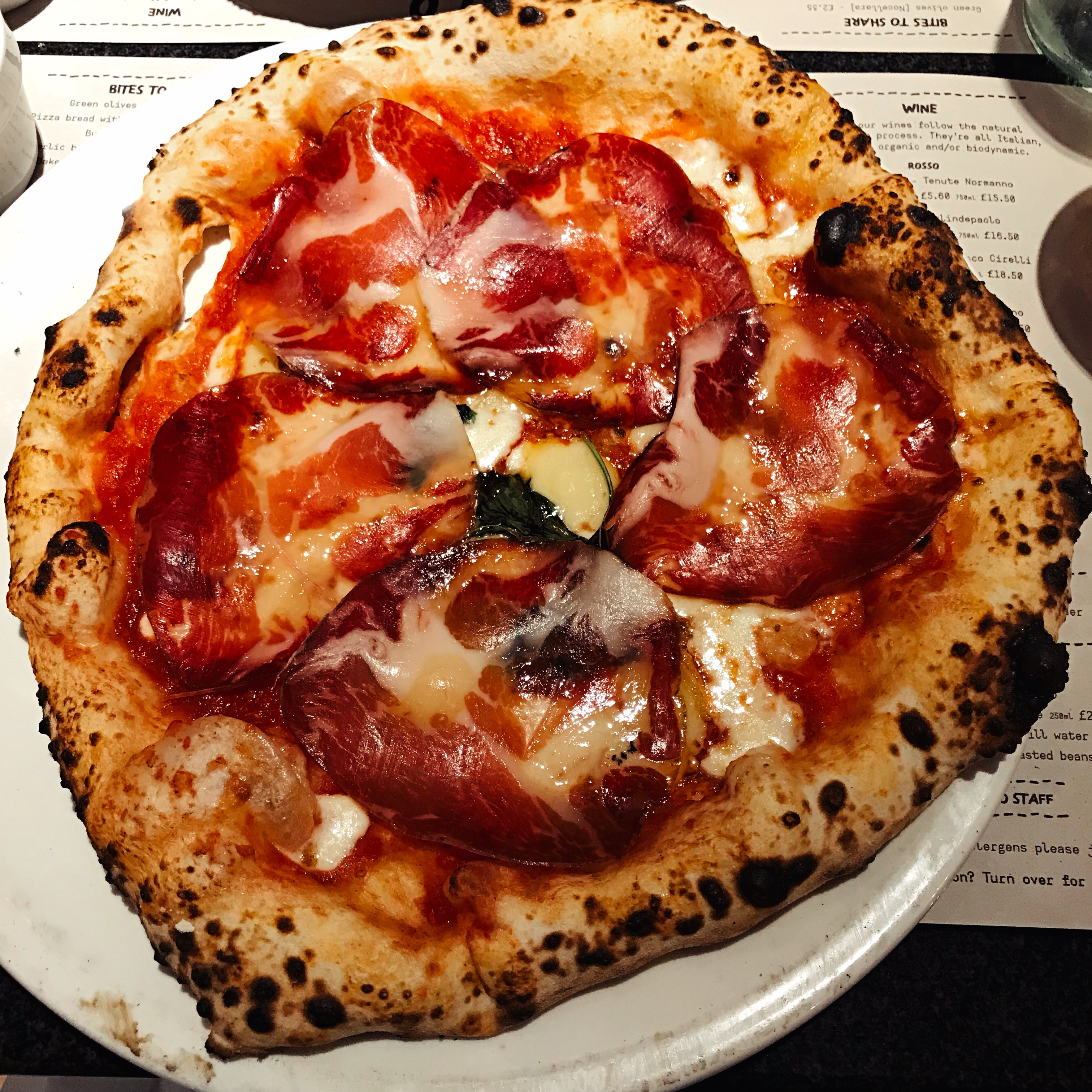
Contrary to popular belief, I do review chains (provided they offer something a little different). I was in two minds about Franco Manca when I went there on duty, having enjoyed a couple of their London branches prior to their big expansion over the last couple of years, but repeated visits have established it as a real favourite. The pizzas are always good quality, the service is usually brisk but friendly and it’s an excellent, versatile venue – suitable for a quick pre-pub dinner with friends, a solo meal on the way home or a drawn out lunch when you want a little more than a sandwich. It’s often worth loading up a standard margherita with whatever toppings are on the blackboard that day, and if you do stay for dessert both the coffee and ice cream are better than you might expect.
Honorary mentions in this category go to Cote Brasserie, which has been doing its thing for so long that you could be forgiven for forgetting how good it is, and Kokoro, which is also a perfect place to stop for a big lunch or a quick dinner, solo or with a friend.
MAIN COURSE OF THE YEAR: Charsi karahi chicken, Kobeda Palace
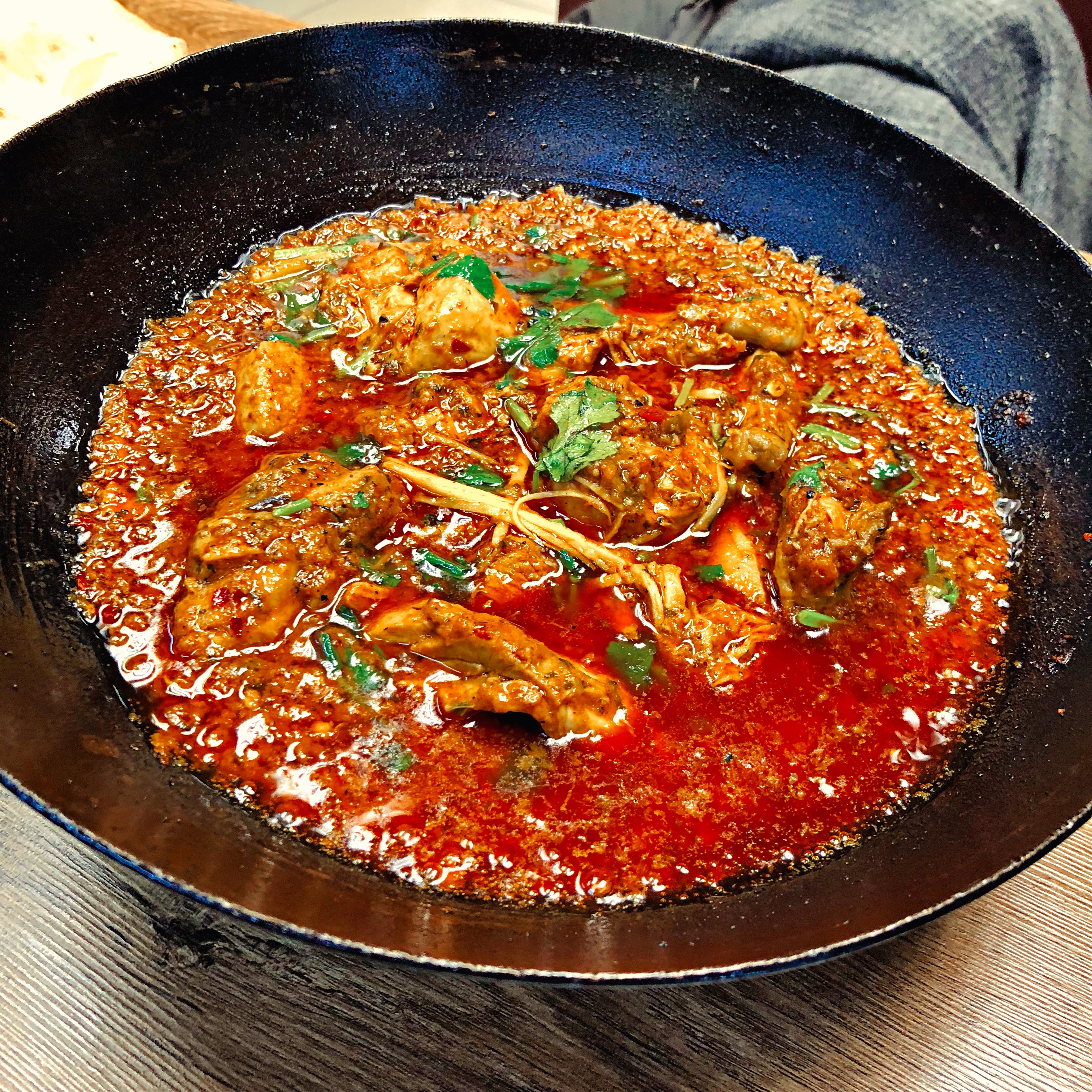
I have waxed lyrical about this dish so often that I may have run out of things to say by now, but Kobeda Palace’s karahi chicken remains a beautiful dish and a hugely surprising one; nothing about Kobeda Palace necessarily gives away that you can get such a gastronomic treat there, but there it is. Chicken, on the bone but neatly jointed, comes in the most glorious spiced sauce, with plenty of coriander and fresh ginger. The trick, if you can manage it, is to strip it all off the bone before you start and scoop it up with the giant, freshly baked naan bread. It really is gorgeous, and I’ve introduced numerous people to it this year.
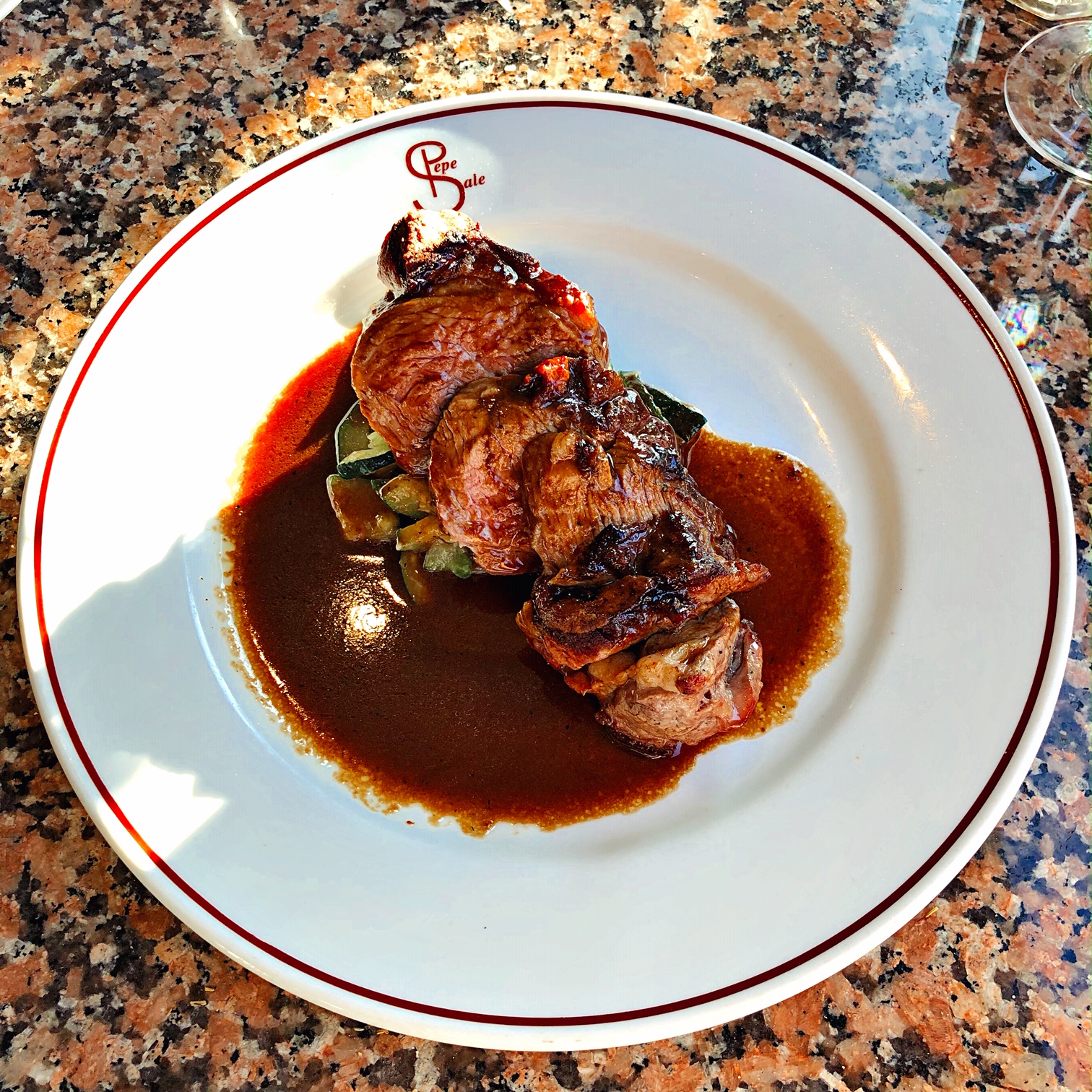
There were so many contenders for this award that even narrowing down runners-up is almost impossible: you might be surprised, for instance, to discover that Café Yolk’s incredible Breakfast Burger was a fixture on my long list. But it would be wrong not to mention Pepe Sale’s suckling pig, a dish which is never going to be in or out of fashion but remains unbeatably delicious all the same, and the instant classic that is Clay’s Hyderabadi Kitchen’s bhuna venison (I even remember a Twitter outcry this year when, for a couple of days, Clay’s ran out of venison).
NEWCOMER OF THE YEAR: Clay’s Hyderabadi Kitchen
I can’t imagine many of you being surprised by this: I’ve had regular conversations with people where they basically say something to the effect of “Clay’s is a little too good for Reading”. I think it reflects well on both Clay’s and Reading that the owners don’t seem to think so, and nor should we. To go from a standing start to being firmly ensconced as Reading’s (or at least Twitter Reading’s) favourite restaurant is quite an achievement, and barely a week goes by without somebody on social media publicly declaring how delighted they are to be back there for their umpteenth visit. I can’t say I blame them.
Bing Crosby once said that Frank Sinatra was the kind of singer that only comes round once in a lifetime, before adding “why does it have to be my lifetime?”. On a similar note, both Oishi and Tuscany can feel unfortunate not to win this award this year: Oishi was a lovely, low-key, apologetic delight, serving very good sashimi and teriyaki, and Tuscany is a superb, if idiosyncratic, pizza joint which may or may not do loads of other things, if you can ever track them down on a menu – or indeed track down a menu.
OUT OF TOWN RESTAURANT OF THE YEAR: Arbequina
Oxford’s Arbequina is, simply put, one of the best restaurants I’ve been to anywhere, in ages. A little spot down the Cowley Road, basic tables and chairs, a small menu, a small kitchen and superb staff who can execute all of it perfectly. Once, after a fantastic meal there, the waiter told me that they deliberately make the menu so simple that people can be trained to cook all the dishes in a week. Nothing is complex or fiddly but all of it is truly outstanding, from toast with ‘nduja, honey and thyme to pork belly smothered in verdant, herby mojo verde. Special mention has to go to the tortilla, which will slightly ruin all other tortillas and omelettes in your mind for the rest of your days: only order one if you can cope with that.
None of the out of town venues I visited on duty, sadly, came close to being in contention for this award but honourable mentions definitely go to the Black Rat in Winchester, a Michelin starred pub which could teach many of Berkshire’s and Oxfordshire’s poseur gastropubs a thing or two about keeping it simple, and Chelsea’s Medlar which is as good an excuse as you could hope for to take a Friday off and slope over to London.
DESSERT OF THE YEAR: Double ka meetha, Clay’s Hyderabadi Kitchen
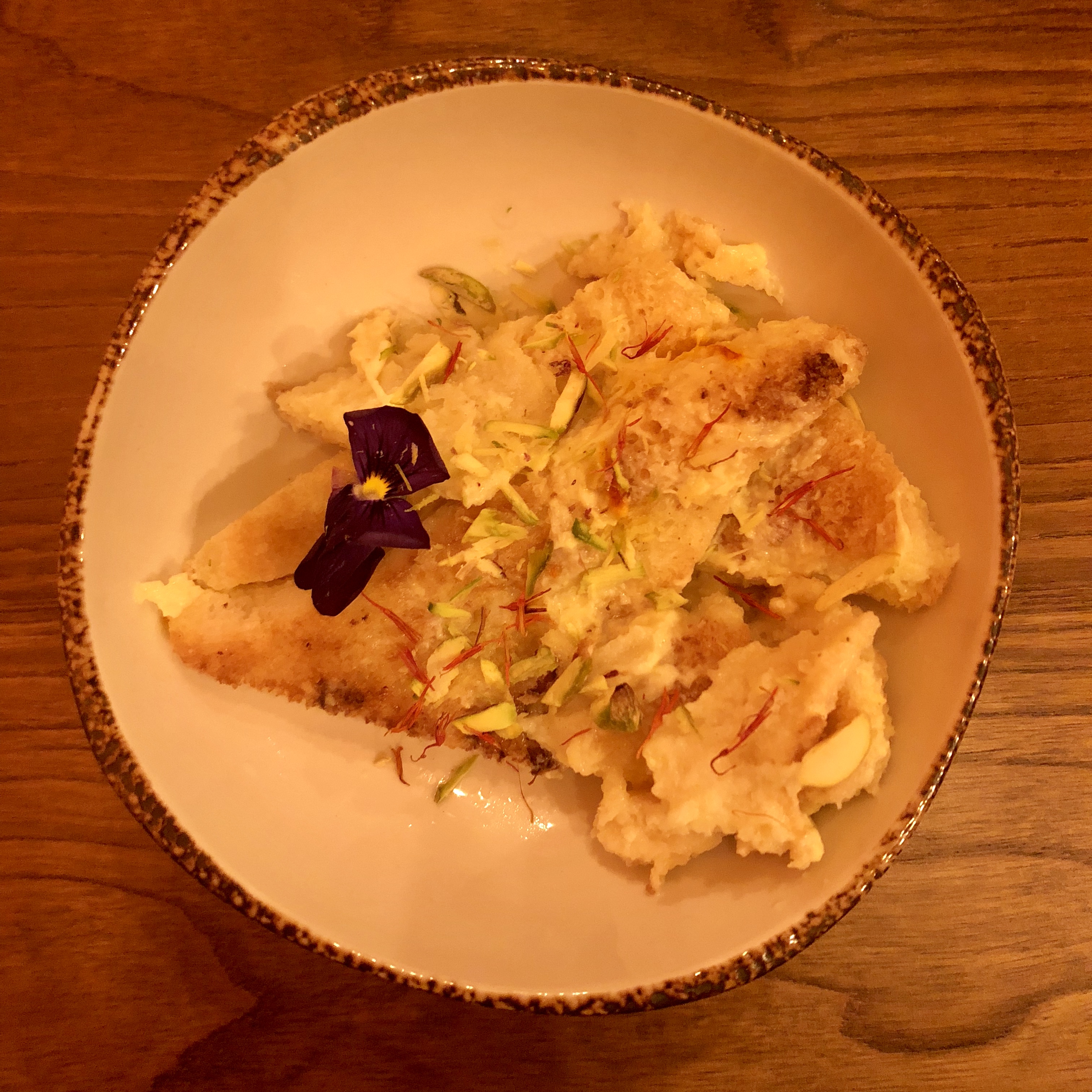
I often struggle to find a dessert I much like in restaurants and usually, when I do, it involves chocolate. Hats off, then, to Clay’s which has a chocolate-free dessert so fine it’s worth saving room for (itself a challenge, on a visit to Clay’s). It’s bread and butter pudding, but not as we know it – chilled, clean and fresh, sweet without being cloying, a delicate, clever thing packed with pistachio and full of surprises. A lot of the attention focused on Clay’s other dessert, a very striking and unusual rice pudding made with onion, but for me this is straight out the best dessert you can get anywhere in town.
Runners-up in this category are Pepe Sale’s seadas, pastry full of cheese and sweet with citrus (don’t knock it til you’ve tried it) and Honest Burgers’ salted caramel milkshake, because a milkshake is a perfectly respectable dessert option and, as far as I’m concerned, the sooner restaurants get on board with this the better.
LUNCH VENUE OF THE YEAR: Bhel Puri House
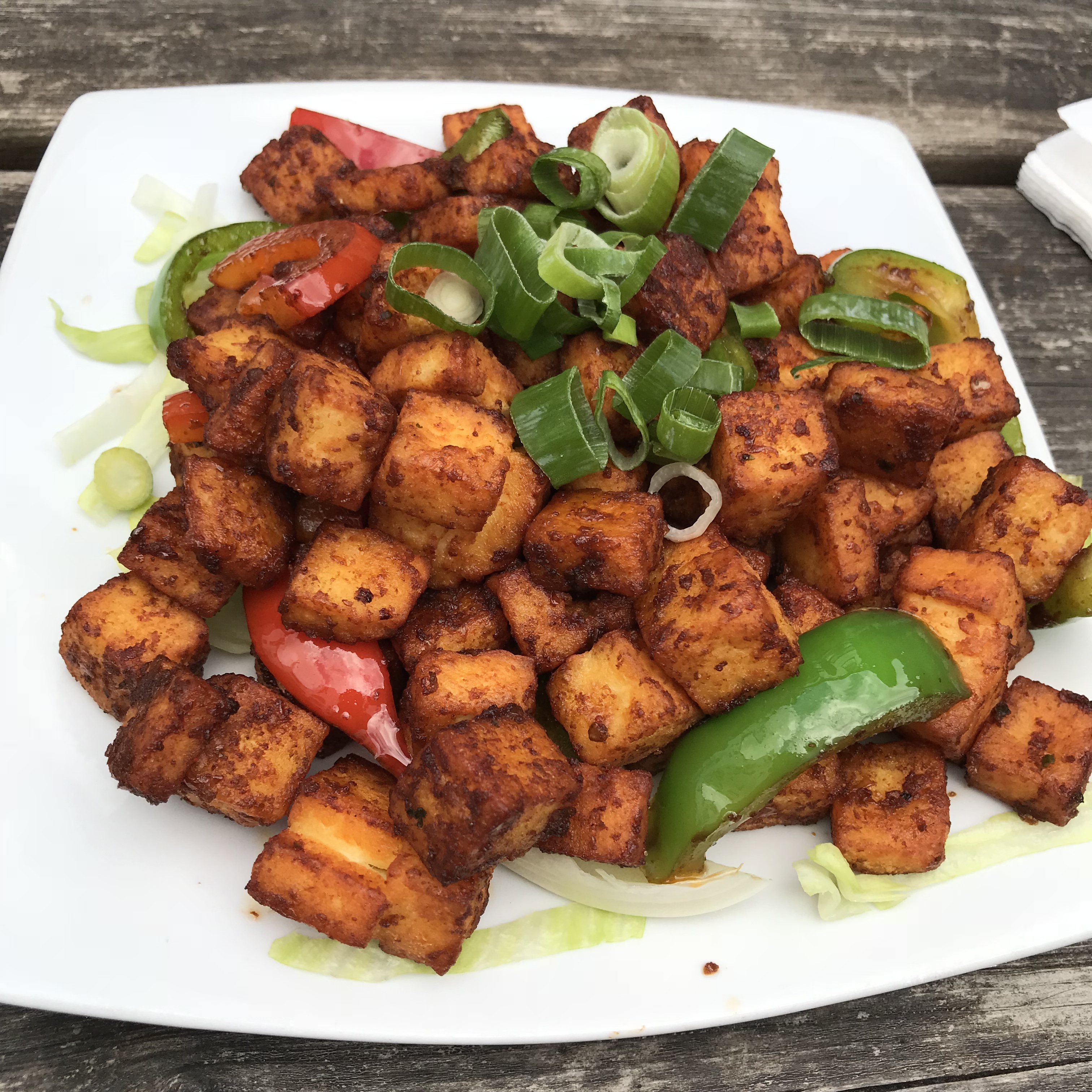
Some of my nicest lunches this year have been spent sitting outside in the courtyard shared by Workhouse and the George Hotel, enjoying a mango lassi and some of the many excellent dishes cooked up by Bhel Puri House. Everyone talks about the chilli paneer, which is every bit as good as it was when I first reviewed it almost exactly five years ago, but the supporting cast is almost as good, whether you’re having vada pav (a sort of potato cake sandwich which feels like Indian street food which has found it’s way here via Hartlepool), crispy bhajia – perfect thin slices of fried potato with a sweet carrot chutney – or classics like Punjabi samosas. They haven’t changed a thing since they started, as far as I can see, and I’m glad they haven’t messed with a winning formula. It just feels like 2018 was maybe the year that Reading (including me) started to catch up.
I might be a bit jaded with the endless parade of relatively traditional sandwiches available in Reading, good though many of them are, and so my other podium places for this award go to Bakery House (for its small plates and the endless wonder and ludicrous good value of its lamb shawarma in pitta) and Blue Collar, where every Wednesday you can make the acquaintance of Leymoun’s quite extraordinary challoumi wrap.
SERVICE OF THE YEAR: Pepe Sale
It’s not been the best year for the service profession in Reading. Ihor has left the Artist Formerly Known as Kyrenia, Kamal has departed from Namaste Kitchen, and Kostas, Alexandra and the rest of the crew at Dolce Vita must be plying their trade elsewhere. Not only that, but Marco left Pepe Sale to head off into retirement, splitting his time between Kent and Italy. But actually, on many subsequent visits to Pepe Sale I finally got a proper view of what Marco’s presence obscured – that all of the staff there work like Trojans, are incredibly friendly, superbly efficient and do an impeccable job of making a very busy restaurant run like clockwork. So without question, Pepe Sale is a worthy winner of this year’s award for making it all look so effortless. I will miss Marco, glasses round his neck, Larry Grayson-style, telling me all the new places I ought to try for dinner, though.
All is not lost, though, and there are plenty of other places in Reading where the service is still exemplary. The Lyndhurst does a superb job of looking after diners, with a perfect balance between attentive and relaxed, friendly and formal, and definitely merits a mention here, as does the quite marvellous Fidget & Bob.
RESTAURANT OF THE YEAR: Clay’s Hyderabadi Kitchen
Clay’s reminds me very much of the quote by Robert Graves that “the remarkable thing about Shakespeare is that he really is very good, in spite of all the people who say he is very good”. It’s much the same with Clay’s – everyone raves about it, me included, and you could quite reasonably think that it can’t be quite as magnificent as everybody claims.
And yet, when you go, it is. A restaurant which feels more like it’s been transferred in from London, with food reminiscent of high end Indian restaurants like Gymkhana, and yet which simultaneously feels completely in the right place in its spot at the bottom of London Street. The food is like nothing else you can get not only in Reading but probably anywhere in England, the execution is brilliant and the menu has already undergone a few changes despite Clay’s only having been open for six months. It’s already difficult to imagine Reading without it.
Not everything is perfect – service has been erratic since day one, and still needs work. They could badly do with a website, and I’m still not entirely sure whether Clay’s is a high-end restaurant charging middle-end prices or a really good neighbourhood restaurant. But ultimately, this stuff doesn’t matter: what truly matters is that Reading has a restaurant quite unlike any other, where the food is frequently quite astonishing, which gets Twitter and seems genuinely proud to be part of the town and part of its restaurant community. I can’t think of a better winner of this year’s award, even if I can look forward to a chorus of comments giving me the final ER Award of 2018, for Stating The Obvious.
A newer guide to Ghent (and Bruges) can be found here.
Ghent and I, in truth, didn’t get off to the best of starts. On my first full day there, it rained: not light, manageable drizzle but nasty, hard rain, the sort that pelts and punishes you, angled to ghost in under any brolly, however well you positioned it (not that any brolly lasted long before being turned inside out by the wind). And it was cold: properly cold, four degrees cold. I had packed for the temperatures my phone had predicted, and it turned out that my phone had made a mistake. By mid afternoon I’d decided that I’d also made a mistake coming to this godforsaken place, a point I made repeatedly to my other half as we shivered back in our apartment. I always went on holiday somewhere warm this time of year, I told her – Granada last year, Malaga the year before – so what on earth was I thinking? She did her best to humour me, but mainly I think she was trying to decide whether to wring out her trainers.
Fortunately for all concerned, the rain wore itself out. That evening was clear and crisp, the following morning was bright and sunny and dry and I got to spend the rest of my holiday realising just how wrong I’d been about Ghent (and apologising for my undignified strop the day before). I’d never been to Belgium before, so I had no idea what to expect beyond my dim memories of In Bruges, so I was anticipating chocolate-boxy medieval architecture, cosy snug bars selling eye-wateringly strong beer, chocolate and waffles and frites and church towers.
Ghent had all of those things, but what I really liked was that it also had a proper buzz about it, a real meeting point between the old and the new. So yes, there was all that history and grandeur but also there was verve and vitality, interesting food, design, loads of street art, the whole shebang. I quite fell in love with the city during my time there, and not long after I came home I took full advantage of Eurostar’s festive sale and bought tickets to return nice and early in 2019.
I don’t normally write pieces about my travels, because it’s nice to visit somewhere new and eat uncritically (or as uncritically as I can, anyway) for a change. But I’ve had a few requests over the years and as it happens I quite regretted not writing my gastronomic guide to Granada last year, or Bologna and Porto this year. So, for the first time ever on the blog, this is my pick of the places to eat and drink in Ghent. I hope it makes you slightly want to go to Ghent, or at least want to go on a city break, or at the very least I hope it makes you slightly peckish.
I should also acknowledge in advance that I too benefited from recommendations – from regular reader Steve, who has been to Ghent many times and gave me plenty of tips of where to go for dinner, and from Katie who happened to be visiting Ghent with work not long before I did and road-tested some of Steve’s recommendations. Some of the credit for this piece is rightfully theirs – although of course if it’s rubbish the blame is mine alone.
Where to eat
I only ever really have breakfast on holiday, and even then that usually consists of a full English if I’m away in this country and the closest thing I can find to pain au chocolat if I’m abroad (even the miniature ones they do in hotel breakfast buffets: I’m really not fussy). One of my happiest discoveries of Ghent was Himschoot, the impossibly pretty bakery a stone’s throw from the river. They sell a huge assortment of tempting delights, and I spent several mornings joining the queue and listening to the patter of the man running a cart just outside selling cuberdons, a conical sweet which happens to be a Belgian speciality.
The pain au chocolat at Himschoot, which were so good that they were all I ever bought there, came not only with beautiful dark chocolate inside but with rich chocolate icing on top, like a cronut before cronuts were ever A Thing. Standing outside, greedily scoffing one right out of the bag while planning where to go exploring next was a real daily highlight.
On the one occasion I did actually fancy brunch we wandered slightly further away from the centre, out in the direction of the university (although Ghent is compact enough that nowhere is exactly a schlep – and flat, which makes a pleasant change after many holidays in places like Porto and Granada which could be euphemistically described as a tad steep). We ended up in Pain Perdu, one of those effortlessly cool cafes mainland Europe seems to specialise in, all big windows and tasteful long communal tables where you can sit, chat, gesticulate and pretend you belong. I rather enjoyed the bacon and eggs – served in a bowl, which I found quite novel – although the big draw might well have been the basket of terrific bread. If only Reading had a place like this, I said, as usual.
My best lunch of the trip was, well, dinner at lunchtime. We went to Du Progres, a beautiful old-school brasserie on Korenmarkt, pretty much the tourist epicentre of Ghent and fortunately not named after Britain’s most irritating restaurant critic. Given the location, it ought to have been a way to part fools and their money (and in, say, London it probably would have been) but actually it was a cracking, rather grand place where I had chateaubriand so good I could have wept – all for something ridiculous like fifty Euros for two.
It was a a huge piece of superb beef, cooked as little as they could get away with and carved at the table into thick, luscious slices. The frites were everything I could have dreamed they would be, the mayonnaise game-changing. You got a choice of two different sauces, which basically meant that we had two lots of Bearnaise. There’s no other sauce for me really where steak is concerned: there is something about the combination of frites, Bearnaise and blood which always makes me feel like I could be in heaven. My other half had a big, complex, outrageously strong dark beer and I had a glass of red wine and we ate and grinned and relaxed: in a perfect world, every lunch might be like that. Even the salad was so beautifully dressed that I ate some of it, for crying out loud.
Dinners in Ghent were more of an eclectic bunch, but there still wasn’t a duff meal among them. On our first night we went to Otomat, probably the least typically Belgian venue of the trip. It was very much a hipster-pizza-by-numbers place, all exposed brick and faux school chairs (Franco-Belge Manca, you could say), but even so the food was quite lovely. The pizza dough is made with Belgian beer, a nice touch which I couldn’t remotely taste, and the toppings were interesting, if eccentric.
The menu is divided into “Otomat” – an anagram of tomato, something I didn’t notice straight away – and “Notomat”, or white pizzas. My favourite was a pizza with merguez sausage (called “Rock The Kasbah”, but let’s not hold it against them) which completely exceeded my expectations. When it arrived the big, ruddy cylinders of sausage made me worry that I’d accidentally ordered spam, but it turned out to be perfect: coarse, pungent and genuinely delicious.
That said, the real hit at Otomat was the “Butcher’s Dish”, an embarrassment of riches featuring ham, fennel salami, very mature cheese, houmous (which may have had a hint of cumin in it) and, best of all, stracciatella, the gooey, almost liquid cheese you tend to find at the heart of burrata. This dish was the very first thing I ate in Ghent, along with – just as importantly, if not more so – the first Belgian beer of the trip and it was hard to top as a way of knowing that you really were on holiday.
On our second night we went to Bodo, which felt much more like a restaurant for locals than for tourists (and was none the worse for it). It was another intimate, friendly place with beautiful service where you felt like you were in on the same secret as your fellow diners, but it also had a slightly more international bent and more of an emphasis on small plates. Of course, I may just be describing it that way because the two of us shared three starters. One of them, slow-cooked sweet, tender fennel with little blobs of goat’s curd, scattered with toasted seeds, was one of the most extraordinary things I ate on the entire trip.
Many of the other dishes were almost as good: a huge portion of panko-coated chicken with a rich curried sauce underneath, a deconstructed katsu, or a big slab of pink pork belly served with mustard and piccalilli (again, when it turned up I feared it was spam, but from the first mouthful all those worries evaporated). And then, to finish, a glass of white chocolate mascarpone topped with passion fruit couli, a dessert seemingly made of sunshine. I didn’t realise until much later that Michelin had given the place a Bib Gourmand, but based on the dinner I had I wasn’t at all surprised. (N.B. Bodo sadly closed in October 2021, although the owners also run a natural wine bar called The Wan & Only).
I promised myself I would eat proper Belgian food, because it can’t all be small plates and pizza, and the venue I chose for that was De Rechters, a very handsome restaurant looking out on Saint Bavo’s Cathedral. I never saw the Van Eyck altarpiece inside the Cathedral, but I spent a fair amount of time in the square outside either eating dinner or buying chocolate at the splendidly-named Chocolaterie Luc Van Hoorebeke, which probably tells you all you need to know about my priorities. I expected from the menu that De Rechters would be stuffy and old-school but actually the inside was more contemporary than classic, with slate-grey walls and bentwood chairs (the service was exemplary, too: friendly and properly welcoming).
But the food! I’d already been tipped off to try the appetiser of Comte cheese with local Tierenteyn mustard, and although I’ve never been a huge fan of mustard I can safely say that this completely converted me; a couple of days later I was in the very picturesque Tierenteyn shop picking up a jar to take home (the shop is easily found: it’s right next to Himschoot). Next time, I plan to get a considerably bigger jar of mustard. Or three.
The real lure, though, was the chance to try stoverij, the iconic Belgian stew of beef slow-cooked in dark beer. When it arrived it was yet another heavenly gastronomic experience in a long line of heavenly gastronomic experiences. The table bore all the burn marks of every little cast-iron casserole they’d ever set down in front of a hungry, grateful diner but even so there was something magical about my first time, as if the restaurant had never cooked it for anybody else before.
The sauce was rich and deep, simultaneously savoury and sweet but with the tiniest kick of mustard. The beef was yielding, every bit as perfect as the chateaubriand had been but completely different in terms of texture and give. And, of course, there was a bottomless supply of frites to either dip in more mayo or soak in that sauce. It might have been the hefty kick of the Westmalle Dubbel I was drinking, but this felt like a bucket list dish and a half.
Picking somewhere for my final meal in Ghent was especially tricky – how do you top all of that? – but fortunately, help was at hand. Steve, my man in the know, had told me about a place called Eetkaffee De Lieve in Patershol, the medieval heart of Ghent. He went there every time he was in the city, he said, and checking out the place’s Instagram feed I could see why – bread baked every day, a constantly changing menu and really beautiful (and beautifully photographed) dishes. I went with high expectations, and it surpassed every single one.
All the food I had was simply magnificent: first, a wonderful disc of earthy, sweet black pudding, soft inside and caramelised outside, accompanied by a sweet apple compote. I’ve always loved black pudding, but this was up there with the best I’ve ever had anywhere. Then there was confit chicken with shallots, wild mushrooms and the kind of sticky jus which perfects any plate. And finally, I had a tarte tatin with wondrous, glossy ice cream, dark speckles of vanilla in every spoonful. The service, as in so many restaurants in Ghent, was welcoming, proud and infectiously joyful and – as in so many restaurants in Ghent – I felt like I had found my happy place. I sat on the banquette, looking out on another dark, clean, contemporary dining room full of hip urban types, and I raised a glass to Steve and his excellent advice.
I returned to Ghent in January 2019, and had a stupendous meal at a restaurant which really needs to be added to this piece. It was Michelin-starred Oak, and my food there ranked up with the best meals I’ve had anywhere. The welcome was perfect, service was silky-smooth, the room was comfortable and cosy without any sterility or stuffiness and the tasting menu was a series of wonders. From the beautiful amuse bouches to begin with (including a stunning charred leek dish) to barbecued pigeon with a deep beetroot cracker and red fruits, right through to a terrific granita strewn with punchy microherbs, it didn’t put a foot wrong. Truth be told, it made all the Michelin-starred meals I’ve had in the UK feel like a poor imitation.
Where to drink
I love a Belgian beer, although my tastes run more to lighter stuff like a kriek or a framboise. So I may not be the best guide for these things: no doubt there are all kinds of dreary beer spods who can steer you much better in Ghent than I could. They would probably direct you to places like Trollkelder and Rock Circus which pride themselves on doing a gazillion different obscure beers in a big laminated pamphlet, and they’d probably try to catch them all like Pokemon, but that really wasn’t for me. I did go to De Dulle Griet, a big old pub with rather eccentric decor which apparently has the biggest selection in all of Ghent, and I thought it was okay but I didn’t find myself drawn to going back. Maybe if they’d done more food than just pate and plastic-wrapped crispbreads I might have found it easier to get on board.
I did absolutely love Het Waterhuis aan de Bierkant, right next to the river, with its cosy upstairs room and its decor which slightly made me think “90s student party”: it wasn’t a million miles from the old Bar Iguana, to be honest. I very much enjoyed the extensive list of beers (bottled and on draft) and, of course lots of different fruit beers for me to try with almost no shame at all – although they always set them down in front of my other half instead of me, which is both sweet and very misguided. I was sorry only to go there the once during my trip, and almost as disappointed not to visit ‘t Dreupelkot, the jenever bar next door. There’s always next time.
Another regret was waiting until my final night to discover ‘T Einde Der Beschaving (which apparently translates as “The End Of Civilisation”: at last, a Brexit-themed pub!) on a square next to Gravensteen castle. It was a slightly dreich evening – a shame, because the courtyard outside would have been a lovely place to drink in more clement circumstances – but it was a lovely, snug place and the barman was friendly and welcoming and seemed genuinely delighted to have customers. A very nice older lady at the bar sauntered over, asked us many questions about the motherland and, at the end of the evening, offered us her email address for tips if or when (when, as it turns out) we came back to Ghent. It was that kind of place, and it might not have been the fanciest pub in the world but I liked it a great deal.
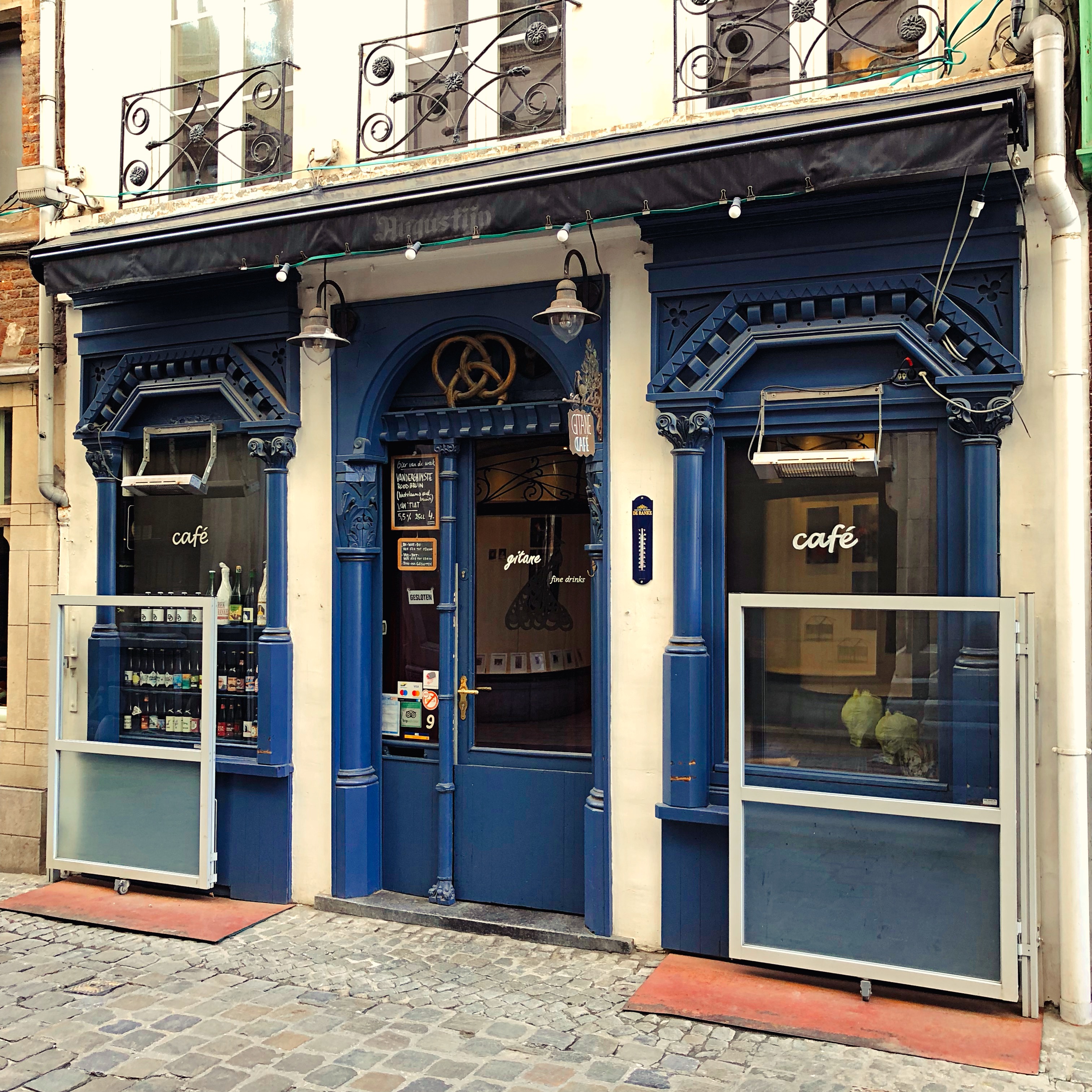
The main reason so few of those places got the time they might have deserved, though, was Café Gitane. Oh, how I adored that place: in the space of my time in Ghent it easily made it onto my list of my favourite bars in all the world, rubbing shoulders with exalted company like Paris’ Le Barav, Liverpool’s Petit Café Du Coin and Granada’s Taberna La Tana. It was as French as it was Belgian, actually, with cosy, dimly lit tables, blood-red banquettes and a black and white tiled floor. The beer list was big enough to satisfy my other half and had the sweet and drinkable Ter Dolen Kriek on it for me. The music was jazz just modern enough to still be enjoyable and some of the clientele, especially the lady at the bar one night who decided to start singing completely out of nowhere, were brilliantly bonkers. It was a charcuterie plate away from perfection, but every time I went there I was already so well-fed that none of that mattered a jot.
“I wish there was a bar like this in Reading”, said my other half. “A good beer list, table service, good music and no wankers.”
I nodded sagely, deciding that our home town could really do with an excellent Belgian beer café, or more specifically just Gitane. It might well be one of my first stops when I return.
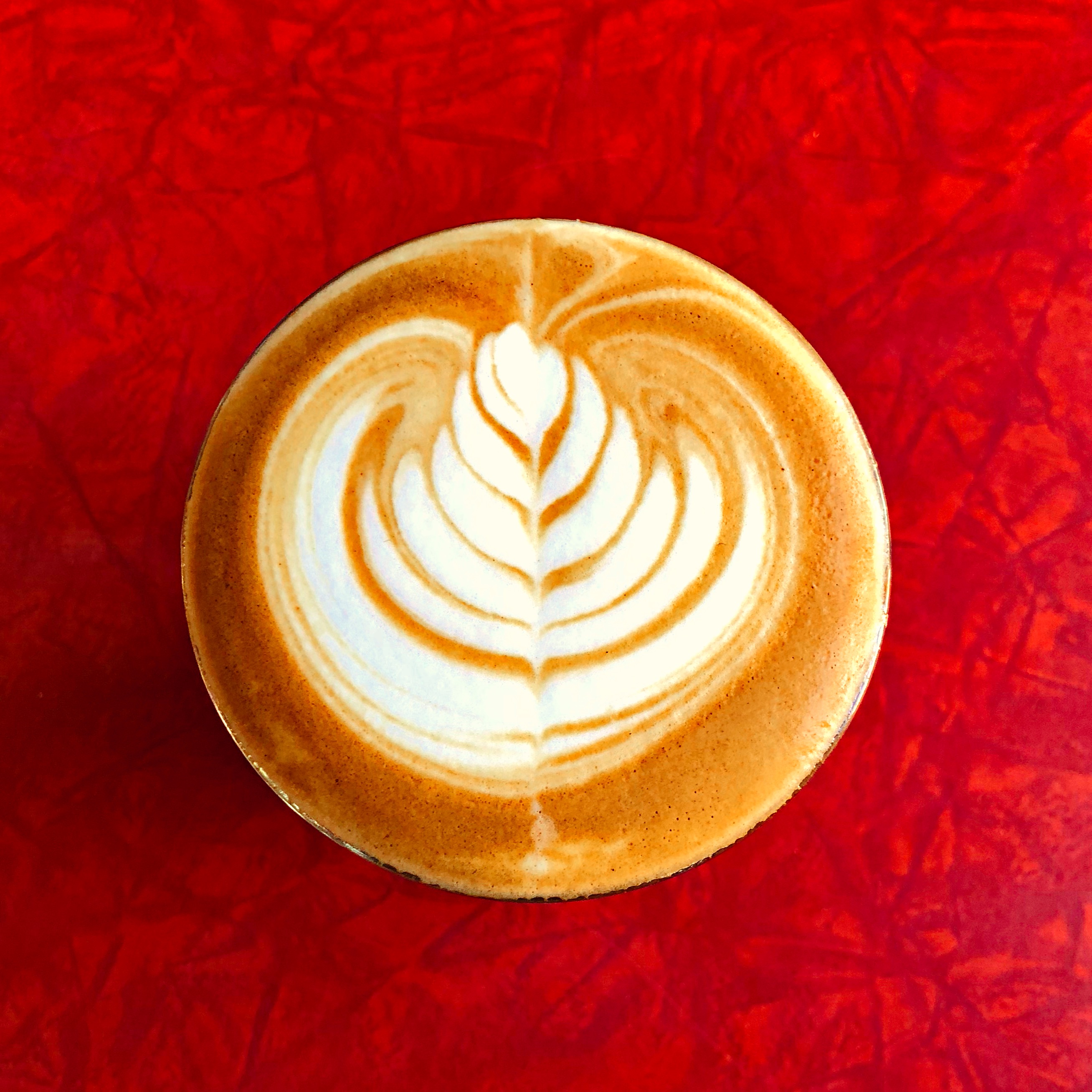
No section on drinks would be complete without also briefly mentioning coffee. I tried a few places in the city but my absolute standout favourite, a stone’s throw from Gitane, was Barista Zuivelbrug, one of two branches in Ghent. I’m normally a latte drinker, but the combination of Barista’s excellent coffee and Belgian chocolate made their mocha an absolute revelation and I enjoyed it so much I didn’t even care how much it would appal the purists. They also did nice-looking pastries and lunches, but of course I was usually a pain au chocolat to the good by then.
What to do
Well, if you’ve made it this far then you’ve probably figured out that my main idea of things to do on holiday fits into the previous two headings. But I will say that Ghent is a wonderful place just to wander and take in, especially if you enjoy architecture, photography, combining the two or just plain people-watching. I did visit the Design Museum – the blurb says that it “makes you aware of the great impact design has on your daily life”, but it mainly made me aware that, as an experience, the Design Museum in London is much better, err, designed (nice building, though). I didn’t go in the cathedral, but like I said I did buy some very appealing chocolate from the shop next door. I know, I know, I’m an appalling tourist. Next time I shall go to the Museum of Contemporary Art (the wonderfully-named S.M.A.K.) and generally try a little harder.
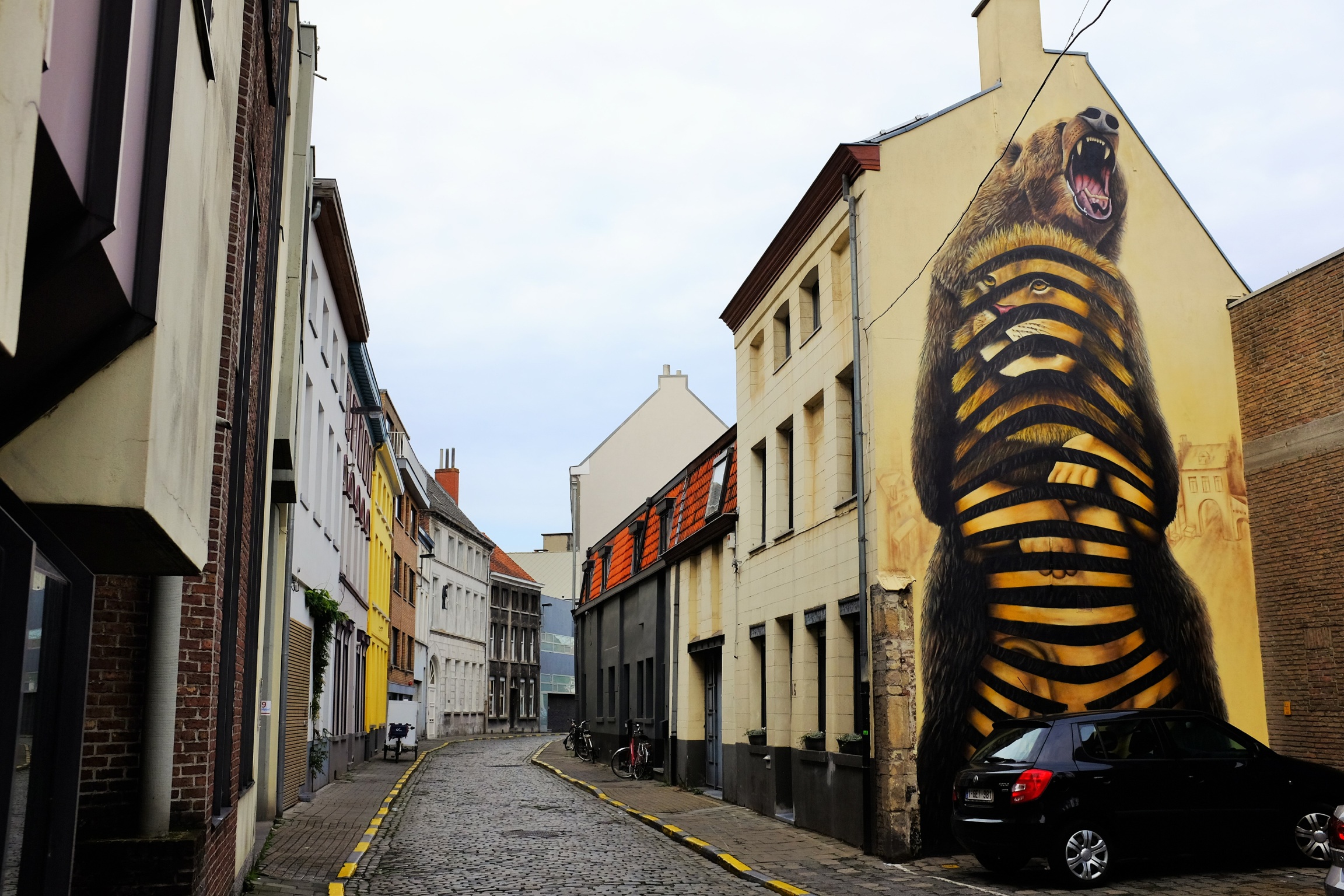
The thing I really, really enjoyed in Ghent, though, was the street art. There’s loads of it, seemingly everywhere. On one of our first days exploring the city we crossed the river and wandered up some side streets, turned a corner and just found this staring right back at us.
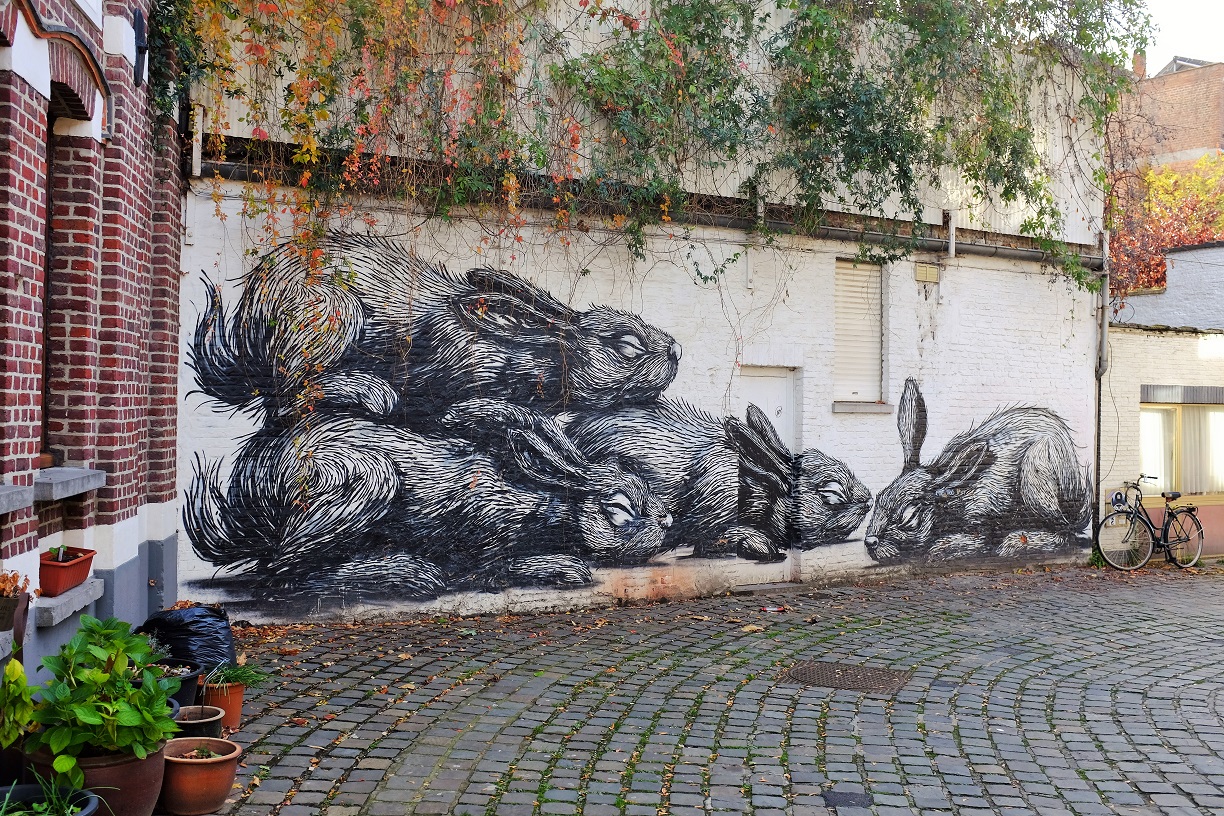
Further research revealed that Ghent is in fact famous for its street art, all over the city, and indeed some of its artists. So we downloaded the street art map from the Visit Ghent website and went on a truly enjoyable odyssey round the city, hopping from location to location. Some were small, subtle pieces, and some were jaw-dropping: the whole side of a building transformed into a massive, vivid canvas. The trip took us out into the docklands, another part of Ghent I’d like to see more of, and incredible industrial buildings, glass bricks and converted warehouses, hip-looking cafes on street corners. Every single dot on that map offered something new, many offered something stunning, and I could quite happy have whiled away another afternoon seeking out the whole lot. The picture below of rabbits by Ghent native ROA was probably my favourite find, and if I thought it looked familiar it was probably because I’ve also seen his work in London.
Where to stay
I really lucked out by booking Snooz Ap, an apartment very close to the centre and just round the corner from Graffiti Alley, another street art hotspot in Ghent. It was muted, tasteful, spacious and warm with a huge comfy bed like a cloud and a walk-in wet room to die for. It even had brilliant catering facilities, which I imagine would have come in very handy for a fundamentally very different kind of guest to me, and fridges and cupboards for room snacks (please tell me I’m not the only person who gets room snacks on holiday). I got my room through booking.com, although you can also book direct through their website.
Well, there you go, that’s Ghent in a nutshell. Normal service will be resumed next week with a review of a Reading restaurant, and I’ll try my best not to bore on about how everything is better on the continent (I still remember coming back from my holiday in Bologna earlier in the year and realising, to my horror, that I’d become one of Those People). But in summary I loved the place, far more than I ever expected to, and I can’t wait to go back. I left with a heavy heart and took a train to Rotterdam, a very different city with its amazing, hypermodern architecture, Brutalist buildings, colossal indoor street markets, cutting-edge craft breweries and stunning small plates restaurants. But that’s another story.
Bierhaus closed in December 2025. I’ve left the review up for posterity.
I felt at a disadvantage going to Bierhaus, the German restaurant on Queens Walk, with Ian, my stepfather. I don’t know a huge amount about beer – as anyone who’s ever read my reviews already knows – whereas he knows his way round a pilsner and a pale ale and used to work for one of the world’s biggest brewers, travelling all over the world and sampling all sorts. More significantly, he had been to Germany and I hadn’t. My knowledge of German stops at being able to ask my way to the town hall, proudly proclaim that I own a guinea pig or explain that my pen is broken (kaput, such a beautiful word). Oh, and I know how to tell people that my favourite pop group is Johnny Hates Jazz – although it never actually was, not even back then.
I’ve had friends tell me how wonderful Germany is, how clean and beautiful, how everyone is handsome and polite and speaks beautiful English. It sounds like somewhere one could quite happily live, let alone visit, and yet Munich, Berlin and Cologne have never quite made it to the top of the city break shortlist (Berlin, in particular, crops up regularly with people I know, usually in the sentence Oh my god, you absolutely must go to Berlin: I don’t much like being told what to do, so I never have).
I’m not sure why I’ve never made it out there. It could be repressed horror from those three years studying “Deutsche Heute” which mainly consisted of my schoolfriends making Franzi the Pig do awful, awful things through the medium of graffiti. But really I think it’s the food, which has never hugely appealed. I’ve never fallen over myself to try it, even to the point where I’ve always steered clear of the bratwurst place that crops up on the Oracle riverside every bloody year. Mystery meat? Nein danke. And the same goes for pork knuckle: who willingly eats a knuckle?
Subscribe to continue reading
Become a paid subscriber to get access to the rest of this post and other exclusive content.
Are you sitting comfortably? Do you have a drink: a cuppa, a beer or a gin (whatever your preference is, depending on when you’re reading this) to hand? Well rested and alert? Good, because we have lots to get through this week. Eighteen dishes, four courses, plenty of photos – so much in fact that I’m not sure whether I’m writing a review or organising a school trip (quiet at the back, you two). I’ll try to rein in my tendency to be prolix, and you’ll have to focus. Right, let’s do this.
It’s my fault we’re in this position. I went out to celebrate the fifth birthday of the blog – no, we don’t have time for me to wang on about that either – and I chose somewhere which looked special on paper. The Bottle & Glass Inn, in the pretty village of Binfield Heath, out towards Henley, had been on my wish list for a while. It reopened last year with great credentials, taken over by the former managers of London’s Michelin-starred pub the Harwood Arms. By October it had received a Michelin Plate, usually a sign that the tire-sellers consider a place marked for Great Things. How often do I review somewhere that’s been mentioned in Country Life, very much Edible Reading’s spiritual twin?
The other reason we have much to discuss is that on this occasion I went out on duty in a four. So it was my mother, my stepfather, my close friend Zoë and I (a team of all the talents if ever there was one) who pulled up outside the Bottle & Glass on a Friday night, ready to celebrate and – hopefully – to be wowed.
It’s a gorgeous pub. It’s thatched and beamed (it’s a listed building, unsurprisingly) and the bar looks like the comfiest, cosiest place to nurse a drink. Like many such places, they’ve built a tasteful extension where they actually feed people. I’ve sat in such extensions many times (The Wellington Arms, The Hind’s Head, The Crooked Billet and so on) and however nice they are you always feel a little like you’re missing out. Even so, the dining room in the Bottle & Glass was rather fetching: big capable tables, tastefully painted walls, a rather fetching green tweed banquette. Not perfect, though – the lack of softness and the bifold doors along one side made the room more deafening than buzzy, and the fact that there was another room beyond made this one feel a little like a fine dining corridor.
I liked the look of the menu, but it wasn’t without its complications to navigate. I know my mother well, and she didn’t take to it from the off; she doesn’t like pickles and, in one shape or another, they featured in every starter but one. The other complication was working out who would order what. My stepfather gallantly, insisted that we should all order separate courses (“for the blog”, he said). But that, combined with multiple requests of “can I order last?” turned the whole thing into one of those logic puzzles where X won’t sit on the right of Y, can’t sit opposite his ex-wife Z and is wearing red so can’t sit on the left of A (pretty soon logic puzzles will just involve trying to plan a dinner party for 12 people with a total of 6 different food allergies/intolerances/preferences, or whatever you call them nowadays).
Anyway, we eventually got there. And goodness knows we had plenty of time, because apart from bringing our wine – a very nice, robust Cahors which was just the wrong side of thirty pounds a bottle – we waited a long time, almost half an hour, before anybody came to take our order. It was especially frustrating as the menu had things in the “snacks” section that we fancied, and it would have been lovely to at least have those, and some bread, while solving our logic puzzle.
More disillusionment came when someone finally arrived at our table. They’d just sold their last of the grouse, he told us (maybe if they’d taken our order a bit sooner…). Worse still, they had run out of double cooked chips. Would we like some boiled new potatoes instead?
“That’s not really a very attractive offer, is it?” said my mum. The young waiter smiled blankly at her.
“How does anybody run out of chips?” I said after he had gone, incredulous. “I can understand you only have so many grouse, but chips?”
“Well, we are eating late” said my stepfather dryly (we’d turned up at half seven). “I don’t understand how you can have three side dishes on a menu and run out of one of them this early on a Friday night.”
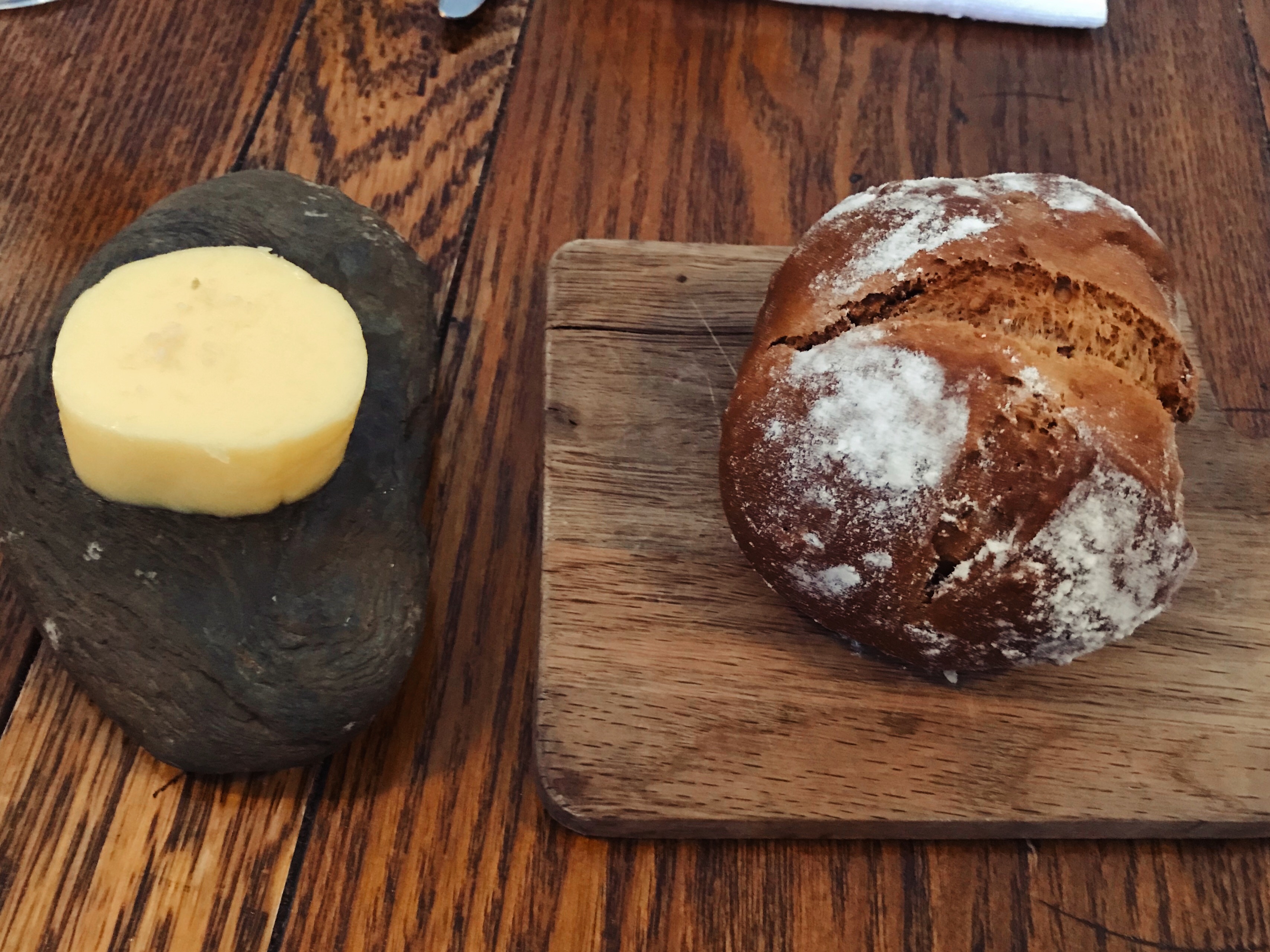
The bread was the first to turn up: soda bread, still warm, two little loaves between four. It looked decent, but breaking it open none of us was hugely impressed – the taste was disconcertingly reminiscent of pretzels and, like pretzels, these were on the dry and chewy side, lacking in seasoning. “The butter’s too warm” said my mother, and she was right, although we’d been given so little it seemed a moot point. “The bread at the Black Rat is much better” she added, referencing Winchester’s Michelin-starred pub – a reasonable point of comparison – and that reminded me of their amazing squid ink and parmesan rolls. This wasn’t a patch on that, and none of us raced through it.
Our snacks arrived not long after. The scotch egg was a beast of a thing, and easily divisible between four. It looked the part, and the texture was note-perfect but seemingly at the expense of the taste: like the bread it was under-seasoned.
The other snack was beetroot houmous, which was topped with more beetroot and served with sourdough which was verging on cremated. I liked the houmous, and it came with a healthy whack of garlic, but personally I’d have liked more of it and could have done without the extra beetroot. It worried me that the kitchen seemed worse at cooking toast than me (“the taste of carbon might have complimented the garlic” said my stepfather later, “but that feels more like happenstance than grand design”).
What with the burnt toast, the bland Scotch egg, the AWOL chips and the lack of grouse we all felt faintly mutinous by the time our starters arrived, so it was a relief to find that they were an improvement. Zoë’s was the pick of the bunch – a big, delicate-tasting piece of salmon, poached so that it broke into large, handsome flakes. The bubbled, crisped salmon skin on top was delicious and light, and the pickled cucumber was sweet rather than sharp. It was also unquestionably the most generous of the starters: I had a mouthful and was more than slightly envious.
My stepfather’s starter was my second choice on paper – bresaola with smoked bone marrow and summer truffle sounds like all the good things. My forkful suggested that the bresaola, hidden underneath everything else, was the star of the show but the whole thing was too bland when on paper it should have been so much more (it reminded me, in fact, of the unedifying two months I spent on Tinder last year).
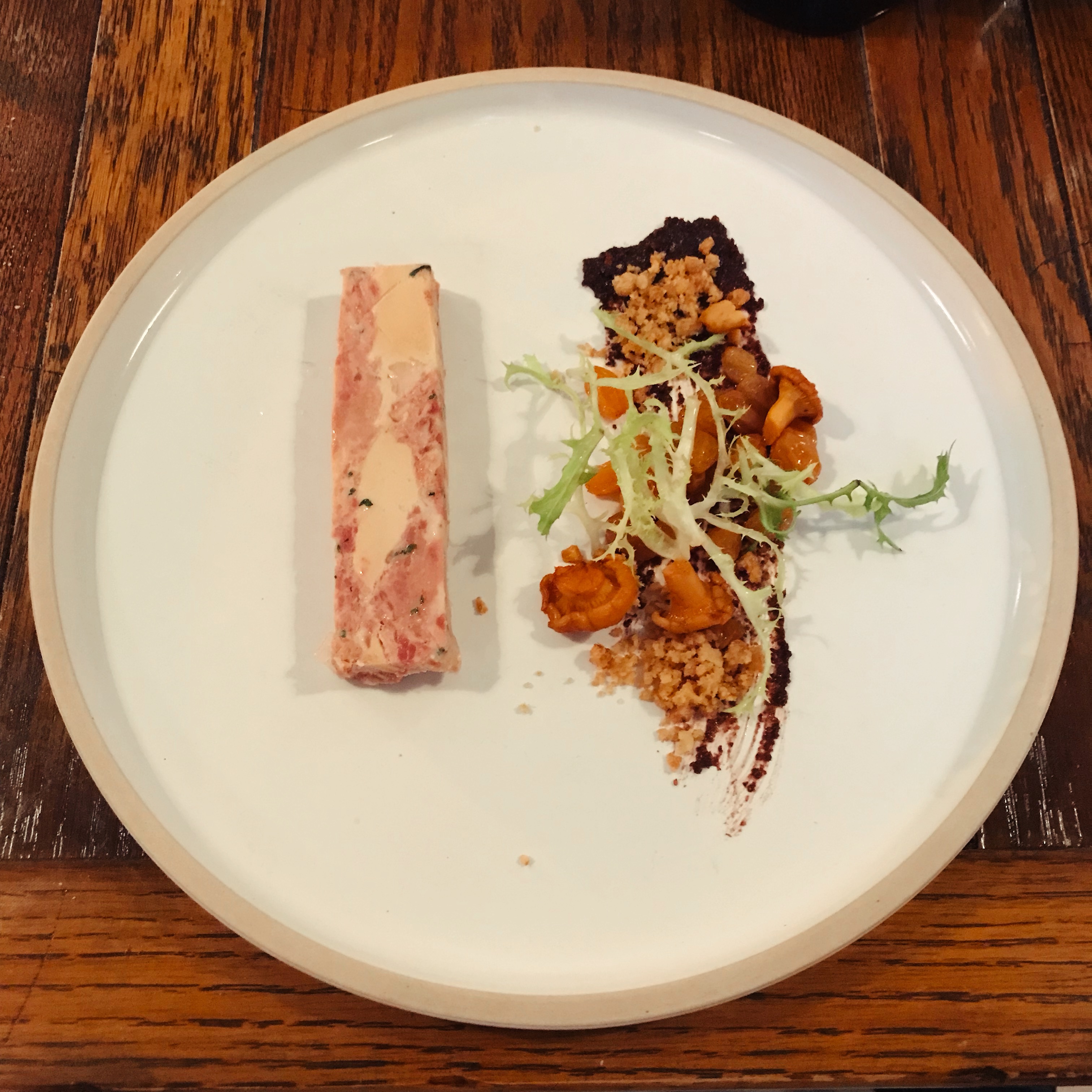
I had chosen the terrine, a slim slice of ham hock and foie gras which, neatly, was both clean and indulgent. Everything else on the plate went so well with it – golden, plump, sweet sultanas, pickled girolles and some kind of crumb or dust which tasted of the very best pork scratchings with the texture of the beautiful, salty powder left at the bottom of a packet. There was also some “violet mustard” which tasted, as far as I could tell, of mustard. So many tastes and textures here – sweet, sharp, salty and, of course, foie bloody gras – and so much to mix and match that, for once, I didn’t even feel like I would have liked some bread with it. Well, mostly. Like the bresaola, it had a little bit of frisée on top, as if to say See? It can’t all be delicious, you know.
My mother chose the only pickle-free starter, which contained plenty of unadvertised capers: I’ll let you imagine how happy she felt about that. Billed as a salad of tomatoes with curd, black olive caramel and tomato tea it was a pretty, artfully stacked bunch of tomatoes along with an odd pastry disc which had been added for seemingly no reason. If you like tomatoes this might well have been the dish for you, but my mother was left baffled by it and so, to be honest, was I. It’s the kind of dish I wouldn’t have ordered in a million years, and tasting some didn’t change my mind (interestingly the Bottle & Glass’ Twitter feed has since shown pictures of this dish reworked, so maybe they too weren’t convinced by it).
By this point, I increasingly thought it unlikely that all four of us would leave completely satisfied. My mother might have taken against the place, but I agreed that her main course was a little disappointing. Denied the grouse, she instead had the chicken. Now, I often think chicken can be a surprisingly good choice in a high end restaurant (especially if they can get the skin right), but the Bottle & Glass served up a gigantic chicken breast, no crispy skin, the usual sticky jus and some charred sweetcorn. There was also black garlic, which I really liked but which my mother found too sweet (sweetness in savoury food, and why it’s beyond the pale, is one of the culinary hills my mother is prepared to die on). Honourable mention has to go to the Maris Piper terrine, a gorgeous stack of wonderfully cooked potato, like a miniature pommes boulangère. Why couldn’t they have rustled some of that up for us, if they’d run out of chips? My mother left a fair bit of the chicken: my stepfather polished it off.
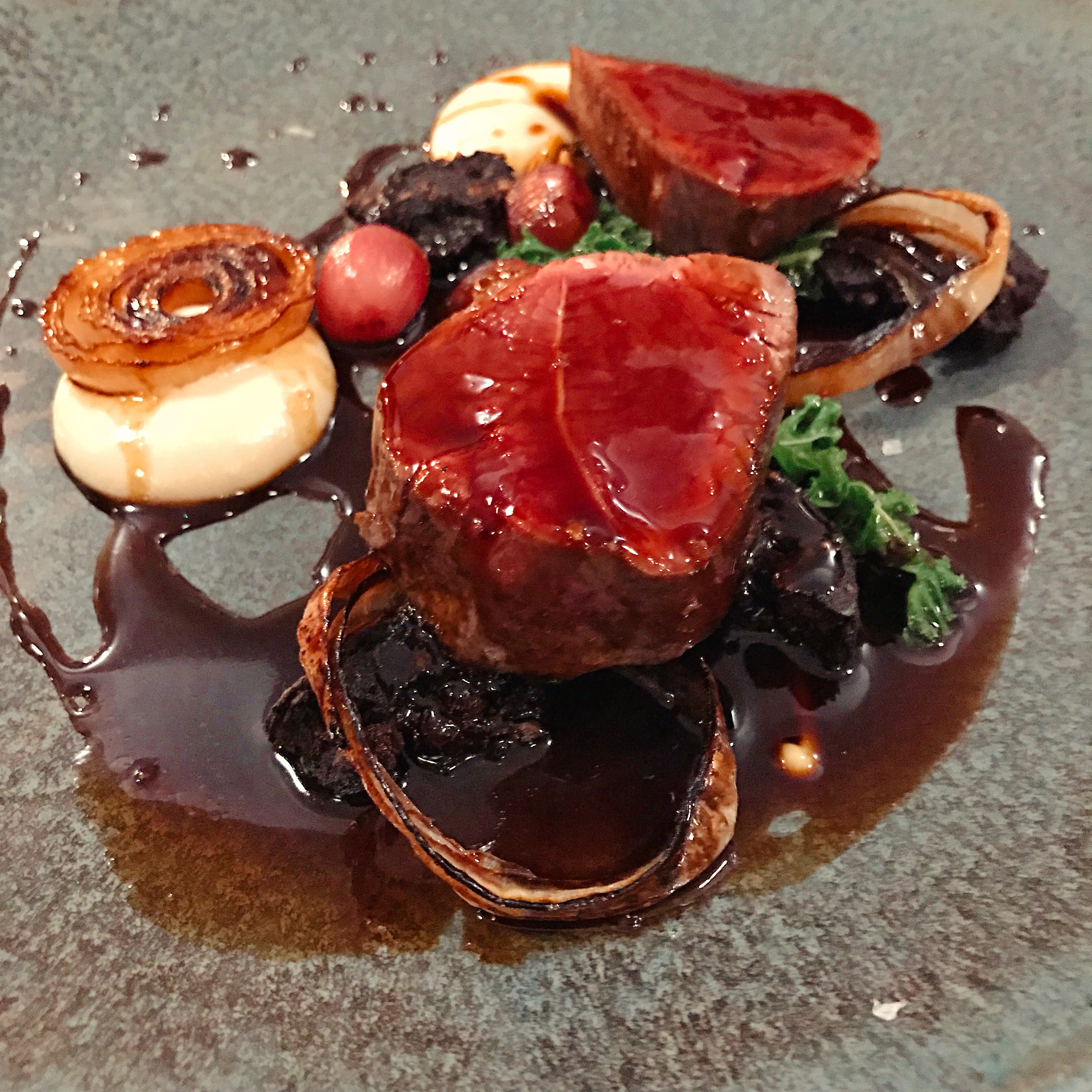
My dish was not just venison, but smoked venison – two pieces, seared on the outside but decidedly pink inside (“I think that looks a bit underdone” said my mother, but venison like Turkish delight has always worked for me). I’ve never had it smoked before and it was a revelation: on that basis the Bottle & Glass’ menu could do with a lot more smoking and a little less pickling. It came with the regulation Michelin-chasing sticky reduction, a purée which might have been celeriac, plenty of roasted shallots and rings of onion, sweet and caramelised and – this may have been why I ordered the dish – almost-crunchy nuggets of black pudding. This was more like it, although it did feel like a dish for the depths of winter plonked in the middle of the summer.
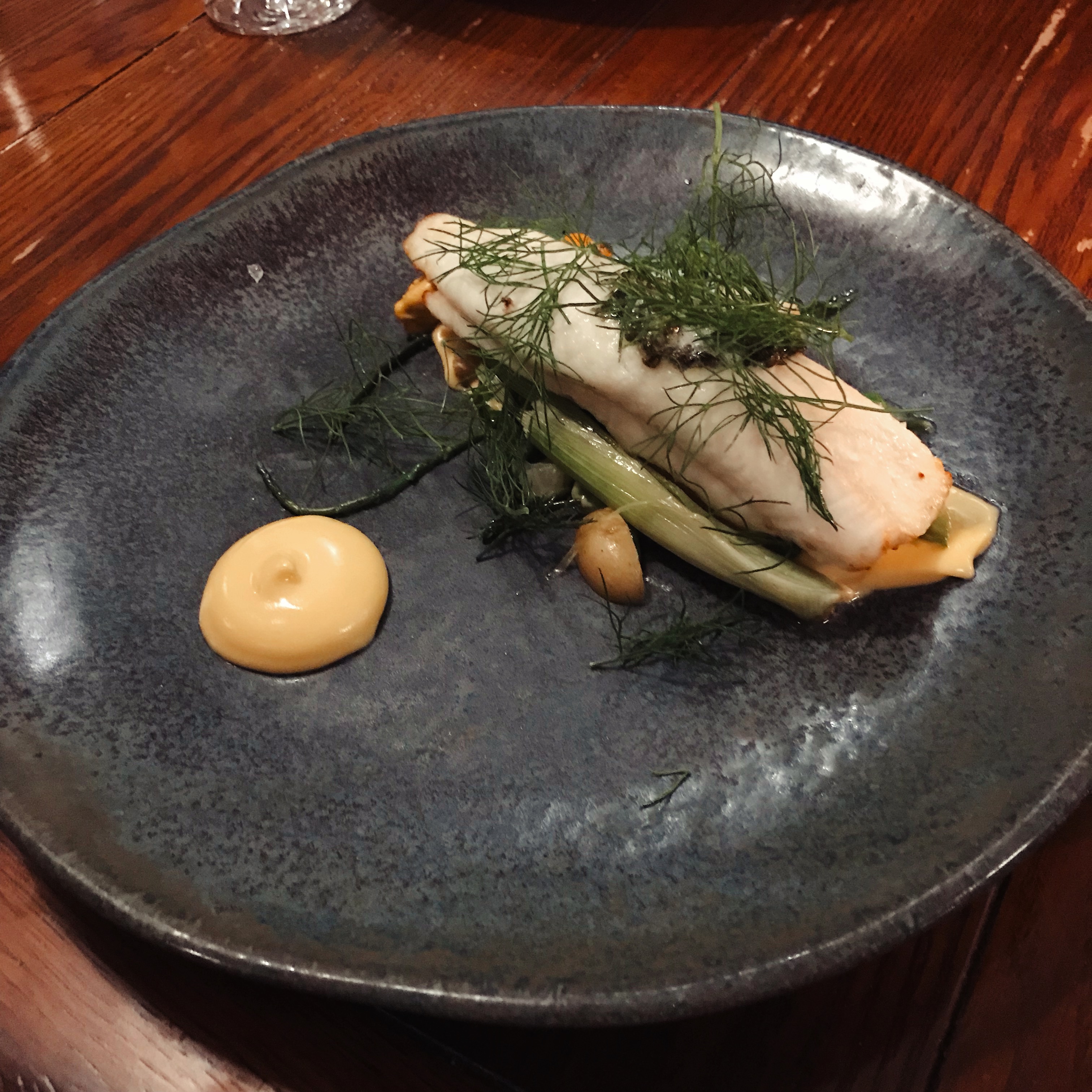
My stepfather is wont to order fish on a menu, when it looks interesting, and he chose the plaice with samphire, mussels and fennel. As you can see from the picture it was a delicate thing and, although he liked it, it was a too delicate for me. I tried some, and you couldn’t deny that the plaice was brilliantly cooked and the fennel lovely and sweet, but I did find myself thinking: where are the carbs? And where’s the rest? There was a little blob of white – possibly the advertised sorrel butter, possibly not – but I would have liked a good beurre blanc with this, or even a beurre noisette. “It was a good low carb option”, my stepfather emailed me later when I asked him for his thoughts, “as THERE WERE NO CHIPS”. Quite.
Zoë’s main was the best of the lot. Lamb rump and shoulder (thank heavens they didn’t wankily call it “lamb two ways”) was a very generous helping of pink rump and the highlight, a gorgeous piece of slow-cooked shoulder which simply fell apart. I was allowed to try that, and it was so terrific that I regretted my own menu choice. It made my helping of venison feel a tad stingy, put it that way. It came with artichoke and hasselback potatoes (teeny tiny ones which, again, were never going to redeem the Great Chip Shortage Of 2018), and some manner of green puree – pea, perhaps? – which had been plated up in a manner best described as unnecessarily spaffy.
We ordered some side dishes: neither of them added much but bulk. The new potatoes were nicely cooked and firm and tossed in butter and mint – or, according to the menu, “mint butter” – but the whole thing was oddly sweet. The Binfield Heath courgettes (“are they from an allotment then?” said my mother, slightly scornfully) might have ticked all the provenance boxes but really, the advertised thyme butter was missing in action and however multi-coloured they were, they remained big chunks of watery blandness. The sides were four pounds fifty each, and the main thing they achieved was to make me really want some chips.
By this point we’d run out of Cahors and three of us drank small glasses of Barbera d’Asti – it was pleasant enough, if lacking in the body and complexity of the red wine we’d just finished. That said, it reflects well that the Bottle & Glass offers quite a few wines by the glass and that, generally, you aren’t penalised for having smaller glasses. In preparation for the desserts to follow, we also ordered a couple of dessert wines. The Pedro Ximenez was, as it usually is, a treacly, sugary delight. My Banyuls was less impressive, again feeling slightly thin and lacking in the complex almost-sweetness you get with the best examples. By this stage I really wasn’t sure what I made of the Bottle & Glass: a feeling the desserts, as it turned out, would only compound.
Continuing the trend of the evening, Zoë had chosen the standout, my mother picked the wooden spoon and my stepfather and I were somewhere in the middle. My stepfather’s cheeseboard was a pretty decent offering, I thought – Barkham Blue (it sounds ungrateful to say this, but it feels like Barkham Blue is increasingly ubiquitous on cheeseboards: the victim of its own success, perhaps), a crumbly Lincolnshire Poacher – to my money the equal of any mature cheddar you can lay your hands on – and Bosworth Ash, a very creditable goat’s cheese. I do admire a place confident enough to give you good helpings of a few cheeses – a lot of a little rather, than a little of a lot. Nice crackers and chutney, too.
I had gone, as I so often do, for the chocolate dessert and it wasn’t bad, although not what I was expecting from the description. “Chocolate cream” did form part of it, and it was pleasant enough, and then there was a big slab of something partway between a brownie and a ganache which rather dominated the whole thing. The best bit of it was the mint ice cream, perched on top – the sweetness that hadn’t worked with the potatoes went brilliantly here. Good enough, but not particularly exciting.
Zoë was delighted by her dessert, because you can call it a date and walnut sponge all you like but when it turns up hot with butterscotch sauce and ice cream it’s basically sticky toffee pudding. Having to listen to the raptures, this time, was slightly tempered by knowing that I never really get food envy when dried fruit is concerned.
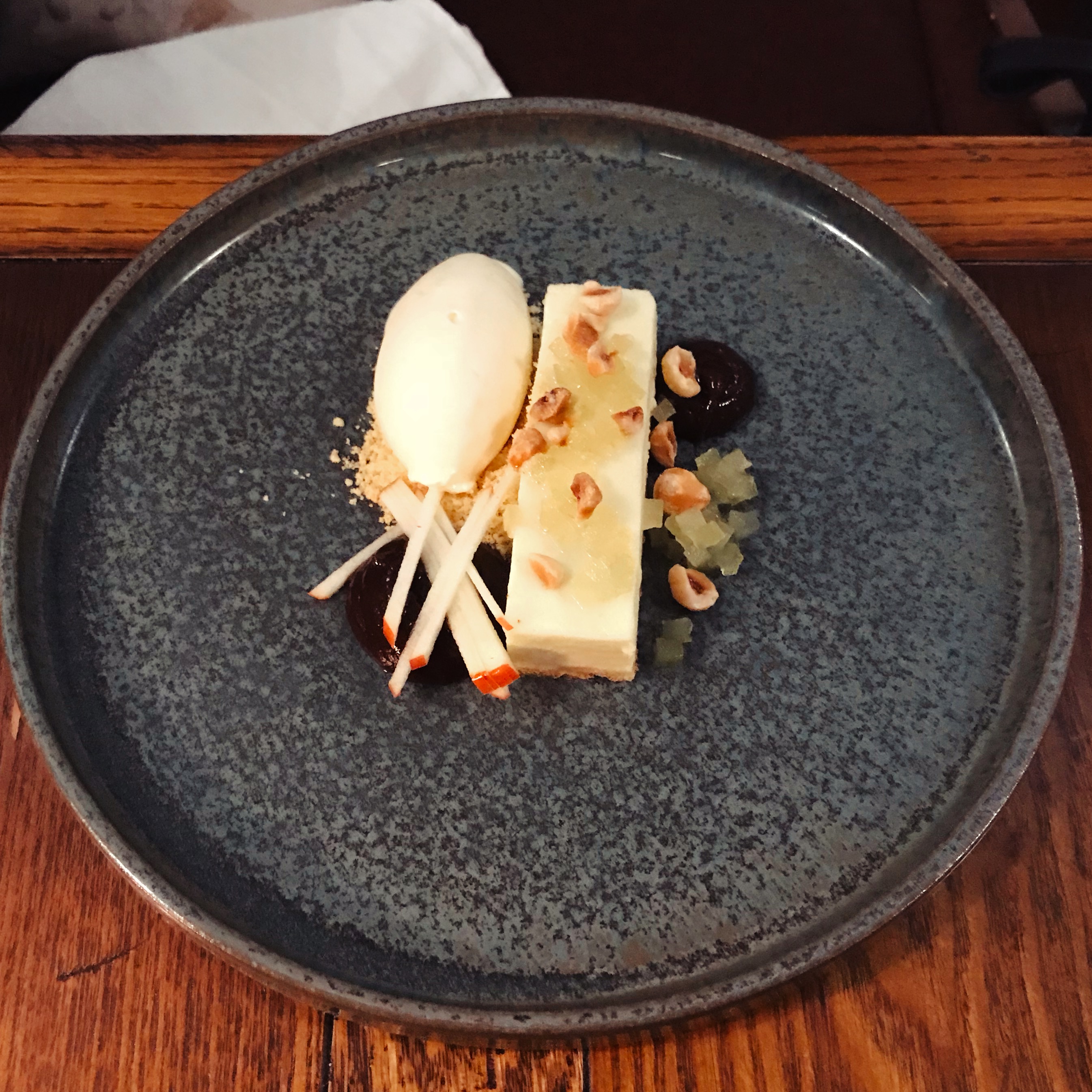
Having said that, my mother – tackling a pleasant, slightly prissy apple parfait with elderflower ice cream – might have felt differently. It looked pretty and clean, but when you’ve sat through two disappointing courses the last thing you want is a chaste goodbye kiss of a pudding. Even the post-dessert treats they brought over: chocolate coated honeycomb and fudge (which I suspect I enjoyed more than the other three) couldn’t undo all the damage.
I couldn’t help feeling that it was a meal of two halves. For the first half, service was lacklustre and some of the food we wanted just wasn’t available. During the second half of the meal service became almost too solicitous, as if they knew they had some ground to make up. My suspicion was just that they were swamped for the first hour or so, and that suspicion was confirmed when we settled up: they’d had a huge number of orders for fish and chips, they said, and something about not having enough potatoes, and being short of chefs, and at that point I’m sorry to say that, nice though the waiter was, I stopped listening. Perhaps I’m being unfair – quite possibly I am – but at the level the Bottle & Glass aspires to it’s partly about expectations, and they did a decent job of limboing under mine. Dinner for four – three courses each, some pre-dinner snacks, a bottle and a half of red wine and three glasses of dessert wine – came to £285, including a pre-added 12.5% service charge. You could definitely eat for less, though, and for the quality many of the dishes felt like really good value: especially that lamb.
With a meal this extensive, multi-faceted and complex I find it takes more time to digest the experience than the food. And the sheer variety of food we tried meant that we all had subtly different experiences: Zoë loved her meal, and was saying that she’d quite happily take her mother there for dinner. My own mother, on the other hand, won’t ever return: “I’d sooner go to back to the Crooked Billet” she said, as we pulled out of the car park. I can understand both points of view, and heaven knows the Crooked Billet isn’t the only competitor in these parts. You’re also not far from the superb Bird In Hand in Sonning Common and the very serviceable Reformation at Gallowstree Common, not to mention Orwell’s in Shiplake (N.B. Since writing this I’ve been advised that the Reformation has closed).
This is a well-to-do part of the country, and diners looking for good food in a pretty pub have plenty of choices. I’ve changed my mind several times about the Bottle & Glass even in the course of writing this review. I went away feeling a little underwhelmed, and then as I thought over the food I found myself revising my opinion. Some of it really was up there with any dishes I’ve had this year (although, in fairness, not necessarily the stuff I ordered on this visit). But then I think about the confusion of it: you serve dainty, precise food and yet you burn the toast. You proclaim how local your courgettes are at the same time as you run out of chips (can you tell I haven’t got over that?). And that, sadly, is what has stayed with me about the Bottle & Glass. So I didn’t have the perfect meal to celebrate my birthday, not by any means. But as a way of marking five years of eating, analysing and writing? Somehow it’s hard to think of a more appropriate venue.
The Bottle & Glass Inn – 7.4 Bones Lane, Binfield Heath, RG9 4JT
01491 412615













 Edible Reading