Restaurant review: Côte

Here’s what happened: I was making Friday night dinner plans with my friend Graeme and I said I’d give him some restaurants to choose from, a mixture of places I wanted to review (or re-review) and others I just fancied eating at. My text was all ready to send, and then I stopped for a minute and thought what about Côte? So I added Côte to the list of places I was due to re-review and pinged the message over to Graeme, fully expecting him to pick somewhere else.

Why don’t we do Côte? came the reply. I haven’t been for a while, and it’s such a good chain restaurant.

Appropriately Graeme’s reasons for choosing it were the same as mine for including it in my selection. The last time I went there was something like eighteen months ago, with my family, to celebrate my just having got engaged. But before that? I honestly couldn’t tell you. And yet before the pandemic I used to go an awful lot – it was one of my regular spots.

I do wonder whether the pandemic had something to do with it. Because when Covid struck national Côte did what many restaurants did, diversifying into heat at home options. But Côte did it differently to everybody else, and unlike nearly everybody else they are still doing it years later, when for most restaurants their schemes, entirely born out of necessity, were shelved ages go.

Côte decided to take advantage of the fact that many of its dishes were prepared in a central kitchen and then finished in the restaurant, turning what you could potentially see as a weakness into a Covid-era hidden strength. And it continues today: Côte At Home still offers many of the dishes you can get in their restaurants, portioned for two people, for decidedly less money.

Back when I was reviewing takeaways and meal kits, I reviewed Cote At Home. And the truth was that I didn’t know what to make of it: it was good value, and undeniably polished, and somehow occupied a completely new genre that wasn’t takeaway, wasn’t meal kits, wasn’t eating in restaurants and wasn’t ready meals. What on earth was it, then? I’m still not entirely sure.

But I can’t help feeling that Côte At Home, although it may have saved the chain from going under, slightly changed the way I thought about the restaurant. Because if many of Côte’s dishes were just glorified ready meals you could cook at home, was there still a point to going to the restaurant to eat them there, spending more money in the process? And if that was the case three years ago when the shockwaves from the pandemic started to subside, wasn’t it even more the case now, when eating out is more and more of a luxury?

I didn’t know the answers, and it felt like a return to Côte might provide them. Besides, it was a Friday night at the end of an incredibly long week at work, and I figured I’d earned a good meal, a catch up with a good friend and at least a bottle of wine, and I was hoping for an enjoyable evening irrespective of whether my visit also solved those bigger, thornier questions. After all, nobody can dissect stuff for its deeper meaning 24/7. Not even me.

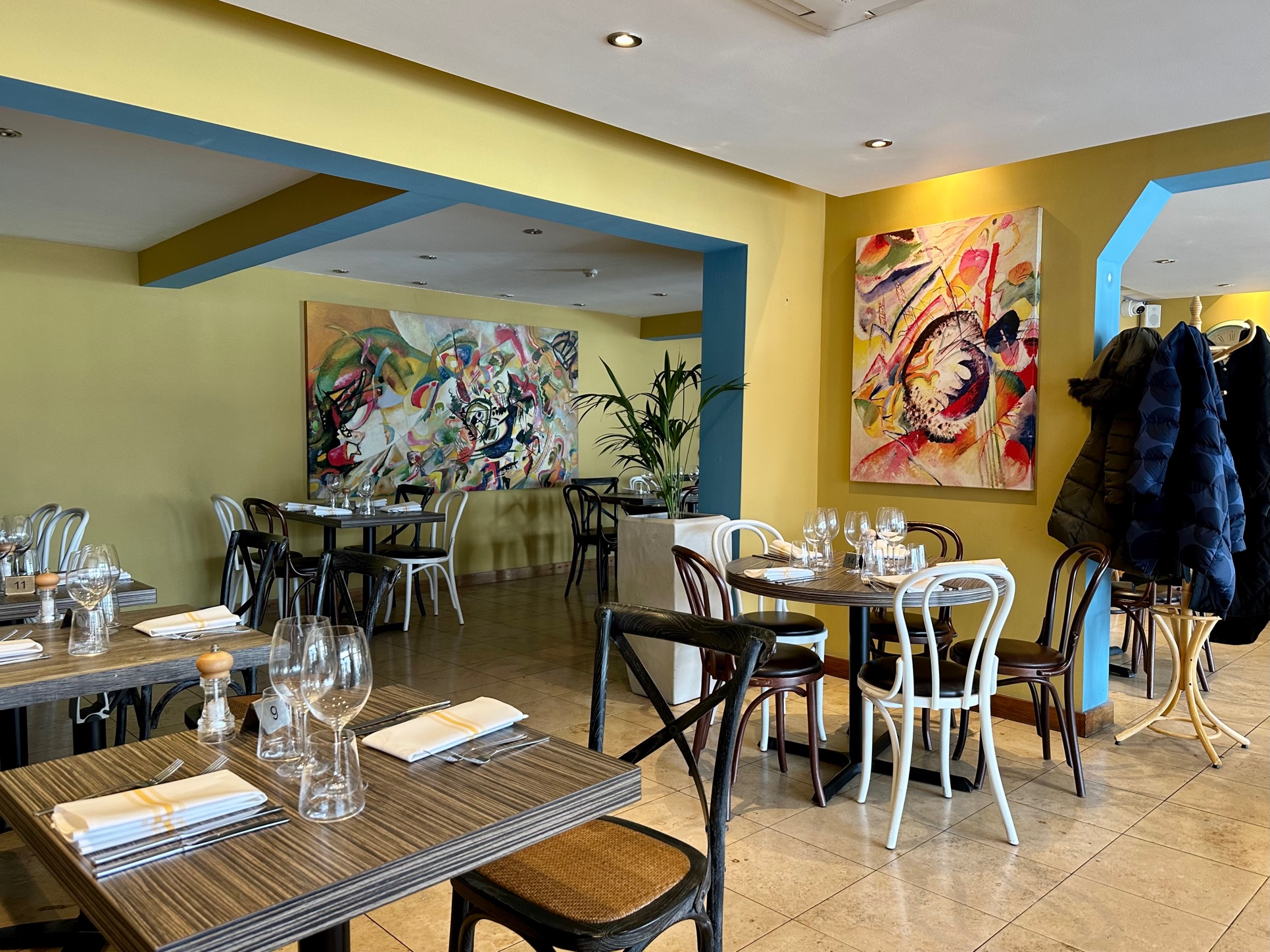
I always forget how nice Côte’s dining room is. You could be forgiven, eating at one of its former neighbours – Brown’s, or TGI Friday – for thinking that these deep, largely windowless rooms are uniformly unlovely spaces. But Côte’s has always been both a luxe and comforting spot. The tables at the front, that catch the daylight when there is some, are great if you’re having brunch or lunch.

But the rest is equally agreeable once the sun’s gone down. It has a certain je ne sais quoi, there’s something about its banquettes, bentwood chairs, booths and clever lighting that makes it feel like a little oasis amid the Oracle Riverside’s brashness and bluster. I don’t think the room has changed in the ten plus years that I’ve been going there. It’s never needed to.

Graeme was already at a table when we got there, but otherwise the restaurant was close to empty.

“It’s worrying, isn’t it?” he said. “When I went past the burger place I thought it was closed, and even Nando’s was dead. Nando’s!”

“I guess January’s a very long month, and it’s the weekend before payday for most people.”

“I’m so glad we picked Côte though. Wine, meat and cheese – all the main food groups.”

We ordered a drink and began catching up while I tried to work out which of the items on the menu were least likely to have been produced in a central kitchen. I was looking forward to a cider – Côte always stocked proper, old-school Breton cidre – so I was disappointed to see that they’d switched to a brand called, of all things, “Sassy”. I had a beer instead.

If I’d looked at their website, which says that ‘SASSY brings a naughty nature to the world of Cider and sets out to premiumise this wonderful drink,’ with ‘one foot in the traditions of Normandy and the other striding towards the future of cider’ it would have made me doubly unlikely to try it. Apparently it’s “inspired by the cider served at Château de Sassy” which is, to my astonishment, a real place. Unlike premiumise, which is absolutely not a real verb.

The menu at Côte hasn’t changed significantly in over a decade, which again I find oddly comforting. Not for them attempts to modernise, introduce fusion flavours, or provide low calorie options. Prices are definitely higher than they used to be, which mainly signifies that it’s 2025: starters are between seven quid and a tenner, the mains approach the twenty pound mark but are careful, for the most part, not to overstep that.

All that said, Côte’s prix fixe is available all evening on weekdays, which I’m not sure was always the case. At eighteen pounds for two courses or twenty-two pounds for three, it’s roughly the price that LSB’s set menu used to be back in the day, another barometer of how eating out has got more costly in recent years. Côte was also offering some Alpine specials, a range of small plates which sorely tempted Graeme – especially the tartiflette, combining the holy trinity of spuds, bacon and cheese.

I was impressed by how resolutely French the wine list was. With the exception, of port, you won’t find a single wine on it from any other country. The one concession to modishness was a solitary orange wine, which seems also to be an Alpine special. Graeme gave to job of choosing to me and I was delighted to see a Alsatian producer on there, Trimbach, that I liked. I’ve always had their whites before, but their pinot noir was a real treat, with plenty of depth. At thirty-seven pounds, it was something like twice the retail value, a relative bargain.

People started trickling in and taking up tables as we had those beautiful first sips and carried on setting the world to rights. Graeme told me that the last time he’d been to Côte was something like a couple of years ago for his daughter’s eighteenth birthday, and I told him that I too had been here last for a family event.

“But that’s the thing about Côte” said Graeme. “I’ve been here for family events and with a big group of friends, or just with Amy, and it’s really, really good for all of them.”

I thought about it and I realised that it was true for me too. I’d been here with big groups and small groups, with a partner or on my own. I’d descended on it with a gang for a pre-beer festival brunch, back when Reading had a beer festival, and I’d taken up a sunlit table outside with the prix fixe, a bottle of cidre and a good book, back in the days when I lived in the centre and had a spouse who was overseas with work. It was hard, really, to think of an occasion which I hadn’t marked at Côte.

“Back in the early days of the blog when I first started doing features I did one about the best place for al fresco dining, and another about the best place for solo dining. And Côte ended up on both of them. Actually, with pretty much any feature I wrote – al fresco, solo, pre-theatre – it was hard not to pick Côte.”

This was the point when I began to worry. Because the review I really didn’t want to write was the one where the overarching narrative was this: Reading’s favourite chain used to be Côte, but then Honest and Pho came to town and everything changed. What we wanted from a chain became different, and Côte got sadder and sadder, a shadow of its former self, all on its own on the Oracle Riverside as each of its neighbours gradually gave up the ghost.

Don’t get me wrong, I still would have written that review if it had turned out to be that kind of meal. But my relief began when the starters arrived, and gradually became replaced with something else – if not euphoria, then definitely delight. I’m sorry if that removes the element of suspense, but I didn’t feel like leaving you hanging. And besides, I know a lot of you scroll down and look at the rating at the bottom first anyway, don’t you?

Graeme was set on the tartiflette from the moment he saw it on the menu, and it didn’t disappoint him. Côte’s menu says that its Alpine specials are small plates, but there was nothing small about this. It was an enormous bowl, filled with a brick of potatoes, cheese, onions and bacon and looking at it I was simultaneously sad I hadn’t ordered it and worried about how far I’d have made it through the meal if I had. 

That said, the forkful I tried was excellent.Everything was how you wanted it to be, from firm, almost waxy potatoes to the liberal quantities of Comte and Tomme de Savoie in the mix. Now, I’m always a bit dubious about people who refer to a single dish, especially a starter, as a “meal in itself”. Partly because I’ve never felt that way about any single dish, and partly because I feel it lacks ambition. But if you were ever going to say that about something that was supposed to be a starter, you’d say it about this.

“And the bacon is amazing” said Graeme. “Really smoky.”

I had chosen an old favourite of mine, the calamari, mindful that I wanted at least one thing you couldn’t eat from the Côte At Home menu. This is a dish I feel like I’ve ordered a lot in recent months and often, at the likes of Maidenhead’s Storia or Reading’s The Cellar, my main reaction to it has been relief that it wasn’t as bad as calamari can sometimes be. And when these arrived I wondered whether I’d be talking in those terms again – they seemed too big, too regular and homogeneous to be anything more than adequate.

And then I tasted them, and I felt bad about doubting Côte. Because they were far and away the best calamari I’ve had in a long time, belying their unassuming appearance. They were properly tender, no rubberiness whatsoever, cooked so the coating adhered, a real joy to eat and dip in what was apparently Provençal mayonnaise. Fair play to them for not pairing it with aioli like literally everybody else, but I seem to remember that Côte used to serve them with tartare sauce, which I always liked.

Graeme smiled, as did I. Any fears I had appeared to be unfounded: we were still in safe hands. And I wondered what was going on here – I must have had Côte’s calamari many times over the years, so was it that it had improved, or had I forgotten that it had always been this good?

Although the menu is extensive, Graeme had warned me in advance that it was pretty narrow for him, as far as main courses were concerned (“I only ever order the beef bourguignon or the Breton chicken”). That gave me a free hand, but I saw duck confit on the menu and I always find that hard to resist. Virtually impossible on a chilly winter evening miles from your last payday, so my choice was made.

When it arrived, a well-paced half hour or so after our starters, it was good but still the only misstep of the meal. The duck itself was beautiful – duck confit is one of my favourite things in the world (I ate it on my wedding day, after all) and I’ll never understand why more restaurants and pubs don’t offer it. And I liked the red cabbage it was served on: it probably wouldn’t ever have been my choice of accompaniment, but it went just fine. “It looks a bit forlorn, doesn’t it?” said Graeme, and he had a point, but that’s because the potato gratin came separately in a little cast iron casserole. It was a bit like a Tesco Value version of the tartiflette, but I liked it all the same.

But where this fell down was those plain weird orange segments that felt like they’d escaped from a tin. The menu talks about the whole thing being served with a bitter orange sauce, but there wasn’t a drop of sauce to be seen. Three bits of citrus fruit is no substitute for a sauce. It’s the rail replacement bus of sauces. It was irksome, but I still loved the duck.

Graeme, true to form, chose the bourguignon and, as with the tartiflette, I think he picked not only the thing that was perfect for him but the dish that was perfect for the occasion. A single slab of beef, an enormo-quenelle of mash and a sea of rich sauce, the kind of dish that keeps winter properly at bay. I didn’t try a forkful of this, but Graeme had no regrets about his choice.

It did mean that in one evening Graeme probably ate more potato than most people get in a week, but I imagine that suited him just fine. The man’s from Middlesbrough, for goodness’ sake, and he hasn’t lost the accent: so much so, in fact, that when he told me that last time he’d been to Côte I honestly thought he’d said the last time I went to court, which raised all sorts of interesting questions. Graham has not, as far as I know, been in court.

“It’s mental” said Graeme. “This is a main course, and I swear it’s about the same size as my tartiflette was.”

Graeme’s spud consumption was not helped by the fact that both of us saw confit potatoes on the menu as a side order and decided we needed to have some. I was wondering whether this would be anything like the legendary potatoes at Quality Chop House, much in vogue in recent years, and I made the mistake of describing them to Graeme, which meant that anything which turned up could only disappoint.

And they slightly did: there was no layering or pressing involved. Instead you got four cuboids of potato, nicely fried and golden, with a pot of serviceable béarnaise for dipping. They were like hash browns for Guardian readers, which meant that I rather liked them. Just over a fiver for these, and I should add that Graeme’s and my mains were the two most expensive on the menu. But crucially, nothing felt like bad value.

You could tell we were having a good time, because we threw caution to the wind when it came to dessert. They had a few traditional options on there – a Paris-Brest, or a crème caramel – although they also attracted Graeme’s ire with an piste macaron (“I’m not eating anything with yuzu in it”, he said). But perhaps more interesting was Côte’s cheese selection.

I remember back when I ate at Côte pre-pandemic and the cheese selection was a bit of an afterthought, three or four of them to choose from, which meant that I almost never had it. But nowadays Côte has really pushed the bâteau out when it comes to fromage – an impressive ten to choose from, all French, with the option to assemble a cheeseboard for sharing.

We did exactly that, and carried away by just how enjoyable Côte was we also ordered a bottle of dessert wine to go with it, a muscat from the Languedoc. I’d had it before, so I thought it was probably a banker but even so, it was so straw-coloured that I was relieved when it turned out to be just the thing, sweet and zippy. Fearing for the worst and ending up delighted seemed to be the theme of the evening, so it shouldn’t have come as a surprise.

I won’t list all the cheeses, because Côte’s website does that, but you have a great range of soft and hard, of blue and goat, and it’s hard to go wrong. We ended up choosing eight of the ten, so we got an excellent selection. Highlights for me included both of the blues – we got Roquefort and Fourme d’Ambert, and our otherwise impeccable server didn’t tell us which was which – and the Delice de Bourgogne. I love a triple cream cheese, and always order one if spot it on a menu. It also gave me an opportunity to enlighten Graeme about one of my favourite life hacks, namely that a slab of triple cream cheese atop a ginger biscuit knocks the socks off many cheesecakes.

It also meant we got to enjoy a few slices of Côte’s baguette, which – at the risk of repetition – was also as good as I remembered. When my blog celebrated its first birthday, I wrote a list of the ten best things I’d eaten in that first year. Côte’s baguette made the list: like I said, Côte always seemed to nab a space on my lists.

“It’s funny, looking at that cheese down there and thinking about how much was on my cheeseboard over Christmas” said Graeme.

“I know what you mean. This is probably how much cheese you’re meant to have.”

All that cost seventeen pounds, which to me felt like a very reasonable thing for two people to share. By this point a couple of very companionable hours had passed, and all the nagging fears had been dispelled. Côte was doing very nicely on the last Friday before payday on the longest month of the year, and people were at most of the tables – a big group just behind me, the booths in front of me all occupied with people celebrating the weekend.

“It’s still a really good restaurant, isn’t it?” I said to Graeme as we contemplated getting the bill.

“Such a good restaurant.”

Our bill came to one hundred and seventy pounds, including tip. Now, I know that isn’t cheap – and by way of illustration, three courses, a bottle of wine and a couple of glasses of dessert wine would set you back roughly half that when I reviewed Côte eleven years ago. But we did go for it, and it is 2025, and you could eat there more cheaply if you wanted to. I know some people will see that number and just think it’s too expensive, but nowadays everything is. I had a lovely meal, I had brilliant company, I was in a gorgeous room looked after by very good, very hard-working people and I strongly believe that the people who make that happen should be recompensed for that.

I started this review wondering if Côte’s lockdown diversification had somehow cheapened what they do. But actually, I should have paid more attention – specifically to my own review of Côte At Home, where I said that although the food was nice at home, something was missing. And eating here again, after too long, I understood that. Because Côte truly fulfils the promise that many nationwide restaurants make but so few keep, and a meal here reminds you that restaurants are never just about the food.

I can’t tell you how glad I am that this review is that kind of review, and that I can remind myself, if not any of you, that Côte is a little special, in its way. This felt like the latest in a long chain of happy evenings in a restaurant for which I feel a surprising amount of affection.

And the truth is that Côte’s fate is far from certain: as I said earlier, its neighbours on either side of the canal have gradually turned out the lights and shut the doors as their leases have come up, conscious that the Oracle is going to be redeveloped and much of it turned into flats. That might well happen to Côte before too long.

It’s a good argument for eating there while we can. Nice though they are, it would be sad to have to travel to Newbury or Wokingham to be reminded of this place.

Côte – 8.0
9 The Riverside, The Oracle, Reading, RG1 2AG
0118 9591180

https://www.cote.co.uk/restaurant/reading

As of January 2025, Edible Reading is partly supported by subscribers – click here if you want to read more about that, or click below to subscribe. Whether you’re a subscriber or not, thanks for reading.

2023: The Year In Review

It’s a shame to start this piece with an apology, but I’m afraid I’ll have to. Normally when I sit down to sum up the year nearly gone, as is traditional by now, I’m fairly chipper: the working year is close to done and dusted, the presents are all bought and good times, socialising and shedloads of booze are just around the corner. By contrast as I write this I’m still recovering from Covid – which I’ve managed to catch for the first time ever, unfashionably late, in December 2023 – I’ve not left the house in a week and have only just reached the stage where the coughing isn’t stopping me from getting to sleep, although my sense of smell isn’t quite what it was yet. Ho ho ho!

So this year the Christmas break can’t come soon enough, although I might well spend it under a blanket watching old episodes of Frasier or one of my favourite not-quite-a-Christmas-movie movies, The Apartment. Even the thought of opening a bottle of wine or an imperial stout, right now, makes me feel a tad queasy and, with the exception of chocolate, food has somewhat lost its lustre. What better mood to accompany a look back at 2023 in the world of Reading and its restaurants, eh? Precisely.

I always feel like a bit of an Eeyore writing these roundups, or I have since the pandemic, because it seems like every year I basically say well, fewer restaurants have closed this year than I expected but mark my words, next year reality is going to bite and the bounceback loans have to be paid off and the bills go through the roof. Next year is going to be grim.

And here we are, December 2023, and I’m delivering that speech again. Fewer restaurants have closed this year than I expected, and I’m impressed that so many are hanging in there. I hope they all have a very busy festive season to keep them going through the drought that is January. And this time next year, having no doubt been proved wrong again, I’ll try to say something different.

That doesn’t mean we didn’t lose hospitality businesses in 2023, or that we didn’t lose some really cherished ones, but looking at the numbers it could have been an awful lot worse. First of all we lost O Portugues, the Iberian outpost on the edge of Palmer Park, in the weirdest way: they shut their doors in March, put an update on Facebook to the effect that it wasn’t goodbye forever and they just never returned. Google still has it marked as temporarily closed, but it’s been temporarily closed for most of the year.

The following month, the same thing happened on the west side of town: Buon Appetito’s lights went out, and stories began to spread of people turning up for reservations to find the place closed with no sign of what was going on. It, too, was temporarily closed. Rumours swirled around of issues with the landlord, or the building, but five months later something new opened in that building and so we knew Buon Appetito was gone for good. I was desperately sad about that one – it made my list of the ten saddest closures of the last ten years.

Also in April we said goodbye to Cairo Café, and that also really saddened me. I wish I’d been there more often, and I wish others had been there more often too. It reminded me of the closure, many years before, of Cappuccina Café a few doors down, both of them a constant reminder that however hard you try or however good a business is, sometimes things just don’t work out. A shawarma place is there now, and at some point I should bring myself to review it.

Another restaurant that has been temporarily closed for a very long time is Oishi, the Japanese restaurant down the Oxford Road. They announced on Facebook in June that they were closing for renovations, but with every passing month the site looks less renovated and more derelict, panels in the windows patched up with boards. They may come back next year, but then so might Philip Schofield.

Who else? Well, Bel and the Dragon finally gave up being a waste of one of Reading’s loveliest spots in July and now Fullers pub The Narrowboat trades in its place. The menu doesn’t look hugely different from that at the Three Guineas in town, but if they pull it off it could be a lovely spot, especially when summer comes around again.

Perhaps even more significantly, August was the month that Oracle neighbours Franco Manca and The Real Greek decided to jump before they were pushed by the ongoing redevelopment work. It’s a funny illustration of the Joni Mitchell principle: I’d never really considered stopping into Franco Manca for a quick post-work dinner, until I couldn’t. August was also the month that Mr Chips, fresh from a refurb, was badly damaged by one of several fires seen in the town centre in the second half of the year. It too is – those two words again – “temporarily closed”.

The other really sad closure of 2023, for me, was San Sicario, which didn’t make it to a year in that ill-starred spot on the roundabout at the bottom of the Caversham Road. There is something unjust about the fact that Cozze, serving awful food, managed to limp on in that spot for years while San Sicario didn’t even get to blow out a solitary candle on its first birthday. I always thought it was a good restaurant with the potential to be a great one, and maybe one day when all the flats are built in that part of town it will be able to support a place like San Sicario. Until then, people will just mutter about the site being cursed, and how there’s no parking. As we’ll see shortly, someone has already stepped up to give the site another whirl.

But of course, the most significant closure of the year, the one that got all of town talking and pondering whether we deserved nice things, was the shock closure of the Grumpy Goat at the end of October. I say “all of town”, but more than anything it illustrated that the food and drink social media echo chamber isn’t necessarily representative of the town as a whole: for all the devastated comments on Berkshire Live’s Facebook posts about this there were always a few saying “I hadn’t heard of that place.” But for once, the closure wasn’t down to the business lacking customers: the Goat was always busy, and seemed to be thriving, but the owners put it all down to the landlord.

That in itself led to a lot of lively debate on social media: surely the landlord couldn’t chuck them out with a week’s notice? Could they? Is that what actually happened? I suspect we won’t know how or why negotiations broke down between the Grumpy Goat and the landlord, but either way it’s tragic that Reading lost its most vital, modern, independent and inclusive business within the IDR. Anyone who liked good beer, great cheese, wonderful toasties, brilliant coffee or even just feeling proud to live in a town that could offer all those things in such a tasteful, well-executed space was immeasurably poorer when November began. And I can’t blame anyone for looking at Reading in the aftermath of that closure and feeling like a light had gone out.

But if you wanted any illustration that 2023 was still, against the odds, a year with more growth than shrinkage, look at the many and diverse businesses that opened over the last twelve months, ready to give it their best shot. Right at the end of 2022 Calico opened in what used to be Great Expectations, now Hotel 1843, offering an interesting (if strange) fusion menu of Indian dishes and pub food. I need to make my way there to see if it works, and when I do I’m not sure I’ll be able to resist the “Magic Mushroom Croquettes”, even if they can only disappoint.

Perhaps more typical of the class of 2023 were chains in the town centre, filling big units and making Reading just that little bit more like everywhere else. So in February we got Popeyes, which probably excited a lot of people but left me unmoved, and Coco Di Mama, which is owned by the same people as Zizzi and, to me, offers about the same amount of excitement. Berkshire Live went there in April and was hugely excited about the food offering there. “As is normal with Italian cuisine, it was topped with a hearty helping of Gran Formaggio cheese and a few green leaves” said the article: ah, that world-renowned Gran Formaggio cheese nobody has ever heard of.

The other big site to fall under the control of a chain was the old Pizza Hut site on the Riverside, which reopened as Marugame Udon in April. It holds an almost unique accolade in that I went there earlier in the year with a view to reviewing it, walked in, thought What the fuck, this is like a school canteen followed by Nah and then left. I promise next year I’ll try harder. Infinitely more welcoming was the hugely enjoyable Cici Noodle Bar which opened on Queen Victoria Street in February – I loved it, when I went.

Fortunately, most of the other restaurants and cafés that opened this year were independent, and far more interesting prospects. From Pasibrzusek, offering Polish food on the Hemdean Road to Minas Café’s brilliant Brazilian in Whitley, from Traditional Romanesc operating out of Buon Appetito’s old home to Portuguese Time 4 Coffee on the Oxford Road, Reading still has a procession of plucky independent places trying to convert people to new cuisines and new ways of eating. 

And as the town centre gets that little less imaginative and less interesting, things crop up on the outskirts of town to compensate. Tilehurst, for instance, got the very credible Vesuvio Pizzeria, which manages to give casual, mid-priced Italian dining a good name. Meanwhile down the Wokingham Road Hala Lebanese opened in the spot once occupied by the less impressive Alona. East Reading has needed a good neighbourhood restaurant for a very long time: could this be it?

For me, the west side of town remains where the more intriguing businesses seem to be materialising. Aside from Vesuvio, Time 4 Coffee and Traditional Romanesc, there’s also the enormously likeable Barista & Beyond, not to mention Sarv’s Slice which has taken up residence upstairs at the Biscuit Factory and, over the space of nine months, made a very convincing claim to offer Reading’s best pizza. By those standards Caversham looks positively stagnant, although I was delighted to see Spanish deli Serdio Ibericos, fresh from its short-lived stint at the Collective, opening next door to Geo Café this month.

2023 was also the year when Korean food continued to increase its presence in Reading. In August The Bap opened where La’De Express used to be, offering a range of Korean fried chicken and bibimbap, and for my money they offer another excellent low cost, speedy casual dining option in town. And at the end of the year AKA BBQ Station, an all you can eat Korean barbecue restaurant, opened where Pizza Express used to be on St Mary’s Butts: I’m not sure I see the logic of calling a restaurant AKA (okay, it’s also known as that, but what’s its actual name?) but it could provide something a cut above the likes of Soju, providing it doesn’t fall into the trap of being a lot like Cosmo.

The other new openings of 2023 are all interesting in their own ways. Jieli Hotpot opened in Sykes’ Paradise in August, just down from Banh Mi QB, continuing to turn that mall into a fascinating little enclave of Vietnamese, Indian, Chinese, Taiwanese and Japanese restaurants (Fluffy Fluffy, offering Japanese pancakes, also opened there in August). Say what you like about John Sykes – say, for example, that he’s Reading’s answer to Henry F. Potter – but you can’t deny that something is afoot in the place formerly known as Kings Walk.

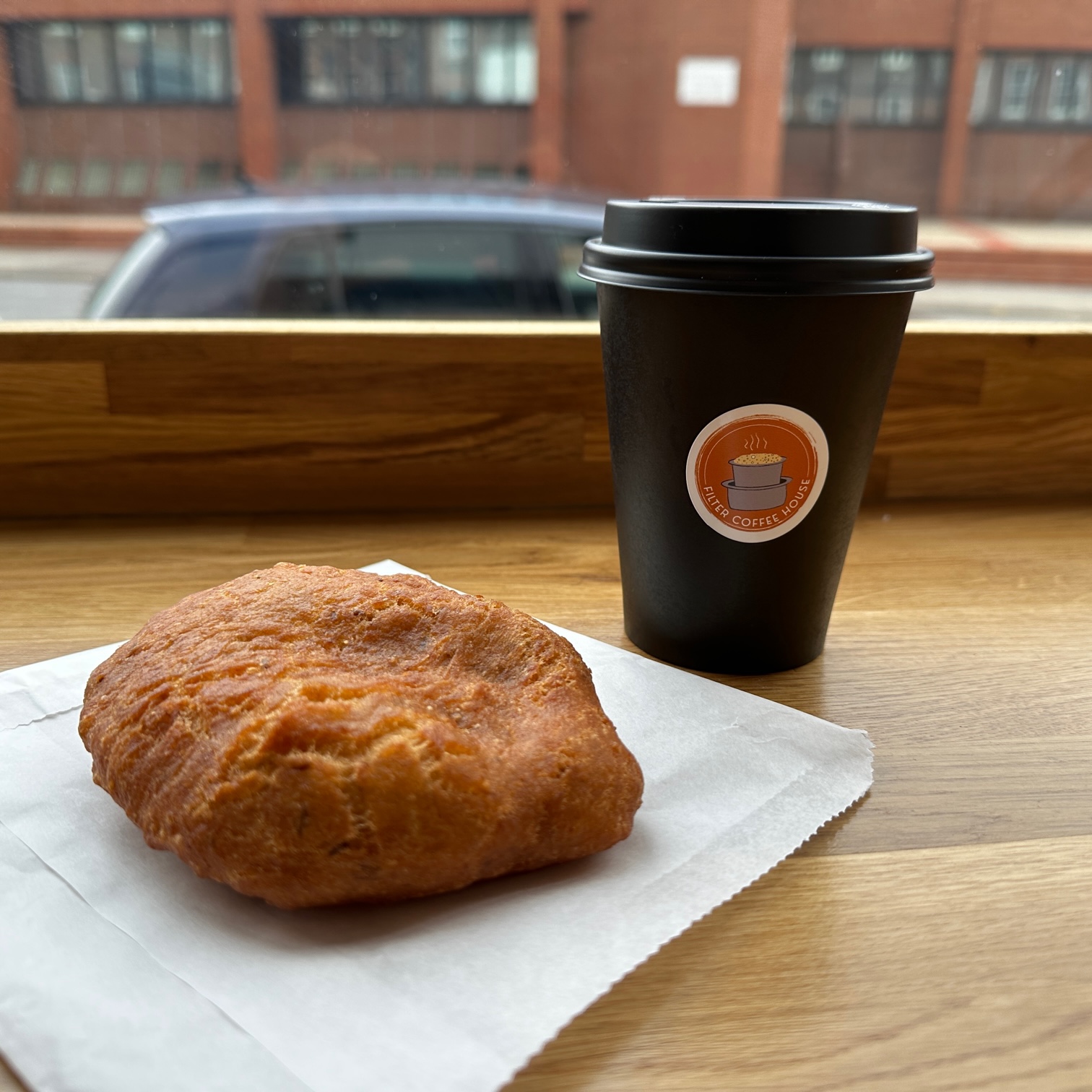
And then last but not least, two other intriguing establishments opened in Reading this year. In August, Filter Coffee House, possibly Reading’s tiniest café, opened on Castle Street offering Indian filter coffee, baked goods (including their already renowned banana buns – somebody hopped on that bandwagon nice and early) and now an interesting range of street food snacks on Saturdays. Watching them go from strength to strength through their thoroughly charming Instagram account has been one of the rays of social media sunshine in the second half of 2023: I plan to go back there and review it properly early in the new year.

And lastly, the new opening that provoked a lot of interest came with barely a month of the year remaining. Masakali, which apparently means “pigeon” in Hindi, opened where San Sicario used to be and offers a menu of Indian dishes not quite like anywhere else in Reading. Some of the dishes would appear to show the influence of Clay’s, some – like a samosa chaat with “Walker’s Crisps” – seem to be sui generis. 

Does the fact that the restaurant is owned by the same people as Reading’s slightly pedestrian Biryani Lounge make it less appealing? How about the fact that the menu has apparently been designed by an external consultancy company who, according to their website, “are always digging up family recipes from moms and grandmas across India”? Your guess is as good as mine: I’ll have a better idea once I’ve reviewed it, before too long I hope. Since writing this, I’ve also discovered that The Coriander Club opened on 6th December in Calcot, also offering what looks like higher end Indian food (their menu was designed by another, different, consultancy company: is this a thing now?)

Aside from that, I suppose there are a few other things to call out from the year. One was that Thames Lido, which at one point was burning through chefs like the U.K. burned through Prime Ministers, made an interesting choice this year by appointing Iain Ganson, formerly of the Bell at Waltham St Lawrence. I’ve always loved Ganson’s food, and I’ve always found the Lido hugely inconsistent, so this will be an interesting one to watch next year. So far the menus I’ve seen look like standard Lido fare, but time will tell whether Ganson spends his time there singing someone else’s tunes or creating his own melodies. Having said, several times, that I wouldn’t go back to the Lido again I guess now I’ll just have to.

And of course, I couldn’t let a round-up of the year pass without noting, again, that this was the year that Clay’s finally got that review in the Guardian, a rave writeup from Grace Dent which managed to capture exactly what makes Reading’s favourite restaurant so very special. I wonder if remembering Nandana’s and Sharat’s food was the final straw that caused her to walk out on I’m A Celebrity? I guess we’ll never know.

The other big closure of the year, of course, was Berkshire Live. It announced that it was closing on 30th November, leaving the Reading Chronicle and, I suppose, Rdg Today as the only conventional news sources in town. Now, you would probably expect me to have a good old pop at Berkshire Live at this point – and believe me, it’s tempting – but really it’s a cause for sadness more than anything. I feel for the journalists who need to find new work, and it’s typical of Reach plc to make people redundant the payday before Christmas. 

But I also think that what Berkshire Live became wasn’t good for anybody – not for people who wanted to read about Reading, not for journalists who surely wanted to write decent copy rather than regurgitating shit from TripAdvisor or solemnly announcing, on Facebook, that Walkers had discontinued beef and onion crisps. Whether you liked the Evening Post or not, you couldn’t deny that it served a community. The website Reach plc turned that into over eight miserable years was a sad parody of what it used to be: I hope everyone involved finds better, more fulfilling jobs in the new year.

And last of all, because I was bound to talk about this before the end, this was the year that Edible Reading turned ten years old. I have gone on about that quite long enough already in a series of articles in August and September, but I’ve been enormously touched that this was another record breaking year on the blog with more readers and page hits than ever before.

I know that I’ve written more reviews this year from London, Maidenhead, Oxford, Bath and Bristol (and yes, even Swindon), so I’m especially heartened that many of the most popular reviews of the year are the ones from further afield. It’s one in the eye for that “you’re meant to be Edible Reading” dullard who pops up in my comments about once a year.

So I am incredibly grateful for that, and for all your support, and for everybody who has read a review, Retweeted a review or commented (even to say “you’re meant to be Edible Reading”). I’m grateful to everybody who’s joined me on a review, or come to a readers’ lunch, or sent me an email to tell me to review somewhere, or thank me for reviewing somewhere.

I am grateful, now more than ever, for every single time someone tells me they put their faith in me and one of my reviews, went somewhere for lunch or dinner and loved it. Just as much as an independent business is moved every time you put your hand in your pocket and support it, an independent blogger is moved every time you vote with your feet and trust his or her recommendations. So thank you very much, for all of that.

Doing this roundup has been a thought-provoking wander through the last twelve months. Things aren’t as bad as they can seem, and for every Grumpy Goat or Cairo Café that closes there is a Minas Café or a Filter Coffee House or a Vesuvio Pizzeria to redress the balance. The battle for the soul of Reading hasn’t been lost yet, however deflating some of the closures can feel, and we can all do our bit.

And in my case, that means getting to some of the many places that opened this year so that, this time next year, I’m not talking about a bunch of places and constantly saying “of course, I’m yet to try it out”. So I will neglect Reading a little less next year, even if I can’t promise to go to Doner & Gyros.

It just remains for me to wish you and yours a very Merry Christmas – however you celebrate, whoever you celebrate with and whatever you eat. Personally I’ll be at home in post-Covid isolation with Clay’s At Home warming up on the hob and an enormous amount of chocolate for afters. I’ll be back next Friday with the 2023 Edible Reading Awards, but until then I hope you all have a fantastic, happy festive period. God bless us, every one.

Lemoni

It became apparent in early 2021 that Lemoni was not going to reopen after the third national lockdown. I’ve left the review up for posterity.

It is, I think, a universal reaction when we taste something funny, or not quite right, or even plain bad, to seek a second opinion. Whether that’s saying “do you think this milk is still good?” when it’s a day past the use by date or asking “does this taste weird to you?” in a restaurant, we all do it. We like to share delicious food, providing we have enough of it to spare, but it’s when something’s awful that we really feel the need to share the pain.

I say this because I’ve had several people in the last three months ask me if I’ve been to Lemoni, the new Greek restaurant in the Oracle, or when I’m going – and not because they say the food is stellar. One message on Twitter said “OMFG, it was awful. Service took ages every time, when they arrived the flicking of long hair over food was… ugh”. Another, on Instagram, said it was so bad that they refused a discount because they wanted to leave as quickly as possible. “I never thought I’d say this” she added, “but I really miss Jamie’s Italian”. Someone else on Twitter said “I went there last weekend and I’m interested to hear your opinion”: sometimes what isn’t said shouts as loudly as what is.

As a result, despite my best efforts to stay positive, I approached my visit to Lemoni with a gradual mounting dread. On the one hand, people definitely wanted an impartial review. But on the other, looking at their website I had a real feeling of “must I?”. Part of that came from looking at the menu online, because the dishes at Lemoni were undeniably pricey. Sixteen pounds fifty for a moussaka, or for a chicken shish kebab? They’d have to be absolutely faultless to charge that much.

Matters weren’t helped by my other half sending me a picture which had been doing the rounds at her work, taken from Tripadvisor, of the lamb kebabs. They look as if they had been formed not by hand but by the combination of a colon and a sphincter, nature’s piping bag. As if to reinforce the point, one of her colleagues had effortlessly Photoshopped a single kebab into an image of a toilet bowl: it wasn’t even slightly incongruous, bobbing there.

Tripadvisor didn’t help in general, as it seemed polarised between glowing reviews (often from Greek users with very few other TA reviews) and mutinous rumblings from everybody else about poor value, indifferent food, terrible service. Who to believe?

And then there was the wider mystery – who were Lemoni anyway? Hard to tell from social media, that’s for sure: there was a glut of very polished Instagram activity when the restaurant was about to open, but since then the silence has been deafening. Trying to get any background was challenging – the suggestion had been that this was their second restaurant but from what I could glean from Companies House the first restaurant, in Southampton, had gone into liquidation before the Reading branch opened.

How did an independent business with no real footprint come out of nowhere to take on the Oracle’s biggest restaurant site, quite possibly paying an annual rent in the high six figures? How was it going to survive in such a competitive site, even (or especially) charging those prices? There was only one way to get to the bottom of it: I was going to have to go there myself.

I felt bad about asking anybody to accompany me, but in the end my mother and my stepfather gamely agreed to come along: sometimes you really do need the unconditional commitment only family can truly provide. So, despite my stepfather’s wistful looks askance at the entrance to Royal Tandoori, we walked up to Lemoni on a warm summer’s evening to take our chances.

The welcome at the door was bright and friendly, and we walked up through the stairs and through the restaurant to take a table out on the upstairs balcony, one of Reading’s better al fresco spaces. The transformation from when the restaurant was Jamie’s Italian was marked, and very nicely done: the upstairs and downstairs are both very tasteful, airy spaces with plenty of natural light, grown-up looking marble-topped tables and grey tweedy banquettes. I didn’t eat inside, but I liked the look of it – I did wonder though just how much sound would be absorbed on a busy Friday or Saturday night and whether the restaurant would feel quite as welcoming on a darker winter’s evening.

The first big surprise came when the menus arrived, because the prices have been reduced significantly since April (although Lemoni has neglected to change its website to reflect this). Mains in particular had come down by between three and five pounds per dish – badly needed, because many of the dishes skirted around the twenty pound mark which felt very expensive for this kind of food. This means that Lemoni must be the first restaurant I’ve encountered to do a soft opening in reverse: still, at least it showed they were learning from their mistakes.

We ordered a few drinks, namely a Mythos for my stepfather, a Menebrea – the Italian beer which is becoming Peroni for people who think they’re too good for Peroni – for my mother and some sparkling mineral water (don’t judge) for me. Nearly all the waiting staff, all dressed all in black, seemed to be Greek and they certainly looked efficient, darting from table to table; maybe they’d also learned from some of that early criticism.

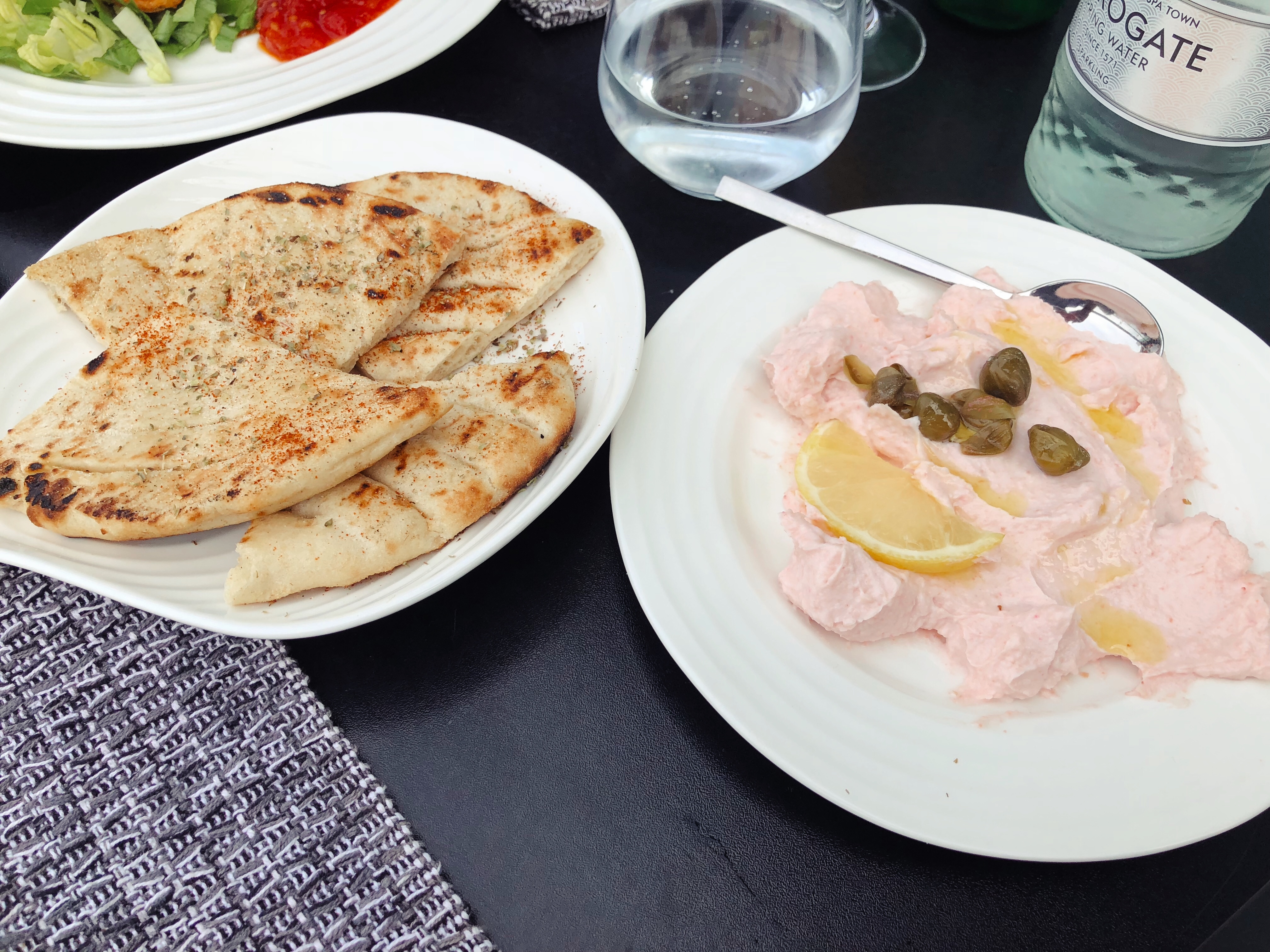
We decided to share some of the starters to begin with – these all vary between about five and eight pounds, although they charge extra for pitta which felt cheeky to me. How else did they expect you to eat houmous or taramasalata, exactly? The taramasalata, incidentally, was one of the best starters we had – brighter pink than I’m led to believe it should be but punchy all the same. I especially liked the addition of some salted capers on top, but I suspect they were more popular with me than with my mother. “It doesn’t taste that fishy” was her feedback – my stepfather and I disagreed, but she had taken against the dish and that was that.

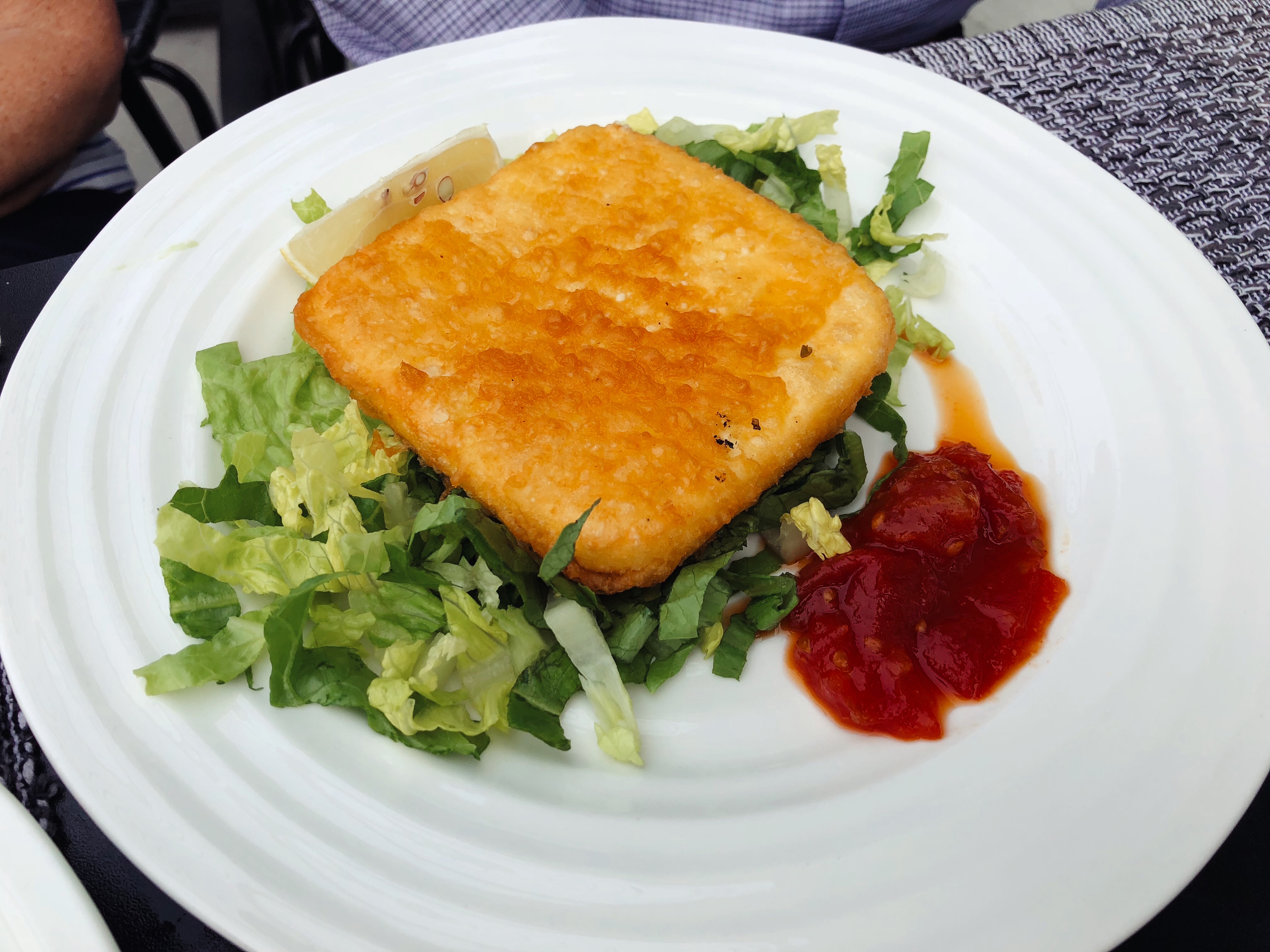
The spanakopita was a hit with all of us – light filo pastry with just enough crunch housing a beautifully molten mixture of feta, spinach and mint. The other two starters, though, were the relative duds. Saganaki is one of my favourite Greek starters and done well it’s a glorious, indulgent thing. The menu chose not to specify which cheese it was (which perhaps should have been a warning bell) but it’s usually feta and this didn’t feel like feta at all. Whatever it was, it was a lukewarm block of cheese with a leathery texture which had no give whatsoever. The “homemade tomato jam” might just have been able to paper over the cracks of this dish, but there was nowhere near enough of it.

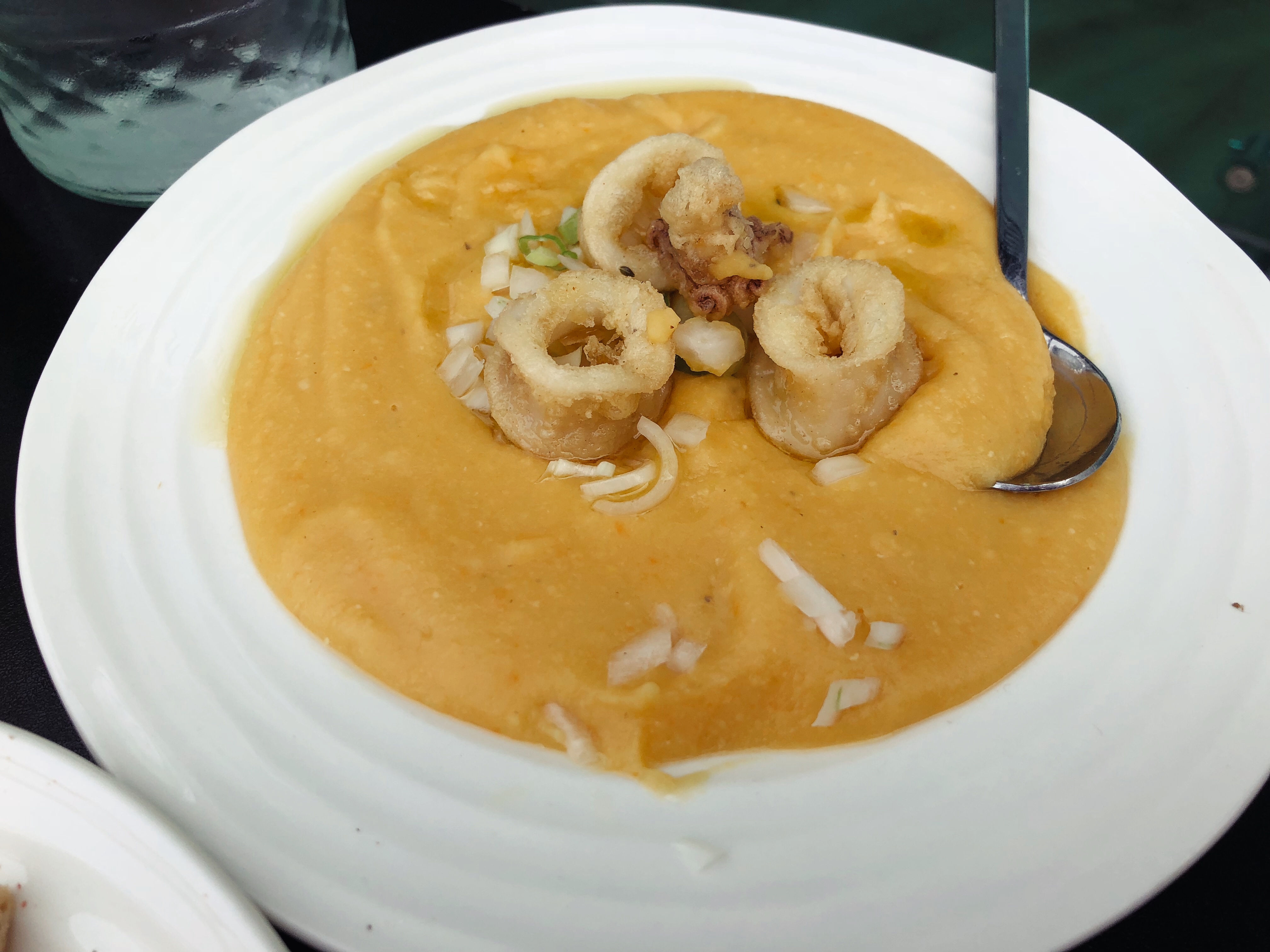
The last starter arrived after the other three, and before the side plates we’d had to ask for twice. Mashed fava beans topped with calamari were a pleasing shade of yellow and had a earthy, if subtle, taste. But I couldn’t help wishing it was hot rather than lukewarm and it also needed some pita to do it justice. Our first helping of pita – tasty, topped with something like cayenne pepper or paprika along with dried oregano but far too little of it – had already vanished by then and it took multiple attempts to flag someone down to ask for more. By the time it arrived we still just about needed it, but the moment had passed.

“That dish is bland” said my mother, pointing accusingly at the fava beans.

“It’s okay – it could do with a bit more seasoning” I said.

“Well, it’s not unpleasant” she added, the implication clearly being that not unpleasant was not good enough. I could see what she meant, but I was more disappointed that paying two pounds extra got your fava bean purée topped with precisely four tiny bits of squid. Maybe I’ve inherited her critical faculties.

Having struggled to get our side plates and struggled to get extra pita bread, we then found we were left alone with our leftovers in front of us for some time. This gave my mother enough time to do some detective work.

“Our placemats are by John Lewis” she said. “They have the tag on them.”

I inspected them. This was indeed the case.

“And the labels are still on the underside of our side plates.”

I wasn’t sure how my mother had clocked this – nothing gets past her – but lifting up my snazzy rippled white plate it was true. Sophie Conran for Portmeiron, no less, and that stuff isn’t cheap; these aren’t plates you’d want to smash at a wedding.

“It’s weird, isn’t it? It’s like they’ve picked this stuff up at a department store because money’s no object.” And again, I found myself wondering where the money came from to open this massive restaurant out of nowhere and kit it out with a lovely new refit, John Lewis placemats and Sophie Conran crockery. At this point my stepfather outlined his theory on the matter: sadly, I’ve had to omit it from the review but I’m sure you could come up with your own ideas.

I was jogged out of this reverie by the fact that as our plates were taken away the main courses were plonked in front of us, supervised by an older man who looked as if he might be the owner. The overall effect was a little menacing, especially as my stepfather had ordered the “chicken skewer” which comes to the table on a long and potentially dangerous skewer fresh from the grill. The skewer was served on a bed of undressed, pointless rocket with some soft-looking roasted potatoes, a cold couscous salad and some kind of dip. I tried some of the chicken and it wasn’t unpleasant but there was no real sign that it had been marinated. At fourteen pounds it was still more expensive than the same dish at Bakery House, with nowhere near the same whistles and bells.

“That dip is salad cream” said my mother, looking none too impressed.

“I think it’s more like burger sauce” I said. “The menu says it’s ‘Lemoni mayonnaise sauce’, apparently.”

“Well it tastes like salad cream to me.”

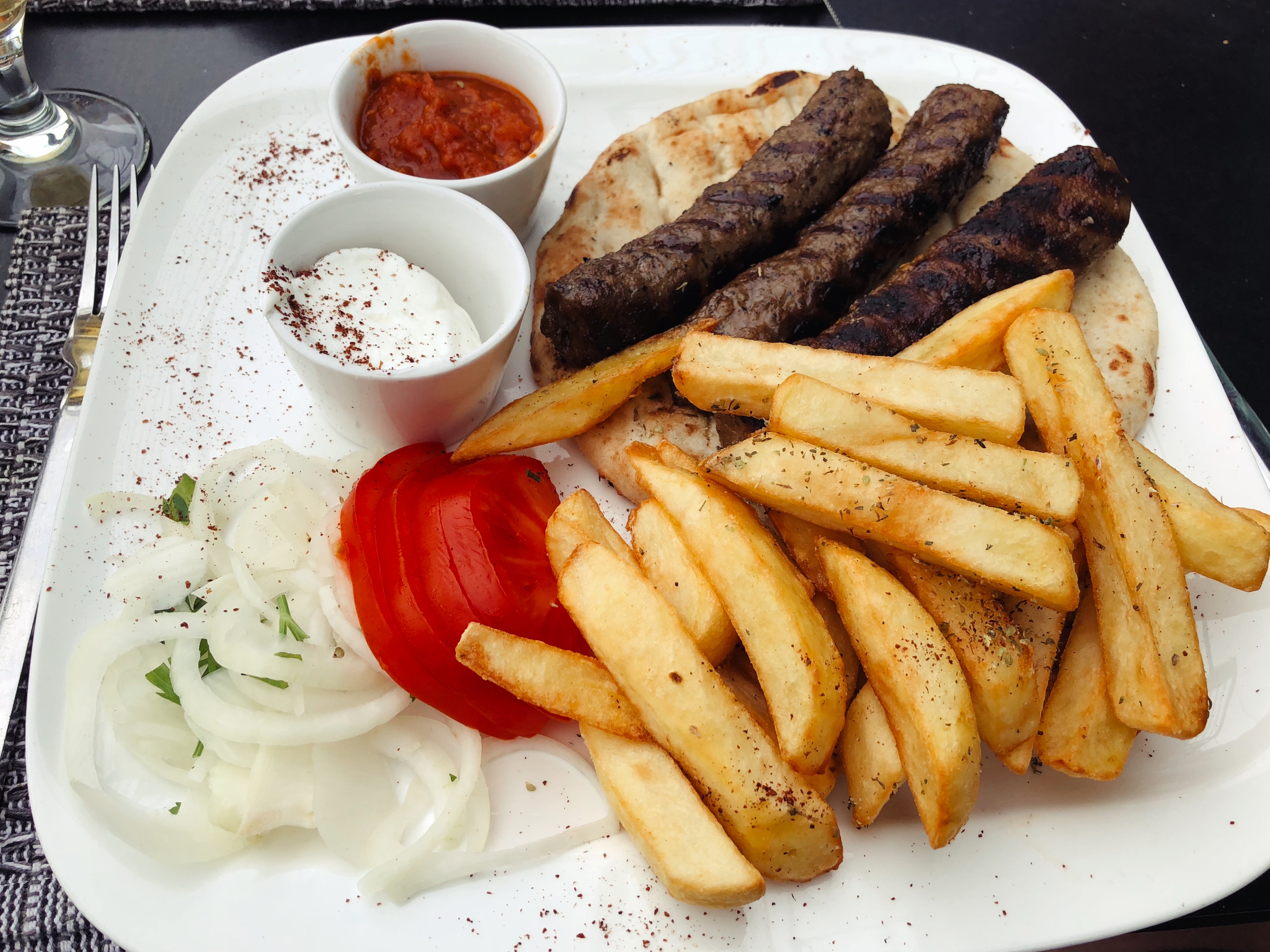
“It’s not going to be a glass half full evening, is it?” said my stepfather philosophically as he attacked the rest of his main, undeterred by any resemblance to Heinz’s finest. I had ordered the classic kebab, and I was delighted to discover that they no longer looked like the Photoshopped horror I’d been sent via Whatsapp. If anything, these were uncannily regular cylinders of meat – a mixture of beef and lamb, apparently – and I wasn’t sure whether I enjoyed them or if I was just relieved that they weren’t worse. They were nicely seasoned and although they were a little on the smooth and homogeneous side for my liking they weren’t unpleasant. They came with a yoghurt thicker and more pointless than Dominic Raab, and a tomato sauce which lacked any spice or heat at all. Nice chips, to be fair, but apart from that this was another dish that Bakery House does miles better for less.

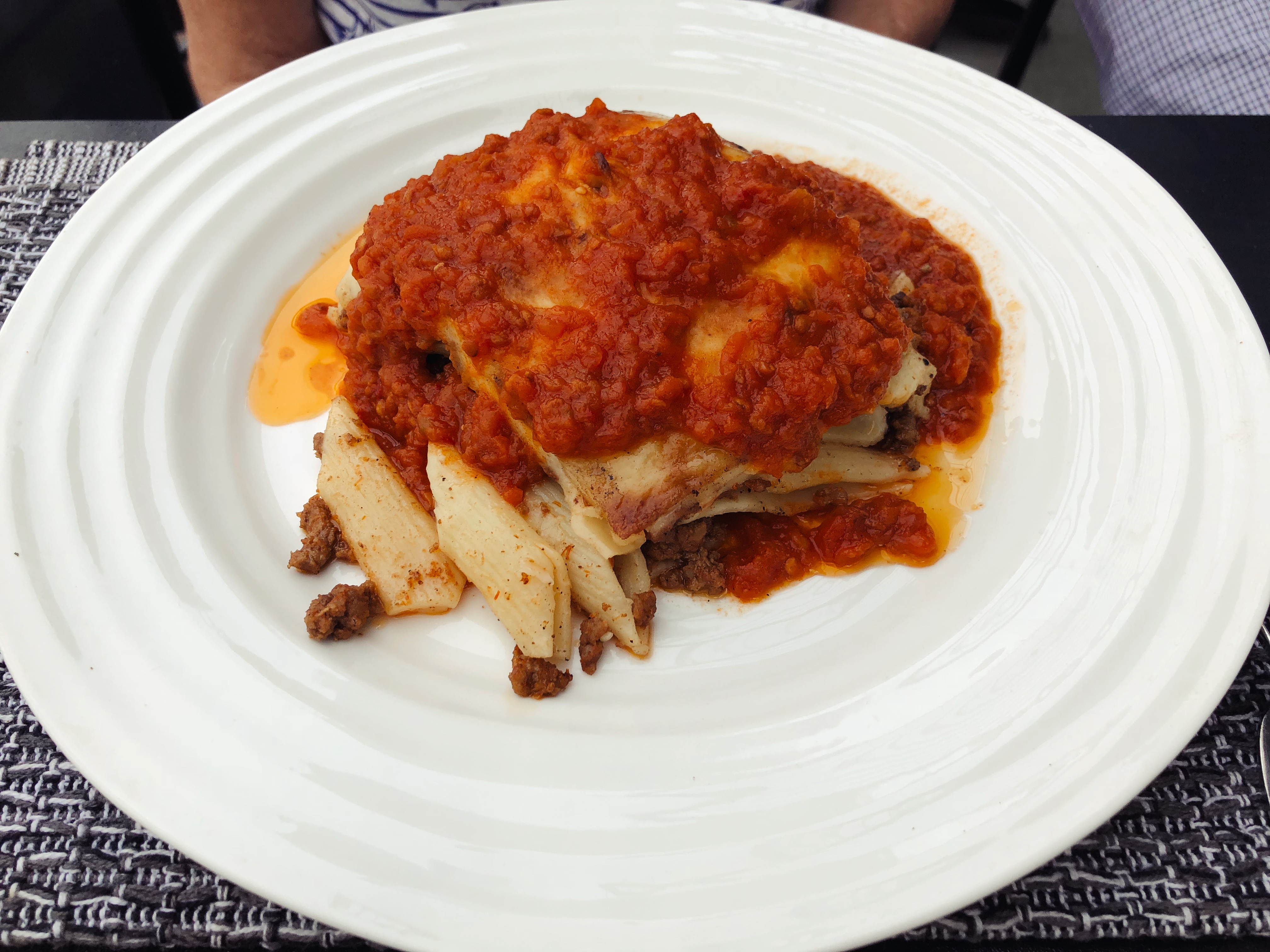
Even if the glass had been half full up to that point, it pretty much emptied when my mum started eating her pastichio, a sort of Greek lasagne which serves as an alternative to moussaka.

“This is sweet. It’s as sweet as a dessert. And there’s nowhere near enough mince. It’s just a sweet tomato sauce and some pasta. And the cheese! Well, it doesn’t taste cheesy.”

I tried some. You couldn’t knock her brevity: it would take me a whole paragraph to say a lot less.

“I think it tastes sweet because there’s definitely cinnamon in that tomato sauce.” I said, trying to put a brave face on it. Who was I trying to kid? The dish was a duffer.

It didn’t help that the accompanying Greek salad also didn’t pass muster. “It’s a nice olive” my mother said, “but it needs company.” A pity, because the feta was lovely and, again, I thought adding capers was a nice touch. But it’s difficult to argue with somebody saying that a Greek salad needs to contain more than one solitary olive.

We stayed for dessert, because I desperately wanted to give Lemoni one more chance. The big thing here is loukoumades, Greek doughnuts, so I ordered them with Greek honey and crushed walnuts. They were nicely irregularly-shaped, so obviously made by hand, but that’s as far as the plusses went. They were heavy, stodgy things, the shell not crisp and the inside a million miles from a fluffy cloud of joy. The honey was in a lake at the bottom rather than drizzled over the doughnuts, and the whole thing was heavy going. We didn’t finish them.

“Doughnuts ought to be a delight” said my mother, who by this point was turning into a one-woman Greek chorus of disapproval. “You should want to race through them.”

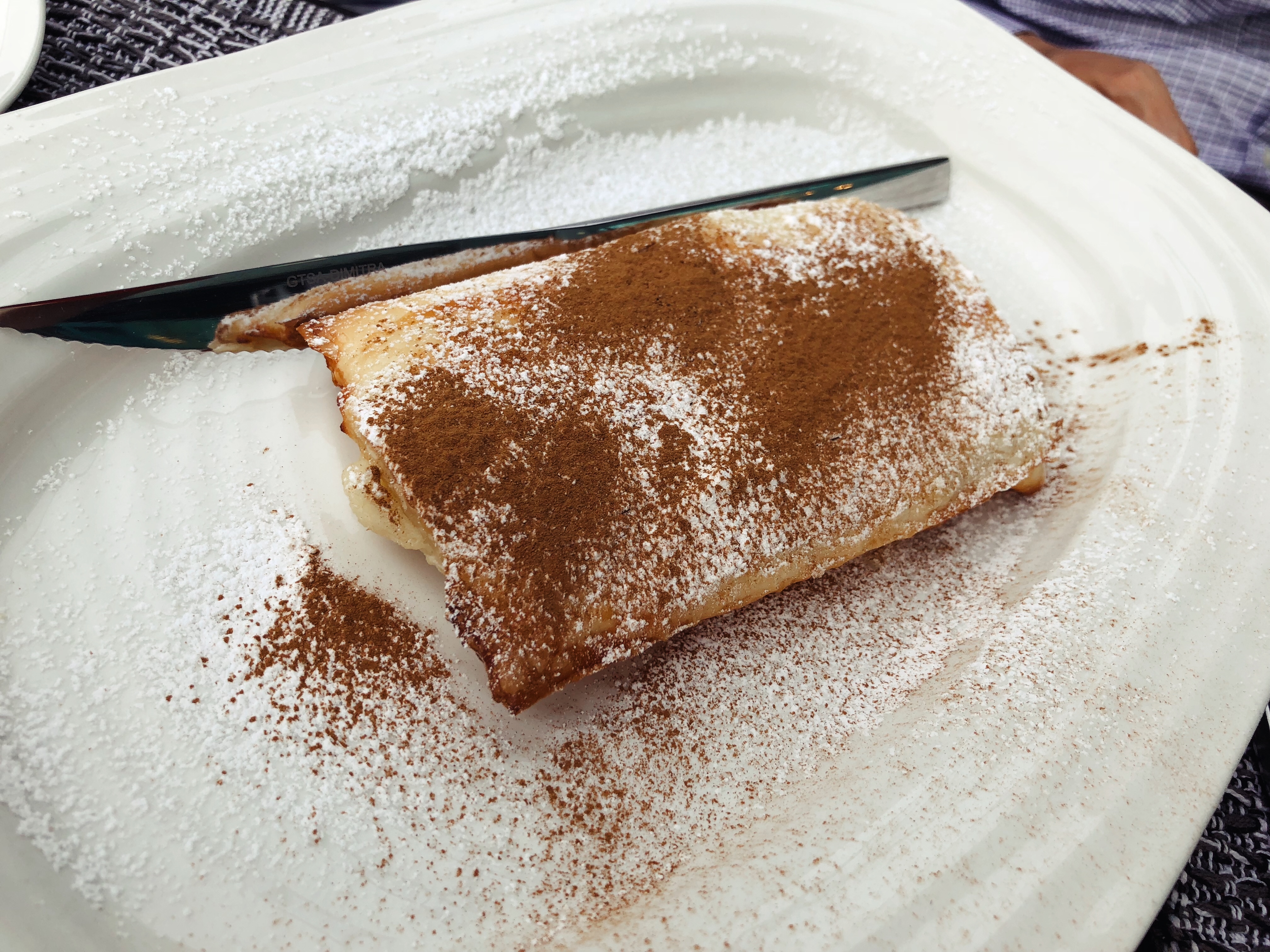
My stepfather’s bougatsa, custard in filo pastry, was better but still not right. I liked the custard very much, but this pastry didn’t have the same lightness of touch as our starters had had. Sawing through it with a knife felt like a slog. “It’s a bit tough” said – well, I’m sure you can guess who said that.

It won’t surprise you to hear that we also had to ask for the bill twice. Lemoni was busier than I expected on a Wednesday evening – the sun was still shining, the big screen on the Riverside was showing Wimbledon, people were sitting in the deckchairs on the opposite bank watching it and the beach bar was full of the kind of people who like the beach bar. It was a glorious evening, and if our meal had been better maybe we’d have been happy to sit there and digest and chat away with all the time in the world. All the best Greek food I’ve had – usually on holiday, but also in restaurants like Maida Vale’s scruffy Tsiakkos & Charcoal, or Notting Hill’s upmarket Mazi – is best eaten in a leisurely fashion, while you daydream of being somewhere in the Cyclades. But in this case, we just wanted to settle up and sod off.

Eventually, we flagged someone down and our bill – four starters, three mains, two desserts, two beers and some mineral water – came to ninety pounds, not including tip. Not hugely expensive, in the scheme of things, but when you consider that we barely drank it’s still a fair amount to spend on something so middling.

“You could come here and have quite a good meal” said my stepfather, “if you happen to order just the right things. Or if you ordered badly it would be terrible.” I nodded in agreement: I’d seen huge plates of what looked like home-made crisps turn up at other tables and I was thinking that if I’d just ordered those and some houmous I probably would have had a better, cheaper time.

So, there you have it: Lemoni isn’t the horror show I half expected, which just goes to show that anybody who reviews a new restaurant in the first month is making an error of judgment. But, even after three months of working on the pricing, the menu and the service it’s still deeply unspecial. Not better than Bakery House, not better than The Real Greek, not better than Kyrenia in its heyday. I don’t say that with any joy or any axe to grind – it would be a wonderful thing for the prime pitch in the heart of the Oracle to be occupied by a brilliant, distinctive, smartly-priced and well-run independent restaurant. But Lemoni is not that restaurant.

My closing thought about Lemoni was the saddest of all, because what my visit really did was make me think about Dolce Vita. Dolce Vita paid less rent than Lemoni, it charged more than Lemoni, it was busier than Lemoni, it did better food, it had better service and it closed for good last year. If Dolce Vita couldn’t make a go of it with so much in its favour, who would bet on Lemoni seeing out the year? More to the point: just imagine how wonderful Reading would be if a restaurant like Dolce Vita had occupied a spot like the one Lemoni has. How I wish we lived in a town like that.

Lemoni – 6.2
Unit 1, The Riverside, The Oracle, RG1 2AG
0118 9585247

https://reading.lemoniuk.com/

TGI Fridays

TGI Fridays closed in June 2024. I’ve left the review up for posterity.

There are plenty of reasons to take against Matt Rodda, my local Member Of Parliament. His faintly gormless look at photo opportunities, for one. His position on Brexit – I’m sorry, I went there – which contains more fudge than Thornton’s and ignores the strongly held views of his constituency. His ineptitude at social media, where he never engages with anyone and sometimes manages to post photographs the wrong way round (he used to be a journalist, apparently: an old media one, I’d guess). And of course there’s the matter of his robotic Twitter style where every description of an event starts with “Good to”: Good to show support for school meals, says one. Good to talk to Katesgrove residents, says another. I dubbed this “Rodda Syndrome” on Twitter and after that he started to mix it up – some Tweets began “Important to”, others began “Interesting to”. It’s a nice try, but I’m not convinced that Rodda’s Twitter feed would pass the Turing Test.

So yes, I have a number of misgivings about my local MP, but the biggest is that he is responsible for the review you’re reading today.

Well, not entirely, because I rather brought it on myself. It happened on the 8th June last year, election day. I headed to the church on Watlington Street to cast my vote (more in hope than expectation) and then I went home, fetched my suitcase and made for the station. I was going to Paris for my first ever solo holiday, my post-divorce present to myself and the opportunity to reclaim one of my favourite cities, to make sure it didn’t become inextricably linked to memories of my marriage. What could possibly go wrong?

Fast forward to about midnight and I was back in my slightly cramped hotel room, several red wines to the good having had a truly repellent meal. They’d plonked me up at the bar on a seat which might as well have borne a plaque saying “exploit the solo tourist”, the plates were small and yet the terrine, which looked like Pedigree Chum, was far too big. I grabbed some chocolate, crisps and a bottle of Orangina from a little Carrefour on my way back to the hotel and when I found the TV in my room had BBC News 24, I realised I’d be able to hear the dulcet tones of David Dimbleby and see the results come in. I’ve stayed up and watched every general election since 1992 and continuing that trend – albeit on the other side of the Channel proving how big, brave and independent I was – made me feel a little less lonesome.

By the small hours, exhausted but undaunted, I and a small number of other Reading Tweeters were staying up for one reason and one reason alone: to see if Rob Wilson would lose his seat. It was very far down the list of Labour targets, but suddenly there was a buzz that we might see Wilson deposed. We don’t have enough time to go into all the reasons why I thought that would be Reading’s Portillo moment (although let’s not forget his nine pence expenses claim for a taxi ride which was physically impossible) but, emboldened by the spirit of revolution – and clearly not rehydrated enough by the Orangina – I took to Twitter. “The exit poll has Reading East falling to Labour. If that happens, I will review TGI Friday”, I said.

Whoops.

I’ve never forgotten my promise, however hard I tried, so on a Monday night towards the end of the year I showed up at TGI’s Oracle branch to finally keep my word. Picking an accomplice for this review proved difficult: originally I had suggested making it a big party to celebrate Wilson’s downfall, but when it came to it that felt needlessly cruel to my readers (and the admin involved in writing up all that food didn’t appeal). Instead I took my friend Sam, a long-standing reader of the blog with extensive experience in hospitality and, more specifically, of working front of house in chain restaurants. Surely, I thought, Sam could help me take a fair and balanced approach to the flagship outpost of one of Reading’s most prominent chains.

“Have you seen Pulp Fiction before?” chuckled Sam as the waitress seated us in a little booth for two, all leatherette banquettes with a good view of the restaurant. Sam is an extremely amiable chap who sounds as posh as you like and, despite only just being in his thirties, can inexplicably get away with calling everybody “kiddo”. He was still sporting a Movember moustache (“it’s on a week’s probation” he told me) and the overall effect was somehow more Battle Of Britain pilot than best-avoided uncle. Actually, despite it being ersatz in the extreme I somehow admired the fit-out of TGI Friday. Everything looked polished and fake without being cheap.

A chorus of “Happy Birthday”, led by the serving staff, erupted at a nearby table. It wouldn’t be the last of the evening.

The menu made decisions surprisingly difficult, but not in a good way. I tried very hard to overcome my preconceptions when looking through it, but it seemed like such a cookie-cutter approach to American food that I found it hard to care. Burgers, ribs, fajitas and tacos were all present and correct, and there were frequent references to TGI’s “Legendary glaze”, which may or may not have been a reference to the expression of the waiter who brought us our first beers. The menu was broken into sections with names like “Rib, Dip, Hooray!” and “Love Me Some Chicken”, which was bad enough but some of the names of the dishes genuinely made me want to get up and leave. Particular offenders included the “Gravy Seal”, a burger which had had the kitchen sink thrown at it and was apparently “a tasty triple trip over sea, air and land” and the “It’s Mine, Nachos!” about which no more need be said.

“I’ve decided” said Sam. “It’s got to be the Warrior Burger.” I knew this was likely: Sam had been talking about this life choice for about two weeks in the run up to our visit. I ummed and aahed and then I saw and heard a spectacle at a neighbouring table closer to the pass which made matters more straightforward; a plate was put down in front of a diner with a sizzle audible from some distance away, and smoke filled the air. Another glance at my menu revealed that this was the “Sizzling Crispy Duck Fajita”, and so my decision was made.

“Good choice, kiddo” said Sam, necking a hefty swig of his Sam Adams. I looked at my Budweiser, one of the only draft beers on offer, and took a sip. It tasted of Budweiser. I made a mental note that more of it might be required.

At this point you are no doubt expecting me to detest every single thing that followed, so allow me to confound both of us by telling you that the first of our two appetisers wasn’t bad. The sesame chicken strips were a hit with both Sam and I: a reasonably generous helping of chicken with a little crunch, some heat from the chilli flakes and some sweetness from that Legendary (I can’t stop capitalising it, because that way it’s more obviously their word and not mine) glaze. The extra dish of dipping sauce, which I think was also glaze, was more than anybody needed, and a mere taste of it confirmed that it was Dignitas for tooth enamel. None the less, I liked this dish: the fried chicken at Soju it wasn’t, but we still polished it off in a state of mild surprise.

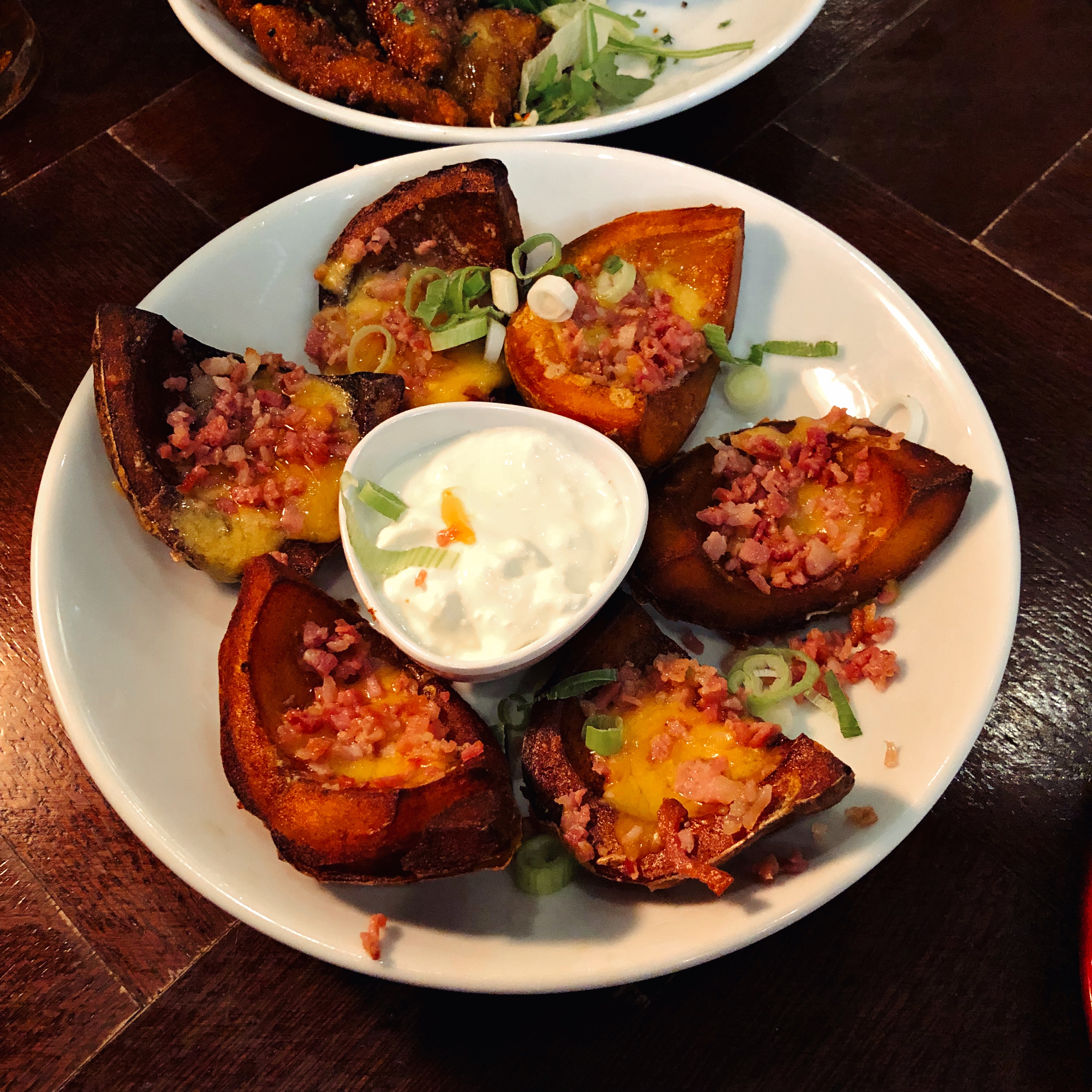
The other starter, loaded potato skins, had to be done; I suspect that it’s been on the TGI menu since time immemorial, a 90s time capsule in gastronomic form. The menu said they were “potato skins filled with melted cheese”, and the last time I saw a fib of that magnitude it was on the side of a bus: the skin wasn’t crunchy and moreish and barely featured in the dish. Nor did the melted cheese. Some of the skins had very little: “filled” wasn’t the right description, and “meanly sprinkled” would have been closer to the mark. The predominant feature of the dish was in fact the flesh of the potato, which means they were less potato skins and more just chunks of potato. We’d chosen to have them with bacon, but it was more like highlighter-pink indeterminate mince than lovely, crispy, salty bacon. The whole affair contained more flesh and gammon than the average Question Time audience, and was about as appetising. The sour cream gloop in the middle did nothing to improve matters, and nor did the token spring onions.

“Well, it’s not terrible so far” I said, trying to put a brave face on things as we sat there for what felt like quite some time waiting for them to take our empty dishes away. Terrible was not far away, because split seconds after they were whipped off the table in a monosyllabic fashion our main courses arrived. My duck was set down in front of me completely devoid of any sizzle, smoke or steam, a moment even more lacking in theatre than the renditions of “Happy Birthday” at the other tables (two and counting).

“I’m really sorry” I said, because I felt one of us ought to apologise for what I was looking at, “but this isn’t sizzling.”

“Oh, it definitely is” said the waitress, trying to style it out. There was a pause while I tried to make up my mind whether it was worth explaining what the word sizzling really meant. It probably only lasted ten seconds but in my mind it felt like easily five minutes of awkward silence. It was eventually broken by the waitress.

“I mean, if you touch it you’ll find it’s really hot.”

I looked at Sam, Sam looked at me. Our expressions mirrored one another, and we sat in silence while the waitress brought the rest of our food and left us to it.

“What was that about?” said Sam. “That was like hearing Trump talk about the crowds at his inauguration.”

It was true: there was something post-truth about what had just happened. With hindsight, I actually think that it might have been for the best that my duck arrived without any smoke and mirrors, because it made it easier to get right to the heart of the matter, namely that it was truly awful. It was sinewy, and a struggle to get much meat off the bone apart from the breast, which had a weird, cotton-woolly texture. It was topped with a bizarre salsa which looked a little like finely diced vomit (and, I suspect, more of the Legendary Glaze) and sat on a bed of onions which had no hint of caramelisation, on account of never having sizzled.

This was a dish that really didn’t know whether it was Tex-Mex or Chinese, so decided to fail dismally at both. There were tortillas which were thick and more like cardboard than the thin pancakes which might have worked, and shredded cucumber and spring onion to make the cognitive dissonance even worse. Finally, there was more of the gloopy Legendary Glaze, although this time it had an odd lumpy texture like frogspawn, or a very loose stool. It was sweet to the point of offensiveness, and after I’d assembled a couple of fajitas my fingers were so sticky I wasn’t sure they’d ever be clean again. It could have been worse if I hadn’t had a spoon to dish up the glaze, although admittedly I’d had to ask nicely for one of those (how exactly did they imagine I was going to do it?). By the end I was reduced to scraping all the crud off the duck, eating it on its own with a knife and fork and realising that even that couldn’t rescue matters.

This dish cost seventeen pounds fifty. I thought of all the times I’d had delicious confit duck at Cote, a couple of doors down, for considerably less money. Then I thought of what else seventeen pounds fifty could buy you in this town and I started to feel quite angry, although it could have just been a sugar rush from the Legendary Glaze.

“This is the worst crispy duck fajita I’ve ever had.” I said. “Of course, it’s also the best and, if I have my way, it will be the only crispy duck fajita I ever have. Also, this really isn’t a restaurant for diabetics.”

Sam’s Warrior Burger was no better. It managed to simultaneously be overcooked and lukewarm, which takes some doing but really shouldn’t be considered an achievement. The patties were a tad grey and nothing about the dish looked appetising.

“It’s been cooked with one purpose and one purpose alone” said Sam, “and that’s to eradicate the risk of anybody getting food poisoning.” It didn’t feel like an ambitious mission statement.

“Not a fan then?”

“No. All these whistles and bells like the mozzarella dippers are just there to draw attention away from the poor quality meat.”

“So how much of this do you reckon was previously frozen?” I asked, reckoning that Sam knew a bit about that kind of thing.

“Most of it. Probably the burgers, definitely the mozzarella sticks and probably the bread too. The fries are okay, I suppose, and that dip” – Sam gestured at little dish of what looked like mustard – “isn’t bad. But really, it isn’t good at all.”

The Warrior Burger costs over fifteen pounds. “Maybe lots of people eating here have vouchers” said Sam. Either that or a lobotomy, I thought to myself.

Unable to finish my meal, and eventually bored of the staff’s complete unwillingness to take our empty plates away, I wandered upstairs to wash my hands obsessively like Lady Macbeth until no trace of the glaze remained. The upstairs, almost as big as the downstairs, was completely empty (“there was no upstairs when it was Tampopo” said Sam, sagely, “so god knows where the staff get to change or relax or keep their stuff now”).

Coming out of the bathroom, I discovered a voicemail on my phone from TGI Fridays asking why I hadn’t shown up for my table and whether I planned to. “We’re very busy and we can definitely give the table to somebody else” said the voice huffily. I looked at the deserted tables around me and I wondered whether I’d wandered into some kind of dream sequence. Maybe I hadn’t actually gone to TGI Friday and none of this had ever happened, I thought. Perhaps it wasn’t too late to scrap the review and take Sam to eat somewhere better, like literally anywhere.

Back at our seats our crockery and cutlery was still in front of us. I told Sam about my voicemail.

“That sums this place up” he said. “It’s all so half-arsed. I mean, did you notice the state of the tables and chairs out front on the Riverside when we walked in? If this was my restaurant and the front looked like that, I’d sack myself.”

The waiter took our plates away and asked if we fancied dessert. It was tempting to see if there was anything more sugary than the food I had already had, but morbid curiosity is no justification for throwing good money after bad.

“No thanks mate” said Sam. “I think we’ll just finish our drinks and get round to asking for the bill.”

The waiter wandered off, got the bill and slammed it wordlessly on the table in front of us almost immediately. Finally we had something in common: he was as keen for me to leave the restaurant as I was. But there was one final quirk to the service when the waiter discovered that we planned to pay by card. He came over with the card machine, entered the amount and then wandered off, leaving us to stick our card in and enter the PIN. This struck me as a novel approach and different from literally every waiter and waitress I have ever encountered. Dinner for two came to sixty-seven pounds, not including tip, and it was only Sam’s generosity and good humour that meant that we tipped at all. Personally I would have just paid, departed and then left them a voicemail explaining that I wasn’t going to tip them, but with hindsight I’m glad Sam prevailed.

“The thing is though” said Sam, “the service really was poor. I know some of this is the kitchen’s fault, and some’s the menu’s fault, but the waitress should never have brought a sizzling duck dish that wasn’t sizzling.” And he was right, because even if the food had been middling and indifferent (I should have been so lucky) the service could still have improved matters considerably. It was a meal with no care factor evident anywhere.

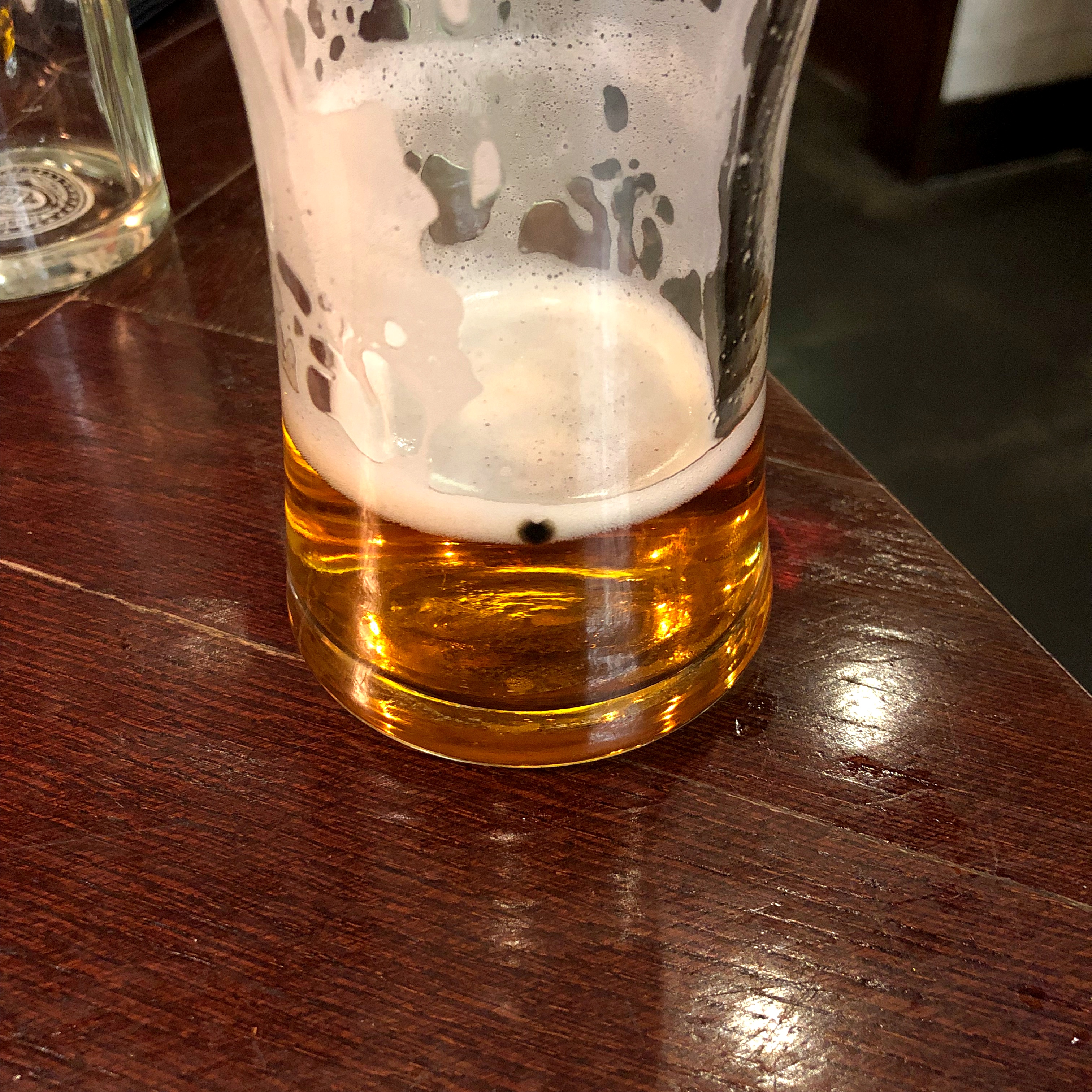
There was time for one last sting in the tail, because as we were finishing our drinks Sam examined his pint glass. There – close to the bottom, on the inside – was a grim-looking black smudge of goodness knows what.

“What’s that?” said Sam in horror. We examined it, neither of us wanting to touch it.

“I have no idea, but when the pint was first poured it was probably even bigger. Most of it has probably, err, dissolved.” I realised immediately after I said it that this wasn’t helpful.

“Oh well, I could do with losing some weight. This just wasn’t how I planned to do it.”
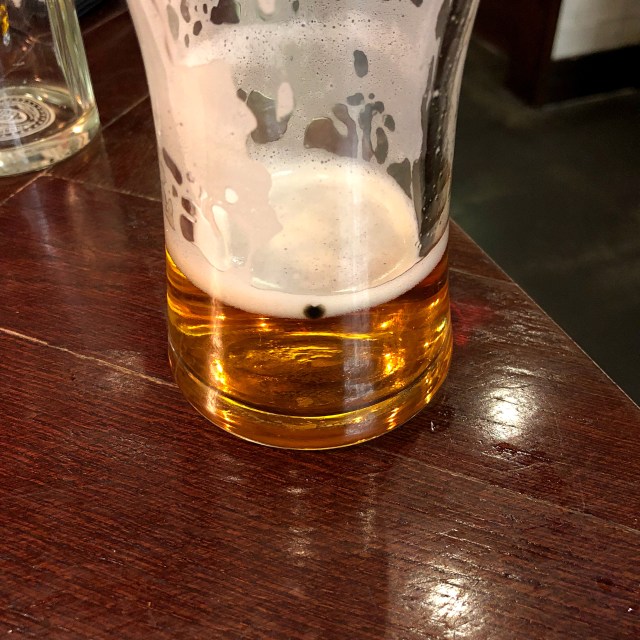
Afterwards, commiserating in the pub, I told Sam that I thought that TGI Friday was like the WH Smith of restaurants: I couldn’t understand why it still existed, because you could get everything it did better somewhere else. If you want cocktails you should go to Milk and if you want burgers, you should go to Honest. If you want ribs, you should go to Bluegrass and if you want fajitas you should go to Mission. If you want crispy duck fajitas, you should see your doctor.

But it’s worse than that, because not only do other places do this food better but, without exception, they are cheaper. I could cope with expensive and mediocre, and I could just about cope with cheap and bad, but the combination of costly and diabolical leaves me baffled. Who eats at TGI Fridays these days? And one other thing: this isn’t about snobbishness, it’s about standards. Earlier in the year I went to the Beefeater on the Bath Road, with my family. It wasn’t my choice, and in the run-up I did make a few unworthy jokes about the evening that lay ahead. But actually, the service was lovely, the food was okay and the steak itself was rather nice. I went away feeling a little ashamed of myself, but at TGI Friday I just went away feeling dirty and exploited (and not in a good way, either).

So there you have it, my final review of 2018 is easily the worst meal I’ve had all year and one of the very worst meals I’ve had in over five years of writing this blog. Thank you for reliving it with me (don’t have nightmares) and I only have one last thing to say. It’s this: good to never have to go to TGI Fridays ever again. Important to avoid it for the rest of my days. Thanks a bunch, Matt Rodda.

TGI Fridays – 3.6
Unit 8, The Oracle, RG1 2AG
0344 2646052

https://www.tgifridays.co.uk/locations/get/Reading%20Oracle#/

The Real Greek

The Real Greek closed in Summer 2023. I’ve left the review up for posterity.

Well, you were meant to get a review of Brewdog this week, but nothing quite went according to plan. I turned up there with Steve, a long time reader of the blog who attended my first readers’ lunch at the start of the year, and right from the off things weren’t promising. We entered the cacophonous main room and found a spare table round to the left which was just about comfortable enough. Just about.

“I wish I’d brought my glasses” said Steve. Steve is wry, wise and silver-haired, knows an awful lot about food, catering and restaurants and he’s had more jobs – and stories about them – than I’ve had hot dinners. “This is the first time I’ve ever been in a restaurant and not been able to read the menu.”

I looked at the menu, all in the sort of distressed font that hints of a typewriter ribbon on its last legs. It was all burgers and dogs and puns (“Cluck Norris”, “Soy Division”) and, I’m afraid, it induced mild to moderate weariness.

“I thought it was table service here. It was when I came here for a drink the weekend it opened, but now I’m not sure.” I said.

Minutes passed.

“I’ll go up to the bar” I said.

As luck would have it, the night I planned to review Brewdog the team from Explore Reading was there to review the drinks and the food. They had a nice booth (not jealous, not at all) and were already a few beers under way. I wondered: did that make Steve and I the Jets or the Sharks? Was Steve nifty on his feet? Should I have brought backup?

At the bar, the Explore delegation told me that there had been a mix-up in the kitchen and they wouldn’t be taking food orders for half an hour. It was already eight o’clock and that, I’m afraid, is where I decided that life was too short. I looked over at the Explore table again. These were Reading’s hip young gunslingers: one of them was in her twenties, for crying out loud. I went back to our table.

“Come on,” I said to Steve, “we’re going.”

That’s how we found ourselves walking back across town as I frantically consulted my list for a Plan B and that’s how we ended up in the Real Greek, on the Oracle Riverside. I turned up, in truth, with no great enthusiasm; I hadn’t heard brilliant reports, unless you include the countless enthusiastic – and comped – blog reviews shortly after it opened last year, back when you couldn’t get in without a reservation.

But going through the doors on a midweek evening I actually found myself thinking how nice it looked – almost like a slightly more upmarket Pizza Express, with biggish tables and handsome chairs along the outside of the room and a section of sort of open booths in the middle. I wouldn’t have fancied one of those, as they seemed to be hard benches with no visible padding. I guess the sort of people who enjoyed an evening in Brewdog might have gone for them, I found myself thinking.

Steve and I persuaded the waiter to give us a round table for three, so as to improve both our views and give us the room to order everything we wanted, and had a look through the menu. It was proper small plates territory, with a range of hot and cold meze and, if you needed some inspiration, a range of suggested set menus down the right.

So far so good, but the menu also meticulously listed the calorie count for every dish on the menu. I really wasn’t a fan of this: it’s bad enough seeing the traffic lights on ready meals in Marks, without it starting to invade restaurants. Surely restaurants were meant to be a haven where you didn’t have to put up with all that? Ironically, it put me off ordering dishes at both ends of the spectrum: I like a bit of taramasalata, but when a portion was just shy of a thousand calories? And I love octopus, but if it’s only 161 calories how much of it do you really get for £7.50?

The menu recommended three to four mezes per person, so naturally – despite my niggles about calories – we ordered nine between us: Steve may run marathons, but I just knew that he was a trencherman beneath that wiry exterior. Our waiter turned up with two cold bottles of Mythos, cracked them open simultaneously and poured them at the same time into our glasses. Like all magic tricks you can’t remember how it’s done, don’t want to and, afterwards, struggle to describe it.

“That’s nicely done, isn’t it?” said Steve, which I rather felt gave me permission to be impressed.

We chatted away about our recent holidays – Porto for Steve, Bologna for me – and the first set of dishes arrived. The other gimmick at The Real Greek is that your sharing plates arrive in a tall stack, like afternoon tea. That might be your bag, it might not: I found it irksome but it was easy to take them off the rack and spread them out on the table as nature intended. If I’d been at a smaller table for two, it might have properly got on my nerves.

We started with some of the cold mezze. Revithia, which looked like a plate of lightly bruised chick peas, were delicious, singing with lemon and mint, a beautifully fresh and bright dish. The dolmades was also very good – light, crumbly and again rich with mint, not remotely claggy or glutinous. Only the Greek flatbread disappointed. It wasn’t piping hot, and it felt like maybe it had been sitting around a little too long before coming to our table. I think if I’d realised just how unlike a dip the revithia was, we wouldn’t necessarily have ordered it, and it seemed a little cheeky to charge an extra three quid for olive oil and dukkah.

Despite that, Steve and I made our way through the whole lot, waiting to be disappointed. By the end, we realised that disappointment had not come and, for the first time, I wondered if this meal was going to outperform my expectations. The waiter brought a bottle of Greek white (Makedonikos, apparently) which was fresh, not sweet and not sharp, and tasted really quite a lot like being on holiday, as some of the best wine does.

“It’s a good atmosphere in here” said Steve, taking in our surroundings. “Everyone seems to be having a nice time.”

It’s a little point, perhaps, but Steve was right. None of the tables seemed to have the grim note of contractual obligation, nobody seemed to be there because they had vouchers or had run out of ideas. Perhaps we’d just stumbled on the place on a really auspicious evening – or perhaps it was euphoria at having escaped from Brewdog – but as I took another sip of my wine I found I was really quite enjoying myself. Steve was telling me about his small granddaughter’s quest to notch up a Michelin star a year (she made one establishment make her a dish completely off menu, which makes her sound far more fearsome than any mere reviewer), and about wife number one and job number sixteen and I thought: how lucky I am that people read the blog and want to come to dinner with me.

The rest of the dishes rather came all at once, which actually was my failing rather than the restaurant’s. It’s weird how when you’re in a chain to some extent you act like you’re in a chain, and you order like you’re in a chain. If The Real Greek had been an independent place, another Namaste Kitchen, I would have ordered some dishes, eaten them, kept the menu and then ordered some more, but because it was a chain and the menu told you how many dishes to order, I ordered them all in one go. With hindsight, that was a mistake, but it didn’t stop everything we ate being good at the very least and often far more than that.

Particular highlights from the hot mezze included the pork belly, cooked so perfectly that you could almost have mistaken it for chicken thigh, all crispy skin and layers of meat, every bit of fat rendered to nothing. Steve and I did a very English equivalent of fighting over it, which involved each of us saying “no, you have the last piece” ad infinitum. We were similarly polite over the halloumi fries, salty and light and pretty close to perfect, especially dipped in the minted yoghurt. The least successful dish was the calamari, which turned up looking so much like octopus that I worried we’d ordered the wrong thing. That wouldn’t have mattered so much, but it wasn’t quite as fresh as promised and that made it harder going than either of us would have liked. When we said “no, you have the last piece”, we actually meant it.

What else? Lamb kefta was more like a single lamb burger than a kebab or meatballs, but it was still delicious and far nicer than it looked. I felt like there was a hint of feta smuggled away in it somewhere, but that could have been a trick of the light, or the white wine slightly skewing matters. Salt cod fritters were also light and delightful, with plenty of fish, not bulked out with spuds. Again, the lemon mayonnaise that came with it was spot on.

Finally, Steve’s favourite, the loukanika: three whacking great slabs of pork and beef sausage with a deep red smoked chilli relish. I had huge reservations about this, mainly because it screamed stealth spam, but it was beautiful – coarse, firm, juicy and with just enough spice. The relish set it off perfectly. Steve liked it so much he sent me a message the next day saying that he was daydreaming about eating it again (and Steve’s one of the only people I know who can send such a message without even the faintest hint of smut).

“This is really good, isn’t it? I can’t find much wrong with it.” I said, giving away I’m afraid that I had fully expected to turn up to an Oracle Riverside chain restaurant and find shitloads of issues, and that I was a tad perplexed that I couldn’t.

“Yes, it is” said Steve. Were we having a shared hallucination? Had they put ayahuasca in our Mythos?

We pressed on with dessert, because we were having too nice an evening to want to bring it to an end. That’s as noble a reason to order dessert as any, but the decision provided probably the meal’s biggest misfire in the shape of my baklava – a big stodgy slab with no real crunch or subtlety, no layers, no sticky sweetness. What you got instead was some faintly damp pastry, and a big claggy layer of crushed nuts, and the whole thing was cold and unimpressive. You got better baklava, back in the day, eating Georgian food at the Turk’s Head and (trade secret alert) I have it on good authority that they bought theirs from Costco. Steve’s chocolate mousse cake was considerably nicer, if not remotely Greek. “Not bad” he said, between mouthfuls, “but they’ve definitely bought this in.”

Service was bright and personable from start to finish. Our waiter was Italian, which led to a long conversation about my recent holiday in Bologna (I took the lead on this), football (obviously Steve took the lead on this) and where a self-respecting Italian eats in Reading (Pepe Sale, unsurprisingly). He was very proud of the food, told us what to order next time and talked with real warmth about The Real Greek, having worked for years in the Windsor branch before transferring to Reading. No smarm, no encouraging us to post reviews on TripAdvisor, just genuine enthusiasm.

Dinner for two, not including service, came to eighty-eight pounds. Not the cheapest meal in the world, and although we probably could have ordered a couple of dishes fewer it was never going to be as cheap as living it up at Brewdog. But I had such an enjoyable meal that I really didn’t mind.

Afterwards, Steve and I compared notes. I rated the meal slightly more highly than he did, and we beetled off to the Allied Arms for a debrief, shivering under the heaters and pretending it was nearly summer. But the next day, he messaged me.

“I think I might have marked it a bit low on reflection. I think you were more on it.”

“It was really decent, wasn’t it? I’m struggling to find fault.”

“The waiter definitely contributed to the whole thing. Lovely to have someone so enthusiastic – I almost thought he was called Sandra.” Steve went on, referring to Zizzi’s legendary waitress, As Seen On TripAdvisor (“the Skripals would never have been poisoned in our branch of Zizzi”, my friend Tim once said to me, “Sandra would never have allowed it.”).

I think that exchange probably sums up the verdict on The Real Greek as well as anything. It wasn’t my first choice, I went there by accident and my expectations were firmly under control. And yet, quietly and unshowily, it did an absolutely cracking job. Irritating gimmicks, iffy bread and so-so desserts aside, we enjoyed a really tasty meal in a lovely, buzzy room. Nearly everything we had was good, much was very good and some was excellent. To my surprise, I would go back again, and I can see the appeal of gathering a group of friends and trying as much of the menu as possible. So I’d encourage you to put your reservations to one side when you read the rating at the bottom, because for a certain kind of evening – with fellow diners who play nicely – The Real Greek is as good an option as anywhere you can find in town. My only tip is to dig your heels in and order little and often: it may be a chain, but that should never stop you being independent-minded.

The Real Greek – 7.7
The Oracle, RG1 2AT
0118 9952270

http://www.therealgreek.com/reading/